19 Mike Tyson Tattoos That Reveal What Most People Miss About Body Art as Identity
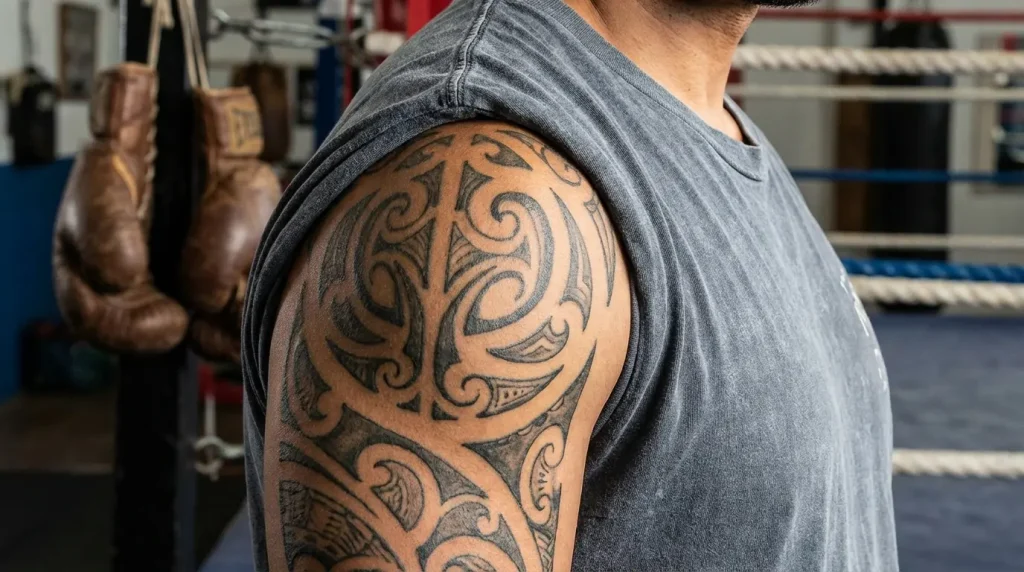
Everyone knows about Tyson’s face tattoo. It’s literally impossible to miss. The guy has tribal patterns wrapped around his eye socket. But here’s what nobody talks about: that wasn’t even his first tattoo. It wasn’t his most meaningful. And he originally wanted hearts on his face. Hearts! For a girl. Let that sink in.
His tattoos aren’t about shock value. They’re basically a diary of every breakdown, conversion, and relationship that shaped him. According to The Tennessean, Tyson got his iconic face tattoo ahead of his 2003 fight against Clifford Etienne at The Pyramid in Memphis, and it was rumored that getting the tattoo forced him to miss a week of training camp ahead of the bout. A week. For a professional fight.
Table of Contents
The Bold Statement Pieces
-
The Tribal Face Tattoo That Changed Celebrity Ink Forever
-
Mao Zedong Portrait on His Right Bicep
-
Arthur Ashe Tennis Legend Tribute
-
Che Guevara Revolutionary Icon
The Personal Mythology Collection
-
Tyson’s Ex-Wife Monica Turner Portrait
-
The Chinese Symbols Across His Torso
-
Dennis Rodman’s Influence on His Early Ink Choices
-
The Angel Wings on His Upper Back
-
Desiree Washington’s Name (Later Modified)
-
His Mother Lorna Mae Smith Memorial Piece
The Power and Dominance Markers
-
The Roaring Tiger on His Right Shoulder
-
Dragon Imagery Wrapping His Right Arm
-
Warrior Face on His Left Shoulder
-
The Panther Head Design
-
Tribal Bands Across His Arms
The Unexpected Spiritual Journey
-
Islamic Calligraphy Post-Conversion
-
The Buddha Portrait on His Torso
-
Cross Symbols From His Christian Upbringing
-
Protective Eye Symbol on His Inner Arm
TL;DR
Quick version: The face tattoo wasn’t first. He wanted hearts (yes, really). His body’s basically a timeline of breakdowns, religious conversions, and people he loved or lost. You can trace his whole psychological evolution through his ink choices. The temporary face tattoo industry owes its existence to one impulsive decision in 2003. Also, don’t get drunk and copy his face tattoo with black henna in Bangkok. That shit will scar you permanently.
The Bold Statement Pieces
These are the tattoos that made headlines. The ones that forced people to reckon with tattoos as statements of defiance rather than decoration.
Each piece in this category positioned Tyson as permanently outside conventional society. The mike tyson face tattoos dominate every conversation about him, but three other bold choices deserve equal attention for what they tell us about using your body as a billboard for controversial ideas.
1. The Tribal Face Tattoo That Changed Celebrity Ink Forever
So about that face tattoo. The one everyone knows. The thing that made him impossible to forget even if you wanted to.
It almost didn’t happen. Or rather, it almost happened completely differently.
Tyson walked into a Vegas tattoo shop in 2003 wanting hearts on his face. Not tribal patterns. Hearts. Little romantic hearts. For a relationship that was already falling apart. Tattoo artist Victor Whitmill convinced him that tribal patterns would age better and carry more visual weight.
The Māori-inspired design covers the left side of his face, wrapping around his eye socket in bold black curves. You’ve seen it a million times. What most people miss is the timing. Tyson got this during one of his lowest points, fresh out of bankruptcy and struggling with substance abuse. The tyson face tattoo wasn’t rebellion against boxing authorities or society. It was a declaration that he’d stopped trying to return to his former life.
You don’t tattoo your face when you’re planning a comeback. You tattoo your face when you’re burning the bridge back to who you used to be.
The design itself has sparked countless debates about cultural appropriation, given that traditional Māori tā moko carries deep spiritual significance that Tyson doesn’t claim to honor. But the tattoo accomplished exactly what he needed. It made his transformation visible and irreversible.
Every interview, every public appearance, every attempt to move forward would now carry this permanent marker of his breaking point. Tyson first went to tattoo artist S. Victor Whitmill looking to get hearts tattooed on his face, but Whitmill refused the design and pitched him a tribal design inspired by the tattoos of the Māori people in New Zealand instead, a design which Tyson instantly gravitated to, according to reporting from The Tennessean.
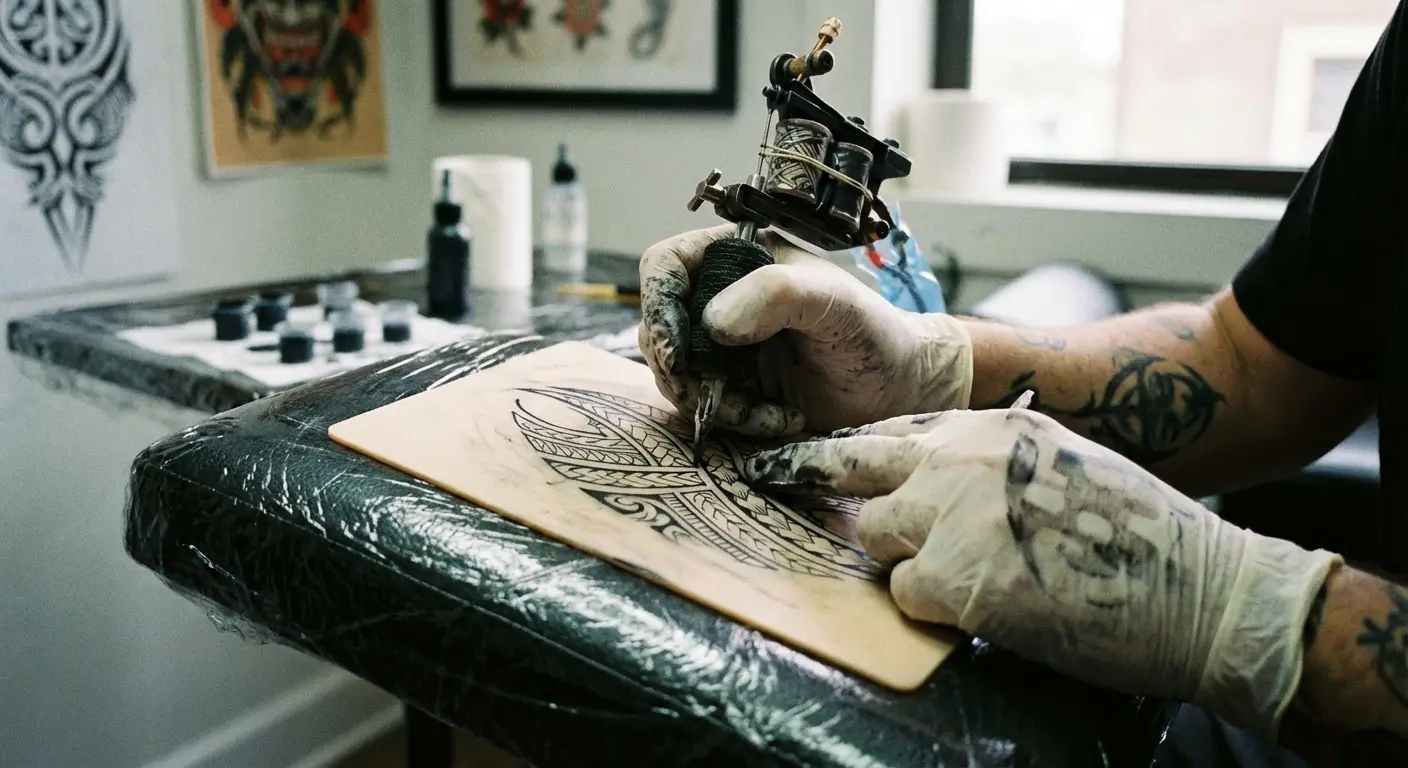
The enduring influence of Tyson’s face tattoo continues to inspire impulsive decisions worldwide. In late 2024, a group of tourists in Bangkok got drunk and decided to replicate Tyson’s iconic look with what they thought were mike tyson temporary face tattoo designs using black henna.
According to BroBible, content creator Nick Nayersina documented how his “temporary” Mike Tyson face tattoo started blistering and oozing after he discovered that black henna contains para-phenylenediamine (PPD), a chemical that’s illegal in the U.S. and can cause permanent scarring. Research has found that an estimated 2.5% of people who get a black henna tattoo will experience an allergic reaction, with PPD concentrations in black henna reaching as high as 15.7%. That’s way stronger than the 6% maximum permitted in hair dyes.
Ever do something in a breakup that you couldn’t take back? That’s this tattoo.
|
Tyson’s Face Tattoo: Myth vs. Reality |
|
|---|---|
|
Common Belief |
Actual Facts |
|
He wanted the tribal design from the start |
He originally requested hearts on his face for a romantic tribute |
|
It was a calculated branding move |
It happened during bankruptcy and substance abuse struggles |
|
The design is traditional Māori tā moko |
It’s Māori-inspired but lacks authentic cultural context |
|
It helped his boxing career |
He got it before his final professional victory, then retired |
|
It was done in multiple sessions |
Completed quickly, allegedly causing him to miss training time |
2. Mao Zedong Portrait on His Right Bicep
Tyson’s decision to ink Chairman Mao on his body confused Western audiences who couldn’t reconcile a capitalist boxing millionaire with communist iconography.
Let’s address the elephant in the room: Mao killed millions of people. Like, tens of millions. And Tyson put him on his arm as a symbol of strength and unity. It’s objectively bonkers.
But here’s the thing. Tyson wasn’t writing a political science thesis. The tattoo appeared during his prison sentence in the mid-1990s, when Tyson was consuming philosophy and political theory voraciously. He latched onto this idea of someone who united a fractured nation through sheer force of will. A quality Tyson saw himself lacking.
The portrait shows Mao in his younger revolutionary days, not the elderly chairman most Westerners recognize.
Did he think through the implications? Clearly not. This disconnect tells us something crucial about how tattoos function as personal mythology rather than political statements. Tyson wasn’t endorsing Maoism. He was marking a moment when he believed powerful ideas could transform a person’s trajectory.
The tyson mao tattoo represents his prison reading list more than his political alignment. It’s a reminder that the meanings we assign to our ink often have nothing to do with how others interpret the imagery. In a 2008 documentary, Tyson explained the emotional context behind this choice: “When I was in prison, I was so angry at society. I put a tattoo of Mao on me. I put a tattoo of Che on me, because I just had no faith in our government.”
3. Arthur Ashe Tennis Legend Tribute
Few people know Tyson has a portrait of tennis great Arthur Ashe on his body. The weird part? Ashe represented everything Tyson wasn’t: composed, educated, politically articulate, and respected across racial lines.
Ashe died of AIDS-related complications in 1993, and Tyson got the tattoo shortly after his own HIV scare (which turned out to be negative but terrified him). The placement on his left shoulder positions Ashe as a guardian figure, literally watching over Tyson’s heart.
This tattoo shows Tyson’s awareness of his own limitations and his desire to embody qualities he admired but couldn’t access. Ashe spoke softly and changed tennis forever. Tyson screamed and became a cautionary tale. The tribute suggests that even at his most chaotic, Tyson understood which version of Black athletic excellence would endure.
You don’t tattoo someone on your body unless you want to carry their energy with you permanently. Tyson chose a man who represented discipline, dignity, and strategic thinking. The exact qualities his career lacked.
4. Che Guevara Revolutionary Icon
The Che Guevara portrait on Tyson’s ribcage sits in a cluster of revolutionary and philosophical figures that turned his torso into a gallery of rebellion. Guevara’s iconic image (based on Alberto Korda’s famous photograph) appears alongside other figures who challenged existing power structures.
Tyson’s said he connected with Che’s willingness to die for his beliefs, seeing parallels to his own self-destructive tendencies in the ring. The tattoo went on during the same period as the Mao piece, suggesting Tyson was constructing a personal pantheon of men who refused to compromise.
Whether he understood the nuances of Guevara’s actual politics matters less than what the image represented to him: total commitment, even unto death. Body art functions as aspirational rather than documentary.
Tyson wasn’t a revolutionary. He was a troubled athlete looking for frameworks to understand his own intensity. The Che tattoo gave him a visual language for the part of himself that couldn’t be tamed or commercialized.
The Personal Mythology Collection
Now the weird relationship stuff.
These tattoos map Tyson’s intimate relationships and family bonds with brutal honesty. Unlike the bold political statements, this category reveals vulnerability and the ways trauma shapes our choices about permanence.
Tyson used his body as a record of people who shaped him, for better or worse. Some of these tattoos he later modified or covered, creating a palimpsest of regret and growth. The collection shows how we use ink to hold onto people we’ve lost or to process relationships that damaged us.
These aren’t carefully considered artistic choices. They’re emotional scars made visible, impulse decisions during moments of overwhelming feeling. And here’s the interesting part: Tyson’s refusal to completely erase them, even when the relationships soured. He’s left most of them visible, creating a permanent record of his evolution through connection and loss.
5. Tyson’s Ex-Wife Monica Turner Portrait
During his marriage to Monica Turner (a pediatric resident who represented stability after his chaotic first marriage), Tyson got her portrait tattooed on his right arm. The placement was prominent, visible during fights and public appearances.
Turner was different from his first wife, Robin Givens. Educated and uninterested in his celebrity. The tattoo represented his hope that this relationship would anchor him differently. Their marriage lasted from 1997 to 2003, ending in divorce around the same time he got the tyson face tattoo.
He hasn’t covered or removed Monica’s portrait, despite the marriage’s painful end.
The tattoo remains as evidence of a version of himself that believed love could save him from his demons. Keeping it visible suggests acceptance rather than regret. You can see the portrait in later photos, a ghost of optimism that didn’t pan out but still deserves acknowledgment.
6. The Chinese Symbols Across His Torso
Tyson’s torso features multiple Chinese characters that he’s claimed represent various philosophical concepts: discipline, power, longevity. The accuracy of these translations has been questioned by native speakers, with some suggesting the characters don’t quite mean what Tyson thinks they mean.
This gap between intention and execution perfectly captures the Western tattoo trend of the 1990s, when Asian script became popular without cultural understanding.
But honestly? The accuracy doesn’t matter. What matters is that Tyson was searching for meaning systems outside his own culture, trying to access wisdom traditions that might explain his chaos.
The Chinese symbols sit near his heart, suggesting he wanted these concepts close to his emotional center. They represent aspirational identity: the disciplined warrior he wanted to become rather than the impulsive fighter he was. The tattoos failed as accurate translations but succeeded as markers of his search for structure.
7. Dennis Rodman’s Influence on His Early Ink Choices
Tyson’s friendship with Dennis Rodman in the 1990s coincided with his first wave of visible tattoos. Rodman had already pioneered the heavily tattooed athlete aesthetic, making body art part of his brand before it was mainstream.
Tyson’s credited Rodman with encouraging him to view his body as a canvas rather than just a boxing instrument. The tribal patterns on his arms (pre-dating the mike tyson face tattoo) show Rodman’s aesthetic influence: bold black work, symmetrical patterns, designs that read clearly from a distance.
This influence shows how peer groups shape our body modification choices. Tyson wasn’t rebelling in isolation. He was part of a specific cultural moment when Black athletes were reclaiming their bodies from the sanitized expectations of sports marketing.
Rodman showed him that tattoos could be armor, decoration, and middle finger all at once. The designs from this era lack the emotional weight of his later pieces, suggesting they were more about belonging to a tribe than expressing individual meaning.
8. The Angel Wings on His Upper Back
The angel wing design spanning Tyson’s upper back predates his conversion to Islam and represents his Christian upbringing in Brooklyn. His mother, Lorna Mae Smith, raised him in the
church despite the chaos of their Brownsville neighborhood.
The wings sit between his shoulder blades, positioned where wings would naturally emerge from a human body. Tyson got this tattoo in his early twenties, when he still believed he might be protected by divine forces despite his violent profession.
The wings have faded over the years, barely visible in recent photos, but he’s never covered them. This suggests he still carries some connection to the protective imagery even after his religious conversion.
They’re a reminder that our earliest tattoos often reflect who we were before life complicated our belief systems. Similar to the symbolism explored in angel tattoo designs, Tyson’s wings represent protection and divine connection from his formative years.
9. Desiree Washington’s Name (Later Modified)
This is the mike tyson tattoo Tyson has never publicly discussed in detail.
For obvious reasons.
During his tumultuous period in the early 1990s, he had the name of Desiree Washington (the woman whose rape accusation sent him to prison) tattooed on his body. The exact placement and current status of this tattoo remain unclear, as Tyson has either covered or removed it.
The decision to tattoo her name in the first place reveals the psychological complexity of his guilt, obsession, or both. Whether he believed himself innocent or was processing his crime through permanent marking, the choice demonstrates how tattoos can function as penance or protest.
The modification or removal of this tattoo shows that some marks become unbearable to carry, even for someone who generally leaves his history visible. This piece matters because it represents the limits of tattoo permanence. When the meaning becomes toxic enough, even the most committed collector will seek erasure.
10. His Mother Lorna Mae Smith Memorial Piece
Tyson’s mother died when he was sixteen, shortly after he’d started his boxing career under Cus D’Amato. Her death devastated him in ways he’s still processing decades later.
The memorial tattoo (a portrait on his left shoulder) shows her young and smiling, the version he wants to remember rather than the woman worn down by poverty and illness.
The placement mirrors the Arthur Ashe tribute on his other shoulder, creating guardian figures flanking his heart. This symmetry suggests intentional design rather than random accumulation.
His mother represents unconditional love despite his early criminal behavior, the one person who saw potential when everyone else saw a problem. The tattoo keeps her present in every fight, every interview, every moment of his continued life.
Memorial tattoos function differently than other body art because they’re not about self-expression. They’re about refusing to let someone disappear completely. Tyson’s choice to keep his mother visible on his body demonstrates that beneath all his chaos, he’s still that abandoned sixteen-year-old looking for approval.
The Power and Dominance Markers
Let’s talk about the predator imagery.
Tigers, dragons, panthers, and warriors appear across his arms and shoulders, creating a visual vocabulary of violence and strength. These tattoos served a specific purpose: psychological warfare before fights even started. Opponents seeing this imagery during weigh-ins received a clear message about who they were facing.
The designs draw from multiple cultural traditions (Chinese dragons, tribal warriors, jungle cats) without particular coherence, suggesting Tyson was assembling symbols of power rather than following a unified aesthetic.
The interesting part isn’t their originality. It’s how they reveal the performance aspect of athletic dominance. Tyson was building a costume that extended beyond his boxing trunks, using permanent ink to become more threatening. These pieces show how tattoos can function as armor, transforming the body into a weapon before the first punch lands.
11. The Roaring Tiger on His Right Shoulder
The tiger tattoo appeared during Tyson’s peak years, when he was the most feared heavyweight in the world. The design shows the tiger mid-roar, teeth exposed, muscles tensed for attack.
Tyson’s explained the choice as identifying with the tiger’s combination of beauty and lethality. The placement on his right shoulder (his power side as an orthodox fighter) wasn’t accidental. He wanted opponents to see this image when he threw his devastating right hook.
The tiger also carries cultural significance across Asian traditions as a symbol of courage and strength, though the mike tyson tattoo version is more Western tattoo parlor than traditional Eastern art.
Here’s what’s wild: as he mellowed in later years, the roaring tiger became almost ironic. A reminder of the predator he used to be. The tattoo now functions as historical artifact rather than current identity, showing how our ink can outlive the versions of ourselves that chose it.
12. Dragon Imagery Wrapping His Right Arm
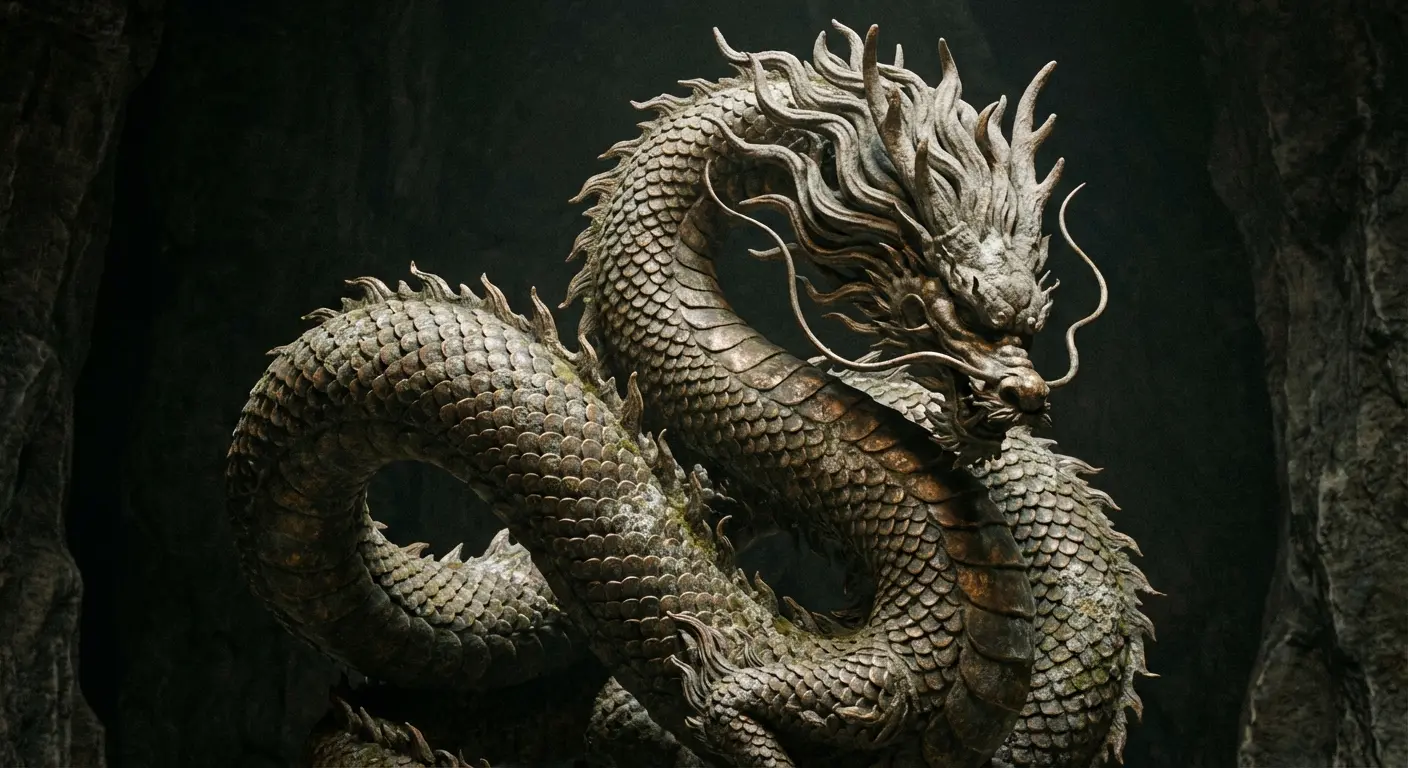
The dragon design coils around Tyson’s right bicep and forearm in traditional tattoo style, all scales and flames and serpentine movement. Dragons represent power, wisdom, and transformation in Chinese mythology, though Tyson’s version leans more toward the aggressive Western interpretation.
The wrapping design creates visual movement, making his arm appear more dynamic even at rest. This technique has been used in traditional Japanese tattooing for centuries, but Tyson’s version lacks the cultural context and cohesive design philosophy of true irezumi.
The dragon sits near his Mao portrait, creating an unintentional conversation between Chinese political history and mythological tradition.
The dragon tells us about Tyson’s attraction to creatures that inspire fear and respect simultaneously. He wasn’t interested in subtle symbolism. He wanted imagery that communicated threat instantly, across language and cultural barriers. The dragon succeeded at this goal while also marking him as part of the 1990s tribal/Asian fusion tattoo trend that dominated American parlors.
13. Warrior Face on His Left Shoulder
The warrior face design shows a stylized tribal mask or ancient fighter, all angular features and aggressive expression. The design sits on his left shoulder, balancing the predator imagery on his right side.
Tyson’s never specified which culture’s warrior tradition this represents, suggesting it’s a generic amalgamation of “warrior” aesthetics rather than a specific cultural reference. This type of tattoo was extremely popular in the 1990s, when tribal and primitive art influences dominated Western tattooing.
The warrior face functions as a mirror, showing opponents the violence they’re about to face. It’s performative masculinity made permanent, a visual shorthand for toughness that requires no explanation.
The thing is, this tattoo isn’t original. Thousands of men got similar designs in the same era, all trying to access some primal warrior energy through ink. Tyson’s version is better executed than most, but it still represents a moment in tattoo culture when everyone wanted to look fierce without understanding the traditions they were borrowing from.
14. The Panther Head Design
The panther head on Tyson’s upper arm represents the sleek, calculated violence he tried to embody in the ring. Unlike the roaring tiger, the panther appears calm but coiled, ready to strike without warning.
This distinction matters because it shows Tyson’s understanding that the most dangerous fighters don’t announce their attacks.
The panther in Black American culture also carries specific significance, connected to the Black Panther Party and ideas of protective aggression against systemic threats. Whether Tyson intended this political connection remains unclear, but the imagery resonates beyond simple predator symbolism.
The design quality is cleaner than some of his other animal pieces, suggesting a more skilled artist or more careful planning. Panthers hunt at night, moving invisibly until the moment of attack. Tyson saw himself this way in his prime: a force that appeared suddenly and ended fights before opponents could adjust.
15. Tribal Bands Across His Arms
The tribal bands? Honestly, these are just filler. Every guy in the ’90s got these.
The tribal band designs wrapping Tyson’s biceps and forearms represent the most generic element of his collection. These bold black patterns became the default choice for men wanting tattoos in the 1990s and early 2000s, appearing on everyone from athletes to weekend warriors.
Tyson’s versions are well-executed but unremarkable, serving more as space-fillers connecting his larger pieces than as meaningful statements.
Actually, wait. I said earlier these are meaningless, but they do serve a practical purpose: they create visual continuity across his arms, making his collection appear more cohesive than it is. Without these connecting elements, his tattoos would read as isolated images rather than a unified sleeve.
The tribal bands reveal how tattoo trends shape even the most individualistic collectors. Tyson wasn’t immune to the aesthetic moment he lived in, even as he pushed boundaries with more controversial choices.
The Unexpected Spiritual Journey
Here’s what gets lost in all the face tattoo talk: Tyson’s body is basically a map of his spiritual crisis.
Christianity from his mom. Islam from prison. Buddhism from trying not to be so angry all the time. Most people would just pick one religion, maybe? But Tyson tattooed all of them. Buddha’s on his chest. Arabic calligraphy on his ribs. Little crosses from childhood that he never covered up.
It’s theological chaos, and somehow it fits him perfectly.
These aren’t the tattoos of a casual believer or someone collecting exotic imagery. They represent real crisis points where Tyson reached for transcendent meaning to explain his chaos. The spiritual pieces appear primarily on his torso, close to his heart and hidden from casual view.
This placement suggests they’re more private than his aggressive animal imagery, meant for his own reflection rather than public consumption.
The man who bit Evander Holyfield’s ear also has Buddha on his chest. The convicted rapist also carries Islamic calligraphy praising Allah. These contradictions don’t resolve neatly, and that’s exactly why they matter. His spiritual tattoos show someone genuinely trying to become better while still carrying all his worst moments permanently visible.
16. Islamic Calligraphy Post-Conversion
Tyson converted to Islam while serving his prison sentence in the 1990s, taking the name Malik Abdul Aziz (though he rarely uses it publicly). The Arabic calligraphy on his ribcage and upper chest represents verses from the Quran and phrases praising Allah.
Here’s the ironic part: Islamic tradition discourages tattoos, considering them haram (forbidden) because they alter Allah’s creation.
Tyson getting Islamic tattoos reveals either his incomplete understanding of Islamic law or his selective application of religious principles. The calligraphy is reportedly accurate, suggesting he consulted with someone knowledgeable about Arabic script.
These tattoos represent his most sincere attempt at transformation, marking his body with the faith that gave him structure during his darkest period. Prison converts often face skepticism about the authenticity of their religious awakening, but Tyson’s choice to permanently mark himself suggests genuine commitment, even if imperfectly executed.
The Islamic pieces sit near his Christian angel wings and Buddhist imagery, creating a theological collision on his torso that somehow feels appropriate for someone whose life has never followed conventional paths.
17. The Buddha Portrait on His Torso
The Buddha portrait on Tyson’s chest appeared later in his spiritual journey, after his initial Islamic conversion. Buddhism’s emphasis on mindfulness, compassion, and letting go of ego attracted Tyson as he tried to manage his anger and impulsivity.
The portrait shows Buddha in meditation pose, serene and centered. Everything Tyson struggles to embody.
Tyson got Buddha tattooed on his chest during his anger management phase. Did it work? Have you seen his Instagram? The man’s still got a temper. But maybe without the Buddha he’d be worse. Who knows.
The placement over his heart suggests he wanted Buddhist principles close to his emotional center, literally covering the rage that defined his early career. Critics have pointed out the irony of a violent fighter wearing peace-focused religious imagery, but that criticism misses the point.
The tattoo exists because of the violence, not despite it. It’s a permanent intervention, a visual anchor he can reference when his old patterns resurface. The Buddha piece shows that tattoos can function as behavioral tools, not just decorative choices.

18. Cross Symbols From His Christian Upbringing
Small cross designs appear in several locations on Tyson’s body, remnants of his childhood Christianity that survived his later religious explorations. These crosses are simpler than his other religious tattoos, often just black outlines without elaborate detail.
They’re easy to miss among his more dramatic pieces, but their persistence matters.
Tyson never covered these crosses when he converted to Islam or explored Buddhism, suggesting he sees his religious journey as cumulative rather than replacement. The crosses represent his mother’s faith, the prayers she said over him when he was a troubled kid in Brownsville.
Removing them would feel like erasing her influence, something he’s never been willing to do despite all his other transformations. These small crosses demonstrate how our earliest beliefs leave marks that persist even after we’ve intellectually moved on.
They’re not his primary religious identity anymore, but they’re part of his history, and Tyson’s learned to let his history remain visible.
19. Protective Eye Symbol on His Inner Arm
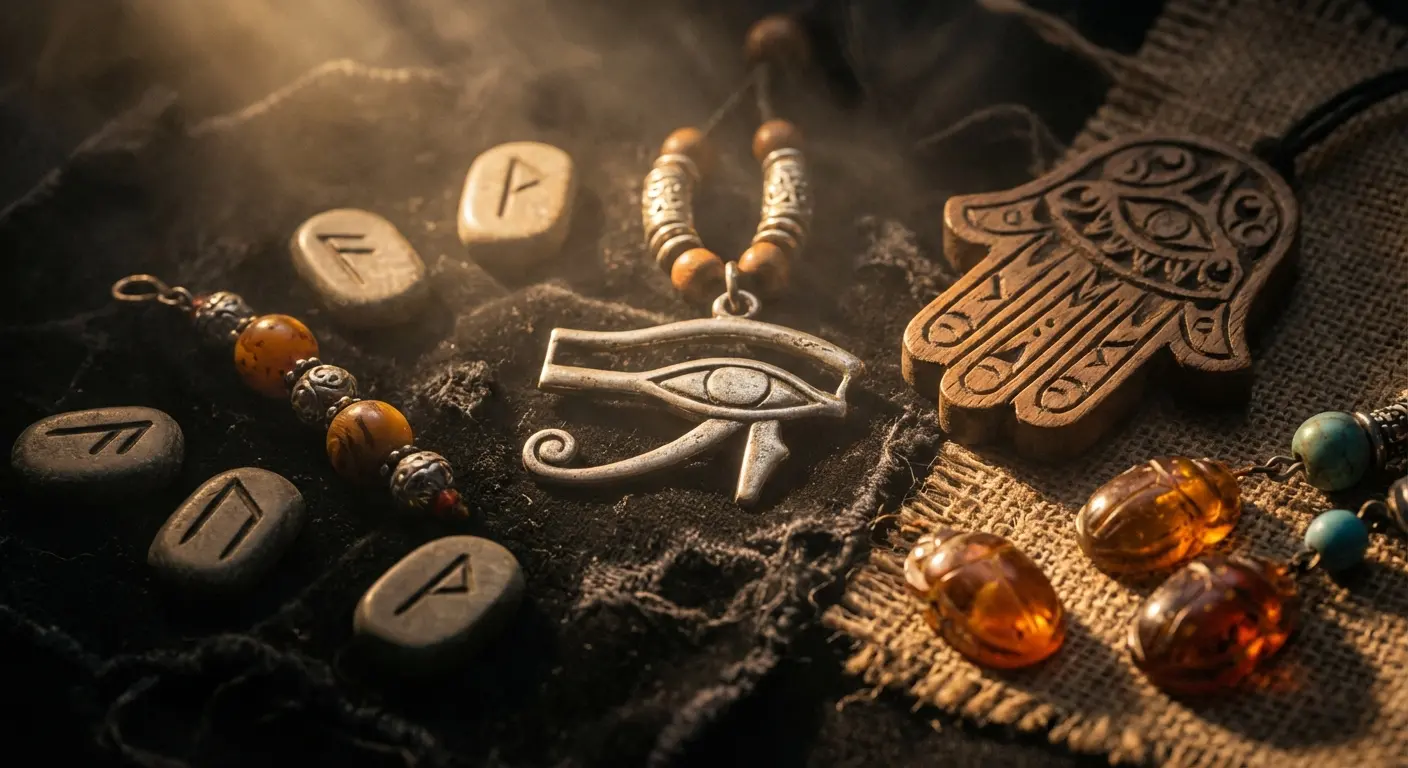
The protective eye (often called the evil eye or nazar) on Tyson’s inner arm represents his belief in spiritual protection against negative energy. This symbol appears across Mediterranean, Middle Eastern, and South Asian cultures, serving as a talisman against jealousy and ill will.
Tyson got this tattoo during a period when he believed enemies were cursing him, using spiritual means to destroy his career and life. The placement on his inner arm keeps it close to his body, less visible than his other pieces but always present.
This tattoo reveals Tyson’s ongoing belief in forces beyond the physical, his sense that his troubles couldn’t be explained by his own choices alone.
The protective eye suggests vulnerability beneath his aggressive exterior, an admission that even the baddest man on the planet sometimes feels powerless against invisible threats. It’s one of his smaller pieces but perhaps his most honest, acknowledging that toughness alone can’t shield you from everything.
Bringing Your Vision to Life Without the Regret
Tyson’s collection teaches us that tattoo decisions made during emotional extremes often require later modification or acceptance. His mike tyson face tattoo, done during a breakdown, became his defining feature. His relationship tattoos mark loves that didn’t last. His spiritual pieces document a search that’s still ongoing.
The common thread isn’t regret exactly, but the reality that permanent decisions capture temporary moments.
This is where thoughtful planning matters. You’re probably not going to tattoo your face (and you shouldn’t), but you might be considering pieces that feel urgent right now. Many people wonder did mike tyson get his face tattoo removed, but he never has. It’s become part of his permanent identity.
Tyson didn’t have the option to preview his choices digitally. You do.
Look, I work on Tattoo Generator IQ, which lets you test designs before you commit. Would’ve saved Tyson from those hearts. Just saying. The platform lets you see how that tribal band looks on your arm, or whether that portrait design captures what you’re imagining.
The goal isn’t to talk yourself out of meaningful tattoos. It’s to make sure the permanent mark matches the permanent intention, not just the temporary emotion.
Final Thoughts
Tyson’s tattoos are a mess. They contradict each other. They don’t make sense as a collection.
And that’s exactly why they work. Because his life doesn’t make sense either. The ink just makes it visible.
His collection isn’t coherent because his life hasn’t been coherent. The contradictions in his tattoos (peaceful Buddha next to aggressive tiger, Islamic verses despite religious prohibitions, memorial pieces for people he’s hurt) mirror the contradictions in his character.
What makes his body art valuable to study isn’t its artistic merit or cultural sensitivity. It’s the raw honesty of watching someone use their skin as a journal, documenting transformations, relationships, beliefs, and breaking points in real time.
His mike tyson face tattoo dominates every conversation about him, but the eighteen other pieces tell the story: a man searching for identity through permanent marks, trying to become someone different while carrying every previous version visibly forward.
Your tattoos will tell your story too, whether you plan it that way or not. The question is whether you’ll rush into that story or take time to make sure the permanent marks match the permanent meaning.
Tyson’s collection suggests that even impulsive choices can become meaningful over time, but thoughtful choices start meaningful and stay that way. Exploring the deeper significance of body art through resources like tattoo meaning guides can help ensure your choices align with who you’re becoming, not just who you are in this moment.
