22 Fallen Angel Tattoos That Reveal What You’re Actually Trying to Say
Table of Contents
-
Fallen Angels Reclaiming Power
-
Wings Torn But Not Broken
-
Lucifer’s Crown of Defiance
-
The Descent as Ascension
-
Chains That Became Weapons
-
Feathers Turning to Flames
-
Eyes That Still See Heaven
-
The Moment Before Impact
-
Broken Halo, Unbroken Spirit
-
-
Fallen Angels in Transformation
-
Half Angel, Half Shadow
-
Wings Dissolving Into Ravens
-
The In-Between State
-
Falling Upward Through Stars
-
Armor Forged From Rejection
-
The Phoenix-Angel Hybrid
-
Roots Growing From Broken Wings
-
Light Bleeding Through Darkness
-
-
Fallen Angels Embracing the Fall
-
The Smile Mid-Descent
-
Landing on Your Own Terms
-
Hell’s Throne Room Portrait
-
Wings Folded in Acceptance
-
The Minimalist Plummet
-
Scars as Sacred Geometry
-
TL;DR
Fallen angel tattoos work when they capture your specific story, not generic darkness. Focus on the moment of choice, not the punishment. Small designs can still be powerful. Placement changes everything. Figure out what you’re trying to say first, then worry about the technical stuff.
Fallen Angels Reclaiming Power
Most fallen angel tattoos get stuck performing victimhood. Endless suffering, eternal punishment, all that dramatic pain.
We’re not doing that here.
This section is about designs where the fall was a choice. Where exile became liberation. Yeah, there’s pain in separating from what you knew, but there’s also the autonomy that came with it. You’re not documenting a tragedy. You’re marking the moment you chose yourself over acceptance, even when it cost you everything.
Each design treats the fallen angel as someone who gained something through their descent. Self-knowledge. Freedom from impossible standards. The right to define their own morality. With most tattoo shops charging an $80 shop minimum for work under an hour, knowing exactly which design captures your story helps maximize both your money and the emotional impact. Shop minimums typically hit around $80 for pieces that take less than an hour, so having a clear vision before your consultation matters.
1. Wings Torn But Not Broken
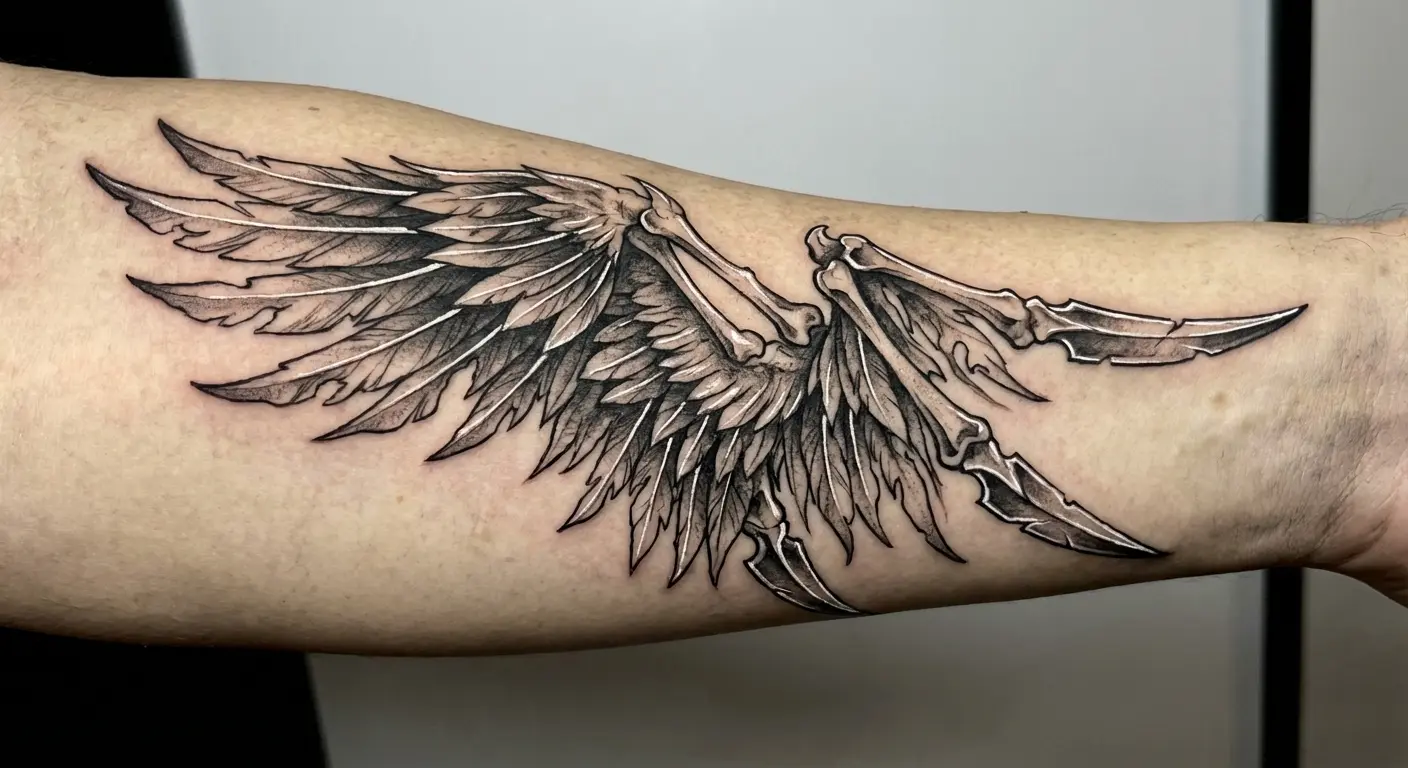
Wings getting shredded mid-flight. Feathers tearing away in real-time. But look at what’s underneath. The bone structure is still there. Still solid. Still functional.
That’s the whole point. Yeah, something hurt you. Maybe tore pieces off. But you’re not grounded.
Put it across your shoulder blades if you want it to feel like actual wings instead of a picture of wings. The alignment with your real anatomy makes it hit different, kind of like augmented reality before that was even a thing.
Here’s the key detail most people miss: make it asymmetrical. One wing more damaged than the other. Perfect symmetry looks decorative, like you picked it from a flash sheet. Uneven damage looks like something actually happened to you.
Tell your artist to leave some of those remaining feather tips sharp. Blade-like. Not soft and pretty. What’s left has been weaponized by necessity, you know? Black and grey works best for this. Maybe white ink highlights on the intact sections if your artist is confident with white ink. Just know it fades faster than you think. The contrast between what’s lost and what’s hardened is what makes this work.
2. Lucifer’s Crown of Defiance
Portrait-style piece. A fallen angel wearing a crown that’s clearly not heavenly in origin. Think twisted metal, bone elements incorporated into the design, or a crown that looks like it’s growing from the skull itself rather than sitting on top.
The face shouldn’t show regret.
I mean calculated satisfaction. Someone who knew exactly what they were trading and considered it worth the price. Chest or upper arm gives you enough canvas for facial detail that actually reads from a distance.
The crown becomes the focal point, so work with your artist on whether it should look organic (grown from the rebellion itself) or crafted (deliberately chosen as a replacement for the halo). I’ve seen both versions work. Including subtle flame elements emerging from the crown’s base keeps things from getting visually cluttered while still nodding to the traditional hell imagery. Just don’t surround the entire head in flames unless you want it to look like a 2007 MySpace profile picture.
|
Crown Style |
Visual Characteristics |
Emotional Message |
Best Placement |
|---|---|---|---|
|
Organic Growth |
Appears to emerge from skull, bone-like texture, irregular formations |
Rebellion as natural evolution, inevitable transformation |
Upper back, chest |
|
Crafted Metal |
Twisted iron, deliberate construction, sharp angles |
Conscious choice, self-coronation, agency |
Upper arm, chest |
|
Hybrid Form |
Combination of grown and forged elements, mixed materials |
Complex relationship with power, earned authority |
Chest, full back |
|
Minimalist Wire |
Simple line work, delicate but present, abstract suggestion |
Subtle defiance, quiet power, understated rebellion |
Forearm, shoulder |
3. The Descent as Ascension
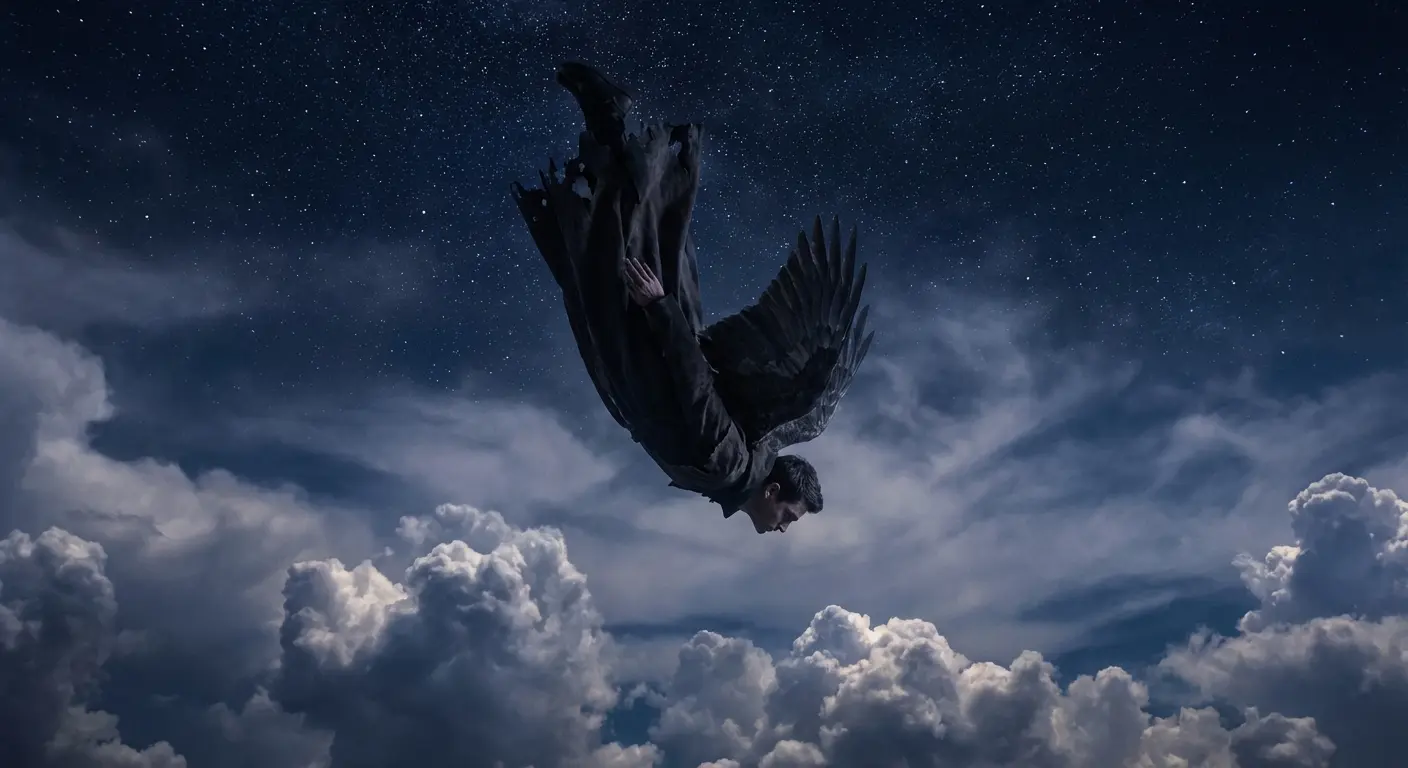
Okay, this is where we get spatially weird. The angel is positioned upside-down in the frame, but their expression and body language suggest they’re rising rather than falling. It’s all about perspective and how you orient the piece on your body.
Wings folded back in a dive position, but there’s clear intention and control in the posture. I’ve seen this work exceptionally well as a full-back piece where the angel’s head points toward your lower back. Creates this optical illusion that they’re diving deeper into something rather than away from it.
Add environmental elements. Clouds at the “bottom” of the design, flames or stars at the “top.” Reinforces the directional confusion. The psychological impact comes from viewers needing a moment to process what they’re seeing, that slight double-take that mirrors the conceptual reversal you’re expressing. When planning your back tattoo composition, think about how the upside-down orientation reads when you’re standing versus when someone sees it straight-on.
4. Chains That Became Weapons
This concept takes the punishment iconography and repurposes it entirely. An angel still wearing the chains meant to bind them, but wielding those same chains as weapons or tools.
Chains wrapped around their forearms like combat gear. Held like whips. Reformed into armor. The key detail is showing the transformation point where restraint becomes resource. Include broken links scattered around the design to show what’s been shed versus what’s been kept by choice.
This reads particularly well as a sleeve or thigh piece where you have vertical space to show the chain’s full length and multiple interaction points with the body. Consider having some chain sections appear almost organic, fused with the skin or wings. What was meant to limit you has literally become part of your strength.
Actually, I take that back about the organic fusion thing. That can look cheesy if your artist isn’t careful. Maybe just have the chains wrapped deliberately instead.
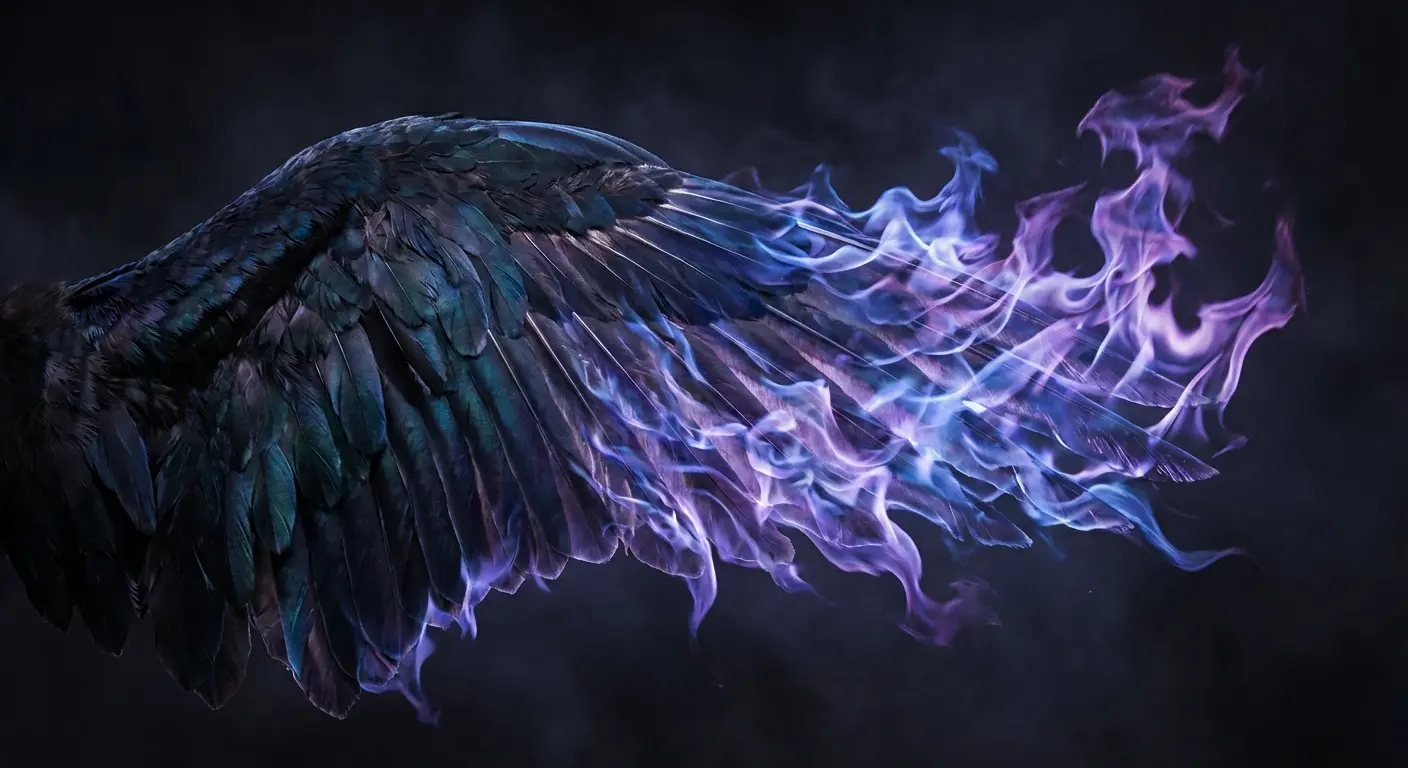
5. Feathers Turning to Flames
Capturing the active moment of transformation. Individual feathers igniting and becoming fire without the wings burning away entirely. This isn’t about destruction. It’s evolution into a new form.
You need to see both states clearly. Some feathers still intact and white or grey, others mid-transformation with that gradient from solid matter to flame. Placement on areas with natural movement like outer thigh, ribs, or forearm adds dimension because the flames can follow your body’s contours.
Keep the angel’s face turned toward the burning sections. Watching the transformation with interest rather than horror.
The color palette makes or breaks this one. If you’re going full color, use cooler flames. Blues and purples rather than traditional orange and red to avoid the design reading as generic “angel on fire” imagery. Black and grey versions should emphasize the texture difference between feather barbs and flame wisps. This captures that precise moment when what you were becomes fuel for what you’re becoming.
Look, I’m probably too excited about this design, but it’s genuinely one of the most interesting on the list.
6. Eyes That Still See Heaven
Close-up, portrait-focused design. Centers entirely on the face, specifically the eyes, which reflect or contain imagery of what they left behind.
You might see heaven reflected in their pupils, sacred geometry in their irises, or even a subtle glow that suggests they still carry that light internally despite the fall. The surrounding face should show marks of the descent. Cracks in the skin, shadows, weathering. But the eyes remain untouched and clear.
This works as a smaller piece. Inner bicep, calf, upper back. You need that intimate scale for the eye detail to read properly. I’d discuss with your artist whether the heavenly reflection should be obvious or subtle enough that it’s only visible upon close inspection. The latter creates a more personal piece that reveals itself slowly.
Adding a single tear that contains stars or light particles can emphasize the grief of separation without making the whole thing about loss. Or skip the tear entirely if that feels too on-the-nose for you.
7. The Moment Before Impact
Freezing the split second before the angel hits the ground. That suspended moment of absolute clarity. Body position shows someone bracing for impact but not cowering. Feet positioned to land and absorb rather than crash. Captured kinetic energy and readiness.
Wings might be pulled in tight to the body or spread wide as air brakes, depending on whether you want to emphasize protection or control. Ground elements like cracked earth, scattered debris, displaced air can be suggested at the bottom edge without actually showing the landing. Keeps the focus on that anticipatory moment.
This reads well as a vertical piece on the ribs, outer thigh, or full back where you have space to show the body’s full length and positioning. Ribs are brutal for this much coverage, just so you know. Adding motion blur or wind effects around the extremities (hair, wing tips, fabric) reinforces the sense of speed and imminent arrival without needing to depict actual movement.
8. Broken Halo, Unbroken Spirit
Here’s your minimalist option. Just a fragmented halo, broken into distinct pieces but arranged in a way that creates a new, arguably more interesting pattern.
Maybe the pieces form a crown. Maybe they orbit the head in a planetary ring. Maybe they’ve been repurposed into a completely different symbolic shape. The angel’s head and expression should show someone who’s not mourning the break but curious about what can be built from the pieces.
I’ve seen this work beautifully as a smaller shoulder or forearm piece where the halo fragments can wrap around the muscle’s natural curve. You can keep the halo pieces metallic and pristine (suggesting the divine origin remains valuable even in broken form) or show them tarnished and reformed (emphasizing transformation over preservation).
Including the angel’s hands actively rearranging the pieces adds agency. Makes it clear this is about reconstruction, not destruction.
Fallen Angels in Transformation
Look, transformation isn’t instant. You don’t fall from grace on Tuesday and land fully formed on Wednesday.
This section is about that messy middle period where you’re neither thing. Not who you were, not yet who you’re becoming. Just… in between. And that’s uncomfortable, but it’s also where the actual work happens.
These designs embrace contradiction and incompleteness. Angels mid-metamorphosis with elements of both their celestial past and their post-fall future visible simultaneously. There’s vulnerability here, but it’s the productive kind. The necessary exposure that comes with genuine change.
If you’re getting inked because you’re actively in the middle of your own transformation (leaving a belief system, rebuilding your identity, breaking from expectations), these designs will resonate differently than the reclamation pieces. They don’t offer resolution because you don’t have resolution yet. They document the process itself as sacred.
9. Half Angel, Half Shadow
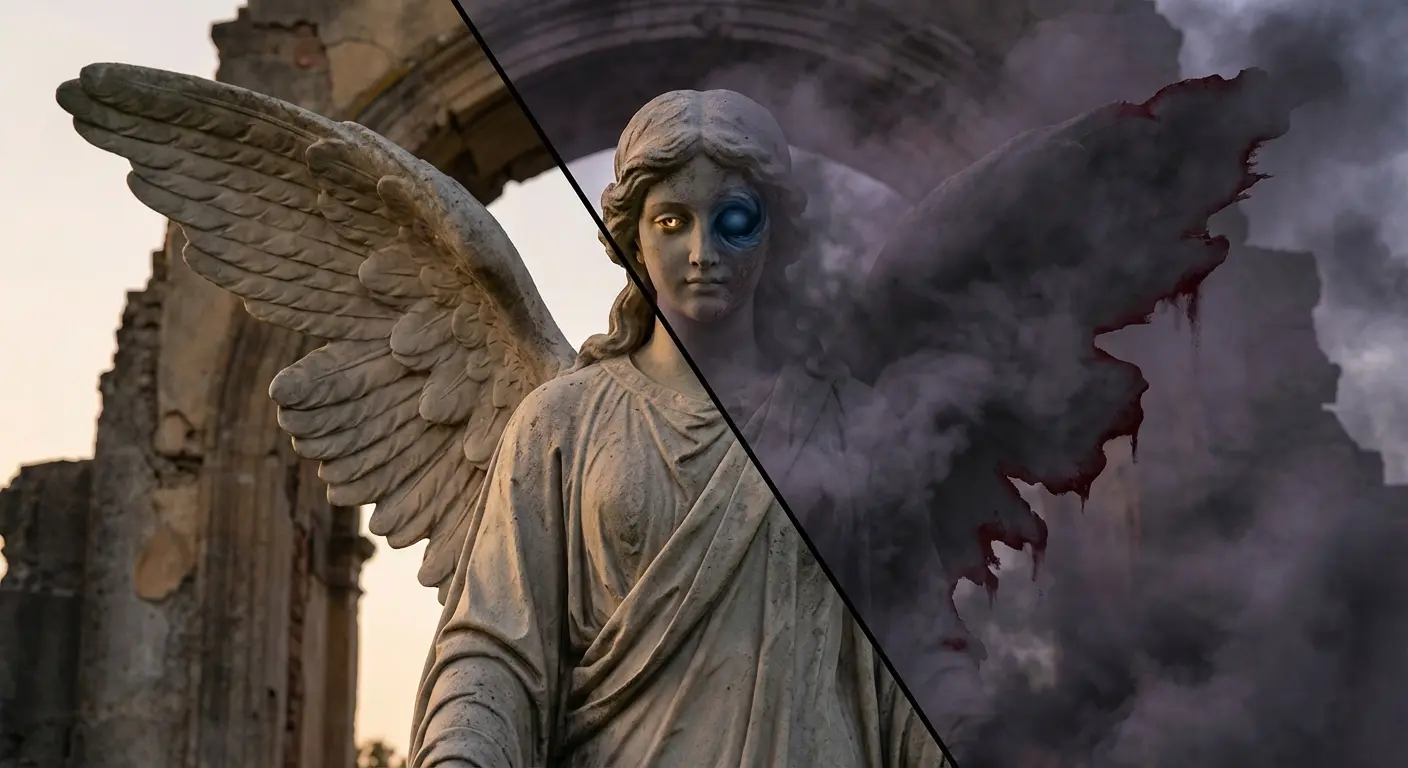
Split the angel vertically or diagonally. One half rendered in traditional angelic imagery (intact wing, smooth skin, peaceful expression) and the other half dissolving into shadow, smoke, or abstract darkness.
The division line is crucial. Make it organic and irregular rather than a straight split. Elements from each side bleeding across the boundary. Shadow tendrils creeping into the light side or remnants of feathers persisting in the dark half.
The face works best when both eyes are visible but clearly different. One still bright and one dimmed or changed. Place this on areas where you have enough canvas for the full figure. Thigh, back, full sleeve. Cramming it into a small space loses the impact of the contrast.
Consider whether you want the shadow half to feel threatening or liberating. That emotional tone will guide every artistic choice from the darkness’s texture to the angel’s expression. Personally, I think liberating is more interesting, but threatening works if that’s your story.
10. Wings Dissolving Into Ravens
Your wings aren’t just falling apart. They’re actively transforming into separate living creatures that are flying away from you. Each feather becomes a raven or crow, creating this cascade of birds emerging from the wing structure and scattering in different directions. Some are still half-feather, half-bird, caught mid-transformation.
This asks a specific question: is losing parts of yourself always loss, or is it sometimes release?
The angel’s posture and expression determine the answer. Are they reaching for the departing birds or watching them go with acceptance? That choice changes everything.
I’d recommend this as a back piece or large shoulder-to-arm composition where you have space for multiple birds at various stages of transformation and flight. The wing structure should become increasingly skeletal and bare as you move from shoulder to wing tip, showing the source of the transformation. Add a few ravens returning or circling back. Suggests that what leaves might come back changed, which adds complexity to the narrative.
Community-focuse
Community-focused tattoo events have become increasingly meaningful ways to combine personal expression with charitable causes. Fallen Angel Tattoos partnered with Salt Lake County Animal Services for their annual Tats for Cats fundraiser, raising $2,300 for injured animals through customizable pre-selected designs. This kind of collaborative approach demonstrates how tattoo studios are creating spaces where meaningful body art intersects with community impact.
11. The In-Between State
An angel suspended in negative space. Neither ascending nor descending. Just existing in the void between destinations. The body might be positioned horizontally, floating, with minimal environmental context to anchor them in any specific location.
Wings could be present but non-functional. Wrapped around the body, torn, or simply still. Emphasizes the suspension of movement. This works for people who are comfortable with uncertainty and want to mark a period of deliberate pause rather than constant motion.
Placement in areas with natural negative space on the body (side ribs, where your actual negative space enhances the design’s negative space) creates visual coherence. Keep additional elements minimal. Maybe just a few floating feathers or subtle geometric shapes that suggest structure without defining location.
The angel’s expression should read as contemplative rather than distressed. Someone choosing to exist in the question rather than rushing toward an answer.
12. Falling Upward Through Stars
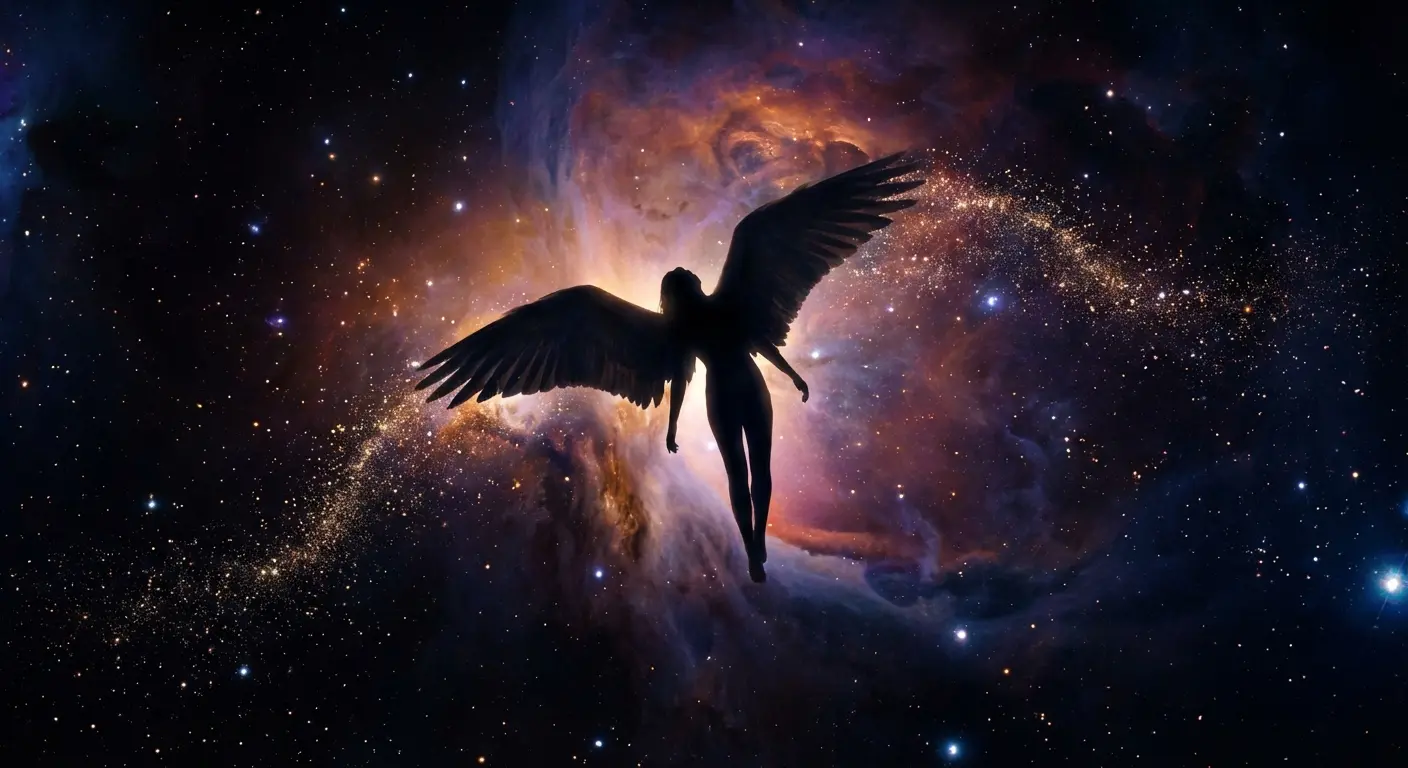
This plays with cosmic imagery. An angel descending through space itself, with stars and celestial bodies as environmental context. The twist is that the positioning and motion lines suggest they’re falling “up” through the cosmos, moving deeper into the universe rather than away from it.
You’re replacing the heaven/hell vertical axis with something more expansive and less binary. The wings might be collecting stardust, or individual feathers might be turning into small galaxies. I love this as a sleeve or full-leg piece where you can create real depth with foreground and background star fields.
The color palette matters enormously. Deep blues and purples with white and silver highlights create that cosmic feel without becoming visually overwhelming. Consider having the angel’s body partially silhouetted against a bright nebula or star cluster. Creates dramatic contrast and emphasizes that they’re moving through something beautiful rather than falling into punishment.
13. Armor Forged From Rejection
Transformation becomes visible protection. An angel developing or wearing armor that’s clearly made from the experience of falling itself. Think plates formed from hardened shadow, a breastplate that looks like compressed darkness, or shoulder guards that incorporate broken halo fragments and charred feathers.
The armor shouldn’t look heavy or burdensome. It should appear custom-fitted and chosen. Including the angel in the process of putting on or adjusting the armor adds narrative dimension. Shows this as an active choice rather than a passive result. This works well as a chest piece or upper-back design where the armor’s placement on the angel can mirror armor placement on your own body.
Leave some skin visible beneath or between armor pieces to show the vulnerability that still exists. Transformation doesn’t mean invulnerability. The armor’s texture and material should look earned and organic rather than manufactured. Suggests it grew from experience rather than being handed down. When you’re exploring design ideas, consider how protective elements can tell the story of what you’ve survived without erasing the fact that you were wounded.
|
Transformation Stage |
Visual Indicators |
Symbolic Meaning |
Design Considerations |
|---|---|---|---|
|
Early Transformation |
25-40% changed, mostly angelic features remain |
Just beginning the journey, uncertainty dominant |
Keep celestial elements detailed, changes subtle |
|
Mid-Transformation |
50-60% changed, equal balance of light and dark |
Active struggle, neither identity fully present |
Emphasize the boundary line, show bleeding between states |
|
Advanced Transformation |
70-85% changed, new form emerging |
Nearing completion, new identity solidifying |
Make the new form compelling, not just “corrupted angel” |
|
Acceptance Stage |
90-100% transformed, integrated whole |
Journey complete, new equilibrium found |
Focus on coherence and power in the final form |
14. The Phoenix-Angel Hybrid
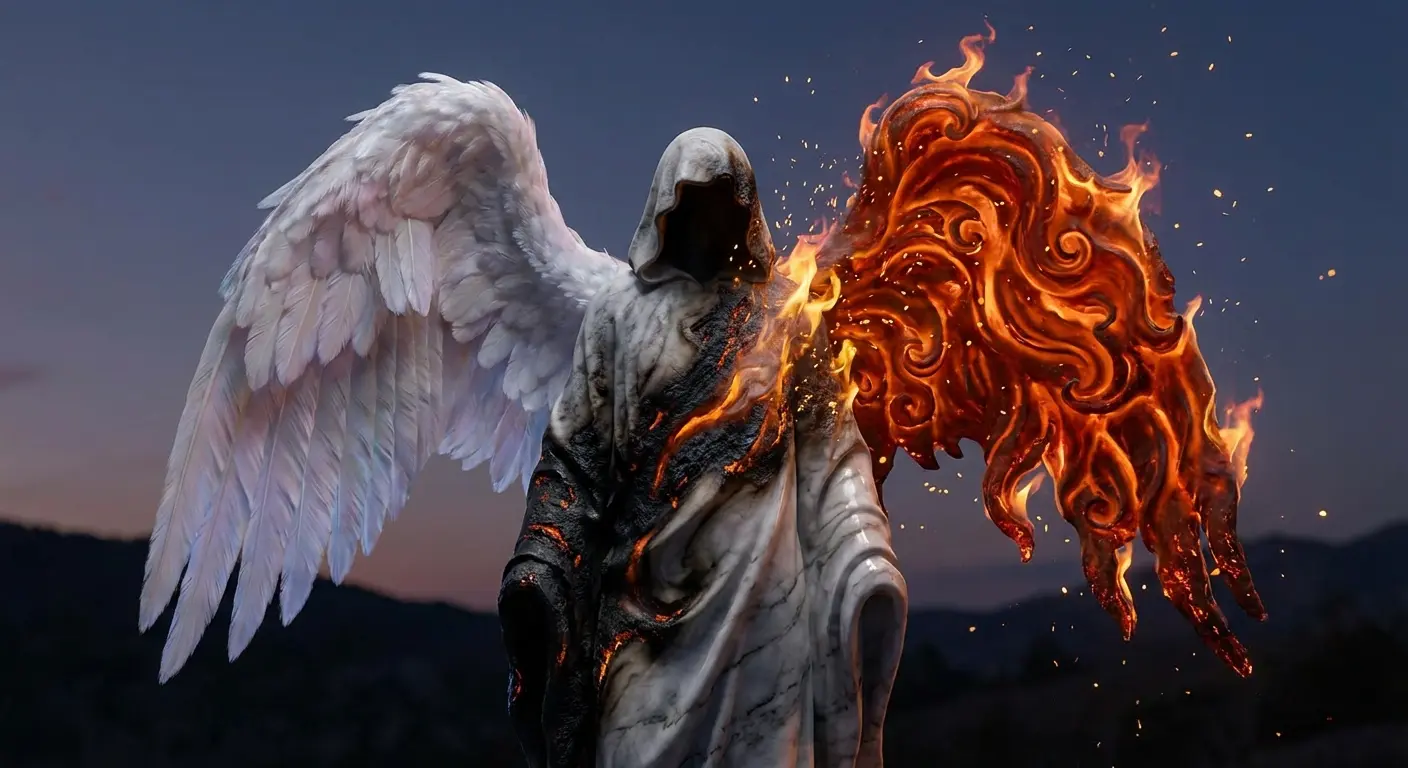
Okay, this one’s kind of incredible. You’re combining two transformation mythologies into a single figure. An angel whose wings are simultaneously feathered and made of fire, whose body shows both celestial and phoenix characteristics. This isn’t just an angel on fire. It’s a deliberate fusion that suggests the fall itself was a death that enabled rebirth.
Make it ambiguous whether the angel is burning up or being born from flames. I’ve seen this work exceptionally well with one wing clearly angelic and one clearly phoenix-like. Creates asymmetry that emphasizes the hybrid nature.
Placement on the back or as a full-sleeve allows you to show both wings fully and create that visual contrast. Color becomes crucial here. If you’re going full color, you need to distinguish between the cool tones of traditional angel imagery and the warm tones of phoenix fire without making them clash. Black and grey versions should rely heavily on texture differences (smooth feathers versus flame wisps) to create the distinction.
15. Roots Growing From Broken Wings
This inverts the expected imagery by showing an angel whose damaged or broken wings are sprouting roots instead of healing with feathers. The roots might be growing downward (suggesting new grounding and connection to earth) or wrapping around the angel’s body (suggesting the transformation is becoming integrated into their being).
You’re making a statement about finding new forms of connection and stability after the ones you relied on were destroyed. The angel’s relationship to the roots matters. Are they nurturing them, ignoring them, or struggling against them? That emotional context guides the entire piece.
Place this on areas where the roots can extend and travel across the body. Full back with roots extending to lower back and hips, or a thigh piece where roots can travel down the leg. Consider whether you want the roots to look healthy and vital or dark and twisted. That choice reflects whether you see your new grounding as nourishing or complicated.
16. Light Bleeding Through Darkness
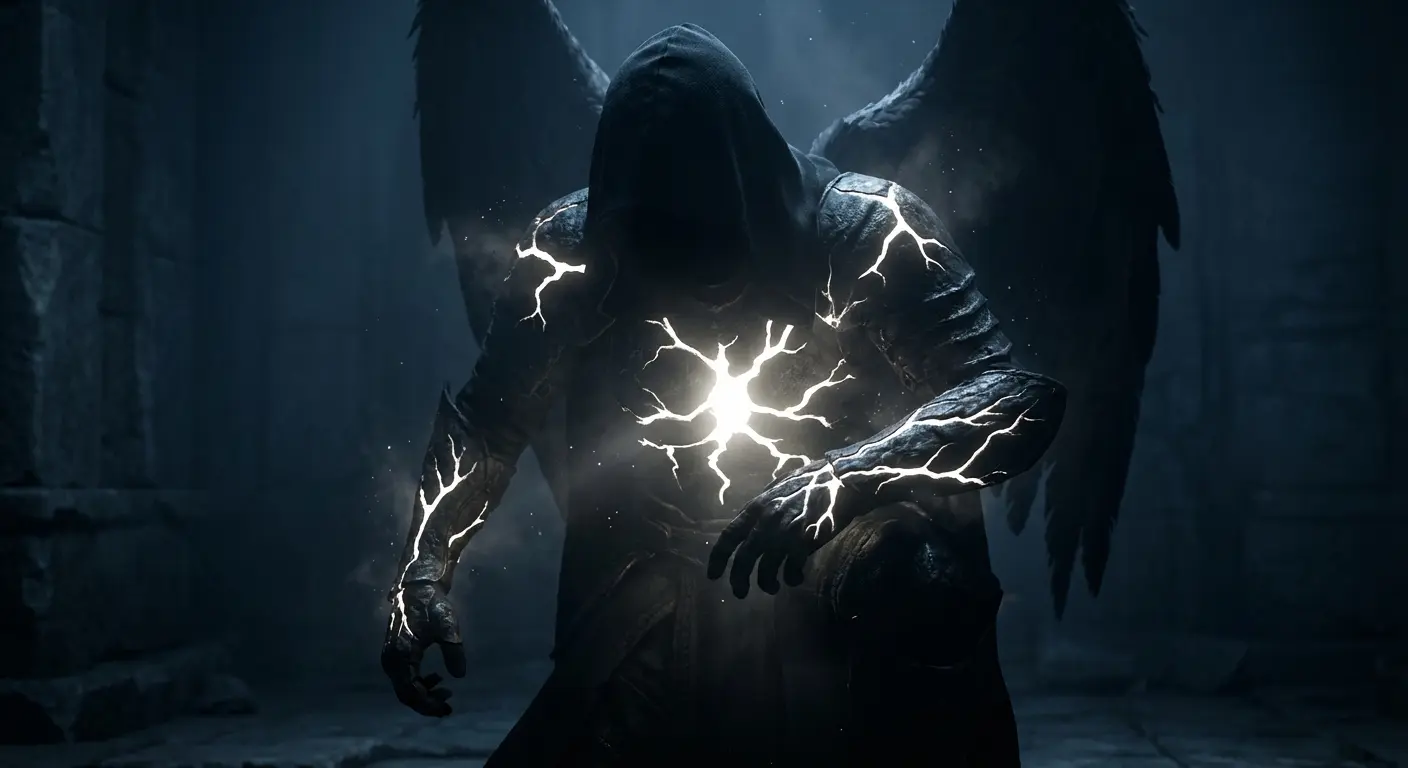
An angel whose body or wings are primarily dark or shadowed, but with cracks or fissures where bright light is actively breaking through from inside. This suggests that divinity or goodness wasn’t removed by the fall. It’s just contained differently now, still present but expressed through the damage rather than despite it.
The cracks should follow natural stress points on the body. Along the spine for back pieces, following muscle lines for arms or legs. Creates anatomical coherence. The light bleeding through can be white ink on darker skin tones or negative space in the design for lighter skin tones, both creating that internal glow effect.
Keep the cracks irregular and organic rather than geometric. Suggests they formed from internal pressure rather than external design. The angel’s expression should show awareness of what’s happening. Maybe even satisfaction that the light found a way out. This works as a medium to large piece (upper arm, thigh, shoulder blade) where you have enough space for multiple light sources breaking through at different intensities. These pieces prove that what’s inside you will find expression, even when you’ve built walls around it.
Celebrity tattoo choices often reflect deeply personal transformation narratives. Demi Lovato’s fallen angel back tattoo features “a fallen angel being lifted by 3 pure, angelic doves (the Holy trinity) as her inner light is being guided by a higher consciousness, and the disintegration of her dark wings was representing the darkness I was shedding.” Her collaboration with artist Alessandro Capozzi demonstrates how working with someone who understands your narrative can create imagery that captures specific spiritual and emotional transitions rather than generic symbolism.
Understanding the broader symbolism of angel tattoos helps contextualize how fallen angel imagery subverts traditional angelic meanings.
Fallen Angels Embracing the Fall
What if the fall wasn’t something that happened to you but something you fully own?
This final category moves past both victimhood and the struggle of transformation into complete acceptance. Or even celebration.
These designs feature angels who aren’t fighting their new reality or mourning what they lost. They’ve landed, assessed the situation, and decided they’re exactly where they need to be. There’s power in acceptance that gets overlooked when we’re obsessed with resistance narratives.
If your ink is about marking the end of a journey rather than the beginning or middle, if you’ve already done the hard work of rebuilding and want to document where you’ve arrived, these designs offer that closure. They’re not about hope for redemption because redemption implies you need fixing. These pieces declare that you’re complete as you are, fall and all.
17. The Smile Mid-Descent
This captures a falling angel with a genuine smile or smirk. Someone who’s clearly enjoying the freefall rather than dreading the landing. The body language should reinforce the emotional tone with arms spread wide, head tilted back, wings either absent or deliberately tucked away to increase speed.
You’re depicting the exact moment someone realizes that falling feels like flying when you stop fighting it. Environmental elements rushing past (clouds, light streaks, scattered feathers) emphasize the speed and motion without cluttering the central figure.
This works beautifully as a forearm or outer thigh piece where the vertical orientation matches the descent direction. The expression is everything here, so you need an artist comfortable with facial work who can capture that specific emotion of joyful surrender. Consider adding small details that suggest preparation rather than accident. Packed bag, deliberate hand positioning, eyes open and focused. Makes it clear this fall was chosen.
18. Landing on Your Own Terms
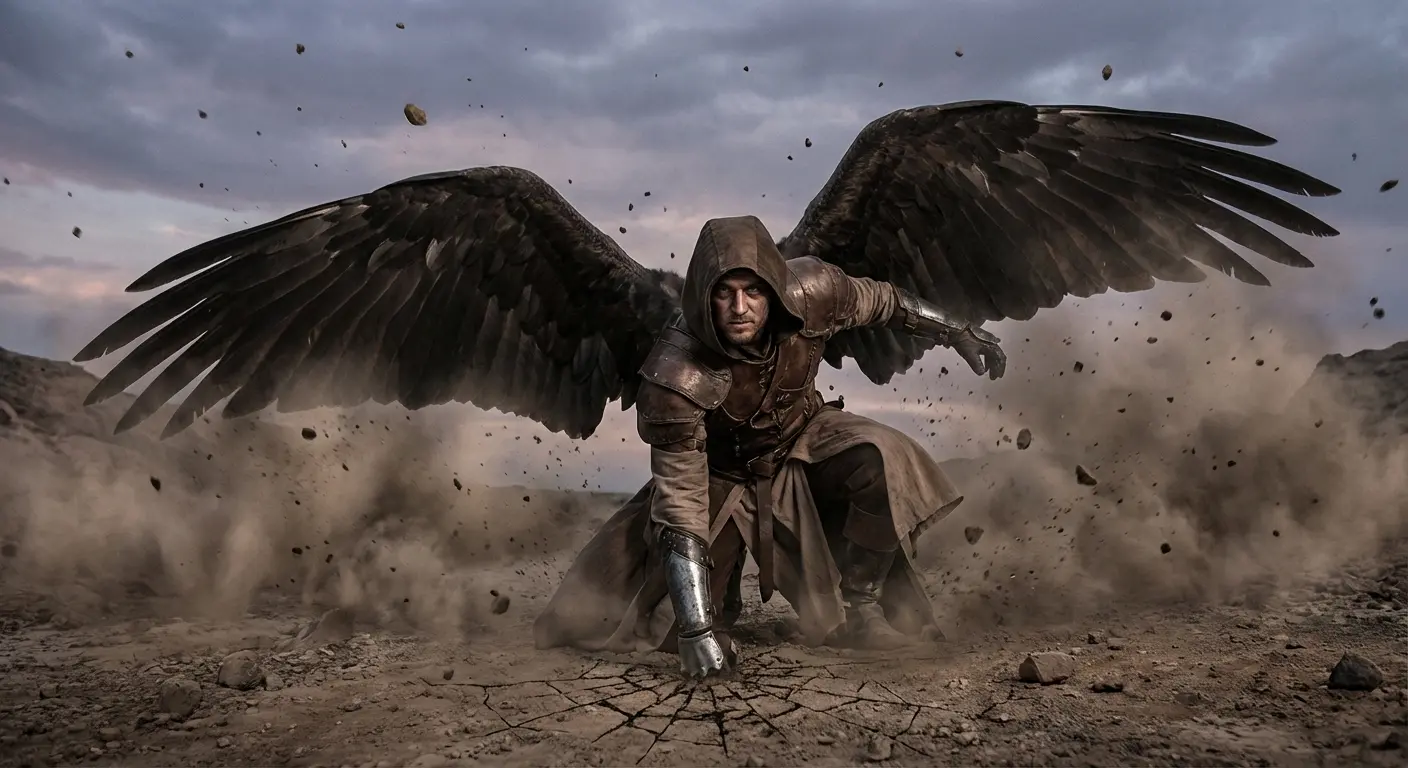
The moment of impact, but the angel is landing in a controlled crouch or powerful stance rather than crashing. One hand might be touching the ground for balance while the other is raised. Wings spread for the final air brake before folding.
The ground beneath them could show impact cracks radiating outward. Emphasizes the force of arrival without suggesting damage to the angel themselves. This says you didn’t just survive the fall. You stuck the landing.
Placement on the calf or outer thigh allows the crouched position to follow your leg’s natural muscle structure. Creates dimensionality. Show environmental debris (dust, small rocks, displaced air) suspended in mid-air around the angel, frozen in that split-second after impact. Adds drama without requiring complex background work. The angel’s face should show determination or satisfaction. Someone taking stock of their new environment and finding it acceptable.
19. Hell’s Throne Room Portrait
This is your boldest option. A formal portrait of an angel seated on a throne in their new domain, looking completely at home. The throne itself becomes a major design element. Made from twisted metal, bone, stone, or abstract darkness.
The angel’s posture should be relaxed and confident. Not the rigid formality of heavenly imagery but the ease of someone who’s claimed their space. You might include environmental details that suggest hell or the underworld (subtle flame elements, dark architecture, shadowy attendants in the background) without making it cartoonish.
This works as a larger chest piece or thigh panel where you have space for the full seated figure and throne details. Consider whether you want the angel looking directly at the viewer (confrontational and engaging) or gazing off to the side (contemplative and secure enough not to need validation). Adding small luxury details (a goblet, scattered weapons, books) suggests they’ve built a life here rather than just existing in exile.
20. Wings Folded in Acceptance
Sometimes the most powerful statement is the quietest. An angel with wings completely folded and at rest. Not damaged or hidden but simply still. The body language reads as peaceful rather than defeated. Someone who’s done moving and is comfortable with where they’ve stopped.
You might show the angel seated, standing in a relaxed pose, or even lying down, but the key is that there’s no tension in the posture. This works well as a back piece where the folded wings can align with your shoulder blades in their natural resting position, or as a side piece where you see the angel in profile with wings folded behind them.
Keep additional elements minimal because the power comes from the simplicity and the emotional stillness. The face should show contentment or neutral calm. Not the forced peace of someone trying to convince themselves but the genuine rest of someone who’s fought their battles and is done fighting.
21. The Minimalist Plummet
Here’s your small design option that still carries conceptual weight. Strip the imagery down to its essential elements. A simple silhouette of a falling figure, maybe just an outline, with minimal wing suggestion (a few key feather lines or just the wing structure without details).
The power comes from what you leave out rather than what you include.
Placement matters enormously for minimalist work. Behind the ear, inner wrist, ankle, or side of the finger all work because the small scale matches the simplified imagery.
You might add a single element for context. A broken halo above the figure, a small flame below, a single feather trailing behind. But resist the urge to complicate it. The falling position should be clear and readable even at small scale, which usually means a vertical dive position rather than complex angles. This approach works for people who want the concept without the commitment to a large piece, or as a first tattoo that can be expanded later if desired. For those seeking understated designs, exploring simple tattoo concepts can help you identify which minimal elements carry the most meaning for your minimalist approach.
22. Scars as Sacred Geometry
This final design reimagines the wounds and scars from the fall as deliberate sacred geometry patterns. Suggests that the damage itself created something beautiful and meaningful. An angel whose body bears geometric scars (straight lines, perfect circles, triangular patterns) that clearly weren’t random injuries but have organized themselves into intentional designs.
The scars might glow faintly or be filled with color. Emphasizes their transformation from wounds to decorative elements. This works particularly well on areas where you can create patterns that follow your body’s natural geometry. Spine, ribs, collarbones.
The angel’s relationship to these scars should show ownership and even pride. Perhaps tracing them with their fingers or displaying them openly. I’d recommend incorporating some mathematical or mystical elements (fibonacci spirals, golden ratio proportions, occult symbols) into the scar patterns to suggest that there’s deep meaning in what appeared to be random damage. The overall effect should feel like the fall wrote something important on the angel’s body that they’ve chosen to preserve and highlight. Similar to how Medusa tattoo symbolism transforms victimhood into power, these designs often center on reclaiming your narrative from those who tried to define you through your lowest moment.
I’ve worked with thousands of people trying to capture their specific vision, and the most common frustration I hear is the gap between the concept in your head and what you can actually communicate to an
I’ve worked with thousands of people trying to capture their specific vision, and the most common frustration I hear is the gap between the concept in your head and what you can actually communicate to an artist. You know the emotional tone you want, the specific narrative beat you’re trying to capture, but translating that into visual reference is genuinely difficult.
Tattoo Generator IQ solves this by letting you generate multiple variations of your concept with different styles, angles, and details until you land on something that matches your internal vision. You can adjust specific elements (wing damage level, expression intensity, environmental context) and see the changes immediately. Builds a reference that captures your nuanced interpretation rather than settling for generic imagery. Your artist gets a clear visual starting point, and you get the confidence that what ends up on your body reflects what you meant to say. Using a tattoo art generator allows you to experiment with different compositions before committing to a final design with your artist.
Final Thoughts
Fallen angel tattoos fail when they’re about aesthetic rebellion without personal meaning. When you’re choosing the imagery because it looks dark and cool rather than because it reflects something true about your experience.
The designs we’ve covered work because they each capture a specific emotional or philosophical position. Defiant reclamation, uncomfortable transformation, or complete acceptance.
You don’t need to have literally fallen from grace to connect with this imagery, but you do need to know which aspect of the fall resonates with your story. Maybe you’re in the messy middle of transformation right now and the hybrid imagery speaks to you. Maybe you’re years past your fall and ready for the throne room portrait.
Trust that specificity when choosing your design.
Your piece should be precise about what it’s saying, even if what it’s saying is complicated. The categories matter less than finding the single design that makes you think “that’s exactly it.”
Start by identifying which emotional beat you’re trying to capture, then work backward to the visual elements that communicate it. The wings, the expression, the environmental context are all vocabulary for telling your specific version of the story.
Don’t settle for close enough.
