Your Dragon Tattoo Looks Dead When You Move (Here’s Why)
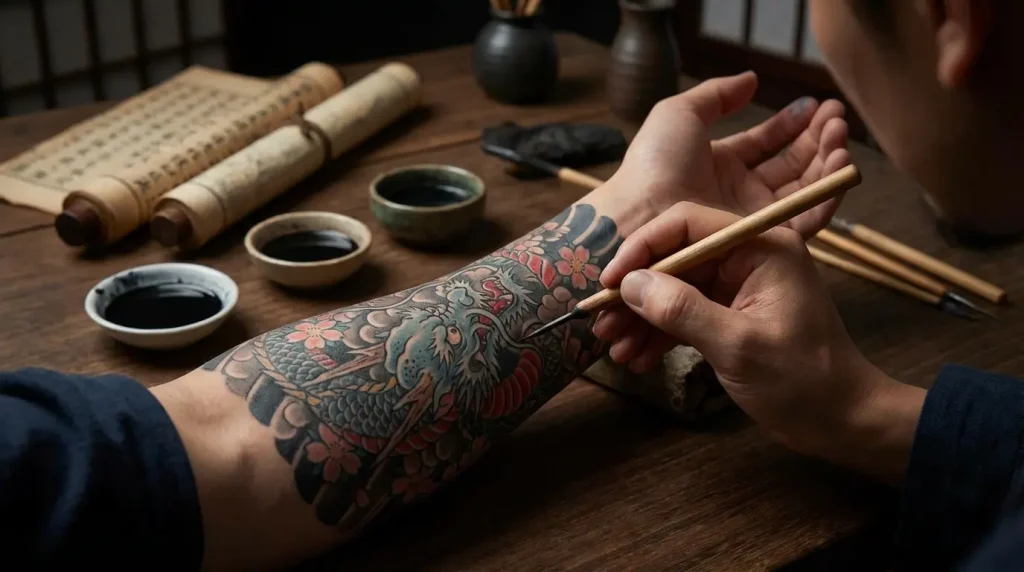
Every tattoo looks good in the mirror. Stand there, perfect lighting, perfect pose. Yeah, it looks sick. Now try living your actual life with it.
I watched a guy flex his bicep at the gym yesterday, and his dragon tattoo just… died. The head stretched weird, the body looked deflated, and what probably looked badass in the mirror turned into a saggy serpent the second he moved. That’s the problem with most irezumi these days. People choose placements based on Instagram photos where they’re standing perfectly still, instead of thinking about how the design performs when they’re actually moving through their day.
Your skin stretches, compresses, and shifts constantly. Traditional Japanese tattoo artists understood this centuries ago, which is why authentic irezumi tattoo placement follows muscle lines and joint movements instead of fighting against them. The global Irezumi Tattoos Market was valued at USD 520 million in 2025 and is projected to reach USD 1135 million by 2033, growing at a compound annual growth rate of 11.5%. Apparently this stuff is becoming a billion-dollar market, which honestly surprises me less than it should.
Look, I’m gonna be honest. Most people screw this up completely.
They scroll through reference images of people frozen in perfect poses and think “that’s where I want mine.” But your body doesn’t exist in frozen moments. You bend, twist, reach, and flex hundreds of times daily. Your tattoo will spend most of its life in those positions, not in the mirror pose you strike for photos.
Think about your most common body positions throughout the day. Are you typing at a desk? Lifting weights? Walking long distances? If you’re a rock climber, your forearms are constantly pronating and supinating, that twisting motion that makes a poorly placed dragon look like it’s having a seizure. Your tattoo needs to work in those real-world positions.
The masters who developed irezumi techniques didn’t have photography to reference. They watched their work move on living bodies, learning which placements created dynamic effects and which ones fought against natural anatomy. We’ve inherited their designs but forgotten their methodology.
Dragons That Actually Move With Your Muscles
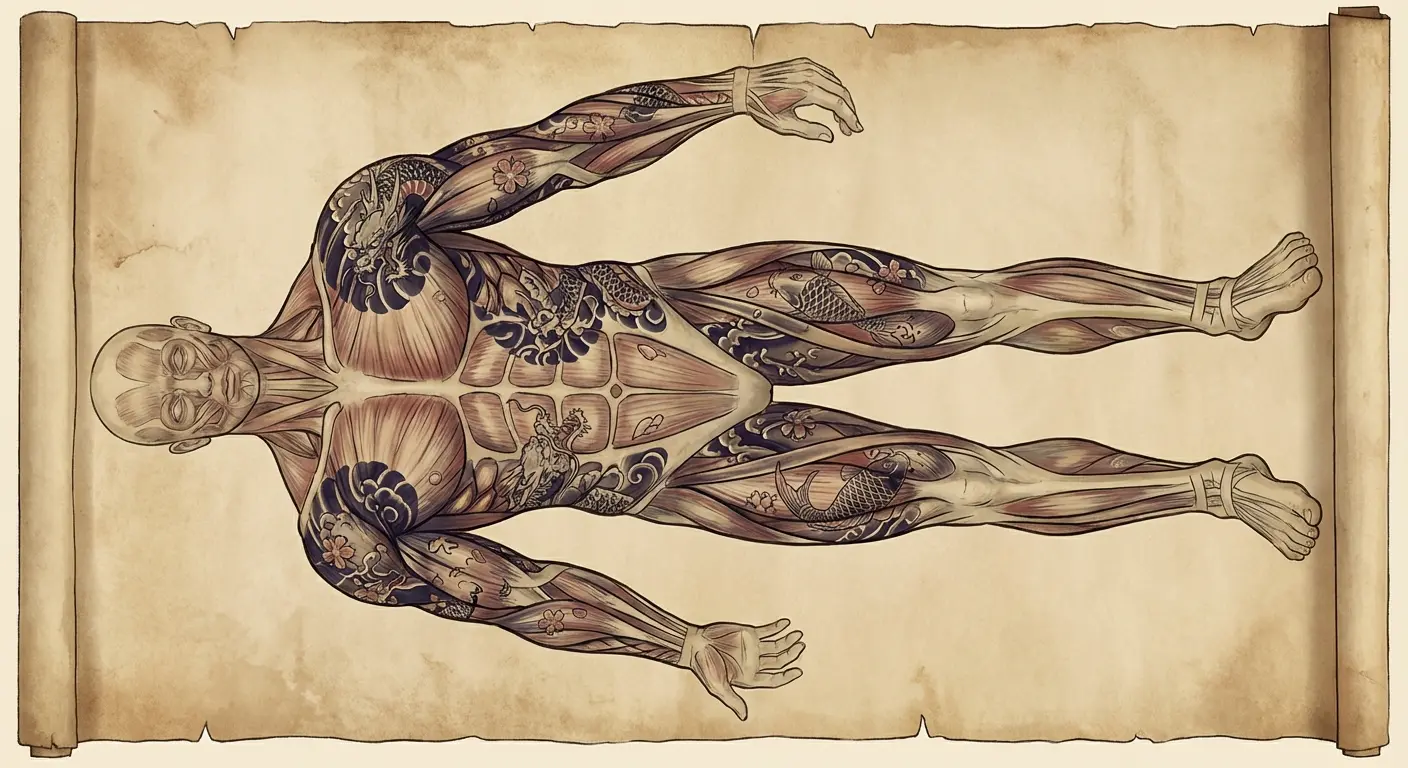
Dragons are popular for good reason. Their serpentine bodies naturally complement human anatomy when placed correctly. But here’s what nobody tells you: the same dragon design performs completely differently depending on whether you place it on your forearm versus your calf versus your shoulder blade.
I’m focusing on three specific dragon placements that use muscle movement to create the illusion that the dragon is actually moving across your skin. Not just sitting there looking pretty, but genuinely responding to how you move.
1. Ascending Dragon on the Forearm
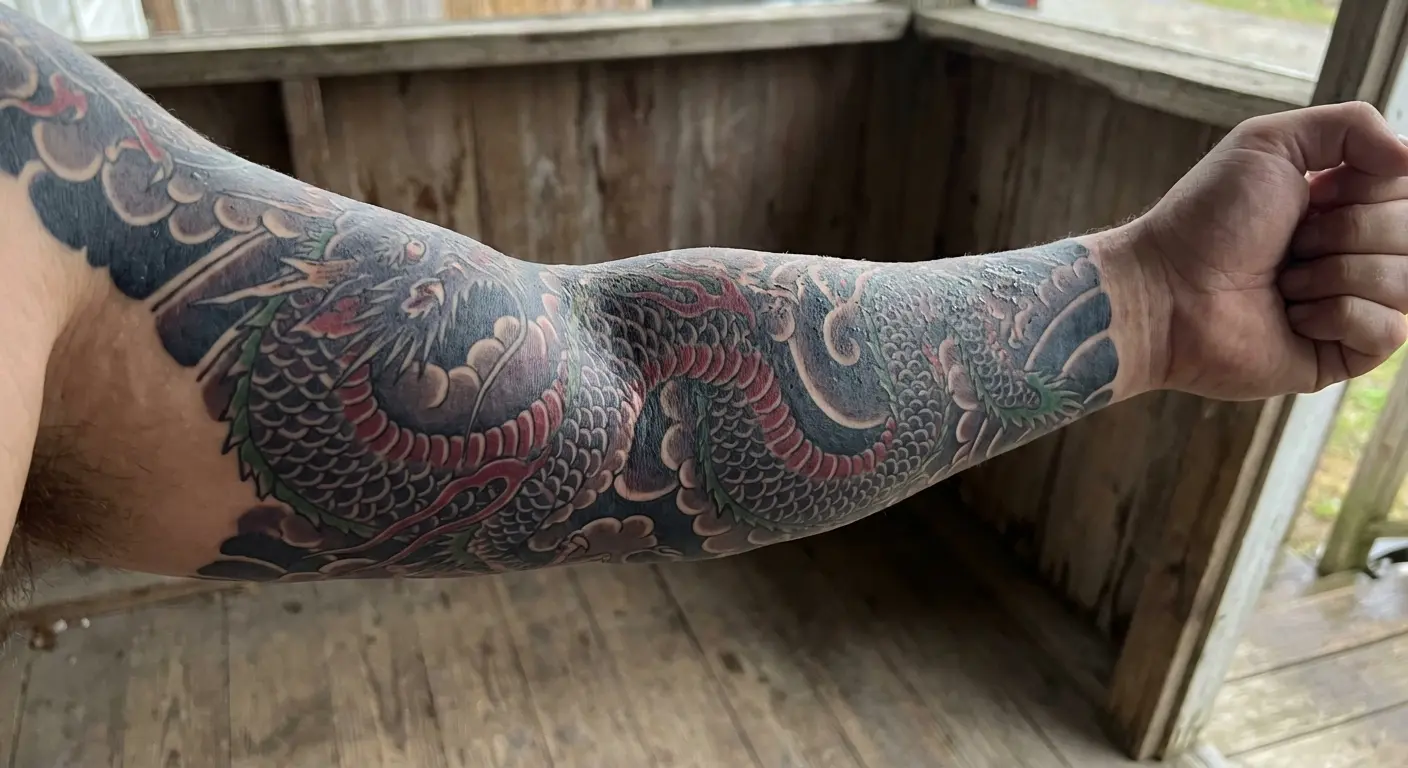
The forearm is perfect because you can watch the dragon move in real-time during everyday activities. When you rotate your wrist or grip something, the pronator and supinator muscles create a twisting effect that makes an ascending dragon appear to spiral upward.
Should the dragon’s head face toward your elbow or wrist?
This matters way more than you think. A dragon ascending toward your elbow creates the impression of climbing upward, which aligns with traditional symbolism of ambition and growth. The claws need careful positioning so they don’t look awkward when you bend your wrist. I’m talking about how your tattoo looks when you’re typing, driving, or holding your phone, not posing for a photo.
The dragon’s body should follow the muscle belly of your flexor group. Your forearm is rarely in a neutral position, so the design needs to account for constant rotation and flexion. When you pronate your wrist (turn your palm down), the dragon should appear to coil tighter. Supinate it? Totally different effect. Everything stretches out and the spacing changes.
This placement works brilliantly for people who use their hands constantly. Every gesture becomes an opportunity for the dragon to perform, making your irezumi tattoo a living element of your daily movements. I asked my artist about this and he said forearms get the most compliments specifically because people can actually see the movement while you’re talking to them.
2. Coiled Dragon Across the Shoulder Blade
Your scapula moves more than you realize. Every time you reach forward, shrug, or rotate your arm, your shoulder blade glides across your ribcage in these complex patterns. A coiled dragon positioned here can appear to tighten or loosen its coil depending on your posture.
The dragon’s center should align with your scapular spine, that bony ridge you can feel running across your shoulder blade. This provides a stable anchor point while the rest of the design responds to movement. The tail needs careful consideration because it can completely disappear under your arm when you’re in certain positions.
Here’s what happens: when you’re hunched over a laptop (like most of us are), your shoulder blades spread apart and rotate forward. The dragon’s coil loosens. When you stand with your shoulders back, your scapulae retract and the coil tightens.
This creates a visual feedback loop that actually encourages better posture. Unexpected benefit.
This placement requires your artist to see you in multiple positions because the available canvas literally changes shape. Some dragons look incredible when you’re relaxed but distorted when you’re tense. You want a design that looks intentional in all states, which means planning for the extremes of your range of motion. Most artists won’t tell you this because it means longer consultations and more work for the same price.
3. Twin Dragons on the Calves
Calf muscles create a pumping motion when you walk, and twin dragons (one per leg) can mirror or chase each other through this movement. The gastrocnemius muscle belly provides a naturally curved surface that complements a dragon’s body, but only if you orient the design correctly.
The dragon should ascend from ankle to knee. Not descend.
Why? Because when you walk, your calf flexes and releases in an upward pumping motion. A descending dragon would appear to fight against this natural movement, creating visual discord. I’ve seen this done wrong so many times and it bugs me every time.
Position the design so it looks proportional whether your calf is flexed or relaxed. This is trickier than it sounds because your calf muscle can change diameter by several inches between these states. The dragon’s head placement determines whether your tattoo looks dynamic or static. Place it at the widest part of your muscle belly for maximum effect.
Walking, running, and standing on your toes all create different visual effects. For athletes or people who walk frequently, this placement turns every step into a performance. Your dragons are literally pumping with every stride.
Water Elements That Actually Flow
When considering Japanese tattoo design elements, water is fundamental to irezumi. It appears as waves, rain, mist, or the environment for koi fish. What makes water elements special for movement-based design is their inherent formlessness.
They’re supposed to shift and flow, which means they’re more forgiving of skin distortion than rigid elements. Water works best on areas with the most dramatic expansion and contraction, places where your body’s movement enhances the illusion of flowing water instead of just tolerating it.
4. Wave Sleeve That Crashes During Flexion
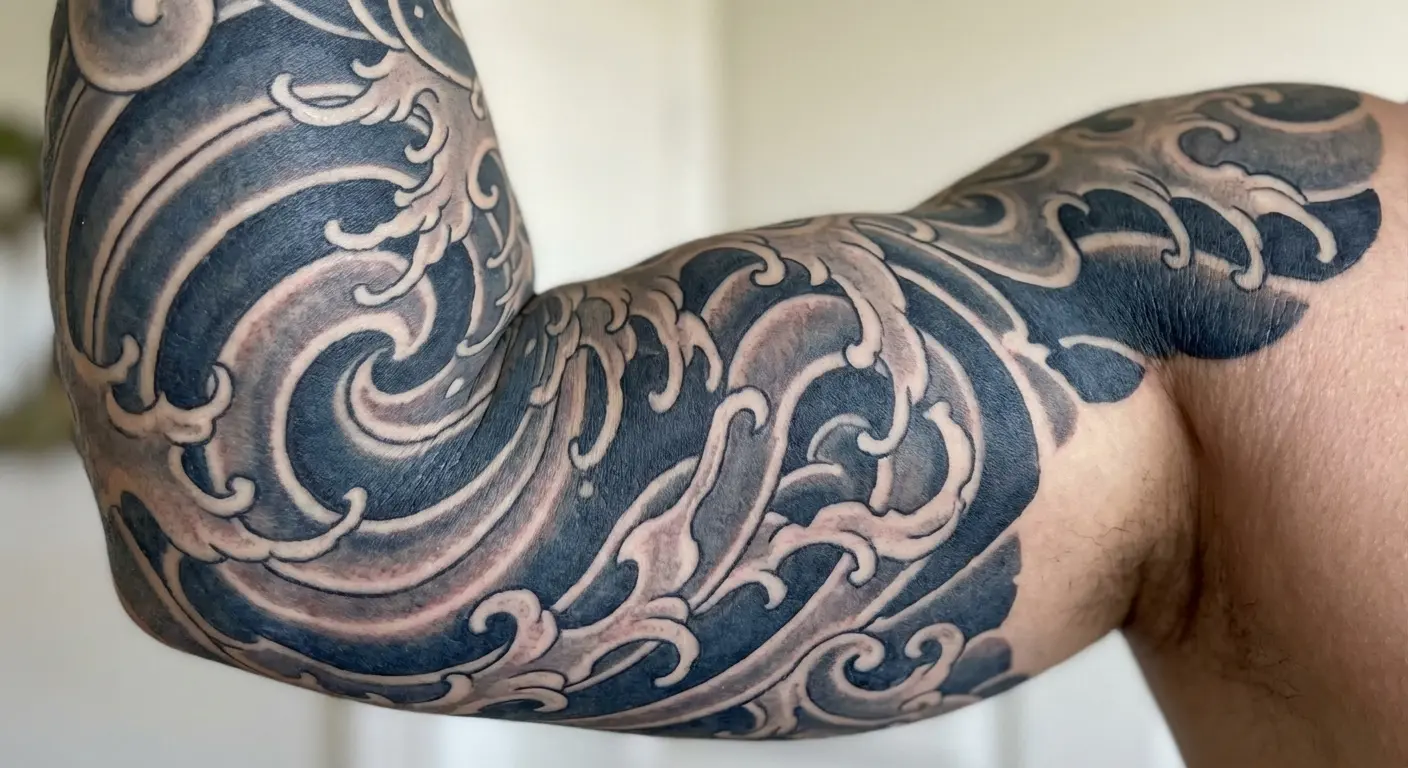
A full sleeve featuring waves needs to account for bicep flexion, forearm rotation, and elbow bending all at once. The wave crests should align with your bicep peak so they appear to crash when you flex. Simple arm curl becomes a dramatic display.
Wave direction matters enormously. Waves rolling toward your hand create a sense of power flowing outward from your body. Waves rolling toward your shoulder suggest gathering strength. These aren’t just aesthetic choices, they change how people perceive your tattoo’s energy and intention.
The elbow presents a challenge. This joint bends sharply, creating significant distortion in any design that crosses it. The solution is to use the elbow as a natural break point in the wave pattern, or to position smaller wave elements that can compress without losing their identity.
Negative space is crucial for maintaining the illusion of water movement. If you fill every inch with ink, the waves lose their sense of flow and start looking painted on rather than alive. Traditional Japanese artists depicted water motion in woodblock prints using careful line work and strategic empty space. We’re applying those same principles to skin that moves.
5. Koi Swimming Through Ribcage Expansion
Your ribcage expands with every breath, and a koi positioned here can appear to swim through water currents created by this expansion. The design needs to wrap from your side toward your sternum or spine, following the intercostal muscle direction.
Koi should always swim toward your heart. This aligns with traditional symbolism (perseverance, overcoming obstacles) while also working with your anatomy. The fins need positioning so they don’t look broken when you twist your torso, which requires understanding how your ribcage rotates during everyday movements.
What happens when you inhale deeply versus exhale completely? The canvas changes dramatically between these breathing states. When you inhale, your ribcage expands and the koi stretches out, appearing to swim forward. When you exhale, everything compresses and the koi seems to pause or turn.
Fair warning: ribcage tattoos hurt like hell, and they take forever because you can’t breathe normally. But when done correctly, it creates an almost animated effect that no other placement can match. You become hyperaware of your breath, which some people find meditative. I know a guy who got a koi on his ribs without thinking about breathing. Every inhale looks cool. Every exhale looks like the fish is dying. He regrets it.
6. Water Spiral on the Lower Back
The lower back is controversial in tattoo culture (yeah, I know), but for irezumi water elements, it offers a unique canvas that responds to spinal movement. A water spiral centered on your sacrum can appear to spin when you arch or round your back.
Should the spiral rotate clockwise or counterclockwise? Base this decision on your dominant movement patterns. If you spend most of your day sitting (which rounds your lower back), design the spiral to look most dynamic in that position. If you’re a dancer or athlete who frequently extends your spine, optimize for that movement instead.
The spiral shouldn’t look isolated. Extend the design with smaller water elements or integrate it into a larger back piece. Your lower back position changes constantly throughout the day (sitting, standing, bending forward) and the spiral needs to look intentional in all these states.
This placement works better for water than for other irezumi elements because water is supposed to be formless and adaptive. A rigid design would fight against the constant movement of your lower spine, but a spiral embraces it.
7. Rain Shower Down the Spine
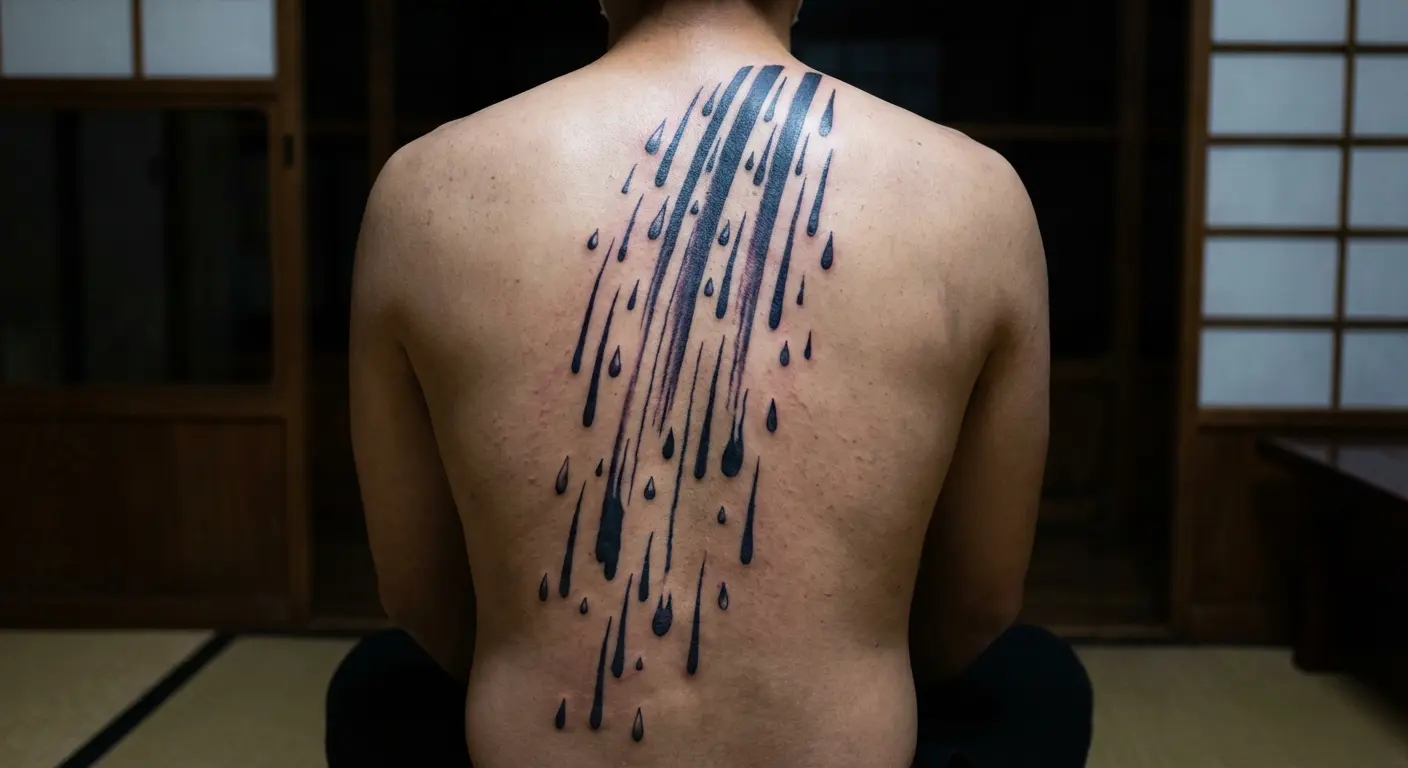
Rain falling down your spine creates a vertical element that works with your body’s natural length. Each raindrop can be positioned between vertebrae, so spinal movement creates the illusion that the rain is falling at different speeds.
Raindrop spacing matters more than raindrop design. If they’re evenly spaced, the effect looks mechanical and boring. Vary the spacing to create rhythm and visual interest. Your spine curves and straightens constantly, and rain elements can emphasize this movement by creating leading lines that guide the eye downward.
This works as both a standalone design and as background for other irezumi subjects. Many traditional back pieces incorporate rain or mist to create atmosphere and depth. The challenge is making sure the rain doesn’t look static or repetitive, which requires varying the droplet sizes and spacing in a way that feels natural.
Rain down the spine also provides a subtle reminder of impermanence, a core concept in Japanese aesthetics. The rain is always falling but never accumulates, constantly in motion but never arriving.
Florals That Bloom When You Stretch
Similar to how flower tattoo designs adapt to different body areas, irezumi tattoos featuring florals require careful placement consideration. Flowers appear in almost every irezumi piece, but they’re usually treated as decorative background elements.
I’m flipping that approach.
These five floral designs put flowers front and center, where body position changes how “open” or “closed” the flowers appear. Cherry blossoms, peonies, chrysanthemums, maple leaves, and lotus flowers all have different structural properties that interact uniquely with skin movement.
8. Cherry Blossom Branch Across Collarbones
Your collarbones are visible in almost every outfit and move whenever you shrug or roll your shoulders forward. A cherry blossom branch spanning both collarbones creates a natural frame for your upper chest while responding to shoulder movement.
The branch should follow your clavicle line, not fight against it. Your collarbones provide a natural horizontal element that the branch can emphasize. Individual blossoms need positioning so they don’t cluster awkwardly when you’re in different positions, which means spacing them along the branch with consideration for how your skin stretches across this bony area.
This placement works better with delicate line work than heavy saturation. Your collarbones are close to the surface, and heavy ink can look harsh on such a delicate anatomical feature. The branch can appear to sway when you move your shoulders, but only if the design accounts for how your skin stretches.
Bone prominence matters here. Some people have collarbones that protrude significantly, while others have softer transitions. Your artist needs to assess your specific anatomy because a design that works beautifully on prominent collarbones might look stretched or distorted on someone with more tissue coverage.
9. Peony Garden on the Thigh
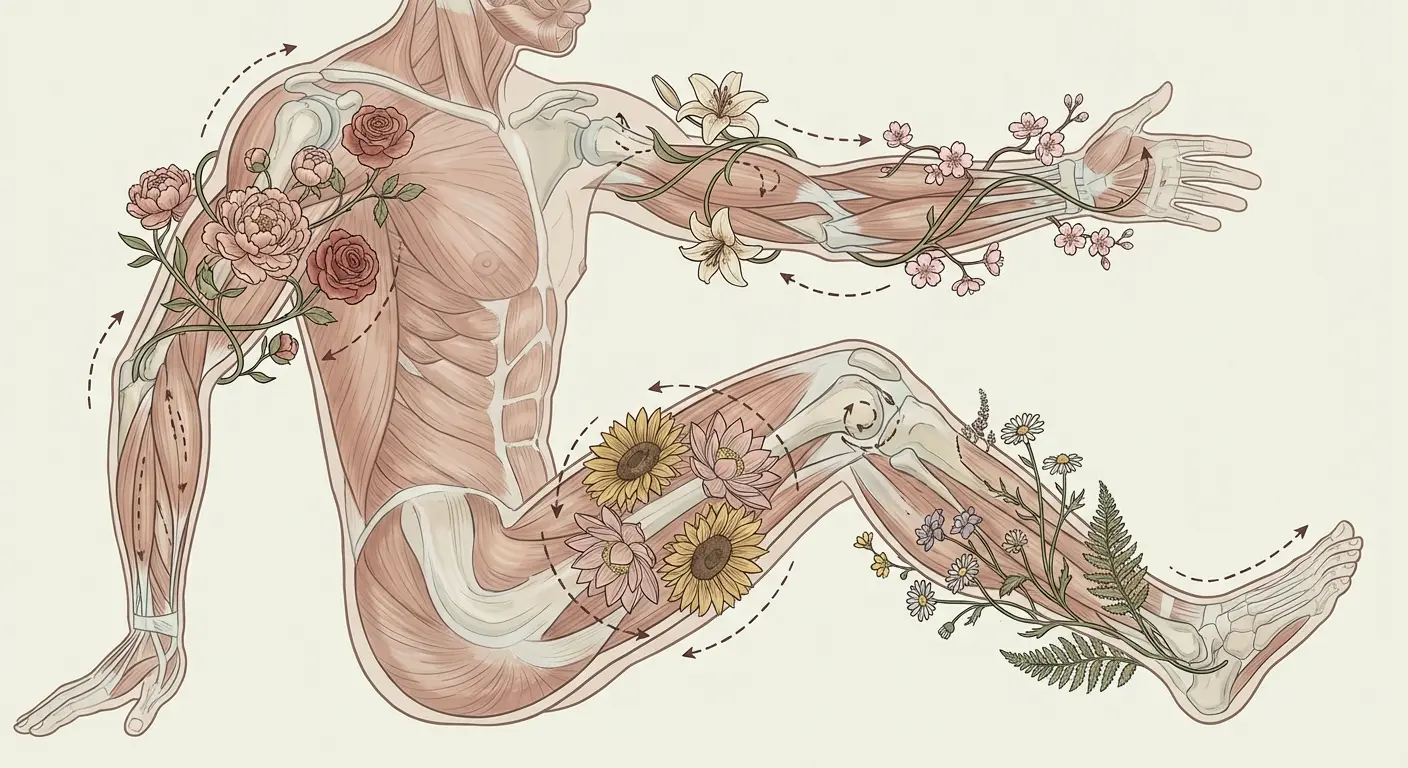
Thighs offer a large, relatively flat canvas, but they’re far from static. When you sit, your thigh skin compresses and spreads laterally. When you stand, it elongates. A peony garden positioned on your outer or front thigh can appear to bloom when you stand and compress when you sit.
Peonies work better here than smaller flowers because they maintain detail through distortion. Their layered petals create depth that survives the skin’s expansion and contraction. The stems should follow your quadriceps muscle lines (specifically the rectus femoris and vastus lateralis) so the entire composition flows with your leg’s natural anatomy.
The design should wrap slightly around your leg rather than sitting flat on one plane. Your thigh is cylindrical, and a flat design will only look correct from one viewing angle. By wrapping the composition, you ensure it looks intentional from front, side, and three-quarter views.
This placement is popular because it’s easily covered or displayed depending on your clothing choices. But movement-conscious design makes it special rather than just convenient. Every time you transition from sitting to standing, the peonies perform a subtle transformation.
10. Chrysanthemum Cluster on the Upper Arm
The deltoid muscle creates a rounded surface that’s perfect for radially symmetrical flowers. A cluster positioned on your shoulder cap appears to spread when you raise your arm and compress when you lower it.
The center of the largest chrysanthemum should align with your deltoid peak, the highest point of your shoulder when your arm hangs naturally. Surrounding flowers need arrangement so they don’t look crowded when your arm is down. Plan for the worst-case scenario (maximum compression) and make sure the design still reads clearly in that state.
Your deltoid is one of the most three-dimensional muscles on your body. A flat design will look flat, which defeats the purpose of choosing such a dynamic placement. The flowers need to wrap around the curve, which means accepting that they’ll look distorted from any single viewpoint. This isn’t a flaw. It’s a feature that creates visual interest from multiple angles.
When you raise your arm overhead, the deltoid stretches and the chrysanthemums spread apart. When you lower your arm, everything compresses back together. Creates a breathing effect that mirrors the flowers’ natural growth patterns.
11. Maple Leaves Falling Down the Side
Your side body (from armpit to hip) stretches dramatically when you reach overhead or lean sideways. Maple leaves falling down this area can appear to scatter or cluster depending on your posture.
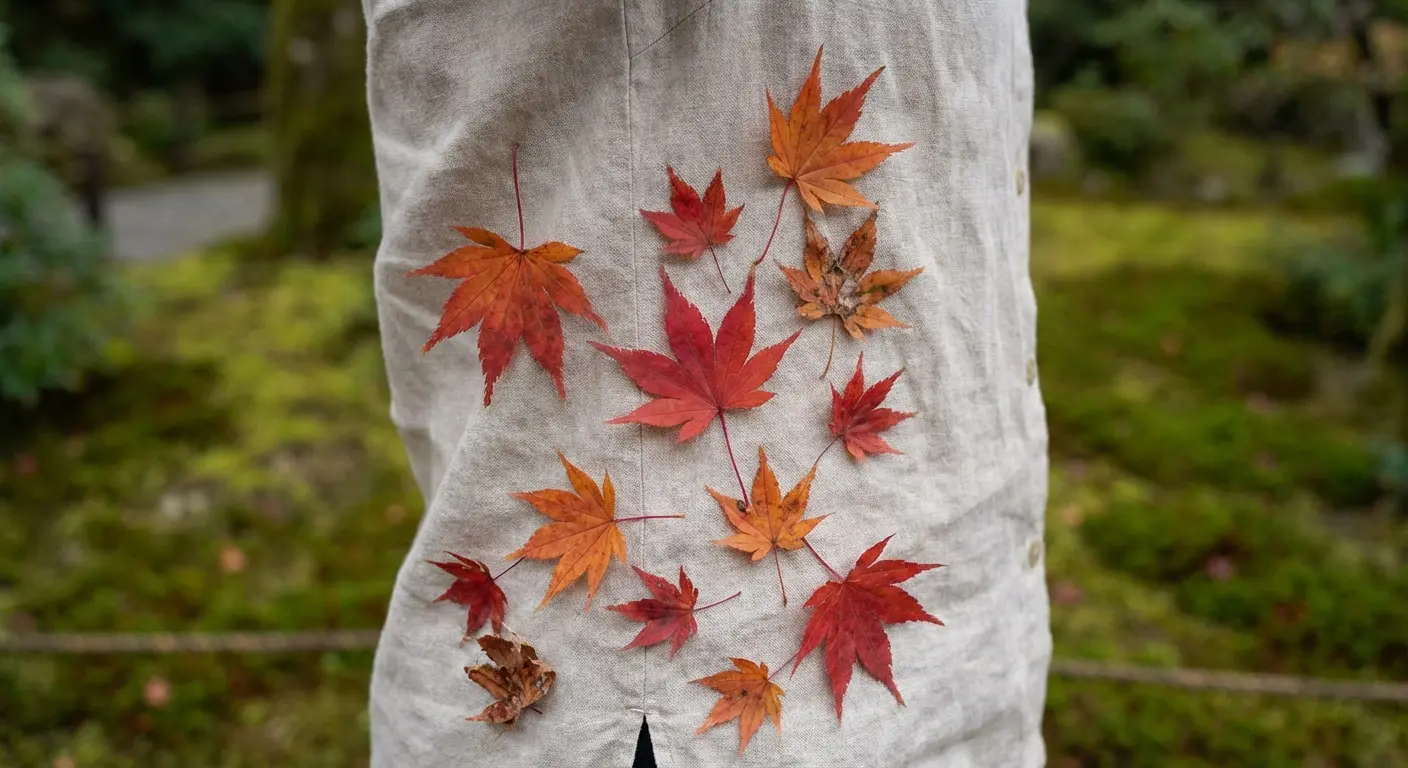
Leaves should decrease in size as they fall. This creates depth and reinforces the illusion of movement through space. If all the leaves are the same size, the design looks flat and static. Varying the sizes suggests some leaves are closer to the viewer while others are farther away, tumbling through three-dimensional space.
Don’t line them up in a boring vertical row.
Stagger the leaves horizontally and vary their angles of rotation. Some should be face-up, others edge-on, creating the chaotic beauty of actual falling leaves. Your side compresses when you’re in a neutral position but stretches significantly during everyday movements, and you want leaves positioned so they look intentionally scattered in all positions.
This design works best when integrated with wind or water elements. Maple leaves don’t fall in a vacuum. They’re carried by air currents. Adding subtle wind lines or water ripples gives context to the leaves’ movement and creates a more complete composition.
12. Lotus Unfolding on the Calf
The calf muscle belly provides a naturally curved surface that responds dramatically to flexion. A lotus positioned here can appear to unfold when you flex your calf and compress when relaxed.
The lotus center should align with the widest part of your gastrocnemius muscle, the meaty portion that bulges when you stand on your toes. The petals should follow the muscle’s natural curve, radiating outward from this central point. When you flex, the muscle expands and the petals spread. When you relax, everything draws back together.
This placement works particularly well for people who are active or wear shorts frequently. The lotus becomes a visible reminder of your physical capability, blooming with every step you take. The symbolism of enlightenment rising from murky waters gains additional meaning when placed on a muscle that’s constantly in motion. Continuous spiritual growth and transformation made visible.
Your calf flexes hundreds of times daily just from walking. This becomes one of the most animated placements possible, with the lotus performing its opening and closing routine with every stride. It’s honestly kind of creepy how alive it looks when you’re walking and someone’s watching from behind.
Mythological Figures That Come Alive
Understanding the phoenix tattoo meaning and symbolism becomes even more powerful when the design transforms through your body’s movement. Mythological creatures and figures in irezumi (phoenix, foo dogs, hannya masks, tigers, and namakubi) are usually depicted in dynamic poses, which makes them perfect for movement-based placement.
These aren’t passive images. They’re designed to look like they’re actively doing something when you move.
The cultural significance of irezumi tattoos continues to evolve in contemporary contexts. “Living Tattoo Traditions: American Irezumi and Beyond,” an exhibition at the San Francisco Public Library explores how artists navigate questions of cultural identity, authenticity, and the intersection of traditional Japanese tattooing with American interpretation. The exhibition, co-curated by tattoo artists Taki and Molly Kitamura, features work that honors traditional techniques while acknowledging contemporary contexts. I saw this exhibition last fall and it made me think about how much we’ve adapted these traditions while sometimes losing the core understanding of how they work with the body.
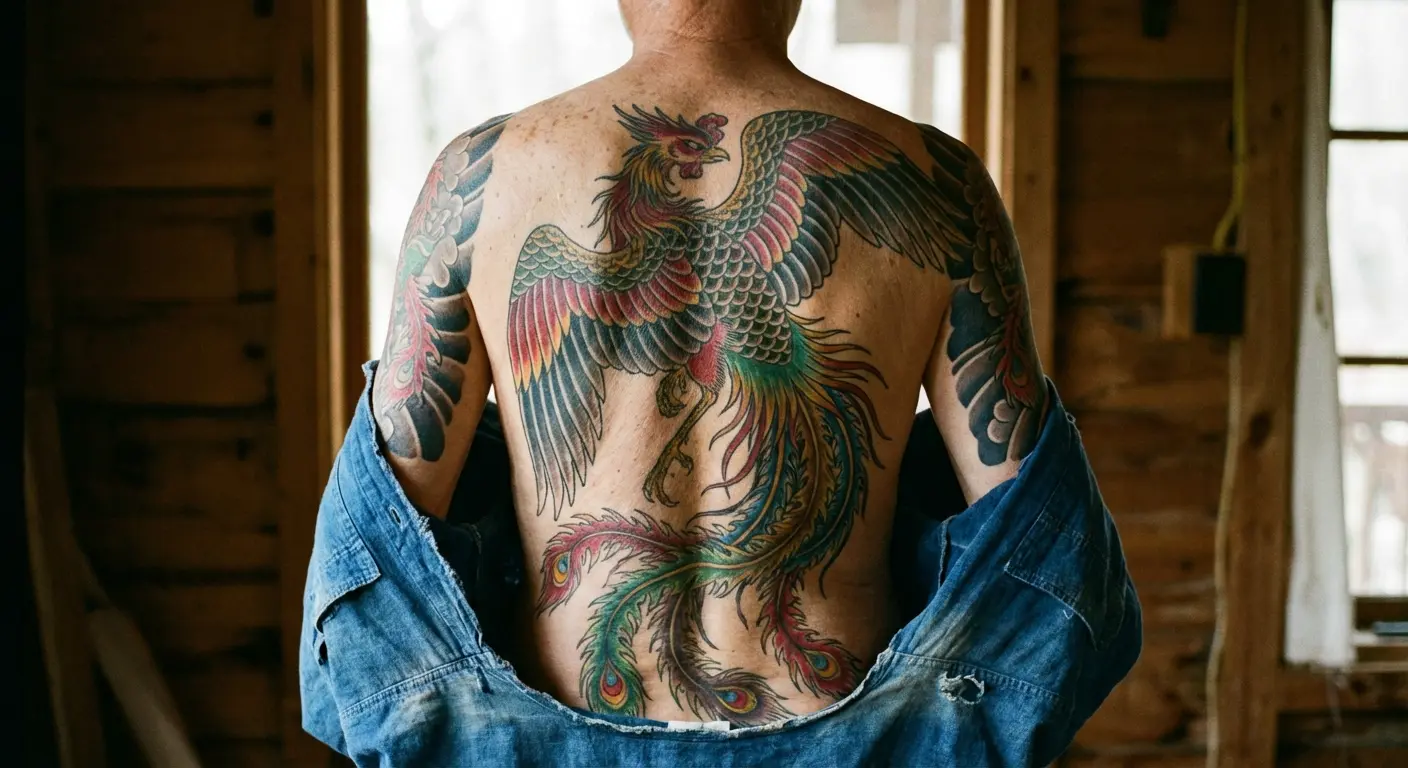
13. Phoenix Rising Across the Back
A phoenix spanning your entire back from lower spine to shoulders can appear to rise when you stand up straight and fold when you’re hunched forward. The wings should align with your scapulae so they spread when you pull your shoulders back.
The phoenix head should be positioned at the base of your neck, creating upward motion that draws the eye from your lower back to your shoulders. The tail feathers need to flow naturally over your lower back curve, which means accounting for how your lumbar spine curves inward. This isn’t a flat surface. It’s a complex three-dimensional landscape that changes shape constantly.
Your back is the largest single canvas on your body, but it’s also one of the most mobile. The phoenix needs to look intentional whether you’re in a neutral position, reaching forward, or arching backward. This requires multiple sessions where your artist sees you in different postures, adjusting the design to ensure it performs correctly in all states.
This is a commitment piece that requires an artist who understands both irezumi composition and functional anatomy. The phoenix’s transformation from folded to rising mirrors your own postural changes, creating a powerful metaphor for personal growth and resilience. When you’re slouched over your laptop, the phoenix is dormant. Stand up straight and it literally rises with you.
I’m probably overexplaining this, but it matters. Most back pieces I see are designed for one static pose and look weird in every other position.
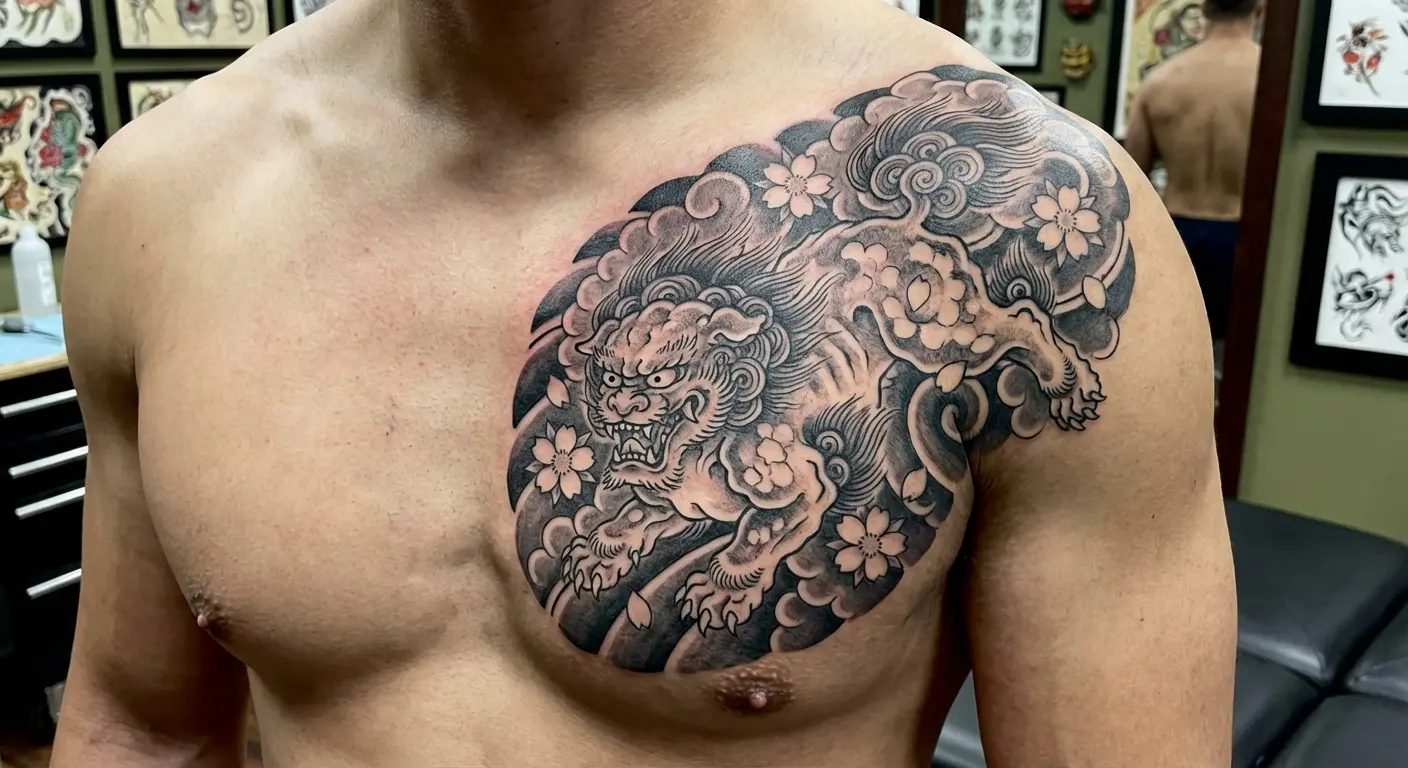
14. Foo Dog Guarding the Chest
Pectoral muscles create dramatic flexion when you push or press, and a foo dog positioned on your chest can appear to leap or lunge when you flex. The foo dog’s front paws should extend toward your sternum, and its body should follow your pec muscle fibers.
The foo dog should face toward your center line, creating guarding symbolism (protecting your heart and vital organs). The rear legs need careful positioning so they don’t disappear under your arm when you’re in different positions. Understanding how your pec connects to your shoulder and how that connection point moves during various arm positions is essential.
This placement is popular among people who train their chest, but it works poorly if you don’t understand how pec flexion distorts the image. The foo dog should look powerful in both relaxed and flexed states, not just when you’re showing off. When you’re relaxed, the foo dog appears coiled and ready. When you flex, it lunges forward with explosive energy.
The challenge is maintaining the foo dog’s proportions through this transformation. The face, in particular, needs careful planning because facial features can look distorted if they’re positioned incorrectly relative to your muscle peak. I’ve seen this go wrong more times than I can count.
15. Hannya Mask on the Shoulder Cap
The hannya mask’s expression can appear to change based on your shoulder position and lighting. When positioned on your deltoid, the mask can look more angry when you’re tense and more sad when you’re relaxed.
This works because muscle tension changes how the features align. When your deltoid is flexed, the mask’s features compress vertically and spread horizontally, emphasizing the angry, aggressive aspects of the expression. When relaxed, everything elongates slightly, bringing out the sorrowful, tragic elements.
The mask should face forward when your arm is in a neutral position. The horns need to align with your muscle peak so they maintain their dramatic upward sweep regardless of arm position. This is one of the most psychologically dynamic placements in irezumi tattoo designs because the mask literally seems to change emotion based on your state.
Some artists hate this placement. They’re wrong, but I get why. It’s incredibly difficult to execute properly because you’re essentially designing two different expressions that need to coexist in the same tattoo. The eyes, mouth, and horns need careful positioning relative to your deltoid anatomy. Too high and the features look squashed when you raise your arm. Too low and they stretch awkwardly when you lower it.
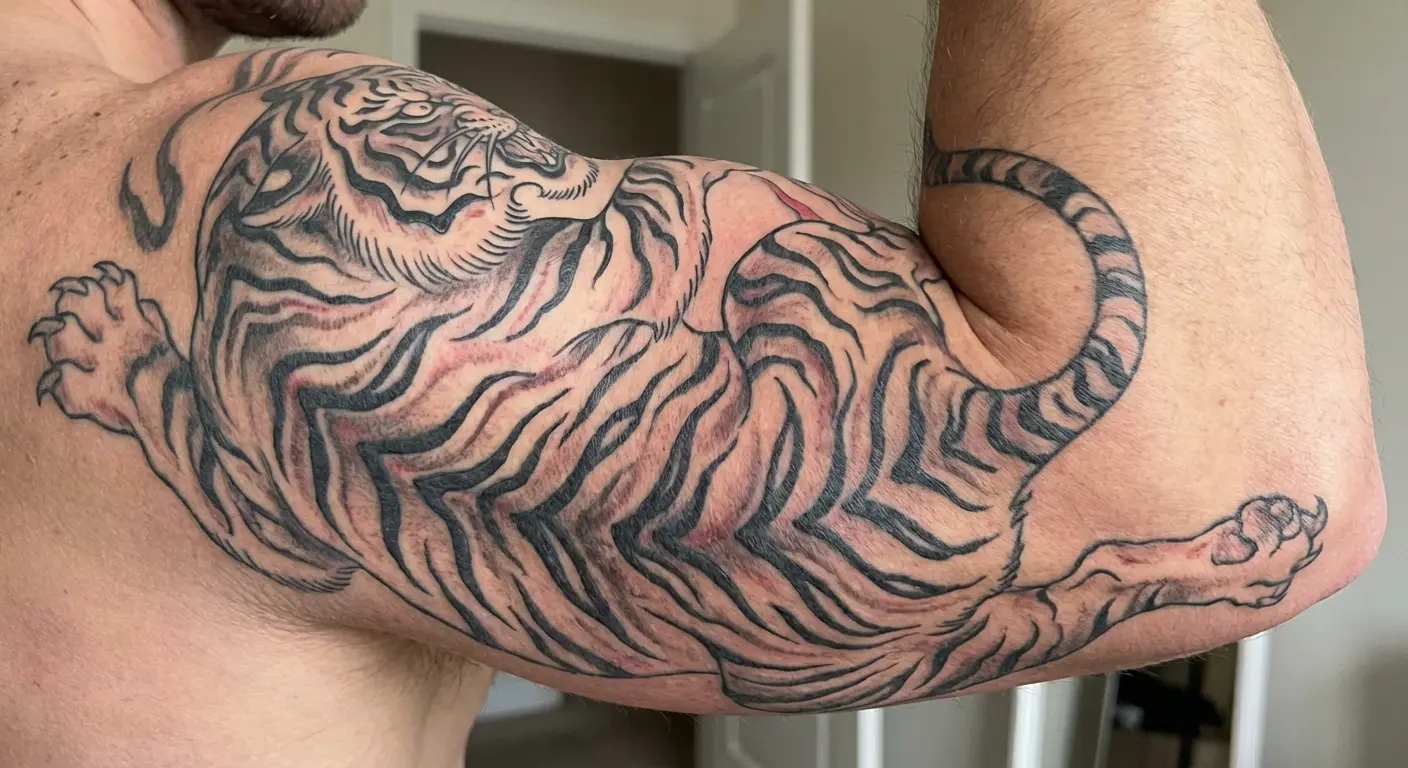
16. Tiger Prowling Around the Bicep
A tiger wrapping around your bicep can appear to prowl when you rotate your arm or flex. The tiger’s body should follow the curve of your bicep, with the head positioned so it faces forward when your arm hangs naturally.
The tiger’s spine should align with your muscle peak, creating the illusion of a muscular animal on a muscular arm. The legs need positioning so they don’t look awkward during flexion. Understanding how your bicep changes shape between relaxed and contracted states is crucial. The stripes should follow the muscle fiber direction, which means they’ll appear to ripple when you move.
Your bicep changes shape dramatically between relaxed and flexed states. The tiger needs to look powerful in both. When relaxed, the tiger appears to be stalking, moving slowly and deliberately. When flexed, it looks coiled and ready to pounce, all that muscular energy compressed into explosive potential.
This works best on developed arms because you need the muscle mass to create the prowling effect. On smaller arms, the tiger might look static regardless of movement. But on well-developed biceps, the transformation is dramatic and unmistakable. Every curl becomes a performance.
17. Namakubi (Severed Head) on the Knee
The knee is an unconventional placement that most people avoid, but for a namakubi, it’s perfect. When you bend your knee, the image compresses and the face appears to grimace. When you straighten your leg, it elongates and the expression softens.
Getting a namakubi on your knee is committing to looking weird in shorts. Forever. Make peace with that.
The face should be centered on your patella. Your kneecap provides a stable anchor point in an otherwise highly mobile area. The hair or headband elements should flow naturally around the sides of your knee, following the contours created by your joint structure.
This placement requires acceptance that the image will look distorted in most positions. That’s the point. Namakubi represents acceptance of death and impermanence, and a placement that’s constantly changing reinforces that symbolism. Your knee bends constantly throughout the day, making this one of the most animated placements possible.
You need an artist who’s comfortable with the fact that the “correct” proportions only exist in one specific knee angle. Most of the time, the face will be stretched or compressed, grimacing or softening, performing its transformation with every step you take. I’ve never actually seen this done well in person, but in theory it’s fucking brilliant.
What Your Artist Isn’t Telling You About Placement
Movement-based irezumi tattoo design requires thinking about your body as a living, dynamic canvas. Most people choose tattoo placements based on aesthetics, pain tolerance, or visibility. Those factors matter, but they’re secondary if you want irezumi that feels alive.
Beyond understanding tattoo meaning and symbolism, you need to spend time with your artist discussing how you move through your day, what positions your body is in most often, and what kind of movement effects you want to emphasize.
This means longer consultations and possibly multiple sessions just for placement planning. Your artist needs to see you move. Reaching, bending, flexing, rotating. They need to understand your baseline posture and your range of motion. They need to know if you’re an athlete, a desk worker, a dancer, or a manual laborer because these different lifestyles create different movement patterns.
Most artists won’t tell you this because it means longer consultations and more work for the same price. But if they’re not asking to see you move, they’re not thinking about movement-based design.
Consumers are increasingly seeking unique, personalized tattoos that reflect cultural symbolism and artistry, driving demand for intricate designs featuring dragons, koi fish, and phoenixes. The shift toward self-expression and individualism is helping irezumi tattoos move beyond niche cultural practices, as evidenced by the market’s projected compound annual growth rate (CAGR) of 11.5% through 2033, becoming a popular choice for a broader demographic seeking meaningful body art that performs dynamically rather than remaining static.
The result is a tattoo that works with your body instead of just sitting on it. I’m acknowledging that this approach isn’t for everyone. Some people prefer their tattoos to look consistent regardless of position. Fine. But they’re missing the entire point of irezumi.
You’re probably realizing by now that visualizing these movement effects before you commit is nearly impossible without some kind of dynamic mockup. Full disclosure: I built a tool for this exact problem because I was tired of trying to explain movement concepts to people who couldn’t picture them. Tattoo Generator IQ allows you to create multiple design variations and see how different placements might work on your specific body type. You can generate a dragon design, see it on your forearm, then immediately generate the same dragon on your calf to compare how the composition changes.
This doesn’t replace working with a skilled irezumi artist. You absolutely need one for proper execution. But it solves the visualization problem that makes movement-based planning so difficult. You’ll walk into your consultation with a clear idea of what you want and why, which means your artist can focus on refinement rather than starting from scratch.
Yeah, I know, shameless plug. But this is literally why I made the thing.
Your Body Moves 10,000 Times a Day
Irezumi has survived for centuries because it adapts. The artists who developed these designs understood human anatomy intimately, not from textbooks but from years of watching how their work moved on living bodies.
We’ve lost some of that knowledge in the modern tattoo industry’s rush toward Instagram-worthy static images. Instagram has honestly ruined tattoo placement. Everyone’s optimizing for one perfect photo instead of thousands of real-world movements.
Bringing movement back into your design process doesn’t mean rejecting contemporary techniques or aesthetics. It means honoring the original intent behind irezumi: creating art that lives and breathes with you.
Your body moves thousands of times per day. Shouldn’t your tattoo move with it?
Whether you choose a dragon that spirals when you twist your arm, water that flows when you breathe, flowers that bloom when you stretch, or mythological figures that come alive when you flex, you’re participating in a tradition that understood something fundamental. Tattoos aren’t just images on skin. They’re collaborations between art, anatomy, and movement.
The seventeen placements I’ve covered here are starting points, not rules. Your body is unique, your movement patterns are unique, and your irezumi tattoo should reflect that individuality. Work with an artist who’s willing to watch you move, who understands muscle anatomy, and who’s excited about creating something that performs differently than it photographs.
Look, if you’re not willing to put in the time to plan this properly, just get a static design and call it a day. But if you want something that actually captures the living, breathing quality of traditional Japanese art, you need to design around movement from the start.
Next time you’re looking at reference photos, try flexing. Try moving. If the tattoo only looks good when you’re frozen, you’re doing it wrong.
