22 Ace Tattoos That Decode Hidden Symbolism (And Why Placement Changes Everything)
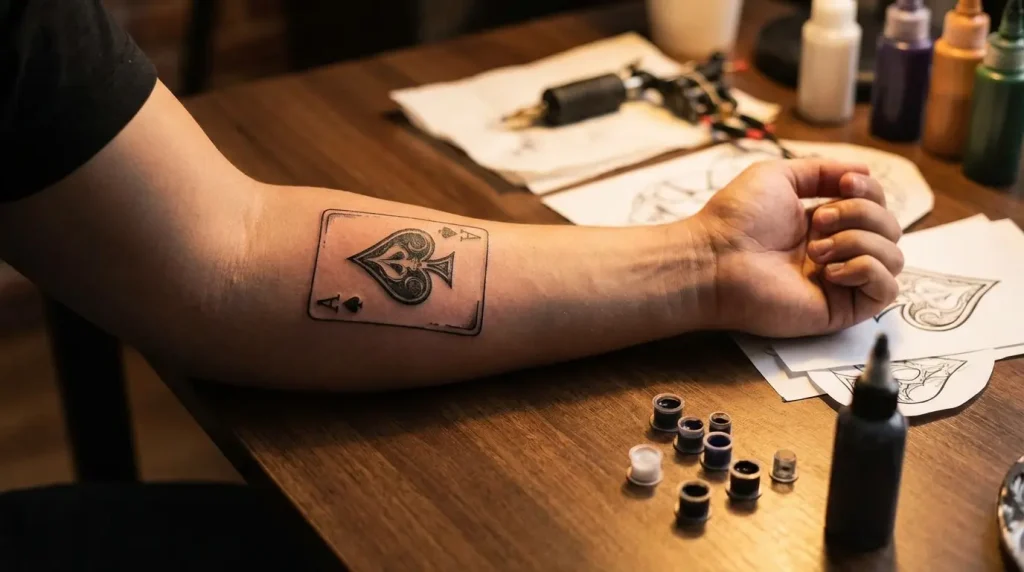
The ace of spades on your chest means something different than the same card behind your ear. Same design, completely different message.
Most people don’t think about this. They find a design they like, pick a spot that fits, and book the appointment. Six months later they’re explaining to everyone that no, they’re not actually a gambler, it’s about taking risks in life, it’s symbolic, it’s…
Here’s what actually matters: suit choice, placement, and whether you’re building a story or making a statement.
Quick breakdown: Ace tattoos shift meaning based on suit (spades = death/power, hearts = emotional risk, diamonds = material stakes, clubs = force/legacy), placement (visible declaration vs. private reminder), and what you add to them. Size and visibility determine whether your ink functions as a public statement or personal anchor.
The Power Plays: Aces as Symbols of Control and Risk
These designs don’t whisper. They announce.
We’re talking about aces that reference death, military service, and the psychological weight of holding all the cards. Visible placements. Bold statements. Not for people who want to keep their ink ambiguous.
Americans spend an average of $745 on tattoos, according to Advanced Dermatology’s 2023 study. When you’re dropping that kind of money on a power-play ace, you need the symbolism to be airtight, not just “I thought it looked cool.”
These options aren’t for people looking to hide their ink or keep things vague. The ace you choose in this category makes a declaration about who you are and what you’ve faced. Military service, mortality, dominance in your field. These designs carry weight that demands intentional execution.
Quick reference for suit meanings:
| Ace Suit | What It Means | Where to Put It | What to Add |
|---|---|---|---|
| Spades | Death, power, military heritage | Chest, upper arm | Skulls, roses, crossbones, military insignia |
| Hearts | Emotional risk, passion, love | Forearm, sternum | Fire, dates, portraits, script |
| Diamonds | Material wealth, ambition, legacy | Shoulder, chest | Crowns, geometric patterns, currency symbols |
| Clubs | Force, protection, combat | Upper arm, calf | Military symbols, weapons, shields |
1. Ace of Spades with Death Motifs
Vietnam soldiers used the ace of spades as psychological warfare. Left them on bodies to freak out the enemy. That’s the history you’re tapping into.
Which means your design choices matter. Skulls and roses shift this from military tribute to memento mori philosophy. Chest or upper arm placement reads confrontational. Same design on your calf becomes contemplative.
I’ve seen clients agonize over whether they “deserve” this symbol without military service. You don’t need to have served to claim it, but you should understand what you’re referencing. The death card isn’t a casual choice.
Black and grey maintains the somber tone. Adding red creates tension that some artists handle better than others. The design works best when the death imagery feels integrated rather than tacked on. Roses growing through skull eye sockets, crossbones forming the card border, or the spade symbol itself constructed from skeletal elements. That’s cohesion that elevates the piece beyond generic flash.

2. Four Aces Spread (The Dead Man’s Hand Variation)
Why does everyone get the Dead Man’s Hand wrong?
Wild Bill Hickok allegedly held aces and eights when he was shot in 1876. If you’re getting this design, accuracy matters to tattoo historians and gambling enthusiasts who will absolutely call out a random four-card spread.
The actual hand was black aces and black eights (clubs and spades), with the fifth card disputed. This works beautifully across the upper back or as a chest piece where the cards can fan naturally. Smaller versions lose the drama. You’re commemorating a specific moment in Western history, not just showing you like poker.
Artists who specialize in realism can add worn card edges, subtle creases, or period-appropriate card designs that take this beyond clip art. The piece becomes a historical reference that speaks to people who understand the legend. Discuss card positioning with your artist. The fan should look natural, as if someone’s hand just released them mid-deal.
3. Burning Ace of Hearts
Fire transforms the traditionally “soft” heart suit into something volatile.
You’re signaling emotional risk that went wrong or passion that consumed something valuable.
This design needs movement. Static flames look dated within a year. Find reference photos of actual fire. The way it curls, consumes, creates ash. Placement on the forearm means you see it during moments when you need the reminder.
Color adds impact here, but requires an artist comfortable with warm gradients. The symbolism flips depending on whether the ace is fully engulfed or just catching. Partially burned suggests you pulled back before total loss. If you’re exploring emotional symbolism in tattoos, heart tattoos shift meaning dramatically based on what you add to them. Fire on a heart changes everything.
The design speaks to people who’ve risked everything emotionally and lived to tell about it.

4. Ace of Clubs with Military Insignia
Clubs carry combat associations. The weapon, not just the suit.
Integrating your military branch, unit number, or service dates grounds this in your specific experience rather than generic “support the troops” imagery.
Placement traditions vary by service branch, but this shows up most often on the upper arm or calf. The ace itself can incorporate camouflage patterns, dog tag textures, or flag elements without becoming cluttered if your artist understands negative space. This works as both memorial (for fallen unit members) and service marker.
Size needs to accommodate the detail level in insignia. Going smaller than you might want often results in muddy lines within five years. The piece functions as a permanent dog tag that tells your service story. I’ve worked with veterans who add specific battle dates, coordinates of deployment locations, or the names of brothers and sisters lost in service.
5. Skeletal Hand Holding an Ace
Death dealing the cards, not just holding them.
The suit you choose completely changes the read. Spades doubles down on mortality. Hearts suggests love survives death. Diamonds implies material wealth means nothing. Clubs points to legacy and what force remains after you’re gone.
Hand position matters tremendously. Reaching toward the viewer feels threatening. Held casually suggests acceptance. Placement on your own hand creates a mirror effect that’s either brilliant or too on-the-nose depending on execution.
Realism styles work better here than traditional because skeletal anatomy needs accuracy to avoid looking cartoonish. You want memento mori, not Halloween decoration. The piece becomes a philosophical statement about mortality and what we hold onto when everything else falls away.
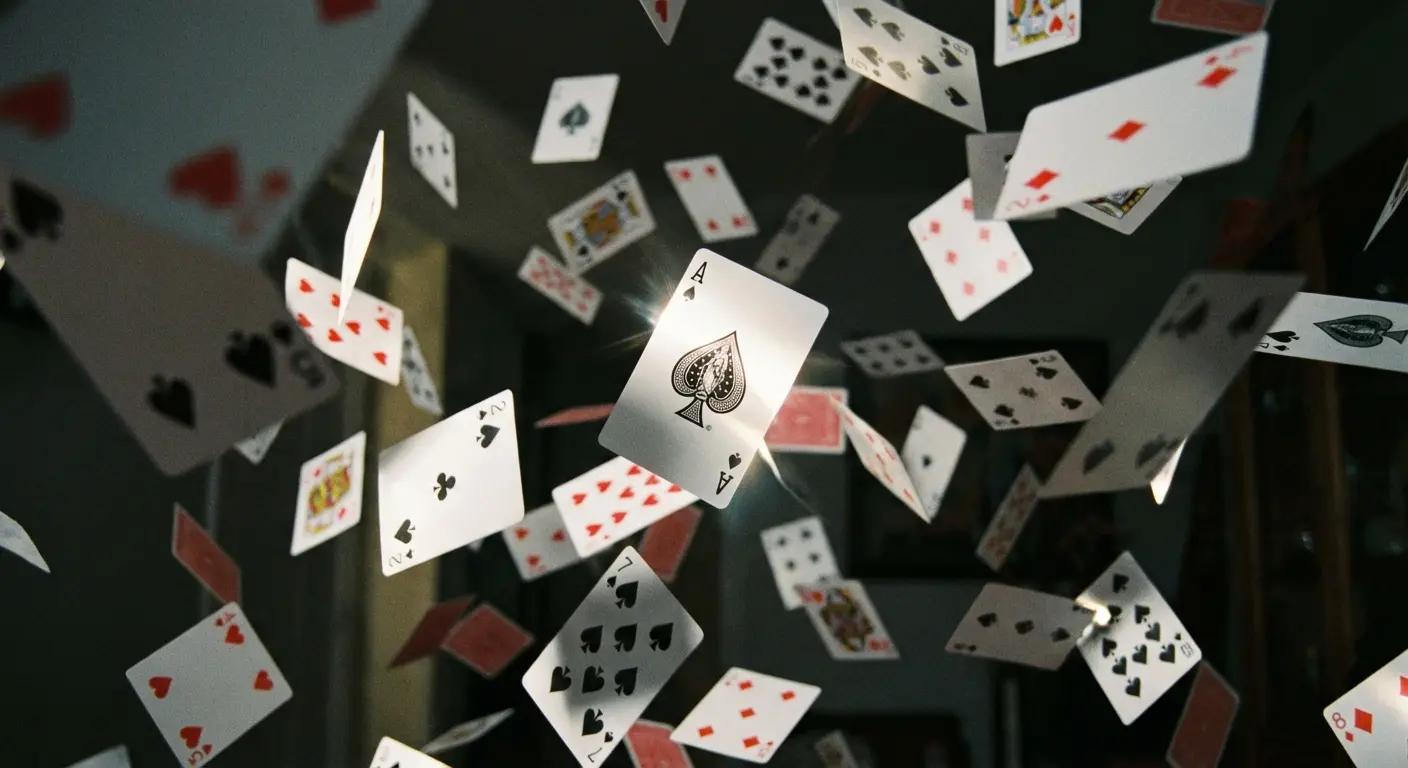
6. Ace with Playing Cards Cascade
Multiple cards falling or floating around a central ace creates depth and movement that single-card designs can’t achieve. You’re showing the moment before or after the win, not the static result.
This needs space. Trying to compress this concept into a palm-sized area kills the effect. Ribcage, thigh, or full sleeve sections give cards room to tumble realistically. Deciding whether cards face the viewer or show backs adds another layer. All faces feels showy, mixed orientation feels more natural.
Color on the face cards with a monochrome ace creates hierarchy. This design telegraphs “gambling is part of my story” more than “I won once and got a tattoo about it.” The ace sits at the center while surrounding cards provide context.
People add specific cards that held meaning in their life. The hand they were dealt during a pivotal moment, the cards on the table when they made a life-changing decision.
7. Blackjack 21 Composition
Showing the actual winning hand (an ace plus a ten-value card) speaks to people who understand the specific game rather than generic card playing. This works beautifully as a small piece because you only need two cards.
Placement behind the ear, on the wrist, or on the ankle keeps it discoverable rather than displayed. The ten-value card you choose adds personality: a face card (jack, queen, king) versus a ten pip card changes the visual weight.
I see people add the date they hit a significant blackjack win, but that only works if the date matters to your larger story. Otherwise you’re just documenting a lucky Tuesday in Vegas. The design in this context becomes shorthand for “I know when to hold and when to walk away.”
8. Ace of Diamonds in Crown Setting
Diamonds already signal wealth and material success. Adding a crown risks veering into tacky territory unless your artist has a sophisticated approach to regalia.
This works best when the crown feels historical. Think playing card king crowns rather than generic royalty symbols. Placement on the chest or shoulder creates a “crowned” effect on your body. Color choices separate tasteful from garish: metallic gold ink, subtle shading, or keeping the crown as line work while the diamond suit pips get color treatment.
You’re claiming material ambition here, which reads differently depending on your age and context. On a 22-year-old, it signals aspiration. On someone established, it confirms achievement. The symbolism of crowns in tattoo design extends beyond playing cards. Crown tattoos represent power and achievement across different cultural contexts and design styles.
The design with crown elements works when you’ve earned the right to wear it, either through accomplishment or the audacity to claim what you’re building toward.
The Subtle Statements: Minimalist and Placement-Driven Designs
Placement becomes the primary message when you strip ace designs down to their essential elements.
Location on your body, size constraints, and visibility control completely transform what an ace communicates. You’ll find options here for people who want the symbolism without the spectacle, and for whom discovery matters more than display.
The ace in minimalist form requires more thought, not less. You’re removing all the supporting elements that typically provide context, which means every remaining decision (suit choice, exact placement, size) carries exponentially more weight. People rush into these designs thinking “small and simple means easy,” then realize they’ve created something that demands explanation because it’s so stripped down.

Placement guide breakdown:
Behind the ear: Hidden until you want someone to see it. Pain level is rough (7/10) because there’s basically no cushion between needle and skull. Stays hidden in professional environments. Expect touch-ups every 3-5 years because sun exposure and hair friction fade it faster. Typical size: 0.5-1 inch.
Fingers: Hurts like absolute hell (9/10). Fades faster than almost anywhere else. You’re looking at touch-ups every 1-3 years. Whether it’s “professional” depends on your industry, but most corporate environments still frown on hand tattoos. Typical size: 0.25-0.75 inch.
Inner wrist: Medium-high visibility (4/10 pain). Depends on your dress code whether it’s work-friendly. Touch-ups every 5-7 years. Typical size: 1-3 inches.
Ankle: Low to medium visibility (6/10 pain). Work-friendly, easily hidden. Touch-ups every 5-7 years. Typical size: 1-2 inches.
Sternum: Very low visibility, intimate only (8/10 pain). Completely hidden in professional settings. Touch-ups every 7-10 years. Typical size: 2-6 inches.
Collarbone: Medium to high visibility depending on neckline (7/10 pain). Touch-ups every 5-7 years. Typical size: 2-4 inches.
Inner lip: Completely hidden (10/10 pain). Invisible in all settings. Touch-ups every 1-2 years, sometimes fades completely. Typical size: 0.25-0.5 inch.
9. Single Pip Ace (Behind the Ear)
Just the suit symbol, no card outline, no text. Behind the ear creates an insider/outsider dynamic where only people close enough to see it get to know it exists.
This placement suits people in professional environments where visible tattoos create complications. The size constraint (maybe half an inch) means line work needs to be clean and bold enough to hold up over time. Suit choice still matters: a spade reads edgier than a heart.
This design asks viewers to fill in context rather than spelling everything out. You’re signaling “I know what this means” without needing external validation. Touch-ups may be needed more frequently due to sun exposure and hair friction. The piece here functions as a secret handshake with yourself and anyone who gets close enough to discover it.
10. Finger Ace Micro Design
Finger tattoos fade faster and hurt more than almost any other placement, so you need to really want this. An ace on your ring finger makes a statement about commitment to risk or chance. Especially popular with people who work in finance, poker, or high-stakes careers.
Side finger placement keeps it more private. The design needs to be simple because detail disappears on this canvas. Just the suit symbol or a tiny card outline. You’re essentially creating a signet ring effect.
This placement changes how you present yourself in handshakes, during presentations, or in any context where your hands are visible. Consider whether you want that constant reminder and signal. The piece on your finger becomes part of every gesture you make, every document you sign, every hand you shake.

11. Wrist Ace with Date Integration
Adding a specific date transforms a generic ace into a timestamp for a life-changing moment. The wrist placement means you see this constantly, which only works if the memory deserves that level of prominence.
This shows up most often marking recovery dates, major wins (literal or metaphorical), or memorial dates. The date can wrap around the card, sit beneath it, or integrate into the design as the card number. Roman numerals feel more timeless than standard digits.
Placement on the inner wrist keeps it more personal. Outer wrist makes it conversational. People will ask, so have your answer ready. Size needs to be large enough that the date remains legible as ink settles.
The design with date integration works when that specific day changed everything, when you can point to that moment and say “that’s when I went all in.”
12. Ankle Ace Corner Peek
Just the corner of an ace card visible, as if tucked into your sock or emerging from your shoe. This creates visual intrigue because viewers see partial information and have to mentally complete the image.
Ankle placement works beautifully for people who want the option to hide or reveal based on footwear choices. The “peek” concept needs precise placement so it looks like a card corner rather than a random fragment.
This design acknowledges that you’re holding something back, which itself becomes the message. Color on the suit symbol with black outline on the card edge creates enough contrast to read clearly. This fails if the placement doesn’t align with your actual clothing lines. The peek design works when you understand that mystery often communicates more than full disclosure.
13. Sternum Centered Ace
Chest center placement (sternum for people with breasts, upper chest for those without) creates symmetry and intimacy. This is for you and people you choose to show, not for public consumption.
The ace sits where vulnerability lives, which adds emotional weight to whatever suit you choose. Hearts become almost too on-the-nose here. Spades create interesting tension between the death card and your literal heart location. This placement hurts significantly during the process due to proximity to bone.
Size can range from delicate (two inches) to bold (four to six inches) depending on your frame and aesthetic preference. This design choice signals that your relationship to risk or chance is deeply personal, not performative. The piece over your sternum becomes something you feel before you see it.
14. Collarbone Ace Outline
Following the natural line of your collarbone with a simple ace outline creates elegant geometry that works with your body rather than fighting it. This placement suits people who want visible-but-not-aggressive presence.
The outline-only approach (no fill, no shading) keeps it light and modern. You can add the suit symbol inside or leave it ambiguous. Collarbone placement pairs well with certain necklines and clothing styles while disappearing completely with others, giving you control over visibility.
Pain level is moderate to high due to bone proximity. This design reads as more fashion-forward than traditional gambling imagery, which changes the audience response entirely. Outline-only designs are fineline tattoos, and fineline work has specific challenges. It fades faster and requires an artist who actually specializes in delicate line work.
The piece as pure outline strips away everything except the essential shape.
15. Inner Lip Hidden Ace
Maximum privacy, maximum commitment to the bit. Inner lip tattoos fade faster than any other placement (sometimes completely within a few years) and hurt intensely for their size.
You’re getting this because the secret matters more than the longevity. Only you and your dentist know it’s there unless you choose to show someone. The ace needs to be tiny and simple. Just the suit symbol or a minimal card shape.
This placement works for people who want the psychological anchor of the tattoo without any external signaling. You’re literally keeping your cards close. Touch-ups are expected and difficult because not all artists work on inner lips. Consider this a temporary-to-semi-permanent commitment. Inner lip tattoos are brutal. Read about lip tattoo maintenance before you commit to something that fades in 1-2 years and hurts worse than almost anywhere else.
The piece hidden inside your mouth becomes the ultimate private joke.
The Story Builders: Aces That Carry Personal Narrative
These designs use the ace as a foundation for larger storytelling.
How to integrate portraits, dates, styles, and other elements that transform a playing card into a chapter of your life. You’ll find approaches here that require collaboration with an artist who understands visual narrative, not just technical execution. These designs take longer, cost more, and demand more planning than standalone aces, but they create meaning that generic designs can’t touch.
Here’s the reality: 47% of people with tattoos get judged for them, according to Advanced Dermatology’s research. By family, strangers, coworkers. When you’re building a narrative ace with deeply personal meaning, decide now how much of that story you want visible versus private.
Even temporary tattoos can carry meaning. High school athletes wear them as good luck charms. Lampeter-Strasburg swimmer Maddy Juba has worn a temporary turtle tattoo to every meet, using it as a psychological anchor. Your permanent ink deserves more thought than that.
The ace becomes more than decoration when you build narrative around it. Designs that tell complete stories, that reference specific moments, that honor particular people. These options require patience and planning that flash designs never demand.
16. Ace with Portrait Integration
Incorporating a loved one’s portrait into an ace card design (usually where the suit symbols would traditionally appear) creates a memorial piece that’s both specific and symbolic. This requires an artist who excels at portrait work because faces are unforgiving.
The ace frame contains and honors the portrait while the suit choice adds meaning: hearts for romantic partners, spades for those who faced death bravely, diamonds for those who valued family wealth or legacy, clubs for those with military or protective roles. Placement needs to accommodate portrait size. Faces smaller than two inches rarely age well.
This design announces that this person was your ace, your best card, your winning hand. Black and grey portraits tend to age better than color for facial detail. What does an ace mean when it incorporates a face? It means this person represented your best hand in life, the card you’d play in any situation.
The piece with portrait integration transforms gambling symbolism into something profoundly personal.

17. Watercolor Ace Explosion
Watercolor technique creates the effect of paint splashing across and around the ace card. This style has critics who argue it doesn’t age well, but skilled artists who understand how to structure watercolor tattoos with proper black foundation prove otherwise.
The explosion effect suggests the ace is breaking containment, which works thematically for people marking moments when they broke free from constraints. Color choice matters enormously: reds and oranges feel aggressive, blues and purples feel more contemplative.
Placement on areas with good skin elasticity (upper arm, thigh) helps longevity. This design requires touch-ups more frequently than traditional styles, so factor that into your decision. You’re prioritizing immediate visual impact over decades-long consistency.
The piece in watercolor style speaks to people who value artistic expression over traditional gambling imagery.
18. Geometric Ace Reconstruction
Deconstructing the ace into geometric shapes (triangles, hexagons, sacred geometry patterns) and rebuilding it creates a modern interpretation that appeals to people who want symbolism without traditional imagery.
This style requires mathematical precision from your artist. The ace might be recognizable only from certain angles or might reveal itself gradually as viewers process the geometry. Placement on flat surfaces (forearm, calf, upper back) showcases the geometric precision better than curved areas.
This design signals that you think about chance and risk analytically rather than emotionally. Dotwork or fine line techniques pair beautifully with geometric reconstruction. You’re showing that you deconstruct and understand your relationship to luck rather than just experiencing it.
The piece rebuilt through geometry becomes a puzzle that rewards careful observation.

19. Ace with Script Banner
Adding a banner with text (a name, date, phrase, or coordinates) grounds the ace in specific meaning that viewers can access immediately. The banner can wrap around the card, sit beneath it, or integrate into the design.
Font choice matters as much as the words themselves: old English feels traditional, simple sans serif feels modern, script feels personal. Common phrases like “all in,” “high stakes,” or “wild card” show up constantly, but custom text that means something specific to your story works better.
Placement depends on text length and card size, but forearm and upper arm accommodate this composition well. You’re removing ambiguity about what the ace represents to you, which is either clarifying or too literal depending on your communication style.
Add a banner with text and you remove all ambiguity. You’re controlling the narrative instead of leaving it open to interpretation. The piece with script becomes a declaration rather than a suggestion.
20. Matching Ace Set (Couple or Friend Tattoos)
Each person gets a different suit, creating a complete set when you’re together. This works for couples (hearts and diamonds, or spades and clubs), friend groups of four, or siblings.
The design needs to be identical in style and size so they clearly match when compared. Placement should mirror (same location on each person’s body) for maximum effect. You’re signaling that your connection is part of a winning hand, that together you’re stronger than apart.
This commitment requires trust that the relationship will last, which adds weight to the decision. Suit assignment can be random or meaningful. The romantic gets hearts, the pragmatist gets diamonds, the bold one gets spades, the protector gets clubs.
Smaller, simpler designs age better for matching sets because you want them to look cohesive decades later. The piece as a matching set becomes a permanent symbol of chosen family or partnership.

21. Ace Incorporated into Sleeve Narrative
Using an ace as one element within a larger sleeve tells a more complex story than a standalone piece. The ace might represent a turning point, a risk that paid off, or a gamble that changed everything.
Surrounding elements provide context: clocks suggest timing was everything, roses suggest beauty in the risk, chains suggest freedom from constraints. Placement within the sleeve matters. Upper arm for prominent moments, inner arm for private significance, forearm for visible reminders.
This approach requires planning the entire sleeve narrative before committing to individual pieces. You’re showing that chance or risk played a role in your story but wasn’t the whole story. Working with one artist for the entire sleeve maintains visual consistency. The ace becomes a chapter marker rather than the entire book.
The piece within a sleeve context gains meaning from everything around it.
22. Memorial Ace with Specific Suit Significance
Choosing a suit based on how someone died or lived creates layers of meaning that generic memorial tattoos miss. Spades for someone who faced death directly (military, illness fought bravely, sudden loss). Hearts for someone whose love defined them.
Diamonds for someone who built something lasting or valued family legacy. Clubs for protectors, fighters, or those who defended others. Adding their birth and death dates, initials, or a small portrait element personalizes it further.
Placement over your heart, on your chest, or somewhere you’ll see daily keeps their memory present. This design acknowledges that they were your ace, your best card, the one you’d play in any situation. Black and grey maintains the somber tone appropriate for memorial work.
You’re creating a permanent marker for grief and love that’s more nuanced than “RIP” banners. The piece as memorial becomes a way to carry someone with you that feels specific to who they were and what they meant. People add elements that reference inside jokes, shared experiences, or defining characteristics that make the memorial unmistakably about that one person.
Why Your Design Deserves More Than Generic Templates
You’ve seen the categories and the possibilities. Here’s what most people miss: an ace’s meaning shifts dramatically based on decisions most people don’t even realize they’re making.
Suit choice, placement, size, accompanying elements, and style all communicate different messages to different audiences. The same spade ace on your chest versus behind your ear tells completely different stories about your relationship to risk, death, or power.
People struggle most with translating the feeling they want into visual elements an artist can execute. You know you want an ace, but describing the specific mood, the exact symbolism, and the precise aesthetic that matches your vision becomes the bottleneck. You scroll through thousands of generic flash designs that get close but miss something essential.
This is why I built Tattoo Generator IQ. I watched too many people walk into consultations with vague ideas and walk out with generic flash.
You can describe your vision in plain language. Burning ace of hearts with my daughter’s birth date, geometric reconstruction of all four suits, memorial spade with military elements. Watch the AI generate multiple variations in seconds.
You’re not starting from scratch or trying to explain abstract concepts to an artist during a consultation you’re paying for by the hour. You walk in with high-resolution references that show exactly what you want, which transforms the conversation from “can you do this?” to “how do we refine these specific details?”
The placement guides included with each design help you visualize how size and location will look on your body, not just on a flat reference sheet. You can test whether that delicate behind-the-ear ace will read at that scale, or whether your memorial piece needs more space than you initially thought. The piece you generate becomes a starting point for collaboration rather than a vague hope that your artist understands what you mean.

Final Thoughts
Your ace should feel like you’re holding the best card in the deck.
Not because it’s the most elaborate design or the biggest piece. Because it marks something specific. The moment you went all in on your business, the grandfather who taught you poker and life strategy, the time you survived when the odds said you wouldn’t.
That specificity separates ink you’re proud to explain from ink you’re tired of justifying.
Suit choice isn’t arbitrary. Spades equal death and power. Hearts equal emotional risk. Diamonds equal material stakes. Clubs equal force and protection. Pick the one that matches your story.
Placement transforms meaning: visible declarations versus private reminders, body geography that emphasizes or contradicts the symbol itself. An ace on your chest announces something to the world. The same design behind your ear whispers it only to people you allow close.
Choose the suit that reflects your truth. Pick placement that matches how public or private you want this. Work with an artist who gets that an ace isn’t just a playing card. It’s a statement about how you play the game of life, what risks you’ve taken, what losses you’ve survived, and what wins you’re still chasing.
