10 Dice Tattoos That Actually Mean Something (Forget What You’ve Heard About Gambling)
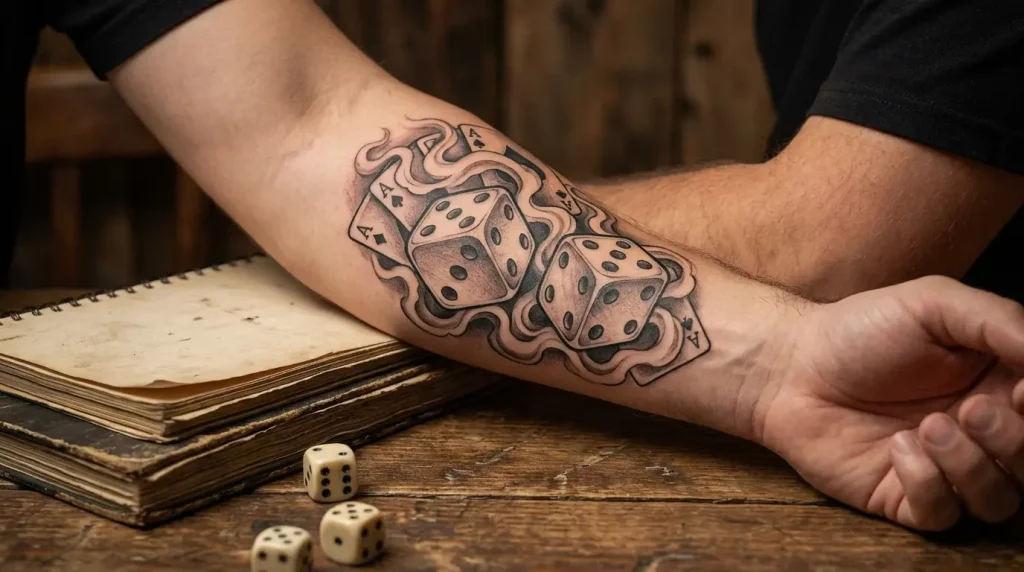
Table of Contents
-
Why Dice Tattoos Aren’t About Vegas
-
Snake Eyes: When Everything Goes Wrong and You Survive Anyway
-
The D20: Gaming Culture Gets Permanent
-
Flaming Dice (And Why Most Look Dated)
-
Memento Mori: Skulls, Dice, and Mortality
-
Tiny Dice Placements That Actually Work
-
Paired Dice for Couples (But Will It Last?)
-
What I’m Not Covering (And Why)
-
Making Your Design Real
TL;DR
Dice tattoos mean way more than gambling. Snake eyes represent surviving your worst outcomes. D20s are about gaming communities, not casinos. Flaming dice symbolize irreversible choices. Small dice on fingers fade fast but work if you accept touch-ups. Couples’ dice are risky but meaningful if you think it through. Prison symbolism exists and you need to know about it. Math nerds get probability equations with their dice. I’ve spent three months researching this and I’m still not sure what design I want.
Why Dice Tattoos Aren’t About Vegas
Every dice tattoo article I’ve read treats them like they’re just about poker nights and Vegas trips. It’s lazy.
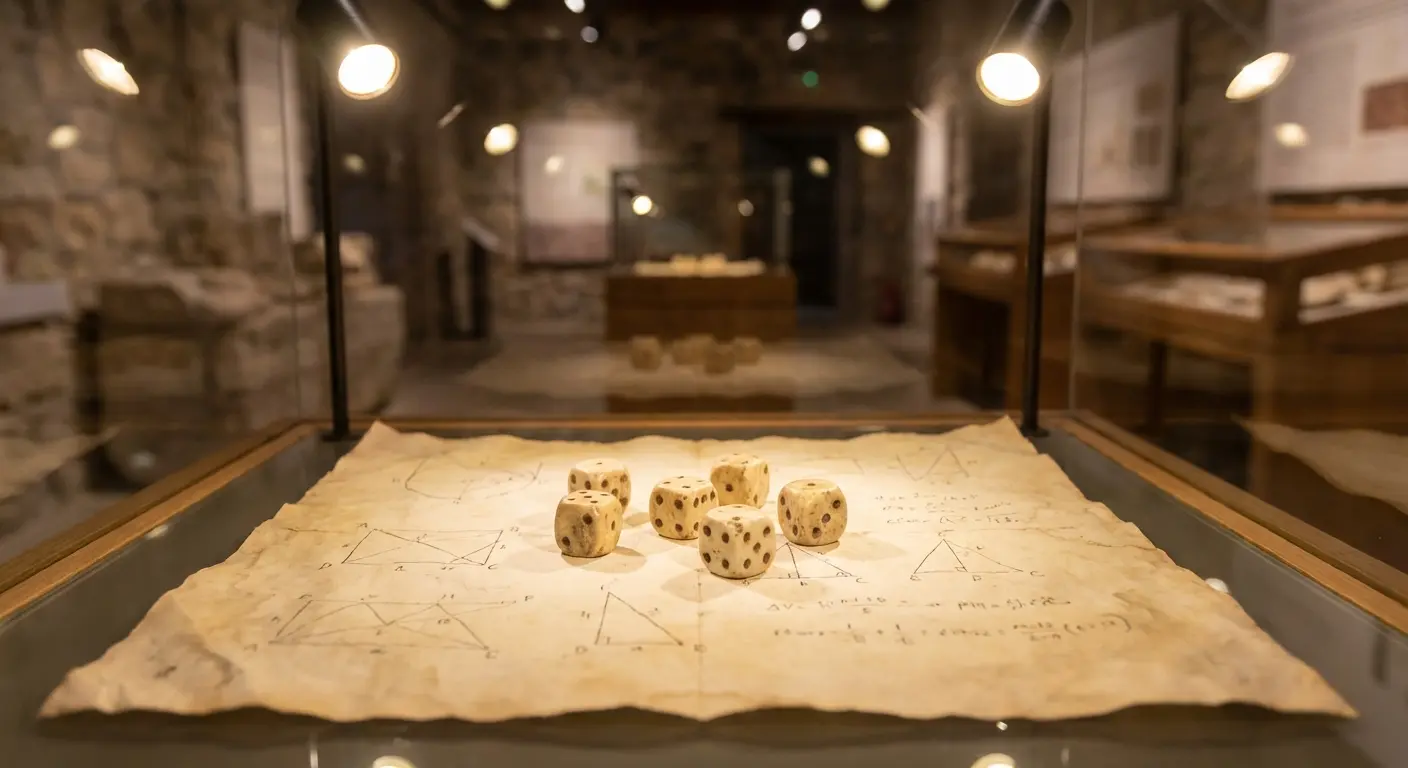
Dice are thousands of years old. Romans used them. Egyptians used them. They weren’t gambling tools first. They were humanity’s way of giving chaos a shape, making randomness something you could hold in your hand and measure.
When someone gets a dice tattoo, they might not be celebrating risk at all. They might be saying: “I accept that life contains things I can’t control.” That’s different. That’s mature in a way gambling metaphors miss completely.
According to research on dice tattoo symbolism, dice games rely almost entirely on luck rather than talent or skill, making them a metaphor for the human experience where we can no more predict the numbers that will turn up than we can predict our own futures in a capricious universe.
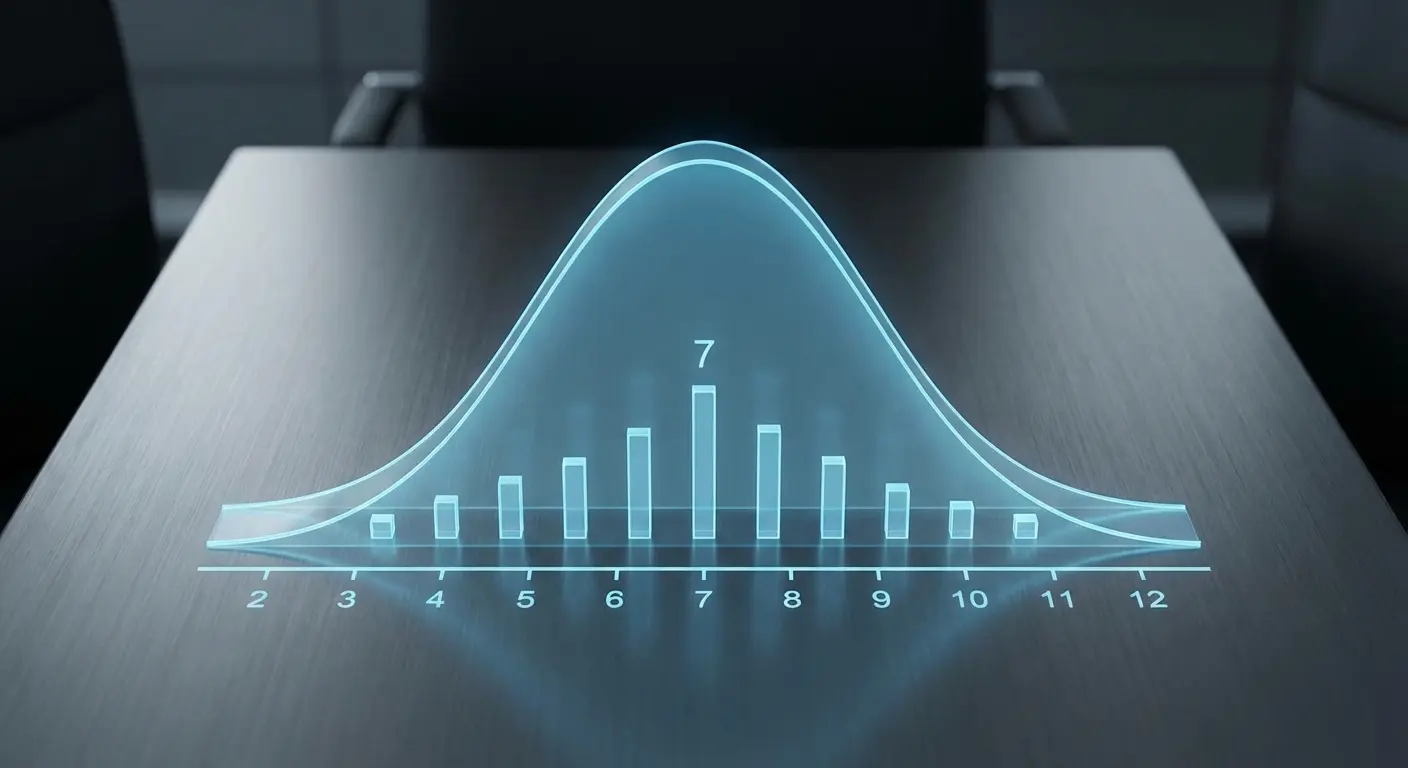
The math matters too. Each face of a standard die has a 16.67% probability of landing face-up. Perfect equality. No face has an advantage. Some people get dice tattoos after making major life decisions where multiple good paths existed and they simply had to pick one. The dice represent that moment of choice when all options were equally valid.
For those exploring deeper symbolic meanings in their body art, understanding broader tattoo symbolism and meaning helps contextualize how dice fit into personal narratives about fate and choice.
I’m approaching this differently than other guides. This isn’t about celebrating your gambling hobby (though if that’s your thing, fine). I’m looking at why mathematicians, philosophers, and people who’ve made peace with uncertainty choose dice tattoos as often as gamblers do.
Snake Eyes: When Everything Goes Wrong and You Survive Anyway
Single Die Showing One
A single dot on a die face makes for stunning minimalist work. The negative space does everything.
You’re looking at maybe a half-inch cube with one small dot. That restraint says confidence. You don’t need elaborate shading or multiple elements to make your statement.
Wrist, ankle, behind the ear. These placements work because the design doesn’t fight for attention. It exists quietly and makes people lean in to see what you’ve chosen to make permanent.
Here’s what nobody tells you: the symbolism flips completely outside gambling contexts. One represents beginnings. The starting point. The foundation everything else builds from. I talked to a woman who got a single die showing one after leaving an abusive relationship. She told me it represented starting over from nothing, and that nothing was exactly what she needed.
Paired Snake Eyes
Two dice, both showing single dots. Actual snake eyes.
But you’re not thinking about craps. You’re thinking about that time when everything that could go wrong did, and you survived it anyway.
I met a guy with paired snake eyes on his forearm. He got them after losing his job and his apartment in the same week. “Worst roll possible,” he said. “But I’m still here.” That’s the meaning most articles miss.
The composition matters more than you’d think. Touching dice suggest the outcomes were connected, part of the same disaster. Separated dice might represent different low points that share something thematic.
Forearm placement works well because you’ve got the space to let each die breathe while maintaining their relationship. Clean linework is crucial. You don’t need color to make this work.
Double Sixes (Boxcars)
Boxcars. Twelve. The highest possible roll with two standard dice.
This works for people who’ve experienced that rare moment when everything aligned perfectly. I got an email from a reader who got boxcars tattooed the day he found out he was going to be a dad, the same week he landed his dream job, the same month he paid off his student loans. “It all hit at once,” he wrote. “I’ll never roll that high again.”
The visual challenge? Keeping six dots on each die readable. You need either larger dice or extremely precise dotwork. Those dots can’t blur together as the tattoo ages or you’ve lost the specific meaning.
Upper arm or calf gives you enough space to render the dots clearly. Some artists add subtle shading to create depth, making certain dots appear slightly recessed. That three-dimensional quality helps maintain clarity over years.
The D20: Gaming Culture Gets Permanent
Why the Twenty-Sided Die Matters
Tabletop gamers know the D20 intimately. That twenty-sided polyhedron determines success or failure for everything from attacking dragons to persuading merchants.
But here’s what makes it beautiful: it’s an icosahedron, one of only five perfect Platonic solids. When you tattoo a D20, you’re not just celebrating gaming. You’re wearing sacred geometry that philosophers have studied for millennia.
The shape is mathematically gorgeous. Perfect symmetry. Twenty identical triangular faces. It’s the kind of thing that makes math nerds and gamers equally excited, which is a rare overlap.
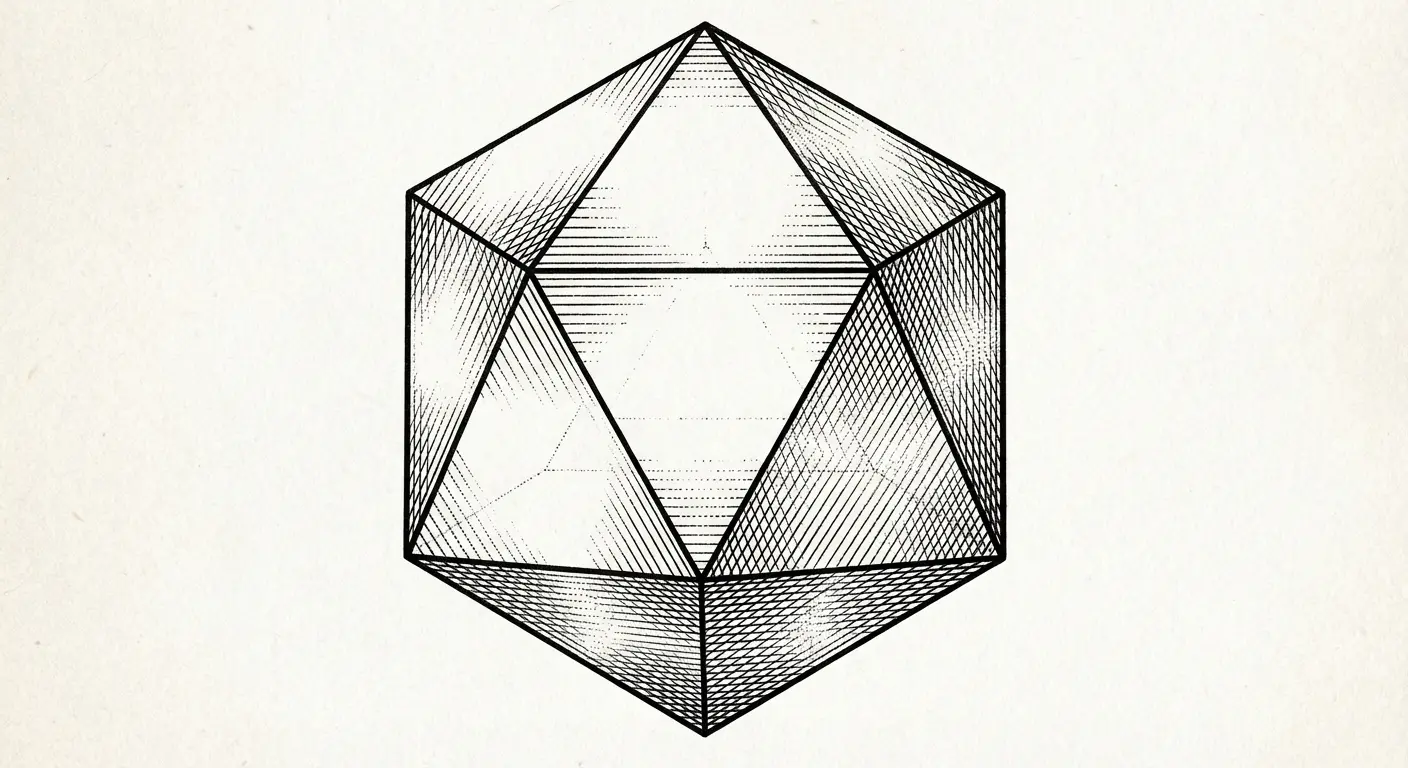
Critical hits (rolling a twenty) and critical failures (rolling a one) carry enormous weight in gaming communities. My friend has a D20 showing a one with a tiny stick figure face-planted underneath. It’s from the time his level 12 barbarian rolled a critical fail and accidentally punched himself unconscious during a boss fight. The whole table lost it. Three years later, it’s still the story everyone tells.
The geometric complexity demands skilled linework. You’re rendering multiple triangular faces, each at a different angle. Shading becomes essential. Without it, the tattoo reads as flat and you lose the iconic shape that makes a D20 recognizable.
Full Polyhedral Sets
The complete set tells a different story than a single D20. You’re declaring total investment in the hobby, not casual participation.
Seven distinct geometric shapes create real composition challenges. D4s are pyramids. D8s are octahedrons. Each form needs different rendering techniques to read clearly.
I’ve seen these done two ways: scattered like they spilled from a dice bag, or arranged in organized rows. The scattered approach feels organic and dynamic. The organized approach appeals to people who love the mechanical systems of gaming.
Back pieces or full sleeves provide the space these need. You’re working with seven distinct elements, each requiring enough size to show their unique geometry. Cramming them into a small area sacrifices the visual clarity that makes the design work. These comprehensive designs celebrate gaming culture in its full complexity.
Flaming Dice (And Why Most Look Dated)
Flames and dice have been paired in tattoo art for decades, but here’s my honest take: most flaming dice tattoos look dated now. Unless you’re specifically going for that traditional style, consider something else.
That said, the symbolism runs deeper than “I like gambling and danger.”
Fire transforms. It’s irreversible. You can’t unburn something. When you pair flames with dice, you’re representing commitment to uncertain outcomes, accepting that once you’ve made the throw, there’s no taking it back.
Traditional flame rendering uses reds, oranges, and yellows with bold black outlines. That old-school approach remains popular because it ages relatively well and reads clearly from a distance. The flames typically wrap around the dice, suggesting they’re emerging from fire or being consumed by it.
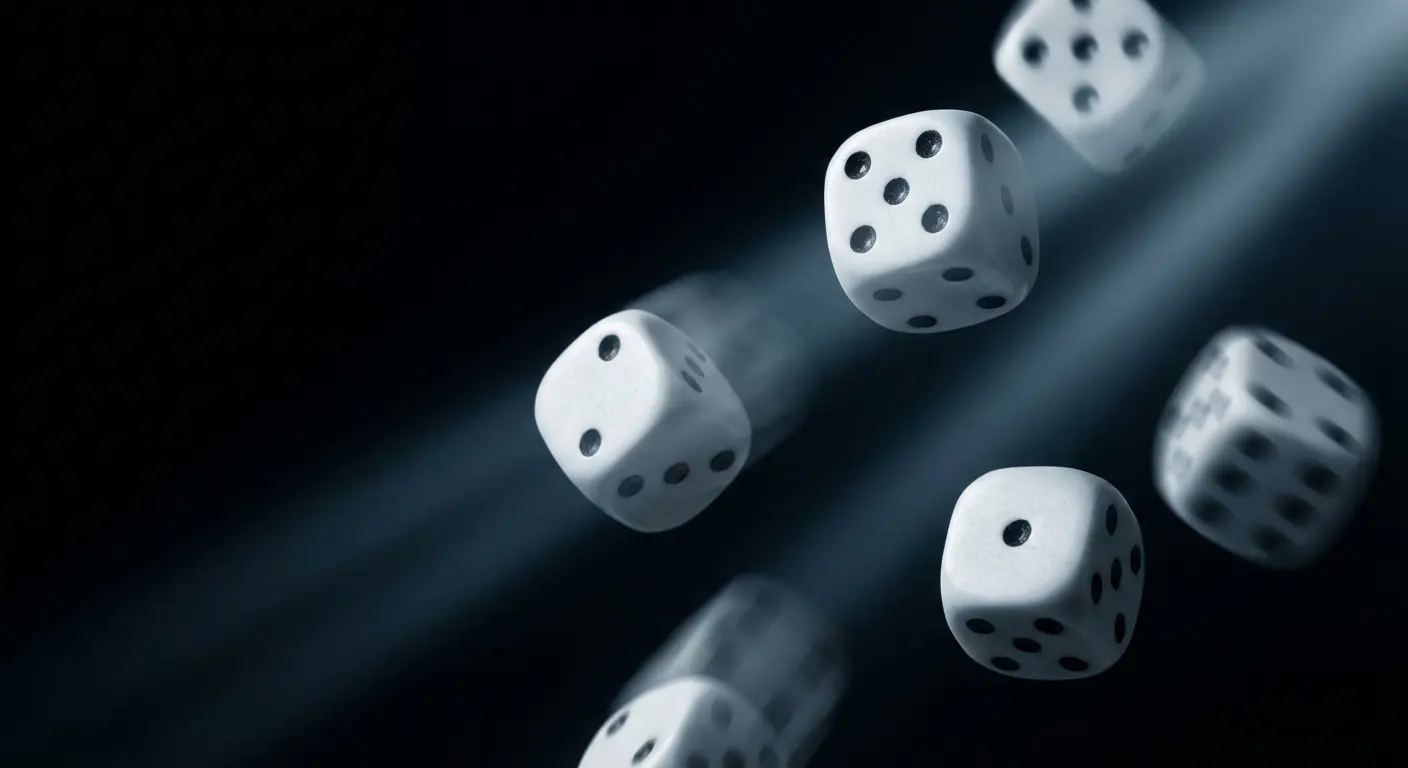
Color saturation is crucial here. Vibrant reds and oranges fade faster than darker tones, so talk with your artist about building the palette for longevity. Some designs incorporate darker burgundy and burnt orange specifically because they hold better over time.
The bold aesthetic of a flaming dice tattoo shares visual DNA with traditional old school tattoo styles, where strong outlines and limited color palettes create timeless designs that age gracefully.
Am I overthinking the “dated” thing? Maybe. Plenty of people still get flaming dice and love them. But I’ve seen enough that looked amazing fresh and rough after five years that I’d be cautious about color choices.
Memento Mori: Skulls, Dice, and Mortality
Memento mori. Remember you will die.
When you pair skulls with dice, you’re acknowledging that death’s timing is random, uncertain, beyond your control. You don’t know when your number comes up. None of us do.
This isn’t about looking tough or edgy. People see skull and dice tattoos and assume you’re trying to look badass. They’re missing the entire point.
It’s a philosophical statement about mortality’s relationship with chance. Getting a memento mori skull with dice isn’t about being dark. It’s about waking up and remembering you don’t have forever. That’s the tradition’s actual function.
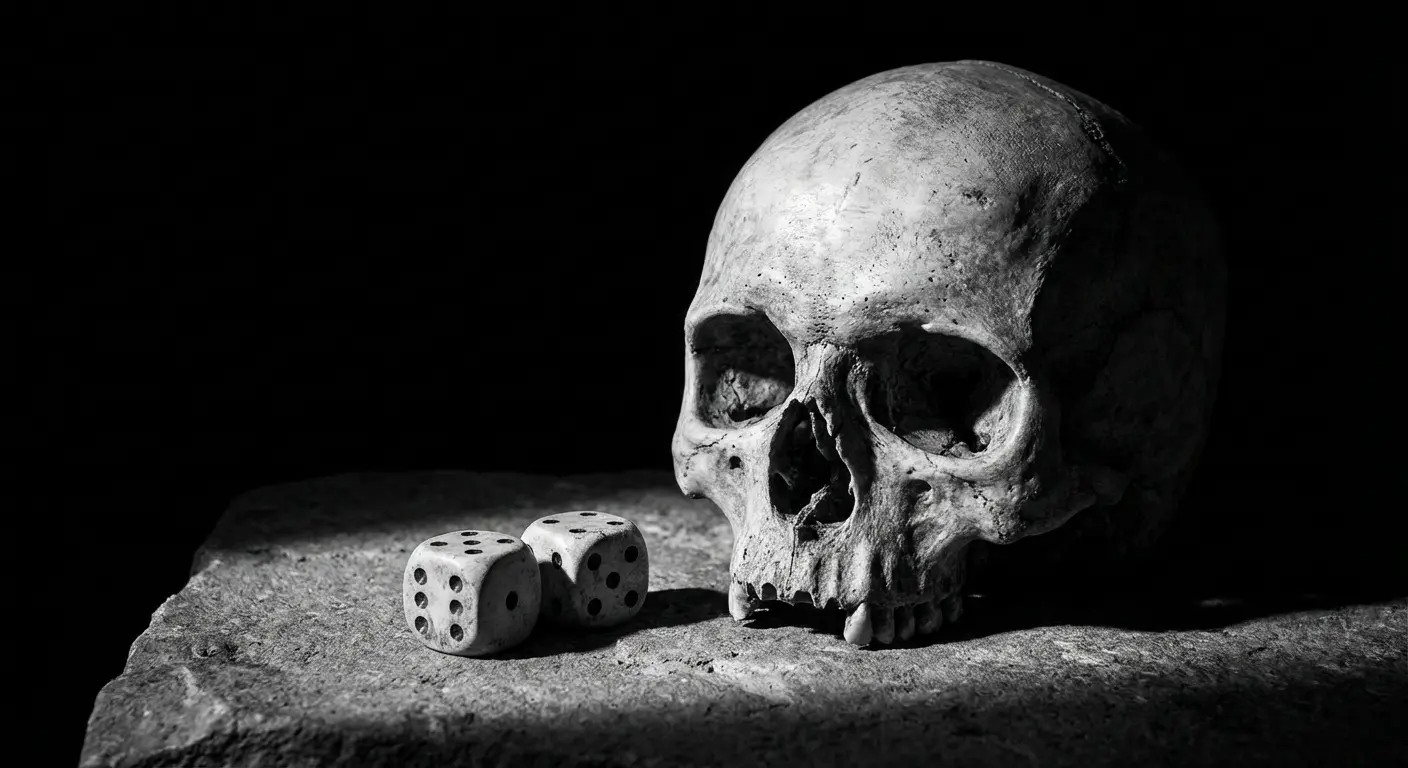
The design works best when it maintains this contemplative quality rather than becoming aggressive or dark for darkness’s sake. Clean skulls (anatomically accurate rather than stylized) paired with simple dice create that meditative feeling. Excessive shading or horror elements shift the meaning toward shock value, which defeats the purpose.
Placement on areas you’ll see regularly (forearm, hand) reinforces the memento mori function. The tattoo serves as a daily reminder of mortality. That’s the tradition’s entire point. Hidden placements reduce it to pure aesthetic choice, which is fine if that’s what you want, but it’s not really memento mori anymore.
Tiny Dice Placements That Actually Work
The trend toward smaller, more delicate tattoos has surged recently. Contemporary jewellery brand Astrid & Miyu noticed a 35% uptick in bookings for fine line tattoos from 2023 to 2024, with dinky designs including simple geometric shapes becoming top performers. That tracks with what I’ve been seeing everywhere.
A single die the size of your fingernail makes a different statement than a forearm piece. You’re choosing subtlety, a personal reminder rather than public declaration.
Here’s the hard part: maintaining clarity at small scale. Individual dots on die faces might not hold well on finger tattoos, where skin texture and movement cause faster fading. Solid silhouettes of dice work better, sacrificing the specific number shown for long-term readability.
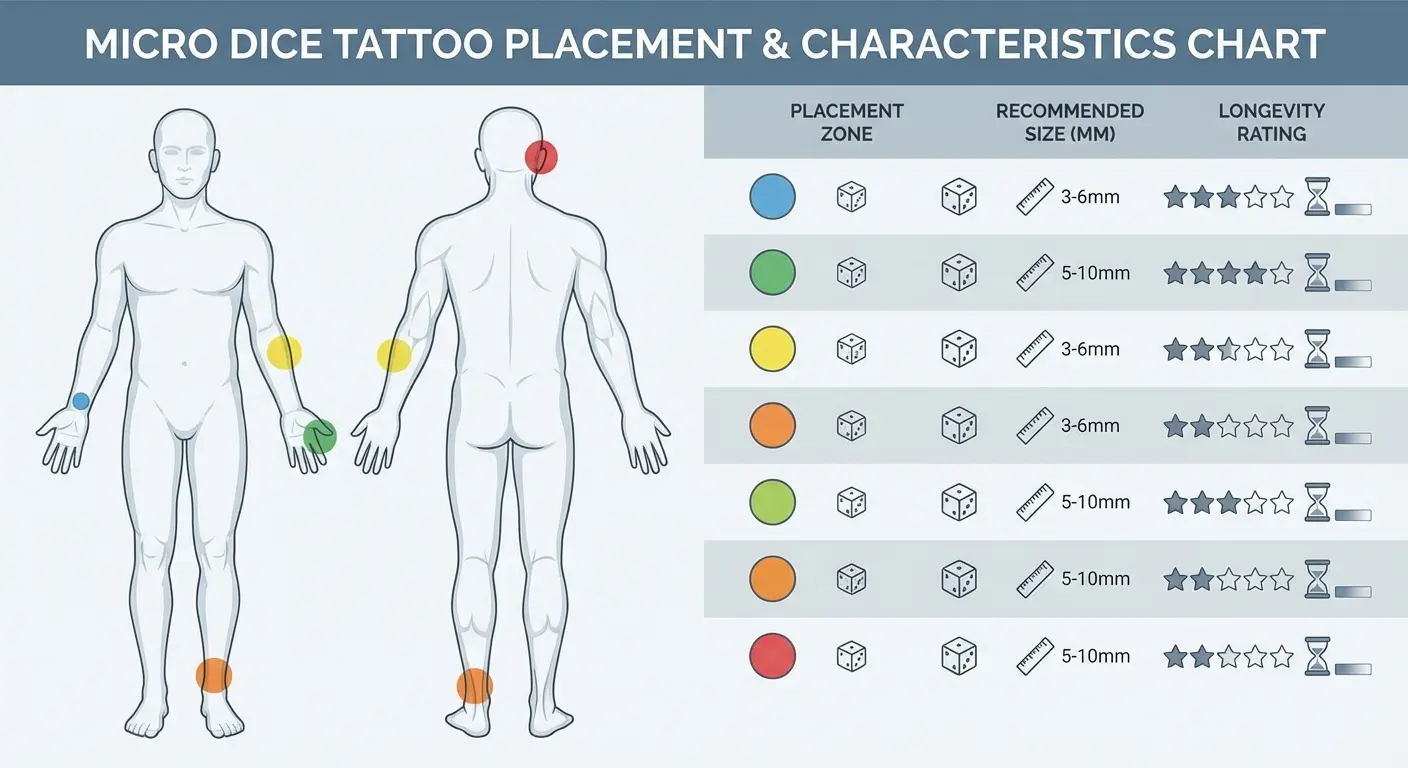
Fingers, behind ears, inner wrists. These placements suit people who want dice symbolism without the commitment of larger, more visible work. You know it’s there. People close to you might notice. Strangers probably won’t.
Expect touch-ups. Small dice tattoos in high-movement areas fade faster and lose definition. That’s not a flaw, it’s physics. Going in with realistic expectations about maintenance helps you appreciate the tattoo for what it offers rather than resenting what it can’t be.
For those considering delicate, minimalist approaches to their dice tattoo, exploring fineline tattoo techniques can help determine whether intricate dot details will hold at smaller scales or if simplified silhouettes better suit micro placements.
|
Placement |
Size |
Visibility |
How Long It Lasts |
Best Approach |
Touch-Ups |
|---|---|---|---|---|---|
|
Finger sides |
0.25-0.5 inch |
Low-Medium |
Not great (lots of movement) |
Solid silhouette only |
Every 1-2 years |
|
Behind ear |
0.5-0.75 inch |
Low |
Pretty good |
Single die, minimal dots |
Every 3-5 years |
|
Inner wrist |
0.5-1 inch |
Medium-High |
Okay |
Single or paired dice |
Every 2-4 years |
|
Ankle |
0.75-1.5 inch |
Low-Medium |
Good |
Detailed dots possible |
Every 4-6 years |
|
Hand (top) |
1-2 inch |
High |
Moderate (sun exposure) |
Full detail with shading |
Every 2-3 years |
Paired Dice for Couples (But Will It Last?)
Matching dice tattoos for couples carry specific symbolic weight. You’re acknowledging that your fates are linked, your outcomes connected.
The most common approach shows each partner with one die, the two combining to create a specific total. Seven (the most probable roll) represents stability. Twelve suggests striving for the best possible outcome together. Snake eyes can represent surviving hard times as a unit.
Here’s what everyone should ask before getting partner tattoos: will this retain meaning if the relationship ends?
Be honest with yourself. Dice offer an advantage here. Unlike names or explicitly romantic imagery, dice carry meanings independent of the relationship. Your die can represent your individual journey even if it’s no longer paired with someone else’s. But that doesn’t mean it won’t sting to look at if things go badly.
Some couples choose complementary rather than matching designs. One person gets a D20, the other gets a D12. Both are polyhedral dice from the same gaming set, but each maintains distinct identity. This approach acknowledges partnership while preserving individuality, which I think is smarter long-term.
Placement matters for couple tattoos. Matching placements (both on left forearms, both on right ankles) emphasize the partnership. Different placements suggest independence within the relationship. Neither is better, they just communicate different relationship philosophies.
This pair of dice tattoo approach works because it’s flexible enough to grow with you, whether the relationship lasts forever or becomes part of your history. The dice tattoo ideas you choose together should reflect how you see your connection: interdependent but not identical.
What I’m Not Covering (And Why)
Kawaii Dice
Dice with sparkly eyes and pastel colors. I don’t get it, but people love them. If you want your dice to have cute faces and pink shading, that’s your choice. It’s just not my aesthetic and I don’t have anything useful to say about it beyond “this exists and some people like it.”
Watercolor Dice
The soft, artistic watercolor approach to dice tattoos. They look beautiful fresh. I’ve seen too many that looked rough after a few years. The style doesn’t age well in my experience, but maybe you’ll have better luck.
Casino Aesthetics
Dice with poker chips, cards, roulette wheels. If you want a full gambling sleeve, great. But that’s not what this article is about. You can find that content anywhere.
Loaded Dice Designs
Asymmetrical or weighted-looking dice. The symbolism (cheating fate, rigging outcomes) is interesting but I haven’t seen enough good examples to write about it with any authority.
Prison Symbolism You Need to Know About
The symbolic weight of tattoos and their meanings has taken on new significance in recent years. In 2020, Electric Pair O’ Dice Tattoo in Fredericksburg, Virginia offered free cover-ups for racist and insensitive tattoos (WTOP), with owner Jeremiah Hirsch noting that 80% or more of requests involved Confederate flag imagery. That tells you something about how tattoo meanings change and how people seek to transform symbols they’ve outgrown.
Certain dice combinations carry specific meanings in prison culture. These aren’t universal, and they vary by region and era, but they exist as a symbolic language.
This genuinely worries me. A combination that seems aesthetically pleasing to you might communicate something entirely different to people familiar with these codes. Research matters here, particularly if you’re choosing specific number combinations.
I’m not glorifying criminal culture by acknowledging this. I’m recognizing that symbols carry different meanings in different contexts. The same dice showing specific numbers might represent a gambling win to one person and something entirely different to someone with prison experience.
If you’re drawn to dice aesthetically but want to avoid unintended meanings, working with an artist familiar with these symbolic systems helps. They can guide you toward combinations that don’t accidentally communicate messages you don’t intend.
I don’t know everything about prison symbolism. That’s not my world. But I know enough to tell you: be careful with specific number combinations, especially if you’re getting multiple dice. Your dice tattoo should express your intentions, not carry coded messages you never meant to send.
Making Your Design Real
You’ve read about ten different approaches to dice tattoos, from minimalist single dots to complex D20 compositions.
The challenge you’re facing now is visualization. How will flaming dice actually look on your forearm versus your calf? Will a D20 work better in traditional style versus geometric blackwork?
I’ve been using Tattoo Generator IQ to test whether my D20 (yeah, I’m still deciding) looks better on my forearm or shoulder. Turns out, shoulder works better for the size I want. I wouldn’t have known without seeing it visualized on my actual body type.
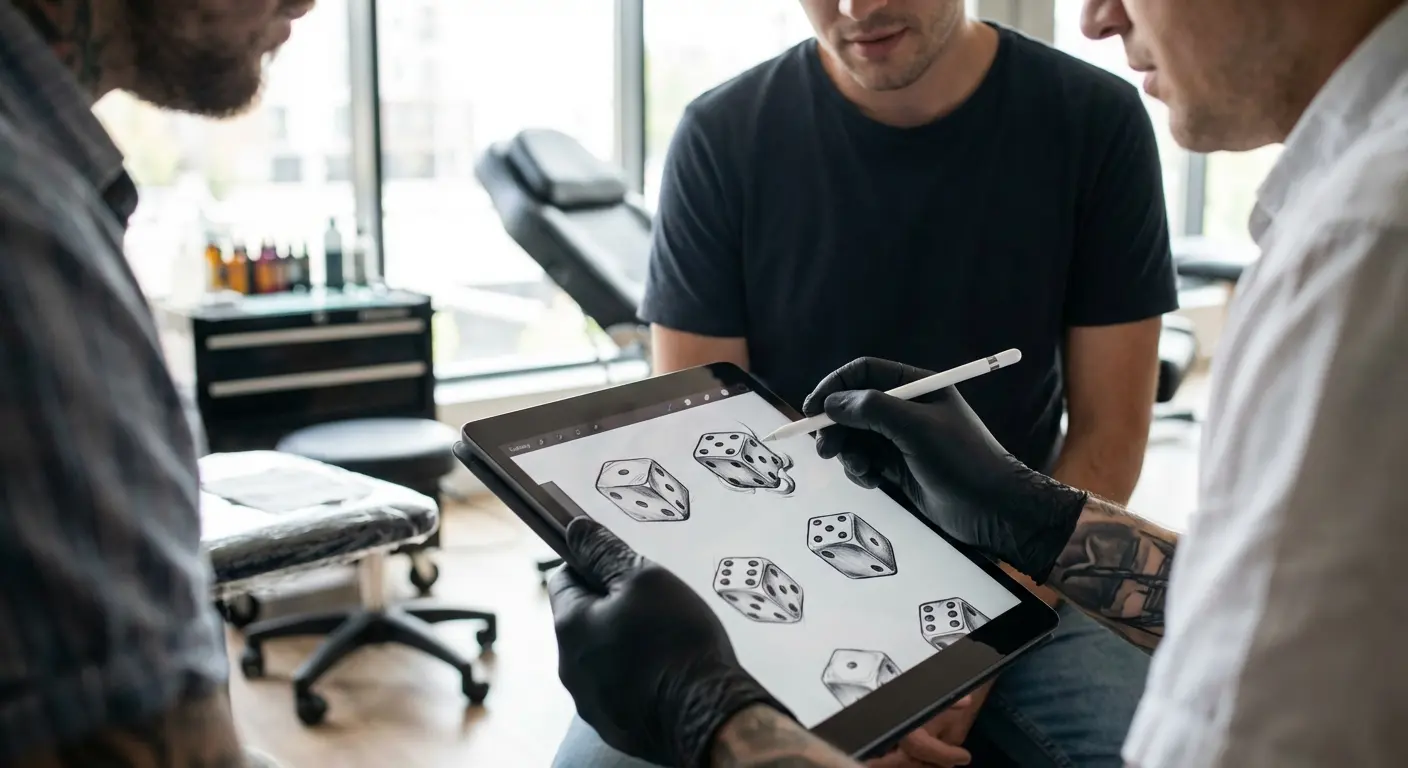
The tool particularly helps with complex compositions. When you’re planning multiple dice, flames, or geometric elements, seeing how they interact visually before your tattoo appointment prevents expensive mistakes and revision sessions. You can adjust colors, add or remove elements, and refine specific details until the dice tattoo design matches your vision exactly.
The generator’s helpful for basic visualization, but it can’t capture everything your artist will do with shading and fine details. Think of it as a starting point, not the final product. If you’re stuck between designs, throw them into the generator and see which one you keep coming back to. That’s usually your answer.
Testing different dice tattoo ideas digitally first saves time, money, and potential regret.
Final Thoughts
I’m getting my D20 next month. Still deciding between showing a twenty or a one. The twenty represents hope for success, all those critical hits that saved campaigns. The one represents learning from failures, which honestly shaped me more than successes ever did.
That’s my relationship with chance. Yours is different.
Don’t get a dice tattoo because it looks cool. Get it because you have something specific to say about randomness, luck, or fate. Otherwise you’re just wearing a cube with dots, and that’s a waste of permanent skin real estate.
The gambling association is there, sure. But it’s the shallowest reading of what dice represent. You’ve seen how they connect to mathematical beauty, gaming communities, philosophical traditions about fate, and cultural symbols that shift meaning depending on context.
Your dice tattoo should reflect your specific relationship with these ideas. Are you marking a moment when you accepted life’s randomness? Celebrating gaming culture that shaped your friendships? Acknowledging that sometimes you roll low and survive anyway?
The design choices you make (single die versus multiple, flaming versus geometric, realistic versus stylized) communicate which aspects of dice symbolism resonate with you.
Am I overthinking this? Probably. Maybe sometimes a dice tattoo is just a dice tattoo. But I don’t think so. I think when you choose to make something permanent on your body, it means something, even if you can’t fully articulate what that something is yet.
The dice tattoo designs we’ve explored here represent just the beginning. Each variation carries its own weight, its own story, its own connection to how you understand chance and choice in your life.
That’s not trivial.
