20 Nordic Tattoos That Tell Stories Your Artist Wishes You Knew First
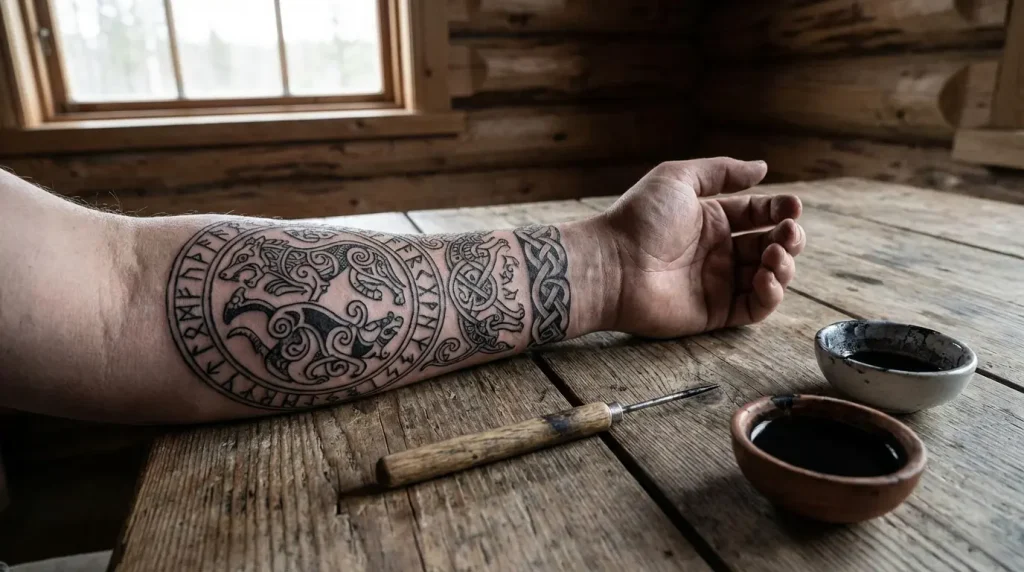
Before you walk into a tattoo shop with a Pinterest board of “Viking symbols,” let’s talk about what you’re actually asking for. That compass thing? Not Viking Age—it’s from an 1800s Icelandic magic book. Those runes? Half the meanings you found online are from 1970s occult books, not actual Vikings. And that wolf? If it’s Fenrir, you’re getting the chaos monster that eats Odin, not a generic “strength” symbol.
This isn’t about gatekeeping. Get whatever tattoo you want. But maybe know what it actually means first? Your artist will appreciate it, and you won’t be That Person explaining your “ancient Viking warrior symbol” that was invented last century.
Nordic tattoos carry weight beyond aesthetics. Runes function as both protective symbols and ways to tell stories, but their meanings aren’t always what Pinterest suggests. Mythological creatures represent specific struggles—chaos, wisdom, transformation—rather than generic “strength.” Placement matters for Nordic designs because these symbols were originally worn in specific body locations for what people believed were ritual purposes (we think, anyway—the historical record is thin).
Combining multiple Norse elements requires understanding how they relate mythologically. Otherwise you end up with contradictory symbolism. Many popular Viking tattoos are modern inventions or misattributed symbols from other cultures. Size and detail level directly impact whether a Nordic design reads as intentional or decorative. Your tattoo artist needs reference materials that show the complete symbol, not cropped Instagram photos.
Runes and Symbols That Speak Without Words
These aren’t pretty geometric shapes you saw on a TV show. Each one functioned within a specific belief system about fate, protection, and the structure of reality itself.
The challenge here isn’t finding a symbol you like—that’s easy. Understanding what you’re claiming when you wear it permanently? That’s where things get interesting.
The historical evidence for Viking tattoos remains surprisingly limited. The most compelling account comes from Arab traveler Ahmad ibn Fadlan in the 10th century, who described encountering Vikings tattooed from their fingertips to their necks with dark blue imagery, particularly trees and abstract symbols. While Viking tattoos are never mentioned in any Viking saga or written Norse source, these external observations suggest body modification was practiced, even if we can’t be certain whether these were permanent tattoos or temporary body paint.
Which elements are historically documented and which ones are reconstructed from fragments? That distinction matters when you’re explaining your ink to someone who studies this stuff.
1. Vegvísir (The Viking Compass)
Okay, real talk about the Vegvísir.
Everyone wants this one. It’s all over Instagram, usually with captions about “Viking navigation” or “finding your path.”
Here’s the thing: it’s not from the Viking Age. At all. This symbol comes from an Icelandic grimoire called the Huld Manuscript, dated to the 1800s—about 800 years too late to be Viking.
Does that make it meaningless? Not really. It means you’re wearing a later Icelandic magical symbol, not something a Viking warrior would recognize. The design features eight radiating staves meant to prevent the bearer from losing their way in storms or unfamiliar territory.
I’m not saying don’t get it. Plenty of people have beautiful, meaningful Vegvísir tattoos. Just stop calling it Viking. Call it what it is: a later Icelandic magical symbol that looks cool and carries genuine meaning from its own tradition.
The design itself is actually great for tattoos—geometric, symmetrical, works at different sizes. Your artist will appreciate the clean lines. Just bring good reference photos, not some cropped Instagram screenshot where you can barely see the details.
Placement on the chest or between shoulder blades creates that “internal compass” feeling many people seek. Consider whether you want the traditional version or one of the many artistic interpretations that add knotwork or additional staves.
2. Aegishjalmur (Helm of Awe)
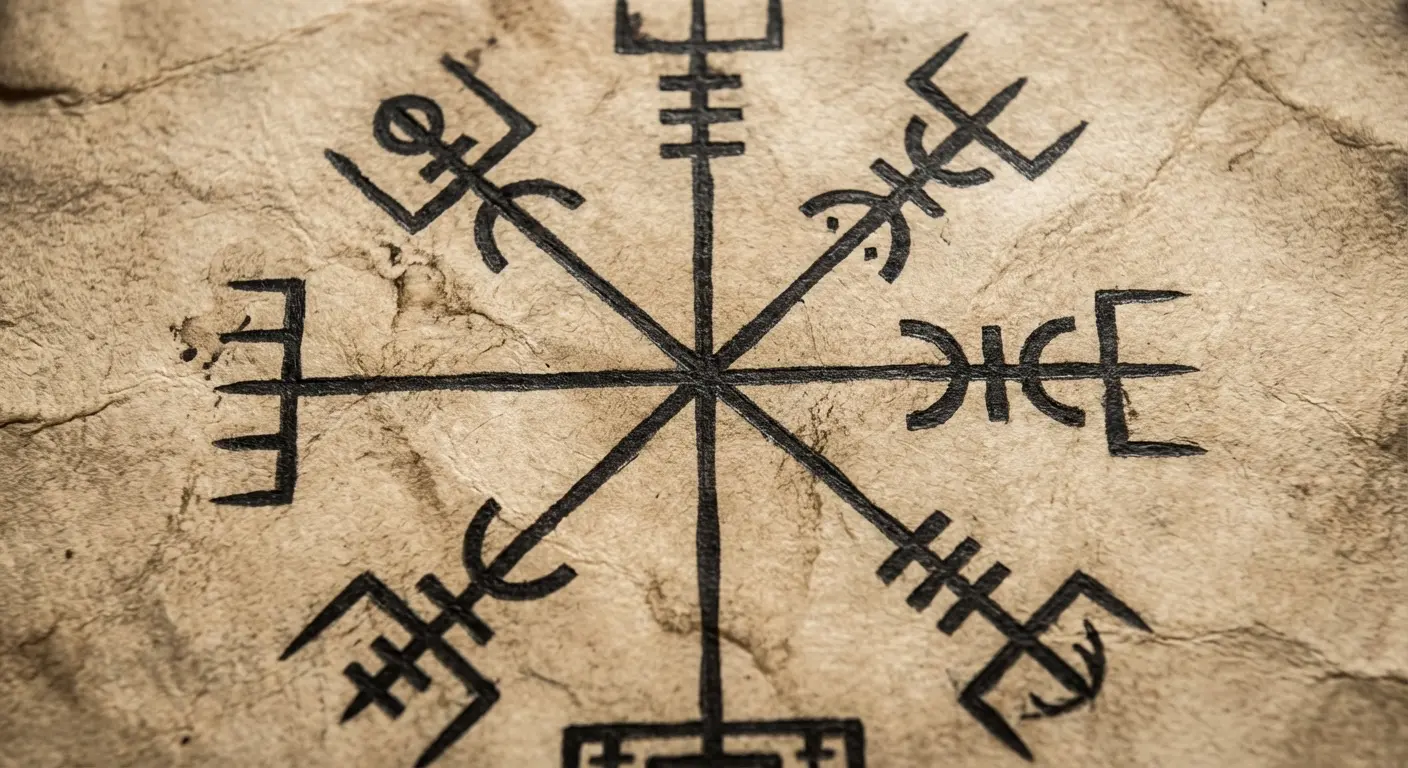
This eight-pronged symbol radiating from a center point gets requested for protection, particularly by people facing intimidating challenges—court cases, medical procedures, career pivots. The name translates to “helm of awe” or “helm of terror,” and it was believed to create fear in enemies while protecting the wearer.
Unlike the Vegvísir, we do have earlier sources for this one, though its exact appearance varied. The version most commonly tattooed today comes from the same Icelandic grimoire tradition.
The inherent symmetry creates a focal point wherever you place it. Forehead placement (yes, really) appears in historical accounts, but modern wearers typically choose the chest, upper back, or forearm. The radiating arms can incorporate different runic elements at their tips, personalizing the protective intention.
Size matters here. Too small and it reads as a generic snowflake pattern. You want enough scale that each arm remains distinct and the central point commands attention. Black ink maintains the symbol’s intensity, though some people add red at the center to represent willpower or life force.
3. Valknut (Knot of the Slain)
Three interlocking triangles that show up on Viking Age artifacts, particularly in contexts related to death and Odin. We’ve found it on the Stora Hammars stone and other archaeological evidence, so this one has legitimate historical weight.
The name “valknut” is modern—scholars made it up because we don’t know what Vikings called it—but the symbol itself is authentic. It’s associated with warriors who died in battle and were chosen by Valkyries for Valhalla.
You’ll see two main versions: the unicursal design (one continuous line forming all three triangles) and the tricursal (three separate triangles interlocked). The unicursal version flows better for tattoo compositions and creates interesting possibilities for incorporating other elements within or around the triangles.
This symbol carries heavy associations with death, sacrifice, and the afterlife, so it’s not a casual choice.
And now we have to talk about the Nazi problem.
Yeah. The valknut got picked up by white supremacist groups because it offers plausible deniability. “What, this? It’s just Norse mythology!” Meanwhile they’re using it to signal racist Odinist beliefs. There was literally a federal agent photographed with one during immigration raids in 2025, and the internet lost its mind trying to figure out if he was a history nerd or a white nationalist.
According to the Anti-Defamation League, “some white supremacists, particularly racist Odinists, have appropriated the Valknot to use as a racist symbol,” often signifying willingness to die in battle for Odin. Experts note the symbol exists in a gray area—used by neo-pagans without racist intent, but also deliberately chosen by extremist groups precisely because it offers plausible deniability.
Does this mean you can’t get a valknut? No. Lots of people have them with zero racist intent—pagans, Norse mythology enthusiasts, people who just think it looks cool. But you need to know this context exists. You need to be prepared for the side-eye you might get, and you need to be damn sure about what YOU mean by it.
Personally? I’d still get one if it meant something to me. But I’d probably pair it with other elements that make my intent clear. Or just be ready to have an awkward conversation at some point.
Placement near the heart or on the inner bicep (close to the body’s core) feels appropriate given its connection to life and death. It combines well with ravens, spears, or runic inscriptions without becoming cluttered.
|
Valknut Interpretation |
Visual Elements |
Common Placement |
Best Suited For |
|---|---|---|---|
|
Bound/Restrained |
Interlocking triangles with tight connections, often enclosed in a circle |
Chest, over heart |
Those honoring fallen warriors or processing loss |
|
Liberation/Breaking Free |
Triangles with visible separation points, broken or incomplete lines |
Upper arm, shoulder |
People who’ve overcome major obstacles or constraints |
|
Eternal Cycle |
Perfect geometric balance, continuous line unicursal design |
Back, between shoulder blades |
Those focused on life/death cycles, spiritual transformation |
|
Battle-Ready |
Angular, sharp edges with aggressive line weight |
Forearm, visible placement |
Combat veterans, martial artists, competitive athletes |
4. Yggdrasil (World Tree)
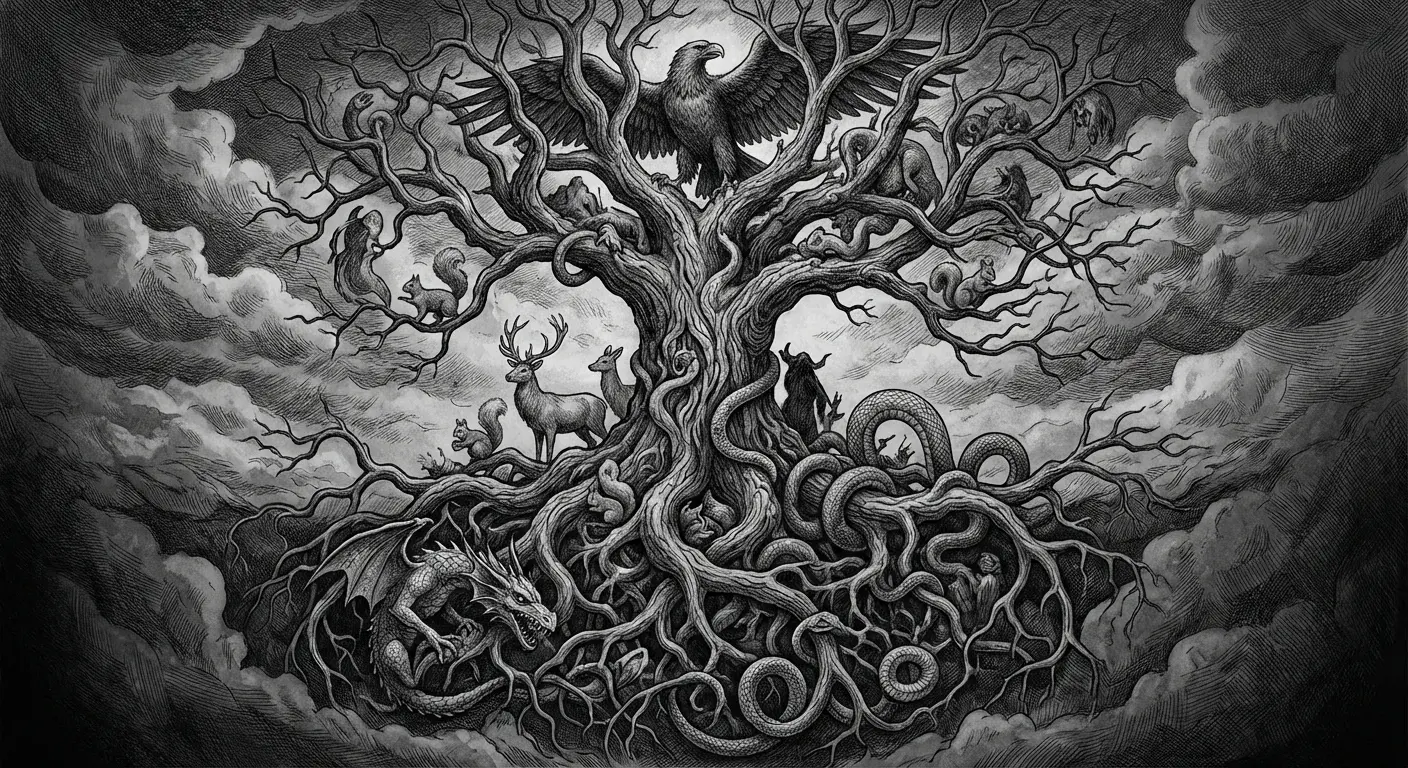
The cosmic ash tree connecting nine realms of Norse cosmology translates into tattoo form in countless ways, from simple line work to elaborate sleeve compositions.
Yggdrasil isn’t a pretty tree. It’s a map of reality as the Norse understood it, with roots reaching into underworld realms and branches extending into divine spaces. Midgard (the human world) sits in the middle, connected to everything else.
When you’re designing a Yggdrasil tattoo, you’re creating a personal cosmology. Which realms matter most to your story? Some people emphasize the roots (connection to ancestors, foundation, what grounds you) while others focus on the canopy (aspirations, spiritual growth, what you’re reaching toward).
The trunk often incorporates faces, runes, or animals that hold personal significance. This design demands space. A tiny Yggdrasil loses the complexity that makes it meaningful. Back pieces, full sleeves, or thigh placements give you room to include the details that matter: Ratatoskr running messages, the eagle and hawk in the branches, Níðhöggr gnawing at the roots, the three Norns at the base.
5. Elder Futhark Runes
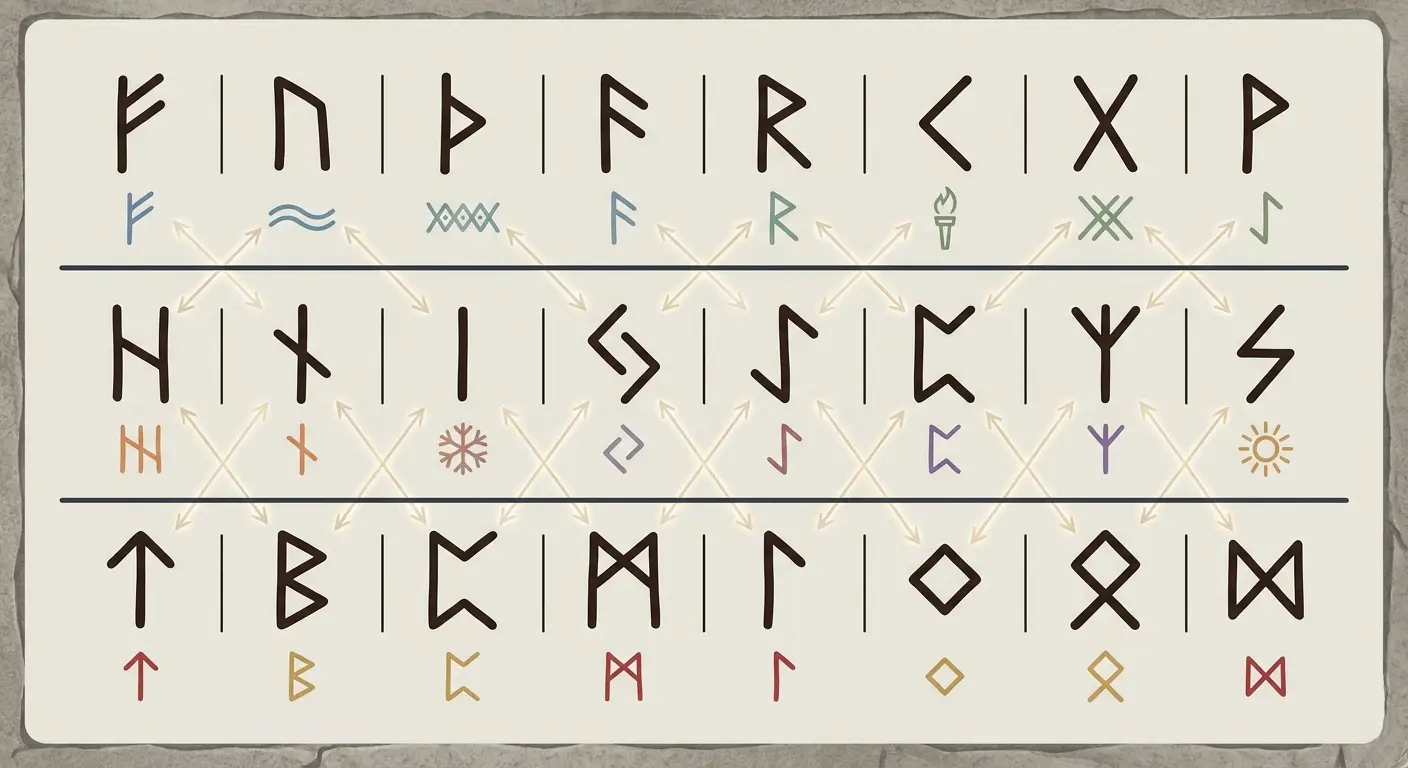
Individual runes or runic sequences offer flexibility that larger symbols can’t match, but they’re also where we see the most misinterpretation. Each of the 24 runes in the Elder Futhark carries phonetic value, symbolic meaning, and (in some interpretations) magical properties.
The problem is that modern runic meanings often come from 20th-century occult sources rather than historical linguistics. I’m not saying those interpretations are invalid, just that you should know the difference between documented historical usage and later esoteric assignments.
Popular choices include Algiz (protection), Gebo (gift/partnership), and Berkano (growth/birth). Bind runes, where multiple runes combine into one symbol, let you create something unique while maintaining the Nordic aesthetic.
Here’s the critical part: runes have specific forms and orientations. Flipping or altering them changes their meaning or renders them meaningless. Placement along the forearm, spine, or behind the ear works well for runic sequences. Single runes can accent larger pieces or stand alone as minimalist statements.
Consider whether you want the runes to spell something phonetically, represent concepts symbolically, or both. The answer affects which runes you choose and their order.
|
Rune Name |
Phonetic Sound |
Historical Meaning |
Modern Tattoo Usage |
Common Misinterpretations |
|---|---|---|---|---|
|
Algiz (ᛉ) |
Z or -R |
Elk, protection |
Personal protection, defense against negativity |
Often confused with “peace” symbol |
|
Fehu (ᚠ) |
F |
Cattle, wealth |
Prosperity, new beginnings, material success |
Assumed to only mean money |
|
Tiwaz (ᛏ) |
T |
Tyr (god) |
Victory, honor, justice, warrior spirit |
Reduced to generic “strength” |
|
Berkano (ᛒ) |
B |
Birch tree |
Growth, fertility, new life, motherhood |
Limited to feminine-only contexts |
|
Gebo (ᚷ) |
G |
Gift |
Partnership, balance, sacred exchange |
Treated as romantic love only |
|
Thurisaz (ᚦ) |
TH |
Giant, thorn |
Chaos, conflict, necessary destruction |
Seen as purely negative |
6. Web of Wyrd
This symbol represents the interconnection of past, present, and future through the Norse concept of wyrd (fate/destiny). It’s formed by the rune Hagalaz repeated and rotated to create a web-like pattern, symbolizing how the Norns weave fate at the base of Yggdrasil.
This is more of a modern interpretation than a historically documented Viking symbol, but it resonates with people who see their lives as the sum of accumulated choices and circumstances.
The Web of Wyrd is about fate, but not “everything is predetermined” fate. More like “your past choices create your present circumstances which limit your future options” fate.
It’s actually kind of depressing when you think about it. Or empowering, depending on your perspective.
People get this when they’re thinking about how they got where they are and where they’re going. Mid-life crisis tattoo, basically. But in a good way.
The geometric nature makes it satisfying to execute and allows for interesting variations in line weight and shading. Some artists add depth by making certain strands appear to pass over or under others.
Placement on the upper back or shoulder blade creates a sense that fate is literally woven into your structure. Some people incorporate specific runes at the intersection points to represent key life events or values.
7. Troll Cross
A bent iron nail or twisted metal piece, the Troll Cross is a Scandinavian protective symbol that’s less common in tattoo form but increasingly popular among people who appreciate its simplicity.
The design is basically a circle with an arm extending through it, sometimes rendered as a single twisted line. What makes it interesting is its folk magic origins rather than mythological ones. This was everyday protective magic, not divine symbolism.
You can wear it simply because you like the idea of protection against negative energy without making a huge spiritual statement.
The simple form works well as a small piece (behind the ear, inside wrist, ankle) or as an element within a larger Nordic composition. Some people pair it with other protective symbols or incorporate it into a charm bracelet-style design running along the forearm or ankle.
Creatures From the Nine Realms
A wolf isn’t just a wolf when it’s
A wolf isn’t just a wolf when it’s Fenrir. A snake isn’t just a snake when it’s Jörmungandr. These beings embody specific concepts and play crucial roles in the cosmic drama of Norse mythology.
8. Fenrir (The Great Wolf)
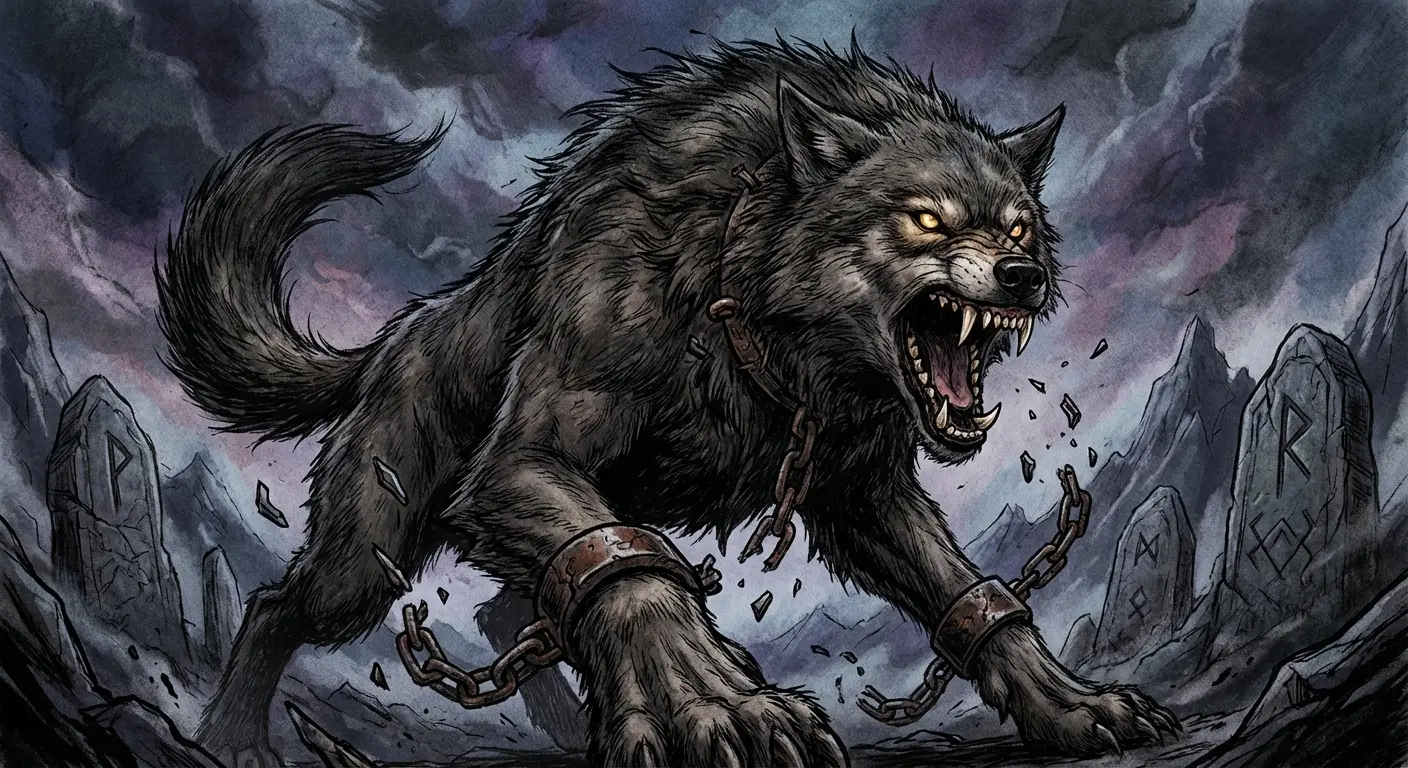
Fenrir eats Odin at the end of the world. That’s his whole deal. Giant wolf, bound by the gods because they were scared of him, breaks free during Ragnarök and kills the All-Father.
The monstrous wolf destined to kill Odin represents uncontrollable chaos and the consequences of attempting to restrain natural forces. Fenrir’s story is tragic. The gods raised him but feared his growing power, so they tricked him into being bound. He breaks free only at the end of the world.
Why do people want this tattooed? Usually it’s one of three things: they relate to being restrained and wanting to break free, they identify with destructive rage, or they just think giant wolves are metal. All valid.
The chains matter. Broken chains mean something different than intact chains. Straining against them is different from both. Figure out which version is yours.
And make it BIG. A small Fenrir is an insult to Fenrir. This is a wolf that terrifies gods.
Your composition should reflect which interpretation resonates. Fenrir straining against chains emphasizes the restraint narrative. Fenrir with broken chains speaks to liberation. Fenrir with jaws open, ready to devour Odin, leans into the destructive destiny angle.
Placement on the shoulder or upper arm allows the wolf to appear ready to strike forward. Eyes matter enormously here. They should convey intelligence and rage, not just animal instinct.
9. Jörmungandr (The World Serpent)
The serpent so large it encircles Midgard and grasps its own tail, Jörmungandr represents cycles, boundaries, and the thin line between order and chaos. Thor’s destined enemy, the serpent will release its tail during Ragnarök, allowing the seas to flood the world.
Jörmungandr works beautifully for wrap-around compositions: arm bands, leg bands, or even full torso pieces where the serpent literally encircles your body. The ouroboros quality (though that’s technically a different symbol) appeals to people thinking about cycles in their own lives: addiction and recovery, relationships that repeat patterns, seasonal depression, creative cycles.
Scales give artists opportunities for incredible detail work and shading. Each scale can catch light differently, creating texture and movement.
The head positioning matters. Some compositions show the serpent biting its tail, completing the circle. Others show the mouth open, tail nearby but not grasped, suggesting the cycle is about to break. You can incorporate ocean waves, ships, or even Thor’s hammer Mjölnir to reference the mythological battles between Thor and the The circular symbolism of Jörmungandr shares conceptual territory with the ouroboros tattoo, though the World Serpent carries distinctly Norse mythological weight.
10. Huginn and Muninn (Odin’s Ravens)
Thought and Memory, Odin’s two ravens who fly across the world each day and return to whisper everything they’ve learned into his ears.
Why does everyone want Huginn and Muninn? Because two ravens sound cooler than one, probably. But also because they represent different aspects of cognition. Huginn (thought) deals with active reasoning, analysis, and present-moment awareness. Muninn (memory) handles the past, stored knowledge, and the weight of experience. Together they create complete understanding.
Placement options include symmetrical designs (one raven on each shoulder, each pectoral, each forearm) or unified compositions where both birds appear together. Some people show them in flight, wings spread. Others perch them on branches or have them whispering into an ear (Odin-style).
The ravens should be distinguishable from generic bird tattoos through details like their knowing expressions or the inclusion of runic elements. Combining Huginn and Muninn with other Odin-associated symbols (his spear Gungnir, the Valknut, or Yggdrasil) creates a cohesive mythological narrative.
The birds’ eyes should convey intelligence. These aren’t ordinary ravens, they’re extensions of the All-Father’s consciousness.
11. Sleipnir (Eight-Legged Horse)
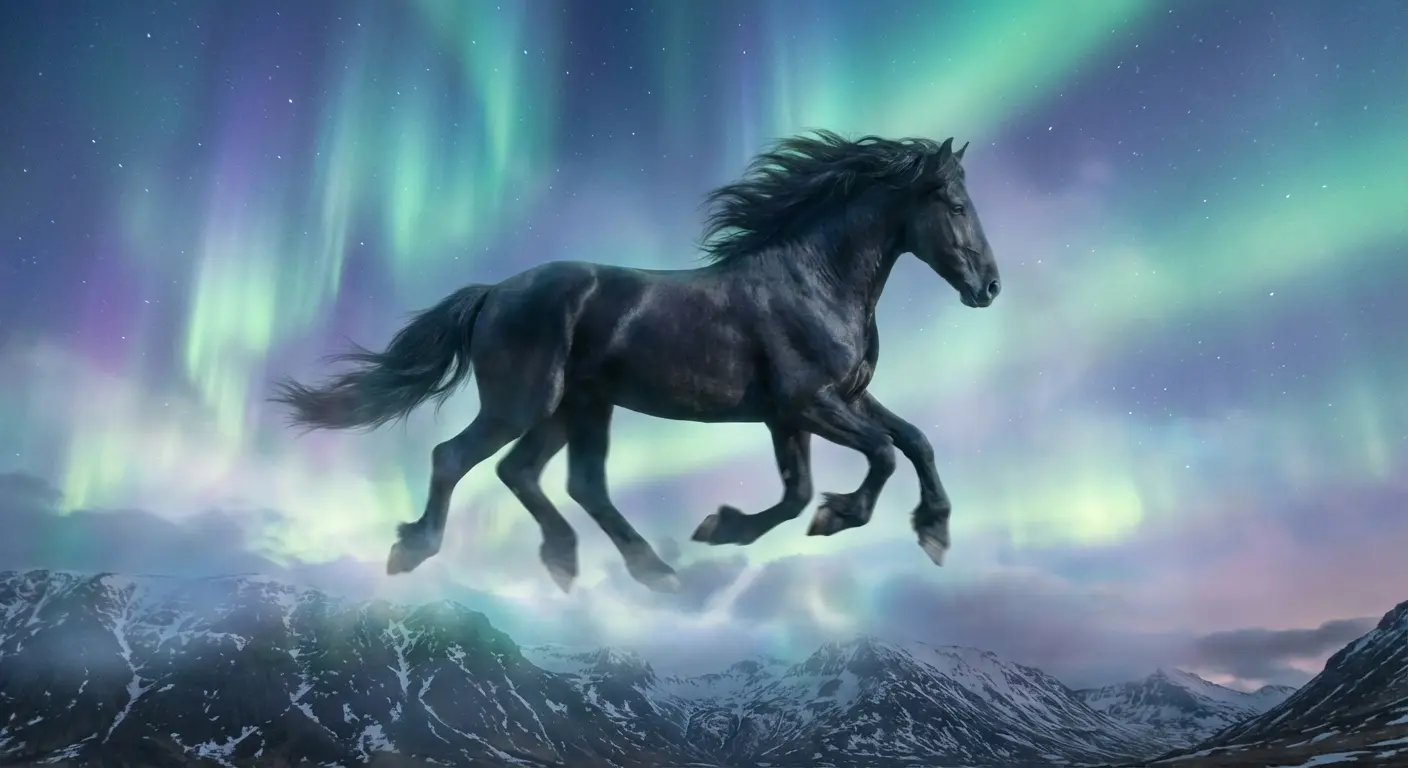
Sleipnir is objectively bizarre. Loki turned into a mare, had sex with a stallion, and gave birth to an eight-legged horse that Odin now rides. This is canon Norse mythology.
Odin’s eight-legged horse represents journeying between worlds and transcending normal limitations. Sleipnir could travel between the nine realms, carrying Odin wherever he needed to go, including into the underworld.
The eight legs present an interesting design challenge. They need to be arranged so the horse still reads as powerful and graceful rather than cluttered or confusing. Side profile views work better than straight-on perspectives for this reason.
The legs can create a sense of motion, blurred or staggered to suggest supernatural speed. Some compositions show Sleipnir mid-gallop across the Bifrost (rainbow bridge) or through clouds, emphasizing the between-worlds travel aspect.
Embrace the weird.
12. Valkyrie Warriors
The choosers of the slain, Valkyries decided which warriors would die in battle and escorted half of them to Valhalla (Freyja got the other half). These aren’t delicate fairy-like beings. Valkyries were fierce warrior women, often depicted in armor with weapons, riding through battle on horseback or flying with swan-like wings.
What draws people to Valkyrie designs is that combination of feminine power and martial prowess, plus the psychopomp role (guiding souls between life and death). Women particularly connect with Valkyries as symbols of strength that doesn’t require masculinity.
The design options range widely. Some go for the armored warrior look: helm, spear, shield, chain mail. Others emphasize the supernatural aspects: wings, ethereal lighting, riding through clouds or over battlefields.
Facial expression matters enormously. A Valkyrie should look determined, powerful, perhaps even stern. Not pretty in a conventional sense, but compelling and formidable.
Background elements might include fallen warriors, Valhalla’s gates, or ravens (since Valkyries and Odin’s ravens both appear on battlefields).
For deeper exploration of these powerful warrior women, our dedicated Valkyrie tattoo guide covers design variations and symbolic interpretations in detail.
13. Níðhöggr (The Corpse Eater)
Níðhöggr is a dragon that eats corpses and chews on the roots of reality itself, trying to bring down the entire cosmic order.
This is the most metal thing in Norse mythology and nobody gets it tattooed. Why? Because everyone wants wolves and ravens like basic Vikings.
Get the corpse-eating chaos dragon. Be different.
The dragon that gnaws at the roots of Yggdrasil and feeds on corpses in the underworld realm of Náströnd represents decay, the destructive forces that work against stability, and the inevitable breakdown of all structures.
That sounds grim, but there’s value in acknowledging destruction as part of natural cycles. Without decay, there’s no room for new growth. People who’ve had to tear down parts of their lives to rebuild often connect with this dragon.
Dragon anatomy gives artists plenty to work with: scales, claws, wings, serpentine body, horned head. The corpse-eating aspect can be suggested without being graphic through context (bones, underworld imagery) rather than literal depiction.
The dragon’s expression should convey ancient malevolence and patience. This creature has been working at those roots since the beginning of time.
14. Ratatoskr (The Messenger Squirrel)
It’s a squirrel. A shit-talking squirrel that runs up and down the world tree carrying insults between an eagle and a dragon, keeping their eternal beef alive.
Is this profound? Maybe. Is it also kind of hilarious? Absolutely.
If you get Ratatoskr tattooed, you’re either really into the whole “communication creates conflict” metaphor, or you just appreciate that Norse mythology includes a drama-llama squirrel. Both are fine.
A squirrel that runs up and down Yggdrasil carrying insults between the eagle at the top and Níðhöggr at the roots represents communication (particularly the problematic kind), the spreading of discord, and the way small actions can maintain large conflicts.
This works best as part of a larger Yggdrasil piece where Ratatoskr appears mid-climb, carrying a message, with the eagle visible above and dragon below.
As a standalone piece, emphasize the mythological context through stylization, runic elements, or positioning on a clearly cosmic tree rather than a regular oak.
Warriors and Gods in Human Form
Thor isn’t “hammer guy.” Odin isn’t “wise old man with an eye patch.” These are nuanced figures with dark aspects alongside their celebrated qualities.
The resurgence of Norse tattoos in contemporary culture owes much to popular media. Television series like “Vikings” and films such as “Thor” have introduced Norse mythology to a wider audience, sparking curiosity and appreciation for these ancient symbols. The internet and social media platforms have further fueled this popularity by making it easier for people to share their tattoo designs and stories, creating a global community around Nordic body art.
15. Odin the All-Father
Odin’s kind of an asshole, let’s be honest. He sacrifices his son, manipulates everyone, and hoards knowledge like a dragon hoards gold. But he’s also the most interesting god in the pantheon because he’s COMPLICATED.
You’re not getting “wise old man” tattooed. You’re getting the god who hung himself from a tree for nine days to learn runes. Who gave up an eye for knowledge. Who knows exactly how everything ends and can’t stop it.
That’s heavy. Make sure you want that weight.
The one-eyed wanderer, god of wisdom, war, death, poetry, and magic. Odin sacrificed his eye for wisdom, hung himself on Yggdrasil for nine days to gain knowledge of runes, and constantly seeks more understanding even though he knows how everything ends.
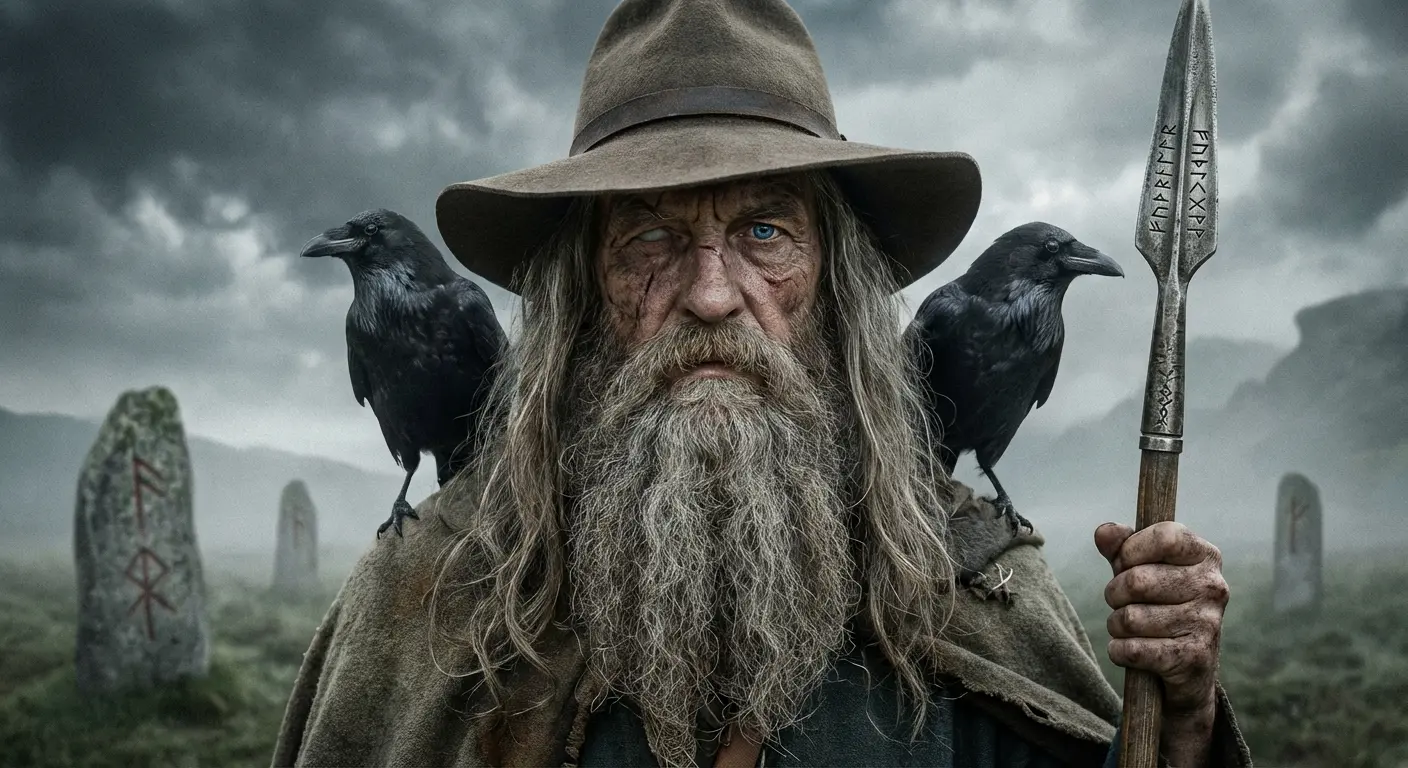
The classic depiction shows an older bearded man with one eye (or an eye patch, though that’s more modern), often wearing a wide-brimmed hat and carrying his spear Gungnir. Huginn and Muninn frequently perch on his shoulders.
Some compositions show him during the hanging sacrifice, others seated on his throne Hlidskjalf from which he can see all nine realms, still others as the wanderer figure traveling Midgard in disguise. The remaining eye should be piercing and knowing. This is someone who sees too much.
Facial expression matters: not serene wisdom but the weight of terrible knowledge.
Including his associated symbols (ravens, wolves, Valknut, runes, Yggdrasil, Sleipnir) helps establish context.
16. Thor with Mjölnir
Marvel’s Thor is blonde, jacked, and aristocratic. Norse Thor is a red-bearded, working-class god who gets drunk and makes mistakes.
If you want mythologically accurate Thor, your reference shouldn’t be Chris Hemsworth. It should be a strong farmer with a red beard who’d absolutely wreck you in a bar fight.
Nothing against Marvel. Great movies. Terrible mythology.
The thunder god, protector of humanity, and Odin’s son gets tattooed more than any other Norse deity, but most Thor tattoos miss what makes him interesting. He’s not just strong. Thor is the god who likes humans and defends them against giants and monsters.
He’s straightforward where Odin is cunning, loyal where Loki is treacherous, and powerful in an honest, direct way. His hammer Mjölnir always returns when thrown and can level mountains.
Your tattoo has options: Thor in battle against giants or the World Serpent, Thor holding Mjölnir ready to strike, just Mjölnir itself as a symbol, or Thor in a quieter moment that shows his protective rather than destructive aspect.
Norse Thor has red hair and a red beard, not blonde. He’s a working-class god, not aristocratic. His strength should look earned and functional, not decorative.
The hammer should look heavy and ancient, covered in runes or simple and brutally functional depending on your interpretation.
17. Freyja (Goddess of Love and War)
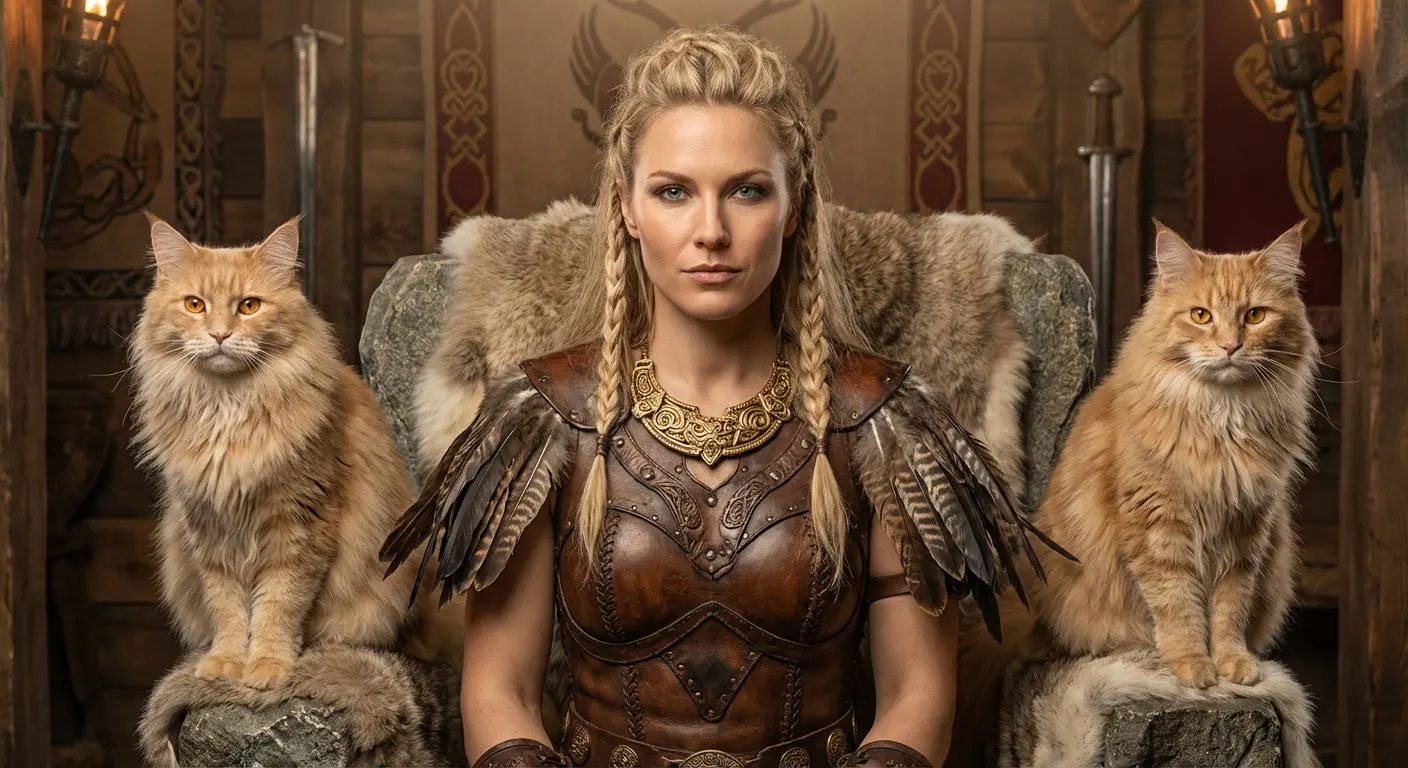
Freyja gets half the warriors who die in battle. Not Odin—Freyja. She’s a war goddess who also happens to be associated with love, sex, beauty, and magic. She doesn’t choose between these things. She just IS all of them.
The “fierce feminine” thing is real, but it’s also become a cliché. Freyja isn’t fierce DESPITE being feminine. She’s fierce AND feminine AND a badass warrior AND into magic AND unapologetic about her sexuality. She’s just… a lot.
Point being: don’t get her tattooed as a generic “girl power” symbol. Get her because you relate to being complex and refusing to be one thing.
Half of all warriors who die in battle go to Freyja’s hall Fólkvangr, not Valhalla. She’s the goddess of love, beauty, fertility, gold, and death. Freyja rides a chariot pulled by cats, owns a falcon-feather cloak that allows flight, and possesses the necklace Brísingamen.
She’s powerful, independent, and unapologetic about her desires.
Your tattoo can emphasize different aspects. Freyja in battle gear with weapons shows her warrior side. Freyja with her cats or wearing Brísingamen emphasizes her other attributes. Some compositions show her in her falcon cloak, mid-transformation or flight.
Facial expression should convey confidence and power, not passive beauty. She’s a goddess who knows her worth and doesn’t apologize.
The necklace Brísingamen should be ornate and eye-catching, a focal point that draws attention even in a complex composition.
18. Loki the Shapeshifter
Trickster, shapeshifter, father of monsters (Fenrir, Jörmungandr, and Hel), and the god whose actions ultimately trigger Ragnarök. Loki is neither good nor evil in any simple sense. He causes problems but also solves them, helps the gods but ultimately opposes them, creates chaos but occasionally brings necessary change.
He’s given birth (as a mare, to Sleipnir) and fathered children, defying gender
He’s given birth (as a mare, to Sleipnir) and fathered children, defying gender categories entirely.
Loki is chaos incarnate. He’s not evil—he helps the gods as often as he screws them over. He’s not good—his “help” usually creates new problems. He’s just… Loki.
And he’s been having a moment lately, probably because people relate to being the outsider who doesn’t fit neat categories. Gender-fluid, shapeshifting, parent to monsters—Loki contains multitudes.
The tattoo challenge is: how do you capture someone who’s literally always changing? Some people go with the bound version (his punishment). Some show him mid-transformation. Some just include his kids (Fenrir, Jörmungandr, Hel) because that’s his legacy.
Whatever you do, don’t make him look simply villainous. That’s not the point.
Some compositions show Loki mid-transformation (half human, half animal). Others show him with his children to reference his monstrous legacy. Still others depict him bound (his punishment for causing Baldr’s death) with the serpent dripping venom above him.
Facial expression should be complex: clever, mischievous, perhaps bitter or angry depending on which part of his story you’re referencing. Scarred lips (from when the dwarves sewed his mouth shut) add authentic detail.
19. Berserker Warriors
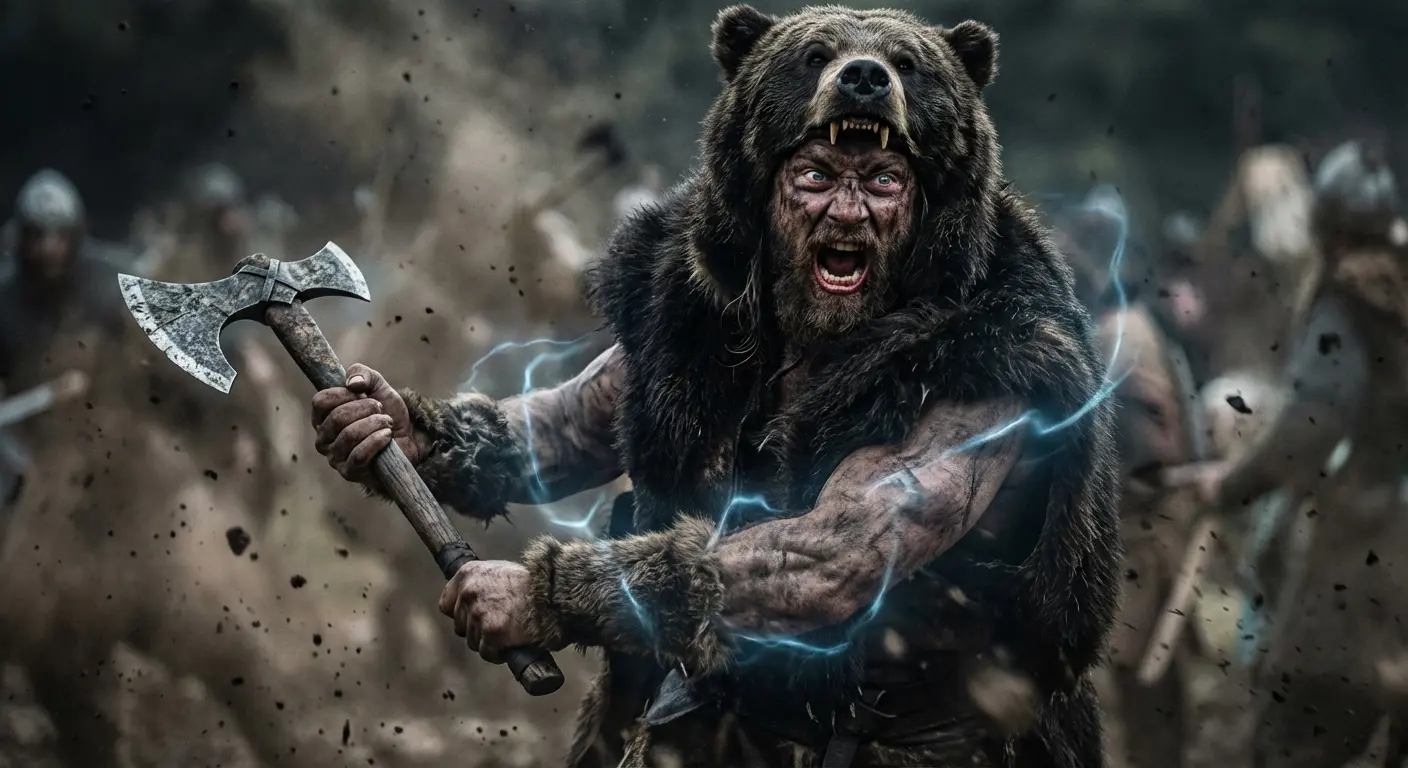
Warriors who fought in trance-like fury, wearing bear or wolf skins, seemingly impervious to pain and filled with superhuman strength. The berserkers (literally “bear shirts”) represent the boundary between human and animal, controlled and wild, warrior skill and pure rage.
Were berserkers real? Maybe. Maybe they were just warriors hyped up on mushrooms and adrenaline. Maybe they were mythological. Maybe they were real but the stories got exaggerated.
Doesn’t really matter for tattoo purposes. What matters is what they represent: that edge between control and chaos, human and animal, warrior skill and pure rage.
The tattoos usually show them mid-transformation—half man, half bear or wolf. Eyes wild. Covered in fur or wearing animal skins. The key is capturing that “barely contained” energy.
Too controlled and it’s just a warrior. Too chaotic and it’s just a monster. You want that edge.
Design options include the warrior mid-battle in full berserker fury, wearing animal skins with the beast’s head as a helm, or transitioning between human and bear/wolf form. Eyes should be wide, expression fierce, body language aggressive. This isn’t disciplined martial technique, it’s channeled chaos.
The animal skin element gives artists opportunities for texture and detail (fur, claws, teeth). Some compositions blur the line between the warrior and the animal, suggesting the berserker has become the beast rather than just wearing its skin.
20. Shield Maidens
Shield maidens—female warriors who fought alongside men in Viking Age warfare. Historical evidence for their prevalence remains debated. Figures like Lagertha (possibly historical, possibly legendary) and the archaeological find of the Birka warrior (a high-status Viking warrior burial that turned out to contain a woman’s remains) suggest women warriors existed even if they weren’t common.
Were they common? Probably not. Did they exist? The Birka warrior grave says yes—high-status warrior burial, turned out to be a woman. But was she common or an exception?
Honestly? For tattoo purposes, doesn’t matter. The IDEA of shield maidens resonates because it’s about women claiming warrior identity. Whether there were five or five hundred in actual history, the symbol means something now.
Get the tattoo if it speaks to you. Just don’t claim it’s “historically documented Viking tradition” because the evidence is thin. Call it what it is: a powerful symbol with some historical basis and a lot of modern meaning.
Shield maidens represent women claiming warrior identity, fighting for their own honor rather than being protected, and refusing to be limited by gender expectations.
Design options range from realistic warrior women in period-appropriate gear (shield, sword or axe, possibly chain mail or leather armor, hair braided for practicality) to more stylized versions.
Facial expression should convey determination and competence, not just aggression. This is a trained fighter, not someone acting on emotion.
Weapons and armor should look functional and well-maintained. This is a professional warrior, not someone playing dress-up. The shield often includes designs (personal symbols, clan markings, or protective runes) that add personalization.
Before You Commit
You’ve got your design direction, you understand the symbolism, and you’re ready to book your artist. Here’s the part where most people hit a wall: translating the concept in your head into something your artist can execute.
I’ve seen countless situations where someone has a clear vision but can’t communicate it effectively, or they bring reference images that contradict each other stylistically.
Look, real talk: I’m involved with Tattoo Generator IQ, so take this with whatever grain of salt you need.
But here’s the actual problem it solves—you’ve got ideas in your head that you can’t draw. You’ve got a Pinterest board that makes no visual sense. You’re about to walk into a shop and say “um, like a tree? With ravens? And maybe some runes?” and your artist is going to die inside a little.
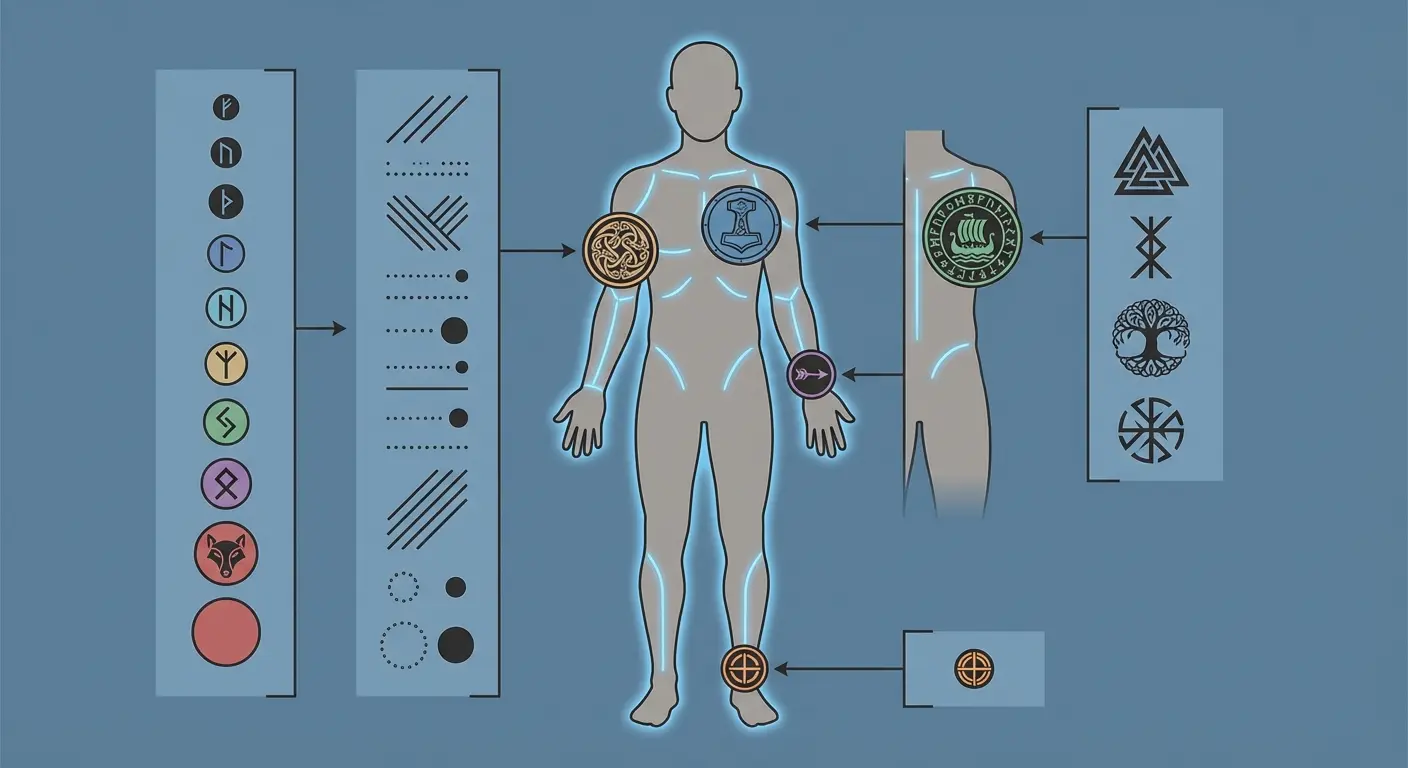
The generator thing lets you actually SEE what you’re asking for before you ask for it. You can input exactly what you want (Vegvísir with specific rune combinations, Fenrir breaking chains with a particular expression, Freyja with her cats in a specific pose) and generate multiple high-resolution design variations before you ever sit in that chair.
Your artist gets a clear reference that shows composition, detail level, and style rather than a Pinterest board of conflicting images. You’re not asking them to read your mind or cobble together elements from five different sources. You’re walking in with a cohesive vision that respects their time and expertise.
The AI generates artist-ready references with placement guides, so you and your tattoo artist can focus on refining and personalizing rather than starting from scratch. For Nordic tattoos specifically, where historical accuracy might matter to you or where combining multiple mythological elements requires understanding their relationships, being able to visualize the complete design beforehand prevents regrettable choices.
Anyway. Use it or don’t. But at least bring your artist SOMETHING concrete to work from. They’ll thank you, and your tattoo will actually look like what you wanted.
Final Thoughts
Look, I’ve thrown a lot at you. Symbols that aren’t what you think they are. Gods who are more complicated than Marvel suggested. Creatures that mean specific things, not generic “strength” or whatever.
Here’s the bottom line: get what means something to you, but know what it actually means first. Don’t get a valknut because it looks cool without understanding the baggage. Don’t get runes that spell nonsense. Don’t combine symbols that mythologically contradict each other.
Or do. It’s your body. But at least make an informed choice.
Nordic tattoos carry weight beyond aesthetics. You’re not just getting cool designs, you’re engaging with a mythology that shaped entire cultures and continues to resonate because it addresses universal human concerns: fate, death, wisdom, courage, transformation, the struggle between order and chaos.
The symbols, creatures, and figures we’ve covered aren’t interchangeable decorations. Each one represents specific concepts and tells particular stories.
Your job before committing to any of these designs is understanding what you’re saying with that permanent ink. Which aspects of Norse mythology speak to your life rather than just looking impressive? A Vegvísir means something different to someone genuinely navigating major transitions than to someone who just thinks compasses are neat. Fenrir resonates differently for someone who’s broken free from genuine restraints than for someone who just likes wolves.
The best Nordic tattoos come from that intersection of personal meaning and mythological understanding. They’re not trying to claim Viking heritage you may or may not have or cosplay as something you’re not. They’re using these powerful symbols and stories as a language to express something true about your own experience.
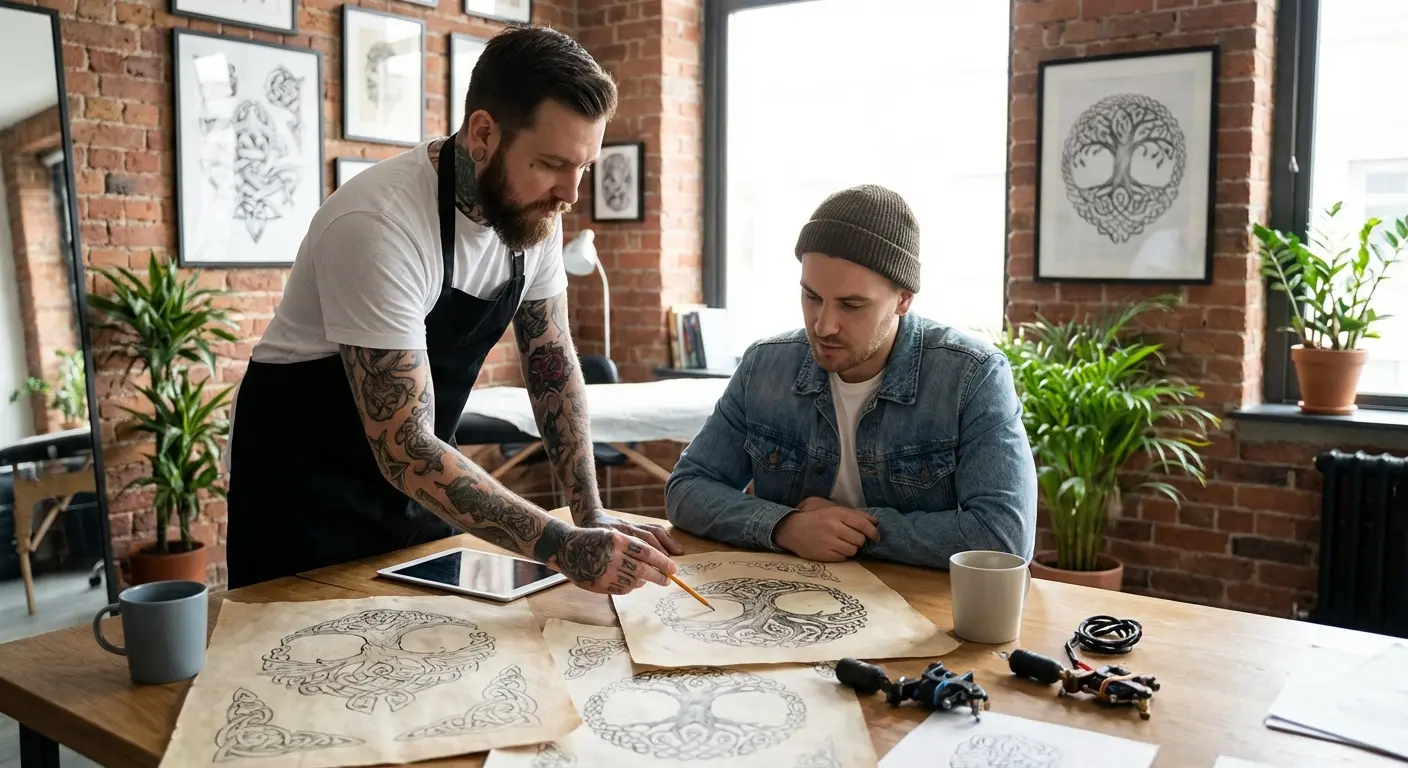
Size, placement, color, and style all matter, but they matter in service of that core meaning. Work with your artist as a collaborator who brings technical skill and artistic vision to your concept. Bring them clear references, understand the symbolism you’re requesting, and be open to their suggestions about how to make the design work on your specific body.
And for the love of Odin, bring your artist better references than cropped Instagram screenshots.
Norse tattoos done well become part of your story. Done poorly, they’re just generic bearded men and geometric shapes that don’t quite land. The difference is in the details and the intention behind them.
Now go forth and get inked. Or don’t. I’m not your mom.
For women seeking Viking tattoo designs, consider exploring tattoo ideas for women that balance mythological authenticity with personal aesthetic preferences.
