Three Dots Tattoo Meaning: What Most People Get Wrong About This Deceptively Simple Symbol
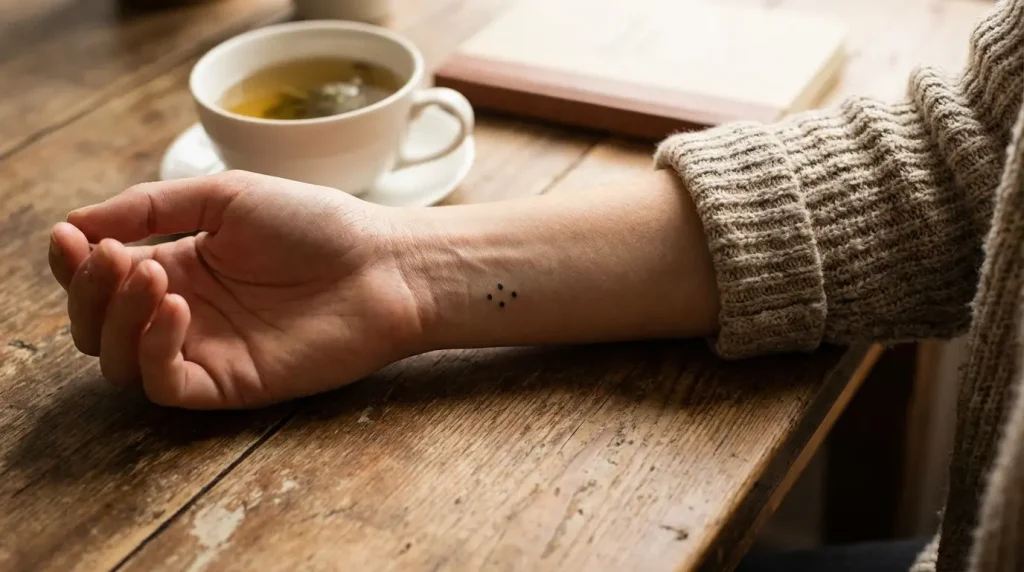
Table of Contents
- Why Everyone Reads Your Tattoo Differently
- The Prison Connection Everyone Assumes
- Mi Vida Loca: More Complicated Than You Think
- The Religious Meaning That Came First
- Location, Location, Location
- The Grammar Nerd Interpretation
- Can You Reclaim a Symbol?
- Talk to Your Artist First
- Bottom Line
TL;DR
Quick version: Three dots mean different things to different people. Prison culture, religious symbolism, literary meaning… all valid, all real, all coexisting. Where you put them matters as much as what you think they mean. Don’t get them on your hand unless you’re ready for people to assume gang affiliation. Do your research or regret it later.
The “mi vida loca” interpretation dominates online discussions but represents maybe 20% of this symbol’s actual history. Religious symbolism (the Holy Trinity specifically) predates any criminal justice associations by about two thousand years. And placement? That changes everything. Hand placement signals different communities than wrist, ankle, or behind-the-ear positions. The ellipsis interpretation offers a literary, introspective meaning that’s increasingly popular among people who just love punctuation. Understanding the full spectrum protects you from unintended social signaling while honoring legitimate personal connections to the symbol.
Why Everyone Reads Your Tattoo Differently
Google “three dots tattoo meaning” and you’ll get ten different answers from ten different websites. Prison time. Gang affiliation. Holy Trinity. Mental health survival. And before you blame lazy journalism, here’s the thing: they’re all right.
That’s the problem. Or maybe the point.
Three dots work like what linguists call a “floating signifier.” Basically, the symbol itself is empty. What loads it with meaning is who’s wearing it, where it’s placed, when they got it, and what community they’re part of (or trying to signal). We’re not talking about subtle variations on a theme here. We’re talking about fundamentally different meanings that coexist in the same cultural moment.
The three dots symbol has existed for centuries across multiple cultures, appearing in religion, mysticism, and underground communities long before modern gang culture emerged, according to research compiled by Inkppl’s cross-cultural analysis. This historical depth gets flattened when we try to assign one “correct” interpretation.
Think about how the word “sick” means ill to your grandmother and excellent to your younger cousin. Same sound, totally separate meanings. The meaning of three dot tattoo works the same way, except the stakes are higher because you’re wearing the symbol on your body forever.
Most tattoo meaning guides flatten this complexity into a single narrative. Usually the criminal justice one, because it’s dramatic and gets clicks. That approach screws you over in two ways. First, it suggests the symbol has some inherent meaning independent of context, which isn’t how visual language works. Second, it implies you should avoid the design if you’re not part of that specific subculture, which erases decades of parallel meanings that have nothing to do with incarceration.
The reality? You’re looking at a symbol that simultaneously represents gang affiliation, religious devotion, literary sensibility, mental health awareness, and personal philosophy depending on who’s reading it and where they learned their visual vocabulary.
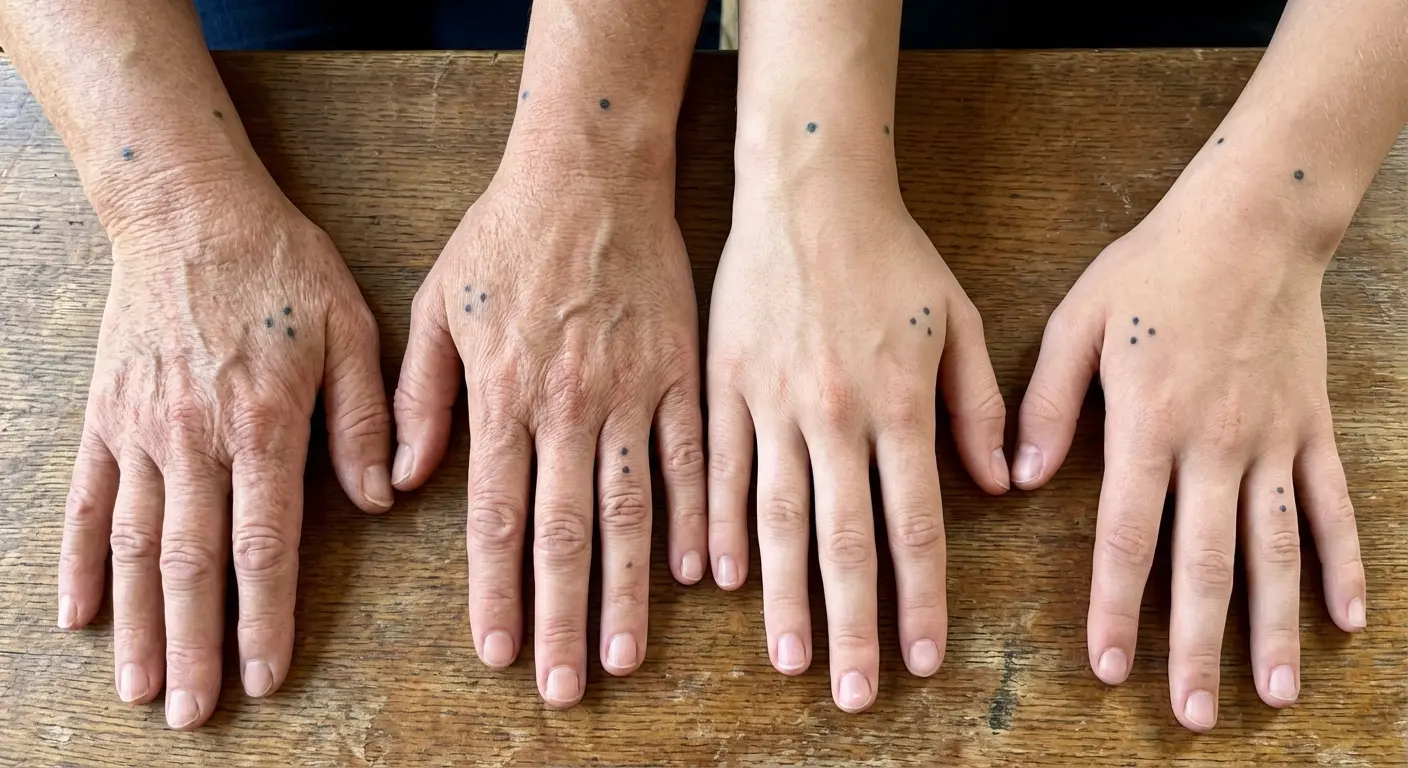
| Context | Primary Meaning | Typical Placement | Reader Community |
|---|---|---|---|
| Prison Culture | Time served, institutional experience | Between thumb and forefinger | Formerly incarcerated, law enforcement |
| Chicano/Latino Gang Culture | “Mi vida loca” (my crazy life) | Hand, under eye | Gang members, law enforcement, certain geographic regions |
| Christian Faith | Holy Trinity (Father, Son, Holy Spirit) | Wrist, ankle, behind ear | Religious communities |
| Literary/Mental Health | Ellipsis, continuation, unfinished story | Behind ear, wrist, finger | Writers, mental health advocates |
The Prison Connection Everyone Assumes
The Institutional Origin Story
Three dots arranged in a triangle became visual shorthand within incarceration systems for specific reasons. Stick-and-poke with whatever’s available. A guitar string, some ink from a pen, maybe some ash mixed in. Three dots in a triangle. Fast, simple, permanent.
The triangle formation was quick to execute, easy to recognize, and carried meaning within that closed system.
Within prison culture, the 3 dots tattoo meaning varied by facility, region, and era. What stayed consistent was the in-group recognition. People who’d been inside knew how to read it. People who hadn’t, didn’t.
You can spot someone who’s done time by how they hold their hands. The tattoos are part of that language. It’s a visual marker that functions as both identity and screening mechanism. You could identify others who’d shared that experience. You could signal your status or philosophy to those who understood the code.
Marcus got his three dots at 19 in county jail in California, sometime in the mid-90s. Now he’s 47, runs a youth program, and sometimes thinks about getting them removed. Not because he’s ashamed but because he’s tired of explaining. When he enters a job interview, the hiring manager sees the same dots and makes immediate assumptions about criminality, never knowing the tattoo represents Marcus’s commitment to mentoring at-risk youth based on his own experiences. A meaning that’s invisible to those outside his personal context.
But then he doesn’t get them removed, because they’re part of his story.
Why This Version Dominates the Narrative
Media representation loves the prison angle because it’s concrete, it’s edgy, and it comes with built-in drama. TV shows and films featuring incarcerated characters frequently show three dots tattoos, reinforcing the association in public consciousness.

There’s also a class dimension we need to be blunt about. Tattoos on working-class bodies, especially on hands and faces, get read as criminal markers. The exact same symbol on a different body in a different placement gets interpreted as artistic expression. The symbol hasn’t changed. The social context of the person wearing it has.
So you end up with this weird thing where the prison meaning becomes the “official” meaning in public discourse, even though statistically, most people wearing three dots have never been incarcerated. The most visible interpretation isn’t the most common one.
Mi Vida Loca: More Complicated Than You Think
“Mi vida loca.” My crazy life. Yeah, three dots can mean that. In some communities, that’s exactly what they mean. But the version you’ve heard? It’s missing about 80% of the actual story.
Within certain Chicano communities, especially in the Southwest United States, three dots (often placed between the thumb and index finger) did signal affiliation with specific groups. The “crazy life” referenced wasn’t just chaos for its own sake. It pointed to a life outside conventional social structures, often involving crime, but also involving survival strategies in contexts where conventional paths weren’t accessible.
Police departments across Central America have developed detailed guides to gang tattoo symbolism. According to InSight Crime’s reporting on Honduran police intelligence, three points positioned in a triangle specifically mean “my crazy life” within mara gang culture, representing what gang members describe as outlaw gang life. However, this interpretation exists alongside completely separate meanings in other communities.
What nobody tells you: “mi vida loca” as a phrase exists in broader Chicano culture independent from gang activity. It can reference a difficult upbringing, a period of rebellion, or simply a life that doesn’t follow traditional expectations. The phrase belongs to a culture, not exclusively to criminal organizations within that culture.
The internet has flattened this distinction entirely. You’ll see articles claiming three dots definitively mean gang affiliation, full stop. That’s both culturally reductive and factually incomplete. Sure, gangs use it. So what? That doesn’t erase 2,000 years of other meanings.
In the United States, the three dots tattoo is most commonly associated with the phrase “Mi Vida Loca” (My Crazy Life) within prison and gang culture, though it’s not exclusive to any specific group and instead symbolizes a chaotic lifestyle often tied to crime and rebellion, according to cultural research on tattoo symbolism across regions.
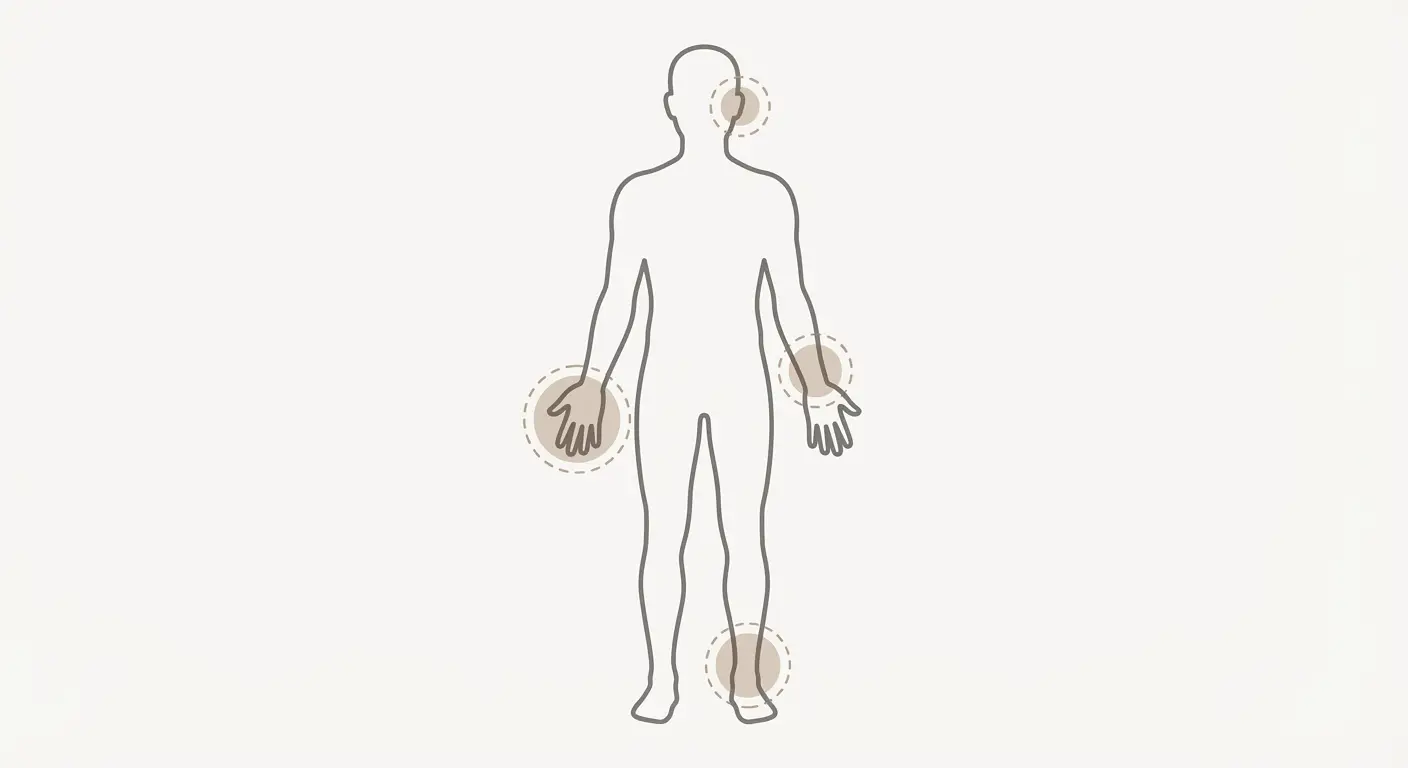
Placement matters enormously here. Three dots on the hand carry different weight than three dots on the ankle or behind the ear. The hand placement is more visible and more likely to be read as the traditional “mi vida loca” signal. Other placements often indicate different meanings, even when the person wearing them is from the same cultural background.
Before You Assume Gang Affiliation, Consider:
- Is it in the traditional hand location between thumb and forefinger?
- Are there other gang-specific tattoos present?
- Does the person live in or come from regions where this interpretation is dominant?
- Does it appear to be from a specific life period rather than recent?
- Has the person volunteered the meaning, or are you making assumptions?
- Does the person belong to communities where “mi vida loca” has broader cultural meaning?
- Does their current life suggest active gang involvement or a past they’ve moved beyond?
The Religious Meaning That Came First
The Holy Trinity and Geometric Symbolism
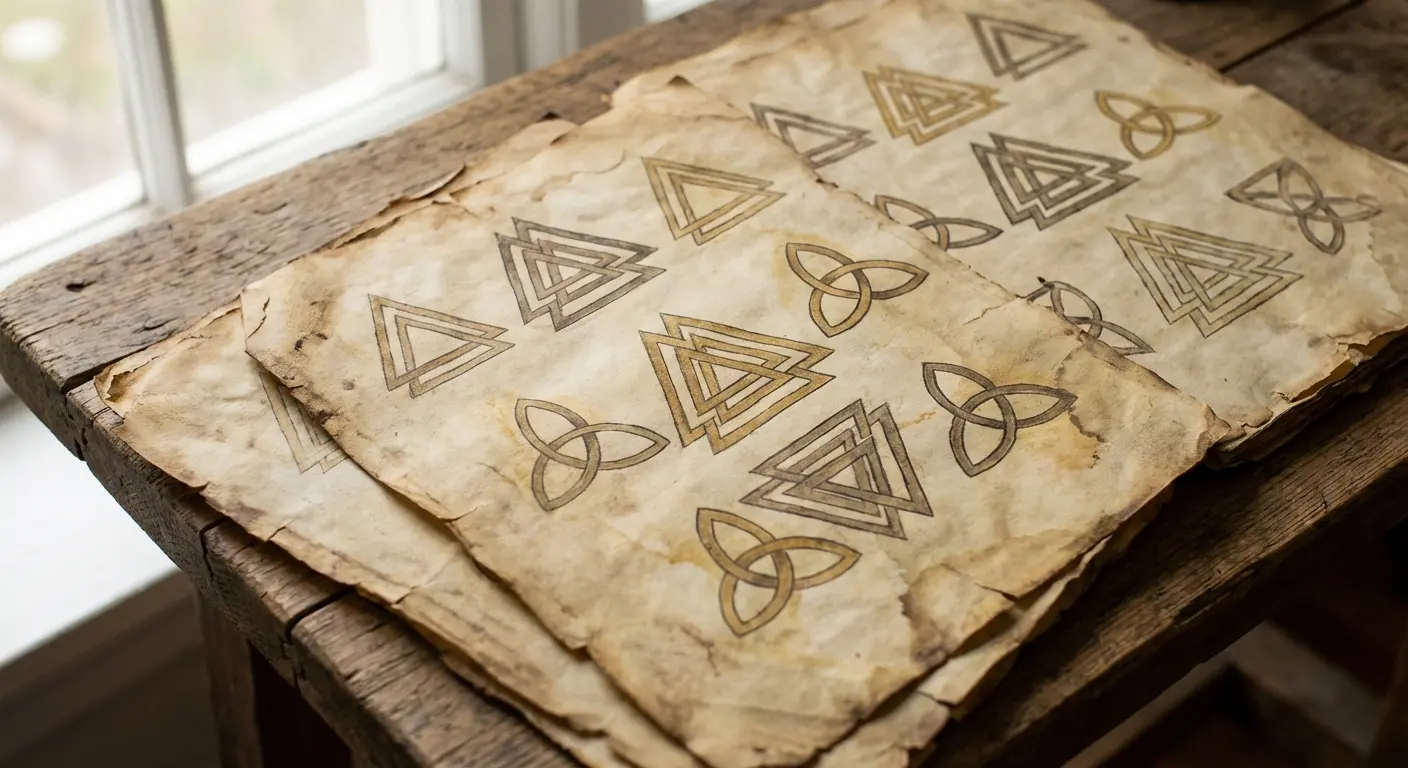
Three has carried religious significance in Christianity since the religion’s inception. Father, Son, Holy Spirit. The theological concept of three-in-one has been represented geometrically for centuries, often as a triangle or three interconnected circles.
Three dots as a simplified Trinity symbol makes perfect theological sense. It’s minimal, permanent, and represents a core belief without requiring elaborate imagery. For people whose faith is central to their identity, this interpretation isn’t secondary or alternative.
It’s primary.
This meaning exists independently from any criminal justice associations. Someone wearing three dots as a Trinity symbol isn’t “reclaiming” the design from gang culture. They’re using a religious symbol that predates modern gang structures by roughly two thousand years.
Sarah got three dots tattooed on her wrist after her confirmation at 16. She was raised in a devout Catholic household, and each dot represents one aspect of the Trinity. When she’s asked about it at her corporate job, she explains the religious significance naturally. Her coworker, who grew up watching crime documentaries, is genuinely surprised to learn the symbol has Christian meaning, having only encountered it in the context of prison culture.
Her mother, also devout, hated the tattoo. Thought it was gang-related no matter how many times Sarah explained.
Neither interpretation is wrong. They’re operating in different knowledge systems.
Beyond Christianity: Three in World Religions
Buddhism recognizes the Triple Gem: Buddha, Dharma, Sangha. Hinduism acknowledges the Trimurti: Brahma, Vishnu, Shiva. Three appears as a sacred number across spiritual traditions worldwide.
I’m not saying you should get Hindu symbols if you’re not Hindu. That’s appropriation, full stop. I’m saying three dots as a concept of sacred three shows up everywhere.
For some Catholics, three dots are as meaningful as a crucifix. For others, it’s just a cool way to represent the Trinity without getting a full religious scene tattooed. Both are valid.
The religious interpretation reframes the “should I get this tattoo?” question. If three dots represent your genuine spiritual beliefs, the fact that the symbol also appears in prison culture doesn’t invalidate your meaning. Different contexts, different languages, same visual mark.
Location, Location, Location
You can’t separate the symbol from where you put it. Three dots on your hand speak a different language than three dots behind your ear, even if the dots themselves are identical.
Hand Placement and Historical Weight
The space between thumb and forefinger (or on the hand generally) carries the strongest association with prison and gang culture. This isn’t arbitrary. Hand tattoos are highly visible, difficult to cover in professional settings, and historically associated with people who either didn’t need or didn’t have access to “respectable” employment.
Look, hand placement is the nuclear option. Everyone sees it, everyone has an opinion, you can’t hide it at your cousin’s wedding. Choose accordingly.
Getting a 3 dot tattoo on your hand means accepting that many people will read it through the prison/gang lens, whether that’s your intended meaning or not. You’re not wrong if you choose this placement for different reasons, but you’re working against decades of established visual vocabulary.
Contemporary Placements and Shifting Meanings
Wrist, ankle, behind the ear, on a finger. These placements have become increasingly popular for three dots tattoos with different meanings. These locations suggest discretion, personal significance, and often literary or spiritual interpretations rather than group affiliation.
Behind-the-ear placement, in particular, has become associated with the ellipsis interpretation (which we’ll get to in a second). It’s visible but not confrontational, permanent but not dominating your presentation to the world.
Behind your ear, you can’t see them without a mirror. You forget they’re there, then catch them accidentally and remember.
Placement choice is meaning-making. Where you put the symbol tells people which interpretive framework to use when reading it.
Hand tattoos hurt differently than other spots too. All bone, no padding, every poke lands hard.
The Grammar Nerd Interpretation
There’s another meaning people barely talk about: 3 dot tattoo meaning as an ellipsis, the punctuation mark that means “to be continued.”
Writers get this interpretation immediately. Three dots equals ellipsis equals continuation. It’s grammar on your skin.
For people who think in terms of story and language, this meaning hits differently than religious or cultural symbolism. An ellipsis indicates incompleteness. It’s the pause before the next chapter. It’s the acknowledgment that something remains unsaid, either because words fail or because the story’s still unfolding.
Three dots arranged in succession function as an ellipsis in grammatical terms, used to indicate that a sentence is not fully complete, and many people have adopted this simplistic design to indicate a concept of continuance, an unfinished journey, or a slow change of idea or thought, according to Tattoodo’s analysis of small meaningful tattoos.
Mental Health and Continuation
The ellipsis interpretation has become significant in mental health communities. Three dots can represent surviving a period when you weren’t sure your story would continue. It’s a marker that says “I’m still here, and there’s more to come,” without requiring explanation or disclosure.
I know someone who got three dots after a suicide attempt. They’re not a memorial. They’re a promise that the sentence continues.
This meaning works because it’s both specific and private. People who understand the symbolism recognize it. People who don’t might not even notice three small dots, especially in less visible placements. You’re carrying a reminder for yourself that doesn’t require justification to others.

Grief, Loss, and Unfinished Conversations
Three dots can mark relationships or conversations that ended before they were complete. The ellipsis acknowledges that incompleteness without pretending to resolve it. You’re not getting a memorial tattoo that tries to summarize a person or relationship. You’re marking the pause, the silence, the continuation that will never come.
This interpretation resonates with people who find traditional memorial imagery too final or too sentimental. An ellipsis is grammatically honest about what grief feels like. Not closure, but ongoing absence.
Personal Philosophy and Narrative Thinking
Some people choose three dots simply because they conceptualize their lives as ongoing narratives. The ellipsis represents self-awareness that you’re in the middle of your story, not at the end. It’s a philosophical stance about growth, change, and refusing to consider yourself a finished product.
This meaning doesn’t require trauma or loss. It’s just a different way of thinking about identity and time. You’re not who you were, and you’re not yet who you’ll become. The ellipsis lives in that space.
Jennifer got three dots tattooed behind her left ear after finishing her MFA in creative writing. Even though she’s right-handed, she liked the asymmetry. For her, they represent the ellipsis she uses constantly in her poetry, the space between stanzas where meaning accumulates in silence. Three dots take maybe two minutes under the needle. Quick, sharp, done. When a TSA agent noticed the tattoo and asked if she’d “been in trouble,” she was confused before realizing he was reading it through a different cultural lens. She explained it’s punctuation, and he looked skeptical but waved her through.
Can You Reclaim a Symbol?
Some people get three dots precisely because the symbol carries multiple, conflicting meanings. They’re not confused about the interpretation. They’re deliberately engaging with the complexity.
Can you reclaim three dots from gang culture? Sure. Should you? Depends on whether you’re ready for the consequences of people misreading you.
Reclamation in tattoo culture works differently than reclamation in language. You can’t control how others read your tattoo the way you can sometimes control conversational context. Getting three dots as a reclamation project means accepting that some people will read it through frameworks you don’t intend, and being okay with that misreading.
This approach appeals to people who reject the idea that symbols have fixed, permanent meanings controlled by whoever used them first or most visibly. If three dots mean gang affiliation in one context and religious devotion in another, why can’t they mean whatever you assign them in your personal context?
The answer? They can. But meaning-making is social, not just individual. You can decide three dots represent your love of grammar and punctuation, but you can’t force others to read them that way. Some people think reclamation is powerful. Others think it’s naive. I think it’s possible but exhausting.
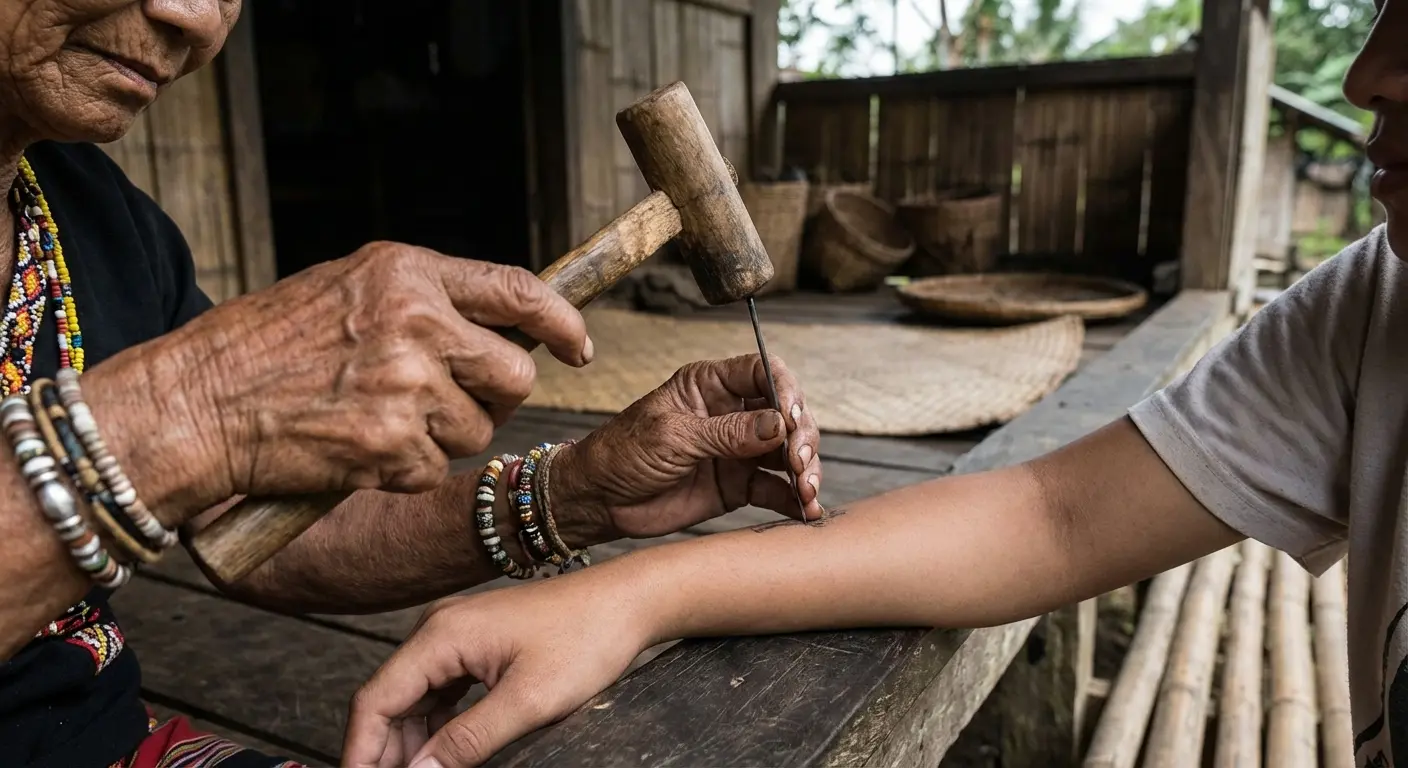
The question of tattoo meaning and ownership has taken on new dimensions in cultural preservation contexts. In the Philippines, Cebu Daily News reports that Apo Whang-Od, the last and oldest surviving mambabatok (traditional hand-tap tattoo artist) of the Kalinga tribe, has made the three dots her signature tattoo, representing herself and her two apprentices, symbolizing the continuation of “batok” from one generation to the next. This indigenous interpretation, which predates Western prison culture by centuries, demonstrates how the same symbol operates in completely separate cultural universes, with Whang-Od’s three dots signifying cultural preservation and “made in Kalinga” rather than any criminal association.
Talk to Your Artist First
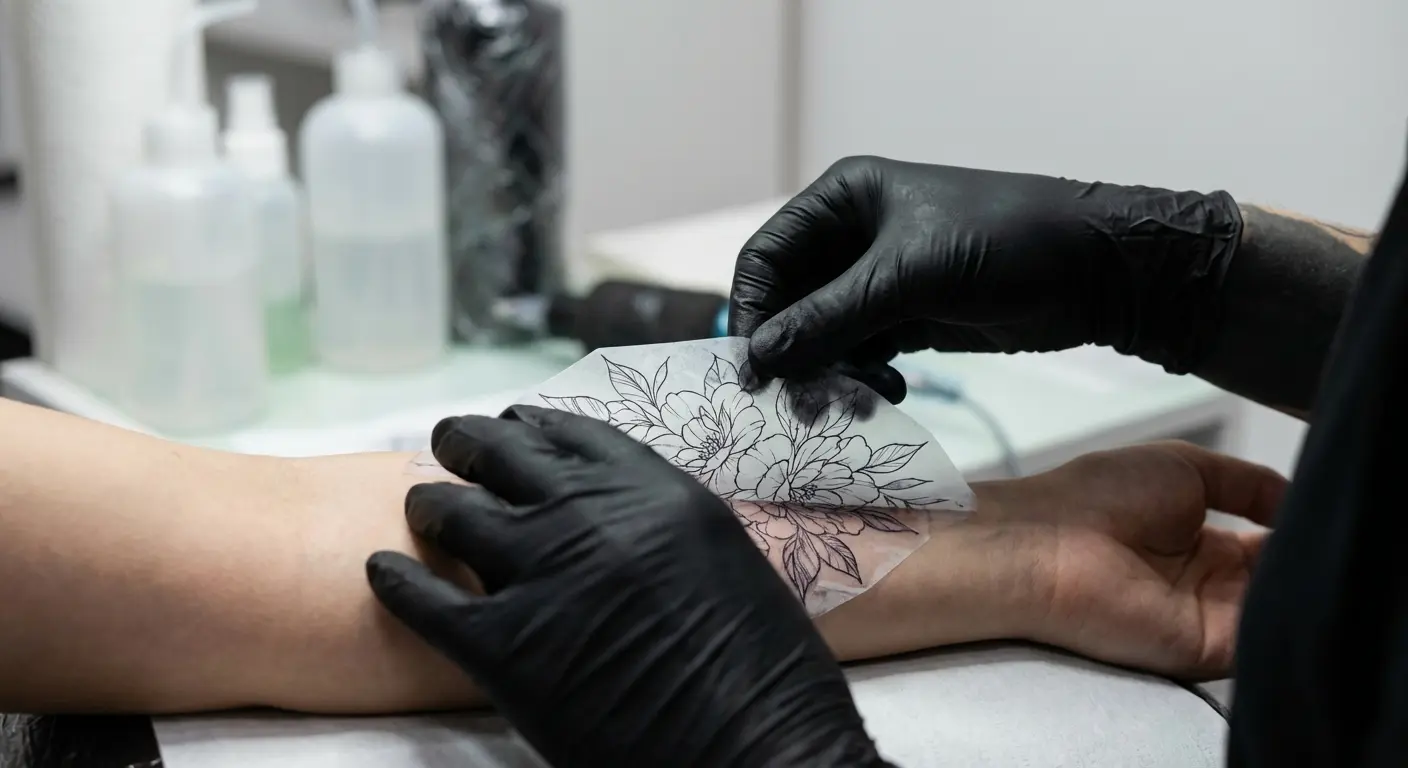
Your tattoo artist has done three dots before. Probably a dozen times. They’ve also watched people walk out with tattoos they didn’t fully understand and come back pissed off six months later. Talk to them first. Not for their sake. For yours.
Placement Conversation
Be explicit about where you want the tattoo and why. If you’re choosing hand placement, your artist needs to know you understand the associations that come with that location. If you’re choosing behind-the-ear placement, discuss sizing that works for that spot without losing definition as the tattoo ages.
Good artists will ask about your reasoning, not to judge you but to make sure you’ve considered how the placement affects meaning. They’re not trying to talk you out of your tattoo. They’re trying to prevent the situation where you realize six months later that everyone’s reading your tattoo differently than you intended.
Good artists will push back on hand tattoos, especially if you walk in at 18 with no other ink. They’re not gatekeeping. They’ve seen how this ends.
Design Variations That Signal Meaning
Three dots aren’t just three dots. The exact formation matters. Perfect triangle? Straight line? Slightly curved? Each variation can signal different meanings or simply look more intentional versus more improvised.
If you’re going for the ellipsis interpretation, you might want the dots in a horizontal line rather than a triangle. If you’re representing the Trinity, a triangle formation makes theological sense. These aren’t huge differences, but they’re the kind of details that help your tattoo communicate what you mean.
Professional execution also separates intentional symbolism from what looks like amateur stick-and-poke work. Three perfectly executed dots read as deliberate. Three slightly uneven dots might get read as prison tattoo regardless of where you got them or what you intended.
The Refusal Conversation
Some artists won’t tattoo three dots on hands or faces, especially for clients who seem unfamiliar with the symbolism’s implications. This isn’t discrimination. It’s professional responsibility.
If your artist won’t do three dots on your hand, listen. They’re trying to save you from yourself.
Visible tattoos with strong cultural or criminal associations can affect employment, housing, and how you’re treated by law enforcement. Artists who refuse these requests (or require extensive consultation first) are trying to prevent you from permanently marking yourself in ways that could close doors you don’t realize you’re closing.
If an artist pushes back on your three dots request, listen to their concerns. They’re not trying to control your body. They’re sharing knowledge from years of watching how tattoos affect people’s lives beyond the shop.
When You’re Absolutely Sure
If you’ve done the research, considered the implications, and still want three dots in your chosen placement, a good artist will ultimately respect that decision. Their job is to inform you, not to parent you.
Come to the appointment ready to explain your reasoning if asked. Not because you owe anyone justification, but because that conversation helps the artist understand what you’re going for and execute it in a way that honors your intention.
You’re making a choice that carries social weight. Making it intentionally and informedly is different from making it impulsively because you saw it on someone else and thought it looked cool.
Questions to Discuss With Your Artist:
Placement & Visibility:
- “I want the three dots [location]. What are the visibility implications for this placement?”
- “How will this location age over time, and will the dots remain distinct?”
- “Are there professional or social contexts where this placement causes issues?”
Design Execution:
- “I’m going for [specific meaning]. Should the dots be in a triangle or a line?”
- “What size works best for this placement to avoid blurring as it ages?”
- “How can we make this look intentional rather than improvised?”
Cultural Context:
- “I understand this symbol has [specific association]. Are there design variations that would clarify my intended meaning?”
- “Have you had clients regret this tattoo, and if so, why?”
Meaning Clarification:
- “My personal meaning is [explanation]. Does the design I’m requesting communicate that effectively?”
- “What have other clients told you about how people react to their three dots tattoos?”

Designing With Intention vs. Designing By Default
If you’re drawn to the meaning behind three dots but worried about misinterpretation, you have options. Some people incorporate the three dots into larger designs where the context clarifies the meaning. Three dots with clearly religious imagery reads differently than three dots alone. Three dots incorporated into a literary quote or book imagery signals the ellipsis interpretation.
You can also work with your artist to create variations that capture the essence (the power of three, the concept of continuation) without the exact formation that carries the heaviest cultural baggage.
Bottom Line
If three dots prove anything, it’s that tattoo meanings aren’t fixed. They’re negotiated. Between you, the people who see it, and the cultural context you’re both standing in. Every single time someone looks at your tattoo, that negotiation happens again.
The “right” three dots tattoo meaning isn’t the prison interpretation, the religious interpretation, or the ellipsis interpretation. It’s whichever meaning connects to your experience and intention, worn with full awareness of how others might read it differently.

You’re not obligated to avoid symbols with complicated histories. You are obligated to understand those histories before permanently marking yourself with them. The difference between cultural appreciation and cultural appropriation, between intentional symbolism and accidental signaling, lives in that understanding.
Three dots can mean your story continues. They can represent your faith. They can mark a period of your life you’ve moved beyond but won’t erase. They can mean all of these things at once, because symbols are living language that shifts with context and time.
What they shouldn’t mean is “I thought these looked cool and didn’t realize what I was getting into.”
Do the research. Have the conversations. Make the choice with your eyes open.
Your skin is your territory, but tattoos are also social objects that communicate whether you intend them to or not. Three dots communicate loudly, just not always the same message to every viewer. Get the tattoo or don’t. Just stop pretending symbols have one true meaning. Understanding that multiplicity isn’t a barrier to getting the tattoo. It’s the foundation for getting it right.
