22 Katana Tattoos That Honor the Blade Without Repeating the Same Old Samurai Story
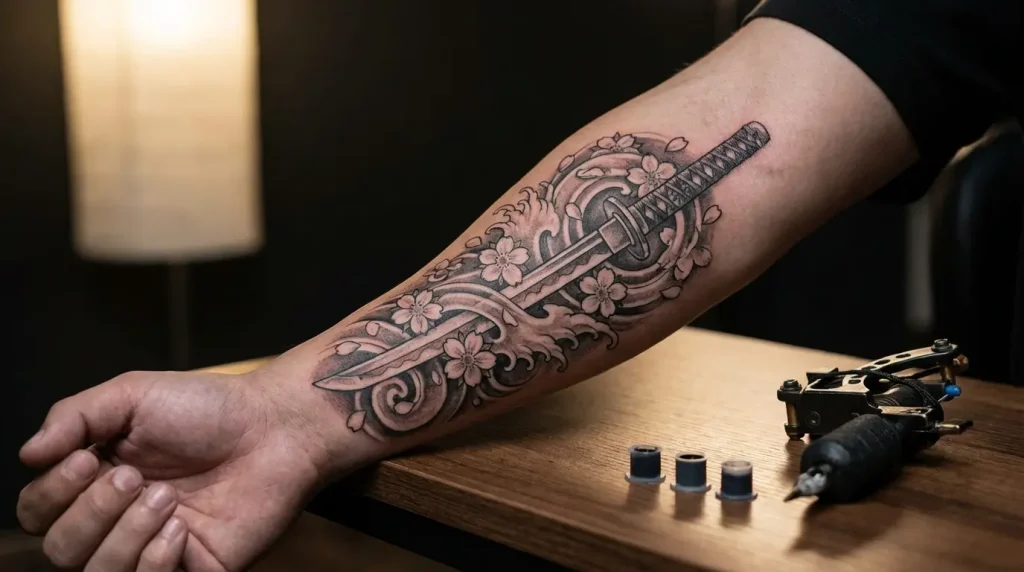
Table of Contents
Stop Treating It Like a Prop
-
The Broken Blade
-
Katana Through Cherry Blossoms (Obscured, Not Framed)
-
The Unsheathed Moment
-
Blade Reflecting a Skyline
The Blade IS the Story
-
Engraved Blade Storytelling
-
Weathered Steel and Rust
-
Damascene Pattern Closeup
-
Katana with Family Kamon
What Hands Tell You
-
Grip Study (No Face, Just Hands)
-
The Passing Down
-
Calloused Palms and Silk Wrapping
-
Single Hand, Multiple Blades
Wrong Place, Right Idea
-
Submerged Underwater
-
Overgrown by Nature
-
Katana in Urban Decay
-
Blade as Architectural Element
-
Frozen in Ice
-
Desert Sand Burial
Breaking It Down
-
Geometric Katana Breakdown
-
Negative Space Blade
-
Katana as Single Brushstroke
-
Fragmented Edge Studies
TL;DR
-
Samurai tattoos are played out. The sword itself is more interesting – how it’s made, how it breaks down, who’s holding it, where you put it
-
Broken or weathered katanas hit harder than pristine blades if you’ve been through actual shit
-
Zoom in on one element (the grip, what’s engraved on it, what it reflects) instead of trying to fit the whole sword plus warrior plus cherry blossoms into one piece
-
Put the sword somewhere weird (underwater, covered in vines, frozen solid) and suddenly it means something new
-
Abstract versions let you keep the symbolism without looking like every other person with Japanese ink
-
How someone holds the blade tells you more than showing their whole face ever will
Stop Treating It Like a Prop
Another samurai. Another katana. Another cherry blossom branch positioned at the exact same angle.
I’ve looked at hundreds of katana tattoo designs, and maybe 90% of them are the same three ideas recycled. Stoic warrior. Honor and discipline quote. Some petals floating around because… Japan, I guess?
The blade itself is way more interesting than any of that.
Historically, samurai believed their swords were extensions of themselves, with each blade crafted with meticulous care and imbued with spiritual significance. This belief translates into modern tattoo culture where individuals seek to embody similar ideals of honor, discipline, and loyalty through their ink, moving beyond surface-level warrior imagery to embrace deeper personal narratives.
Look, I’m tired of seeing the same stoic samurai pose. These designs? The blade does the talking. You’ll find ideas where the condition of the sword, what moment it’s caught in, or what it’s reflecting matters way more than who’s swinging it. These aren’t decorative pieces. They’re visual statements about falling apart, being ready, and the gap between tradition and whatever the hell we’re doing now.
1. The Broken Blade
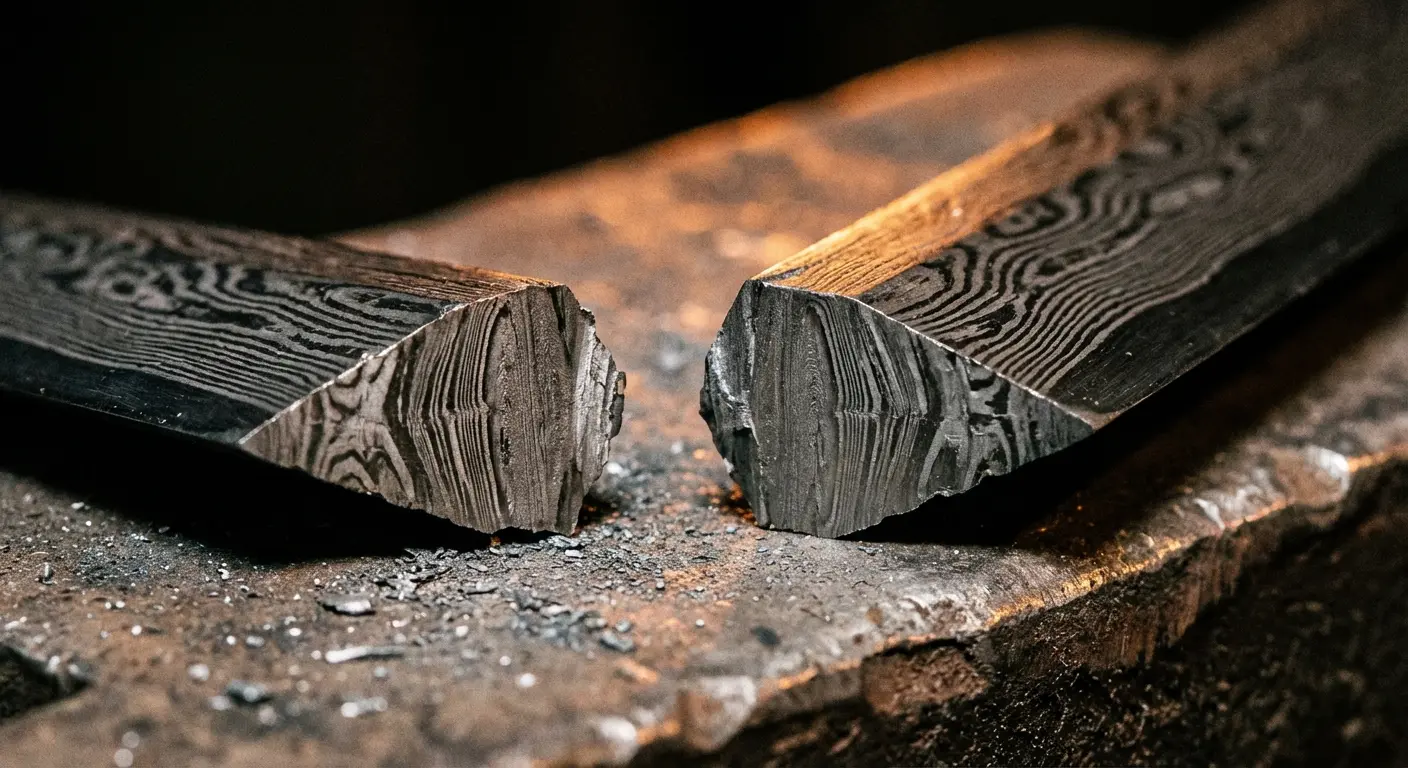
A fractured katana, snapped mid-blade with the break showing internal steel layers, tells a better story than any perfect warrior scene.
The design works because it rejects the whole “undefeated samurai” thing that dominates katana imagery. You’re admitting that strength isn’t about staying pristine. The break itself becomes what people look at, with the Damascus patterns or folded steel visible where it cracked. Some versions show the two pieces pulled apart slightly, others keep them lined up but clearly destroyed.
A common interpretation of katana tattoos revolves around themes of strength and resilience – just as steel is forged through intense heat and pressure, these tattoos symbolize personal growth arising from life’s challenges. Many wearers view their katana tattoos as reminders of their own battles, whether physical struggles or emotional hardships, finding empowerment in showcasing such symbols on their bodies.
Your forearm is perfect for this. Or down the side of your calf, where the break can follow your muscle. You’re not celebrating that it broke. You’re showing what’s still useful even after catastrophic failure.
2. Katana Through Cherry Blossoms (Obscured, Not Framed)
Cherry blossoms and katanas. Yeah, I know. But hear me out.
It’s not that the combo sucks, it’s that everyone does it wrong. Most designs use blossoms as decorative borders or background filler, like they’re framing a picture.
What if the blossoms hide the blade instead? Picture a katana where petals and branches cross in front of the steel, partially covering the edge and handle. The sword isn’t demanding attention. It’s there but concealed, which says something about restraint or choosing not to draw.
This creates tension because you’re hiding the thing most people want to show off. The seasonality of sakura (brief, beautiful, gone) plays against the katana’s permanence in ways that actually feel earned. When considering katana tattoo designs that incorporate traditional Japanese elements, this approach offers a more sophisticated take than conventional compositions.
3. The Unsheathed Moment
Forget the fully drawn sword in some dramatic pose.
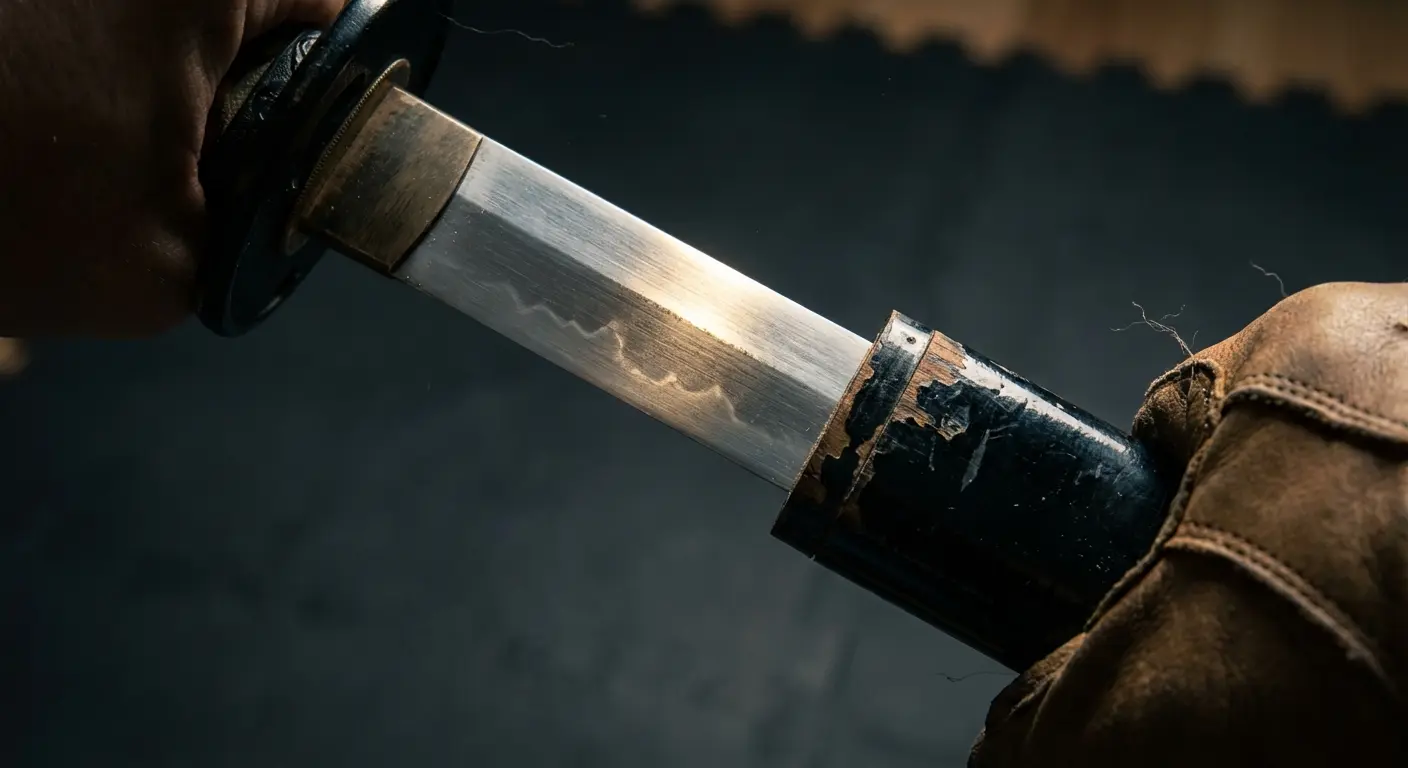
This design captures the katana halfway out of its saya (scabbard), with just enough blade visible to catch light. You’re freezing the moment of decision, the space between peaceful and prepared. The composition focuses on that reveal, those few inches of steel coming out of the sheath, often with the koiguchi (scabbard mouth) detailed to show wear from being drawn over and over.
Inner forearm or along the ribcage. The partial reveal creates anticipation without resolution, which is way more interesting than showing the whole thing. You’re wearing the question, not the answer.
4. Blade Reflecting a Skyline
Polished katana steel acts as a mirror, and this design uses that reflective quality to show a modern city skyline in the blade’s surface.
The juxtaposition isn’t subtle, but it’s purposeful: traditional craftsmanship reflecting contemporary life. You can use your actual city or keep it generic, but the point is the sword isn’t separate from your current reality. It’s literally reflecting it.
The technical challenge here (and what makes it look good) is rendering the reflection with enough distortion to feel real while keeping the skyline recognizable. This needs space. Thigh or upper arm where there’s room for both the blade’s curve and the architectural details.
The Blade IS the Story
Swords weren’t just weapons. They were signed, engraved, and personalized by the smiths who forged them and the families who owned them.
Zoom in on a real katana and you’ll see signatures, family crests, rust patterns that tell you exactly how it was used. Most tattoos ignore all of that. These don’t. You’re creating pieces that reward close inspection and carry meaning in their texture, not just their outline.
5. Engraved Blade Storytelling
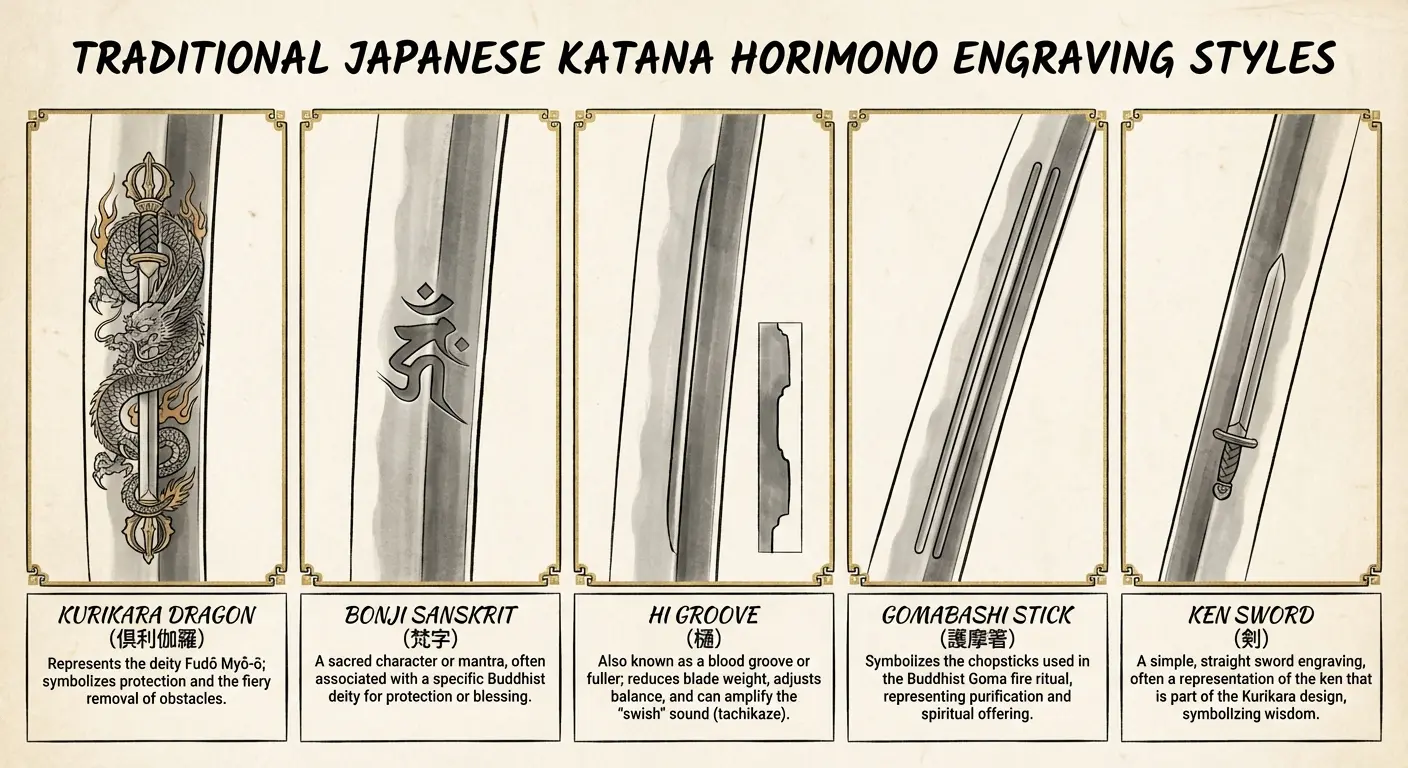
Traditional katanas often featured engravings (horimono) along the blade: dragons, Sanskrit characters, grooves for balance and blood. This design makes those engravings the entire focus, showing a section of blade with detailed carving work.
Traditional Japanese tattoo techniques emphasize the importance of symbolic detail, and when exploring Japanese traditional tattoo artistry, the engraved blade approach aligns perfectly with this philosophy.
You can use actual historical horimono styles or create custom engravings that matter to you. Names, dates, coordinates, or symbols running along the hi (groove) in a style that matches traditional Japanese engraving techniques. The blade itself becomes secondary to what’s written on it.
Vertical piece along the spine, forearm, or outer calf. You’re basically using the katana as a framework for carrying text or imagery that matters to you, which is exactly what historical owners did.
|
What It Is |
What It Meant |
What You Could Use It For |
|---|---|---|
|
Kurikara (Dragon) |
Protection in battle, divine power |
You’re strong, you’ve overcome shit, that kind of thing |
|
Bonji (Sanskrit) |
Buddhist prayers, spiritual protection |
Mantras, meaningful phrases in any language |
|
Hi (Groove) |
Weight reduction, structural integrity |
Timeline markers, coordinate sequences |
|
Gomabashi (Ritual stick) |
Connection to fire rituals |
Transformation, burning away old versions of yourself |
|
Ken (Straight sword) |
Wisdom cutting through ignorance |
Clarity, making hard decisions |
6. Weathered Steel and Rust
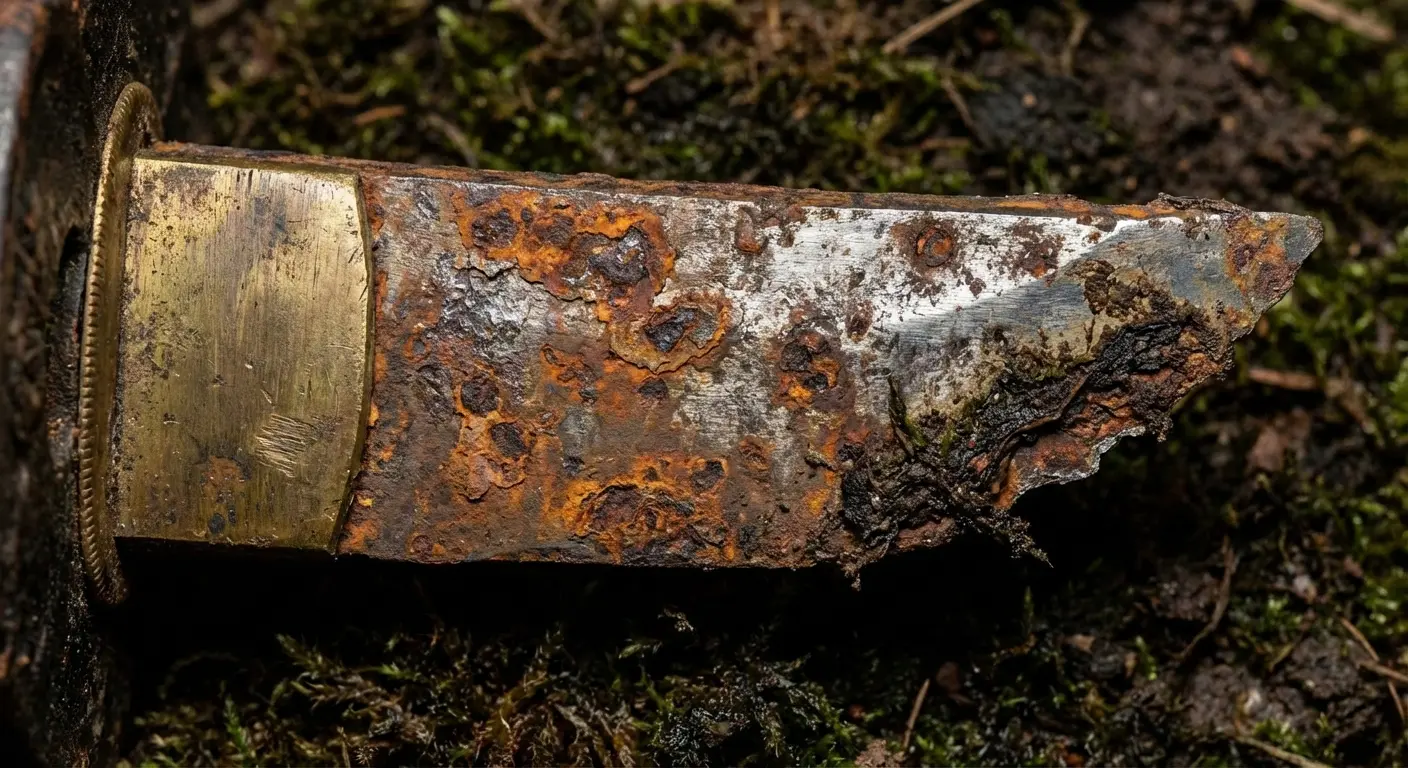
Rust on a katana would horrify any collector, but in tattoo form, it’s visual poetry about neglect, time, and the cost of walking away from things.
This design shows a blade with rust blooms, pitting, and corrosion spreading across the steel. The habaki (blade collar) might be tarnished, the kissaki (point) chipped. You’re looking at a weapon that wasn’t maintained, wasn’t valued, wasn’t passed down properly.
That narrative hits home if you’ve walked away from something (or someone) that was supposed to be honored. The rust patterns create organic, unpredictable textures that contrast beautifully with the sword’s geometric form.
Outer forearm, shoulder, or along the ribcage work well. A katana tattoo featuring weathered elements tells a more honest story than pristine imagery, acknowledging that even the most carefully maintained traditions can fall into disrepair. This approach to katana tattoo design connects with those who’ve experienced loss or transformation.
7. Damascene Pattern Closeup
Folded steel creates those distinctive wavy patterns (hada) that prove a blade was traditionally forged. This design is basically an extreme closeup of that pattern, showing the layers and waves of steel without necessarily revealing that you’re looking at a sword.
It’s abstract until you recognize it. Which creates a nice filter: people who know, know.
The patterns can be rendered in fine line work or with subtle shading that emphasizes the dimensional quality of folded metal. Inner wrist, behind the ear, side of the finger for small versions. Or scaled up as a full sleeve element where the pattern can really breathe. You’re celebrating the craft, the time-intensive process, the metallurgical skill. Not the sword’s function, but its creation.
8. Katana with Family Kamon
Kamon (family crests) appeared on sword fittings, scabbards, and sometimes etched into tangs. This design incorporates a specific kamon into the katana’s tsuba (hand guard) or menuki (handle ornaments).
If you have Japanese heritage, you might use your family’s actual kamon. If not, you can design a personal symbol that functions the same way: a mark of belonging and lineage.
The katana becomes about family identity rather than martial identity. Upper arm or chest allows room for detailed kamon work. This works if you want the tattoo to honor family connection without going the obvious “family tree” or portrait route.
What Hands Tell You
A katana without context is just a shape.
Hands change everything. They add tension, relationship, care, or violence depending on the grip. Forget about showing faces. Faces make it about character. Hands make it about action and relationship, about your connection to discipline, inheritance, or protection rather than abstract warrior ideals.
9. Grip Study (No Face, Just Hands)
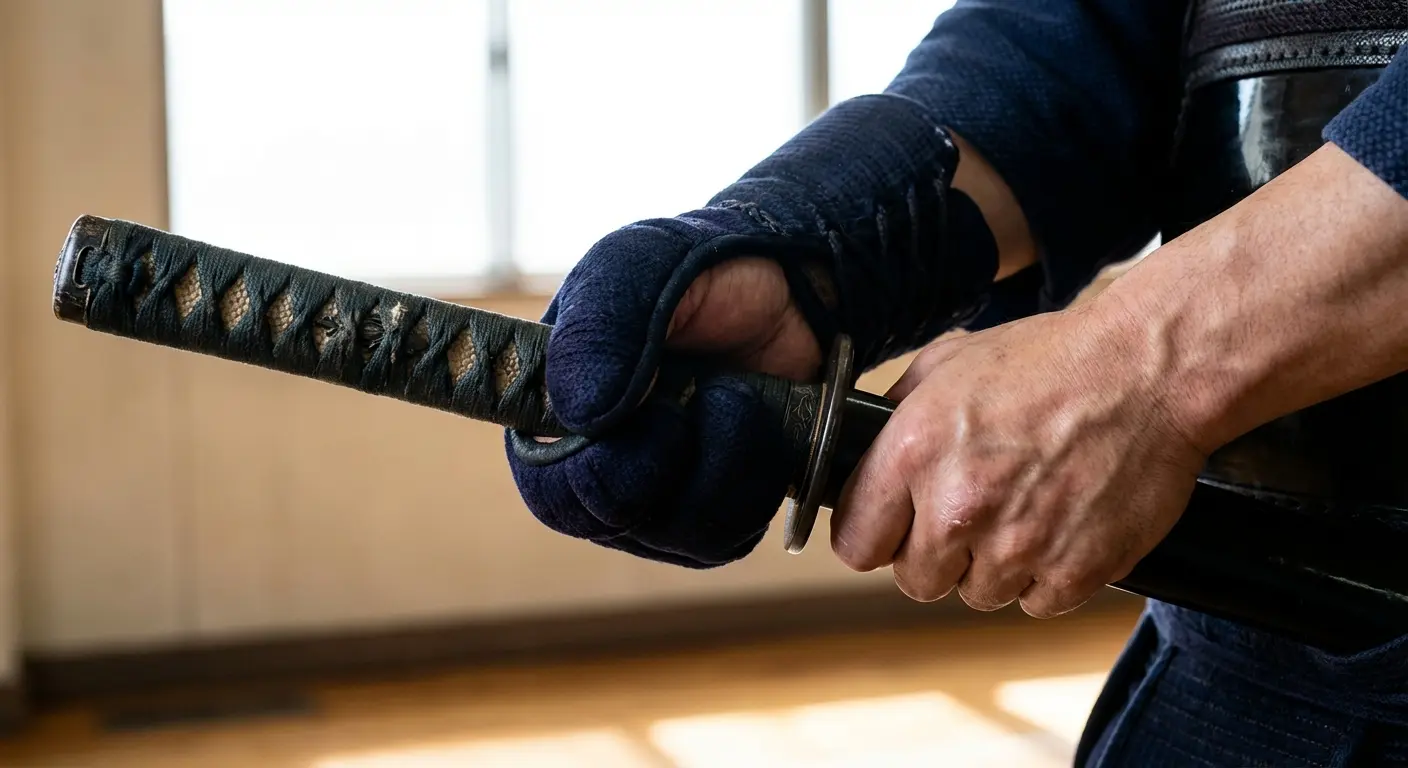
Both hands wrapped around the tsuka (handle) in proper kendo grip, knuckles detailed, tendons visible from tension.
That’s it.
No arms extending upward, no face, no body. Just the grip and maybe six inches of handle.
The precision required in this design shares similarities with fineline tattoo techniques, where detail and accuracy define the piece’s success.
This is about control and the physical reality of holding a weapon that demands respect. The hand position matters: proper grip has the right hand near the tsuba, left hand at the bottom, with specific finger placement. Getting this right (or intentionally wrong) changes the meaning. Proper grip means training and discipline. Improper grip means desperation or unfamiliarity.
Forearm piece where the tattooed hands can line up with your actual hands’ position, creating a visual echo when you hold something. A katana tattoo focused solely on the grip removes all pretense and focuses on the moment of commitment. This katana tattoo approach emphasizes technical accuracy over dramatic presentation.
|
Grip Element |
Traditional Technique |
What It Means |
|---|---|---|
|
Right hand placement |
Near tsuba (guard), controls direction |
Guidance, precision, leadership |
|
Left hand |
Bottom of handle, provides power |
Foundation, raw strength, commitment |
|
Finger spacing |
Specific gaps between fingers |
Balance between control and flexibility |
|
Thumb position |
Along handle, not wrapped |
Awareness, readiness to adjust |
|
Pressure distribution |
40% right hand, 60% left hand |
Unequal but complementary forces |
|
Palm contact |
Full contact with tsuka-ito wrapping |
Connection, intimacy with the tool |
10. The Passing Down
Two hands in the frame: one aged and weathered, one young and smooth. The older hand releases the handle as the younger one accepts it.
You’re capturing inheritance, the moment a responsibility transfers between generations. This doesn’t have to be literal (you don’t need an actual family sword tradition), but it connects if you’ve inherited values, skills, or burdens from someone who came before.
The hands should show clear age difference through detail: veins, spots, wrinkles versus smooth skin. The katana is horizontal between them, the moment frozen. Upper back, along the collarbone, or as a thigh piece where there’s room for both hands and the full handle.
11. Calloused Palms and Silk Wrapping
An open palm showing calluses from repeated practice, with the katana’s silk-wrapped handle (tsuka-ito) resting across it. The design emphasizes texture: rough skin against smooth silk, the diamond pattern of the wrapping, the small imperfections in both.
This is about the physical cost of discipline, the way practice literally changes your body. The calluses tell the story of repetition and commitment without needing to show the action itself.
Palm tattoo (meta and painful), along the inner forearm, or as part of a larger hand study on the outer forearm. You’re honoring the unsexy part of mastery: the repetitive practice that leaves marks.
12. Single Hand, Multiple Blades
One hand gripping a handle, but the composition shows three or four katana blades radiating from that single grip point, slightly offset and overlapping.
This creates an impossible image (you can’t hold multiple swords in one hand that way), which is the point. It means multiple paths, multiple versions of the same choice, or the weight of carrying several responsibilities at once.
The blades can be identical or show variation (different levels of wear, different curve depths). Shoulder piece where the blades can radiate across the deltoid, or as a thigh design. You’re visualizing the feeling of being pulled in multiple directions while maintaining your grip.
Wrong Place, Right Idea
Remove the dojo, the battlefield, and the mountain temple. What happens when you place a katana somewhere it doesn’t belong?
These designs use environmental context to create new meaning, putting the blade in situations that force reinterpretation. Underwater, overgrown, buried, frozen: each context adds a layer that the sword alone can’t carry. When searching for katana tattoo ideas that break from convention, environmental placement offers the most narrative potential. These katana tattoo ideas transform the blade from weapon to artifact.
13. Submerged Underwater
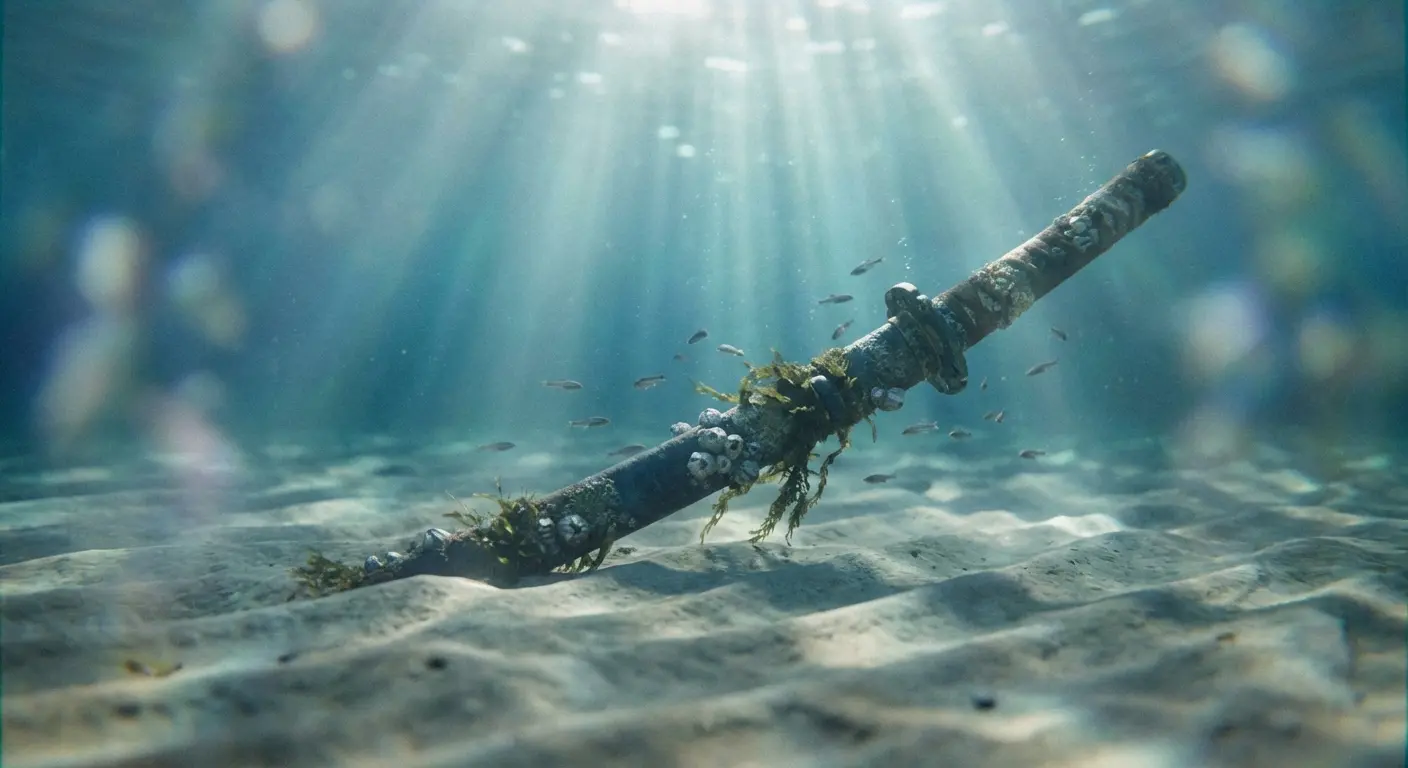
A katana resting on a sandy ocean floor, partially buried, with light rays filtering down from the surface above. Small fish might investigate it, or seawee d could be starting to attach. The water creates distortion, bending the blade’s lines slightly.
This works for exploring themes of depth (literal and emotional), things lost or deliberately sunk, or the idea that some weapons need to stay buried. The underwater environment adds a dreamlike quality that straight katana designs can’t achieve.
Larger piece on the thigh, ribcage, or upper arm where there’s room for the environmental details that sell the concept. You’re not just showing a sword. You’re showing what happens when something designed for one element ends up in another.
14. Overgrown by Nature
Vines, roots, and moss reclaim a katana that’s been left long enough for nature to absorb it. The tsuba might have small flowers growing through it, the blade could be splitting as a tree root pushes through, or ivy could be completely wrapping the handle.
This is about surrender to natural processes, the idea that even the most carefully crafted human objects eventually return to the earth.
It connects if you’re processing themes of letting go, environmental priority over human concerns, or the temporary nature of all things (including carefully maintained traditions). The composition can be vertical (sword standing upright, overgrown) or horizontal (lying in forest floor debris). Sleeve element or large back piece where the organic growth patterns have room to spread.
15. Katana in Urban Decay
A katana leaning against a graffitied concrete wall in an abandoned building, or lying among broken glass and debris in an alley. The juxtaposition of this historical, crafted object in modern urban waste creates tension between old and new, valuable and discarded.
The gritty aesthetic of urban environments pairs well with blackout tattoo elements that can frame the composition in solid black negative space.
The environment means the sword is out of place, maybe out of time. This connects if you’re exploring disconnection from tradition, feeling you don’t fit your environment, or the persistence of old values in new contexts.
The urban decay details matter: specific graffiti styles, realistic debris, lighting that hints at streetlights or neon bleed. Larger piece on the thigh or as a half-sleeve where you can establish the environment convincingly. A katana tattoo set against urban decay addresses cultural displacement and the clash between tradition and modernity.
The evolution of katana tattoo artistry has reached impressive heights in specialized studios. If you’re looking for a katana tattoo shop that understands large-scale Japanese work, Paul Dhuey, who specializes in large-scale Japanese bodywork at Katana Tattoo in Green Bay (Green Bay Press-Gazette), brought West Coast tattooing expertise back to the Midwest after spending nine years at one of California’s premier shops. His approach emphasizes educating clients on body placement and flow, often transforming their original concepts into more sophisticated pieces that work with the body’s natural contours, exactly the kind of contextual thinking that makes environmental katana designs so effective.
16. Blade as Architectural Element
What if a katana wasn’t a weapon but a structural component? This design shows the sword incorporated into architecture: maybe as a support beam in a traditional Japanese room, or bridging a gap in modern construction, or serving as a handrail.
The absurdity is intentional. You’re taking something designed for destruction and repurposing it for structure and support.
This connects with transformation of purpose, using your sharpest qualities for building rather than cutting, or the idea that weapons can be beaten into tools (or in this case, buildings). The architectural style you choose (traditional Japanese, modern minimalist, industrial) changes the meaning. Ribcage piece or thigh design where the architectural context can be established.
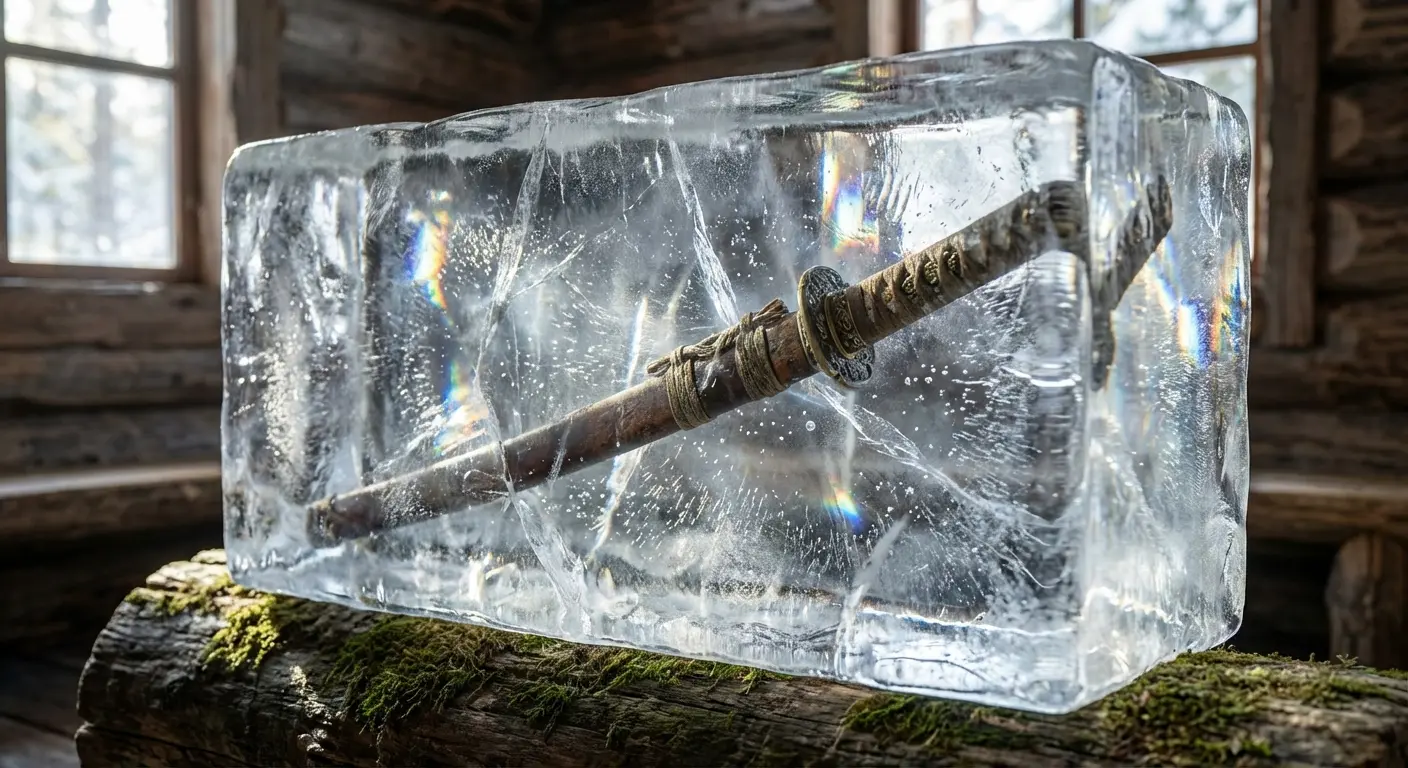
17. Frozen in Ice
A katana completely encased in ice, visible but inaccessible, with frost patterns and air bubbles frozen around it. The ice can be clear (showing the blade in detail) or frosted (obscuring it partially).
This design explores preservation, things put on hold, or emotions frozen and inaccessible. There’s also the implication that ice melts eventually, so what’s frozen isn’t permanent.
The visual interest comes from rendering the ice convincingly: refraction, internal cracks, the way metal looks through frozen water. Upper arm piece, shoulder design, or along the calf. You’re showing something preserved but not available, protected but not usable.
18. Desert Sand Burial
Just the handle and a few inches of blade visible above desert sand, the rest buried. Wind-blown sand accumulates against it, and the visible metal shows heat distortion or desert weathering.
This design means abandonment in a hostile environment, something left behind because it was too heavy to carry. The desert context adds associations with survival, essential versus non-essential, and the idea that some things don’t serve you in certain conditions.
The composition works vertically (sword standing upright, mostly buried) or at an angle (fallen and being consumed by sand). Outer thigh, calf, or as a forearm piece. You’re showing what gets left behind when you prioritize survival over tradition.
Breaking It Down
You don’t need a recognizable sword to communicate what a katana means to you.
These designs break the blade down into components, negative space, and pure form. They appeal if you want the symbolism without the literal representation, or if you’re more interested in the katana’s essential qualities (sharpness, curve, balance) than its appearance.
Abstraction also solves a common problem: avoiding the “I got this because I watched anime” assumption. These designs require viewers to work harder to understand what they’re seeing, which filters for people whose opinions you actually care about.
19. Geometric Katana Breakdown
The katana reduced to geometric shapes: rectangles for the blade, circles for the tsuba, triangles for the kissaki. The components are separated and arranged in an exploded view, technical diagram style, but rendered in bold black shapes rather than detailed illustration.
This appeals to the analytically minded, people who appreciate how complex things break down into simple elements. It connects with how individual components create a whole, or how taking something apart helps you understand it better.
The geometric style also ages well since it doesn’t rely on fine details that blur over time. Forearm piece, upper arm band, or chest design. You’re showing the blueprint, not the finished product. Among katana tattoo designs that emphasize intellectual engagement, geometric breakdowns offer the most minimalist approach. These katana tattoo designs strip away all ornamentation to reveal essential form.
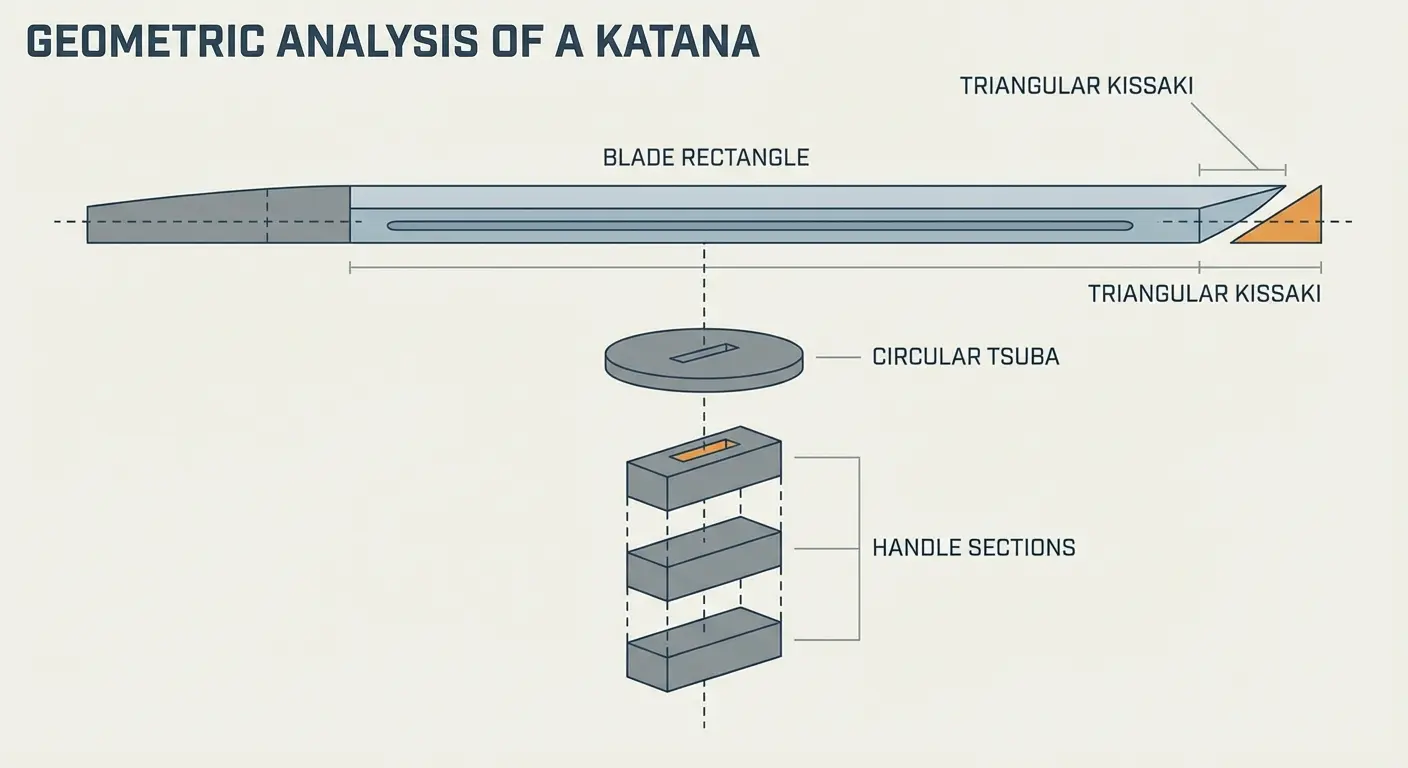
Here’s what different parts actually mean when you break them down:
|
Katana Component |
Geometric Shape |
What It Represents |
|---|---|---|
|
Blade (Nagasa) |
Long rectangle or trapezoid |
Purpose, direction, cutting through |
|
Point (Kissaki) |
Triangle |
Precision, focus, the sharp end of intent |
|
Guard (Tsuba) |
Circle or octagon |
Protection, boundary, what separates hand from blade |
|
Handle (Tsuka) |
Textured rectangle |
Connection, control, where you make contact |
|
Collar (Habaki) |
Small square |
Transition point, what holds things in place |
|
Pommel (Kashira) |
Small circle or dome |
Completion, the end that balances the point |
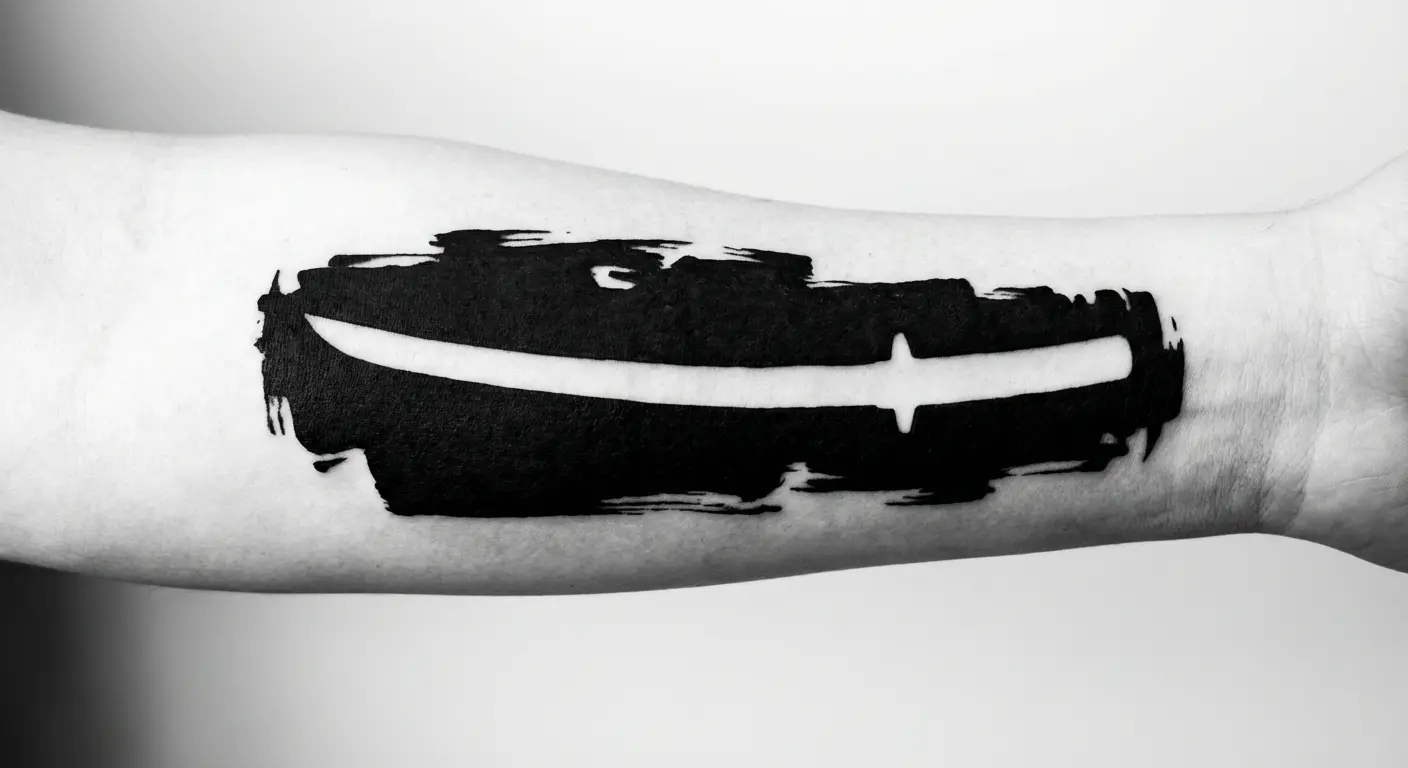
20. Negative Space Blade
The katana exists as the absence of ink rather than the presence of it. Black ink surrounds the sword’s shape, defining it by what’s not there. This creates a striking visual where your skin tone becomes the blade itself.
The technique works because it inverts expectations and creates high contrast. Thematically, it can represent how absence defines presence, how what you don’t do matters as much as what you do, or how restraint creates form.
The surrounding black needs to be solid and well-saturated for this to work, which means commitment to a bold piece. Best on areas with consistent skin tone: outer forearm, calf, or upper arm. You’re wearing the space around the sword, not the sword itself.
Your skin becomes the blade. Weird, right? But it works.
21. Katana as Single Brushstroke
A katana rendered as one fluid brushstroke in sumi-e (Japanese ink painting) style. The blade, handle, and tsuba are all suggested by a single, confident stroke that tapers and swells to indicate the sword’s form.
The fluid, calligraphic quality of this approach connects to broader irezumi tattoo traditions that value spontaneous expression within disciplined form.
This design honors Japanese artistic tradition while keeping the composition minimal and elegant. It connects with people who appreciate the link between martial arts and brush arts (both require similar discipline and precision). The brushstroke quality means no two versions will be identical, even from the same reference.
Smaller piece along the forearm, ribcage, or even behind the ear. You’re capturing the essence and movement rather than the object itself. A katana tattoo executed as a single brushstroke demonstrates mastery through simplicity rather than complexity.
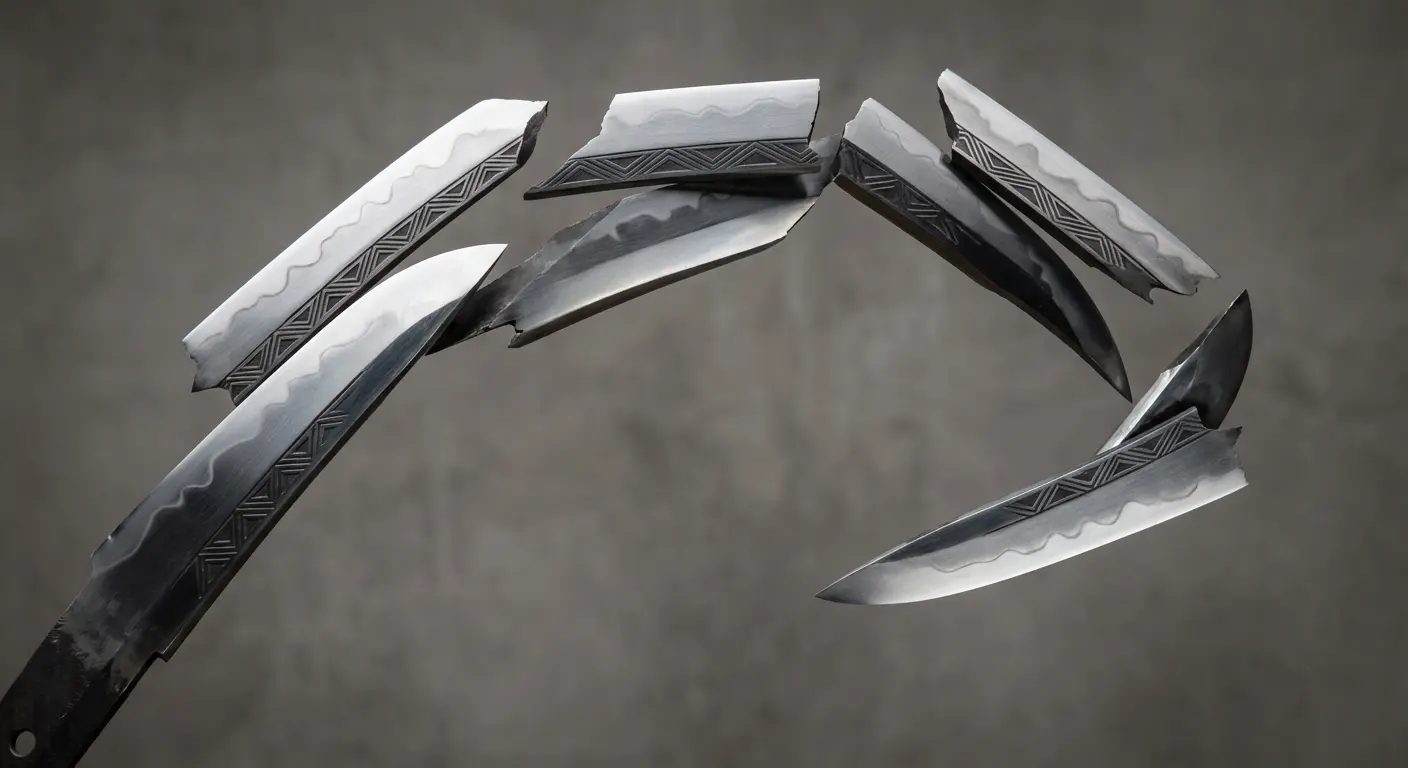
22. Fragmented Edge Studies
Multiple small sections of the katana’s edge, each showing a different segment of the blade, arranged in a pattern but not connected into a complete sword. Each fragment shows the transition from edge to spine with careful shading, but they float independently.
This design explores incompleteness, how we carry pieces of things rather than whole systems, or how understanding comes from examining parts in isolation. The fragments can be arranged geometrically or scattered organically.
Forearm piece where the fragments can be distributed along the length, or as a shoulder/chest design. You’re acknowledging that you don’t have the whole picture, just sharp pieces of it.
Final Thoughts
Choosing a katana tattoo means deciding what the blade represents beyond its obvious martial associations. The designs we’ve covered move past the samurai archetype to explore craftsmanship, decay, relationship, context, and pure form.
Whether you’re drawn to the broken blade’s resilience, the intimacy of hands gripping a handle, or the visual poetry of a sword reclaimed by nature, your choice reveals what aspect of the katana’s symbolism connects with your experience.
Look, real talk for a second. You’re probably reading this and thinking “cool, but how do I actually show this to an artist?” Describing what you want to a tattoo artist is one thing. Showing them a visual reference that captures your specific vision is another.
I built Tattoo Generator IQ specifically for this gap between idea and image. You can generate multiple variations of any concept here (weathered blade with specific rust patterns, hands gripping a handle at a particular angle, geometric breakdowns in your preferred style) and refine the details until it matches what’s in your head. Then you walk into the shop with a clear reference instead of hoping the artist interprets your description the way you intended.
The katana’s appeal isn’t going anywhere. But your approach to wearing one can be as unique as the blade itself.
Get whatever katana tattoo you want. But if you’re tired of seeing the same design on every third person with Japanese ink, these give you somewhere else to start. Pick the one that actually means something to you, not the one that looks cool on Pinterest.
