Moth Tattoo Meaning: Why Your Transformation Story Isn’t What You Think It Is
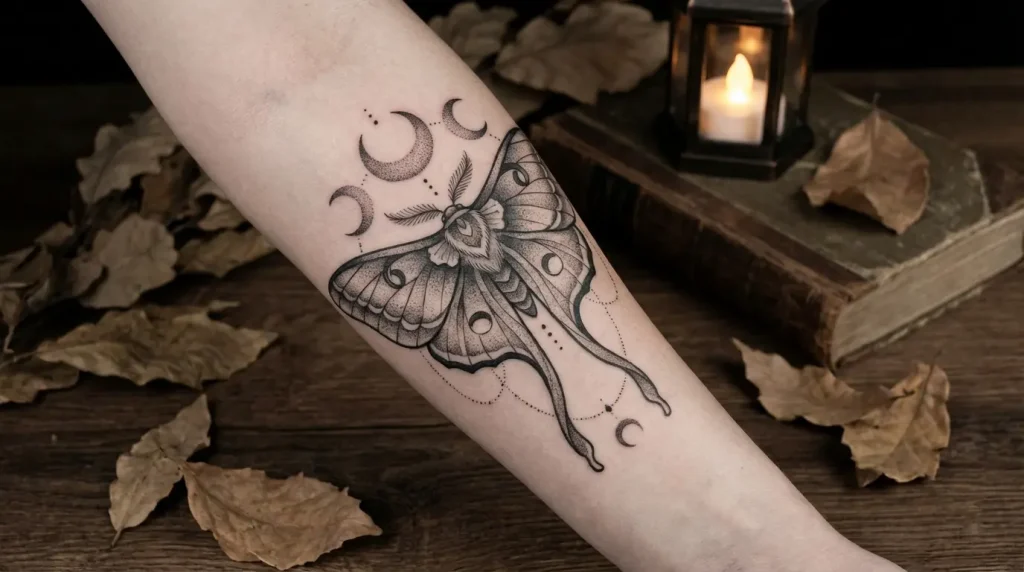
Table of Contents
- The Transformation Trap: Moving Beyond the Obvious Symbolism
- What Moths Actually Represent (And Why We’ve Been Getting It Wrong)
- The Dark Side of Light: Understanding Moth Behavior as Metaphor
- Cultural Moth Symbolism That Doesn’t Show Up in Pinterest Boards
- Death’s Head Hawk Moth vs. Luna Moth: Why Species Selection Matters
- The Nocturnal Advantage: Reclaiming Nighttime Imagery
- Moth Tattoos for People Who Don’t Resonate with Butterfly Energy
- Color Psychology in Moth Tattoos: Beyond Black and Grey
- Placement Considerations That Actually Affect Meaning
- When Your Moth Design Needs More Than Stock Symbolism
TL;DR
Moth tattoos aren’t about transformation. That’s butterfly shit. They’re about being comfortable in darkness, being drawn to dangerous things, and finding beauty everyone else overlooks. Species matters. Color matters. The “drawn to flame” thing is about self-destructive patterns we can’t resist, not some uplifting journey. Different moths mean wildly different things, from death omens to lunar femininity. And if you’re getting one, make it specific to your actual story instead of copying what you saw on Pinterest.
The Transformation Trap: Moving Beyond the Obvious Symbolism
Look, I’m tired of seeing the same transformation bullshit every time someone asks about moth tattoos.
Yeah, moths transform. So do butterflies. So do beetles, and you don’t see people lining up for stag beetle tattoos with the same enthusiasm.
The transformation angle isn’t wrong, it’s just lazy. Moths and butterflies both go through metamorphosis, but we treat them completely differently. Butterflies get the sunshine, flower gardens, and motivational Instagram captions. Moths get the porch light and the reputation for eating your sweaters.
And here’s the thing nobody talks about: the people who choose moth tattoos over butterfly tattoos are usually drawn to something the transformation narrative completely misses. They’re attracted to the moth’s relationship with darkness, its nocturnal nature, and yes, its fatal attraction to light sources that will literally burn it alive.
That’s not a transformation story. That’s a tragedy. An obsession. A commentary on self-destructive patterns we can’t seem to break.
It’s about being drawn to things we know might hurt us. It’s about finding beauty in the night when everyone else is asleep.
Moth tattoos have surged in popularity, with moth designs becoming a major trend since 2019, driven primarily by the complex emotional symbolism these creatures carry, far beyond the simple transformation narrative that dominates most tattoo conversations. When you’re researching the moth tattoo meaning, you’ll find dozens of articles repeating the same tired concepts.
Let’s dig deeper.
Why We Default to Transformation (And Why It Misses the Point)
Transformation is comfortable. It’s hopeful. It fits neatly into our cultural obsession with self-improvement and personal growth.
When someone gets a moth tattoo and you ask them what it means, saying “transformation” is easier than saying “I’m attracted to dangerous things” or “I feel more myself in the darkness.”
We’ve borrowed the butterfly’s homework and changed a few words. The moth deserves its own narrative, one that doesn’t sanitize its more complex symbolism into something safe for social media.
What Makes Moth Symbolism Actually Different
Moths are creatures of the night. They navigate by moonlight and stars, not the sun. They’re often brown, grey, or muted in color rather than vibrantly pigmented.
Some species don’t even have functioning mouths as adults. They literally cannot eat and live only to reproduce before dying.
These aren’t minor aesthetic differences.
They’re fundamental to what moths represent: survival in darkness, beauty that doesn’t announce itself, brief and intense existence, attraction to light that can destroy you. Understanding the meaning of a moth tattoo requires looking past the surface-level interpretations that get recycled across social media platforms.
What Moths Actually Represent (And Why We’ve Been Getting It Wrong)
Moths represent the night shift workers of the spiritual world. They’re symbols for people who come alive after dark, who do their best thinking at 2 AM, who find crowded daytime spaces overwhelming but feel perfectly at home in quiet darkness.
You know that feeling when everyone else is asleep and the world finally makes sense? That’s moth energy. (I hate that term but apparently that’s what we’re calling things now.) It’s not about being antisocial or depressed, though it can encompass those experiences. It’s about operating on a different rhythm than what society expects.
When people ask what do moth tattoos mean, they’re usually looking for a simple answer.
There isn’t one.
The moth tattoo meaning depends entirely on your relationship with these creatures and what aspects of their existence resonate with your own experience.
| Moth Symbolism | What It Actually Means | Who It Resonates With |
|---|---|---|
| Attraction to Light | Fatal obsession, self-destructive patterns, pursuing what hurts us | People recovering from addiction, toxic relationships, or harmful patterns |
| Nocturnal Nature | Thriving outside daylight society, operating on different rhythms | Night shift workers, insomniacs, creative people who work after dark |
| Muted Coloring | Beauty that doesn’t announce itself, worth beyond appearance | People who reject conventional beauty standards or feel overlooked |
| Brief Adult Lifespan | Mortality awareness, living intensely in limited time | Those processing grief, terminal illness, or existential questions |
| Navigation by Moonlight | Finding your way with limited clarity, trusting subtle guidance | People navigating uncertainty or making decisions without full information |
The Fatal Attraction to Light
Moths don’t just appreciate light. They’re catastrophically drawn to it. They’ll circle a flame or light bulb obsessively, often to their own death.
This behavior is deeply human: our attraction to things we know aren’t good for us. Toxic relationships we can’t quit. Career paths that drain us but offer prestige. Substances or behaviors that feel good in the moment but damage us long-term.
Think about someone who gets a moth circling a candle flame tattooed on their forearm after ending a three-year relationship with someone who was charismatic but emotionally unavailable. The tattoo isn’t about the relationship itself. It’s a permanent reminder of their pattern of being drawn to people who shine brightly but burn them.
Every time they reach for their phone to text an ex or swipe right on someone with similar red flags, they see that moth.
It’s not judgment. It’s recognition.
A moth tattoo can be a reminder of this pattern. Not as shame, but as acknowledgment. Sometimes we need to see our self-destructive tendencies illustrated on our skin to really recognize them.
Comfort in Darkness Isn’t the Same as Darkness Itself
Finding comfort in darkness doesn’t mean you’re dark, evil, or depressed (though it can include processing those experiences). It means you don’t need constant light and positivity to function.
Moths thrive in environments that would disorient butterflies. They’ve adapted to navigate by subtle light sources, to find food and mates in near-total darkness, to exist beautifully without an audience.
For people who feel pressure to always be “on,” always positive, always visible, moth symbolism offers permission to exist differently.
Unconventional Beauty Standards
Most moths aren’t conventionally beautiful by insect standards. They’re fuzzy, often dull-colored, with thick bodies and feathery antennae. They don’t have the sleek, colorful elegance of butterflies.
Yet there’s something captivating about a well-designed moth tattoo. The intricate wing patterns, the soft texture suggested by skilled shading, the alien quality of their faces and antennae.
Moths represent beauty that doesn’t conform to expected standards, beauty that reveals itself slowly rather than announcing itself immediately.
The Dark Side of Light: Understanding Moth Behavior as Metaphor
Scientists still debate exactly why moths are attracted to light. Best guess is they navigate using natural light sources (moon, stars) and artificial lights confuse their navigation systems. They’re basically trying to maintain a straight flight path but end up spiraling because the light source is too close.
Think about that.
Moths aren’t stupid. They’re not intentionally self-destructing. They’re following their natural instincts in an environment that’s been fundamentally altered by human intervention. Their navigation system, which worked perfectly for millions of years, now leads them into danger.
Much like exploring deeper symbolism in tattoo choices, understanding moth behavior reveals layers of personal meaning beyond surface interpretations. The meaning behind a moth tattoo often connects to this disorientation, this sense of following instincts that no longer serve us.
When Your Internal Compass Points Toward Danger
This is where moth symbolism gets uncomfortably relatable.
How many of us have instincts or patterns that once served us but now lead us into harmful situations?
Coping mechanisms that helped us survive childhood but sabotage our adult relationships? Attraction patterns that made sense in one context but keep us stuck in another?
A moth circling a flame isn’t a failure of the moth. It’s a mismatch between the moth’s programming and its current environment. Sometimes we need that reminder that our self-destructive patterns aren’t moral failings. They’re outdated navigation systems trying to function in new contexts.
Self-Reflection Checklist: Is Your Moth Tattoo About Self-Destructive Patterns?
Quick gut-check before you commit to moth-as-obsession symbolism:
- Do you find yourself repeatedly drawn to situations, people, or substances you know are harmful?
- Have you recognized a specific pattern you’re working to break or acknowledge?
- Does the “circling the flame” metaphor hit harder than general transformation talk?
- Are you using this tattoo as a visual reminder to pause before acting on destructive impulses?
- Do you want to honor the intensity of your focus while acknowledging where it’s led you?
- Is this tattoo part of your recovery or healing process from addiction or toxic relationships?
If you answered yes to three or more, your moth tattoo is about acknowledging patterns, not just celebrating change.
Obsession as a Neutral Force
We typically view obsession negatively, but moths remind us that intense focus can be neutral or even positive depending on the object.
The same mechanism that drives a moth to circle a flame until it burns also drives it to travel miles to find a mate or the perfect plant for laying eggs.
Obsessive focus isn’t inherently bad. It becomes destructive when directed toward harmful targets. A moth tattoo can represent this recognition: that your capacity for intense focus and dedication is powerful, and the question isn’t whether you’ll be obsessed with something, but what you’ll choose to orbit.
Cultural Moth Symbolism That Doesn’t Show Up in Pinterest Boards
Pinterest and Instagram have flattened moth symbolism into a few palatable concepts. But cultural traditions around the world have complex, sometimes contradictory relationships with moths that offer much richer symbolic territory.
I’m not going to cover every cultural interpretation because honestly, some of them contradict each other and it gets messy. But here are the ones that matter most.
Moths as Death Omens and Ancestor Spirits
In many Latin American cultures, black or dark moths appearing in your home signal that someone has died or will die soon. Particularly large moths might represent the spirit of a deceased loved one visiting.
This isn’t necessarily negative symbolism. Death is a natural part of life, and many cultures view the boundary between living and dead as permeable rather than absolute.
A moth as a death symbol can represent acceptance of mortality, connection to ancestors, or comfort with life’s inevitable end.
Mexican Mariposa de la Muerte
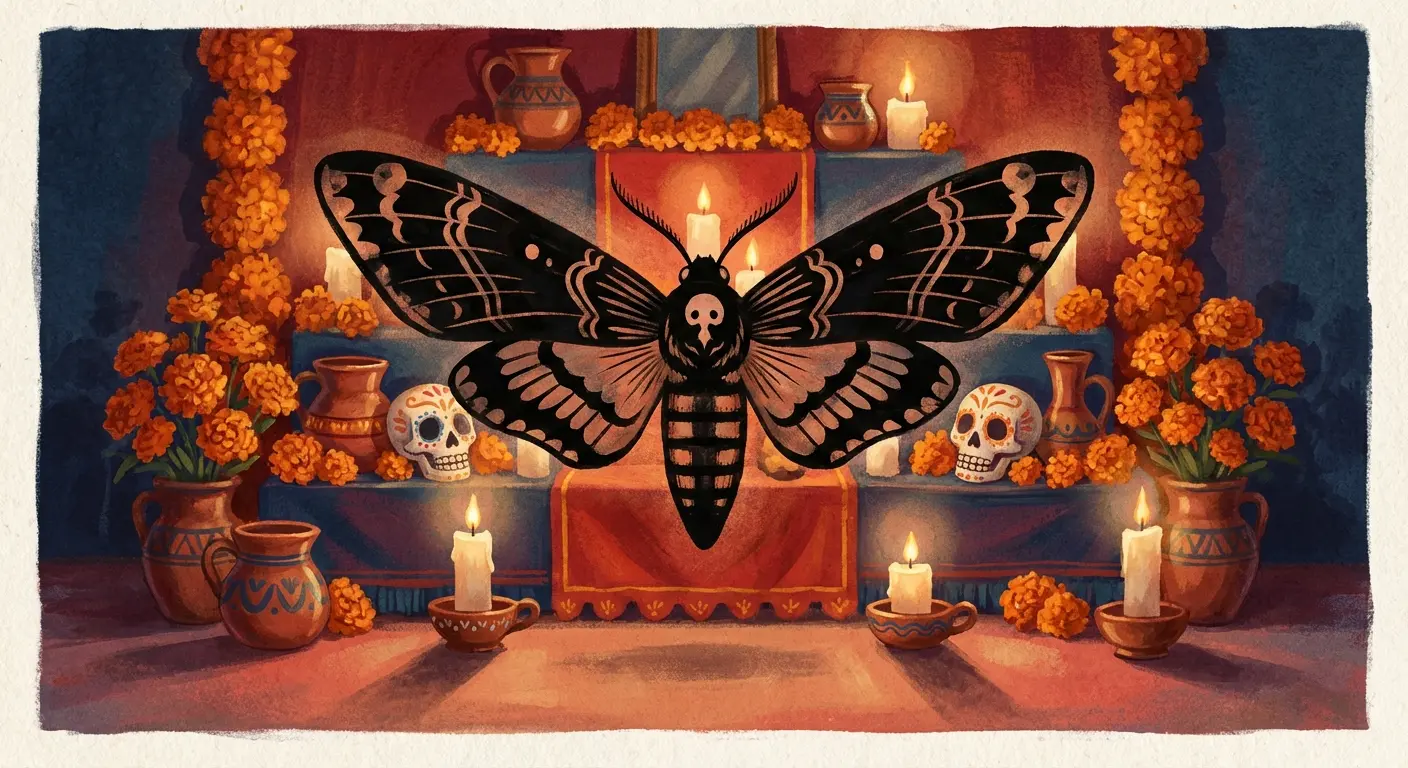
The “butterfly of death” (which often refers to moths, particularly the Black Witch moth) carries complex symbolism in Mexican culture. In some regions, it’s considered bad luck or a death omen. In others, it’s a positive sign of money coming or a deceased loved one watching over you.
This duality is important. The same creature can represent both danger and protection, depending on context.
A moth tattoo can hold this tension: acknowledging death while finding comfort in ancestral presence.
| Culture/Region | Moth Symbolism | Positive or Negative | Best For Tattoos Representing |
|---|---|---|---|
| Latin American (General) | Death omen, ancestor visit | Neutral to negative | Memorial tattoos, mortality acceptance |
| Mexican | Mariposa de la muerte (varies by region) | Both positive and negative | Duality, ancestral connection, money/luck |
| Japanese | Determination, patience, brief life | Positive | Persistence, making the most of limited time |
| Western/Gothic | Death, darkness, the macabre | Neutral to negative | Shadow self, comfort with darkness |
| Native American (varies) | Transformation, messages from spirit world | Positive | Spiritual communication, guidance |
Japanese Symbolism: Determination and Patience
Japanese culture sometimes associates moths with determination because of their persistent attraction to light. They also represent patience, as moths spend most of their lives in larval form, waiting for their brief adult stage.
This interpretation shifts moth symbolism away from the dramatic (death, obsession) toward the practical: persistence, patience, and making the most of limited time.
Death’s Head Hawk Moth vs. Luna Moth: Why Species Selection Matters
Not all moths mean the same thing. Choosing a specific species for your tattoo dramatically changes its symbolic weight, and this is where most generic moth tattoo articles completely fail you.
According to tattoo artist Syd Smith in an interview with Glam, “I’ve seen a wide variety of designs, including different types of moths such as luna moths, death moths, and more,” noting that each species carries its own distinct aesthetic and symbolic weight that fundamentally changes the tattoo’s meaning.
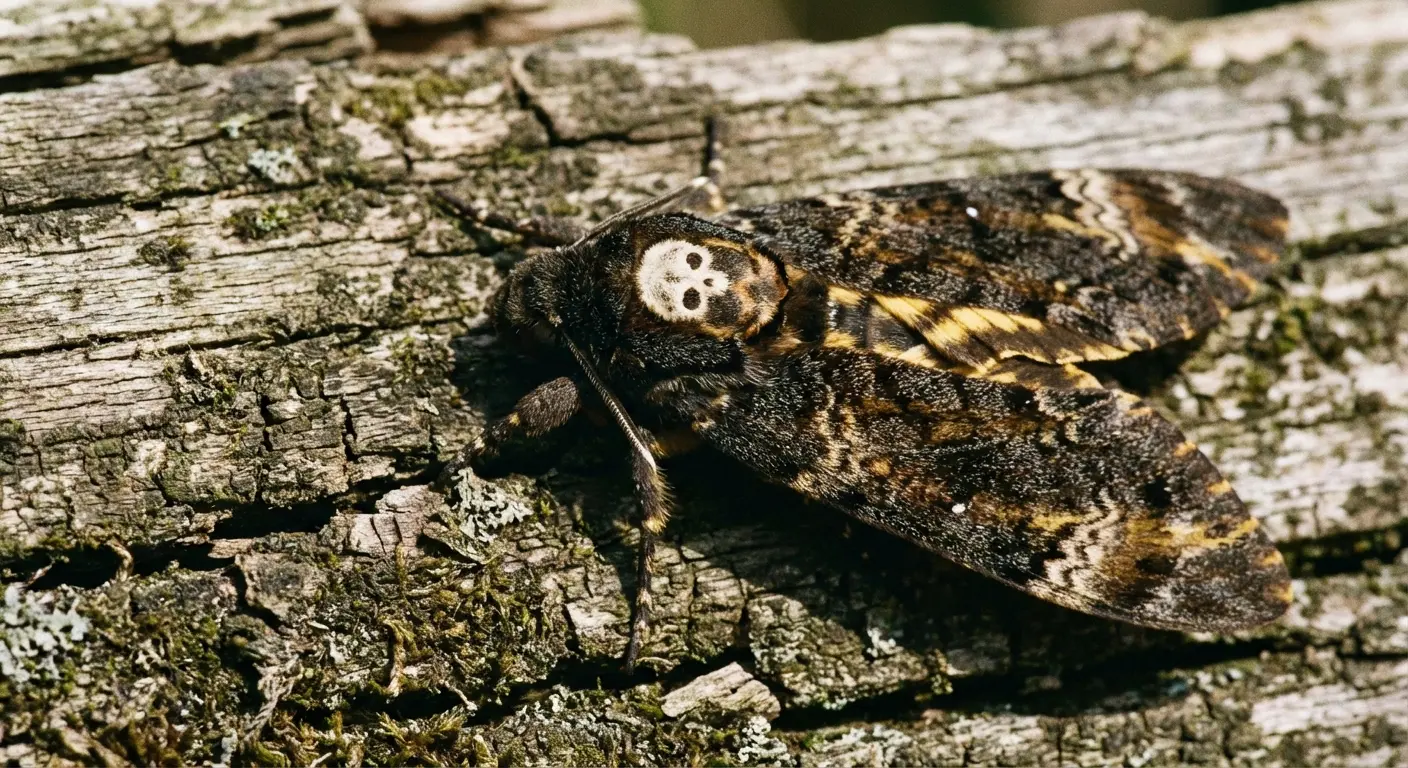
Death’s Head Hawk Moth: The Silence of the Lambs Effect
Thanks to pop culture, this moth (with its skull-like thorax marking) carries associations with death, transformation through darkness, and psychological complexity. It’s become shorthand for acknowledging your shadow self, the parts of you that exist outside polite society.
The Death’s Head Hawk Moth also produces a loud squeak when disturbed, which adds another layer: the ability to make noise, to defend yourself, to be heard even when people expect you to be silent.
Fair warning though: Death’s Head moths are getting trendy because of Silence of the Lambs, which, fine, but also everyone has one now.
Luna Moth: Lunar Femininity and Brief Beauty
Luna moths are ethereal, pale green, with long tails on their hindwings. They live only about a week as adults and cannot eat (they have no mouth). Their entire adult existence is focused on reproduction before death.
This creates symbolism around brief beauty, lunar cycles, feminine energy, and living intensely in the moment because time is limited.
Luna moth tattoos often resonate with people processing mortality, femininity, or the pressure to make the most of limited time.
Professor of Photography Travis Linville got a moth tattoo based on his own photograph titled “Lifespan,” which compares the brief life of a moth to the longevity of a tree. As he explained in an interview with the Elgin Observer, “The concept behind [Vanitas paintings] was about carpe diem… Life is fleeting, you know, [and] it was just this not-so-subtle reminder to kind of enjoy your life [and] use your life because time is passing.”
Atlas Moth: Endurance and Strength
Atlas moths are among the largest moths in the world, with wingspans up to 12 inches. In some cultures, they’re named after the Titan Atlas who held up the sky, representing strength and endurance.
The wing tips of Atlas moths also resemble snake heads, potentially serving as a defense mechanism. This adds layers of symbolism around protection, intimidation, and using appearance strategically.
Rosy Maple Moth: Joy and Unconventional Beauty
These small moths are bright pink and yellow, defying the stereotype of moths as dull and brown. They represent finding joy in unexpected places, embracing bright colors even in darkness, and beauty that doesn’t fit expected patterns.
A Rosy Maple moth tattoo works well for people reclaiming childlike joy, celebrating queer identity (the colors), or refusing to dim themselves to fit in.
The Nocturnal Advantage: Reclaiming Nighttime Imagery
We live in a culture that worships morning people. Early bird gets the worm. Rise and grind. Morning routines that start at 5 AM. The assumption that waking up early is morally superior to staying up late.
Moths offer a different narrative. They remind us that night has its own rhythms, its own beauty, its own validity.
Night Shift Existence as Legitimate Life
Some people work nights by necessity. Others are naturally nocturnal, feeling most alert and creative between midnight and dawn. Society treats this as a problem to fix rather than a valid way of existing.
A moth tattoo can represent claiming your nocturnal nature as legitimate. You’re not broken for preferring darkness. You’re not less productive for working when others sleep. You’re simply oriented differently, and that’s fine.
I know a nurse who works the overnight shift at a hospital emergency room. She has a small moth tattooed behind her ear, subtle enough that it’s hidden by her hair during the day, but she knows it’s there. For her, the moth represents the twelve years she’s spent working 7 PM to 7 AM, saving lives while most people sleep. It’s not about darkness being scary or difficult. It’s about honoring that some of the most critical work happens when the sun is down, and she’s found her calling in those quiet, intense hours.
Darkness as Rest, Not Threat
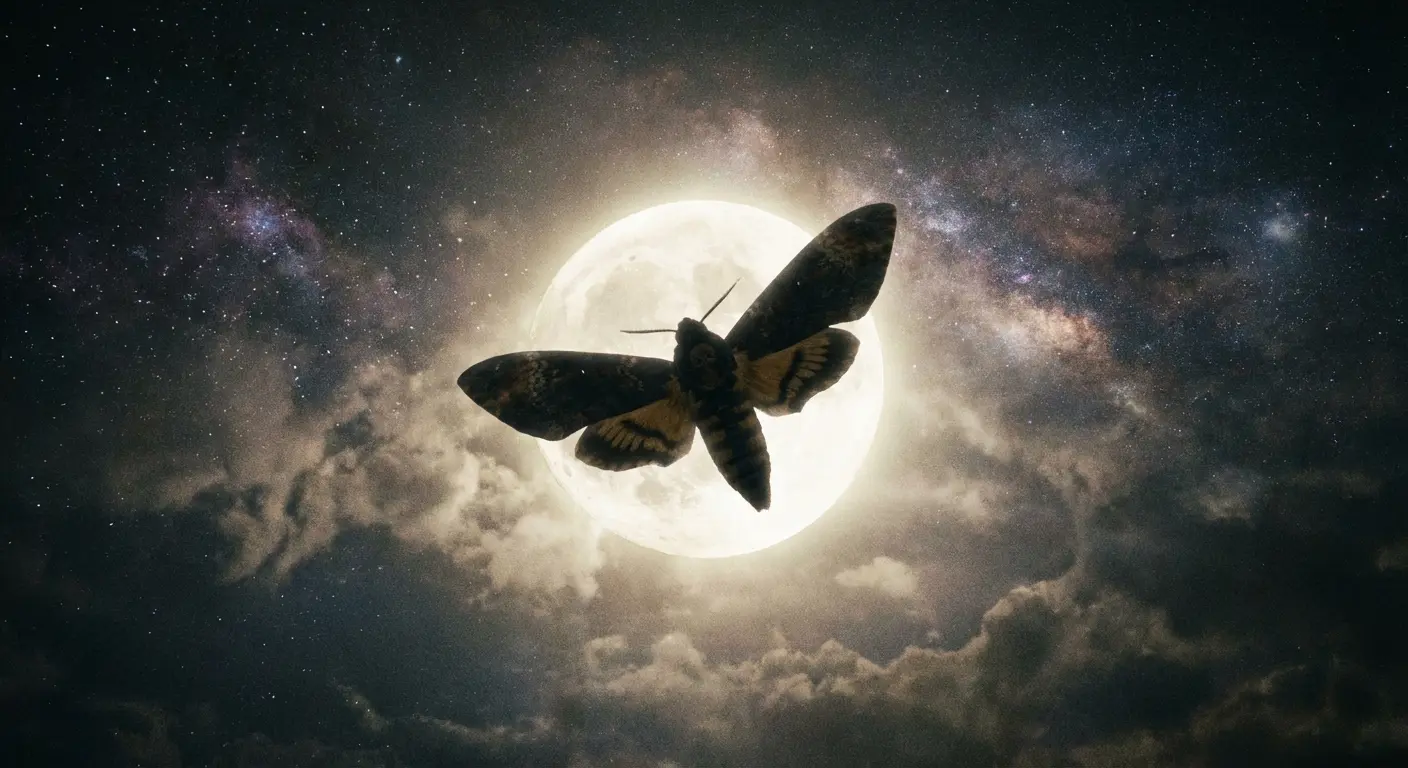
We’ve culturally coded darkness as dangerous, evil, or depressing. But darkness is also rest, privacy, quiet, and the space where many people finally feel they can breathe.
Moths navigate darkness expertly. They find food, mates, and shelter in conditions that would paralyze diurnal creatures. This represents the ability to function, even thrive, in circumstances others find disorienting or frightening.
The Moon as Primary Light Source
Moths navigate by moonlight and stars rather than the sun. This creates symbolism around feminine energy (lunar associations), subtle guidance rather than overwhelming brightness, and finding your way with limited light.
You don’t always need full clarity to move forward. Sometimes moonlight is enough.
Moth Tattoos for People Who Don’t Resonate with Butterfly Energy
Butterfly tattoos are everywhere. They’re beautiful, meaningful, and represent transformation in ways that feel hopeful and socially acceptable.
But what if your transformation wasn’t beautiful? What if it was messy, private, and involved more darkness than light?
Moths are for the people whose stories don’t fit the butterfly narrative. Your growth happened in the dark. Your beauty doesn’t announce itself. Your strength came from surviving things that would’ve killed the delicate, colorful creatures everyone celebrates.
Just as fallen angel tattoos represent a darker alternative to traditional angelic imagery, moth tattoos offer complexity that butterfly designs often lack. The meaning of a moth tattoo speaks to those who’ve walked through fire and emerged changed, but not necessarily in ways others would recognize or celebrate.
Even celebrities recognize the distinction between moth and butterfly energy. Harry Styles has a large butterfly (or possibly moth) tattooed in the center of his chest, according to Page Six, with fans debating whether the insect is actually a moth. A distinction that matters significantly given the different symbolism each creature carries.
When Transformation Happens in Private
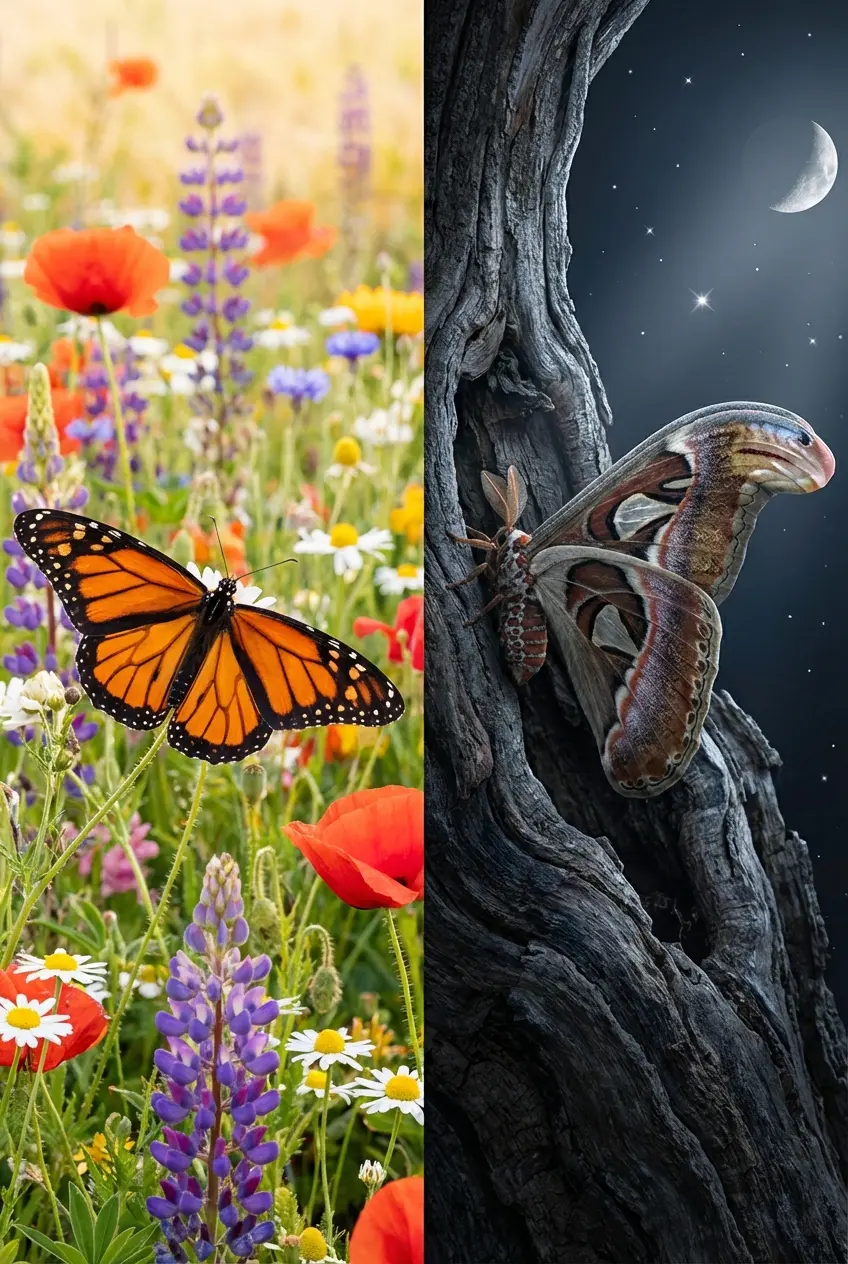
Butterflies emerge from their chrysalis in daylight, often in gardens where people can witness and celebrate the moment. Moths typically emerge at night, unseen, without an audience.
Some transformations aren’t meant to be public. Some growth happens in therapy sessions, in 3 AM realizations, in quiet decisions nobody else notices.
You don’t owe anyone a performance of your healing or a before-and-after photo set.
Muted Colors, Intense Patterns
Butterflies often feature bright, contrasting colors. Moths tend toward browns, greys, whites, and muted tones, but their wing patterns can be incredibly intricate when you look closely.
Beauty that doesn’t scream for attention. Complexity that reveals itself slowly. Worth that doesn’t depend on being immediately impressive to strangers.
The Fuzzy, Weird, Unconventional Choice
Moths are fuzzier, chunkier, and weirder looking than butterflies. Their antennae are often feathery rather than sleek. Their bodies are thick and covered in hair-like scales. They’re not conventionally elegant.
Choosing a moth tattoo can be a deliberate embrace of unconventional aesthetics, of finding beauty in what others overlook or dismiss as ugly.
Color Psychology in Moth Tattoos: Beyond Black and Grey
Most moth tattoos default to black and grey realism, which makes sense given moths’ typically muted coloring. But color choices dramatically affect the symbolic weight of your tattoo, and this is worth considering carefully.
Whether you’re considering a realistic moth tattoo or a simple moth tattoo, color fundamentally changes how people read your ink and how you connect with it over time.
Black and Grey: Classic Death and Mystery
Traditional black and grey moth tattoos emphasize the creature’s association with night, death, and mystery. They often look more realistic and can age well over time as the contrast remains clear.
This color choice works well if you’re emphasizing the darker aspects of moth symbolism: mortality, shadow self, comfort with darkness, or memorial purposes.
White Moths: Death Omens and Purity
In many cultures, white moths specifically signal death or are considered bad omens. White can also represent purity, spirits, or the soul departing the body.
A white moth tattoo carries heavy symbolic weight. It’s not a casual choice. You’re specifically invoking death symbolism, ancestor connections, or spiritual transition.
Brown and Earth Tones: Grounding and Authenticity
Brown moths represent earthiness, grounding, and authenticity. They’re the most common moth coloring in nature, making them symbols of everyday existence rather than dramatic transformation.
Earth-toned moth tattoos work well for people focused on staying grounded, embracing their natural state, or finding beauty in the ordinary.
Colorful Moths: Breaking Expectations
Choosing to tattoo a naturally colorful moth (Luna, Rosy Maple, Sunset) or adding color to a typically muted species makes a statement. You’re refusing to let your darkness be monochrome. You’re insisting that existing outside conventional norms doesn’t mean abandoning joy or beauty.
Color can represent reclaiming happiness after depression, celebrating queer identity, or refusing to be flattened into a single emotional note.
Color Selection Template: Matching Your Moth’s Palette to Your Meaning
If your primary symbolism is:
- Death, mortality, ancestors: White moth or black/grey with white highlights
- Shadow self, psychological depth: Pure black and grey realism
- Grounding, authenticity, everyday resilience: Brown and earth tones
- Nocturnal nature, comfort with darkness: Deep blues and purples with black
- Reclaiming joy, queer identity: Bright, naturalistic colors (pinks, yellows, greens)
- Duality (light and dark): High contrast black and white
- Spiritual connection, ethereal beauty: Soft pastels or pale greens (Luna moth style)
Consider your skin tone:
- Lighter skin: Most colors show well; black and grey provides maximum contrast
- Medium skin: Earth tones and jewel tones often complement beautifully
- Darker skin: Bright colors and white highlights create stunning contrast; avoid muddy browns
Think about aging:
- Black and grey: Ages most predictably with clear contrast over time
- Bright colors: May fade faster but can be touched up
- White ink: Fades quickly and may yellow; best as accent, not primary color
Placement Considerations That Actually Affect Meaning
Where you put your moth tattoo isn’t just about aesthetics or pain tolerance. Placement affects how you interact with the tattoo, who sees it, and what aspects of moth symbolism you’re emphasizing.
According to tattoo artist Syd Smith, “A lot of people tend to get moth tattoos on their stomachs, arms, legs, and throats”, placements that range from deeply private to boldly visible, each choice fundamentally affecting how the wearer interacts with their moth’s symbolism.
Whether you’re planning simple moth tattoos, an american traditional moth tattoo, or a minimalist moth tattoo, where you place it matters as much as the design itself.
Chest and Heart: Personal Significance
Moth tattoos over the heart or chest emphasize the personal, emotional aspects of the symbolism. They’re close to your heart (literally), often covered by clothing, and positioned where you can see them when you look down.
This placement works well for memorial moths, for symbolism around self-destructive love, or for reminders of personal transformation you want to keep private.
Spine and Back: Transformation and Support
The spine represents your core support structure, making it powerful placement for transformation symbolism. Back pieces allow for larger, more detailed moths with room for additional elements.
You can’t see your back tattoo without effort, which creates interesting symbolism around carrying things you can’t always see but know are there.
Forearms and Hands: Visible Commitment
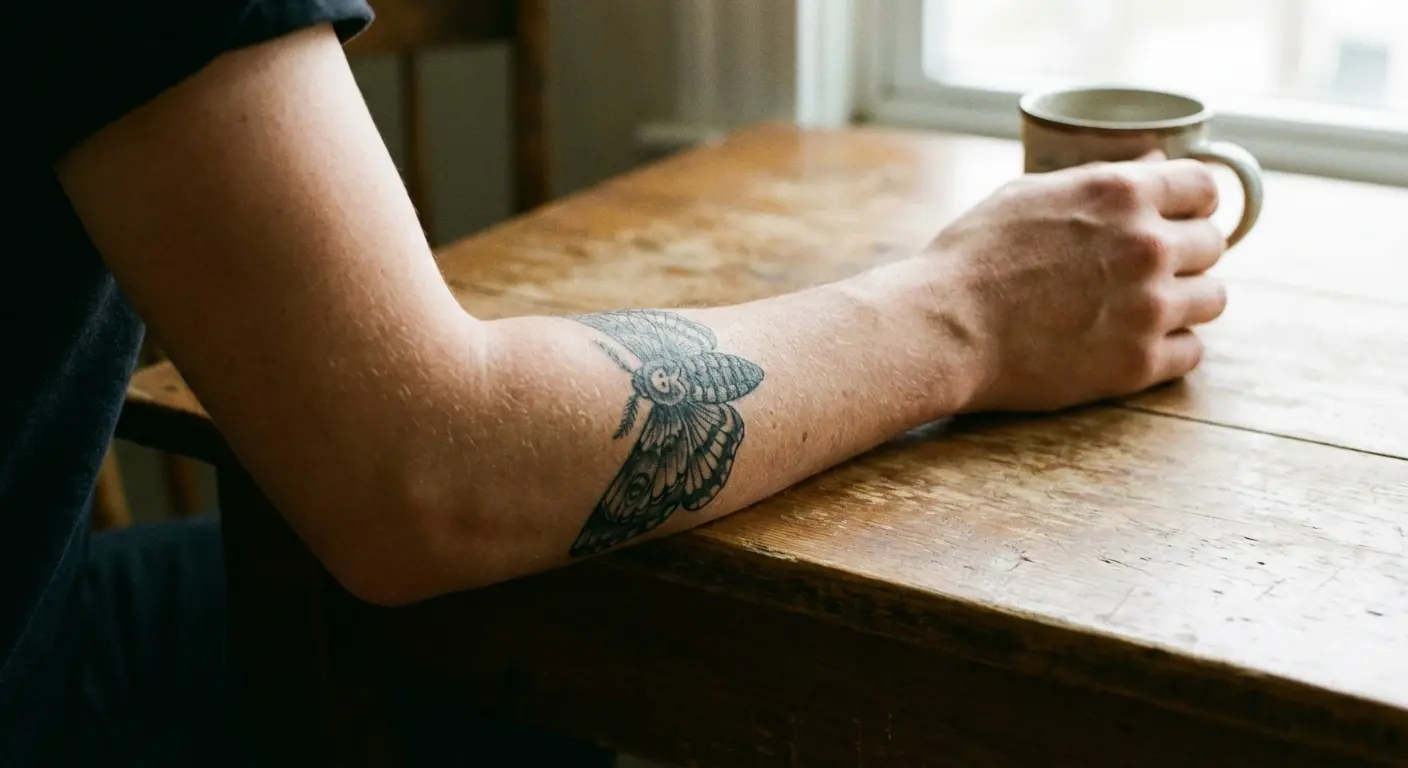
Placing a moth on your forearm, hand, or fingers means you’ll see it constantly and so will others. This is a more public declaration of whatever the moth represents for you.
Hand and finger placement specifically can represent using your attraction to dangerous things as a reminder before you act, or claiming your nocturnal nature visibly in a world that values morning people.
There’s this graphic designer I know who does her best work between 11 PM and 4 AM. She has a detailed moth tattooed on the back of her right hand, her mouse hand. Every time she sits down at her computer during daylight hours and feels sluggish and uninspired, she sees that moth. It’s a reminder that she’s not lazy or unproductive; she’s just wired differently. When clients question why she doesn’t answer emails before noon, she doesn’t need to explain. The moth does it for her. Though honestly I also think she just thought it looked cool. Both can be true.
Behind the Ear or Neck: Subtle Presence
Small moths behind the ear or on the neck are subtle but present. Others might see them, or they might not, depending on your hair and clothing.
This placement works well for people who want the symbolism without making it central to their appearance, or who appreciate the idea of a moth being near their head (thoughts, dreams, nighttime mental activity).
When Your Moth Design Needs More Than Stock Symbolism
You’ve figured out why you want a moth tattoo. You understand which species resonates with you and what aspects of moth symbolism feel true to your experience.
Now you need a design that captures all of that.
This is where most people get stuck . Flash designs are beautiful but generic. Stock moth images don’t capture your specific relationship with the symbolism. You know what you want it to mean, but translating that into visual design is a completely different skill.
The Gap Between Meaning and Design
You might know you want a Death’s Head Hawk Moth to represent your shadow self, but do you want it realistic or illustrative? Should it be flying toward a flame or resting? Should the skull marking be emphasized or subtle? Do you want additional elements or just the moth itself?
These design questions fundamentally affect how your tattoo communicates its meaning. A moth flying toward a candle flame tells a different story than a moth at rest. A skull marking that’s heavily emphasized reads more aggressive than one that’s subtle.
When You Can’t Articulate What You Want
Sometimes you know what you’re looking for but can’t describe it in words. You’ll know it when you see it, but explaining it to a tattoo artist is frustrating for both of you.
This is particularly challenging with moth tattoos because the symbolism is often complex and personal. You’re not just looking for a pretty moth. You’re looking for a design that captures your specific relationship with darkness, attraction, transformation, or death.
Exploring Variations Before Committing
Full disclosure: I’ve worked with Tattoo Generator IQ, and here’s why it’s actually useful for this specific problem.
The tool lets you explore unlimited variations of your moth concept. You can see your chosen species in different styles, with different elements, in different color palettes. You can adjust specific details until the design matches what you’ve been trying to articulate. Instead of explaining complex symbolism to an artist and hoping they understand, you can show them exactly what you’re envisioning.
It gives you professional-quality designs in seconds, which means you can explore dozens of variations in the time it would take to have one consultation. When you find the design that captures your specific relationship with moth symbolism, you’ll have a high-resolution reference to bring to your tattoo artist.
Final Thoughts
Moth tattoos aren’t for people who want simple, uplifting transformation narratives. They’re for people whose growth happened in the dark, whose beauty doesn’t fit conventional standards, who understand the dangerous pull of things that might destroy them.
You’re not getting a moth tattoo because you went through a hard time and came out better. You’re getting one because you recognize yourself in a creature that navigates by moonlight, that finds its way in darkness, that’s drawn to light sources that could kill it.
The transformation angle isn’t wrong, but it’s incomplete. Moths transform, yes, but so does everything that grows. What makes moths special is everything else: their nocturnal nature, their fatal attractions, their muted beauty, their comfort in spaces that would disorient others.
Your moth tattoo should reflect your specific relationship with these themes. Not every moth means the same thing, and not every person drawn to moth symbolism is drawn to the same aspects. The Death’s Head Hawk Moth speaks to different experiences than the Luna Moth. Black and grey carries different weight than full color. Placement over your heart means something different than placement on your hand.
Take time to figure out which species, which design elements, which colors, and which placement genuinely capture what you’re trying to say. Generic moth symbolism gives you a starting point, but your tattoo should be as specific as your story.
I’m getting another moth tattoo next month. Still haven’t decided on species. That probably tells you something about commitment issues but we don’t need to unpack that here.
Figure out what your moth means to you specifically. That’s the only version that matters.
