16 Sasuke Curse Mark Tattoos That Break the Rules of Anime Ink
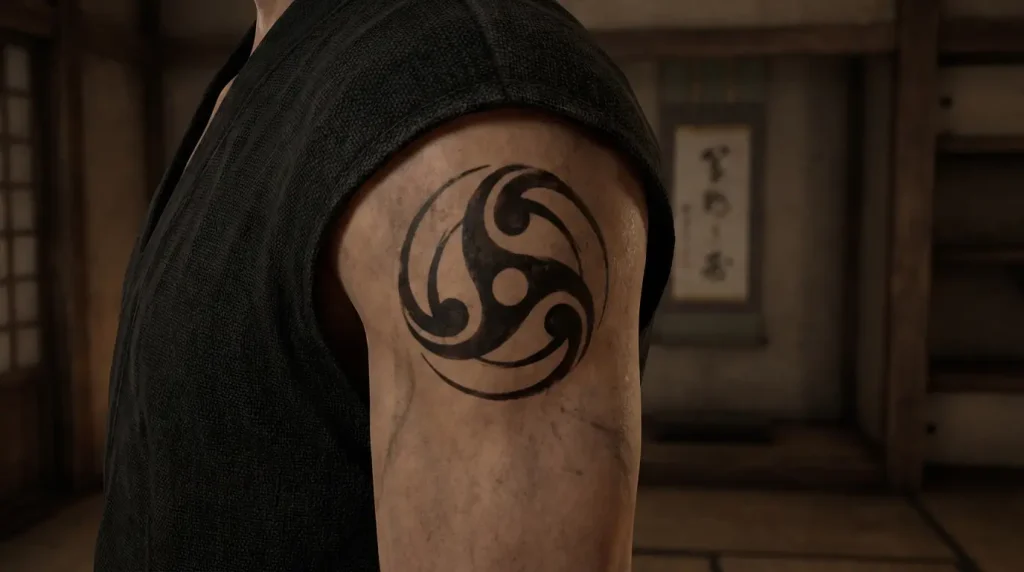
Table of Contents
- Placement-First Designs That Work With Your Body
- Neck Extension Curse Mark
- Full Shoulder Blade Spread
- Collarbone Creep Design
- Ribcage Flame Spiral
- Minimalist Interpretations You Can Actually Pull Off
- Single Tomoe Accent Mark
- Linework-Only Curse Seal
- Geometric Flame Reduction
- Micro Curse Mark Behind the Ear
- Color Evolution Concepts That Tell Your Story
- Purple-to-Black Gradient Transformation
- White Ink Dormant State
- UV Reactive Activation Design
- Watercolor Chakra Bleed
- Fusion Styles That Make It Your Own
- Biomechanical Curse Integration
- Traditional Japanese Wave Merge
- Blackwork Mandala Hybrid
- Dotwork Shadow Interpretation
Stop Copying Screenshots
Here’s what nobody tells you about Sasuke curse mark tattoos: copying the anime exactly will look terrible on your actual body. Your shoulder moves. The anime’s doesn’t. Your skin ages. Sasuke’s won’t.
I’ve consulted on probably 200 curse mark designs at this point, and the ones people still love five years later? Never the exact anime copies. Always the ones where they made it their own.
So let’s talk about what actually works. Your body isn’t a flat canvas. The curse mark’s organic shapes give you way more flexibility than you think, but only if you stop trying to replicate screenshot frames and start thinking about how it’ll look when you move, age, and live your actual life.
These sixteen approaches prioritize wearability over accuracy. Some of them barely look like the anime version at first glance. That’s the point.
Placement-First Designs That Work With Your Body
Starting with your body instead of the reference image changes everything. These four placements focus on how the design will actually look when you’re not standing perfectly still in ideal lighting.
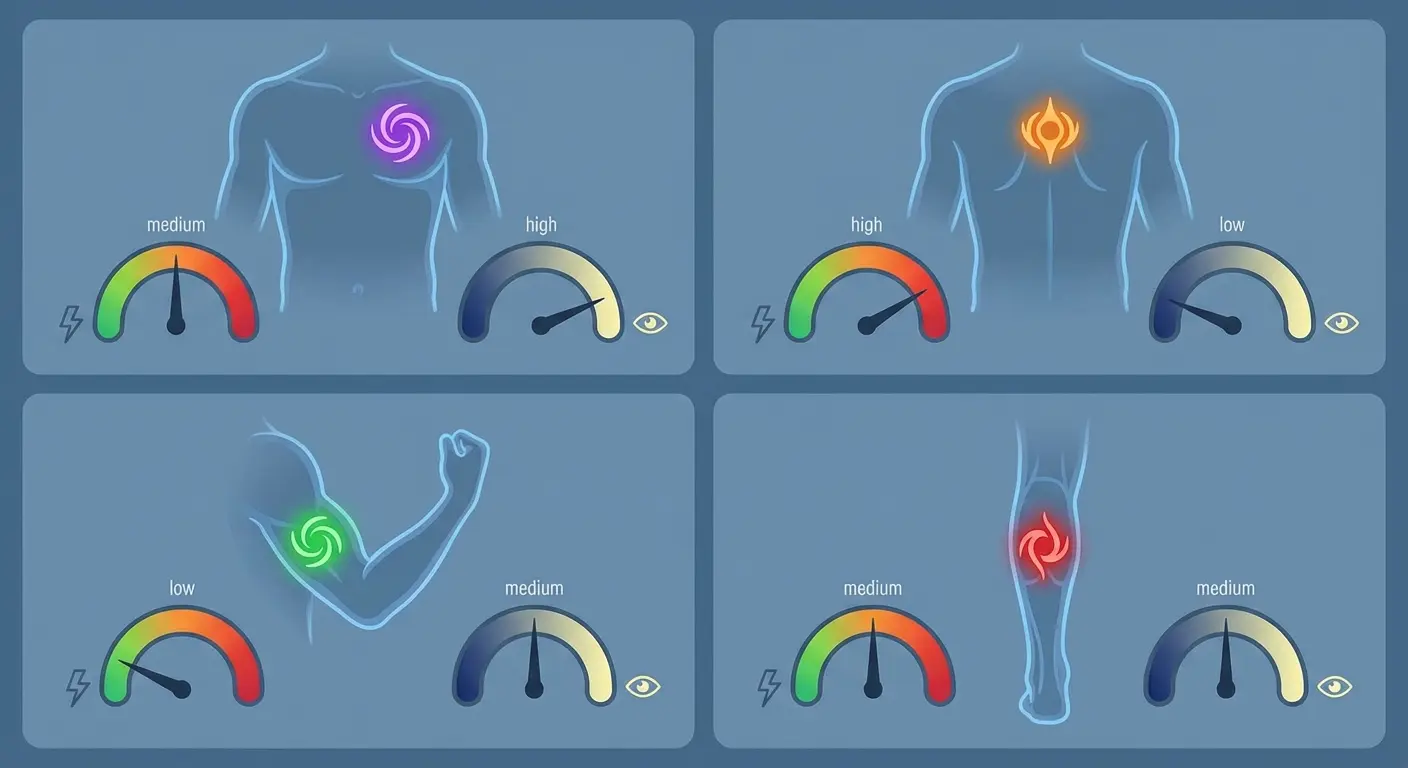
| Placement Type | Visibility Level | Pain Scale (1-10) | Professional Coverage | Healing Time | Best For |
|---|---|---|---|---|---|
| Neck Extension | Medium (easily covered) | 6-7 | Excellent (hair/collar) | 2-3 weeks | Flexible workplaces |
| Full Shoulder Blade | Low (clothing dependent) | 5-6 | Good (most shirts) | 3-4 weeks | Bold statements |
| Collarbone Creep | High (often visible) | 7-8 | Moderate (high necks) | 2-3 weeks | Decorative aesthetic |
| Ribcage Flame Spiral | Low (easily hidden) | 8-9 | Excellent (all clothing) | 3-4 weeks | Private meaning |
1. Neck Extension Curse Mark
Sasuke’s curse mark starts at the neck. Great for him, he’s a drawing. You probably have a job.
This version starts just below your hairline and extends down between your shoulder blades. You can cover it completely when needed. The flame tendrils follow your spine’s natural curve, staying visible in tank tops without creeping into “always visible” territory.
Your artist can adjust the density based on how often you’ll need coverage. Perfect if you’re in industries with flexible dress codes but occasional formal requirements.
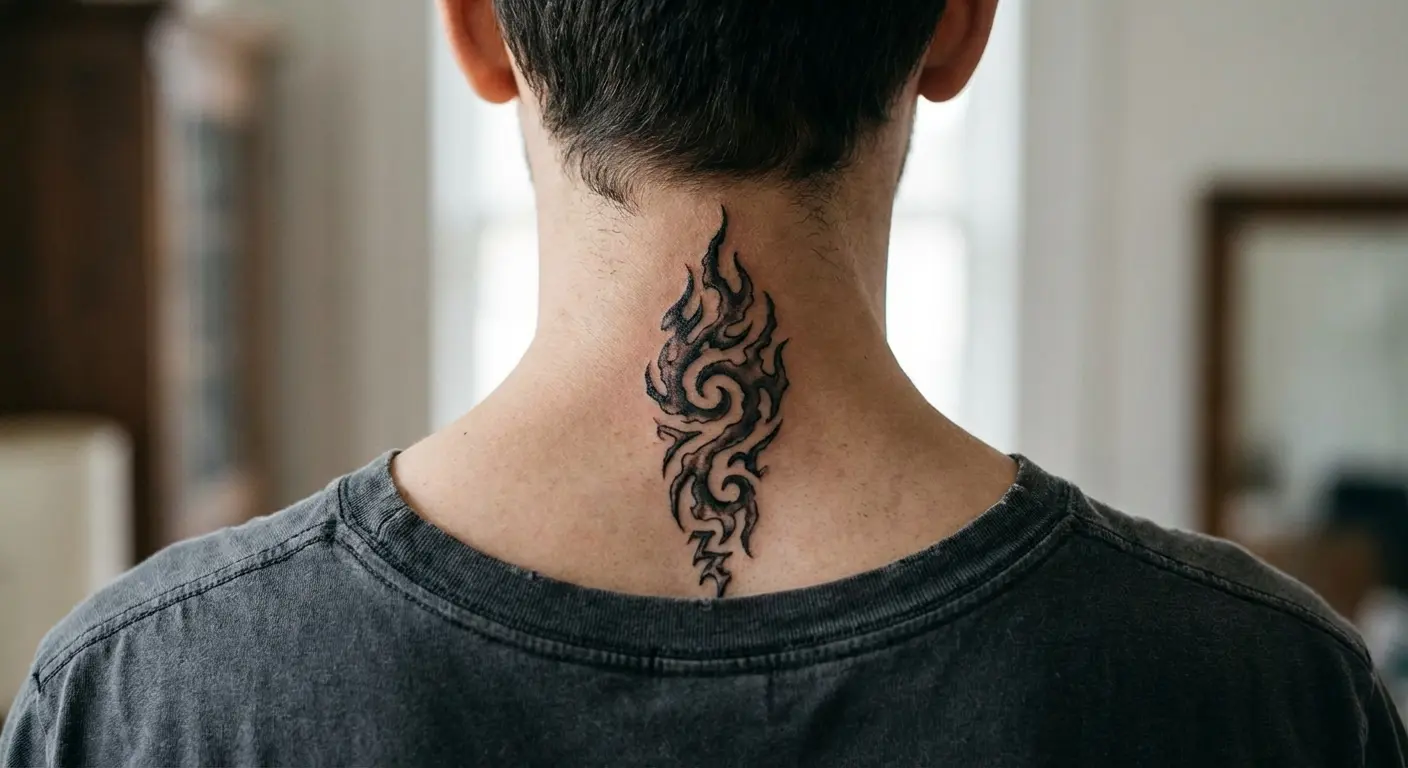
The placement on Sasuke’s neck wasn’t random. As ComingSoon explains in their breakdown of the Cursed Seal of Heaven, Orochimaru bit Sasuke on the neck during episode 30 in the Forest of Death, and it spread across his body when activated. That canonical placement has influenced thousands of designs, but adapting it for real-world wearability means considering how often that area will be visible and how you can maintain control over when to display it.
2. Full Shoulder Blade Spread
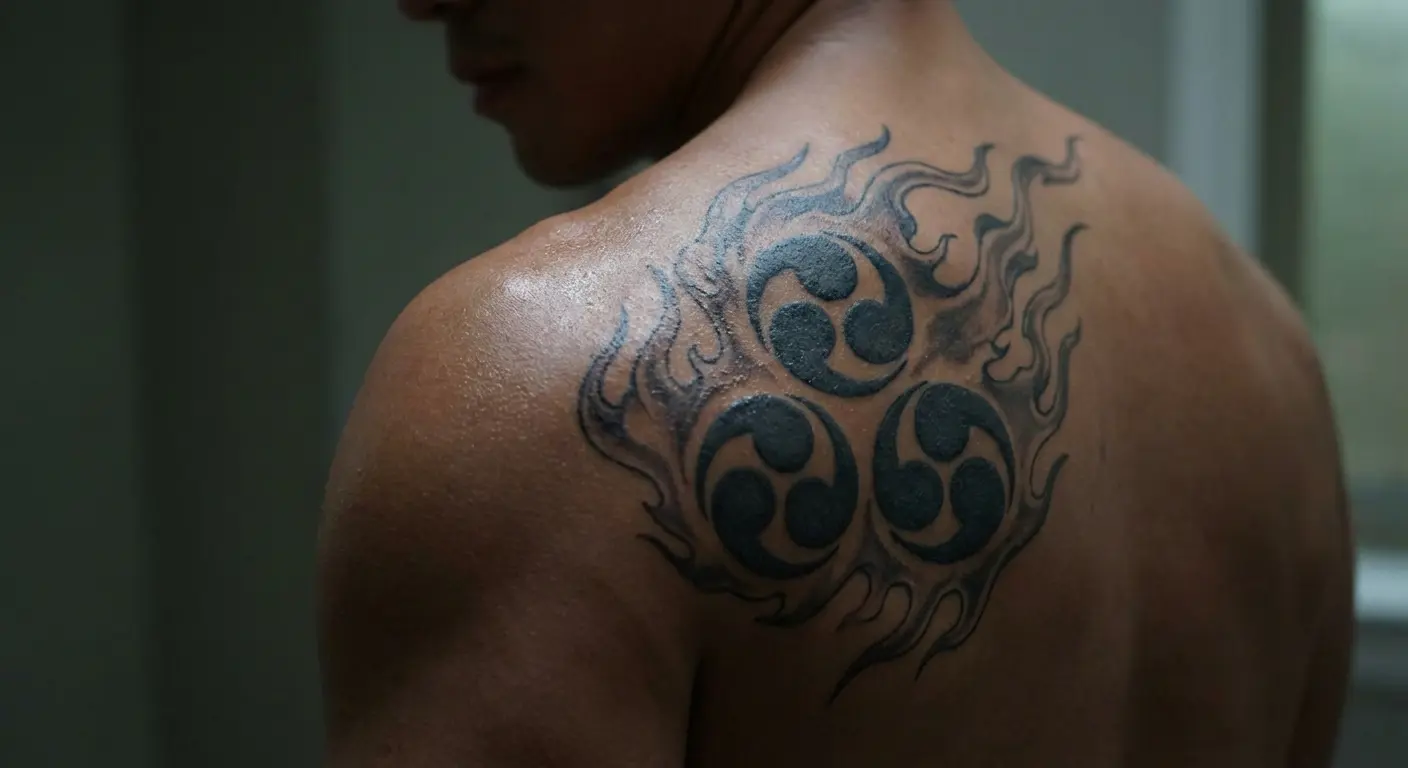
The entire shoulder blade. Three tomoe positioned where your shoulder joint creates natural movement. When you raise your arm, the flames appear to activate. When relaxed, it sits dormant.
This takes advantage of the muscle definition in your upper back. The organic shapes complement rather than obscure your body’s natural lines.
You’ll need multiple sessions for something this size. We’re talking 6-8 hours minimum. Healing takes patience since this area experiences constant movement.
I’ve watched three clients tap out during their second session. Just saying.
3. Collarbone Creep Design
Starting at your shoulder’s edge, thin tendrils creep across your collarbone. It’s visible in most clothing but reads as decorative rather than immediately recognizable as anime reference.
The three tomoe sit small and tight near your shoulder point, with the flame pattern spreading horizontally instead of vertically.
Perfect if you’re tired of explaining Naruto lore to every Uber driver who sees your shoulder. This gives you the symbolism without the immediate “that’s from Naruto” conversation.
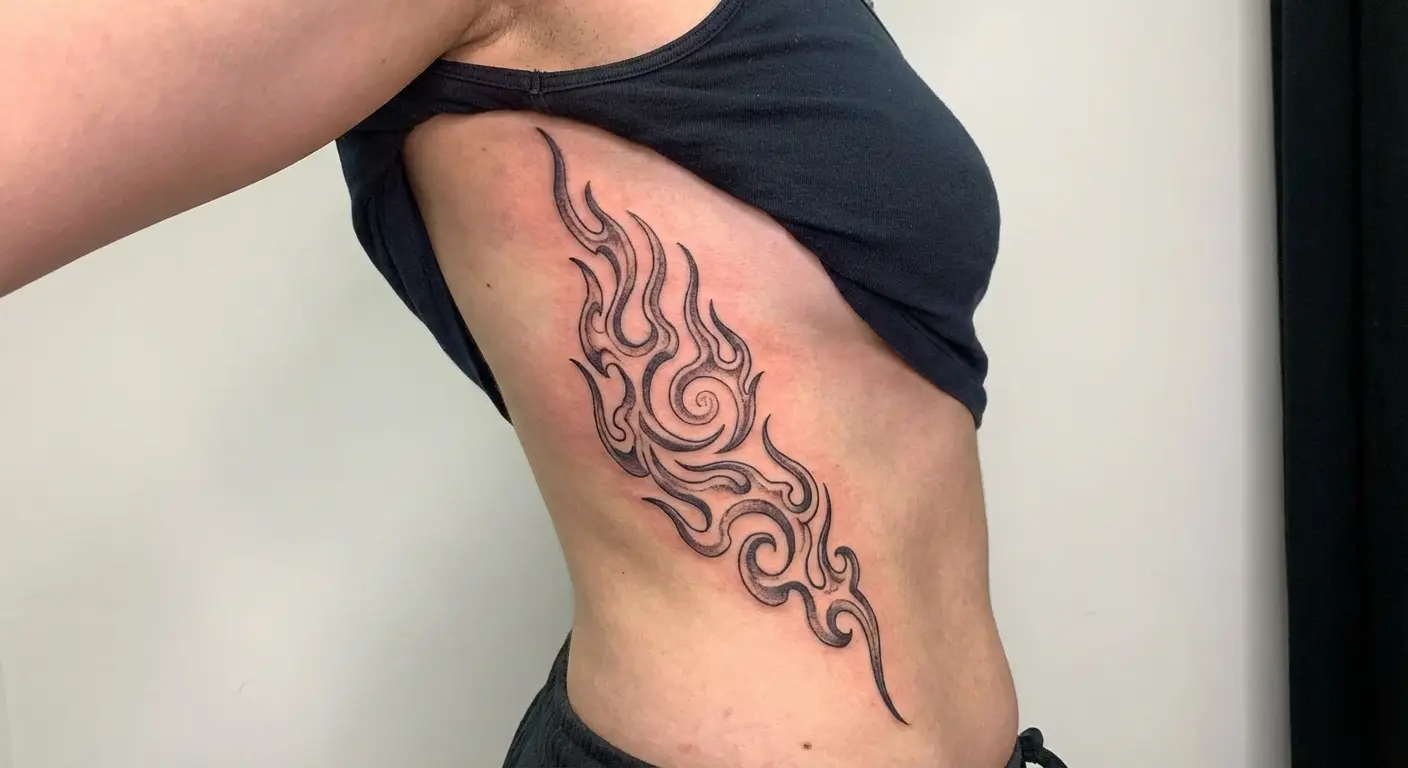
4. Ribcage Flame Spiral
Real talk: this hurts. A lot.
Your ribcage has basically no padding, and you’ll be sitting for hours while a needle works right over bone. I’ve watched people cry. Tough people.
But the payoff? Position the central seal just below your armpit, with flames spiraling down your ribs toward your hip. The design appears to pulse when you breathe deeply. It literally moves with you, creating an almost animated effect without any special ink.
You’ll need an artist experienced with ribcage work. This isn’t the place to go with someone learning. Maximum privacy, maximum pain, maximum impact.
Minimalist Interpretations You Can Actually Pull Off
Not everyone wants a massive black piece dominating their shoulder. These scaled-down versions capture the essence while giving you flexibility in placement, professional settings, and future tattoo plans.
Minimalism doesn’t mean it matters less. It means you’re being strategic about how much real estate you’re dedicating to a single design.
5. Single Tomoe Accent Mark
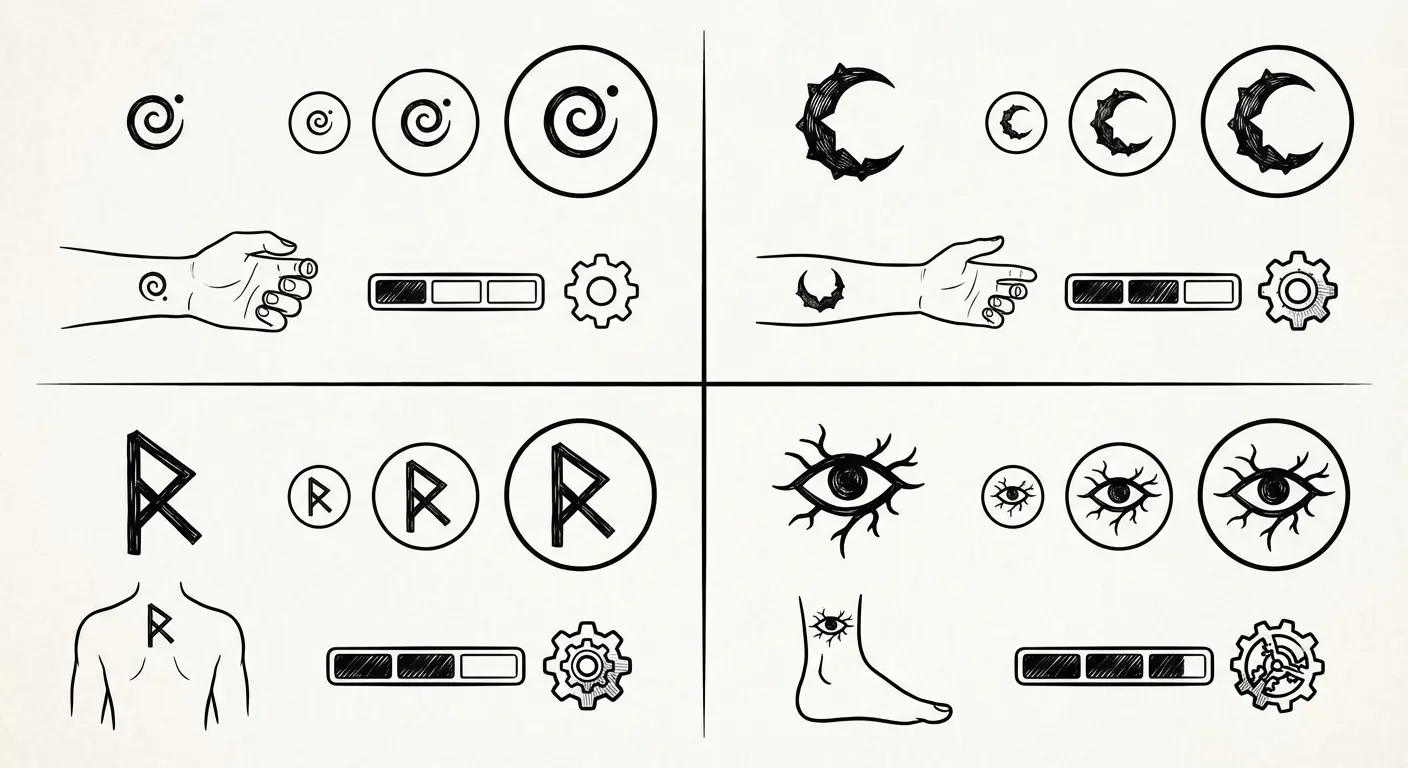
One tomoe. That’s it.
Wrist, ankle, behind your ear, finger. Anywhere you’d put a small accent tattoo. The best part? You can always add the other two tomoe later, or leave it as a standalone piece that only you and fellow fans will recognize.
This works brilliantly if you’re testing your comfort level with visible tattoos or building a collection where each piece needs to coexist with others. The single tomoe reads as decorative swirl to most people. Plausible deniability when you don’t feel like explaining your ink.
6. Linework-Only Curse Seal
Remove all the shading and color. Keep only the outlines of the three tomoe and the main flame tendrils.
This fine-line tattoo approach creates delicate, contemporary designs that feel sketch-like rather than directly copied from anime. You’re getting the structure without the visual weight.
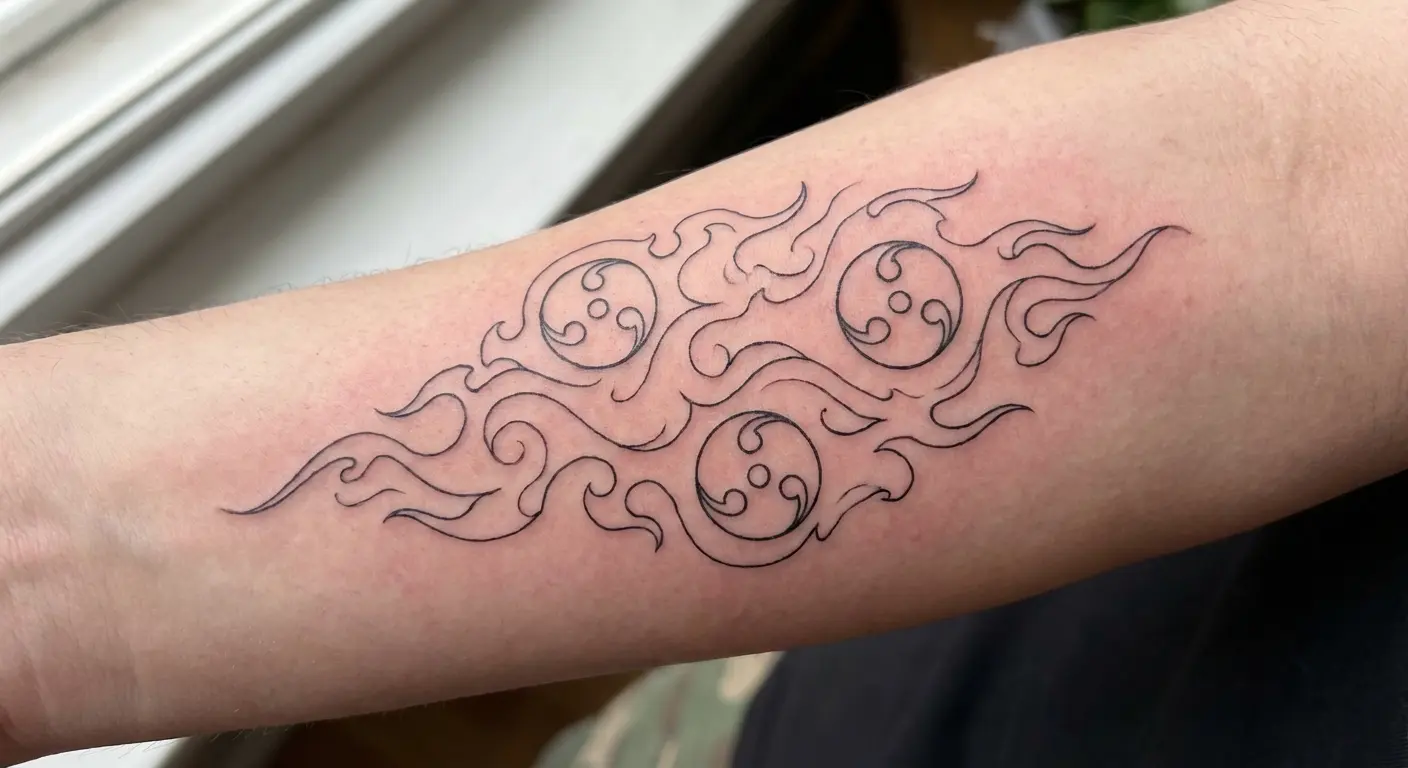
Linework-only designs age differently than heavily saturated pieces. They’re easier to incorporate into sleeve plans or larger compositions later. This style particularly suits people who gravitate toward fine-line aesthetics or who want something that doesn’t scream “anime tattoo” at first glance.
7. Geometric Flame Reduction
Take the organic flames and translate them into clean geometric shapes. Sharp angles replace flowing curves. The three tomoe become perfect circles arranged in precise formation.
This bridges the gap between anime reference and modern tattoo trends. It photographs well, appeals to people outside anime fandom, and gives your artist room to showcase technical precision.
You’re honoring the source while creating something that stands alone as a strong design regardless of whether someone knows Naruto.
8. Micro Curse Mark Behind the Ear
Tiny. The entire design, compressed to roughly the size of a quarter, tucked behind your ear.
You’ll lose some detail at this scale, so work with your artist to determine which elements are essential and which can be simplified.
Heads up: behind-the-ear tattoos hurt. There’s not much cushioning between needle and bone. But they heal relatively quickly. Near-complete concealment with the option to reveal it when you want.
Also, hairdressers will definitely comment on it. Every single time.
Color Evolution Concepts That Tell Your Story
The curse mark changes throughout the series. Your tattoo can reflect transformation too. These designs use color strategically to represent different states, moods, or chapters of your life.
Color requires more maintenance and touch-ups over time. The storytelling potential makes it worthwhile for many collectors, but you need to know what you’re signing up for.
9. Purple-to-Black Gradient Transformation
Start with deep purple at the origin point and gradient into solid black as the flames spread outward. This represents the mark’s activation in the anime while creating visual depth that flat black can’t achieve.
The purple adds an unexpected element that makes it less literal and more artistic. You’re capturing the energy and danger without needing to replicate exact anime colors.
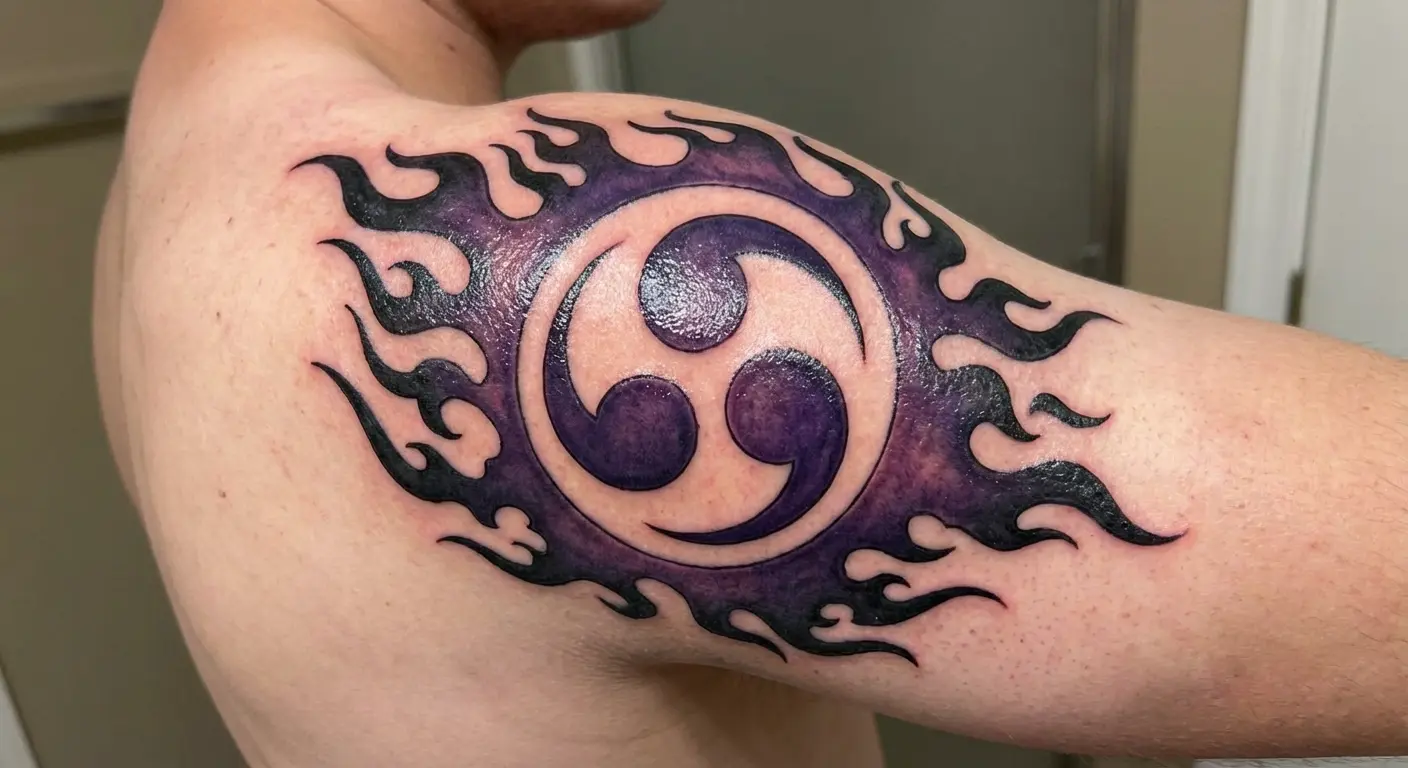
This gradient approach also gives your artist an opportunity to showcase blending skills, and the color variation helps the design read clearly from a distance.
10. White Ink Dormant State
White ink tattoos are controversial. They fade faster, they’re less visible on lighter skin tones, they require specific aftercare. But they create an interesting effect for curse mark designs.
The entire piece done in white ink, representing the mark in its dormant, inactive state. It’s barely visible most of the time, appearing more clearly when you’re tan or in certain lighting.
This suits people who want it for personal reasons but don’t necessarily want it to be a conversation starter. The subtlety becomes the point.
Honestly? This is my least favorite option on the list. But some people love it, and I get why.
11. UV Reactive Activation Design
UV reactive ink glows under blacklight. Yes, it sounds like a terrible idea from 2008. But hear me out.
The base design is done in traditional black ink. The “activated” flame extensions are added in UV ink, invisible in normal light. Under blacklight (clubs, certain events, UV flashlight), the mark appears to activate and spread.
You’re building two versions into one. This requires finding an artist experienced with UV ink, and you’ll need to understand that UV ink longevity is still being studied. The effect is undeniably cool, though. It adds an interactive element.
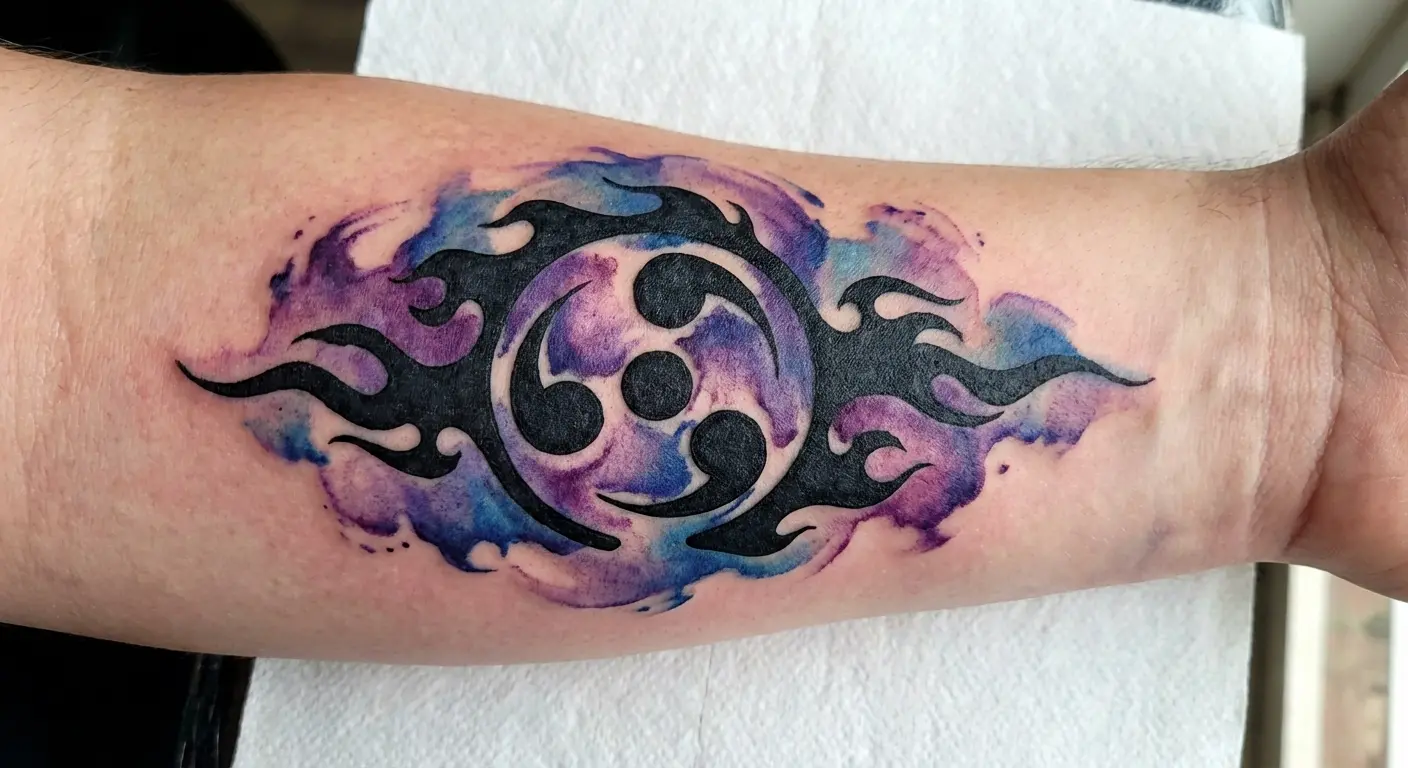
12. Watercolor Chakra Bleed
Look, watercolor tattoos are controversial, and your artist might roll their eyes. But the effect works for the curse mark’s supernatural quality.
The three tomoe and main structure are done in solid black, while purple and blue watercolor washes bleed out from the design. This creates movement and energy without adding more black ink.
The watercolor elements will fade faster than the black structure. You’re committing to maintenance. But the artistic effect captures the mystical energy better than strictly traditional approaches.
Fusion Styles That Make It Your Own
You can love Sasuke’s curse mark without wanting a direct copy. These fusion designs blend the concept with other tattoo styles, creating something that honors the source material while establishing your unique aesthetic.
This approach works especially well if you’re building a cohesive tattoo collection where everything needs to work together visually.
13. Biomechanical Curse Integration
Biomechanical tattoos reveal “machinery” beneath the skin. Fuse this with the curse mark by designing the three tomoe as gear-like mechanisms, with the flame tendrils becoming pistons, cables, or circuitry.
This transforms the curse from mystical to technological. It suits people who want the symbolism of corruption and power without the fantasy aesthetic.
The technical precision required for good biomechanical work means you’ll need an artist who specializes in this style. The result looks nothing like a typical anime tattoo while still carrying all the meaning.
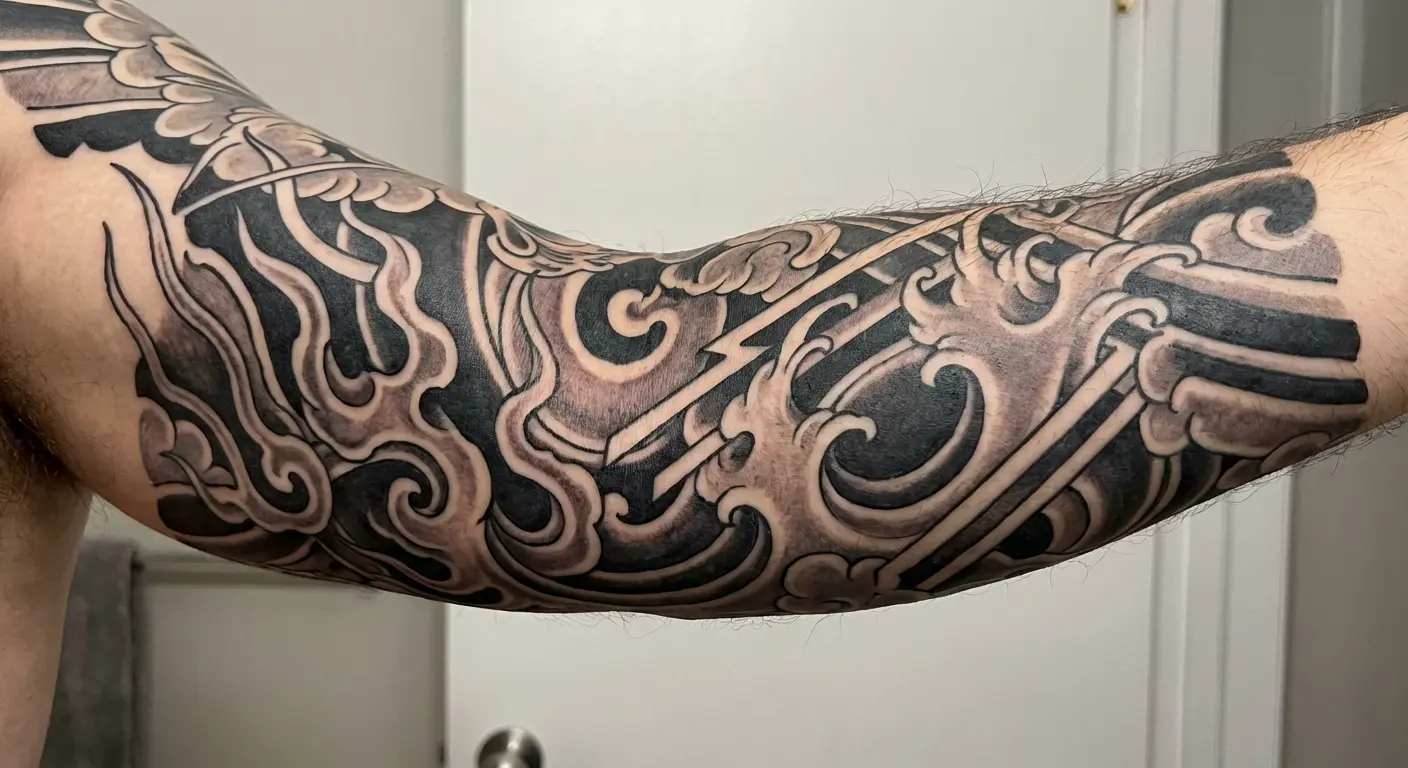
14. Traditional Japanese Wave Merge
Japanese traditional tattooing (irezumi) has its own rich history separate from anime. Merge the curse mark’s flames with traditional wave patterns, as if the curse is made of water rather than fire.
Add traditional clouds, wind bars, or other irezumi elements to create context. This grounds your anime reference in a broader artistic tradition and creates something that tattoo artists will respect for its technical execution.
You’re showing knowledge of both the source material and the culture
You’re showing knowledge of both the source material and the culture that influenced the anime’s visual style.
15. Blackwork Mandala Hybrid
Blackwork tattoos use solid black ink and negative space to create bold, graphic designs. Mandala patterns are circular and symmetrical.
Combine these by creating a mandala where the curse mark’s three tomoe form the center point, with the flame pattern integrated into the mandala’s geometric repetition. This creates something meditative and balanced from a symbol of corruption and chaos.
The contrast between the organic shapes and the mandala’s perfect symmetry creates visual tension that makes it more interesting than either element alone.
16. Dotwork Shadow Interpretation
Dotwork tattooing builds images entirely from individual dots, creating texture and depth through density variation. Render the curse mark in dotwork, with the three tomoe solid black and the flames created through increasingly sparse dot patterns that fade into your skin.
This technique creates a softer, more ethereal version that looks hand-crafted rather than digitally precise.
Dotwork requires significant time. Every dot is placed individually. You’re looking at longer sessions and higher cost. The artistic quality and unique interpretation justify the investment for collectors who want something truly custom.
Side note: if your artist suggests making the tomoe symmetrical, they don’t get the design. The asymmetry is the point.
Planning Your Design
Figuring out exactly how you want your curse mark to look involves iteration and experimentation. You might know you want the symbolism but feel stuck on the specific execution.
I used to sketch variations for clients by hand. Took forever, and my drawing skills are mediocre at best. Then I found tools that let you test different placements, styles, and color schemes before you commit to permanent ink.
Tattoo Generator IQ lets you generate variations that blend the curse mark with other elements, adjust the size and complexity, and create a reference that shows your artist exactly what you’re envisioning. It’s not about replacing your artist’s expertise but about walking into the consultation with a clear starting point.
Having a visual reference that’s close to what you want makes the consultation go so much smoother. Trust me on this
What Not to Do
Before we wrap up, let’s talk about the curse mark placements and approaches I’ve seen go wrong.
Don’t get a curse mark on your hands or face if you’re under 25. I don’t care how committed you feel right now. Your life will change in ways you can’t predict. Hand and face tattoos close doors that you might want to walk through later.
Don’t try to fit the entire activated curse mark on a forearm. The design needs to spread and flow. Forearms are too narrow. Most of them end up looking cramped and losing the organic quality that makes the curse mark work. Shoulder or back works way better.
Don’t go to an artist who’s never done anime work. A traditional realism artist will make it look wrong even if they’re technically skilled. They won’t understand the style’s requirements. Look for artists who already have anime work in their portfolio.
Don’t get it in color unless you’re committed to touch-ups. Color fades. Especially purples and blues. You’ll need maintenance every few years to keep it looking fresh. If that sounds like a hassle, stick with black.
I’ve seen exactly one person pull off a face curse mark tattoo. One. Out of thousands. Don’t be that person.
The Real Questions Nobody Asks
“Will I regret this?”
Maybe. That’s a risk with any fandom tattoo. You might stop caring about Naruto. That’s why designing it well matters so much. If you create something that stands alone as a strong piece even if someone doesn’t know the reference, you’re protecting yourself against future regret.
The curse mark tattoos people regret? Always the ones that only make sense if you know the exact anime frame they copied. The ones people still love? They made it their own.
“What about cultural appropriation?”
The curse mark itself isn’t a traditional Japanese symbol, it’s Kishimoto’s creation for the manga. But if you’re incorporating traditional Japanese elements (like in design #14), you should understand what you’re using and why. Don’t just slap kanji or traditional imagery onto your design because it looks cool. That’s where it crosses into appropriation.
“Will this affect my job prospects?”
Depends entirely on your industry and placement. Tech, creative fields, service industry? Usually fine, especially with easily covered placements. Finance, law, corporate? It might be a problem. At anime conventions, curse mark tattoos are instant conversation starters. In corporate job interviews, they’re instant conversation enders. Plan accordingly.
Artist Selection Reality
Finding an artist who takes anime tattoos seriously can be tough depending on where you live. Some traditional tattoo artists won’t touch anime designs. They think it’s not “real” tattooing. That’s gatekeeping nonsense, but you should know it exists.
Questions to ask during consultation:
- Have you done anime-style work before? (Ask to see portfolio examples)
- How do you feel about working from reference images vs. creating custom variations?
- What’s your approach to making designs work with body anatomy?
- How many sessions do you estimate for this size and complexity?
Red flags:
- Artist dismisses your design idea as “just anime”
- Portfolio shows no anime work and artist seems uninterested in learning the style
- Pushes you toward realism when you want stylized
- Can’t explain how they’ll adapt the flat design to your body’s curves
Don’t settle for someone who treats it like a joke. Your tattoo deserves an artist who respects what you want.
Cost and Timeline Reality
Let’s talk money because nobody else will.
Single tomoe (design #5): $80-150, one session, 30-60 minutes
Minimalist linework (designs #6-8): $200-400, one session, 1-2 hours
Medium placement (neck extension, collarbone): $400-800, 1-2 sessions
Full shoulder blade: $800-2000, multiple sessions, 6-8 hours total
Large fusion pieces: $1500-3000+, multiple sessions, 10+ hours
These are rough estimates. Your city, your artist’s experience level, and the complexity of your specific design all affect pricing.
From consultation to fully healed, you’re looking at 2-4 months minimum for a full shoulder piece. Factor that into your planning if you want it done for a specific event. And budget for touch-ups every 3-5 years, especially if you go with color.
Aftercare Nobody Mentions
Shoulder blade tattoos are annoying to care for. You can’t reach them easily. Have someone help you apply ointment, or use a long-handled lotion applicator. Not sexy, but necessary.
Behind-the-ear tattoos blur faster than other placements because the skin is thin and oily. Plan for touch-ups every 3-5 years.
Ribcage pieces hurt during healing almost as much as they hurt getting done. Every breath, every movement pulls at the fresh ink. Sleep on your other side. Wear loose clothing. Take the healing time seriously.
Normal healing: Redness for 2-3 days, peeling around day 4-7, fully settled in 3-4 weeks
Not normal: Excessive swelling, pus, red streaks spreading from the tattoo, fever
If you see signs of infection, call your artist and a doctor. Don’t mess around with infected tattoos.
My Actual Recommendations
If this is your first tattoo? Start with #5 or #8. Small, manageable, easy to cover if needed. See how you feel about having ink before committing to a massive piece.
Already have tattoos and building a collection? #13 or #15 give you the most flexibility to integrate with other work. The fusion styles play well with others.
Want maximum impact and don’t care about coverage? #2 or #4. Go big. Just know what you’re signing up for pain-wise with the ribcage.
My personal favorite? The linework-only version (#6). Clean, contemporary, ages well, and you can always add to it later if you want more. But that’s just me.
The biomechanical fusion (#13) is probably the most underrated option on this list. Nobody does it, which means yours will be unique. And it translates the curse mark concept into something that works outside anime aesthetics.
Final Thoughts
I don’t know what the curse mark means to you. Maybe it’s about power. Maybe it’s about the cost of getting stronger. Maybe you just think it looks cool and that’s it. All of those are valid reasons to get the tattoo.
What matters is creating something that works for your body and your life. Sasuke’s version looks cool in the anime because he’s a drawing. You’re not. Your tattoo needs to work when you’re 45, when you’re at a wedding, when you’re at the gym.
Get the curse mark that makes sense for you. Work with an artist whose portfolio shows they can execute your vision. Don’t let anyone talk you into something you don’t want, and don’t let anyone talk you out of something you do want.
And yeah, you might change your mind about Naruto someday. But if you design it well, you won’t change your mind about the tattoo. That’s the goal.
Got a curse mark tattoo? Hate everything I just said? Show me what you did instead. I want to see the weird, the creative, and the “I definitely should have thought this through more” versions.
