Valknut Tattoo: Why the Symbol’s Meaning Matters Less Than You Think
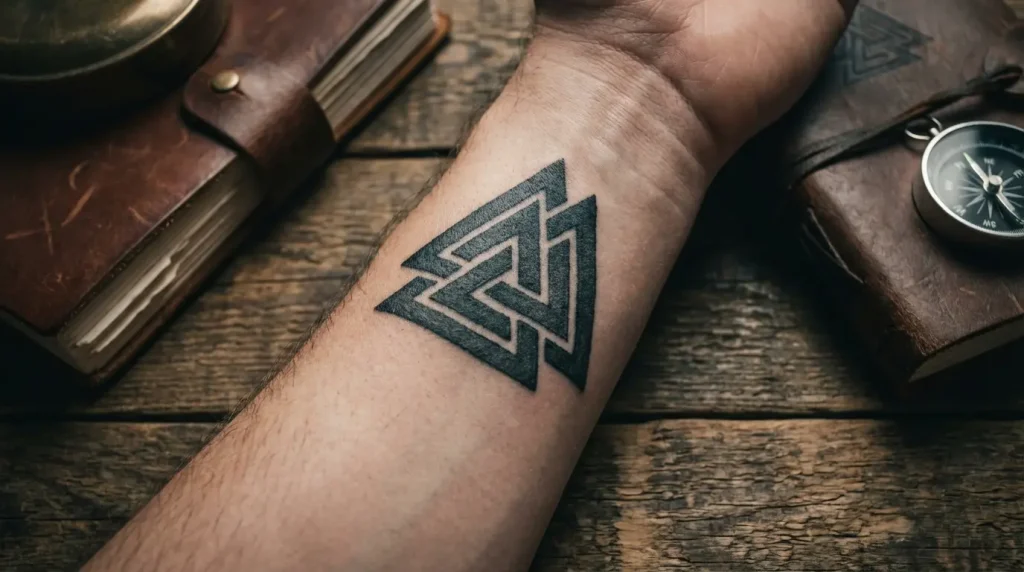
Table of Contents
-
Why We’re Obsessed With Pinning Down Valknut Symbolism
-
The Historical Gap You’re Not Being Told About
-
Three Triangles, Infinite Interpretations
-
Modern Paganism’s Claim vs. Archaeological Reality
TL;DR
Nobody knows what valknuts really meant to Vikings. Your interpretation matters more than historical accuracy. Neo-Nazis have complicated things. Choose your artist carefully. Don’t let anyone tell you there’s one “authentic” meaning, because even scholars are just guessing.
Why We’re Obsessed With Pinning Down Valknut Symbolism (And Why That Might Be the Wrong Question)
So you’ve been googling “valknut meaning” for three weeks now. Maybe longer. Every website says something different: death, Odin, warrior stuff, the afterlife, some knot-of-the-slain thing. And you’re sitting there thinking: which version is the right one? Which interpretation gives me permission to permanently ink this on my body?
The valknut has become increasingly visible in contemporary culture, with the symbol appearing in everything from fashion to body art. According to research on Norse symbols, the valknut symbol is found in many Viking artifacts, especially in burial sites, yet its precise meaning remains elusive. This disconnect between the symbol’s archaeological presence and our understanding of its significance reflects the challenge every potential tattoo wearer faces: how do you commit to permanent body art when even scholars can’t agree on what it meant?
Nobody wants to admit this, but: we don’t actually know.
The historical record is pathetically thin. We’ve got some artifacts with the symbol carved on them. That’s it. No ancient Norse instruction manual. No runic explanation. Just… three triangles showing up on some stones and burial goods, and a thousand years of people guessing what they meant.
That uncertainty is maddening when you’re about to permanently mark your body. You want someone to tell you definitively what you’re carrying. But that desire for authentication might be the exact thing holding you back from a meaningful valknut tattoo.
What if the meaning you assign matters more than the meaning they (whoever “they” were) intended?
Your relationship with the symbol starts the moment you decide it speaks to you, not when you successfully decode its original purpose. Understanding the valknut meaning becomes less about historical accuracy and more about personal resonance when you’re considering a valknut tattoo that will live on your skin. The weight you give it, the story you tell about it, the way it reminds you of something important: that’s where its power lives now.
Somewhere along the way, we decided that ancient intent is the only thing that matters and personal interpretation is just… fake? Inauthentic? But that’s bullshit. Symbols have always evolved. The Christian cross meant something different to 4th-century Romans than it does to modern evangelicals. Nobody’s out here demanding historical purity for every religious symbol except when it comes to Vikings.
We’ve created this false hierarchy where ancient intent sits at the top and personal interpretation gets dismissed. But symbols have always meant different things to different communities across time. The valknut you’re considering isn’t the same symbol a ninth-century Norseman saw carved on a stone. It can’t be. Too much time, too much cultural distance, too much transformation has happened between then and now.
The Historical Gap You’re Not Being Told About
The valknut appears on a handful of artifacts. Most notably the Stora Hammars image stone from Gotland and the Oseberg ship burial. That’s essentially it for primary sources. We’re building entire symbolic frameworks from maybe a dozen instances across centuries of Norse culture.
|
Artifact |
Location |
Date |
Context |
What We Actually Know |
|---|---|---|---|---|
|
Stora Hammars Stone I |
Gotland, Sweden |
8th-9th century |
Depicts ritual scene with valknut above |
Symbol appears near what may be sacrificial imagery |
|
Oseberg Ship Burial |
Norway |
834 CE |
Found on bedposts, tapestries, bucket lid |
Associated with high-status female burial |
|
Lärbro Tängelgårda Stone I |
Gotland, Sweden |
8th-9th century |
Appears twice on stone |
Clearly linked to Odin-related imagery |
|
Nene River Ring |
England |
8th-9th century |
Gold finger ring |
Symbol engraved on jewelry, suggests personal significance |
This is literally the entire list. Seven-ish artifacts across 200+ years of Norse culture. We’re building entire symbolic frameworks from this.
Scholars connect it to Odin because it appears near figures that might represent him. They link it to death because it shows up in burial contexts. They call it the “knot of the slain” based on later linguistic interpretations and poetic associations. None of this is wrong, exactly, but it’s all circumstantial. Educated guessing.
Compare that thin evidence to how confidently most tattoo blogs present the meaning of valknut. They’ll give you bullet-pointed lists of symbolism as if these were established facts rather than academic hypotheses. The certainty is manufactured.
Does this mean the symbol is meaningless? Not at all. It means the valknut meaning is more fluid than you’ve been led to believe. The Vikings themselves might have had regional variations in interpretation. What it meant in 8th century Norway might’ve differed from 10th century Iceland. We don’t know.
Consider the Oseberg ship burial, where valknuts appeared on multiple objects including bedposts and woven tapestries. This was a high-status burial for two women, one possibly a queen or priestess. The valknut’s presence here suggests domestic or ceremonial significance, yet most modern interpretations focus exclusively on battlefield death and warrior culture. The same symbol meant something to the women who commissioned these textiles, but that narrative rarely makes it into tattoo shop conversations. This gap between archaeological reality and popular interpretation shows how much we project our own assumptions onto ancient symbols.
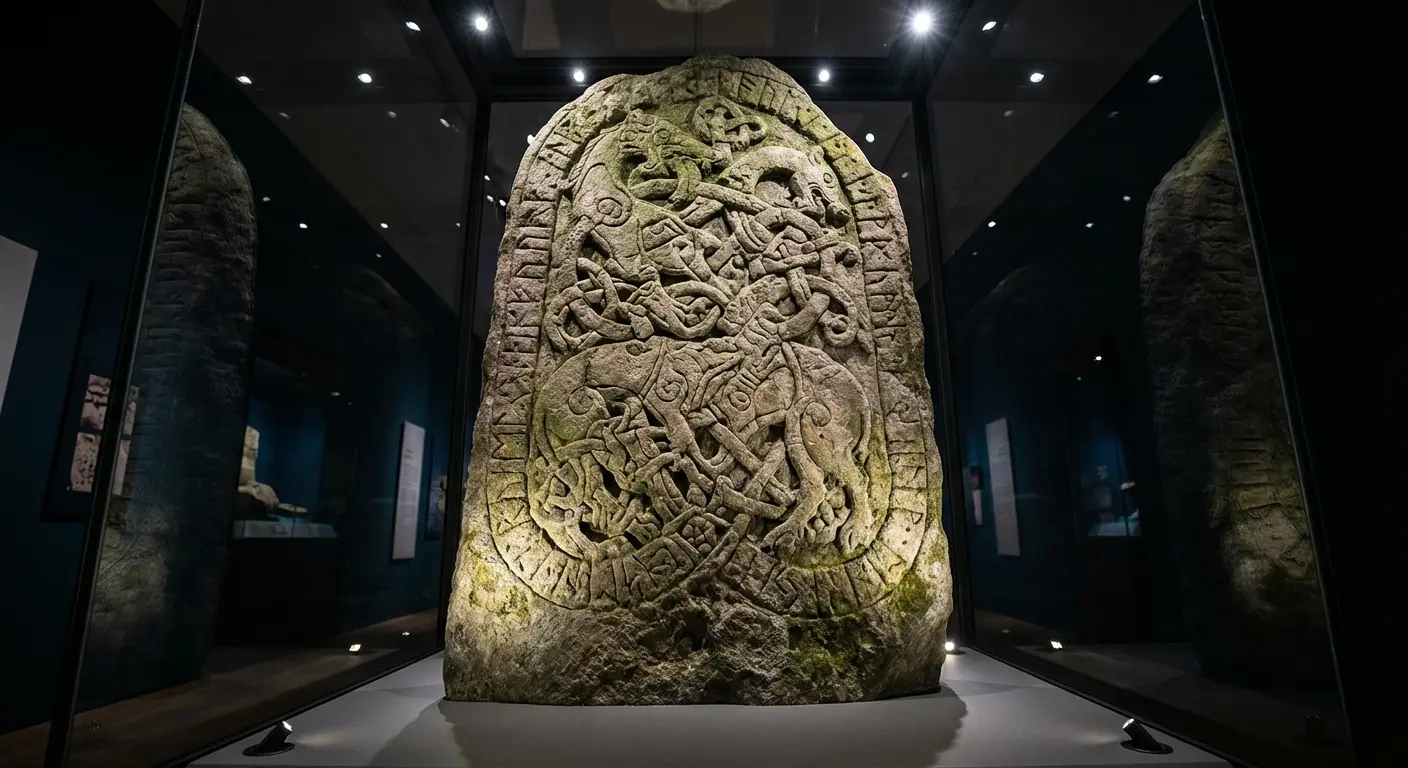
You’re not disrespecting ancient culture by bringing your own interpretation to your viking valknut tattoo. You’re participating in how symbols have always worked: they evolve, they adapt, they mean what communities decide they mean. The archaeological record gives us fragments, not complete narratives. We fill in those gaps whether we admit it or not.
Three Triangles, Infinite Interpretations: What Happens When Meaning Becomes Personal
Once you accept that historical certainty isn’t available, you face a different question: what does this symbol need to represent for you?
I know a woman who got a valknut the day she hit five years sober. The three triangles represented the three times she’d tried rehab before it stuck: separate attempts that finally interlocked into something that held. There’s zero chance a 9th-century Norwegian would recognize that meaning. But tell me it doesn’t carry weight.
Another guy got one after his brother died. The triangles were him, his brother, and the space between them that never fully closes. Again, not historically accurate. But more real than any academic interpretation I’ve read.
Some people connect with the interlocking triangles as a representation of complex mental health journeys. Three points that seem separate but fundamentally connect, creating something stronger than individual pieces. That’s not a Norse interpretation, but it’s not shallow either when considering your valknut tattoo meaning.
Others see the valknut as a reminder that life, death, and rebirth aren’t linear. The triangles loop back on themselves, suggesting cycles rather than endpoints. You could connect this to career transitions, relationship phases, or personal transformation. The geometric precision appeals to people who value order and structure but recognize that rigid systems can still create dynamic results.
What separates meaningful personal interpretation from slapping a cool design on your body? Depth of connection.
Can you articulate why this specific symbol resonates? Does it represent something you’re actively living with or working through? Will it still hold meaning when the aesthetic trend passes? Before committing to your norse valknut tattoo, ask yourself: Can you explain your interpretation in 2-3 sentences without relying on generic “warrior spirit” language? Will the meaning remain relevant if your life circumstances change in 5-10 years? Are you prepared to have conversations about why you chose this symbol if asked?
You don’t need to justify your valknut tattoo meaning to Norse historians. You do need to justify it to yourself, especially given the permanence involved. The valknut on your skin will be there through job changes, relationship shifts, personal growth, and all the ways you’ll evolve over decades. Surface-level attraction to the design won’t sustain that relationship.
Modern Paganism’s Claim vs. Archaeological Reality
Modern pagan communities, particularly Asatru practitioners, have embraced the valknut as a significant religious symbol. For them, it represents dedication to Odin, connection to Norse spiritual practices, and identity within a reconstructionist faith.
When someone tells you the valknut is a sacred Odinic symbol, they’re speaking from within modern Asatru: a religion that was reconstructed in the 1970s. That doesn’t make it less meaningful to practitioners, but it does mean they’re not channeling authentic Viking knowledge. They’re creating new meaning within a framework that’s inspired by historical sources but isn’t identical to them.
And honestly? That’s fine. I’d argue that’s how all religion works, but that’s a different essay.
Why does this distinction matter for your norse valknut tattoo? Because you need to know what claims you’re making with the symbol. If you’re part of the Asatru community, the religious significance is real and personal. If you’re not, you’re probably drawn to something else about the design.
A friend who practices modern Heathenry wears a valknut pendant as part of their daily spiritual practice, using it during meditation and ritual work dedicated to Odin. For them, the symbol’s historical ambiguity doesn’t diminish its power: it’s been given meaning through years of intentional spiritual practice within their community. Meanwhile, their partner has the same symbol tattooed on their shoulder purely because they appreciate the geometric design and it reminds them of their Scandinavian grandmother. Both relationships with the symbol are valid, but they’re making very different claims about what the valknut represents. Understanding this distinction helps you determine which relationship you’re entering into with your odin valknut tattoo.
You’ll encounter gatekeeping from some quarters: people who insist you can’t get a valknut tattoo unless you’re a practicing pagan or have Norse heritage. That’s one perspective, but it’s not the only legitimate one. Symbols move across cultures and contexts. They always have. The question isn’t whether you have permission for your viking valknut tattoo. It’s whether you understand what you’re wearing and can speak to why it matters to you.
The Aesthetic Pull: When Design Speaks Louder Than Heritage
Or maybe (and be honest here) you don’t actually care about Norse mythology or Odin or any of that. You just think it looks cool as hell.
The valknut’s visual appeal is undeniable. Three interlocking triangles create perfect geometric balance. The negative space works as hard as the positive space. It’s bold without being aggressive, complex without being cluttered, ancient without feeling dated.
Geometric tattoos have surged in popularity partly because they photograph well and partly because they tap into something primal about pattern recognition and symmetry. The valknut hits all those notes while maintaining distinctiveness. You won’t see it on every third person at the coffee shop. Yet.
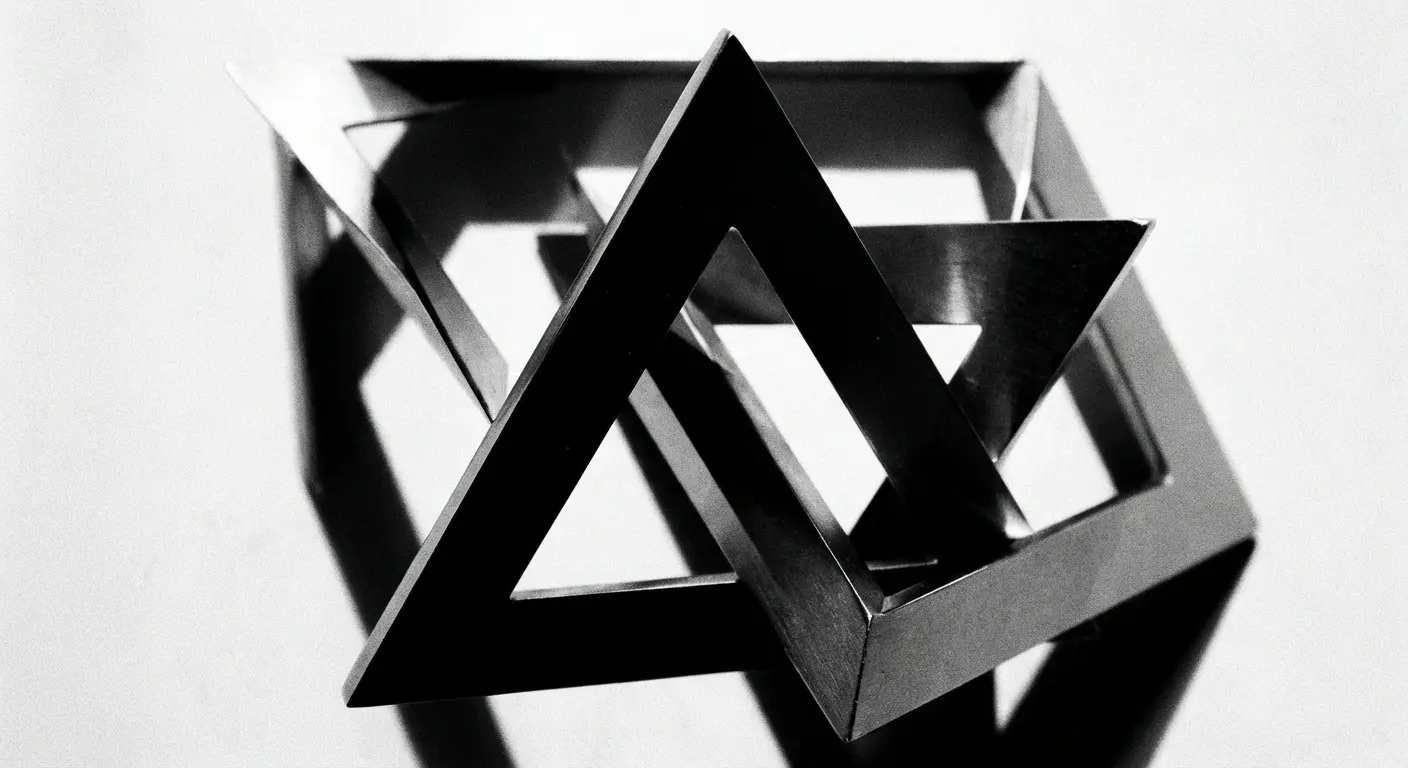
Is aesthetic appreciation enough reason to get a valknut tattoo? That’s between you and your future self. Some people need deep symbolic meaning attached to every piece of ink. Others curate their body art the way they’d curate any visual collection: based on what speaks to them visually.
The honest truth: even aesthetic choices reveal something about your values and preferences. You’re drawn to geometric precision, ancient symbols, bold statements, or visual complexity for reasons that connect to who you are. The meaning might be less narrative and more intuitive, but it’s still there.
What matters is that you’re not getting your viking valknut tattoo purely because it’s trending or because you think it makes you look tough or spiritual. Aesthetic appreciation paired with self-awareness creates better tattoo decisions than forced symbolic meaning you don’t feel.
Placement Psychology: Where You Put It Changes What It Says
A valknut on your chest carries different energy than one behind your ear. Placement isn’t just about finding empty skin; it’s about how location interacts with the symbol’s inherent properties.
Chest placement centers the symbol over your heart and lungs, creating immediate associations with core identity and vital force. It’s a bold choice that suggests the symbol represents something central to who you are. The flat plane works well for maintaining the valknut’s geometric precision, though muscle movement can slightly distort the lines depending on your build. It’s also one of the more painful spots, if that matters to you.
Forearm placement makes the symbol visible to you throughout the day. You’ll see it while working, eating, existing. That constant visibility can be grounding or distracting depending on your relationship with the norse valknut tattoo. Forearms also offer good real estate for sizing options without forcing you into either tiny or massive territory. The downside? Constant visibility in professional settings. You can’t hide it with short sleeves.
Upper back or between shoulder blades creates a private relationship with the symbol. Others see it only when you choose to reveal it. This placement often indicates the tattoo is more for you than for external perception. The broad, flat surface area allows for larger interpretations or additional elements. The weird part? You can’t see it yourself without mirrors, which changes your daily relationship with it.
Behind the ear or on the neck shrinks the symbol down but amplifies its impact through unexpected placement. Small valknut tattoos in these locations read as subtle confidence rather than bold statement. They’re intimate without being hidden. High visibility with short hair, though, and harder to conceal when you need to.
Finger tattoos present technical challenges: the skin doesn’t hold ink as reliably, lines can blur quickly. But they put the symbol at your fingertips. Every gesture incorporates it. Consider whether you need that level of integration or if it might feel overwhelming. Also, they hurt like hell and fade fast.
Ribcage placement keeps things very private. Deeply personal meanings work well here. But it’s extremely painful (the skin stretches with breathing, which makes the process brutal), and the skin movement can affect how the design settles over time.
Where you place the valknut tattoo tells part of its story before anyone asks what it means. The same design on your ribcage versus your forearm communicates entirely different relationships with the symbol: one private and internal, the other public and declarative.
The Controversial Connection: White Supremacy and Symbol Reclamation
Okay, the part nobody wants to discuss but we absolutely have to: white supremacists have claimed Norse symbols. Including valknuts.
I’m not going to tiptoe around this. Neo-Nazis and racist Odinists have appropriated these symbols, and it’s created a situation where every time someone sees a valknut tattoo on a white person, there’s this split-second calculation happening: “Are they a white supremacist or just into Norse history?” I hate that calculation. You should hate it too. But pretending it doesn’t happen won’t make it go away.
The valknut’s association with extremist groups isn’t theoretical. It’s playing out in real-time across the country. In June 2025, a Bangor police officer’s visible valknut tattoo at a public rally sparked community concern (Bangor Daily News), with residents questioning whether the symbol signaled white supremacist sympathies. That same spring, a federal ICE agent participating in Martha’s Vineyard immigration raids was photographed with a prominent valknut tattoo on his forearm (Boston Globe), leading to widespread debate about the symbol’s meaning in law enforcement contexts. These incidents demonstrate that norse valknut tattoo designs are being scrutinized in public spaces, and wearers should be prepared for those conversations.
According to the Anti-Defamation League, “some white supremacists, particularly racist Odinists, have appropriated the Valknot to use as a racist symbol,” often using it “as a sign that they are willing to give their life to Odin, generally in battle”. This appropriation doesn’t erase the symbol’s legitimate historical and spiritual significance, but it does create a context problem that every potential wearer must navigate.
So what do you do? Get the tattoo anyway, but design it intentionally.
Context matters enormously. A valknut surrounded by white supremacist imagery or paired with certain runes sends a clear signal. A valknut rendered in watercolor with floral elements or incorporated into broader sleeve work with diverse cultural references sends a different message.
Your style choices communicate intent. Harsh black ink in aggressive, bold lines can read differently than softer, more artistic interpretations. That’s not to say you can’t do bold blackwork (I’m not here to tell you what style to choose), but be aware of how it might be perceived, especially if you’re getting it on highly visible areas.

Some people choose to pair their viking valknut tattoo with explicitly anti-racist imagery or symbols from multiple cultural traditions to make their stance clear. Others prefer to let their broader body art collection or personal presentation speak for itself. There’s no single right approach, but doing nothing and hoping people don’t make assumptions isn’t a strategy.
You might face questions or assumptions regardless of your design choices. Are you prepared to have those conversations? Can you clearly articulate why you chose this symbol and what it means to you? Your ability to speak thoughtfully about your norse valknut tattoo becomes part of how you reclaim the symbol from those who’ve twisted it.
The unfortunate reality: marginalized communities have every reason to be wary of Norse symbols on white bodies. Your good intentions don’t erase their valid concerns. Proceed with awareness and humility.
Style Variations That Actually Transform the Symbol’s Energy
The style you choose doesn’t just affect how the valknut looks; it changes what it says. When exploring different approaches to your valknut tattoo designs, consider how geometric tattoo designs require precision that fundamentally affects the final aesthetic.
Geometric precision/technical style leans into the symbol’s inherent mathematical properties. Perfect lines, exact angles, sometimes incorporating sacred geometry or additional geometric patterns. This approach emphasizes order, perfection, and the beauty of mathematical relationships. It’s striking but can read as cold if that’s not the energy you want for your norse valknut tattoo designs. On the other hand, if you’re into that clean, almost architectural look, this style is unmatched.
Traditional blackwork gives the valknut weight and permanence. Thick lines, solid black fill, high contrast. This style connects the symbol to tattoo history and gives it a timeless quality. It ages well technically, but (and this is important) it’s also the style most associated with the aggressive appropriation we just discussed. If you go this route, think carefully about the other elements you’re pairing it with and where you’re placing it. Context becomes even more critical.
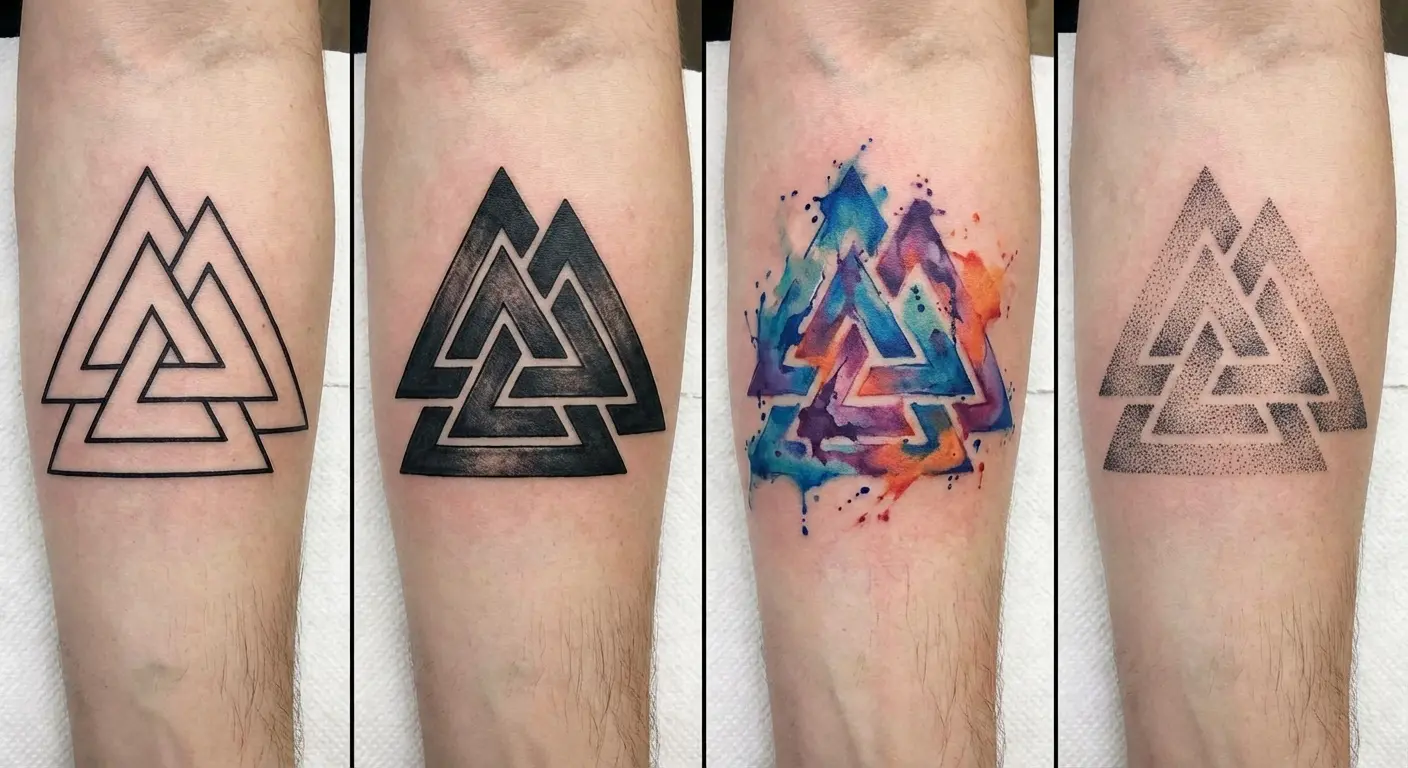
Watercolor or abstract interpretations soften the symbol considerably. Bleeding colors, paint-splash effects, or impressionistic rendering transform the valknut from ancient and stern to contemporary and artistic. This style explicitly signals that you’re reinterpreting rather than preserving, which can help distance your valknut tattoo designs from problematic associations. It’s also just gorgeous if done well, though it can fade faster than traditional work.
Dotwork or stippling creates texture and depth through thousands of individual dots rather than solid lines. It’s time-intensive and requires a skilled artist, but the result is visually stunning and distinctly different from typical valknut presentations. The technique adds softness while maintaining the symbol’s structure. Fair warning: this takes forever to complete and usually costs more because of the time investment.
Minimalist line work strips the valknut down to its essential form: three triangles, single-line weight, no embellishment. This approach works well for smaller placements and appeals to people who value restraint and simplicity. It’s modern without being trendy. The downside? Those thin lines can blur over time, so you need an artist who really knows what they’re doing.
Each style choice is an interpretive act. You’re not just deciding how the valknut appears; you’re deciding what kind of norse valknut tattoo designs it becomes. The same three triangles rendered in watercolor versus blackwork tell completely different visual stories.
Combining Valknuts: What Works and What Dilutes the Design
The valknut’s geometric simplicity makes it tempting to add more. Ravens. Runes. Wolves. Axes. Yggdrasil. Before you know it, you’ve got a Norse mythology starter pack instead of a cohesive design.
Adding elements works when each piece serves the composition, not just the concept. You might love ravens and valknuts equally, but cramming both into a small forearm piece creates competition for attention. Your eye doesn’t know where to land.
Runes pair naturally with valknut tattoos because they share similar line weights and cultural origins. But which runes, and why? Random runes scattered around the valknut for aesthetic filler read as exactly that: filler. Runes that spell something meaningful or represent specific concepts create intentional layering. Even then, consider whether the runic message needs to be there or if the norse valknut tattoo already says enough.
A client came into a shop wanting a valknut with their children’s initials spelled in Elder Futhark runes around it, plus Huginn and Muninn (Odin’s ravens) flanking the top, and a Celtic knotwork border at the bottom. The artist sketched it out and showed them how crowded the 4-inch forearm space became: the valknut shrunk to barely 2 inches to accommodate everything else, the runes became illegible at that scale, and the ravens looked squeezed. Instead, they redesigned with just the valknut at proper scale and the children’s initials in small, carefully placed runes at three points of the triangles. The final piece breathed, each element remained readable, and the personal meaning came through stronger because it wasn’t competing with unnecessary additions.
Animals (ravens, wolves, serpents) can frame or interact with the viking valknut tattoo beautifully if scaled appropriately. A raven’s wing curving around one triangle, a wolf’s gaze directed toward the symbol, or Jörmungandr forming a circular border all create relationship between elements. Two ravens perched on top, a wolf below, and a serpent wrapping around while the valknut sits in the middle? That’s visual clutter. Your tattoo isn’t a zoo.
Natural elements (trees, mountains, waves) provide context without competing geometrically. The organic shapes contrast with the valknut’s precision, making both stronger. A norse valknut tattoo emerging from or dissolving into natural forms suggests integration between human meaning-making and natural cycles. This is one of the combinations that actually works more often than not.
Weapons or tools (axes, hammers, shields) often feel redundant. They don’t add symbolic depth so much as they announce “this is Viking-themed” in case anyone missed it. Unless you have specific personal connection to these objects, they’re usually unnecessary. Like, we get it. Vikings. Cool.
Basic rule of thumb: every element should either support the valknut tattoo designs or create deliberate tension with it. Decoration for decoration’s sake weakens the overall design.
Size, Detail, and the Technical Realities Your Artist Needs You to Know
Three triangles. Looks simple, right?
Your artist is internally screaming.
Geometric tattoos are brutal. Lines need to be perfectly straight on skin that curves, stretches, breathes, and will age over decades. Angles need to be exact. Symmetry needs to be flawless. One wobbly line and the whole thing looks like a Pinterest fail.
Minimum sizing matters more than you’d expect. Those tiny valknut tattoos you’ve seen on Pinterest might look crisp in the photo, but give them five years. Lines that start out a few millimeters apart will blur together as the ink spreads slightly under your skin (a natural process called blowout). What was once three distinct triangles becomes an ambiguous blob.
For a standalone valknut tattoo with clear definition, you’re looking at a minimum of about two inches across. Smaller than that, and you’re gambling on how well it’ll age. Finger tattoos or behind-the-ear placements need to be designed with thicker lines than you’d use on a forearm, which can make them look chunky initially but ensures they remain readable.
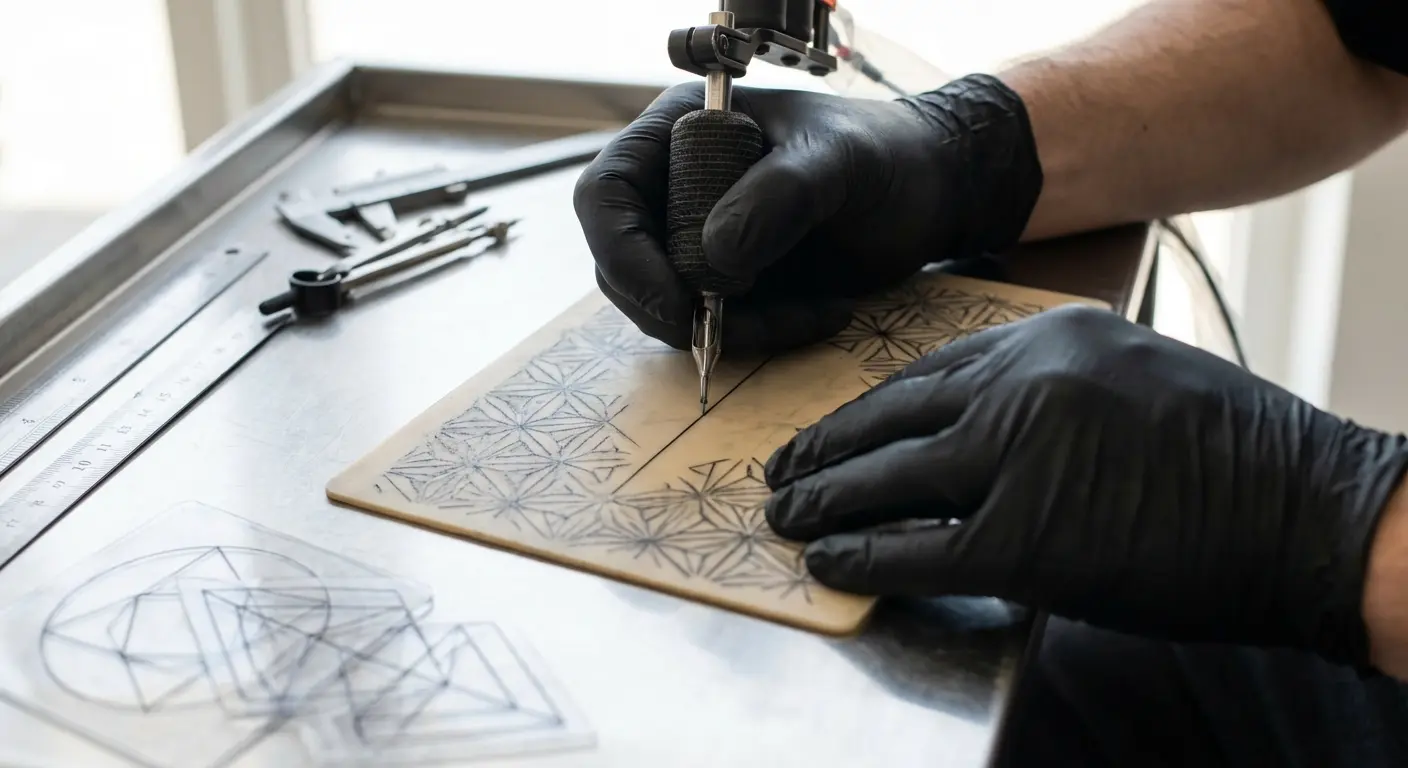
The interlocking aspect presents specific challenges. Where triangles overlap or weave through each other, your artist needs to maintain the illusion of depth and separation. Poor execution makes the whole thing read as flat or confusing. Look for artists whose portfolios show clean geometric work with successful overlap and negative space management. Seriously, this is where most valknut tattoos fail.
Before you book an appointment, stalk their Instagram. Look for geometric work in their portfolio, not just tribal or traditional stuff, but actual geometric tattoos with clean lines. Do those lines wobble? Are the angles consistent? Can they handle negative space without it looking muddy?
Healed photos. Fresh tattoos always look crisp. You want to see how their work looks six months later when the ink has settled and the skin has done its thing.
And here’s the test: show them your reference image and ask if your desired size is realistic. If they immediately say yes without discussing line weight or aging, walk away. A good artist will push back if you’re asking for something that won’t age well. That pushback is a good sign, not an insult.
Your skin texture affects the outcome. Heavily textured skin, significant scarring, or areas with lots of natural lines (like hands or feet) can disrupt the clean lines geometric designs require. Smoother skin areas (upper arms, back, chest) provide better canvases for precise work.
Touch-ups might be necessary, especially for pieces with very fine lines or in high-friction areas. That’s not a failure; it’s the reality of maintaining geometric valknut tattoos. Budget for potential touch-up sessions when planning your piece.
Don’t choose your artist based solely on proximity or price. Find someone whose geometric work you genuinely admire, even if it means traveling or waiting for an appointment. The valknut’s simplicity makes flaws more obvious, not less.
From Concept to Skin: Bridging the Gap Between Vision and Execution
You know what you want. Sort of. It’s a valknut, definitely, but with a specific energy you can’t quite articulate. Maybe softer? More dynamic? You’ve scrolled through hundreds of reference images, but none of them are quite right.
This gap between mental vision and concrete reference is where most valknut tattoo ideas stall out. You end up either settling for something close enough or struggling through consultations where you keep saying “not quite” without being able to explain what would make it right.
Gathering references helps, but it’s not the complete solution. You can collect images that capture the style you want, the placement you’re considering, and elements you’d like to incorporate. But if none of them show exactly what you’re envisioning for your valknut tattoo ideas, you’re still asking your artist to read your mind.
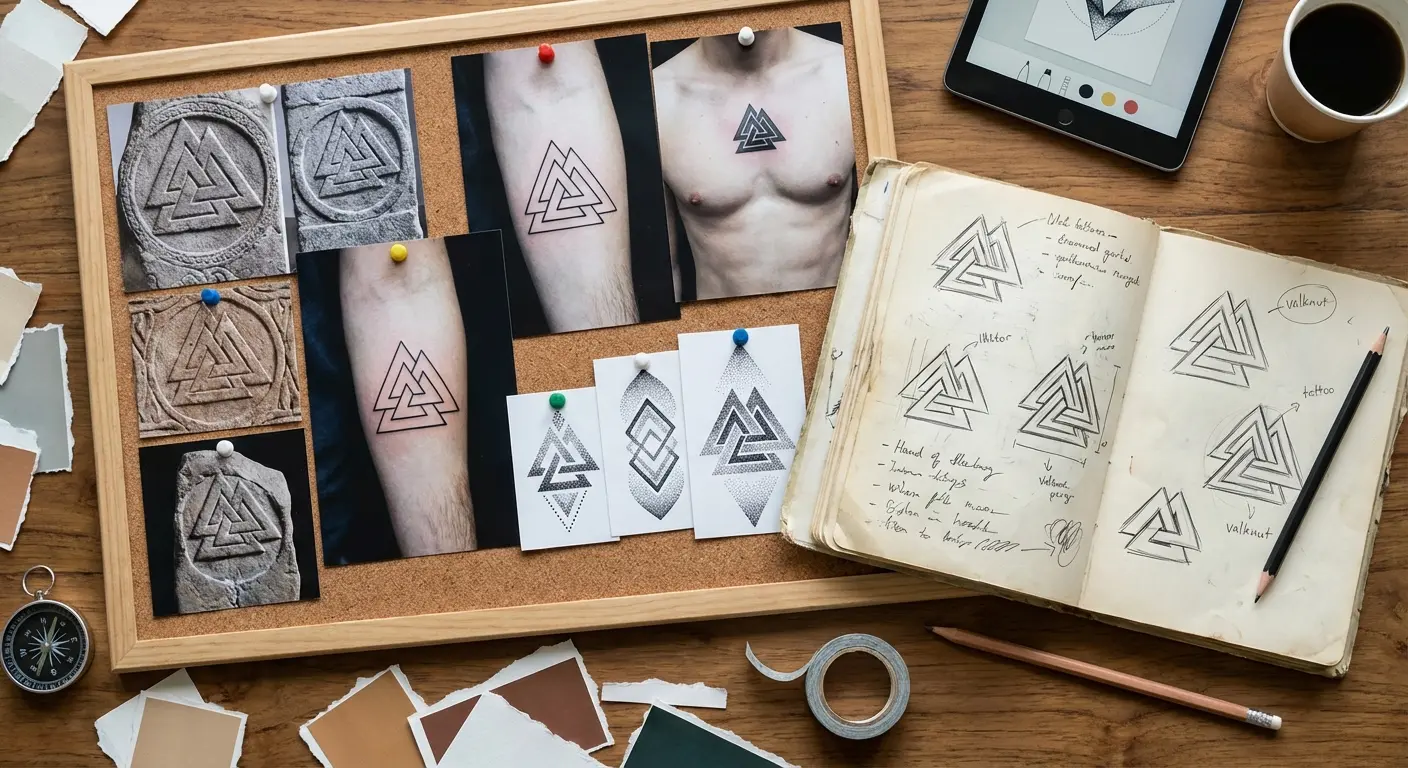
Verbal descriptions have serious limitations. “I want it to feel powerful but not aggressive” means something different to every person who hears it. “Incorporate some organic elements but keep it mostly geometric” leaves massive room for interpretation. You and your artist might be picturing completely different norse valknut tattoo designs while using the same words. It’s like that game of telephone, except permanent.
Sketching your own rough concept works if you can draw, but most people can’t render their valknut tattoo ideas clearly enough for an artist to extrapolate from. A wonky sketch might communicate placement and general composition, but it doesn’t convey the style, line weight, or refinement you’re after.
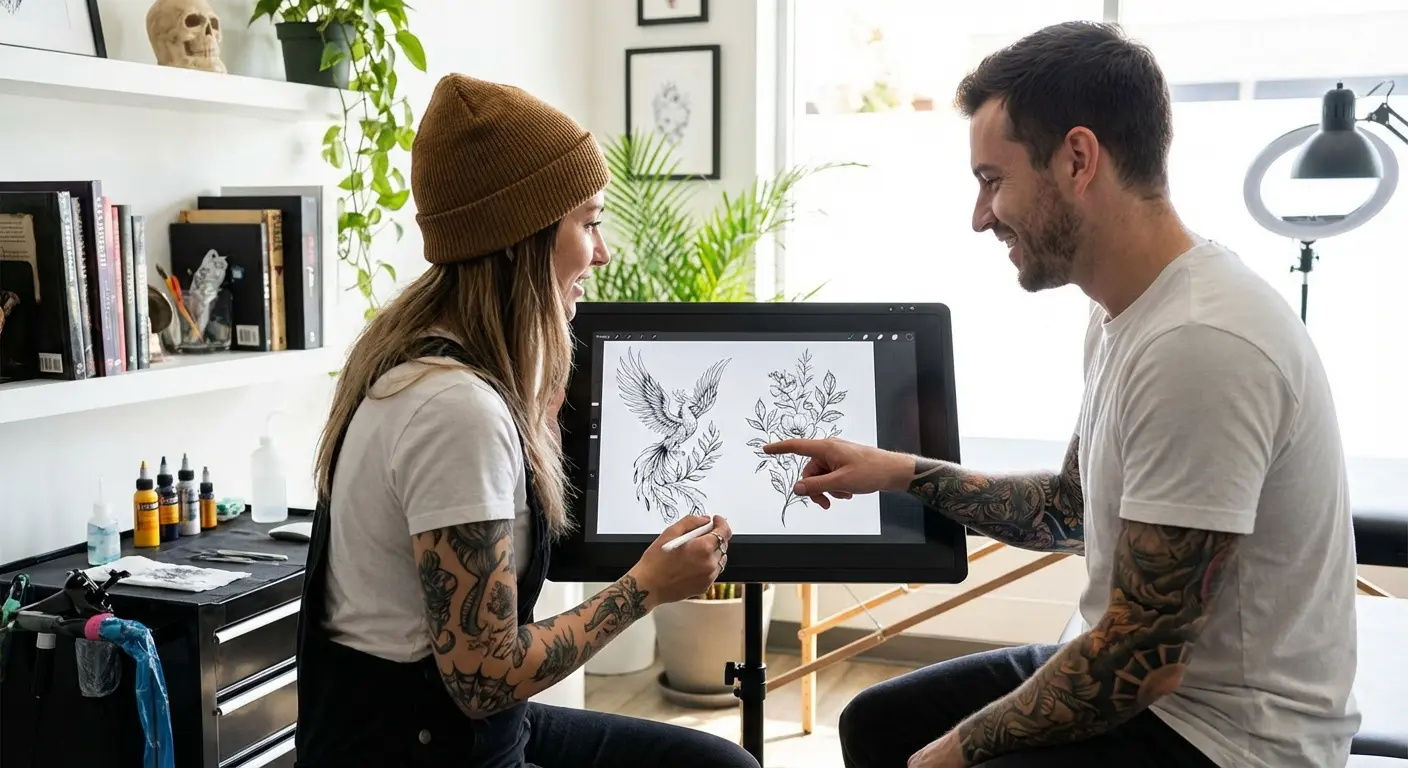
This is where something like Tattoo Generator IQ actually helps. (Yeah, it’s a plug, but hear me out.) You can input your specific vision: valknut with watercolor elements, geometric valknut with runes, minimalist valknut with specific placement, whatever. And get high-resolution reference designs that show exactly what you mean. Instead of describing “powerful but not aggressive” and hoping your artist interprets that the way you intend, you walk in with concrete visuals.
Your artist can see what you’re after and either refine it or tell you “this won’t work because…” Either way, you’re collaborating from a shared starting point instead of playing telephone with abstract concepts.
The consultation becomes more productive when you arrive with clear references. Your artist can tell you what’s technically feasible, what might need adjustment for your specific placement or skin tone, and how to optimize the valknut tattoo design for longevity. You’re having a conversation about refinement rather than starting from scratch.
The importance of clear visual communication can’t be overstated. According to research on Norse symbolism, the valknut comes from old Norse and is composed of “varl” which means “dead warriors” and “knut,” which means “knot”, but this etymological understanding of valknut meaning doesn’t automatically translate into visual design choices. Having precise reference images helps bridge the gap between conceptual understanding and executable tattoo design, ensuring your artist can translate historical or personal valknut tattoo meaning into technically sound body art.
Final Thoughts
Look, I’ve written 4,000 words about three triangles. You’ve read them. (Or skimmed them. I’m not judging.)
Here’s what I hope you take away: the valknut doesn’t have one true meaning. It never did. Even the Vikings probably argued about what it represented; we just don’t have records of those arguments.
Your interpretation matters. Your relationship with the symbol matters. The design choices you make matter. Whether you can articulate why it resonates with you matters.
What doesn’t matter? Whether some imaginary Viking council would approve your reasons.
The valknut carries weight, whether that’s historical, aesthetic, personal, or all three. You’ve probably noticed by now that there’s no simple answer to “should I get this tattoo?” What you’ve gained instead is a way to think about that decision thoughtfully. You understand that the symbol’s valknut meaning is more fluid than most sources admit. You recognize that personal interpretation holds legitimate value alongside (or instead of) historical or religious significance. You’re aware of the cultural tensions and appropriation issues that come with Norse symbols in contemporary contexts. You know what technical considerations affect how the design translates to skin.
That’s more valuable than someone telling you yes or no.
Your valknut tattoo doesn’t need to mean what it meant to people a thousand years ago, assuming we even knew what that was. It doesn’t need to fit within modern pagan frameworks unless you’re part of that community. It doesn’t need deep symbolic resonance if aesthetic appreciation is what genuinely draws you to it.
What it needs is your honest engagement with why you’re choosing it and what you’re willing to carry. The permanence of valknut tattoos demands that level of self-awareness, not because you might regret it (though that’s possible), but because the decision itself reveals what you value enough to mark your body with.
Get the tattoo or don’t. Just know what you’re doing and why. And for the love of Odin, find an artist who can execute clean geometric work.
I’m done. Go forth and make informed decisions about your skin.
