19 Praying Hands Tattoos That Reveal What Faith Really Means to You
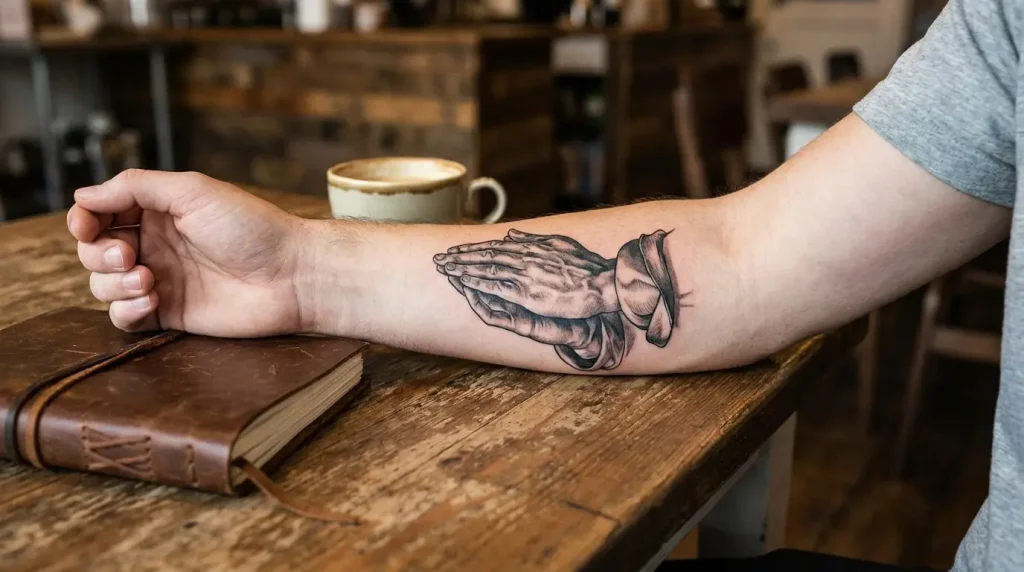
Look, praying hands tattoos have been around forever, and they’re not going anywhere. Some people get them for religious reasons, others for memorials, and some just connect with what they represent spiritually. The point is, they mean something. Way more than your average tribal armband from 2003.
The gesture shows up everywhere. Christianity, Islam, Hinduism. Dürer made his famous engraving in 1508, and we’re still copying it five centuries later. That’s staying power. In Christianity, it represents humility and connection with a higher power. But the significance extends beyond that. In Islam and Hinduism, the gesture represents devotion, supplication, and reverence. This universal symbolism has made its way into popular culture, with praying hands tattoos becoming a popular design choice among tattoo enthusiasts, with meanings varying depending on individual beliefs and personal faith journeys.
The hands themselves? Just the foundation. What you add around them, where you place them, and how your artist interprets them transforms a common symbol into something that’s actually yours. A tattoo of praying hands becomes more meaningful when it reflects your personal journey rather than something you grabbed off Pinterest.
TL;DR
-
Praying hands tattoo designs work best when they reflect your specific relationship with faith, not a generic symbol you grabbed off a flash sheet
-
Placement matters more than you think (your forearm tells a different story than your ribcage)
-
The hands themselves are just the foundation. What you add around them transforms the meaning entirely
-
Memorial and family tribute versions require careful planning to avoid overcrowding names and dates
-
Minimalist versions prove you don’t need a massive piece to communicate depth
-
Stencil quality directly impacts how your artist interprets the design. Blurry references create guesswork
-
Cultural fusion designs demand research and respect, not just aesthetic borrowing
-
Your artist needs high-resolution references that show finger positioning, shading depth, and any accompanying elements clearly
The Big, Bold, Can’t-Miss-It Ones
Okay, let’s talk about the big ones first. These aren’t subtle. They’re declarations. The kind of tattoo that starts conversations whether you want them or not, and honestly, if you’re getting one of these, you probably want them.
The challenge? Finding an artist who can handle heavy religious imagery without making it look like a velvet painting from a roadside stand. It’s not just technical execution (though that matters a lot). It’s creating something that feels authentic to your faith journey rather than borrowed from someone else’s Instagram feed.
These designs work because they integrate praying hands into broader visual stories, using them as emotional focal points rather than standalone symbols floating in empty skin space. When you’re committing to bold statement pieces, you’re making a choice about how your faith shows up in the world. Every tattoo praying hands piece in this category demands commitment. Not just to the hours in the chair, but to the statement you’re making about your beliefs.
|
Design Element |
Session Time |
Pain Level (1-10)* |
Visibility Factor |
Best For |
|---|---|---|---|---|
|
Full Sleeve Integration |
15-25 hours (multiple sessions) |
6-7 |
High (always visible) |
Complete faith narrative storytelling |
|
Chest Panel |
8-12 hours |
8-9 (sternum/collarbone) |
Medium (controllable) |
Symbolic heart-centered placement |
|
Back Piece |
12-20 hours |
5-6 |
Low (requires intentional reveal) |
Maximum canvas space and detail |
|
Ribcage with Scripture |
6-10 hours |
9-10 |
Low (intimate placement) |
Personal, private spiritual reminders |
|
Forearm Centerpiece |
4-6 hours |
4-5 |
High (professional visibility) |
Daily visual faith reminder |
*Pain levels are subjective as hell. Everyone’s different. Your ribcage might be fine while your wrist makes you cry. Or vice versa.
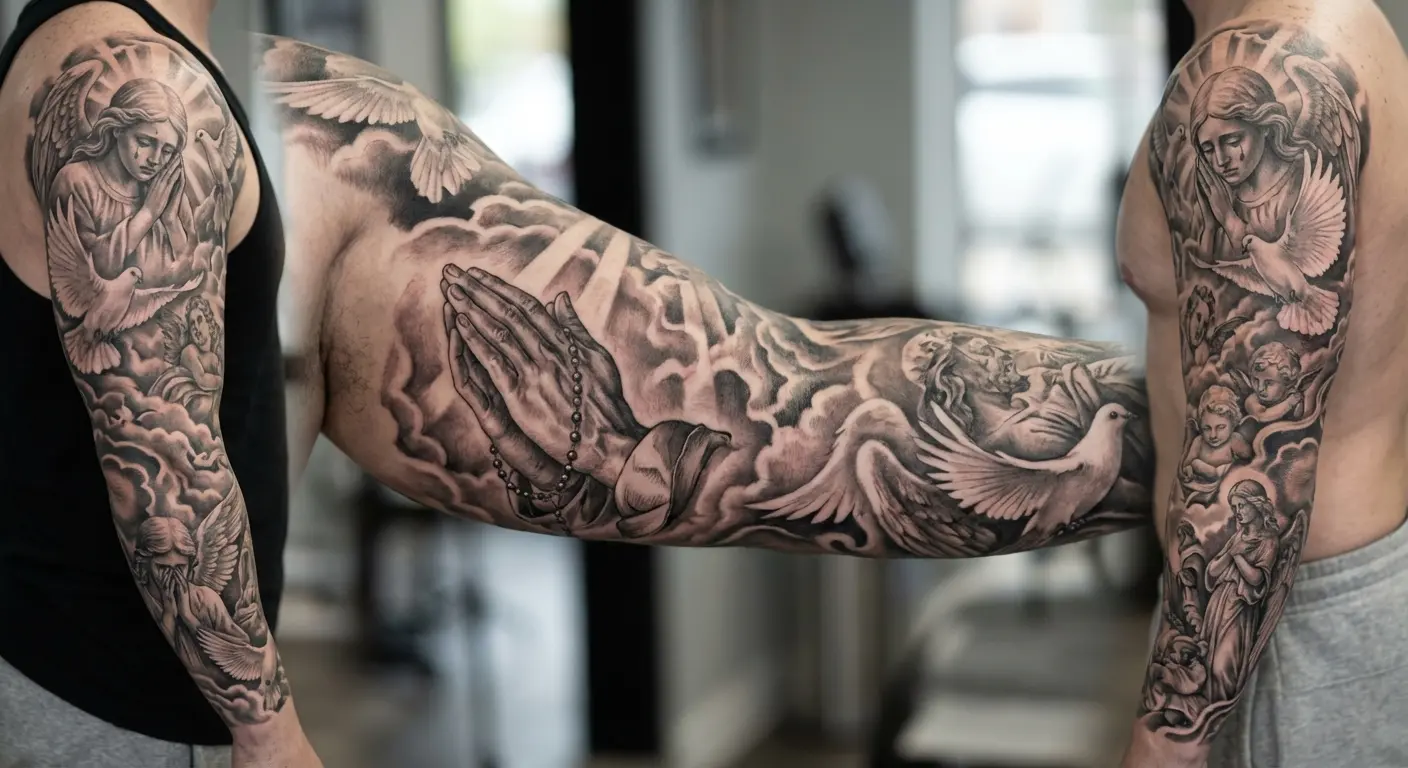
1. Full Sleeve Integration with Religious Iconography
Your praying hands become the centerpiece of a narrative sleeve that might include angels, crosses, doves, or heavenly clouds. We’re talking about a composition where the hands anchor the spiritual theme while other elements build context around them.
This approach works well when you want to tell a complete story about your faith evolution or specific religious experiences. The hands usually sit at the forearm or inner bicep, with imagery flowing up toward the shoulder and down toward the wrist. You’ll need multiple sessions and an artist who excels at cohesive sleeve planning, not someone who just patches elements together randomly.
Yeah, it’s expensive. You’re looking at thousands of dollars and 20+ hours in the chair. Worth it? If it’s your story, absolutely.
When planning sleeve compositions that incorporate religious imagery (check out our angel tattoo guide for more on mixing religious imagery), you’ll want every element to serve the larger story you’re telling. A well-executed praying hands full sleeve tattoo becomes proof of your spiritual journey, with each component contributing to the overall narrative.
2. Praying Hands Anchoring a Chest Panel
Chest placement = close to your heart. I know, I know, it’s almost too on-the-nose. But it works.
The hands usually point upward, positioned between or slightly below the collarbones, with design elements extending across the pectorals or down the sternum. You might incorporate script, religious dates, or radiating light beams. Pain tolerance becomes a real consideration here since chest tattooing ranks high on the discomfort scale, especially near the sternum and collarbone.
The visibility factor matters too. This placement means you control when people see it, unlike forearm pieces that announce themselves constantly. Your praying hands tattoo becomes something you reveal intentionally rather than display perpetually. For many people, that privacy adds to the prayer tattoo’s significance. It’s between you and your faith, shared only when you choose. This prayer tattoo placement creates an intimate connection between the symbol and your literal heart.
3. Oversized Back Piece with Heavenly Light Rays
Back pieces give you space that other body areas simply can’t match. Your praying hands can scale larger, showing intricate finger details, knuckle wrinkles, and realistic shading that smaller placements would muddy.
Light rays from above = divine intervention vibes. But ray placement is tricky. Too many rays look busy; too few look unfinished. Talk to your artist. The back also allows for vertical composition, with the hands positioned at various heights depending on what else you’re including.
Healing a back piece is annoying as hell. You can’t see it, you can’t reach it, and you’ll need someone to help you apply ointment for at least a week. Hope you’re comfortable asking for help.
The praying hand tattoo on your back becomes a piece you experience differently than others. They see it before you do, which creates an interesting dynamic where the tattoo exists more for the world than for your own daily viewing. This hands praying tattoo placement offers maximum impact when revealed.
4. Ribcage Placement with Scripture Wrapping
Ribcage tattoos hurt like a motherfucker. Full stop.
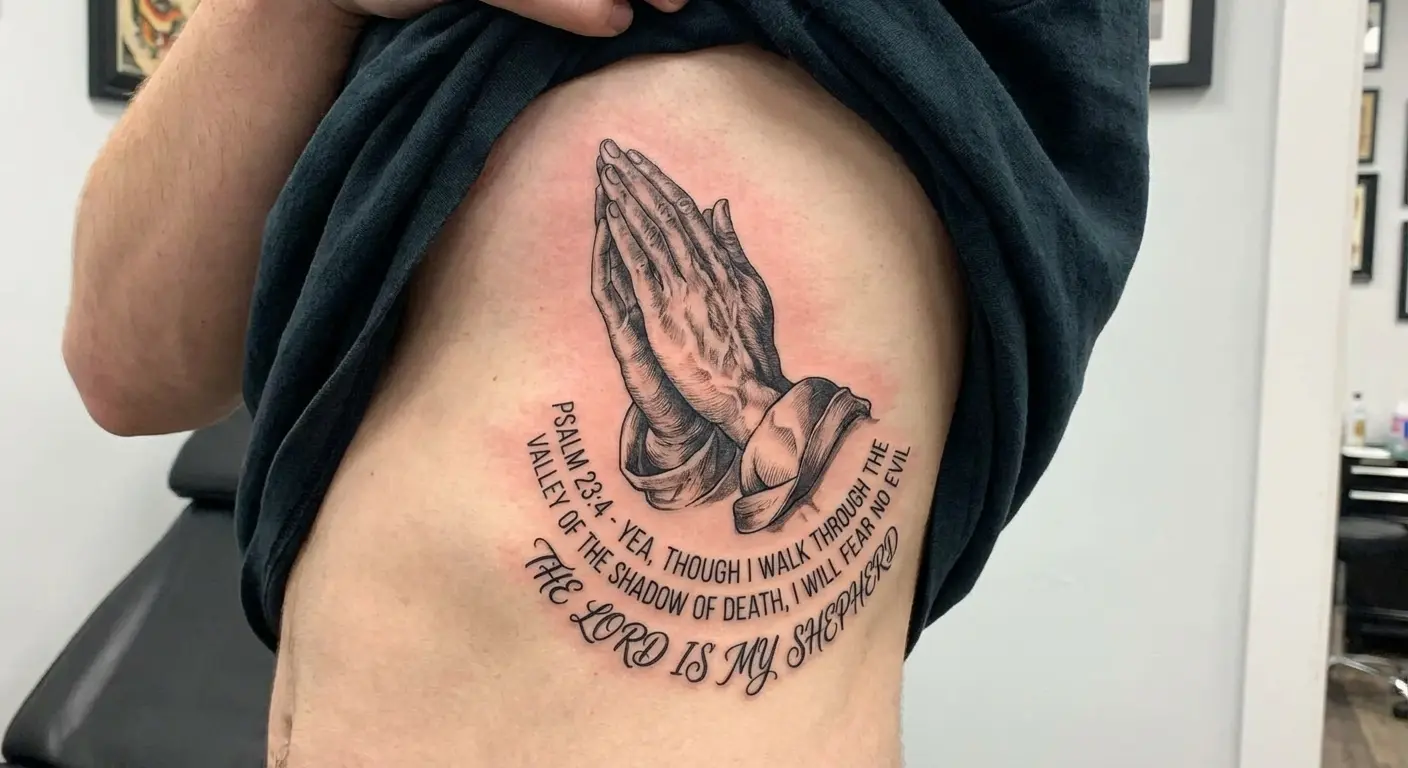
But they offer an intimate placement that feels deeply personal, visible only when you choose to reveal it. The curved surface of your ribs complements the natural shape of praying hands, creating visual flow that flat placements can’t replicate. Scripture verses or meaningful phrases can wrap around the hands, following your rib lines for a design that works with your body’s architecture rather than fighting against it.
You’ll want shorter sessions. The pain accumulates quickly. Find an artist experienced with ribcage work, since the skin stretches differently here than on arms or legs. The tattoo of praying hands in this location becomes a private reminder, something you carry close to your core that doesn’t need external validation or visibility. Your prayer hand tattoos in this placement remain deeply personal, seen only by those you choose to share them with.
5. Forearm Centerpiece with Chain Detail
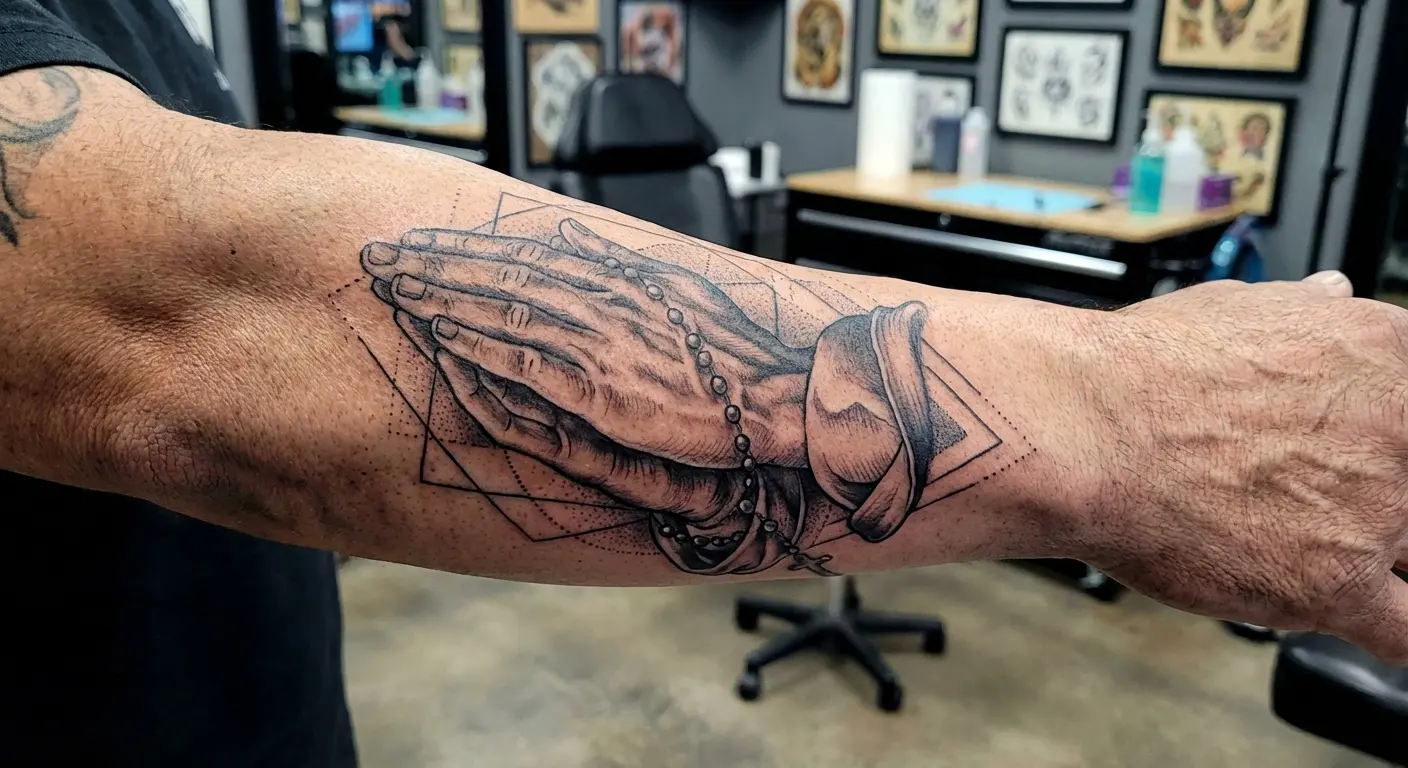
Rosary chains or simple linked chains draped over or wrapped around praying hands add dimension and texture to what could otherwise read as flat. The forearm gives you high visibility and straightforward healing (you can see what you’re doing during aftercare).
Chain details require precise line work since each link needs consistent sizing and shading to look realistic rather than cartoon-like. This design works well for people who want their faith visible in professional settings but need to avoid anything too explicitly religious. The hands communicate spirituality; the chain adds visual interest without requiring crosses or other overtly Christian symbols.
The praying hands with chain tattoo has become increasingly popular because it balances religious significance with aesthetic appeal. You’re making a statement about faith without necessarily declaring denominational affiliation. The praying hands tattoo speaks volumes while the chain detail keeps it grounded in contemporary tattoo aesthetics. A praying hands with chain tattoo offers versatility in both meaning and style, making it adaptable to different faith traditions.
Quiet Reverence: Minimalist Interpretations
Now, if you’re not into making a statement, these designs prove that praying hands don’t require elaborate shading, extensive space, or complex compositions to communicate meaning.
Minimalist versions strip away everything except essential form, relying on clean lines and strategic placement to create impact. They’re ideal if you’re testing the tattoo waters, working in conservative professional environments, or simply prefer understated body art.
The technical skill required here is different but no less demanding. Your artist needs a steady hand and deep understanding of how simplified forms read at various distances. One wobbly line destroys the entire piece. These designs also age differently than heavily shaded work, often maintaining clarity longer because there’s less detail to blur over time.
According to tattoo culture experts, placement of praying hands tattoos significantly enhances their symbolism, with designs usually found on the chest, forearm, or back where they can be easily visible. The choice between high-visibility placements and more intimate locations fundamentally changes how the tattoo functions in your daily life. Whether it’s a public declaration or a private reminder. For minimalist praying hand tattoo designs, this decision carries even more weight since you’re working with less visual information overall. A minimalist praying hand tattoo proves that simplicity can carry just as much spiritual weight as elaborate designs.
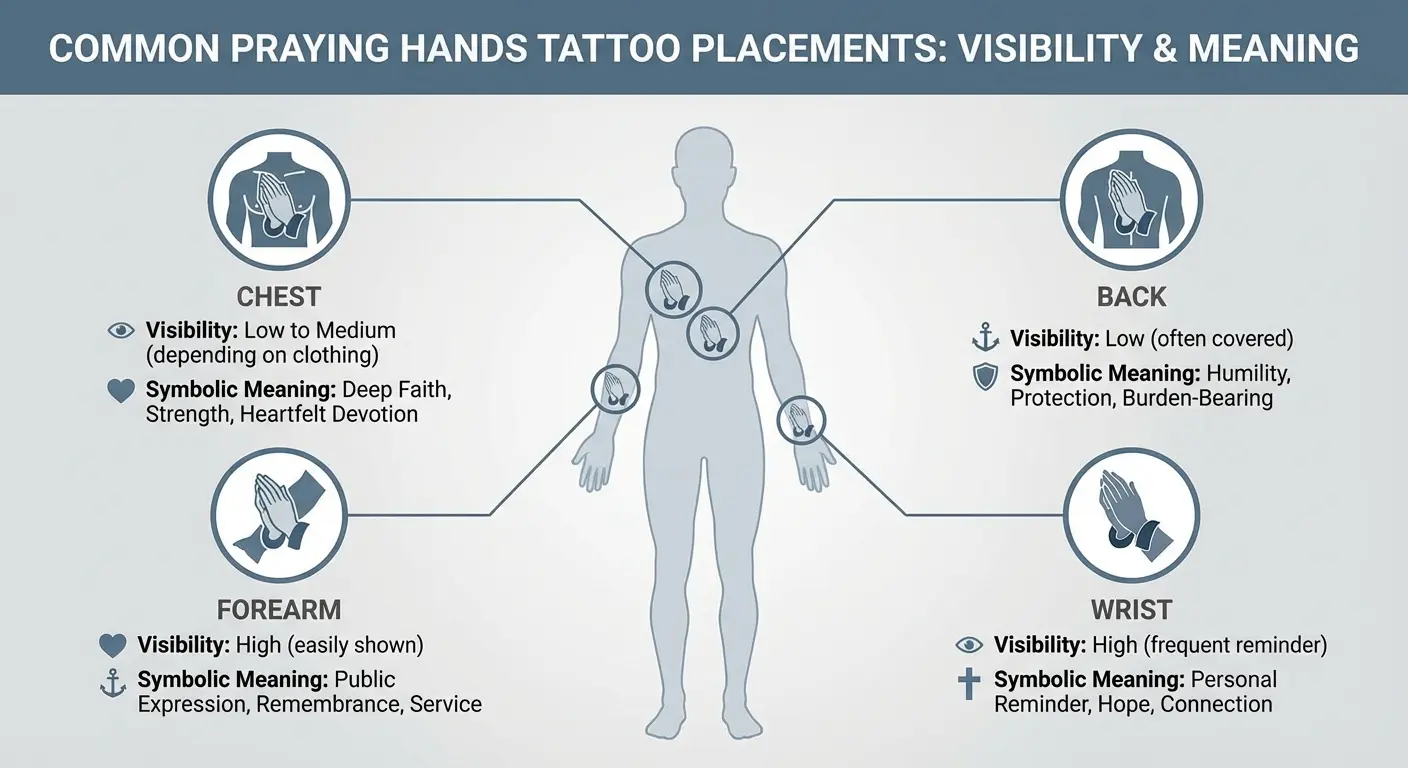
6. Fine Line Outline on Inner Wrist
Inner wrist placement offers constant visibility. You see it every time you check your phone, type, or glance down. Fine line praying hands here work as personal reminders rather than public statements.
The design usually measures two to three inches, just large enough to show finger definition without overwhelming the delicate wrist area. You’ll want an artist who specializes in fine line work. Not every artist can do fine line work. Most traditional tattooers will tell you that straight up. Find someone who specializes in it. Check their portfolio for thin, crisp lines that haven’t blown out.
The inner wrist does fade faster than other areas due to sun exposure and frequent washing, so touch-ups every few years keep the lines crisp.
For those exploring delicate wrist placements, our guide to fine line tattoo techniques and longevity offers crucial insights about maintaining crisp lines in high-movement areas. The praying hands tattoo outline needs to be executed with absolute precision. There’s nowhere to hide mistakes when you’re working with single lines and minimal shading. A praying hands tattoo outline in fine line style requires exceptional technical skill to maintain clarity over time.
7. Single Needle Micro Design Behind the Ear
Behind-the-ear tattoos stay hidden until you want to reveal them. Pulled-back hair, turning your head, deliberate display. Single needle praying hands here measure about an inch, rendered in delicate detail that reads almost like pencil sketching on skin.
I’m not gonna lie, I don’t fully understand the appeal of behind-the-ear tattoos. They hurt like hell, they’re annoying to heal, and you can’t even see them most of the time. But people love them, so here we are.
The curved space behind your ear does present challenges. Your artist needs to work quickly since the area is sensitive, and you’ll need to avoid sleeping on that side during initial healing. Hair can irritate fresh tattoos, so plan accordingly if you have longer hair. The praying hand tattoo in this location becomes your secret, a prayer hand tattoo that exists in the space between public and private. This prayer hand tattoo placement offers ultimate discretion while maintaining deep personal significance.
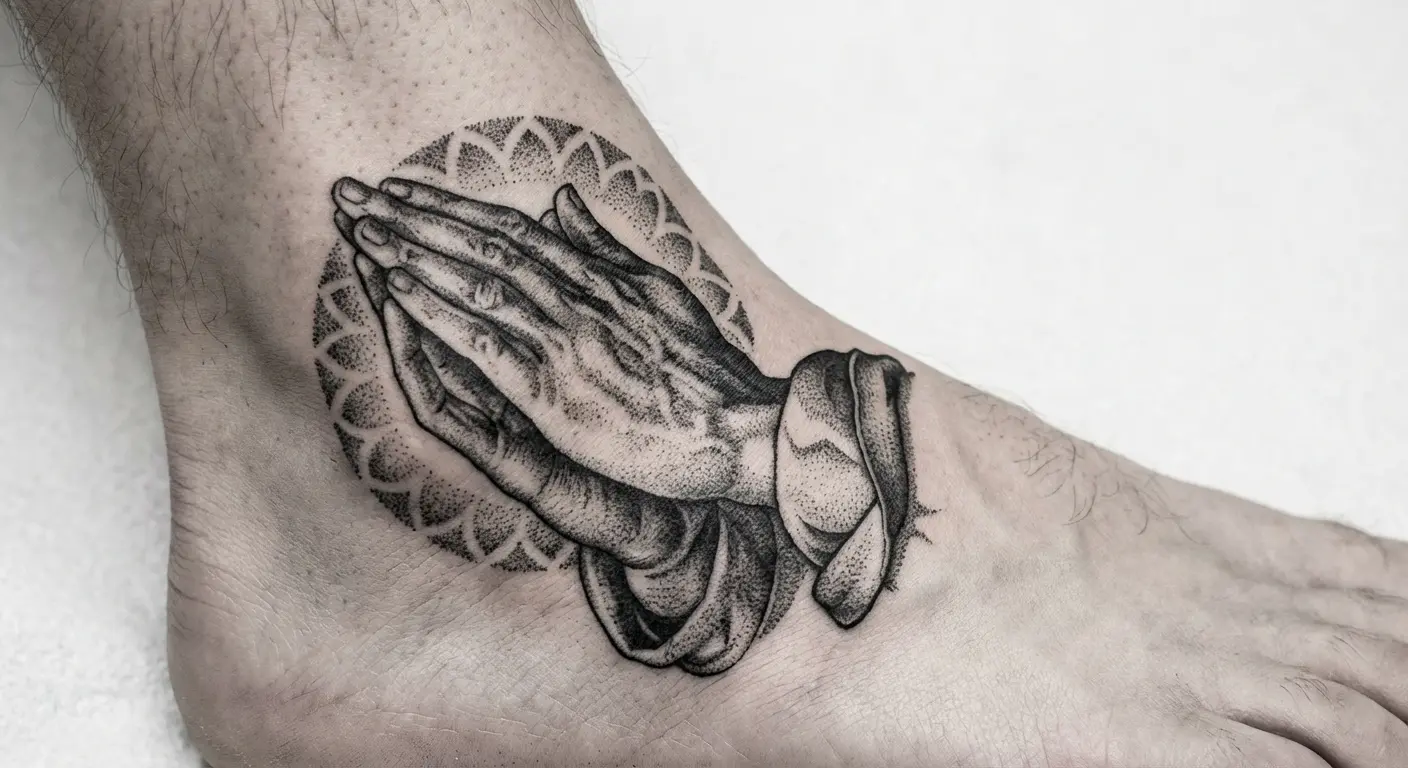
8. Dotwork Silhouette on Ankle
Dotwork creates texture and depth using only tiny dots rather than solid lines or shading. Praying hands rendered this way on your ankle offer visual interest that changes depending on viewing distance. Up close, you see individual dots; from farther away, they blend into recognizable hands.
Ankle placement works well for people who want easy concealment. Socks, pants, boots. With the option to show the tattoo in casual settings. The ankle does swell during healing, and the constant movement of that joint can extend recovery time.
You’ll also want to avoid tight shoes for at least two weeks. The hands praying tattoo in dotwork style requires patience from both you and your artist. Hundreds or thousands of individual dots create the final image, and rushing the process shows in the finished piece. A prayer hands tattoo executed in dotwork demonstrates how alternative techniques can enhance traditional imagery.
9. Blackwork Geometric Fusion
Blackwork uses solid black ink to create bold shapes and patterns. When you fuse geometric elements (triangles, sacred geometry, mandalas) with praying hands, you get a design that bridges traditional religious imagery and modern tattoo aesthetics.
The hands might sit within a geometric frame, or geometric patterns might fill the negative space around them. This style appeals to people who respect the symbolism of praying hands but want something that doesn’t look like it came from a 1990s flash book. Blackwork also ages well since solid black maintains its intensity longer than detailed shading.
Combining religious symbolism with contemporary design elements works well when you understand geometric tattoo composition and sacred geometry principles that create visual harmony. Your praying hands tattoo becomes a conversation between ancient symbolism and modern design philosophy. The pray tattoo takes on new dimensions when geometric elements add layers of meaning beyond the religious. This innovative pray tattoo approach attracts those seeking contemporary interpretations of traditional symbols.
10. Negative Space Hands on Collarbone
Negative space tattoos use your skin tone as part of the design rather than filling everything with ink. Praying hands created this way might have black ink defining the outer edges and key details, with your natural skin forming the hands themselves.
Collarbone placement creates an elegant, unexpected presentation that works well with negative space techniques. The collarbone area is quite painful to tattoo (bone sits close to the surface), but the visual payoff often justifies the discomfort. This placement also photographs beautifully, which matters if you’re documenting your tattoo journey or want to share the design with others.
The prayer hand tattoos executed in negative space require artists who understand how to use what’s not there as powerfully as what is. Your skin becomes part of the prayer, the absence of ink as meaningful as its presence. These prayer hand tattoos challenge conventional approaches to religious imagery.
Memory Keepers: Family and Memorial Tributes
Okay, this section’s different. These aren’t about religion or aesthetics. They’re about grief. About keeping someone close when they’re gone. So if you’re reading this because you just lost someone, I’m sorry. Take your time with this decision.
These designs carry weight that purely aesthetic tattoos simply can’t match. You’re not just getting a tattoo; you’re creating a permanent memorial that travels with you.
The emotional stakes change everything about the design process. You’ll want to take extra time planning these pieces, possibly waiting until you’ve moved through the rawest grief stages. Tattoos made in acute grief sometimes don’t age well emotionally.
The technical challenges multiply when you’re adding names, dates, portraits, or multiple elements. Overcrowding ruins memorial tattoos faster than any other design mistake. Your artist needs to balance your desire to include everything meaningful with the reality that skin has limits. The praying hands family tattoo becomes a living tribute, something that honors without overwhelming. A thoughtfully designed praying hands family tattoo can commemorate multiple generations while maintaining visual clarity.
|
Memorial Element |
Recommended Placement |
Visibility Consideration |
Aging Factor |
Emotional Impact |
|---|---|---|---|---|
|
Portrait Integration |
Upper arm, chest, back |
Medium to high |
Requires skilled artist; fades over 10-15 years |
Extremely high; permanent visual connection |
|
Names and Dates |
Fingers, wrists, around hands |
High (difficult to conceal) |
Text may blur; needs larger sizing |
High; daily reminder of loved ones |
|
Birth Flowers |
Surrounding hands, woven through |
Medium (depends on size) |
Color fades faster than black/grey |
Moderate to high; softer symbolism |
|
Rosary Beads |
Draped over hands, wrapped around |
Medium |
Detailed beads require touch-ups |
High; religious and personal meaning |
|
Multi-Generational Hands |
Forearm, back, thigh |
Flexible based on size |
Complex shading ages moderately |
Very high; family legacy representation |
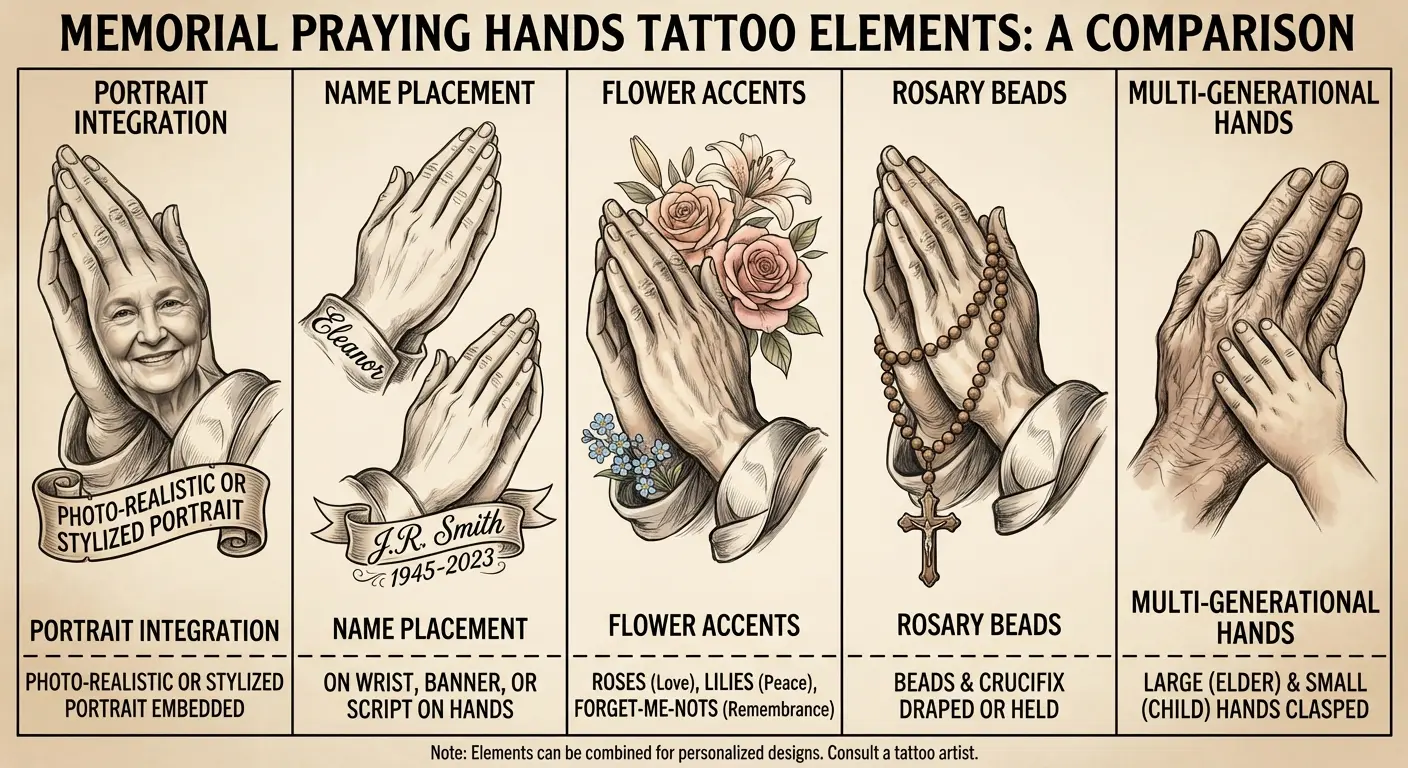
11. Portrait Integration with Praying Hands Frame
Combining a loved one’s portrait with praying hands creates powerful memorial imagery, but it’s also technically demanding. The hands might frame the portrait, sit below it, or be positioned as if the person is praying.
Don’t bring your artist a blurry photo from 1987 where half of grandma’s face is in shadow. You need a clear shot. Good lighting, the expression that captures who they were. Your artist isn’t a miracle worker.
Portrait tattoos require artists with specific skills. Not all tattooers can render realistic faces. Black and grey realism works better than color for most portrait tattoos since it ages more gracefully.
The praying hands element adds spiritual context, suggesting the person has found peace or that you’re praying for them. The tattoo praying hands become a frame for memory, holding your loved one in perpetual reverence. This praying hands family tattoo variation creates a deeply personal memorial that honors those who’ve passed while keeping them close.
12. Names and Dates Woven Through Fingers
Threading names and dates through or around praying hands fingers creates a design that honors multiple family members or memorial dates without requiring separate tattoos. The challenge is legibility. Script needs adequate sizing to remain readable as the tattoo ages and your skin changes.
Your artist should discourage tiny text regardless of how much you want to fit. Birth and death dates, names of children, or memorial phrases work well here, but you’ll need to prioritize. Trying to include too many names creates visual chaos that honors no one effectively.
Consider which names or dates carry the most significance rather than attempting to list everyone.
When incorporating text elements into memorial designs, exploring name tattoo design strategies and lettering styles ensures your tribute remains legible and meaningful for decades. The praying hands tattoo with names woven through becomes a roster of love, each letter a prayer for those you’ve lost or cherish. Your praying hand tattoo transforms into a family registry written in ink and devotion. A praying hands family tattoo with names ensures your loved ones remain with you always.
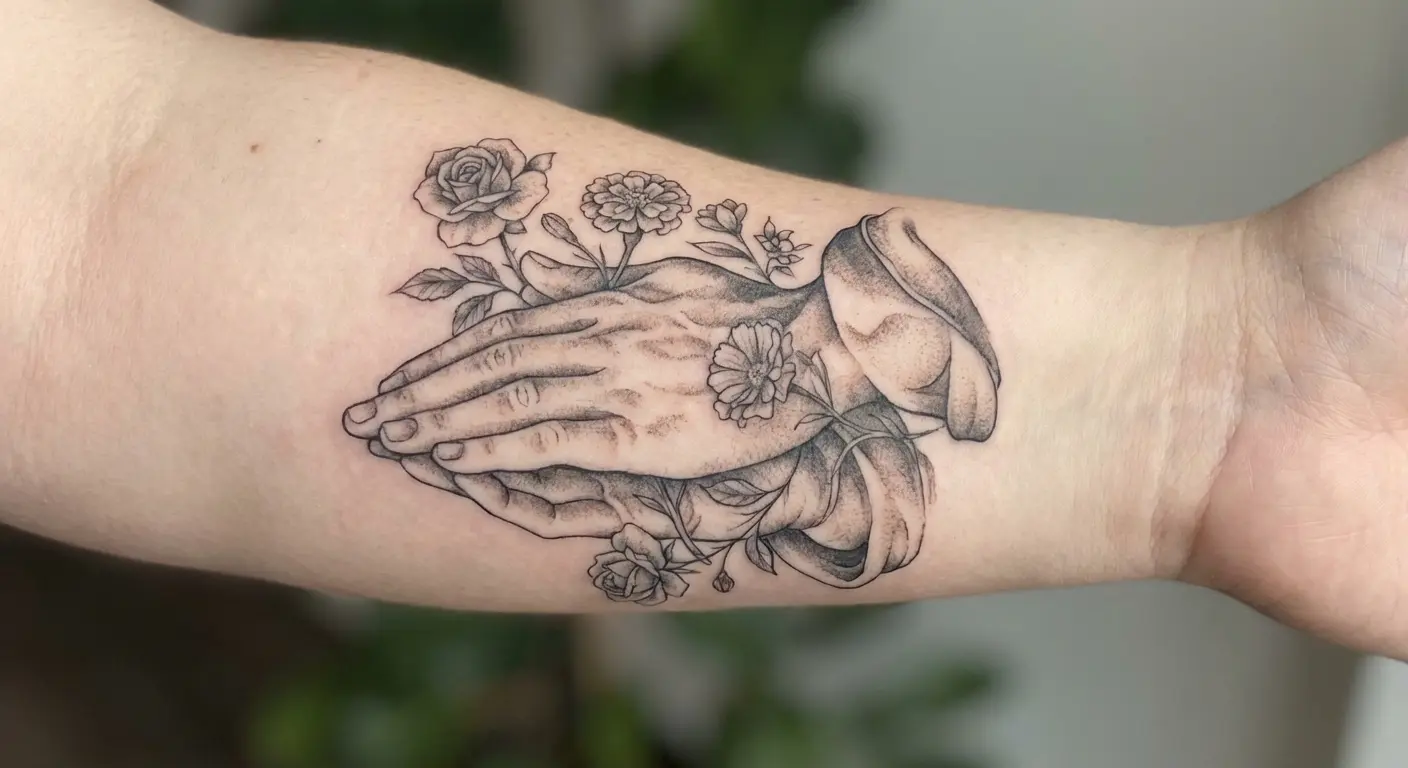
13. Birth Flower Accent with Hands
Birth flowers offer a softer alternative to names and dates while still honoring specific people. Each month has an associated flower (roses for June, marigolds for October, etc.), and you can incorporate flowers representing family members around or woven through praying hands.
This approach works well for mothers wanting to honor children or people memorializing loved ones. The flowers add color opportunities if you want to break from traditional black and grey praying hands. You’ll need an artist comfortable with both realistic hands and botanical illustration since the styles need to complement rather than clash. The prayer tattoo surrounded by blooms becomes a garden of remembrance, each petal representing someone who shaped your life. This prayer tattoo approach offers a gentler memorial aesthetic.
14. Rosary Beads Draped Over Knuckles
Rosary beads add both religious significance and visual texture. The beads can drape realistically over the knuckles, wrap around the wrists, or pool below the hands. Each bead requires individual attention from your artist. Sloppy beads look like dots rather than dimensional objects.
You might incorporate specific rosary colors that held meaning for the person you’re memorializing, or stick with traditional black or brown beads. The cross or crucifix attached to rosaries gives you another design element to consider.
The crucifix is a personal call. If you’re Catholic and devout, you probably want it front and center. If your relationship with the Church is… complicated… you might skip it entirely. Your tattoo, your rules.
The prayer tattoo with rosary elements connects Catholic tradition with personal loss, creating a visual prayer that never ends. This tattoo pray design bridges devotional practice with memorial tribute.
15. Multi-Generational Hand Stack Design
Instead of traditional praying hands, this design stacks hands of different sizes (representing grandparents, parents, children) in a prayer position. It’s a family tribute that feels less funereal than typical memorial tattoos.
The technical challenge is creating distinct hand sizes and characteristics that clearly represent different generations without looking cluttered. Your artist needs to understand hand anatomy well enough to show age differences through details like wrinkles, knuckle prominence, and finger thickness. This design works well for people who want to honor family legacy rather than memorialize specific deaths. The praying hands tattoos stacked vertically or overlapping create a visual representation of lineage, showing how faith passes through bloodlines and generations. These praying hands tattoos become powerful symbols of continuity and heritage.
Cultural Fusion: When Tradition Meets Innovation
Praying hands originated in Western Christian art, but contemporary tattoo culture loves mixing cultural elements in ways that would have confused Albrecht Dürer (the artist who created the iconic praying hands drawing in 1508). These fusion designs walk a delicate line between creative innovation and cultural appropriation.
Look, cultural fusion is tricky. There are amazing pieces that blend traditions respectfully, and Popular variations include trainwrecks that make you wonder if the person even Googled what a mandala means. (Spoiler: it’s not just a pretty circle.) The difference comes down to intention.
You need to understand what you’re combining and why. If you’re white and you want to add a mandala to your praying hands, ask yourself why. If the answer is just “it looks cool,” that’s appropriation. If you’ve actually practiced Buddhism or Hinduism, different story. Be honest with yourself.
These designs appeal to people whose faith journeys don’t fit neatly into single traditions or who want to honor multiple cultural influences that shaped them.
Celebrity influence on praying hands tattoo trends remains significant. In 2019, Selena Gomez revealed a large praying hands tattoo with rosary beads on her thigh that closely resembled her ex Justin Bieber’s similar ankle design (Daily Mail). Let’s be real, half the people who got these in 2019 were copying Bieber. The matching imagery sparked conversations about personal meaning versus aesthetic trends, highlighting how even deeply spiritual symbols can become part of broader cultural moments and relationship narratives. Your pray tattoo doesn’t exist in a vacuum. It participates in ongoing conversations about faith, identity, and artistic expression. Each pray tattoo carries both personal and cultural significance.
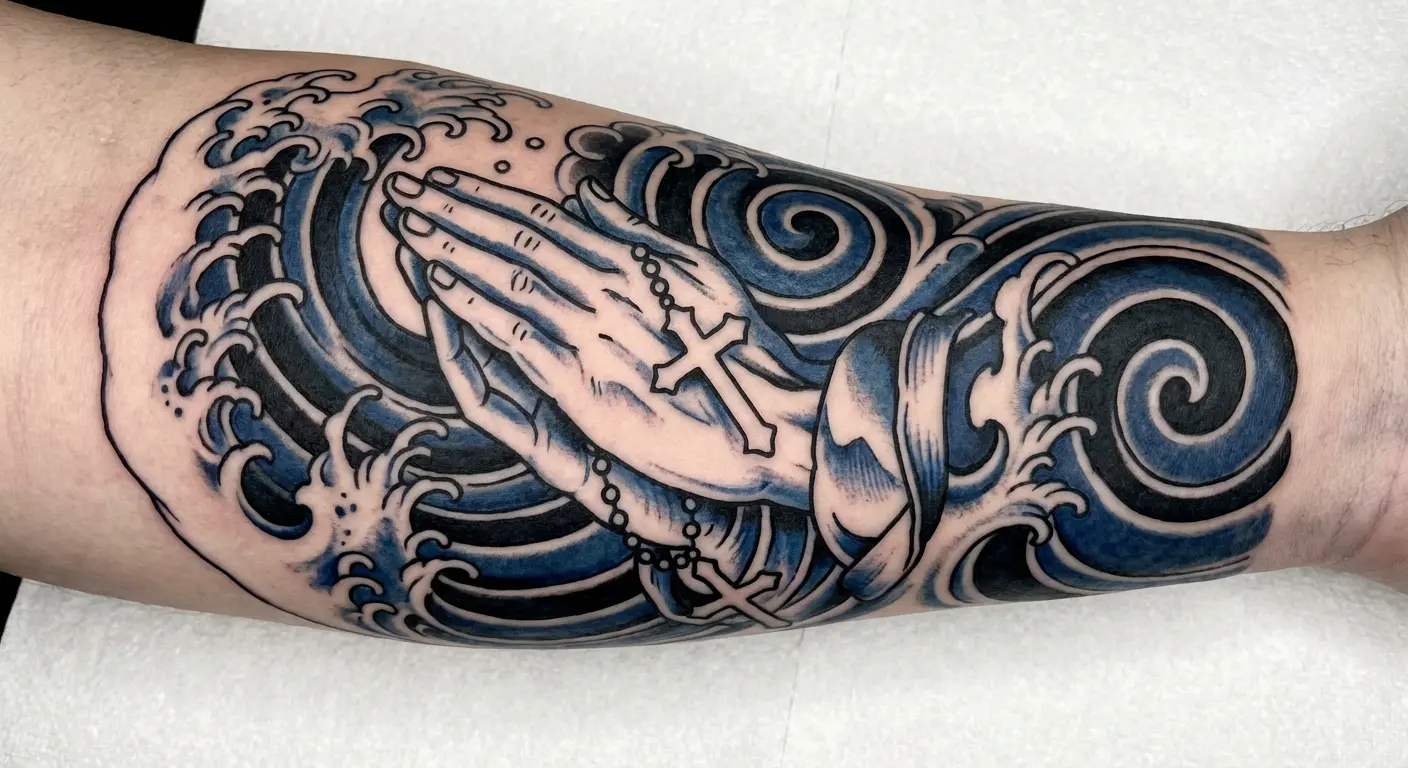
16. Japanese Wave Background with Western Hands
Japanese wave patterns (think Hokusai’s “The Great Wave”) create dynamic backgrounds for praying hands, suggesting faith that remains steady amid life’s turbulence. The waves also add movement to what’s usually a static image.
This fusion works best when you have connections to both Western Christianity and Japanese culture or aesthetics. The technical execution requires an artist familiar with Japanese tattooing conventions. Waves have specific rules about flow, foam placement, and composition. You’re asking for two distinct tattoo styles in one piece, which demands versatility most artists don’t possess.
Research artists who specifically advertise fusion work rather than hoping your local shop can figure it out.
Understanding traditional Japanese composition is essential for fusion pieces, so reviewing Japanese traditional tattoo principles and wave symbolism helps ensure your design respects both cultural elements. The praying hands tattoo men often choose in this style makes a statement about navigating between cultures, finding spiritual grounding while chaos swirls around you. A praying hands tattoo men select for this fusion approach demonstrates cultural appreciation when executed thoughtfully.
17. Mandala-Infused Palm Details
Mandalas represent the universe in Hindu and Buddhist traditions. Incorporating mandala patterns into the palms of praying hands creates interesting theological questions. Are you blending faiths or creating visual confusion? If you practice both Christianity and Buddhism, or if you come from a family with multiple religious traditions, this fusion might authentically represent your spiritual reality.
The mandala details require precise geometric work since asymmetrical mandalas look amateurish. Your artist needs steady hands and probably stencil assistance to maintain pattern consistency.
Color versus black and grey becomes a significant decision here. Traditional mandalas often use vibrant colors, but that might clash with the reverent tone of praying hands. The praying hands tattoo stencil for this design needs exceptional detail. Your artist is working with concentric circles, precise angles, and symmetrical patterns that leave no room for improvisation. Having a high-quality praying hands tattoo stencil ensures the mandala elements integrate seamlessly rather than looking tacked on as an afterthought. Your praying hands tattoo stencil becomes the blueprint for successful cultural fusion.
18. Chicano-Style Shading with Modern Elements
Chicano tattoo style developed in Mexican-American communities and features distinctive shading techniques, religious imagery, and cultural symbolism. Praying hands fit naturally into this tradition, but modern interpretations might incorporate contemporary elements like geometric patterns, watercolor effects, or illustrative styles.
The result honors Chicano tattoo heritage while acknowledging that tattoo culture evolves. This works well if you have Mexican or Mexican-American heritage and want a design that reflects both your cultural background and contemporary aesthetic preferences. Chicano shading creates depth through specific black and grey techniques that not all artists master, so you’ll need someone who understands the style’s foundations. The praying hands tattoo men in Chicano communities have worn for decades carries specific cultural weight. It’s not just religious imagery but a statement about identity, struggle, and resilience. This tattoo pray style honors tradition while embracing innovation.
19. Watercolor Splash with Traditional Form
Watercolor tattoos use techniques that mimic painting. Color bleeds, splashes, gradients without black outlines. Combining this contemporary style with traditional praying hands creates visual tension that can work beautifully or clash horribly depending on execution.
watercolor tattoos are overrated. They fade fast and don’t age well. But that’s just me. Plenty of people love them.
The praying hands usually remain in traditional black and grey while watercolor elements (often representing specific meanings like hope, peace, or joy) splash around them. You need to understand that watercolor tattoos age differently than traditional work. The soft edges and light colors fade faster, requiring touch-ups to maintain the original vibrancy.
Find an artist who’s been doing watercolor work for at least five years so you can see how their pieces age, not just how they look fresh. The tattoo pray in watercolor style becomes a living artwork that changes over time, the colors softening and shifting as your skin ages and your relationship with the tattoo deepens. This prayer tattoo variation offers artistic flexibility while maintaining core symbolism.
Turning Vision Into Reality Without the Guesswork
You’ve seen designs that resonate. Maybe you’re drawn to the bold statement pieces, or perhaps the minimalist approaches feel more authentic to your story.
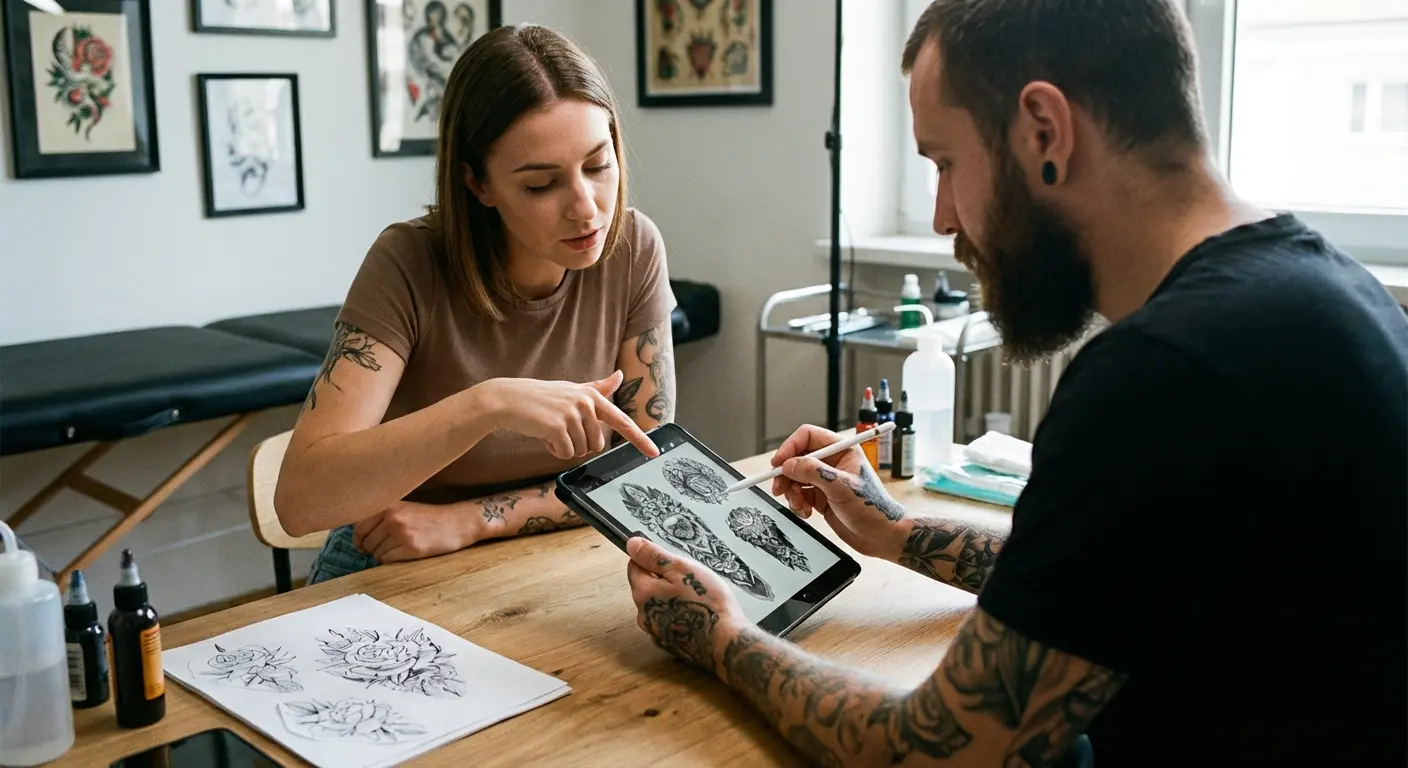
Here’s the frustration nobody talks about enough : explaining what you want to a tattoo artist when you can’t draw and Pinterest references only get you halfway there. You end up with a folder full of images that sort of capture elements you like, but nothing shows exactly what you’re envisioning. Your artist interprets, you hope for the best, and sometimes you get surprised (not always pleasantly) when you see the stencil.
Okay, quick aside. This is literally why we built Tattoo Generator IQ. I got tired of watching people walk into consultations with a Pinterest board full of contradictory images and hoping their artist could read minds. You describe what you want, the AI generates it, and you show up with an actual reference instead of vibes and prayers.
Is this a plug? Yeah. Is it also genuinely useful? Also yeah.
You’re not locked into the generated design, but you’re walking into your consultation with professional-quality references instead of vague descriptions and conflicting Pinterest screenshots. It bridges the gap between your vision and your artist’s interpretation, giving both of you a concrete starting point. The praying hands tattoo stencil you bring to your appointment can make or break the final result. Blurry references force your artist to guess, while crisp, detailed stencils let them focus on execution rather than interpretation. A professional praying hands tattoo stencil eliminates guesswork and ensures your vision translates accurately to skin.
Where This Leaves You
Praying hands tattoos carry significance that extends beyond their visual appeal. Whether you’re choosing them as faith declarations, memorial tributes, or personal spiritual reminders, the design decisions you make transform a common symbol into something that’s actually yours.
The hands themselves? Just the beginning. Placement, style, accompanying elements, and artistic execution all contribute to whether your tattoo feels authentic or generic. You’ll live with this decision permanently, which sounds obvious but genuinely affects how you should approach the planning process.
Don’t rush into the first design that looks appealing on someone else’s body. Consider how it fits your specific story, your aesthetic preferences, and your comfort with visibility. Talk to multiple artists, especially for complex pieces involving portraits, cultural fusion, or full sleeve integration.
The right artist makes the difference between a tattoo you’re proud to show and one you’re already planning to cover.
Some people regret their tattoos. That’s reality. The ones most likely to age well emotionally? The ones with specific, personal meaning. Not the ones you got because they looked cool on someone else.
Your praying hands tattoo should reflect what faith, remembrance, or spirituality means to you, not what it meant to whoever designed the flash art on the shop wall. The praying hands tattoos that resonate most deeply are the ones that tell your story, honor your journey, and speak your truth. Whether you choose a pray tattoo that covers your entire back or a prayer tattoo small enough to hide behind your ear, make sure it’s yours. Authentically, completely, unapologetically yours.
Alright, you’ve got the information. Now go sit with it for a while. If you’re still sure in six months, start looking for artists.
