19 We the People Tattoos That Speak to Your Constitutional Conviction Without the Kliché
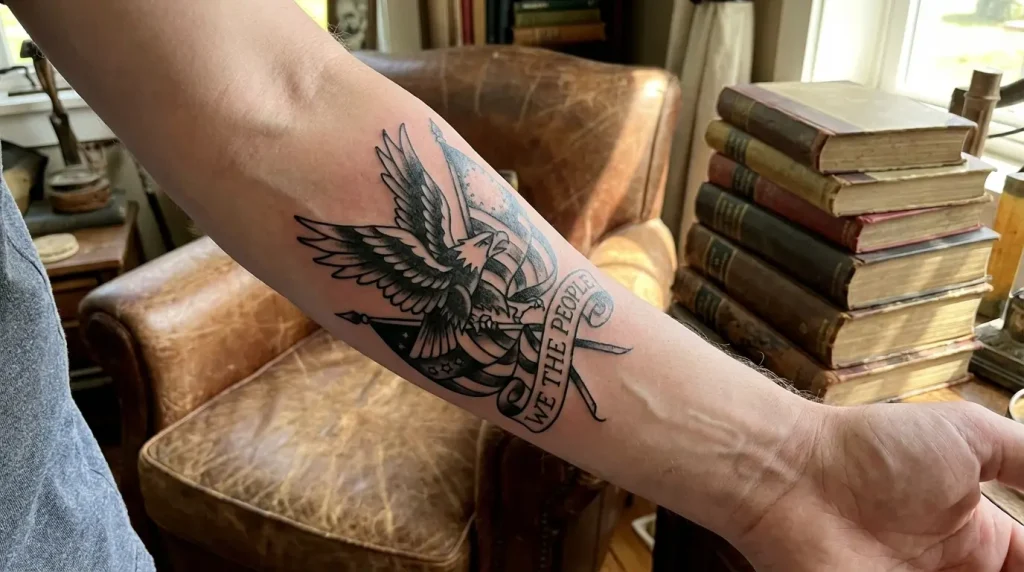
Table of Contents
-
Understanding the Constitutional Weight Behind the Ink
-
Founding Document Tributes
-
The Preamble Script Chest Piece
-
Constitution Scroll with Quill Detail
-
Bill of Rights Forearm Banner
-
1776 Signature Date Integration
-
Founding Fathers Portrait Cluster
-
Liberty Bell and Preamble Hybrid
-
Constitutional Amendment Sleeve Timeline
-
-
Patriotic Symbol Fusions
-
Eagle Clutching Constitution Scroll
-
American Flag Background with Preamble Text
-
Tattered Flag with We the People Script
-
Betsy Ross Flag Circle Frame
-
Stars and Stripes Sleeve with Constitutional Text
-
Statue of Liberty Holding the Constitution
-
Bald Eagle Perched on We the People Banner
-
-
Modern Constitutional Statements
-
Minimalist Line Art Constitution
-
Blackout Negative Space Preamble
-
Geometric We the People Shoulder Design
-
Constitutional Rights Checklist Back Piece
-
Abstract Freedom Typography Composition
-
TL;DR
-
Know which part of the Constitution you’re defending (not just “freedom”)
-
Placement = conversation starter, so choose wisely
-
Script quality matters more than you think. Bad calligraphy becomes illegible blobs
-
Eagles should enhance the text, not compete with it
-
Modern designs exist. You don’t need colonial aesthetics
-
You need serious real estate for this to age well
-
These tattoos make political statements whether you intend them to or not
Understanding the Constitutional Weight Behind the Ink
I’ve asked probably fifty people with We the People tattoos which part of the Constitution they’re defending. Most can’t answer beyond vague stuff about “freedom.” That’s a problem if you’re permanently marking your body with founding document text.
The Preamble’s opening three words have become shorthand for American patriotism, but the document contains 27 amendments, seven articles, and countless interpretations of individual liberty. Are you defending free speech? Gun rights? Voting access? Due process?
If you’re all about free speech, maybe the 1st Amendment gets emphasized in your design. Gun rights? The 2nd Amendment becomes your focal point, maybe with period-accurate musket imagery. Don’t just say “We the People” and call it a day.
Thousands of posts under #WeThePeoplesTattoo appear across Instagram and TikTok. This thing exploded after 2016. Everyone suddenly wanted permanent political statements on their bodies. Tattoo historian Linda Hayes called it what it is: “Ink is the new manifesto.” People are choosing to mark their allegiance through permanent art rather than speeches or flags.
I’m breaking down 19 designs that actually mean something beyond “I’m patriotic.” No rankings by popularity here. Your skin deserves more than a civics class poster, and I’m categorizing these by how they translate constitutional conviction into lasting art.
Founding Document Tributes
1. The Preamble Script Chest Piece
Centering the full Preamble across your chest creates a shield-like effect. The natural muscle contours emphasize different phrases depending on your build. “Establish Justice” might sit across one pectoral, while “secure the Blessings of Liberty” wraps the other.
The key challenge? Script legibility at this scale over time.
Get an artist who understands that colonial-era calligraphy looks authentic initially but often becomes an illegible blob after a decade. I’ve watched three friends’ Preamble tattoos turn into illegible blurs within eight years. All three used ornate calligraphy.
Modern serif fonts with adequate spacing between letters age better than ornate scripts. Ask your artist to incorporate subtle shading that creates depth without competing with the words themselves.
This isn’t a design you’ll hide under dress shirts. It’s symbolic placement, sure. But also: you’re putting this where everyone at the beach will see it. Own that choice.
Real talk about script styles:
Colonial Calligraphy – Looks amazing fresh. Turns into a blob by year 10. Every single time.
Modern Serif with spacing – Boring initially, but still readable when you’re 60. Clean, timeless.
Hand-drawn Italics – Depends entirely on your artist’s line weight. Risky. Personal and intimate when done right.
Bold Sans-Serif – Clean, contemporary, lasts forever. My personal choice for projecting confidence.
2. Constitution Scroll with Quill Detail
The scroll format solves a practical problem: how do you make aged parchment look intentional rather than like your tattoo is fading prematurely? Adding a quill pen creates movement and suggests active participation in democracy rather than passive reverence.
Forearm placement gives you the advantage of rotation. You show the scroll unfurling or rolled tight depending on arm position. The quill should be positioned as if it just finished writing, with a small ink well detail if space permits.
A lot of people add their birth year or a significant date in smaller script at the scroll’s edge, connecting personal history to national history. The scroll’s torn or burned edges? That tells which constitutional battles you see as ongoing versus settled.
Torn edges on one side, clean edges on the other? That’s saying some battles are settled, others aren’t.

3. Bill of Rights Forearm Banner
Why limit yourself to the Preamble when the first ten amendments contain the protections people actually fight over? A banner listing your prioritized amendments tells a much more specific story. You’re not celebrating America in abstract terms. You’re declaring which rights you consider non-negotiable.
Whether that’s 1, 2, 4, or all ten in condensed form, the banner format allows for ribbon-style wrapping that follows your forearm’s natural curve. Some people bold or enlarge specific amendment numbers to show hierarchy. Others use different ink weights to show which rights they see as under threat versus secure.
This design works best when you resist the urge to include every word and instead use amendment numbers with key phrases. When considering meaningful tattoo ideas for men, constitutional text offers substance beyond aesthetic appeal. Your forearm becomes a wearable declaration of your constitutional priorities.
4. 1776 Signature Date Integration
The Declaration of Independence was signed in 1776, but the Constitution wasn’t ratified until 1788. Most we the people tattoos incorrectly pair the Preamble with 1776, creating a historical mash-up that undermines the wearer’s credibility.
If you’re including a date, make sure it corresponds to the actual document you’re celebrating.
I get genuinely annoyed when I see 1776 paired with Constitution text. It’s just historically wrong.
That said, intentionally combining 1776 with We the People works if you’re making a broader statement about the founding era rather than document-specific reverence. Roman numerals (MDCCLXXVI) add visual weight and classical gravitas. The date serves as a foundation element beneath script or as bookends on either side of the Preamble.
The recent scrutiny of Defense Secretary Pete Hegseth’s tattoos during his January 2025 Senate confirmation hearings proves my point. Hegseth’s collection includes “We The People” from the U.S. Constitution and the year 1775 in Roman numerals (MDCCLXXV). 1775 marks the Revolutionary War’s beginning versus 1776’s Declaration or 1788’s Constitutional ratification. These tattoos make political statements whether you intend them to or not. Public attention underscores the importance of historical accuracy when permanently marking your body with founding-era references.
Consider placement where the numbers stand alone when your arm is positioned certain ways, creating two designs in one.
5. Founding Fathers Portrait Cluster
Portrait tattoos are technically demanding, and adding multiple faces increases the difficulty exponentially. This design works best as a shoulder-to-chest piece where you have enough canvas for proper scale and detail.
Don’t try cramming in all the signers. You’ll end up with a blurry crowd scene. Pick three to five whose actual politics you agree with. Washington, Jefferson, and Madison tell a different story than Hamilton, Adams, and Franklin. Know the difference.
Background elements should include subtle constitutional text rather than competing imagery. The portraits need to be large enough that facial features remain distinct as the tattoo ages. At least 3-4 inches per face minimum. Anything smaller becomes a smudge within five years, no matter how skilled your artist.
6. Liberty Bell and Preamble Hybrid
The Liberty Bell’s crack is its most recognizable feature, and smart designs use that fissure to incorporate text. Imagine We the People emerging from the crack itself, suggesting that constitutional principles break through imperfect vessels.
The bell gets rendered realistically or in bold traditional American style with heavy black outlines. Shoulder placement allows the bell to sit at the cap of your arm with text wrapping down toward your bicep.
Some versions include the bell’s actual inscription (“Proclaim Liberty Throughout All the Land”) in addition to the Preamble, though this risks visual clutter. The bell’s yoke and mounting hardware provide natural framing elements. This appeals to people who want patriotic symbolism that’s immediately recognizable even from a distance, with constitutional text as the closer detail.
7. Constitutional Amendment Sleeve Timeline
A full sleeve that chronologically depicts the amendment process shows constitutional evolution rather than static reverence. Start at the shoulder with the original 1788 ratification, then work down the arm with amendments appearing in order.
Each amendment gets represented by a small icon or scene rather than full text. A broken chain for the 13th. A ballot box for the 19th. This approach requires serious planning because you need to account for potential future amendments or leave intentional gaps.
The timeline format works well for people who view the Constitution as a living document rather than frozen in 1788. You’re literally wearing the argument that interpretation and adaptation are features, not bugs.
This is a multi-session commitment that needs an artist who understands historical iconography and maintains stylistic consistency across dozens of small elements.
Amendment timeline breakdown:
1st Amendment – Quill, megaphone, press symbol (foundation, upper shoulder)
2nd Amendment – Musket, modern firearm (visibility, outer bicep)
13th Amendment – Broken chains, freed hands (intimate, inner arm)
15th Amendment – Ballot box, voting hand (public, forearm)
19th Amendment – Suffragette imagery, ballot (public, forearm)
26th Amendment – Youth voting, age marker (progression, lower arm)

Patriotic Symbol Fusions
8. Eagle Clutching Constitution Scroll
The bald eagle appears in roughly 60% of patriotic tattoos, which means yours needs a distinguishing element to avoid looking like every other American traditionalist. Having the eagle clutch a rolled Constitution (with We the People visible on the exposed edge) shifts the focus from generic patriotism to document-specific advocacy.
The eagle’s positioning matters. Facing right (the viewer’s left) is traditional heraldry for looking toward the future. Facing left suggests guarding the past.
Wings spread wide requires back or chest placement for proper scale. Wings tucked creates a more compact design suitable for upper arms. The scroll should be proportionally accurate, not oversized to the point of looking cartoonish.
I saw one version where the eagle’s talons were tearing the scroll slightly. Either badass commentary on fragile democracy or it looks like your eagle is angry at the Constitution. Depends on execution.
Similar to old school tattoo traditions, eagle designs benefit from bold outlines and clear symbolism.

9. American Flag Background with Preamble Text
Layering text over a flag background is technically simple but aesthetically tricky. You need enough contrast for the words to remain legible without making the flag look washed out.
Faded or watercolor flags work best here. You want texture, not a screaming flag that drowns out the text. Black script over red stripes provides maximum contrast but looks harsh. White or light gray script over blue canton areas offers subtlety but may fade faster.
Consider a flag that’s slightly tattered or weathered to suggest hard-won freedoms rather than pristine idealism. Forearm placement gives you a natural rectangular canvas that matches flag proportions. The text should follow the flag’s wave and movement rather than sitting rigidly on top.
10. Tattered Flag with We the People Script
The tattered flag aesthetic has exploded in popularity over the past decade, often signaling military service or blue-collar patriotism. Combining it with We the People text adds constitutional grounding to what otherwise reads as generic tough-guy imagery.
Make the wear and tear look intentional rather than like your tattoo artist couldn’t execute clean lines. Threads should be pulling away from the flag’s edge in realistic directions based on fabric physics.
The script weaves through the tatters or sits boldly across the intact portions. Arm placement works well because muscle flex makes the flag appear to wave. Some versions incorporate specific battle dates or military unit insignias within the design, connecting personal service to constitutional oath-taking.
The tattered aesthetic says you believe these principles have been tested and survived.
11. Betsy Ross Flag Circle Frame
The 13-star circular pattern of the Betsy Ross flag creates a natural frame for central text or imagery. We the People sits in the circle’s center with the stars creating a border, or the stars integrate into a larger composition with the Preamble wrapping around the outside.
Yeah, I know, calling the Betsy Ross flag “politically charged” might piss some people off. But pretending it isn’t won’t help you avoid awkward conversations when someone assumes things about your politics. This design has become politically charged in recent years, with various groups claiming the Betsy Ross flag as their symbol. Be aware of these associations before committing to this imagery.
The circular format
The circular format works well for shoulder placement where it caps your arm. The 13 stars get rendered in traditional five-point style or as more detailed nautical stars. Some versions replace stars with small state outlines or founding father silhouettes. The Betsy Ross frame works best when you’re specifically celebrating the original colonies and founding era rather than modern America.

12. Stars and Stripes Sleeve with Constitutional Text
A full sleeve that integrates flag elements with constitutional text requires careful planning to avoid looking like a party store decoration. Break the flag into components (stars scattered across the shoulder, stripes wrapping the forearm, text integrated throughout) rather than trying to replicate an actual flag on your arm.
Use the 13 stripes to create sections for different constitutional principles or amendments. Stars mark specific rights or freedoms you prioritize. The red, white, and blue color palette is non-negotiable for this design, but you adjust saturation and shading to create depth.
Some people add black shading to create an aged or vintage effect. This is a bold, immediately recognizable tattoo that announces your politics before you open your mouth. Make sure you’re comfortable with that level of public declaration before committing to this specific political commentary on your body.
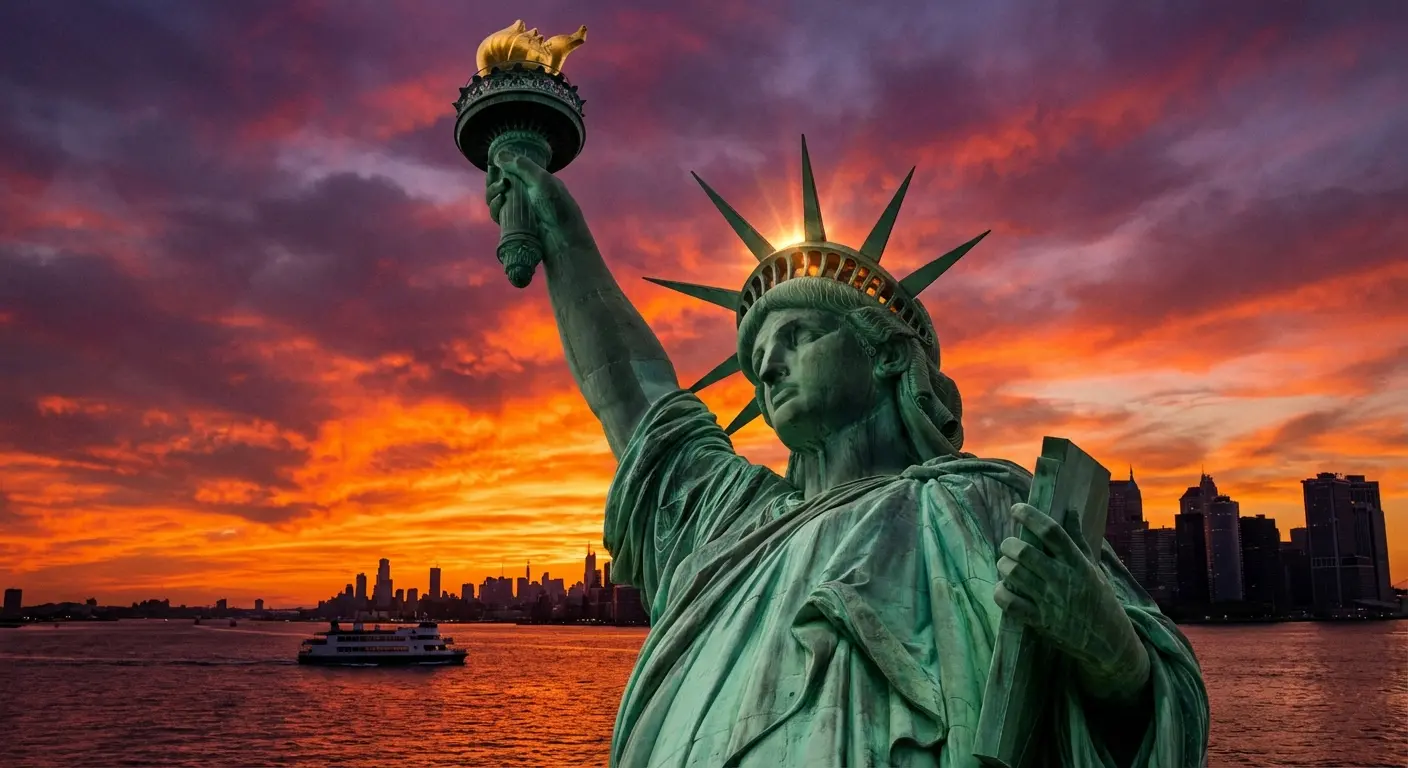
13. Statue of Liberty Holding the Constitution
Lady Liberty typically holds a torch and tablet, but reimagining her with the Constitution instead creates an interesting fusion of immigrant welcome and foundational law. This works best as a larger back or thigh piece where you have room for proper scale and detail.
The statue’s crown, robe folds, and facial features all require significant space to execute well. The Constitution replaces her traditional tablet or gets shown unfurled in her raised hand instead of the torch. Some versions show the Preamble text on her robe or pedestal.
The Statue of Liberty brings a specific connotation of immigration and refuge that pairs interestingly with We the People, either suggesting constitutional protections extend to newcomers or that citizenship is the prerequisite for constitutional rights (depending on your interpretation). This design appeals to people whose constitutional advocacy includes immigration policy.
14. Bald Eagle Perched on We the People Banner
Rather than having the eagle clutch or carry the banner, showing it perched suggests guardianship and watchfulness. The eagle gets rendered in realistic detail or bold traditional American style with heavy outlines and limited shading.
The banner should have enough dimensional detail (folds, shadows, mounting hardware) to look like a physical object rather than floating text. Back placement allows for impressive wingspan, while shoulder placement creates a more compact, patch-like composition.
I’m probably overthinking the eagle’s facial expression, but I’ve stared at these designs for six months and I’m telling you: angry eagle vs. contemplative eagle matters. An aggressive, screaming eagle suggests militant defense of constitutional rights. A calm, watchful eagle suggests steady vigilance. Some versions include olive branches or arrows in the eagle’s free talon, pulling from traditional Great Seal imagery.
Modern Constitutional Statements
15. Minimalist Line Art Constitution
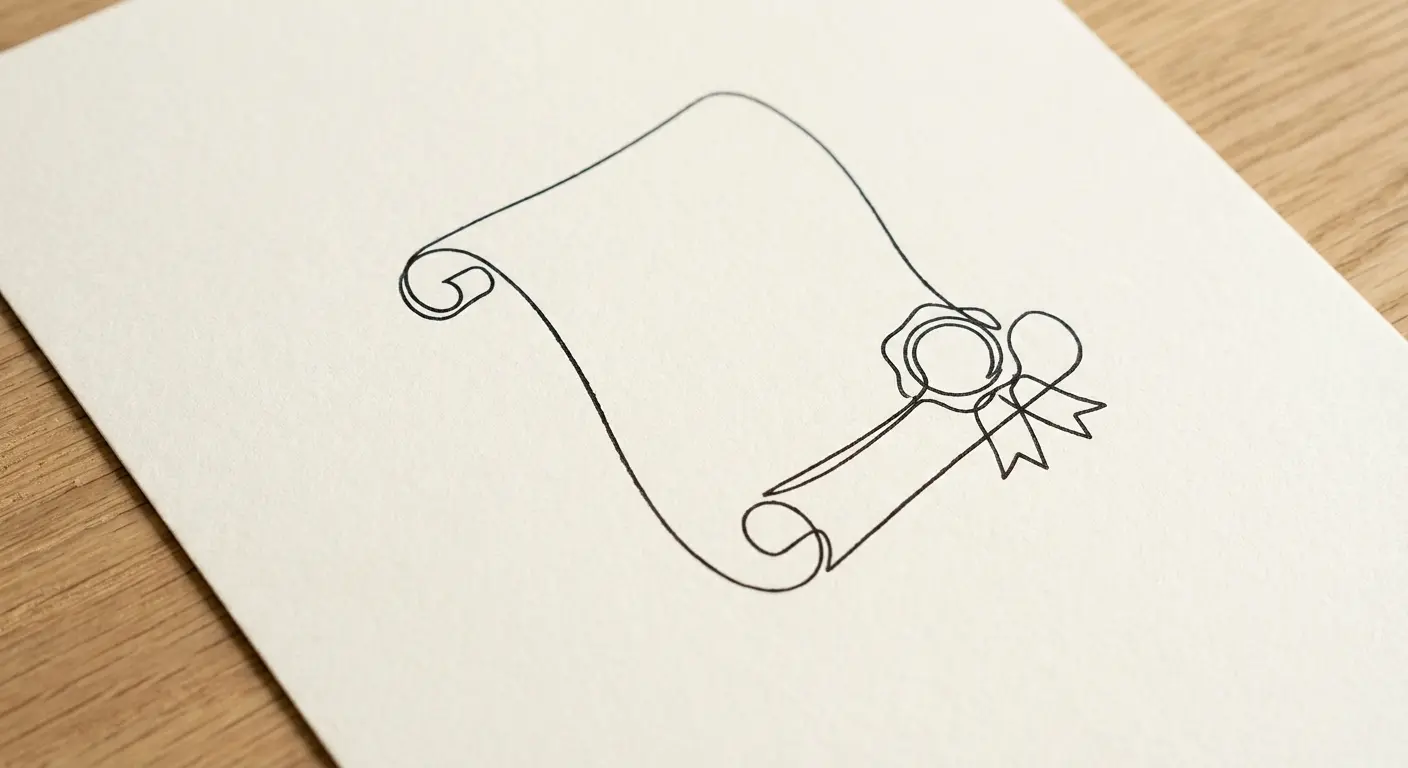
You don’t need colonial aesthetics to express constitutional devotion. A single-line drawing of the Constitution’s first page (recognizable by its distinctive header and opening script) proves that modern design sensibilities and founding document reverence aren’t mutually exclusive.
The line should be continuous and flowing, creating the document’s outline and key text elements without lifting the pen (or needle). This style works well for people who appreciate the Constitution’s principles but don’t identify with traditional patriotic imagery.
Forearm or ribcage placement suits the vertical document format. The minimalist approach also ages well because there’s no fine detail to blur or fade. You’re making a sophisticated statement about form and content, suggesting the Constitution’s ideas matter more than the parchment they were written on.
This approach shares aesthetic principles with fineline tattoo techniques that prioritize clean execution over ornate detail.
16. Blackout Negative Space Preamble
Blackout tattoos have moved from cover-up solution to intentional aesthetic choice. Using solid black ink to create negative space lettering (where We the People appears as skin-colored text against black background) creates a bold, contemporary look.
This technique requires significant commitment because you’re covering large areas with solid black. The text needs to be large and bold enough to remain legible as negative space. Arm bands or shoulder caps work well for this design.
Some versions incorporate geometric patterns or subtle texturing within the black areas to add visual interest without compromising the negative space text. This appeals to people who want their constitutional statement to be undeniably visible and modern, breaking from traditional patriotic tattoo aesthetics entirely.
You’re saying the words matter more than historical costuming. For more on this dramatic style, explore blackout tattoo considerations before committing to extensive solid ink coverage.
17. Geometric We the People Shoulder Design
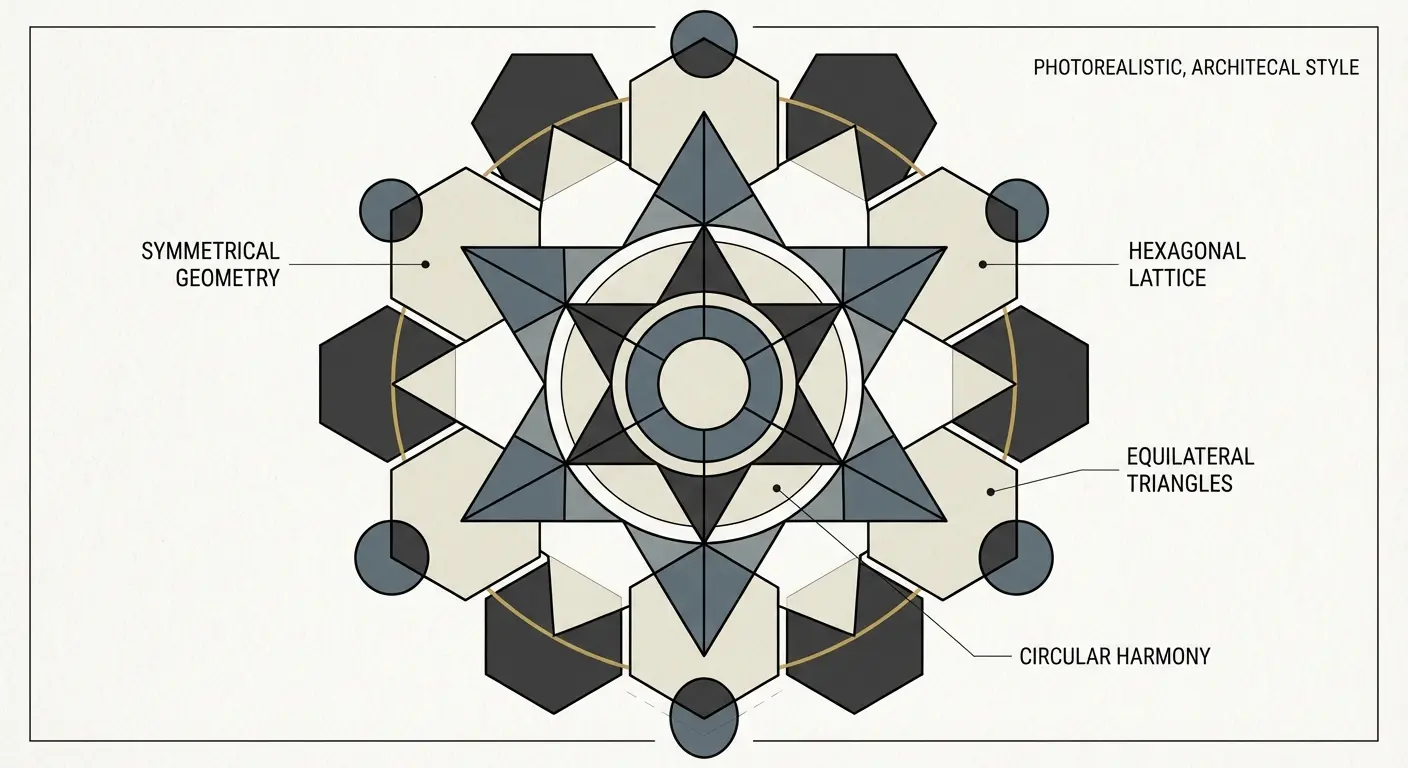
Sacred geometry, mandalas, and geometric patterns frame or incorporate We the People text in ways that suggest universal principles rather than American exceptionalism. The Constitution’s ideas about individual rights and limited government aren’t uniquely American, even if the document is.
Geometric framing suggests these are mathematical, logical, almost inevitable conclusions about how humans should organize society. Triangles suggest stability and hierarchy. Circles suggest unity and equality. Hexagons suggest efficiency and natural order.
The text follows geometric lines or sits at the composition’s center. Shoulder placement allows the geometry to cap your arm and extend onto your chest or back.
This works for people who love constitutional principles but want to avoid flag-waving nationalism. You’re celebrating ideas, not geography. Similar conceptual approaches appear in geometric tattoo designs that prioritize symbolic structure over literal representation.
18. Constitutional Rights Checklist Back Piece
A full back piece that lists constitutional rights in checklist format (with some checked, some unchecked, some crossed out) makes a powerful statement about selective enforcement and ongoing civil rights battles.
This design is inherently political because you’re declaring which rights you see as protected versus violated. The checklist includes amendments, specific rights from the Bill of Rights, or court decisions that expanded constitutional protections.
I saw one where the guy used different colors for different statuses (green for secure, red for threatened, yellow for contested). The format resembles a legal document or government form, adding bureaucratic irony to constitutional idealism.
This is a conversation-starter tattoo that will require you to defend your choices about which boxes are checked. Make sure you’re ready for those conversations before committing to this level of specific political commentary on your body.
19. Abstract Freedom Typography Composition
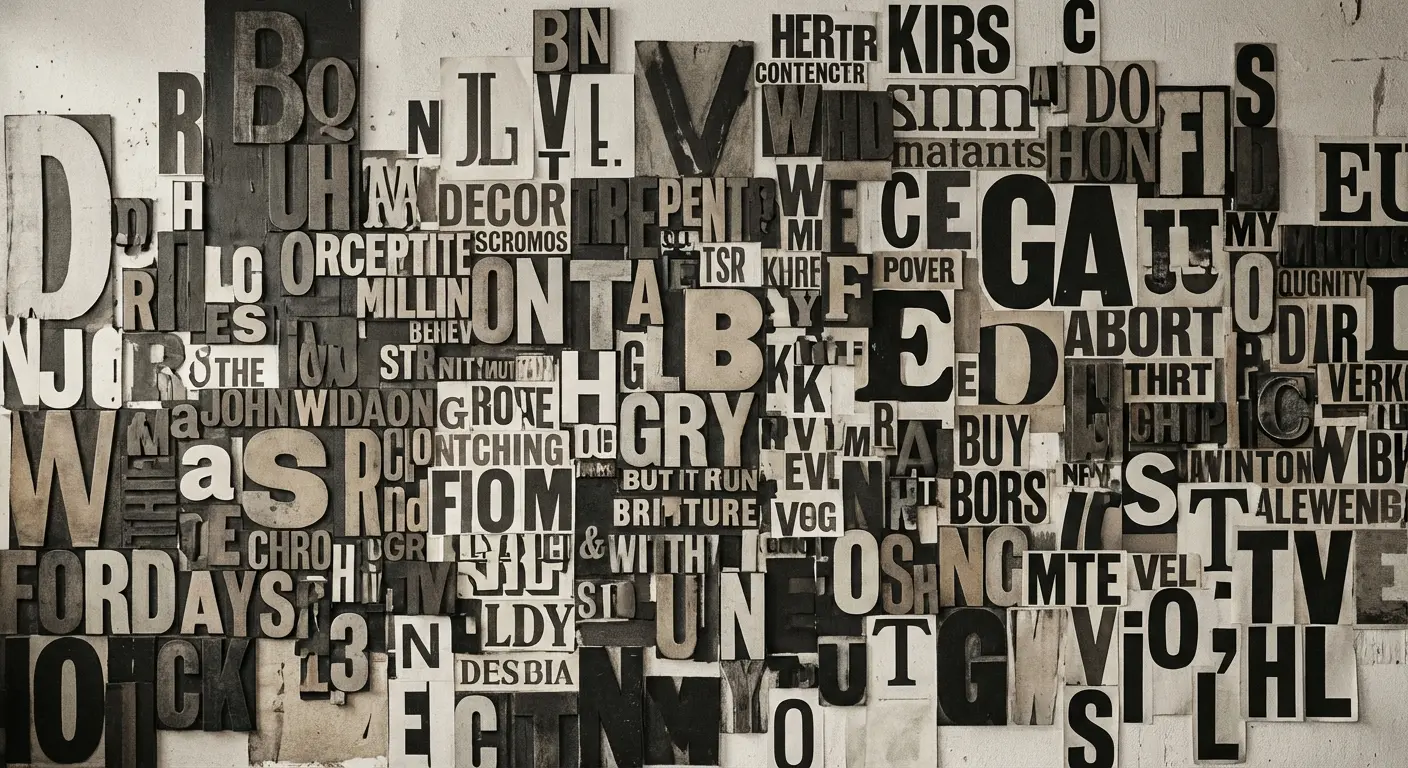
Typography-focused designs that deconstruct We the People into layered, overlapping, or fragmented text create visual complexity while maintaining message clarity. You use different fonts, sizes, and orientations to suggest the many voices and interpretations that make up “we the people.”
Some versions scatter individual letters that coalesce into readable text only from specific angles. Others layer the phrase repeatedly in different opacities to create depth.
This approach works well for ribcage, forearm, or upper back placement where you have elongated space. The abstract typography style appeals to designers, artists, and people who view language itself as a form of creative expression.
You’re suggesting that constitutional interpretation is inherently subjective and that the document’s meaning emerges from collective reading rather than fixed definition. This separates you from literal-minded constitutional originalists while still claiming the founding text as meaningful.
Bringing Your Constitutional Vision to Reality
You’ve spent time thinking about which constitutional principle matters to you, which is more than most people do before getting patriotic ink. The gap between concept and execution is where most constitutional tattoos fail.
Your artist needs reference images that show exactly what you want, but finding the right design often means combining elements from multiple sources or creating something entirely new.
Practical advice: I’ve used Tattoo Generator IQ to mock up designs before sessions. You describe what you want in normal words, it generates actual visual options, you bring those to your artist. Beats the hell out of pointing at random Google images and saying “like this but different.”
The designs include placement guides so you see how different scales and positions will look on your actual body before committing to permanent ink.
Whether you’re planning an arm tattoo or exploring other placements, having precise visual references ensures your constitutional conviction translates accurately from concept to skin. These ideas become actionable designs rather than vague concepts, giving you confidence before your first session.
According to tattoo experts, costs for We the People tattoos vary based on complexity. Minimalist scripts start around $150, while elaborate designs with color and iconography can exceed $600 to $1,200. The phrase’s historical weight requires precision in typography and spacing, as errors risk misrepresentation, making professional artist selection and digital mockups critical before inking.
Final Thoughts
The best We the People tattoo I’ve ever seen was on a guy who could quote the 4th Amendment from memory. The worst was on someone who thought the Constitution and Declaration were the same document. Be the first guy.
These tattoos fail when they’re generic patriotic decoration without specific constitutional conviction behind them. The designs I’ve covered here work because they force you to think about which part of the Constitution you care about defending.
Are you celebrating the Preamble’s aspirational language? Specific amendments that protect rights you consider non-negotiable? The amendment process itself as evidence of constitutional flexibility?
Your tattoo becomes a hell of a lot more meaningful when it reflects genuine engagement with constitutional principles rather than vague flag-waving. The placement, style, and accompanying imagery all contribute to your statement. A chest piece announces conviction. A forearm invites conversation.
Traditional American styling connects you to tattoo history. Modern geometric approaches separate constitutional principles from nationalist aesthetics.
Bottom line: if you can’t explain which specific constitutional principle your tattoo represents, you’re just wearing patriotic decoration. And that’s fine, just own it. But if you want your ink to mean something beyond “I’m American,” do the work to understand what you’re defending.
