Angel Tattoo Designs That Break the Sacred vs. Rebellious Binary (And Why That Matters for Your Skin)
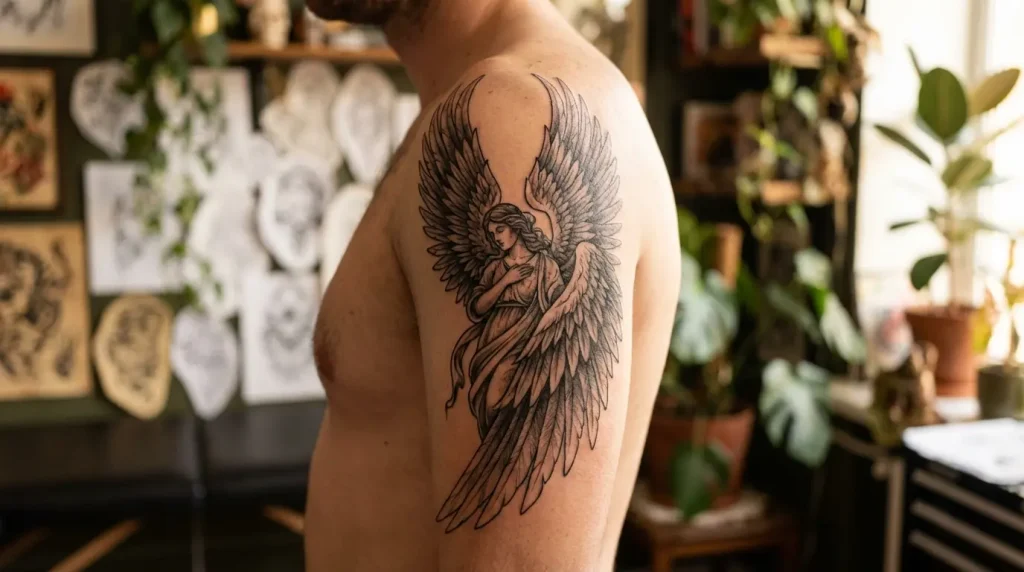
Look, most angel tattoos are either “guardian angel protecting dead grandma” or “edgy fallen angel with torn wings.” That’s it. Those are your options, apparently. And yeah, those tattoos mean something real to people. I get it. But here’s what drives me crazy: these two categories have gotten so dominant that they’ve crowded out dozens of other ways to think about angels.
Yeah, angel tattoos symbolize protection and comfort and guidance. We know. But the research? It completely misses the messy middle ground. The space where doubt lives alongside devotion. Where transformation doesn’t feel redemptive or dark, just different.
What about angels as witnesses rather than protectors? What about the uncomfortable biblical descriptions of angels that had to open with “be not afraid” because they were genuinely terrifying?
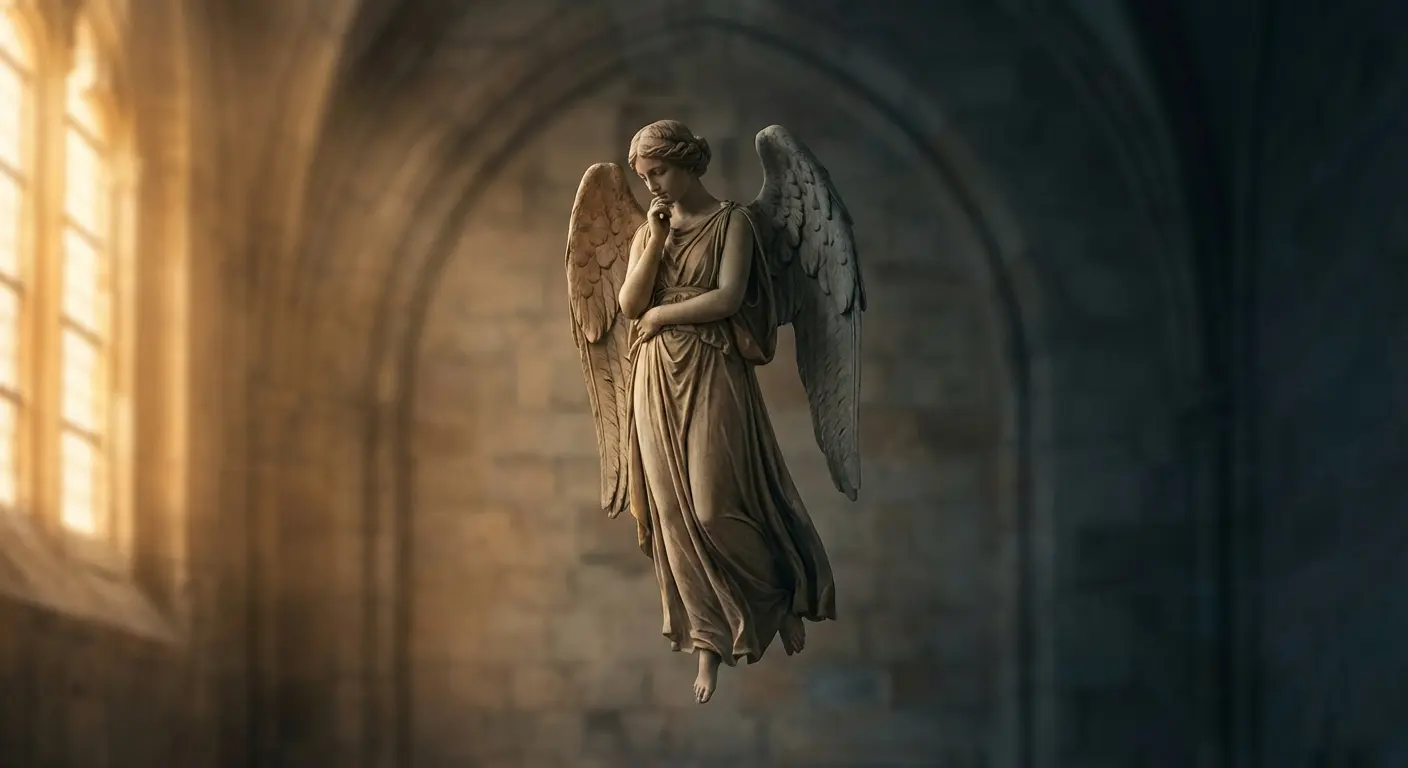
The space between sacred and rebellious is where the most interesting design work happens. Angels caught mid-transformation. Angels that represent the moment before a decision, not after.
Your relationship with the concept of angels (whether religious, cultural, or purely aesthetic) probably isn’t binary. Why should your angel tattoo be?
Why Angel Tattoos Get Trapped in Two Tired Categories
You’ve seen them both a thousand times. The guardian angel tattoo with soft, flowing wings cradling a loved one’s name and dates. The fallen angel tattoo with torn wings, often paired with skulls or flames to really drive the point home.
Here’s what I’ve noticed after years of watching tattoo trends: these two categories have become so dominant that they’ve crowded out dozens of other ways to think about angels.
Say you survived a car accident but don’t feel “saved” in the traditional sense. You feel marked by what you witnessed. A traditional guardian angel tattoo doesn’t capture that experience. Instead, an angel positioned as an observer, with scrolls or open hands rather than protective wings wrapped around your name, acknowledges the complexity of survival without the pressure to feel grateful or redeemed.
Actually, let me tell you about a consultation I sat in on once. This guy came in wanting a guardian angel for his daughter who’d died. Standard request, right? But when the artist started sketching the usual stuff (peaceful angel, soft wings, maybe cradling a baby), the guy stopped him. “That’s not what it felt like,” he said. “It didn’t feel peaceful. It felt like someone was watching me drown and couldn’t do anything about it.” They ended up designing an angel with its hands pressed against an invisible barrier, face turned away.
That tattoo haunted me for weeks. It was honest in a way the pretty version never could have been.
The Cultural Weight You’re Actually Carrying
People get angel tattoos for the obvious reasons. Faith, protection, memorial stuff. What the research doesn’t always capture is how these meanings shift depending on which cultural tradition you’re drawing from (sometimes without even realizing it).
Religious Iconography You Didn’t Know You Were Borrowing
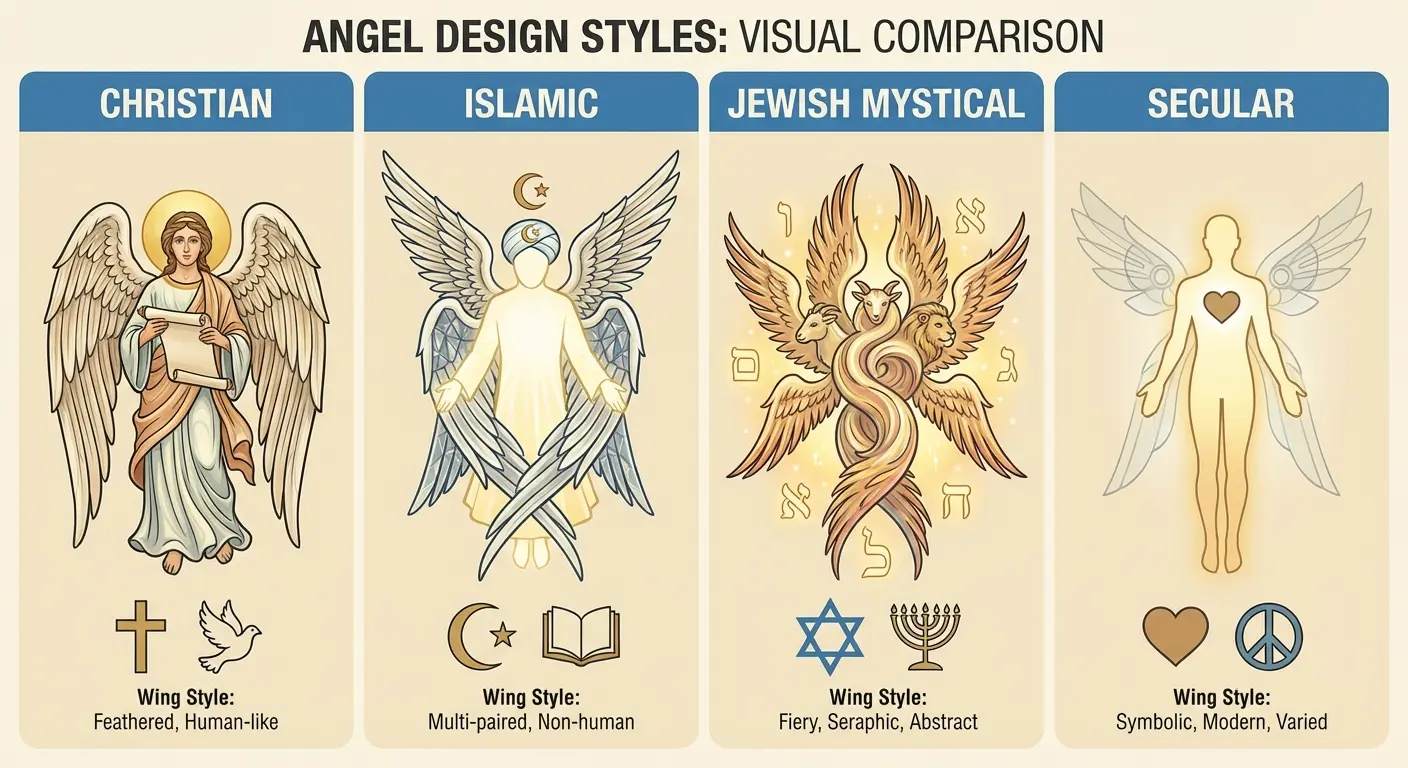
Angels show up in Judaism, Christianity, and Islam with wildly different visual traditions. Christian angels got their wings from Greek Nike figures. The goddess of victory, not the shoe brand. (And yes, I know bringing up Greek mythology in a post about angel tattoos is peak art history nerd behavior. Sorry not sorry.)
Islamic tradition generally prohibits depicting angels with faces, which opens up fascinating design possibilities we’ll explore later.
Jewish mysticism describes angels as beings of pure fire and light, constantly singing. That’s a very different vibe from the Renaissance cherubs that dominate Western tattoo flash.
You don’t need to be religious to get an angel tattoo. But understanding these traditions helps you make choices about halos, multiple wings, flaming swords, or specific gestures that carry meaning you might want to lean into or deliberately subvert.
|
Religious Tradition |
Angel Characteristics |
Visual Elements |
Design Implications |
|---|---|---|---|
|
Christian |
Humanoid with wings, often beautiful |
Halos, robes, two wings, peaceful expressions |
Works well for memorial and guardian concepts |
|
Islamic |
Faceless or abstract, made of light |
No facial features, geometric patterns, light rays |
Perfect for minimalist or abstract designs |
|
Jewish (Mystical) |
Fire and light beings, multi-winged |
Flames, radiating light, seraphim with six wings |
Ideal for dramatic, otherworldly pieces |
|
Secular/Modern |
Flexible interpretation |
Mix of traditional elements with personal symbolism |
Allows creative freedom while borrowing from traditions |
Memorial Tattoos and the Pressure to Get It “Right”
Angel tattoos for lost loved ones carry enormous emotional weight. You’re trying to honor someone while also creating something you’ll live with forever. That combination can make the design process feel paralyzing.
Nobody tells you this before you go in for your consultation, but you need to hear it: the angel tattoo doesn’t have to look peaceful if your grief doesn’t feel peaceful. It doesn’t have to look protective if what you’re feeling is absence.
The most honest memorial angel tattoos I’ve seen show angels in poses of witnessing or waiting, not intervening.
Your grief is allowed to be complicated. Your angel tattoo can be too.
Guardian Angels Aren’t the Only Messengers Worth Inking
We default to guardian angels so automatically that we forget there are entire categories of celestial beings with completely different purposes. Recording angels. Destroying angels. Announcing angels.
Before you settle on a guardian angel design, think about what you’re actually looking for. Protection? Or just acknowledgment that something happened? Are you marking an ending, a beginning, or that weird suspended moment between the two?
Recording Angels Who Bear Witness
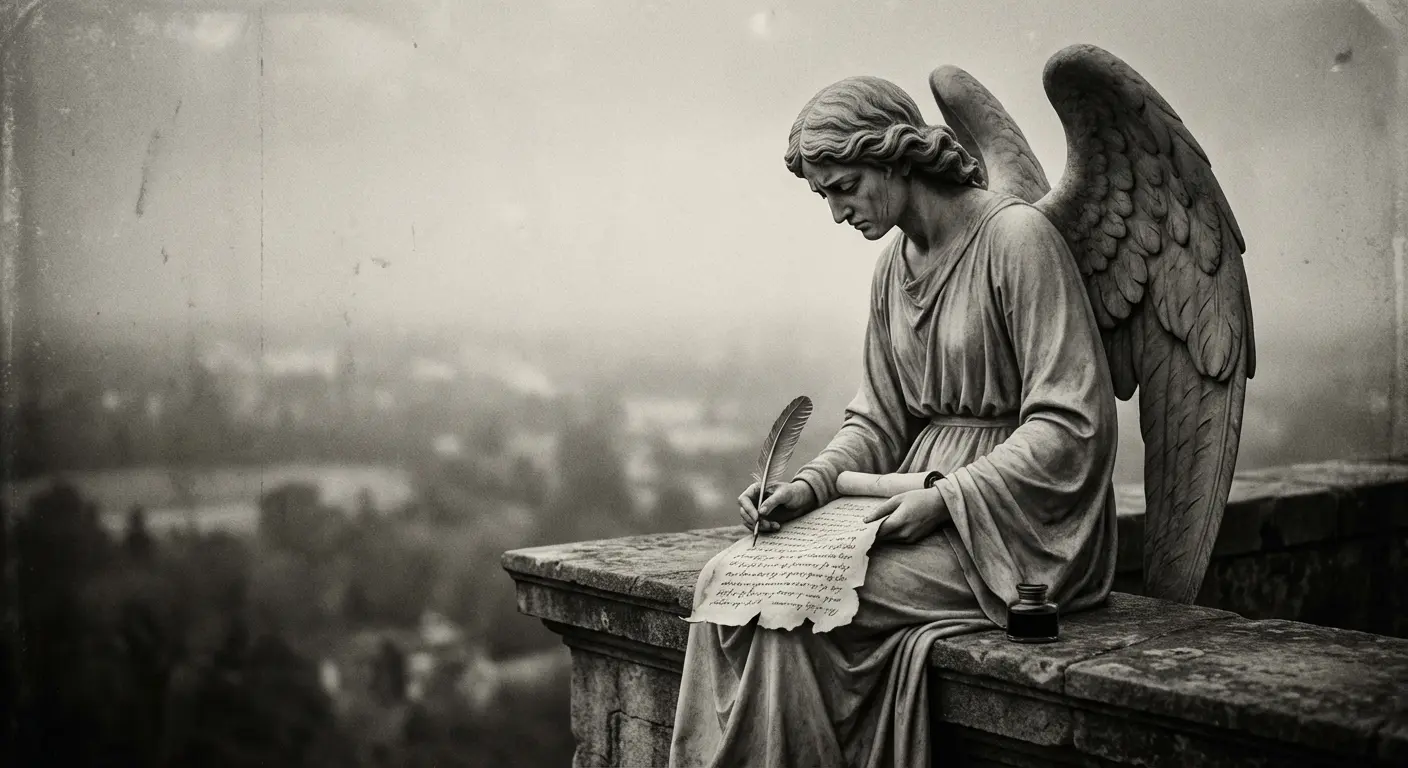
Some religious traditions describe angels whose job is simply to observe and record. They’re not intervening, just present.
Picture angels with scrolls, books, or even more abstract recording devices. Angels whose faces show the weight of what they’ve seen. Angels positioned as observers rather than actors.
This works particularly well for people who’ve survived something difficult. The angel isn’t there to have saved you. It’s there because it saw what happened, and that matters.
Destroying Angels With Purpose
The Passover story includes an angel of death. Plague narratives across multiple religions feature angels as instruments of divine destruction. These aren’t fallen angels acting in rebellion. They’re carrying out a purpose.
That’s a completely different energy from the typical “dark angel” tattoo. There’s no rebellion here, no angst. Just power in service of something larger.
Visually, this can mean angels with covered faces (too holy to look upon), angels with multiple wings creating geometric patterns, or angels holding specific objects tied to transformation and ending.
Fallen Angels Without the Predictable Edge
I’m tired of fallen angel tattoos that look like they belong on a Monster Energy drink. We can do better.
The problem with most fallen angel tattoos isn’t the concept. It’s that they all look the same. Torn wings, dark color palette, aggressive expression.
What if falling meant something more interesting than rebellion? What if it meant the moment of choice, the acceptance of consequence, or the freedom that comes with losing something you thought defined you?
Capturing Motion Rather Than Aftermath
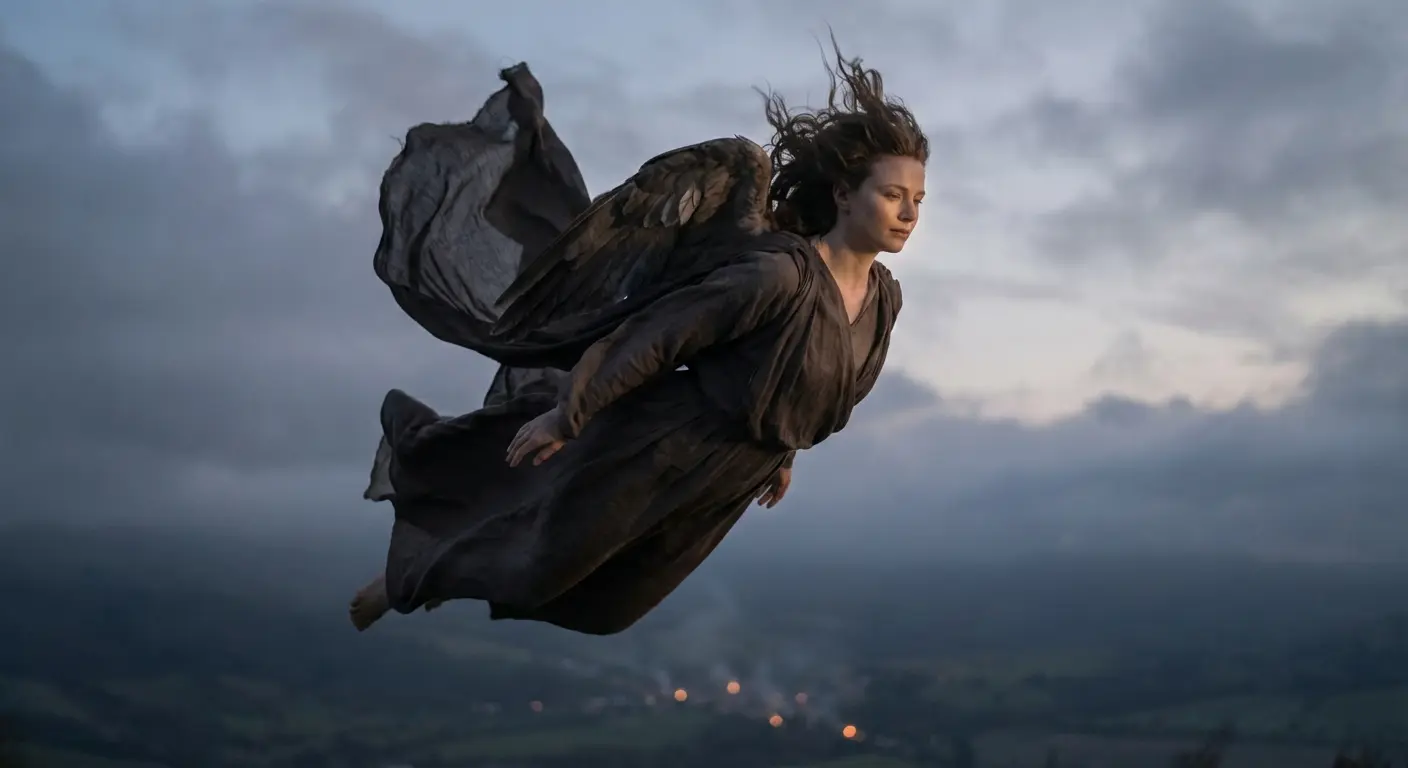
Most fallen angel tattoos show the result: damaged wings, defeated posture. What about capturing the actual fall? Wings not torn but streaming upward as the figure descends. Hair and fabric defying gravity. An expression that’s not anguished but determined or even peaceful.
The fall can be a choice.
A client once requested a fallen angel design to mark leaving a religious community that had become toxic. Rather than torn wings and darkness, the artist depicted an angel in freefall with wings fully intact but folded close to the body. A deliberate dive rather than a punishment. The figure’s face was turned downward, focused and resolute. It captured the courage of the choice rather than the shame often associated with falling.
That Weird Space Between Heaven and Earth
There’s a moment in the fall narrative that rarely gets visual treatment: the space between heaven and earth. Not the rebellion, not the punishment, just the descent itself.
That liminal space. (Actually, “liminal” sounds pretentious. That weird in-between place.)
This opens design possibilities around suspension, negative space, and incompleteness that feel more sophisticated than the standard fallen angel aesthetic.
Anatomical Honesty: Wings That Actually Make Sense
You want your angel tattoo to feel powerful? Start by understanding how wings work.
Attachment Points That Don’t Ignore the Skeleton
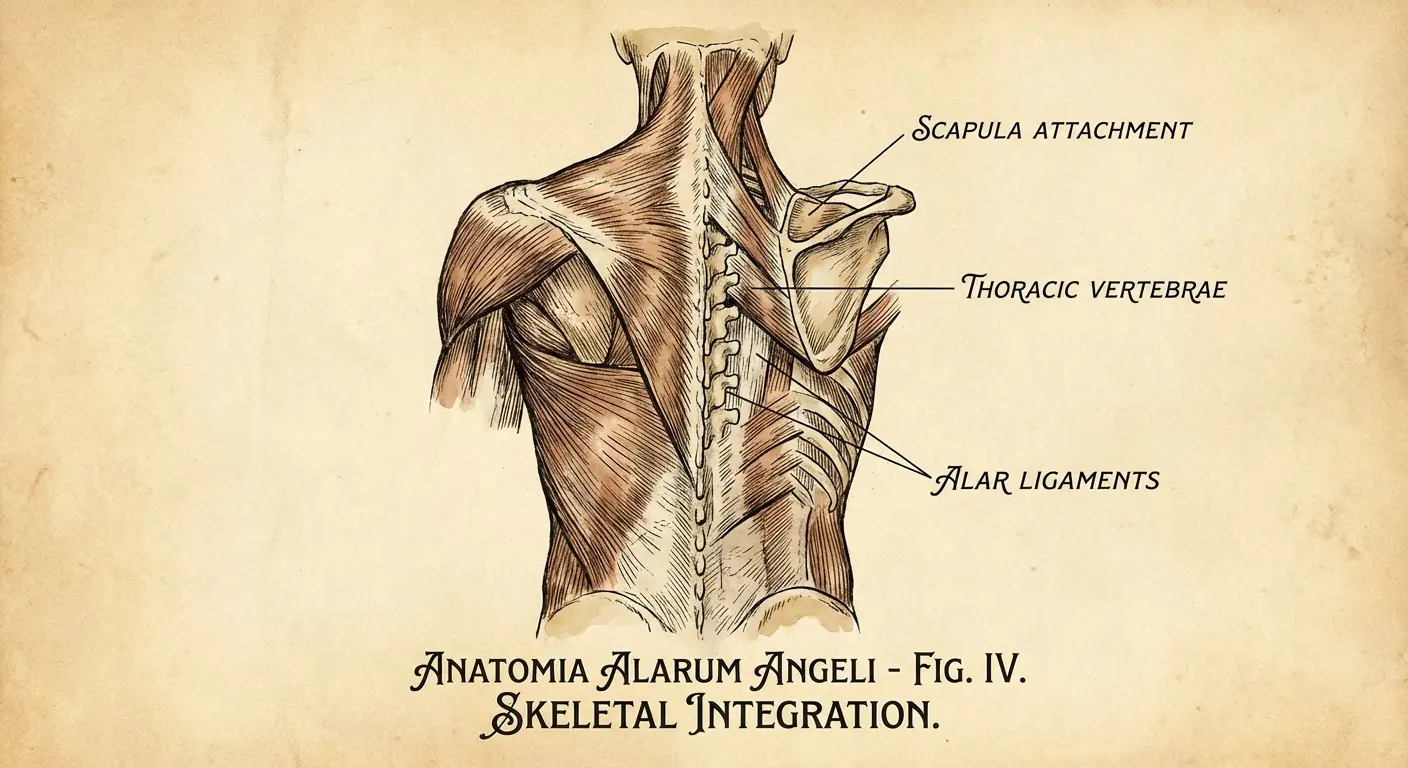
Wings need somewhere to attach. Birds have massive chest muscles and a keeled sternum to support flight. Your angel doesn’t need to be anatomically accurate to real birds, but the design should acknowledge that wings require structural support.
This means thinking about how wings connect to shoulder blades, how they’d affect posture, and how the weight distribution would work. Angels with wings that just float behind them without connection points look unfinished.
Actor Taylor Kinney from Chicago Fire has this massive angel tattoo across his entire back. I saw it in some NBC interview. The wings actually work because they follow his shoulder blades instead of just floating there like most angel back pieces.
Understanding how back tattoo designs work with body structure can help you position wings in ways that respect the natural architecture of the human body.
Folded Wings Tell Different Stories
Spread wings get all the attention, but folded wings communicate rest, patience, or concealment. They also work better for certain body placements where you don’t have the space for a full wingspan.
Study how birds fold their wings. The layers, the way feathers overlap, the compact power of it.
The Quiet Power of Faceless Angels
Here’s something that might surprise you: the angel tattoos that hit hardest are often the ones you can’t fully see.
Why Your Brain Fills in What’s Missing
Faceless figures force projection. The viewer (including you, every time you look at your own tattoo) fills in the expression, the identity, the intention. That makes the tattoo more adaptable to your changing relationship with whatever it represents.
A detailed face locks in a specific emotion. A hidden face allows for ambiguity, which is often more honest to complex feelings about faith, loss, or transformation.
How to Obscure Without Losing Impact
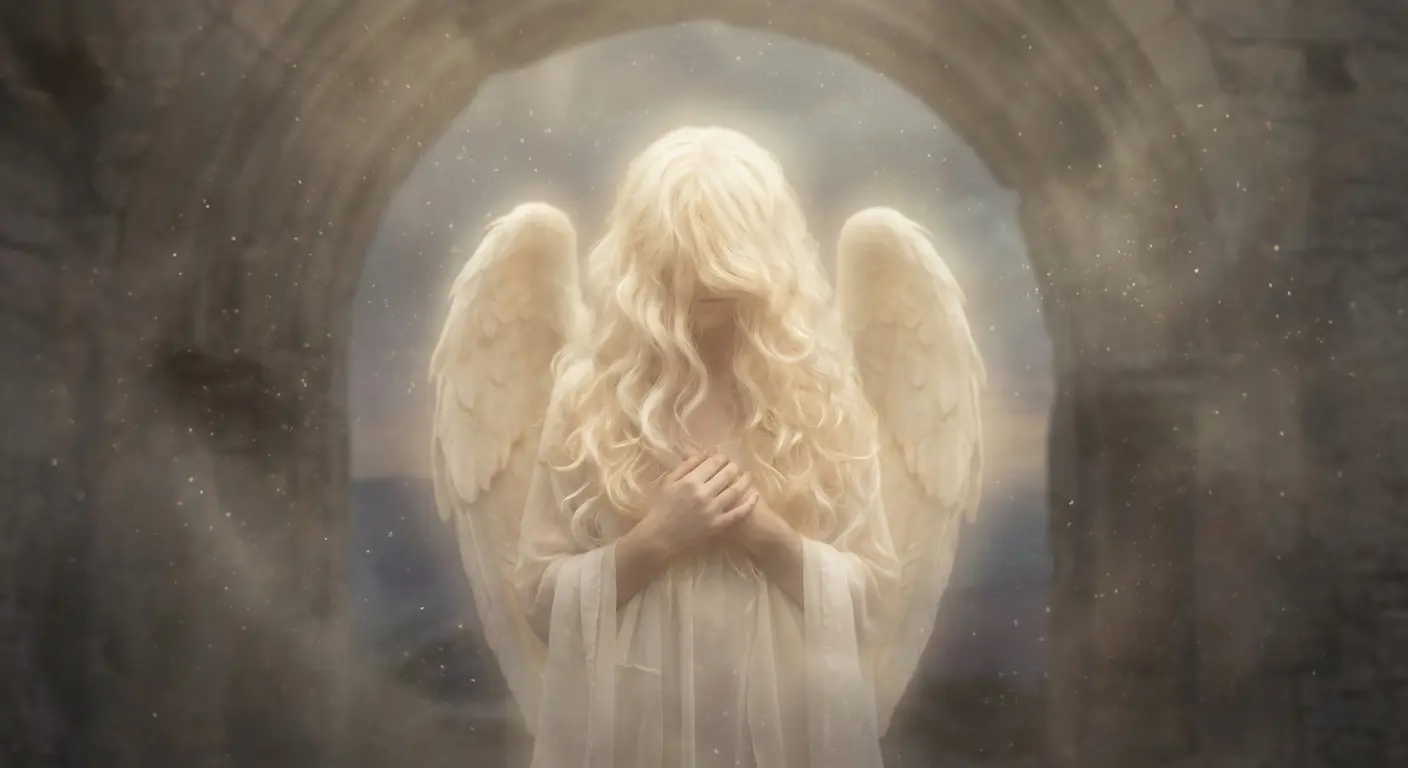
You can hide a face with hair, with wings, with hands, with light, or with positioning. Each choice creates different energy.
Hair across the face suggests movement or concealment. Wings covering the face emphasize the angel’s nature over its individuality. Hands over the face can show grief, shock, or refusal to witness. Light washing out features creates an otherworldly quality.
The key is making the obscuring feel intentional, not like you couldn’t decide what face to give them.
This minimalist approach works especially well when combined with fine line tattoo techniques that emphasize suggestion over detail.
Members of the pop group KATSEYE have been expanding their tattoo collections. Singer Lara Raj recently added an “angel” inscription in Gothic-style typography on her left hand, which proves that angel-themed tattoos can be abstracted into text and symbolic elements rather than requiring figurative representation.
Biblical Accuracy vs. Artistic License (And When to Break the Rules)
Biblical angels are strange. Multiple wings covered in eyes. Wheels within wheels. Beings that had to announce “be not afraid” because their appearance was genuinely alarming.
That’s so much more interesting than pretty people with wings.
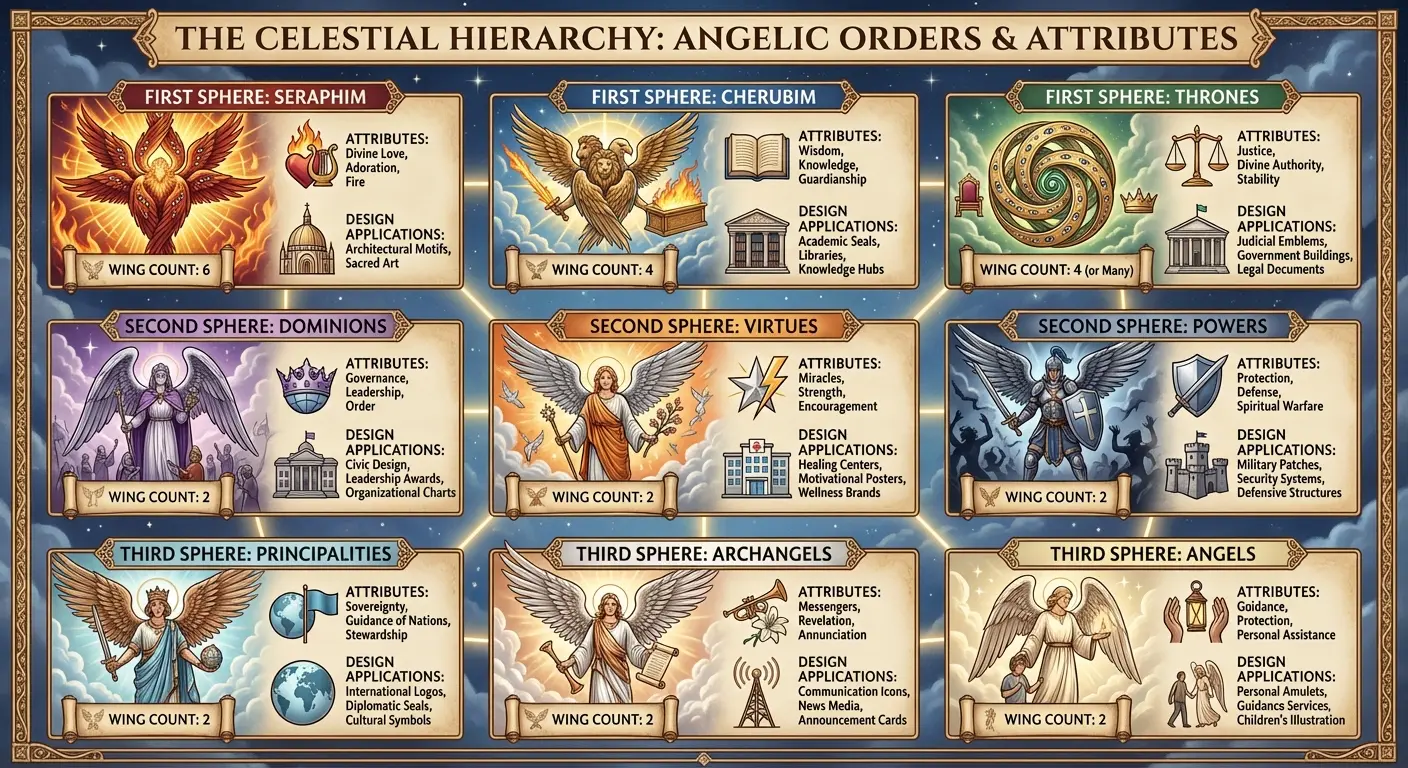
Seraphim, Cherubim, and the Hierarchy Most People Ignore
Angels have ranks. Seraphim have six wings and surround the throne of God. Cherubim guard sacred spaces. Archangels deliver messages. Each type has different attributes and purposes.
You can use this hierarchy to add layers of meaning to your design. A six-winged figure communicates something different than a two-winged one, even to viewers who don’t know the specific reference.
Angel Type Number of Wings Primary Function Visual Characteristics Best For Seraphim Six wings Worship and surrounding divine throne Multiple wings, often covering face and feet Dramatic, reverent designs emphasizing divinity Cherubim Four wings Guarding sacred spaces Multiple faces (lion, ox, eagle, human), geometric Bold, protective pieces with symbolic complexity Thrones N/A (wheels) Divine justice and authority Wheels within wheels, covered in eyes Abstract, conceptual designs Archangels Two wings Delivering important messages Humanoid, often with specific attributes (swords, trumpets) Narrative pieces, memorial tattoos with specific meaning Guardian Angels Two wings Protection and guidance Gentle, approachable, often in protective poses Memorial tattoos, personal protection symbols
When Renaissance Beauty Makes More Sense
Sometimes you want the classical interpretation. The Renaissance gave us angels as idealized humans with wings, and that tradition has value. It makes angels accessible, relatable, beautiful in familiar ways.
There’s no wrong choice here. But make it a choice, not a default.
Placement That Actually Matters
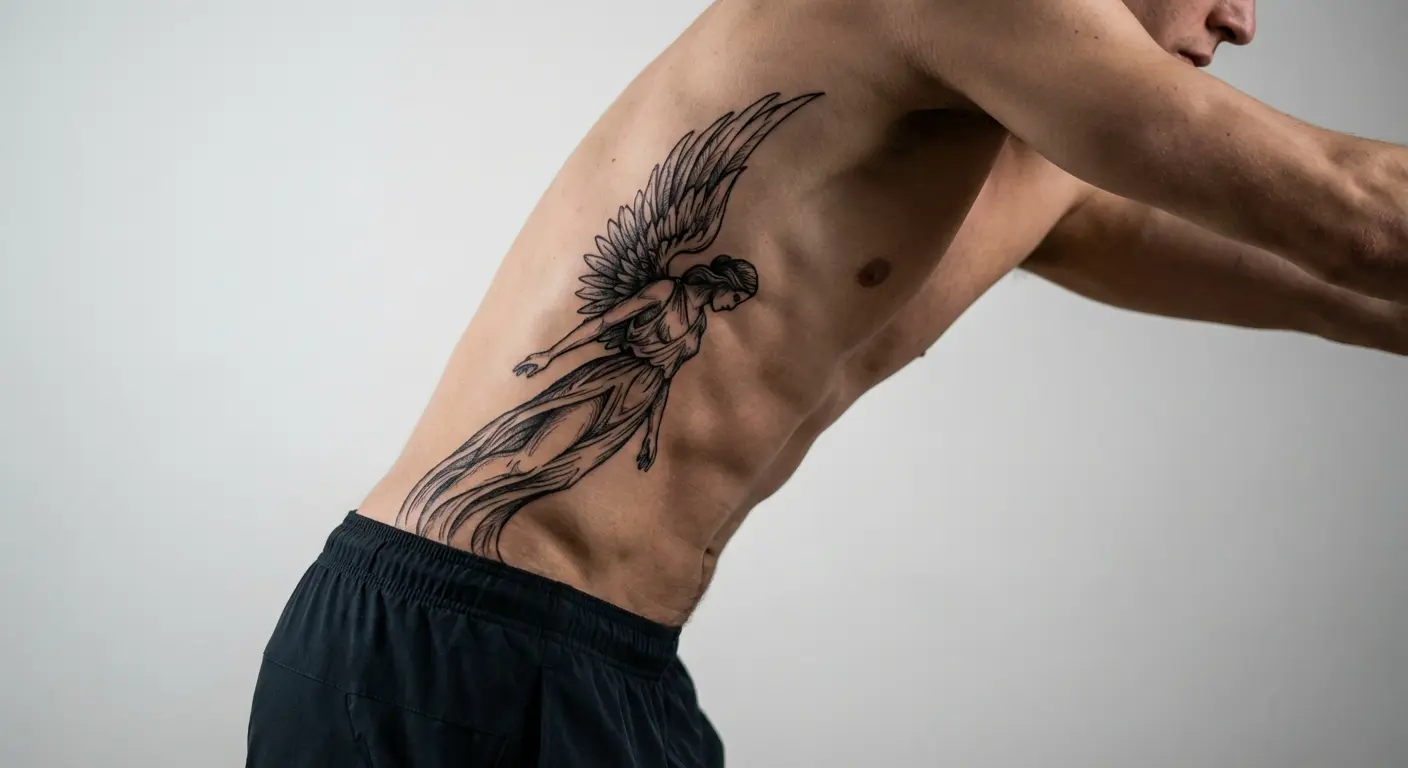
An angel moving up your body creates different energy than one moving down. Ascending suggests aspiration, hope, or escape. Descending can mean incoming force, falling, or divine attention directed at you.
Your body has natural flow lines. Placing an angel to move with or against those lines changes how the design feels in motion.
For chest placements that emphasize protection and what you carry close to your heart, exploring chest tattoo design options can help you understand how angels interact with the body’s central, most vulnerable space.
A runner who used the sport to overcome depression chose an ascending angel design that starts at the hip and rises toward the ribcage. Every time they run, the natural compression and extension of their torso makes the angel appear to climb higher. The movement of their body literally animates the tattoo’s symbolic meaning of rising above darkness.
Color Theory for Celestial Beings
In the realm of angel number tattoos (a related symbolic practice), sequences like 222 or 777 are said to hold unique energy or messages, with color choices in these designs similarly communicating spiritual meaning whether intentional or not. The same principle applies to figurative angel tattoos. Your color palette speaks a theological language whether you’re fluent in it or not.
Metallics That Don’t Look Dated
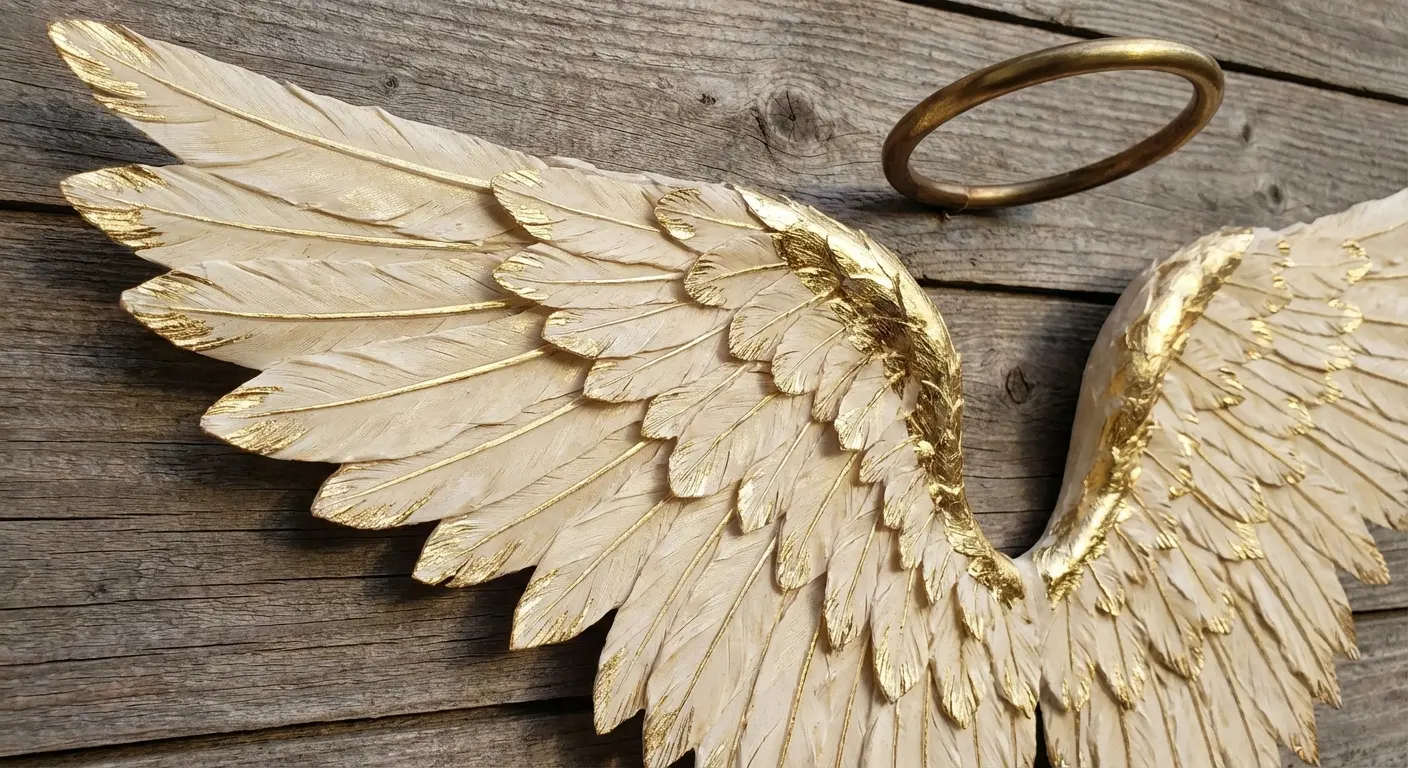
Gold and silver in angel tattoos can look incredible or cheap depending on execution. The key is using metallic tones as accents rather than base colors, and ensuring your artist understands how to create metallic effects with tattoo pigments (which don’t contain actual metal).
Gold halos, gold-touched feathers, or gold light sources add divinity without overwhelming the design.
The Unexpected Power of Desaturated Color
You don’t have to choose between full color and black and grey. Desaturated, muted colors create an ethereal quality that bright colors can’t match.
Think pale blues, dusty golds, faded roses. Colors that suggest something not quite of this world. These choices work particularly well for angels that exist in that weird in-between space, where the meaning is personal rather than declarative.
Bringing Your Vision to Life Without the Consultation Anxiety
You know what you want your angel tattoo to mean. Translating that into visual language for your consultation is the hard part.
Maybe you’re drawn to the concept of witnessing rather than protection, but you’re not sure how to show that visually. Maybe you want something between classical and biblical, but you can’t find reference images that capture it. Maybe you’re worried about walking into a consultation and just pointing at flash, settling for something close enough.
This is where exploring your ideas digitally before you commit makes everything easier. Tattoo Generator IQ helps you test different approaches without the pressure of a consultation clock running. You can try faceless vs. detailed faces, experiment with wing positions, see how different styles affect the same concept, and generate multiple variations until something clicks.
You’re not replacing your tattoo artist. You’re showing up to the consultation with a clearer vision and better reference material. Most artists appreciate that. It means less guessing, more collaboration, and a final design that matches what you’ve been carrying in your head.
Whether you’re considering traditional tattoo styles for your angel or something more contemporary, generating variations helps you understand which aesthetic direction resonates most deeply with your personal meaning.
Generate a few variations of your angel concept, save the ones that resonate, and bring them to your consultation as starting points. You’ll have a more productive conversation and a better final tattoo.
Final Thoughts
Angel tattoos don’t have to declare your relationship with faith, rebellion, or loss in simple terms. The best ones hold space for contradiction, for change, for questions that don’t have clean answers.
You’re allowed to want an angel that looks uncertain. You’re allowed to want beauty without sentimentality, or darkness without edge. You’re allowed to borrow from religious traditions you weren’t raised in if you do it thoughtfully. You’re allowed to make something that doesn’t fit existing categories.
The angel you put on your skin should reflect your relationship with whatever it represents, not the relationship you think you’re supposed to have. That’s harder to design, but it’s worth it.
The sacred and the rebellious aren’t opposites. They’re points on a spectrum with infinite positions between them. Your angel tattoo can live anywhere along that line, or refuse the line entirely.
and nothing else
