Blast Over Tattoos: Why Your Artist Might Be Selling You the Wrong Fix
TL;DR (Because This Got Long)
Blast overs = covering your old tattoo with heavy black ink, then tattooing over that. Artists are suggesting them way more than they should. Here’s why you should think twice:
You’re locked into dark, bold designs forever. No delicate work, no pastels, limited color options. It usually costs MORE than laser removal when you factor in the foundation plus new design plus touch-ups. A lot of artists push them because they’re easier than complex coverups, not because they’re your best option. Once that black is in, you can’t change your mind. Removal takes twice as many laser sessions. Most people who get them are running FROM something (bad tattoo) not running TO something (design they love).
Try laser removal, traditional coverups, or incorporating your old work into something new first. Seriously.
Why Blast Overs Exist in the First Place
So your artist just suggested a “blast over” for that regrettable tattoo on your forearm. Maybe you nodded like you knew what that meant. You didn’t. I didn’t either the first time I heard it. Here’s what it actually is: they’re gonna cover your old tattoo with solid black ink first, then tattoo over that black foundation.
Sounds simple. It’s not.
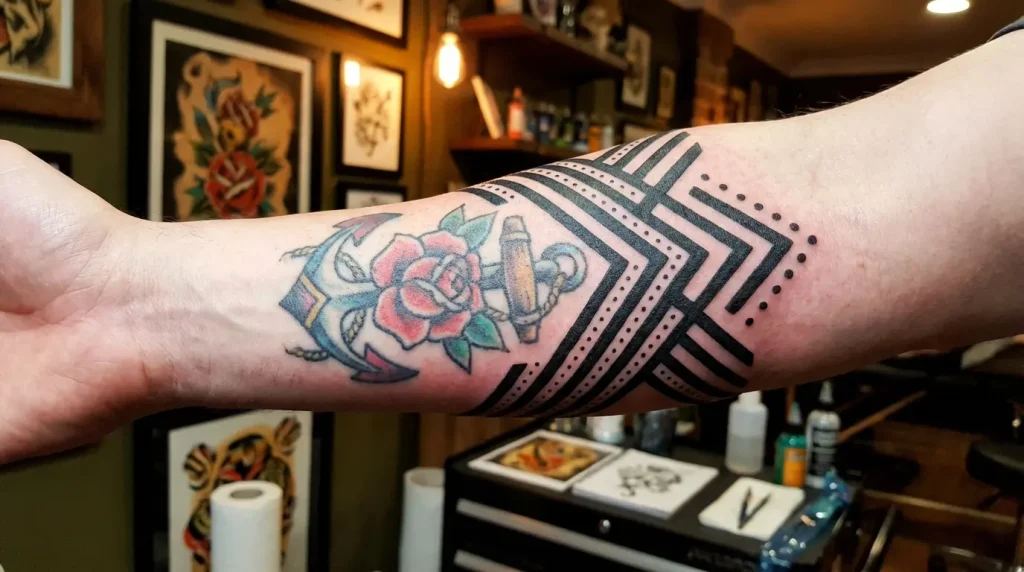
Blast overs started as a last resort. Like, truly unsalvageable tattoos. Prison ink done with guitar strings, blown-out tribal work from the ’90s, your buddy’s “apprenticeship” that left you with a scar shaped vaguely like a dragon. When traditional coverup techniques would just create a muddy mess, artists would blast over with solid black and start fresh. While blackout tattoos may require twice as many laser removal sessions as a normal tattoo if you later decide to remove them, the technique has become increasingly popular as artists develop better equipment and higher-quality inks for dense saturation work.
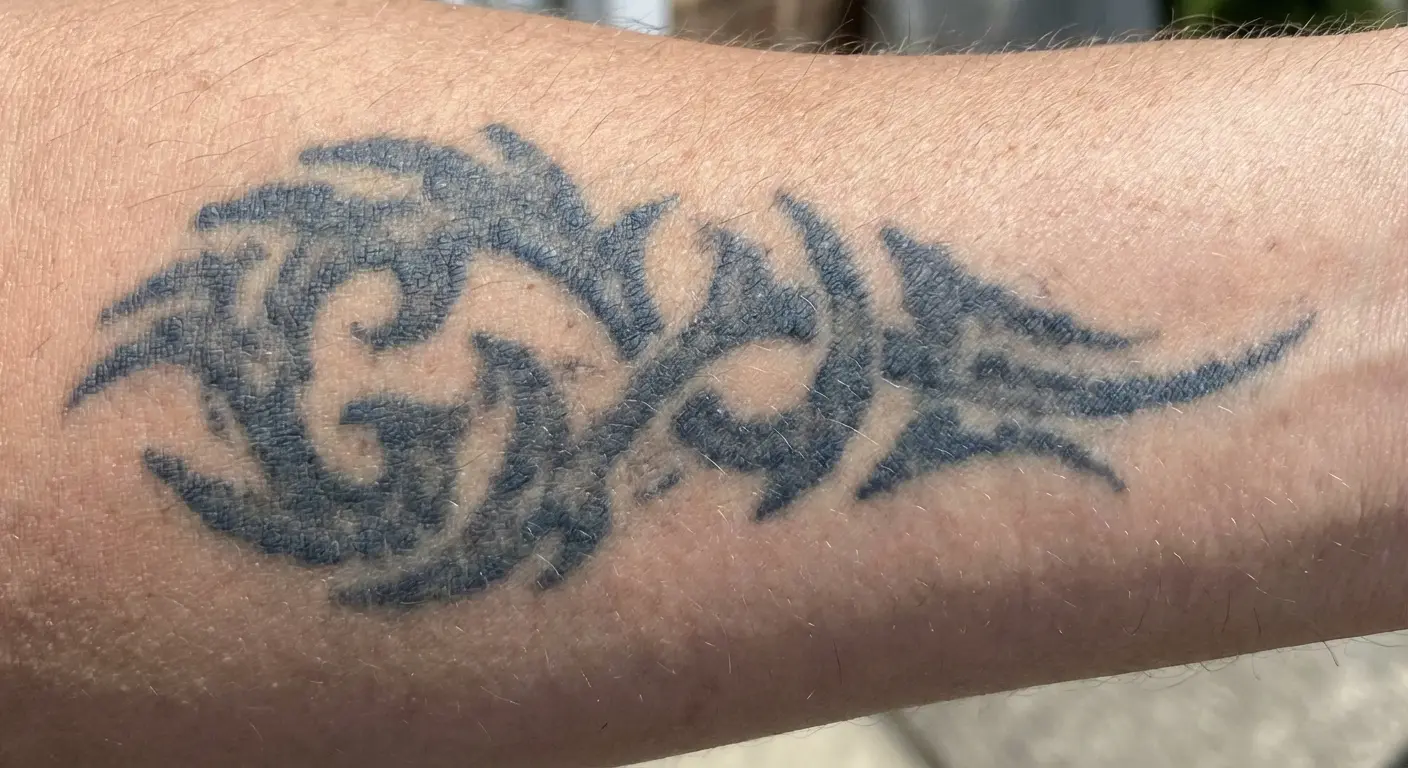
But here’s where I get annoyed: blast overs have become the default recommendation for situations where they’re absolutely not necessary. Some artists suggest them because they’re genuinely the best option. Others? They’re suggesting them because blasting over with black is way easier than planning a complex coverup that requires actual skill.
The technique solves a real problem. But it creates permanent limitations you need to understand before you commit. I’ve watched too many people walk into consultations excited about covering an old tattoo, only to realize months later that they traded one regret for another. This time with even fewer options for fixing it.
The Psychology of Wanting to Erase and Replace
I get it. You want that tattoo GONE.
Something about completely covering a regrettable tattoo feels psychologically satisfying in a way that removal or incorporation doesn’t. You’re not gradually watching it fade through laser sessions or being reminded of it as part of a larger piece. You’re burying it under something bold and new. That feeling is real. I’ve watched people cry with relief when we cover an ex’s name.
But closure shouldn’t cost you your aesthetic preferences for the next 40 years.
Most people considering blast overs are running from something rather than running toward a specific design they love. The old tattoo represents a past relationship, a phase they’ve outgrown, or work they’re embarrassed by. Covering it feels like closure. But you’re about to trade one permanent decision for another that’s equally permanent and potentially more restrictive.
Take this woman I worked with last year. Let’s call her Michelle. She got her ex-partner’s name tattooed on her forearm at 22. Ten years later, she’s married to someone else and wants the reminder gone. A blast over promised immediate psychological relief. She could walk out of the shop with the name completely hidden under bold black geometric patterns. But here’s the thing: she’d spent the last decade wearing delicate, colorful floral tattoos on the rest of her body. That heavy black geometric piece was gonna clash aesthetically with everything else she’d chosen. The emotional urgency to erase the past was pushing her toward a solution that didn’t match her evolved taste.
She went with laser removal instead. Took longer. Cost about the same. But now she has complete design freedom.
The blast over delivers immediate gratification. You walk out with the old tattoo completely invisible. But if you’ve never been drawn to heavy blackwork, bold traditional, or dark illustrative styles, you might solve one problem while creating another.
What Actually Happens During a Blast Over
First appointment? Your artist is gonna look at your old tattoo and figure out how much black ink they need to pack in there to hide it. Some tattoos require complete saturation with solid black, similar to blackout tattoo techniques that create a fully opaque canvas. Others might work with heavy black shading that doesn’t need to be 100% opaque.
The first session focuses on creating that dark foundation. Depending on the size and darkness of your existing tattoo, this might happen in one sitting or require multiple sessions. Your artist is essentially creating a new canvas, and they need that base layer to be dense enough that nothing shows through once healed.
Sometimes it’s one session. Sometimes it’s three sessions of you sitting there while they turn your arm into a black void. Depends on how dark and how big your original tattoo is.
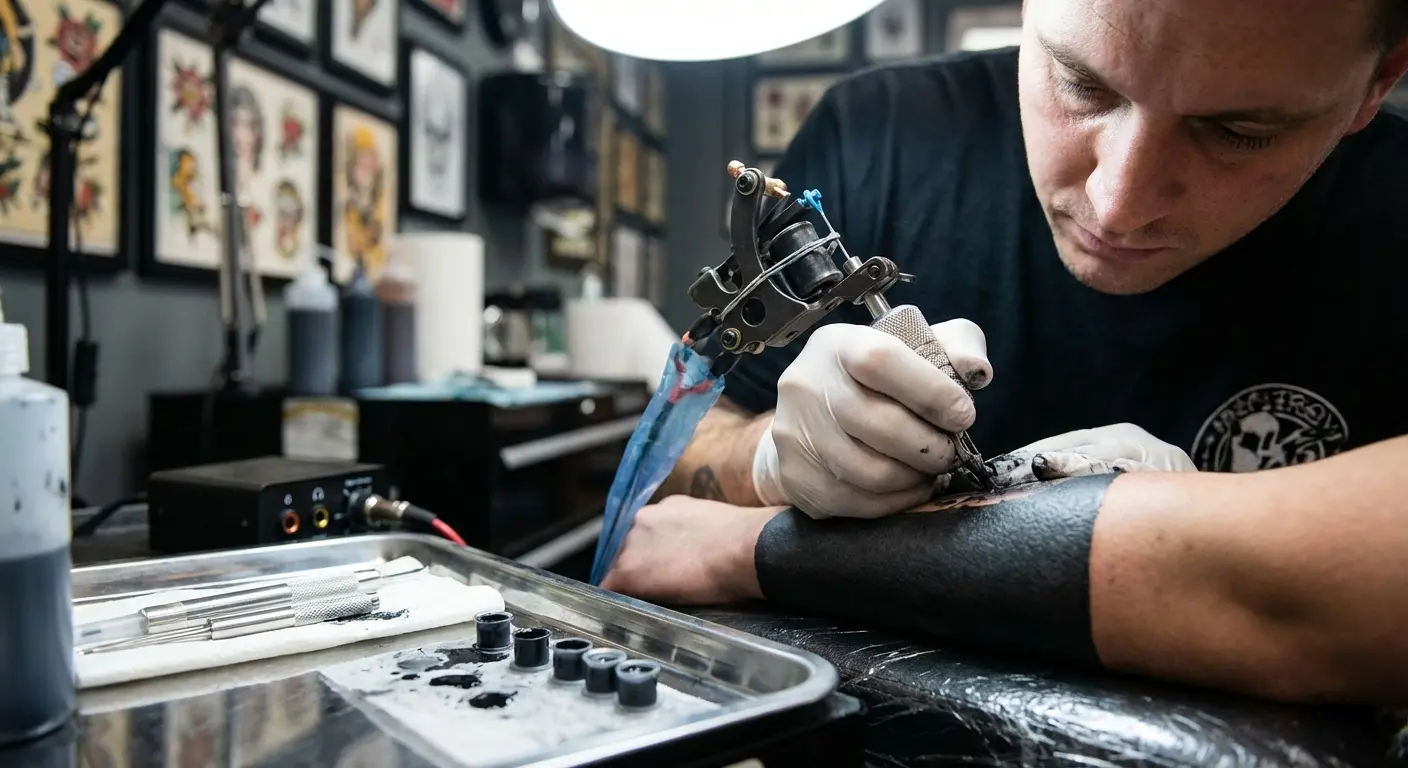
The healing is brutal, by the way. You’re saturating skin that’s already been tattooed, maybe scarred, with dense black ink. Expect a longer healing period and potentially more discomfort than you experienced with fresh skin. It’s gonna hurt more than your original tattoo did, it’s gonna take longer to heal, and it’s gonna look like shit for a few weeks. Just so you know.
Once the black base is fully healed (and this is crucial, don’t rush this part), your artist can begin the new design. They’re working with a dark canvas now, which fundamentally changes what’s possible. The new design needs to be applied with enough contrast and brightness to show up against that black background.
This is where many people discover their vision doesn’t translate the way they imagined.
When a Blast Over Makes Sense (And When It Absolutely Doesn’t)
Blast overs excel in specific situations. If you have a large, dark tattoo that would require an impossibly huge coverup to hide traditionally, blasting over and building something new makes sense. If your existing work is so poorly executed that the skin is heavily scarred and won’t hold detailed coverup work well, the bold approach can work with those limitations rather than against them.
They’re also ideal when you genuinely want the aesthetic they provide. If you’re drawn to blackwork, dark illustrative styles, or bold traditional designs that incorporate heavy black, a blast over gives you those styles while solving your coverup problem.
When This Actually Makes Sense:
You genuinely love blackwork, neo-traditional, or dark illustrative styles (not just tolerating them to cover something). Your existing tattoo is large, dark, and would require an even more massive traditional coverup. Your skin is heavily scarred and won’t hold detailed coverup work anymore. You want the aesthetic blast overs provide, not just coverage. Your artist can show you healed blast overs they’ve done (not just fresh ones). You’ve tested the concept and love the bold look.
When You Should Walk Away:
You prefer delicate, subtle, or light-colored tattoo styles. Your existing tattoo is small, light, or could be covered with a moderate size increase. Your skin is in good condition and can support fine detail work. You’re desperate to hide something and accepting whatever works fastest. Your artist can’t show you successful complex coverups they’ve completed (red flag). You’re making an impulsive decision driven by emotional urgency.
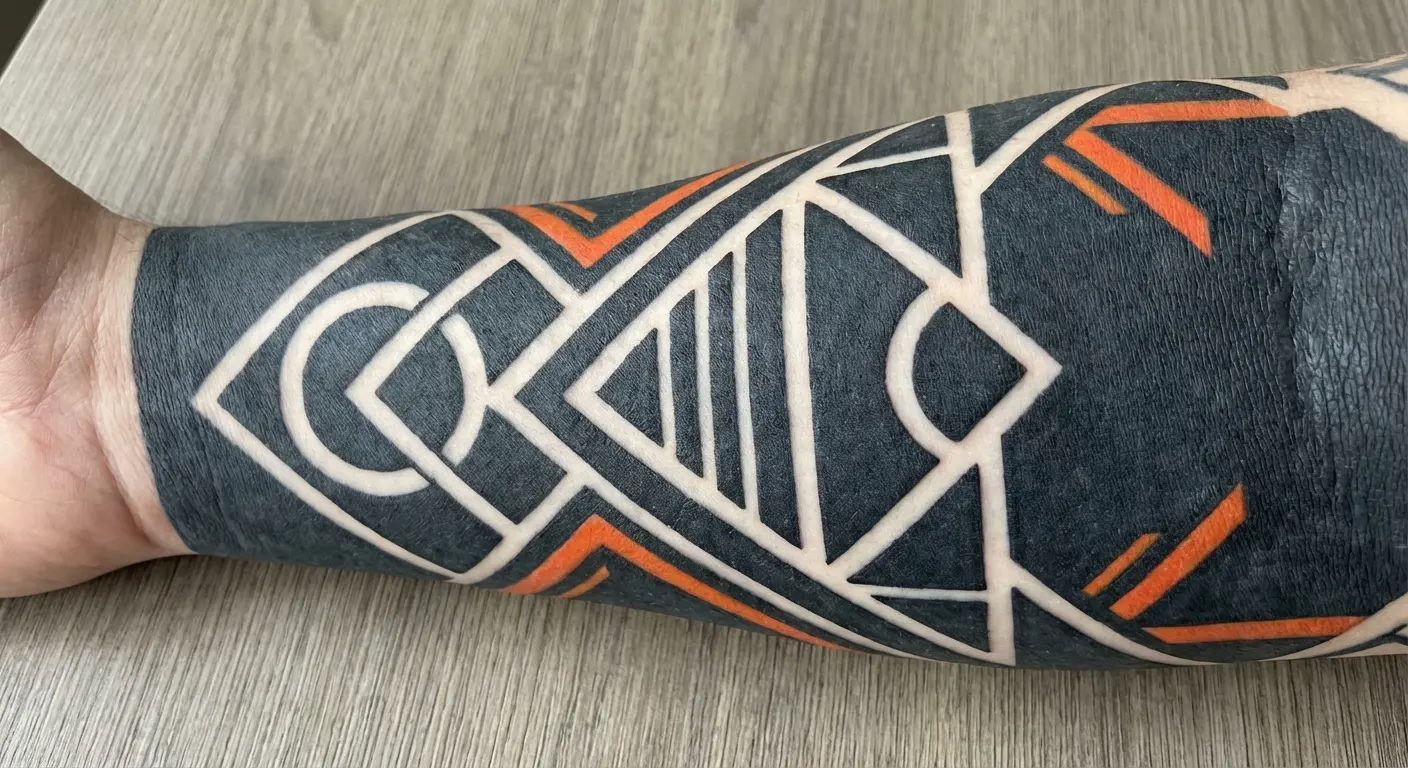
But they’re the wrong choice when you’re trying to preserve flexibility for future changes, when you want bright colors or delicate details, or when your existing tattoo could be covered or incorporated with better planning. They’re also wrong if an artist is suggesting them primarily because they’re not confident in their coverup skills.
You should question the recommendation if your existing tattoo is relatively small, not extremely dark, or in a location where a traditional coverup could work without excessive size increase. You should definitely question it if you’re not genuinely excited about wearing heavy black or dark designs permanently.
The biggest red flag? An artist who presents a blast over as your only option without discussing alternatives or showing you examples of complex coverups they’ve done successfully. I’ve seen this happen too often. Artists defaulting to what’s easiest for them rather than what’s best for you.
The Design Stuff Nobody Tells You (That’ll Piss You Off Later)
Working on a black canvas eliminates entire categories of design options permanently.
Delicate linework gets lost. Subtle shading becomes invisible. Anything relying on skin tone for highlights or dimension won’t translate. Your new design needs to be bold enough to read against that dark background, which means heavy white ink, bright colors applied densely, or designs that use the black as intentional negative space.
No artist is good enough to fix this problem. It’s physics.
I had this client who wanted a blast over on their shoulder to cover a faded band logo. They were envisioning a delicate mandala design with intricate linework they’d seen on Pinterest. I had to explain that those fine lines, some only a millimeter thick, would completely disappear against the black foundation. Even with white ink, lines that thin wouldn’t hold or remain visible after healing. The design would need to be reimagined with lines at least 3-4mm thick and bold geometric shapes instead of the subtle, lacy patterns they loved.
They ultimately chose laser removal instead. Realized the blast over would force them into an aesthetic they didn’t want.
The blackwork blast over approach shares similarities with black tattoo styles but with even more restrictions since you’re building on an already-saturated foundation rather than fresh skin.
White ink sounds like an obvious solution, but it behaves differently over black than it does on fresh skin. It requires multiple passes to show up, it fades faster, and it often needs touch-ups more frequently than other colors. Some skin types don’t hold white well over black at all. Bright colors like yellows, oranges, and hot pinks can pop beautifully over black, but they need to be applied heavily and in larger areas to create impact. Small pops of color tend to look muddy or get lost entirely.
Geometric designs, mandalas, fine-line work, watercolor styles, and anything relying on subtlety becomes extremely difficult or impossible. You’re committing to bold, high-contrast designs for that area of your body permanently.
Colors Do Weird Shit Over Black
Colors don’t behave the way you’d expect over a black foundation. Like, really weird. You’re not working with skin tone as the base anymore. You’re working with a black canvas, which changes everything about how pigments appear once healed.
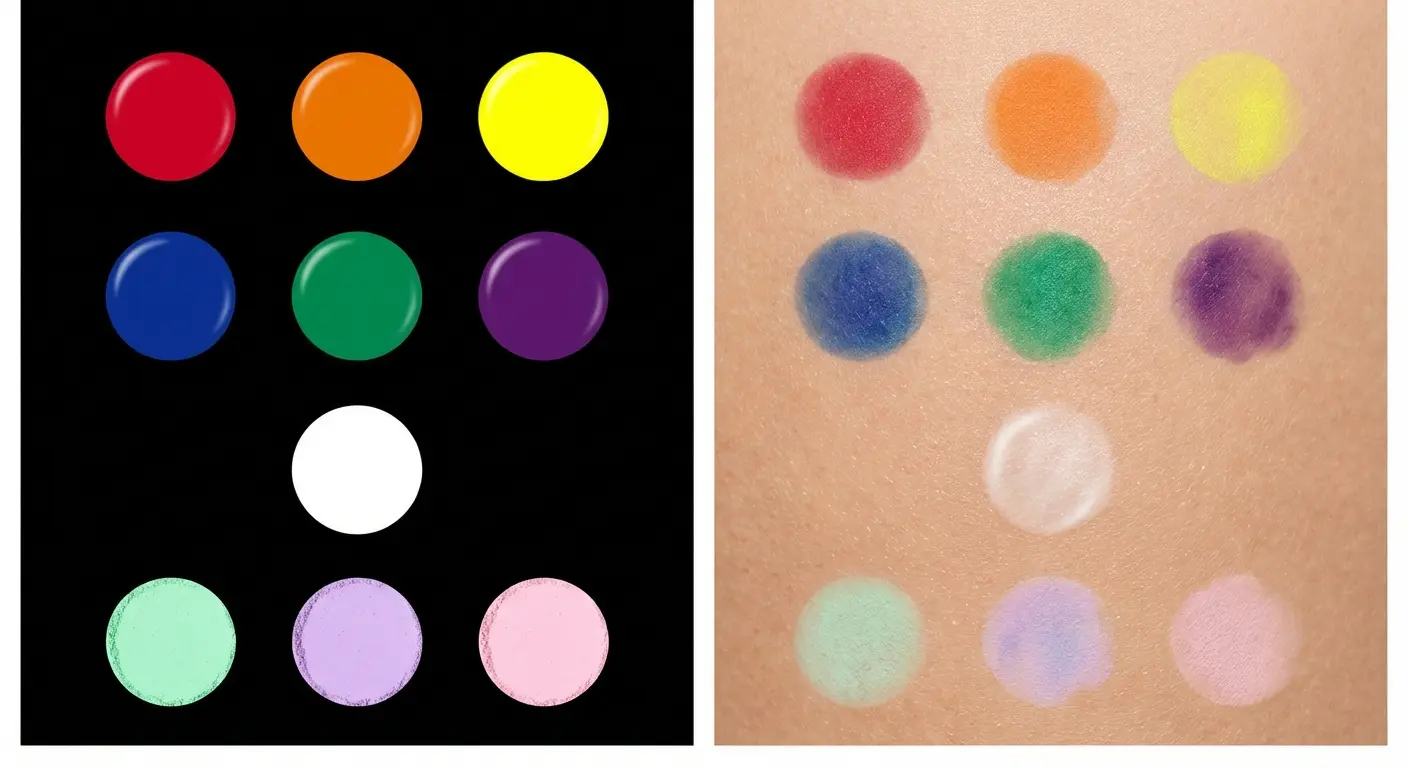
Here’s what actually works:
White ink shows up great at first, fades fastest, needs touch-ups constantly. Multiple passes needed, usually 2-3 layers. Requires frequent touch-ups and may yellow over time. Some skin types won’t hold it at all over black.
Warm colors (red, orange, yellow) are your best bet. They pop over black and create strong contrast. Still need heavy, dense application in larger areas. They maintain vibrancy better than cool colors.
Cool colors (blue, purple) usually look muddy as hell. They often appear muddy or disappear entirely. Even with very heavy application, they have limited effectiveness. May lose definition faster than warm tones.
Pastels are essentially impossible. Don’t even try. Seriously. No amount of layering will make them visible. Not recommended for blast over work.
Bright neons (hot pink, electric yellow) can look amazing and pop dramatically. Must be applied in substantial areas, not small accents. Fade faster than traditional colors, so you’re signing up for regular maintenance.
Warm colors tend to perform better than cool colors over black. They have more opacity and create stronger contrast. But even warm colors need to be applied more densely than they would on fresh skin.
Blues and purples can look muddy or disappear entirely unless they’re applied very heavily and in larger areas. Any color that relies on the skin showing through for luminosity won’t work. Your artist might need to layer colors differently, building up opacity through multiple passes rather than relying on single applications. This adds time and cost to the process.
The black background will affect how colors age, too. As your blast over settles and fades slightly over years, that dark base will influence how the colors shift. Bright colors might lose their pop faster than they would on fresh skin, requiring touch-ups to maintain the contrast that makes the design visible.
Placement and Size Considerations That Change Everything
The size of your blast over will almost always exceed the size of your original tattoo. Your artist needs to extend the black base beyond the edges of the old work to ensure nothing peeks through, then build the new design large enough to make visual sense on that dark foundation.
What started as a 4-inch tattoo might become an 8-inch blast over by the time you account for proper coverage and design requirements. On certain body parts like forearms, calves, and upper arms, this expansion works fine. On others like hands, feet, and neck, it can create awkward proportions or professional visibility issues you didn’t anticipate.
Placement affects how well the technique works technically, too. Areas with lots of movement or stretching (inner elbows, behind knees, ribs) can be challenging for maintaining the dense black coverage needed. The skin’s texture and how it holds ink varies by location.
The visibility and boldness of blast overs has even caught mainstream attention recently. Adam Levine revealed his full arm blastover sleeve on Season 29 of The Voice, where he covered his faded collection of smaller tattoos with a completely new layered design. The Maroon 5 frontman told TODAY that the process “really hurt” and that he’s “done with the pain.” No shit, Adam. You covered your entire arm with black ink and then got tattooed over it. But here’s what’s interesting about his quote: he said he’s “done with the pain,” which tells me he didn’t fully understand what he was signing up for.
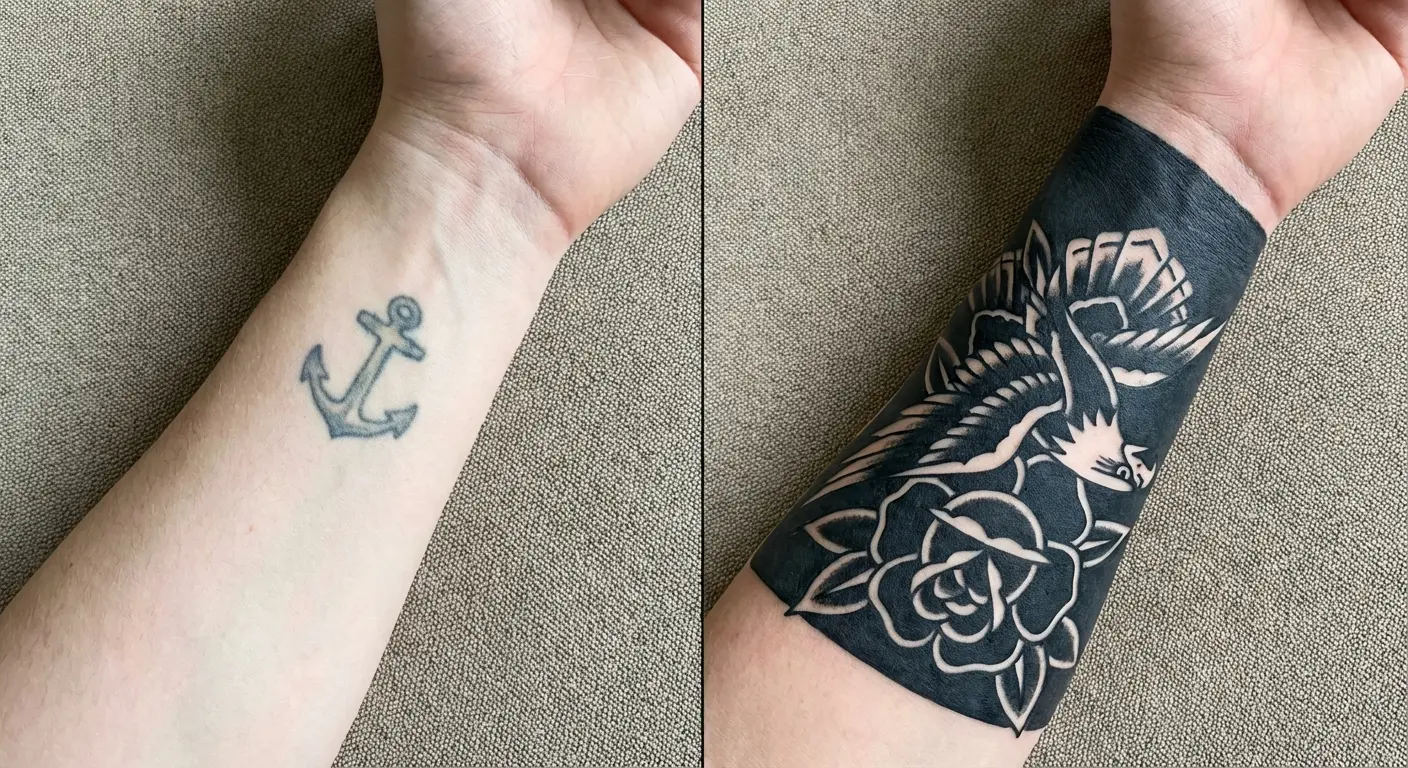
You also need to consider how a large, dark tattoo will affect that area of your body visually. A blast over sleeve on your entire forearm creates a very different look than scattered smaller tattoos. It’s bold, it’s noticeable, and it reads as intentionally heavy even from a distance. Some people love that aesthetic. Others realize after the fact that they’ve committed to a level of visual weight they’re not comfortable with long-term.
The Cost Reality Beyond the Chair Time
Let’s talk money, because this is where people get pissed off later.
You’re paying for TWO tattoos here. The blackout foundation AND the new design on top. That blackout session alone can run you $500 to $3,000+ depending on size. Then you’re paying your artist’s normal hourly rate for the actual design, which might take multiple sessions depending on complexity.
Oh, and those touch-ups? Not free. White ink over black needs refreshing every year or two. Bright colors fade faster. Some artists include one touch-up session in their pricing. Most don’t.
And if you eventually decide to remove this thing? You’re looking at twice as many laser sessions as a normal tattoo. Maybe more. Because that black ink is DENSE.
Compare that to laser removal, which might cost more upfront but gives you a completely clean canvas and total design freedom afterward. Or to a well-executed traditional coverup, which might require only slightly more chair time than a regular tattoo and doesn’t lock you into specific aesthetic constraints.
The financial investment makes sense if a blast over genuinely delivers the result you want. It’s a poor value if you’re settling for it because you didn’t explore alternatives thoroughly or didn’t realize what you were committing to aesthetically.
