16 Chest Tattoo Placements for Women: What Actually Works (And What Your Artist Won’t Say)
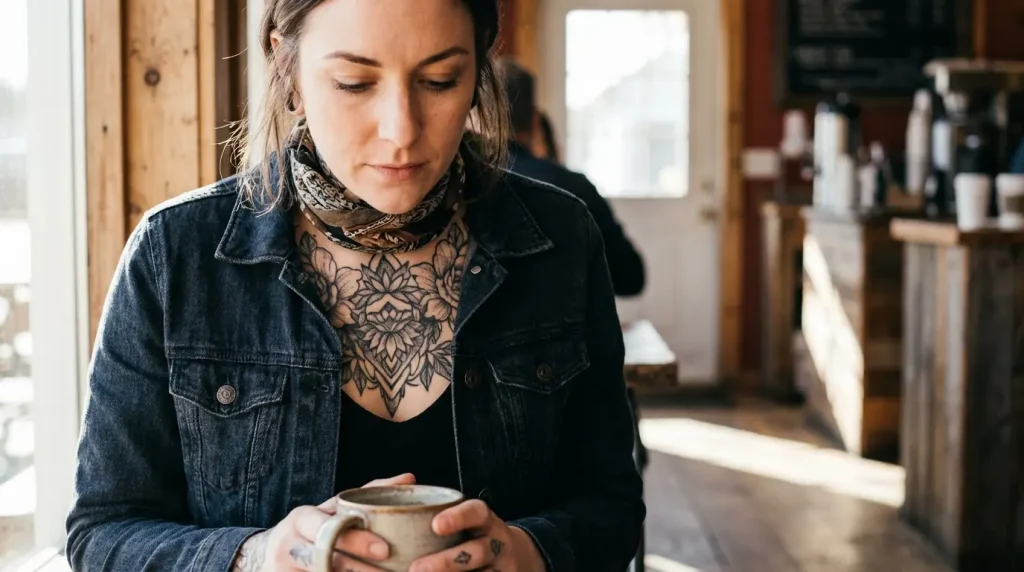
I’ve been researching chest tattoos for the better part of a year. You know what’s annoying? Every article is either a Pinterest board with zero context or clinical pain charts that don’t actually help you decide anything. Nobody talks about the real stuff, like how a sternum piece changes what bras you can wear for weeks, or why your artist might talk you out of that delicate script you’ve been saving on Instagram.
So here’s what I wish someone had told me before I started.
Quick Version (If You’re In A Hurry)
Chest tattoos hurt. Especially the sternum, which is a solid 9/10 on the pain scale. They take forever to heal because bras exist and rub on everything. You can hide or show them depending on your shirt, which is the main appeal. The whole “feminine tattoo” thing is bullshit, get whatever size you want. Also, fine details near bone blur faster than anyone tells you upfront, and you’ll probably need touch-ups every few years if you go with color.
1. Sternum Florals: Why They Hurt Like Hell But Look Perfect
Sternum tattoos go right down your breastbone. Collarbone to cleavage. It’s the spot everyone asks about and half of people chicken out on.
Forget the tiny flash sheet roses. I’m talking about peonies the size of your palm, chrysanthemums with actual detail, whole garden compositions that take up space. These designs work because they follow your body’s natural symmetry while creating a focal point that’s entirely yours to reveal or conceal.
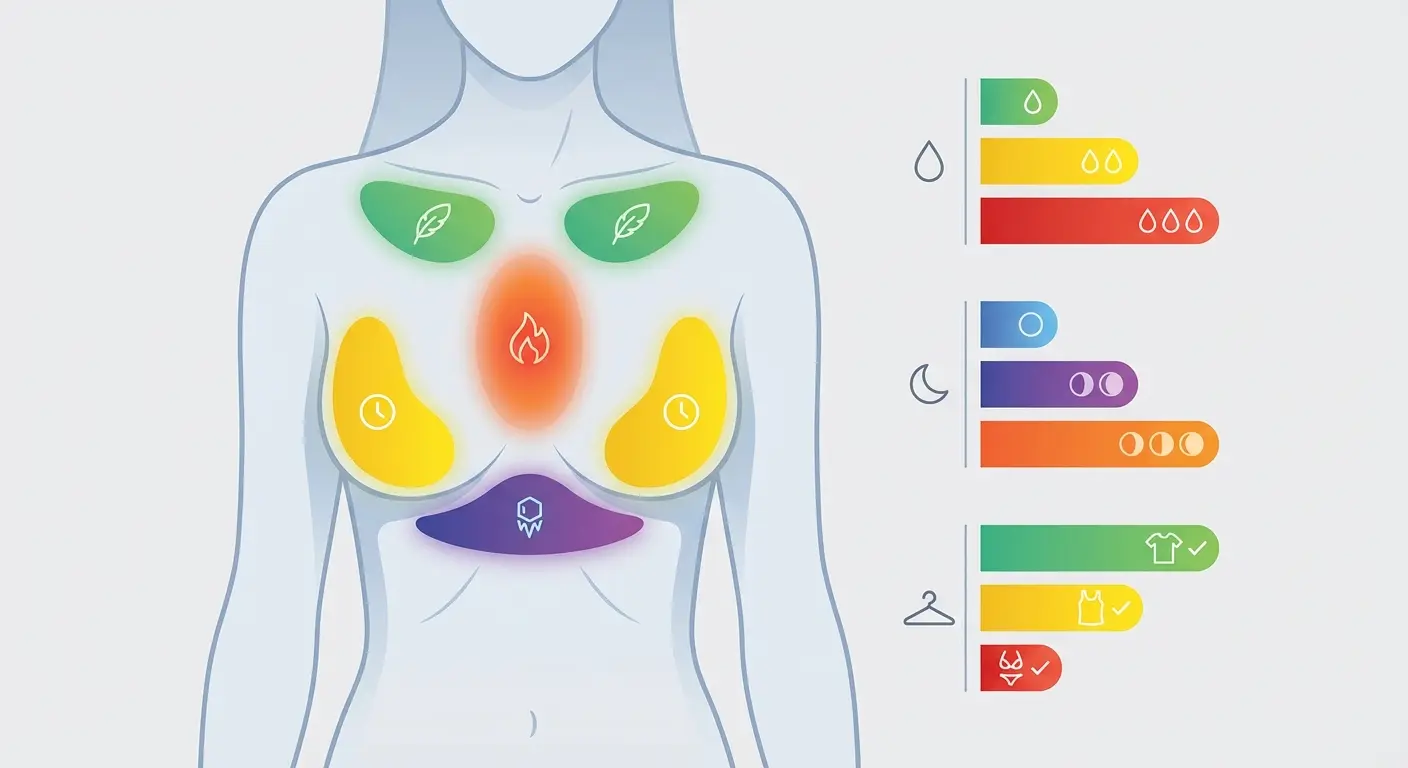
The pain is intense. Like, 9 out of 10 intense. You’re tattooing directly over bone with basically no cushioning. Every vibration from the needle goes straight through your chest. Pain levels vary significantly across chest placements, with the sternum ranking at an intense 9/10 on the pain scale compared to a more manageable 5/10 on the outer pecs. This dramatic difference occurs because you’re tattooing directly over bone with minimal tissue cushioning.
And here’s the part nobody mentions: breathing becomes strategic. You’ll take these shallow little breaths to keep your chest from moving, which works fine until you’re two hours in and your body is screaming for a deep breath. You can’t take one. It’s weird.
The payoff is a design that moves with you, visible in V-necks and low-cut tops but completely hidden under crew necks and button-ups.
Now about those florals. Peonies fade faster than you’d think. Those pretty pinks turn muddy around year three, and you’ll be back in the chair for touch-ups. Chrysanthemums? The yellows are even worse. If you want something that’ll still look crisp in a decade, go heavy on the black. Lotus flowers need frequent refreshing on the white petals, but purples hold surprisingly well.
Your body changes. Weight fluctuations, pregnancy, aging. All of these affect how your ink sits on this canvas. I’m not being pessimistic, I’m being honest about what you’re signing up for.
2. Ribcage Script: The Placement Everyone Gets Wrong
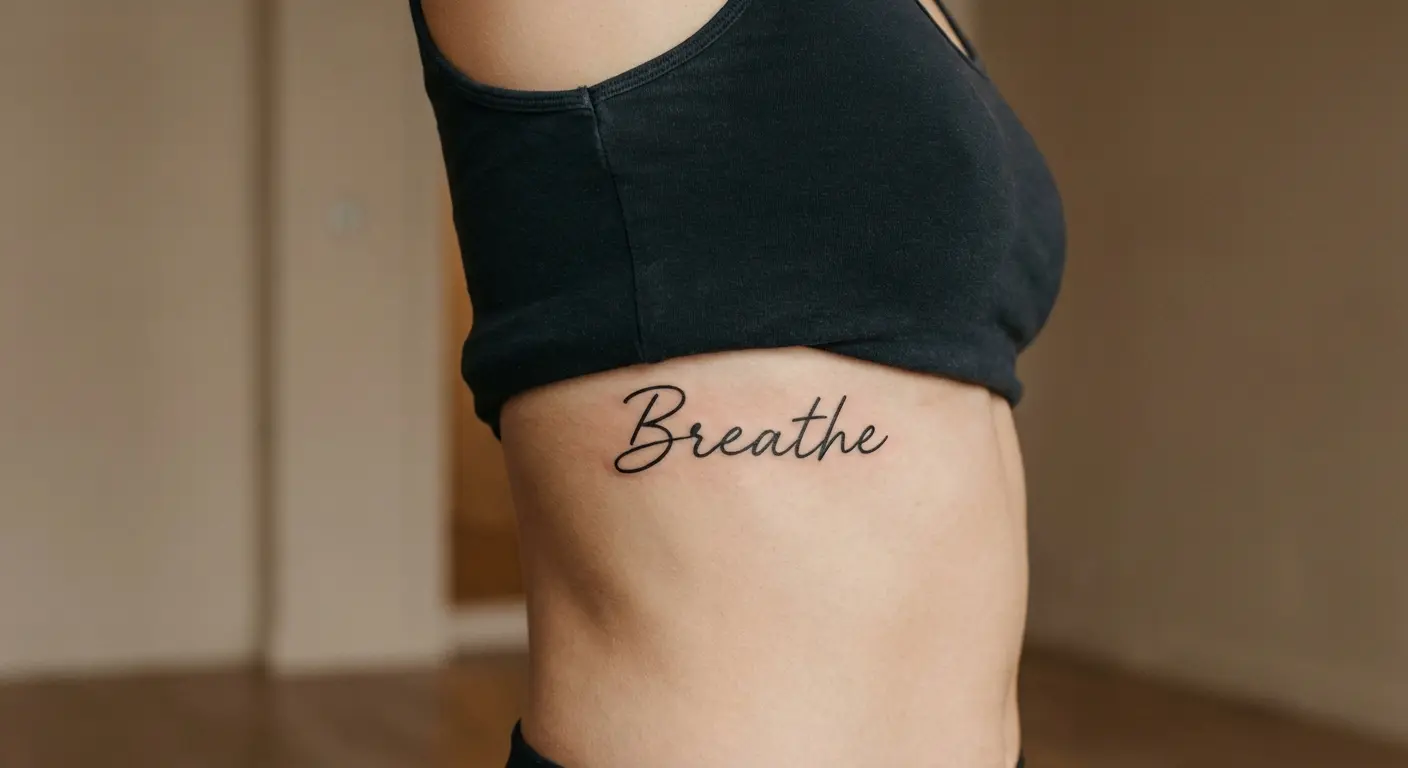
Script tattoos along the ribcage work differently than you’d expect. Most people assume script means a single meaningful quote running horizontally under the breast. I’ve seen something more interesting work better: script that wraps, curves, or cascades down the side of your chest creates actual movement.
Font matters more than you think. Gothic lettering looks aggressive. Delicate cursive is pretty but might be too obvious for what you’re trying to say. I lean toward simple sans-serif because it ages better, and script near ribs can blur into mush after a couple decades.
Here’s what gets messy: words that curve around your breast will read differently depending on your bra size and how your body changes over time. Pregnancy, weight fluctuations, aging. You’re not being vain by considering these factors. You’re being practical.
The ribcage also ranks as one of the most painful tattoo locations on the body. The skin is thin, the bones are close to the surface, and every breath expands the area you’re trying to keep still. Sessions often need breaks not because you can’t handle pain, but because your body needs to breathe normally for a few minutes.
Side note: if your artist doesn’t ask about your bra size when planning chest placement, find a different artist. It matters.
3. Underboob Mandalas: The Healing Is Hell
Underboob tattoos sit in that curved space directly beneath your breast, following its natural line. Mandalas work well here because the circular, radiating pattern complements the breast’s curve while creating a grounding focal point.
What makes this placement interesting (beyond the obvious aesthetic) is how it interacts with clothing and movement. Sports bras will cover it completely. Bikinis might show it depending on coverage. Certain bralettes will frame it perfectly. You’re creating art that exists in a space between public and private.
The pain here surprises most people. You’d think the fleshy area under your breast would hurt less, and you’d be partially right. The center portions often feel manageable. But as the design extends toward the sternum or wraps around to the ribs, you’ll hit those high-pain zones quickly.
An East Tennessee tattoo artist has been providing free tattoos to breast cancer survivors, helping women reclaim their bodies after mastectomies. It’s worth reading about because it shows how underboob and chest placements can be about reclaiming your body after trauma, not just decoration.
Mandala designs require precision. Symmetry matters because any wobble in the circular patterns becomes immediately obvious. Your artist needs steady hands and you need to stay remarkably still, which becomes challenging when you’re tattooing an area that moves with every breath.
Healing requires specific bra choices (or going braless if possible). Underwire will rub directly on fresh ink. You’ll want soft, wireless options for 2-3 weeks minimum. Underboob tattoos during healing are a special kind of hell I wouldn’t wish on anyone.
4. Collarbone Vines: Actually Pretty Easy
Collarbone tattoos trace along that prominent bone running from your sternum to your shoulders. Vine designs work here, whether ivy, flowering vines, or abstract botanical elements.
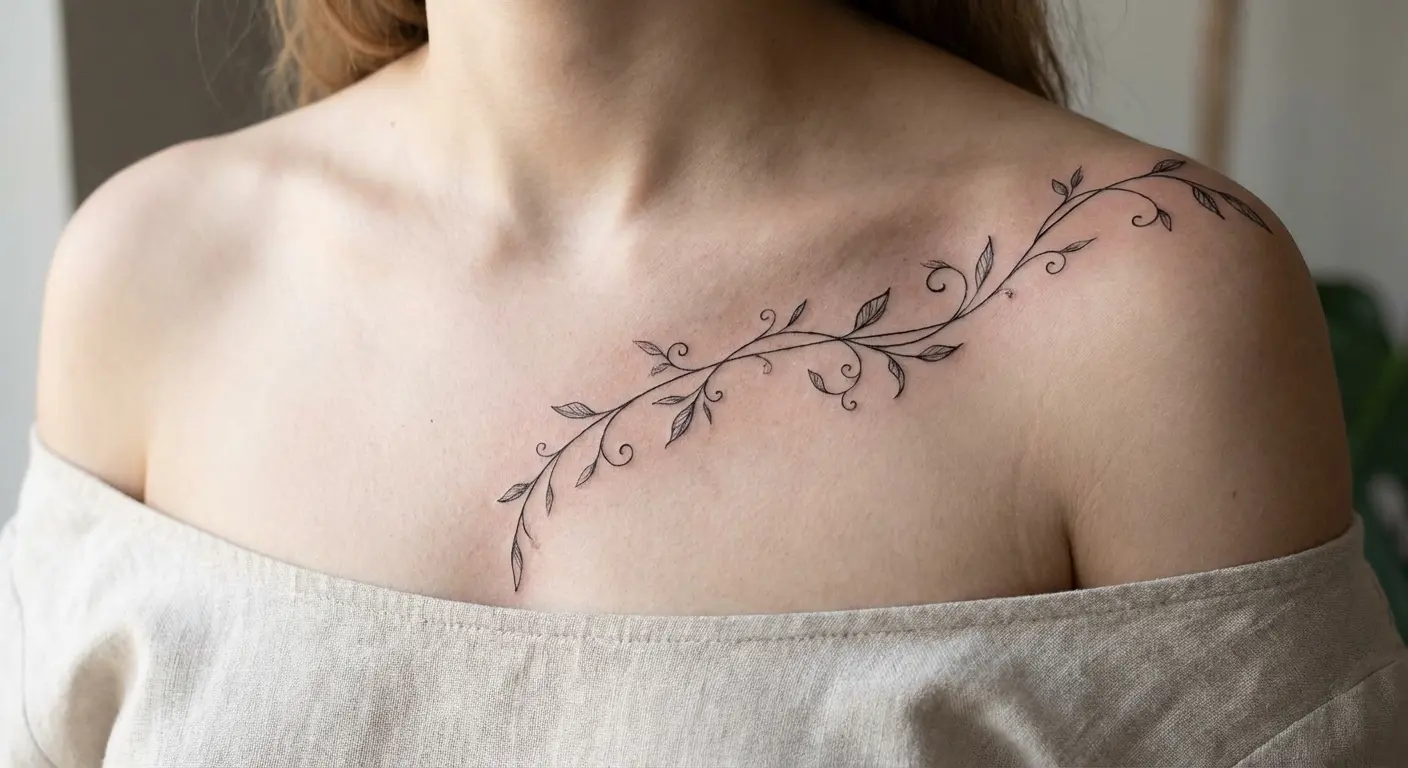
You control the narrative by choosing how far the vines extend. Some designs stay strictly on the collarbone itself, creating a delicate accent. Others cascade down onto the chest or climb up the neck. The beauty of vine work here is its flexibility. You can start with a simple collarbone piece and extend it later, adding flowers, leaves, or additional vines that grow across your chest or shoulders.
Pain varies dramatically along the collarbone. Directly over the bone? Sharp and intense. In the dip just below the collarbone where there’s a bit more flesh? Way more manageable. The outer portions near your shoulders typically hurt less than the center where the bone is most prominent.
Healing is relatively straightforward compared to other chest placements. Clothing rarely rubs directly on your collarbone the way it does on sternum or underboob tattoos. Necklaces might irritate the area, so plan to skip jewelry for a few weeks.
The visibility factor matters here. Collarbone tattoos are harder to hide than sternum or underboob pieces. High necklines will cover them, but standard crew necks often won’t.
5. Full Chest Pieces That Scare People (Which Is Why They Work)
Full chest pieces for women remain surprisingly uncommon, which is exactly why they make such powerful statements. Designs that span from collarbone to underboob, shoulder to shoulder, treating your entire chest as a unified canvas.
They require commitment to extended session times, real money (we’re talking $2,000-$8,000+ depending on your artist and detail level), and willingness to occupy space unapologetically. The design possibilities expand when you’re working with this much real estate. Symmetrical designs create balance. Asymmetrical pieces that flow naturally across the chest offer dynamic movement.
Some designs incorporate the breasts as part of the composition rather than working around them, which requires careful planning and an artist who understands how to tattoo curved surfaces.
You’re looking at multiple sessions, often 3-6 depending on detail level and your pain tolerance. Some people prefer to outline the entire piece first, then fill in sections over time. Others complete one section fully before moving to the next. There’s no wrong approach, but you’ll want to discuss strategy with your artist upfront.
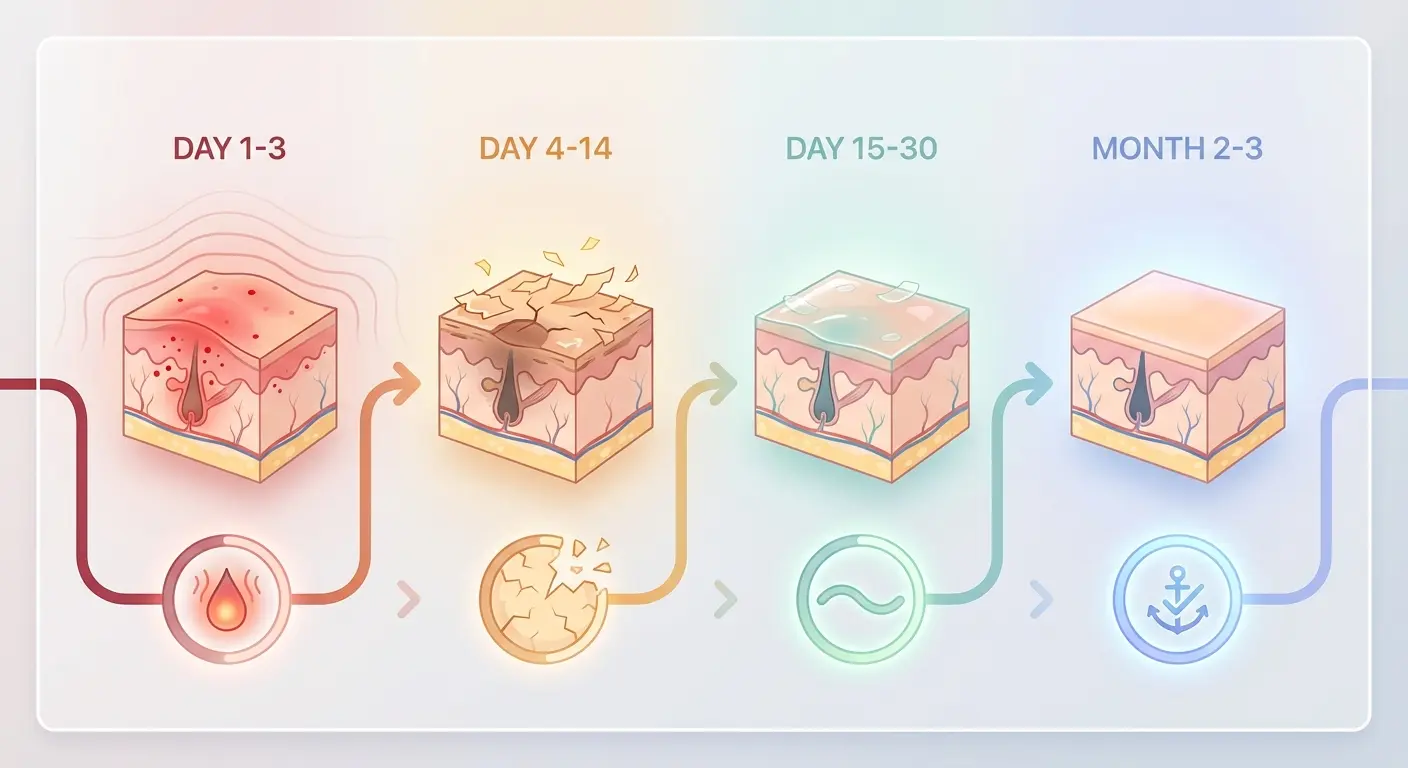
Healing a full chest piece means managing multiple zones at once. Your sternum might be healing while your artist is working on your collarbone. Days 1-3 are the worst with inflammation and plasma weeping. Week one, scabs start forming and you’ll want to scratch them off. Don’t. Weeks 2-3, scabs flake off and your tattoo looks dull and sad. This is normal. By week 4-6, the surface looks healed but it’s still healing underneath. Full healing takes 2-3 months, and your colors won’t look right until then.
The commitment alone changes something about how you move through the world.
6. Phoenix Designs: All About The Wings
Phoenix tattoos on the chest make sense symbolically (rebirth, transformation, whatever). But the real reason they work is the wings. You’ve got natural wingspan across your chest, and phoenix wings fill that space perfectly. The bird rises up your sternum, wings spread toward your shoulders. It’s dramatic as hell.
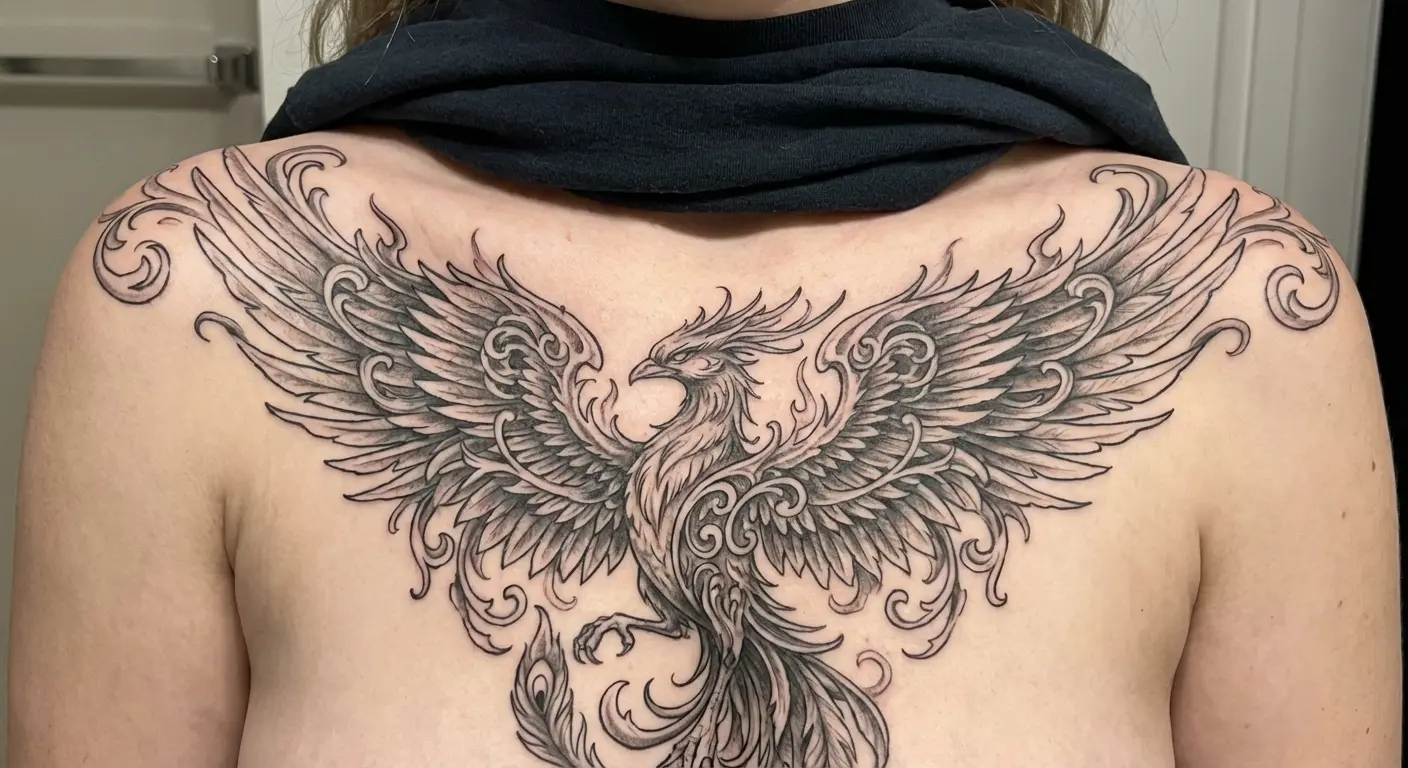
The problem is color. Those reds and oranges everyone wants for the fire? They fade fast. Like, noticeably faded in 3-5 years. You’ll need touch-ups or commit to black and grey from the start.
These designs work in various styles. Traditional American phoenixes feature bold lines and limited color palettes. Japanese-inspired versions incorporate flowing flames and detailed feather work. Watercolor phoenixes blend colors without heavy outlines, creating softer, more abstract interpretations.
When exploring phoenix tattoo symbolism and meanings, consider how the traditional associations with rebirth align with your personal journey and how that narrative translates to chest placement specifically.
Placement affects how the wings interact with your body. Wings that extend onto your shoulders create visual width. Wings that stay contained to your chest proper maintain focus centrally. Some designs incorporate the phoenix’s tail feathers extending down toward or between the breasts, adding vertical elements to balance the horizontal wing span.
7. Geometric Patterns: Not As Feminine, That’s The Point
Geometric chest tattoos challenge the whole “feminine tattoos should be soft and flowy” thing, which I’m here for. Sharp lines, precise angles, mathematical patterns look incredible against your body’s curves. The contrast is the point.
But here’s the thing: you need an artist who specializes in this. Not someone who’s “pretty good at geometric work.” An actual specialist. Because if those lines aren’t perfect, everyone can tell.
The precision required for geometric work means you need an artist who specializes in this style. Lines must be perfectly straight, angles must be exact, and symmetry must be flawless. Any wobble or imperfection becomes glaringly obvious in geometric designs.
Geometric patterns can center on the sternum and radiate outward symmetrically, or they can sit asymmetrically to one side of the chest, creating intentional imbalance. Some designs incorporate negative space as part of the pattern rather than the background.
For more inspiration on geometric tattoo designs and patterns, explore how sacred geometry translates to different body placements.
Your breasts create curves that geometric lines can either emphasize or contrast against. Some designs work around the breasts, treating them as boundaries. Others incorporate them into the geometric composition.
Session times can run long because of the precision required. Your artist can’t rush geometric work without compromising quality.
8. Portrait Work: Pick Your Artist Carefully
Portrait tattoos on the chest create intimate tributes. Whether you’re honoring a loved one, celebrating an icon who influenced you, or creating a self-portrait, the chest placement makes the piece deeply personal.
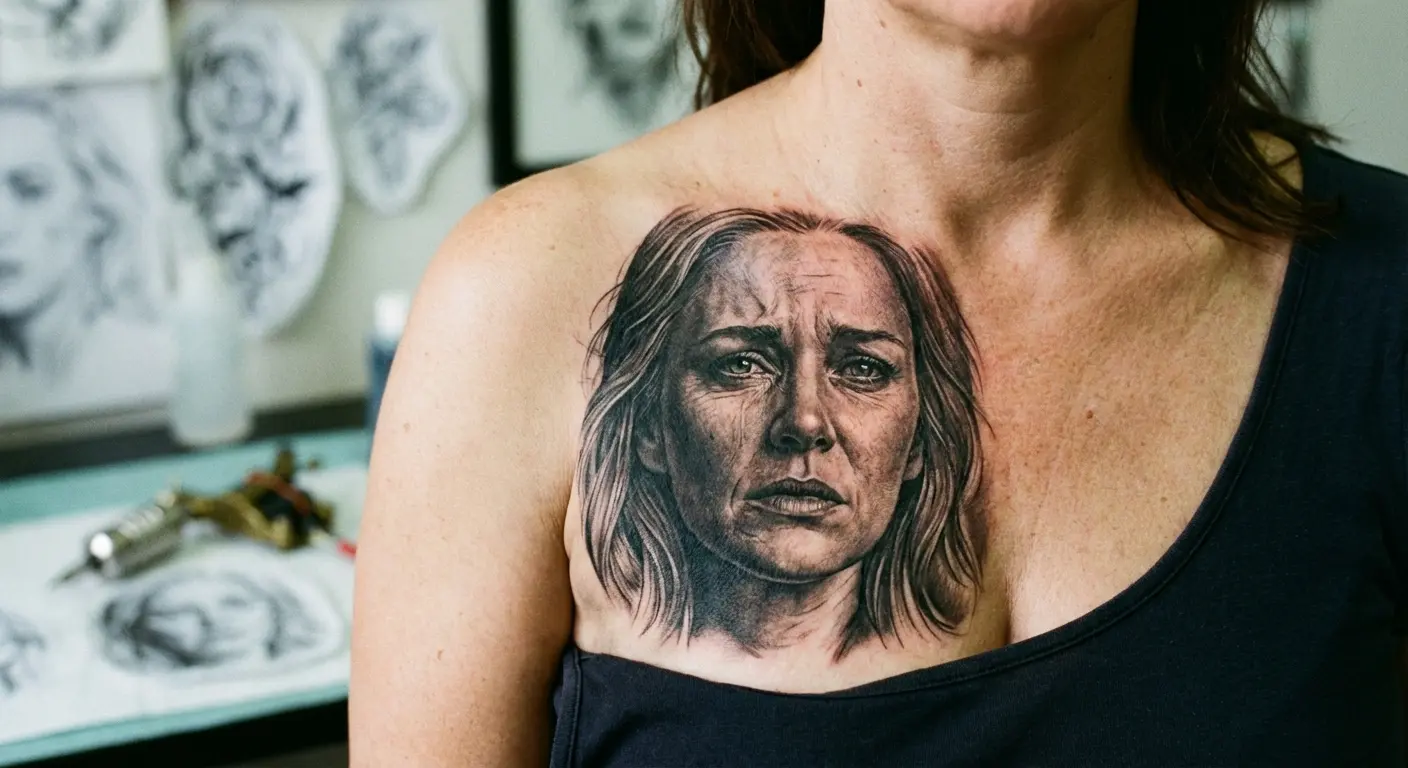
These designs demand space. Tiny portraits lose detail and impact. You’re looking at palm-sized minimum, often larger, to capture facial features with the nuance they deserve.
Finding an artist who’s actually good at portraits is harder than you think. Not every talented tattoo artist can execute realistic portraits. You need someone whose portfolio demonstrates consistent ability to capture likeness, expression, and subtle details like eye highlights and skin texture. Don’t compromise here. A mediocre portrait tattoo is worse than no portrait tattoo.
You’ll want the face positioned where it won’t be distorted by your body’s natural contours. Portraits that sit too close to the curve of your breast might warp or appear stretched. The sternum or upper chest typically offers the flattest canvas for facial features.
Black and grey portraits often age better and allow for more subtle shading. Color portraits can be stunning but require an artist who truly understands color theory and how different pigments age in skin over time.
9. Minimalist Line Work: Quick Sessions, Less Drama
Minimalist chest tattoos prove you don’t need complexity to make impact. Single-line designs, simple shapes, or pared-down illustrations create clean, modern statements. These pieces work well on the collarbone, sternum, or as small accents on the upper chest.
The appeal of minimalist work is its restraint. You’re not trying to fill space or prove anything. You’re placing exactly what needs to be there and nothing more.
Line weight matters here. Too thin and the lines might not hold over time, potentially fading or blurring into barely-visible marks. Too thick and you lose the delicate quality that makes minimalist work appealing. Experienced artists understand this balance.
If you’re drawn to delicate, fine line tattoo techniques and styles, understand how line weight and artist expertise affect both the initial appearance and long-term aging of minimalist chest pieces.
These tattoos typically require shorter sessions (sometimes 30-60 minutes), making them more accessible for people testing their pain tolerance or trying chest placement for the first time. Minimalist work seems cheaper because sessions are short, but you’re often paying the artist’s minimum anyway, usually $100-200 for a 30-minute piece.
Healing is straightforward given the minimal trauma to your skin. You’re dealing with less ink, less time under the needle, and typically smaller surface area.
10. Delicate Constellations: Personal Star Maps
I love constellation tattoos because they’re personal without being obvious. You can get your zodiac constellation, or the night sky from a specific date (birth, death, wedding, whatever matters), or just make up your own star pattern. No one else knows what it means unless you tell them.
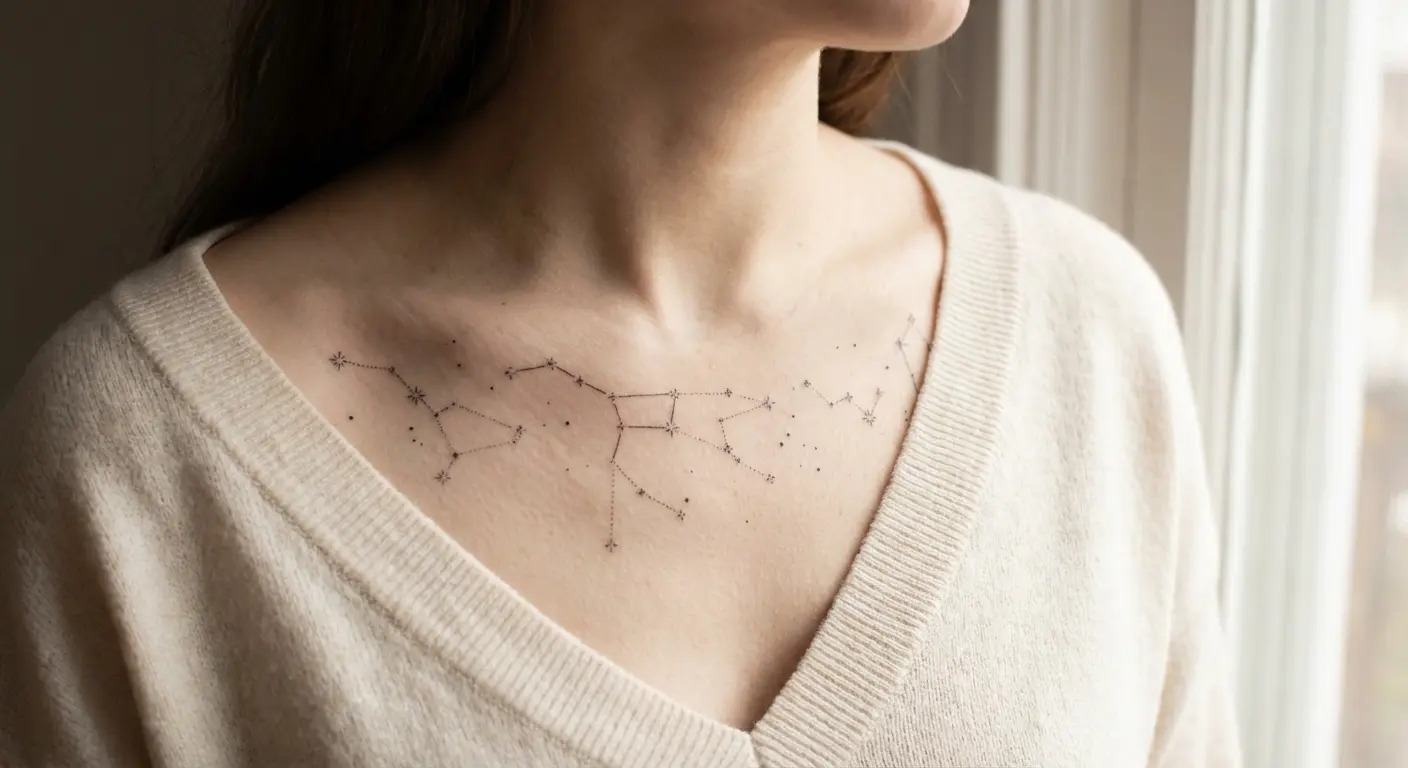
The scattered dot pattern works anywhere on your chest: collarbone, sternum, upper chest. And sessions are quick because you’re just doing small dots and thin connecting lines.
The delicacy of constellation work comes from its simplicity. Small dots (stars) connected by thin lines create recognizable patterns without overwhelming the space. Some designs skip the connecting lines, letting viewers mentally connect the dots. Others add the traditional constellation lines. More elaborate versions incorporate constellation names in subtle script or add small celestial elements like moons or planets.
Star size and detail level affect longevity. Tiny pinprick stars might fade or blur together over time. Slightly larger stars with small highlights or details tend to age better.
Some people add color to certain stars (representing planets or particularly bright stars), while others keep everything in simple black ink.
11. Single-Bloom Designs: One Perfect Flower
A single flower on the chest makes a complete statement without supporting elements. No vines, no additional blooms, no decorative flourishes. One perfectly rendered flower claiming its space.
Flower choice determines the overall vibe. A single peony reads differently than a single rose, which reads differently than a single lotus. Peonies suggest prosperity and romance. Roses carry complex meanings depending on color and style. Lotus flowers connect to spiritual growth and purity.
Placement of a single bloom requires careful consideration. Centered on the sternum creates symmetry and balance. Positioned to one side (perhaps over your heart) creates intentional asymmetry. Placed on the collarbone or upper chest keeps it more visible and easier to show or hide depending on neckline choices.
The initial surface healing for chest tattoos takes about 2-4 weeks, though deeper layers of skin can take up to 3 months to fully recover and for the tattoo to completely settle. This extended healing timeline matters for single-bloom designs where you want every petal detail to heal crisply and maintain its definition over time.
The level of detail in your single bloom determines session length and how the piece ages. Highly detailed, realistic flowers with subtle shading and delicate petal edges require skilled artists and longer sessions. More stylized or illustrative flowers might be simpler to execute but can be equally impactful.
12. Fine-Line Symbols: Private Meaning
Small symbolic tattoos in fine-line style offer maximum meaning with minimal visual footprint. These might be alchemical symbols, personal glyphs, cultural icons, or abstract marks that hold significance only you fully understand.
The chest provides ideal placement for these subtle pieces because you control their visibility completely. A small symbol on your sternum stays hidden under most clothing but reveals itself in lower necklines. Collarbone symbols are more visible but still read as delicate accents rather than bold statements.
Symbol selection requires thought beyond aesthetic appeal. You’re choosing marks that will be with you permanently, so understanding their origins and meanings matters. Cultural appropriation becomes a real concern with symbolic work. Borrowing symbols from cultures you’re not part of (especially sacred or ceremonial symbols) crosses lines that shouldn’t be crossed. Do your research.
Fine-line work ages differently than bold traditional tattoos. The thin lines can blur or fade over time, especially in areas with more sun exposure or friction. Your upper chest sees more sun than underboob or sternum placements, which affects longevity. Some blurring is inevitable with very fine lines.
Size matters more than you’d think with symbolic work. Too small and the symbol loses definition as it ages. Too large and it loses the subtle quality that makes fine-line symbols appealing.
13. Traditional American Pieces: Reclaiming The Style
Traditional American tattoo style (think Sailor Jerry, bold lines, limited color palette, iconic imagery) isn’t typically associated with women’s chest tattoos, which is precisely why it works so powerfully.
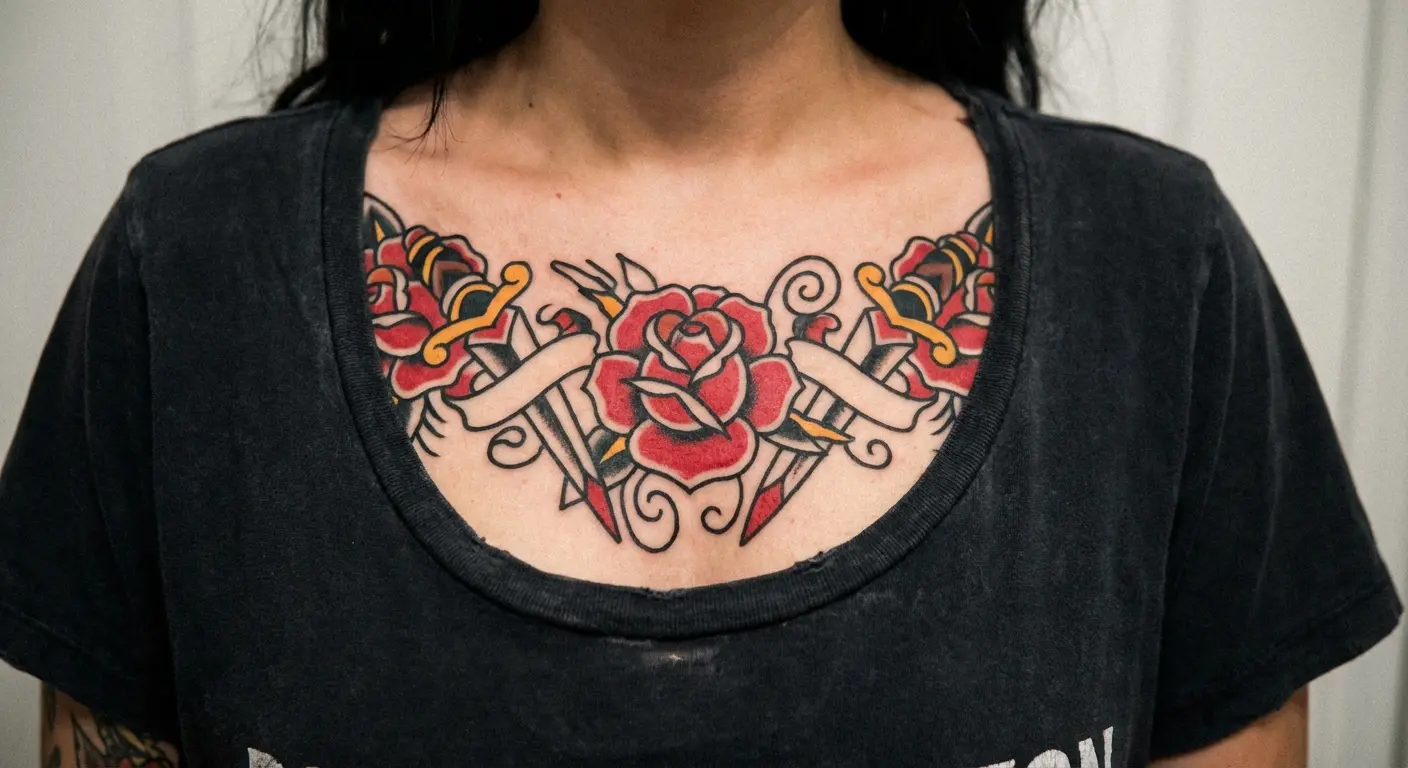
These pieces feature the hallmarks of traditional work: thick black outlines, solid color fills, classic imagery like daggers, roses, eagles, or ships. But placement and composition create something fresh. A traditional dagger placed vertically on the sternum carries different energy than the same dagger on a man’s forearm. Traditional roses that follow the curve of your collarbone or underboob line adapt the style to your body’s specific geography.
Color choices in traditional work are straightforward but impactful. You’re working primarily with red, yellow, green, blue, and black. These colors are chosen partly for tradition and partly because they age reliably. Traditional tattoos are designed to look good decades later.
The bold lines and solid fills of traditional work make these pieces highly visible and readable from a distance. There’s no subtlety here, which is the point.
Session times for traditional chest pieces are often shorter than you’d expect. The style doesn’t require the detailed shading or color blending that makes other styles time-intensive. Your artist works quickly and decisively, which can be a relief when you’re tattooing painful areas like the sternum or collarbone.
14. Japanese-Inspired Waves: Natural Movement
Japanese wave motifs (think Hokusai’s Great Wave) translate beautifully to chest placement because waves are about movement and flow. Your chest provides curves and contours that waves can crash over, curl around, or flow across.
The Japanese tattoo tradition (irezumi) carries specific conventions about composition, color, and imagery placement. Waves typically appear in blue and white with characteristic curved, almost claw-like crests. They might include foam, spray, or other water elements. Some designs incorporate koi fish swimming through the waves, dragons emerging from water, or lotus flowers floating on the surface.
Scale considerations matter with wave designs. Small, delicate waves lose the power and drama that makes this imagery compelling. You need enough space to show the wave’s curve, its crest, and its relationship to other elements. This often means committing to larger pieces that span significant portions of your chest.
For authentic Japanese traditional tattoo design principles, understand the cultural significance of wave patterns and how irezumi conventions translate to contemporary female chest tattoos.
The curves of Japanese waves complement the curves of your body in ways that geometric or rigid designs don’t. Waves can flow around your breasts, cascade down from your collarbone, or crash across your sternum.
Color saturation in Japanese wave tattoos requires maintenance over time. The blues used in traditional wave work can fade with sun exposure, and white highlights often need refreshing to maintain contrast. You’re committing to potential touch-ups every few years if you want the piece to maintain its original impact.
15. Abstract Art: No Rules
Abstract tattoos on the chest reject literal representation entirely. You’re not getting a recognizable image of something. You’re getting shapes, colors, lines, and compositions that create emotional or aesthetic impact without depicting anything specific.
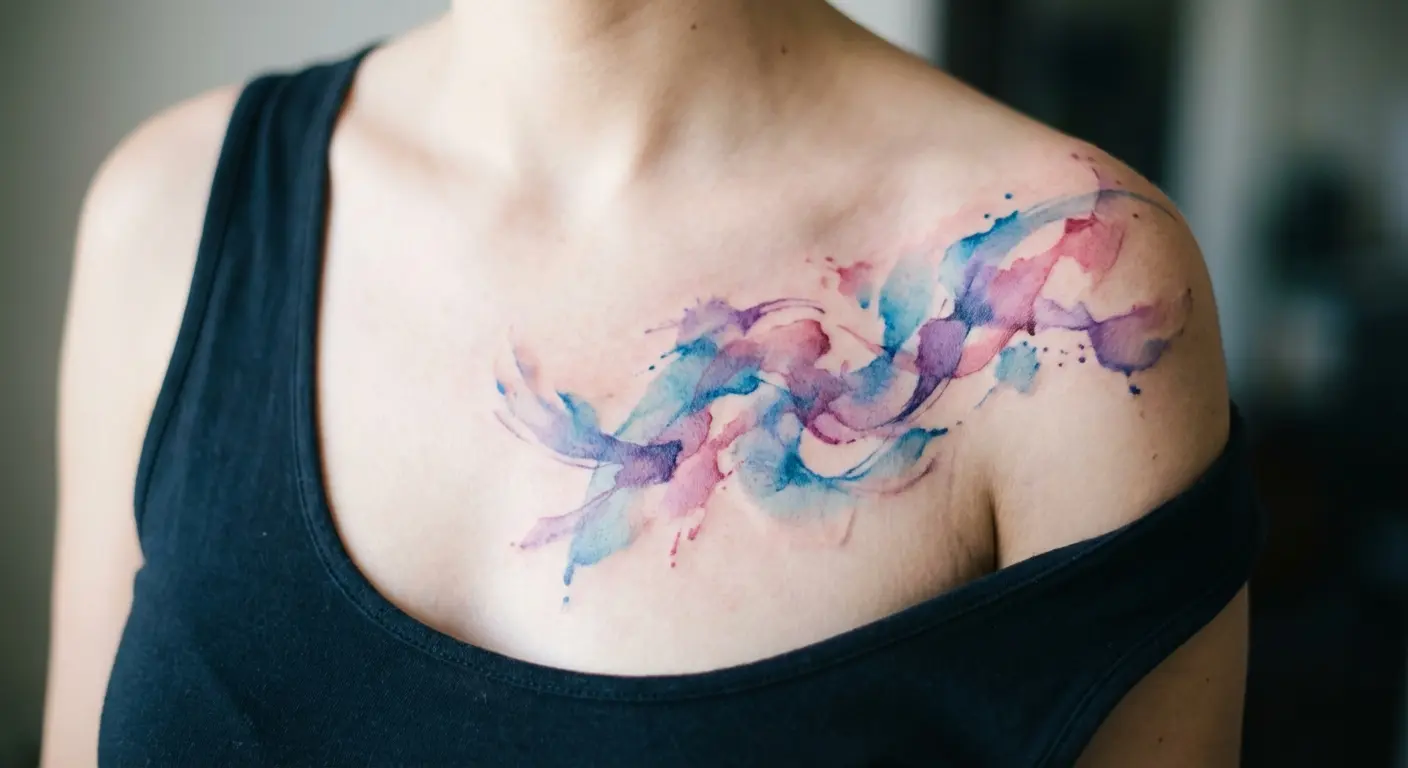
Watercolor techniques, brushstroke effects, color field compositions, and abstract expressionist approaches all translate to skin when executed by artists who understand how to adapt fine art techniques to tattooing. These pieces might feature color bleeds, splatter effects, geometric abstractions, or purely intuitive mark-making.
Finding an artist whose aesthetic vision aligns with yours becomes the challenge with abstract work. Abstract tattooing is deeply personal and interpretive. What reads as beautiful, balanced composition to one person might feel chaotic or incomplete to another. You’ll want to review your artist’s abstract work specifically, not their general portfolio.
Abstract chest pieces can incorporate your body’s contours as part of the composition. Color fields might shift as they move across the curves of your breasts. Linear elements might follow or contrast against your body’s natural lines.
These tattoos age in ways that are harder to predict than traditional styles. Color saturation changes over time, and the relationships between colors shift as some pigments fade faster than others. Some people love how abstract pieces evolve and change, viewing the aging process as part of the artwork’s life. Others prefer styles with more predictable aging patterns.
16. Ornamental Designs: Maximum Detail
Ornamental tattoos draw from decorative arts traditions worldwide: henna patterns, lace work, filigree, baroque ornamentation, art nouveau flourishes, and architectural details. These designs celebrate pattern, repetition, and intricate detail for their own sake rather than representing specific objects or symbols.
The chest provides ideal canvas for ornamental work because these designs often benefit from symmetry and the ability to radiate outward from a central point. Your sternum becomes a natural axis for symmetrical ornamental compositions. Patterns can mirror across your chest, creating balanced, harmonious designs.
Detail density in ornamental work ranges from relatively simple repeating patterns to incredibly complex compositions where every millimeter contains intricate line work. Higher detail density means longer session times and requires artists with exceptional precision and patience. You’ll spend more time under the needle and invest more money, but the resulting complexity creates stunning visual impact.
These designs often incorporate negative space as part of the design. The spaces between ornamental elements matter as much as the elements themselves. Your skin becomes part of the pattern rather than the background.
Ornamental chest pieces work in both black and grey or color. Black work creates elegant, timeless pieces with strong contrast. Color (especially jewel tones or metallic effects) can add richness and dimension but requires more maintenance over time.
What Actually Matters
Look, chest tattoos are visible when you want them to be and hidden when you don’t. That control matters. Whether you get a tiny collarbone accent or a full chest piece that takes six sessions, you’re putting permanent art on a part of your body that most people never see. That’s either empowering or terrifying, depending on the day.
The pain is real, especially the sternum. Healing takes longer than you think because bras exist. You’ll need touch-ups eventually, especially if you go with color. And you might love it immediately or need time to adjust to seeing it every day.
I can’t tell you what to get. I can tell you to sit with your design longer than feels necessary, find an artist whose style matches what you want (not just whoever’s available), and think about how this’ll look in 10 years, not just next month. Cost matters too. If someone quotes you $500 for a full chest piece, run. Real work costs real money.
Or don’t overthink it. Some of the best tattoos are impulse decisions.
What matters is that the ink you choose speaks your truth, whatever that looks like. Your chest, your choice, your story.
