Feather Tattoo Meaning: Why the Direction Your Feather Falls Actually Changes Everything

Table of Contents
-
Why Direction Matters More Than You Think
-
The Falling Feather vs. The Rising Feather
-
Cultural Weight That Most Guides Skip Over
-
Color Symbolism Beyond the Obvious
-
Feather Type and Species-Specific Messages
-
Placement as a Meaning Amplifier
-
The Broken Feather Nobody Talks About
-
Combining Feathers with Other Elements
-
Before You Commit to Your Design
-
Final Thoughts
Look, I’m gonna be straight with you about feather tattoos: most of what you’ve read is technically correct and completely useless. Yeah, feathers mean freedom. Congratulations, you’ve learned nothing.
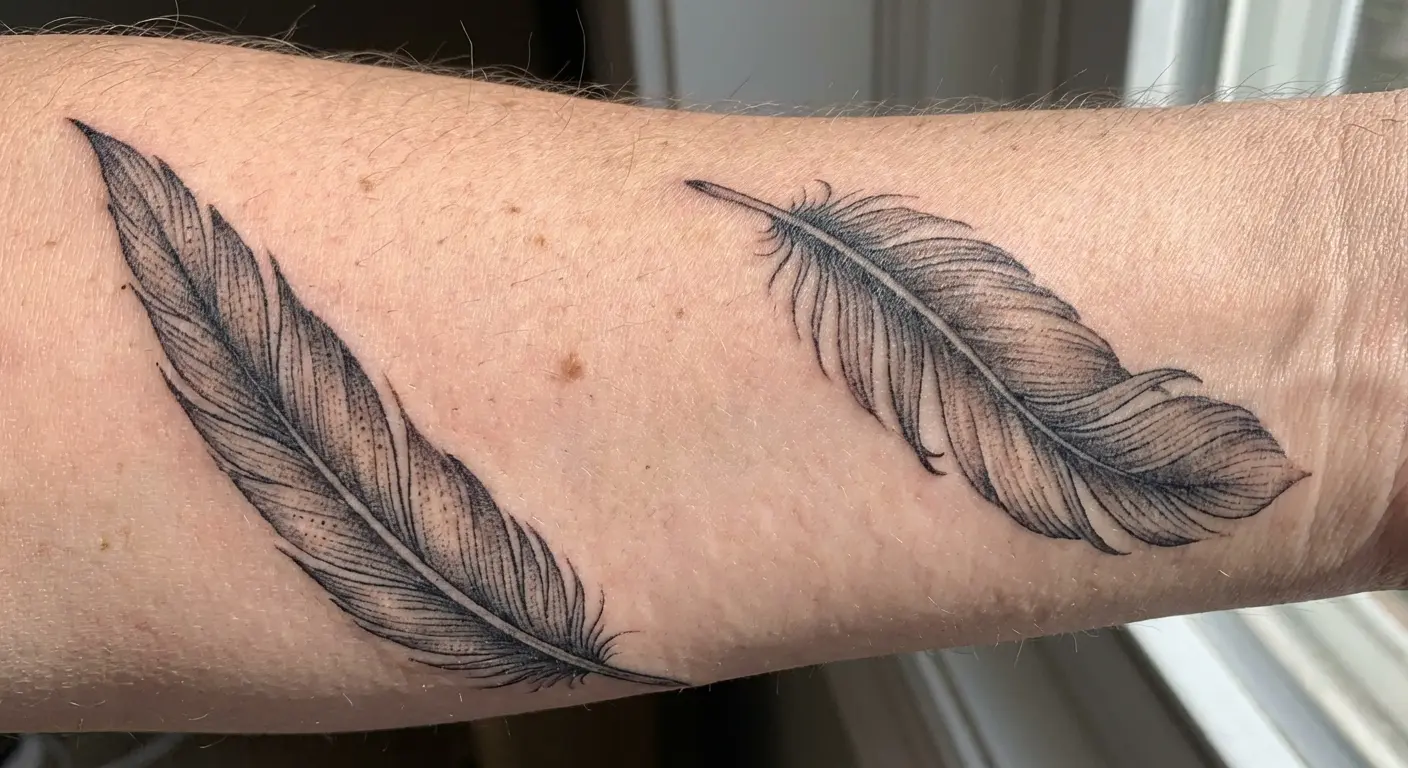
Here’s what actually matters. The direction your feather moves in your tattoo design carries as much weight as the feather itself. A feather drifting downward tells a completely different story than one caught in an upward draft. And I mean completely different. Most people choose their feather orientation based purely on aesthetics or how it fits their shoulder blade, never realizing they’re accidentally communicating something they might not intend.
Think about how we read visual movement. Your eye naturally follows the flow of an object, and your brain assigns meaning to that trajectory. Downward motion suggests release, letting go, or descent into something. Upward motion implies ascension, growth, or rising above. I’m pretty sure this is hardwired into how we process visual information, but I’m not a neuroscientist, so maybe I’m just projecting Western cultural bias.
Some tattoo artist in Brooklyn (Rosa Bluestone Perr, I think?) told Glam that feather tattoos aren’t going anywhere because they’re “visually beautiful” and represent concepts like freedom that remain universally appealing, which is the most obvious thing anyone’s ever said, but sure.
Why Direction Matters More Than You Think
The Upward Feather’s Hidden Message
Feathers pointing skyward or caught in rising motion communicate aspiration and transcendence. You’re signaling movement toward something higher, whether that’s spiritual enlightenment, personal growth, or overcoming obstacles that once held you down.
This orientation works great if you’re marking a turning point. Maybe you’ve climbed out of depression, addiction, or a toxic situation. The rising feather becomes a visual reminder that you’re no longer where you were. It’s forward-looking rather than reflective.
Met a woman in recovery once who got an eagle feather angled up her forearm. Five years sober. She was super specific about the angle (45 degrees, not straight up) because she said recovery isn’t a vertical climb, it’s a slope. Sometimes you slide back a little. I think about that a lot.
We see this choice frequently in memorial tattoos where the wearer wants to celebrate the deceased person’s spirit moving to a better place rather than focusing on loss. The upward trajectory shifts the emotional tone from grief to celebration.
Honestly? I think upward feathers are kind of played out. Everyone wants to be “rising above” something. Sometimes a falling feather (accepting gravity, coming back to earth) is the braver choice. But hey, your skin, your call.
The Descending Feather’s Complexity
Downward-floating feathers carry more nuanced meanings that most surface-level guides completely miss. Yes, they can represent letting go and release, but they also symbolize grounding, returning to earth, and choosing substance over flight.
You might choose a falling feather to represent coming back to yourself after a period of being unmoored. It’s about finding solid ground again, reconnecting with what’s real and tangible. There’s wisdom in descent that our culture often overlooks in its obsession with constant upward mobility.
Falling feathers also connect to the concept of gifts from above. Many spiritual traditions interpret found feathers as messages or blessings. A downward feather in your tattoo can represent receiving guidance, being chosen, or acknowledging that you’ve been given something precious. Understanding what your feather direction actually means helps you communicate your specific narrative more precisely.
Cultural Weight That Most Guides Skip Over
And now shit gets messy.
Feather symbolism doesn’t exist in a cultural vacuum. Different traditions have assigned specific, sometimes sacred meanings to feathers that you need to understand before permanently marking your skin. What your feather tattoo means varies dramatically across cultural boundaries.
Native American Significance and Respect Boundaries
In Native American cultures, feathers held profound ceremonial importance. American Indians used bird feathers in rituals and different ceremonies to represent connection with the spirit world, while chiefs wore feathers on their heads as symbols of high social status.
Native American cultures hold feathers (particularly eagle feathers) as sacred objects with deep spiritual meaning. Feathers represent honor, trust, wisdom, and connection to the Creator. Specific feathers are earned through acts of courage or given as ceremonial gifts.
Here’s where things get complicated. You can’t separate the feather from its cultural context if you’re drawing from these traditions. Wearing a feather tattoo styled after Native American iconography when you’re not Native American raises legitimate questions about cultural appropriation.
Real talk: ask yourself honestly. Are you drawn to the aesthetic, or do you have a genuine connection to these traditions? If it’s purely visual appeal, consider that you’re borrowing sacred symbolism for decoration. Many Native Americans find this disrespectful, and their perspective matters.
Actually, let me be more direct about this.
Getting Native American imagery when you’re not Native is appropriation. Full stop. I don’t care how much you “respect the culture” or how “spiritual” you feel. Those symbols aren’t for you. Pick something else.
Before you get an eagle feather because it looks badass, ask yourself: Am I Native American? No? Do I have any actual connection to these traditions beyond thinking they’re cool? Also no? Then maybe don’t. I’m not your mom, but don’t be that person who has to explain their culturally appropriated tattoo at parties.
Can you explain this tattoo to an actual Native person without feeling like an asshole? If the answer is no, or even “probably not,” pick something else. There are a thousand ways to represent courage or spirituality that don’t involve taking symbols that aren’t yours.
Egyptian Ma’at and the Feather of Truth
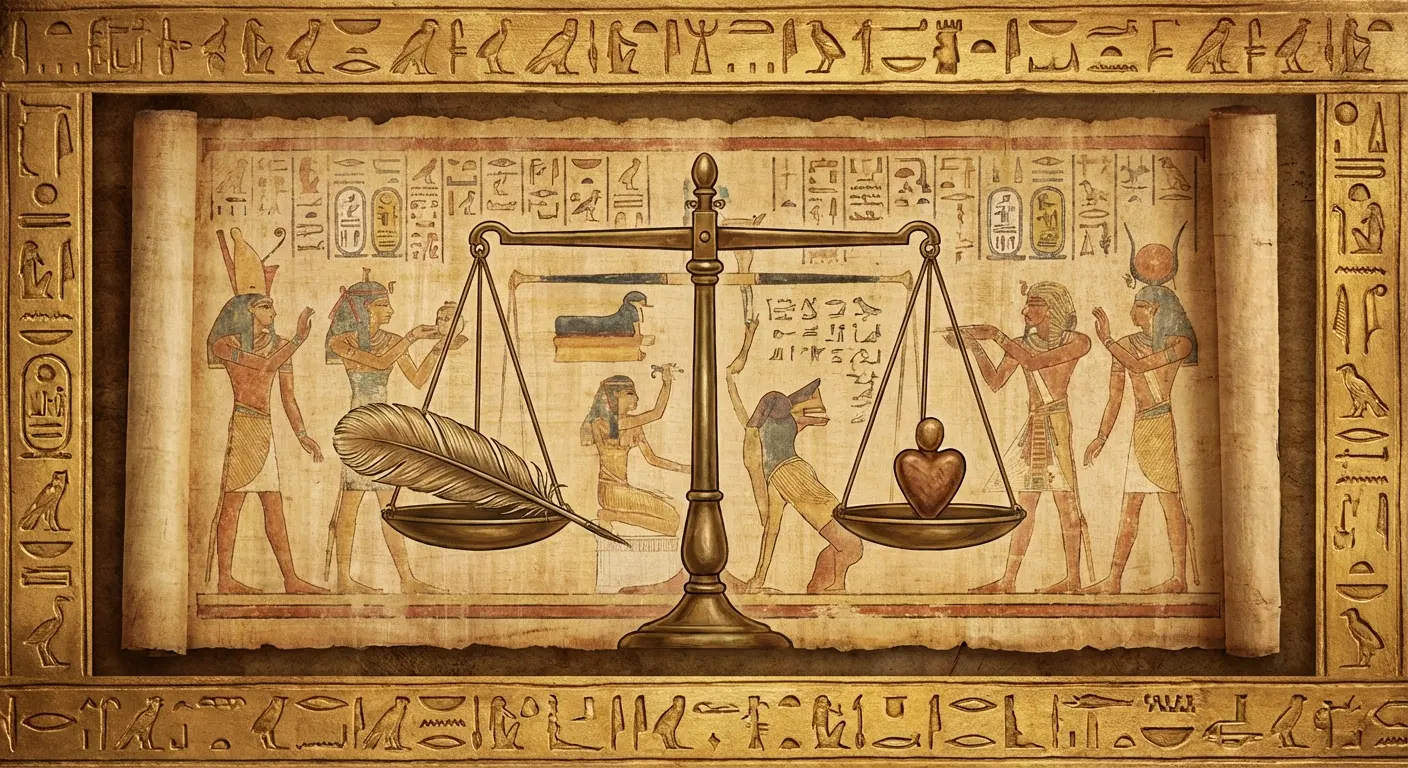
Ancient Egyptian mythology centers the ostrich feather as the symbol of Ma’at, goddess of truth, justice, and cosmic order. In the weighing of the heart ceremony, the deceased person’s heart was weighed against Ma’at’s feather. A heart lighter than the feather meant a life lived in truth and balance.
The feather served as a symbol for Maat, the goddess of justice, balance, and truth in ancient Egyptian mythology. During the after-death judgment, Maat’s feathers were used to verify whether a person had acted in balance during their life.
Ma’at’s feather = truth. If that resonates, you know what to do.
This symbolism offers rich territory if you’re drawn to concepts of integrity, truth-telling, or living according to your values. The Ma’at feather specifically represents the weight of truth (paradoxically light) and the idea that honesty and justice are fundamental to universal order.
You’ll often see this depicted with scales or combined with Egyptian aesthetic elements. The meaning shifts toward accountability, moral courage, and the belief that truth ultimately prevails.
Celtic and Nordic Interpretations
Celtic traditions connect feathers to the Otherworld and the movement between realms. Feathers represented the ability to transcend physical limitations and communicate with spiritual dimensions. Druids used feathers in ceremonial dress to signify their role as intermediaries.
Nordic cultures associated feathers (particularly raven feathers) with Odin’s messengers, Huginn and Muninn, representing thought and memory. These weren’t just birds but extensions of divine consciousness, gathering information across the nine realms.
If you’re drawn to these traditions, feather tattoos can represent wisdom-seeking, connection to ancestral knowledge, or the ability to see beyond surface reality.
I’m not an authority on which cultural interpretation is “right.” Probably depends on your cultural context and what you’re actually trying to say. Just… be thoughtful about it.
|
Cultural Tradition |
Primary Feather Symbolism |
Sacred Context |
Modern Appropriation Risk |
|---|---|---|---|
|
Native American |
Honor, courage, connection to Creator |
Earned through acts of bravery; ceremonial gifts |
High – sacred objects with strict protocols |
|
Ancient Egyptian |
Truth, justice, cosmic balance |
Ma’at’s weighing of the heart ceremony |
Low – historical/mythological rather than living practice |
|
Celtic/Druidic |
Otherworld access, spiritual communication |
Ceremonial dress, realm-crossing rituals |
Medium – depends on specific tribal imagery |
|
Nordic/Viking |
Divine consciousness, wisdom-seeking |
Odin’s ravens (thought and memory) |
Medium – popular in modern Norse paganism |
|
African/Asian |
Courage, luck, love |
Varies widely by specific culture |
High – requires specific cultural knowledge |
Deeper tattoo meanings reveal layered symbolism. Understanding cultural context transforms surface-level interpretations.
The Falling Feather vs. The Rising Feather
We touched on direction earlier, but the distinction deserves deeper examination because it’s the most overlooked element in feather tattoo design.
I started this post thinking direction was THE most important factor. But after working through all these other elements (culture, damage, species), I’m realizing direction is just one piece. Maybe not even the biggest piece. The story you’re telling with the whole composition matters more than any single element.
So yeah, I kind of contradicted my own title. Sue me.
Horizontal or Floating Feathers
Feathers suspended in horizontal motion or gentle floating suggest balance, transition, and being in the in-between. You’re neither rising nor falling but existing in a state of suspension.
This orientation resonates if you’re in a transitional life phase. Maybe you’re between careers, relationships, or identities. The horizontal feather acknowledges that not every moment is about climbing or descending. Sometimes you’re just moving through space, and that’s enough.
Floating feathers also represent trust in the process. You’re not forcing direction but allowing natural forces to guide you. There’s a surrender quality here that’s different from the active choice implied in rising or falling feathers.
Spiraling or Spinning Feathers
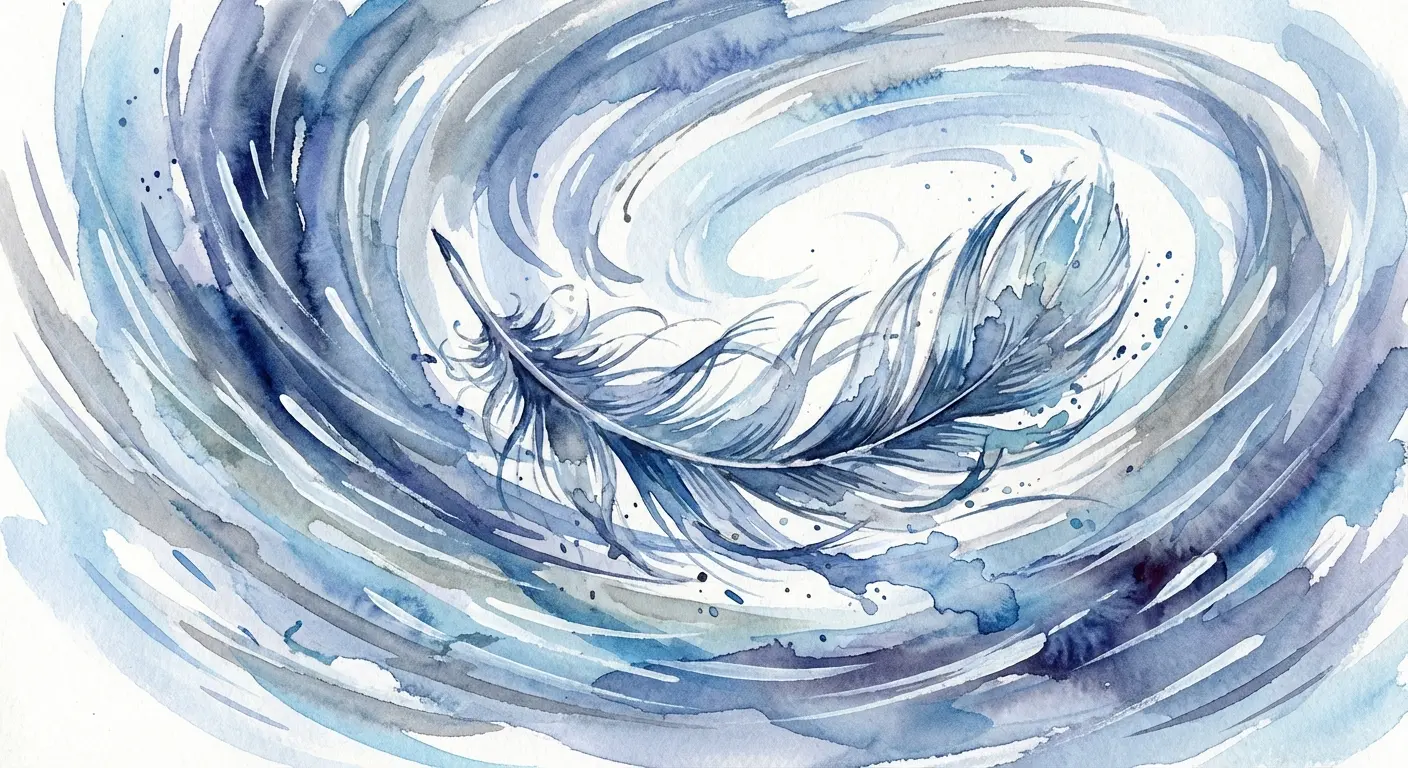
Feathers caught in spiraling motion introduce complexity and transformation. The spiral represents cycles, evolution, and the non-linear nature of growth. You’re not moving in a straight line but circling back to revisit old ground from new perspectives.
This choice works beautifully for people who’ve learned that healing and growth aren’t straightforward. You might make progress, slip back, and advance again. The spiral honors that reality instead of pretending change happens in neat upward trajectories.
Spiraling feathers also connect to chaos, wind, and forces beyond your control. There’s an acknowledgment that you don’t always get to choose your direction, but you can choose how you move through turbulence.
Multiple Feathers in Different Directions
Designs incorporating several feathers moving in various directions tell stories about complexity, different life chapters, or multiple aspects of your identity pulling in different ways.
You might have one feather rising (where you’re headed), one falling (what you’ve released), and one floating (where you are now). This creates a narrative timeline within a single tattoo, showing movement and change rather than a static state.
A mother of three had three separate feathers tattooed on her shoulder blade, each pointing in a different direction and representing one of her children. The oldest child’s feather points upward (now in college, launching into independence), the middle child’s feather floats horizontally (navigating teenage uncertainty), and the youngest child’s feather curves downward and inward (still grounded at home, needing her protection). The design captures the reality that her children aren’t all in the same life phase simultaneously.
Multiple directional feathers can also represent different relationships, lost loved ones, or various parts of yourself that don’t all move in unison. It’s a more honest representation of how messy and multidirectional real life feels.
Color Symbolism Beyond the Obvious
Color adds another dimension of meaning that interacts with everything else we’ve discussed. The same feather design in different colors communicates completely different messages.
Okay, I made a table because I’m a nerd and this was getting messy:
|
Feather Color |
Traditional Meaning |
Emotional Tone |
Best Used For |
|---|---|---|---|
|
Black |
Sorrow, loss, determination, idealism |
Somber, serious, grounded |
Memorial tattoos, marking hardship survived |
|
White |
Purity, peace, angelic presence |
Ethereal, spiritual, gentle |
Connection to deceased loved ones, spiritual guardians |
|
Brown |
Comfort, stability, unity with nature |
Warm, earthy, protective |
Grounding after chaos, travel protection |
|
Red |
Energy, passion, strength, luck attraction |
Bold, intense, vital |
Celebrating survival, marking passionate commitments |
|
Blue |
Calm, balance, unity, order |
Peaceful, centered, harmonious |
Seeking well-being, marking peace achieved |
|
Green |
Spiritual growth, renewal, renovation |
Fresh, evolving, hopeful |
New beginnings, personal transformation |
|
Yellow |
Joy, happiness, faith, hope |
Bright, optimistic, cheerful |
Celebrating recovery, marking positive turning points |
|
Pink |
Romance, love, tenderness, care |
Soft, affectionate, gentle |
Honoring relationships, celebrating love |
Or if you want the quick version without the table:
Black = the heavy stuff. Loss, grief, determination. Good for memorial tattoos.
White = dead people saying hello, angel vibes, purity if you’re into that.
Red = passion, survival, “I made it through the fire.”
Blue = calm, balance, the opposite of red basically.
Green = new growth, starting over, spring energy.
Yellow = optimism that might be annoying or might be genuine depending on your mood.
Pink = love, softness, romance (or reclaiming femininity if that’s your thing).
You can also just do black and gray if you want it to feel serious and timeless. Color trends come and go. Black is forever. Literally.
Black and Gray Realism
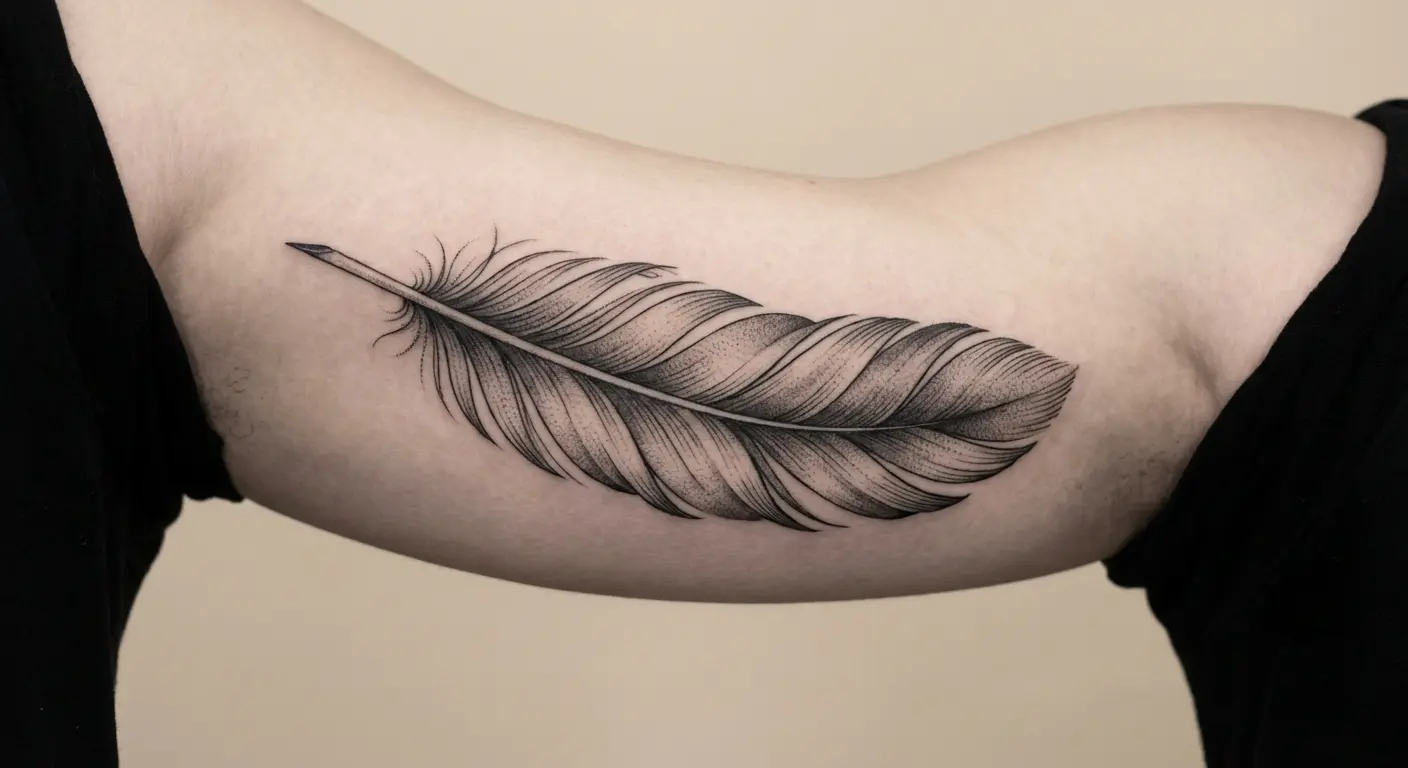
Traditional black and gray feathers emphasize texture, detail, and timelessness. You’re focusing on the feather’s physical reality rather than adding symbolic color layers. This choice often suggests authenticity, simplicity, or a desire to honor the natural object itself.
Black and gray work particularly well for memorial tattoos or designs meant to feel grounded and permanent. The lack of color removes temporal markers (colors trend in and out), making your tattoo feel classic rather than dated.
There’s also something about black and gray that reads as more serious or somber. If your feather carries heavy meaning related to loss, struggle, or hard-won wisdom, the absence of color reinforces that weight.
White or Pale Feathers
White feathers traditionally symbolize purity, peace, and angelic presence. Many people interpret white feathers found in nature as signs from deceased loved ones or spiritual guardians.
In tattoo form, white or very pale feathers (often achieved through negative space or white ink) create an ethereal, almost ghostly effect. You’re emphasizing the spiritual or otherworldly aspect of the feather rather than its physical presence.
White ink fades faster than traditional black, which some people see as a drawback. Others appreciate the impermanence, feeling it mirrors the temporary nature of physical life or the fading of grief over time.
Full disclosure: white ink feathers look cool on Instagram and invisible in real life. Don’t say I didn’t warn you.
Vibrant and Unusual Colors
Choosing non-natural feather colors (purple, blue, pink) shifts the symbolism away from any specific bird species and toward pure color meaning. You’re creating something that exists in imagination rather than nature.
Vibrant colors often signal celebration, joy, or a deliberate choice to see beauty in darkness. If you’ve survived something difficult, a brightly colored feather can represent your refusal to let that experience drain the color from your life.
Unusual color choices also free you from some of the cultural weight we discussed earlier. A neon pink feather clearly isn’t trying to claim Native American symbolism or represent any specific tradition. It’s personal and contemporary rather than historical.
Feather Type and Species-Specific Messages
Most people think “feather tattoo” as a generic category, but the specific bird matters enormously. Each species carries its own symbolic weight that adds precision to your tattoo’s meaning.
Writing this in 2024, after years of cultural appropriation conversations going mainstream, and people are STILL getting Native American feathers without thinking twice. We’ve had the discourse. There’s no excuse anymore.
The enduring popularity of bird-related tattoos continues into 2024, with the “birds of a feather tattoo trend” circulating widely on TikTok throughout the year, spawning countless videos showcasing various avian-inspired ink designs, according to Glam’s coverage of tattoo trends.
Eagle Feathers and Power
Eagle feathers represent courage, strength, and connection to the divine. Eagles fly higher than other birds, giving them symbolic association with perspective, vision, and rising above earthly concerns.
The eagle’s predatory nature also adds elements of power, focus, and the ability to strike decisively. If you choose an eagle feather, you’re claiming these qualities or aspiring to develop them.
Remember the cultural considerations we discussed earlier. Eagle feathers hold particular significance in Native American traditions, so be thoughtful about how you approach this design. Understanding what your feather choice actually means helps you navigate these cultural sensitivities.
Raven and Crow Feathers
Ravens and crows carry complex symbolism that varies by culture. They’re associated with intelligence, mystery, transformation, and the ability to thrive in darkness. Many traditions see them as messengers between worlds or guides through difficult transitions.
These birds also connect to death (not necessarily in a negative way) and the wisdom that comes from facing mortality. A raven feather might represent your comfort with life’s darker aspects or your ability to find meaning in what others fear.
The black coloring of these feathers adds to their mysterious quality. They absorb light rather than reflecting it, suggesting depth, secrets, and hidden knowledge.
Peacock Feathers and Display
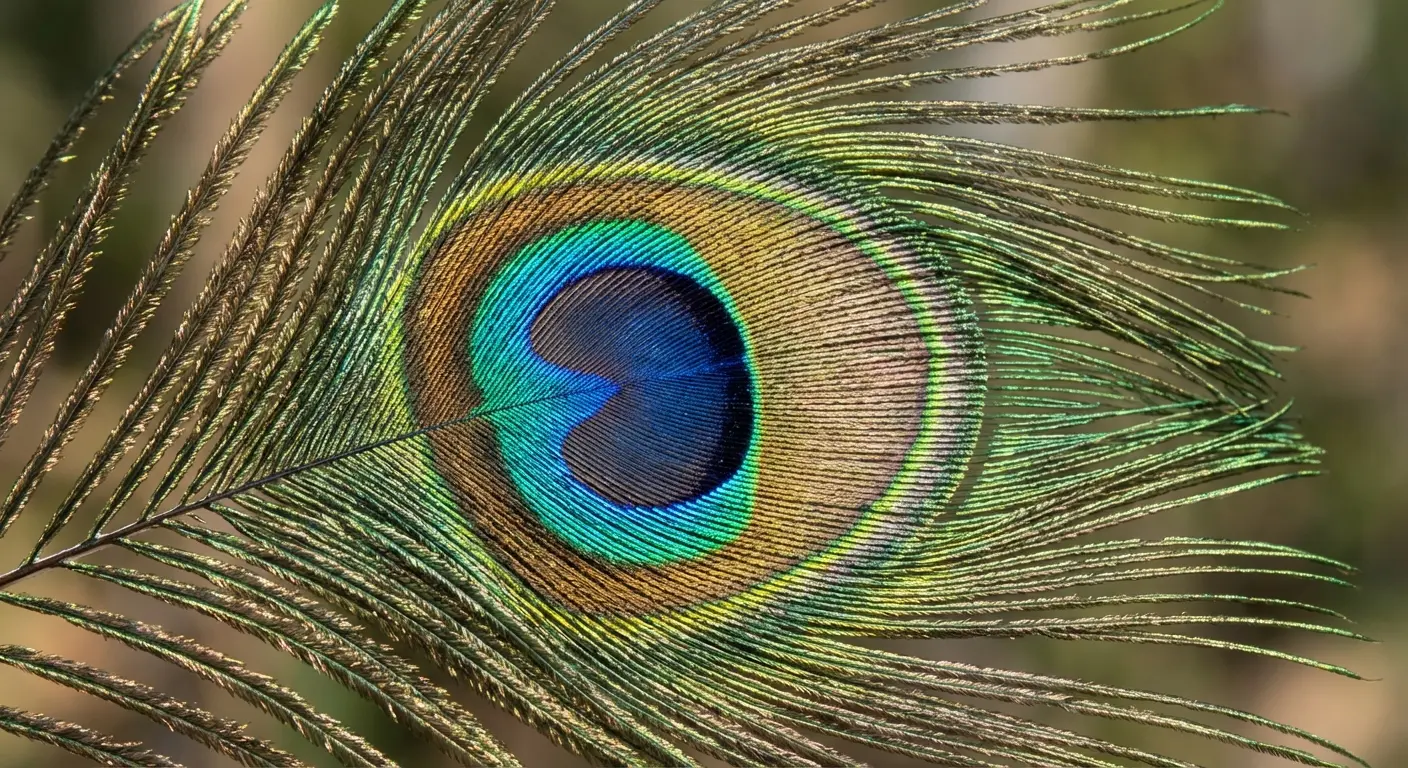
Peacock feathers are impossible to mistake with their distinctive eye pattern. They represent beauty, pride, confidence, and the courage to be seen. Peacocks don’t hide; they display.
If you struggle with visibility or claiming space, a peacock feather can serve as a reminder to show yourself fully. It’s about owning your magnificence instead of dimming yourself for others’ comfort.
The “evil eye” pattern in peacock feathers also connects to protection symbolism in many cultures. The eye watches and wards off negative energy or jealousy.
Full disclosure: I think peacock feathers are tacky. I know people love them, but they remind me of Lisa Frank folders. But that’s just me being judgmental about other people’s aesthetic choices.
Phoenix Feathers and Rebirth
Phoenix feathers represent transformation through destruction, rising from ashes, and the ability to recreate yourself. You’ve survived something that should have destroyed you, but instead, it became the foundation for something new.
These work powerfully for marking major life transitions: recovery from illness, leaving abusive situations, rebuilding after loss. The phoenix feather says you’re not the same person who went into the fire.
The mythological nature of the phoenix also adds an element of magic or impossibility. You’ve done something you didn’t think you could do, defying expectations (including your own).
I wrote another post about phoenix tattoo symbolism and the whole rebirth thing. Similar energy to broken feathers but more dramatic. Link’s somewhere on this site if you care.
Placement as a Meaning Amplifier
Where you place your feather tattoo adds another layer of meaning that most guides completely ignore. Your body isn’t a blank canvas; different areas carry different energies and visibility levels that interact with your design’s symbolism.
Visible vs. Hidden Placements
Feathers on visible areas (forearms, hands, neck) make a public statement. You’re sharing this symbol with the world, which changes its function from personal reminder to external communication.
Visible feather tattoos often signal identity or values you want others to know about. You’re not hiding your spirituality, your survival story, or your connection to specific traditions. There’s power in that visibility, but also vulnerability.
Hidden placements (ribs, back, thigh) keep the symbol private. Your feather tattoo becomes a secret conversation between you and yourself, a reminder that doesn’t require external validation or explanation.
Neither choice is better; they serve different purposes.
Actually, let me complicate that. Getting a visible tattoo when you’ve only had hidden ones before is a whole thing. You’ll be hyper-aware of it for months. People will comment. You’ll wonder if you made a mistake. Then one day you’ll forget it’s there. That’s the cycle.
Spine and Central Axis Placement
Feathers placed along your spine connect to your central energy channel and the concept of alignment. A feather running up your spine can represent your backbone, your core strength, or the idea of straightening what was bent.
This placement also creates a powerful directional statement. An upward-pointing feather along your spine emphasizes ascension and growth. A downward feather suggests grounding and connection to earth energy.
Spine tattoos hurt. Like, really hurt. If you’re pain-sensitive, maybe reconsider that placement no matter how symbolic it is. Some people say the pain adds to the meaning (you earned it through suffering). Others just wish they’d picked their forearm. Know yourself.
Heart and Chest Area
Chest placement? You’re putting it over your heart. The symbolism writes itself.
Feathers over your heart connect to emotional themes: love, grief, courage, or matters of the heart. This placement suggests the feather’s meaning is central to who you are emotionally.
Many people choose this area for memorial feathers, keeping lost loved ones close to their hearts. The placement makes the abstract concept of “carrying someone with you” physically literal.
This emotional connection to memorial tattoos was recently highlighted when a woman named Christy Williams got a tattoo of “Ropey” (a small braided rope her late grandmother Brenda had made) after her cat Bug became inseparable from the handmade object, as reported by The Dodo. Williams explained that “Ropey is significant to me because he represents unconditional love” and serves as a reminder of her grandmother, demonstrating how placement and meaning intertwine in memorial designs.
Chest placement also connects to breath and life force. Your chest rises and falls with each breath, creating subtle movement that can make feather tattoos appear to float or drift with your breathing.
The Broken Feather Nobody Talks About
Can we talk about broken feathers for a second? Because everyone’s out here getting these perfect, pristine feathers like they’re fresh off an angel’s wing, and I’m like… have you met life? Life breaks shit.
Perfect feathers dominate tattoo galleries, but broken or damaged feathers tell stories that pristine ones can’t. This is the angle almost nobody explores, and it’s where some of the most powerful symbolism lives.
Frayed edges, broken shafts, missing barbs. That’s where the real stories are. A perfect feather says “I like the aesthetic.” A broken one says “I’ve been through something and I’m still here, just different now.”
Frayed Edges and Wear
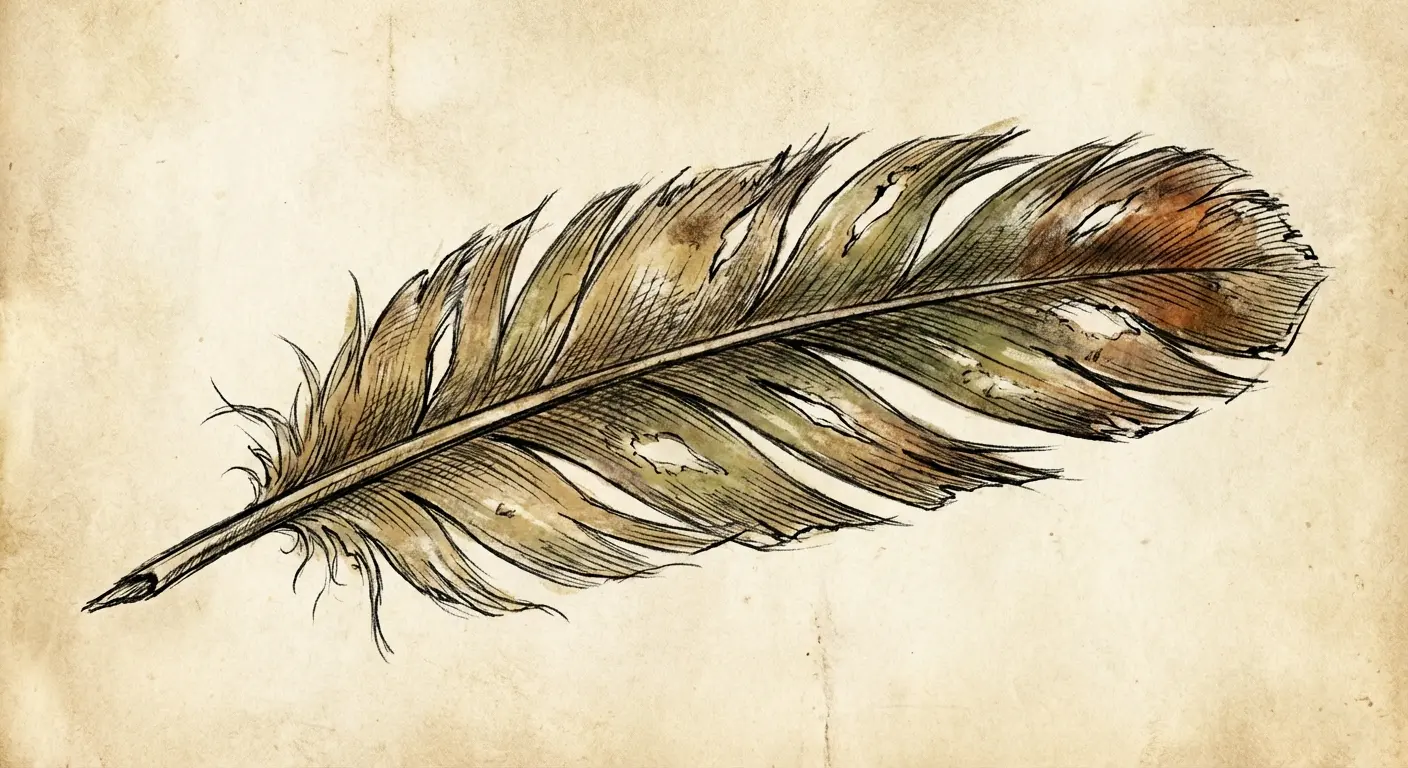
Feathers with frayed edges or visible wear represent survival, endurance, and the marks that life leaves on you. You’re not pretending you’ve emerged unscathed. You’re acknowledging that struggle leaves traces, and those traces are part of your story.
This design choice resonates deeply with people who’ve been through trauma, chronic illness, or extended hardship. You’re still here, still functioning, but you’re not the same. The frayed feather honors that reality instead of demanding you present a polished version of yourself.
There’s also something honest about showing wear. We’re all weathering life’s storms, and pretending otherwise creates distance between your tattoo and your lived experience.
Split or Broken Shaft
A feather with a broken central shaft represents rupture, breaking points, or moments when everything fell apart. Depending on how you design it, this can show the break as catastrophic or as the moment that allowed new growth.
Some designs show the broken pieces still connected by a thread, representing the fragile connections that held you together during your worst moments. Others show clean breaks that have healed over, suggesting you’ve integrated the rupture into your story without needing to repair it back to its original form.
Broken shaft feathers work particularly well for marking specific traumatic events: accidents, losses, diagnoses, or betrayals that fundamentally changed you. The break becomes a timeline marker, dividing before from after.
Missing Barbs or Gaps
Feathers with sections of missing barbs create visual gaps that represent loss, absence, or the pieces of yourself you can’t get back. These gaps don’t ruin the feather; they change its structure and how it moves through air.
You might choose this design to represent lost relationships, parts of your identity you’ve had to release, or capabilities you once had. The feather still exists and still means something, but it’s been altered by what’s missing.
This symbolism acknowledges that some losses don’t get filled in. You don’t replace what’s gone; you learn to function differently, and the gaps become part of your new shape.
Rebuilding and Repair Imagery
Some broken feather designs incorporate visible mending: stitches, gold-filled cracks (kintsugi style), or bindings that hold pieces together. This shifts the meaning toward active healing and the beauty of repair.
I saw this trauma therapist once with a raven feather on her forearm, shaft broken clean through, held together with gold kintsugi-style filling. She works with assault survivors. The broken part wasn’t the point. The gold holding it together was. That’s the kind of symbolism that actually means something.
I keep coming back to that kintsugi feather. That’s the kind of tattoo that makes me rethink everything I said about pristine designs. There’s something about a well-executed broken feather that just gets me. The honesty of it. The refusal to pretend damage didn’t happen. I love that.
You’re not just broken; you’re in the process of putting yourself back together. The repair work becomes visible and valued rather than hidden. This resonates with people in active recovery or therapy who want to honor the work of healing, not just the end result.
Similar to how semicolon tattoo symbolism represents continuing your story, broken feathers acknowledge damage while celebrating resilience.
Combining Feathers with Other Elements
Adding elements to your feather design creates compound symbolism that can either enhance your message or create confusion. Each addition needs to serve the overall meaning you’re building.
Feathers with Birds Attached
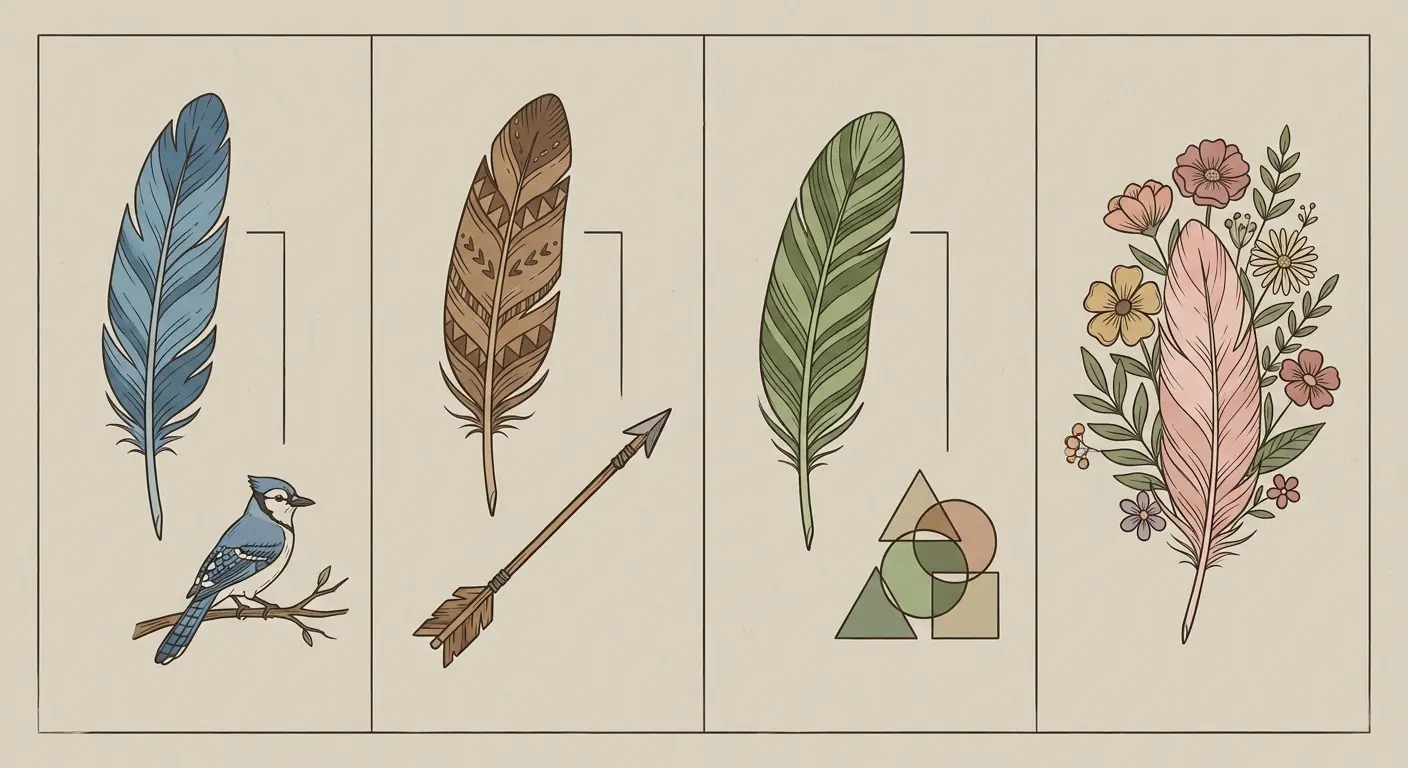
Showing a bird losing or shedding a feather adds narrative movement to your design. You’re capturing a moment of transition, release, or transformation. The bird represents who you were or where you came from; the falling feather represents what you’re letting go.
Alternatively, a bird catching or gathering feathers suggests collection, building, or preparing for something. You’re in accumulation mode, gathering what you need for the next phase.
The bird species matters here too. A phoenix shedding feathers means something completely different than a dove releasing one. Make sure your bird choice aligns with the specific story you’re telling.
Feathers and Arrows
The feather-and-arrow combination is popular but often poorly thought through. Arrows represent direction, purpose, and being aimed at a target. Adding a feather can suggest guidance (arrows were fletched with feathers for accuracy) or the tension between freedom and direction.
Some designs show feathers transforming into arrows or arrows dissolving into feathers. This represents the relationship between structure and freedom, discipline and flow. You need both to hit your targets and maintain your spirit.
Be careful with this combination if you’re not Native American. Feathered arrows carry specific cultural significance that you might be appropriating without understanding the weight.
Feathers in Dreamcatchers
Dreamcatcher tattoos with hanging feathers are everywhere, and they’re also one of the most culturally problematic choices you can make. Dreamcatchers are sacred objects from Ojibwe culture, not decorative elements for anyone to claim.
If you have genuine connection to these traditions through heritage or deep cultural involvement, you might have standing to wear this symbol. If you just think it looks cool or you like the vague idea of “catching bad dreams,” you’re appropriating sacred imagery.
Consider what you’re trying to express. If it’s protection during sleep or filtering out negativity, there are other symbolic options that don’t involve taking from cultures that have explicitly asked people to stop commodifying their sacred objects.
Dreamcatcher feather tattoos are everywhere and they’re almost always appropriative AND badly done. Double whammy. Just… don’t.
Feathers with Names, Dates, or Words
Adding text to feather designs makes the meaning explicit rather than symbolic. You’re removing ambiguity, which can be positive or limiting depending on your goals.
Names or dates often appear in memorial feathers, directly connecting the symbol to a specific person or moment. This removes any doubt about what the feather represents, but it also locks the meaning in place. The feather can’t evolve to mean something else over time.
Single words (strength, freedom, faith) can feel redundant if the feather already symbolizes that concept. You’re essentially captioning your own tattoo, which sometimes suggests you don’t trust the symbol to communicate on its own.
If your feather tattoo needs a paragraph of explanation to make sense, it’s not working as a tattoo. That’s what journals are for.
Geometric or Mandala Elements
Combining organic feathers with geometric shapes creates interesting tension between natural and constructed, flowing and structured. You’re bringing order to something wild or adding wildness to rigid patterns.
Geometric elements often represent the frameworks you’ve built to contain or understand your experiences. The feather within geometric boundaries might represent your spirit within life’s structures, or your attempt to make sense of something that resists categorization.
Mandala elements add spiritual or meditative dimensions, suggesting wholeness, cycles, or the journey toward center. This combination works well if you’re exploring how freedom and structure coexist in your spiritual practice.
Before You Commit to Your Design
You’ve explored the symbolism, considered the angles, and started forming ideas about what your feather tattoo should communicate. Now comes the practical phase of turning concept into reality.
Look, I know some of you are gonna skip all this advice and get a feather on a whim after three beers. I can’t stop you. But maybe screenshot this post first so you can at least pick the right direction while you’re being impulsive.
Testing Your Design Concept
Most people jump from idea to tattoo chair without spending enough time with their design. You need to live with the concept for a while, see it on your body, and notice how you feel about it over weeks or months.
Draw it on yourself with Sharpie. See if you’re still excited about it in three weeks or if you’ve moved on to thinking about snake tattoos or whatever.
Temporary tattoos or drawing the design on yourself with marker lets you test placement, size, and how the image interacts with your body’s movement. You’ll discover whether that rib placement you imagined works with how you sit and move, or whether the size you envisioned reads clearly from a distance.
This testing phase often reveals that your first concept needs adjustment. Maybe the direction feels wrong once you see it on your body, or the placement doesn’t create the effect you imagined. Better to discover this with washable ink than permanent needles.
Also, look at it in a mirror. That placement you thought was perfect might look weird when you actually see it on your body. I almost got a spine tattoo before realizing I’d literally never see it unless I was doing yoga in front of a mirror, which I don’t do, because I don’t do yoga.
If you’re still reading… you’re either procrastinating hard or genuinely obsessed with feather symbolism. Either way, respect.
Don’t just walk into a shop with a Pinterest screenshot. Live with the idea for a while. See if you’re still excited about it in three weeks or if you’ve moved on to thinking about something else entirely.
Visualizing Multiple Variations
The challenge is that most of us can’t draw well enough to test multiple design variations. You’re stuck with whatever you can sketch or find in generic flash art, which rarely captures the specific combination of elements and meanings you’ve been building.
Okay, shameless plug: this is why we built Tattoo Generator IQ. Because I got tired of trying to explain “a broken raven feather spiraling down with frayed edges” to artists who’d just nod and then draw whatever they felt like drawing. Now you can generate exactly what you’re picturing and bring that to the consultation. End plug.
You can test different directions, damage patterns, bird species, and placements without committing to any single vision. This exploration phase is critical for finding the design that matches your intended meaning rather than settling for close enough.
Finding the Right Artist
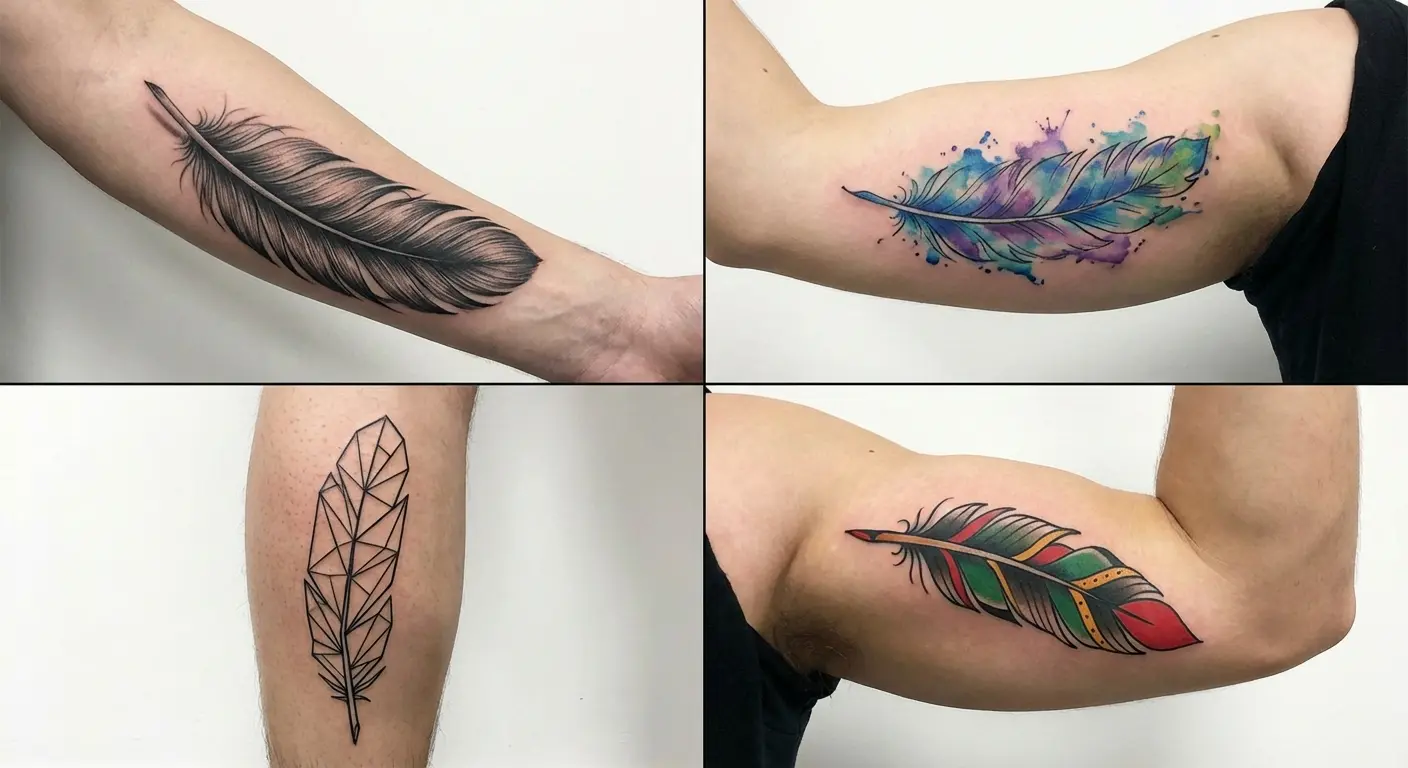
Your feather tattoo’s final meaning depends partly on execution. Realistic feathers require different skills than stylized or illustrative approaches. You need an artist whose style matches your vision and who understands the symbolism you’re trying to capture.
Look at artists’ portfolios specifically for feather work or similar organic subjects. Can they capture texture? Do their feathers have dimension and movement, or do they look flat? Are their lines confident or shaky?
A feather in American traditional style says something different than the same feather in fine-line realism. Traditional reads as bold, permanent, classic. Fine-line reads as delicate, personal, contemporary. Neither is better, but they’re not interchangeable.
Book a consultation before committing. Bring your design concepts (including any variations you’ve generated) and discuss what you’re trying to communicate. Good artists will ask questions about meaning and offer suggestions that enhance your concept rather than just copying what you brought.
I asked a few artists about this direction thing and most of them were like “yeah, sure, but can we make sure it actually looks good first?” Which is fair. Symbolism doesn’t matter if the tattoo is ugly.
Also, find an artist whose vibe matches yours. If you’re getting a deeply personal trauma tattoo, you don’t want some bro who’s gonna make jokes the whole time.
Bring reference images but don’t expect your artist to copy them exactly. That’s tacky and often illegal. Use them as inspiration, then let your artist do their thing.
Tip 20% minimum. Your artist is literally stabbing you with needles for hours to create permanent art on your body. Show appreciation.
Considering Long-Term Changes
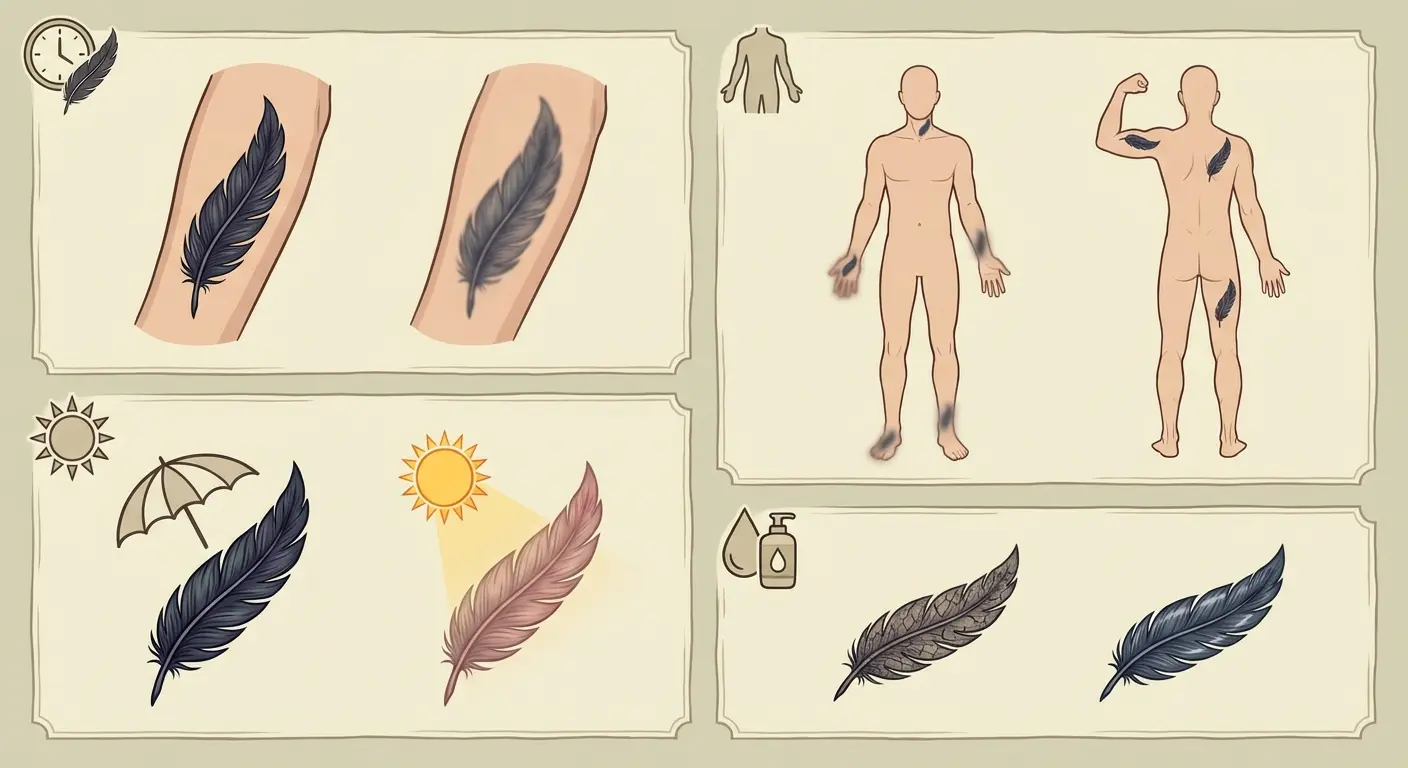
Feathers with fine detail can blur over time as ink spreads slightly under your skin. Intricate barb work might soften, and small gaps might close up. You need to design with aging in mind, ensuring your tattoo will still read clearly in ten or twenty years.
Tiny feathers with lots of detail? Those are gonna blur into a blob in five years. Just FYI.
Broken or damaged feathers might age better than pristine ones because the imperfections are part of the design. Small irregularities that develop over time just add to the weathered quality you’re already depicting.
Placement affects aging too. Areas with more sun exposure fade faster. Spots that experience frequent friction (feet, hands, fingers) need touch-ups more often. Factor this into your placement decision, especially if your feather’s meaning is tied to permanence.
White ink fades fast. You’ll need touch-ups every few years if you want it to stay visible. Some people like the faded look (feels more authentic, less fresh). Depends on your vibe.
Black and gray age better than color, generally. But color that’s faded can look cool in its own way. Vintage, lived-in.
Understanding proper tattoo aftercare practices helps preserve your feather’s detail and meaning for years to come.
Also, if you’re planning to get pregnant, maybe don’t get a stomach feather that’s gonna stretch and distort. Or do, and let it change with your body. Both valid.
Good tattoos are expensive. If you’re broke, you have options: save up, start smaller, or accept that you might have to compromise on some aspects. What you shouldn’t do is go cheap on something permanent. A bad tattoo costs more to fix than a good one costs upfront.
Broken feathers with kintsugi gold filling? Gorgeous. Also expensive as hell because you’re paying for detail work and probably multiple sessions. Just FYI.
If this is your first tattoo, maybe don’t start with a giant spine piece, no matter how meaningful the symbolism is. Start smaller. See how you handle the pain and the commitment.
Six months after getting your feather, you’ll stop noticing it. That’s normal. Some people freak out and think it means the tattoo was a mistake. It doesn’t. It just means it’s part of you now. You don’t constantly think about your nose either, but it’s still meaningful.
Will this mean the same thing in twenty years? Maybe not. I got a tattoo at 22 that I thought was deep and now I’m like “what was I thinking?” That’s okay. You’re allowed to outgrow your ink. It’s still part of your story.
Worst case scenario, you can get it removed or covered. Laser technology is pretty good now. I’m not saying get a tattoo you don’t care about, but also, the permanence thing is slightly overstated. You’re not locked in for life if you really hate it.
Final Thoughts
I’ll leave you with this: I know a guy who got a perfect, pristine eagle feather on his chest when he was 25. Looked amazing. At 40, after divorce, bankruptcy, and his kid’s cancer scare, he went back and had the artist add cracks, frayed edges, and worn spots. Said the perfect feather felt like a lie.
Your tattoo doesn’t have to tell your whole story on day one. It can grow with you. Or it can stay the same while you change around it. Both are fine.
Here’s the thing about feather tattoos: they’re only as meaningful as the thought you put into them. Direction matters. Species matters. Whether it’s broken or perfect matters. Where you put it on your body matters.
Don’t just get a feather because it’s pretty. Get one because it says something specific about who you are or what you’ve survived or where you’re going. And if you can’t articulate what that is, you’re not ready yet.
Be honest with yourself: do you actually connect with feather symbolism, or do you just think feathers look cool? Both are fine reasons, but don’t pretend deep meaning if it’s really just aesthetics. Own your actual motivations.
Every feather tattoo comes with a story about freedom or letting go or spiritual awakening. Every single one. It’s like the “Live Laugh Love” of tattoo symbolism. Doesn’t mean it’s not true for you, but maybe acknowledge the cliché.
Take your time with this. It’s permanent. Make sure it’s saying what you actually want it to say, not just what looked good on Pinterest.
Just make sure you’re choosing the direction on purpose, not by accident.
Anyway. That’s my brain dump on feather tattoos. Direction matters, culture matters, damage tells better stories than perfection. Don’t get a tattoo just because it’s pretty. Get one because it means something to you specifically.
Or don’t listen to me. It’s your body. Just don’t come crying to me when your culturally appropriated eagle feather gets you dragged on TikTok.
Am I overthinking this? Probably. Does feather direction REALLY matter that much, or am I just creating meaning where there isn’t any? Honestly, I don’t know. But if you’re gonna permanently mark your body, overthinking seems better than underthinking.
Yes, I just wrote 4,000+ words about which way a feather points. Yes, I’m aware this is possibly insane. But if you’re gonna permanently mark your body, might as well overthink it, right?
