19 Fenrir Tattoos That Reveal the Wolf’s Hidden Symbolism Beyond Ragnarök
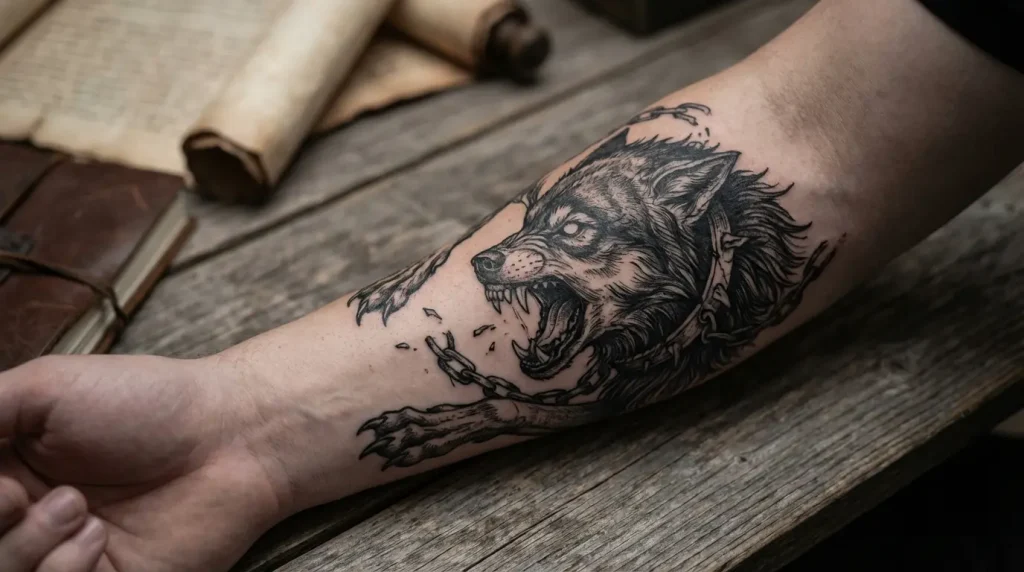
Table of Contents
-
Fenrir as the Bound Rebel
-
Fenrir’s Open Jaws Swallowing the Sun
-
Fenrir Breaking Free from Gleipnir
-
Fenrir with Tyr’s Severed Hand
-
Fenrir’s Eyes in Shadow and Moonlight
-
Fenrir Wrapped in Mystical Chains
-
Fenrir’s Silhouette Against Nordic Runes
-
Fenrir Devouring Odin
-
Fenrir’s Snarling Profile
-
Fenrir Emerging from Geometric Patterns
-
Fenrir with Interwoven Celtic Knotwork
-
Minimalist Fenrir Line Art
-
Fenrir’s Paw Print with Broken Chain
-
Fenrir’s Howl Transforming into Ravens
-
Fenrir Chest Tattoo Spanning the Ribcage
-
Fenrir Sleeve with Yggdrasil Integration
-
Fenrir Back Piece with Ragnarök Scenes
-
Fenrir Forearm Wrap with Binding Symbolism
TL;DR
-
Fenrir isn’t just about destruction. He’s the poster child for justified rebellion against systems that chain you up out of fear
-
The binding and breaking-free imagery? That’s the real goldmine here
-
These designs work in literally any style. Hyperrealistic, minimalist, geometric, whatever you’re into
-
Where you put it matters. Chains wrapping around your forearm hit different than the same design on your back
-
The Tyr story adds layers of betrayal and sacrifice that make this way more complex than “cool wolf”
-
Chest and back pieces let you really tell a story instead of just showing a picture
-
You can go full Viking or mix in modern design elements. Your body, your call
-
Fenrir’s whole deal (victim who becomes destroyer) speaks to anyone who’s ever felt trapped and finally broke free
Symbols of Defiance and Transformation
Everyone knows Fenrir as the big bad wolf who eats Odin at the end of the world. Cool story. But that’s like knowing Darth Vader kills people and missing the whole tragic villain arc. Fenrir tattoos aren’t really about chaos. They’re about what happens when you chain someone up based on paranoid prophecies and expect them not to eventually break free and eat your face.
The gods feared what Fenrir might become, so they tricked and imprisoned him. And guess what? They created exactly the monster they were trying to prevent. This isn’t a story about inevitable evil. It’s about fear-based decisions coming back to bite you. Literally.
Most Fenrir designs I see emphasize this bound rebel angle rather than the mindless destroyer thing. They capture the transformation that happens when you break free of whatever’s holding you back. Could be societal expectations, a toxic relationship, family pressure, or just the voice in your head saying you’re not good enough.
Some 10th-century Arab traveler named Ahmad ibn Fadlan encountered Viking traders along the Volga River and wrote about extensive markings on their bodies. It’s basically one of the only historical testimonies suggesting Vikings may have had tattoos. One account doesn’t prove Vikings were all inked up, but it does mean modern Fenrir tattoos might actually be continuing something ancient. Which is pretty wild when you think about it.
1. Fenrir as the Bound Rebel
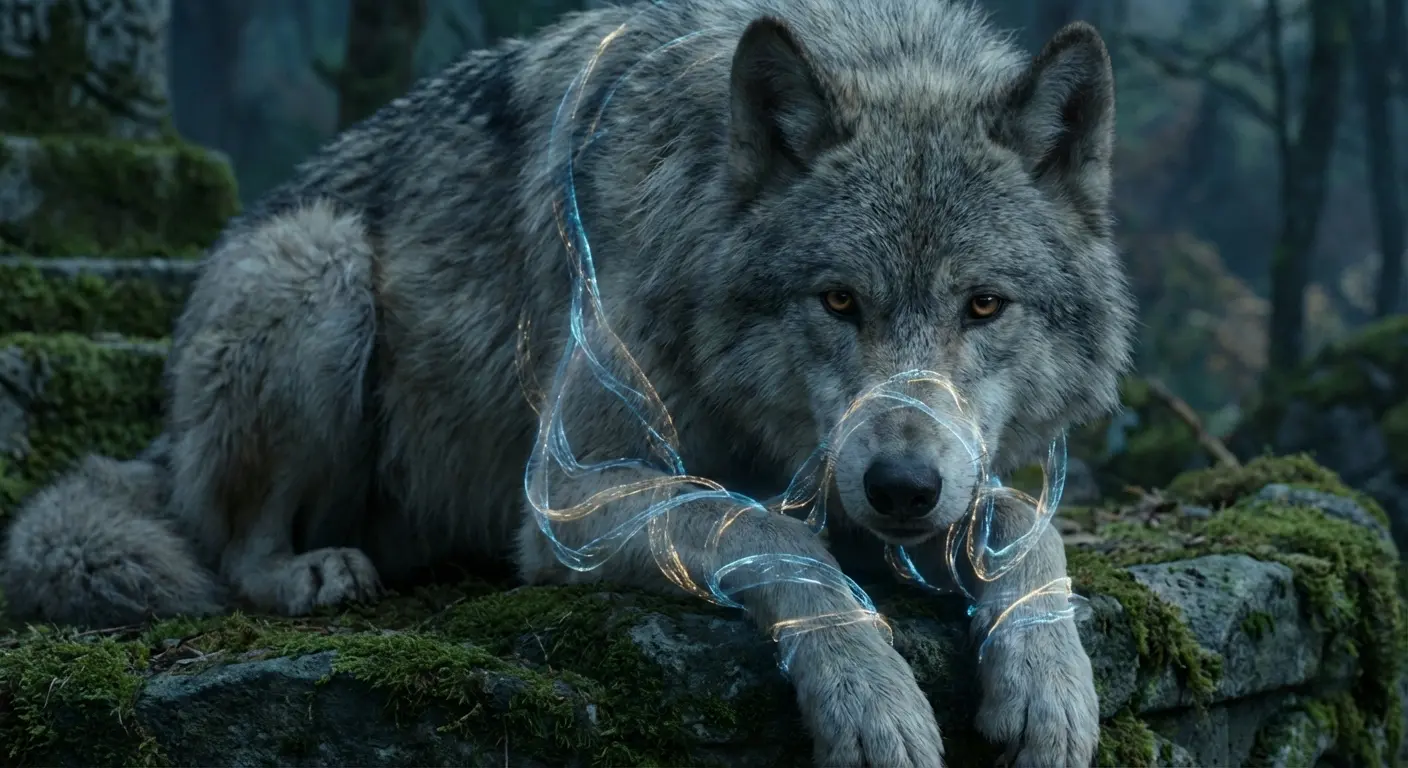
This design shows Fenrir in his captive state, every muscle tensed against Gleipnir’s magical bindings. The chains need to look impossibly delicate yet unbreakable. According to the myths, they’re made from the sound of a cat’s footfall and the roots of mountains and other things that don’t actually exist.
The wolf’s expression is everything here. Not blind rage. Calculated patience. The look of someone biding their time. There’s something deeply unsettling about restrained power, about knowing the binding won’t hold forever.
Your shoulder or upper arm works perfectly for this because the muscle tension in your own body mirrors Fenrir’s restrained power. I’ve seen artists add runic inscriptions along the chains spelling out words connected to personal struggles. Makes the mythology directly relevant instead of just decorative.
What’s your Gleipnir? What invisible chains are you fighting against?
Each component of Gleipnir carries symbolic weight that translates into tattoo design:
|
Gleipnir Component |
Mythological Material |
Symbolic Meaning in Tattoo Design |
|---|---|---|
|
Cat’s footfall |
The sound of silence |
Hidden strength, stealth |
|
Woman’s beard |
The impossible |
Defying expectations |
|
Mountain roots |
Underground foundations |
Deep-seated resilience |
|
Bear’s sinew |
Raw animal power |
Physical endurance |
|
Fish’s breath |
Underwater existence |
Adaptability |
|
Bird’s spittle |
Fleeting essence |
Transformation |
2. Fenrir’s Open Jaws Swallowing the Sun
During Ragnarök, Fenrir’s sons Sköll and Hati finally catch and devour the sun and moon. But plenty of designs just give this moment to Fenrir himself because honestly, it’s more dramatic that way.
This works brilliantly as a chest piece where the wolf’s jaws can span from shoulder to shoulder, with the sun positioned right at your sternum. The buzz of the tattoo gun on your sternum is different than anywhere else. It vibrates through your whole chest in a way that’s honestly pretty brutal.
You’re not wearing an apocalypse. You’re wearing the death of one world and the birth of another. Sometimes things need to burn down completely before something new can grow.
Shading techniques that blend the sun’s rays into the wolf’s fur create this visual flow suggesting that destroyer and destroyed aren’t as separate as we think. The sun doesn’t just disappear. It becomes part of Fenrir, transformed into something else entirely.
3. Fenrir Breaking Free from Gleipnir
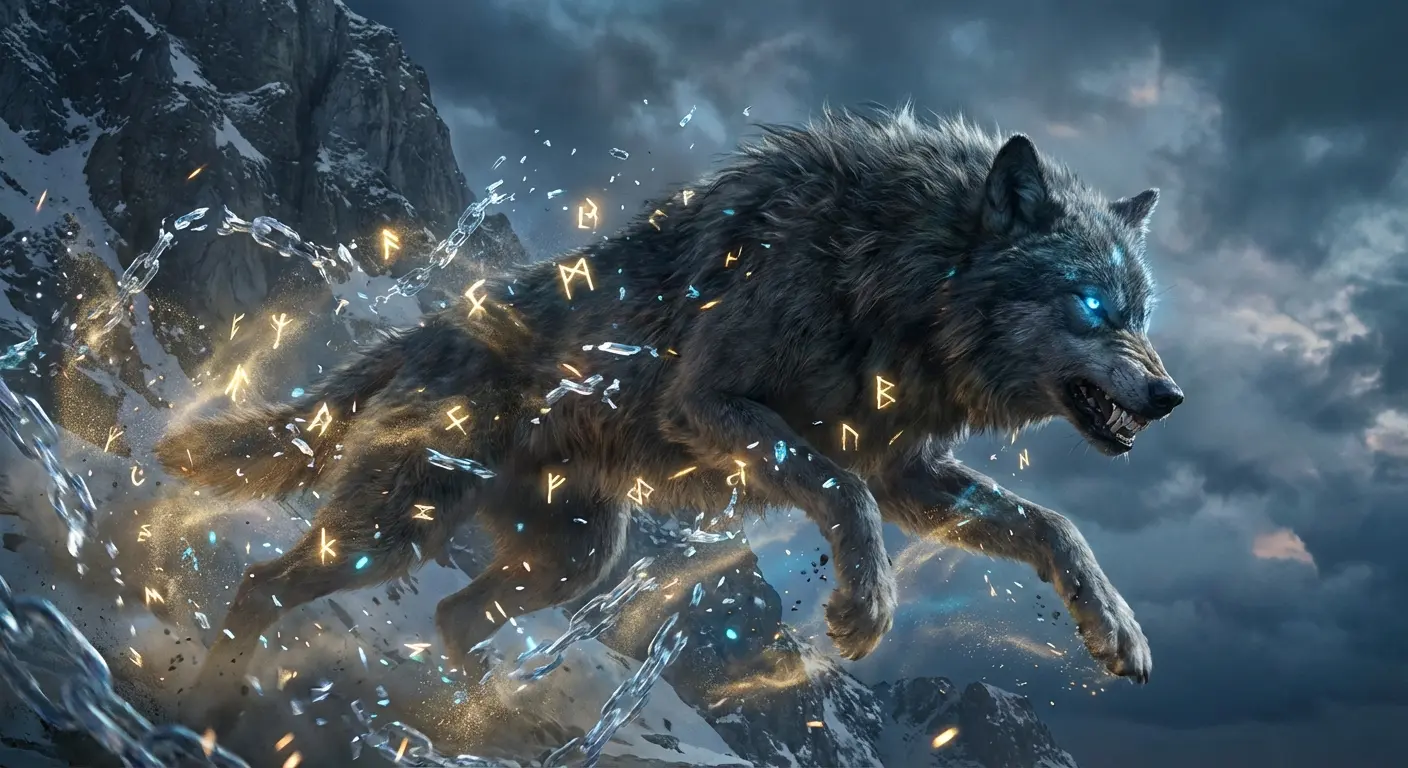
The moment of liberation makes for incredibly dynamic ink. Gleipnir shatters into fragments around Fenrir’s form, each piece of the magical ribbon disintegrating into stardust or runes or whatever fits your aesthetic.
I’ve seen this placed on forearms where the breaking chains wrap around your wrist, creating the illusion that you’re the one breaking free. The technical challenge is depicting motion, which good artists achieve through directional fur textures and debris fields that lead the eye outward.
This works particularly well if you’re marking a specific transition. Recovery. Divorce. Career change. Leaving your hometown. Any moment you refused to stay bound. The breaking point isn’t always dramatic. Sometimes it’s quiet, internal, a decision made on an ordinary Tuesday that everything changes from this moment forward.
4. Fenrir with Tyr’s Severed Hand
The Tyr thing is where this story gets messy. Tyr puts his hand in Fenrir’s mouth, basically saying “trust me, we’re not going to screw you over” while the other gods are literally screwing him over. When Fenrir realizes he’s been deceived, he bites down. Tyr loses his hand.
This design captures betrayal from both angles. The severed hand can be shown still in Fenrir’s jaws or falling away, often with Tyr’s blood forming runic patterns. Your ribs or side torso work naturally for the vertical composition.
The symbolism speaks to the permanent scars left by broken trust, whether you identify more with the betrayed wolf or the god who sacrificed for what he thought was the greater good. Historical artifacts like the Tullstorp runestone in Sweden actually depict Fenrir biting Tyr’s hand, blending runic inscriptions with vivid imagery that highlights the wolf’s prominence in Viking culture. These ancient carvings prove the Tyr-Fenrir story was significant enough to carve into stone permanently.
Most of us have been both the betrayer and the betrayed at some point. That’s what makes this design hit different.
5. Fenrir’s Eyes in Shadow and Moonlight
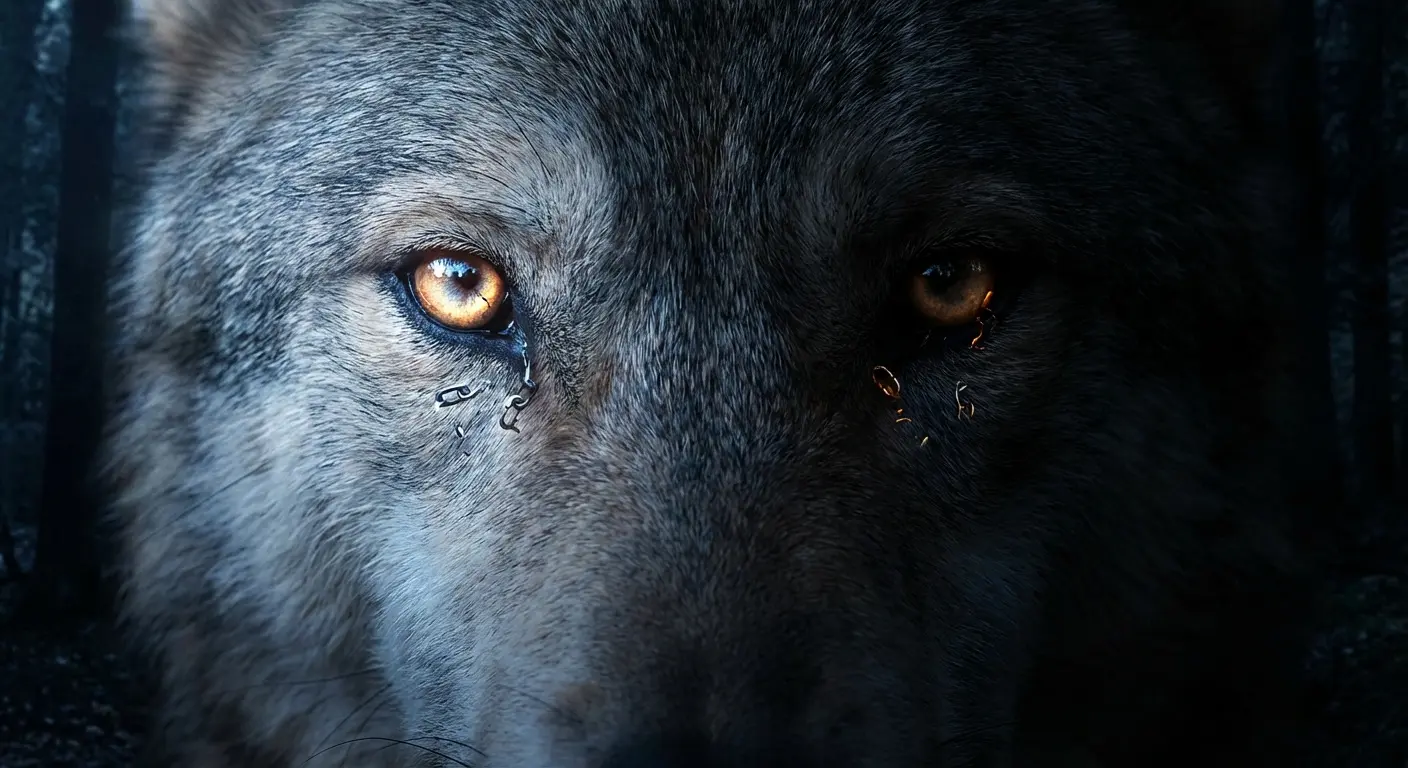
Sometimes the most powerful designs focus on a single element. The wolf’s eyes, glowing with supernatural awareness and barely contained fury, can carry the entire narrative without showing teeth or chains or anything else.
Contrast is key. One eye illuminated as if by moonlight, the other lost in shadow, representing Fenrir’s dual nature as both victim and destroyer. This scales beautifully from small (behind the ear, inner wrist) to large (incorporated into a full wolf portrait).
The eyes become a focal point that draws people in before they notice the subtle details. Reflections of broken chains in the pupils. The faint outline of Gleipnir’s binding around the iris. There’s something haunting about eyes that have seen both imprisonment and the end of the world.
Mythological Narrative Designs
These pieces tell complete stories rather than capturing single moments. They’re for people who want ink that sparks conversations and reveals new details every time someone looks closer.
You’ll need more real estate on your body for these. They work best with artists who specialize in illustrative or neo-traditional styles. The challenge is balancing detail with readability so the story doesn’t get lost in visual clutter.
6. Fenrir Wrapped in Mystical Chains
Gleipnir wasn’t made of metal. It was made of impossible things: the beard of a woman, the breath of a fish, the sinew of a bear, the spittle of a bird. Depicting these conceptual bindings requires some artistic creativity.
The best interpretations I’ve seen show the chains as flowing, almost liquid ribbons inscribed with the ingredients of their creation. The design becomes a meditation on how the intangible often binds us more effectively than physical constraints.
Your fears, obligations, and internalized limitations don’t look like chains, but they’re just as real. Position this where it flows with your body’s natural contours (around the bicep, across the back, wrapping the calf). The chains should feel organic, part of you, which makes the eventual breaking all the more significant.
7. Fenrir’s Silhouette Against Nordic Runes
Negative space designs have gotten huge lately, and Fenrir’s distinctive profile works perfectly. The wolf appears as a solid silhouette while Nordic runes fill the background, creating a two-layer story.
Choose runes connected to Fenrir’s mythology (Tiwaz for Tyr, Thurisaz for giants, Dagaz for transformation) or pick runes relevant to your personal journey. This style reads clearly from a distance but rewards close examination.
The contrast between the wolf’s solid form and the intricate rune work creates visual interest without overwhelming the composition. Forearms and calves are ideal canvases for this vertical orientation.
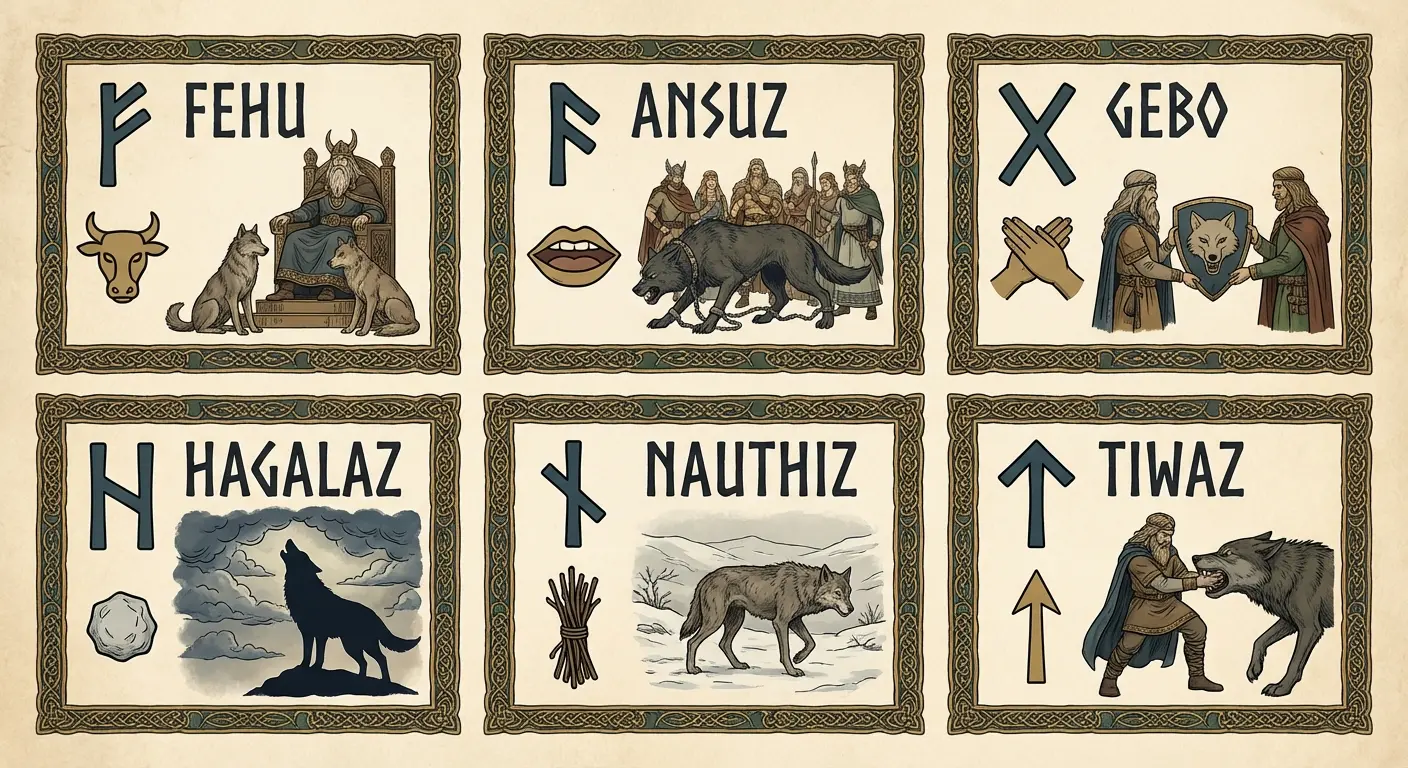
Each rune carries specific meaning that deepens the narrative:
|
Rune |
Elder Futhark Symbol |
Connection to Fenrir |
Tattoo Meaning |
|---|---|---|---|
|
Tiwaz |
ᛏ |
Tyr’s sacrifice |
Justice, honor, warrior spirit |
|
Uruz |
ᚢ |
Primal strength |
Raw power, untamed nature |
|
Thurisaz |
ᚦ |
Giant ancestry |
Chaos, protection, boundaries |
|
Eihwaz |
ᛇ |
Cosmic destruction |
Transformation, endurance |
|
Naudiz |
ᚾ |
Binding and necessity |
Constraint, survival, resistance |
|
Raidho |
ᚱ |
Journey to freedom |
Movement, progress, evolution |
8. Fenrir Devouring Odin
Ragnarök’s climax. Fenrir finally achieves his revenge, killing Odin, the Allfather who orchestrated his binding. This isn’t a design for everyone.
It’s violent, final, and carries heavy symbolism about overthrowing authority and the inevitable fall of even the most powerful systems. You’ll want an artist who can depict this scene with artistic merit rather than gratuitous gore.
The focus should be on the mythological weight: the bound becoming the destroyer, the victim exacting ultimate justice. Upper back or thigh placements work best where the scene can unfold with proper scale. This represents the moment when prophecy becomes reality, when fear creates exactly what it tried to prevent.
9. Fenrir’s Snarling Profile
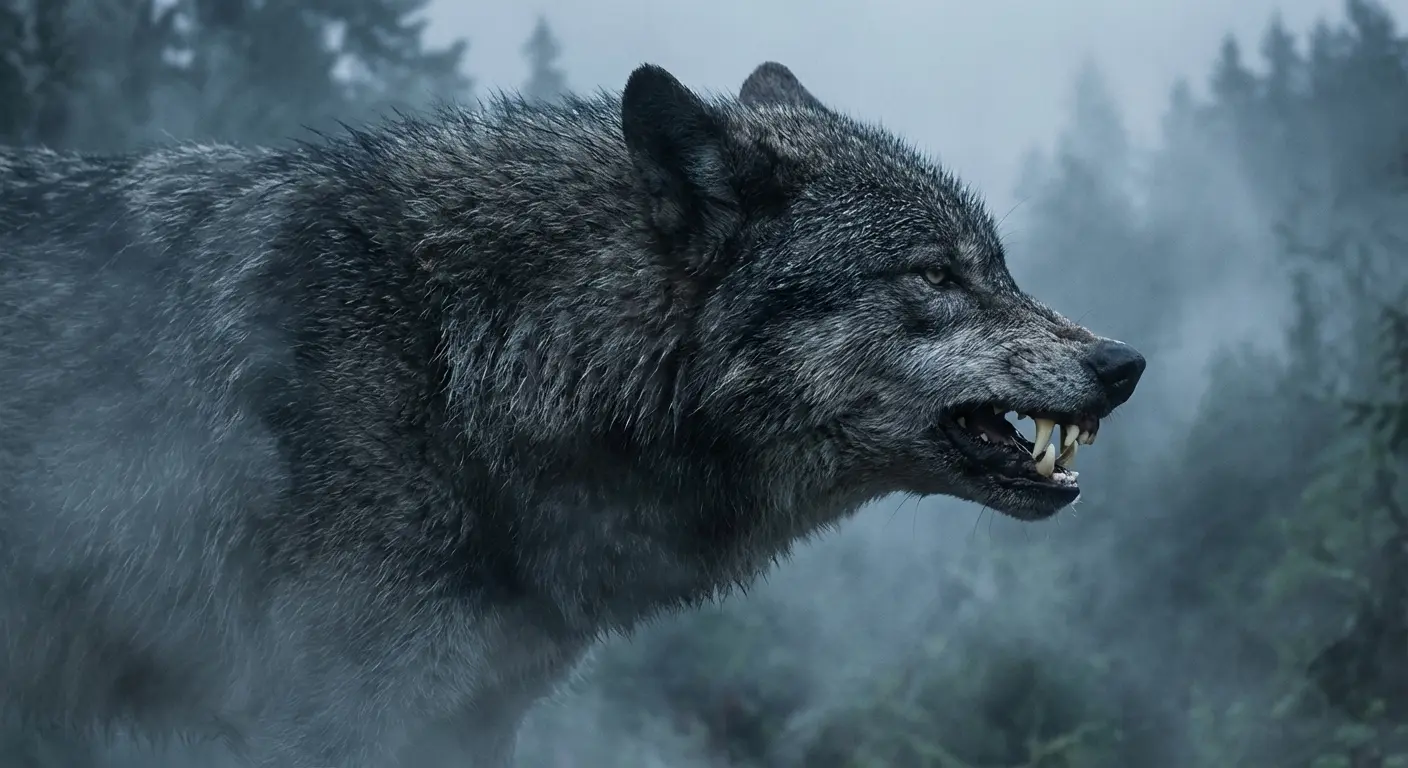
Pure aggression captured in ink. This design strips away the narrative complexity and focuses on raw power.
The snarl reveals teeth designed to end gods, with detailed attention to the musculature around the jaw and neck. Fur texture becomes critical, with each stroke suggesting barely contained violence.
This works exceptionally well on the shoulder blade where the wolf appears to be emerging from your body, or on the outer thigh where the vertical orientation emphasizes the imposing presence. Add environmental elements sparingly (maybe snow or mist) to avoid distracting from the intensity of that snarl.
Sometimes you don’t need a complex story. You just need
Sometimes you don’t need a complex story. You just need people to understand you’re not to be messed with.
Contemporary Interpretations
Okay, so maybe you want the symbolism but you don’t want to look like you’re about to raid a monastery. Fair. Modern artists have been doing interesting work with Fenrir that doesn’t require a single rune or Viking ship.
These interpretations maintain the symbolic weight while appealing to current aesthetic trends. Ancient mythology and modern artistry aren’t mutually exclusive, despite what the purists say.
10. Fenrir Emerging from Geometric Patterns
Sacred geometry meets Norse mythology. The wolf’s form materializes from interconnected triangles, hexagons, or other geometric shapes, suggesting that chaos itself has underlying order.
This resonates with people who see their own rebellious nature not as random destruction but as necessary disruption of dysfunctional patterns. The geometric elements can represent the structure of the universe that Fenrir will eventually break, or the mathematical precision in apparent chaos.
Placement flexibility is a major advantage since geometric designs adapt well to various body areas, from circular shoulder caps to linear forearm pieces. This bridges ancient symbolism and contemporary aesthetics in ways that feel fresh.
11. Fenrir with Interwoven Celtic Knotwork
Yeah, I know. Mixing Celtic and Norse traditions isn’t historically accurate. The history police can email me their complaints.
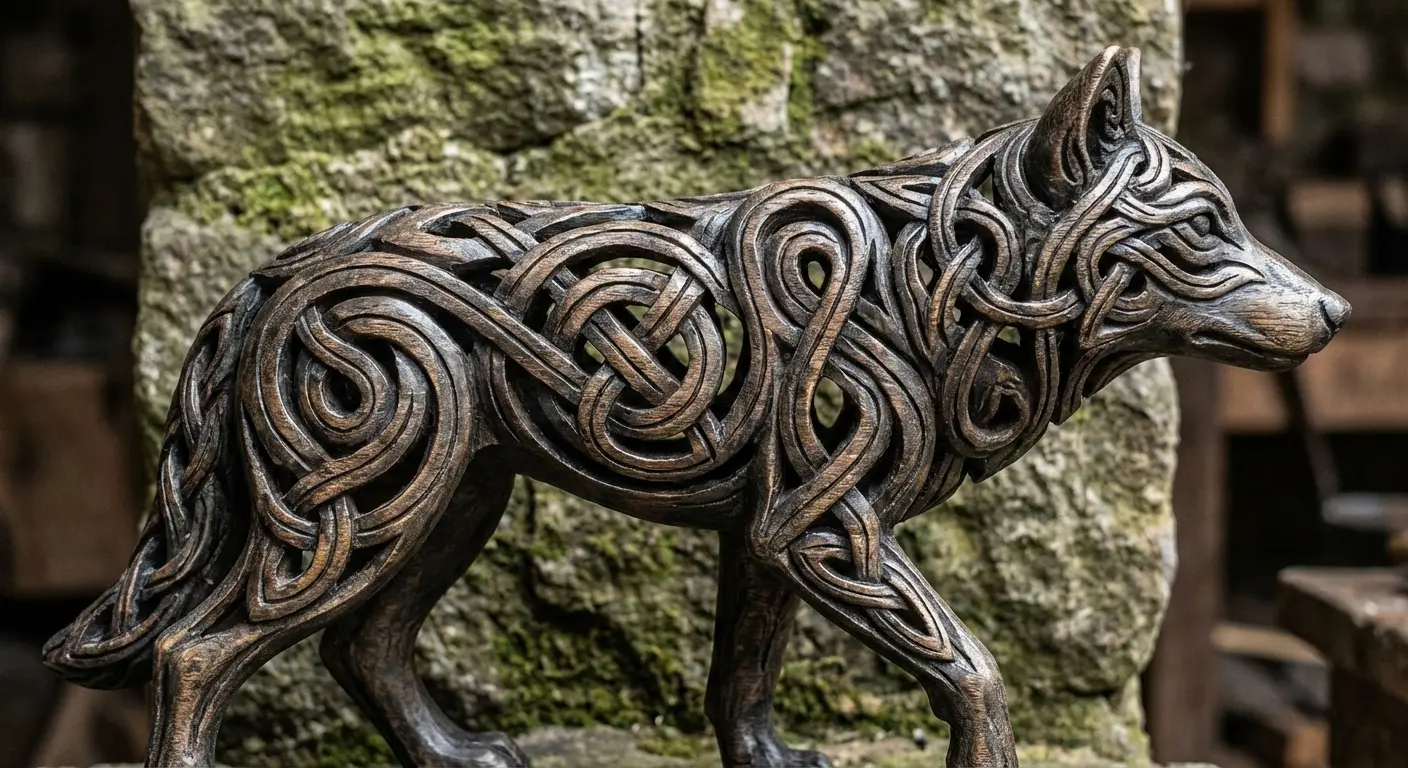
Celtic knotwork represents eternity and interconnection, which creates interesting tension when combined with Fenrir, the breaker of bonds and ender of cycles. The knots can form Fenrir’s body, or the wolf can be breaking through them.
This fusion style appeals to people with mixed heritage or those who simply appreciate both aesthetic traditions. The endless loops of Celtic design contrasted with Fenrir’s apocalyptic finality create visual and conceptual interest that pure historical accuracy might miss.
Quick note: some Viking symbols have unfortunately been appropriated by far-right groups in recent years. Routes North reports that certain Norse imagery has been co-opted by extremist organizations. While Fenrir himself hasn’t been widely appropriated, research your chosen runes and symbols carefully. Talk with your artist about designing your piece in ways that clearly reflect personal mythology rather than anything problematic.
12. Minimalist Fenrir Line Art
A single, continuous line traces Fenrir’s form. No shading, no color, just essential contours. Impact doesn’t require complexity.
The artistic challenge is capturing the wolf’s essence with maximum economy, deciding which details are truly necessary and which can be implied. This works beautifully for smaller placements (inner forearm, ankle, behind the ear) or as part of a larger collection of minimalist Norse symbols.
Honestly? The minimalist line art thing is a bit overdone right now. Every third person has one. But if you like the aesthetic, don’t let that stop you.
13. Fenrir’s Paw Print with Broken Chain
Sometimes suggestion works better than explicit depiction. A massive paw print with a broken chain link embedded in the pad tells Fenrir’s story through implication. You know what made this print and what it broke free from.
This works at any scale and virtually any placement. I’ve seen it as small as a wrist stamp or large enough to cover a shoulder blade. The broken chain can be rendered realistically or abstracted into simple geometric shapes. Add subtle claw marks extending from the print to suggest movement and direction, the wolf moving forward into freedom.
14. Fenrir’s Howl Transforming into Ravens
The howl becomes visual, transforming into Odin’s ravens (Huginn and Muninn) as it leaves Fenrir’s mouth. This creates a narrative connection between the wolf and the god he’ll eventually destroy, suggesting they’re linked more intimately than simple opposition.
The transformation from sound to birds requires serious artistic skill to read clearly, typically achieved through transitional elements where the howl’s energy begins to take wing. This works particularly well as a side torso piece where the howl can arc upward along your ribs, or as a shoulder-to-chest composition where the ravens can spread across your upper body.
There’s poetic justice in Odin’s messengers (thought and memory) emerging from his destroyer’s voice. Rage and vengeance giving birth to wisdom.
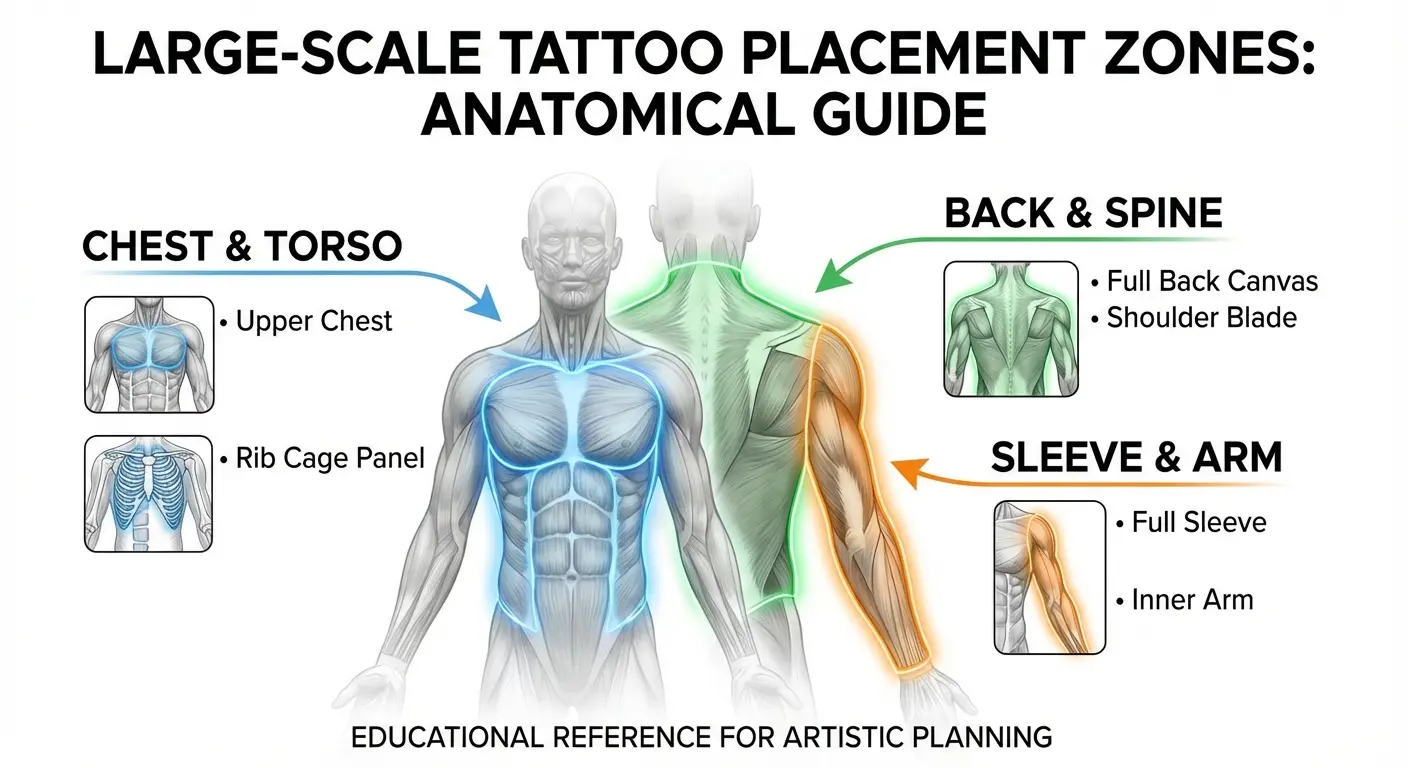
Large-Scale Placements
Some stories demand space. These designs require significant commitment but deliver maximum impact.
You’re dedicating prime real estate and enduring extended session time. Real talk: this isn’t cheap and it isn’t quick. But the results create actual body art that functions as a complete visual narrative rather than just a picture.
15. Fenrir Chest Tattoo Spanning the Ribcage
The chest provides a natural frame for Fenrir’s head, with the wolf’s jaws positioned at your sternum and the design extending across both pectorals. This placement creates immediate visual impact and allows for significant detail work.
The ribcage extension can incorporate binding chains, runic inscriptions, or environmental elements. Pain level is considerable (the sternum and ribs rank among the most sensitive areas), but the resulting piece makes a powerful statement.
I watched a guy get Fenrir’s jaws done across his chest and he went white as a sheet after hour two. The sternum is no joke.
The design can connect to shoulder pieces or extend down into an abdominal composition, creating opportunities for future expansion if you want. Some clients start with the wolf’s head and gradually add elements over years, building their personal mythology session by session.
16. Fenrir Sleeve with Yggdrasil Integration
The World Tree and the wolf that will help end the world exist in narrative tension. A full sleeve can explore this relationship, with Yggdrasil’s roots and branches forming the structural framework while Fenrir prowls among them.
This design lets you incorporate other Norse elements: the Norns weaving fate, various realms represented in different sections, or other mythological creatures. The sleeve format provides enough space to develop a complete visual mythology centered on Fenrir’s role in the cosmic order.
Expect multiple sessions to complete this level of detail. Work with an artist who can maintain stylistic consistency across the entire piece. This becomes a wearable saga, a story you carry that unfolds as your arm moves and reveals different angles.

17. Fenrir Back Piece with Ragnarök Scenes
Your entire back becomes a mural depicting Ragnarök’s key moments with Fenrir as the central figure. The wolf can be positioned vertically down your spine or horizontally across your shoulder blades, with apocalyptic scenes radiating outward.
This might include the Bifrost bridge shattering, the world tree burning, gods falling in battle, or the sun and moon being devoured. The back provides the largest uninterrupted canvas on the human body, allowing for true artistic ambition.
This requires an artist with strong compositional skills to balance multiple narrative elements without creating visual chaos. Plan for this to be a long-term project spanning many sessions. You’re looking at 30-60+ hours of work, 6-12 sessions, potentially 6-18 months from start to finish. Multiple healing periods where you can’t work out, swim, or do anything fun.
But when it’s finished? You’re carrying an epic on your skin.
18. Fenrir Forearm Wrap with Binding Symbolism
The forearm wrap creates a 360-degree narrative as Gleipnir’s bindings encircle your arm with Fenrir’s head positioned on the outer forearm. Rotate your arm and the story unfolds: chains tightening, the wolf’s resistance, perhaps the moment of breaking free on the inner forearm where only you typically see it.
This placement works practically for people who need the option to cover their ink professionally (long sleeves) while still having a substantial piece. The cylindrical shape of the forearm suits wrapping designs naturally, and the constant visibility (to you) makes this placement personally significant beyond its aesthetic impact.
You see it every time you type, drive, eat, reach for something. That constant reminder of what you’ve overcome or what you’re working to break free from.
Final Thoughts
Look, at the end of the day, you’re getting a giant wolf tattooed on your body. That’s already a statement. The question is what kind of statement you want it to be.
Are you the bound wolf? The one breaking free? The destroyer? The victim? Some messy combination of all of them because that’s how real life works?
Fenrir’s appeal goes beyond the surface-level “cool wolf” aesthetic. The great wolf represents the consequences of fear-based decision making, the self-fulfilling nature of prophecy, and the idea that those we bind unjustly will eventually break free. Your tattoo carries these layers whether you explicitly intend them or not.
The designs I’ve covered span from literal mythological scenes to abstract interpretations, from small symbolic pieces to full-body narratives. What matters most isn’t which specific design you choose but whether it connects authentically to your own story.
Take your time. Fenrir waited bound on an island for centuries before Ragnarök. You can wait another month to find the right artist and nail down exactly what you want.
And for the love of Odin, don’t cheap out on this. Depending on size and detail, you’re looking at anywhere from $150-400 for a small minimalist piece to $5,000-15,000+ for a full back piece. Anyone quoting significantly less is either new, bad, or both.
Choose your artist based on their portfolio of similar work, healing photos (not just fresh ink), how they handle the consultation, and whether they push back on bad ideas (that’s actually a good sign). Don’t choose based on price alone, proximity to your house, or Instagram follower count.
A bad Fenrir tattoo doesn’t make you look rebellious. It makes you look like you have a bad tattoo.
The best pieces emerge when ancient symbolism meets your personal narrative, when the mythology stops being abstract and becomes intimately relevant to your lived experience. When the bound wolf isn’t just a story from a thousand years ago but something that speaks to who you are, who you were, or who you’re fighting not to become.
That’s when a tattoo stops being decoration and starts being a scar you chose.
