19 First Tattoo Ideas That Won’t Make You Panic in Five Years
Why Most First Tattoo Advice Misses the Point
Your first tattoo is going to be fine. Not because you’re going to make the perfect choice (you won’t), but because the stakes aren’t as high as you think they are.
Every guide tells you to go small and pick something meaningful. Cool. Completely useless advice, though, because that’s not why people regret tattoos. The real issue? Designs that don’t account for how tattoos age, how your style evolves, or how placement affects your daily life.
Here’s what actually matters: getting something that looks good now and won’t box you into a corner later if you want more tattoos. These aren’t safe choices because they’re tiny or hidden. They work because they’re actually well-designed.
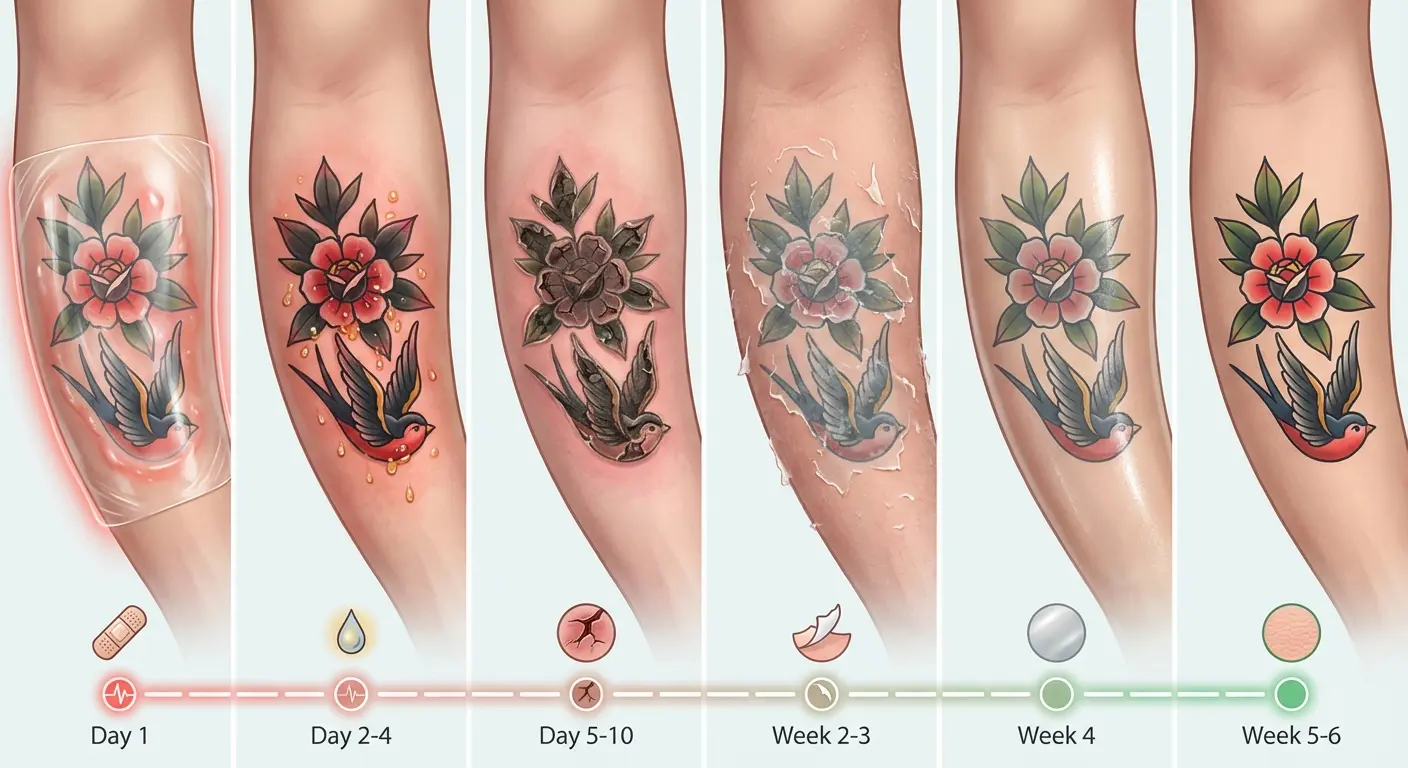
According to aftercare research from Future Skin, healing takes 2-3 weeks on the surface, but up to 6 weeks underneath. Which means you’ll be living with your choice through the itchy, peeling, paranoid phase. Basically, pick something that’ll still look good when it’s crusty, not just in the artist’s Instagram photo.
For the full healing journey, we have an aftercare guide if you want to not screw up the healing process.
For People Who Don’t Want Attention
These are quiet tattoos. Not boring, just not screaming for attention every time you reach for something on a shelf.
It’s about how clean the lines are, not about what the tattoo “means.” The technical execution becomes the whole thing, which is why these work across different body types and personal aesthetics. They’re conversation starters when you want them to be and completely ignorable when you don’t.
Your taste will change. These won’t suddenly look stupid to you in five years.
1. Single-Line Botanical Stems
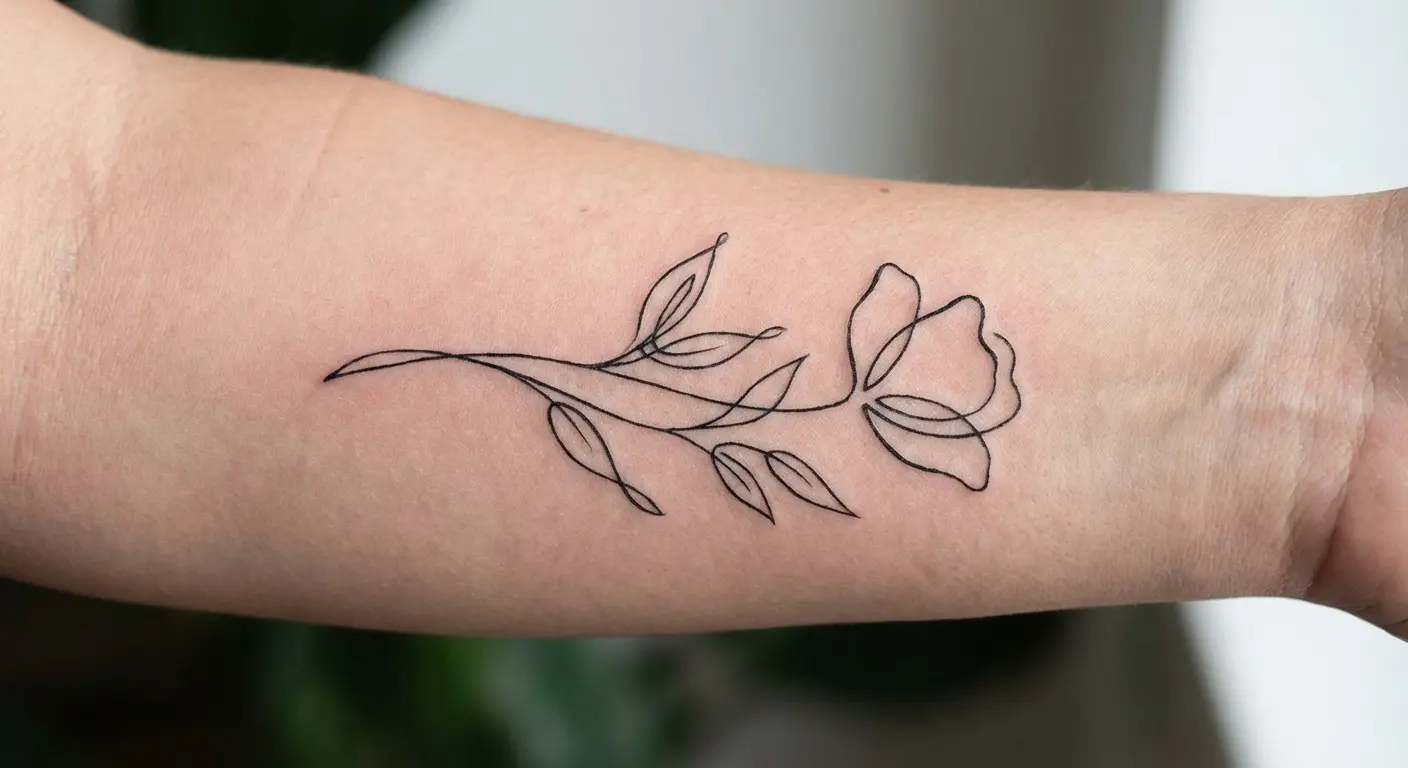
One continuous line that traces a plant stem, maybe with a few leaves or a single bloom. The beauty here is in the execution.
Your artist’s line quality becomes the entire focus, which means you’re getting a piece that showcases technical skill. These work on forearms, along the collarbone, or down the side of the ribcage. Perfect for testing how you feel about visible ink without committing to something that dominates your arm.
You can always add more botanical elements later, building a garden over time. These age beautifully because there’s minimal shading to blur and the design relies on clean linework that maintains clarity over decades.
2. Micro Constellation Maps
Forget the basic star patterns everyone recognizes. Choose an obscure constellation or map the night sky from a specific date and location that matters to you.
The dots and connecting lines create visual interest without taking up much real estate. These age incredibly well because the design is geometric, and geometric tattoos maintain their clarity over decades. Place them on your inner forearm, behind your shoulder, or along your ribcage.
The scale works in your favor here. Smaller works better for this design, and you’re not locked into any aesthetic if you want to add more ink later.
3. Minimalist Wave Forms
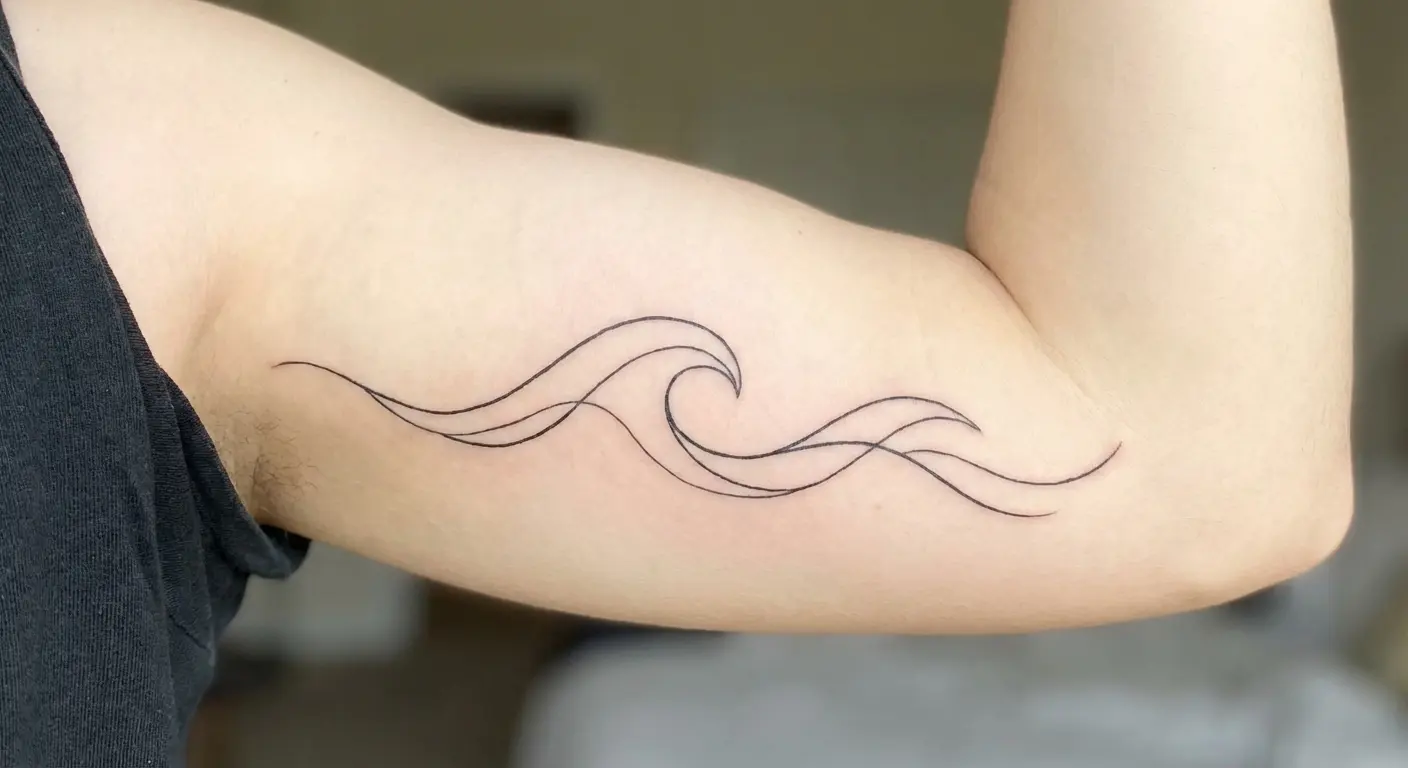
A single wave rendered in clean, flowing lines gives you movement and energy without the complexity of a full ocean scene.
Your artist can adjust the curl, the line weight, and the overall flow to match your body’s natural contours. They look good wrapping around your bicep, along your forearm, or across your upper back. You’re getting a design that feels complete on its own but could become part of a larger water-themed collection if you choose.
4. Abstract Sound Waves
Take a meaningful phrase, song lyric, or even someone’s voice saying “I love you” and convert it into a sound wave visualization. The result looks like a barcode had a baby with modern art.
These work because they’re deeply personal but visually cryptic. Nobody knows what they’re looking at unless you explain it, which gives you control over how much you share.
The linear nature makes them perfect for forearms, along the collarbone, or wrapping around your wrist.
5. Negative Space Crescent Moons
Instead of filling in the moon shape, your artist leaves your skin tone as the moon and tattoos around it. This creates a window effect that’s visually striking.
Negative space tattoos require precision, so you’re getting a piece that demonstrates your artist’s skill level. These work beautifully small (think behind your ear or on your inner wrist) or slightly larger on your forearm or shoulder.
The design ages well because there’s no solid black to blur or spread over time. I’ve seen these hold up for ten or fifteen years and they still look crisp.
Hidden Meaning Stuff
You want your tattoo to matter, but you don’t want to explain it to every person who asks. These solve that problem by encoding personal significance into designs that read as purely aesthetic to outsiders.
They’re sophisticated enough to satisfy your need for meaning without turning your body into a billboard for your emotional journey. If you’re the type who overthinks the “meaning” requirement and ends up paralyzed by the pressure to choose something profound, start here.
For deeper exploration of symbolic designs, check out our guide on tattoo ideas with meaning.
6. Coordinate Points (But Not What You Think)
Everyone knows about getting coordinates of meaningful locations. Get creative with the format.
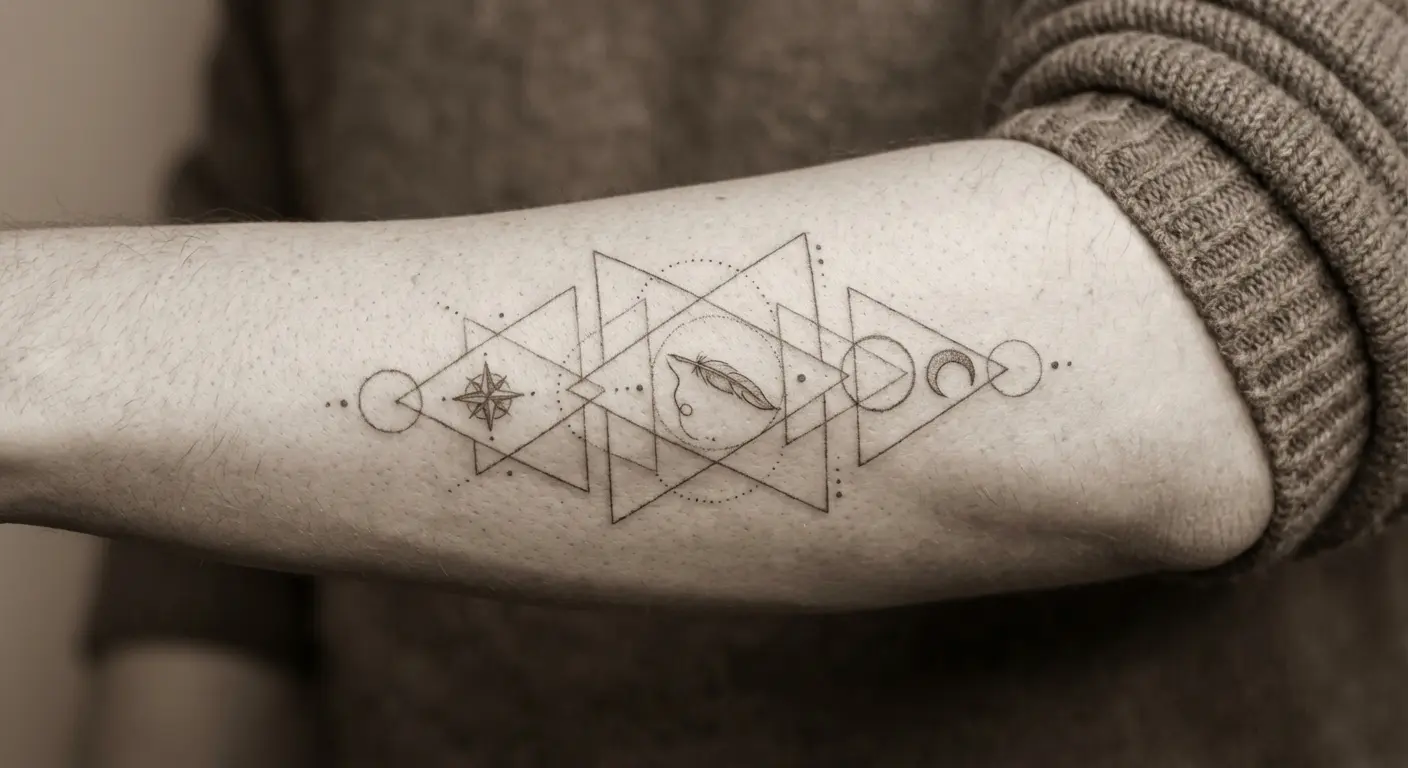
Use the coordinates but render them in Roman numerals, integrate them into a geometric design, or have them follow the curve of your body in a way that makes them hard to read at first glance. The meaning is there for you, but the visual interest comes from the execution.
Get coordinates from somewhere that actually mattered. Where you got engaged, where your kid was born, where you scattered ashes. These work well on ribcages, along your forearm, or wrapping around your ankle.
According to Run to the Finish, athletes are now getting GPS coordinates of their favorite running routes or trail maps tattooed as a way to showcase their connection to specific locations while maintaining aesthetic appeal. This demonstrates how coordinate tattoos can serve dual purposes: personal meaning for the wearer and visual interest for observers.
7. Personal Glyph Systems
Create a symbol that represents something specific to you. A visual shorthand for a concept, value, or memory. This isn’t about picking an existing symbol from a book.
Work with your artist to design something that combines elements meaningful to you into one cohesive mark. The result looks like ancient iconography but is entirely personal.
These work at any size and any placement because the design is self-contained. You can repeat the glyph in different locations later, vary the size, or use it as a building block for more complex pieces.
8. Architectural Line Work
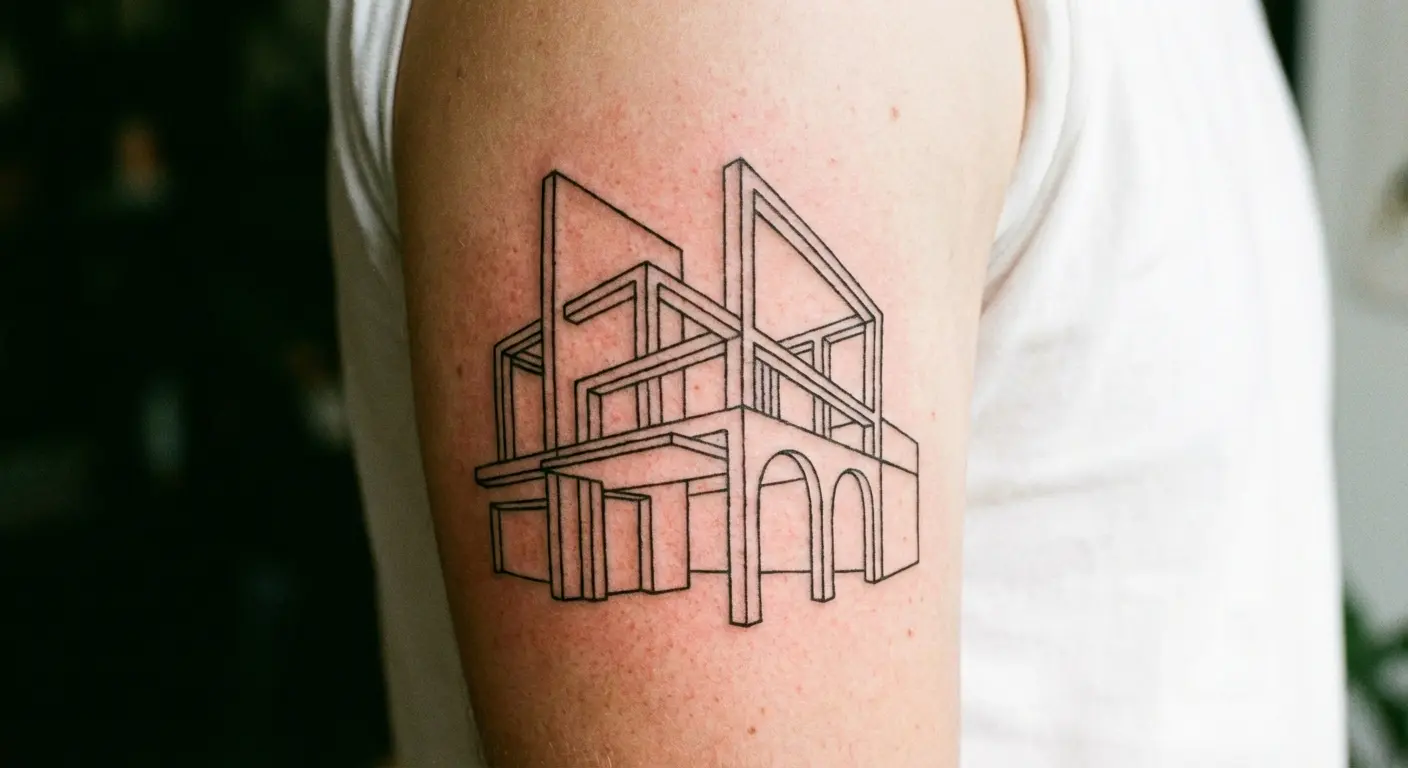
Take the outline of a building, doorway, or architectural detail that matters to you and strip it down to essential lines. Maybe it’s your childhood home’s roofline, a doorway from a city you loved, or the window frame from your grandparents’ house.
The design reads as abstract geometric art to most people, but you know exactly what you’re looking at.
These translate beautifully to skin because architecture is already about clean lines and proportions. They work well on forearms, along the side of your torso, or on your upper arm. The precision required means you’ll want an artist who does clean linework.
9. Topographic Contour Lines
Okay, THIS is the one I’d get if I were starting over. Map the elevation lines of a mountain you’ve climbed, a place you’ve lived, or a landscape that shaped you. The concentric lines create a meditative, almost hypnotic pattern.
Topographic lines are beautiful as a design element, regardless of what specific location they represent. They work wrapping around your forearm, across your shoulder blade, or along your calf. The design can stand alone or connect to other elements later.
Topographic contour lines are criminally underused and they age like fine wine.
10. Morse Code Bands
Translate a word, phrase, or name into Morse code and have it rendered as a band of dots and dashes around your arm, wrist, or finger.
The pattern reads as purely decorative to anyone who doesn’t know Morse code (which is most people), but you’re carrying a specific message. These work because they’re visually balanced, technically simple for artists to execute cleanly, and completely scalable.
You can go thin and delicate or bold and prominent depending on your preference.
The Classics (That Actually Work)
These designs signal that you’ve done your research and understand tattoo culture beyond Pinterest boards. They’re recognizable within tattoo communities as solid choices that respect the craft while still giving you room for personal expression.
You’re not trying to reinvent the wheel here. You’re choosing designs with proven track records that work across different body types, skin tones, and personal styles. These are timeless rather than trendy.
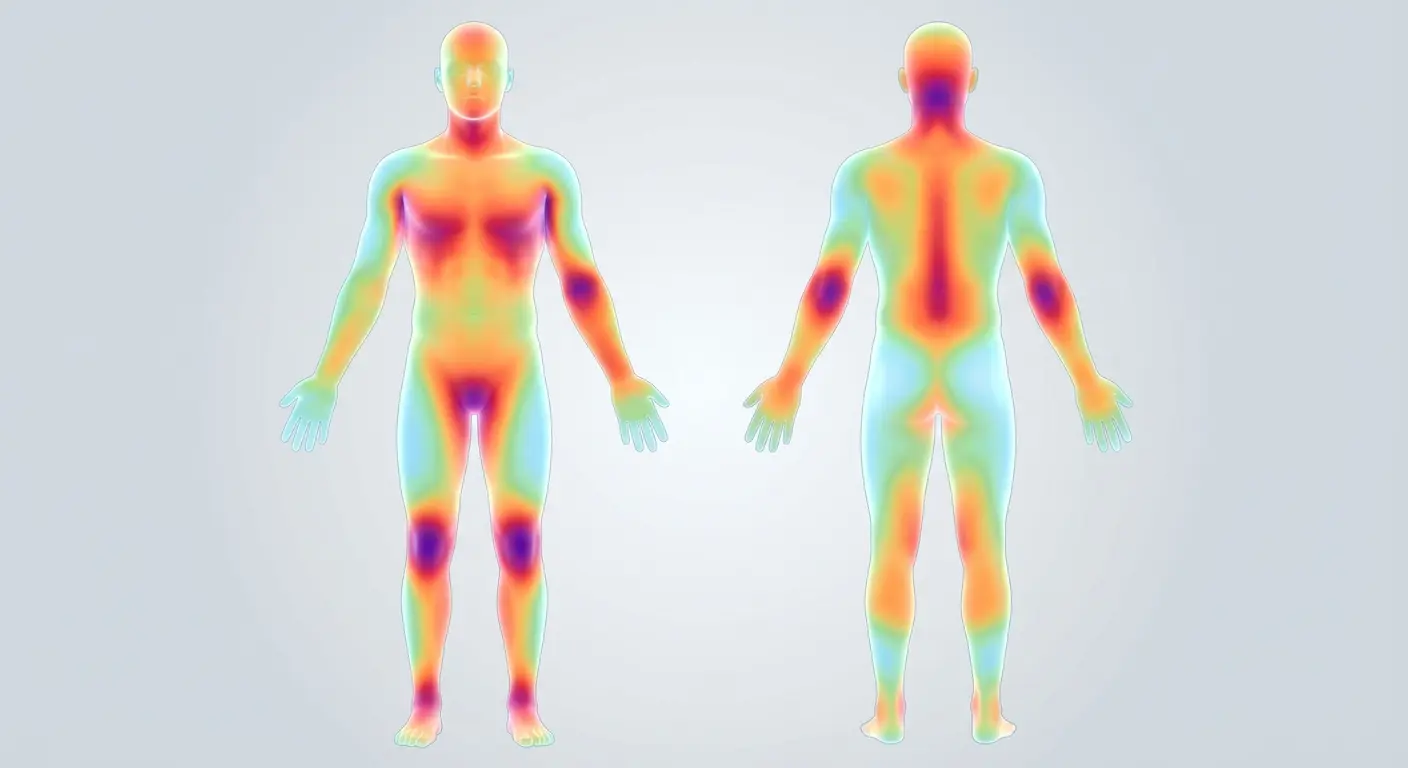
Professional tattoo artist insights from Teen Vogue’s first tattoo guide say that placement affects pain level big time. Upper arms, forearms, thighs, and calves hurt less, especially in fleshier parts of the body. Understanding pain distribution helps you choose not just the right design but the right location.
11. Single Kanji or Hanzi Characters
Yes, we’re going there, but here’s the catch: work with someone who actually reads the language.
The reason these got a bad reputation is because people chose random characters without understanding context or got translations that were hilariously wrong. When done correctly, with proper cultural respect and accurate translation, a single well-chosen character can be stunning.
The brushstroke quality, the negative space, the balance of the character itself are all visually compelling. These work best larger than you’d think (at least 2-3 inches) to maintain the integrity of the strokes as they age.
Find a native speaker or cultural consultant before you commit to any specific character. Seriously.
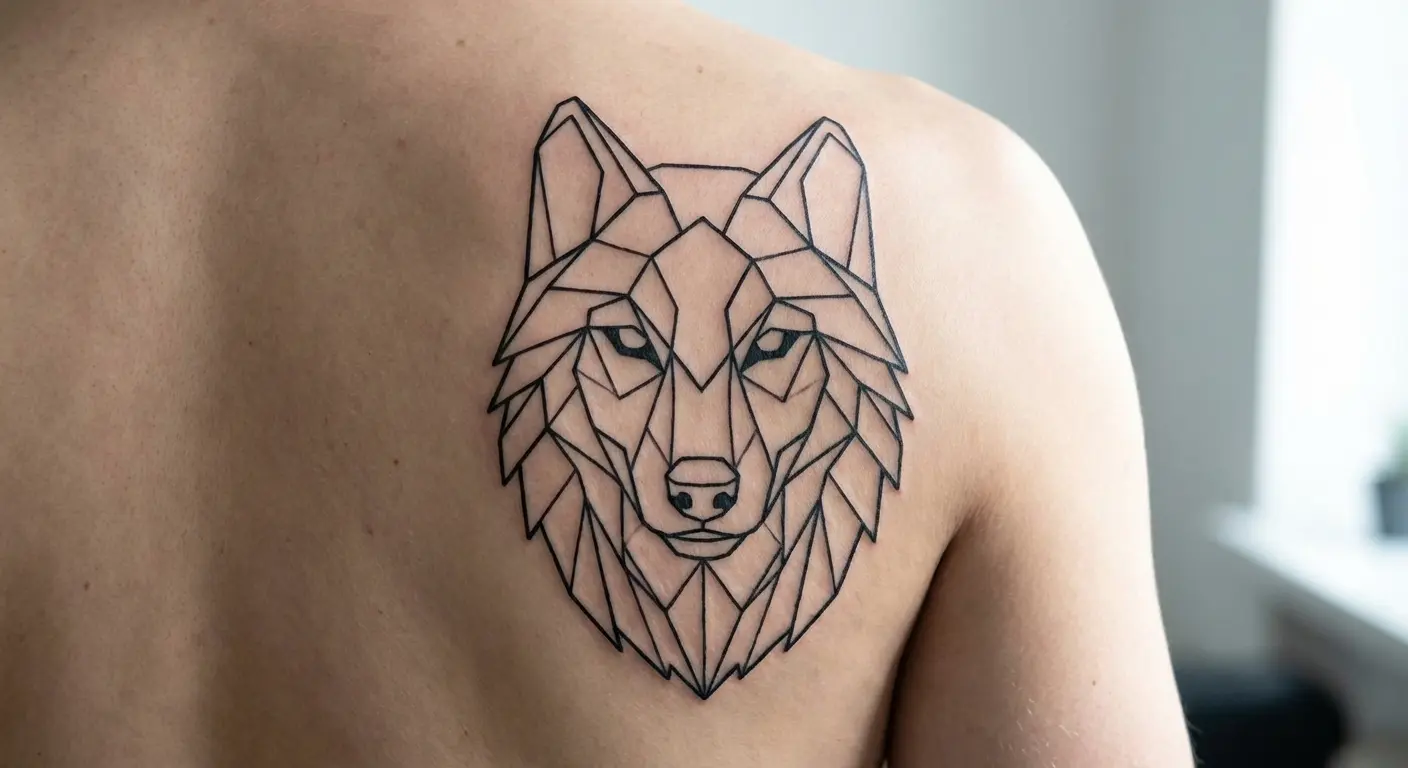
12. Geometric Animal Outlines
Take an animal that resonates with you and have it rendered in clean geometric lines rather than realistic detail. We’re talking about angular, faceted designs that suggest the animal’s form without trying to recreate a photograph.
Half the tattoo artists I know are sick of doing geometric animals. The other half still love them. Find someone in the second group.
The geometric approach gives the design structure and helps it age well. The lines stay crisp, the concept remains clear, and the overall aesthetic fits with contemporary tattoo trends without being so trendy that they’ll feel dated in five years. They work at various sizes and on almost any body placement.
13. Fine Line Floral Fragments
Instead of a full bouquet or complete flower, choose a single petal, a partial bloom, or just the stamen and pistil of a flower rendered in delicate line work. The incompleteness is intentional and creates visual intrigue.
These work because they’re subtle enough for conservative environments but interesting enough to satisfy your desire for art on your body. Explore the precision required for fineline tattoo styles before committing to this delicate approach.
The healing process for fine line work requires extra attention since the lines are so delicate. You’ll need to be diligent about aftercare to ensure the lines heal crisp and clean.
14. Vintage Stamp Designs
Postage stamps have incredible design elements: borders, typography, small illustrations, and that perforated edge detail.
Taking inspiration from vintage stamps gives you a built-in frame for whatever image or text you want to include. The design is self-contained, which makes it perfect because it doesn’t require planning for how it might connect to future pieces.
These work on forearms, upper arms, or thighs where there’s enough space to include the detail that makes stamp designs recognizable. You can incorporate dates, locations, or imagery that matters to you within the stamp format.
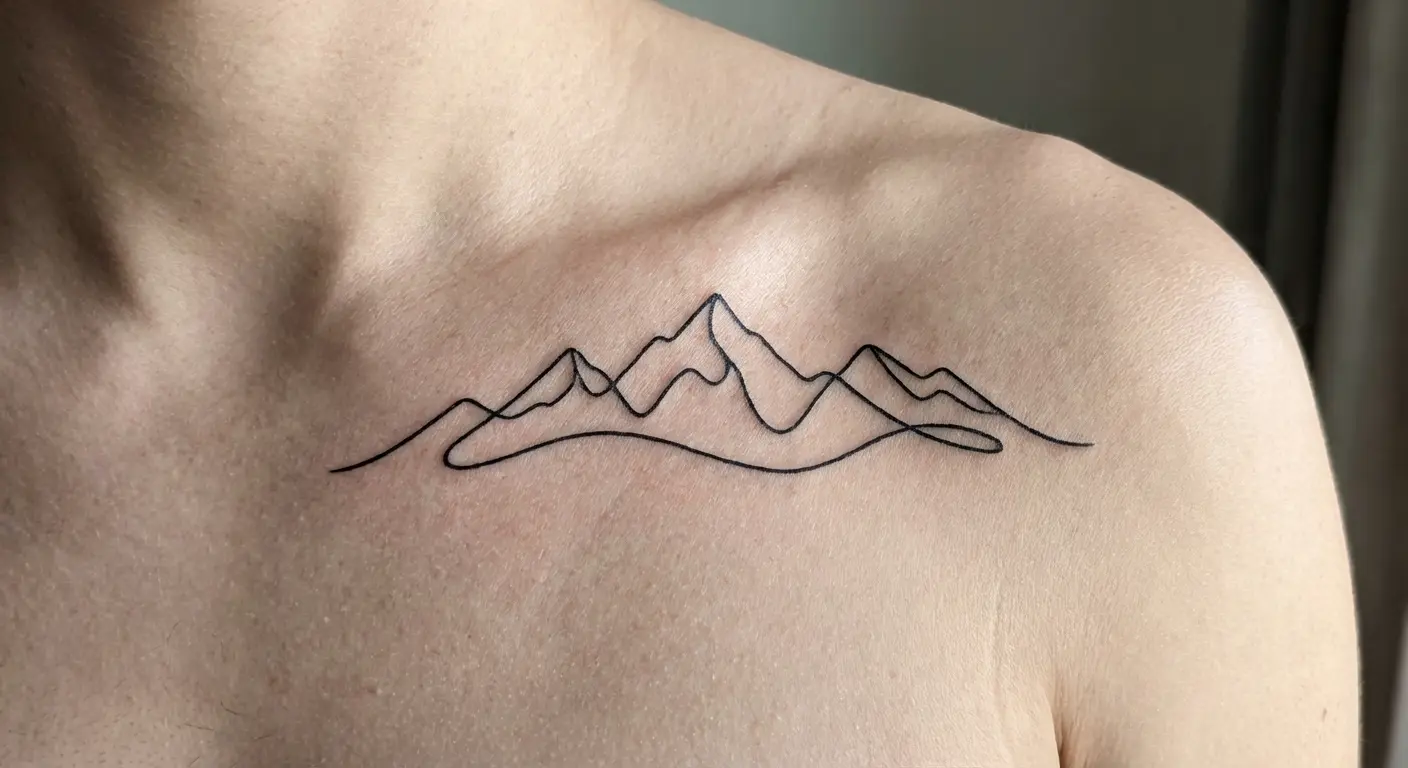
15. Minimalist Mountain Ranges
A simple line of mountain peaks, maybe three to five mountains rendered in clean outlines or silhouettes.
Mountain ranges are having a moment. That means they might feel dated in 5 years, or it means they’re popular because they work. You decide.
The key is keeping them simple enough that the lines won’t blur together over time but detailed enough that they don’t look like a child’s drawing. These work across your forearm, along your collarbone, or wrapping around your bicep.
Small & Hideable
You want a tattoo, but you’re not ready to commit to something highly visible or large. These placements and designs give you the experience of getting tattooed without the immediate lifestyle implications.
They’re perfect for testing your pain tolerance, seeing how you feel about permanent body art, and satisfying your desire for ink without requiring you to have conversations about it at every family gathering.
If you’re still exploring options, our collection of small tattoo ideas offers additional inspiration for discreet placements.
16. Behind-the-Ear Symbols
The space behind your ear is small, which naturally limits your design options, but that constraint works in your favor. Small symbols, single words, tiny florals, or minimal geometric shapes work beautifully here.
The placement is easy to hide with hair but visible when you want it to be. The pain level is moderate (the area is bony), but the tattoo is quick because of the size.
These work as complete standalone pieces or as the start of a collection that eventually extends down your neck or onto your scalp if you get really into tatto
These work as complete standalone pieces or as the start of a collection that eventually extends down your neck or onto your scalp if you get really into tattooing.
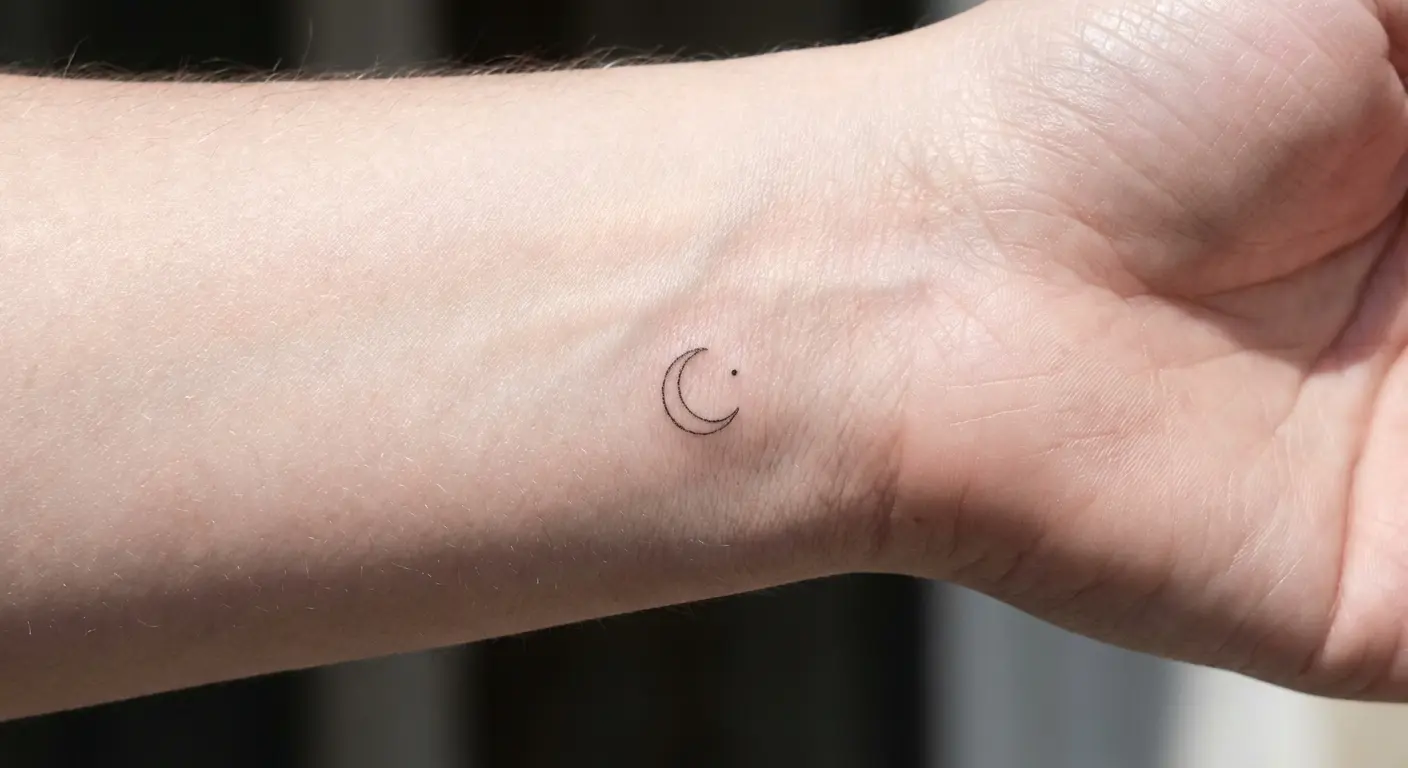
17. Inner Wrist Micro Designs
Your inner wrist offers a flat, visible canvas that’s still small enough to keep designs simple. Single words, small symbols, minimal line work all translate well to this placement.
The visibility is entirely under your control. You can turn your wrist to show or hide it, and the healing process is relatively easy since the area doesn’t experience much friction.
These work well for people who want to see their ink regularly without it being the first thing others notice about them. Just account for the fact that you’ll be looking at it constantly, so choose something that won’t annoy you with repetition.
18. Finger Side Minimalism
The side of your finger offers a unique placement that’s both intimate and subtle.
Look, finger tattoos fade. Not “may fade” or “can fade.” They fade. Everyone knows this. I’m tired of explaining it. Get them anyway if you want, just know you’re signing up for touch-ups every 2-3 years.
The skin on your fingers regenerates faster than other areas, which causes fading. But if you’re okay with maintenance, these placements offer maximum impact with minimal commitment. They’re visible when you gesture or hold things but easily overlooked in casual interactions.
Some artists won’t do finger tattoos on first-timers. They fade fast and clients blame the artist. Just so you know.
19. Ankle Accent Pieces
Your ankle provides enough space for a small to medium design that’s easily covered by pants or socks but visible when you want it to be.
The area works well for designs that follow the natural curve of your ankle bone: delicate chains, small florals, minimal symbols, or text that wraps around the ankle. The pain level is moderate to high (it’s a bony area), but the tattoo is usually quick because of the size constraints.
These work as standalone pieces or as anchors for designs that eventually extend up your calf or down onto your foot. This placement gives you flexibility in professional settings while still providing enough canvas for visual interest.
Turning Ideas Into Actual Ink
You’ve got ideas, but the gap between “concept in your head” and “design your artist can work with” is where most people struggle. You can spend hours scrolling through reference images, trying to articulate what you want, and still end up with something that doesn’t quite match your vision.
Tattoo Generator IQ solves this specific problem by letting you input your concept and instantly see multiple variations of what that tattoo could look like. You’re not committing to anything yet.
You’re just getting visual references that help you communicate with your artist more effectively. The AI generates high-resolution designs in different styles, which means you can explore whether you want your mountain range in fine line, traditional, or geometric style before you sit in the chair.
You can adjust elements, try different placements virtually, and show up to your consultation with clear, professional-quality references instead of a Pinterest board and a prayer.
Look, Here’s What Actually Matters
Stop waiting for the perfect idea. It doesn’t exist. Stop thinking your first tattoo has to mean something profound. It doesn’t.
I’ve watched approximately 847 people panic over their first tattoo choice, and honestly? Most of them were worrying about the wrong things. Everyone worries they’ll hate it. I’ve never met anyone who didn’t have that thought at 2am the night before.
Between you and me? Most “meaningful” tattoos are just regular tattoos with a story attached after the fact. And that’s fine.
Here’s what I actually want you to take from this: Pick something you think looks cool, find an artist who does clean work, and book the appointment. You’ll either love it or you’ll get more tattoos to balance it out. Either way, you’ll be fine.
Your skin is yours, and what you put on it should make you feel more yourself, not less.
If you’re still paralyzed by choice after reading all this? Just get a single-line botanical stem on your forearm and call it a day. I’ve literally never seen someone regret that one.
And real talk: Good artists are booked 3-6 months out. If someone can see you tomorrow, that’s a red flag. Expect to pay $100-200 minimum for these smaller pieces, more if you’re in a major city. These usually take 30-60 minutes, so you’re not committing to a 4-hour session for your first time.
You’re scared. That’s normal. It’s permanent, and permanence is scary. But the first time you see it in the mirror and forget it’s there, then remember and get excited again? That’s the moment you know you made the right call.
The buzz of the tattoo machine is weirdly soothing once you get past the initial panic. It’s not like a needle, more like a cat scratch that doesn’t stop. Annoying but tolerable. You’ll be nervous. Your artist will be calm. This is their Tuesday.
Pain tolerance is personal. I’ve seen people sleep through ribcage tattoos and people cry through ankle pieces. You won’t know until you know.
