18 Fortis Fortuna Adiuvat Tattoos That Reveal Your Relationship With Risk
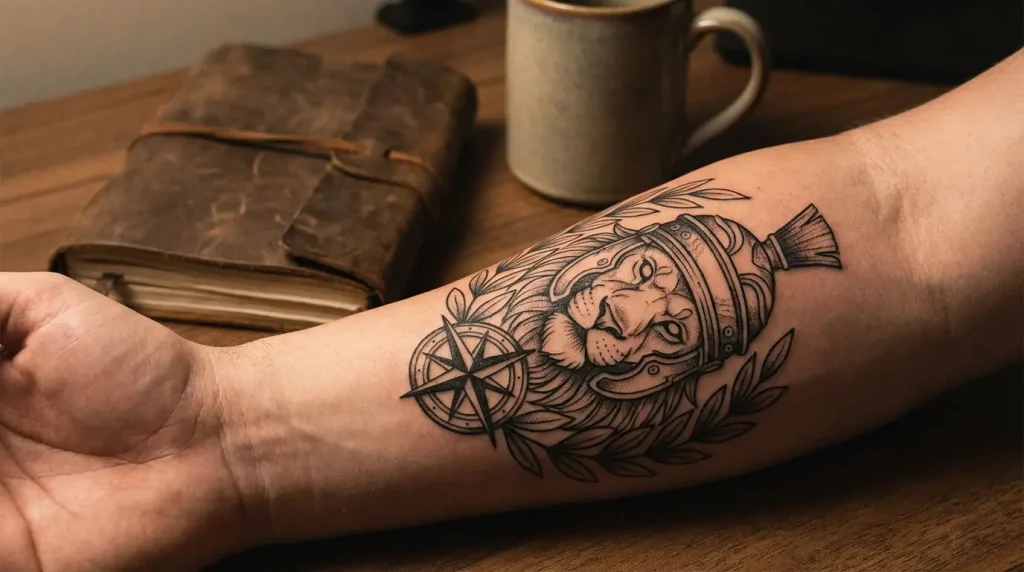
Table of Contents
-
Minimalist Ink for the Quietly Brave
-
Ornamental Designs That Frame Your Philosophy
-
Placement-Driven Statements
-
Cultural Fusion Interpretations
-
Final Thoughts
TL;DR
Fortis Fortuna Adiuvat means “fortune favors the bold,” but your tattoo version should reflect YOUR relationship with risk, not some generic motivation poster garbage. Minimalist or ornate? Hidden or visible? Your call changes everything. The placement might matter more than the design itself. And if you’re getting this before you’ve actually done anything bold, you’re doing it backwards.
Minimalist Ink for the Quietly Brave
Here’s what nobody tells you about Fortis Fortuna Adiuvat tattoos: they hit hardest when you don’t add anything to them. Just the words. No dragons, no skulls, no decorative bullshit.
Font choice, sizing, and negative space hit different depending on what you pick. Some people need their boldness whispered in fine lines. Others require bold serif statements that announce themselves. The absence of imagery can actually amplify the phrase’s meaning if you’re someone who carries courage internally rather than broadcasting it.
Why? Because your fortis fortuna adiuvat tattoo should reflect how you experience bravery, not how you think bravery is supposed to look. If your courage shows up quietly (in daily decisions nobody witnesses, in private moments when you choose the harder path) then wrapping that in dramatic imagery misses the point entirely.
|
Minimalist Style |
Visibility Level |
Ideal For |
Maintenance Needs |
|---|---|---|---|
|
Single-Line Script |
Low (self-facing) |
Daily personal reminders |
Touch-ups every 3-5 years |
|
Block Letters |
Medium-High (others-facing) |
Public declarations |
Minimal, holds ink well |
|
Micro Text |
Very Low (hidden) |
Private talismans |
Touch-ups every 1-2 years |
|
Vertical Spine |
None (self-knowledge only) |
Embodied symbolism |
Minimal, protected placement |
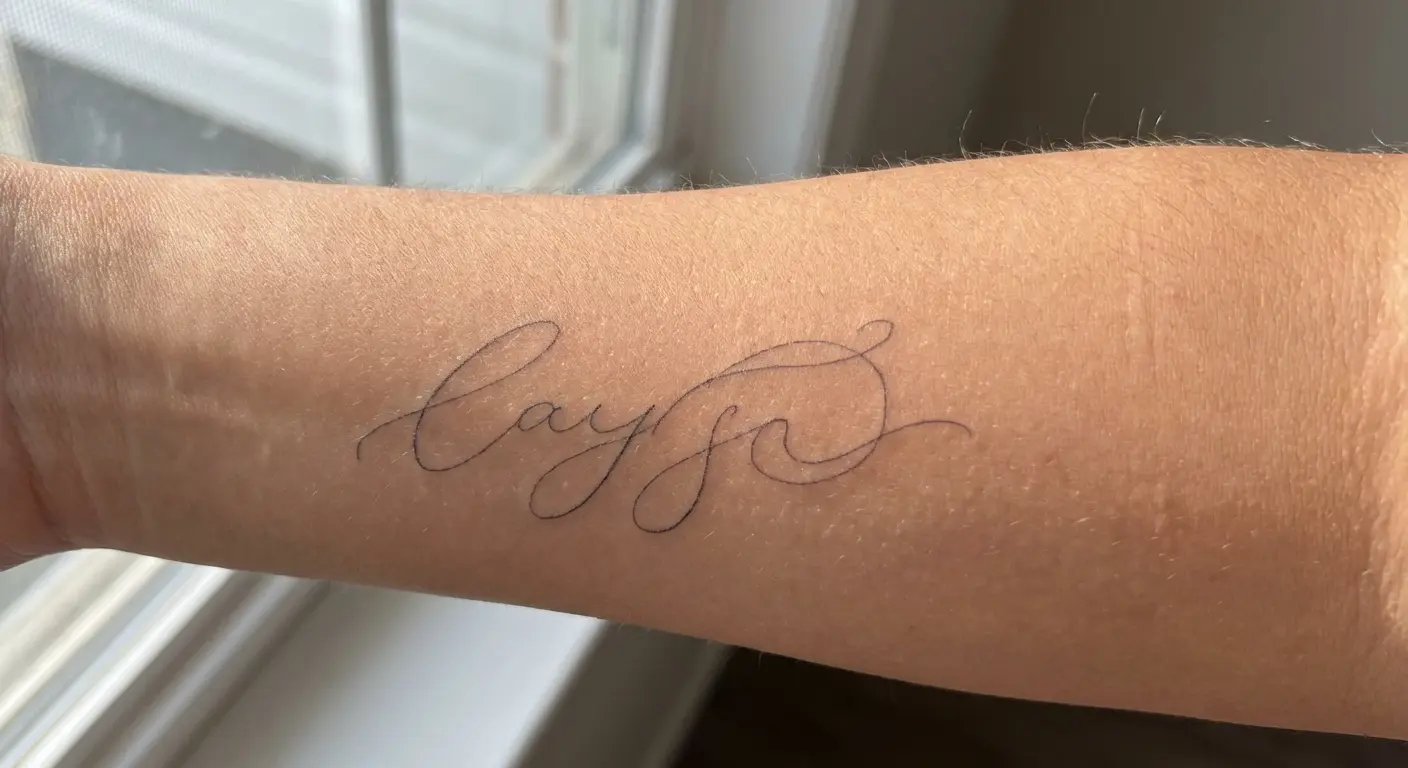
1. The Forearm Whisper (For Daily Reminders)
This runs the phrase in delicate, continuous script along your inner forearm where you can read it yourself throughout the day. The thin line work builds an intimate relationship between you and the words. It functions more as a personal mantra than a public statement.
I’m talking whisper-thin lines that basically vanish at certain angles, which somehow makes them hit harder. This works especially well if your version of boldness involves quiet confidence rather than loud proclamations. If you need frequent visual reminders during moments when you’re second-guessing a decision, having it right there on your forearm means you can glance down and recalibrate.
The fortis fortuna adiuvat tattoo positioned here becomes part of your daily routine. Visible when you type, when you drive, when you hold your coffee. That constant presence shifts how you move through the world.
2. Collarbone: When You Want Everyone to Know
Collarbone placement in stark, geometric block letters turns the same phrase into something you wear rather than something you reference. The horizontal line follows your bone structure, building architectural symmetry that feels permanent and foundational.
You can’t easily see this placement yourself without a mirror, which means it’s designed for others to read or for you to feel present on your body. The boldness here isn’t just in the message but in claiming that prominent real estate for a Latin phrase most people won’t immediately understand. When someone asks what it means, you’re entering into a conversation about your philosophy on risk. That’s either appealing or uncomfortable depending on whether you like explaining yourself to strangers.
3. Hidden Behind Your Ear Like a Secret
Hiding Fortis Fortuna Adiuvat behind your ear in micro-sizing gives you the ultimate private talisman. This placement requires absolute precision from your artist (we’re talking letters potentially 2-3mm tall) and it’ll fade faster than larger work, but that’s not really the point.
The point is having a secret that only reveals itself when you pull your hair back or turn your head at a specific angle. This version appeals to people whose boldness involves keeping their power sources private rather than performing them for an audience. Nobody needs to know what drives you. You know. That knowledge shifts how you walk around even when the tattoo stays hidden.
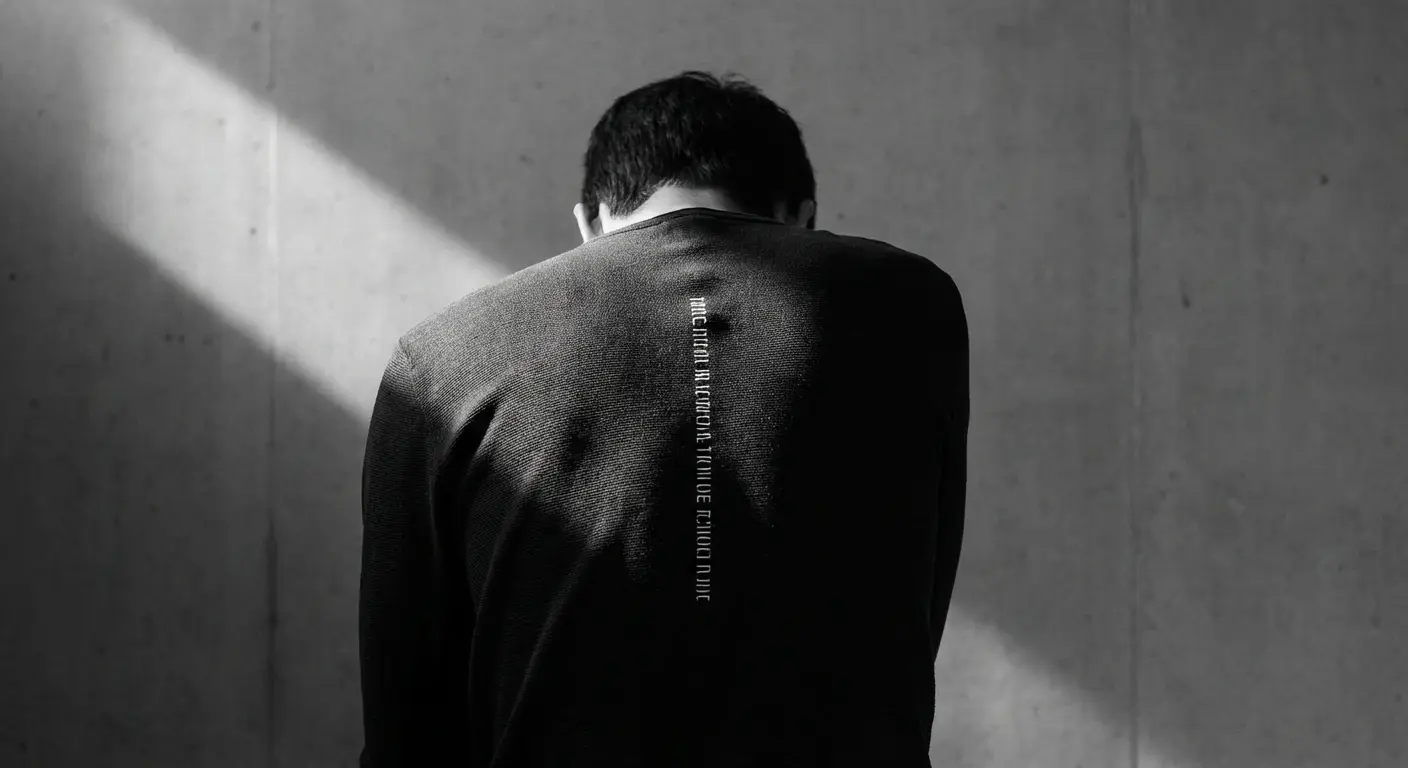
4. Down Your Spine Where You’ll Never See It
Running the phrase vertically down your spine positions it along your body’s literal support structure, which adds layers of symbolic meaning about what holds you upright. The vertical orientation means each word stacks on top of the next, building a visual hierarchy that can emphasize different parts of the phrase depending on how your artist spaces them.
You’ll never see this placement without significant effort (mirrors, photos, contortion) so it functions purely as something you know exists on your body rather than something you reference visually. That knowledge alone can shift how you carry yourself. I’ve talked to people who say their spine tattoos change their posture, not physically but psychologically. When you know your backbone literally says “fortune favors the bold,” slouching feels inconsistent with the message.
Ornamental Designs That Frame Your Philosophy
Adding symbolic imagery around the Latin text changes what the phrase means in your specific context. Look, here’s what people miss: ornamental elements aren’t just decoration. They’re specificity tools that narrow the broad concept of “fortune favors the bold” into your particular domain of courage.
Different visual frameworks (military, natural, geometric, celestial) tell completely different stories with the same words. A fortis fortuna adiuvat tattoo wrapped in laurel leaves communicates something fundamentally different than the same phrase surrounded by sacred geometry or military insignia. The stuff you add around the words? That’s what tells people which kind of brave you’re talking about.
Are you talking about physical courage? Intellectual risk-taking? Spiritual leaps? Creative vulnerability? The ornamental elements answer that question before you say a word.
|
Ornamental Element |
Cultural Origin |
Symbolic Emphasis |
Best Paired With |
|---|---|---|---|
|
Laurel Wreath |
Roman/Greek |
Victory, achievement |
Competitive pursuits |
|
Military Insignia |
Various branches |
Institutional courage |
Service members |
|
Sacred Geometry |
Universal/Spiritual |
Cosmic order |
Philosophical boldness |
|
Flora/Fauna |
Nature symbolism |
Specific virtues |
Personal transformation |
|
Timepiece/Mortality |
Memento mori tradition |
Temporal urgency |
Life transitions |
5. Traditional Roman Laurel Wreath
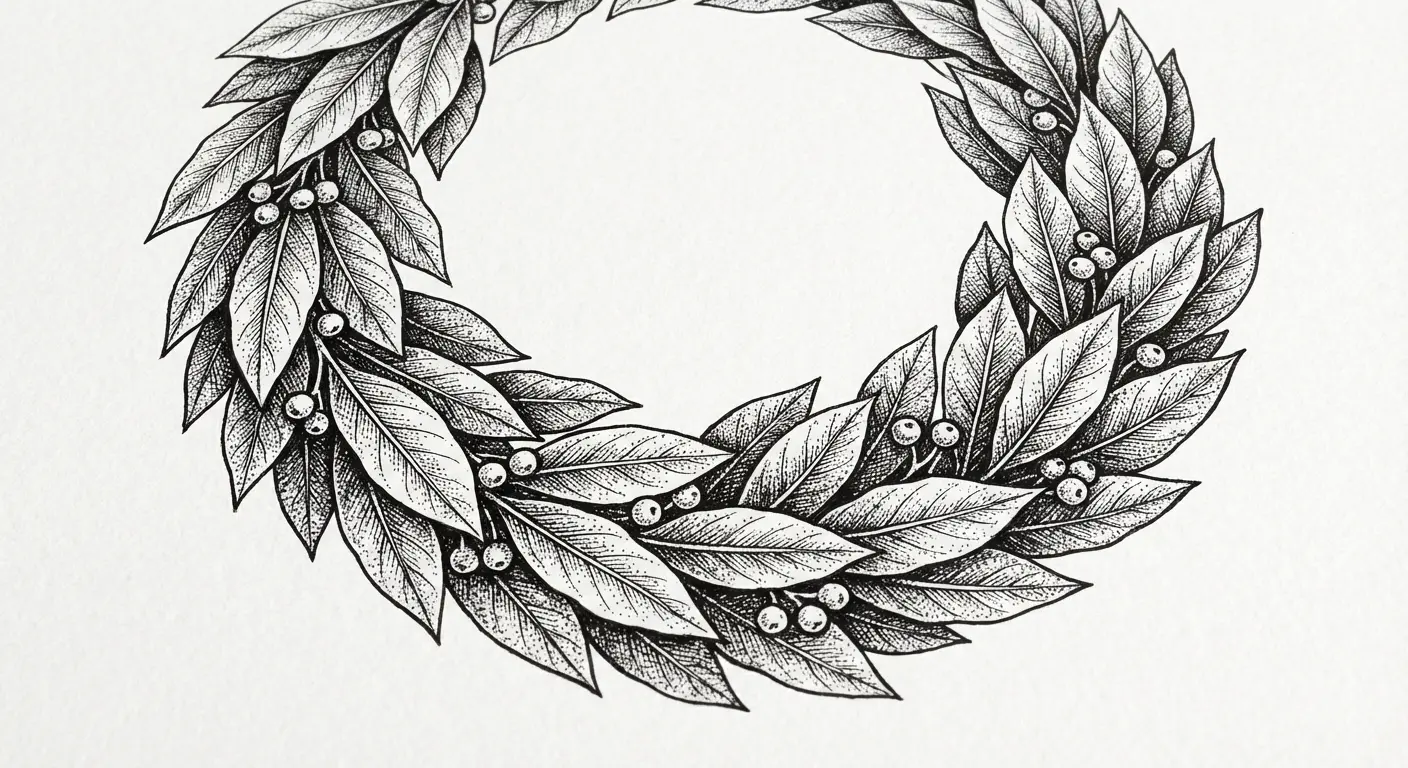
Wrapping the phrase in a traditional Roman laurel wreath connects your boldness directly to classical victory and achievement symbolism. The wreath builds a closed loop that contains and elevates the text, suggesting that your courage has already earned recognition rather than still seeking it.
This works well if your relationship with risk involves competitive domains (athletics, business, creative fields where you’re measured against others) because the laurel historically crowned winners. The circular composition also offers flexible placement options since it works as a cohesive unit on shoulders, chests, or thighs. You’re claiming a heritage that goes back thousands of years, connecting your personal philosophy to Roman military tradition and Greek athletic glory.
6. Military Insignia That Means Something
Adding specific military branch symbols (eagle, globe, anchor for Marines; crossed rifles for Army) ties the phrase to institutional courage and collective identity. This version usually appeals to veterans or active service members who interpret “fortune favors the bold” through the lens of tactical risk-taking and brotherhood.
The insignia specifies which tradition of boldness you’re claiming, turning a universal statement into a tribal marker. You’re not just saying fortune favors the bold; you’re saying it favors your particular brand of trained, disciplined boldness. The fortis fortuna adiuvat tattoo ideas that incorporate military elements often blend personal and institutional identity in ways that honor both individual courage and collective sacrifice.
These tattoo designs reflect warrior tattoo traditions and collective identity that extend beyond individual achievement into shared purpose. The phrase carries particularly profound meaning for those who’ve demonstrated courage under pressure.
Adam Thomas had Fortis Fortuna Adiuvat tattooed on his back. In January 2022, he jumped into the Ohio River trying to save a woman who’d gone in. He drowned. They found his body months later near Newburgh Old Lock & Dam, identified him partly from that tattoo.
The police called it heroic. Said it took great courage.
I think about that story every time someone tells me they want this tattoo because it “looks cool.” Adam Thomas lived it. Then he died living it. That’s what the words actually mean. Not when you’re scrolling Instagram looking at font options, but when you’re standing at the edge of a freezing river making a split-second choice.
Most of us will never face that moment. But if you’re getting these words permanently inked, you should at least understand what you’re claiming.
7. Sacred Geometry for the Philosophically Bold
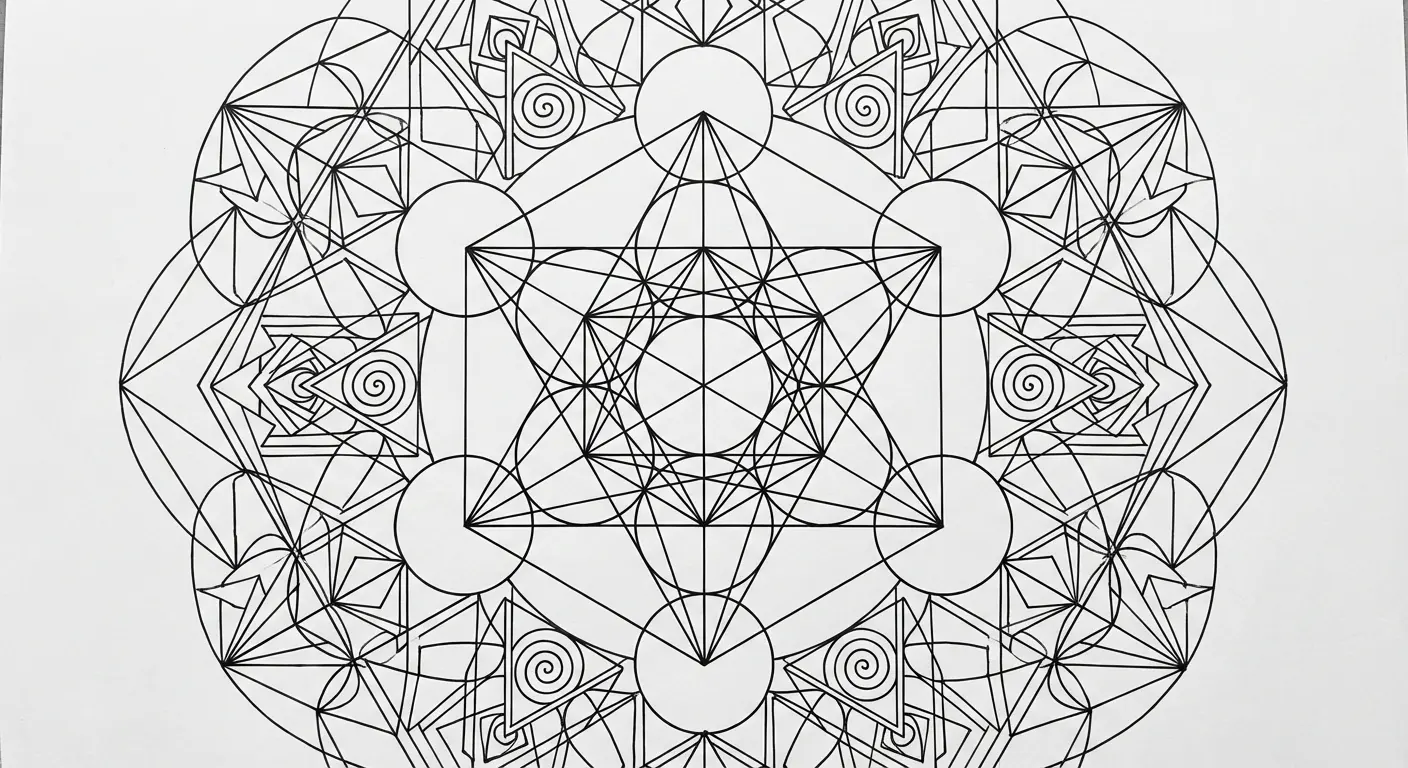
Embedding the text within geometric patterns (metatron’s cube, flower of life, mandala structures) shifts the phrase from martial courage toward spiritual or philosophical boldness. These patterns suggest that taking risks is part of a larger cosmic order rather than individual bravado.
The sacred geometry builds visual complexity that rewards extended viewing, which means the tattoo reveals different aspects depending on how long someone studies it. This appeals to people whose boldness involves intellectual or spiritual leaps rather than physical ones. When you’re making decisions that others might not understand (leaving a stable career to pursue something uncertain, choosing a path that doesn’t fit conventional success metrics) this version of the fortis fortuna adiuvat tattoo grounds your choices in something larger than impulse.
8. Animals That Actually Mean Something to You
Surrounding the phrase with specific natural elements personalizes which aspect of boldness you’re emphasizing. A lion frames it as aggressive courage. A phoenix frames it as rebirth through bold choices. Thorned roses frame it as beautiful danger.
The natural imagery makes the abstract Latin concrete by attaching it to recognizable symbols that carry their own meaning. This layering works well if you need the tattoo to tell a more complete story than the phrase alone can communicate. When someone asks about your ink, you can talk about the phoenix tattoo symbolism for rebirth through bold choices and how that connects to your specific life transitions.
Lions represent different courage than snakes. Eagles communicate different boldness than wolves. The fauna you choose narrows the broad concept of fortune favoring the bold into your specific domain of risk-taking.
9. Clocks and Skulls (Because Time’s Running Out)
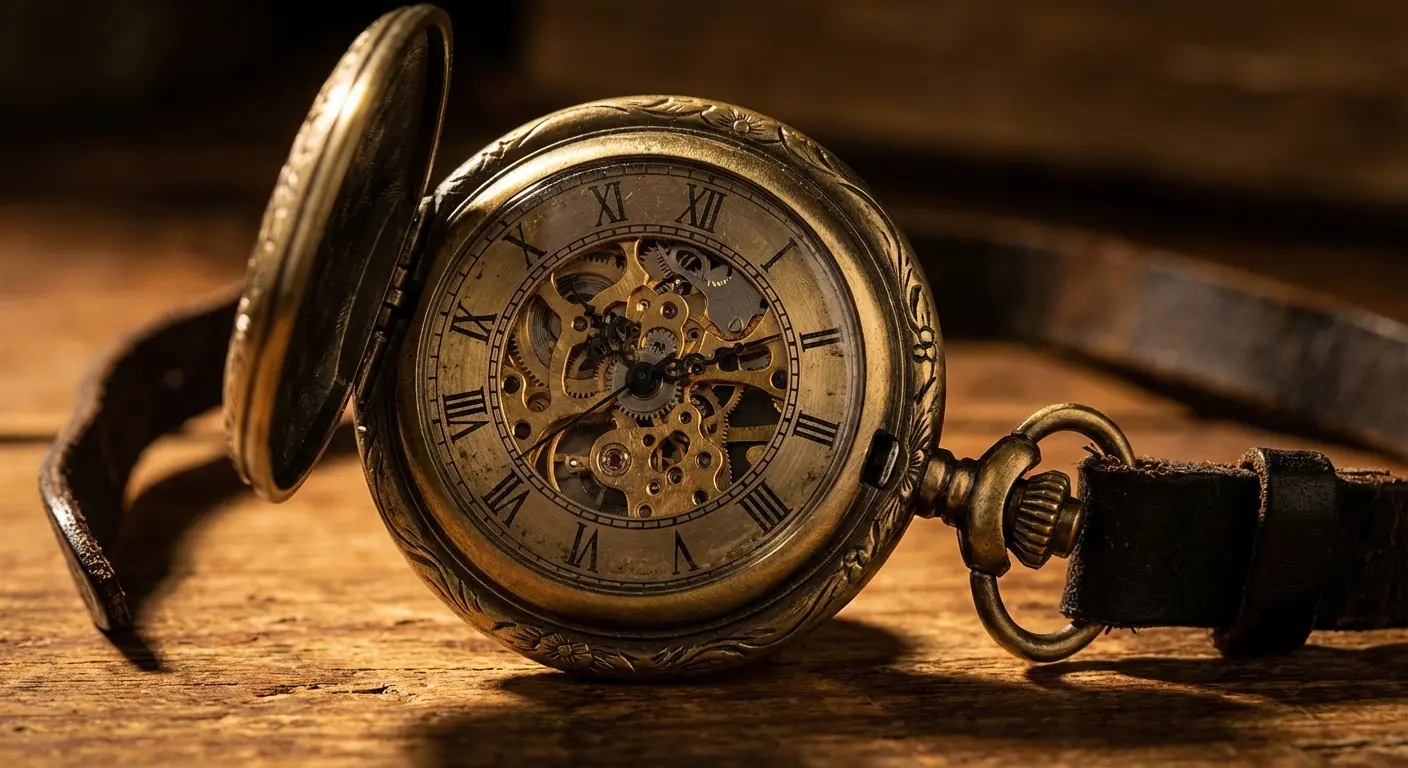
Incorporating clocks, hourglasses, or skulls alongside Fortis Fortuna Adiuvat emphasizes the temporal nature of boldness and the urgency of taking risks before time runs out. This combination acknowledges that fortune favoring the bold only matters if you act while you still can.
The mortality elements aren’t morbid; they’re clarifying. They specify that your version of courage involves awareness of life’s finite nature and choosing action despite (or because of) that awareness.
Expect this design to take up significant space since it requires room for both detailed timepiece mechanics and legible text. The best versions of these fortis fortuna adiuvat tattoo ideas integrate the temporal elements so thoroughly that you can’t separate the message from the medium. Time and boldness become inseparable concepts on your skin.
Placement-Driven Statements
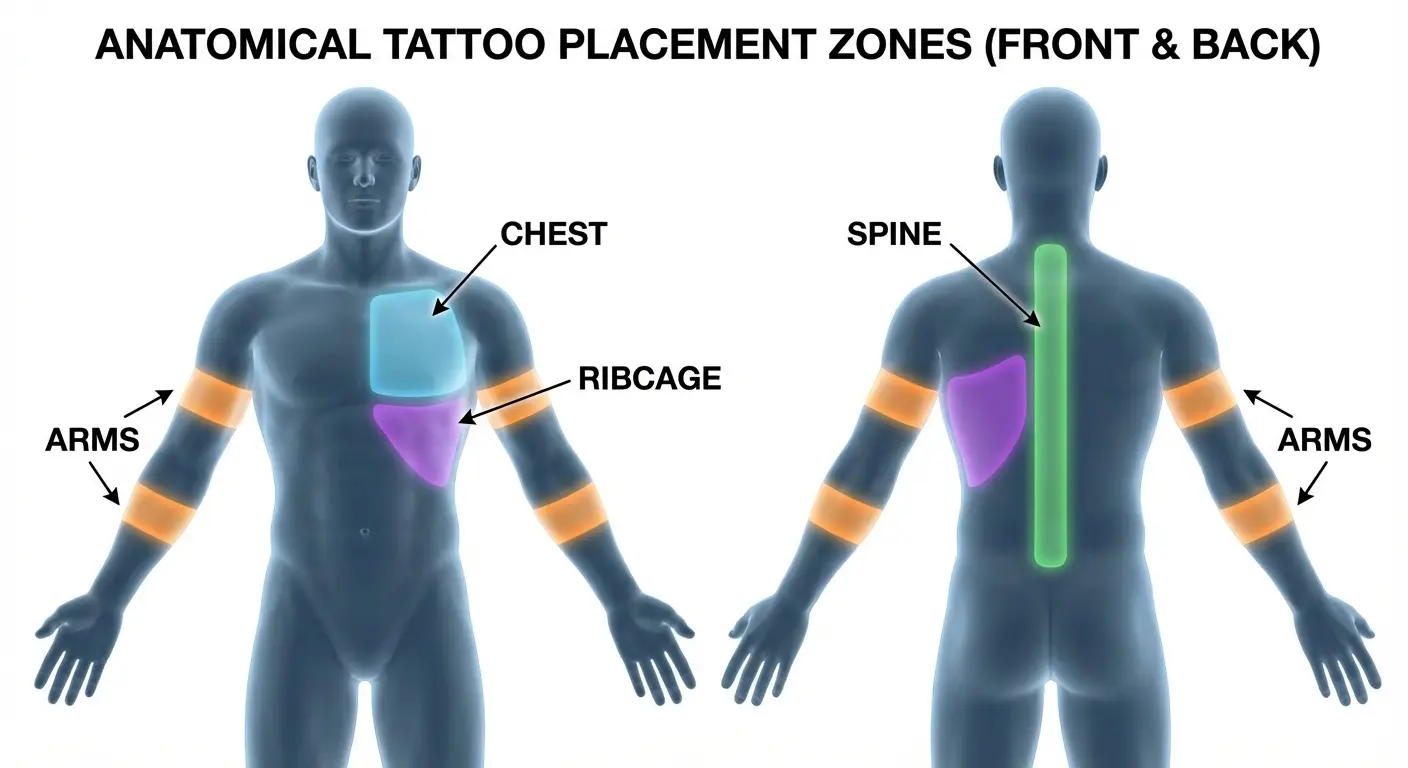
Let’s flip the usual design process. Instead of choosing a design first and then finding space for it, start with body placement and work backward to how that location changes the tattoo’s function in your life.
The same phrase operates completely differently on your ribs versus your knuckles versus your chest. Placement might be the most important design decision you make with this particular tattoo because it determines who sees it, when you see it, and how it integrates into your daily physical experience.
A fortis fortuna adiuvat tattoo on your forearm accompanies every gesture you make. On your ribs, it stays hidden except in intimate moments. On your chest, it sits over your heart. Each placement builds a different relationship between you, the phrase, and the world around you.
10. Ribs (Pain You Chose on Purpose)
Ribs hurt like hell. Everyone knows this. And you’re choosing that pain for a tattoo nobody will see unless you’re shirtless. The irony is kind of perfect: proving you’re bold by suffering for something private.
The ribcage placement means you chose pain for privacy. This location works horizontally following the rib lines or vertically along the side of your torso. You’ll know it’s there when you dress, when you move, when you breathe deeply, but it won’t perform for casual observers.
The ribs are notoriously difficult both during the session and during healing. Clothing rubs against them, breathing stretches the skin, and the thin skin over bone makes the whole experience more intense. Choosing this placement says something about your willingness to endure difficulty for personal meaning rather than external validation.
11. Knuckles (Everyone Gets to Have an Opinion)
Knuckles? You can’t hide that. Every handshake, every time you point at something, every time you hold a coffee cup – there it is. You’re basically telling every job interviewer and your girlfriend’s parents that you made a permanent choice they might not like.
Splitting the phrase across your knuckles (or doing a shortened version) makes it impossible to ignore and difficult to hide in professional settings. Knuckle tattoos face outward when you gesture, when you shake hands, when you hold objects, building constant micro-moments of revelation.
This placement signals that you’re willing to accept social and professional consequences for your ink, which aligns perfectly with the message itself. The boldness isn’t just in getting the tattoo; it’s in getting it somewhere that affects how strangers perceive you before you speak. Hand tattoos still carry stigma in many industries. Choosing them anyway demonstrates the exact philosophy the phrase describes.
12. Chest (Right Over Your Heart)
Centering the phrase on your chest positions it over your heart and lungs, the organs that literally keep you alive and physically respond to fear. This placement builds symbolic resonance between the message and the body parts that react when you take risks (elevated heart rate, shallow breathing, adrenaline).
The chest offers enough space for larger lettering or ornamental additions, and it’s easily concealed by clothing while remaining accessible when you choose to reveal it. This works if you want the option to control when and how people encounter your fortis fortuna adiuvat tattoos.
I’ve talked to people who say their chest tattoos feel different depending on what they’re wearing. Under a button-down shirt at work, the tattoo exists as private knowledge. At the gym or beach, it becomes a public statement. That flexibility matters if your professional life requires discretion but your personal philosophy demands expression.
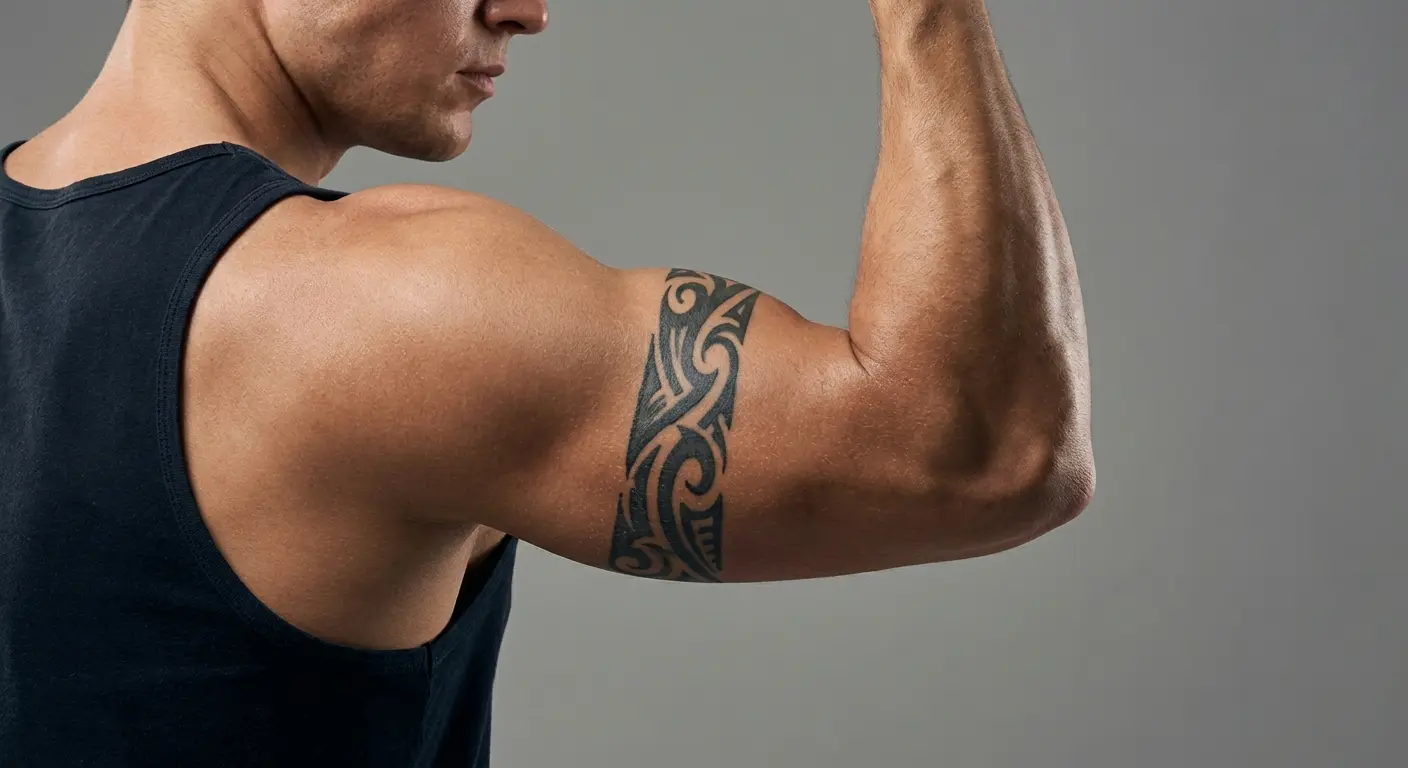
13. Wrapped Around the Bicep
Wrapping the text in a band around your bicep gives you a visible marker when you wear short sleeves while maintaining some discretion in long sleeves. The circular placement means the phrase has no clear beginning or end, suggesting continuous rather than episodic courage.
Your arm’s movement throughout the day shifts which words are most visible at any given moment, building a rotating emphasis. Sometimes “Fortis” faces forward. Other times “Adiuvat” takes center stage. This placement appeals to people who want their boldness visible during physical activity (when you’re demonstrating it) but not necessarily during sedentary professional moments.
The bicep band also works well for people who lift or train regularly because the muscle definition can enhance the visual impact of the text. As your arm flexes, the letters shift and change, making the static phrase feel dynamic.
Cultural Fusion Interpretations
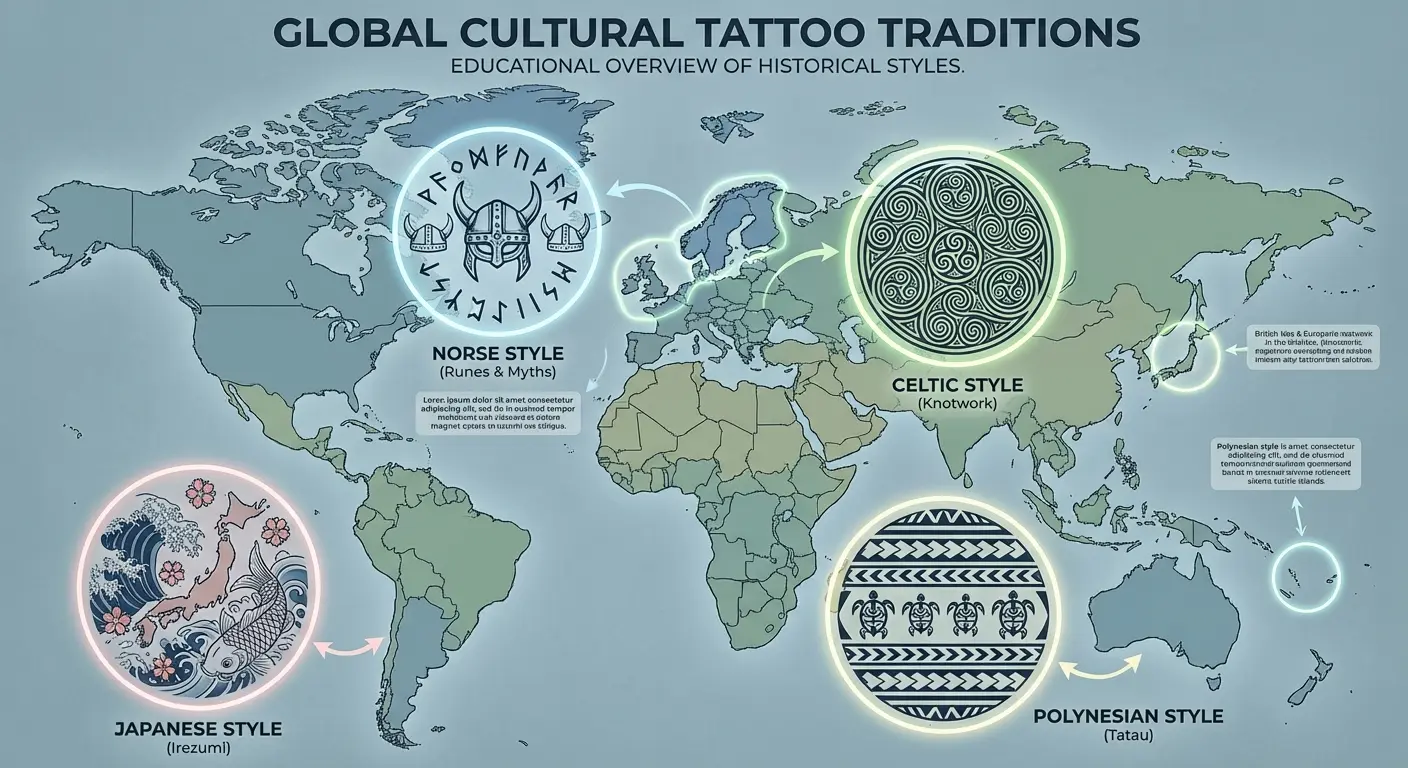
Okay, last thing: what if you want the Latin words but you’re not trying to cosplay as a Roman soldier? Mixing it with Japanese waves or Celtic knots or Polynesian patterns says “courage isn’t owned by one culture.” It’s a way to claim the phrase without pretending you’re something you’re not.
This section addresses a real tension: you’re drawn to a Latin phrase with Roman military origins, but maybe that’s not your only cultural reference point. These designs show how to honor the phrase while integrating it into broader symbolic systems that might resonate more authentically with your background or philosophy.
Cultural fusion doesn’t dilute the message. When done right, it enriches the message by acknowledging that courage isn’t owned by any single tradition.
14. Japanese Wave and Wind Integration
Combining the Latin text with Japanese wave patterns (Great Wave off Kanagawa style) or wind bars builds a visual conversation between Roman and Japanese approaches to courage. The waves represent powerful natural forces that bold sailors must navigate, while wind bars suggest invisible forces that move visible things.
This fusion works aesthetically because Japanese tattooing has its own strong text tradition (kanji) that can visually balance Roman letters. Blending with traditional Japanese tattoo aesthetics and wave patterns makes something that honors both lineages without subordinating one to the other.
The design acknowledges that boldness looks different in cultures that emphasize collective harmony versus individual glory. Japanese philosophy often frames courage as fulfilling your role within a larger structure, while Roman philosophy celebrates individual achievement. Putting them together on your skin says you’re drawing from both wells.
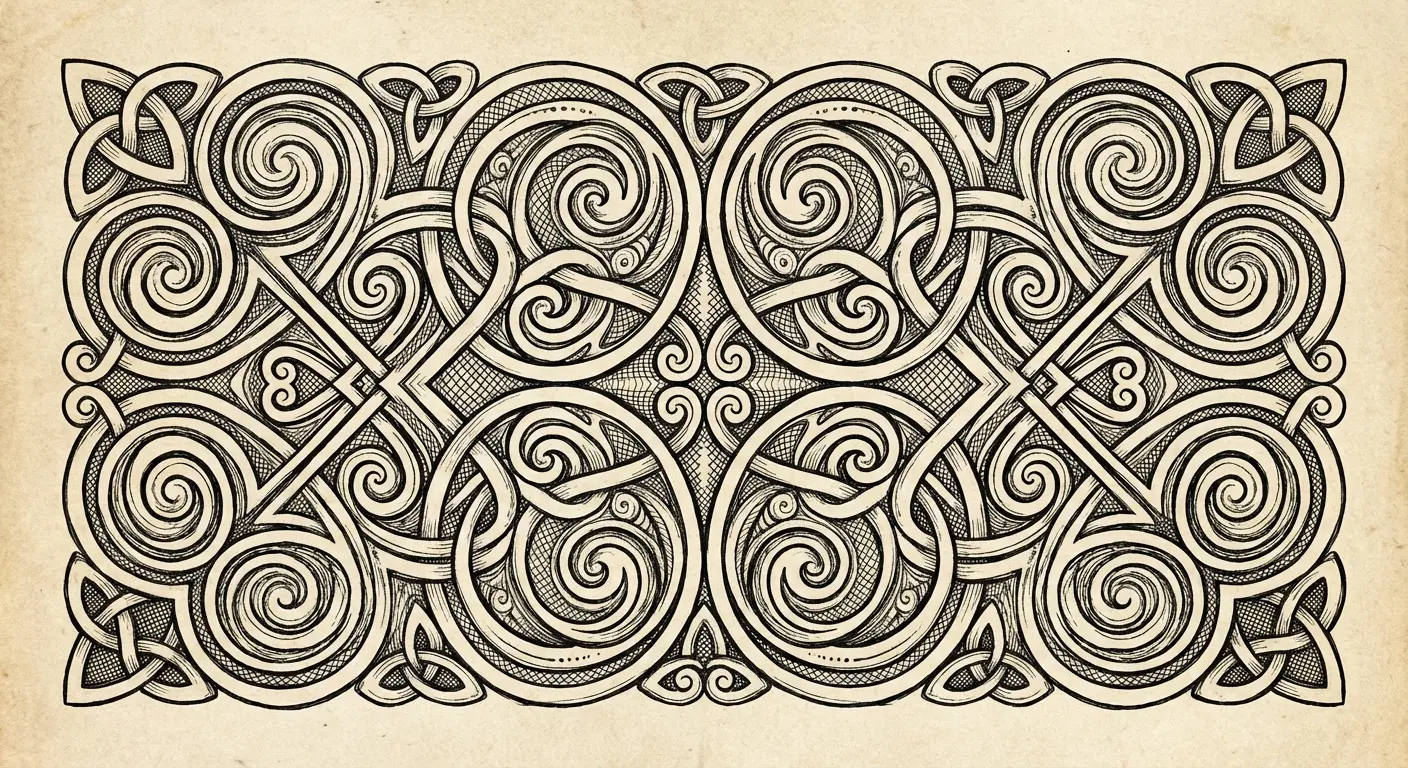
15. Celtic Knotwork Border
Framing Fortis Fortuna Adiuvat with Celtic knots connects Roman military philosophy to Celtic warrior traditions and their emphasis on eternal cycles. The knotwork’s endless loops suggest that boldness isn’t a single act but a continuous pattern of choices.
This combination appeals to people with Irish, Scottish, or Welsh heritage who want to claim the Latin phrase while visually anchoring it to their ancestral context. The knots also add significant visual interest to what might otherwise be plain text, building something that reads as a complete composition rather than just words.
Celtic designs carry their own deep symbolism around continuity, interconnection, and the eternal nature of the soul. When you wrap that around a phrase about fortune and boldness, you’re making a statement about how courage perpetuates itself across generations and decisions.
16. Polynesian Triangle and Spearhead Elements
Incorporating Polynesian tattoo elements (triangle patterns representing shark teeth, spearheads symbolizing warrior spirit) around the Latin phrase builds a Pacific-Roman hybrid that emphasizes both cultures’ warrior traditions.
Polynesian tattooing carries deep genealogical and status meanings, so this fusion works best if you have genuine connection to Pacific Islander culture rather than just aesthetic appreciation. The geometric precision of Polynesian patterns provides strong visual structure that can organize the Latin text into readable sections while adding layers of symbolic meaning about ancestry and inherited courage.
Shark teeth patterns represent protection, guidance, and adaptability (qualities that complement the fortis fortuna adiuvat tattoo ideas about taking calculated risks). The spearheads add directional energy, suggesting that boldness requires aim and purpose, not just reckless action.
17. Norse Rune Accompaniment
Pairing the phrase with specific Norse runes (Tiwaz for warrior courage, Uruz for strength, Raido for journey) builds a bilingual statement that says the same thing in different symbolic languages. This works because both Latin and Norse runes carry historical weight and warrior associations, so they reinforce rather than contradict each other.
The runes can border the text, intersect with it, or appear as standalone elements in the same tattoo. Pairing with Nordic tattoo elements and rune symbolism builds visual and philosophical depth that speaks to people who draw courage from multiple ancestral traditions.
This combination resonates if your understanding of boldness involves both strategic thinking (Roman) and acceptance of fate (Norse). Roman philosophy often emphasizes human agency and the power of decisive action. Norse philosophy acknowledges fate while still demanding courage in the face of predetermined outcomes. Having both perspectives in one tattoo acknowledges that tension.
18. Mandala Circular Composition
Arranging the words in a circular mandala pattern transforms the linear Latin phrase into a meditative symbol that emphasizes spiritual rather than martial courage. The mandala structure suggests that boldness is one aspect of a larger spiritual practice involving balance, centeredness, and intentional action.
This design requires careful planning to make the text readable while maintaining the mandala’s radial symmetry, but when executed well, it makes something that functions both as words and as a geometric meditation object.
You’re claiming that fortune favors the bold who act from a centered, spiritually grounded place rather than reckless impulse. The mandala’s circular nature also suggests that courage and fortune cycle through your life repeatedly, not as one-time events but as recurring themes you navigate with increasing wisdom.
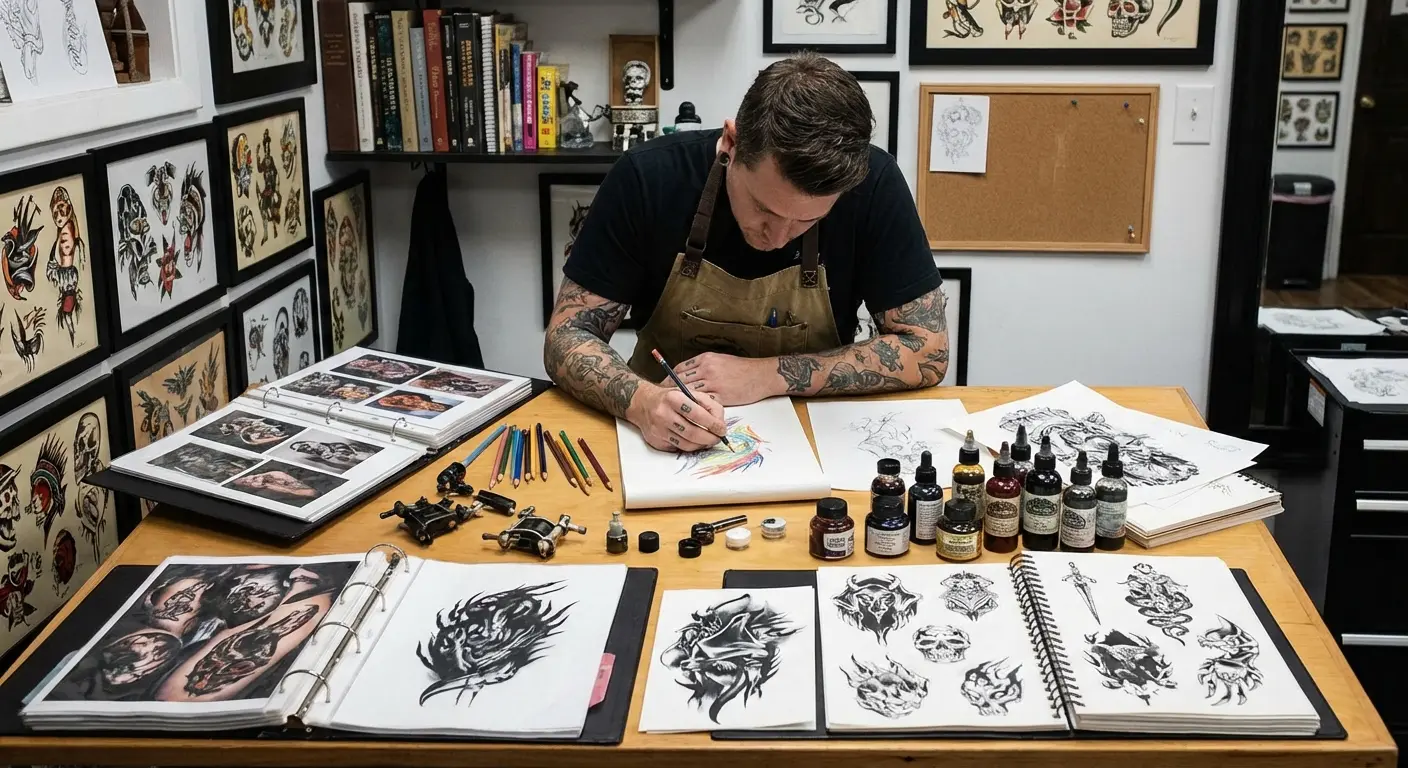
Okay, real talk: you’re probably still not sure which direction to go. Maybe you like the minimalist idea but you also want the Celtic knots, or you can’t decide between forearm and ribs.
Instead of spending three months trying to describe your vision to artists who keep getting it wrong, try Tattoo Generator IQ. You can test different versions in like 30 seconds (different fonts, different placements, add or remove decorations). It’s faster than explaining yourself over and over, and you’ll actually see what you’re getting before it’s permanent.
Final Thoughts
Five years from now, you’re going to look at this tattoo and cringe a little. Not because it’s a bad tattoo but because you’ll have changed and the words stayed the same.
That’s the point. That’s what makes it work.
The phrase itself hasn’t changed in two thousand years, but your understanding of what boldness requires absolutely will. Maybe right now it means taking a career risk, and later it’ll mean the courage to be vulnerable in relationships, or the boldness to change your mind about something fundamental. The tattoos that actually matter? They’re usually the ones that make you a little uncomfortable to look at five years later because they remind you of who you were and challenge who you’ve become.
You’re not just marking your skin with Latin words. You’re building a checkpoint you’ll return to repeatedly, asking yourself whether you’re still living up to what you claimed fortune favors. That conversation between your current self and your future self matters more than any design choice we’ve discussed here.
Here’s the thing about permanent ink: it doesn’t change, but you will. The words will mean something different in five years. Then ten. Then twenty. You might look at it someday and think “I’m not living up to this anymore.” Or worse: “I never really was.”
That’s not a reason to avoid the tattoo. That’s the entire point of the tattoo.
You’re not marking your skin with motivational poster words. You’re setting a standard you’ll either meet or fall short of for the rest of your life. The phrase will outlast your current understanding of what it means. You’re committing to a philosophy that demands growth, change, and continued risk-taking even when the initial inspiration for getting the tattoo has long since passed.
Whether you choose minimalist text or elaborate ornamental framing, whether you hide it on your ribs or declare it across your knuckles, the real question isn’t about design.
The real question is whether you’re ready for that level of accountability.
Most people aren’t.
Are you?
