24 Hair Tattoos That Redefine How We Think About Scalp Art
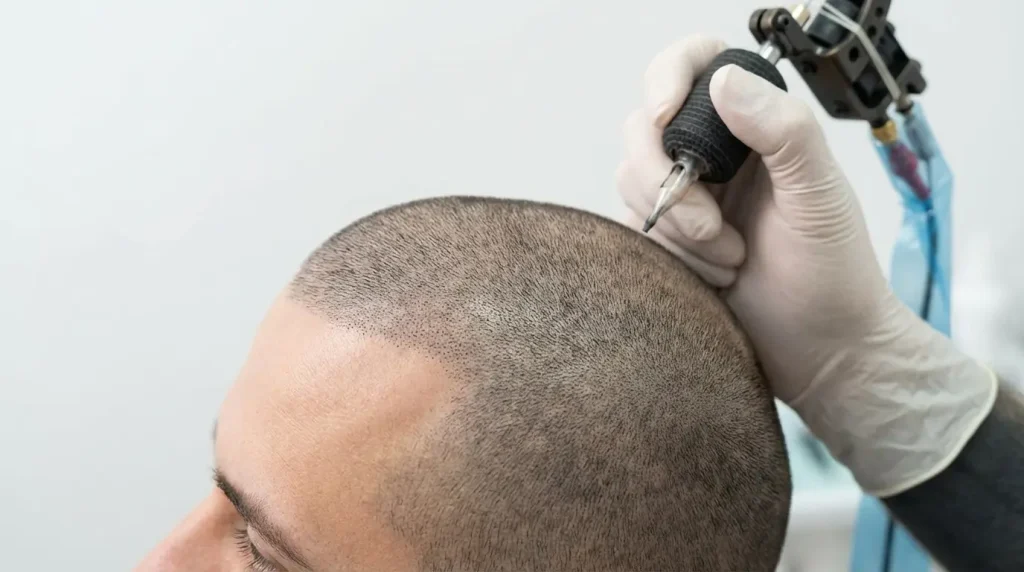
Look, hair tattoos aren’t what you think. This isn’t some desperate cover-up move… it’s intentional art on your head. Whether you’re getting precision geometric patterns, fixing actual hair loss problems, or going full statement piece, there’s way more to this than most people realize. Here’s the thing: people love these. Like, actually love them. A 2021 study found that 100% of patients who’d had a hair tattoo would recommend the procedure to others with similar problems. That’s pretty telling.
Your scalp is a weird canvas though. It changes constantly, hair grows back, and you need to think about maintenance way differently than you would with a regular tattoo on your arm. I’ve seen people rush into complex designs without considering the upkeep, then let them grow out within weeks because it becomes too much.
Table of Contents
Precision Patterns That Command Attention
-
Geometric Fade Line
-
Tribal Temple Accent
-
Circuit Board Crown
-
Constellation Cluster
-
Sacred Geometry Spiral
-
Minimalist Wave Pattern
-
Dotwork Gradient
-
Angular Architecture
Functional Designs That Solve Real Problems
-
Hairline Restoration Shadow
-
Scar Camouflage Stippling
-
Density Illusion Dots
-
Receding Temple Fill
-
Alopecia Patch Coverage
-
Transplant Scar Blend
-
Crown Thinning Texture
-
Widow’s Peak Definition
Statement Pieces That Break Convention
-
Lightning Bolt Side Shave
-
Mandala Undercut
-
Script Fade Integration
-
Wildlife Silhouette
-
Abstract Brushstroke
-
Negative Space Portrait
-
Cosmic Scene
-
Cultural Symbol Showcase
TL;DR
Here’s what you actually need to know before you do this:
-
Hair tattoos are intentional design choices that enhance your existing hair or create new visual interest where hair once was
-
Scalp micropigmentation is completely different from decorative hair tattoos in technique, pigment depth, and what you’re trying to achieve
-
Precision patterns work best on fresh fades and you’ll need to time maintenance with your barber appointments
-
Functional designs address specific concerns like scars, thinning, or uneven hairlines without looking obviously corrective
-
Statement pieces demand commitment because your canvas changes as hair grows, unlike traditional body placement
-
Placement matters way more than design complexity. A simple pattern in the right spot beats an elaborate design in the wrong one every time.
-
Your scalp’s unique contours affect how designs appear from different angles
-
Most hair tattoos need touch-ups every 2-4 weeks depending on hair growth rate and design intricacy (though this varies wildly depending on your hair)
Precision Patterns That Command Attention
1. Geometric Fade Line
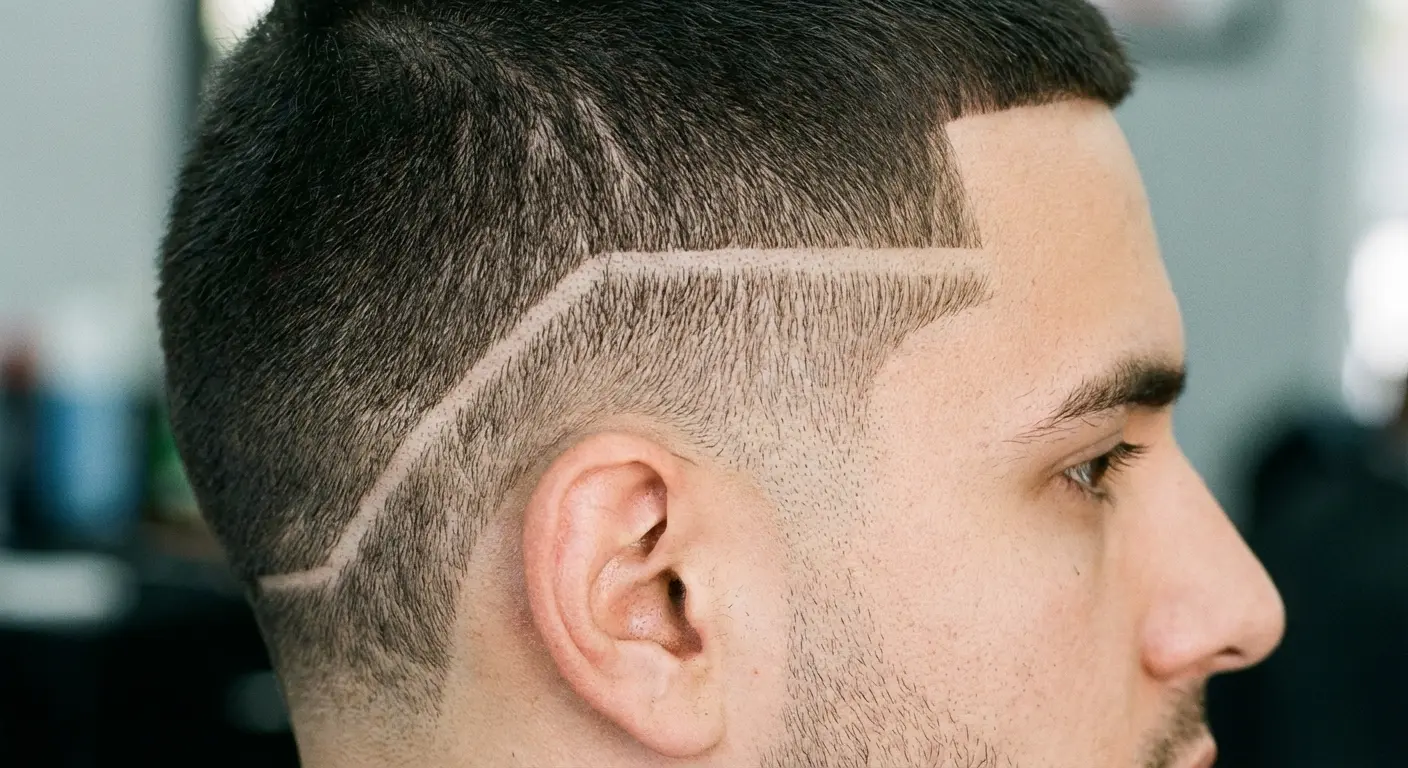
Sharp geometric lines carved into a fresh fade create instant visual interest without overwhelming your overall look. We’re talking about single, intentional lines that follow the natural curve of your head, usually placed where your barber would normally create a hard part.
The key here is precision. You need an artist who actually understands how hair growth patterns will affect the design’s longevity. These lines work really well for professionals who want something noticeable but not disruptive in conservative environments… like, corporate office jobs where you can’t show up with a face tattoo.
The design stays visible for about two weeks before requiring a touch-up, which means coordinating with your regular haircut schedule becomes essential. Think of this as the entry point into scalp art. Low commitment, high impact, easily covered if you change your mind and let your hair grow out.
|
Design Complexity |
Visibility Duration |
Touch-Up Frequency |
Best For |
|---|---|---|---|
|
Single line |
10-14 days |
Every 2 weeks |
Professionals, first-timers |
|
Multiple parallel lines |
7-10 days |
Every 1-2 weeks |
Intermediate commitment |
|
Intersecting geometric |
5-7 days |
Weekly |
High maintenance tolerance |
|
Complex patterns |
3-5 days |
Twice weekly |
Dedicated enthusiasts |
When exploring geometric options, you might also consider how a geometric tattoo generator can help visualize precise patterns before committing to scalp placement.
2. Tribal Temple Accent
Tribal patterns placed at the temples create a frame for your face that draws attention upward. You’ll want to keep these designs relatively small, maybe two inches maximum, because the temple area is prime real estate that people notice when you’re talking to someone at a bar and they’re at eye level.
The beauty of temple placement is how it interacts with facial hair if you have it. A well-designed tribal accent can visually connect your beard line to your hairline, creating cohesion across your entire head. These patterns usually incorporate curved lines and organic shapes that complement the natural roundness of your skull.
Maintenance becomes trickier here because temple hair tends to grow faster than crown hair for most people, meaning your design might blur within 10-14 days.
For those drawn to cultural patterns, exploring tribal tattoo design options can provide inspiration for temple placements that honor traditional aesthetics.
3. Circuit Board Crown
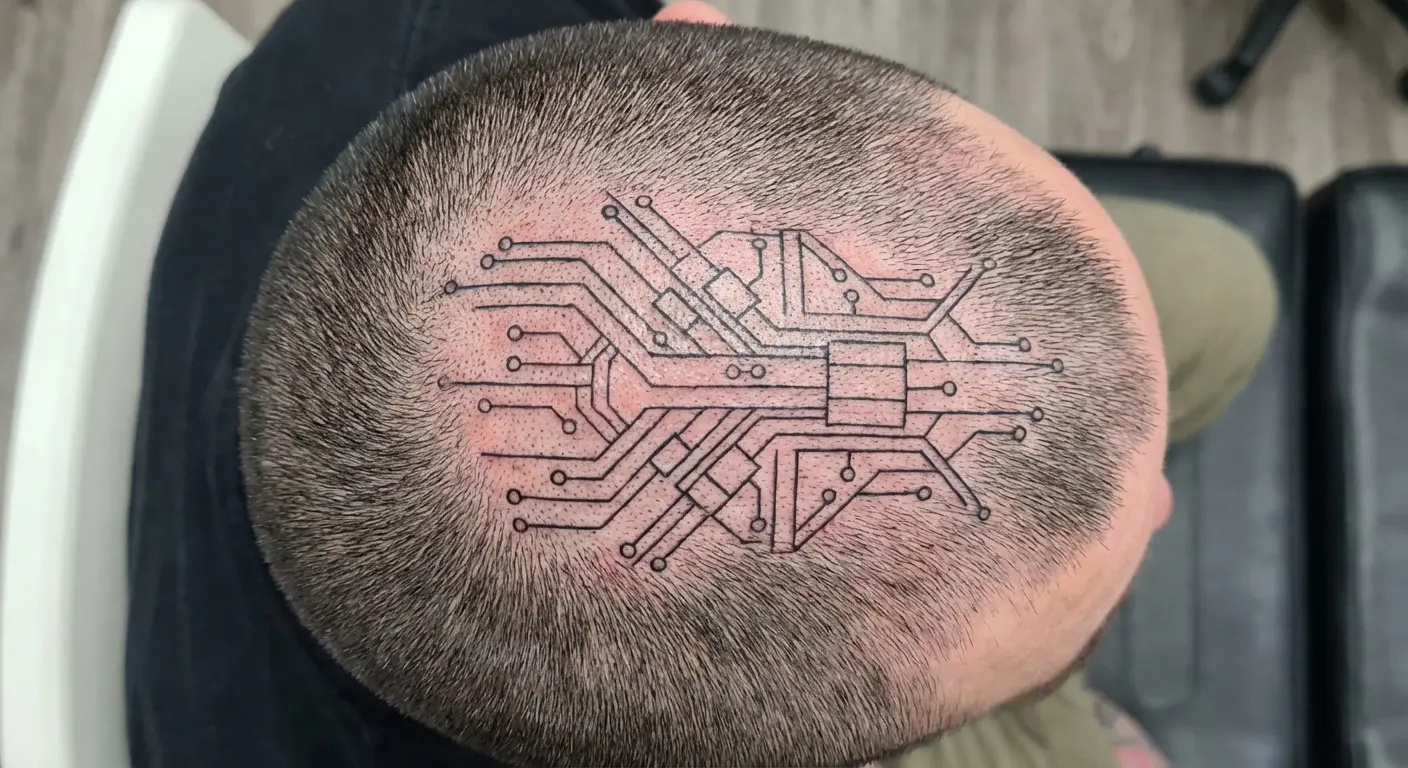
Circuit board patterns on the crown area appeal to tech enthusiasts and anyone who appreciates systematic, interconnected designs. This style works really well if you keep your hair short on top. We’re talking clipper guard 1 or 2 at most.
The pattern creates the illusion of complexity while remaining relatively simple to execute. Your artist will use straight lines, right angles, and small circles to mimic the appearance of electronic pathways. The crown placement means you’ll mostly see this design in photos or when someone’s standing above you, which makes it perfect if you want something personal rather than constantly visible.
Hair growth affects these designs big time because any length beyond stubble obscures the precise lines that make the circuit board recognizable.
4. Constellation Cluster
Dotwork constellations scattered across a shaved section create a subtle, almost mysterious effect that only reveals itself upon closer inspection. You can choose actual constellation patterns that hold personal meaning or create your own star map.
The technique needs an artist skilled in consistent dot placement because uneven dots read as mistakes rather than intentional design. These work beautifully on the side of the head, especially if you wear your hair swept to one side, revealing the design intermittently.
The dots themselves are small, maybe 2-3mm each, with varying sizes to create depth and dimension. Maintenance is surprisingly manageable because small dots remain visible even as hair starts growing back, unlike line work that disappears quickly.
5. Sacred Geometry Spiral
Fibonacci spirals and other sacred geometry patterns create a focal point that suggests deeper meaning without requiring explanation. These designs work best when sized appropriately for your head. Too small and they lose impact, too large and they overwhelm your features.
Placement behind the ear or on the side of the head allows you to reveal or conceal the design depending on how you style your hair.
The spiral itself needs to be executed with mathematical precision, which means finding an artist who understands the ratios involved, not just someone who can freehand a swirl. You’ll notice these designs photograph really well because the curves catch light differently than straight geometric patterns, creating natural shadows that enhance the three-dimensional appearance.
6. Minimalist Wave Pattern
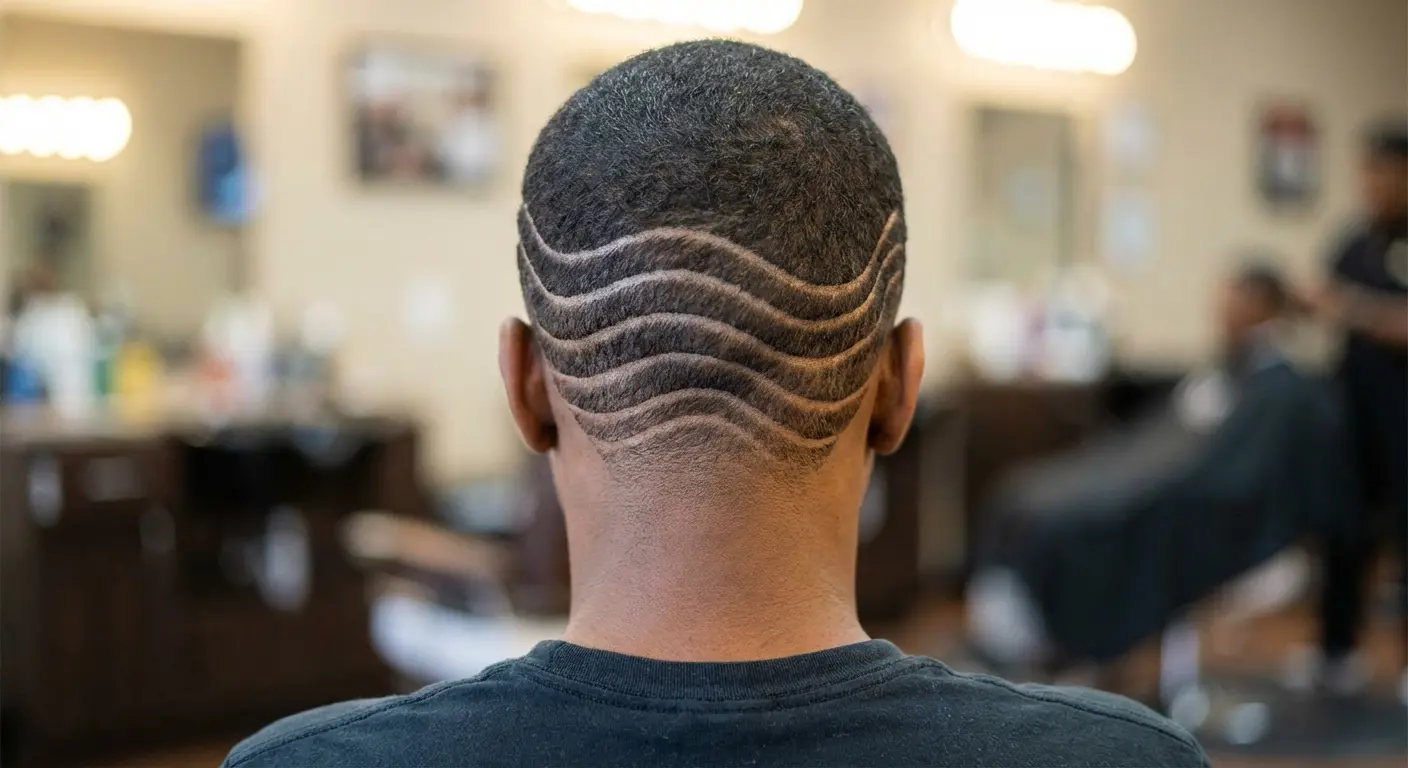
Three to five parallel waves running horizontally across the back of your head create movement and flow that complements your head shape. The spacing between waves matters enormously. Too close together and they blur into a solid block as hair grows. Too far apart and they lose their connection as a unified design.
Most artists recommend 1-2cm spacing depending on your hair growth rate. These patterns work for people who want something noticeable but not aggressive. The wave pattern reads as intentional styling rather than obvious tattooing, which helps in situations where you need to maintain a more conservative appearance.
Touch-ups align perfectly with monthly haircuts, making maintenance predictable and manageable.
7. Dotwork Gradient
Graduated dotwork that transitions from dense to sparse creates a fade effect that enhances your actual hair fade. This technique needs serious skill because the dots need to be placed with consistent spacing that gradually increases as the pattern moves outward.
You’re basically creating a stippled shadow that adds depth to your head’s natural contours. The gradient usually starts near the hairline and fades toward the crown or ear, depending on your design goals.
This style works really well for people with naturally darker hair because the dots blend more seamlessly with your hair color. Lighter hair creates higher contrast, which can look striking but needs more frequent maintenance to keep the gradient smooth.
8. Angular Architecture
Sharp angles and intersecting lines create an architectural quality that suggests structure and intentionality. These designs work best on the flat surfaces of your head (the sides, mostly) where the lines can remain crisp. Curved surfaces distort angular patterns, so placement needs careful consideration of your head shape.
You’ll want to work with your artist to map the design while you’re sitting upright because gravity affects how your scalp sits, and designs planned on a tilted head often look skewed when you’re standing normally. The angular aesthetic pairs well with modern fashion sensibilities and tends to appeal to people who appreciate contemporary art.
Maintenance demands are high because any imperfection in line work becomes immediately obvious with angular designs.
Functional Designs That Solve Real Problems
Okay, we’re getting into the practical stuff now. These next eight are all basically the same technique applied to different problems, so I’m gonna move faster through these.
9. Hairline Restoration Shadow
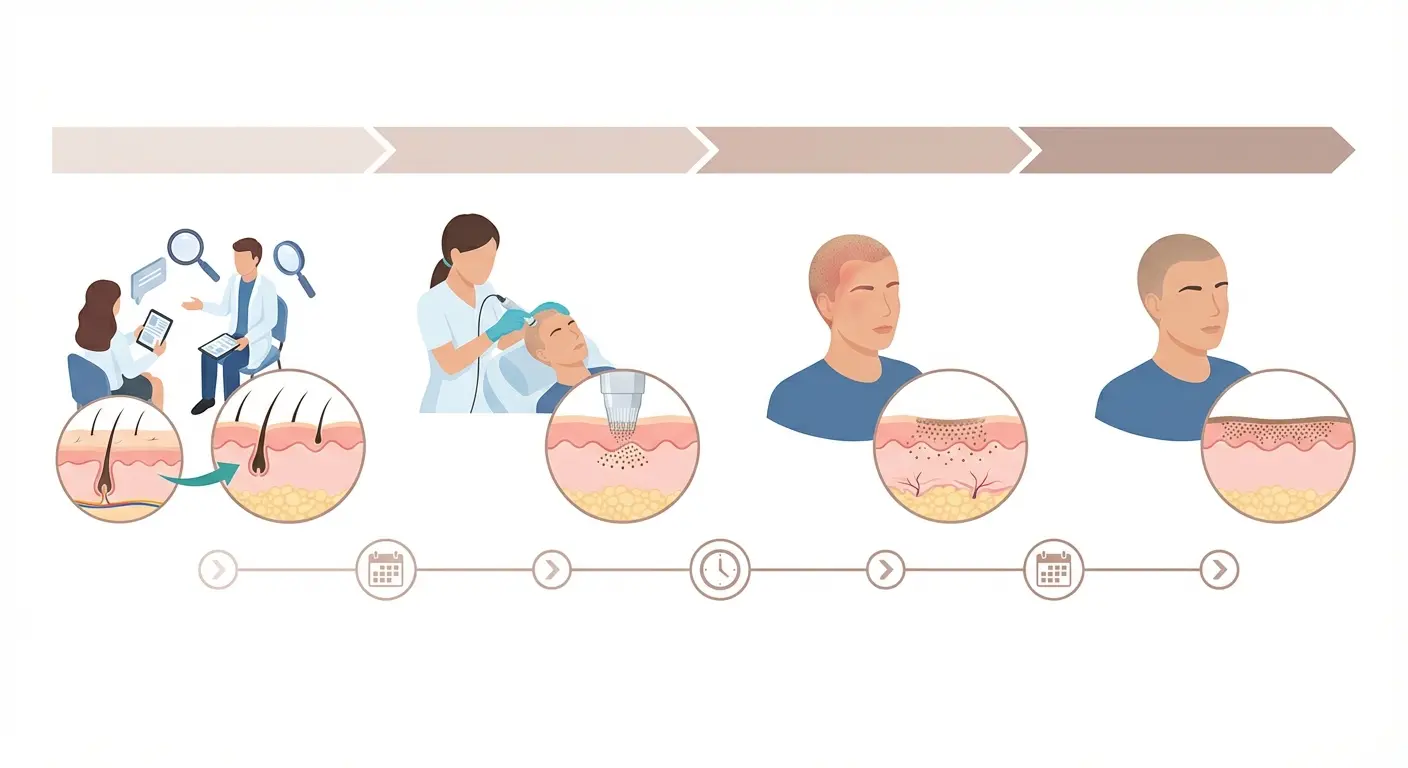
Scalp micropigmentation creates the appearance of hair follicles along a receding hairline, basically tattooing thousands of tiny dots that mimic shaved hair. This isn’t decorative art in the traditional sense. You’re addressing a specific concern about hair loss while maintaining a natural appearance.
The technique works best when you keep your existing hair short, creating continuity between real and tattooed “hair.” The dots need to match your natural hair color precisely, which means custom pigment mixing. Most people need 2-3 sessions spaced weeks apart to build up the proper density and color saturation.
The results last years, not weeks, because the pigment is placed deeper in the skin than temporary hair tattoos. This solution works for people who want to address hair loss without committing to transplants or accepting complete baldness. Research demonstrates impressive longevity for scalp micropigmentation treatments, with minimal fading observed at follow-up appointments up to 32 months after the procedure, making it a durable solution for hairline restoration concerns.
|
Hair Loss Solution |
Procedure Time |
Recovery Period |
Results Visibility |
Maintenance Required |
|---|---|---|---|---|
|
Scalp Micropigmentation |
2-3 sessions over weeks |
Less than 2 weeks |
Immediate after first session |
Touch-ups every 4+ years |
|
Hair Transplant |
4-8 hours |
8-12 months |
8-12 months |
Minimal once healed |
|
Minoxidil |
Daily application |
None |
2+ months |
Daily ongoing use |
|
Finasteride |
Daily pill |
None |
3-6 months |
Daily ongoing use |
10. Scar Camouflage Stippling
Scars from injuries, surgeries, or previous hair transplants create visible lines where hair won’t grow. Stippling tattoos around and over these scars breaks up the solid appearance, making them way less noticeable. The technique involves placing dots of pigment that match your skin tone and hair color, creating visual texture that distracts from the scar tissue.
You can’t completely eliminate scar visibility, but you can reduce it a lot. The challenge here is that scar tissue accepts pigment differently than normal skin, often needing multiple passes to achieve adequate color saturation.
Some scars remain slightly raised even after tattooing, but the color matching makes them blend from a distance. This approach works really well for linear scars on the scalp from accidents or medical procedures. If you’re considering coverage options, understanding tattoo cover-up techniques can inform your approach to concealing scalp scars effectively.
11. Density Illusion Dots
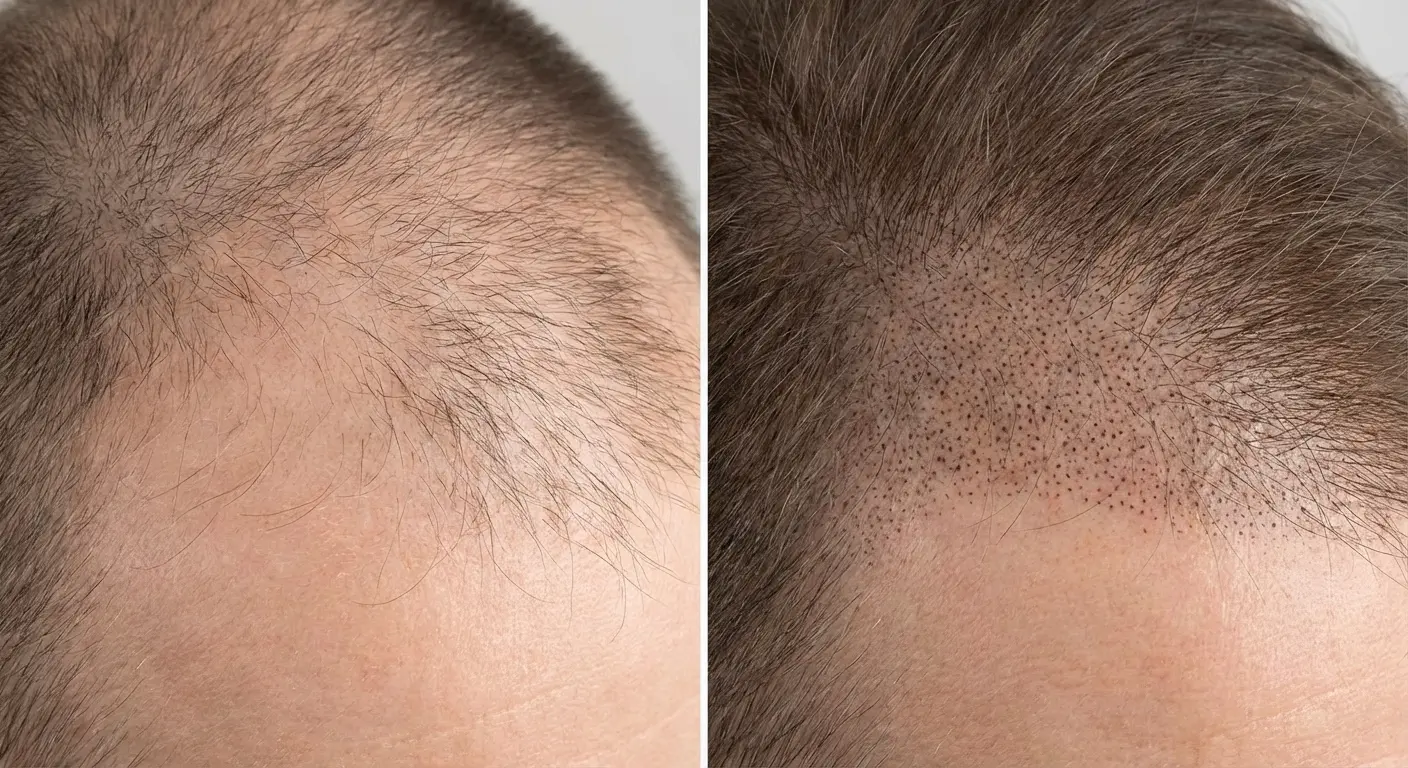
Thinning hair on top creates a see-through effect where your scalp shows through. Strategic dot placement between existing hair follicles creates the illusion of greater density without adding actual hair.
This technique needs an artist who understands hair growth patterns and can place dots that won’t look obvious as your hair moves. The dots need to be slightly larger than follicle-sized to remain visible through your existing hair. Color matching becomes critical because mismatched dots look like dirt or debris rather than intentional design.
You’ll need to maintain your hair at a consistent length (usually 1-2 inches) for this illusion to work effectively. Longer hair tangles and obscures the dots, while shorter hair exposes the scalp too much, revealing the dots as artificial.
12. Receding Temple Fill
Temple recession creates an M-shaped hairline that ages your appearance significantly. Filling these areas with micropigmentation restores a more youthful hairline shape while keeping the look natural.
The key is not filling the temples completely to your original hairline (which would look obviously fake) but rather softening the recession by adding subtle density. Your artist should create an irregular edge rather than a hard line, mimicking how real hairlines transition gradually.
The temple area is especially visible in profile, so the work needs to withstand scrutiny from multiple angles. Pigment in this area tends to fade faster because temple skin is thinner and has more blood flow, meaning you’ll need touch-ups every 2-3 years to maintain the effect.
13. Alopecia Patch Coverage
Alopecia creates unpredictable patches of hair loss that can appear anywhere on your scalp. Tattooing these patches to match surrounding hair density helps create visual uniformity. The challenge with alopecia is that new patches can develop while existing ones might regrow hair, making this a dynamic situation that needs ongoing assessment.
You’re not committing to permanent coverage because alopecia patterns change over time. The tattooing needs to be dense enough to match your existing hair but not so dark that it looks solid if the patch starts regrowing hair. This solution works best for people with stable alopecia patterns who’ve gone at least a year without new patches developing.
14. Transplant Scar Blend
Hair transplant procedures leave linear scars across the back of your head (strip method) or dot scars throughout the donor area (FUE method). These scars remain visible if you wear your hair short. Tattooing pigment into and around these scars helps them blend with surrounding hair.
The technique differs from regular scalp micropigmentation because scar tissue needs different needle depths and often multiple sessions to accept pigment properly.
FUE scars are easier to camouflage because they’re small and scattered, while strip scars need more extensive work to break up the linear appearance. The results aren’t perfect, but they seriously reduce the obviousness of transplant work, giving you more freedom in how you style your hair.
15. Crown Thinning Texture
The crown is often the first area to show thinning because you can’t see it yourself until it’s pretty far progressed. Adding textured stippling to this area creates the appearance of denser hair coverage when viewed from above.
The pattern needs to follow your natural hair whorl direction to look authentic. Random dot placement looks obviously artificial because hair grows in specific patterns from the crown outward. Your artist should photograph your crown from multiple angles before starting to understand how the area looks under different lighting conditions.
Crown work is especially important for people who are self-conscious about overhead lighting or being photographed from above, situations where thinning becomes most apparent.
16. Widow’s Peak Definition
Some people have subtle widow’s peaks that lack definition, creating an ambiguous hairline shape. Others have pronounced peaks they want to soften. Scalp tattooing can enhance or minimize this feature depending on your goals.
Enhancing involves adding density to the peak area, making it more prominent and defined. Softening involves adding stippling to the recessed areas on either side of the peak, reducing the contrast.
The approach you choose depends entirely on your facial structure and personal preference. Widow’s peaks can create a striking, memorable look or appear dated depending on how pronounced they are. Tattooing gives you control over this feature without committing to permanent hair removal or transplantation.
Statement Pieces That Break Convention
Okay, THIS is where it gets interesting. The lightning bolt thing? Look, it’s been done to death. But if you’re 19 and don’t care, go for it.
17. Lightning Bolt Side Shave
A lightning bolt carved into a side shave makes an immediate statement about your personality and style preferences. The design works best when sized proportionally to your head (around 3-4 inches tall) and placed where it’s visible when your hair is styled to one side.
The bolt itself needs sharp angles and clean lines to read correctly, which means finding an artist comfortable with precise line work on a curved surface. You’re committing to maintaining a shaved section, which means weekly touch-ups with clippers to keep the design visible. Hair growth obscures the bolt quickly, usually within 5-7 days, so this isn’t a low-maintenance choice.
The design appeals to people who want to make their aesthetic preferences immediately obvious.
18. Mandala Undercut
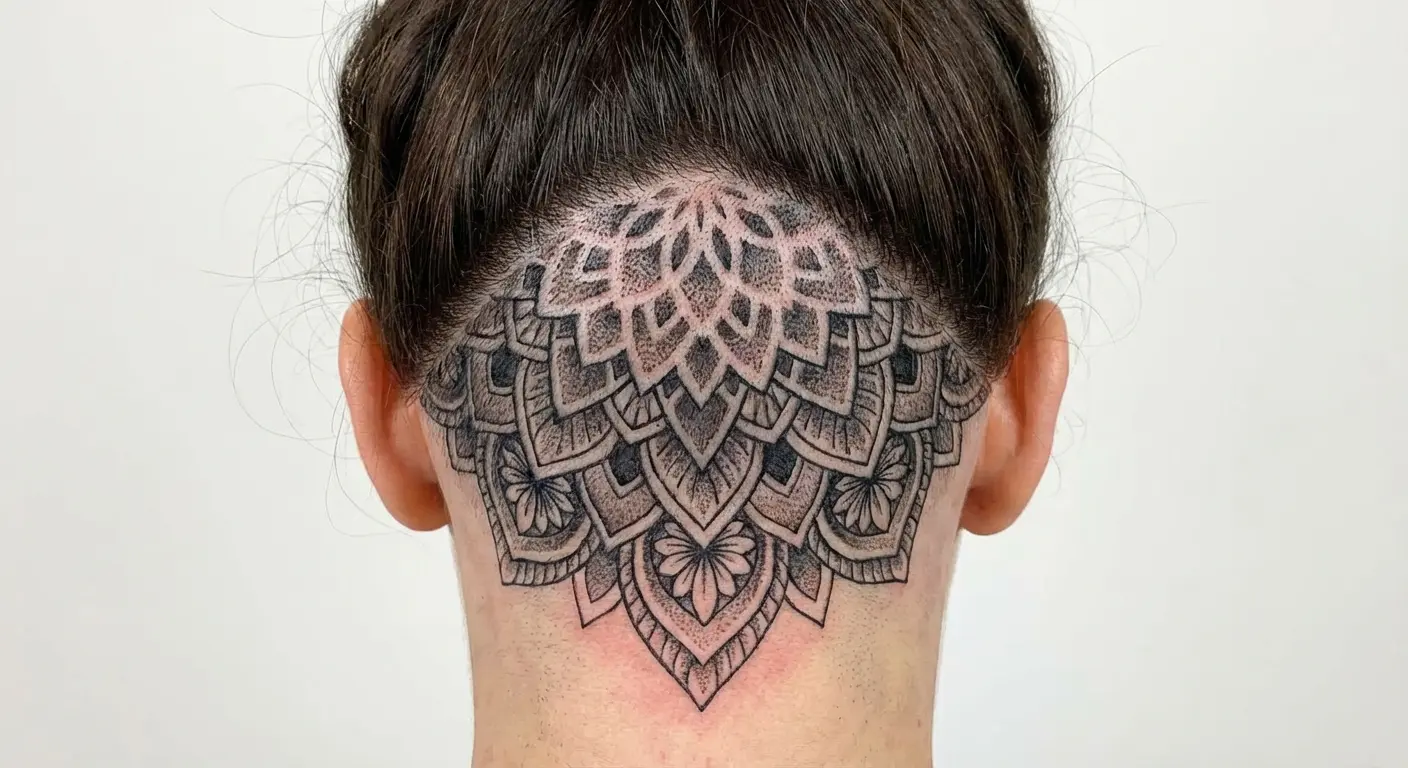
A mandala design on an undercut section creates a hidden element that reveals itself when you pull your hair up or style it away from the tattooed area. The circular symmetry of mandalas works perfectly with the round shape of your head.
Size matters a lot here. Too small and the intricate details become muddy as hair grows. Too large and the design extends beyond the undercut area into sections where you want to maintain longer hair.
Most effective mandala undercuts are 4-6 inches in diameter, centered on the side or back of the head. The design takes serious time investment, often 2-3 hours, because of the detail involved.
19. Script Fade Integration
Words or phrases integrated into your fade create a personal statement that’s visible but not overwhelming. The script needs to be simple and legible because ornate fonts become unreadable at the small sizes needed for scalp placement.
You’re usually limited to single words or very short phrases (2-3 words maximum) because longer text either becomes too small to read or takes up too much scalp real estate. Placement along the side of the head, following the natural curve from front to back, creates the most readable result.
The text will need re-inking every 2-3 weeks as hair growth obscures the letters. Font choice matters enormously because some styles hold up better than others as hair starts growing back. For script designs, exploring different cursive tattoo font options helps you identify which lettering styles remain legible at small scalp-appropriate sizes.
20. Wildlife Silhouette
Animal silhouettes on the side of your head create striking visual interest without needing color or excessive detail. You’re working with negative space and solid black shapes, which means the design needs to be instantly recognizable. Wolves, eagles, and big cats work well because their profiles are distinctive.
The silhouette needs to be sized appropriately (around 3-5 inches) to remain recognizable as hair grows. Placement on the flat surface of your head’s side creates the best canvas for these designs.
The outline needs to be crisp because any wobbliness in the line work destroys the silhouette effect. You’ll need to keep the tattooed section shaved to maintain visibility, making this a high-maintenance choice that needs weekly clipper work.
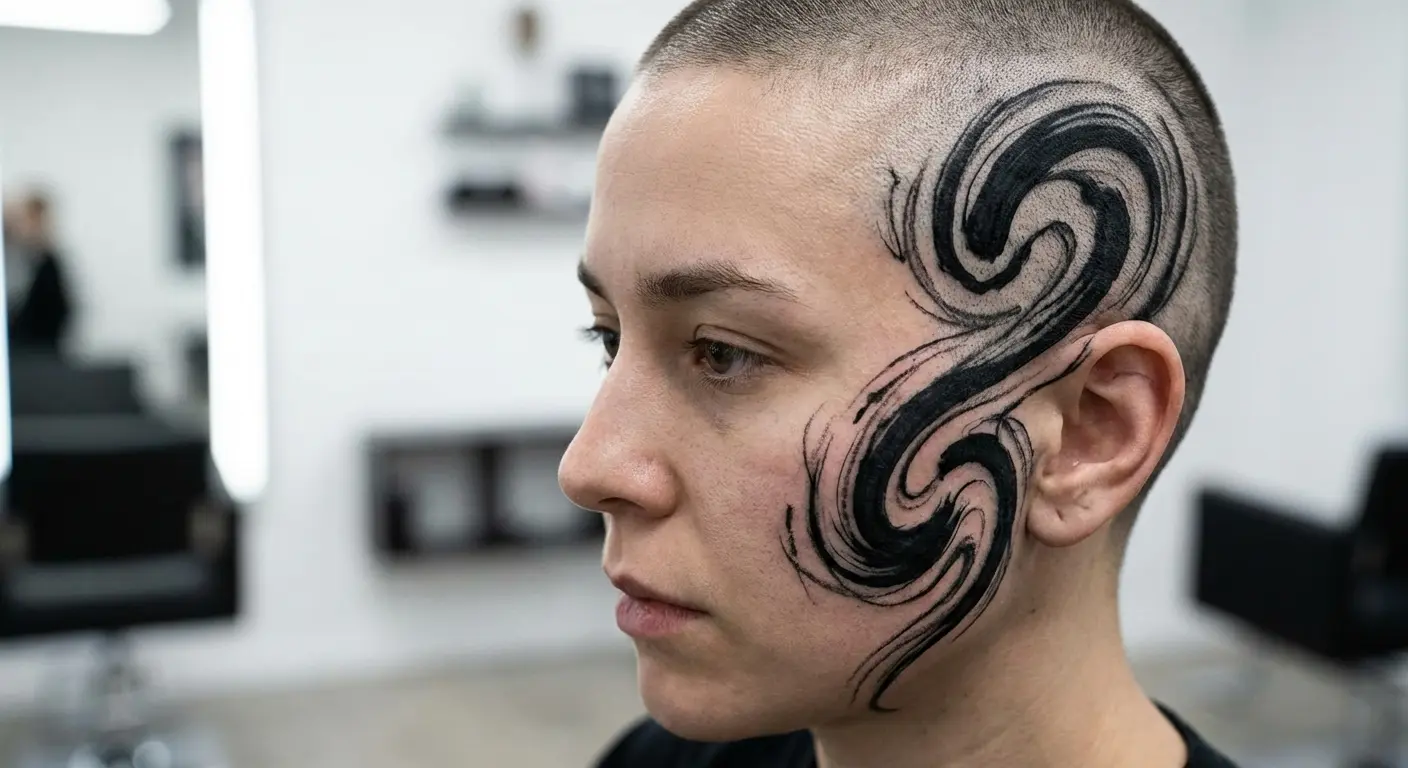
21. Abstract Brushstroke
Bold, sweeping brushstroke designs create an artistic statement that doesn’t require literal interpretation. You’re basically putting abstract art on your head, which appeals to people who appreciate contemporary aesthetics.
The brushstroke needs to be thick enough (at least 1-2cm wide) to remain visible as hair grows but not so thick that it looks like a solid block. Placement matters less with abstract designs because there’s no “right way up” or required orientation. The organic, flowing nature of brushstrokes complements the curves of your head naturally.
These designs usually last longer before needing touch-ups because small imperfections or slight blurring don’t destroy the overall effect the way they would with geometric or representational designs.
22. Negative Space Portrait
Portrait work using negative space creates a sophisticated effect where the design emerges from what’s NOT tattooed rather than what is. You’re basically shaving a portrait into your hair, with the tattoo work defining shadows and depth.
This technique demands an artist with serious portrait skills because faces are unforgiving subjects. Any proportion issues become immediately obvious. The portrait needs to be someone recognizable or personally meaningful because you’re dedicating significant scalp space to this image.
Size requirements are substantial (minimum 4-5 inches) for facial features to remain distinguishable. Maintenance is intensive because hair growth fills in the negative space within days, blurring the portrait. You’re looking at touch-ups every 3-5 days to keep the image crisp, making this one of the highest-maintenance options on this list.
Honestly, I think this one’s overrated, but people keep asking about it so here we are.
23. Cosmic Scene
Planets, stars, and cosmic elements create a scene that wraps around your head, turning your scalp into a canvas for space imagery. The design usually incorporates multiple elements (a planet, some stars, maybe a comet or asteroid) arranged to create visual flow.
Color can be incorporated here, though most people stick with black and gray to ensure longevity. The cosmic theme works well because the individual elements remain recognizable even as hair growth starts obscuring fine details.
You can place planets at different points around your head, creating a design that reveals different elements depending on viewing angle. The style appeals to people interested in astronomy, science fiction, or anyone who wants something visually complex without being too literal or representational.
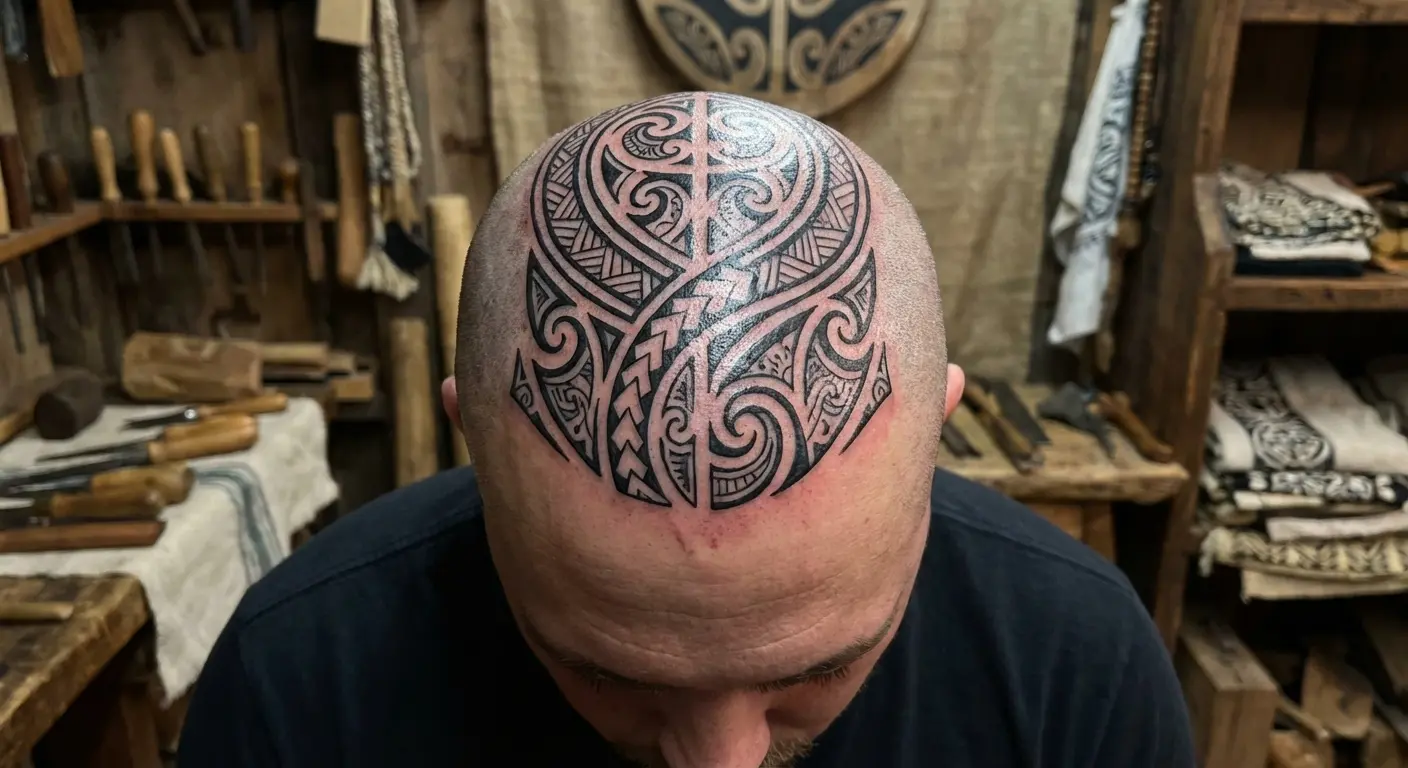
24. Cultural Symbol Showcase
Cultural symbols from your heritage create a personal connection to your roots while making a visual statement. We’re talking about Adinkra symbols, Celtic knots, Norse runes, or other culturally significant imagery that holds meaning beyond pure aesthetics.
The symbol needs to be large enough to remain recognizable (around 3-4 inches minimum) and placed where it’s visible when you want it to be. Research is essential here because appropriating symbols from cultures you’re not connected to creates problems.
The tattoo becomes a conversation starter about your background and heritage, which means you should be prepared to explain the symbol’s meaning and significance. These designs usually feature bold lines and clear shapes that hold up well as hair grows, making maintenance more manageable than intricate patterns.
Before You Commit to Scalp Art
Hair tattoos exist in a unique space where personal expression meets practical considerations. Your head shape, hair growth rate, and lifestyle all affect which designs will work for you.
Start with something smaller and less complex to understand how your scalp accepts ink and how quickly your hair grows. You’ll learn whether you’re someone who enjoys the ritual of regular maintenance or whether you need something lower-commitment.
Testing your pain tolerance matters too, because scalp tattooing feels different than body tattooing. The skull is right there, with minimal cushioning between skin and bone. Full disclosure: I tried to get one of these and chickened out. The buzzing near your skull is weird.
If you’re wondering what is scalp micropigmentation, it’s a specialized hair tattoo technique that deposits pigment about 2mm deep in the scalp to replicate the appearance of hair follicles or add density to thinning areas.
While hair tattoos continue growing in popularity as a form of self-expression, it’s worth noting that tattoos on the scalp won’t interfere with hair growth. According to Scalp Micro USA, pigment is deposited only about 2mm deep during scalp micropigmentation, which is half the depth of a hair follicle that sits around 4mm deep, meaning the microneedles don’t reach the follicle and can’t cause damage or affect growth in any way.
If you’re still in the exploration phase, trying to visualize how a specific design might look on your head, Tattoo Generator IQ lets you experiment with concepts before committing to the chair. You can generate multiple variations of hair tattoo designs, adjust elements, and see different style approaches without any permanence.
This becomes really valuable for functional designs where you’re trying to solve a specific problem like scar coverage or hairline restoration. You can show your scalp tattoo artist exactly what you’re envisioning rather than trying to describe it verbally. The tool helps bridge the gap between imagination and reality, giving you confidence in your design choice before anyone picks up a tattoo machine.
Final Thoughts
Bottom line: start small, find an artist who actually specializes in scalp work (not just someone who does regular tattoos), and be honest with yourself about maintenance. If you can’t commit to weekly touch-ups, don’t get the lightning bolt. Get something that grows out gracefully, or stick with micropigmentation that lasts years.
The designs we’ve covered range from subtle problem-solving to bold statements, but they all share one characteristic: they demand intentionality. You can’t get a hair tattoo on impulse and forget about it. The design becomes part of your grooming routine, coordinating with haircuts and regular touch-ups.
Whether you’re addressing hair loss, covering scars, or making an aesthetic statement, hair tattoos offer solutions that didn’t exist a generation ago. Hair tattoos for men have evolved from simple corrective procedures into a legitimate art form that combines technical skill with creative vision.
And for the love of god, look at their portfolio first.
