
How Much Do Tattoos Cost? The Hidden Math Behind Your Artist’s Quote (And Why Most Pricing Guides Get It Wrong)
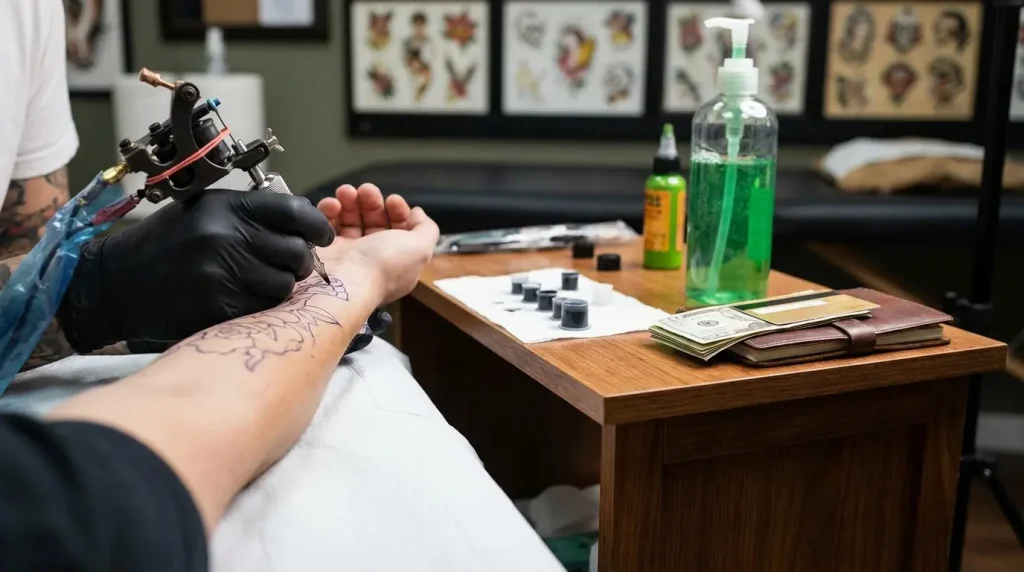
Those online pricing charts? Useless. “Small tattoo: $50-$100.” Cool. Except you walk into a shop expecting to pay $150 and walk out with a $350 quote for the same damn thing.
Here’s why those charts are bullshit.
Most small to medium tattoos generally cost between $150-$450 in the U.S. today, but that range tells you almost nothing about what you’ll actually pay. Artists don’t price tattoos the way restaurants price menu items. Every piece requires different technical approaches, time investments, and material costs that generic charts can’t capture.
Look at it like this: when you hire someone to build custom furniture, you don’t expect a fixed price list. The quote reflects the wood quality, construction complexity, time required, and the craftsperson’s expertise.
Tattoos work the same way.
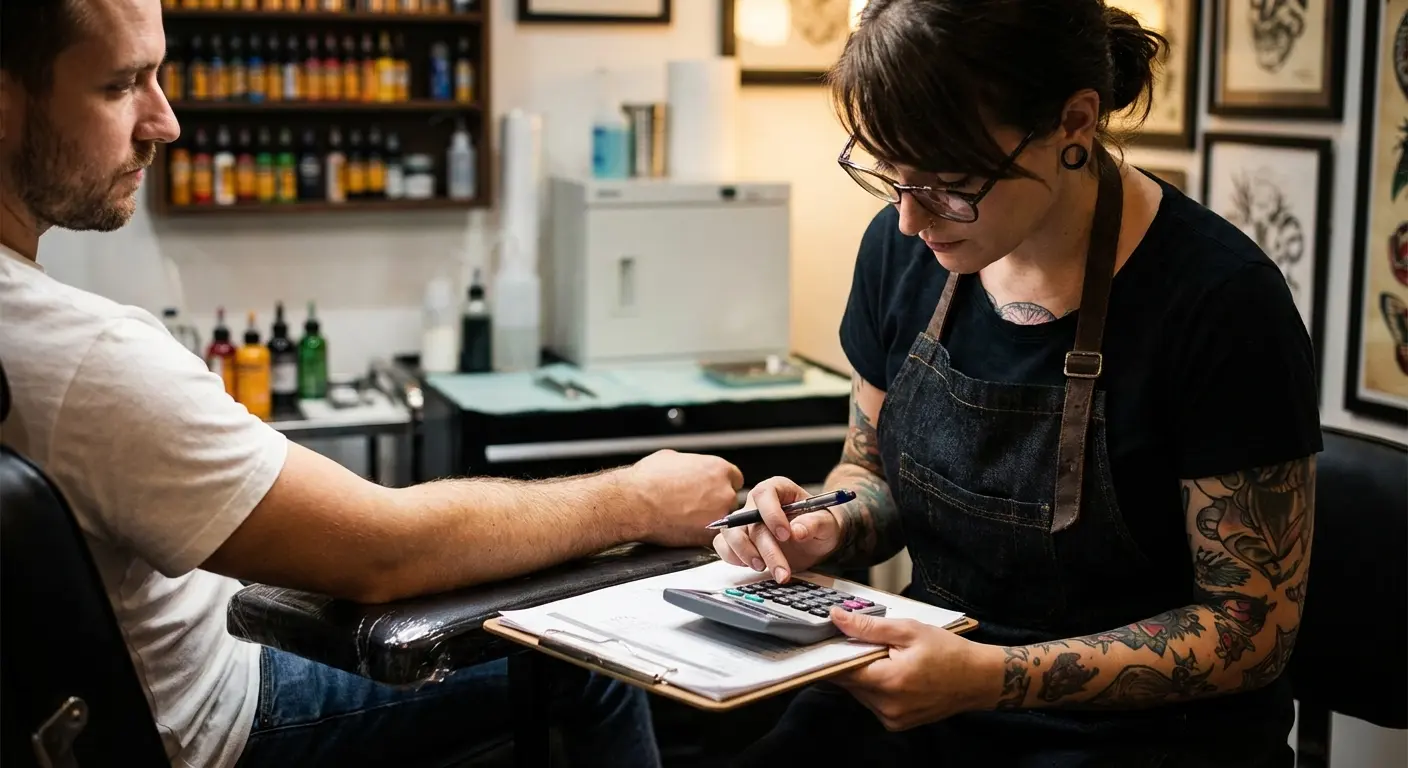
The real pricing structure operates more like hiring a specialized contractor for custom work. Multiple variables go into every quote, and those neat little charts completely ignore them. The frustration you feel searching for concrete numbers? Yeah, I get that. But those numbers alone create false expectations that leave you confused when reality doesn’t match.
You’ve been asking the wrong question. It’s not “how much do tattoos cost” but rather “what am I paying for when I get this specific tattoo from this specific artist.”
The Real Variables Artists Calculate (That No One Explains Clearly)
Your artist isn’t pulling numbers out of their ass. They’re running a calculation when they quote your piece, weighing time estimation, material costs, their hourly rate floor, and design difficulty. The weight of each factor shifts depending on what you’re asking for.
Time estimation includes more than needle-to-skin contact. There’s stencil application, workspace setup, breakdown after your session, and the buffer time needed between clients for proper sterilization. That “two-hour tattoo” might require three hours of their day.
Material costs add up faster than you’d think.
Every needle gets tossed after one use. No exceptions. Then there’s ink, gloves, barriers, cleaning solutions, transfer paper. None of this is cheap, and it all goes into your quote.
The hourly rate floor varies by artist and reflects their baseline business needs. We’ll dig into overhead costs shortly, but understand that your artist has calculated the minimum they need to charge per hour to keep their business viable. According to industry data, professional tattoo artists charge anywhere between $50-$400 per hour, with most somewhere between $100-250 per hour. That wide variance reflects experience levels, geographic markets, and specialization.
Design difficulty factors in technical elements that most clients never consider. Line weight consistency requirements, shading gradients, color blending complexity, whether the design requires custom drawing versus working from reference images. All of this affects your final price.

Two people came in last month wanting 4-inch forearm pieces. First guy wanted a simple mountain outline with minimal detail, solid black lines, no shading, straightforward geometric shapes. Took 90 minutes and cost $200.
The second client wanted a realistic portrait of her grandmother’s face at the same 4-inch size. This required multiple consultations to perfect the likeness, custom drawing time, intricate shading to capture facial features, and 4-5 hours of meticulous work. Final cost hit $1,100 for the identical physical size, but vastly different technical demands.
Why Minimum Charges Exist (And What They Cover)
Shop minimums piss people off. “Wait, $150 for a tiny finger heart that took you 20 minutes?”
Yeah. And here’s why that’s not the rip-off you think it is.
Every client requires a fresh sterilization cycle. New needle setup. Workspace preparation. Your artist’s focused attention during their scheduled block. These fixed costs exist whether your artist works for 15 minutes or 5 hours.
Most tattoo shops have a minimum charge ranging from $50 to $100, regardless of the size or complexity of the design. This covers the cost of time, materials, and equipment for even the briefest sessions.
The minimum also accounts for opportunity cost. Your artist can’t book another client during that time slot even if your tattoo takes 20 minutes. They’ve blocked that time for you, which means they’ve turned away other potential income.
Minimums vary by shop prestige and location. High-demand artists in major cities command higher minimums because their booking calendars stay full regardless. Portland shops are all over the place. According to Travel Portland’s 2024 guide to tattoo shops, Ever True Tattoo maintains a $60 minimum to encourage walk-in spontaneity, while Atlas Tattoo sets their minimum at $100 with hourly rates of $200, and Icon Tattoo Studio requires a $150 minimum reflecting their two-decade reputation in the North Portland scene.
You’re not being overcharged for small work. You’re paying for professional standards and the artist’s time block.
Shop Overhead: The Invisible Cost You’re Actually Paying For
When you pay $200 per hour, your artist isn’t pocketing $200. We need to talk about the business expenses built into every quote that you never see.
Commercial rent in urban areas can exceed $5,000 monthly for a small studio. Liability insurance is required and expensive given the bodily injury risks inherent in the work. Health department licensing and inspection fees vary by location but add up quickly.
Sterilization equipment maintenance represents a significant ongoing cost. Autoclaves cost thousands of dollars and require regular certification to ensure they’re functioning properly. Hazardous waste disposal services handle used needles and contaminated materials through specialized processes that aren’t cheap.
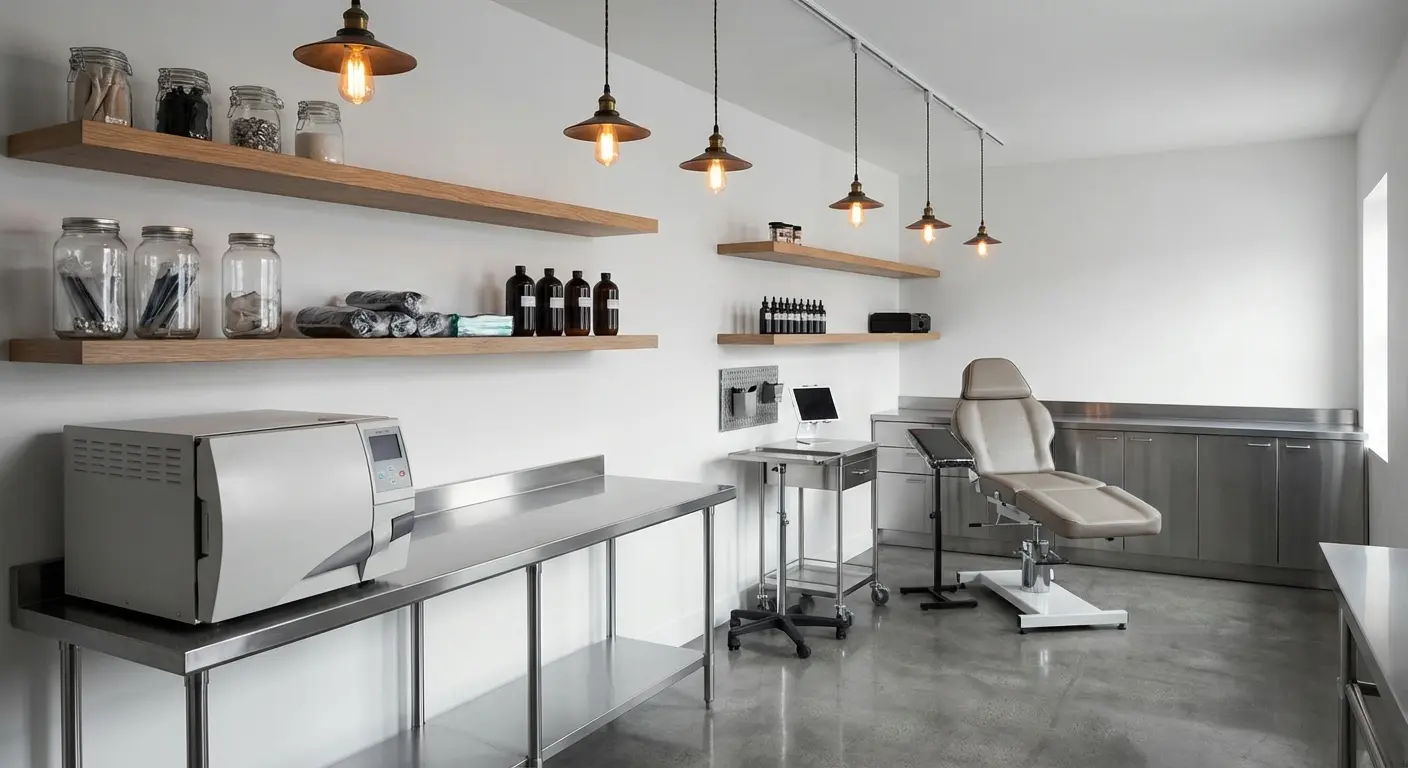
Utility costs run higher than typical retail because of extended operating hours and equipment power draw. Some states require continuing education for tattoo artists. Professional association memberships provide resources and advocacy. Accounting services maintain proper business records and handle tax compliance.
Here’s what this looks like in actual numbers:
|
Overhead Category |
Monthly Cost Range |
Annual Impact |
|---|---|---|
|
Commercial Rent (Urban) |
$3,000 – $8,000 |
$36,000 – $96,000 |
|
Liability Insurance |
$200 – $600 |
$2,400 – $7,200 |
|
Health Dept. Licensing/Inspections |
$100 – $500 |
$1,200 – $6,000 |
|
Autoclave Maintenance & Certification |
$150 – $400 |
$1,800 – $4,800 |
|
Hazardous Waste Disposal |
$100 – $300 |
$1,200 – $3,600 |
|
Utilities (Extended Hours) |
$400 – $800 |
$4,800 – $9,600 |
|
Continuing Education |
$50 – $200 |
$600 – $2,400 |
|
Professional Association Memberships |
$30 – $100 |
$360 – $1,200 |
|
Accounting Services |
$150 – $400 |
$1,800 – $4,800 |
|
Total Annual Overhead |
$50,160 – $135,600 |
And that’s just to keep the lights on. Your artist hasn’t made a dollar yet.
After overhead, supplies, and taxes, your artist’s take-home is way less than their hourly rate. This context helps justify pricing that might initially seem high and explains why bargain-hunting for tattoos often means the artist is cutting corners somewhere in this chain, usually in ways that compromise safety or quality.
Geography’s Surprising Impact on Your Final Bill
Location affects tattoo pricing more dramatically than most people realize. This goes beyond big city versus small town economics.
Local regulations create cost differences that directly impact your quote. Some cities require individual artist licensing with annual fees and mandatory health inspections. Certain states mandate specific sterilization protocols or workspace requirements that increase operational costs. These regulatory burdens get passed to clients through higher rates.
Beyond regulations, local economic conditions influence pricing substantially. A highly skilled artist in rural Montana might charge $120 per hour while an equally skilled artist in Los Angeles charges $250. The skill difference? Nonexistent. The cost of living and business expenses? Drastically different.
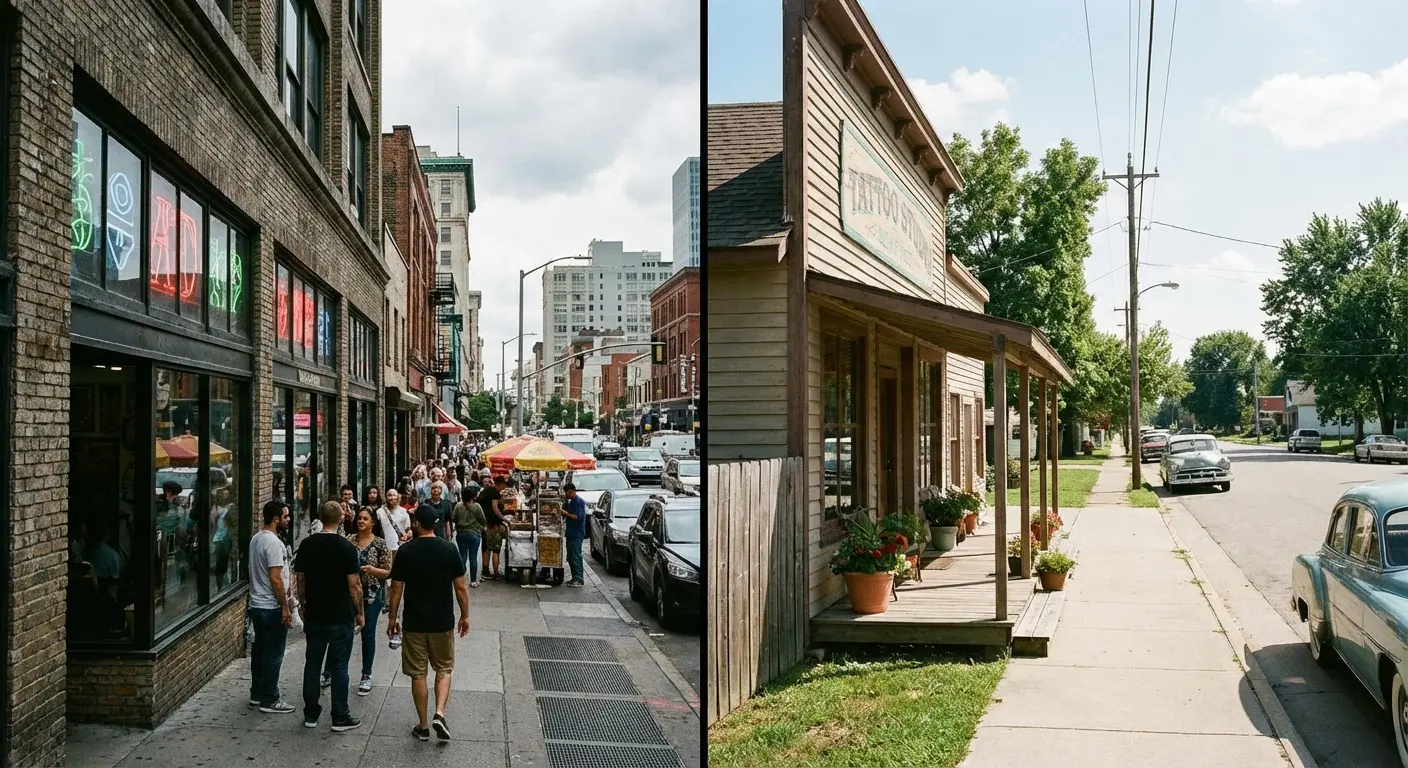
Local market saturation affects prices too. Areas with many tattoo shops create competitive pricing pressure. Areas with few options allow artists to charge premium rates because clients have limited alternatives.
Should you travel to a cheaper location to save money?
Usually not once you factor in the full picture.
A client in New York City receives a quote for a medium-sized shoulder piece: $300 per hour with a 4-hour estimate, totaling $1,200. Frustrated by the price, they find an artist in a neighboring state charging $150 per hour for similar work. The savings seem substantial, $600 less.
However, once they factor in two round-trip drives (one for consultation, one for the session) at $80 in gas and tolls each trip, plus eight hours of travel time, and the impossibility of returning for a touch-up without another expensive trip, the “savings” evaporate. Worse, if healing issues arise and they need the artist’s assessment, they’re stuck managing it remotely or paying for yet another trip.
Understanding your local market context matters more than comparing your quotes to national averages that don’t reflect your reality.
Artist Experience Isn’t Just About Skill Level
Artist pricing reflects their booking demand more than their years in the industry. This distinction matters when you’re evaluating quotes.
An artist who books out six months in advance can raise rates because their time has become scarce, regardless of whether they’ve been tattooing for 5 years or 15. Conversely, a technically skilled artist who’s new to an area might charge less initially to build their local client base.
The career progression usually looks something like this: apprentices and new artists ($80-$120/hour), established artists with consistent bookings ($150-$200/hour), in-demand artists with months-long waitlists ($200-$300/hour), and celebrity artists or specialists ($300-$500+/hour).
Higher rates don’t always guarantee better results for your specific needs. An in-demand artist who specializes in Japanese traditional work might not be the best choice for a delicate fine-line piece, regardless of their rates. Match artist specialty with your design goals rather than assuming price equals quality across all styles.
The relationship between fame and pricing has reached new extremes in the high-end tattoo market. Marketplace reported in December 2024 that Sedation Ink, a Miami-based service offering tattoos under general anesthesia, charges between $30,000 and $100,000 for single-day procedures that include multiple artists, an anesthesiologist, registered nurses, hotel stays, and transportation. The 32% of American adults who now have tattoos, according to Pew Research Center data cited in the report, represents a market expected to reach $1.25 billion by 2032, driving premium services that prioritize convenience and pain elimination over traditional tattoo culture.
Before booking based on hourly rate alone, verify a few things. Does their portfolio show consistent quality across multiple pieces? Do they specialize in the style you want, or work across many styles? How far out is their booking calendar? (This indicates demand.) What percentage of their portfolio represents recent work versus older pieces?
Do client reviews mention reliability, communication, and professionalism? Are their rates comparable to other artists with similar booking demand in your area? Do they offer consultations to discuss your specific project before committing?
Portfolio Consistency as a Pricing Indicator
Here’s what I actually look for in an artist’s portfolio: Can this person do the same quality work on a Tuesday morning as they can on a Saturday afternoon? Because if their portfolio is half amazing and half mediocre, you’re gambling on which version shows up for your appointment.
Portfolio specialization affects value too. Artists who focus on specific styles like realism, geometric, traditional charge more within their specialty because they’ve refined those techniques extensively. You’re paying for their specialized expertise, not just their time.
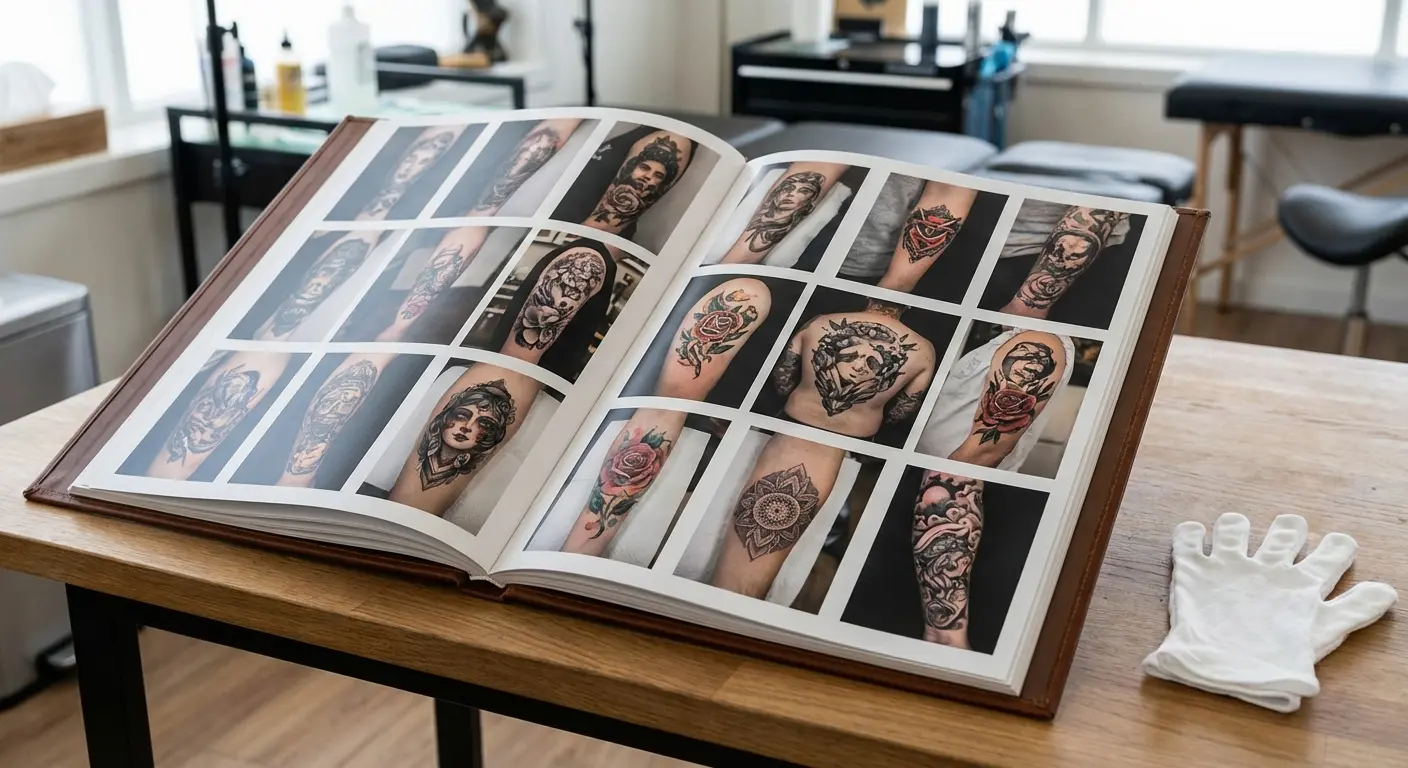
Artists who work across many styles might offer better value for straightforward designs but less mastery of complex techniques. This doesn’t make them inferior, just different. Your needs should dictate which type of artist you choose.
Assess whether an artist’s rates align with what their portfolio demonstrates. If they’re charging premium rates but their portfolio shows inconsistent quality or limited work in your desired style, that’s a red flag worth investigating.
Time Estimates vs. Reality: Why Your Quote Changed
Initial time estimates frequently prove inaccurate. Understanding the legitimate reasons why helps manage expectations and frustration.
Skin type affects how easily it accepts ink. Some people require multiple passes for proper saturation while others hold ink on the first pass. Your artist can’t know which category you fall into until they start working.
Your pain tolerance and ability to sit still impacts session length.
Artists work slower when clients are moving or need frequent breaks. This isn’t a criticism, everyone has different pain thresholds. But it does affect how long your session takes.
Body placement difficulty extends time too. Areas with thin skin or lots of nerve endings require gentler, slower work to avoid trauma and ensure proper healing.
Being quoted for a 3-hour session that becomes 5 hours and costs more accordingly feels frustrating. I get it. But even experienced artists can’t perfectly predict these variables until they start working.
Design modifications during the session extend time and cost as well. Deciding you want more detail, adjusting placement, changing colors, all of this adds to your session length.
Time-based pricing remains the fairest method despite its unpredictability. Flat-rate pricing would force artists to either rush work or pad quotes excessively to cover worst-case scenarios. Neither option serves you well.
During consultations, ask specific questions to get more accurate projections. “Based on my skin tone and the placement I’ve chosen, do you anticipate any factors that might extend the estimated time?” This opens a conversation about variables specific to your situation.
“What’s your policy if the session runs longer than estimated, do we continue or schedule another appointment?” Understanding this upfront prevents awkward conversations when you’re already in the chair.
“Have you done similar pieces on similar skin types? How long did those take?” This gives you data points beyond generic estimates.
“What should I do to prepare that might help the session go more smoothly and stay on schedule?” Your artist might recommend eating well, staying hydrated, or avoiding alcohol beforehand, all factors that affect how your body handles the process.
“If I need breaks, how does that affect your time estimate and pricing?” Some artists build break time into their estimates, others don’t.
“At what point during the session will you reassess the time estimate if things are going slower than expected?” This ensures you won’t be blindsided by cost changes.
Design Complexity: Beyond “Simple” and “Detailed”
Specific technical elements increase design difficulty and therefore cost in ways most clients don’t recognize.
Line weight consistency requires intense focus and steady hand control. Fine-line work shows any wobble prominently, making it more demanding than bold traditional lines. Your artist needs to maintain perfect pressure and speed throughout the entire piece.
Symmetry demands precise measurement and execution. Symmetrical designs take more time than asymmetrical ones because both sides need to mirror each other perfectly. One side slightly off throws the entire piece out of balance.
Negative space management, the uninked areas that create contrast, requires careful planning and execution. Your artist needs to visualize the finished piece and work around what they’re not inking, which is harder than it sounds.
Geometric precision needs perfect angles and spacing. This often requires multiple stencil applications to get placement exactly right. A mandala that’s slightly off-center or has uneven spacing between elements looks wrong in ways that bother you every time you see it.
Certain design elements create technical challenges that justify higher pricing. Faces and portraits require advanced shading skills and proper proportion work. Getting a likeness right demands expertise that goes beyond basic tattooing ability.
Lettering needs perfect spacing and baseline alignment. Letters that drift upward or downward, inconsistent spacing between words, or wobbly baselines ruin otherwise good tattoos. Your artist needs to account for body curvature while maintaining visual straightness.
Mandala patterns demand mathematical precision. Each repeated element needs to match the others exactly, which requires careful planning and meticulous execution.
Evaluate your design ideas through the lens of technical difficulty rather than just visual complexity. That “simple” geometric design might cost more than a larger but technically easier piece because of the precision required.
Reference Quality and Custom Drawing Time
The reference images you bring affect both cost and outcome in significant ways.
High-quality references with clear details allow artists to work more efficiently and accurately. They can see what you want and translate it to skin without guessing. Vague references or “I want something like this but different” requests require custom drawing time.
Many artists charge for custom drawing separately or build it into the quote. Custom work adds $50-$200 to the overall cost depending on complexity, but it ensures you get exactly what you want rather than a close approximation.
Working from a clear reference still requires adaptation to fit your body and preferences. Your artist needs to adjust proportions, modify elements that won’t work at your chosen size, and make sure the design flows with your body’s contours.
Creating a custom design from scratch involves way more work. Your artist needs to interpret your verbal description, sketch multiple concepts, refine based on your feedback, and finalize a design that works technically as a tattoo.
Clients increasingly bring AI-generated designs, which presents its own challenges. Some elements that look great digitally don’t work well as tattoos due to size constraints, aging considerations, or technical limitations. Your artist needs to modify these designs to make them tattooable, which takes time and expertise.
Be prepared to have informed conversations about reference materials during consultations. The clearer your vision and the better your references, the more efficiently your artist can work.
Color Work’s True Price Tag
Color tattoos cost more than black and gray work for specific reasons beyond just ink costs.
Building up color saturation takes time. Artists must go over areas multiple times to achieve vibrant results. You can’t just apply color once and expect it to look bold and saturated, the process requires layering.
Different colors have different saturation properties. Yellows and whites require more passes than darker colors. Your artist might go over yellow areas 3-4 times while only needing 1-2 passes for deep blues or blacks.
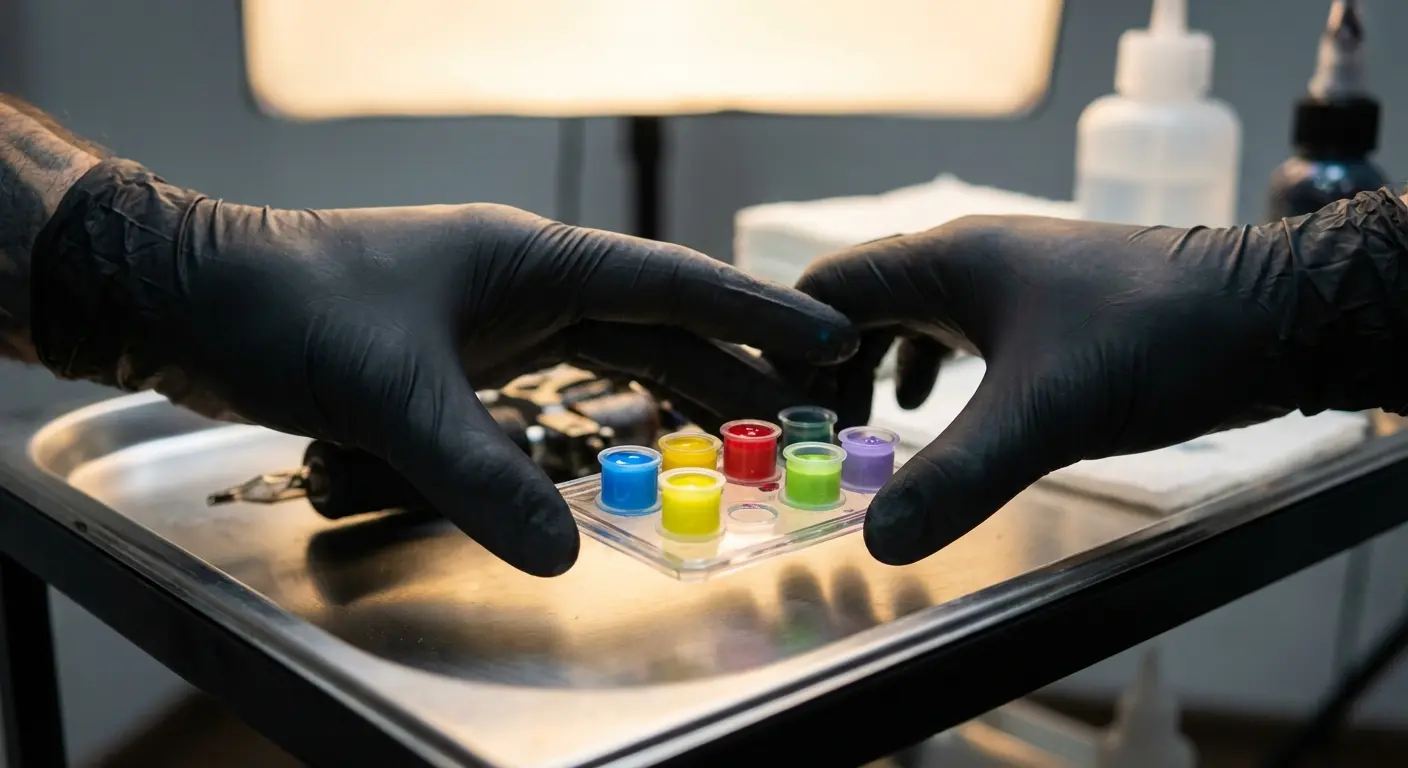
Color selection and blending demand artistic skill beyond technical execution. Your artist must consider how colors will interact on your specific skin tone. Some colors show beautifully on light skin but barely appear on dark skin, requiring adjusted approaches and sometimes different pricing based on the extra work needed.
Skin tone dramatically affects color appearance. What looks vibrant in your artist’s portfolio might look completely different on your skin. Good artists account for this during consultations and adjust their color choices accordingly.
Color aging and touch-up considerations represent long-term costs. Colors fade faster than black ink, meaning color tattoos require more maintenance over time. Some artists include one touch-up session in their initial price, while others charge separately for future color refreshing.
A client wants a vibrant sunset scene on their outer thigh, oranges, pinks, purples, and yellows blending into each other. The artist quotes 6 hours at $180/hour ($1,080 total) versus 4 hours for the same design in black and gray at the same rate ($720).
The difference isn’t just two extra hours. The artist must mix custom color blends, apply multiple passes to build saturation (especially for the yellows, which require 3-4 passes), carefully blend transitions between colors to avoid muddiness, and account for how the colors will heal and settle on the client’s medium skin tone.
Five years later, the color piece needs a 2-hour touch-up session ($360) to refresh faded areas, while the black and gray version still looks sharp. The true lifetime cost difference becomes $1,440 versus $720, double the investment for color.
Body Placement Affects More Than Pain Levels
Certain body placements cost more because they’re physically harder for the artist to work on, not just more painful for you.
Ribs require working at awkward angles and compensating for the surface moving with your breathing. Your artist needs to time their work between breaths and maintain steady hand control despite the challenging position.
Hands and feet have curved, uneven surfaces with lots of tendons and bones close to the surface. Maintaining consistent pressure and line quality on these areas demands extra focus and skill.
Areas with loose skin, inner arms, stomach, require the artist to stretch the skin taut while working. Larger pieces often need an assistant for this, adding to the cost.
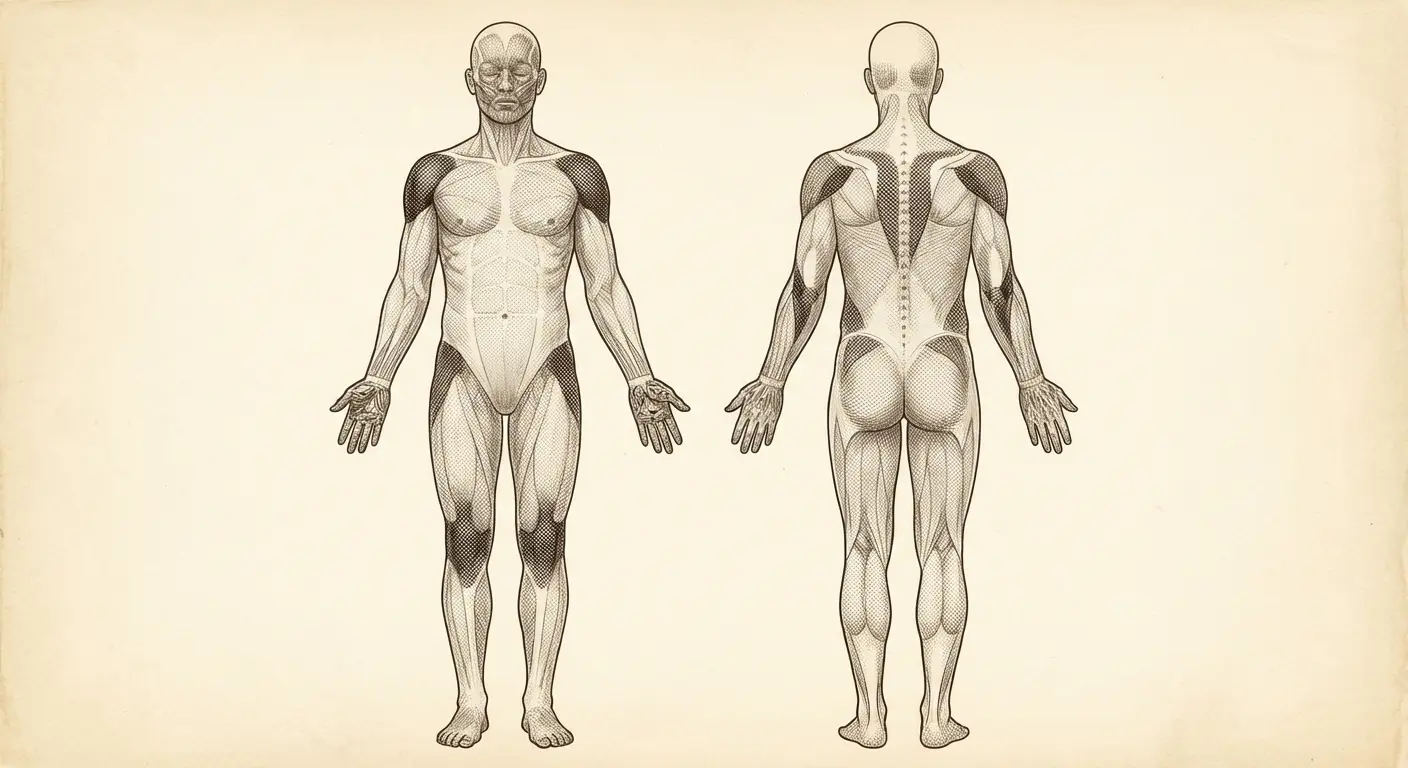
These physical challenges slow down the work and increase fatigue for the artist, justifying higher rates for difficult placements. Some placements require special positioning or equipment. Back pieces might need a specialized chair or table setup. Intimate areas require additional time for proper draping and positioning to maintain both your comfort and the artist’s ability to work effectively.
Placement affects your quote even when the design size stays the same. A 5-inch design on your forearm might cost $400, while the same design on your ribs costs $550 because of the added difficulty.
Visibility and Detail Retention by Area
Artists sometimes adjust pricing based on how well different body areas hold detail over time.
Hands and feet experience more friction and sun exposure, causing faster fading. These areas require simpler designs that age better, or clients need to accept that touch-ups will be necessary sooner.
Fingers have limited space and skin that doesn’t hold fine details well. Artists might charge more for the extra care needed or recommend design modifications that work better long-term.
Areas that stretch significantly, stomachs, areas prone to weight fluctuation, need designs that account for potential distortion. Your artist should consider these factors when quoting and might recommend design adjustments that affect the final price.
Responsible artists have frank conversations about longevity expectations. Some charge more for placements they know will require touch-ups sooner because they’re building in the expectation of future work. Others keep pricing consistent but make sure you understand what you’re getting into.
Discuss placement implications during consultations and factor long-term maintenance into your budget planning. That hand tattoo might seem like a great idea, but if it needs touch-ups every two years, the lifetime cost adds up significantly.
Size Measurements That Actually Matter
Tattoo size gets measured differently than most people expect. Understanding this prevents quote confusion.
Artists quote based on the design’s dimensions, height and width, rather than total coverage area. A 5-inch tattoo means 5 inches at its longest point, but the actual coverage might be much less if the design is narrow or has negative space.
A 5-inch solid circle covers much more skin than a 5-inch delicate vine with lots of space between elements. The pricing should reflect that difference, though both technically measure 5 inches.
Body curvature affects size calculations too. A design that measures 6 inches on paper might need to be adjusted to 7 or 8 inches to look proportional on a curved surface like a shoulder or calf. Your artist accounts for this when creating the stencil.
Discuss size in terms of visual impact and coverage rather than just measurements. Ask your artist to show size examples on the actual body area during consultations. This prevents the common disappointment of a design looking smaller than expected and the associated cost implications of sizing up.
Bringing a ruler to your consultation helps. Have your artist mark the approximate size on your skin so you can see exactly what you’re getting. Photos can be deceiving, what looks substantial in a picture might look tiny on your body.
The Consultation Fee Conversation
Many artists now charge consultation fees, usually $50-$150. Understanding what you’re paying for helps you decide when it’s worth it.
Consultation fees cover the artist’s time to discuss your ideas, create custom sketches, and provide professional input on design feasibility. This represents real work that deserves compensation, especially when many consultations don’t convert to bookings.
Some artists apply this fee toward your final tattoo cost if you book with them. Others keep it separate regardless. Clarify this policy upfront to avoid surprises.
Consultation fees make sense for large custom pieces requiring significant design work. If you’re asking an artist to create multiple custom sketches and spend an hour or more discussing your vision, paying for that time is reasonable.
They also make sense when you’re consulting with multiple artists to find the right fit. You’re essentially shopping for the best match, which means some artists will invest time without getting your business. Consultation fees compensate them for that risk.
Working with in-demand artists whose time is particularly valuable often involves consultation fees. These artists could fill their calendars without consultations, so they charge to make sure serious clients only.
Free consultations usually mean a brief conversation about your ideas and a rough quote, not custom drawing or detailed design work. Set appropriate expectations based on whether you’re paying for the consultation.
Consultation fees aren’t money grabs. They’re a way for artists to value their creative and planning time appropriately in an industry where that work often goes uncompensated.
Touch-Ups and Long-Term Investment Thinking
Touch-up policies are all over the map. Some artists give you one free fix-up in the first year. Others charge full price the second you walk back in. This matters more than you think.
New tattoos might need touch-ups if areas didn’t hold ink properly during healing. This happens sometimes through no fault of yours or the artist’s, skin just doesn’t cooperate occasionally. Good artists address these issues, but their policies on covering the cost vary.
Older tattoos need touch-ups as ink naturally fades over time. Most tattoos need their first refresh around 5-10 years. Color work often needs attention sooner at 3-5 years. High-friction areas like hands might need work within 1-2 years.
Reframe tattoo costs as an investment rather than a one-time purchase. When comparing two artists, one charging $200/hour with free touch-ups included versus another at $150/hour who charges $100 per touch-up session, run the long-term math.
If you need a touch-up at year five, the first artist’s total cost is $800 (assuming a 4-hour piece). The second artist’s total becomes $700 (4 hours at $150 plus a $100 touch-up). The difference narrows significantly, and if you need multiple touch-ups, the first option might be cheaper overall.
Ask about touch-up policies during initial consultations. Factor these costs into your decision-making process. The cheapest upfront option isn’t always the best value long-term.
How to Budget Without Compromising Quality
Specific price ranges based on actual market data help you budget realistically and answer the question of how much do tattoos cost for various sizes.
Small tattoos (2-4 inches) run $100-$400 depending on detail level and color. Medium pieces (4-6 inches) generally cost $250-$800. Large tattoos (6-10 inches) range from $500-$2,000.
Full sleeves start around $2,000 and can exceed $5,000 for intricate custom work. Back pieces run $3,000-$10,000+ depending on coverage and detail.
According to 2025 industry averages, here’s what clients can expect: tiny tattoos (around 2×2″) cost $100-$200, small tattoos (up to 4×4″) run $150-$250, medium-sized tattoos range $250-$500, half-sleeves cost $800-$2,500, full sleeve tattoos run $2,000-$5,000+, full back or chest pieces range $2,000-$5,000+, and complete bodysuits can reach tens of thousands of dollars, sometimes exceeding $50,000 after hundreds of hours of work.
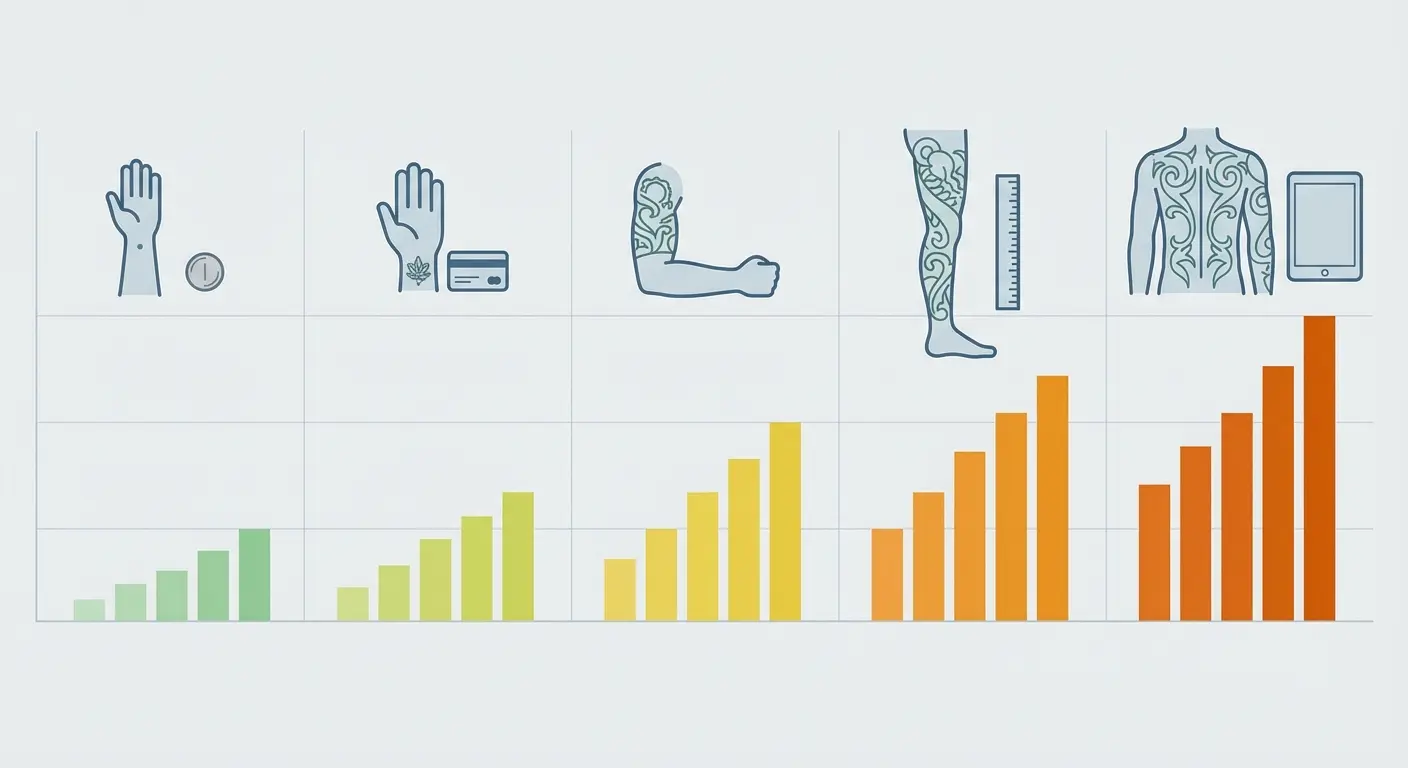
These numbers serve as rough guidelines only. Expect variation based on all the factors we’ve discussed throughout this piece.
Many shops now offer payment plans for larger pieces. Arrangements usually involve a deposit (typically $100-$500) to book your appointment, with the remainder due at session completion. For multi-session pieces, you pay per session rather than upfront for the entire project.
Payment plans help make larger pieces more accessible, but understand the terms. What happens if you need to cancel? Is your deposit refundable? What’s the cancellation policy for scheduled sessions?
Saving Strategies That Don’t Sacrifice Safety
Legitimate ways to reduce costs exist without compromising quality or safety.
Booking with newer artists who are still building their portfolios can save 30-50% while still getting work from trained professionals. Avoid apprentices still learning, but newly licensed artists often deliver excellent work at lower rates. They’re building their reputation and client base, which works in your favor.
Choosing less complex designs or smaller sizes obviously reduces costs while still giving you meaningful ink. Starting with a smaller version of your dream piece and adding to it later spreads the cost over time.
Opting for black and gray instead of color cuts both initial costs and long-term maintenance expenses. Black and gray work ages better and requires fewer touch-ups, saving money over the tattoo’s lifetime.
Being flexible with scheduling can sometimes get you discounts. Artists might offer reduced rates to fill last-minute cancellations or slower weekday slots. If your schedule allows flexibility, ask whether this option exists.
What NOT to do when trying to save money: Don’t negotiate rates down aggressively. Artists who agree to significant discounts are either desperate for work or planning to rush your piece. Neither scenario benefits you.
Avoid “deals” that seem too good to be true. They always are. Don’t choose artists based solely on price without vetting their portfolio and shop conditions.
Planning for the Full Financial Picture
The tattoo cost itself isn’t your only expense. Understanding the complete budget prevents surprises.
Tipping adds 15-20% to your final bill. While not mandatory, it’s standard practice for good service. Budget for this upfront rather than scrambling at payment time.
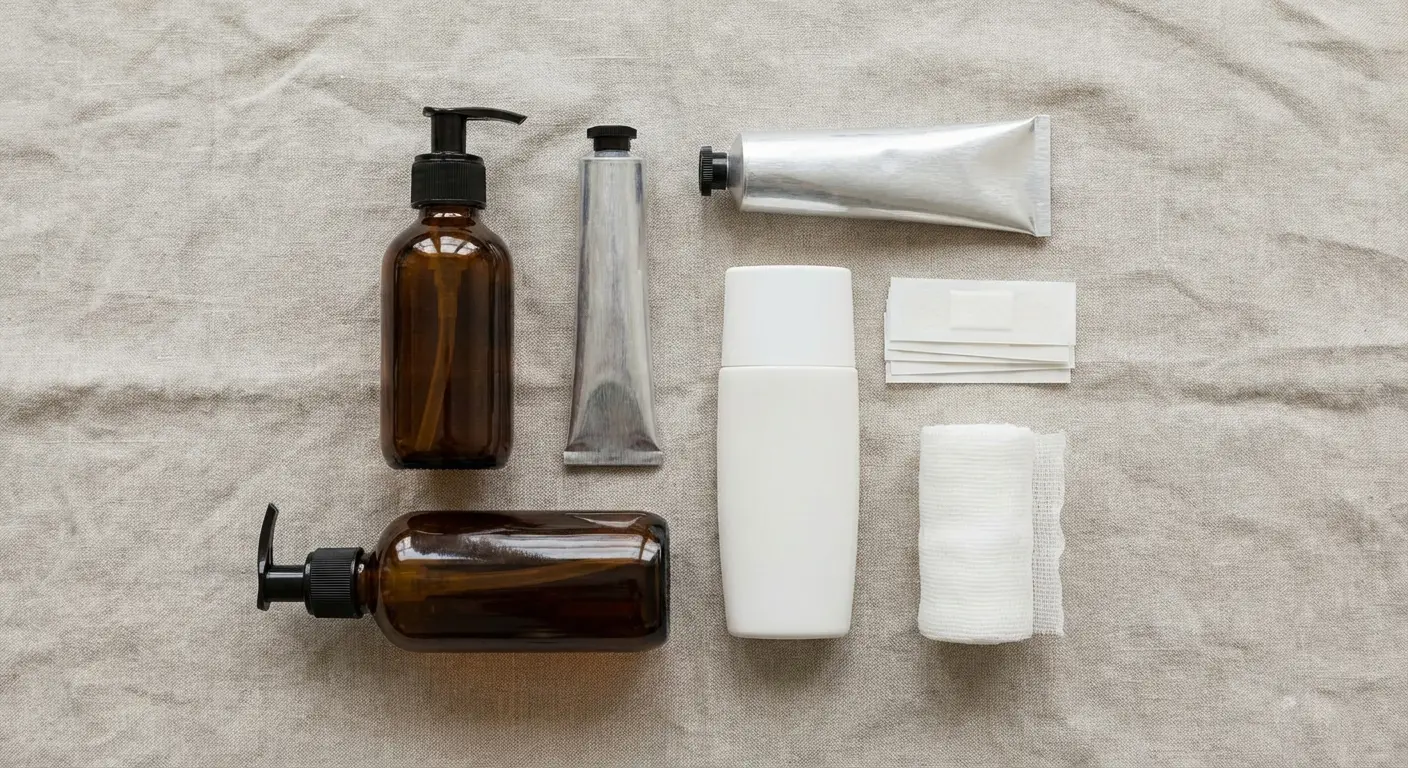
Aftercare products cost $20-$40. You’ll need specialized soap, unscented lotion, and sunscreen. Some shops include these in your price, others don’t. Ask beforehand.
Multiple sessions mean multiple trips. Factor in travel costs and time off work if your artist isn’t local. These expenses add up quickly for large projects.
Some people need numbing cream for painful areas, adding another $20-$50. Touch-ups down the line represent future costs to budget for now.
Consider the opportunity cost of your time, particularly for large pieces requiring multiple long sessions. Taking time off work or rearranging your schedule has value that should factor into your decision.
Save beyond your estimated cost to cover overruns. Don’t book a tattoo if it means straining your finances, you’ll resent the piece. Consider starting smaller if a dream piece exceeds your current budget rather than going cheap on a large tattoo you’ll regret.
When Cheaper Actually Costs You More
Cheap tattoos often become expensive mistakes that cost far more to fix than they would have cost to do right initially.
Blown-out lines, ink spreading under the skin creating blurry edges, require laser removal or cover-ups costing hundreds to thousands. Improper depth causing premature fading needs complete rework. Poor design execution that looks nothing like the reference requires expensive cover-up work. Scarring from heavy-handed technique may be permanent.
I’ve seen people cry in consultations when they realize what it’ll cost to fix an $80 disaster. That shit stays with you.
Cover-ups cost more than original tattoos because they require more ink, more time, and significant artistic skill to incorporate the existing work. Your artist needs to design around what’s already there, which limits creative options and increases difficulty.
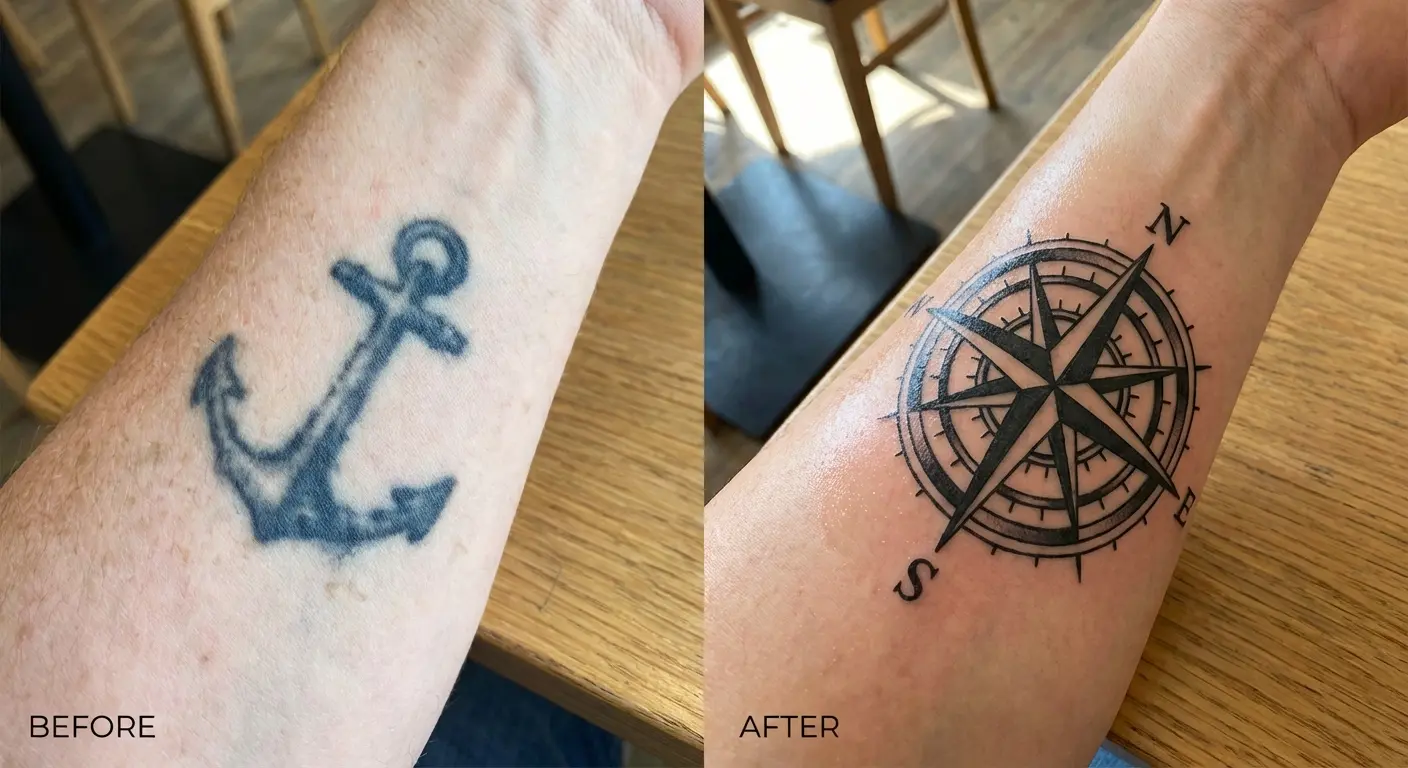
Laser removal runs $200-$500 per session with most tattoos requiring 5-10 sessions. You could spend $1,000-$5,000 removing a $50 tattoo before even getting the piece you wanted.
Run the math: a quality tattoo from a reputable artist might cost $800. A cheap version costs $200 but then requires $2,000 in removal and $1,000 for the proper redo, totaling $3,200. The “savings” cost you four times more in the end.
Tattoo pricing exists for legitimate reasons. Trying to circumvent it usually backfires expensively.
Health Risks That Come With Cut-Rate Prices
Artists charging suspiciously low rates are cutting costs somewhere. Often, it’s in areas that affect your health.
Reused needles or equipment, yes, this still happens in unlicensed operations, expose you to bloodborne pathogens including hepatitis and HIV. Improper sterilization protocols can cause serious infections. Low-quality ink might contain toxic substances or cause allergic reactions. Unsanitary work environments introduce bacteria into open wounds.
The medical costs of treating tattoo-related infections or complications far exceed any savings from cheap work. A serious infection might require emergency care, antibiotics, and follow-up treatments costing thousands of dollars. Permanent scarring or health complications represent risks no amount of savings justifies.
Licensed shops charging professional rates are investing in safety protocols, quality materials, and proper training. You’re not just paying for the artwork but for the assurance that the process won’t harm you.
Your health isn’t negotiable. Cheap tattoos that compromise safety aren’t bargains, they’re gambles with your wellbeing.
Testing Your Design Before You Commit
One of the biggest cost risks is discovering mid-session (or after) that you don’t like how your idea looks when executed.
You might spend $500 on a tattoo only to realize the design doesn’t match what you envisioned, the style doesn’t suit your aesthetic, or the size looks wrong on your body. This frustration represents both financial waste and emotional disappointment.
Look, I was skeptical about digital design tools at first, but they’re actually useful for figuring out what you want before you’re sitting in a consultation burning through your artist’s time (and potentially your consultation fee). Before you invest hundreds or thousands in permanent ink, you can explore your ideas digitally using tools like Tattoo Generator IQ. You describe your concept, select from various authentic tattoo styles, and see multiple design variations in seconds.

Test sizes, try different styles, rule out what doesn’t work. This helps you experiment with different approaches, test size and placement virtually, and arrive at your consultation with clear direction about what you want. Artists appreciate this because it streamlines the consultation process and makes sure you’re both working toward the same vision.
The cost of testing designs digitally is minimal compared to paying for tattoo time to explore options or worse, paying to fix or remove a tattoo that didn’t match your expectations.
You can generate multiple variations, compare styles side by side, and show your artist exactly what elements you want incorporated. This preparation can reduce your final tattoo cost because you’re not paying for the artist’s time to sketch multiple concepts or make extensive revisions.
Arriving ready to move forward efficiently saves both time and money. You’ve already done the exploratory work and know what you want. Your artist can focus on execution rather than concept development.
Final Thoughts
Look, here’s the bottom line. You’re not just paying for ink in your skin. You’re paying for someone’s skill, their time, their overhead, and the fact that this is permanent. The cheapest option sucks. The most expensive isn’t automatically better.
Three things determine your price more than anything else: your artist’s demand and experience, the technical difficulty of your specific design, and your location. Everything else, body placement, color vs. black-and-gray, size, matters, but these three are the foundation.
Smart budgeting means matching your design goals with an appropriately skilled artist. It means understanding all the cost factors we’ve covered. It means planning for the complete financial picture including tips and aftercare. It means being willing to save longer rather than compromise on quality.
Your tattoo is permanent (or expensive to remove). The upfront cost matters way less than the long-term satisfaction with the piece.
When you find an artist whose style matches your vision perfectly, and their books are open, and the price is fair? Book it. That alignment doesn’t happen often.
Use your newfound understanding of pricing factors to have informed consultations. Ask the right questions. Make decisions based on value rather than just price.
And honestly? If you’re the person negotiating prices down, you’re the client artists complain about in their group chats. Don’t be that person.
The goal isn’t to find the cheapest tattoo. The goal is to understand what fair pricing looks like and make sure your investment delivers work you’ll love for decades.
