21 Japanese Snake Tattoos That Break Every Rule You Thought You Knew

Table of Contents
Serpents of Transformation: Movement and Rebirth
-
The Molting Hebi: Shedding Skin in Real Time
-
Coiled Strike Position: Frozen Energy
-
Ascending Dragon-Snake Hybrid
-
Water-Emerging Serpent
-
Cherry Blossom Shedding Snake
-
Chrysanthemum Guardian
-
Peony-Wrapped Protection
Serpents of Shadow: Darkness and Duality
-
Black Ink Minimalist Hebi
-
Negative Space Cobra
-
Smoke-Form Serpent
-
Skull-Entwined Warning
-
Hannya Mask Companion
-
Moon Phase Integration
-
Storm Cloud Dweller
Serpents of Fortune: Wealth and Wisdom
-
Coin-Scaled Prosperity Design
-
Bamboo Forest Navigator
-
Koi and Snake Balance
-
Jewel-Clutching Serpent
-
Wave-Riding Wisdom Keeper
-
Lotus Emergence Pattern
-
Full-Sleeve Narrative Journey
TL;DR
-
Direction matters more than you think. Upward vs downward snake changes the whole meaning, not just the look
-
Traditional color combos aren’t random. They’re designed to maintain contrast as both elements age
-
Scale patterns serve a real purpose for aging and touch-ups. Your artist needs to know this before session one
-
Hebi (snake) and tatsu (dragon) aren’t interchangeable. Know the difference before your consultation
-
Modern takes can honor tradition without copying it, but you need to know which elements are negotiable
-
Placement should work with how your body actually moves. Muscle structure matters
-
Color saturation and contrast follow specific rules that affect how your tattoo looks in 20 years
Why Your Snake Tattoo Needs to Move Before It Exists
Most Japanese snake tattoo guides show you gorgeous photos and tell you what everything “means.” Cool. Useless.
Because here’s what actually matters: how’s that thing going to look in 20 years? Will those intricate scales turn into a blurry blob? Will the colors fade into each other until you can’t tell the snake from the flowers? Is the placement going to make sense when your body changes?
That’s what I’m actually talking about here. Not just pretty pictures but the technical stuff that determines whether you love this tattoo forever or regret it in five years.
Look, the serpent’s movement, how you integrate surrounding elements, the strategic use of negative space… all of it serves purposes beyond looking cool in the mirror today. When you understand these functional aspects, you stop thinking about japanese snake tattoo ideas as purely aesthetic choices and start recognizing them as technical decisions with long-term consequences.
Most people walk into consultations focused entirely on symbolism and initial visual impact. They’ve spent hours researching what snakes mean in Japanese culture, which flowers pair best with serpents, and which reference images capture their vision. All of that matters, but it’s incomplete without understanding how your japanese snake tattoo will interact with your skin’s aging process, how muscle movement affects the design’s readability, and why certain compositional choices maintain clarity while others turn muddy over time.
I’m going to examine twenty-one designs across three categories, each addressing different symbolic territories and technical requirements. You’ll see how transformation-focused designs benefit from specific placements, why shadow-category work relies on value control more than color saturation, and how fortune-themed pieces require careful planning to avoid looking cluttered or heavy-handed.
Serpents of Transformation: Movement and Rebirth
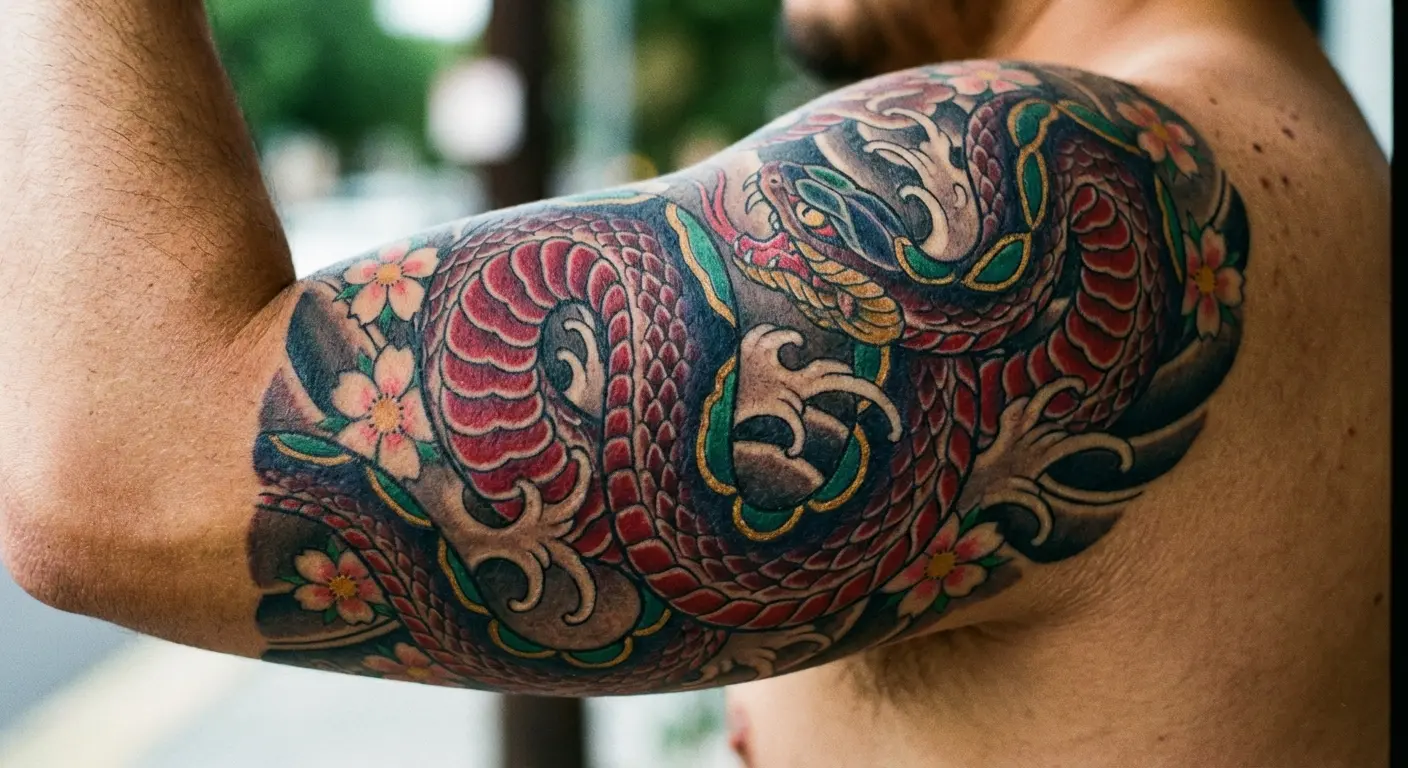
Transformation designs are all about change. Snakes shed their skin, you shed your old life. The metaphor writes itself. These work great if you’re going through some major shift and want to mark it permanently. New job, new city, new you, whatever.
The designs here prioritize dynamic poses, integration with organic elements, and visual storytelling through the snake’s position. They work particularly well on areas of your body where muscle movement enhances the serpent’s implied motion.
When exploring Japanese traditional tattoo conventions, understanding how transformation motifs function within established compositional frameworks becomes essential. The relationship between the japanese snake tattoo and surrounding elements isn’t arbitrary. It follows centuries of refinement about what works visually and symbolically.
Scale patterns in transformation designs need particular attention. You want texture variation that creates visual interest without becoming so detailed that aging turns everything into a blurred mess. The molting snake presents unique challenges here because you’re depicting two distinct skin textures simultaneously. Your artist needs to understand how to create that contrast in ways that remain readable decades from now.
Directional flow matters enormously in this category. A snake tattoo japan artists would create typically shows clear movement direction: ascending, descending, coiling, or striking. That direction communicates different aspects of transformation. Upward movement suggests growth and aspiration. Downward or coiling movement indicates grounding and consolidation. The strike position captures potential energy and readiness for change.
Color relationships between the snake and accompanying flowers require careful planning. Traditional japanese snake tattoo designs use specific color combinations that maintain contrast as both elements age. You don’t want your cherry blossoms fading into your snake’s scales, or your chrysanthemums competing for attention rather than complementing the serpent.
I threw this together because people keep asking about placement. It’s not gospel, but it’ll give you a starting point:
|
Transformation Design Type |
Best Body Placement |
Optimal Size Range |
The Thing Nobody Tells You |
|---|---|---|---|
|
Molting Hebi |
Forearm, Calf |
6-10 inches |
Texture contrast fades first, plan for it |
|
Coiled Strike Position |
Shoulder, Upper Chest |
8-12 inches |
Needs negative space or it’ll look muddy in 10 years |
|
Dragon-Snake Hybrid |
Ribcage, Spine |
12-18 inches |
Ribcage work hurts like hell, just so you know |
|
Water-Emerging Serpent |
Half-sleeve, Thigh |
10-16 inches |
Water elements disguise minor fading |
|
Cherry Blossom Shedding |
Upper Arm, Back |
8-14 inches |
Scattered blossoms mask ink spreading |
|
Chrysanthemum Guardian |
Thigh, Back Panel |
12-20 inches |
Layered petals create lasting dimension |
|
Peony-Wrapped Protection |
Full Sleeve, Thigh |
10-18 inches |
Plant structure provides natural negative space |

1. The Molting Hebi: Shedding Skin in Real Time
Molting snake equals new you. Got it. Now here’s what actually matters: the texture contrast.
This design shows a snake mid-shed, with old skin peeling away to reveal fresh scales underneath. The visual metaphor is obvious, but the technical execution? That’s where most artists screw up. You need someone who understands how to create texture contrast between old and new skin without making the design look muddy or confused.
The molting pattern works best on forearms or calves where the linear shape follows natural muscle lines. Color choices here are critical: the old skin typically uses faded greens or browns while the new scales pop with vibrant emerald or cobalt. This isn’t a design you want to rush. The detail work in the transitional areas will determine whether this reads as powerful transformation or just looks unfinished.
Your japanese snake tattoo design artist should be planning how those texture transitions will hold up over time. Fine detail work ages differently than bold lines, and the molting effect relies on maintaining clear distinction between the two skin textures. Sometimes slightly bolder execution of the texture difference actually reads better long-term than ultra-fine detail that spreads and blurs.
Update: Originally recommended 6-8 inches minimum for molting designs, but I’ve since seen a 4-inch version that actually works. Depends on your artist’s line work.
2. Coiled Strike Position: Frozen Energy
A snake wound tight, head raised, mouth open, captured in that split second before it strikes. This pose communicates potential energy and readiness. Traditional Japanese versions often include small details that Western adaptations miss: the specific angle of the head (usually 45 degrees), the S-curve of the body creating visual tension, and the careful placement of scales that guide the eye through the coil.
This design works exceptionally well for shoulder pieces or upper chest placement where the coil can wrap around your body’s natural contours. The strike position also gives your artist opportunities to play with negative space inside the coil, which helps the design age better by maintaining clear visual separation between elements.
The japanese tattoo snake in strike position needs adequate space to establish that coiled tension. Cramming this pose into a small area loses the impact entirely. You want the viewer’s eye to follow the coil, feel the compression, and anticipate the release. That requires thoughtful composition and enough real estate for the design to breathe.
3. Ascending Dragon-Snake Hybrid
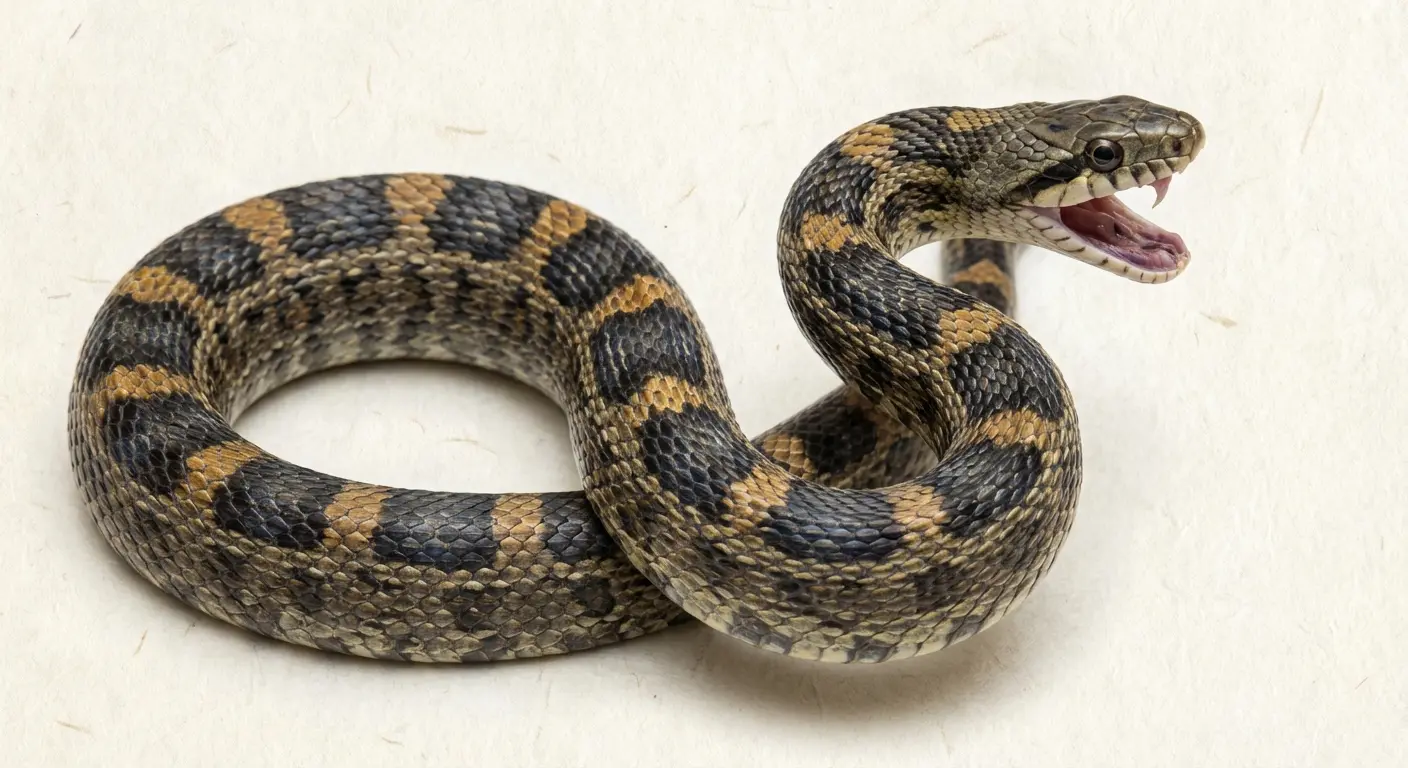
Here’s where Japanese tattoo tradition gets interesting. The line between hebi and tatsu blurs intentionally in some designs, creating creatures that embody both earthbound wisdom and celestial power. These hybrids typically feature snake bodies with developing dragon characteristics: small horn buds, whisker-like tendrils, or scale patterns that transition from snake to dragon as the design ascends.
You’ll see these most effectively executed as vertical pieces on the ribcage or spine, where the upward movement feels natural. The symbolism here speaks to aspiration and transformation, but the real appeal is visual. Your artist can create incredible depth by gradually shifting scale size and adding dimensional details as the creature “evolves” up your body.
The japanese snake tattoo that transitions into dragon form requires an artist who understands both creatures’ traditional rendering. The scale patterns differ, the body proportions shift, and the overall energy changes from earthbound to celestial. This isn’t something you can fake with generic reptile scales. It requires knowledge of how both hebi and tatsu are depicted in traditional Japanese art.
4. Water-Emerging Serpent
This design shows a snake breaking through a water surface, with waves, ripples, and splash patterns integrated into the composition. Traditional Japanese water rendering follows specific rules: wave shapes, foam patterns, and flow direction all communicate different things. A snake emerging from calm water versus turbulent waves tells completely different stories.
This design requires significant space to work properly (think half-sleeve minimum) because the water elements need room to establish context. The technical challenge here involves creating clear visual hierarchy so the snake remains the focal point while the water adds movement and drama.
Color-wise, the contrast between the serpent and water is crucial. You don’t want them competing for attention. A snake tattoo japan artists would create typically uses complementary colors or significant value differences to maintain that separation. The water might be deep blues and greens while the snake uses warmer tones, or you might see a pale snake against dark water for maximum contrast.
The japanese style snake tattoo emerging from water also benefits from understanding how water movement affects composition. The waves and ripples should guide the viewer’s eye toward the snake, not distract from it.
5. Cherry Blossom Shedding Snake
Pairing snakes with cherry blossoms (sakura) creates a specific symbolic relationship in Japanese tradition: the temporary nature of beauty and life. The snake represents renewal and continuation, while falling cherry blossoms mark fleeting moments. This design works beautifully when the blossoms appear to be falling across the snake’s path or landing on its scales.
The key technical consideration here is color balance. Cherry blossoms are typically soft pinks and whites, which can get overwhelmed by a bold, dark snake. Your artist needs to adjust the snake’s color saturation or add strategic negative space so both elements remain readable.
This design ages particularly well because the scattered blossom placement disguises any minor fading or spreading that occurs over time. The organic, random nature of falling petals means slight changes in the tattoo’s appearance over years don’t detract from the overall composition. They can even enhance the sense of natural movement and impermanence.
The japanese snake and flower tattoo combination requires understanding how different flowers carry different meanings. Cherry blossoms specifically connect to mono no aware, the awareness of impermanence and the bittersweet beauty of transient things. Your snake becomes a witness to or participant in that cycle, depending on how the composition is structured.
6. Chrysanthemum Guardian
Chrysanthemums carry heavy symbolic weight in Japanese culture (imperial connections, longevity, perfection), and pairing them with snakes creates a guardian dynamic. The snake typically coils around or through chrysanthemum blooms, suggesting protection of something precious.
These designs benefit from bold color contrasts: deep purples or golds for the flowers against green or black snakes. The chrysanthemum’s layered petal structure gives your artist opportunities to create depth and dimension that helps the overall piece feel three-dimensional.
Placement-wise, these work exceptionally well as thigh pieces or back panels where you have space for multiple large blooms and a substantial snake. The circular shape of chrysanthemums also helps frame the snake’s body in visually satisfying ways.
The snake tattoo japanese tradition of pairing serpents with specific flowers isn’t random. Each flower brings particular symbolic weight and visual characteristics. Chrysanthemums with their geometric petal arrangements create natural negative space and compositional structure that helps organize complex designs.
7. Peony-Wrapped Protection
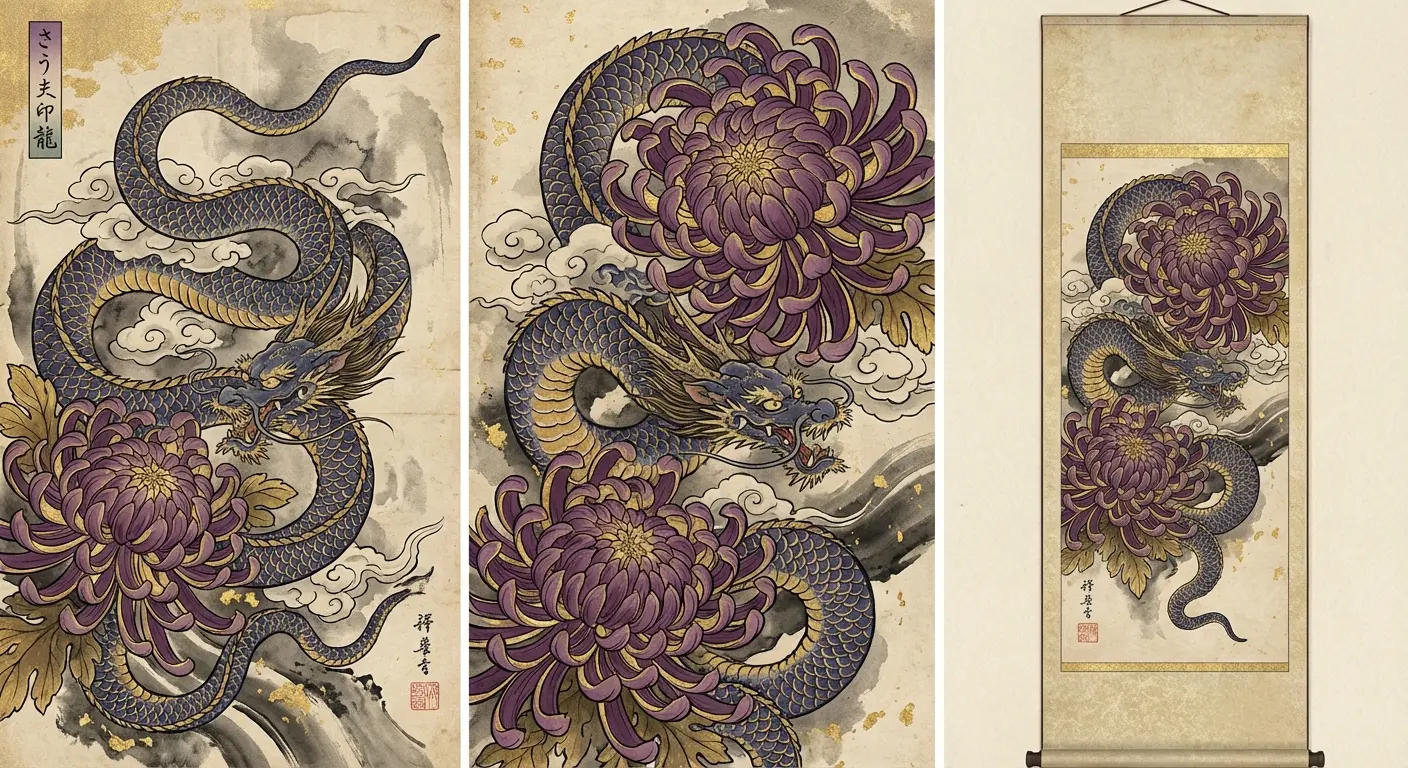
Peonies represent wealth, good fortune, and bravery in Japanese tradition. A snake wrapped through peony stems and blooms creates a design that’s both protective and prosperous. The technical advantage here is that peony leaves and stems provide natural negative space and directional lines that guide composition.
Your artist can use the plant structure to create visual pathways that lead the eye through the design in specific ways. Color relationships matter enormously: traditional versions often use red or pink peonies with white or pale green snakes, creating contrast through value rather than competing saturations.
This design scales well from small pieces to full sleeves because the modular nature of flowers and stems allows for flexible sizing without losing impact. You can add or reduce peony blooms based on available space while maintaining the core composition.
The japanese snake and flower tattoo featuring peonies specifically communicates prosperity and protection simultaneously. The snake’s protective coiling around valuable blooms creates narrative tension. Is the snake guarding the flowers, or are the flowers containing the snake? That ambiguity adds depth to the design.
Serpents of Shadow: Darkness and Duality
Dark snakes. Mysterious snakes. Snakes that make people slightly uncomfortable when they see them.
These designs skip the bright traditional colors and lean into black ink, negative space, and that whole “hidden knowledge” vibe. They age incredibly well (black ink is forgiving), and they work for people who want Japanese-inspired work without the full rainbow color palette.
This category explores the darker, more mysterious aspects of snake symbolism in Japanese tradition. These designs emphasize the serpent’s connection to hidden knowledge, danger, transformation through darkness, and the necessary balance between light and shadow.
These tattoos rely heavily on negative space, strategic use of black ink, and careful value control to create mood and atmosphere. They’re particularly effective for people who want Japanese-inspired work without the bright, traditional color palette.
Understanding broader snake tattoo meaning across cultures helps contextualize how Japanese interpretations emphasize darkness and duality differently than Western approaches.
You need an artist who actually knows how to work with dark ink. Not just someone who can do black and gray but someone who understands value control and negative space.
There’s this Singaporean artist, Goodmorning, who does incredible Nukibori style work. Scene360 did a profile on him, and what stuck with me was his whole philosophy about tattooing being a discipline, not just creating beautiful designs. He showed how “a composition should flow with muscles, move with breath, and wrap around the body as if it were meant to be there.” This is exactly why shadow-category designs require artists who understand both traditional Japanese principles and the technical realities of how dark ink compositions age on skin.
Black japanese snake tattoo designs demand exceptional line work and value control. Without color to create separation and interest, you’re relying entirely on the strength of your composition, the quality of your line work, and the strategic use of negative space. There’s nowhere to hide technical weaknesses.
Japanese cobra tattoo designs in this category often emphasize the hood’s dramatic shape and the cobra’s association with danger and hidden power. The cobra’s distinctive silhouette creates natural opportunities for bold, graphic compositions that read clearly even from a distance.
8. Black Ink Minimalist Hebi
Strip away the color. Reduce the snake to pure line and negative space. Sounds simple? It’s actually harder to execute than full-color work because every line matters. There’s nowhere to hide mistakes.
These designs use only black ink with careful attention to line weight variation and negative space. The challenge here is maintaining visual interest without color or excessive detail. Your artist needs to understand how line weight affects readability at a distance and how aging will affect fine details. Minimalist doesn’t mean easy. It means every line carries weight and purpose.
Placement flexibility is a major advantage: minimalist snake designs can work anywhere from fingers to full back pieces because they scale elegantly without losing clarity. The japanese style snake tattoo executed in pure black ink relies on compositional strength rather than decorative elements to create impact.
I’ve seen too many people assume minimalist means simple to execute. The opposite is true. When you remove color and detail, every line becomes critical. Your artist can’t hide compositional weaknesses behind elaborate shading or vibrant colors. The snake tattoo japanese style in minimalist form exposes technical skill (or lack thereof) immediately.
9. Negative Space Cobra
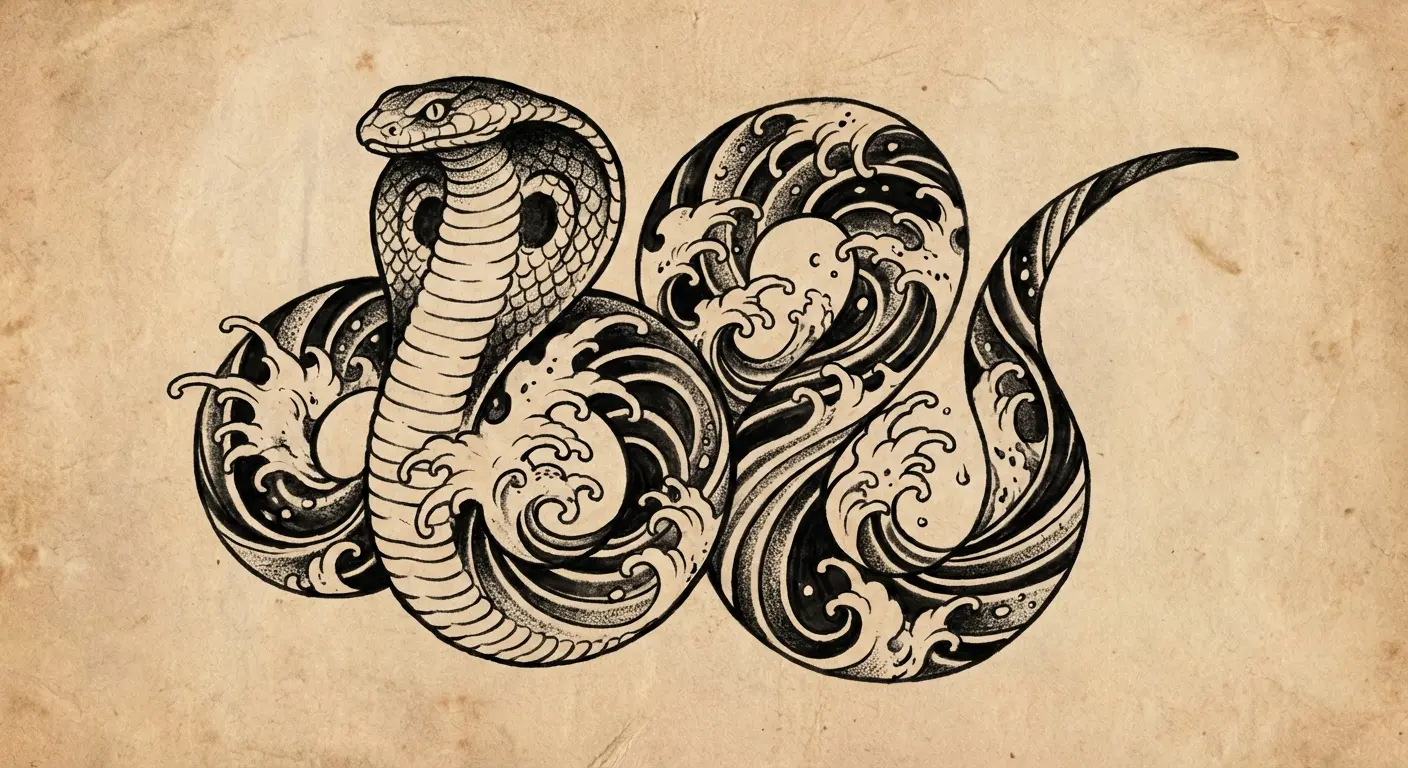
Using your skin tone as a design element rather than just a background creates striking visual effects. In these designs, the cobra’s form is defined by what’s inked around it rather than filling it in completely. This approach requires exceptional technical skill because the surrounding elements need to be strong enough to clearly define the snake’s shape while remaining interesting in their own right.
Traditional Japanese background elements (waves, clouds, geometric patterns) work particularly well for this technique. The cobra specifically (rather than a generic snake) brings its hood shape into play, which creates natural opportunities for dramatic negative space areas.
These designs photograph incredibly well and tend to be conversation starters because they require a second look to fully understand. The japanese cobra tattoo using negative space challenges viewers’ expectations about what a tattoo should look like, creating visual interest through unconventional execution.
Make sure your artist plans the surrounding elements with precision. Too much detail and the negative space cobra gets lost. Too little and the snake’s form doesn’t read clearly. Finding that balance requires experience with this specific technique.
The snake tattoo japanese style using negative space also ages differently than traditional filled designs. As the surrounding ink spreads slightly over time, the negative space areas might actually become more defined rather than less, which can work in your favor if planned correctly.
10. Smoke-Form Serpent
Rendering the snake as if it’s made of smoke or dissolving into smoke creates an ethereal, supernatural quality. This design speaks to transformation, impermanence, and the boundary between physical and spiritual. The technical execution requires an artist skilled in creating soft gradients and understanding how smoke patterns move and dissipate.
You can’t fake this with simple gray shading. Real smoke has specific characteristics: it’s denser near the source, develops natural curl patterns, and becomes translucent as it disperses. These designs work best with significant size (half-sleeve or larger) because the gradual dissolution effect needs space to develop convincingly.
The advantage here is that this style naturally incorporates the kind of soft edges that age well and remain readable even as lines spread slightly over time. The japanese style snake tattoo rendered in smoke form embraces impermanence as both concept and technical reality.
Discuss with your artist how they’ll handle the transition zones where the snake becomes smoke. Those areas require the most technical skill and will determine whether the design reads as intentional and mystical or just looks unfinished.
11. Skull-Entwined Warning
Snakes and skulls. Yeah, it’s been done. But Japanese versions bring something different to the table.
The snake weaves through the eye sockets, wraps around the jaw, and the whole thing has this specific aesthetic that’s not quite the same as Western skull-and-snake designs. Traditional Japanese skull rendering differs from Western approaches: the proportions are often slightly stylized, and the integration with surrounding elements follows different compositional rules.
These designs benefit from strong value contrast, making them excellent candidates for black and gray work or limited color palettes. You need enough space for both elements to remain clearly readable. Cramming a skull and snake into a small area creates visual confusion that defeats the design’s impact.
The snake tattoo japan tradition of pairing serpents with memento mori imagery creates designs that acknowledge darkness without glorifying it. The japanese tattoo snake winding through skull cavities needs careful planning regarding which element dominates visually. Typically, the skull provides the anchor while the snake adds movement and narrative complexity.
12. Hannya Mask Companion
The Hannya mask (representing a jealous female demon in Japanese theater) paired with a snake creates a powerful statement about transformation driven by intense emotion. These designs work because both elements carry strong symbolic weight in Japanese culture, and their combination suggests complex narratives about passion, betrayal, and change.
The technical challenge involves balancing two strong focal points without one overwhelming the other. Typically, the Hannya mask takes primary focus with the snake serving as a supporting element that adds movement and additional layers of meaning.
Color choices here significantly affect the overall mood: traditional red Hannya masks create very different feelings than white or blue versions. The snake’s color should complement rather than compete with the mask’s palette. The japanese serpent tattoo paired with Hannya imagery speaks to transformation’s darker aspects. Change driven by pain, anger, or loss rather than positive growth.
Your artist should understand the traditional Hannya mask’s specific features and proportions. This isn’t generic demon imagery. It’s a specific theatrical character with established visual conventions that should be respected even in modern interpretations.
The snake tattoo japanese style featuring Hannya masks often positions the serpent emerging from behind the mask, coiling around it, or interacting with the mask’s horns and flowing hair. Each positioning choice creates different narrative implications.
13. Moon Phase Integration
Incorporating moon phases into a snake design creates a visual representation of cycles, time, and natural rhythm. The snake might coil around a central full moon with smaller phase representations surrounding it, or the serpent’s body might undulate through a linear progression of moon phases.
This design appeals to people interested in astronomical or spiritual symbolism while maintaining Japanese aesthetic principles. The circular moon shapes provide natural compositional anchors that help organize the design.
These work particularly well as upper back pieces or chest panels where the symmetrical nature of moon phases can be displayed effectively. The contrast between the solid, circular moons and the organic, flowing snake creates visual interest through shape variation.
The japanese style snake tattoo incorporating lunar imagery connects the serpent’s transformative symbolism with the moon’s cyclical nature. Both represent change, renewal, and the passage of time. Themes that resonate across cultures but take specific visual forms in Japanese tradition.
Moon phase designs also offer flexibility for future additions or modifications. The modular nature of the phases means you can potentially expand the design later without disrupting the original composition.
14. Storm Cloud Dweller
Positioning the snake within or emerging from storm clouds creates drama and suggests hidden power. Japanese cloud rendering follows specific stylistic conventions: the shapes, the way they layer, and how they interact with other elements all communicate different things.
Storm clouds specifically (darker, more turbulent than regular clouds) add tension and energy to the composition. The snake becomes something that dwells in chaos or emerges during tumultuous times. These designs require significant space because clouds need room to establish their form and character.
The technical execution involves careful value control to ensure the snake remains visible against dark cloud backgrounds while maintaining the stormy atmosphere. This is where an artist’s understanding of light source and contrast becomes critical.
The japanese cobra tattoo emerging from storm clouds particularly emphasizes the cobra’s association with danger and unpredictability. The hood’s dramatic shape reads well against turbulent cloud formations, creating natural visual harmony between the two elements.
Ask your artist how the cloud shapes will interact with your body’s contours. Storm clouds that wrap around your shoulder or ribcage should follow the natural curves rather than fighting them. The snake tattoo japanese tradition of integrating background elements with body placement creates designs that feel organic rather than applied.
Serpents of Fortune: Wealth and Wisdom
This final category examines snake designs that emphasize prosperity, knowledge, and positive fortune. These tattoos draw from traditional Japanese beliefs about snakes as bringers of wealth and guardians of wisdom. These designs often incorporate metallic color palettes (golds, bronzes) and symbols of prosperity (coins, jewels, bamboo) that require specific technical approaches to render effectively.
The challenge with this category is avoiding designs that feel too literal or heavy-handed with their symbolism. The best versions integrate fortune-related elements naturally into the composition rather than creating what looks like a symbolic checklist.
These designs also tend to be larger and more complex, requiring artists experienced with multi-session work and maintaining consistency across extended projects. Similar to how lotus flower tattoo meaning connects to spiritual awakening and prosperity, Japanese snake designs paired with fortune symbols create layered narratives about wealth and wisdom.
The japanese snake tattoos in this category communicate aspirations and values beyond pure aesthetics. You’re making a statement about what you value, whether that’s material prosperity, intellectual growth, spiritual wisdom, or the balance between them.
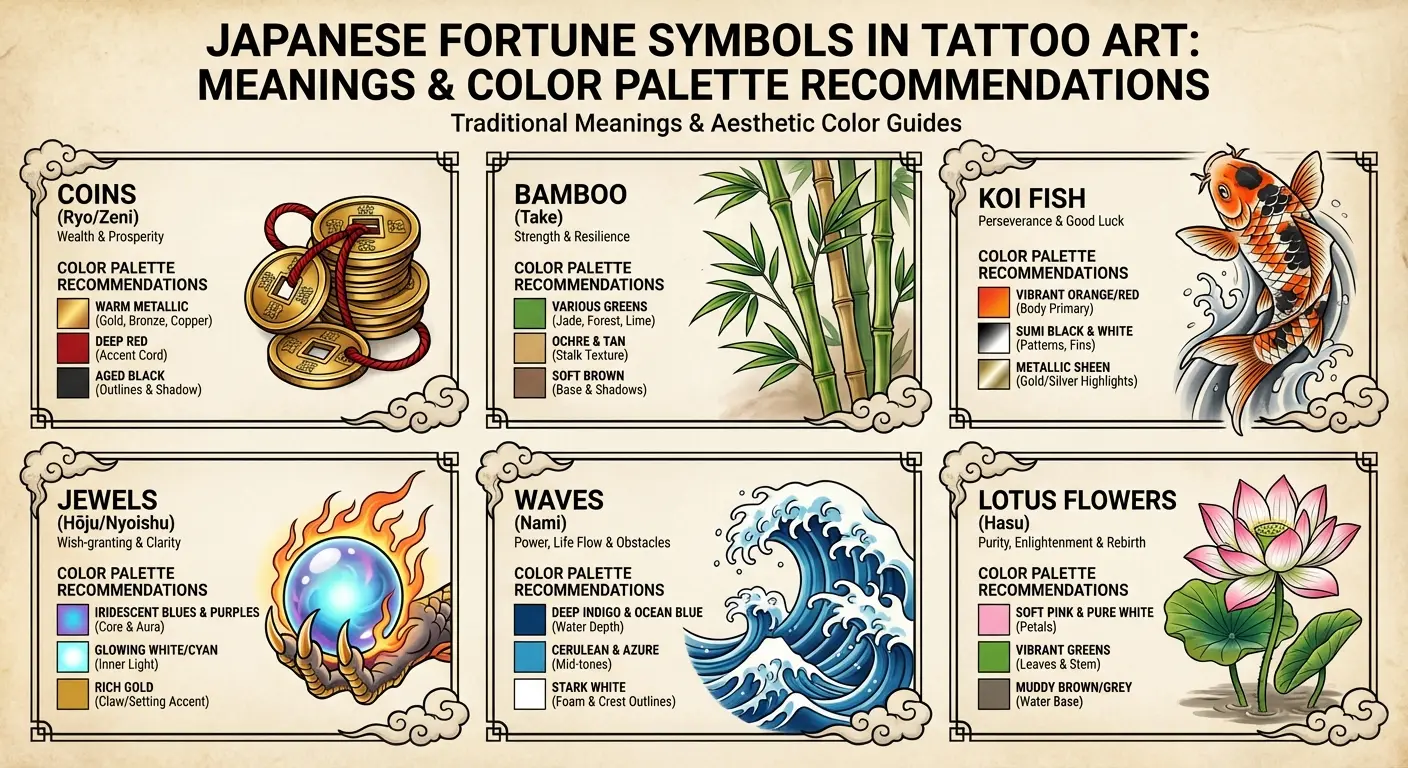
Traditional japanese snake tattoo designs featuring fortune elements follow established compositional rules about how prosperity symbols should be integrated. Coins, jewels, and other wealth indicators aren’t randomly scattered. They’re positioned deliberately to create visual flow and symbolic coherence.
|
Fortune Element |
Symbolic Meaning |
Technical Execution Challenge |
Recommended Color Palette |
|---|---|---|---|
|
Coins |
Material wealth, prosperity |
Rendering scales as coins while maintaining anatomical flow |
Gold, bronze against dark backgrounds |
|
Bamboo |
Flexibility, resilience, growth |
Balancing vertical bamboo lines with organic snake curves |
Green bamboo with contrasting snake colors |
|
Koi Fish |
Perseverance, transformation |
Giving both creatures adequate visual weight without crowding |
Traditional koi colors with complementary snake tones |
|
Jewels/Orbs |
Enlightenment, sacred wisdom |
Creating convincing glow effects within Japanese aesthetic |
Ruby red, sapphire blue, mystical white |
|
Waves |
Mastery over challenges |
Maintaining contrast between stylized waves and snake |
Blue-green waves with high-contrast snake coloring |
|
Lotus |
Purity, spiritual awakening |
Balancing symmetrical flower structure with snake movement |
White, pink, or blue lotus with complementary snake |
15. Coin-Scaled Prosperity Design
Rendering the snake’s scales as ancient coins creates an immediate visual connection to wealth and prosperity. This isn’t subtle symbolism, but when executed well, it’s striking. The technical challenge involves creating scales that read as both coins and functional snake anatomy.
Your artist needs to understand how scales overlap and catch light to make this work convincingly. Traditional versions often use gold or bronze ink for the coin-scales against darker backgrounds, creating strong value contrast.
These designs work best at larger sizes where individual “coins” remain readable. Placement on areas with natural muscle definition (bicep or calf) can add dimensional quality as the “coins” appear to shift with movement.
This design requires an artist comfortable with metallic inks and understanding how they age differently than standard colors. Metallic inks can fade faster than you think, and your artist should plan for that reality. The japanese snake tattoo design featuring coin scales needs careful planning regarding ink selection and saturation levels.
I’ve seen versions where the coins are rendered subtly (just suggested through scale shape and shading) and versions where they’re explicit with detailed coin designs on each scale. Both approaches work, but they create very different visual effects and age differently.
16. Bamboo Forest Navigator
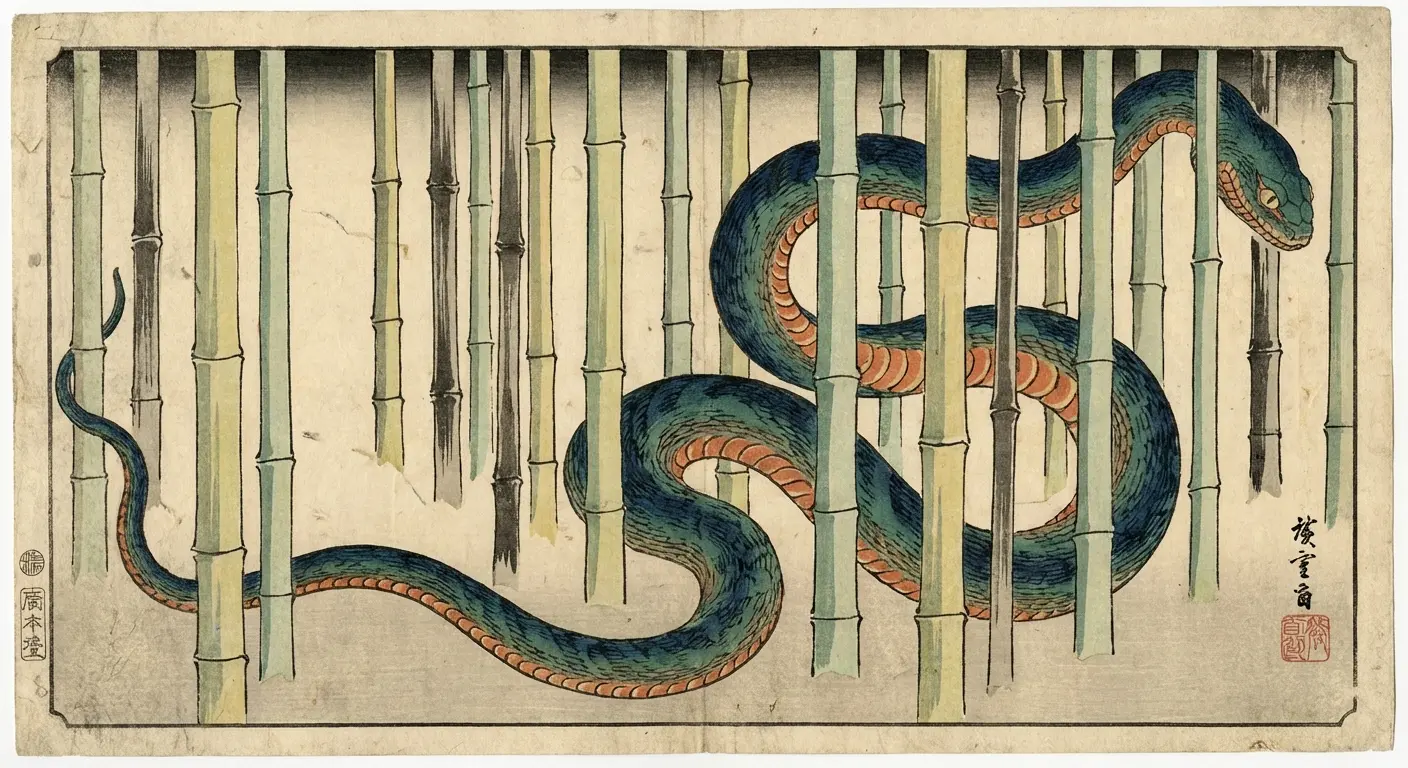
Positioning the snake within or traveling through bamboo stalks creates a distinctly Japanese aesthetic while incorporating symbolism of flexibility, resilience, and growth. Bamboo’s straight, vertical lines provide excellent compositional structure that contrasts beautifully with the snake’s organic curves.
The technical advantage here is that bamboo segments create natural divisions that help organize complex compositions and provide built-in negative space. These designs scale well from medium to large pieces because you can adjust the number of bamboo stalks and the complexity of the forest setting.
Color-wise, the traditional green bamboo and green snake combination can work if you vary the values significantly, but many effective versions use contrasting colors: black snakes against green bamboo, or white/pale snakes for maximum contrast.
The traditional japanese snake tattoo design featuring bamboo emphasizes the snake’s connection to natural wisdom and adaptability. Bamboo bends without breaking, and snakes navigate complex environments with ease. The combination reinforces themes of resilience and intelligent adaptation.
Your artist should understand how bamboo grows and how the segments connect. Anatomically incorrect bamboo undermines the entire design’s credibility, even if most viewers won’t consciously notice the error.
17. Koi and Snake Balance
Pairing koi and snakes in a single design creates visual and symbolic balance between water and earth, upward and downward movement, and different types of transformation. Traditional Japanese tattoo culture has deep connections to both koi and snake imagery, making their combination feel natural rather than forced.
The composition challenge involves giving both creatures adequate space and visual weight without creating competition for focus. Typically, this requires significant real estate (full sleeve or back piece) where the koi and snake can interact without crowding.
The movement patterns of swimming koi versus slithering snakes create natural visual rhythm. Water elements usually tie the composition together, providing context for the koi while creating negative space that highlights the snake.
The japanese snake tattoos paired with koi communicate perseverance and transformation through different paths. The koi’s upstream struggle versus the snake’s shedding and renewal. Together, they suggest multiple approaches to growth and change.
Color planning becomes complex here because koi traditionally use bright, saturated colors while snakes might use more subdued tones. Your artist needs to balance these different color languages so both creatures remain distinct and readable. The japanese serpent tattoo integrated with koi imagery requires understanding how traditional koi colors (orange, white, black, red) interact with typical snake palettes.
18. Jewel-Clutching Serpent
Depicting a snake grasping or coiled around a precious jewel (often rendered as a glowing orb or faceted gem) draws from Buddhist imagery where serpents guard sacred treasures. The jewel represents enlightenment, wisdom, or material wealth depending on context.
These designs work because they create a clear focal point (the jewel) that the snake’s body naturally directs attention toward. Your artist can use the jewel as a light source, creating highlights and reflections on the snake’s scales that add dimension and visual interest.
The technical consideration here involves rendering the jewel convincingly without it looking cartoonish or out of place within the Japanese aesthetic. Traditional versions often use subtle glow effects and careful color choices (ruby reds, sapphire blues, or mystical whites) that complement rather than clash with the snake’s coloring.
The traditional japanese snake tattoo design featuring jewels or orbs connects to naga mythology and Buddhist protective imagery. The snake isn’t hoarding treasure greedily. It’s serving as guardian of something sacred or valuable.
Discuss with your artist whether the jewel should appear realistic or stylized. Hyper-realistic gem rendering can clash with traditional Japanese snake depiction, while overly stylized jewels might not carry enough visual weight to justify the snake’s protective posture.
The japanese snake tattoo arm placement works particularly well for jewel-clutching designs because the forearm’s length allows the snake to coil naturally around the jewel while the hand or wrist provides a natural terminus point.
19. Wave-Riding Wisdom Keeper
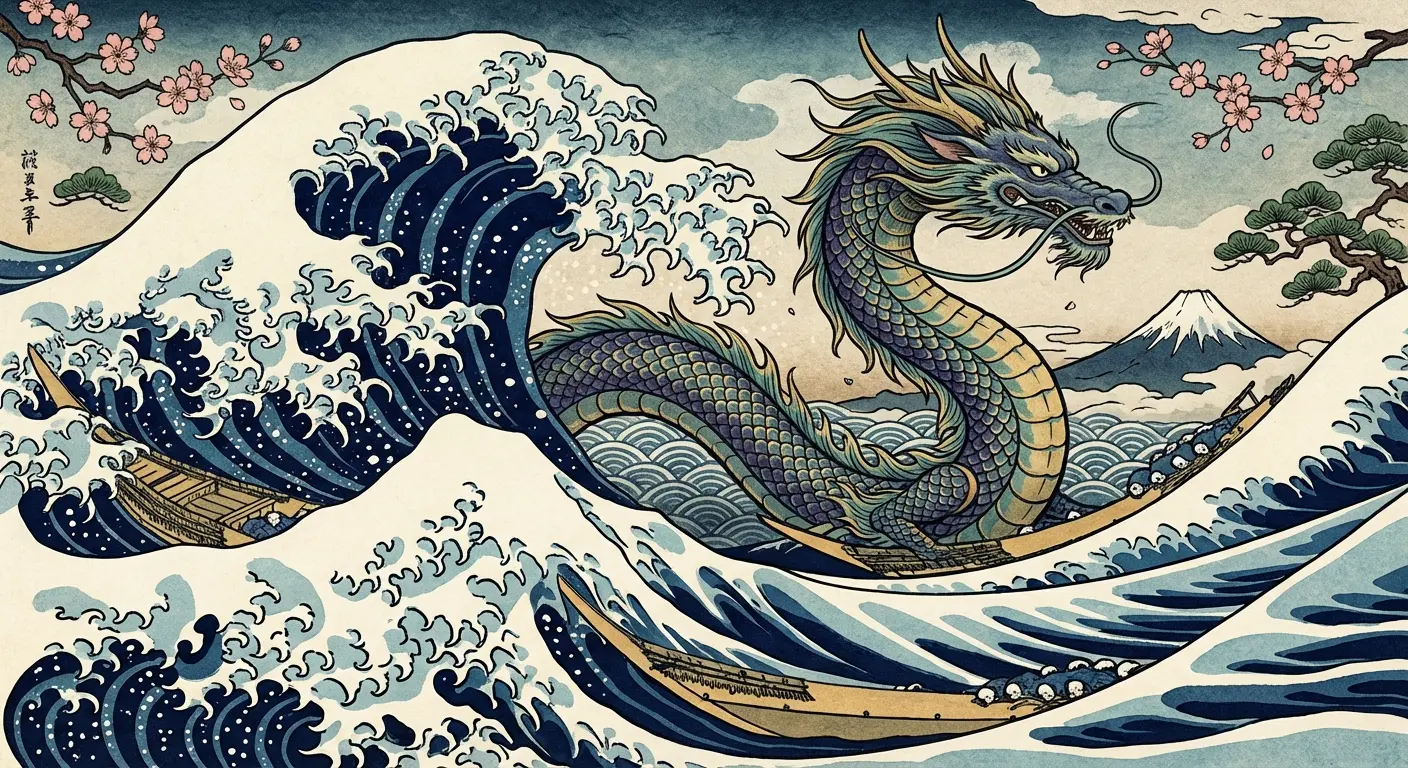
Positioning the snake atop or moving with ocean waves creates dynamic movement while connecting to Japanese maritime tradition and wave iconography. The waves here aren’t just background. They’re active participants in the composition, their curves and peaks working in harmony with the snake’s body.
Traditional Japanese wave rendering is highly stylized with specific curl patterns and foam details that any artist working in this style needs to understand. These designs require substantial space because waves need room to establish their rhythm and scale.
The snake becomes a navigator or master of these forces rather than a victim of them. Color relationships between the blue-green waves and the snake’s coloring need careful planning to maintain contrast and readability as the piece ages.
The japanese snake tattoos meaning in wave-riding contexts emphasizes mastery, wisdom, and the ability to navigate life’s challenges. The snake doesn’t fight the waves. It moves with them, suggesting adaptability and understanding of natural forces.
Wave patterns in Japanese tradition follow specific rules about how they curl, foam, and interact with other elements. Your artist should reference traditional ukiyo-e wave depictions rather than realistic ocean photography to maintain stylistic consistency.
The japanese snake tattoo meaning shifts when paired with calm versus turbulent waves. Calm waves suggest peaceful wisdom and mastery, while turbulent waves indicate the ability to thrive during chaos and challenge.
20. Lotus Emergence Pattern
The lotus carries profound Buddhist symbolism (purity rising from mud, spiritual awakening), and pairing it with a snake creates layered meaning about transformation and enlightenment. The snake typically emerges from or coils around lotus blooms and stems, suggesting wisdom that grows from experience.
Lotus flowers provide excellent compositional structure with their symmetrical petals and strong central forms. Your artist can use the lotus as an anchor point with the snake’s body creating movement around it. These designs work across various sizes because you can scale from a single lotus with a small snake to elaborate multi-flower compositions with larger serpents.
The color palette here significantly affects the overall mood: white lotuses create different symbolism than pink or blue versions, and your snake’s coloring should enhance rather than compete with your chosen lotus colors. The japanese snake tattoo design featuring lotus flowers connects earthbound transformation (the snake) with spiritual transcendence (the lotus rising from murky water).
Lotus leaves also provide natural negative space opportunities. The broad, circular leaves create visual breathing room that prevents the design from feeling cluttered even when you’re incorporating multiple elements.
Discuss with your artist how the lotus stages should be depicted. Closed buds, partially opened flowers, and full blooms each carry different symbolic weight. A composition showing all three stages creates a visual narrative about spiritual development and growth.
The japanese drawing principles underlying lotus rendering emphasize clean lines and symmetrical petal arrangements that contrast beautifully with the snake’s organic, asymmetrical form. That shape contrast creates visual interest and helps both elements remain distinct.
21. Full-Sleeve Narrative Journey
A full-sleeve design that uses the snake as a connecting thread through multiple traditional Japanese elements creates a cohesive narrative that wraps your entire arm. The snake might start at your wrist, travel through waves, clouds, flowers, and other symbolic elements, finally reaching a significant terminus point at your shoulder.
This approach requires exceptional planning and an artist experienced with large-scale Japanese work. You’re essentially creating a story that unfolds as the viewer’s eye follows the snake’s path. The technical challenges here are substantial: maintaining consistent scale and style across multiple sessions, ensuring the snake remains the primary visual thread without getting lost among other elements, and creating natural transitions between different symbolic components.
These pieces typically require multiple sessions over months, and you need an artist who can maintain design consistency throughout that timeline. The japanese cobra tattoo as a full-sleeve centerpiece works particularly well because the hood provides a natural focal point that can anchor the shoulder area while the body travels down the arm.
Color consistency across sessions becomes critical. Your artist needs to mix inks carefully and keep detailed records of the exact ratios used so that touch-ups and additions match perfectly. Even slight color variations become obvious in large-scale work where the same element appears across different areas.
The traditional japanese snake tattoo design as a full narrative sleeve represents significant commitment, both financial and temporal. You’re looking at 20-40 hours of work minimum, spread across multiple sessions. That investment demands an artist you trust completely and a design plan that accounts for how your vision might evolve during the extended creation process.
Background elements in full-sleeve work need careful planning regarding density and detail. Too much detail everywhere creates visual chaos. Strategic areas of simpler background or negative space give the eye places to rest and help the snake remain the dominant visual element.
Before You Commit: What Most Guides Won’t Tell You
Okay, real talk time. All those pretty reference photos? They don’t show you what happens in year five when the ink spreads, or how your design looks when you gain 15 pounds, or why that color combo that seems perfect now will fade into mud.
Let’s talk about the stuff most guides skip.
The biggest issue? Most people show up to consultations with reference images that don’t account for how Japanese tattoo designs function on skin over time. I’m talking about scale patterns that look incredible fresh but turn into muddy blobs after five years. Color combinations that seem bold initially but lose all contrast as they age. Placement decisions that ignore how your body’s natural movement affects the design’s flow and readability.
You also need to understand that traditional Japanese tattoo application differs from Western approaches. The relationship between foreground elements (your snake) and background elements (clouds, waves, flowers) follows specific compositional rules that affect long-term readability. Your artist should be planning negative space as deliberately as they plan the japanese snake tattoo itself.
Look, I get it. You’ve got 47 Pinterest images saved, none of them are quite right, and you can’t explain to your artist what you actually want. Been there.
This is honestly where something like Tattoo Generator IQ is useful. You can plug in specific elements (what kind of snake pose, which flowers, traditional color or black and gray) and get actual design variations to show your artist. Not as a replacement for their work, but as a “this is what’s in my head” starting point.
It changes the whole consultation because you’re not trying to describe your vision. You’re showing it.
Scale matters more than most people realize. A japanese snake tattoo that looks perfect at 8 inches might lose all detail and impact at 4 inches, or might require excessive space and sessions at 16 inches. Your artist should be discussing optimal sizing based on your chosen placement and design complexity.
Skin tone affects color choices significantly. Colors that pop on pale skin might disappear on darker skin tones, and vice versa. Your artist needs to adjust saturation and value based on your specific skin tone to ensure the design remains readable long-term.
Body hair growth patterns should factor into placement decisions. Dense hair growth will obscure fine details, so designs placed in hairy areas need bolder execution and simpler compositions. Nobody talks about this during the inspiration phase, but it matters enormously for long-term satisfaction.
The snake tattoo japan tradition developed over centuries with specific technical knowledge about what works and what doesn’t. Modern artists who understand those principles create work that honors tradition while adapting to contemporary contexts and client needs.

Final Thoughts
Here’s the bottom line: Japanese snake tattoos are technical as hell. They’re not just “ooh, pretty snake with flowers.” Every element (placement, color, scale pattern, negative space) affects how this thing looks in 20 years.
Most people walk into shops thinking about symbolism and Instagram photos. Fine. But also think about how your body moves, how ink ages, and whether your artist actually knows traditional Japanese composition or just knows how to copy reference images.
The symbolism matters, absolutely, but it shouldn’t override practical considerations about placement, color relationships, and long-term readability.
You’re making a decision that will be with you for life, which means thinking beyond what looks cool in reference photos. The designs I’ve covered span different symbolic territories (transformation, shadow, fortune) but they all share common technical requirements: adequate space for proper execution, color or value contrasts that maintain clarity over decades, and compositional structures that work with your body’s natural lines rather than fighting them.
Your job now is matching your personal symbolism needs with technical realities and finding an artist who understands both. Don’t rush this decision. Japanese snake tattoos done well are stunning, powerful pieces that age beautifully and carry genuine meaning. Done poorly, they’re expensive reminders that inspiration without proper execution creates regret.
Take the time to find an artist whose portfolio shows they understand traditional Japanese composition principles, even if they’re creating modern interpretations. Ask about their experience with the specific elements you want. Discuss how they plan for aging and touch-ups.
The japanese snake tattoo you’re considering should have direction, purpose, and technical foundations that ensure it looks as powerful in twenty years as it does the day you walk out of the shop. Understanding broader irezumi tattoo traditions provides essential context for how snake imagery fits within the larger Japanese tattoo canon.
Color saturation needs planning for the long game. Vibrant colors fade faster than you think, and your artist should be using saturation levels that account for 20-30% fading over the first decade. What looks slightly oversaturated fresh will look perfect after settling.
Understanding comprehensive tattoo aftercare becomes crucial for maintaining the vibrant colors and sharp details characteristic of Japanese snake work. The first two weeks of healing significantly impact how your tattoo looks for the next two decades.
Your japanese snake tattoo represents more than aesthetic preference. It’s a technical collaboration between you, your artist, and centuries of traditional knowledge about what works on human skin. Respect that process, invest the time to get it right, and you’ll have a piece that tells your story while honoring the tradition it draws from.
The japanese drawing principles underlying these designs aren’t arbitrary. They’re solutions to specific problems about readability, aging, and visual impact that artists discovered through generations of trial and error. When you work with those principles rather than against them, you get tattoos that stand the test of time.
The black japanese snake tattoo approach, whether minimalist or elaborate, requires understanding how value contrast functions differently than color contrast. Your artist needs expertise in creating depth and dimension using only black ink variations, which is technically more demanding than working with full color palettes.
When you’re ready to move forward with your japanese snake tattoo design, remember that the best pieces balance traditional symbolism with modern technical execution. The japanese snake tattoos meaning you assign to your piece should resonate personally while respecting the cultural context these designs emerged from.
Get this right, and you’ll have a piece that gets better with age. Rush it or cheap out, and you’ll be researching cover-up options in five years.
One last thing: this isn’t just about picking a cool design. You’re entering into this weird collaboration between you, your artist, and like 300 years of Japanese tattoo tradition. Respect that. Do your research. Find an artist who knows their shit. And for god’s sake, don’t bargain hunt on something this permanent.
Now go get that snake.
