
Koi Fish Tattoo Meaning: Why Direction and Number Matter More Than Color
Table of Contents
-
Why We Obsess Over Color (And Miss the Real Story)
-
The Upstream Koi: Ambition That Doesn’t Quit
-
Swimming Downstream: Acceptance, Not Defeat
-
How Many Koi Are in Your Design? The Count Changes Everything
-
Single Koi Symbolism: The Solo Journey
-
Paired Koi: Duality in Motion
-
Multiple Koi: Community and Life Cycles
-
The Black Koi Exception: When Color Actually Dominates Meaning
-
Dragon Transformations and the Waterfall Myth
-
Placement Psychology: Where Your Koi Swims on Your Body
-
Combining Koi With Other Elements (And What That Does to the Meaning)
-
Getting Your Koi Design Right Before the Needle Touches Skin
Why We Obsess Over Color (And Miss the Real Story)
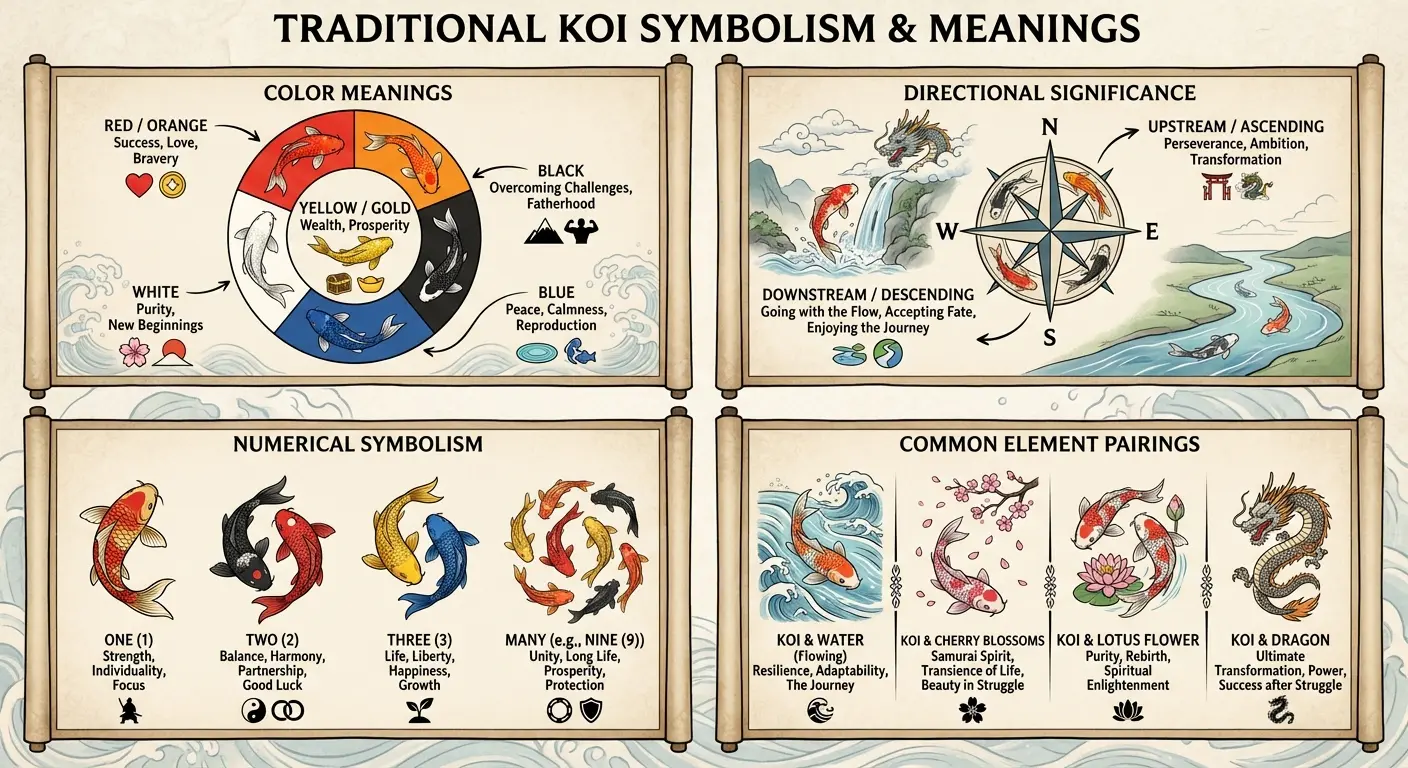
Everyone fixates on color. I get it. It’s the first thing you notice. Red or gold? Black or blue? Every tattoo meaning site has a color chart, and they’re not wrong exactly. Red does symbolize love in traditional Japanese art. Gold does represent wealth.
But here’s what those charts miss: your koi’s direction and how many you’ve got matter way more than whether it’s crimson or orange.
The original legend, the one all this symbolism comes from, is about a fish swimming UP a waterfall until it transforms into a dragon. The whole story is about direction and movement. Color never comes up. Not once.
Look, most tattoo guides treat koi designs like paintings in a gallery. Static images to evaluate based on aesthetics. But traditional Japanese and Chinese symbolism sees these fish differently. They’re active participants in a journey. The visual direction matters because it represents where you are in your own transformation.
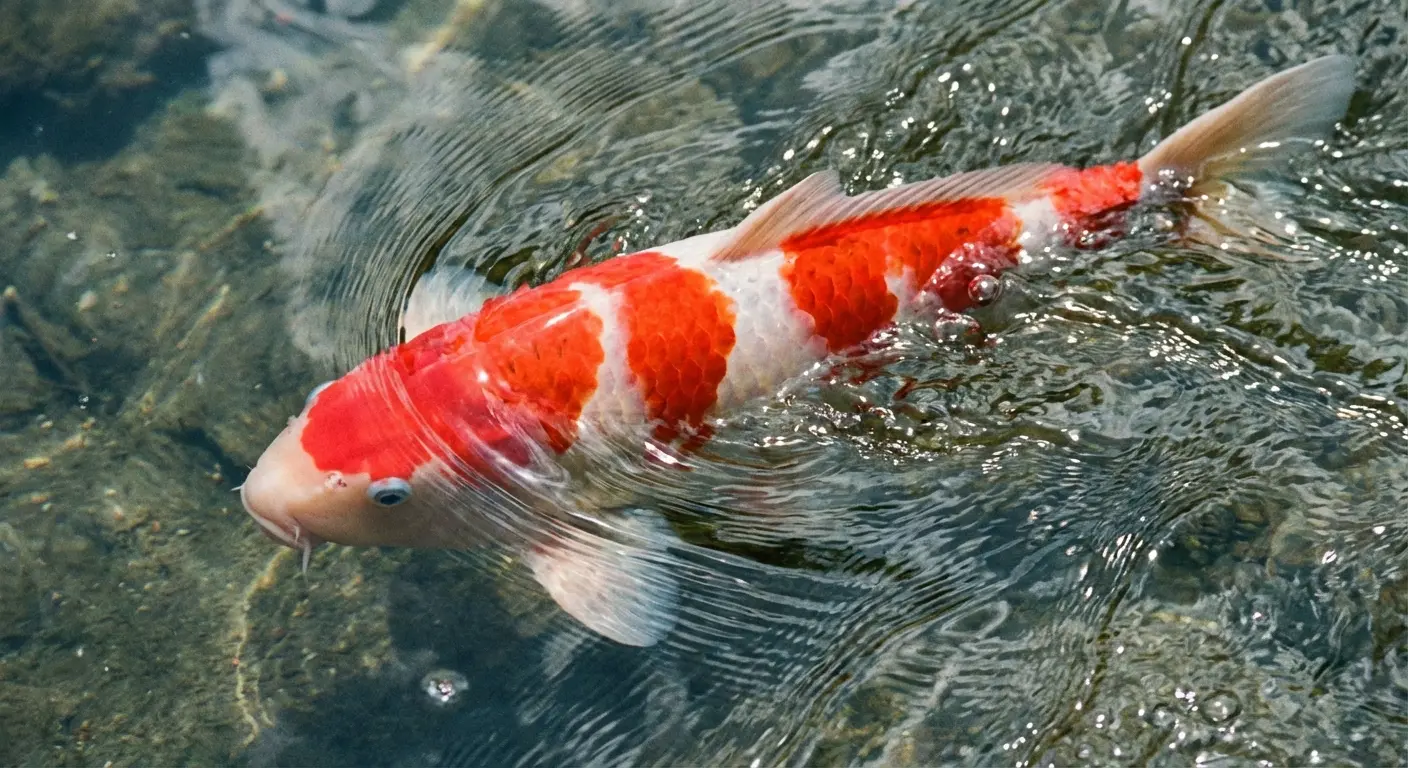
According to traditional Japanese Irezumi practices, black koi symbolize a father’s strength, while red or orange koi represent intense love and energetic transformation, yet these color associations tell only part of the story that most tattoo guides overlook entirely. The meaning of koi fish tattoo designs runs deeper than a simple color chart can capture.
When you’re researching your design, probably at 2am in a rabbit hole of Pinterest boards and Reddit threads, you’ll find endless discussions about whether to choose red, gold, or blue. Those conversations miss the real question: which way is your fish swimming, and what does that say about your journey? Understanding the significance of koi tattoo direction becomes essential when you’re trying to communicate your personal narrative through body art.
|
Traditional Focus |
What Actually Shapes Core Meaning |
|---|---|
|
Color selection (red, gold, black, blue) |
Direction of swim (upstream vs. downstream) |
|
Size of the tattoo |
Number of koi in the design (1, 2, or multiple) |
|
Artistic style choice |
Placement on body relative to natural flow |
|
Color combinations |
Relationship between multiple fish |
I’ve talked to enough people with koi tattoos they regret to know where this goes wrong. They chose colors they liked, found an artist with a great portfolio, but something about the final piece doesn’t match what they meant to express. Usually? The fish swims the wrong direction for their story, or they got two koi when their journey was solitary, or the placement fights against the intended meaning.
The Upstream Koi: Ambition That Doesn’t Quit
What Upstream Represents
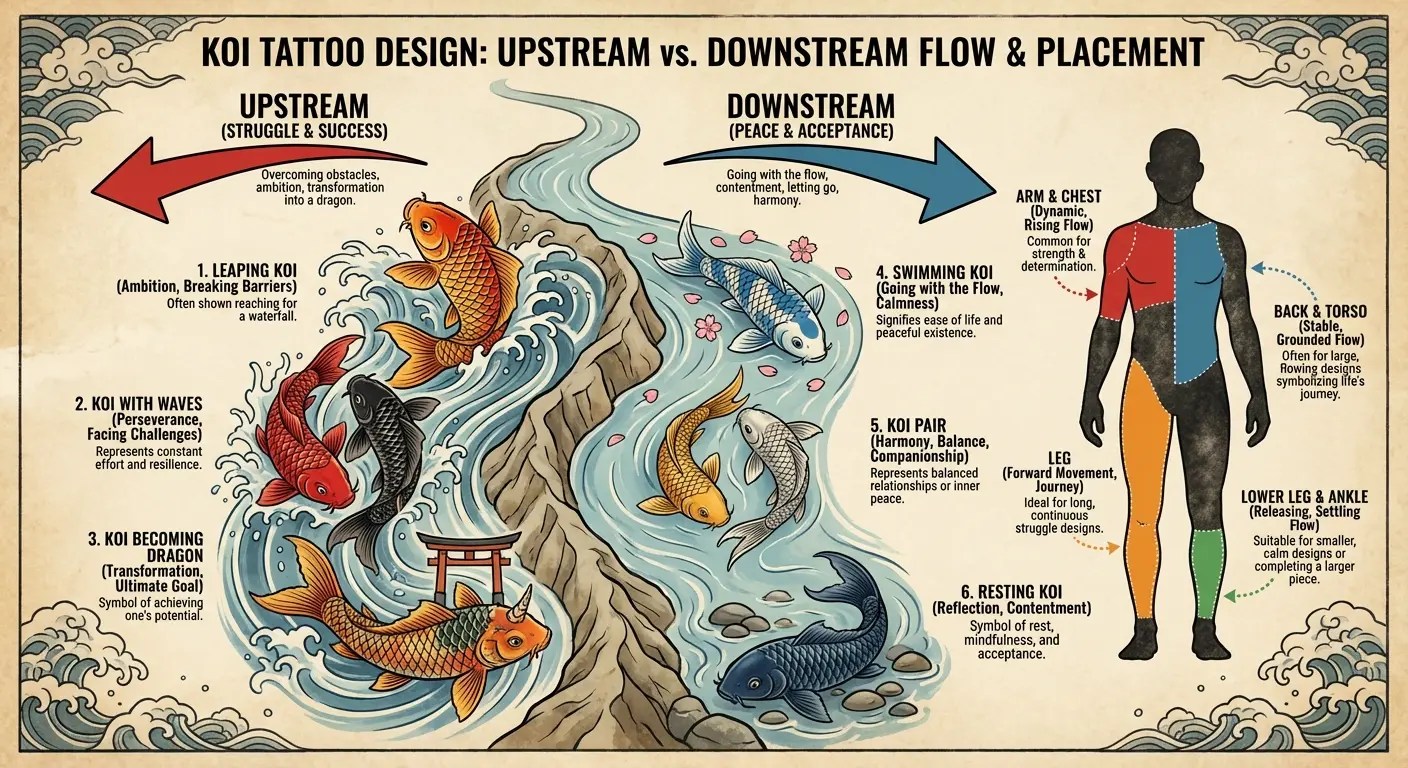
Koi swimming upward symbolize active struggle against obstacles. You’re choosing to broadcast that you’re in the fight, that resistance doesn’t deter you, that the current makes you stronger.
This orientation connects directly to the Chinese legend of koi climbing the waterfall at Dragon Gate. Most fish gave up. The ones that succeeded in reaching the top transformed into dragons. The fish swimming up haven’t completed their transformation yet. They’re still in the difficult part, still proving themselves.
Drew Kibler, a competitive swimmer, has a massive koi fish tattooed on his rib cage. As reported by Swimming World Magazine, athletes like Kibler often describe how these pieces represent their identity both as competitors and as individuals navigating constant challenge. The placement and orientation of such tattoos directly reflect the wearer’s relationship with ongoing struggle and achievement in their sport and personal life. The koi tattoo meaning here centers on perpetual forward motion.
The Cultural Weight of Choosing Upstream
Japanese irezumi tradition uses upstream koi to represent masculine energy (yang), forward momentum, and the refusal to accept circumstances as they are. You’re declaring an active relationship with your fate.
Similar to how phoenix tattoos represent transformation through rebirth, upstream koi symbolize ongoing metamorphosis through persistent effort rather than cyclical renewal. The significance of koi tattoo designs swimming upward lies in their representation of transformation as a continuous process, not a single event.

Western interpretations often simplify this to “never give up,” but the original symbolism carries more nuance. It’s not just about persistence. It’s about choosing the harder path because the transformation only happens through resistance.
When Upstream Might Not Match Your Truth
But here’s what nobody talks about: do you WANT to be in constant struggle mode?
Because that’s what you’re putting on your body. Permanent inspiration-poster energy. People get upstream koi because it sounds badass, then realize they’ve marked themselves with a symbol of perpetual striving. If you’ve reached a point where you’re learning to work WITH life instead of against it, an upstream koi might represent a philosophy you’re trying to move past.
Not saying it’s wrong. Just saying it’s worth thinking about before it’s forever. Your tattoo should reflect where you are or where you’re committed to going, not just what sounds impressive when you explain it to someone at a party.
Swimming Downstream: Acceptance, Not Defeat
The Misunderstood Direction
Downstream koi get shit on in Western tattoo culture. We’re conditioned to see anything that isn’t upward as failure.
Traditional symbolism says different. A koi swimming downstream has already completed the waterfall climb. It represents someone who’s fought their battles and now moves with wisdom rather than force. This is yin energy: receptive, flowing, powerful in its ease rather than its effort.
The meaning of a koi fish tattoo shifts entirely when the fish moves with the current instead of against it. You’re not announcing defeat. You’re marking completion.
Completion and Earned Peace
You don’t get a downstream koi to announce you’re a quitter. You get it to mark the end of a specific struggle, to honor that you’ve transformed and no longer need to prove anything through constant resistance.
This orientation suits people who’ve overcome addiction, survived illness, processed trauma, or simply reached a life stage where they’re done fighting currents that don’t serve them. The peace isn’t passive. It’s earned.
Lucy Smith, a college student, chose two koi fish in the shape of the eating disorder recovery logo to represent perseverance through her healing journey. As she shared in The Butler Collegian, her koi fish tattoo symbolizes not just the struggle itself, but the transformation that comes from moving through recovery. The design acknowledges both the fight and the wisdom gained from choosing a different relationship with that struggle, working with healing rather than against the current of her past.

Pairing Direction With Your Journey
Some people put upstream koi on one side of their body and downstream on the other, representing both the struggle and the resolution. That’s not indecision. That’s honesty.
Your koi’s direction should reflect either where you are now or where you’re committed to moving. Neither direction is superior. They’re different truths.
I knew a guy who initially wanted upstream koi because that’s what everyone gets. Then he realized his story was about finally learning to stop fighting. The downstream design ended up meaning more to him than any amount of inspirational struggle symbolism ever could.
How Many Koi Are in Your Design? The Count Changes Everything
You’ve probably noticed that some koi tattoos feature one fish, others show two, and some include entire schools. That’s not just an aesthetic choice or a matter of available skin space.
The number of koi in traditional Asian art carries specific symbolic weight. We’re not talking about numerology or superstition. We’re talking about intentional design language that’s been consistent across centuries of visual culture.
Western tattoo culture treats the number of koi as a compositional decision. You fill the space you have. But if you’re drawing from Japanese or Chinese koi symbolism, the count is part of the message. The koi fish tattoo design you choose should reflect whether your transformation was solitary, partnered, or communal.
Before you decide how many koi you need, ask yourself: Was this journey solo or shared? Are you representing balance between two parts of yourself, or are you marking a single transformation? Did your family or community play a role, or was this all you? Will you potentially want to add more koi later as your story evolves? Does the available body placement naturally accommodate your chosen number?
Single Koi Symbolism: The Solo Journey
Independence and Self-Reliance
One koi swimming alone represents a solitary journey. You’re not waiting for support, not moving with a group, not balancing yourself against a partner. Your transformation is entirely your own.
This resonates with people who’ve had to save themselves, who’ve learned that they’re their own most reliable resource. It marks moments when you realized no one else could do the work for you. The koi fish tattoo symbolism of a single fish speaks to radical self-reliance.
The Strength and Risk of Solo Symbols
A single koi is powerful, but it’s potentially lonely. If community and connection matter deeply to you, a solo fish might not represent your complete truth.
Some people choose single koi during independent phases of life, then later add elements or additional fish to represent how their philosophy evolved. Your tattoo doesn’t have to contain your entire life story, but it should honestly represent the chapter you’re marking.
I’ve seen people get single koi tattoos during divorces, after leaving toxic families, or when starting over in new cities where they knew no one. The solitary fish validated their experience of having to do it alone. Years later, some of those same people added partner fish or surrounding elements as their circumstances changed. Others kept the single koi as a permanent reminder of their capacity for self-sufficiency.
Paired Koi: Duality in Motion
Yin and Yang in Fish Form
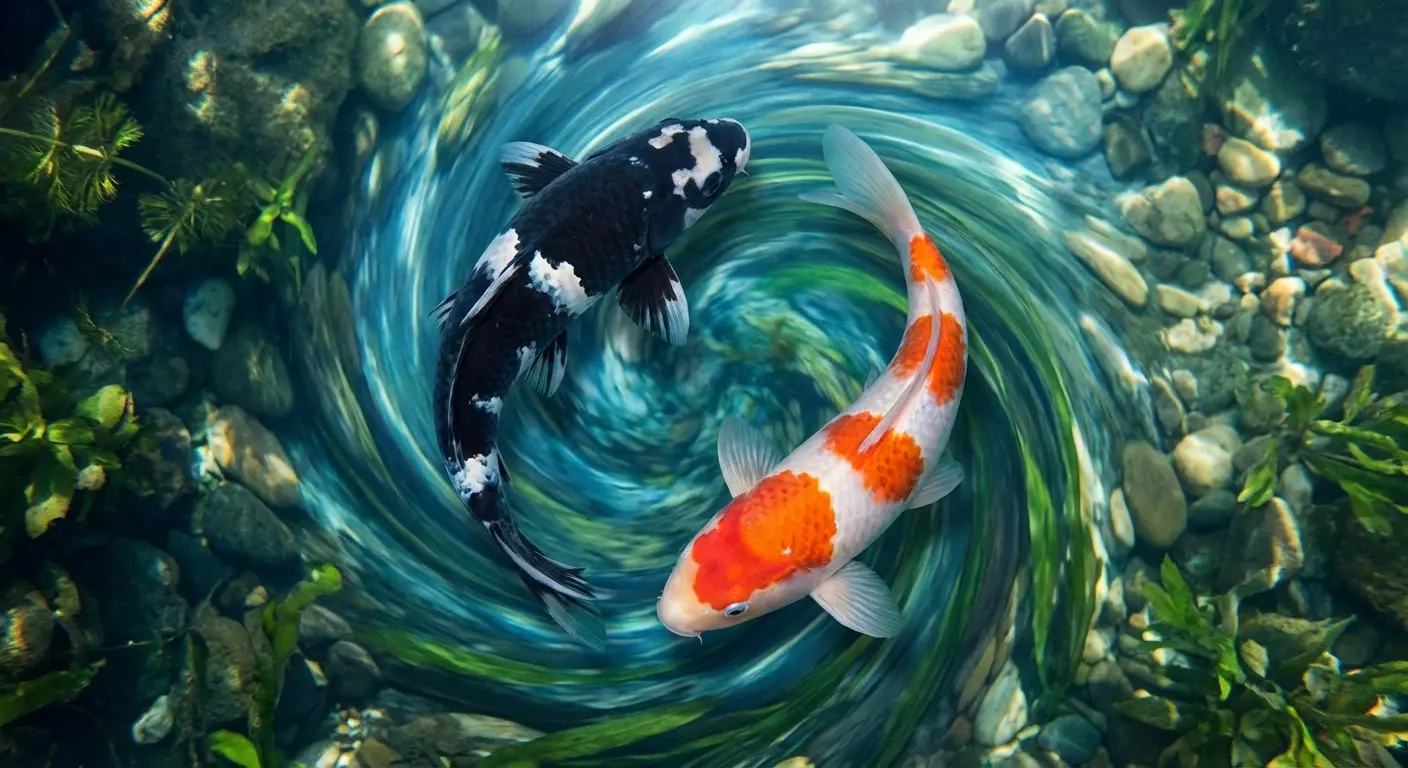
Two koi swimming in a circular pattern (often one up, one down) directly reference yin-yang philosophy. You’re representing the balance of opposing forces: struggle and ease, masculine and feminine energy, darkness and light.
This isn’t about romance. It’s about acknowledging that you contain contradictions, that both states are necessary, that balance requires both energies in constant motion.
Olympic gymnast Jordan Chiles features yin-yang koi fish tattooed on her back (Page Six), a design that became visible during the 2024 Paris Games through her Team USA leotard. According to Chinese Feng Shui principles, this paired koi fish tattoo design represents balance and harmony, not romantic partnership, but the core duality required for personal equilibrium during high-pressure competition and life transitions. The koi fish tattoo design she chose speaks to internal balance rather than external relationships.
Partnership Beyond Romance
Paired koi can represent any significant duality: you and a sibling, you and your past self, two parts of your identity that seem contradictory but complete each other.
The key is that the two fish relate to each other. They’re in conversation, in balance, in tension. They’re not just two separate koi that happen to share space.
Color Combinations in Pairs
When you have two koi, their colors often contrast intentionally: black and white, red and blue, gold and black. The color pairing adds another layer of meaning to the duality.
This is where color symbolism becomes more relevant. You’re not just choosing a single color’s meaning. You’re choosing how two meanings interact, balance, or create tension with each other. Japanese koi tattoos traditionally use these color contrasts to emphasize the relationship between the paired fish.
Multiple Koi: Community and Life Cycles
Three or more koi shift the symbolism from individual journey or partnership to community, family structure, or the full cycle of life. You’re representing something larger than personal transformation.
Family and Generational Meaning
Some designs show three koi representing parents and child, or multiple koi representing siblings. The sizes often vary to indicate different generations or life stages.
This composition works for people marking family bonds, honoring lineage, or celebrating their role as parents. The individual fish might have different colors or directions, each representing a specific family member’s personality or journey. Japanese koi fish tattoos often incorporate these family narratives through careful attention to the number and arrangement of fish.
Abundance and Prosperity
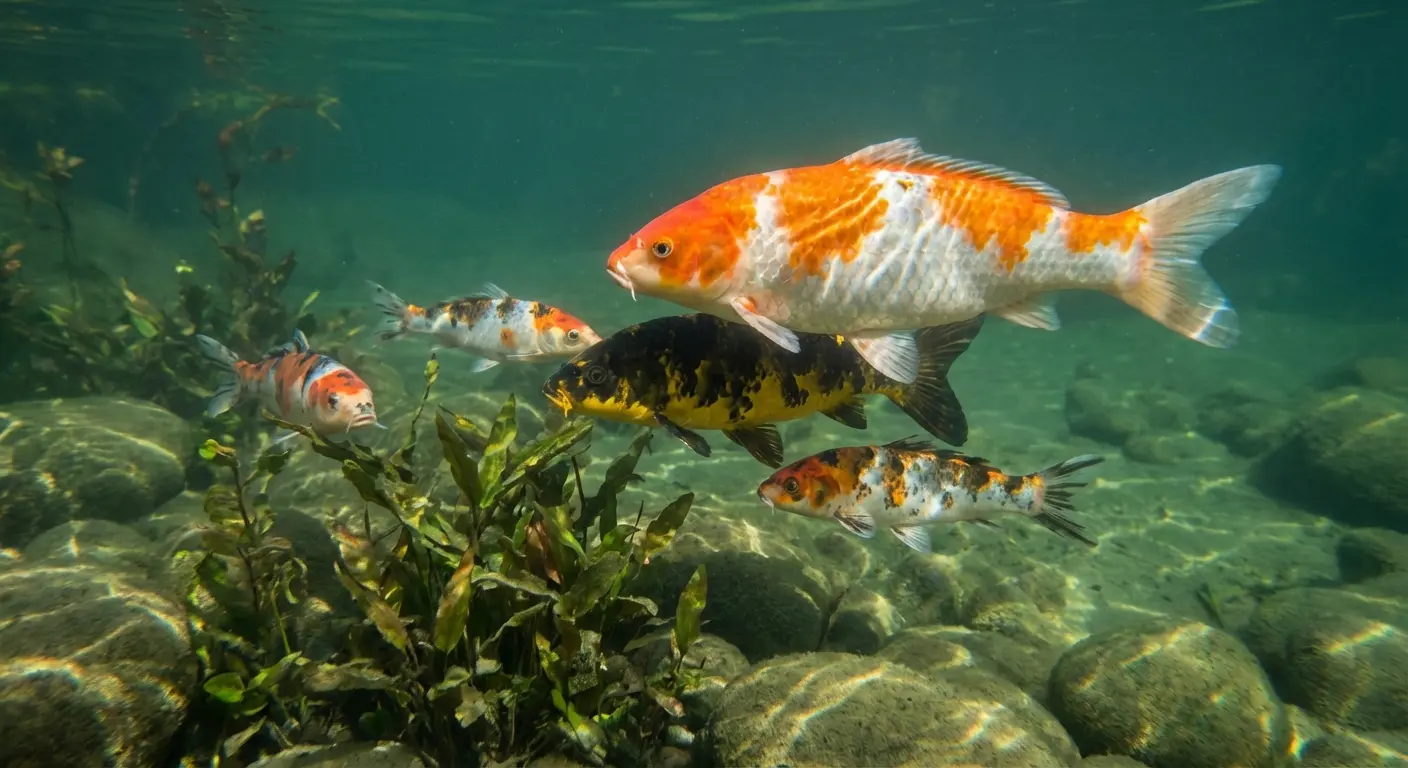
Schools of koi swimming together traditionally symbolize abundance, wealth that multiplies, and prosperity that benefits an entire community rather than just an individual.
This meaning comes from koi’s association with successful fish farming and their ability to thrive in groups. Multiple fish represent resources that grow. When people ask about the meaning of their multi-koi design, we point them toward these themes of collective success and shared prosperity.
The Black Koi Exception: When Color Actually Dominates Meaning
Okay, so black koi? They’re weird. They break all my “direction matters more than color” rules.
Adversity Overcome
Black koi represent overcoming serious adversity, emerging from depression, surviving circumstances that should have destroyed you. The color itself carries this meaning regardless of which direction the fish swims.
This comes from the idea that the black k
oi has already been through the transformation. It’s been tested by the darkest waters and survived. The black color is the evidence of that trial. Black koi represent overcoming an obstacle successfully, including depression, drug addiction, or an abusive relationship, making them the rare case where color meaning can dominate the directional symbolism in traditional koi tattoo interpretation. The koi fish tattoo meaning changes completely when you choose black.
When Black Koi Swim Upstream
A black koi swimming upstream represents ongoing struggle with darkness or adversity. You’re still in the fight with depression, addiction, or trauma. You’re not done yet, but you’re still moving.
This combination (black color plus upstream direction) creates a specific message about persistent struggle with heavy circumstances. The meaning of koi carp tattoo designs in black swimming upward acknowledges that some battles don’t end quickly.

When Black Koi Swim Downstream
A black koi moving downstream suggests you’ve emerged from the darkness and now carry that experience as wisdom rather than active burden. You survived, and now you move forward with the knowledge that you can survive anything.
The downstream black koi becomes a declaration of victory over circumstances that could have destroyed you. It’s not about forgetting what happened. It’s about integrating that darkness into who you’ve become without letting it define your current direction.
Dragon Transformations and the Waterfall Myth
The Legend That Started Everything
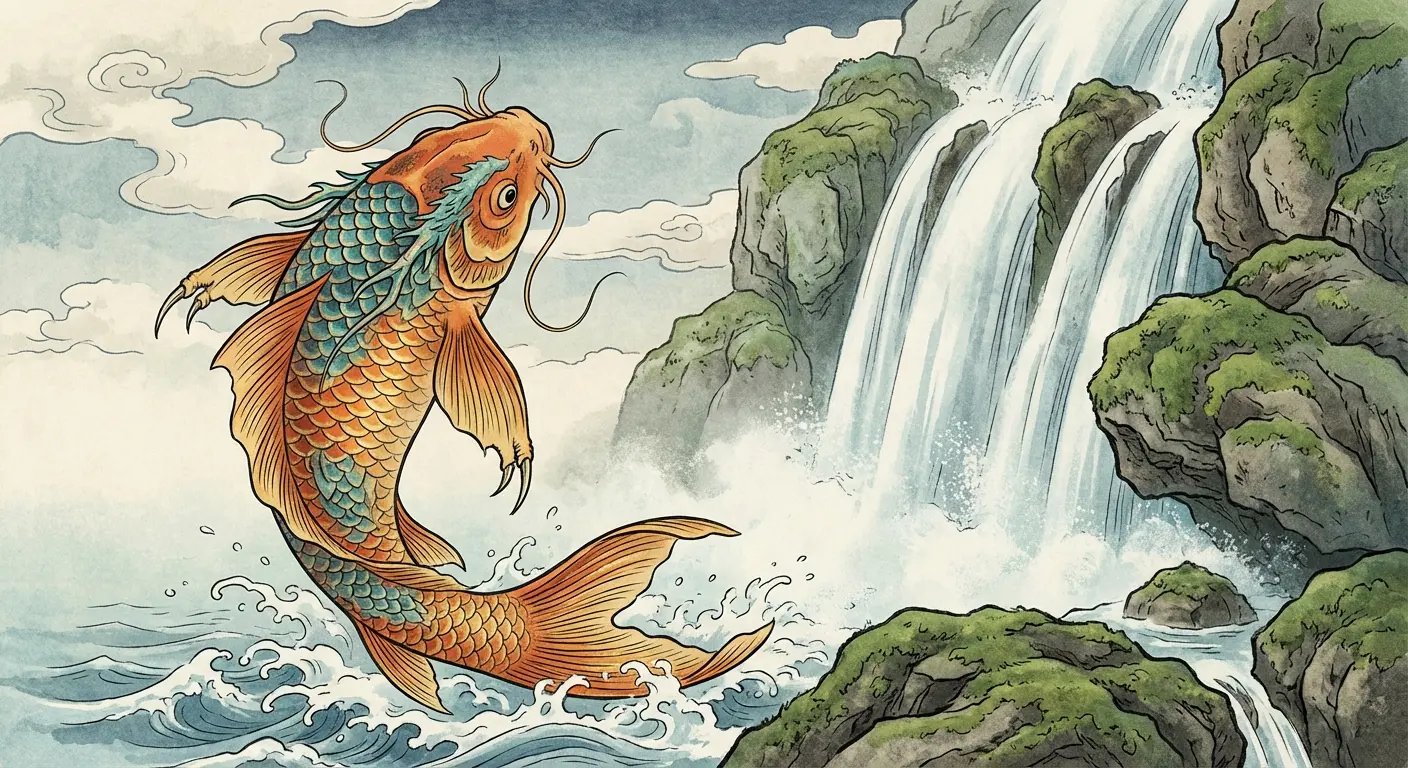
The Chinese legend tells of koi swimming up the Yellow River, facing the waterfall at Dragon Gate. Most fish gave up. The ones that persevered, that kept swimming against the impossible current, transformed into dragons when they reached the top.
This story is why koi symbolize perseverance and transformation in the first place. Everything else branches from this core myth. Understanding the dragon transformation connects to broader themes explored in Japanese traditional tattoo symbolism, where mythological creatures represent different stages of spiritual and personal evolution.
Showing Partial Transformation
Some koi fish tattoo design variations show koi with dragon whiskers, scales shifting to dragon scales, or heads beginning to change shape. You’re representing the in-between state, the middle of transformation where you’re no longer what you were but not yet what you’re becoming.
This works for people in active transition: recovering from addiction, building a new career, becoming a parent, processing major identity shifts. You’re acknowledging the discomfort and power of being between states. The koi fish tattoo design that shows partial transformation speaks to anyone who feels caught between two versions of themselves.
Including the Waterfall
Adding the waterfall to your design emphasizes the obstacle itself. You’re not just showing the fish. You’re showing what it’s overcoming.
This makes the struggle more explicit, the achievement more visible. It’s a bolder statement than a koi alone. I’ve worked with clients who needed that visual representation of the specific barrier they faced. The waterfall becomes a stand-in for whatever nearly stopped them.
Placement Psychology: Where Your Koi Swims on Your Body
Vertical Placements and Natural Flow
A koi swimming up your forearm (from wrist to elbow) reinforces upstream symbolism. The fish moves against gravity, against the natural downward pull. You feel this every time you look at it.
A koi swimming down your forearm works with gravity’s flow. Even if the fish is technically swimming upstream in the design, the placement on your body creates a downstream feeling.
Professional tattoo artist commentary from Burned Hearts Tattoo emphasizes this principle: “Personalizing a koi fish tattoo begins with the direction of the swim and the color palette, which dictate the individual’s story of struggle or success. For a client celebrating an ongoing challenge, I design the koi swimming upstream, often referred to as the ‘warrior’s climb,’ using bold, saturated oranges and reds to symbolize energy and fire. Conversely, for someone marking a major achievement, we swim the koi downstream in calmer, deep blue water ripples to represent a state of flow and peace.”
Body placement considerations mirror principles discussed in irezumi tattoo traditions, where the body’s natural contours and energy flow inform design orientation and composition.
Torso Placement and Protection
Koi on the chest or back often represent protection of your core, your heart, your essential self. The fish guards what’s most vulnerable.
Traditional Japanese koi tattoos place koi on the back as part of larger water scenes, with the spine often serving as a river or waterfall. The body’s architecture becomes part of the design’s geography.
Limb Placement and Action
Koi on arms or legs connect to action, movement, the parts of you that interact with the world. These placements feel more active, more about what you do than who you are at your core.
Wrapping koi around a limb (especially in a circular pattern with paired fish) creates continuous movement. The design has no beginning or end, representing ongoing cycles rather than linear journeys.
Combining Koi With Other Elements (And What That Does to the Meaning)
Koi and Lotus: Enlightenment Through Struggle
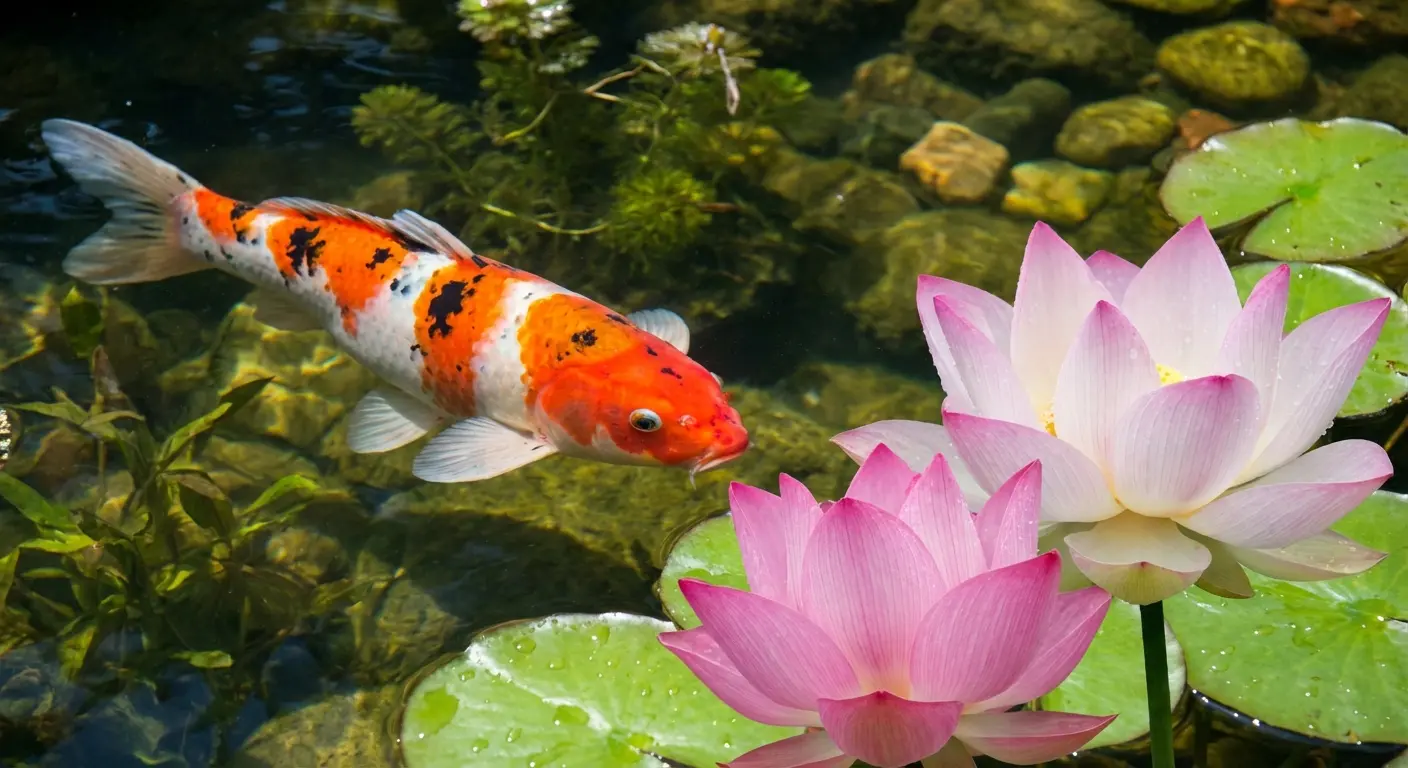
Lotus flowers grow from mud, rising through murky water to bloom above the surface. Paired with koi, you’re doubling down on transformation symbolism: the fish transforms through struggle, the flower transforms through rising above difficult origins.
This combination works well if you’re representing spiritual growth alongside personal achievement. According to Lucky Koi Tattoo, the lotus paired with koi represents purity and the ability to rise above challenges, as the flower grows in muddy waters and blooms beautifully, creating a compound symbol where both elements reinforce the narrative of transformation through adversity.
The compound symbolism of combining koi with lotus flowers parallels the layered meanings explored in lotus flower tattoo symbolism, where both elements represent transformation through adversity. The blue koi fish tattoo meaning shifts when you add lotus flowers. You’re emphasizing spiritual awakening alongside physical perseverance.
Water Elements: Context for the Journey
Adding waves, ripples, or flowing water gives your koi environmental context. Rough waves suggest ongoing difficulty. Calm water suggests peace or easier periods. The water quality tells us about the conditions of your journey.
Traditional Japanese wave patterns (especially the ones inspired by Hokusai’s “Great Wave”) add specific cultural weight. You’re placing your koi in a recognized artistic tradition, not just generic water. The red koi fish tattoo meaning becomes more nuanced when surrounded by turbulent versus peaceful water.
Cherry Blossoms: Impermanence and Beauty
Cherry blossoms represent life’s temporary nature, beauty that doesn’t last. Combined with koi (which can live for decades), you’re creating tension between permanence and impermanence.
This pairing suits people honoring someone they’ve lost or marking a beautiful period of life that ended. The koi persists while the blossoms fall.
Maple Leaves: Seasonal Change and Time’s Passage
Maple leaves in Japanese imagery represent autumn, change, and the passage of time. Your koi swims through seasons, through years, adapting to conditions that shift around it.
This works for designs marking long-term journeys or acknowledging that transformation isn’t a single event but an ongoing process through different life phases. The gold koi fish tattoo meaning deepens when maple leaves acknowledge the seasons you’ve weathered.
If you’re designing a koi with both cherry blossoms and rough waves, you’re representing beauty found within ongoing struggle. The blossoms acknowledge life’s fragility while the turbulent water shows you’re still navigating difficult conditions. This creates a more complex narrative than either element alone: you’re finding moments of beauty and meaning even while the current remains challenging. The koi swimming through this environment becomes a statement about maintaining grace under pressure rather than simply enduring hardship.
Getting Your Koi Design Right Before the Needle Touches Skin
You’ve done the research. You know whether your koi should swim upstream or down, whether you need one fish or three, which elements reinforce your intended meaning. Now you’re facing the gap between knowing what you want symbolically and seeing what that looks like on skin.
The Communication Challenge
Real talk about the design process: explaining all this symbolic stuff to a tattoo artist is harder than it sounds. You want “a black koi swimming upstream with partial dragon transformation and cherry blossoms, representing ongoing struggle with depression but also hope”? Good luck making that not sound insane when you say it out loud.
Some artists excel at this translation. Others need more concrete visual direction. Either way, you’re more likely to get what you want if you can show them something close to your vision rather than just describing it.
Why Reference Images Only Get You Halfway
You could collect dozens of reference images: a koi in the right direction from one design, the dragon transformation style you prefer from another, the water treatment you want from a third. But that still leaves your artist assembling puzzle pieces that might not fit together.
What you need is to see your specific combination of elements rendered as a unified design. You need to know if your symbolic intentions work visually before you commit to permanent ink.
Testing Your Design Before It’s Permanent
Tattoo Generator IQ lets you describe exactly what you want (including all those symbolic details about direction, number, and combined elements) and generates professional-quality designs in seconds. You can see whether your upstream black koi with lotus flowers creates the feeling you’re going for, or whether you need to adjust elements before you ever walk into a shop.
You’re not replacing your tattoo artist. You’re giving them a clear visual reference that already incorporates your symbolic intentions. They can refine it, adapt it to your body’s specific contours, add their artistic interpretation. But you’re starting from a design that already represents your meaning instead of hoping the translation works out.
Create your koi design now and see your symbolic vision rendered before you commit to permanent ink.
Final Thoughts
The koi swimming on your skin will tell a story whether you intend it to or not. Direction, number, and combined elements create that narrative more powerfully than color ever could (with that one black koi exception).
You don’t need to follow every traditional rule. Plenty of people get koi tattoos purely for aesthetic reasons, and that’s completely valid. But if you care about symbolism, if you want your ink to represent something true about your journey, then these details matter.
Upstream or downstream isn’t about which is better. It’s about which is honest. One koi or five isn’t about filling space. It’s about whether your transformation is solitary or communal. Adding lotus flowers or leaving them out isn’t decoration. It’s deciding which aspects of your story need visual representation.
Your koi tattoo can carry as much or as little meaning as you want. I’m just making sure that if you want it to mean something specific, you’re making choices that communicate that meaning. The symbolism is there, consistent across centuries of artistic tradition, waiting for you to use it intentionally.
The fish is already swimming. You just need to decide which direction it’s going and what that says about where you’ve been.
