21 Lone Wolf Tattoos That Understand What Most Artists Miss About Solitude
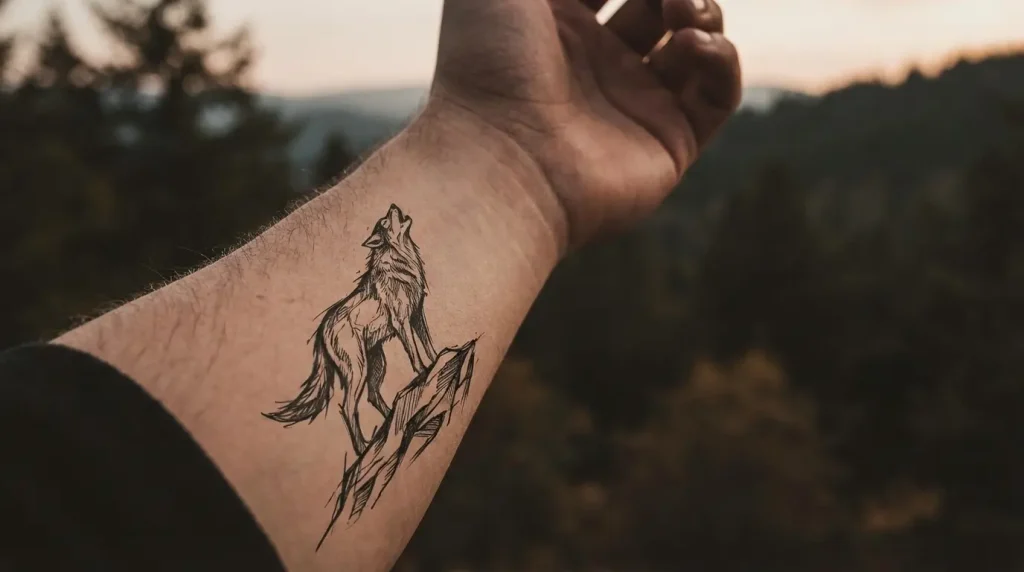
Everyone wants a lone wolf tattoo right now. Problem is, 90% of them suck.
While a lone wolf tattoo represents an inner wildness that doesn’t need anyone else’s help, the designs flooding Instagram feeds focus on aggression and dominance rather than the quiet complexity of actual solitude.
I’ve talked to so many people who look at those basic howling-at-the-moon designs and just know it’s wrong. They can’t explain what they actually want, just that it’s not… that. This guide breaks down 21 lone wolf tattoo ideas that get it right by embracing vulnerability, restraint, and the emotional weight that comes with choosing (or being forced into) isolation.
Table of Contents
Wolves That Speak Without Howling
-
The Silhouette Against Negative Space
-
Geometric Containment Wolf
-
Single Line Continuous Wolf
-
Minimalist Dot Work Profile
-
Micro Lone Wolf Placement
-
Abstract Fragment Wolf
-
Negative Space Moon Integration
Wolves Carrying Emotional Weight
-
The Backward Glance Wolf
-
Scarred and Weathered Wolf Portrait
-
Wolf with Downturned Eyes
-
Split Face Duality Wolf
-
Wolf Dissolving into Particles
-
Caged Ribcage Wolf
-
Wolf Emerging from Shadows
Wolves in Their Element (Not What You Think)
-
Wolf in Urban Decay
-
Desert Wolf with Cacti
-
Wolf Reflected in Still Water
-
Tundra Wolf with Northern Lights
-
Wolf Among Fallen Trees
-
Cliffside Contemplation Wolf
-
Wolf in Fog with Obscured Features
TL;DR
Most lone wolf tattoos try to show strength. Boring. The interesting ones show vulnerability, the part where being alone actually kind of sucks sometimes.
Minimalist approaches work better than you’d think. Sometimes a simple outline says more than a hyper-detailed piece because it mirrors the stripped-down nature of choosing your own path.
Where you put your wolf matters more than the wolf itself. Urban settings and unexpected landscapes tell completely different stories than the typical forest scene. A wolf in a crumbling city hits different than a wolf in the woods.
Emotional nuance separates cliché from meaningful. Backward glances, weathered features, and moments of stillness convey depth that aggressive poses can’t touch. Your wolf doesn’t need to look fierce. It needs to look real.
Size changes everything. A tiny wolf tucked behind your ear says something entirely different than a full back piece, even with identical imagery. The intimacy of micro tattoos makes them feel like secrets rather than statements.
The best lone wolf tattoos acknowledge that solitude isn’t always chosen and isn’t always comfortable. That’s what makes them relatable instead of performative. Nobody’s lone wolf journey is all strength and independence. Sometimes it’s just lonely.
Negative space and what you don’t show matters as much as what you do. The empty areas around your wolf can communicate isolation more powerfully than any howling pose. Less is often more.
Wolves That Speak Without Howling
Most people get the lone wolf concept backwards. They think it’s about broadcasting independence, so they choose aggressive poses, bared teeth, and dramatic howling silhouettes.
Real solitude doesn’t announce itself.
It exists in quiet moments, in restraint, in the space between things.
Look, I’ve helped hundreds of people figure out their wolf tattoo concepts, and here’s what I’ve noticed: the most powerful designs are the ones that embrace subtlety. They don’t scream “I’m a lone wolf” because that defeats the entire purpose. These first seven designs understand that less communication often says more.
1. The Silhouette Against Negative Space
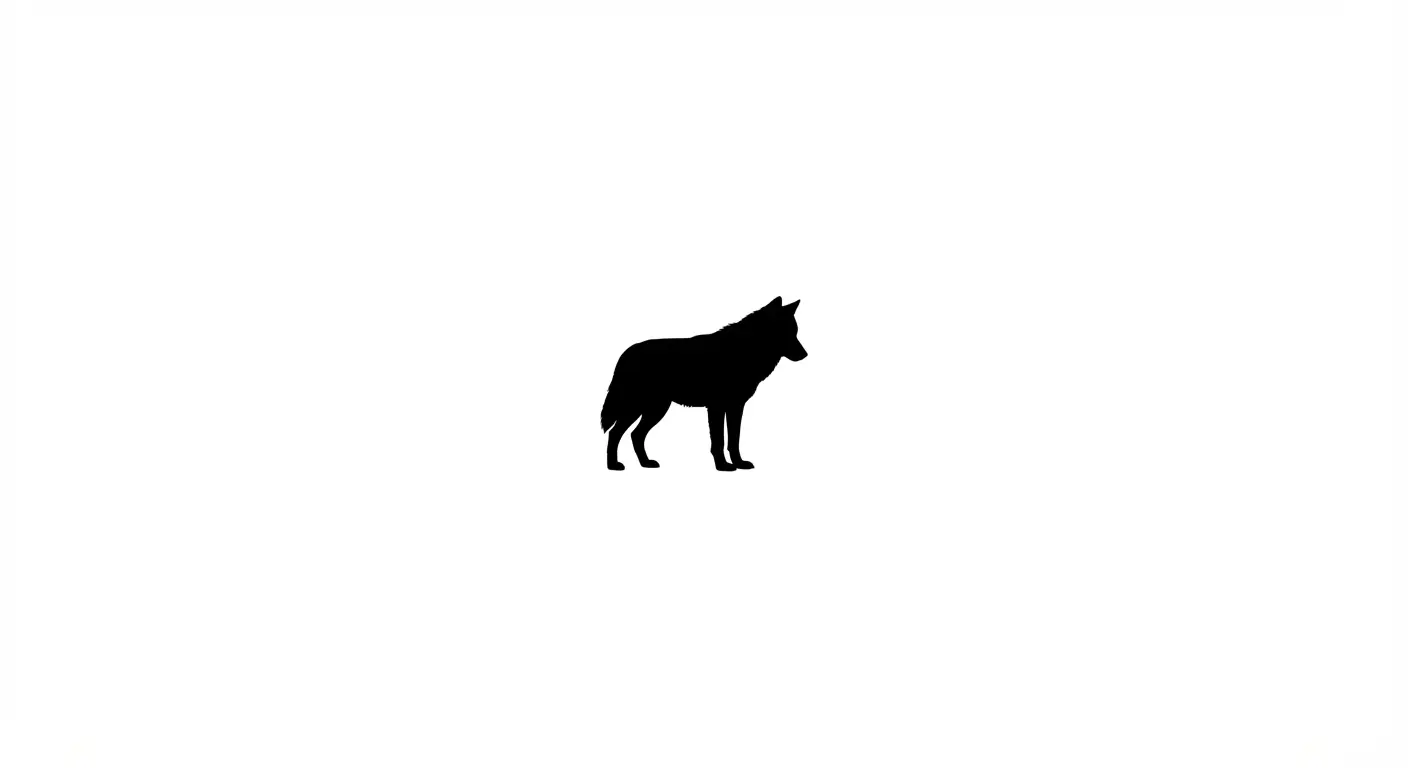
This design strips the wolf down to its essential outline, letting the unmarked skin do most of the talking. The wolf appears as a solid black silhouette, but the power comes from everything around it.
You’re not filling space. You’re defining absence.
Put this on your forearm, side ribcage, or behind your ear. The wolf can be sitting, standing still, or in mid-stride, but never in an action pose. Keep it small to medium sized so the negative space feels intentional rather than accidental.
This approach mirrors the actual experience of choosing solitude: you become more aware of what’s not there than what is. Your artist needs a steady hand because any wobble in the line work breaks the spell. The emptiness isn’t a mistake or laziness. It’s the entire point.
|
What It Does |
Don’t Fuck This Up By… |
|---|---|
|
Creates stark visual contrast with solid black |
Adding internal details that break the silhouette effect |
|
Communicates isolation through emptiness |
Filling too much of the available canvas |
|
Suggests stillness and contemplation |
Using action poses that imply movement or aggression |
|
Allows intentional negative space |
Choosing areas where skin folds disrupt the clean outline |
|
Maintains crisp boundaries |
Allowing line wobble or inconsistent edges |
2. Geometric Containment Wolf
A wolf portrait or profile trapped (or protected, depending on how you see it) within geometric shapes. Triangles, hexagons, circles, or custom angular frameworks.
The geometry boxes it in, which adds a layer of meaning most people miss. You’re not just alone. You’re operating within self-imposed limitations or structures.
The wolf can be realistic while the container stays strictly geometric, creating this visual tension that makes you look twice. Upper arm, chest, or calf work best because you need enough flat space for the shapes to read clearly. The line weight between the wolf and the geometry should differ slightly so they’re clearly separate elements sharing space.
Some people interpret this as feeling boxed in by their independence. Others see it as choosing their own parameters. Both readings work, which is why the design has staying power beyond trendy geometric tattoo phases.
Exploring various geometric tattoo designs helps you find the right framework for your wolf.
3. Single Line Continuous Wolf
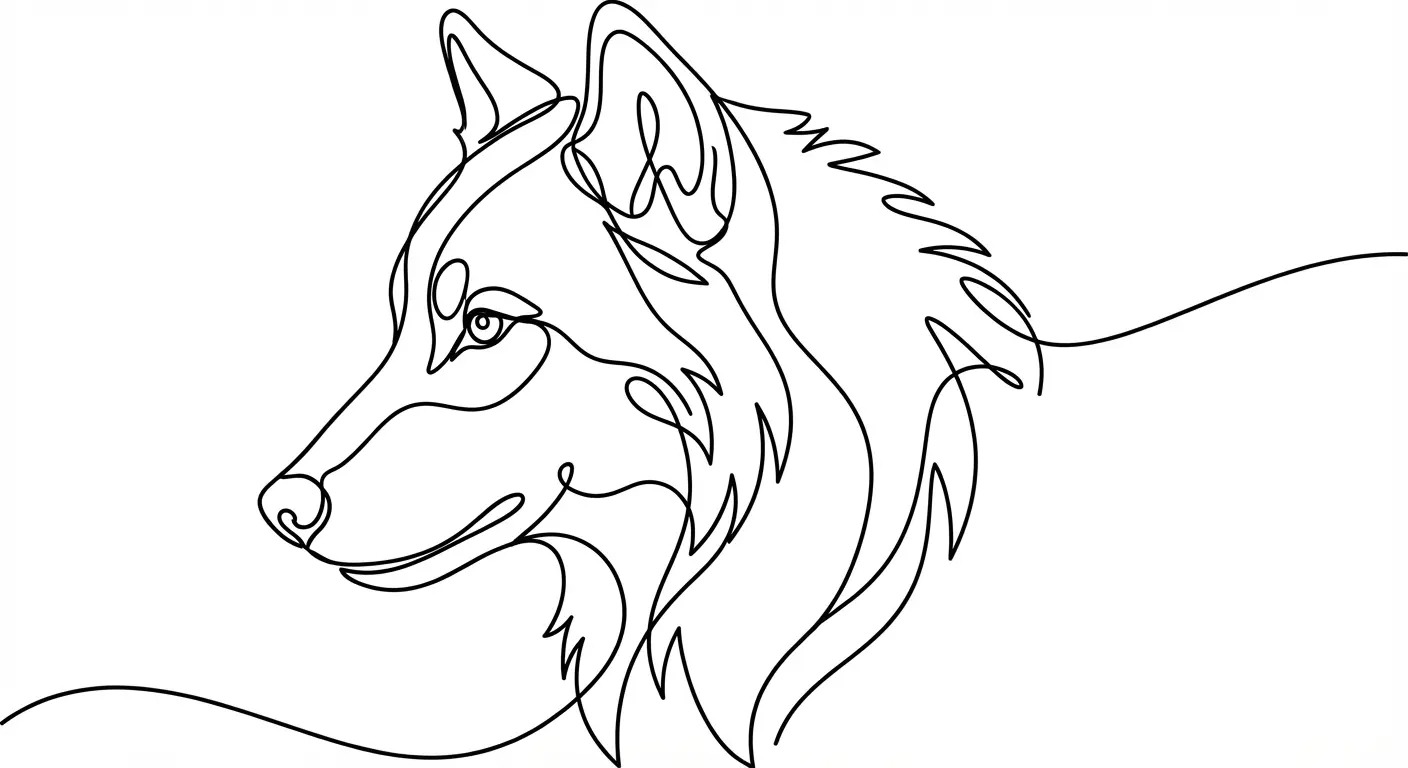
One line. That’s it.
Your artist draws the whole wolf without lifting the needle (well, conceptually, obviously they have to take breaks). This technique has exploded in popularity, but it fits the lone wolf concept for reasons beyond aesthetics.
The continuous line represents an uninterrupted journey, a path that doesn’t branch off or connect to anything else. The style forces simplification. You can’t include every detail, so you’re left with the essence of “wolf” rather than a photorealistic rendering.
Put this on your outer forearm, following the curve of your shoulder blade, or wrapping slightly around your ankle. The line flow should follow your body’s natural contours. The design reads as both complete and minimal simultaneously. It’s finished but not cluttered, alone but not incomplete.
That duality makes it more conceptually interesting than it first appears.
4. Minimalist Dot Work Profile
Thousands of tiny dots create a wolf’s profile, usually facing left or right, never straight at the viewer. The dot work technique (stippling) builds dimension through density variation rather than solid shading.
Where dots cluster tightly, you get shadow. Where they spread out, you get light. The effect looks almost like the wolf is fading in or out of existence, which captures something essential about solitude: you’re present but somehow separate from everything around you.
This style takes forever because each dot is individually placed. The payoff is a design that looks softer and more contemplative than bold line work. Inner forearm, shoulder, or upper back are your best bets.
The profile orientation matters because you’re seeing the wolf from the side, as an observer rather than in confrontation. You’re watching someone (something) that doesn’t know you’re there, which flips the typical lone wolf dynamic. Instead of being the isolated one, you’re witnessing isolation from the outside.
5. Micro Lone Wolf Placement
Size completely changes meaning. A tiny wolf (I’m talking 1-2 inches maximum) placed somewhere unexpected tells a different story than a large, prominent piece.
Behind the ear, on the side of a finger, inner wrist, or even on the side of your foot. The small scale forces simplification, so you’re working with basic shapes and minimal detail. But the intimacy of a micro tattoo makes it feel like a secret rather than a statement.
Most people won’t even notice it unless they’re close to you, which mirrors how real lone wolves operate.
They don’t need an audience.
The placement options expand dramatically when you go micro because you’re not worried about having enough canvas space. You can tuck it into spots that larger designs can’t access. The technical challenge is finding an artist who can work at that scale without the design turning into a blob as it ages. Micro tattoos require precision and an understanding of how ink spreads over time. Not every artist can pull this off cleanly.
Researching small tattoo ideas helps you understand what works at reduced scales.
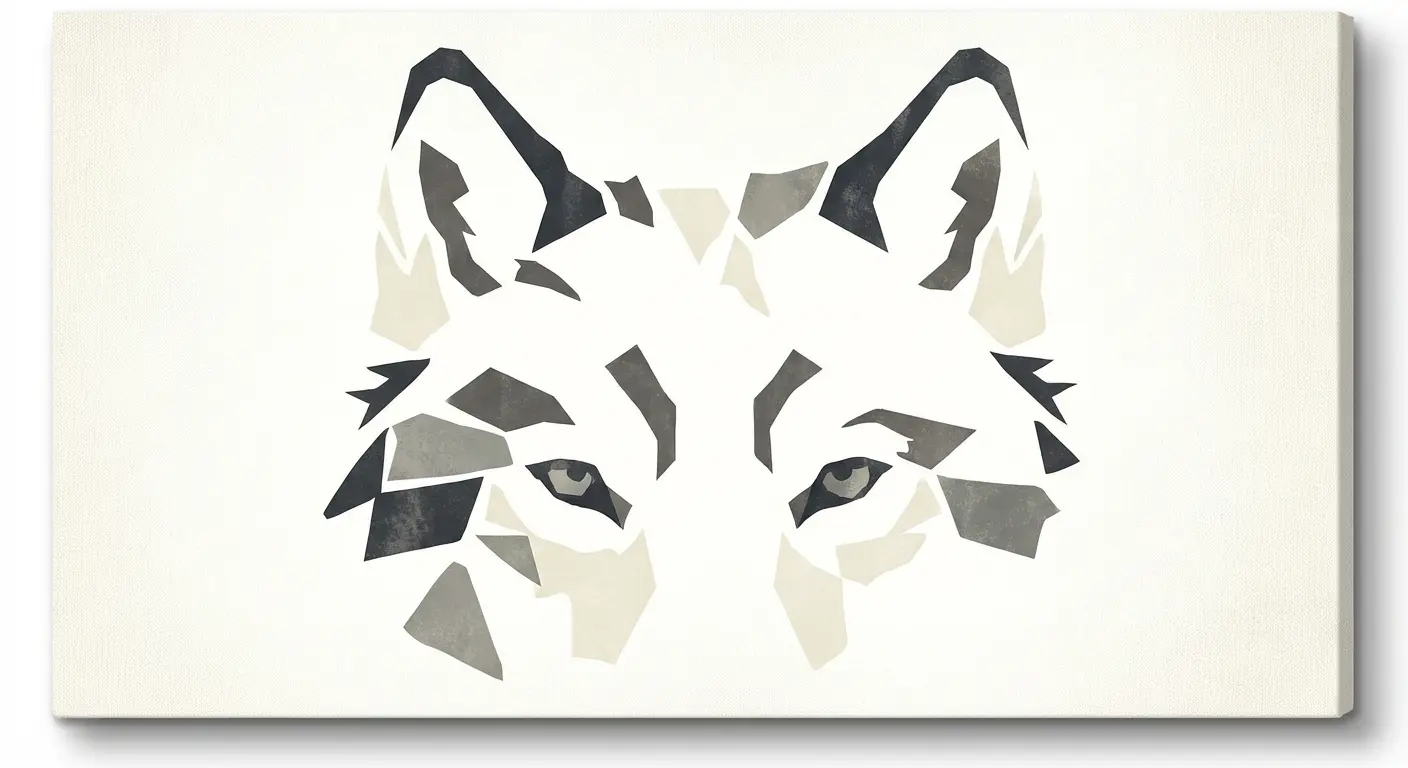
6. Abstract Fragment Wolf
You’re not getting a complete wolf. You’re getting pieces.
Maybe just the eyes and the suggestion of a snout. Perhaps only the ears and a hint of fur texture. The fragmentation creates visual interest while commenting on the incomplete nature of how we present ourselves. Nobody sees the whole picture, especially when you operate independently.
This approach works because it trusts the viewer to fill in gaps, which makes them active participants in the design rather than passive observers. The fragments can be arranged in a scattered pattern or kept close together with deliberate gaps.
Your forearm offers a nice vertical canvas. The shoulder blade gives you room to scatter pieces.
What matters most is making the fragments recognizable as wolf without being so obvious that you might as well have just gotten a complete wolf. You’re walking a line between abstraction and representation, which requires an artist who understands composition and negative space.
7. Negative Space Moon Integration
The wolf exists as negative space within a solid circle (the moon), or the moon exists as negative space within the wolf’s silhouette. Either version plays with the classic wolf and moon connection but subverts it by making absence the focal point.
When the wolf is the negative space, you see its shape defined by what’s not inked. When the moon is negative space, the wolf’s silhouette contains the circle, and the moon becomes a window or void within the animal.
This design comments on the relationship between the lone wolf and the thing it’s supposedly howling at, but it removes the howl entirely. You’re left with quiet coexistence or maybe the suggestion that the wolf and moon are two sides of the same concept.
The circular format works well as a shoulder cap, on the upper arm, or centered on the upper back. The stark contrast between inked and uninked areas requires clean execution. Any blowout or uneven saturation ruins the effect because the design depends on sharp boundaries between presence and absence.
Wolves Carrying Emotional Weight
You know what you never see in tattoo galleries? Lone wolves that look tired, uncertain, or burdened.
The mainstream version of this tattoo celebrates independence as pure strength. You and I both know that choosing (or being forced into) solitude comes with emotional complexity that fierce, powerful wolf designs completely ignore.
The next designs? They’re heavier.
They’re for people who understand that being alone isn’t always empowering and isn’t always a choice. That doesn’t make these designs depressing. It makes them honest, which is why they resonate more deeply than the hundredth variation of a snarling alpha wolf.
8. The Backward Glance Wolf
The wolf is walking away but looking back over its shoulder.
That’s it. That one detail changes everything.
You’re moving forward, but you’re not really gone yet. Still connected to whatever you’re leaving. Or haunted by it. Or just checking one last time to make sure you’re actually doing this, really walking away.
The wolf’s expression matters here. You don’t want aggression or even determination. You want uncertainty, maybe a hint of sadness or longing. That emotional nuance requires an artist who can handle subtle facial expressions, which is harder than it sounds in tattoo form.
Go bigger with this one, larger forearm piece, thigh, or back. You need enough size to capture those details. The body language should show forward movement (legs mid-stride, tail extended for balance) while the head turns back, creating visual tension between direction and attention.
This hits different if you’ve had to walk away from something or someone, knowing it was necessary but feeling the pull of what you’re leaving.
Understanding the emotional complexity behind lone wolf imagery matters because these tattoos carry significant personal meaning. Research examining tattoo symbolism found that for guys, a wolf tattoo can represent strength, power, and leadership, seen as a symbol of courage and the ability to stay true to oneself even when faced with adversity, but the backward glance variation acknowledges that this strength isn’t always straightforward or uncomplicated.
9. Scarred and Weathered Wolf Portrait
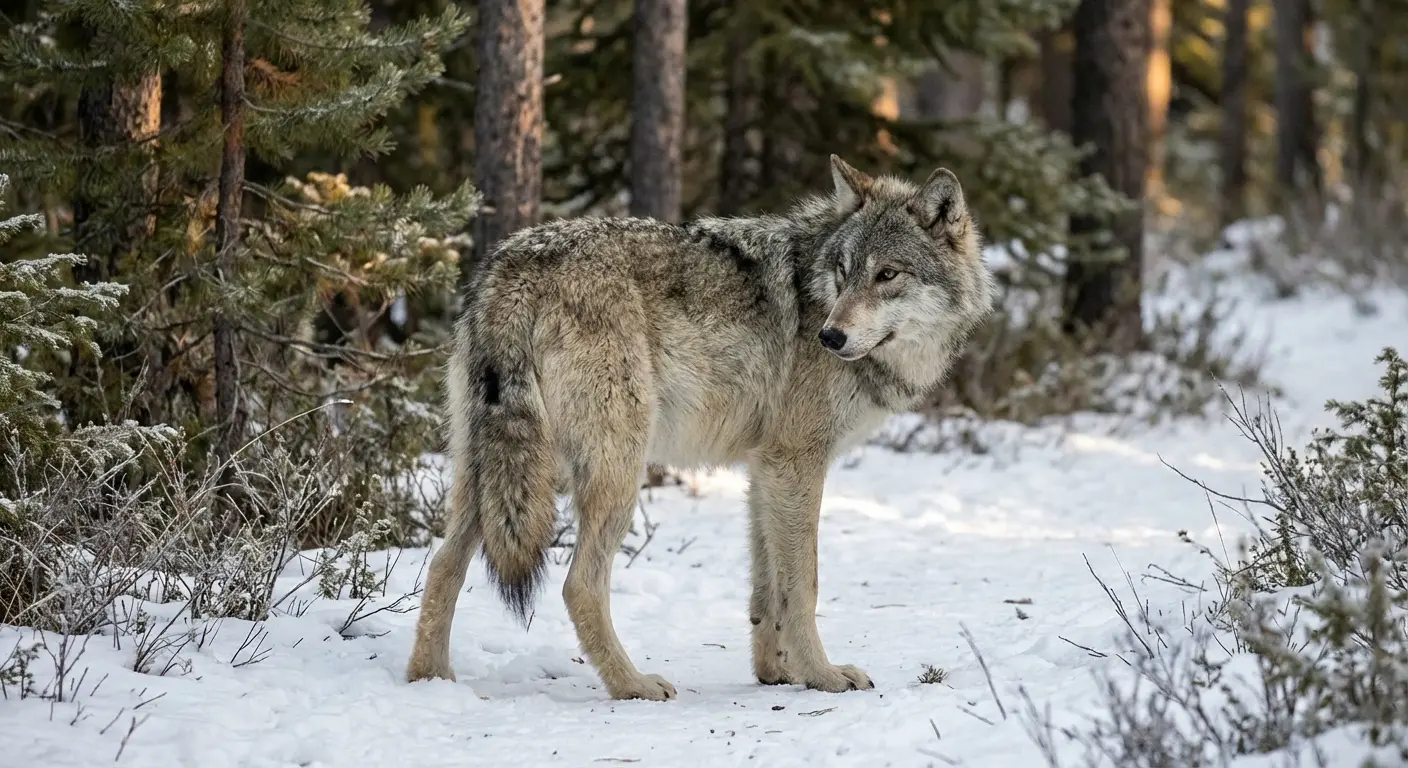
This wolf has been through it.
Scars across the muzzle, a notched ear, fur that looks rough and unkempt, maybe clouded or weary eyes. You’re depicting survival rather than dominance. The scars tell stories without words, suggesting that this wolf is alone because of what it’s endured, not because it chose isolation from a position of strength.
The portrait style (head and upper shoulders, facing slightly to the side) puts focus on these details. Realistic shading becomes crucial because you need texture variation to show the weathered quality. Smooth, perfect
fur defeats the purpose.
Your artist should incorporate irregular line work in places, disrupted patterns in the coat, and careful attention to making the scars look healed but permanent. Upper arm, chest, or thigh work best because the details need space to read clearly.
Get this if you’ve been shaped by difficult experiences and wear those experiences as part of your identity rather than hiding them.
Many meaningful tattoo ideas for men focus on weathered, battle-worn imagery rather than pristine perfection.
10. Wolf with Downturned Eyes
Eye direction controls emotional tone more than any other single element. A wolf looking down rather than forward or at the viewer projects contemplation, sadness, or exhaustion.
You’re catching the wolf in an unguarded moment when it’s not performing strength or vigilance. The downturned gaze makes the design feel introspective, which aligns perfectly with the reality of solitude. You spend a lot of time in your own head when you’re alone, and not all of those thoughts are empowering.
The design can be a portrait or full body, but the eyes remain the focal point. Everything else supports that downward gaze. The style can range from realistic to slightly stylized, but the emotional tone stays consistent.
Small piece on the inner forearm or large back piece, doesn’t matter. The core element (eye direction) works at various scales.
You’re trusting a subtle detail to do heavy lifting, which means you need an artist who understands that technical precision in rendering the eyes isn’t enough. The angle and expression have to be exactly right or the entire concept falls apart.
11. Split Face Duality Wolf
One half of the wolf’s face is intact and realistic. The other half transforms into something else: geometric shapes, dissolving particles, exposed skull, abstract patterns, or even just empty space.
The split represents internal conflict, the parts of yourself you show versus the parts you hide, or the tension between who you were and who you’ve become through isolation.
This design acknowledges that lone wolves aren’t simple or one-dimensional. You contain multitudes, contradictions, and ongoing negotiations with yourself. The vertical split down the center is most common, but diagonal splits or irregular divisions can work depending on what the “other half” becomes.
This needs significant size to execute well because you’re essentially creating two detailed halves that need to read as both separate and unified. Upper arm, thigh, or back provide the necessary canvas.
The hard part is making the transition line between halves feel intentional rather than like two unrelated tattoos smashed together. The halves should share some elements (color palette, line weight, or compositional balance) while remaining distinctly different.

12. Wolf Dissolving into Particles
The wolf starts solid and realistic at one end (usually the face) and gradually breaks apart into particles, geometric shapes, birds, or abstract elements at the other end (typically the body or tail).
This captures the feeling of losing cohesion, of slowly coming apart, or of transforming into something new. Depending on how you see it, it’s either decay or liberation. Maybe both.
The dissolving effect works as a metaphor for how isolation changes you over time. You’re not the same solid, defined thing you were before. Parts of you have scattered or transformed.
The design requires careful planning of the transition zone where solid becomes fragmented. Too abrupt and it looks like two separate ideas. Too gradual and the effect becomes muddy. The particles themselves can be realistic (falling fur, ash, snow) or abstract (geometric shapes, paint splatters, constellation dots).
Put this on your outer thigh, full sleeve, or side ribcage. Follow your body’s natural lines to enhance the sense of movement and dissolution.
13. Caged Ribcage Wolf
A wolf portrait or full body positioned inside or behind a ribcage outline. The ribs create bars, suggesting the wolf is trapped within (or protected by) the cage of your own chest.
This design makes the internal external, showing that sometimes the isolation you feel is self-imposed or internalized. The wolf can be trying to escape, settled and resigned, or simply existing within the confines. Each variation changes the emotional message.
The anatomical accuracy of the ribcage matters because it needs to be recognizable immediately. Stylized or geometric ribs can work but risk losing the visceral impact of seeing an animal trapped inside a human chest cavity.
This obviously works best placed over your actual ribcage, which makes it a painful piece but adds to the authenticity. The ribs are hell. The forearm is easy. Plan accordingly. The wolf should be sized so it fits naturally within the rib structure without looking cramped or floating awkwardly.
You’ll want this if you feel trapped by your own nature, if you recognize that sometimes you’re your own cage.
The symbolism of covering up or transforming old tattoos has taken on new meaning in recent years. A 2024 tattoo program at DuPage County Jail in Illinois featured an incarcerated client named Terrell who chose to cover a matching group tattoo with a lone wolf design (IPM Newsroom), explaining that he was “basically doing things to prove myself to others” but now wanted to make independent choices about his body art. The lone wolf tattoo represented his shift from group identity to individual autonomy, showing how these designs can mark significant personal transformations.
14. Wolf Emerging from Shadows
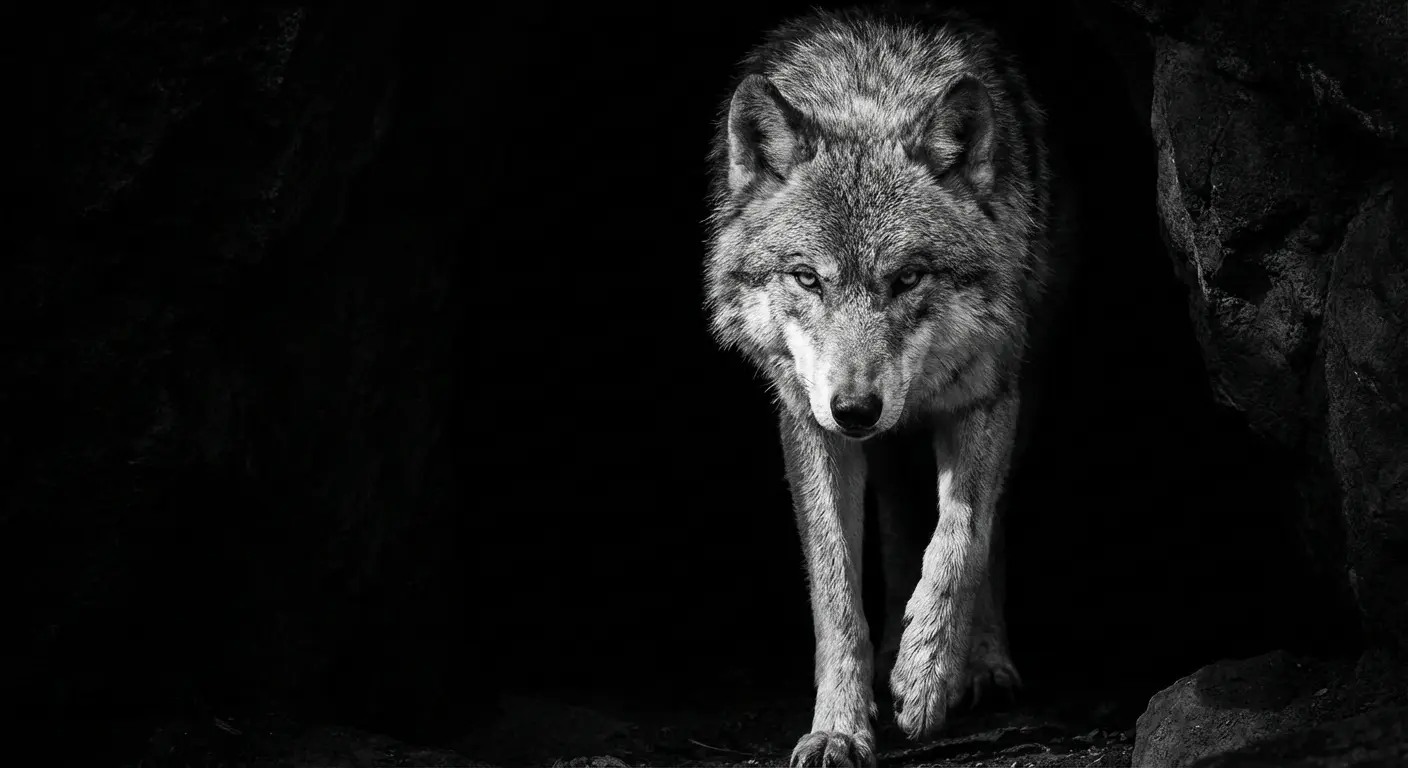
Heavy black or dark gray shadows dominate the composition, with the wolf emerging partially from the darkness. You see maybe the face and front legs clearly while the rest fades into shadow, or just the eyes glowing from within deep black.
This plays with visibility and hiddenness, suggesting the wolf (and by extension, you) exists in the margins, in the spaces between light and dark.
The shadow work requires an artist skilled in black and gray realism because the gradients need to be smooth and the darkest areas need to be genuinely dark, not muddy gray. The wolf’s lit portions should have enough detail and contrast to pop against the shadows.
This creates dramatic visual impact while maintaining the theme of partial concealment. Shoulder, calf, or forearm work well because the shadows can follow the muscle structure and enhance the three-dimensional effect.
The composition should feel like a spotlight is hitting just part of the wolf, leaving the rest in darkness by choice or circumstance.
Wolves in Their Element (Not What You Think)
Everyone puts their lone wolf in a forest. Pine trees, maybe some mountains in the background, perhaps a full moon.
It’s become so standard that the environment stops adding meaning and just becomes decorative filler.
Your wolf’s surroundings should challenge expectations or add layers that the typical wilderness scene can’t touch. These final seven ideas place wolves in contexts that most people overlook, and that specificity makes all the difference.
15. Wolf in Urban Decay
Forget the forest. Put your wolf in a city that’s falling apart.
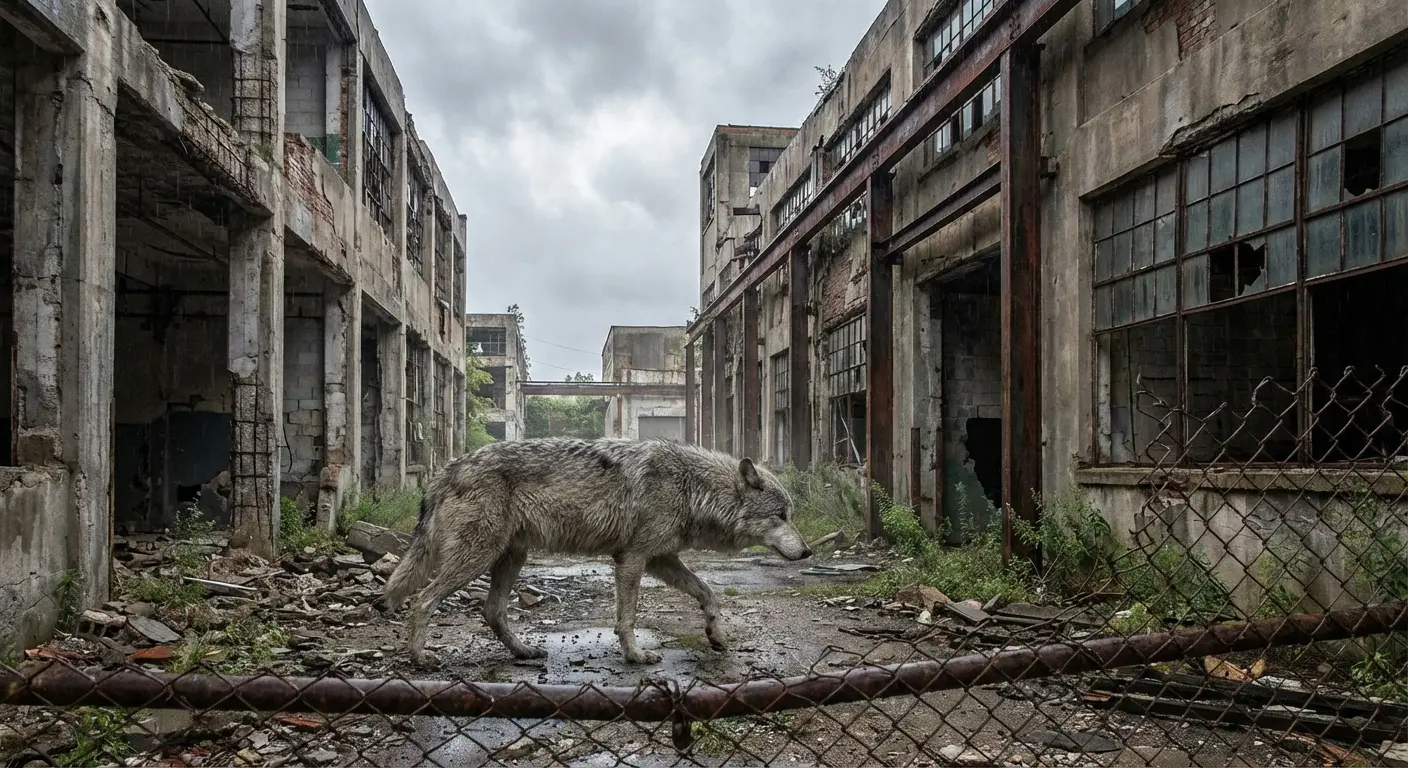
Crumbling concrete, rusted fire escapes, graffiti on everything, broken windows, or overgrown abandoned buildings. Your wolf navigates a cityscape that’s been left behind, which creates a completely different tone than wilderness isolation.
This speaks to modern loneliness, to feeling alone in crowded places, to existing in spaces that were built for community but have been abandoned.
The urban elements need enough detail to be recognizable (brick texture, window frames, chain-link fence patterns) without overwhelming the wolf itself. Show the wolf moving through or sitting within these man-made structures, interacting with them in a way that highlights the contrast between wild animal and artificial environment.
This needs space. Thigh, back, or full sleeve because you need room for both the wolf and enough environmental context to establish the setting.
If you’ve ever felt disconnected in the middle of civilization, this one’s for you. You’re not rejecting civilization by running to the woods. You’re navigating its ruins.
16. Desert Wolf with Cacti
Most people don’t associate wolves with desert landscapes, which is exactly why this works.
Saguaro cacti, red rock formations, sand dunes, or sparse desert vegetation create an unexpected context. The barrenness of the desert amplifies the isolation while the harsh environment suggests that this solitude requires toughness and adaptation.
Desert wolves (yes, they exist in some regions) have leaner builds and different coloring than their forest counterparts, so anatomical accuracy matters if you’re going for realism. The sparse environment means negative space plays a huge role in the composition. You’re not filling every inch with detail. The emptiness is part of the message.
The color palette shifts from the typical cool grays and blues to warm tans, oranges, and dusty browns, which gives the piece a completely different visual feel than standard wolf tattoos.
Outer thigh, back, or chest give you room to spread out horizontally and capture the expansive feeling of desert landscapes. Get this if you see your solitude as existing in harsh conditions rather than comfortable forest seclusion.
|
Environment |
What It Says |
Visual Elements |
Best Placement |
|---|---|---|---|
|
Urban Decay |
Modern isolation, navigating abandoned social spaces |
Concrete, graffiti, broken windows, rust |
Thigh, back, full sleeve |
|
Desert |
Harsh solitude, survival in barren conditions |
Cacti, sand, red rock, sparse vegetation |
Outer thigh, back, chest |
|
Still Water |
Self-reflection, duality, surface vs. depth |
Mirror reflection, ripples, shoreline |
Forearm, calf, side ribcage |
|
Tundra/Northern Lights |
Beauty in harsh exposure, something larger overhead |
Snow, flat landscape, aurora colors |
Thigh, back, full sleeve |
|
Fallen Trees |
Navigating destruction, post-trauma existence |
Broken logs, debris, damaged forest |
Back, thigh, chest |
|
Cliffside |
Threshold moments, contemplating the edge |
Rock face, vast drop, distant landscape |
Upper arm, thigh, back |
|
Fog |
Mystery, partial concealment, unknowability |
Dense mist, obscured features, atmosphere |
Any size, scalable concept |
17. Wolf Reflected in Still Water
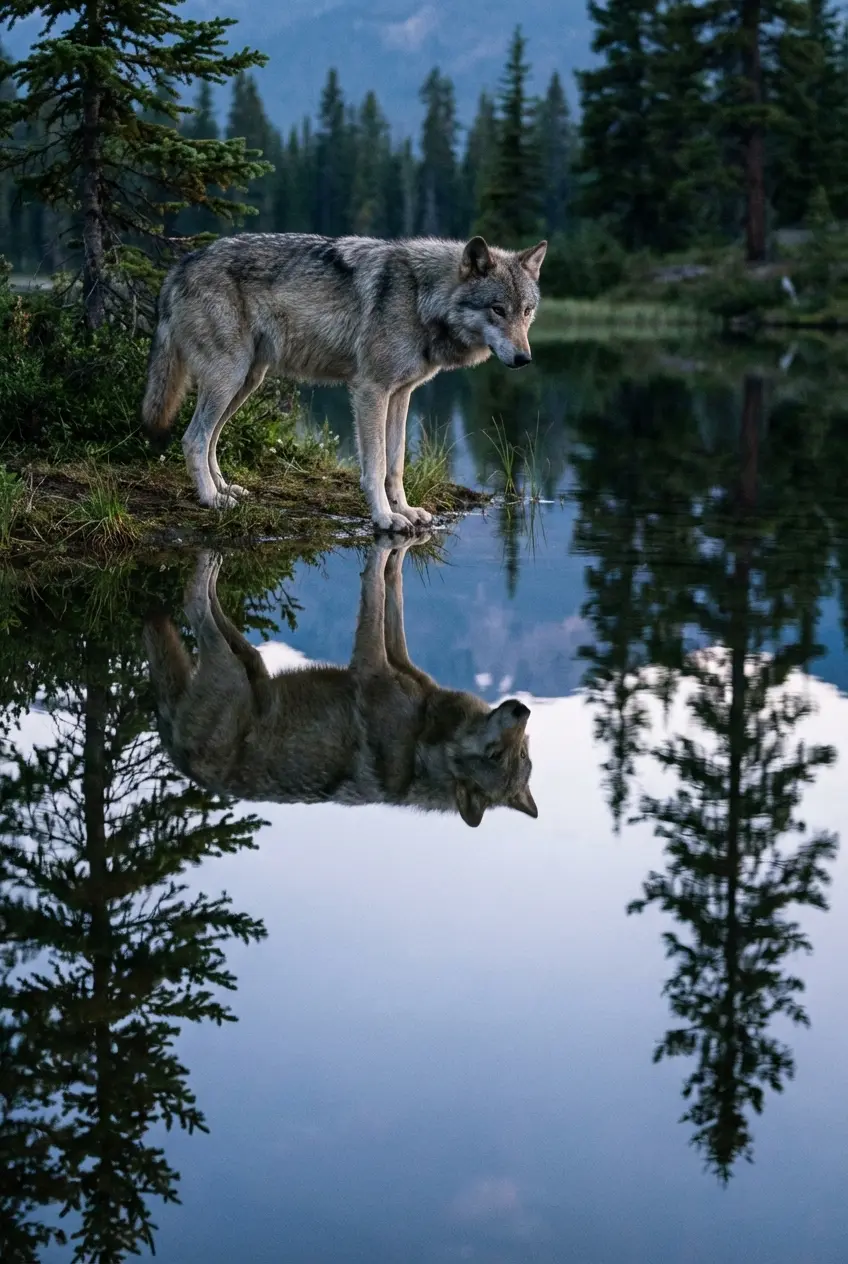
The wolf stands at the edge of perfectly still water, and its reflection appears below.
Plot twist: the reflection doesn’t have to match exactly.
Maybe the reflection shows the wolf looking a different direction, or appears slightly distorted, or reveals something the surface version hides. The water creates a natural dividing line in the composition, giving you two versions of the same subject that can comment on each other.
The stillness of the water matters because it suggests a moment of pause, of contemplation, of seeing yourself clearly (or not).
The reflection technique requires precise mirroring in the line work and shading to sell the water effect, unless you’re deliberately making the reflection different for conceptual reasons. This works beautifully as a vertical composition (forearm, calf, or side ribcage) where you can stack the wolf and reflection.
The water line becomes a horizontal element that breaks up the design while connecting the two halves. The piece speaks to self-reflection, to the gap between how you see yourself and how you are, or to the duality of existing both above and below the surface.
18. Tundra Wolf with Northern Lights
Arctic or tundra landscape with the aurora borealis sweeping across the sky above the wolf. The northern lights add color and movement to what could otherwise be a stark, colorless scene.
The wolf can be white or light gray to match the tundra environment, creating a monochromatic base that makes the aurora’s greens, purples, and blues pop dramatically.
The lights themselves require an artist comfortable with color gradients and blending because harsh lines ruin the ethereal quality. The tundra setting (flat, snowy, minimal vegetation) creates a different kind of isolation than forests or mountains. There’s nowhere to hide, no shelter, just endless exposure.
The wolf exists in this vulnerable openness while something beautiful and untouchable happens in the sky above.
Put the wolf in the lower portion and the lights sweeping across the upper area. Thigh, back, or full sleeve work best for this vertical composition. Get this one when you find beauty in harsh conditions or when you see your isolation as existing beneath something larger and indifferent.
19. Wolf Among Fallen Trees
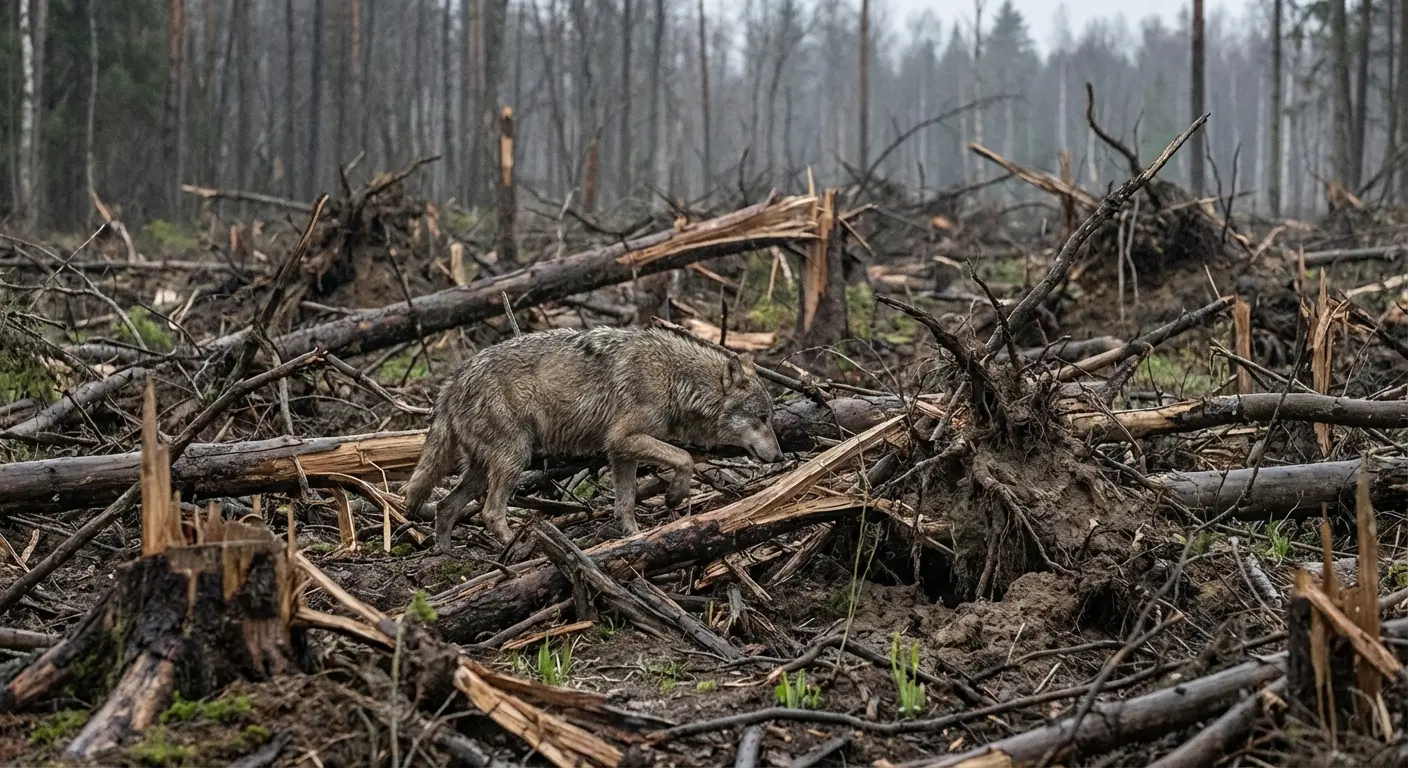
The aftermath of a forest fire, a logged area, or a natural disaster. Fallen, broken trees create a landscape of destruction that the wolf navigates.
This isn’t pristine wilderness. It’s damaged, changed, recovering.
The wolf exists in a space that’s been fundamentally altered, which mirrors how trauma or major life changes can transform your internal landscape. You’re still here, still moving through it, but the environment isn’t what it was.
The fallen logs and broken branches create diagonal lines and visual chaos that contrast with the wolf’s organic form. The composition can show the wolf walking through the debris, sitting among the fallen trees, or pausing to look at the destruction.
The wood texture and bark details matter because they establish that these were once living trees, not just abstract shapes. Back, thigh, or chest because you need room for enough environmental detail to convey destruction without making it look cluttered.
This hits if you’ve had your world disrupted and you’re figuring out how to exist in what remains.
20. Cliffside Contemplation Wolf
The wolf sits or stands at the edge of a cliff, looking out over a vast drop or distant landscape. The perspective matters here. You want to capture the height, the exposure, the sense of being at a threshold between solid ground and empty air.
The wolf isn’t jumping or falling. It’s just existing at the edge, which suggests contemplation of what lies beyond or below.
The cliff face should show enough geological detail (rock layers, cracks, maybe some sparse vegetation) to establish the setting without competing with the wolf for attention. The distant landscape below or beyond can be detailed or fade into suggestion depending on your preference.
The composition creates a natural hierarchy: wolf in the foreground, cliff edge as the middle ground, vast space as the background.
Upper arm wrapping slightly, thigh, or back work well because you can play with depth. The vertical nature of cliffs makes this suitable for vertical placements. You’ll want this if you spend time at mental or emotional edges, if you contemplate big decisions, or if you find yourself between one phase of life and the next.
21. Wolf in Fog with Obscured Features
Dense fog partially obscures the wolf, hiding some features while revealing others. Maybe you see the silhouette clearly but facial details disappear into mist. Perhaps the legs fade into fog while the head and shoulders remain visible.
The fog creates mystery and uncertainty, suggesting that even the lone wolf isn’t fully knowable or that isolation obscures parts of who you are.
The hard part is rendering fog convincingly, which requires subtle gradients and an understanding of how atmospheric perspective works. The fog shouldn’t look like clouds or smoke. It needs that specific heavy, obscuring quality of real fog.
The wolf can be moving through the fog or stationary while fog moves around it. Either version works as long as the obscuring effect is clear.
This design functions well at various sizes because the core concept (partial obscurement) scales up or down. A small forearm piece can capture this as effectively as a large back piece. The composition should leave the viewer wanting to see what’s hidden in the fog, creating visual tension between revealed and concealed.
Get this if you value privacy, if you recognize that not everything needs to be visible, or if you feel partially hidden even from yourself.
I’ve helped hundreds of people move from vague “I want a lone wolf tattoo” to specific, meaningful designs that capture what they’re trying to express. The frustration I hear most often is that people know the standard wolf designs don’t fit, but they can’t articulate what’s missing or visualize alternatives.
This is why I built Tattoo Generator IQ, actually. You can test these concepts (urban settings, emotional expressions, unexpected environments) in seconds, seeing multiple variations until something clicks. The AI understands nuance in ways that generic tattoo galleries don’t, letting you explore the difference between a wolf looking down versus looking back, or how fog changes the entire mood compared to clear sky.
You’re not locked into the first version. You can iterate until the design matches what’s in your head.
Especially helpful for those exploring first tattoo ideas who need to see multiple variations before committing.
Final Thoughts
The lone wolf tattoo you want probably isn’t the one you’ve been seeing everywhere. It’s not about broadcasting independence to strangers. It’s about capturing something specific about your relationship with solitude, whether that’s chosen isolation, forced separation, or the complex middle ground where most of us live.
You don’t need to explain your lone wolf tattoo to everyone who sees it. The meaning can be private, the symbolism personal. But you do need a design that resonates with your experience rather than a generic symbol that’s been stripped of nuance through repetition.
The designs we’ve covered here work because they acknowledge complexity. The most resonant tattoo ideas with meaning embrace emotional complexity rather than one-dimensional symbolism. That honesty makes them more powerful than any amount of aggressive posturing or dramatic howling.
Look, I can’t tell you which of these 21 designs is right for you. That’s between you and whatever made you want a lone wolf tattoo in the first place. Just don’t get the howling one. Please. We have enough of those.
Your wolf doesn’t need to howl. It doesn’t need to look fierce. It just needs to be yours. And if that means it’s looking back, or falling apart, or sitting in fog where nobody can really see it clearly, good. That’s probably closer to the truth anyway.
