19 Patch Tattoos That Look Sewn On (But Aren’t)
Table of Contents
- Patches From Your Past
- Vintage Band Patch Tattoo
- Military Unit Insignia Patch
- Childhood Scout Badge Design
- Retro Sports Team Emblem
- Family Crest Patch Reinterpretation
- Classic Video Game Pixel Patch
- Vintage Travel Souvenir Badge
- Identity Patches (The “This Is Who I Am” Category)
- Custom Name Tape Tattoo
- Profession Pride Patch
- Subculture Symbol Embroidery
- Zodiac Sign Patch Design
- Hobby Badge Collection
- Political Statement Patch
- LGBTQ+ Pride Flag Embroidery
- Getting Weird With It: Experimental Patch Tattoos
- Deconstructed Patch with Loose Threads
- Layered Multi-Patch Collage
- Optical Illusion Embroidered Design
- Blackwork Patch Silhouette
- Watercolor-Meets-Embroidery Hybrid
Quick Version
Patch tattoos replicate embroidered patches using shading techniques that create texture and dimension. They work because they look temporary while being permanent (yeah, the irony isn’t lost on anyone). The best ones balance realistic detail with tattoo-appropriate simplification. Choose an artist who understands light, shadow, and thread direction. That’s what makes or breaks these pieces.
Why This Style Actually Works
I watched someone at a coffee shop try to peel what looked like a patch off their arm. Took them a solid ten seconds to realize it was tattooed on. That split second of confusion? That’s the whole appeal.
You could rip patches off whenever. Try on an identity, change your mind next week. Nobody judged you for swapping out the punk band patch for a sports team logo because that’s what patches were for. Temporary declarations. Removable commitments.
Now people want that same visual language, but permanent. It’s weird, right? You want the commitment of a tattoo but something that looks like you could change your mind. The texture is what sells it. Good artists can make you want to touch the ink to check if it’s real fabric.
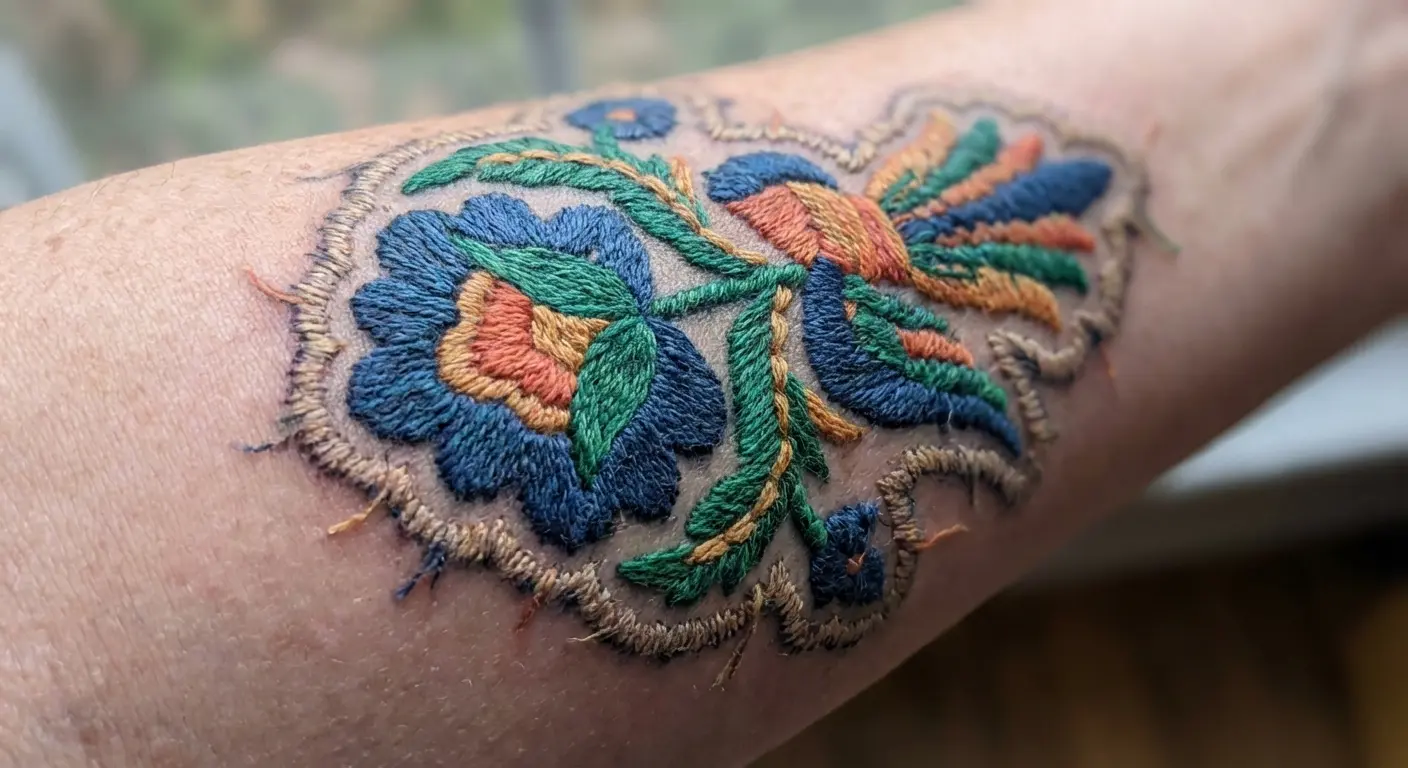
The technique involves layering colors in small, precise strokes that mimic real thread stitches. With the right skill, it’s possible to create anything from minimal designs to highly detailed and impressive pieces, always maintaining that raised, textured look. The key is making it look like it was stitched onto your skin with a needle and thread. Achieving this effect requires artists to have a deep understanding of light and shadow to reproduce the signature three-dimensional look.
This style keeps gaining traction because it solves a problem: wanting permanent ink that doesn’t feel so… heavy. The format brings levity to tattoo culture while maintaining artistic integrity.
Patches From Your Past
Real patches marked our affiliations, achievements, and obsessions during formative years. These work as time capsules. They freeze a moment, not just what you liked, but how you showed what you liked.
A band poster recreated as ink hits differently than the actual patch you safety-pinned to your denim vest at fifteen. It’s not just the music. It’s how you lived that music.
1. Vintage Band Patch Tattoo
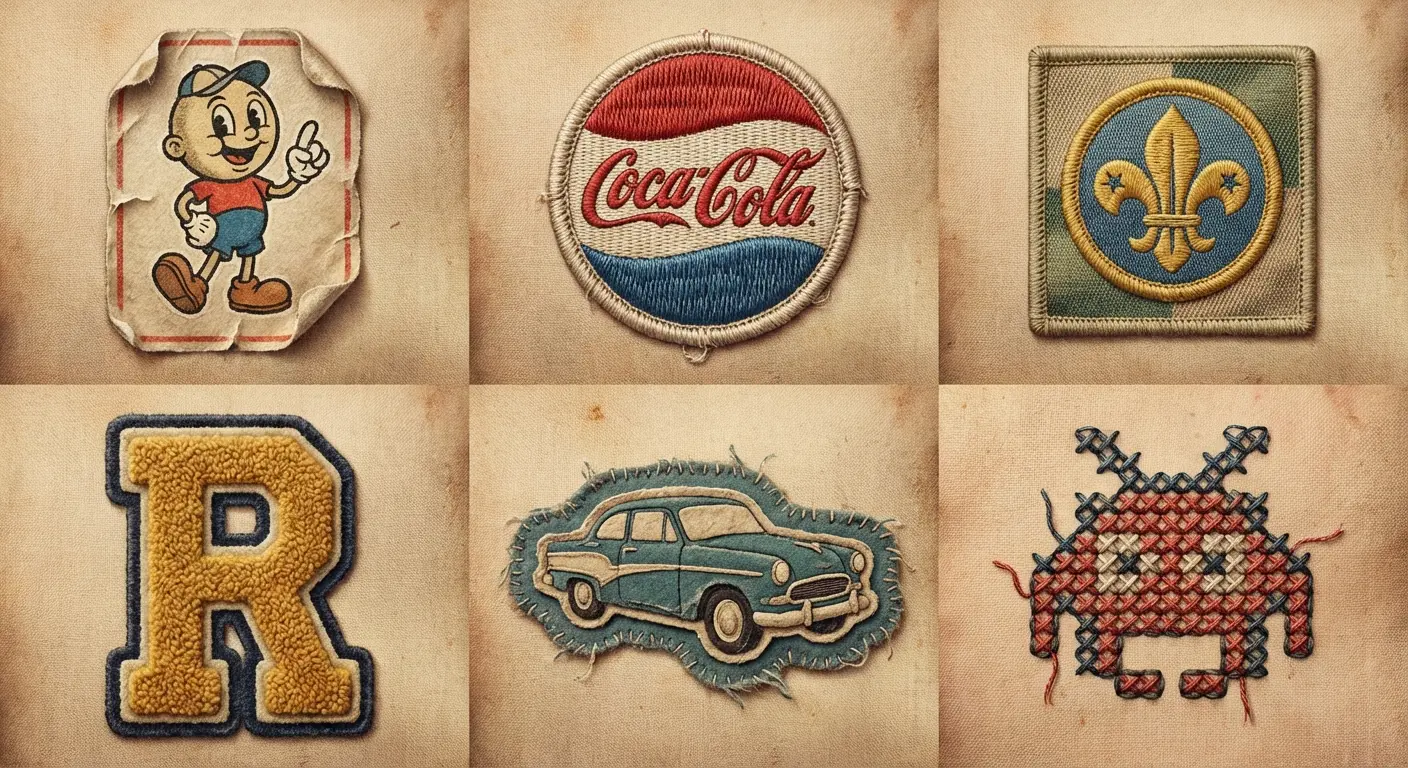
Concert merchandise from the ’70s through ’90s had a specific embroidered aesthetic that modern merch doesn’t replicate. Those patches featured bold typography, simplified band logos, and color schemes limited by what thread was available. Getting one tattooed preserves not just your favorite band but the entire era of music consumption it represents.
The stitched texture adds authenticity that a clean graphic design can’t match. You’ll want an artist who understands how to shade individual “thread lines” to create that dimensional effect. The borders matter here because vintage patches always had defined edges, often in contrasting colors.
I had a guy bring in a faded Black Sabbath patch from 1978. Frayed edges, sun-bleached purple, the works. We spent two hours photographing it from every angle before starting. He wanted it restored to its original glory through ink, not replaced.
2. Military Unit Insignia Patch
Service members and their families have worn unit patches with pride for generations. These carry dense symbolism: specific color combinations, heraldic imagery, and mottos that mean everything to those who served. Getting one tattooed honors service without defaulting to the expected flag or dog tag imagery.
The embroidered style feels appropriate because it matches how you wore that insignia during service. Placement often mirrors where the patch sat on uniforms (shoulder, chest, sleeve), creating a ghost uniform effect that veterans find meaningful.
Milwaukee Brewers manager Pat Murphy recently got a tattoo of the memorial patch that adorned the team’s jerseys this season. When someone at that level commits to this style, you know it’s more than a trend. It demonstrates how patches can commemorate beloved figures and shared experiences with the same visual language teams use on their uniforms.
3. Childhood Scout Badge Design
Merit badges and achievement patches from scouting organizations represent specific skills and accomplishments from childhood. They’re geometric, colorful, and packed with symbolic imagery that meant something concrete when you earned them. A merit badge tattoo works because it’s instantly recognizable to anyone who went through similar programs.
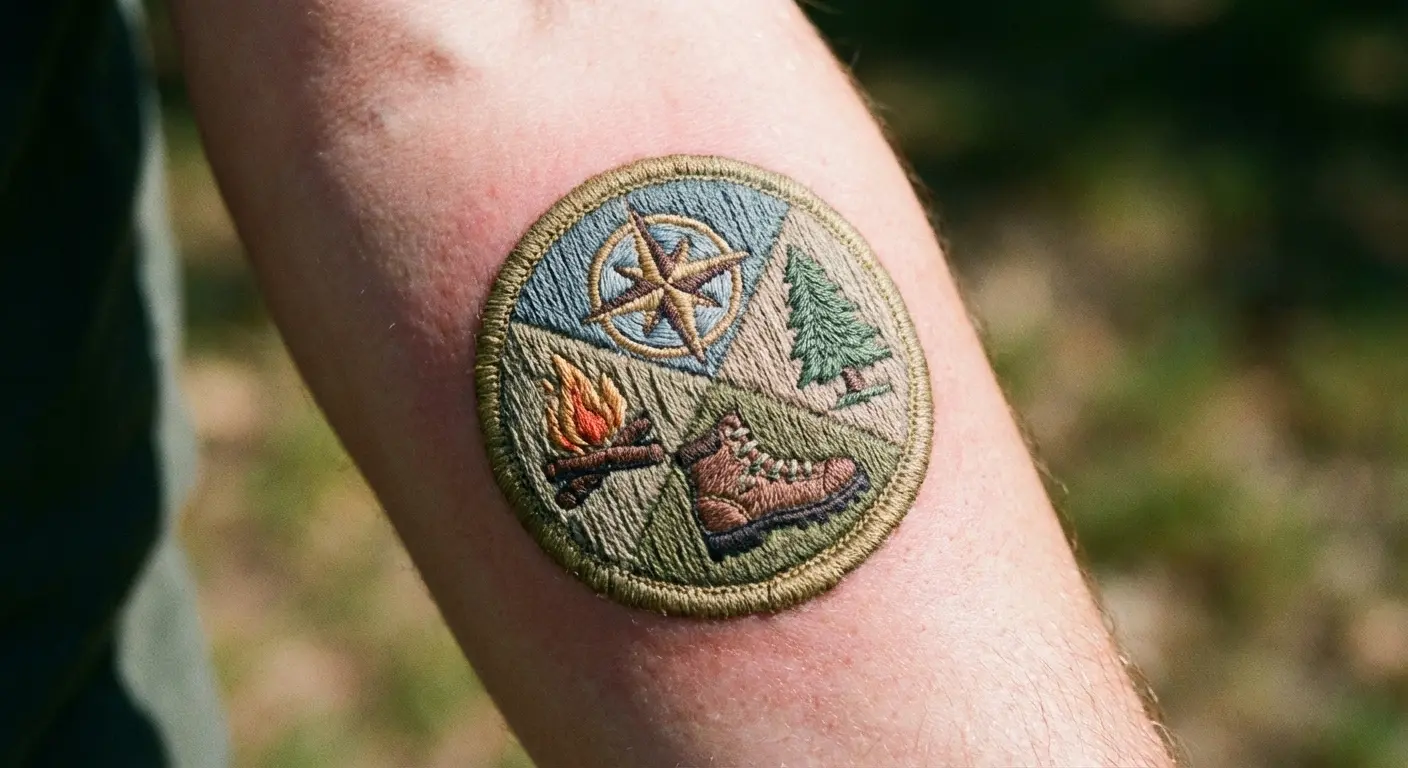
The circular or shield-shaped formats provide natural boundaries that work well for composition. You can get a single badge that represents a pivotal scouting memory or create a collection that maps your entire progression through the ranks. When considering placement for badge collections, check out our guide on small tattoo ideas. Same principles apply for spacing and flow.
I’ve worked with clients who recreate badges they never earned as kids, getting them now as adults who finally mastered those skills outside the scouting framework. You spent 20 hours a week woodworking? Get a badge for it.
4. Retro Sports Team Emblem
Sports team patches from the ’60s through ’80s had a simplified, embroidery-friendly aesthetic that modern high-definition logos lack. Those vintage designs featured bold mascots, chunky lettering, and limited color palettes that translate beautifully into this format.
Getting your team’s retro patch tattooed signals deeper fandom than current logo work. You’re not just supporting the team. You’re honoring a specific era of that team’s history. The embroidered texture adds nostalgia that makes the piece feel like a family heirloom rather than contemporary sports ink.
Three generations of a Cubs family came in wanting matching patches from the 2016 championship. Grandpa backed out last minute (his wife wasn’t having it), but the other two went through with it. Different placements, same patch, same meaning.
5. Family Crest Patch Reinterpretation
Traditional family crests can feel stuffy and overly formal as tattoos. Reimagining yours as an embroidered patch makes the heraldry feel personal and wearable rather than pretentious. This format allows you to simplify complex crest elements into embroidery-appropriate shapes while maintaining symbolic meaning.
You’re connecting to ancestry through the visual language of patches you might have worn on letterman jackets or team uniforms. The stitched border creates separation from surrounding skin that helps the design read clearly even as it ages. I’ve helped clients modernize centuries-old family crests by translating them into designs that honor tradition without feeling trapped by it.
6. Classic Video Game Pixel Patch
Early video game graphics and embroidered patches share a common limitation: both required simplified, blocky designs due to technical constraints. That visual overlap makes pixel art from classic games perfect for this interpretation.
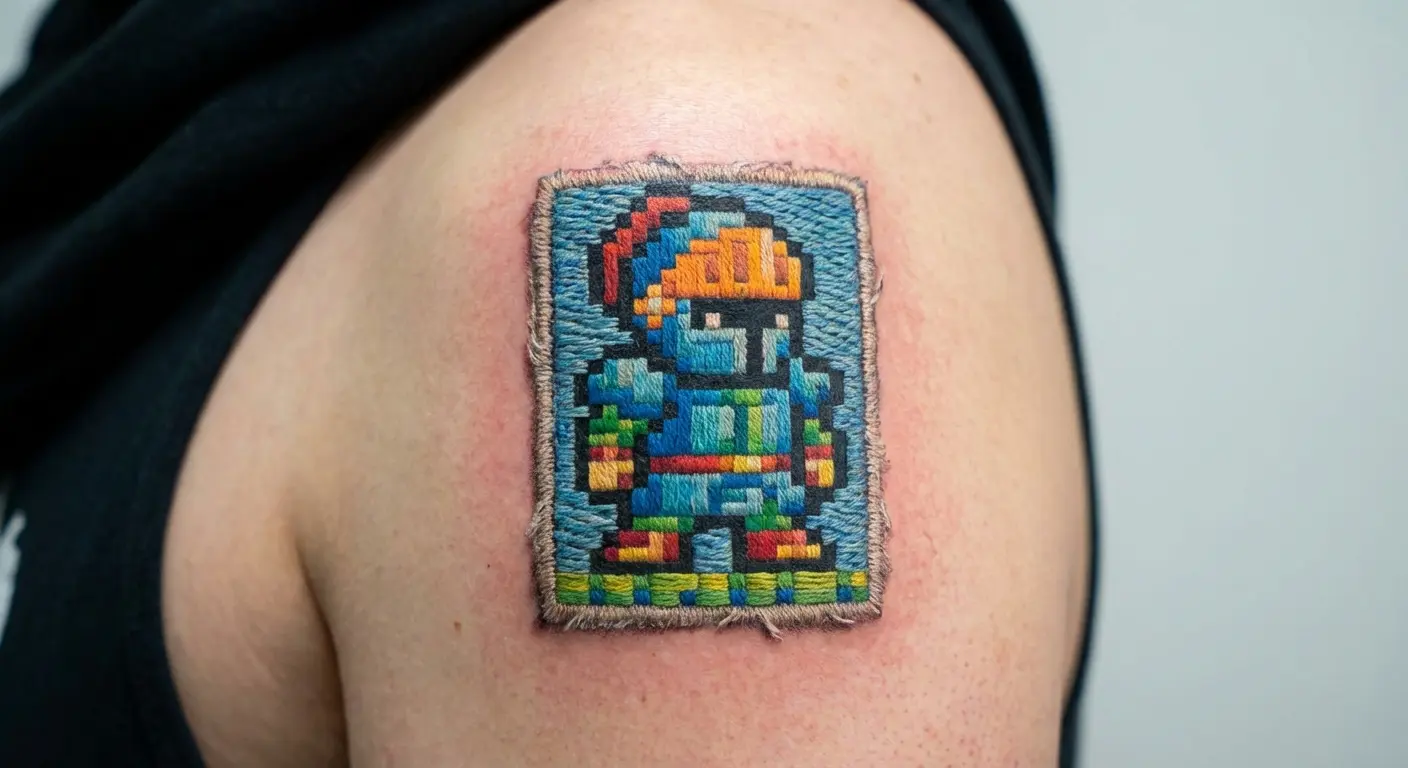
The “stitched” pixels create texture that flat pixel tattoos lack, adding dimensionality to inherently two-dimensional imagery. You can recreate actual patches that existed (many games had official embroidered merch) or imagine what a patch version of your favorite game sprite would look like. The color blocking works naturally because both pixels and embroidery thread deal in solid color fills rather than gradients.
I’ve seen entire sleeves composed of video game patches, each one representing a different game that shaped someone’s childhood. The collection tells a gaming history through the visual language of achievement badges.
7. Vintage Travel Souvenir Badge
Before Instagram proved you traveled somewhere, you bought embroidered patches from gift shops and sewed them onto luggage or jackets. Those souvenir patches had a specific aesthetic: location names in decorative fonts, simplified landmarks, and often a shield or pennant shape.
Getting one tattooed preserves a meaningful trip in the exact visual format you would have used to commemorate it decades ago. The style adds nostalgia that makes it feel like a vintage postcard rather than a generic travel piece.
You can even recreate an actual patch you bought and lost. I helped someone track down an obscure patch from a closed tourist shop in Yellowstone, then translated it into ink that preserved a memory they thought was gone forever.
Identity Patches (The “This Is Who I Am” Category)
Patches have always functioned as identity shorthand. Military personnel wear them to indicate rank and unit. Bikers display them to show club affiliation. Activists sew them onto jackets to broadcast beliefs.
When you translate identity patches into tattoos, you’re making those declarations permanent while maintaining the visual vocabulary of chosen, displayed identity. These work because they communicate clearly without requiring explanation.
During the countercultural movements of the 1960s and 1970s, patches took on a new meaning, becoming symbols of rebellion, personal identity, and artistic expression. Biker gangs, punk rockers, and other subcultures embraced patches as a way to showcase their beliefs, affiliations, and personalities. We’re continuing that tradition through permanent ink.
8. Custom Name Tape Tattoo
Military uniforms, work coveralls, and team gear all use embroidered name tapes: simple rectangular patches with your name in block letters. Getting one tattooed creates a literal name tag on your body, but the format makes it feel less narcissistic than script name tattoos.
If you’re exploring name tattoo designs, this format offers a structured alternative to flowing script. The stitched letters add texture and the rectangular border provides clean composition. You can match specific name tape styles from your profession (military-issue, mechanic uniform, flight suit) to connect the design to your actual work identity.
Placement often mirrors where you wore real name tapes, creating continuity between uniform and skin. I’ve worked with retired service members who get their name tape tattooed in the exact font and color scheme from their branch, preserving that identity after they’ve hung up the uniform.
9. Profession Pride Patch
Many professions have unofficial patches that workers wear to signal insider status: paramedics, firefighters, ironworkers, electricians. These aren’t official insignia but subcultural markers that say “I do this work and I’m proud of it.”
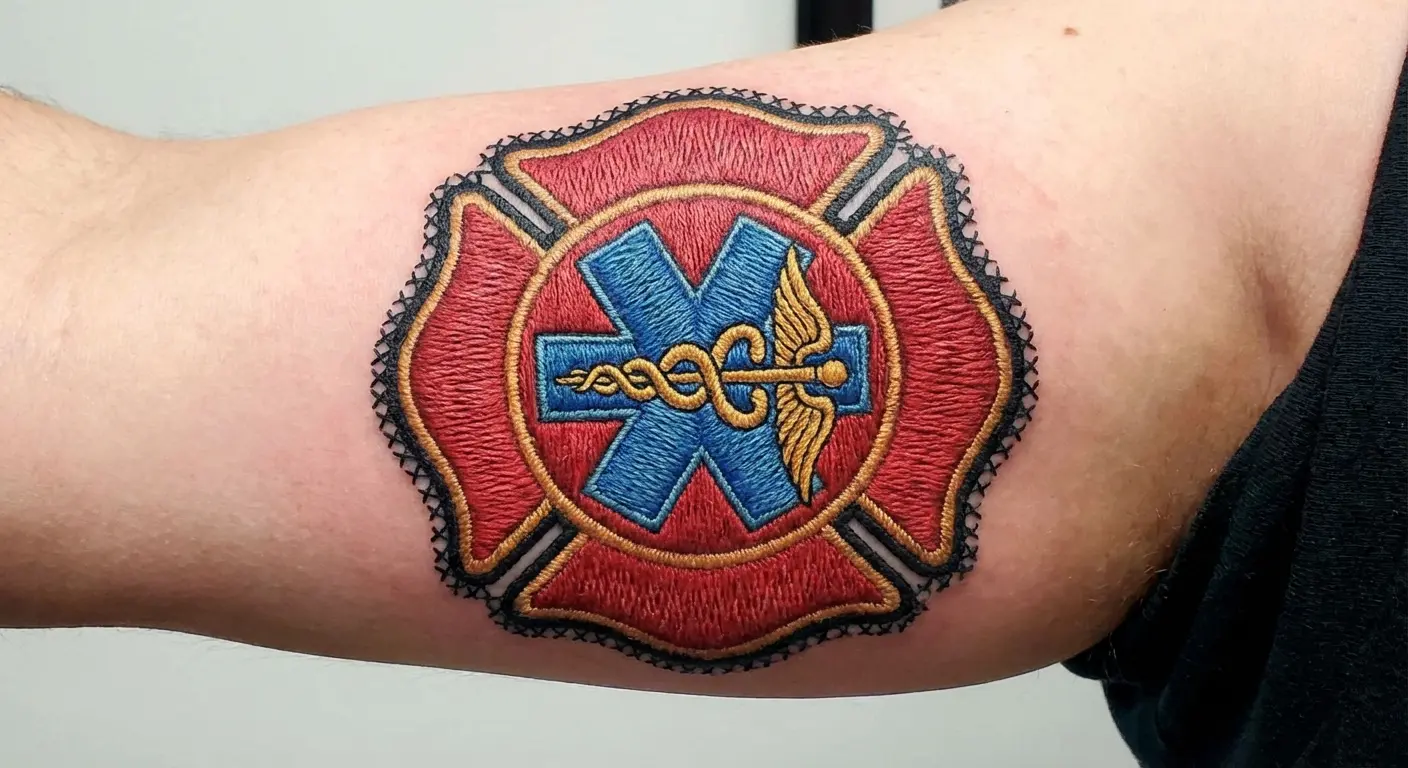
Getting your profession’s patch tattooed honors your trade in a format that feels authentic to how workers display pride. The embroidered style matches the patches you might wear on work gear, creating visual consistency. These often include dark humor or blunt statements that official emblems can’t, making them feel more genuine than sanitized professional imagery.
Entire crews get matching profession patches, creating a permanent bond that transcends job changes. A piece like this takes 4-6 hours and runs $800-1200 depending on size, but for people whose identity is tied to their work, that’s a small price.
10. Subculture Symbol Embroidery
Punk, metal, goth, skate, and other subcultures have specific symbols that members wear as patches: band logos, political symbols, inside jokes rendered as embroidered badges. These signal belonging without requiring explanation to outsiders.
Tattooing subcultural patches makes your affiliation permanent while maintaining the DIY aesthetic that matters to these communities. The imperfect stitching and slightly rough edges feel more authentic than polished graphic designs. You’re not getting corporate-approved imagery. You’re getting the visual language your community uses.
I’ve helped people recreate patches from defunct venues and disbanded bands, preserving subcultural history that exists nowhere else. These pieces matter because they document movements that never got mainstream recognition.
11. Zodiac Sign Patch Design
Astrology tattoos often default to constellation dots or symbol glyphs. A zodiac patch takes a different approach: your sign rendered as an embroidered badge with decorative borders and maybe your ruling planet or element incorporated.
This format makes astrology ink feel less mystical and more like a team jersey, which works if you approach your sign as identity rather than spirituality. The embroidered texture adds visual interest that simple symbol tattoos lack.
You can match vintage astrology aesthetics from the ’70s or create a modern interpretation that maintains the stitched dimensionality. I’ve designed zodiac patches that incorporate birth charts, creating personalized emblems that go beyond generic sun sign imagery.
12. Hobby Badge Collection
Merit badges exist for scouts, but adults don’t get patches for mastering hobbies (even though we should). Creating custom hobby patches as tattoos fills that gap: a gardening badge for your green thumb, a coffee badge for your obsession with espresso, a reading badge for your book addiction.
These work because they take activities you dedicate time to and give them the official recognition that patches provide. The collection format allows you to add badges over time as you develop new skills or interests. Each tells a specific story without requiring elaborate imagery.
I’ve helped people design entire merit badge systems for their lives, creating visual records of how they spend their time and what they value. It sounds ridiculous until you see one done well.
13. Political Statement Patch
Activists have sewn political patches onto jackets for decades: protest slogans, resistance symbols, movement identifiers. These make beliefs visible and spark conversations. Tattooing political patches makes your stance permanent, which carries weight that removable patches don’t.
The embroidered format maintains the grassroots, handmade aesthetic that matters to activist communities. You’re not getting slick corporate design. You’re getting the visual language of actual movements.
Placement matters here because visible political patches invite discussion (or confrontation) that hidden tattoos avoid. I’ve seen people commemorate specific protests or movements through designs that document their participation in history as it happened. Just know what you’re signing up for.
14. LGBTQ+ Pride Flag Embroidery
Pride flags have specific color combinations that carry meaning within
LGBTQ+ communities. Rendering your flag as an embroidered patch creates texture and dimensionality that flat rainbow tattoos lack. The stitched effect makes each color stripe feel distinct and intentional.
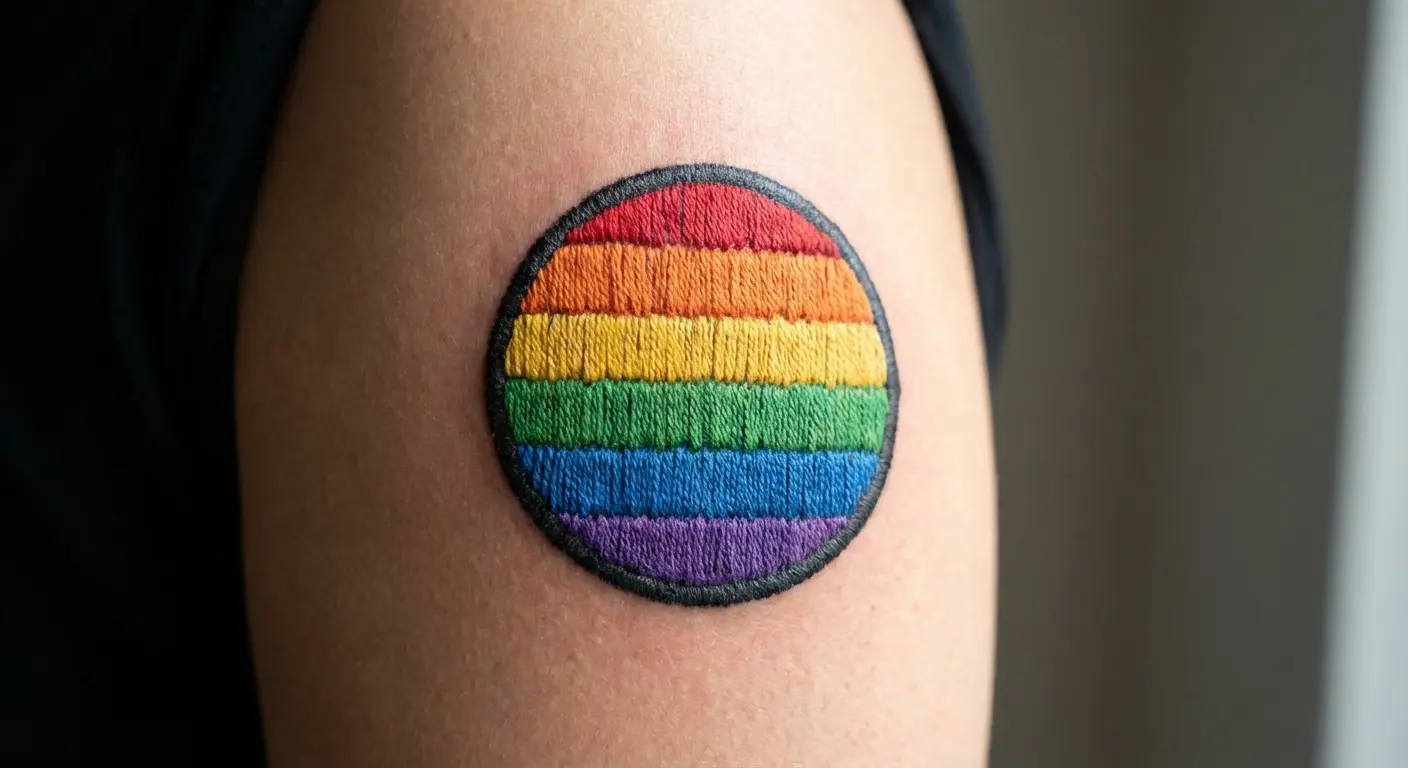
You can incorporate this into larger designs (sewn onto a tattooed jacket, for example) or stand it alone as a clear identity marker. The format feels less clinical than geometric flag designs while maintaining the recognizability that matters for pride imagery.
I’ve worked with clients who layer multiple pride flags as collections, representing different aspects of their identity or honoring the evolution of LGBTQ+ symbolism over time. Color patches on darker skin tones need a completely different approach, though. Don’t let an artist tell you otherwise.
Getting Weird With It: Experimental Patch Tattoos
Okay, but what about pushing this concept further? These move beyond literal replication into experimental territory. They use the patch aesthetic as the starting point but then deconstruct, layer, or reimagine it in ways that real fabric patches couldn’t achieve. You’re getting the visual vocabulary of embroidery (texture, dimensionality, thread-like shading) but applied to imagery that pushes beyond what patches typically depict.
These appeal to people who want the patch aesthetic without the literal nostalgia or identity declaration. You’re making art that references patches without being constrained by what patches have historically been. The technical demands increase significantly here because you’re asking artists to master traditional embroidery techniques while simultaneously breaking the rules.
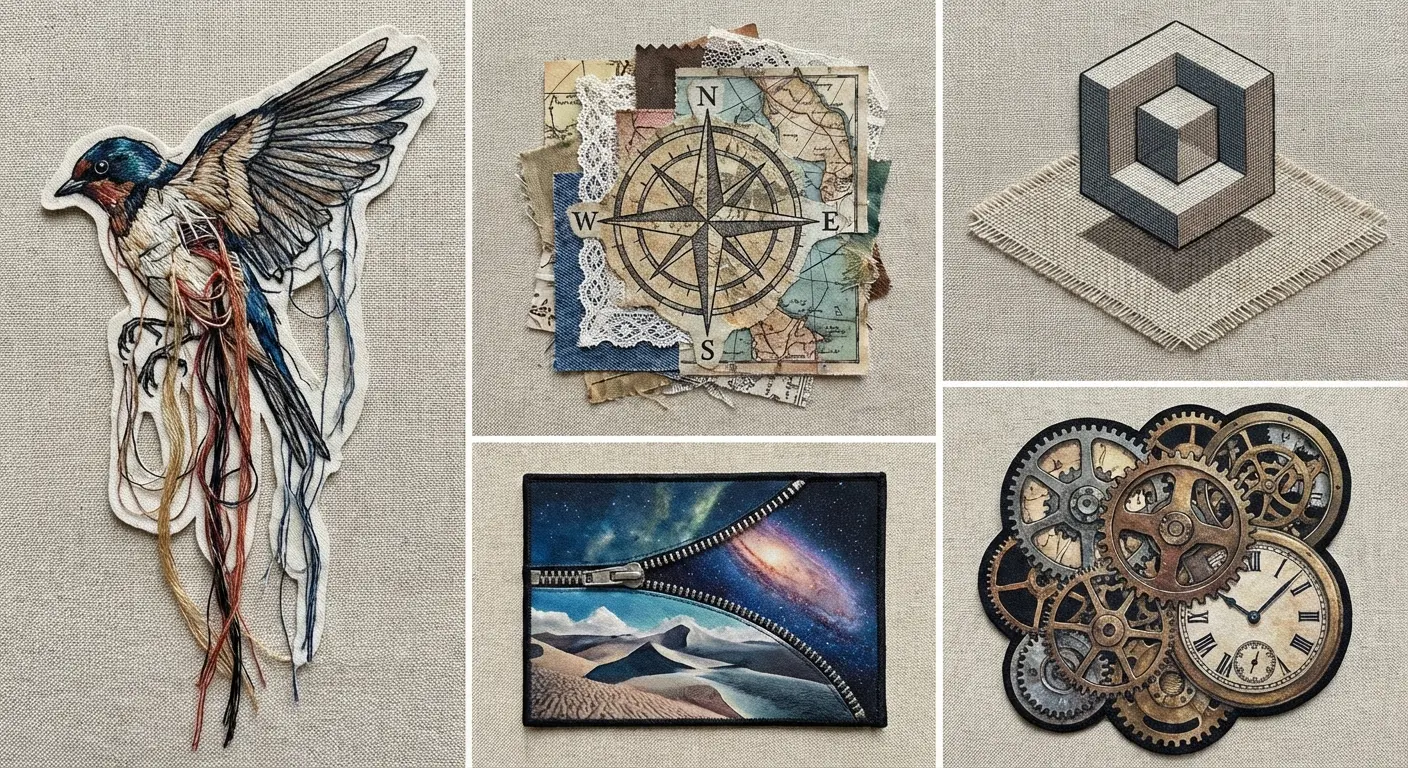
15. Deconstructed Patch with Loose Threads
Real patches fray and come loose over time. A deconstructed version captures that deterioration intentionally: the main design partially intact, with “threads” coming loose and trailing away from the edges. This works as a metaphor for impermanence while remaining a permanent tattoo. Yes, the irony is the whole point.
The loose threads create natural flow lines that can wrap around body contours. You’re getting the beauty of decay frozen at a specific moment, preserved before it falls apart completely. The shading required to make threads look three-dimensional separates skilled artists from amateurs. It’s tedious work. The artist has to go over the same area multiple times. Not the worst pain, but bring headphones.
I’ve designed pieces where the loose threads spell out words or form secondary images, adding layers of meaning to the deterioration. One client wanted her grandmother’s name hidden in the fraying threads of a vintage floral patch. You had to look close to see it.
16. Layered Multi-Patch Collage
Punk jackets and backpacks accumulate patches over years, creating layered collages where newer patches overlap older ones. Recreating that layered aesthetic creates visual complexity that single-patch designs can’t match.
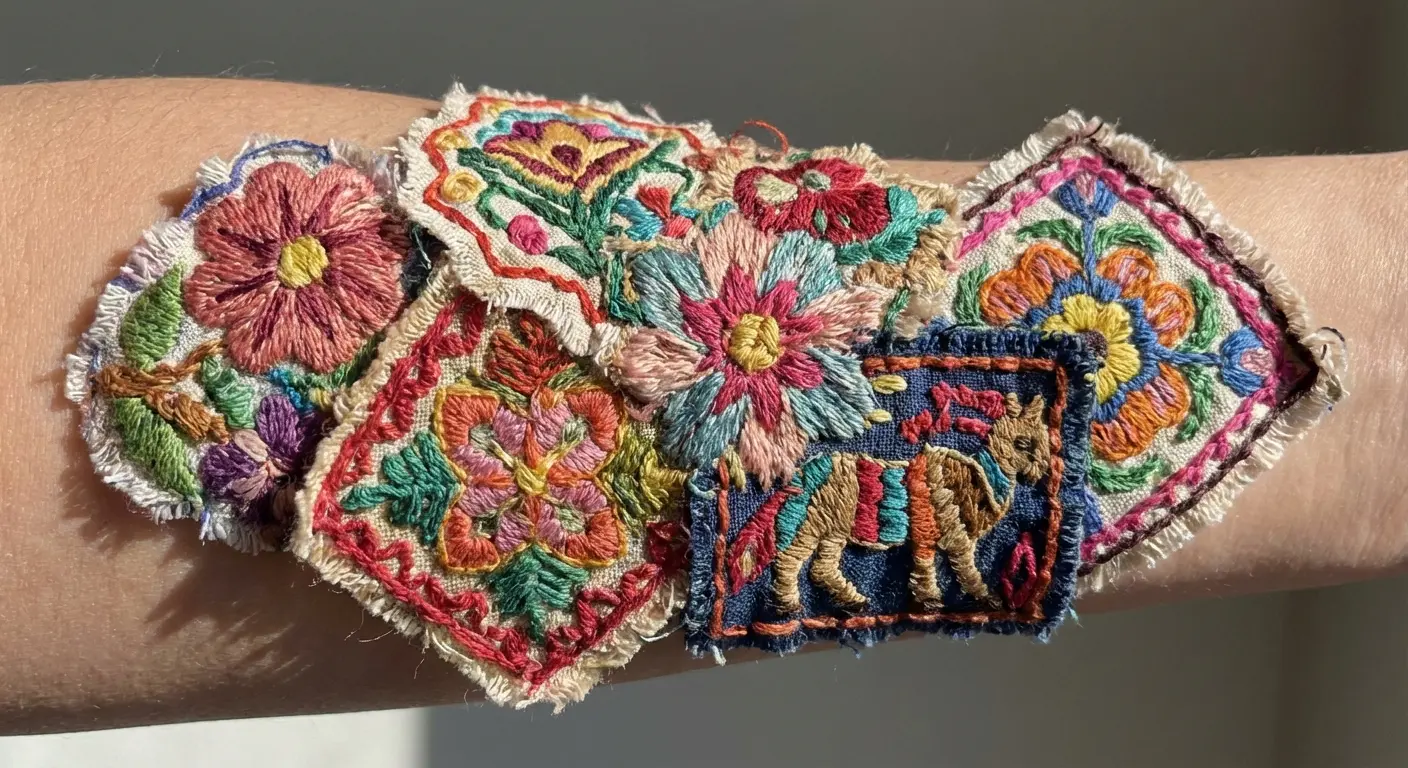
You can stack patches from different life phases, showing how identity evolves and accumulates rather than replacing itself. The overlapping creates depth through shading (which patch sits on top matters visually). This approach works well for large-scale pieces where you want to tell multiple stories within one cohesive composition.
Planning tattoo ideas with meaning across different life chapters? This collage format works perfectly. I’ve helped clients map out entire back pieces that function as visual autobiographies, each patch representing a different year or milestone. It’s ambitious, but when executed well, stunning.
17. Optical Illusion Embroidered Design
Embroidery creates texture through thread direction and stacking. Tattoos can replicate that texture through precise line work and shading. An optical illusion design uses embroidery techniques to create imagery that shifts depending on viewing angle or plays with depth perception.
You might get a design where the “stitching” creates a 3D effect or where thread patterns form hidden images. These showcase technical skill while maintaining the patch aesthetic. They’re conversation starters because people need to look closely to understand what they’re seeing.
I’ve developed designs where the embroidery pattern reveals different images from different angles, creating interactive art that changes as you move. It’s a mindfuck in the best way.
18. Blackwork Patch Silhouette
Blackwork tattoos use solid black ink and negative space to create bold, graphic designs. Applying blackwork techniques to patch imagery creates striking contrast: a solid black patch shape with the design created through negative space where “stitching” would be.
This works particularly well for nature imagery (animals, plants) where you can use thread-direction shading in the negative space to add texture. The result feels both modern and nostalgic, combining contemporary trends with vintage aesthetics.
If you’re drawn to bold contrast, exploring blackout tattoo techniques can inform how solid black areas interact with embroidered details. I’ve created pieces where the blackwork forms the patch “fabric” while the negative space creates intricate patterns that only become visible up close.
These age weird if the artist doesn’t go deep enough with the black, though. Just know that going in.
19. Watercolor-Meets-Embroidery Hybrid
Watercolor tattoos feature soft color gradients and paint-splatter effects. Embroidered patches use solid thread colors and defined edges. Combining these contradictory styles creates tension that makes designs more interesting: a patch with watercolor bleeding beyond its borders, or embroidered elements floating in watercolor backgrounds.
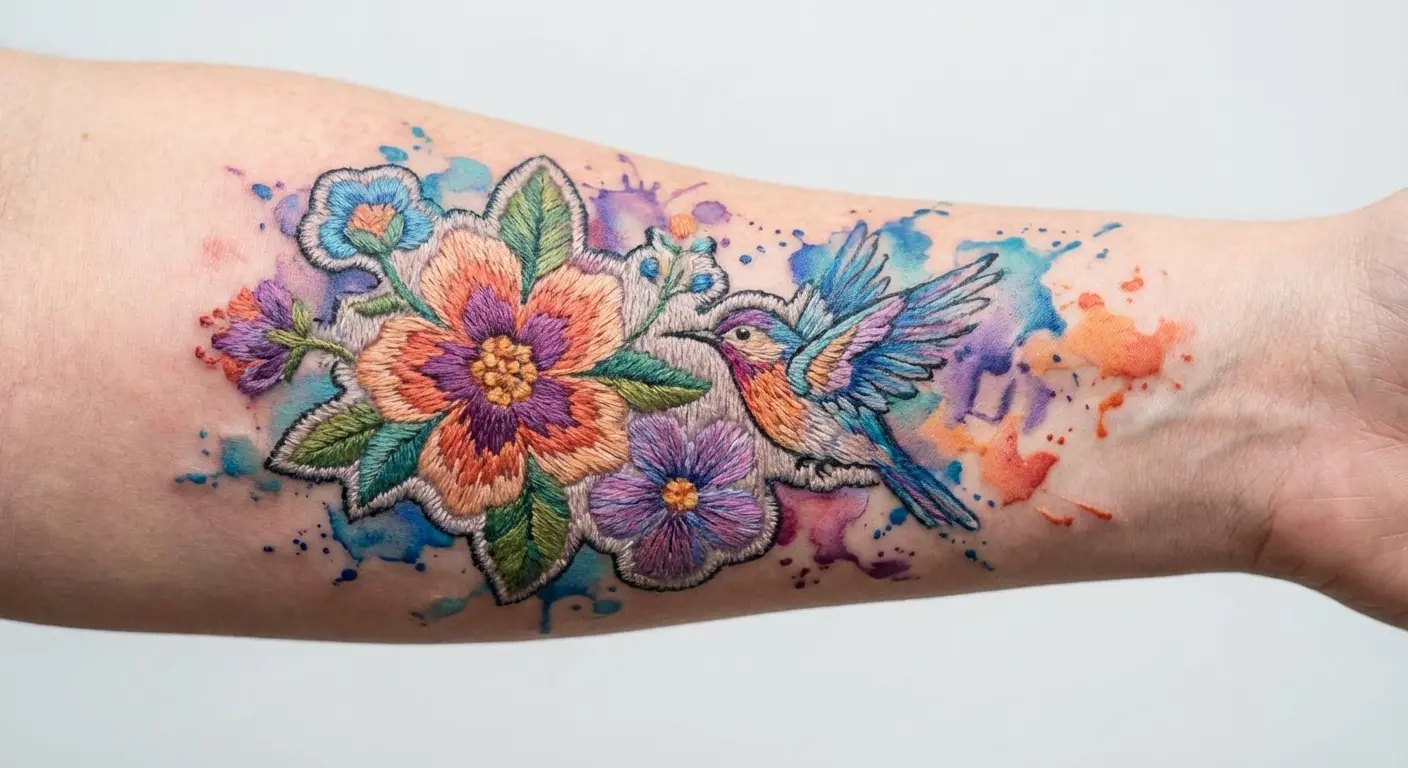
You’re acknowledging that this is a tattoo, not an actual patch, by incorporating techniques that fabric can’t achieve. The hybrid approach appeals to people who want patch nostalgia without being limited to what embroidery can realistically do.
I’ve pushed this concept further by creating pieces where the watercolor represents memories or emotions “leaking” from the structured patch, turning the design into a visual metaphor for how the past influences the present. Personally, I think this is the most interesting direction the style can go.
Before You Commit: Testing Your Concept
Look, I’m going to be straight with you. These are hard to execute. The shading has to be perfect or it looks flat. The colors need to be saturated enough to read as thread, not just… ink. The borders need to be clean enough to create that “sewn-on” illusion.
I’ve seen too many people commit based on rough sketches, only to end up with pieces that don’t capture the dimensional quality that makes this style work. You might have a clear vision, but translating that vision into tattoo-appropriate design takes skill.
Before you commit, test it digitally. I use Tattoo Generator IQ for this. You can specify the embroidered aesthetic, adjust thread colors, and see how different border styles affect the overall composition. The AI generates multiple variations so you can compare approaches and find what works for your specific design. Saves a lot of “oh shit, that’s not what I pictured” moments.
You’ll walk into your appointment with a reference that shows your artist exactly what dimensional effects and shading techniques you’re after. The tool handles the nuances of this style specifically, understanding that the texture and dimensionality matter as much as the imagery itself.
Final Thoughts
The best patch tattoo I ever saw was a guy’s collection of band patches from shows he’d actually been to. Thirty years of concerts, tattooed like they were sewn on a jacket he’d been wearing his whole life. He said people touch his arm at bars trying to figure out if they’re real.
Every single time, he has to explain. And he loves it.
That’s when these work. When they create that moment of confusion, when the brain tries to reconcile what the eyes see with what the fingers feel. You’re choosing imagery that historically said “I can change my mind about this” and committing to it in the most permanent medium available.
The contradiction gives these pieces emotional weight that purely decorative ink doesn’t carry.
The technical execution matters more here than with many other styles because the dimensional illusion depends on precise shading and color saturation. A poorly executed piece looks flat and reads as a failed attempt rather than an intentional style choice. Finding an artist who understands how to create that three-dimensional effect separates successful pieces from disappointing ones.
When done well, these create texture and depth that makes people want to touch your skin to see if something’s sewn there. I’ve watched strangers reach out to feel them, convinced they’re looking at actual fabric until they make contact.
Whether you’re honoring nostalgia, declaring identity, or pushing artistic boundaries, this style gives you a visual vocabulary that feels both familiar and fresh. It references a tactile, physical form of self-expression that predates modern tattoo culture while fitting perfectly within it. The embroidered format bridges generations, connecting how your grandparents displayed their affiliations with how you choose to mark your body permanently.
The best ones don’t just look like patches. They capture the spirit of why patches mattered in the first place. Declarations made visible, memories preserved in thread (or the illusion of it), and identity worn proudly on skin instead of fabric.
Chest patches hurt like hell, by the way. Just know that going in.
