17 San Judas Tattoos That Reveal What Most Artists Won’t Tell You About Devotion Ink
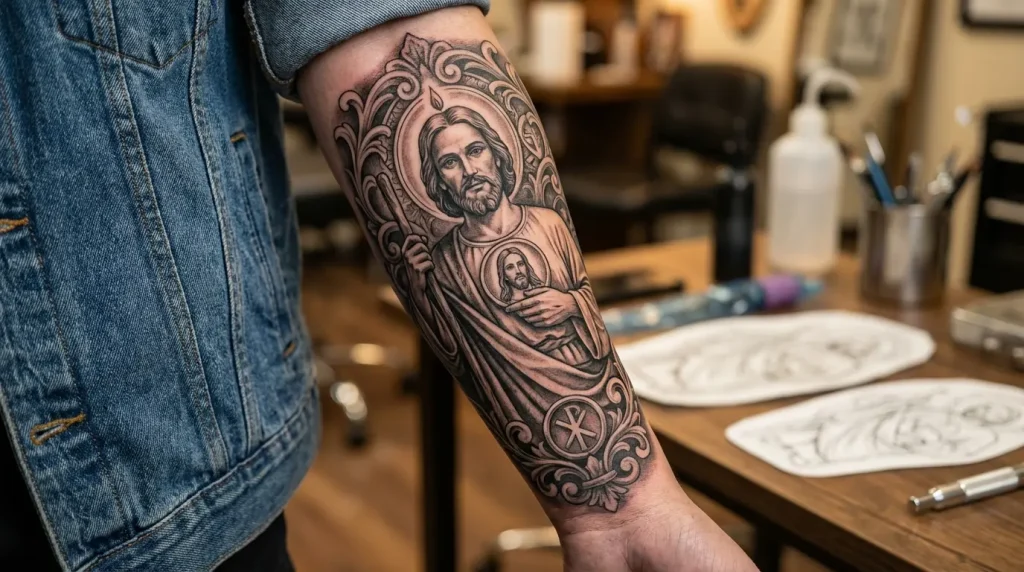
TL;DR: Size matters more than you think (4+ inches minimum for portraits), hand and neck placements fade fast, and that color realism you want? It’ll look worse than black and grey in 5 years. Pick your placement before your design.
San Judas Tadeo, one of the twelve apostles of Jesus Christ, holds particular significance in Latin American communities where his feast day on October 28th is celebrated with fervor, according to Trendolla Jewelry’s exploration of San Judas symbolism.
Look, I’m gonna be real with you. Your San Judas tattoo will fade. Every single one does. The question is whether it fades into something recognizable or into a blurry mess that makes people squint and ask “what is that?”
I’ve been working with religious tattoos for years, and San Judas pieces are easily 30% of what comes through the shop. Maybe more. The gap between what people want and what actually works on skin? That’s what we need to talk about.
Sacred Portraits: Full-Face Devotional Designs
Portrait-style San Judas tattoos focusing on his facial features remain the most requested designs. There’s something powerful about carrying the saint’s actual face as a permanent reminder of faith during desperate times.
But here’s the thing nobody tells you until you’re already in the chair. Size directly impacts whether your saint judas tattoo succeeds or becomes a blurry mess in five years. I’m not being dramatic. I’ve watched it happen.
Artists face the challenge of rendering facial proportions that need to remain recognizable as your skin changes with age. The crown and flame details require careful placement considerations to maintain their visual impact over decades. That flame element everyone wants? It gets completely lost when scaled down below minimum size requirements.
1. Traditional San Judas Portrait with Crown
The classic san judas tattoo design features his face looking slightly upward, crowned with the flame of the Holy Spirit. This composition creates more visual interest than straight-facing portraits because the upward gaze adds movement and spiritual aspiration to the piece.
This design typically measures between 6-10 inches to capture the detail needed for facial recognition. Artists recommend chest or upper arm placement for this size because you need smooth, relatively flat skin to prevent distortion.
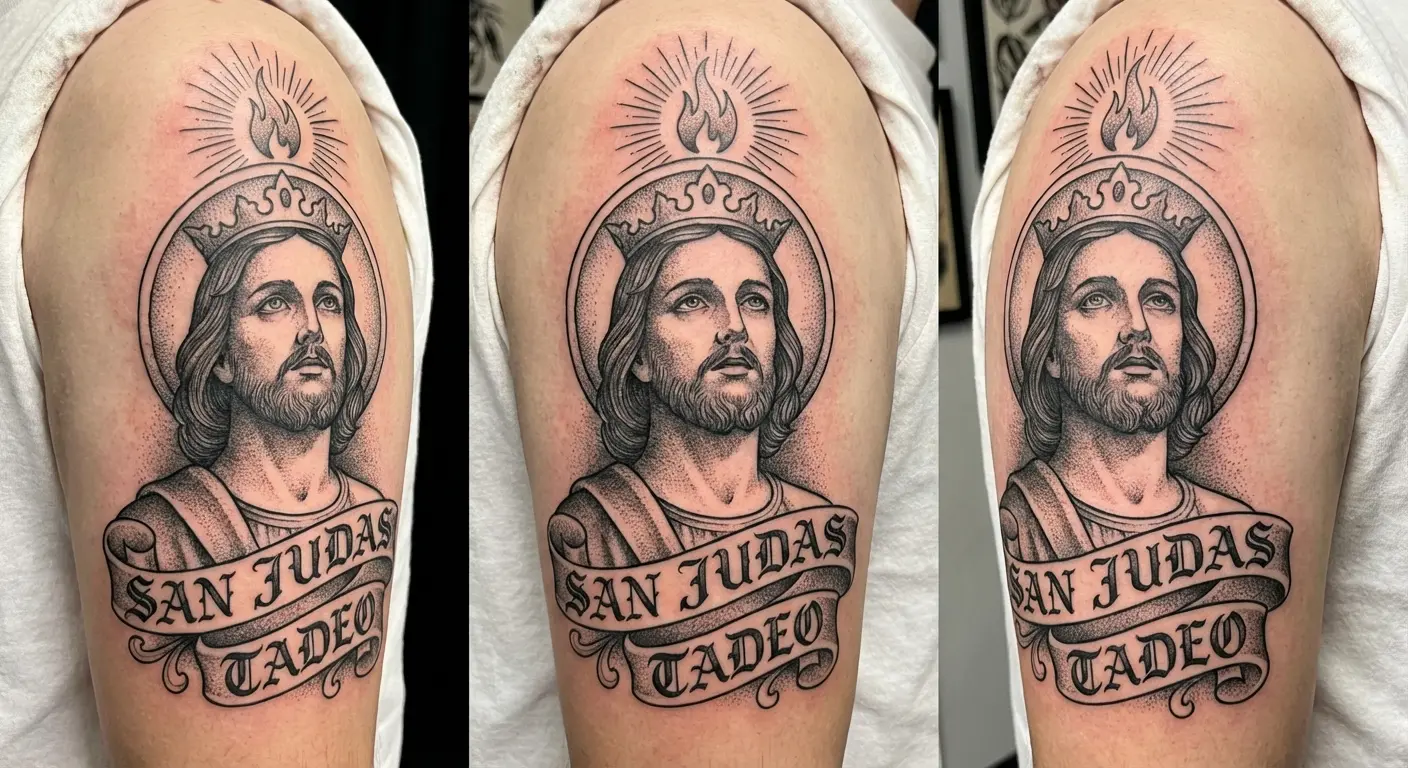
Color palette choices matter more than you’d think. Traditional san judas tattoo stencil designs incorporate greens, golds, and realistic skin tones that look stunning fresh but require different maintenance than black and grey versions.
The truth about color work? It ages less gracefully in this particular design. Black and grey versions often look better at the ten-year mark than full color pieces looked at year five. I used to think color was always the move. I was wrong.
2. San Judas with Sacred Heart Detail
This variation incorporates the Sacred Heart either held in San Judas’s hands or positioned near his chest within the composition. The added element creates depth but also increases the minimum size requirement to 8+ inches for clarity.
The heart’s rays and flames compete for visual attention with the crown flame. Bad composition makes your eye bounce between the two focal points without settling anywhere. Good composition creates hierarchy where the face remains primary and the heart supports without overwhelming.
This saint jude tattoo works exceptionally well as a san judas chest tattoo where the anatomical heart aligns with the symbolic one. There’s something powerful about that visual connection between your actual heartbeat and the sacred symbol.
3. Hyper-Realistic Face Study
Okay, so everyone wants hyper-realism until they see the price and time commitment. These san judas face tattoo portraits demand larger canvases (we’re talking 10+ inches minimum) and multiple sessions to layer the detail needed for photorealistic skin texture.
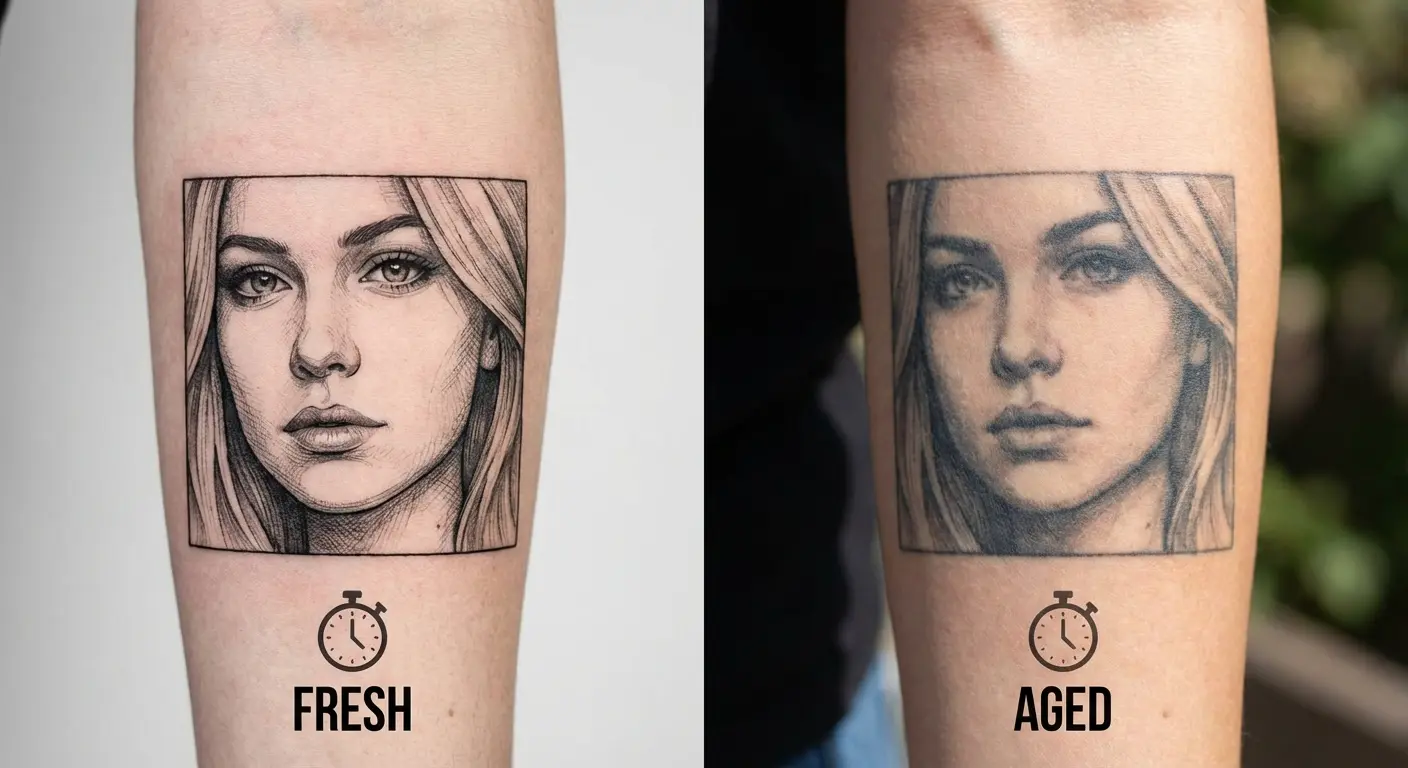
The reality check: fine details blur faster than bold lines. Your hyper-realistic san judas tattoo will require more frequent touch-ups than simplified versions. Back or thigh placements provide the smoothest skin canvas for this technique because you need minimal texture and maximum flatness for photorealism to work.
Lighting direction in the design affects the three-dimensional illusion more than most people realize. Bring reference photos that match your desired lighting. Your artist can’t guess which direction you want the light source coming from, and changing it mid-session creates inconsistencies that ruin the realistic effect.
4. San Judas with Prayer Hands Integration
Adding prayer hands to a san judas arm tattoo creates a vertical composition that works beautifully on forearms and outer biceps. The hands (either the saint’s or your own in prayer) frame the portrait and add a personal devotional element.
This design solves the common problem of dead space around circular portrait compositions. Instead of awkward background fill, the vertical format flows naturally from hands through portrait to crown.
The extended vertical format allows for scripture or dates to be incorporated naturally below the hands. Which hand positions read most clearly? Hands pressed together at the fingertips with slight space between the palms, or hands clasped with fingers interlocked. Flat, stiff hands kill the devotional feeling you’re going for.
Beyond the Portrait: Symbolic Interpretations
Not every saint jude tattoo needs to be a literal portrait. Some of the most meaningful tatuajes de san judas capture the saint’s essence through symbols, objects, and abstract representations.
These approaches offer more versatility for professional environments where a large portrait might raise questions. Sometimes they’re more personally meaningful than traditional portraits because they allow for creative interpretation that reflects your specific relationship with San Judas.
5. San Judas Medallion Chest Piece
Medallion designs mimic the prayer medals many people wear, translating that circular format into a saint jude tattoo that sits perfectly on the chest above the heart. These typically range from 3-5 inches and include San Judas’s profile or frontal view within a decorative border.
The circular format naturally fits the chest’s anatomy. Your pectoral muscles create a smooth, rounded surface that complements the medallion shape. This san judas tattoo design reads clearly from conversation distance, which matters for a chest piece that people will see when you’re wearing open-collar shirts or at the beach.
Border treatment can be customized with cultural patterns, rosary beads, or geometric elements that reflect your heritage or personal style. This placement heals faster than many alternatives because chest skin is relatively thick and protected from constant friction.
6. Flame and Cross Forearm Design
This symbolic approach focuses on San Judas’s key iconographic elements (the flame and cross) without including his portrait. The vertical forearm placement allows the cross to run along the arm’s length with the flame positioned above.
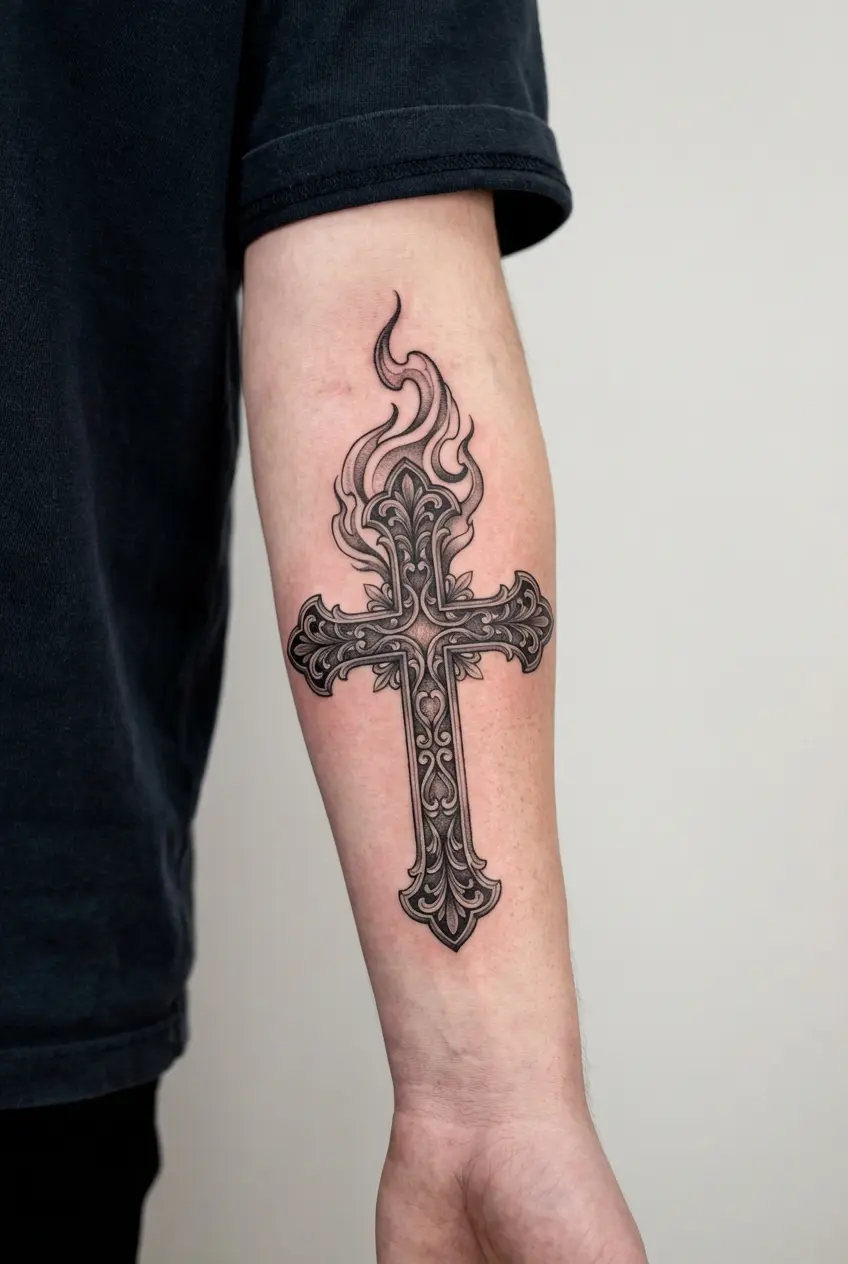
The design typically measures 5-7 inches and works in both color and blackwork. Sessions run shorter than full portraits because you’re dealing with symbolic elements rather than detailed facial features.
Adding your own symbolic elements (dates, initials, small florals) personalizes the piece without compromising the core imagery. The san judas tattoo remains recognizable while incorporating elements specific to your story. Why did you turn to the patron saint of lost causes? What impossible situation did you face?
7. San Judas Silhouette with Scripture
Silhouette designs reduce San Judas to his recognizable outline (crown, flame, shoulder drape) filled with scripture verses or prayers in micro-lettering. This approach works at smaller scales (3-4 inches) because it doesn’t rely on facial detail to convey identity.
Which scripture passages do people choose most commonly? Jude 1:22-23 appears frequently: “Be merciful to those who doubt; save others by snatching them from the fire.”
Font selection matters enormously for legibility as the small san judas tattoo ages. Delicate script looks beautiful fresh but becomes illegible within years. Bold, clean fonts maintain readability. I can’t stress this enough.
8. Minimalist Line Art Portrait
Single-line or minimal line art captures San Judas’s features with continuous flowing lines, creating a modern interpretation that appeals to people wanting devotional ink with contemporary aesthetics. These small san judas tattoo designs typically measure 4-6 inches.
The minimalist approach shares aesthetic similarities with fineline tattoo techniques that prioritize clean lines and simplified forms over heavy shading. This style requires artists specifically skilled in line work. Not all tattoo artists excel at this technique.
The simplified approach ages better than complex portraits because there’s less detail to blur. Which facial features must be included for recognition? Eyes, nose bridge, and crown outline are non-negotiable. Everything else can be simplified.
9. San Judas with Roses and Thorns
Combining san judas tattoo imagery with roses and thorns adds layers of Catholic symbolism (roses representing Mary, thorns representing Christ’s suffering) while creating a more decorative composition. This tattoo of san judas design typically expands to 8-12 inches to accommodate both the portrait and floral elements.
Roses can frame the portrait, create background depth, or integrate into the foreground. Color choices for the roses carry different symbolic meanings in tatuajes de san judas tradition. Red roses represent martyrdom and sacrifice. White roses symbolize purity and divine grace.
This approach bridges traditional religious imagery with tattoo culture’s love of botanical elements, making it more approachable for first-time religious tattoo recipients who might feel intimidated by stark religious iconography.
Placement-Driven Designs: Where Your Body Becomes Canvas
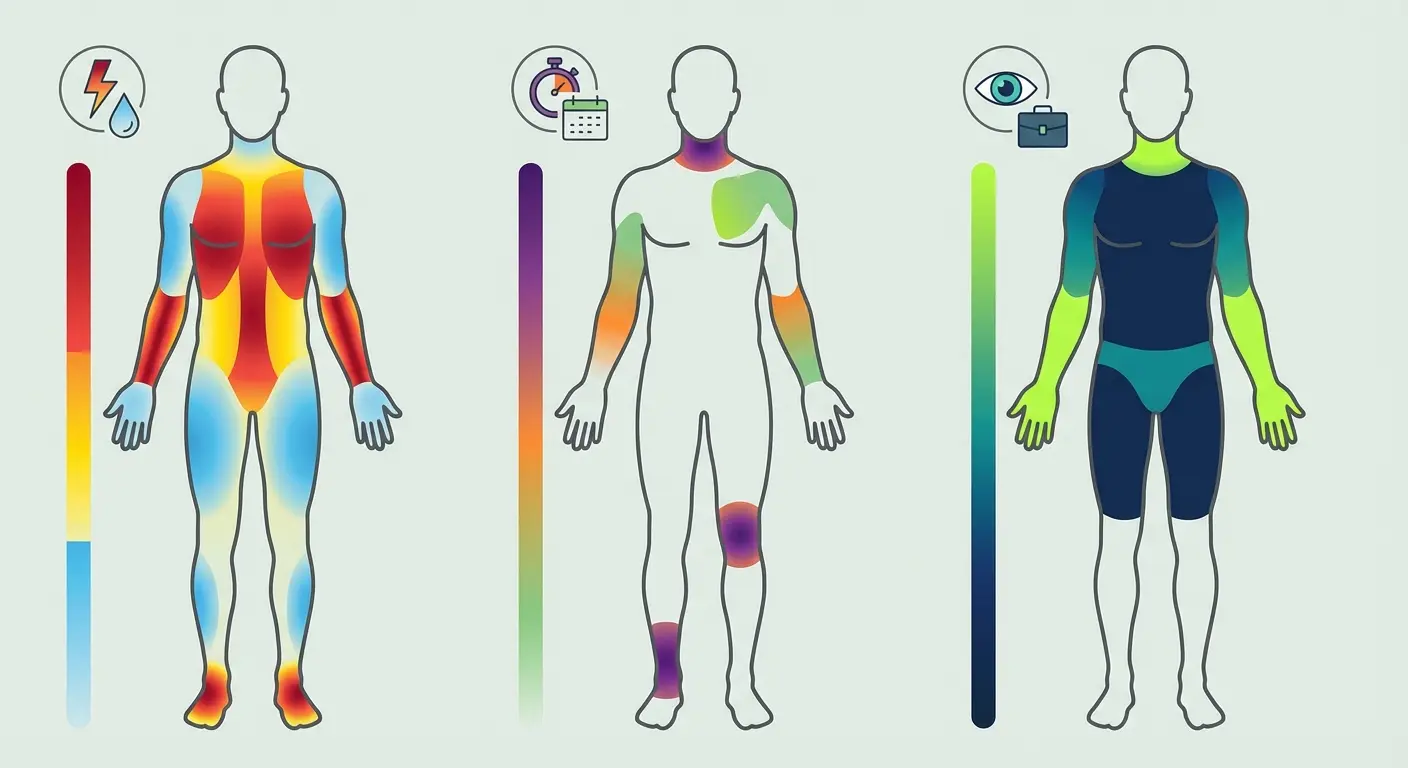
Your body’s geography determines what’s possible with st jude tattoo designs. A hand tattoo requires completely different design thinking than a back piece.
Some placements demand simpler designs while others can handle complex narratives. Choose based on your lifestyle rather than just aesthetic preference. Your job, your family situation, your pain tolerance, your sun exposure. All of these factors matter more than which design looks coolest on Pinterest.
10. Small Hand Placement Design
Hand tattoos of San Judas typically appear on the top of the hand between thumb and index finger or across the back of the hand. These must stay under 3 inches and require significant simplification.
Many artists recommend medallion or face-only designs for san judas hand tattoo placements because there’s no room for bodies or elaborate backgrounds. The constant hand washing and sun exposure means these need touch-ups every 2-3 years. That’s not a maybe. That’s a guarantee.
Hand tattoos hurt more than most placements due to thin skin stretched directly over bone with minimal fat padding. Like, “why did I agree to this” brutal.
Professional visibility considerations matter. Some artists refuse san judas tattoo on hand placements for clients without existing visible work. Why? Because your first tattoo shouldn’t be on your hand where you can’t hide it if job situations change.
11. Full Sleeve Narrative Composition
A san judas sleeve tattoo allows you to tell a complete devotional story, incorporating the saint’s portrait as the centerpiece while surrounding him with personal symbols, other saints, scripture, architectural elements. These saint jude tattoos require 15-30 hours across multiple sessions and typically cost $2,000-5,000 depending on your location and artist.
Planning a comprehensive sleeve requires understanding the commitment involved, similar to considerations outlined in our guide on Japanese sleeve tattoo composition and narrative flow.
You need to plan visual flow so the design reads coherently as your arm moves. Start with the focal point (usually San Judas’s face positioned on the outer bicep or forearm) and build outward. Background elements unify disparate symbols. Without cohesive background treatment, sleeves look like random tattoos crammed together.
Don’t rush a san judas tadeo tattoo sleeve. I’ve seen people try to complete sleeves in unrealistic timeframes, pushing through pain and fatigue, ending up with work that doesn’t flow properly. Take your time. Build it in phases.
12. Back Panel Devotional Scene
The back provides the largest uninterrupted canvas for san judas back tattoo designs, allowing for scene-based compositions that show him in context (praying, holding his staff, surrounded by divine light) rather than isolated portraits.
Back pieces hurt less than many assume. More muscle, fewer nerve endings than bonier areas. The horizontal format allows for wider compositions than vertical limb placements.
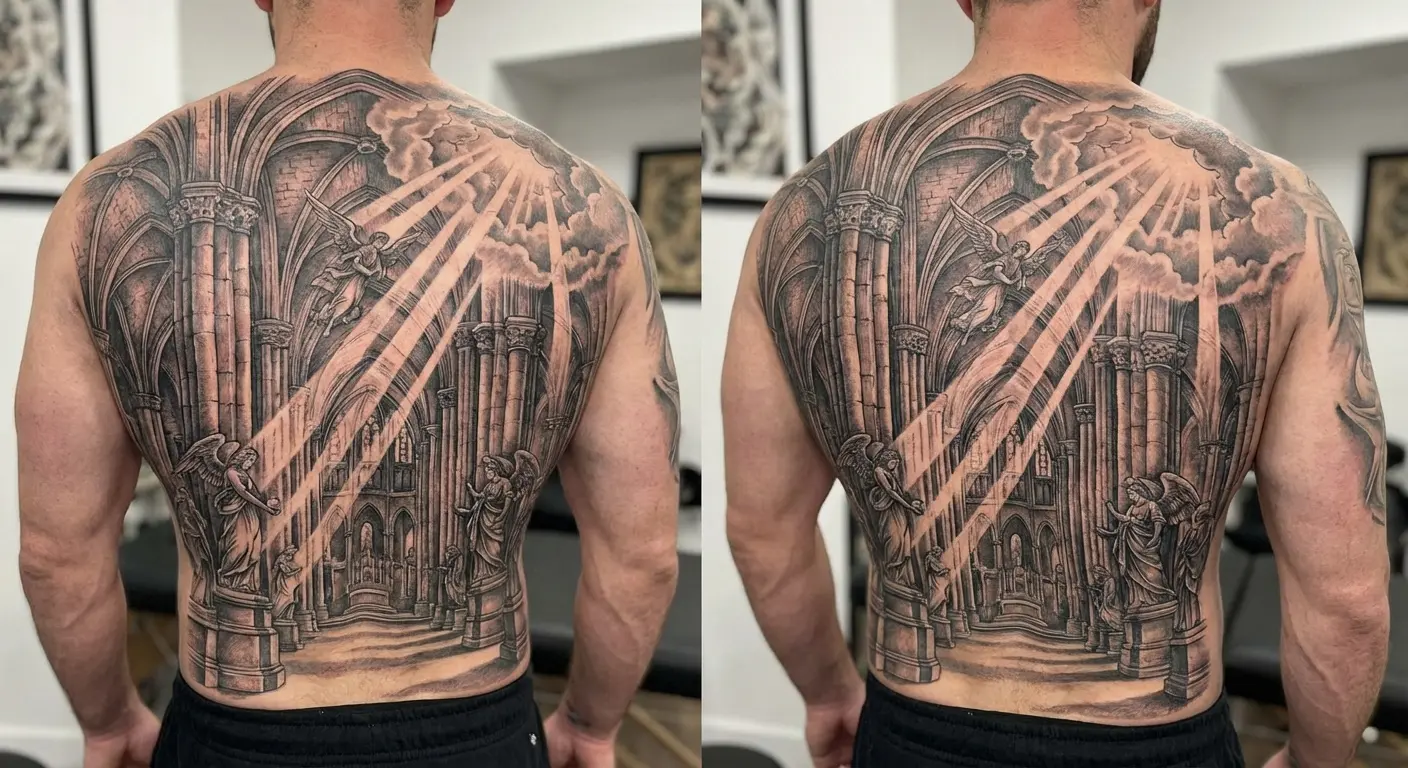
You’ll need a trusted friend or multiple mirrors to see your san judas back tattoo regularly. Can you maintain devotion to imagery you rarely see? Some people love the privacy of back pieces. The tattoo exists for them and their faith, not for public display. Others struggle with placements they can’t easily view.
Session planning for pieces this large requires breaking them into manageable phases. Upper back first session, middle back second, lower back third.
13. Neck Statement Piece
Neck tattoos of San Judas make bold statements about faith and commitment because they’re difficult to hide in professional settings. Side neck placements typically feature vertical 4-6 inch designs (face only or medallion style) while back neck pieces can go slightly larger.
Neck tattoos rank among the most painful placements due to thin skin and proximity to bone and nerves. Many reputable artists won’t do san judas neck tattoo work for clients without significant existing ink. If you can’t handle a forearm tattoo, you definitely can’t handle neck work.
The social and professional implications need honest consideration. Customer-facing jobs, corporate environments, conservative family members. A st jude tattoo on your neck will generate reactions. You need to be ready for both positive reactions from fellow believers and judgmental ones from people who view visible tattoos negatively.
14. Leg Panel with Architectural Elements
Thigh and calf placements offer substantial space for san judas leg tattoo designs that incorporate architectural elements (church facades, columns, arches) creating a scene rather than a portrait alone. These san judas tadeo tattoo leg pieces typically measure 8-12 inches.
Legs provide relatively flat canvases that minimize distortion. The natural muscle contours can enhance dimensional shading when your artist knows how to work with your body’s anatomy. Leg tattoos are easier to hide for professional settings while still offering large-scale possibilities. Pants exist. Problem solved.
Understanding proper tattoo aftercare becomes especially important for these lower-body placements that experience more friction from clothing.
Sitting versus standing changes how san judas tad eo tattoo leg pieces display. Standing straight shows vertical flow. Bent knee shows how the design moves with your body.
Cultural Fusion: Modern Takes on Traditional Devotion
Contemporary tattoo artists are reimagining San Judas imagery through modern stylistic lenses, creating saint jude tattoos that honor the devotional tradition while embracing current tattoo trends.
Younger generations wanting to express faith through contemporary aesthetics gravitate toward these approaches. They integrate better with existing non-religious tattoos. Someone with geometric work, blackwork, or minimalist pieces on their body can add a saint jude tattoo that matches their existing aesthetic rather than clashing with it.
Some of these styles preserve better over time than traditional approaches. Bold, simple shapes outlast fine detail. High contrast maintains readability.
15. Geometric San Judas Design
Geometric interpretations fragment San Judas’s portrait into angular shapes, sacred geometry patterns, or mandala-inspired compositions while maintaining his recognizable features. These san judas tattoo design variations typically measure 6-10 inches.
The geometric interpretation of religious imagery follows principles similar to those explored in our comprehensive geometric tattoo designs guide, where sacred geometry meets contemporary aesthetics.
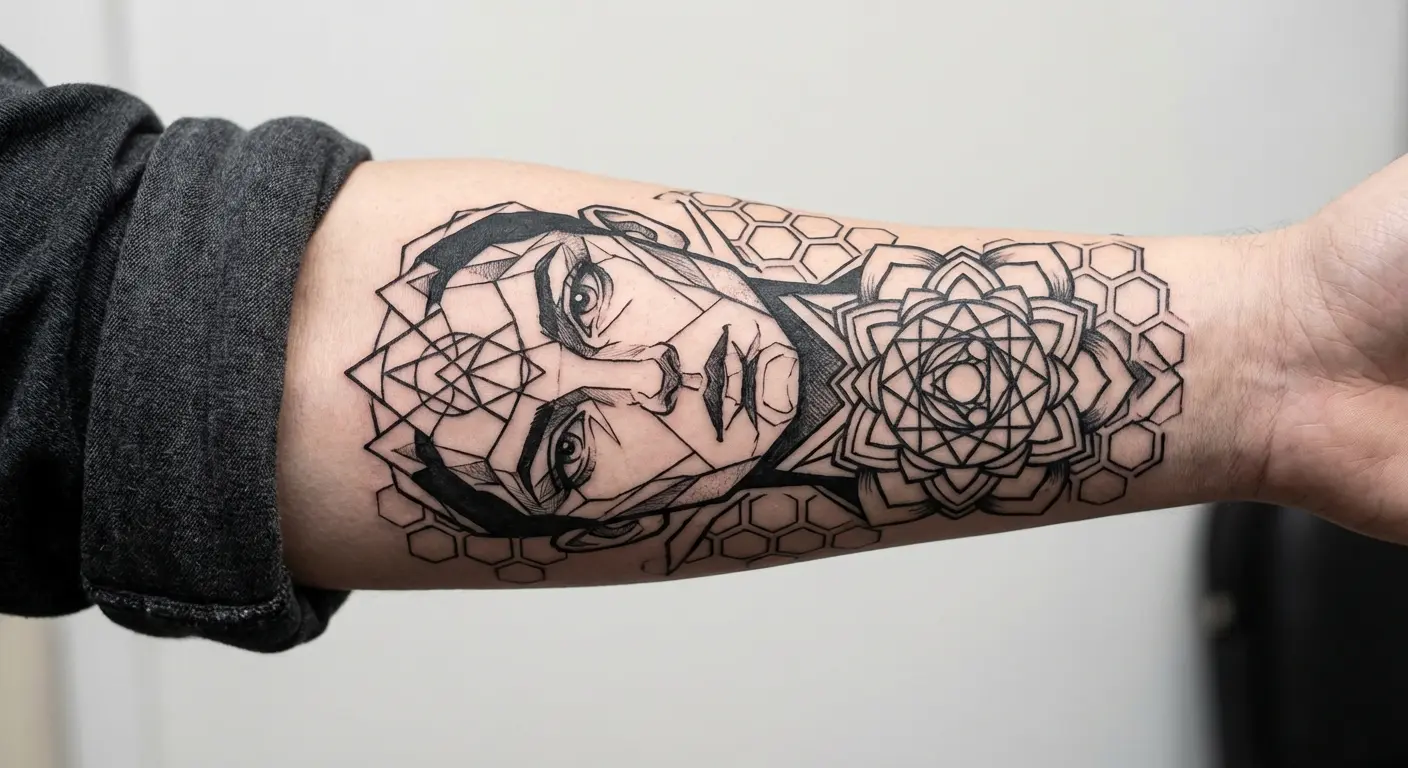
Bold lines and shapes in geometric work age exceptionally well. There’s no fine detail to blur, no subtle shading to fade into nothing. Sacred geometry (circles, triangles, flower of life patterns) adds layers of spiritual symbolism beyond the saint himself.
This saint jude tattoo design style requires artists specifically trained in geometric tattooing. The mathematical precision affects pricing because it takes specialized skills and often longer planning time to map out the proportions correctly.
16. Blackwork San Judas with Negative Space
Blackwork designs use solid black ink and strategic negative space to create San Judas’s image through contrast rather than line work or shading. These bold saint judas tattoo pieces typically measure 5-8 inches and create striking visual impact with their high contrast.
Blackwork ages better than almost any other style because solid black holds its intensity while detailed shading fades. Negative space requires careful planning because you can’t add more later. You can only add black, not remove it. This approach works particularly well for people with darker skin tones where subtle shading doesn’t show as clearly.
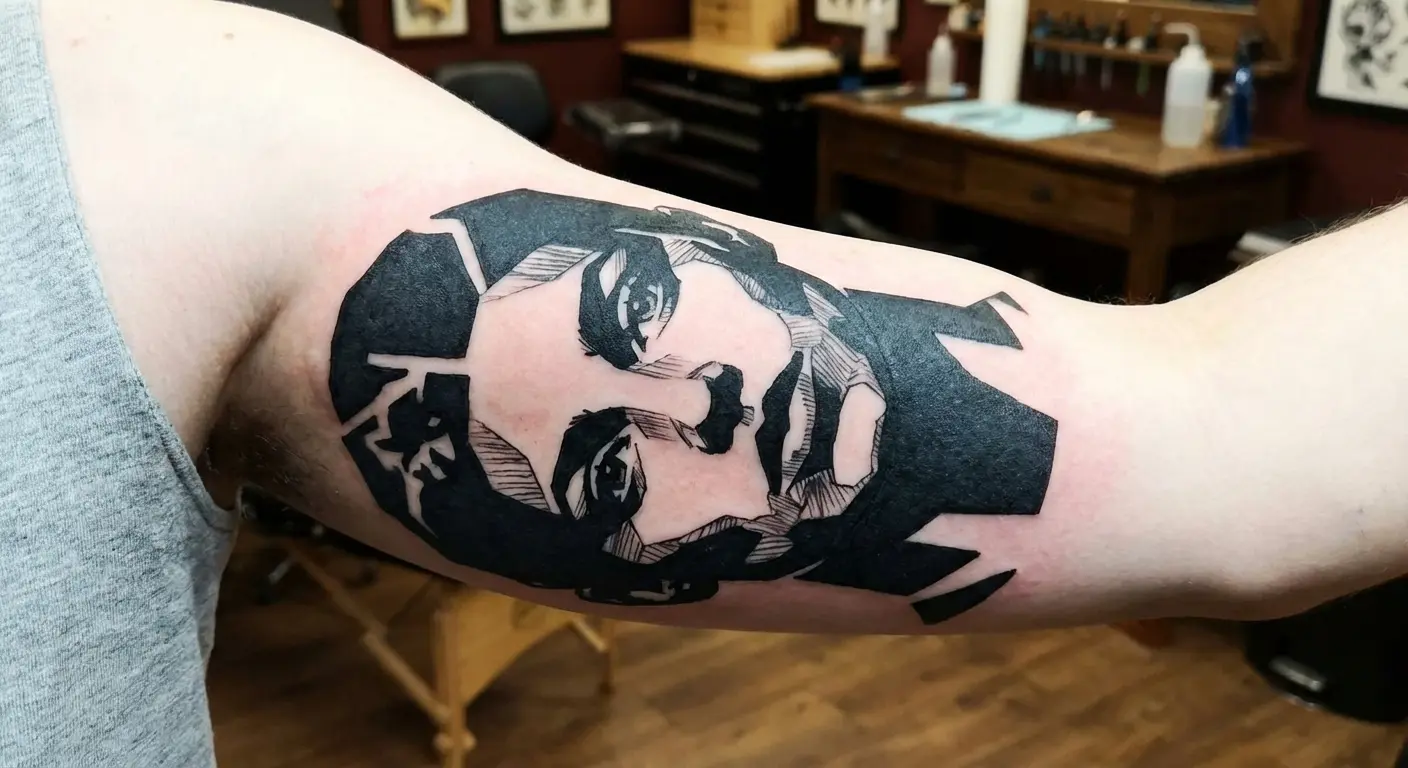
Blackwork heals faster than color or detailed shading work and requires fewer touch-ups over time. The st jude tattoo becomes a bold graphic statement.
The enduring power of San Judas as the patron saint of lost causes continues to resonate in communities today, with devotees turning to him during their most desperate moments. In a recent case that highlights this devotion, authorities are searching for 23-year-old Karina Rivera who went missing in Houston’s Bellaire area (Click2Houston), with family members likely seeking the saint’s intercession during this difficult time. This real-world connection between faith and crisis underscores why san judas tattoo designs represent more than aesthetic choices. They’re permanent reminders of hope during life’s most challenging circumstances.
17. Color Realism with Contemporary Elements
This final approach takes traditional San Judas portraits and integrates contemporary elements (watercolor splashes, abstract color fields, modern graphic design elements). The saint’s face remains realistic and recognizable while the surrounding treatment gets experimental.
These tattoo of san judas pieces typically require 8-12 inches to balance the realistic portrait with abstract elements. You need artists skilled in both realism and contemporary techniques, which limits your artist options. This fusion style bridges traditional devotion with modern tattoo culture.
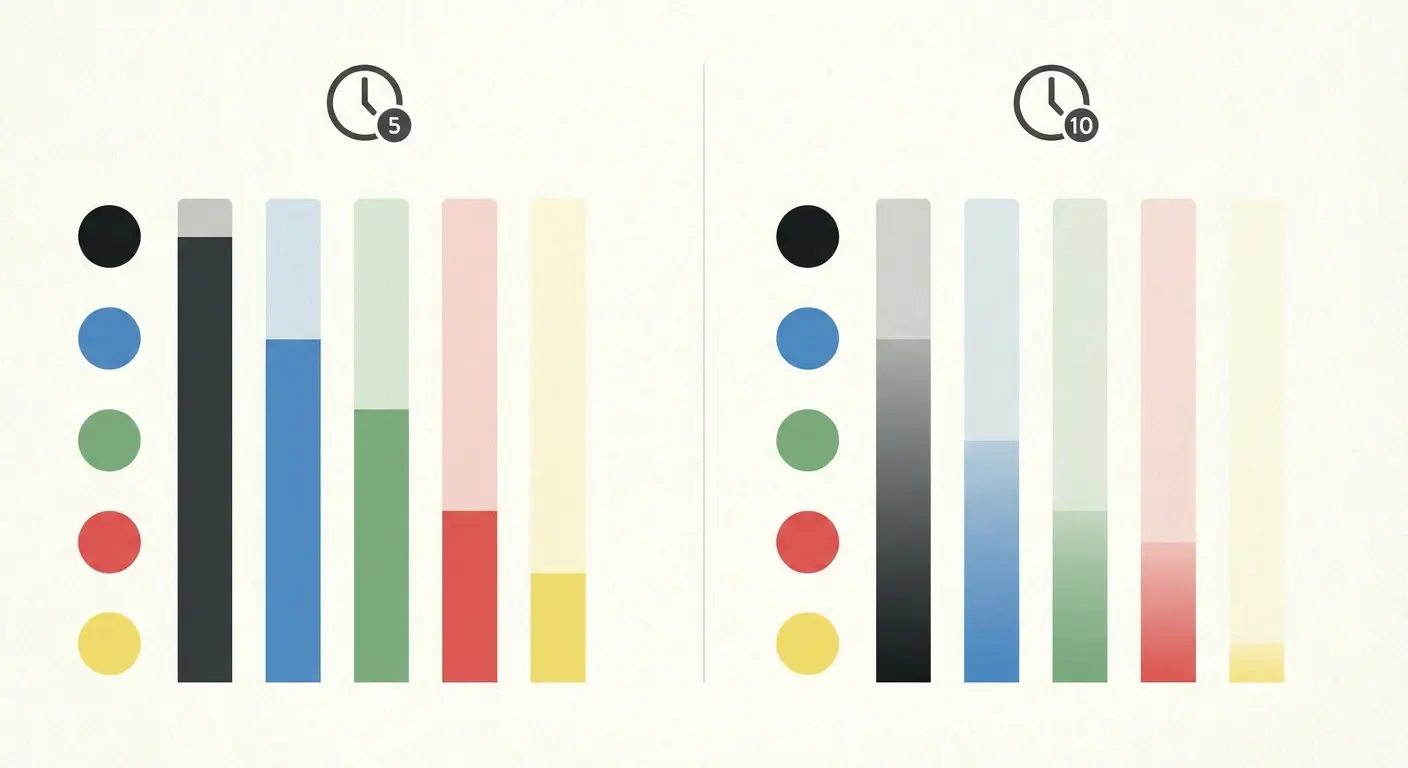
Color work requires more maintenance than black and grey. According to Ink Happened’s comprehensive guide on San Judas tattoos, the saint’s characteristic colors are white (representing purity) and green (symbolizing hope), which explains why these hues appear so frequently in traditional color realism pieces. Understanding these symbolic color associations helps you make informed decisions about whether to pursue full color work or stick with black and grey variations that may age more predictably over decades.
The contemporary elements can be customized to reflect your personal style (geometric shapes, floral abstracts, cosmic elements). Bring reference images of both the realistic and abstract elements you want. Don’t just say “I want watercolor effects.” Show examples of the specific watercolor style you mean because that term covers a huge range of techniques.
Before You Commit: Turning Ideas into Ink-Ready Designs
So you’ve seen seventeen approaches to tattoo san judas designs, each with different technical requirements, placement considerations, and aging characteristics. The gap between inspiration and actual ink can feel overwhelming, especially when you’re trying to communicate your vision to an artist.
You need a san judas tattoo ideas design that captures your devotion while working with your body, lifestyle, and long-term plans. Maybe you love the hyper-realistic face study but your budget only covers a smaller piece. Maybe you want a san judas forearm tattoo but you’re not sure if the design you’re imagining will work at that scale.
Tattoo Generator IQ solves the visualization problem that stops many people from moving forward. Instead of describing what you want and hoping your artist interprets it correctly, you can generate multiple high-resolution design variations exploring different styles, placements, and elements before your consultation.
Want to see how a geometric san judas tattoo designs would look compared to traditional realism? Generate both. Curious if that hand placement will work at the size you’re imagining? Create it and evaluate honestly. The AI gives you artist-ready references that communicate your vision clearly, making your consultation more productive and reducing the back-and-forth that delays getting your actual tattoo.
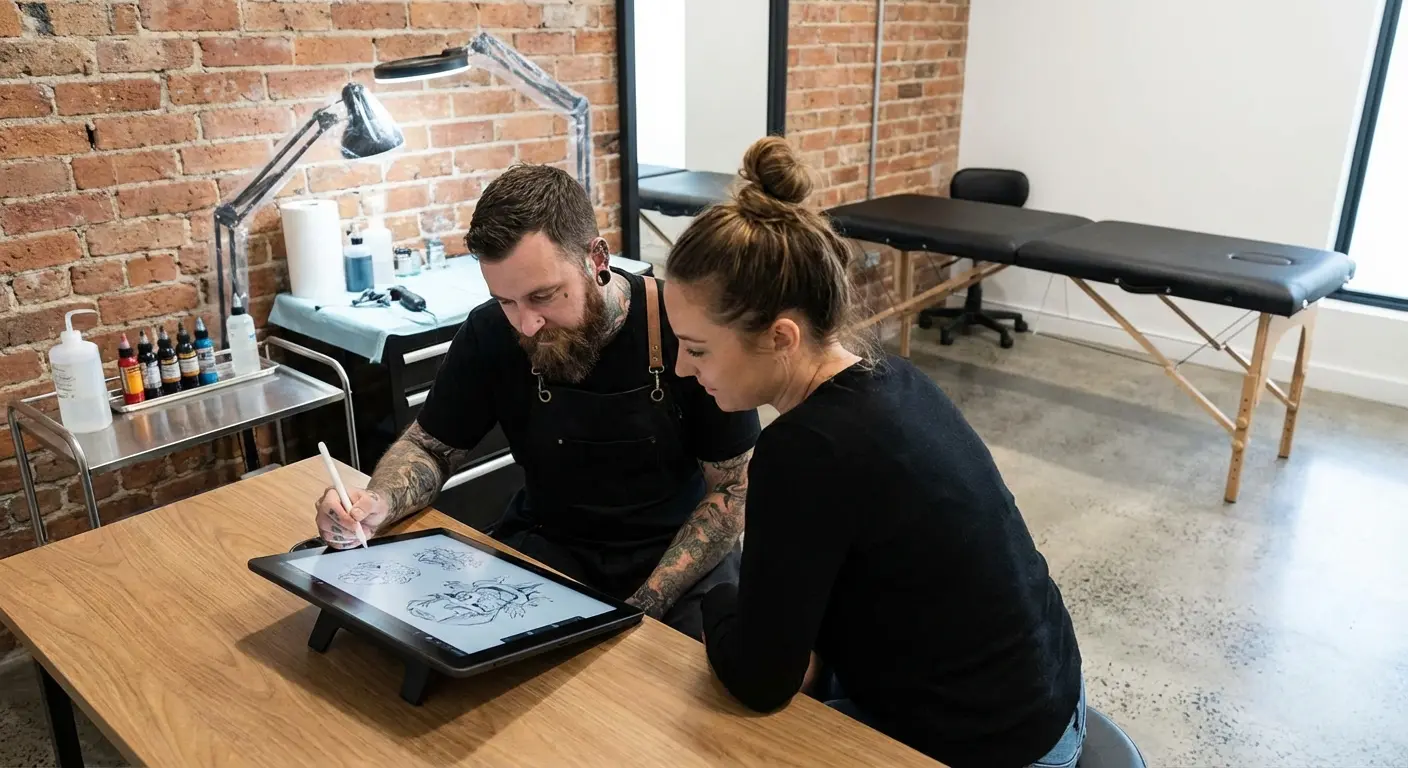
You’re not replacing your artist. Their skill brings the design to life permanently. But you’re arriving prepared with exactly what you want rather than vague ideas and Pinterest screenshots. The difference between showing up with “I want something with San Judas and maybe some roses” versus showing up with three different design variations you’ve generated and evaluated? That’s the difference between getting exactly what you want and settling for what your artist thinks you might mean.
Working with a san judas tattoo stencil that’s been refined through multiple digital iterations before it ever touches your skin gives you confidence. You’ve seen how the design looks at scale. You’ve tested different placements. You’ve experimented with color versus black and grey. The guesswork is gone.
Final Thoughts
San Judas tattoos carry weight beyond aesthetics. They’re public declarations of faith, reminders during difficult times, and connections to cultural heritage that deserve thoughtful execution.
What most articles won’t tell you is that the devotional aspect doesn’t make these tattoos immune to the same technical realities affecting all ink. Your san judas tattoo portrait will fade in the sun just like any other tattoo. San judas hand tattoo placements will blur faster regardless of the saint depicted. Color realism requires touch-ups whether it’s religious imagery or not.
Respecting the sacred nature of the design means respecting the practical realities of tattooing itself. Your st jude tattoo succeeds or fails based on appropriate scale for detail level, placement matching your pain tolerance and professional needs, style selection that ages well, and artist skill in your chosen approach.
Listen, I’m tired of fixing mistakes from people who didn’t think about how this ages. Your devotion deserves ink that lasts as long as your faith. Making informed decisions about design complexity, placement practicality, and long-term maintenance before that needle touches your skin ensures your st judas tattoo remains a source of strength and connection rather than a faded reminder of impulsive choices.
If I had to recommend one approach? Black and grey portrait, 6-8 inches, upper arm. It works. It lasts. It’s recognizable. Everything else is variations on that theme.
We’ve given you the information artists often assume you already know. Now you can have the conversations that lead to saint jude tattoos you’ll be proud to carry for life.
