
Stop Freaking Out About Your Peeling Tattoo

Day four hit and my forearm looked like a snake mid-shed. Colorful flakes everywhere. I texted my artist at 11 PM in full panic mode. She replied with three words: “Chill. It’s supposed to do that.”
I got my first tattoo at 19 and called my mom crying when it started peeling. She had zero tattoos and told me to put Neosporin on it. Don’t be like 19-year-old me.
Here’s what I wish someone had told me then: your tattoo is going to peel. It’s going to look weird. You’re going to hate it for about a week. And if you can resist the urge to mess with it, everything will be fine.
Quick version for the impatient
Your tattoo’s gonna peel. Don’t freak out. Don’t pick at it. Don’t drown it in lotion. The more you mess with it, the worse it’ll heal. We’ll get into the weird stuff below.
Why Everyone Gets This Wrong
You see your tattoo start to flake and immediately think something’s gone wrong. We’ve all been there.
Tattoo peeling is your skin doing exactly what it’s designed to do after trauma. And yes, tattooing is trauma. Your skin cells turn over constantly. You shed roughly 30,000 to 40,000 dead skin cells every hour under normal circumstances. A fresh tattoo just speeds this up in one spot.

Remember that one beach day where you fell asleep and woke up looking like a lobster? Your skin peeled in sheets or flakes, revealing fresh pink skin underneath. Same deal here, except the peeling skin carries traces of ink that was sitting in the topmost layers. Not the ink permanently embedded deeper in your dermis.
That colorful flake in your hand isn’t your tattoo disappearing. It’s proof your skin is rebuilding itself correctly.
The ink sits in your dermis, the layer below where peeling occurs. When your epidermis sheds, it’s not taking significant ink with it unless something interferes with the process. That’s what nobody gets.
According to Platinum Ink’s 2025 recovery guide, about 70% of people experience the peeling stage smoothly when they follow basic care protocols. Yet the visual drama of colorful flakes still triggers unnecessary panic in most first-time tattoo recipients.
Look, everyone screws this up because peeling looks dramatic. Chunks of colored, dry skin coming off your body triggers alarm bells. But you’re watching your skin rebuild itself in real time, which is actually remarkable if you stop catastrophizing long enough to recognize it.
Why is my tattoo peeling? The problem isn’t the peeling itself. It’s that we treat it as an emergency requiring intervention, when most of the time it requires patience and minimal interference. You wouldn’t try to stop a scab from forming on a cut (at least, you shouldn’t), yet we approach peeling with this desperate need to control it.
The peeling process is a natural biological response that’s been perfected through millions of years of evolution. Your body knows how to heal wounds, regenerate tissue, and restore protective barriers. Your skin’s repair mechanisms are functioning exactly as designed, even when the visual evidence looks concerning.
Days 3-7: When Everything Goes Sideways
Every aftercare guide obsesses over the first 48 hours. Keep it covered, wash it gently, apply a thin layer of ointment. You follow those rules religiously, then day three hits and you’re suddenly in uncharted territory.
Nobody talks about days 3-7 because it’s boring. Not scary like fresh blood, not satisfying like seeing the final result. Just awkward.
This is the window where you’ll make or break your tattoo’s long-term appearance. Not the first 48 hours. Not the month-long healing period. These specific four to five days.
Here’s what actually happens: Days 1-2, it looks fresh but feels angry. Redness, swelling, plasma weeping. Days 3-5, it gets tight and shiny, starts looking cloudy, early flaking begins. Days 6-7, the peeling starts for real and you’ll want to claw your skin off. Days 8-14, it calms down and you remember why you got this thing.
Your skin is rebuilding its outer layer while trying to encapsulate the ink particles in your dermis. If you disrupt this process by picking, over-moisturizing, or exposing the area to irritants, you create opportunities for ink to migrate out with the dead skin cells. The dermis and epidermis are working in tandem during this phase, and interference throws off their coordination.
Most tattoos begin peeling between days 3 and 7 after application, with Healthline’s 2025 recovery guide confirming this phase typically lasts 1-2 weeks, though your specific timeline varies based on size, placement, and how your body heals.

Think about what happens when you peel a sunburn too early. You expose raw, unprepared skin that wasn’t ready to face the environment. Same principle applies here, except you’re also risking pulling out ink that hasn’t fully settled into the dermal layer.
What Your Body Is Actually Doing
Your keratinocytes (the cells that make up 90% of your skin) are multiplying like crazy. They push up from the bottom layer, mature as they rise, and eventually die to form the protective outer layer of your skin. This normally takes about 28 days. Your tattoo has sped it up to about 5-7 days in the affected area.
That tight, shiny appearance around day 2 or 3? That’s plasma and lymphatic fluid creating a protective layer while your skin preps for the shedding phase. It’s not a sign of infection unless accompanied by other symptoms (we’ll get to those later).

The cloudiness or dull appearance that freaks everyone out is dead skin cells accumulating on the surface before they’re ready to detach. Your tattoo isn’t fading. You’re looking at it through a layer of cellular debris that hasn’t sloughed off yet.
Give it time.
As recently as August 2025, dermatology experts writing for Health and Me confirmed that the cloudy, hazy appearance during healing is caused by inflammation, peeling skin cells, and immature skin cells creating a temporary veil over your ink. Not actual fading.
Your body is also increasing blood flow to the area, bringing nutrients and oxygen to support rapid cell production. This is why your tattoo might feel slightly warm or look more vivid in flashes before the peeling really kicks in.
What Your Peeling Pattern Actually Means
You’ve probably noticed that your tattoo doesn’t peel the same way your friend’s did. Some tattoos peel in sheets. Some flake like dandruff. Some barely peel visibly at all.
All normal.
Sheet peeling happens when large sections of skin come off in cohesive pieces. This typically means you have normal to oily skin with good cell cohesion. Your skin cells stick together as they’re pushed out, creating those satisfying (don’t pretend you don’t want to pull them) sheets of dead skin. This pattern usually means good ink retention because your skin created a strong barrier during the initial healing phase.
Gradual flaking looks more like dry skin or a mild sunburn peel. Small pieces shed continuously over several days rather than coming off in larger sections. This often happens with drier skin types or in areas where the skin is thinner (inner arm, ribs, behind the ear). The risk here is that people mistake this for problematic dryness and over-compensate with moisturizer, when it’s actually normal for their skin type.
Delayed peeling (or minimal visible peeling) can freak people out because they expect dramatic shedding and don’t see it. Your skin might feel slightly rough or look a bit dull, but you don’t see obvious flakes or sheets. This doesn’t mean you’re not healing. Some people have faster cellular turnover that sheds in microscopic amounts you can’t see. However, if you hit day 10 with zero peeling and your tattoo still looks shiny or tight, that could mean over-moisturizing has created a barrier preventing natural shedding.
Sarah’s shoulder piece was this massive peony, like dinner-plate sized. The outline started flaking lightly on day 4 with minimal visible shedding. So subtle she worried nothing was happening. Meanwhile, the deep purple petals didn’t shed until day 7, and when they did, it looked like she was molting grape skins. Same tattoo, same aftercare, two completely different patterns based purely on the technique used in each area.
The Texture Test
Run your clean finger gently across your peeling tattoo once a day. What do you feel?
Healthy peeling skin feels slightly rough, like fine sandpaper or a cat’s tongue. There’s texture, but it’s not catching on your finger or feeling thick and crusty. The skin underneath (where you can see it between peeling areas) should feel smooth and similar to the surrounding un-tattooed skin.
Problematic texture feels thick, raised, or crusty. If you’re developing scabs that feel hard or elevated, that’s not normal peeling. That means too much trauma during the tattoo process, infection, or that you’ve let the area dry out so severely that your body created scabs instead of allowing controlled peeling.
Slimy or sticky texture means you’re over-moisturizing. Your skin shouldn’t feel wet or tacky during the peeling phase. You’ve created an environment where dead skin cells can’t detach properly because they’re constantly saturated.
Should feel like fine sandpaper. Rough but not crusty. If it’s thick and raised, too dry. If it’s slimy, you’re drowning it in lotion. That’s it. Don’t overthink it.
The Moisture Thing We Need to Talk About
Every tattoo aftercare guide tells you to moisturize. You’ve internalized this as “more moisture equals better healing,” but that’s not how skin biology works.
Honestly? Most people over-moisturize. I’ve seen way more tattoos ruined by helicopter parents smothering their ink than by benign neglect.
Your skin needs to dry out enough to allow the peeling process to proceed. Dead cells detach when the connections between them break down. This breakdown is partly triggered by the drying process. When you keep skin constantly moist, you’re preventing this natural detachment mechanism.
Over-moisturizing during the peeling phase creates a humid environment where bacteria thrive. You’re essentially creating a greenhouse on your tattoo. The warm, moist environment is perfect for bacterial growth, especially when you’ve got micro-tears in your skin from the tattooing process.
The sweet spot is stupid simple: if it feels tight, add a tiny bit of lotion. If it’s shiny, back off. That’s the whole secret.

Too dry looks tight and cracked, feels painful, and can cause premature cracking and ink loss. Balanced looks matte with natural skin texture, feels comfortable with no tightness or slickness, and gives you controlled, even shedding. Too wet looks constantly shiny or glossy, feels sticky or slimy to touch, and delays peeling while risking bacterial growth.
The Three-Hour Rule
You don’t need to apply moisturizer every time you think about your tattoo. That’s the mistake right there.
Wait at least three hours between moisturizer applications during the active peeling phase. This gives your skin time to absorb what you’ve applied, allows the surface to normalize, and prevents the buildup that interferes with healthy peeling.
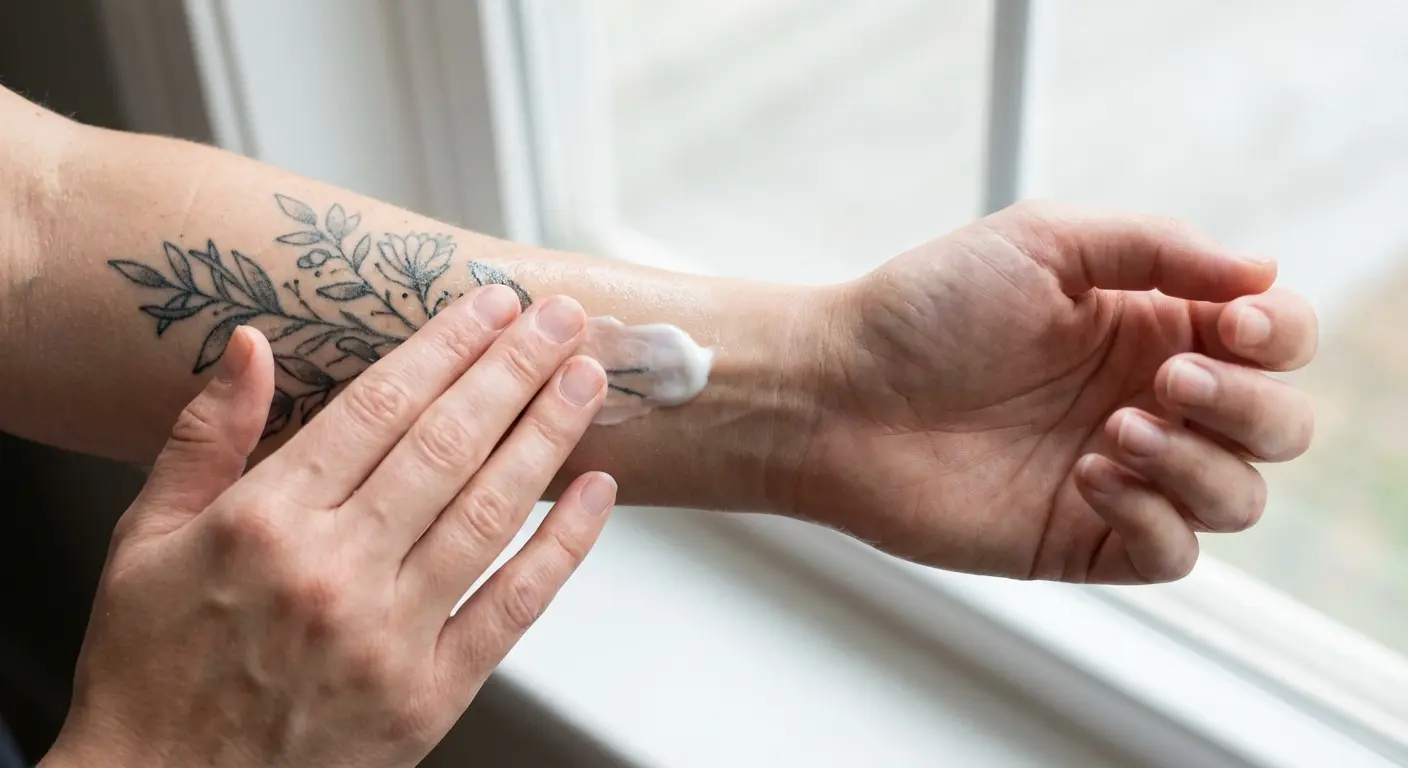
Before you apply, ask yourself: does this feel dry, or am I just anxious? There’s a difference between skin that needs moisture and skin that you’re preemptively treating because you’re worried. If your tattoo feels comfortable and looks normal (accounting for the peeling), you don’t need to add anything.
When you do moisturize, use an amount about half the size of a pea for a palm-sized tattoo. You should be able to rub it in completely within 30 seconds. If you’re still seeing product on the surface after that, you’ve used too much.
The temptation to apply more product increases during peeling, but restraint during this phase yields better results than excessive intervention.
When to Actually Worry
Peeling looks weird. We’ve established that. But sometimes weird crosses into genuinely problematic, and you need to know the difference.
Heat.
That’s your first warning sign. Your tattoo will feel slightly warm during the initial healing (increased blood flow), but if the area is noticeably hot to the touch or the heat is spreading beyond the tattooed area, that means infection. Normal peeling doesn’t generate heat.
Spreading redness follows the same principle. Your tattoo will have some redness immediately after getting it, and that redness should decrease over the first few days. If redness is expanding outward from the tattoo or intensifying during the peeling phase, your body is fighting something it shouldn’t have to fight.
Odor is non-negotiable. A healing tattoo doesn’t smell beyond maybe a faint hint of the products you’re using on it. Any sour, foul, or unusual smell means bacterial growth. Don’t talk yourself out of this one.
According to UCLA Health’s 2025 data, about 5-10% of new tattoos experience short-term complications, with infections remaining rare (under 5%) in regulated studios but jumping significantly without proper hygiene practices.
Excessive fluid or pus (anything beyond the clear to slightly yellowish plasma in the first 24-48 hours) means infection. Is it normal if there’s discharge? Absolutely not.

Thick, raised scabs that develop during the peeling phase mean either over-drying or initial healing problems. You might see thin, flat areas of scabbing in spots where the artist worked more heavily, but thick crusting isn’t normal peeling.
Hot to the touch and spreading? Doctor. Smells weird? Doctor. Oozing green stuff? Definitely doctor. Everything else is probably fine, but text your artist if you’re worried.
The Annoying But Harmless Stuff
Itching during peeling can be intense enough to make you question your life choices. That’s normal. Your nerve endings are regenerating and your skin is knitting back together. It’s supremely annoying, but it’s not dangerous.
Don’t scratch it. Slap the area around it gently if you need some relief, or apply a cold compress through a clean paper towel.
Your tattoo won’t peel evenly. One section might shed completely while another hasn’t started. Different areas of skin have different thicknesses and cell turnover rates. The outline might peel before the shading, or vice versa. This doesn’t mean anything is wrong with the unpeeled sections.
Colors will look different during peeling. Blacks might look gray. Reds might look pink or orange. Bright colors might look muddy. You’re viewing them through dead skin and cellular debris. Wait until the peeling is completely finished and your skin has returned to normal before you assess color accuracy or saturation.

Some tattoos peel in stages. You’ll have a round of peeling around day 3-5, think you’re done, then get a lighter second round around day 7-9. This happens when deeper layers of damaged skin take longer to work their way to the surface. It’s more common with tattoos that required a lot of passes or heavy saturation.
A forearm tattoo with both fine linework and solid black fill presented two completely different peeling experiences. The fine lines began flaking lightly on day 4 with minimal visible shedding. So subtle the client worried nothing was happening. Meanwhile, the solid black section started peeling on day 6 with dramatic sheets of gray-tinted skin that looked alarming but was completely normal. Same tattoo, same aftercare, two distinct patterns based purely on the technique used in each area.
Peeling in weird ways doesn’t automatically signal a problem. Context matters more than appearance.
Touch-Ups, Fading, and the Long Game
How you handle peeling affects whether you’ll need a touch-up. Not maybe. Definitely.
Ink loss during healing is normal to a degree. You’ll lose some saturation, particularly in areas where the skin is thinner or experiences more movement. But excessive ink loss happens when the peeling process gets disrupted.
Areas most vulnerable to ink loss during peeling include: anywhere that bends frequently (inside of elbows, behind knees, fingers), spots where clothing rubs consistently (waistline, bra line, ankle), and places where skin is naturally drier (outer forearm, shin). These areas need extra attention during peeling. Not more moisturizer, but more awareness about friction and irritation.
According to an October 2025 update from Health.com, tattoos take 2-4 weeks to heal on the surface but require 3-6 months for the skin underneath to fully heal, meaning your assessment of whether you need a touch-up should happen well after the peeling phase ends.
You’ll notice some color shift between week two and week four as your skin fully heals and the epidermis returns to normal thickness. This is your tattoo “settling.” Colors often look slightly lighter or softer once completely healed compared to how they looked fresh. That’s the difference between viewing ink through inflamed, blood-rich skin versus calm, normal skin.
Real fading that indicates a problem shows up as patchiness, where some areas lost significantly more ink than others, or as a general washed-out appearance that goes beyond normal settling. This usually traces back to one of three causes: the artist didn’t get ink deep enough into the dermis, you disrupted the peeling process by picking or over-moisturizing, or your immune system is particularly aggressive at breaking down ink particles.
The Six-Week Assessment
Don’t assess your tattoo the minute peeling stops. Your skin needs another three to four weeks to fully normalize after the visible peeling phase ends.
Wait six weeks, then look at it in daylight. Lines crisp? Colors even? You’re good. Patchy spots or obvious gaps? Text your artist.
At the six-week mark, check for these specific things: Are the lines crisp and consistent, or are there breaks and gaps? Is the color saturation even throughout similar elements (all the red areas should look similarly saturated, for example)? Are there any spots that look significantly lighter or patchy compared to surrounding areas?
Minor imperfections are normal. A tiny gap in a line, slight variation in shading, or a small spot that looks a bit lighter doesn’t necessarily require a touch-up. Tattoos are applied to an organic, irregular surface by a human hand. Perfection isn’t the standard.

Significant issues worth addressing include: lines that have multiple breaks or have spread significantly, large areas where color didn’t take, obvious patchiness in solid color sections, or any area where you can clearly see that ink is missing rather than just settled differently.
Contact your artist if you’re seeing these significant issues. Most reputable artists include one touch-up session in their pricing specifically because they know some ink loss during healing is inevitable. Don’t feel embarrassed about needing a touch-up. It’s part of the process.
Why Some Tattoos Need More Help Than Others
Your skin type plays a huge role in ink retention. Oily skin tends to push out more ink during healing because the excess sebum production can interfere with ink settling. Very dry skin can create healing issues that lead to patchy results. Mature skin (which has slower cell turnover) sometimes holds ink differently than younger skin.
Placement matters more than most people realize. Areas with lots of fat (outer thigh, upper arm) tend to hold ink well. Spots with minimal fat between skin and bone (ribs, feet, hands) often need touch-ups because the skin trauma is more significant and peeling is trickier.
Certain colors are more prone to fading or requiring touch-ups. Whites and light yellows are notoriously difficult to retain. Bright colors (hot pink, lime green, bright orange) often need a second pass to achieve the saturation most people want. Blacks and dark blues typically hold best.
Fine-line tattoos and intricate details are more likely to need touch-ups than bold, simple designs. There’s less margin for error with thin lines, and any minor ink loss during peeling becomes more visible. This isn’t a flaw in the style. It’s just the reality of working with very fine detail on an organic canvas.
Before You Commit to a Design
Most people don’t think about this until after their first tattoo: the design you choose directly impacts how it will heal and how it will look after peeling.
Heavy saturation in large color areas means more skin trauma, which often translates to more intense peeling and higher likelihood of some ink loss. That doesn’t mean you shouldn’t get that vibrant rose you want, but it means you should expect a more dramatic healing process and possibly a touch-up to perfect the saturation.
Designs with very tight spacing between elements can blur together slightly during healing as your skin swells and then contracts during peeling. Giving elements a bit more breathing room (even just a millimeter or two) can make a significant difference in how crisp everything looks healed.

Style choices matter too. Traditional American tattoos with bold outlines and strong color separation tend to heal predictably and age well. Watercolor tattoos without strong outlines can fade more noticeably during healing and over time. Realism with subtle shading requires perfect healing to maintain the intended effect.
You’re making a decision that needs to account for both how something looks fresh and how it will look after your skin does its thing.
Before you commit to a design, play with it. I built Tattoo Generator IQ because I got tired of people showing up with Pinterest screenshots that would never heal well. You can test different line weights, adjust saturation, see how styles age. Generate multiple variations, compare how different approaches might age, and bring your artist a reference that accounts for the biological reality of tattooing.
Try Tattoo Generator IQ to explore design options that look incredible fresh and heal beautifully. Create your design now.
Final Thoughts
Your tattoo’s gonna peel. It’ll look weird for a week or two. You’ll want to mess with it.
Don’t.
The panic, the obsessive checking, the urge to control every aspect of it. That’s what causes problems, not the peeling itself.
You now understand what’s happening during those critical days 3-7, what different peeling patterns mean, and how to distinguish between normal healing and genuine problems.
Your tattoo will look weird for a while. It will itch. It will shed in ways that might not match what your friend experienced. None of that means something is wrong. It means your body is remarkable at healing itself, and you’re watching that process unfold on your skin.
The peeling phase is temporary, but how you handle it affects your tattoo permanently. Give your skin the space to do its job, intervene only when necessary, and trust the process your body has been perfecting for your entire life.
Remember that guy who nearly passed out over his peeling bicep? His tattoo healed perfectly. Because after I talked him down, he left it alone.
That’s the secret. Not some special product or technique. Just patience and trust.
