
Tattoo Removal Before and After: What Nobody Tells You About the Emotional Reboot
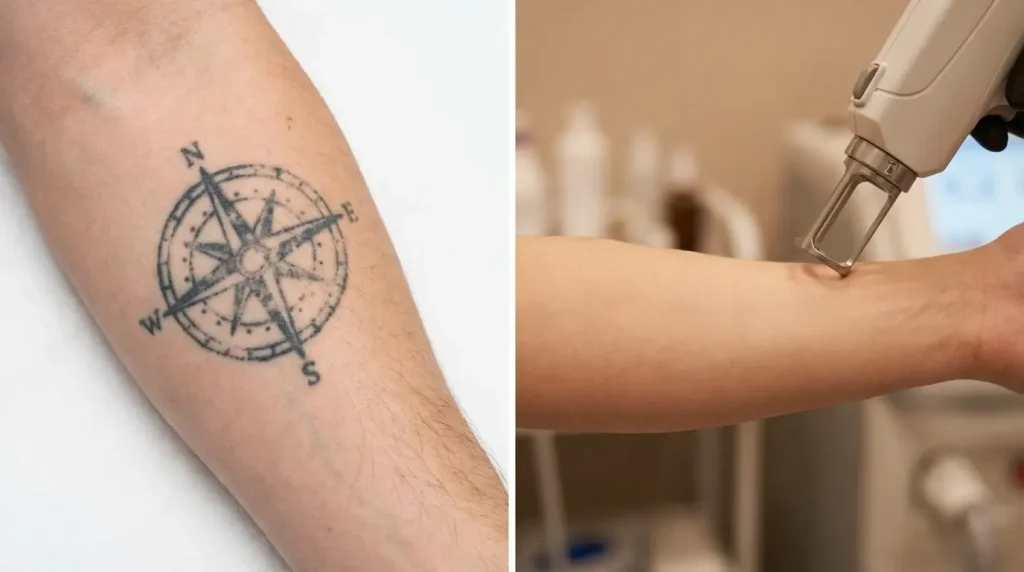
Nobody tells you that tattoo removal is going to mess with your head. They’ll tell you about the pain, the cost, how many sessions you’ll need. They won’t tell you about the weird grief that shows up around session three, or how disorienting it feels to watch a piece of yourself disappear in slow motion.
Here’s a stat that surprised me: about a quarter of Americans regret at least one of their tattoos. Not all of them remove it, but enough do that laser removal has become a whole industry. Dr. Rachel Westbay says that 30 to 40% of adults in the US have at least one tattoo, and as more people get inked, more people want out.
The before-and-after photos you see online show faded ink and smooth skin. They don’t show the weeks you spent deciding whether to go through with it. They don’t capture the strange relief mixed with loss you feel after the first session, or the moment you realize you’re mourning something you actively chose to remove.
Most removal content focuses on laser types, pain levels, and fading timelines. Almost nothing talks about what it feels like to watch part of yourself disappear. The internal experience of removal gets glossed over in favor of technical details.
You aren’t just erasing a design. You’re closing a chapter, and that comes with feelings you didn’t see coming.
Why Removing a Tattoo Feels Like Losing Part of Yourself
Tattoos become part of how you see yourself, even the ones you regret. They mark time, relationships, phases of life you’ve outgrown. Removing one isn’t the same as deleting a photo from your phone.
People are finally talking about how emotionally complex tattoo removal actually is. There was a GQ piece recently where writer Carrie Battan talked about removing a tattoo she’d hidden from her parents for 13 years. She described it as “rebuilding my body and my identity from scratch,” which sounds dramatic but actually captures how disorienting this process can be.
Studies show that anxiety and low self-esteem are common among people seeking tattoo removal, with patients frequently describing a profound sense of relief and freedom afterward, as if they’ve finally closed a chapter and can move forward.
The Weird Emptiness
You might’ve gotten that tattoo during a relationship, a difficult period, or a time when you felt most yourself. Removing it can feel like you’re erasing proof that version of you existed.
Some people describe a strange emptiness after the ink has cleared. The skin is clear, but something feels missing. You catch yourself reaching for it, forgetting it’s gone, or feeling oddly exposed without it. This isn’t weakness. Your brain is adjusting after removing a visual cue it relied on for years.
Tattoos mark internal stuff: feelings, phases, who you were. So when you remove the marker but the memory stays? You’re left with this weird gap. The proof is gone, but the feeling isn’t. Some people feel lighter and freer after removal, while others feel unmoored, like they lost a piece of their story. “Tattoo grief” is real; people experience sadness, regret, or confusion even after successful removal.
Figure Out What You’re Making Space For
The people who handle removal best aren’t trying to pretend the tattoo never happened. They’ve just figured out what they want that space to mean now.
Maybe you’ll want new ink that actually reflects who you are now. Maybe you’ll realize you like having that space clear, not having to explain anything, not having to commit to anything. Honestly, sitting with clear skin for a while before you decide is probably the move, even if you’re itching for something new.

Consider Hope Foster, a 30-year-old waitress from Spokane who decided to remove 14 square inches of tattoos. As she told The Spokesman-Review, “This was an emotional cleansing thing for me. I’m getting rid of that old version of me in those tattoos that aren’t serving me anymore. I’m excited that I can wear a bathing suit and be able to show my skin and not have to worry about my tattoos.”
Here’s What’s Actually Happening Under Your Skin
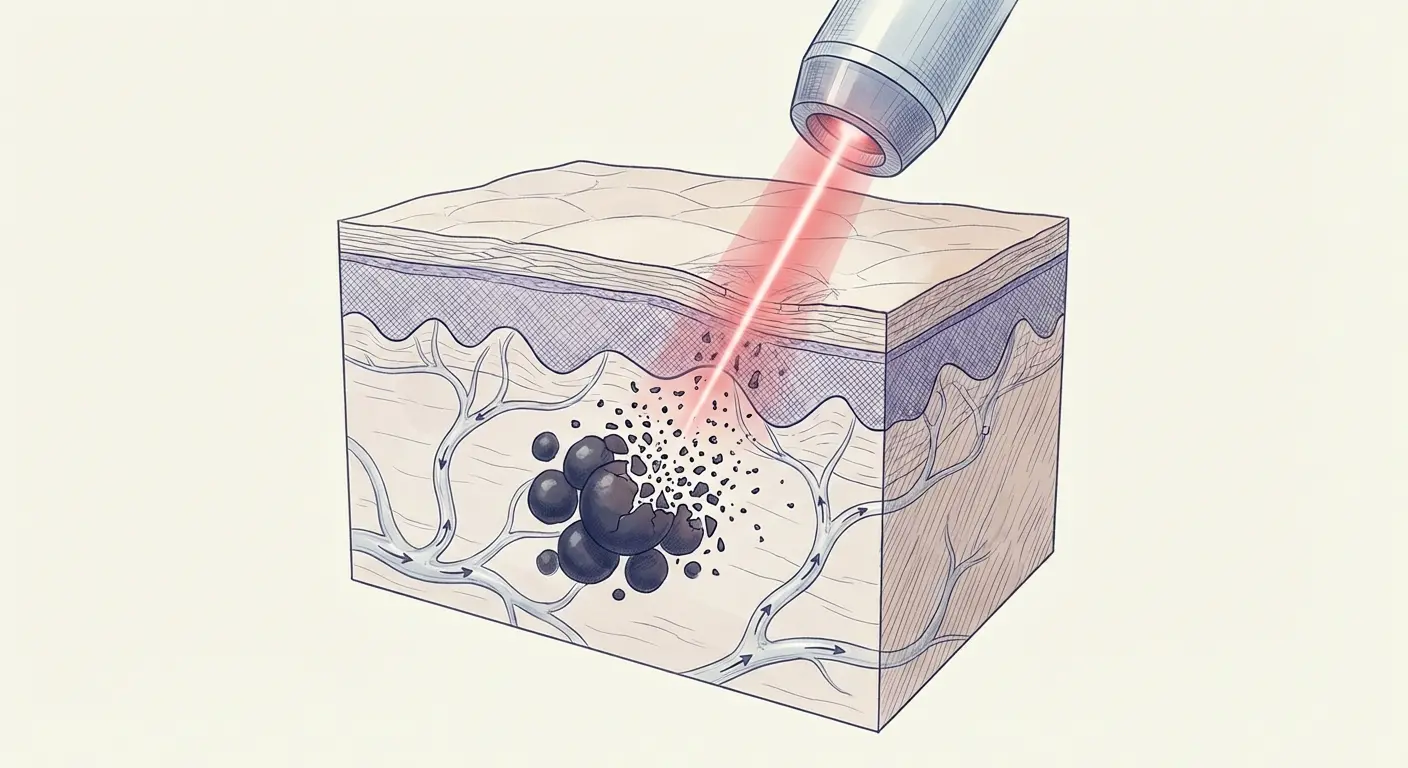
Laser removal works by breaking ink particles into smaller fragments your immune system can flush out. Sounds straightforward until you realize your body is treating the tattoo as an injury it needs to heal from, multiple times.
Each session shatters ink particles. Your lymphatic system flushes those fragments out over time, which is why you don’t see immediate results. The fading happens gradually between sessions, not during them. And yeah, it hurts. Not the same as getting the tattoo; it’s sharper, faster, like someone snapping a rubber band against your skin over and over except the rubber band is made of fire. Some people say it’s worse than getting the tattoo. Some say it’s better because it’s over faster. Either way, you’re going to want numbing cream, and you’re going to want to clear your schedule after because you’ll be sore and weird-feeling for a day or two.
Black ink fades fastest; it’s the easiest color to remove by far. Dark blue is almost as easy. Red and orange are moderate, doable with the right laser. But green? Yellow? Light blue? Those are stubborn as hell. Some colors, especially ones with metallic bases, barely fade at all no matter how many sessions you do. If you’ve got a multi-color tattoo, prepare for some colors to clear while others just sit there, mocking you.
Your skin also needs time to recover between treatments. Rushing sessions too close together doesn’t speed up results. It just increases scarring risk and slows your body’s ability to clear the ink.
The tattoo doesn’t disappear evenly. It gets patchy, lighter in some areas, stubbornly dark in others.
There’s this phase (usually around sessions 3-5) where the tattoo looks worse than it ever did. Patchy. Faded in weird spots. Like someone spilled bleach on it. You’ll be explaining to everyone that yes, you’re getting it removed, no, this isn’t the final result, yes, you know it looks weird right now.
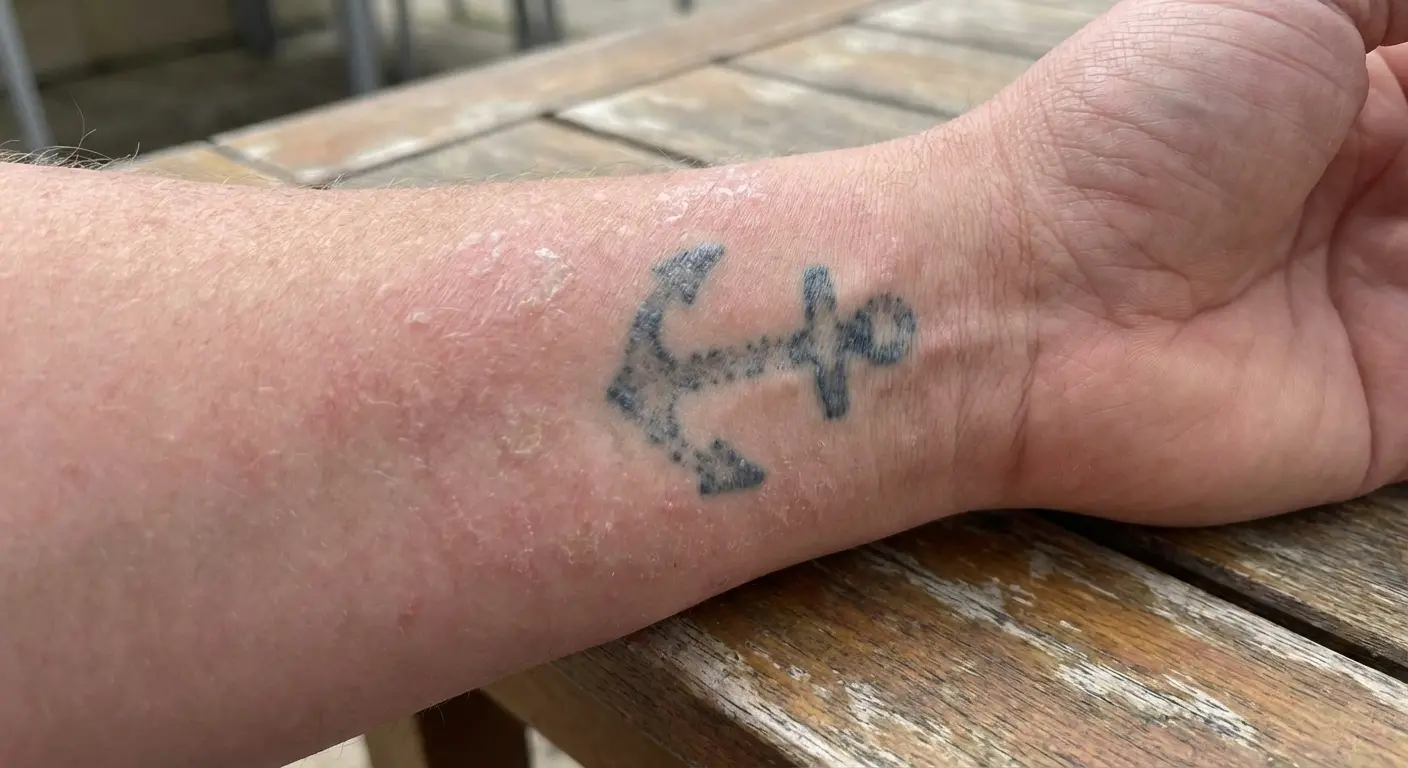
Your skin will blister. It’ll scab over in ways that make you want to pick at it (don’t). The tattoo might actually look darker for a few days after treatment, which is deeply weird and no one warns you about it properly. So is the weird ghosting effect where the outline remains visible even after the shading is gone. You’ll probably feel impatient. Everyone does. It doesn’t make it go faster.
A writer documenting her removal journey for Allure described how her multi-colored robot tattoo “looked like blue cheese” immediately after the first session: white and textured, with spots of blue-green where the ink had been especially pigmented. The patchy, uneven fading continued for months, with some areas clearing while stubborn green spots held on through multiple treatments. These before and after tattoo removal photos capture the reality of the uneven fading process and show what to expect during each stage.
This Is Going to Take Way Longer Than You Think
Most clinics tell you removal takes 6-12 sessions. What they don’t emphasize enough is that those sessions are spaced 6-8 weeks apart, minimum.
You’re looking at a year minimum, often closer to two, sometimes more. Sometimes a lot more. That’s a long time to be in removal limbo, watching something fade in slow motion.
Your immune system needs time to process and clear the fragmented ink. Skin needs time to heal. Don’t rush sessions. I know you want this over with (everyone does) but booking appointments at 6 weeks instead of 8 isn’t going to speed anything up. It’s just going to mess up your skin and potentially make the whole process take longer. Be patient or be scarred. Pick one.
Older tattoos fade faster than fresh ones; the ink has already started breaking down naturally. Tattoos on areas with better circulation, closer to your heart, clear faster than those on extremities. Your overall health, age, and immune function all play a role. If you smoke, quit. It slows everything down.
There’s no way to know exactly how many laser tattoo removal sessions you’ll need until you’re partway through. Some people get lucky and see real fading in 4-6 sessions. Others are still going after 15. Clinics will lowball you on session estimates. They’ll say 6-8 sessions knowing full well most people need 10-12. It’s not exactly lying, but it’s not exactly honest either. They want you to start, and if they told you upfront it might take 15 sessions and $7,000, you’d walk out.
Here’s the thing: the hardest part isn’t even the pain. It’s the waiting.
You’ll drive to each appointment wondering if this is the session where you’ll finally see real progress. You’ll sit in the waiting room scrolling through before-and-after photos on your phone, trying to figure out if you’re on track. You’ll ask the technician if it’s fading “normally” and they’ll say yes, because they always say yes.
Session four looks exactly like session three. Session five looks marginally better but maybe you’re imagining it. Session six is when you start wondering if this is even working, if you picked a bad clinic, if your body is somehow broken and can’t clear ink like normal people’s bodies. You’re not broken. It’s just slow. Agonizingly, frustratingly slow. You’ll have moments where you question whether it’s worth it.
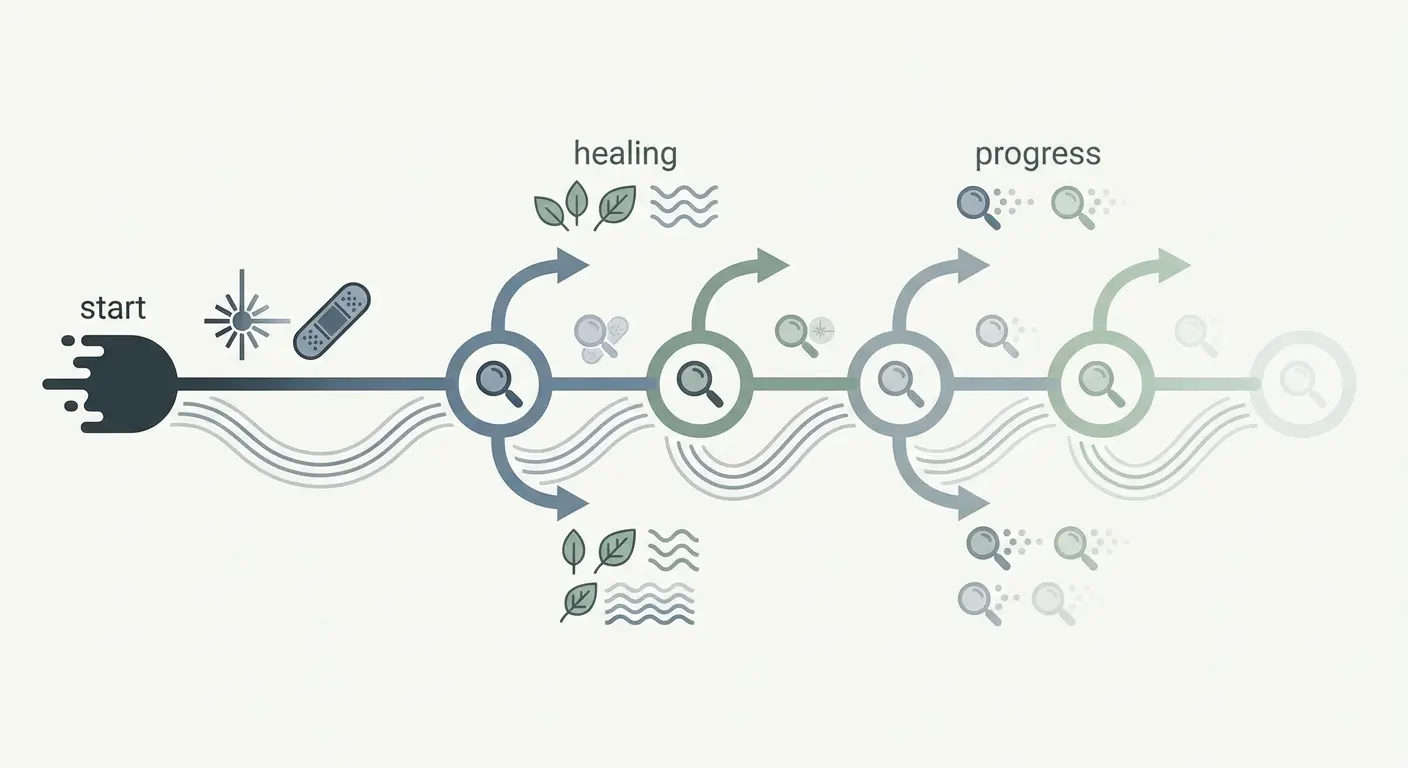
Things that affect how long this takes:
-
Older tattoos (5+ years) fade 20-30% faster than fresh ink
-
Professional tattoos with dense, high-quality ink take longer than amateur work
-
Multi-colored tattoos require more sessions than single-color designs
-
Tattoos closer to your heart (chest, upper arms) clear faster than extremities (ankles, hands)
-
Your overall health matters: staying hydrated and not smoking significantly impacts clearance speed
If you’re removing a tattoo to make room for something new, think about what you actually want it to mean. Not just what looks cool, but what you want to carry with you. There’s a difference between a design you like and a design that means something. You can explore tattoo meaning to make sure your next design carries deeper personal significance.
The Money Part (It’s Worse Than You Think)
Let’s talk money. Removal costs $200-$500 per session. Per session. Most people need 8-12 sessions minimum. Do the math: you’re looking at $2,000 to $6,000, probably more. That’s three to five times what most people paid for the original tattoo. You’re spending more to erase it than you did to get it, which feels cosmically unfair but is just how it works.
Some clinics are trying to make removal more affordable. According to a December 2024 report from The Spokesman-Review, Removery’s new Spokane location offers flexible payment plans, with patients paying around $185 a month over three years. The clinic also provides discounts up to 50% off for military members, police, firefighters, and nurses.
And it’s not just the session fees. You’ve got aftercare supplies, time off work if it’s visible, the mental bandwidth of dealing with this for two years. Some people also choose to get a new tattoo once removal is far enough along, which adds another cost layer.
Let’s be clear: this is expensive in a way that feels punitive. You already paid for the tattoo. Now you’re paying three to five times that amount to undo it. And unlike the original tattoo, which at least gave you something, removal just takes away. You’re paying thousands of dollars to get back to zero.
Here’s the brutal math: Small tattoos (think wrist-sized) might run you $1,200-$3,000 total. Medium (palm-sized) is more like $2,500-$5,000. Large or sleeve work? You’re looking at $9,000-$16,000, sometimes more. And yes, you can do payment plans, but you’re still paying it. Payment plans sound good until you realize you’re paying $200/month for three years to erase something you paid $400 for once.
Is it worth it? I honestly don’t know. That’s a question only you can answer, and even then, you might not know until you’re done. Maybe not even then. For some people, the relief of having the tattoo gone outweighs every dollar and every session. For others? They get halfway through and realize they should’ve just done a cover-up. And honestly, if you’re leaning toward cover-up, just do that. Removal is too expensive and too long to do it half-heartedly.

And if you don’t have $5,000 sitting around? Payment plans exist, but you’re still paying interest on money you’re spending to erase something. Some people save up for a year before starting. Some put it on credit cards and regret that almost as much as the tattoo. Some decide the tattoo isn’t bad enough to justify the cost and just live with it. There’s no shame in deciding it’s not worth the money. Sometimes the most practical choice is acceptance.
You’re Going to Feel Weird About This, Even If You Wanted It Gone
Even when removal is your choice (especially when it’s your choice) you might feel sad about it. Conflicted. Weirdly guilty. You’ll second-guess yourself between sessions. Feel relief one day, regret the next. And then feel stupid for feeling regret about something you actively decided to remove.
Not everyone removing a tattoo regrets it. Some people loved it for years and simply outgrew it. Some are making space for new ink that fits them better. Some are dealing with career shifts, relationship changes, or just wanting a fresh start. Sometimes removal is about taking back control. The tattoo might’ve been tied to someone or something you’ve moved on from, and seeing it every day keeps you tethered to a past you’re ready to release. Removing it isn’t about pretending it never happened. It’s about deciding it doesn’t get to take up space on your body anymore.

Jo Kelton from Removery says about a quarter of people with tattoos don’t want them anymore. Her take: “It all comes back to, ‘Hey, I’m just not that person anymore.'” Which, yeah. That tracks.
Look, sometimes it’s absolutely about regret. Let’s be honest. Sometimes you got a terrible tattoo and you knew it was terrible the moment you saw it finished, and removal is just damage control. That’s valid too. I’m not going to pretend every removal story is some beautiful journey of self-discovery.
The tattoo isn’t gone yet, but it’s not what it was. You’re stuck in this space where it’s too faded to look intentional but too visible to ignore. People ask questions. You explain. You get tired of explaining. You might miss how it looked before removal, even though you wanted it gone. You’re not being indecisive. You’re just human. Which means you contain multitudes or whatever. Mostly you’re just tired of explaining yourself.
You’ll get tired of explaining to people why your tattoo looks weird. “I’m getting it removed” becomes a conversation starter you didn’t ask for. Strangers will have opinions. Your mom will say “I told you so” even if she didn’t.
There’s no way to skip the messy middle. I wish I could tell you there is, but there isn’t. You just have to show up to each session, sit through the discomfort, and wait for the next one. Over and over until it’s done.
Some days you’ll wake up certain this is the right choice. Other days you’ll sit in the clinic parking lot before your appointment wondering what the hell you’re doing. Both versions of you are real. Neither one is wrong.
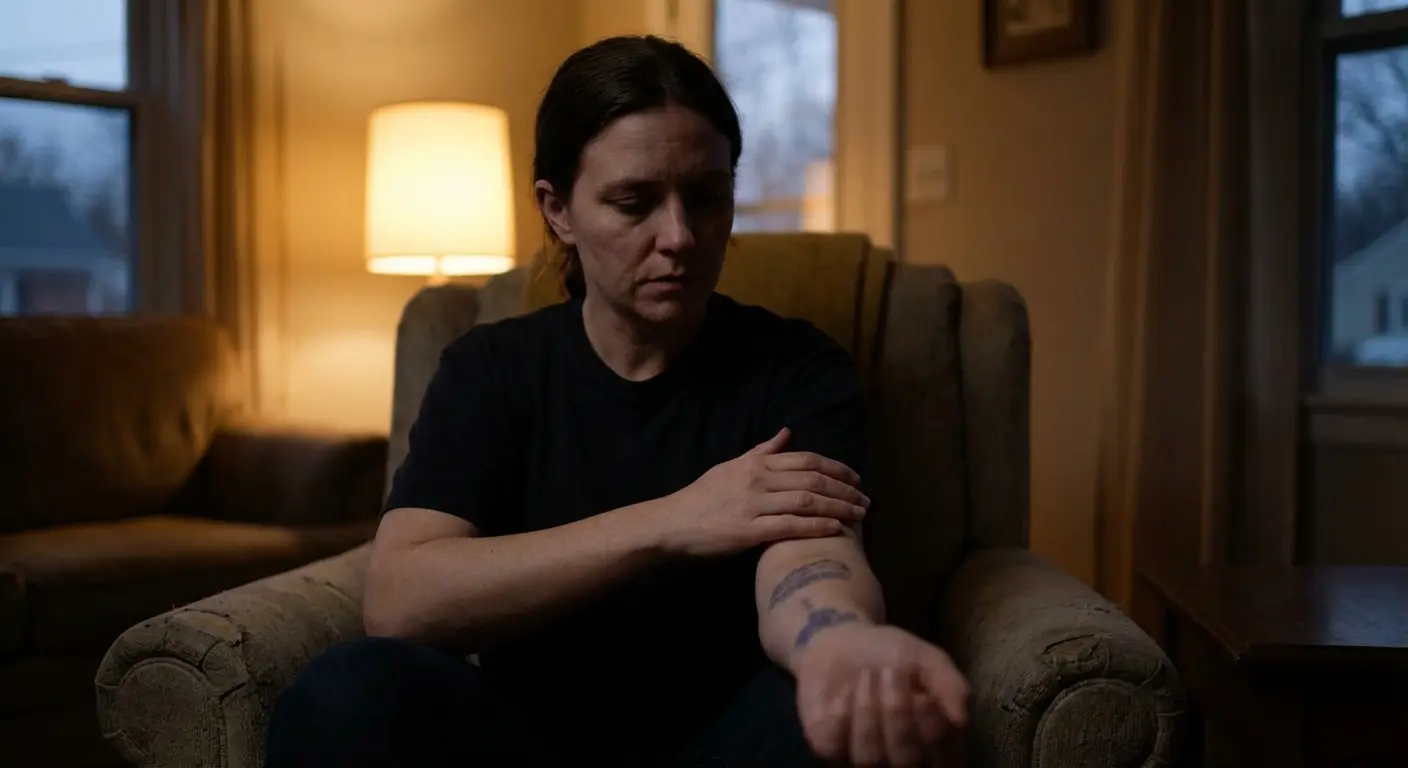
The 32-year-old British painter Issy Wood started collecting tattoos as a teenager but quickly felt regret. “I think as soon as I left the home environment and was no longer defined by what my parents wanted for me, that sweet taste of rebellion became moot,” she explained. “As soon as I went off to art school and began living by myself, I was like, ‘Oh, this will never hit as hard as when my parents both found out I got tattoos.
Mental Prep That Actually Matters
Most removal advice focuses on physical prep: avoid sun exposure, stay hydrated, don’t drink alcohol before sessions. All true, all important.
But you also need to prepare mentally for the long haul.
Write down why you’re doing this. Not for anyone else, just for you. When you’re six sessions in and wondering if it’s worth continuing, you’ll need that reminder. Your reason doesn’t have to be dramatic. Your reason is your reason. You don’t owe anyone an explanation.
What does life look like when the tattoo is gone? What will you feel? What will you do with that space?
Having a clear vision of the outcome (whether that’s clear skin or new ink) makes the process feel less like punishment and more like progress. Studying images of tattoo removal at various stages can help you mentally prepare for what lies ahead.
And look, you can stop whenever you want. If you’re three sessions in and realize this isn’t worth it, stop. Get a cover-up instead. Or just live with the half-faded version. I’m not going to tell you that’s wrong, but I will say that half-faded tattoos are harder to cover than fully-faded ones, so if you’re leaning toward cover-up, decide sooner rather than later.

Before you start:
-
Write down your specific reasons (keep this somewhere you can revisit)
-
Set realistic timeline expectations: 1-2 years minimum
-
Budget for the full cost, not just the first few sessions
-
Take clear “before” photos from multiple angles
-
Figure out who you can talk to when you’re feeling conflicted
And for the love of god, don’t go to the cheapest place you can find. This is not the time to Groupon your way through a medical procedure. Find someone who actually knows what they’re doing, even if it costs more.
The aftercare is annoying in a low-key way. You can’t work out for a few days after each session. You can’t go swimming. You have to keep it covered and moisturized and out of the sun. For two years. It’s not hard, it’s just tedious.
When the Tattoo Is Gone But You Still Feel It
Sometimes the tattoo fades completely and you feel lighter, freer, exactly how you hoped. Other times, it’s gone but the emotional weight remains.
The tattoo was a symbol, not the source. Removing the symbol doesn’t always remove what it represented.
If the tattoo was tied to trauma, a toxic relationship, or a painful period, you might need more than laser sessions to fully move on. Look, removal can be part of your healing process, but it’s rarely the whole process. Tattoos mark deeper issues sometimes. Erasing the marker doesn’t erase the issue. Some people discover they need additional support (therapy, coaching, or other resources) to address what the tattoo represented.
You don’t have to pretend the tattoo never existed. You can acknowledge it was part of your story without letting it define your present. Some people find closure in removal. Others find it in acceptance, even after the ink is gone. Reviewing your own tattoo removal before and after images can help you appreciate how far you’ve come.
And yeah, sometimes it doesn’t work. Some tattoos (especially ones with certain inks or done by certain artists) just won’t fade completely no matter how many sessions you do. You might end up with a ghost image that’s lighter but still visible. That’s not common, but it happens.
Scarring is rare if you go to a good clinic, but it’s possible. So is hyperpigmentation (dark spots where the tattoo was). So is hypopigmentation (light spots). Your skin might not go back to exactly how it was before. That’s the risk.

What Comes Next
Whether you’re planning new ink or embracing clear skin, removal is an opportunity to be more intentional about what you carry on your body.
You don’t have to rush into new ink just because the old one is gone. Sit with the blank space for a while. Give yourself time to get clear on what you want, not just what you want to cover up.
If you’re thinking about new ink after removal, don’t rush it. Sit with clear skin for a minute. Give yourself time to figure out what you actually want, not just what you want to cover up with.
One thing that helped me (and people I know who’ve done this): visualize it before you commit. Not just in your head, but actually see what it would look like. There are tools now (like Tattoo Generator IQ) that let you try out different designs, placements, styles, without any pressure or commitment. You can live with an idea for a few weeks, see if it still feels right, change your mind fifty times. It’s the opposite of impulsive, which is probably what got you here in the first place.
The point isn’t to never get another tattoo. The point is to make sure the next one is something you’ll still want five years from now.
Every removed tattoo teaches you something. Maybe you learned you don’t care for that style anymore. Maybe you learned placement matters more than you thought. Maybe you learned to sit with an idea longer before making it permanent. Use that knowledge. Don’t ignore it just because you’re excited about starting fresh.

Here’s my take: if a good cover-up will work, do that instead. Removal is expensive, long, and emotionally weird. Cover-ups are faster and usually cheaper. The only reason to remove instead of cover is if you genuinely want clear skin in that spot, or the tattoo is too dark/large to cover well.
For those considering what might replace a removed tattoo, exploring tattoo ideas for women or meaningful tattoo ideas for men can spark inspiration for designs that better align with your current identity.
Proper tattoo aftercare will be crucial if you decide to get new ink after removal, ensuring your next design heals beautifully and lasts.
Before you commit to new ink, sit with it. I mean really sit with it. The point is to not rush into the next thing just because you’re relieved the old thing is gone.
Final Thoughts
The before-and-after photos won’t show you most of this. They’ll show clear skin or faded ink. They won’t show the year of waiting, the sessions where nothing seemed to change, the moments you questioned everything.
They won’t show the grief or the relief or the weird feeling of relearning your own body.
But you’ll know.
And six months after your last session, you’ll look at that spot and forget (just for a second) that anything was ever there. You won’t know if that’s relief or loss or just time doing what it does.
Maybe that’s enough.
