
Tattoo Removal Cost: Why the Real Price Isn’t What You Think It Is
What Nobody Tells You Upfront
About one in four people regret their tattoos. That’s a huge number, and it’s created this massive removal industry that’s really good at making the process sound cheaper than it actually is.
My friend Marcus just finished removal. Took 18 months and cost him $4,600. When he started, they quoted him $1,800. Watching him go through that made me want to figure out where the hell the extra $2,800 came from, and whether there’s any way to predict the real cost before you start.
Turns out, there isn’t really. But there are patterns. And once you see them, you realize the entire pricing model is designed to get you committed before you understand what you’re actually going to spend.
If you only remember three things from this:
Whatever they quote you, double it. Session counts always go up. Always. Budget for twice as many sessions as they estimate.
Color costs way more than size. A small colorful tattoo can cost more to remove than a large black one. Yellow and white ink are nightmares.
Your location matters more than almost anything else. Same tattoo, same laser, $150 in Ohio or $450 in Manhattan.
Everything else adds up too. Pain management, time off work, the psychological toll of walking around with a half-faded tattoo for 18 months. But those three factors are where the real money is.
The Session Count Lie
So you see $300 per session and think, okay, I can swing that. Maybe it’ll take 5 or 6 sessions? That’s $1,800. Doable.
Except it’s not going to take 5 or 6 sessions. It’s going to take 12. Minimum.
I spent three months calling clinics, interviewing people mid-removal, and trying to figure out why everyone’s final bill is so much higher than their quote. Here’s what I learned: clinics quote per-session costs because it sounds reasonable. What they’re not highlighting is how those sessions multiply.
According to recent studies, approximately 25% of people with tattoos express regret over their decision, which means there’s money in regret. A lot of it. And wherever there’s money, there are incentives to make things sound cheaper than they actually are.
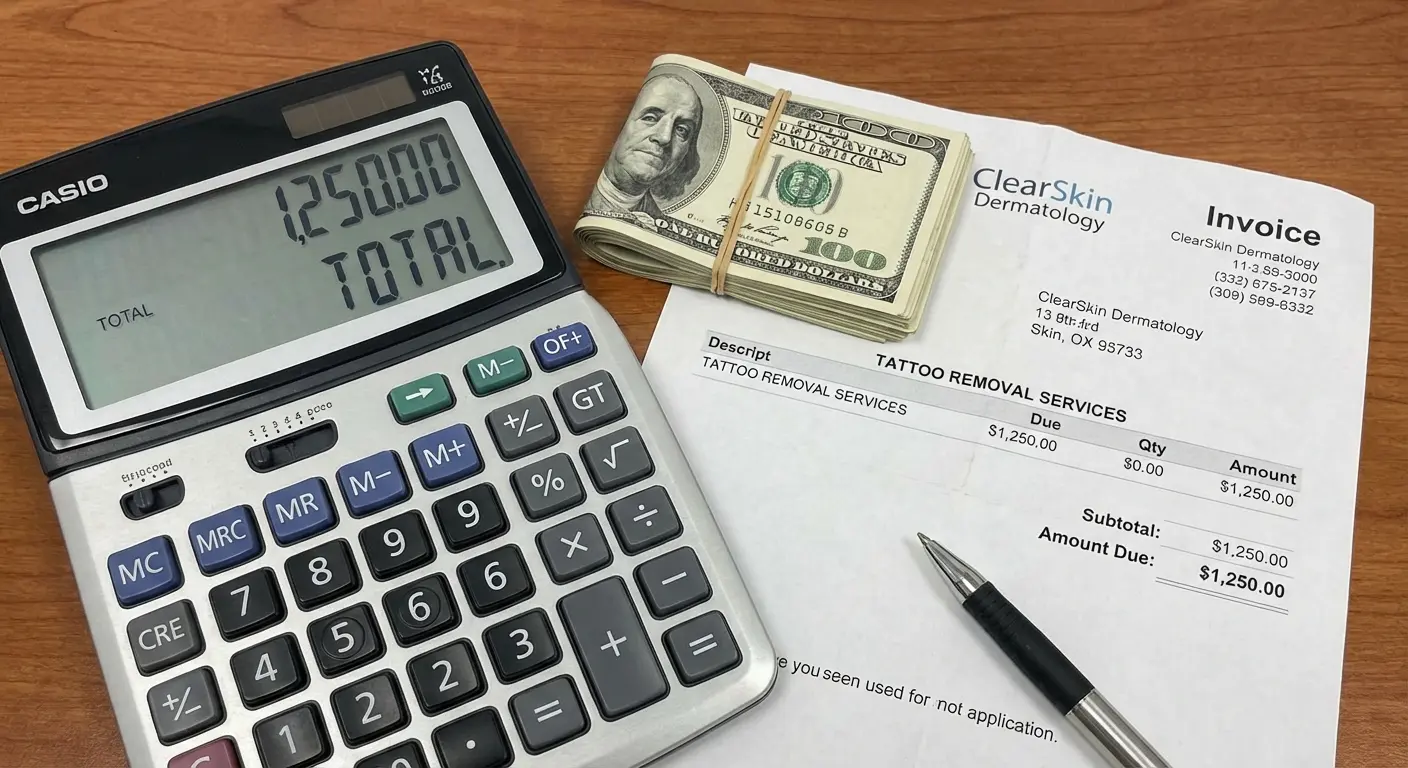
Most removal takes 8 to 12 sessions minimum. Some tattoos, particularly those with dense ink or certain colors, push past 15 sessions. Do the math on even the conservative end: 8 sessions at $300 each puts you at $2,400. And that’s before anything goes wrong or takes longer than expected.
Clinics know exactly what they’re doing. They rarely commit to a total session count upfront because they genuinely can’t predict it with certainty. Your skin type, the original tattoo artist’s technique, ink depth, and your body’s lymphatic response all play roles. But this uncertainty also creates a financial structure where you’re committed to an open-ended expense.
Here’s what this looks like in practice:
Marcus got a medium-sized tribal armband in college. Standard stuff. His clinic quoted 6-8 sessions at $350 each. He bought a 6-session package for $1,800, feeling smart about the discount. Fourteen sessions later, he’d spent $4,600. The original package plus eight additional sessions at $350 each. Had anyone told him upfront it would take 14 sessions, he could’ve bought a complete removal package for $4,200. He would’ve saved $400 AND avoided the psychological torture of watching the costs pile up unpredictably every few months.
Package deals exist, sure. You might see “6 sessions for the price of 5” offers. But if you need 12 sessions, you’re still paying full freight for the remaining six. The bulk discount becomes irrelevant when the bulk itself was underestimated.
Session spacing matters financially too. You can’t just power through removal in a few months. Treatments require 6 to 8 weeks between sessions for your skin to heal and your immune system to process the fragmented ink. That’s a minimum 12-month commitment for even a short treatment plan, during which prices may increase, your financial situation may change, or the clinic’s technology may be “upgraded” with corresponding price adjustments.
What Makes the Session Count Explode
Consultations typically involve a visual assessment and maybe a test patch. What they can’t see is how your specific skin will respond once treatment begins.
Some people are fast healers with efficient lymphatic systems that clear fragmented ink quickly. Others develop complications that slow the process considerably. I’m looking at the factors that increase session requirements mid-treatment and why initial assessments consistently underestimate total sessions needed.
Scar tissue formation is the expensive wildcard. When your skin develops scarring, whether from the original tattoo or the removal process itself, it creates a barrier that makes subsequent treatments less effective. You’re now paying the same per session for diminished results, which means more sessions to achieve the same outcome.
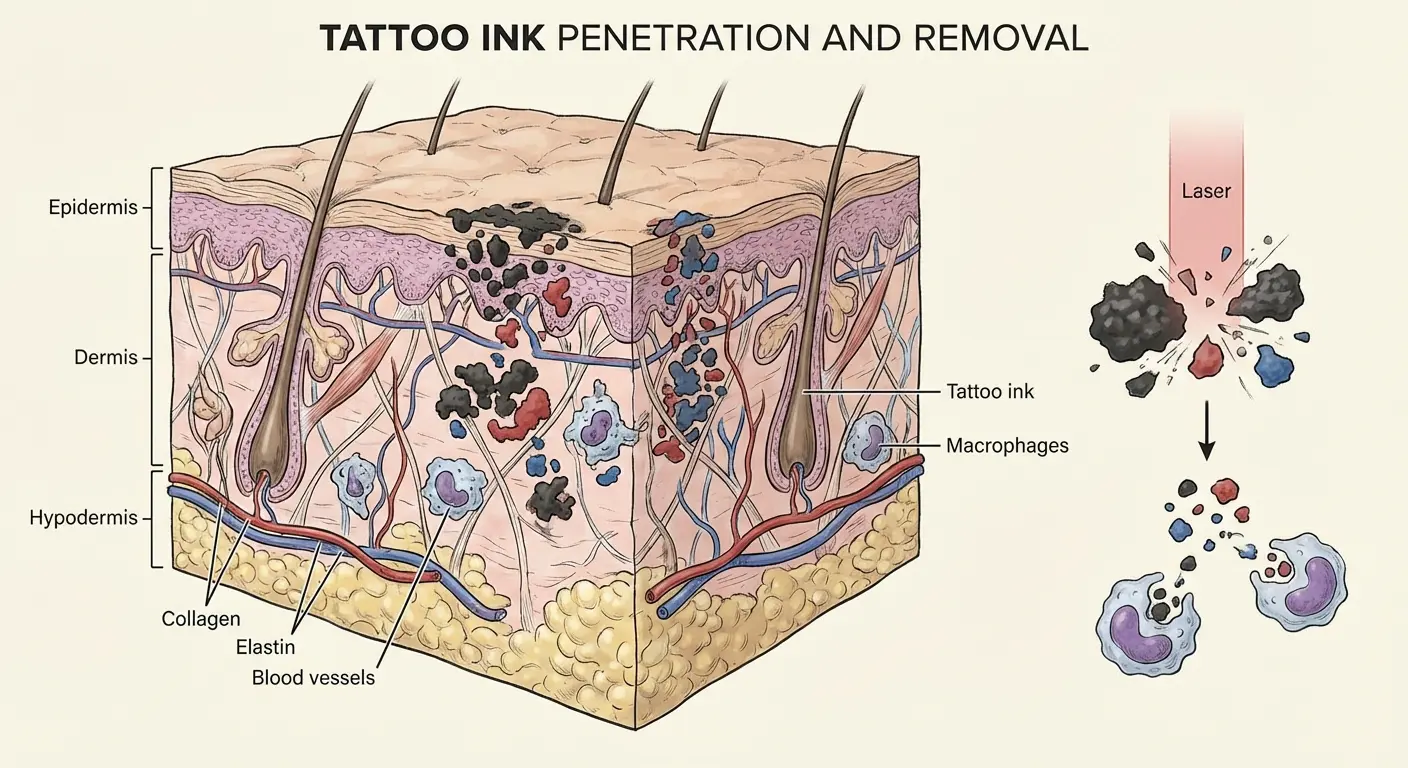
Ink layering complicates things even more. That coverup you got to “fix” a regrettable piece? You’re now removing multiple layers of ink, each requiring its own series of treatments. The top layer might fade relatively quickly, revealing the older tattoo underneath, which then needs its own removal protocol. You’ve essentially signed up for two removal processes at the price of, well, two removal processes.
For those considering coverup alternatives instead of removal, understanding the layering complexity becomes crucial when evaluating your long-term options and total investment.
Then there’s Sarah. I’m calling her Sarah because she asked me not to use her real name. She had a small wrist tattoo of her ex-boyfriend’s initials covered with a larger floral design. When she decided to remove it entirely years later, her technician explained she’d need to fade the coverup first (8-10 sessions), then address the original initials underneath (another 4-6 sessions). What she thought would be a straightforward removal of one medium tattoo became a 14-session, 18-month journey costing nearly $4,800. Triple her initial budget of $1,500.
Stubborn ink pockets are another session multiplier. Even within a single-layer tattoo, some areas retain ink more tenaciously than others. You might see 80% fading across most of the piece while one section remains stubbornly visible. Clinics can’t just treat that one section (though you’re paying for the entire treatment area), and those resistant spots often require several additional sessions beyond the initial estimate.
Size Pricing Is Weird
Pricing tiers create strange economics. A 3-inch tattoo and a 4-inch tattoo might fall into different pricing categories with a $100+ per-session difference. That extra inch doesn’t require proportionally more laser time, energy, or expertise, but it crosses a threshold that doubles your cost differential over a full treatment course.
The relationship between tattoo size and cost isn’t linear. It includes threshold effects where an inch of additional size can bump you into a dramatically higher price bracket.
Clinics measure in square inches, but they’re not always measuring what you think. That delicate line-work piece with lots of negative space? You’re paying for the entire area it occupies, not just the inked portions. The measurement goes from the furthest point in each direction, creating a rectangle or square that encompasses the design. All that empty space counts toward your price bracket.
Those exploring fineline tattoo designs should understand that despite minimal ink coverage, removal costs are calculated by overall dimensions rather than inked area.
Here’s how size pricing actually works: Under 2 inches is $150-250 per session. Sounds cheap until you realize small tattoos often have dense ink that takes just as many sessions as bigger pieces.
2-4 inches jumps to $200-350. And here’s the annoying part: if your tattoo is 3.9 inches, you’re in the cheaper bracket. 4.1 inches? You just jumped a tier and will pay $50-100 more per session for that extra 0.2 inches.
Once you’re over 6 inches, you’re looking at $500-800 per session, and that’s where it really adds up. 15 sessions at $650 each is almost $10,000.
Small tattoos aren’t necessarily cheaper in the ways that matter. Yes, per-session costs are lower, but small pieces often contain dense ink saturation or intricate detail work that requires just as many sessions as larger pieces. You might pay $150 per session instead of $400, but over 12 sessions, you’re still looking at $1,800.
Placement affects size-based pricing too. A 2-inch tattoo on your finger requires different laser settings and more precision work than the same size piece on your shoulder blade. Some clinics charge placement premiums that effectively increase the “size” category for billing purposes, even though the actual square footage remains the same.
Why Color Costs So Damn Much
Black ink is the removal industry’s best friend and your wallet’s too. It absorbs all laser wavelengths effectively, responds quickly to treatment, and typically fades within the standard session estimate.
Every other color introduces complications and costs.
Green and blue inks require specific laser wavelengths that not all clinics have. If your regular removal clinic needs to refer you elsewhere for these colors, you’re now paying specialist rates. Even clinics with multi-wavelength lasers often charge premiums for treatments requiring wavelength switching or multiple passes with different settings.
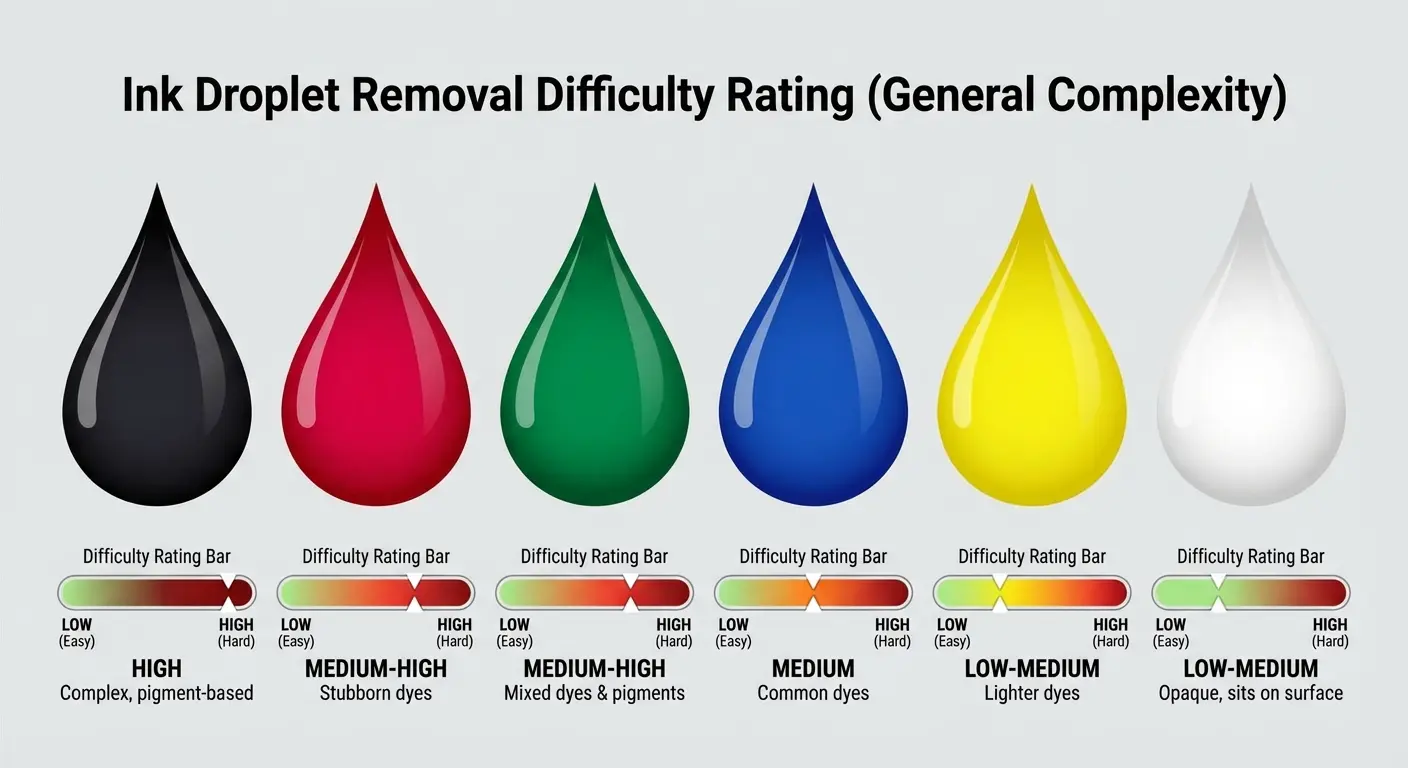
Yellow, white, and pastel inks are the financial nightmares of removal. These colors resist standard laser treatment stubbornly, often requiring double the sessions of darker inks. Some yellow inks actually darken when hit with certain laser wavelengths, requiring additional treatments to correct the correction. You’re paying to make it worse before paying again to make it better.
Red ink occupies a middle ground that’s still expensive. It responds to specific wavelengths but requires more sessions than black. That colorful sleeve you got? Each color is essentially a separate removal project happening simultaneously, each with its own session requirements and potential complications.
Okay, look at your tattoo right now:
Is it mostly black? You’re lucky. Standard timeline, standard cost.
Got red or orange? Add 2-4 sessions and about 15% more money.
Green or light blue? Add 3-5 sessions. Also, not every clinic can even treat these properly, so you might need to find a specialist who charges more.
Yellow, white, or pastel? Oh man. Add 5-8 sessions MINIMUM. These colors are nightmares. Sometimes they darken before they fade, which means you’re paying to make it worse first.
Multiple colors? Each one is basically its own removal project happening at the same time. Add 4-6 sessions and expect to pay 25-35% more per session.
Fluorescent or UV ink? Call multiple places. Some of this stuff doesn’t come out fully, period.
Home-done tattoo with India ink or pen ink? Weirdly unpredictable. Might come out faster, might not. Nobody can tell you for sure.
Tattoo artists increasingly use ink brands and colors chosen for aesthetic impact, not removal ease. That’s fine when you love the piece, but it means modern tattoos, especially those trendy watercolor or pastel designs, are more expensive to remove than traditional work. The cost gap between a traditional black-and-gray piece and a contemporary color piece can exceed $3,000 over a full treatment course.
Your ZIP Code Matters More Than Anything
The average cost of laser tattoo removal is $697 per session according to the American Society of Plastic Surgeons, but that number is hiding something huge: where you live changes the price by 300%. The same exact treatment can cost way less in some places and way more in others.
I called clinics in different cities with the exact same tattoo description: 3-inch black tribal design on the forearm. Here’s what they quoted me:
Rural Ohio clinic: $125 per session. Cleveland suburb: $200 per session. Chicago: $350 per session. Manhattan: $450 per session. San Francisco: $425 per session.
Same tattoo. Same basic technology. Prices ranging from $125 to $450. That’s a 260% difference based purely on location.
And before you think “I’ll just drive to the cheap place,” remember: you need 10-15 sessions over 18 months. The gas money and time add up fast.
Urban clinics face higher overhead: rent, staff salaries, insurance, and operational costs that dwarf their rural counterparts. They pass those costs directly to clients. But urban areas also tend to have more removal demand, more competition, and more clients willing to pay premium prices for convenience and perceived prestige.

Competition density affects pricing in counterintuitive ways. You’d think more clinics mean lower prices through competition, but saturated markets often see price stabilization at higher levels. Clinics in these areas invest heavily in marketing, facility aesthetics, and brand positioning, all of which inflate costs. They’re not competing on price; they’re competing on experience and reputation.
State and local regulations create cost variations too. Some states require physicians to perform or directly supervise laser treatments, increasing labor costs significantly. Others allow trained technicians to operate independently. Licensing requirements, inspection fees, and insurance mandates vary by jurisdiction, and those regulatory costs get built into your session price.
Medical tourism for removal sounds appealing until you factor in travel costs, time off work, and the impossibility of convenient follow-up care. That $150 per-session savings evaporates quickly when you’re booking hotels and flights for 10+ sessions over 18 months. Plus, complications requiring immediate attention become exponentially more complicated when your provider is three states away.
The Laser Technology Question
Q-switched lasers are the older, established technology. They’re effective, particularly on black ink, and they’re cheaper to operate and maintain. Clinics with these machines typically charge less per session because their equipment costs are amortized over years of use.
Picosecond lasers are the newer technology, delivering energy in shorter pulses that theoretically fragment ink more effectively with less skin damage. Clinics invested hundreds of thousands in these machines and they’re recouping that investment through higher per-session fees. You’ll see $100 to $200 premiums per session for picosecond treatment.
So is the expensive laser actually worth it? Sometimes. Maybe. It depends.
Here’s what this looks like in practice: You’re comparing two clinics. Clinic A has a Q-switched laser and charges $300 per session. They estimate 12 sessions, so $3,600 total. Clinic B has a picosecond laser and charges $450 per session. They say the newer tech means you’ll only need 8 sessions, so $3,600 total.
Same price, right? Except Clinic B’s estimate is based on ideal conditions. If you need 10
sessions instead of 8, you’ve now spent $4,500. And if Clinic A’s 12-session estimate is also conservative and you need 14, you’ve spent $4,200.
The point is: the technology premium only saves you money if their lower session estimate is accurate. And nobody can guarantee that.
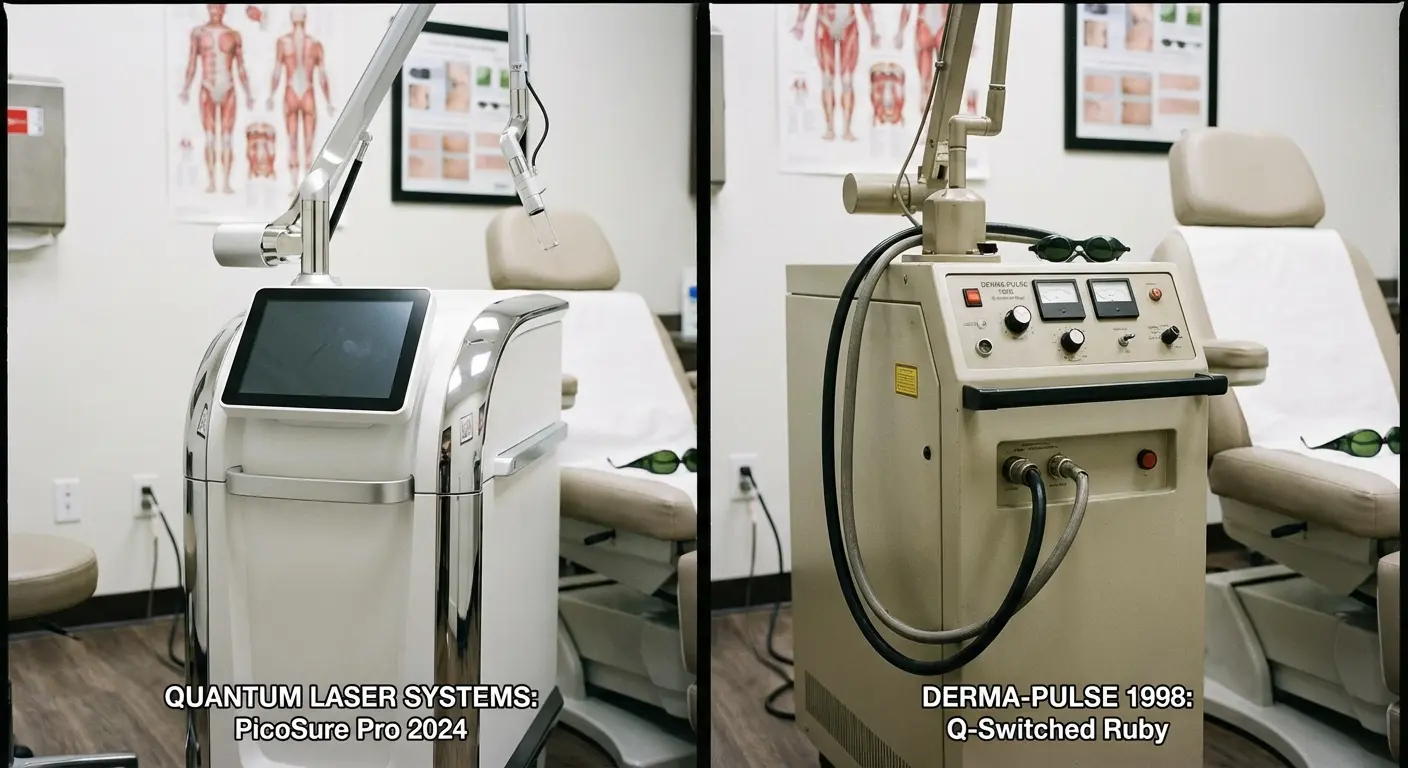
Equipment age matters beyond just the technology type. Older machines, even high-quality ones, lose calibration, develop inconsistent energy delivery, and require more frequent maintenance. You might not know your clinic’s laser is past its prime until you’re several sessions in with subpar results. There’s no consumer reporting on equipment age or maintenance history, so you’re trusting the clinic’s transparency (or lack thereof).
David went to the expensive place with the fancy laser because he thought it’d be faster. $550 per session for picosecond technology. Nine sessions later, he’d spent almost $5,000. His friend went to a cheaper clinic with older equipment, paid $300 per session for 12 sessions, spent $3,600 total. David’s still annoyed about it.
Some clinics own multiple laser types and will switch between them based on your tattoo’s response. That sounds like good adaptive treatment, and it can be. But it also means variable pricing that’s difficult to predict upfront. Your first three sessions might be at one price point, then the clinic switches to a different laser and suddenly your per-session cost jumps 40%.
When Removal Costs More Than the Original
Your tattoo cost $600. Removing it will cost $3,500. The math is genuinely insulting. You’re paying six times more to undo a decision than you paid to make it.
This cost inversion is standard, not exceptional. Tattoos are relatively quick to apply, even large pieces take hours not months, require one artist’s time, and use inexpensive materials. Removal requires medical equipment, trained technicians or physicians, multiple lengthy sessions, and sophisticated technology. The processes aren’t comparable, but the cost comparison is inevitable and emotionally loaded.
And this is where people get trapped. You’ve already spent $1,200 on three sessions. The tattoo looks worse now than when you started, patchy and half-faded. Do you spend another $2,000 to finish, or quit and live with this weird half-removed thing? Either option sucks.
Understanding realistic removal outcomes before starting helps prevent the psychological trap of investing in a process that may not deliver the results you’re envisioning.
Partial removal is its own expensive category. Maybe you’re not removing the entire piece, just modifying it for a coverup. You’d think treating a portion would cost proportionally less, but coverup prep often requires more aggressive treatment to fade ink sufficiently for the new design to work. You’re paying removal prices for what’s essentially pre-coverup treatment, then paying again for the new tattoo.
Pain Management Adds Up
Okay, let’s talk about pain. Because this is something people really underestimate.
Ryan Wright, a nurse who does removals in Michigan, told Bridge Michigan it’s a 9 out of 10 on the pain scale. He said it feels like “a rubber band being snapped on your skin with hot bacon grease.”
That’s not exaggeration. That’s what it actually feels like. And you’re doing this 10-15 times.
Your pain tolerance directly impacts your removal budget.
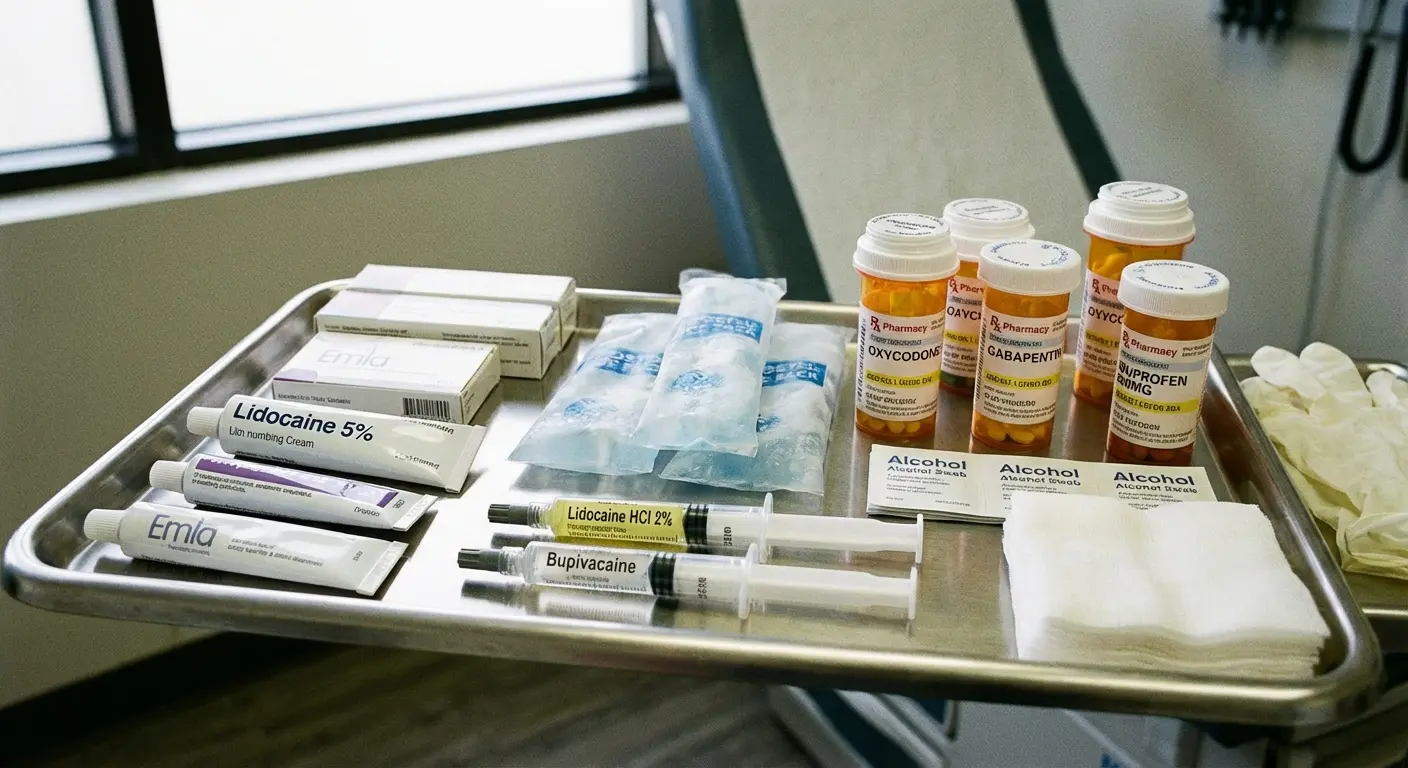
Most people start with numbing cream. It helps some. Not enough, but some. Some clinics include it in session fees; others charge $25 to $50 per application. Over 10 sessions, that’s $500 in numbing cream alone. These creams require application 30 to 60 minutes before treatment, extending your appointment time and sometimes incurring additional facility fees.
Injectable lidocaine provides more substantial numbing but requires a medical professional to administer. Expect $75 to $150 per session for injections. Not all clinics offer this option, and those that do often require physician presence, which increases overall session costs.
Prescription pain medication for post-treatment discomfort is typically not included in session fees. You’re paying for the prescription, the medication itself, and potentially a follow-up visit if you experience complications. These costs are small individually, $20 to $40 per session, but they accumulate across multiple treatments.
Some people discover mid-treatment that their pain tolerance is lower than anticipated. They start with basic numbing cream, find it inadequate, and upgrade to injections for remaining sessions. That decision point comes after you’re already financially and emotionally committed to the process, making it difficult to back out despite the increased costs.
Insurance Won’t Cover This
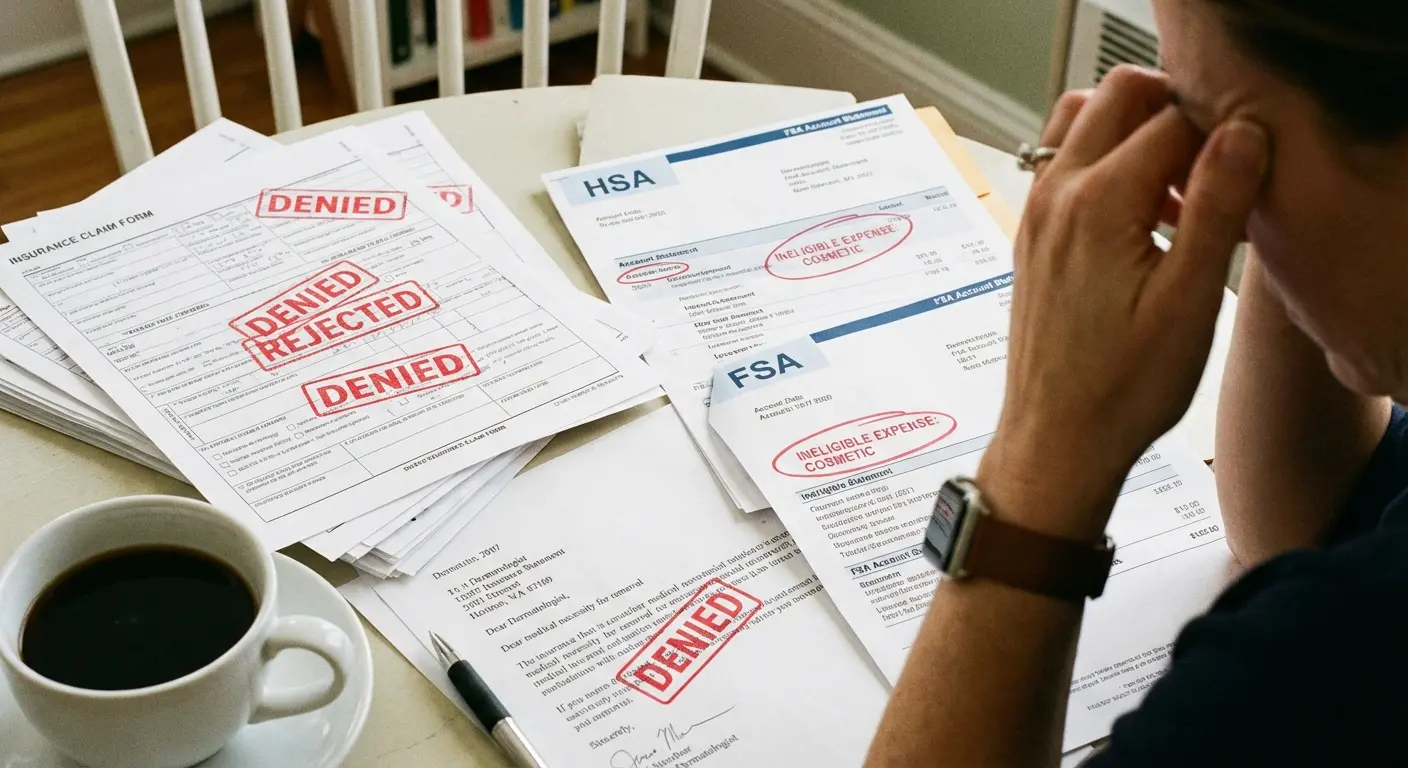
Insurance won’t cover this. Like, at all. It’s classified as cosmetic, which means elective, which means you’re on your own financially. Even if your tattoo is causing you legitimate psychological distress or hurting your job prospects, insurance doesn’t care. Cosmetic means not their problem.
There’s technically a medical exception, but good luck qualifying for it. If your tattoo causes medical complications, severe allergic reactions, chronic infections, or documented skin conditions directly attributable to the ink, insurance might cover removal as medical treatment. You’ll need extensive documentation, multiple physician opinions, and persistence through likely initial denials. Most people don’t qualify.
Employment-related removal (gang tattoos, face/neck tattoos preventing job opportunities) occasionally receives funding through social service programs or nonprofit organizations. These programs have strict eligibility requirements, limited funding, and often long waitlists. They’re resources worth investigating if you qualify, but they’re not reliable solutions for most people seeking removal.
HSAs and FSAs can sometimes be used for removal if you can document medical necessity. The bar for “medical necessity” is high and requires physician letters, documented psychological impact, and often multiple appeals. Even when approved, these accounts only help if you’ve been consistently funding them and have sufficient balances. You can’t suddenly decide to remove a tattoo and expect your HSA to cover it.
Payment plans through clinics are common but they’re not financing in the helpful sense. Most are simple installment agreements that divide total costs across treatment duration. You’re still paying full price; you’re just spreading payments out. Some clinics partner with medical financing companies (CareCredit, etc.) that offer credit lines with deferred interest. Read the terms carefully because deferred interest isn’t forgiven interest. If you don’t pay the full balance before the promotional period ends, you’re hit with backdated interest on the original amount, often at rates exceeding 20%.
The Time Cost Nobody Factors In
Most tattoo removal treatments require 5 to 15 sessions for complete removal, with sessions spaced 6-8 weeks apart, meaning complete tattoo removal typically takes 12-18 months, though some complex tattoos may require up to 2 years for optimal results.
Eighteen months. Minimum. That’s a year and a half of your life where you’re scheduling appointments every 6-8 weeks, taking time off work, dealing with healing, and this is the part nobody warns you about, walking around with a half-faded tattoo that looks worse than the original. It’s patchy, it’s weird-looking, and everyone asks about it.
Each session requires more than just the treatment time. You’re scheduling appointments during business hours, most clinics don’t offer evening or weekend slots for laser treatments. A 30-minute session becomes a 2-hour disruption when you factor in travel, waiting room time, and post-treatment recovery before you can return to normal activities.
And here’s another thing that pisses me off: most clinics only do removal during business hours. So you’re taking time off work for every single session. Thirty-minute appointment, two-hour disruption to your day, 12-15 times over 18 months. That’s a lot of PTO or lost wages that nobody factors into the cost.
Healing periods impose lifestyle restrictions that accumulate across multiple sessions. You can’t expose it to sun, which means no beach, no pool, covering up all summer. And if you do accidentally get sun on it? Hyperpigmentation. Which means more sessions to fix the hyperpigmentation. It’s a whole thing. You can’t swim in pools or oceans during the initial healing phase. You can’t engage in activities that cause excessive sweating or friction on the treatment area.
Proper aftercare protocols during removal are just as critical as they are for new tattoos, requiring diligent attention and product purchases that add to your total investment.
You’re living with a constant reminder of a decision you regret, watching it slowly fade through an awkward middle phase where it looks worse than the original. You’re fielding questions about the patchy appearance. You’re maintaining hope that the final result will be worth the investment while uncertainty lingers about whether you’ll achieve complete removal.
Social situations become complicated during treatment. That fading tattoo on your forearm prompts questions and conversations you’d rather avoid. You’re explaining the removal process repeatedly or covering the area to avoid discussions altogether. The mental energy spent managing these interactions is real, even if it’s not billable.
Questions to Ask Before You Commit
Questions to ask before you commit (and if they dodge these, walk out):
About their equipment:
What’s the actual model number of your laser? Not “state-of-the-art,” the actual brand and model. When was it last serviced? If they don’t know, that’s a red flag. Do you have different wavelengths for different colors, or will you refer me out?
About their experience:
How many removals have YOU done? Not the clinic, you specifically. Show me completed removals, not progress pics. I want to see what “done” looks like here. What’s your complication rate? If they say zero, they’re lying.
About the money:
What’s your realistic estimate for total sessions? Not best case, realistic. What happens if I need more than that? Is there a cap or do I just keep paying? What’s actually included in the session price?
Red flags to watch for:
Won’t give written estimates. Pressures you to buy a big package immediately. Can’t show you finished results. Guarantees a specific session count (nobody can guarantee that). Gets defensive about questions.
If you feel rushed or like they’re hiding something, trust that feeling. There are a lot of clinics out there.
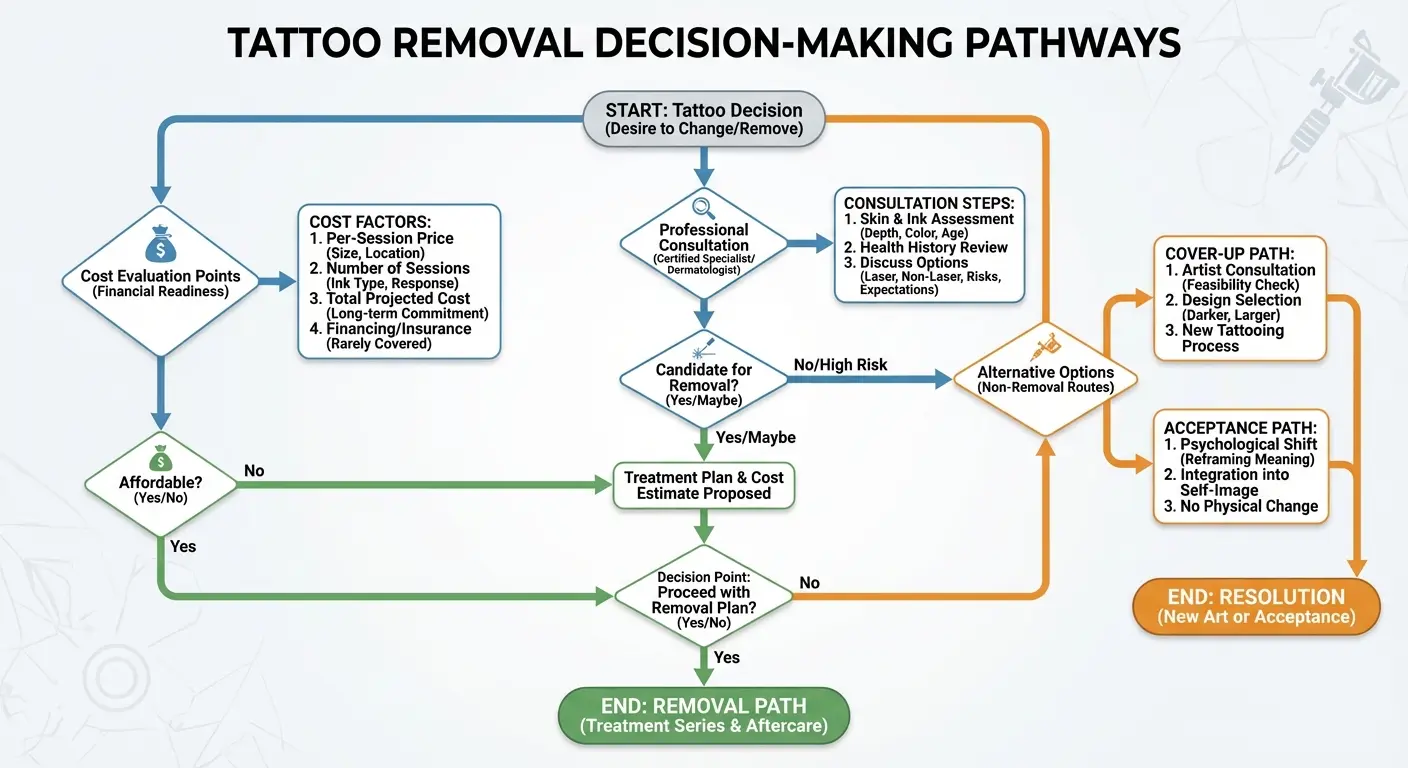
Price transparency should be non-negotiable. Clinics that won’t provide written estimates, explain their pricing structure, or commit to maximum session counts (even with caveats) are hiding something. You deserve to understand the financial commitment before starting treatment.
Ask about their specific equipment. What laser technology do they use? When was it last calibrated? How many removal procedures has the specific technician performed? Vague answers or resistance to these questions suggests inexperience or outdated equipment.
Request before-and-after photos of completed removals, not just progress shots. Completed removals show what “done” looks like with their equipment and techniques. If they can’t or won’t show finished results, that’s a significant red flag about their success rates.
Consider whether you need complete removal. If you’re planning a coverup, partial fading might be sufficient and way cheaper. Consult with tattoo artists about coverup possibilities before committing to full removal. You might save thousands by fading rather than erasing.
Evaluate whether the tattoo is actually the problem. Sometimes what feels like tattoo regret is really about life transitions, changed aesthetics, or external pressure. Removal won’t solve those underlying issues, and you might find yourself regretting the removal later (which can’t be undone).
For those exploring alternatives, topical removal creams are often marketed as budget-friendly solutions, but understanding their limitations and effectiveness is crucial before investing time and money.
The most cost-effective removal strategy is never needing removal at all. Getting your design right initially saves not just the removal costs we’ve discussed, but all the associated time, pain, and psychological costs too. Before committing to permanent ink, you need to be really sure about the design.
Okay, so here’s the part where I tell you about a tool that could help, and yes, I know how this sounds. But hear me out.
The absolute best way to avoid removal costs is to not get a tattoo you’ll regret. Obvious, right? But how do you know for sure you’ll still like it in five years?
This is where something like Tattoo Generator IQ actually helps. You can try out different versions of your idea, different styles, different colors, different placements, before you commit to permanent ink. Look at it for a few weeks. Show it to people. See if you still love it.
I’m not saying it replaces your tattoo artist. They’re going to make it better than any digital version. But it’s insurance against that moment, five years from now, where you look at your arm and think “what was I thinking?”

And given that moment costs anywhere from $3,000 to $8,000 to fix, spending a few minutes with a design tool seems like a pretty good investment. The platform gives you high-resolution designs that you can sit with, show to friends, and actually evaluate before booking that tattoo appointment. You’re essentially buying insurance against the most expensive mistake in this entire discussion: getting a tattoo you’ll want removed.
What I Keep Coming Back To
Look, I’ve now talked to probably 50 people who’ve gone through removal or are in the middle of it. And here’s what strikes me: not one person said the final cost matched what they expected at the start. Not one.
The session counts go up. The timeline stretches out. The costs accumulate in ways you don’t anticipate. And meanwhile you’re walking around with a half-faded tattoo for a year and a half, explaining to everyone who asks that you’re “in the middle of removal.”
I’m not saying don’t do it if you hate your tattoo. But go in with realistic expectations:
Budget double what they quote you. Add six months to their timeline. Factor in pain management, time off work, and covering it up during the awkward phase. Understand that “complete removal” might mean “95% faded” not “gone entirely.”
And if you’re reading this because you’re thinking about getting a tattoo? Be really sure. Because this, all of this, is what fixing it looks like. The money, the time, the pain, the weird looks when people notice your patchy half-removed tattoo. All of it.
The best removal strategy is never needing removal. Which sounds obvious but apparently isn’t, given how many people end up in this situation. The several thousand dollars you might spend on removal could fund incredible experiences, investments, or other priorities that don’t come with regret attached.
Your decisions about tattoos, whether existing or planned, deserve careful thought. Removal costs illuminate the true price of impulsive or poorly considered permanent decisions. That understanding is valuable whether you’re facing removal now or considering new ink for the future.
