18 Traditional Japanese Tattoos That Reveal More About Your Personality Than You Think
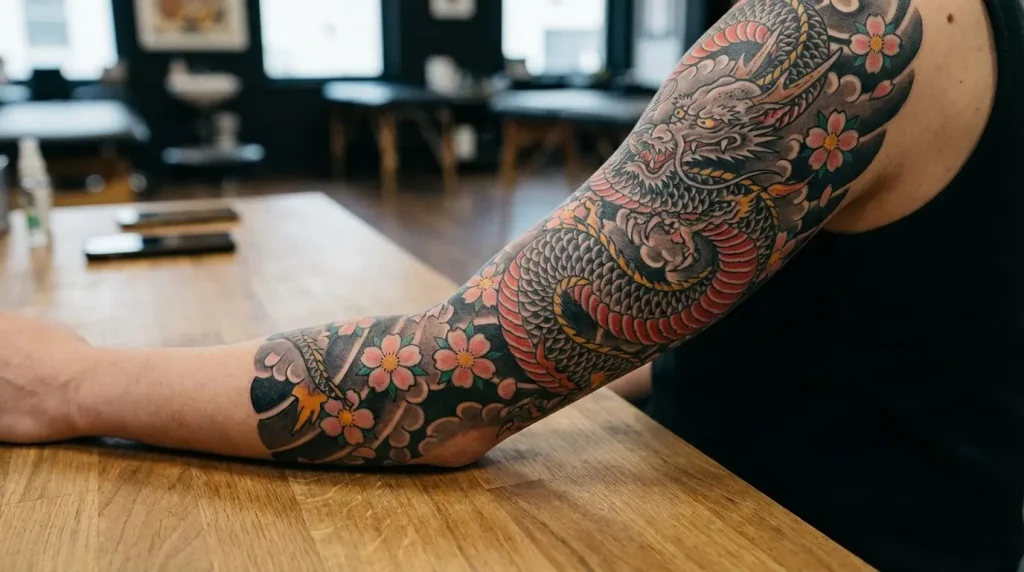
Table of Contents
-
The Guardians: Protective Forces in Ink
-
Foo Dogs (Komainu)
-
Hannya Mask
-
Oni Demon
-
Fudo Myoo
-
Namakubi (Severed Head)
-
-
The Elemental Forces: Nature’s Raw Power
-
Dragon (Ryu)
-
Phoenix (Hou-ou)
-
Tiger (Tora)
-
Snake (Hebi)
-
Koi Fish
-
-
The Spiritual Messengers: Symbols of Transformation
-
Crane (Tsuru)
-
Cherry Blossom (Sakura)
-
Peony (Botan)
-
Lotus Flower
-
Chrysanthemum (Kiku)
-
-
The Warriors: Embodiments of Honor and Discipline
-
Samurai
-
Geisha
-
Daruma Doll
-
TL;DR
-
Your Japanese tattoo choice is basically a personality test you didn’t know you were taking
-
Guardians tell me how you deal with threats and set boundaries
-
Elemental designs (dragons, tigers, phoenixes) show how you handle power and navigate change
-
Spiritual symbols reveal your relationship with impermanence and growth
-
Warrior imagery demonstrates your personal code when shit gets real
-
Stop picking tattoos because they look cool and start asking why they feel right in your gut
-
Small elements can combine into complex stories that evolve with you
-
Understanding what draws you to specific symbols helps you choose designs that actually mean something instead of just trending on Instagram
Why Your Traditional Japanese Tattoo Says More Than You Realize
Here’s something most tattoo guides won’t tell you: that Japanese dragon you’re obsessing over? It’s revealing way more about your psychology than you think. And I’m not talking about some surface-level “dragons mean strength” bullshit.
Most guides treat this stuff like a menu at a restaurant. Pick a symbol, slap it on your body, done. That’s not how this works.
What I’m telling you is that the motifs you’re drawn to work like personality tests you didn’t know you were taking. They show how you process challenges, relationships, and personal growth before your conscious mind catches up. You feel something when you see certain imagery, and that gut reaction? That’s your brain recognizing patterns that match your internal wiring.
We’re diving into 18 options across four categories, examining what they meant historically and what choosing them says about who you are right now. Not who you want to be. Who you actually are when nobody’s watching.
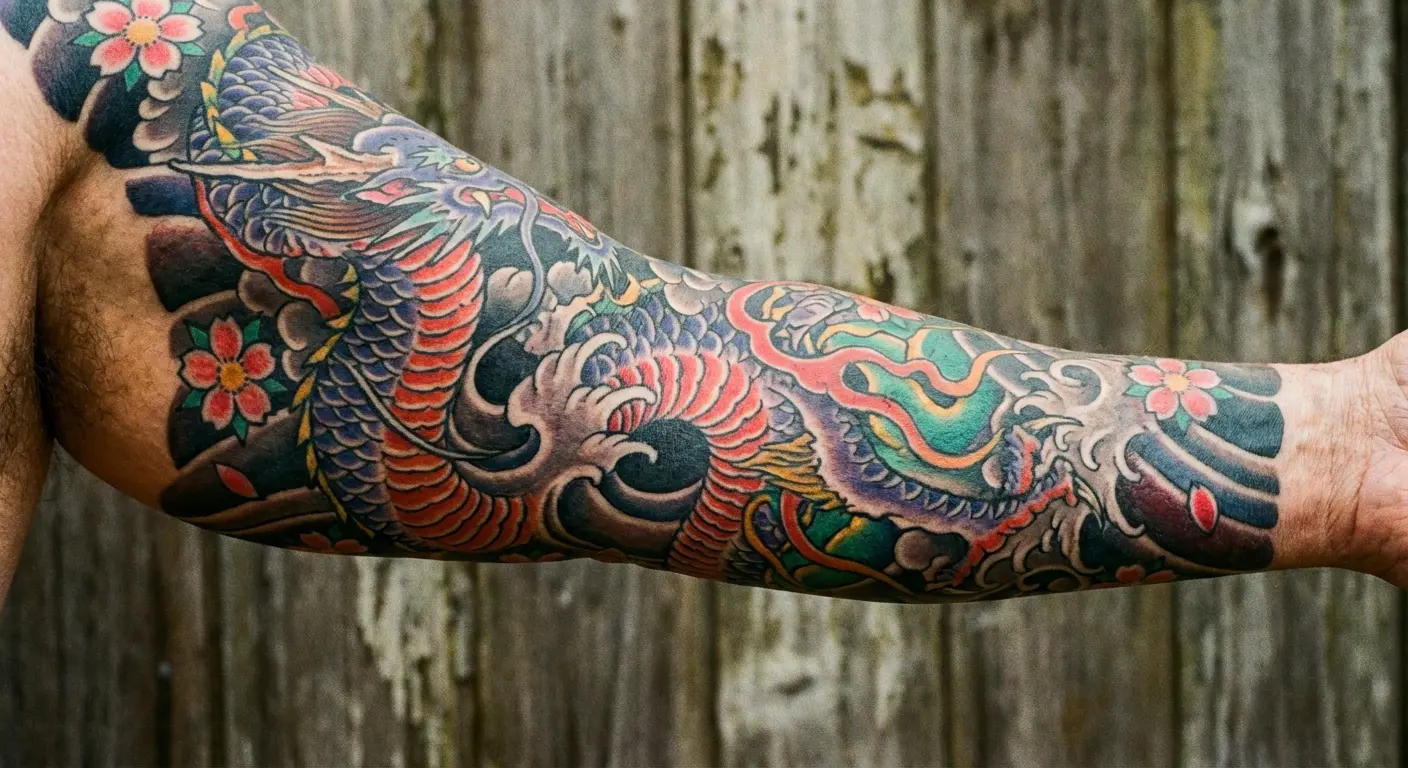
Japanese tattooing carries centuries of meanings, mythologies, and personal stories that go way beyond decoration. These extensive designs conform to the body as arm sleeves (hikae), back panels (horimono), and body armor styles, each crafted with bold black outlines and rich color transitions that define the style. The psychology behind your attraction to specific motifs reveals more about your internal landscape than any personality test could capture.
Look, maybe I’m reading too much into it. But after years of watching people choose tattoos and then talking about why, the patterns are real.
The Guardians: Protective Forces in Ink
Guardian motifs tell me how you think about protection and boundary-setting in your life. These aren’t passive symbols sitting pretty on your skin. They’re active forces that confront threats head-on.
If you’re drawn to these designs, you probably deal with problems directly rather than avoiding conflict. You might not love confrontation, but you don’t run from it either.
This category includes creatures and figures that stand at thresholds, whether literal (temple guardians) or metaphorical (the boundary between sanity and rage). The specific guardian you pick shows your relationship with aggression, fear, and the shadow aspects of personality you’ve learned to integrate instead of pretending they don’t exist.
Quick-Match Guardian Guide (because I know you’re skimming)
Foo Dogs – You’re a leader who knows when to push and when to hold back
Hannya Mask – You’ve integrated your anger instead of suppressing it
Oni Demon – Chaotic good energy with a moral compass
Fudo Myoo – Tough love specialist who makes hard calls
Namakubi – You’ve made peace with mortality (or you’re working on it)
1. Foo Dogs (Komainu): The Threshold Keepers
Foo dogs. You’ve seen them flanking temple entrances throughout Asia. One with mouth open, snarling. One closed, silent. That pairing isn’t decorative.
If you’re drawn to komainu tattoos, you probably do work that requires you to know when to push and when to hold back. Law enforcement, maybe. Management. Conflict resolution. Anywhere you need both force AND restraint.
You respect hierarchy and tradition, but you’re not rigid about it. The paired nature says you understand that protection requires action and strategic stillness in equal measure.
Placement matters here. Foo dogs on your chest signal you’re guarding your heart or core values. On your arms, they show your capacity to act as a protector in the physical world. The traditional Japanese tattoo carries weight beyond looking badass. It’s a statement about how you move through the world and what you’re willing to defend.
2. Hannya Mask: Embracing Your Rage
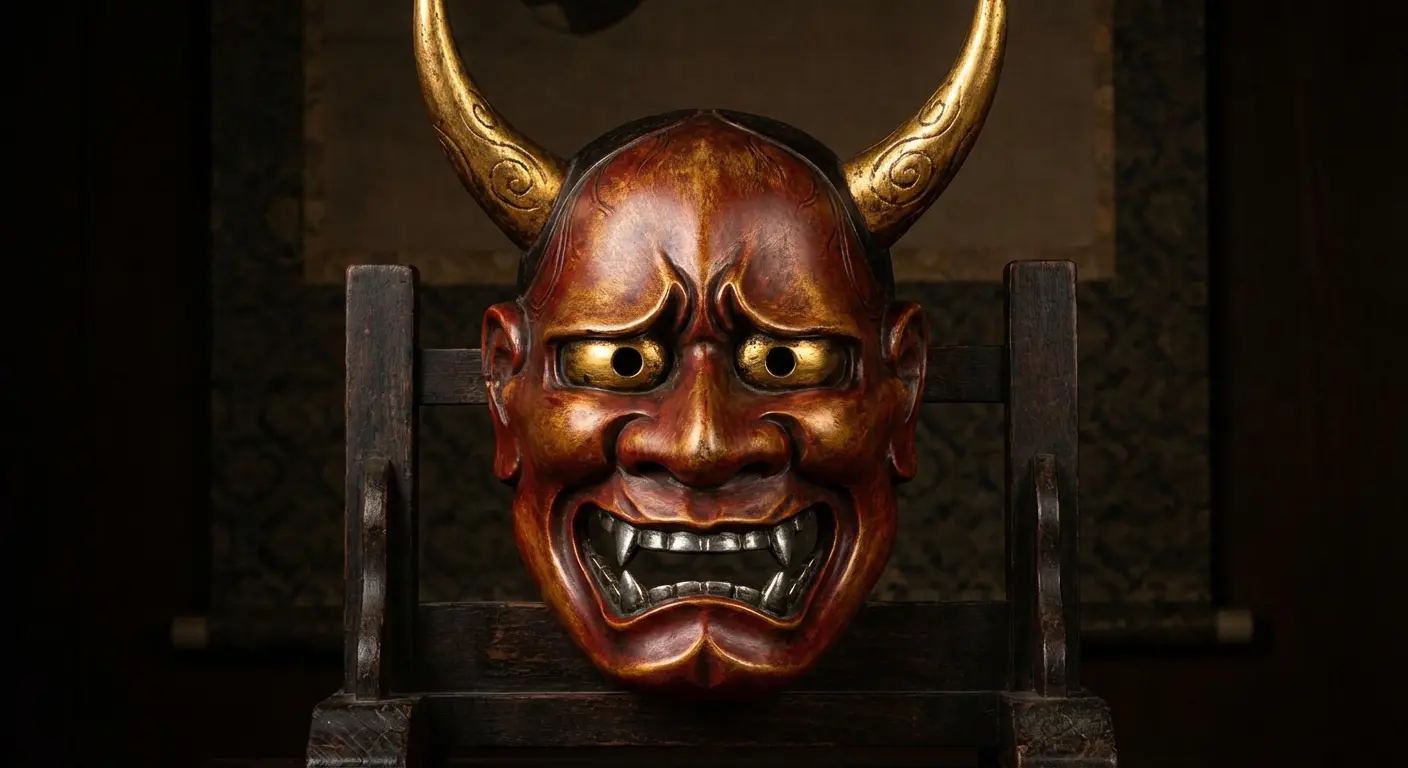
The hannya shows a woman transformed by jealousy and betrayal into a demon.
But here’s what most people miss: this isn’t a cautionary tale about controlling your emotions. It’s an acknowledgment that rage is a valid response to being wronged, and that fury, when you channel it right, becomes a protective force instead of a destructive one.
Choosing this design means you’ve done the psychological work to integrate your anger rather than suppress it. You understand that fury, when channeled appropriately, protects instead of destroys.
Women who choose hannya tattoos? They’re usually done with being told their anger is “too much.” Men who choose it have typically confronted their own capacity for destructive behavior and emerged with better self-regulation. The horns aren’t a warning to others. They’re a declaration that you won’t be victimized quietly.
This Japan tattoo design resonates with people who’ve learned that emotional honesty sometimes looks fierce, and that’s perfectly acceptable.
3. Oni Demon: The Trickster Protector
Oni occupy weird space in Japanese folklore. Sometimes they’re punishing wrongdoers, sometimes causing chaos for entertainment. People who choose oni tattoos tend to have a mischievous streak balanced by a strong moral code.
You might bend rules but you have clear lines you won’t cross.
The oni’s wild appearance (wild hair, fangs, clubs) appeals to those who feel constrained by social expectations but haven’t fully rebelled. It’s the tattoo equivalent of being the person who makes inappropriate jokes at funerals but shows up with casseroles when someone’s struggling.
Red oni means pure aggression. Blue oni suggests cunning and strategy. Your choice reveals whether you lead with emotion or calculation when protecting what matters to you.
4. Fudo Myoo: The Immovable Protector
Fudo Myoo is a Buddhist deity who protects through fierce compassion, surrounded by flames that burn away obstacles and ignorance.
This is the guardian for people who’ve learned that sometimes love requires tough boundaries.
You’re drawn to this if you’ve had to make difficult decisions that hurt people in the short term but protected them long-term. Cutting off an addict. Leaving a toxic relationship. Enforcing consequences that nobody wanted but everybody needed.
I knew an ER nurse who got Fudo Myoo across her back after she had to physically restrain a patient trying to pull out their breathing tube. She told me the tattoo reminded her that sometimes saving someone means holding them down while they fight you. That’s fierce compassion. It doesn’t feel good, but it’s necessary.
The sword in his right hand cuts through delusion. The rope in his left binds those who’d harm themselves. Healthcare workers, therapists, and educators often gravitate toward Fudo Myoo because they recognize that protection sometimes looks like saying no.
5. Namakubi (Severed Head): Confronting Mortality
Why would anyone tattoo a severed head on their body?
The namakubi originated with samurai displaying enemy heads as proof of victory, but in modern irezumi tattoo, it means something more personal: your willingness to confront death and impermanence directly.
This isn’t morbid. It’s existentially honest.
People who choose namakubi have usually experienced significant loss or near-death experiences that fundamentally shifted their priorities. You don’t have patience for superficial concerns because you’ve stared down the reality that we’re all temporary.
The expression on the face matters. A peaceful expression suggests acceptance of mortality. A grimacing face indicates ongoing struggle with that acceptance.
Either way, you’re doing the work most people avoid. Your traditional Japanese tattoo becomes a daily reminder that time is finite and should be spent on what matters.
The Elemental Forces: Nature’s Raw Power
Elemental force tattoos show how you think about and channel personal power. These designs represent primal energies that exist beyond human control but can be harnessed with wisdom and respect.
If you’re drawn to this category, you probably see yourself as someone who works with natural forces rather than against them. You understand that power without wisdom is destructive, but wisdom without power is ineffective.
These Japanese traditional tattoo designs appeal to people who’ve learned to channel their intensity productively, whether that’s physical strength, creative energy, or emotional depth. The specific element you choose reveals which type of power you’re most comfortable wielding and which you’re still learning to control.
Many of these elemental designs work beautifully when exploring full Japanese sleeve tattoo compositions that tell a complete visual story.
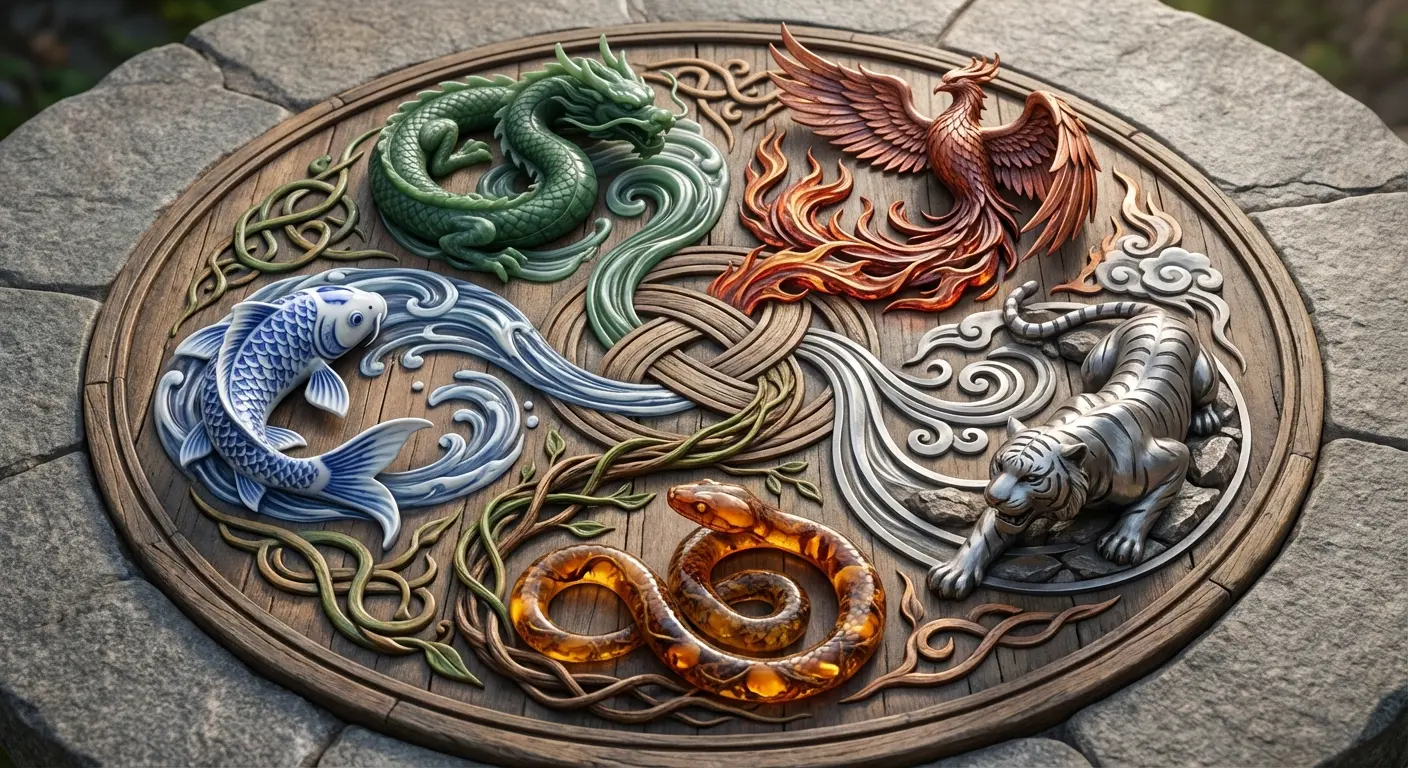
6. Dragon (Ryu): Wisdom Meets Ferocity
Japanese dragons differ fundamentally from Western dragons. They’re not hoarding gold in caves waiting to get slayed by knights. They’re celestial beings associated with water, wisdom, and transformation.
Choosing a dragon tattoo tells me you see power as something earned through knowledge and self-mastery rather than taken by force. You’re probably someone who’s worked hard to develop expertise in your field and expects others to do the same.
The dragon’s serpentine body winding around your limbs shows the way wisdom should flow through your actions.
Color matters significantly here. Black dragons represent experience and wisdom earned through years of work. Gold dragons suggest wealth and prosperity gained through ethical means. Blue dragons connect to compassion and forgiveness. Your Japanese traditional tattoo becomes a map of how you’ve learned to wield influence responsibly.
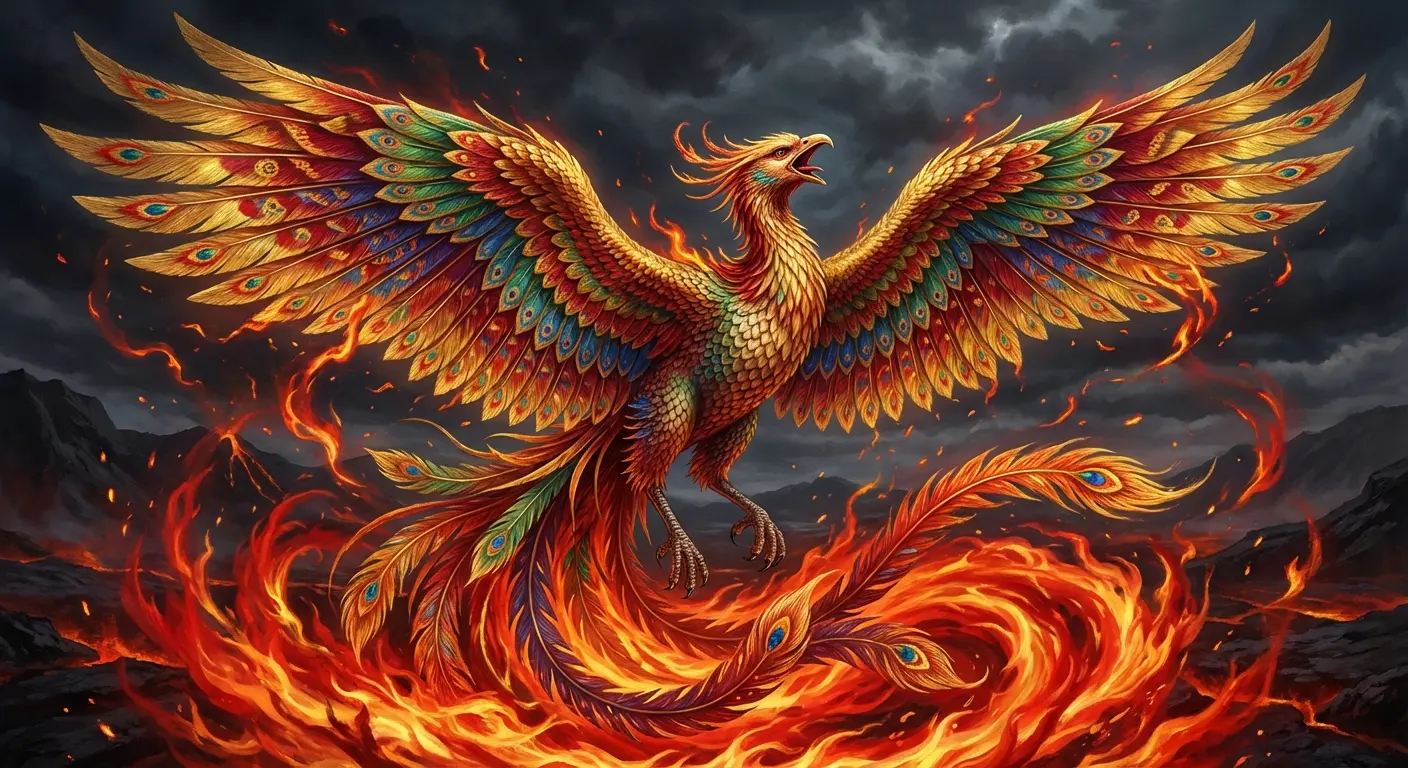
7. Phoenix (Hou-ou): Rising From Your Ashes
The phoenix appears after surviving something that should have destroyed you.
Career collapse. Divorce. Addiction recovery. Serious illness. The whole nine yards.
You don’t get this tattoo because rebirth sounds cool. You earn it by doing the work of rebuilding yourself from nothing. The phoenix appeals to people who’ve discovered they’re more resilient than they realized. You’ve learned that endings aren’t failures. They’re opportunities for radical reinvention.
The flames surrounding the phoenix represent the painful transformation process you’ve already survived. This isn’t aspirational imagery. It’s documentation of a journey you’ve completed.
When NOT to get a phoenix: If you’re in the middle of the crisis, not after it. The phoenix is documentation, not aspiration. Getting it while you’re still in the fire is like declaring victory at halftime. Wait until you’ve actually rebuilt something before you commemorate the rebirth.
For deeper insight into the symbolic weight of this mythical bird, check out our comprehensive guide on phoenix tattoo meanings across different cultural traditions. Your traditional Japanese tattoo choice here marks you as someone who understands that destruction sometimes precedes creation, and you’ve lived through that fire.
8. Tiger (Tora): Controlled Aggression
Tigers in Japanese tattoo designs represent courage, strength, and the ability to act decisively when needed.
If you’re drawn to tiger imagery, you probably have a strong protective instinct combined with the physical or psychological capacity to back it up. You’re comfortable with confrontation when necessary but don’t seek it out.
The tiger’s stripes create natural movement in the design, suggesting that your strength flows from your nature rather than forced posturing. You’ve learned when to show teeth and when to walk away, and that discernment makes you more dangerous than someone who’s always aggressive.
The traditional Japanese tattoo tiger often appears mid-stride or crouched, representing potential energy ready to deploy. You’re the person others want on their side when things get serious because you stay calm under pressure and strike with precision when action becomes necessary.
9. Snake (Hebi): Transformation Through Shedding
You know that feeling when you’ve outgrown your own skin but you’re still walking around in it?
That’s what the snake represents. Not the cool mystical transformation Instagram posts promise, but the uncomfortable, vulnerable process of becoming someone new.
Snakes shed their skin completely, emerging renewed. This process is uncomfortable, vulnerable, and necessary. People who choose snake tattoos are usually in the middle of or have recently completed a major identity shift. You’re letting go of an old version of yourself that no longer serves you.
The snake’s ability to move without limbs appeals to those who’ve learned to adapt and progress despite limitations or lack of traditional resources. Medical professionals often choose snakes (connecting to the Rod of Asclepius), but so do people who’ve survived toxic environments and had to completely rebuild their identity afterward.
The coiled position suggests stored potential energy . An extended snake represents active transformation in progress.
The serpent’s symbolism extends beyond Japanese traditions, as we explore in our article about snake tattoo meanings across various cultural contexts. Your Japanese traditional tattoo documents the discomfort of growth and your willingness to endure it.
10. Koi Fish: Swimming Against the Current
The koi’s journey swimming upstream to become a dragon is well-known, but what matters more is why you’re drawn to that struggle.
Koi tattoos appeal to people who’ve achieved success through persistent effort against significant obstacles. You didn’t have advantages handed to you. You fought for every inch of progress.
The direction the koi swims matters. Upstream represents active struggle and ambition. Downstream suggests you’ve made peace with going with the flow after years of fighting.
Red koi, black koi, blue koi… yeah, the colors mean different things. But honestly? If you’re agonizing over whether your koi should be red for passion or black for overcoming hardship, you’re missing the point. The koi means you fought upstream for something. Pick the color that looks best on your skin tone and move on.
Your traditional Japanese tattoo choice here tells the story of someone who understands that meaningful achievement requires sustained effort, not shortcuts.

The Spiritual Messengers: Symbols of Transformation
Spiritual messenger tattoos reveal your relationship with impermanence, beauty, and the cycles of growth and decay that define human existence.
These designs appeal to people who’ve developed a contemplative practice or philosophical framework for processing change. You’re not trying to stop time or cling to perfect moments. You’re learning to appreciate beauty precisely because it’s temporary.
This category includes flowers and birds that carry specific seasonal and emotional associations in Japanese culture. If you’re drawn to these symbols, you’ve probably experienced enough loss to understand that grief and appreciation are two sides of the same coin.
You’re comfortable with complexity and paradox. You understand that something can be simultaneously beautiful and painful, joyful and melancholic.
The enduring influence of Japanese tattoo traditions continues to evolve in contemporary art spaces. “Living Tattoo Traditions: American Irezumi and Beyond” at the San Francisco Public Library explores how centuries-old irez umi practices have come to define one of the most distinctive and influential tattoo traditions in the world, demonstrating that these spiritual and symbolic elements remain deeply relevant to modern practitioners seeking meaningful body art. Your traditional Japanese tattoo connects you to this living tradition while expressing something deeply personal about your own journey.
11. Crane (Tsuru): Grace Under Pressure
Cranes mate for life and are associated with longevity, fidelity, and good fortune. Choosing crane imagery tells me you value commitment and stability in relationships. You’re not someone who bails when things get difficult.
The crane’s elegant appearance combined with its fierce territoriality appeals to people who’ve learned that grace doesn’t mean passivity.
You can be both refined and formidable.
The crane in flight represents freedom and aspiration. A standing crane suggests patience and watchfulness. Cranes often appear in wedding-related tattoos or are chosen by people celebrating long-term partnerships that have survived significant challenges. Your traditional Japanese tattoo choice here marks you as someone who understands that enduring relationships require both beauty and backbone.
12. Cherry Blossom (Sakura): Beauty in Brevity
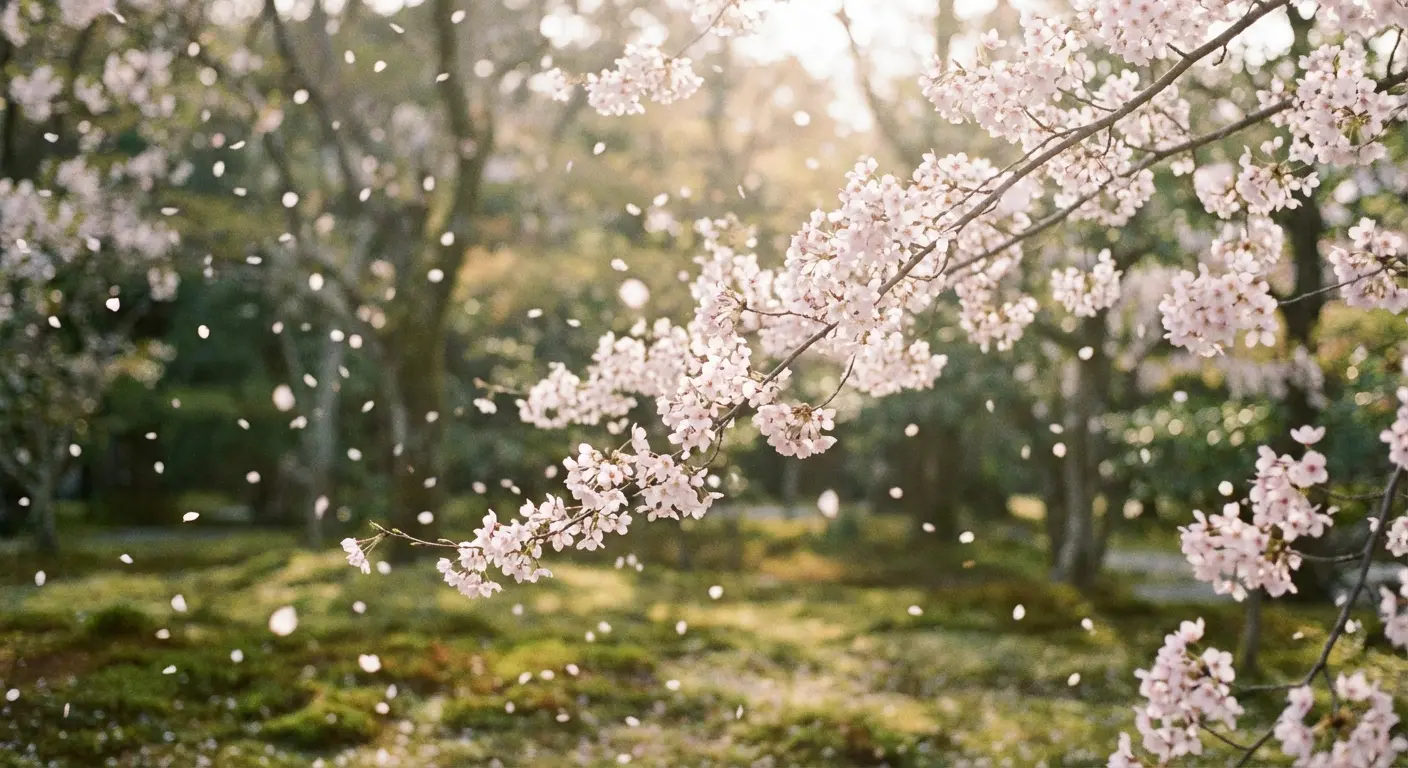
Cherry blossoms bloom spectacularly for about two weeks, then fall. This brief perfection represents mono no aware, the bittersweet awareness of impermanence.
You don’t choose sakura because you think flowers are pretty. You choose them because you’ve internalized the reality that everything you love will eventually end, and that knowledge makes you appreciate the present more intensely.
People who’ve lost loved ones, survived serious illness, or experienced other stark reminders of mortality gravitate toward cherry blossoms. The falling petals aren’t sad. They’re honest.
Placement reveals what aspect of your life you’re applying this philosophy to. Sakura over your heart suggests romantic relationships. On your back, it represents your overall life philosophy. This irezumi tattoo becomes a permanent reminder that nothing lasts forever, which paradoxically makes everything more precious.
Full disclosure: cherry blossoms are the Japanese tattoo equivalent of getting “live laugh love” in script. Not wrong, just… expected. But if it resonates with you on a gut level, that expectedness doesn’t matter.
13. Peony (Botan): Prosperity Through Risk
Peonies represent wealth, honor, and good fortune, but they’re also called “the king of flowers” because of their bold, almost aggressive beauty.
Choosing peonies tells me you’re not interested in quiet, modest success. You want recognition for your achievements.
This appeals to entrepreneurs, performers, and anyone in fields where visibility matters. The peony’s full, layered petals create dramatic compositions that demand attention, which matches the personality of people who choose them. You’ve learned to take up space unapologetically.
Red peonies represent passion and romance. Pink suggests feminine power and grace. White peonies connect to new beginnings and bashfulness overcome. Your declaration here is clear: you’ve worked hard for what you have, and you’re not going to minimize your success to make others comfortable.
14. Lotus Flower: Purity From Mud
The lotus grows in muddy water but emerges clean. Yeah, it’s a beautiful metaphor. It’s also been done to death.
But here’s why people keep coming back to it: if you’ve maintained your integrity in a toxic environment, stayed compassionate despite being treated like shit, kept your ethics while everyone around you cut corners… the lotus isn’t cliché. It’s documentation.
The lotus at different stages of blooming represents different points in your spiritual journey. A closed bud suggests you’re at the beginning of awakening. A partially open lotus indicates active transformation. A fully bloomed lotus represents achieved enlightenment or self-actualization.
The roots extending into mud aren’t hidden in Japanese traditional tattoo designs. They’re prominently featured because your difficult past isn’t something to hide. It’s the foundation of your growth.
The lotus carries profound spiritual significance across multiple traditions, which we explore in depth in our guide to lotus flower tattoo meanings and their transformative symbolism. Your choice documents the journey from darkness to light, acknowledging both as necessary parts of becoming who you are.
15. Chrysanthemum (Kiku): Imperial Dignity
The chrysanthemum is the imperial seal of Japan, representing perfection, nobility, and longevity.
Choosing this flower tells me you hold yourself to extremely high standards and expect the same from others. You value excellence and craftsmanship.
This appeals to people in fields requiring precision and mastery. Surgeons, architects, master craftspeople. The chrysanthemum’s symmetrical petals radiating from the center create a mandala-like effect that represents order and harmony achieved through discipline.
You’re not naturally organized or patient. You’ve cultivated those qualities through deliberate practice.
The flower’s association with autumn and the end of the growing season connects to maturity and wisdom gained through experience. Your choice reflects someone who understands that true mastery takes years of dedicated effort, and you’re willing to put in that time. This traditional Japanese tattoo selection marks you as someone who respects the process as much as the outcome.
The Warriors: Embodiments of Honor and Discipline
Warrior imagery in irezumi tattoo designs reveals your relationship with discipline, honor, and the balance between strength and restraint.
These aren’t badass figures to make you look tough. They represent specific philosophical frameworks for living with integrity under pressure.
If you’re drawn to warrior motifs, you probably have a strong internal code of ethics that guides your decisions even when no one’s watching. You respect expertise earned through dedication and sacrifice. You understand that true strength includes knowing when not to fight.
This category appeals to people who’ve faced situations requiring moral courage, not physical bravery. Standing up to authority, protecting vulnerable people, maintaining standards when others cut corners… these are the modern battles that warrior tattoos commemorate.
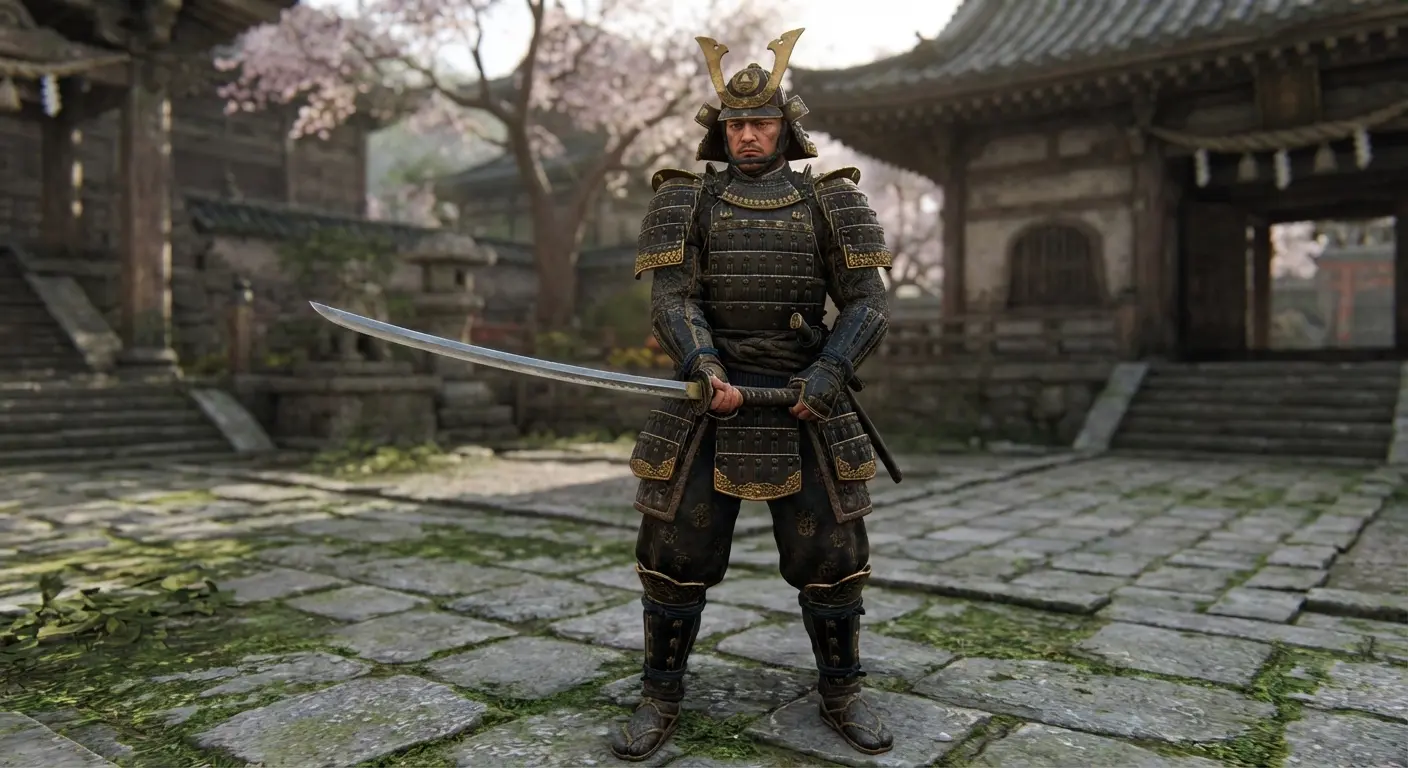
16. Samurai: The Way of the Warrior
Samurai represent bushido, the warrior code emphasizing loyalty, honor, and self-discipline.
Choosing samurai imagery means you live by a personal code that prioritizes integrity over convenience. You’d rather face consequences for doing the right thing than compromise your values for an easier path.
The samurai’s armor and weapons aren’t the point. The point is the philosophy they represent: preparation, discipline, and acceptance of mortality that allows you to act courageously.
Military veterans often choose samurai tattoos, but so do civilians who’ve faced moral tests that revealed their character. The samurai in battle stance represents active engagement with life’s challenges. A samurai in meditation suggests the internal discipline required before external action.
Honestly? Most people getting samurai tattoos have never faced the kind of moral test that imagery represents. But that doesn’t mean you shouldn’t get it. Just be honest about whether it’s documentation or aspiration.
Your traditional Japanese tattoo documents the moments when you had to choose between what was easy and what was right, and you chose right.
17. Geisha: Grace as Resistance
Let’s clear something up first: geishas aren’t sex workers, and if that’s what you thought, you’ve been watching too many movies. They’re artists who spent years mastering traditional Japanese arts like music, dance, and conversation.
If you’re drawn to geisha imagery, you probably get that grace can be a power move, not a weakness.
You’ve succeeded in places that underestimated you, and you used their assumptions against them. This appeals to people who’ve succeeded in environments that underestimated them, using perceived softness as strategic advantage.
The geisha’s elaborate costume and makeup represent the armor we wear in professional or social situations. You know the difference between your public persona and private self, and you’ve made peace with maintaining both. Some people call it fake. You call it strategic.
The geisha with a fan suggests mystery and strategic concealment. A geisha with musical instruments emphasizes artistic mastery and dedication to craft. Your choice celebrates the years of work required to make excellence appear effortless.
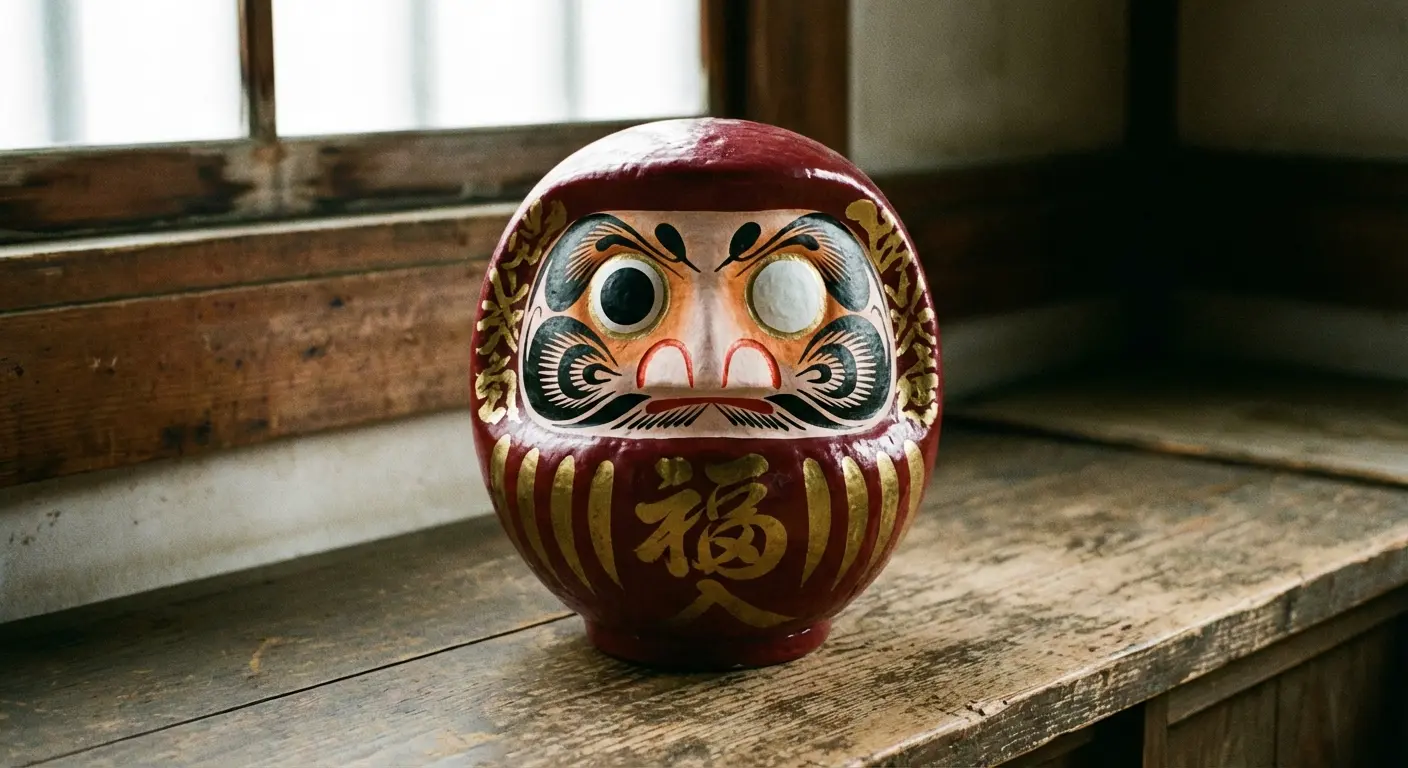
18. Daruma Doll: Persistence Toward Goals
Daruma dolls represent Bodhidharma, the founder of Zen Buddhism, and symbolize perseverance and good luck. The traditional practice involves painting one eye when you set a goal and the second eye when you achieve it.
Choosing a daruma tattoo means you’re goal-oriented but understand that achievement requires sustained effort over time, not initial enthusiasm.
You’ve probably set and accomplished significant long-term goals that required years of consistent work.
The daruma’s round, weighted bottom means it always returns upright when knocked over, representing resilience and the ability to recover from setbacks. This resonates with people who’ve failed multiple times before succeeding. The red color traditionally wards off evil spirits, but in modern context represents the energy and determination required to push through obstacles.
A daruma with both eyes filled celebrates completed goals. One eye suggests you’re currently working toward something significant. Your irezumi tattoo becomes a visual commitment to finishing what you start, no matter how many times you get knocked down.
Bringing Your Vision to Life Without the Guesswork
You’ve figured out which traditional Japanese tattoo designs resonate with your personality and life experience. The psychological work is done.
Now comes the annoying part: getting that vision out of your head and onto your skin.
You could spend weeks scrolling through flash art that’s almost right but not quite. You could try explaining to an artist what you want and hope they get it. Or you could use Tattoo Generator IQ to create exactly what you’re envisioning before you ever sit in the chair.
Describe the specific elements that matter to you. A hannya mask with softer eyes. A koi swimming downstream in blue tones. A phoenix emerging from flames that match a specific memory. The AI generates multiple variations instantly, letting you refine colors, adjust composition, and experiment with combinations until the design matches the internal image you’ve been carrying.
You’ll walk into your consultation with a high-resolution reference that communicates precisely what you want. Your tattoo artist gets a clear vision to work from. You get ink that reflects the psychological depth behind your choice. Everybody wins.
Whether you’re considering a full bodysuit or exploring irezumi tattoo traditions for the first time, understanding these symbolic foundations helps create designs with genuine personal meaning. Even a small Japanese traditional tattoo element carries significant weight when chosen with intention.
One more thing before you commit to that full back piece: traditional Japanese tattoos hurt like hell and take forever. We’re talking multiple sessions, significant money, and months or years of healing. If you’re not ready for that level of commitment, start smaller. A single koi on your forearm tells the same story without requiring you to spend 40 hours face-down on a table.

Final Thoughts
Here’s what I want you to take away: that tattoo you’ve been obsessing over isn’t random. Your brain is showing you something about who you are right now. How you handle power, how you process loss, what you’re willing to fight for.
Guardian designs show your relationship with boundaries and confrontation. Elemental forces reveal how you channel intensity and navigate transformation. Spiritual messengers demonstrate your philosophy around change and beauty. Warrior imagery reflects your personal code of ethics and discipline.
The question isn’t “What does this symbol mean?” The question is “Why does this symbol feel true to me?”
Answer that honestly, and you’ll end up with ink that still makes sense twenty years from now. Ignore it and chase aesthetics, and you’ll be covering it up with something else eventually.
Look, we need to talk about the cultural appropriation thing for a second. Japanese tattoo culture has complicated feelings about Westerners getting irezumi. Some traditional artists won’t work with non-Japanese clients. Others see it as cultural appreciation. I’m not going to tell you what to think, but if you’re getting Japanese imagery tattooed on your body and you’ve never thought about this question, you’re not ready for the tattoo.
Your choice should document your journey, not an aspirational version of it. These aren’t decorations. They’re visual records of the internal work you’ve done and the person you’ve become through experience.
Choose symbols that reflect battles you’ve already fought, not ones you hope to face someday. The ink becomes meaningful when it represents truth rather than aspiration. Your traditional Japanese tattoo carries the weight of lived experience, and that authenticity is what makes these designs powerful.
Your call.
