22 Warrior Tattoos That Honor the Fighter in You Without the Clichés
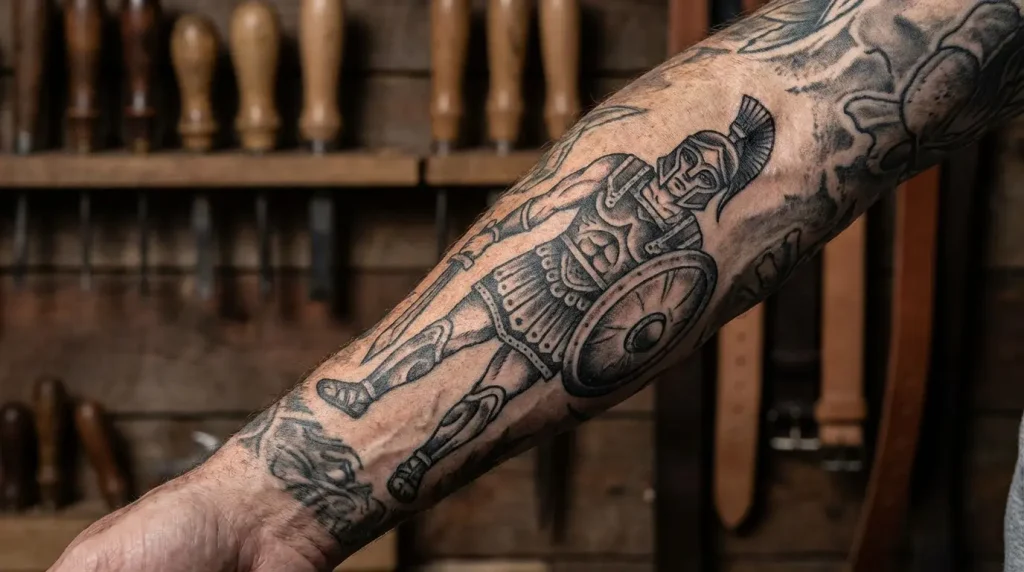
Look, I’m tired of seeing the same generic warrior-with-a-sword design in every tattoo gallery. You know the ones – some muscular dude in armor looking vaguely threatening, probably copied from a video game or movie poster. There’s so much more to warrior tattoos than that played-out imagery.
Real warrior tattoos connect to cultural heritage, inner strength, and the actual battles you’ve survived. Whether you’re drawn to ancestral warrior traditions, feminine strength that flips the script on masculine defaults, or modern takes that validate invisible struggles, the right design acknowledges your fights without relying on tired clichés.
Here’s something most people don’t know: U.S. soldiers started getting tattoos during the Civil War as a form of identification. The trend evolved over decades as military personnel used ink to showcase their allegiance, achievements, and travels, according to Wounded Warrior Project. Wild, right?
Today, warrior imagery belongs to anyone who’s fought battles that mattered. Literal battlefields or the quiet trenches of daily survival – both count. We’re digging into 22 warrior tattoo designs that go deeper than surface-level toughness, honoring the messy complexity of what it means to fight, survive, and keep standing.
Table of Contents
Warriors Beyond the Battlefield: Cultural Guardians
-
Maori Tā Moko Warrior
-
Aztec Eagle Warrior
-
Celtic Warrior Queen
-
Samoan Pe’a Warrior
-
Viking Shield-Maiden
The Quiet Strength: Feminine Warriors
-
Joan of Arc in Prayer
-
Mulan Removing Her Armor
-
Amazon Warrior with Bow
-
Japanese Onna-Bugeisha
Warriors of Inner Battles: Mental Fortitude
-
Warrior Meditating in Lotus
-
Phoenix Warrior Rising
-
Scarred Warrior Portrait
-
Broken Sword with Flowers
-
Warrior Removing Helmet
Animal Warriors: Primal Power
-
Bear Standing Guard
-
Wolf Pack Leader
-
Eagle Warrior Hybrid
-
Lion with Battle Scars
-
Serpent Warrior Fusion
Modern Warriors: Contemporary Interpretations
-
Single Mother as Warrior
-
Cancer Survivor Warrior
-
Abstract Warrior Silhouette
TL;DR
Warrior tattoos go way beyond sword-wielding dudes. We’re covering cultural warriors (do your research or don’t get it), feminine warrior energy, mental health battles, animal symbolism that isn’t basic, and modern interpretations. Stop getting generic tribal garbage.

Warriors Beyond the Battlefield: Cultural Guardians
Cultural warrior tattoos first, because these designs carry meanings that predate modern interpretations of strength. These aren’t just aesthetic choices (though they’re visually stunning). They carry entire worldviews about what it means to protect, honor, and carry forward ancestral wisdom.
Notice how these designs include elements beyond weapons or armor? That’s intentional. Cultural warriors understood that physical prowess alone doesn’t sustain communities. Knowledge, spirituality, and connection to land matter just as much.
If you’re drawn to these designs, spend time understanding their context. I’ve seen people get called out hard for appropriating sacred patterns. Appropriation happens when we extract the cool factor while ignoring the responsibility these symbols carry. The traditions we’re covering here demand respect, research, and sometimes permission before you commit them to your skin.
|
Cultural Warrior Tradition |
Primary Symbolic Elements |
Traditional Meaning |
Modern Adaptation Considerations |
|---|---|---|---|
|
Maori Tā Moko |
Chin moko (ngunga), forehead designs (puhoro), spiral patterns |
Genealogy records, social status, battle participation |
Requires cultural permission; non-Maori should use inspired aesthetics rather than sacred patterns |
|
Aztec Eagle Warrior |
Eagle-headed helmets, feathered regalia, sun stone motifs, stepped pyramids |
Elite military status, solar energy embodiment, spiritual warfare |
Balance ornate detail with tattoo scale readability |
|
Celtic Warrior Queen |
Torcs (neck rings), woad patterns, spiral designs, carnyx, long shields |
Leadership, battle prowess, connection to land and tribe |
Move beyond generic knotwork to authentic La Tène culture elements |
|
Samoan Pe’a |
Spearhead patterns (aso), flying fox motifs, geometric sections |
Endurance, family connections, social responsibilities, protective power |
Partial adaptations acceptable with cultural understanding; avoid copying complete Pe’a |
|
Viking Shield-Maiden |
Round shields, chainmail, seax knives, Vegvisir, Aegishjalmur runes |
Protection, courage, practical combat readiness |
Focus on archaeological accuracy over fantasy interpretations |
1. Maori Tā Moko Warrior
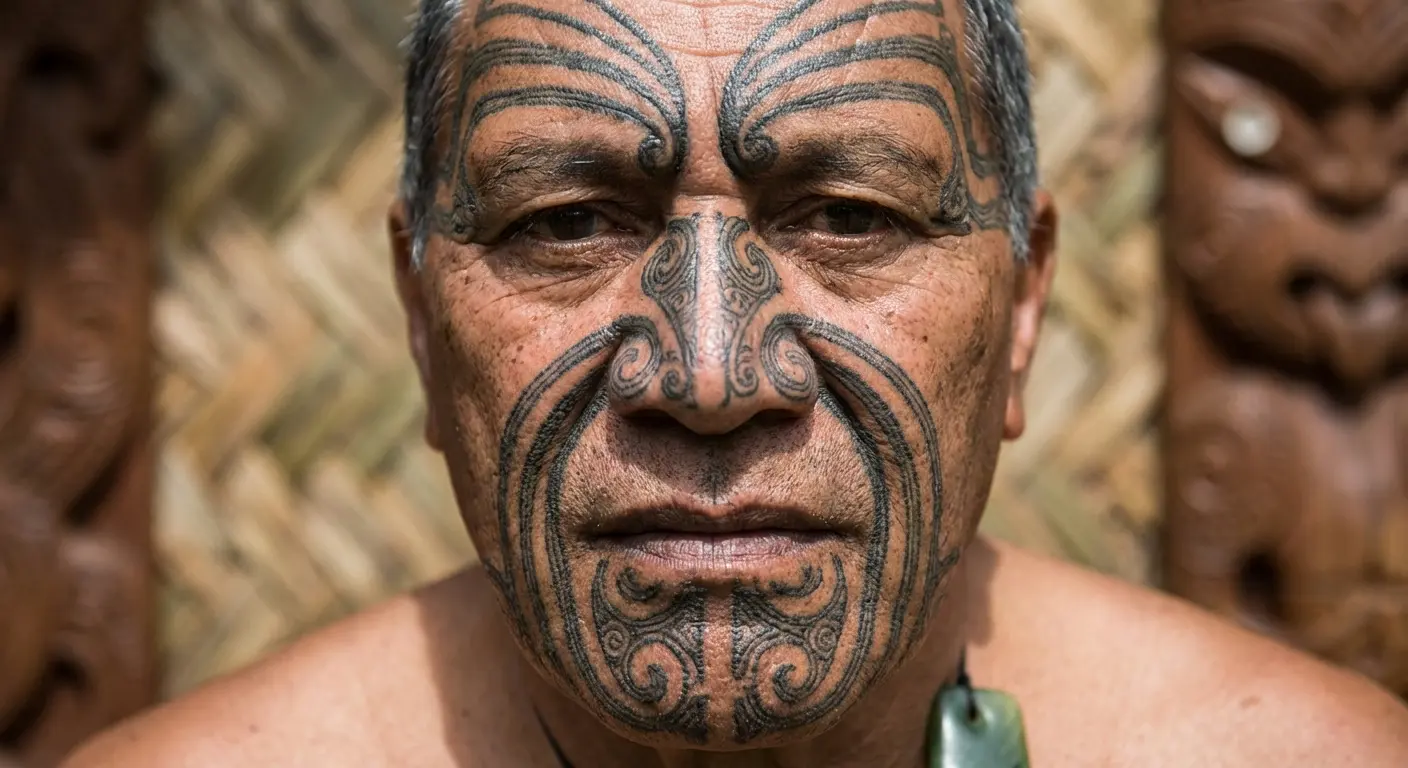
Tā Moko isn’t just a tattoo style. It’s a visual language that records genealogy, social status, and personal achievements across Maori culture. Warrior-specific moko featured patterns indicating battle participation and leadership roles. The chin moko (ngunga) and forehead designs (puhoro) told observers exactly who stood before them.
Modern interpretations often simplify these into generic tribal patterns, which strips away their communicative function. If you’re not of Maori descent, go with designs inspired by the aesthetic principles – symmetry, flow, negative space – rather than copying sacred patterns.
Placement matters enormously here. Facial moko carries different weight than body placement, and that distinction deserves respect. The elements in traditional Tā Moko served specific social functions that we can honor without appropriating.
2. Aztec Eagle Warrior
Eagle Warriors (Cuāuhtli) were the elite military order in Aztec society, equal to Jaguar Warriors in prestige. These weren’t just soldiers. They were spiritual practitioners who believed they carried the sun’s energy into battle.
The designs typically show warriors wearing eagle-headed helmets with feathered regalia extending down the back and shoulders. The iconography connects to Huitzilopochtli, the god of war and sun. Incorporate the stepped pyramid elements and sun stone motifs to ground this in authentic Aztec cosmology rather than generic indigenous warrior imagery.
The challenge? Balancing the ornate detail with readability at typical tattoo scales. Too much compression and you lose the intricate featherwork that makes these designs distinctive. Work with your artist on sizing that preserves the cultural specificity while ensuring the piece ages well on your skin.
3. Celtic Warrior Queen
Boudicca and other Celtic warrior queens offer rich visual territory that mainstream designs ignore. These work best when they incorporate the torcs (neck rings), woad body paint patterns, and chariots that defined Celtic warfare.
We’re not talking about the oversimplified knotwork that dominates “Celtic” tattoo searches. Authentic Celtic warrior imagery includes spiral patterns from La Tène culture, carnyx (war trumpets), and the distinctive long shields. Incorporate the raven – Celtic warriors believed it guided them in battle.
Placement on the upper arm or across the shoulder blade allows enough space for the flowing movement these designs require. The linear quality of Celtic art translates beautifully to the body’s natural contours, creating tattoos that feel integrated rather than applied.
4. Samoan Pe’a Warrior
The Pe’a (male tatau) covers from waist to knees and is one of the most comprehensive warrior tattoo traditions still practiced today. Traditional application takes multiple sessions over weeks, marking the recipient’s endurance and commitment.
Modern warrior-inspired designs often extract elements – the spearhead patterns (aso) or the flying fox motif – without understanding their protective and status-indicating functions. These aren’t decorative flourishes. Each section marks specific achievements, family connections, and social responsibilities.
If you’re adapting Pe’a elements, work with artists who understand Samoan tattooing protocols. Partial designs can honor the tradition when done thoughtfully, but direct copying of complete Pe’a patterns by non-Samoans raises serious cultural concerns. Your design should respect the living tradition it draws from.
5. Viking Shield-Maiden
Archaeological evidence increasingly supports the existence of female Viking warriors, challenging decades of assumptions about gendered burial goods. Shield-maiden designs work best when they avoid the oversexualized “warrior princess” trope and instead focus on the practical elements: chainmail, round shields with boss centers, and the seax (fighting knife) carried by both genders.
Add runes that speak to protection or courage rather than random Norse alphabet letters. The Vegvisir (compass) and Aegishjalmur (helm of awe) add symbolic depth. Consider depicting a shield-maiden in a moment of preparation rather than active combat, which adds narrative complexity often missing from standard warrior poses.
Placement across the back or as a half-sleeve allows the shield to function as a compositional anchor. Similar to how Valkyrie tattoo designs explore Norse mythology, shield-maiden imagery connects to authentic Viking culture rather than fantasy interpretations.
The Quiet Strength: Feminine Warriors
Here’s what most collections miss: the power in moments between battles. Feminine warrior designs (and I’m using “feminine” to describe energy rather than gender) explore vulnerability as strength, strategic thinking over brute force, and the courage required for roles beyond combat.
These designs challenge the assumption that warrior energy must be aggressive or dominant. They make space for nurturing as protection, for wisdom as weaponry, for endurance as victory.
These tattoos often show warriors in transitional moments: removing armor, tending wounds, or standing vigil. That’s where the overlooked power lives. Anyone can depict a warrior mid-strike. It takes more courage to show what happens after.
6. Joan of Arc in Prayer
Most Joan of Arc tattoos show her in full armor, sword raised. Let’s go different. Depict her kneeling in prayer before battle, hands clasped around her sword’s hilt, face tilted upward. This captures the spiritual conviction that drove her military success better than any action pose could.
The design works particularly well with negative space creating a divine light source above her. You can incorporate the fleur-de-lis subtly in the background or worked into her armor details. The ribcage or thigh placement works for vertical compositions.
The vulnerability of the prayer pose creates tension with the armor and weapon, visually showing the complexity of her role as both mystic and military leader. This acknowledges that faith and conviction fuel fighting spirit as much as physical strength.

7. Mulan Removing Her Armor
The moment Mulan removes her armor after years of military service carries more emotional weight than any battle scene. This design shows hands unbuckling chest plates, hair falling loose, the weight of dual identity visible in her expression.
You’re capturing the psychological reality of code-switching, of maintaining facades, of surviving in spaces that weren’t designed for you. Background elements might include scattered armor pieces and the comb or hairpin marking her return to recognized femininity.
This hits different for anyone who’s had to hide parts of themselves to succeed in hostile environments. Placement on the forearm or upper back allows the falling hair and armor removal to follow natural movement lines.
8. Amazon Warrior with Bow
Amazons used bows because they understood that distance and strategy often beat close combat. A design showing an Amazon at full draw, muscles engaged, eye focused down the arrow shaft, captures concentrated power without requiring blood or violence.
The negative space between bow and string creates natural visual interest. Incorporate Greek key patterns in armbands or the distinctive crescent shield (pelte) at her feet. Show the moment just before release when tension peaks. That suspended instant holds more energy than the arrow’s flight.
Placement along the outer thigh or across the shoulder blade allows the bow’s curve to complement body contours. Skip the gratuitous breast plate modifications that never made practical sense. These work best when they honor historical accuracy.
9. Japanese Onna-Bugeisha
Female samurai (onna-bugeisha) trained extensively in naginata combat and defended estates while male samurai traveled. Designs featuring Tomoe Gozen or Nakano Takeko offer historical grounding often missing from generic “female samurai” imagery.
Show the naginata (polearm) in a ready stance rather than mid-swing, which allows for cleaner lines and better tattoo aging. Add the family mon (crest) and consider adding cherry blossoms not as decoration but as a reference to the samurai philosophy of mono no aware (the pathos of things). The juxtaposition of deadly skill with aesthetic sensitivity defined samurai culture across genders.
A back piece or full sleeve gives you room for the naginata’s length and the flowing kimono elements that provide movement. The aesthetic principles share common ground with Japanese traditional tattoo techniques that emphasize bold lines and cultural symbolism.
Warriors of Inner Battles: Mental Fortitude
You don’t need a battlefield to be a warrior. Depression, addiction, trauma, chronic illness, grief – these demand warrior spirit daily. This category acknowledges that some of the fiercest fighting happens inside your own head, invisible to everyone around you.
These designs use warrior imagery to validate struggles that society often dismisses or stigmatizes. They’re permission to claim warrior identity even when your battles don’t fit traditional narratives of heroism. The symbolism here leans heavily on transformation, endurance, and the beauty that emerges from surviving what should have destroyed you.
Research from the Pew study noted that almost 70% of people said they got a tattoo to honor or remember someone or something, according to Wounded Warrior Project. Warriors who’ve survived internal battles share this same sentiment, seeing their tattoos as proof of the people they love, the struggles they’ve overcome, and the strength they’ve built.
If you’re considering these designs, you already know that showing up each day despite everything takes more courage than most people will ever need to summon.
10. Warrior Meditating in Lotus
A warrior seated in lotus position, spine straight, hands in dhyana mudra, weapon laid across their lap – this flips the script on warrior imagery entirely. Picture the discipline required to quiet the mind, to resist reactivity, to choose response over reflex.
The juxtaposition of meditation’s stillness with the warrior’s capacity for action creates visual and conceptual tension. Add subtle chakra points or a third eye to emphasize the internal nature of this battle. Background elements might include storm clouds dissipating or dawn light breaking.
This hits home for anyone doing the hard work of therapy, recovery, or spiritual practice. Back placement allows for a vertical composition that emphasizes the spine’s alignment and the upward energy flow.

11. Phoenix Warrior Rising
Phoenix symbolism gets overused, but combining it with warrior elements adds specificity. Show a warrior figure emerging from flames, armor forming from ash and embers, weapon materializing in their hand as they rise. You’re not depicting rebirth as passive transformation. You’re showing the active choice to reconstruct yourself from destruction.
The flames should feel simultaneous – both consuming and creating. Color work here makes a significant impact, with oranges and reds transitioning to cooler tones as the figure solidifies.
This speaks to anyone who’s rebuilt their life after catastrophic loss: divorce, death, bankruptcy, addiction recovery. Placement on the chest or upper back provides enough space for the upward movement to feel powerful rather than cramped. The transformation symbolism connects deeply with phoenix tattoo meaning and rebirth imagery that hits home with personal reinvention stories.
12. Scarred Warrior Portrait
A close-up warrior portrait that doesn’t hide the scars. Facial scars, burn marks, missing pieces – evidence of survival rather than unblemished heroism. The eyes should carry weight, the kind that comes from seeing too much. You’re rejecting the sanitized warrior imagery that pretends fighting doesn’t leave marks.
This works particularly well in black and grey realism where you can capture skin texture and scar tissue detail. Consider whether you want the expression to be defiant, weary, or peacefully resolved. Each tells a different story about how you carry your damage.
Placement on the forearm or calf allows you to look at it regularly, a reminder that your scars prove your strength rather than diminish it.
13. Broken Sword with Flowers
A shattered sword with flowers growing through the breaks and cracks – this acknowledges that sometimes the warrior path means laying down weapons. Growth emerging from destruction, beauty from brokenness, life from what was designed to kill.
The flower choice matters. Lotus for spiritual growth, roses for love after loss, forget-me-nots for memory, wildflowers for untamed resilience. The sword fragments might be rusted or weathered, showing time’s passage.
This hits for anyone who’s chosen peace after years of fighting, who’s found that surrender sometimes takes more courage than continued battle. Placement along the forearm or outer thigh allows the vertical line of the broken sword to follow the limb’s length while flowers can spread organically.

14. Warrior Removing Helmet
The moment of removing the helmet after battle, revealing the human face beneath the warrior persona. Hair matted with sweat, expression exhausted but relieved, the vulnerability of being seen without armor. You’re capturing the necessity of rest, of dropping the protective persona, of acknowledging that you can’t stay in warrior mode constantly.
The helmet might be tucked under one arm or held in weary hands. Consider showing just the hands removing it, face still partially obscured, if you prefer more abstraction.
This speaks to anyone who maintains a strong front professionally or socially but needs space to be fragile. Placement on the upper arm or shoulder allows the removal gesture to feel natural and the composition to wrap slightly.
Animal Warriors: Primal Power
Animal warrior tattoos work when they move beyond “predator looks fierce” into specific symbolic territory. We’re exploring animals known for protective behavior, strategic hunting, or survival against odds rather than just apex predators doing apex predator things.
The goal here is connecting to particular qualities: the bear’s protective ferocity toward cubs, the wolf’s pack loyalty, the serpent’s transformation through shedding. You want designs that capture behavior and context rather than just teeth and claws.
These work especially well when you’re drawing on personal connections to specific animals or when the animal’s natural characteristics align with your own warrior journey.
|
Animal Warrior Type |
Core Symbolic Qualities |
Best Suited For |
Composition Elements to Include |
|---|---|---|---|
|
Bear Standing Guard |
Protective instinct, maternal/paternal ferocity, boundary defense |
Parents, protectors of vulnerable populations, defenders of principles |
Reared stance, forest elements, cubs suggested in background |
|
Wolf Pack Leader |
Loyalty, communal strength, leadership as responsibility |
Team leaders, community organizers, chosen family anchors |
Head turned checking on pack, difficult terrain, pack as shadows |
|
Eagle Warrior Hybrid |
Far-seeing vision, rising above chaos, precision action |
Strategic thinkers, those seeking perspective, freedom seekers |
Wings emerging from shoulders, raptor eyes, takeoff moment |
|
Lion with Battle Scars |
Earned dignity, survival wisdom, calm confidence |
Mid-life warriors, those carrying visible evidence of battles |
Graying mane, specific scar details, weary but calm expression |
|
Serpent Warrior Fusion |
Transformation, adaptability, patient striking power |
Those who’ve reinvented themselves, healers, patient strategists |
Human-serpent intertwining, scales to armor transition, ouroboros elements |

15. Bear Standing Guard
A bear reared up in protective stance, positioned between threat and something precious (suggested rather than shown). Bears defend their territory and young with legendary ferocity but aren’t naturally aggressive. You’re capturing protective instinct rather than random violence.
The design works best showing muscle tension, claws extended, mouth open in warning rather than attack. Add forest elements or cubs partially visible behind to clarify the protective context.
Get this if you’re a parent, if you’ve had to defend vulnerable people or principles, if your warrior energy activates specifically when protecting others. Placement on the chest or upper back gives you space for the bear’s full height and imposing presence.
16. Wolf Pack Leader
A wolf leading the pack, head turned back to check on the others, showing leadership as responsibility rather than dominance. Wolf symbolism gets reduced to “lone wolf” nonsense that ignores their intensely social nature.
You’re depicting the warrior who fights for and with their community, whose strength comes from connection rather than isolation. The pack can be suggested in the background or shown as shadows. Include a landscape element that shows difficult terrain they’re crossing together.
This speaks to anyone whose warrior role involves protecting or leading a group: team leaders, community organizers, chosen family anchors. Placement as a shoulder piece or wrapping around the upper arm allows the forward movement to feel dynamic.

17. Eagle Warrior Hybrid
A human warrior figure with eagle wings emerging from their shoulders, talons replacing feet, or eyes with the distinctive intensity of raptor vision. You’re creating a chimera that combines human determination with avian perspective and freedom.
This isn’t about literal transformation but about embodying eagle qualities: far-seeing vision, ability to rise above chaos, precision strikes. The wings should feel integrated, growing from the figure rather than attached, suggesting unity rather than costume.
Show the figure in flight or the moment of takeoff. This hits home for anyone who’s had to develop broader perspective to solve problems or who’s found freedom through rising above their circumstances. Back placement allows the wings to spread naturally across the shoulder blades.
18. Lion with Battle Scars
An older lion, mane graying, face marked with scars from years of defending territory and pride. You’re not depicting youthful dominance but the worn dignity of a warrior who’s survived countless challenges.
The scars should be specific: torn ear, facial marks, maybe a clouded eye. These details tell stories of particular fights, particular survival moments. The expression shouldn’t be aggressive but calm, almost weary – the confidence that comes from knowing exactly what you’re capable of because you’ve already done it.
This speaks to anyone in the second half of their warrior journey, carrying visible evidence of their battles. Placement on the shoulder or chest allows for a portrait-style composition where facial details remain clear and impactful as the tattoo ages.
19. Serpent Warrior Fusion
A warrior figure intertwined with a serpent, where it’s unclear where human ends and snake begins. Serpents mean transformation through shedding, healing (caduceus), and the wisdom that comes from moving close to the ground and seeing what others miss.
You’re depicting adaptability, the ability to shed old versions of yourself, and the patience of a creature that can remain perfectly still before striking. The scales might transition into armor, the serpent’s head emerging from the warrior’s shoulder or the tail wrapping around their weapon.
Add the ouroboros (serpent eating its tail) to emphasize cycles of destruction and renewal. This hits for anyone who’s had to completely reinvent themselves, sometimes multiple times. Placement along the arm or leg allows the serpent’s length to wrap naturally around the limb. The transformation symbolism parallels snake tattoo meaning and renewal themes found across multiple cultural traditions.
Modern Warriors: Contemporary Interpretations
This category matters because it gives you permission to define warrior on your own terms. Not every warrior carries a sword or wears armor from centuries past. Some fight systemic injustice, chronic illness, economic instability, or the daily grind of keeping their family afloat against impossible odds.
These designs use warrior imagery and energy while grounding them in contemporary contexts that feel personally relevant rather than historically distant. They acknowledge that warrior spirit shows up in unexpected places: hospital rooms, courtrooms, kitchens at 2am when you’re working your third job, therapy offices where you’re facing your demons.
The visual language here blends traditional warrior elements with modern symbols. These validate that heroism happens in regular life, not just epic narratives. You’re claiming warrior identity in contexts that matter to your actual experience.
20. Single Mother as Warrior
A female figure in contemporary clothing (jeans, work uniform, whatever feels authentic) with warrior elements emerging around her: a shield materializing on her arm, armor forming across her chest, maybe a sword manifesting in her hand. Behind her, suggestions of children (silhouettes, small hands reaching up) that she’s protecting.
You’re depicting the reality that single parents fight daily battles against financial systems, social judgment, exhaustion, and limited support while keeping their kids safe and fed. The juxtaposition of ordinary clothing with warrior elements emphasizes that heroism happens in regular life, not just epic narratives.
Add clock elements or calendar pages to show time as the battlefield. This speaks directly to anyone carrying the full weight of family protection alone. Placement on the forearm or ribcage allows you to see it during hard moments as a reminder of your strength.

21. Cancer Survivor Warrior
A warrior figure where the armor is formed from medical imagery: pill bottles becoming shields, IV lines transforming into decorative armor details, radiation markers or surgery scars integrated as battle wounds worn with pride. You might include the specific cancer ribbon color worked subtly into the design or incorporate dates of diagnosis and remission as Roman numerals.
The warrior’s stance should be victorious but not without cost – showing the reality that surviving doesn’t mean emerging unscathed. Include a broken medical symbol or hospital bracelet at the warrior’s feet, showing what’s been left behind.
This story destroys me. Five-year-old Brynlee Ailinger has leukemia, and you know what she does? She hands out temporary tattoos to other sick kids at Oishei Children’s Hospital because, as she and her mother explained, “temporary tattoos made her feel strong during her battle,” according to WKBW (7 News Buffalo). The tattoos carry the message that “Brynn wants you to feel strong too, to get through this battle, and that she’s rooting for you.” Five years old. I’m not crying, you’re crying.
This hits for cancer survivors and those fighting chronic illnesses who rarely get recognized as the warriors they are. Placement over mastectomy scars, port sites, or other medical marks reclaims that skin as territory you’ve defended and kept.

22. Abstract Warrior Silhouette
A minimalist warrior silhouette filled with geometric patterns, watercolor elements, or negative space that lets your skin show through. You’re suggesting warrior energy without literal representation, which allows the design to mean exactly what you need it to mean without explaining your specific battle to everyone who sees it.
The silhouette might be in a ready stance, weapon raised, or standing victorious. The interior fill can incorporate colors or symbols personally significant to your journey: semicolons for mental health survival, specific flowers for lost loved ones, coordinates of meaningful places, dates in subtle numeric patterns.
This works for anyone who wants to claim warrior identity privately, who doesn’t need external validation of their battles. Placement anywhere works because the abstract nature adapts to different body areas, though larger placements allow for more intricate interior detail. The minimalist approach shares aesthetic principles with small tattoo ideas that pack meaning into simplified visual language.
We’ve spent this entire piece exploring warrior imagery that goes deeper than surface-level toughness. You’ve got cultural warriors carrying forward ancestral knowledge, feminine warriors redefining strength beyond aggression, internal battle warriors validating invisible fights, animal warriors connecting to primal protective instincts, and modern warriors claiming the title in contemporary contexts.
Here’s the thing about actually getting these inked: the gap between the vision in your head and what you can articulate to an artist often derails the entire process. You know the energy you want, the specific symbolism that matters, the way elements should flow together – but translating that into clear visual direction is genuinely difficult.
Okay, so I work for Tattoo Generator IQ. Obviously I’m going to mention it. But here’s why it’s actually useful: you can input the specific warrior concept you’re after (Aztec eagle warrior with pyramid elements, scarred lion with graying mane, whatever) and generate multiple high-resolution design options that you can refine until they match your vision. You’re walking into your consultation with professional-quality references that show your artist exactly what you mean, eliminating the miscommunication that leads to disappointing results.
The difference between a design that captures your specific journey and one that falls flat often comes down to having clear visual references that communicate nuance. Generic descriptions produce generic results. Detailed, high-quality reference images produce tattoos that honor the complexity of what you’ve survived and who you’ve become through those battles.
Final Thoughts
Get a warrior tattoo that means something specific to you. Not some generic tough-guy imagery that communicates nothing about your relationship with strength, survival, or fighting spirit.
You don’t need to have served in the military or survived dramatic trauma to claim warrior imagery. You just need to have fought battles that mattered, whether those happened on actual battlefields or in your own mind at 3am.
Choose designs that will mean something in ten years when your battles have shifted. Warrior energy isn’t about one fight – it’s about the ongoing practice of showing up, protecting what matters, and refusing to quit even when quitting would be easier. Your tattoo should reflect that endurance.
Whether you choose cultural traditions that connect you to ancestral strength, feminine imagery that challenges masculine defaults, mental health symbols that validate invisible battles, animal totems that reflect your protective instincts, or modern interpretations that honor contemporary struggles – make sure it tells your truth. The tattoos that matter most are the ones that remind you of who you are when everything else falls away.
