Phoenix Tattoo Meaning: Why Most People Misunderstand the Myth They’re Inking Forever

Phoenix tattoos are everywhere. Shoulders, ribcages, that guy at the gym who won’t shut up about his fitness journey. We’ve all agreed they mean one thing: you went through some shit and came out the other side.
Look, here’s the thing that bugs me about all this. Actually, “bugs” isn’t strong enough. It kind of pisses me off.
It’s wrong. Well, okay, not wrong wrong, but it’s so incomplete it might as well be. The phoenix has become tattoo shorthand for “I went through hell and came out stronger.” That’s powerful, and I’m not here to shit on anyone’s personal story. But when we reduce ancient mythological symbols to Instagram caption psychology, we lose something important. We lose the complexity that made these symbols resonate across millennia and cultures.
The phoenix is one of the few mythical creatures found in nearly every culture, from Ancient Egypt to China, making it a universally recognized symbol that works pretty much everywhere according to Custom Tattoo Design. That universality is part of the problem. We’ve mashed together distinct mythological traditions into a single, oversimplified narrative that doesn’t serve anyone particularly well.
Consider someone who gets a phoenix tattoo after leaving an abusive relationship. The standard interpretation suggests they “rose from the ashes” of that trauma. But if they engage with the mythology, they might realize their story isn’t about rebirth at all. They didn’t transform into a new version of themselves through destruction. Instead, they escaped and built an entirely new life from scratch, which might be better represented by creation mythology rather than cyclical rebirth symbolism.
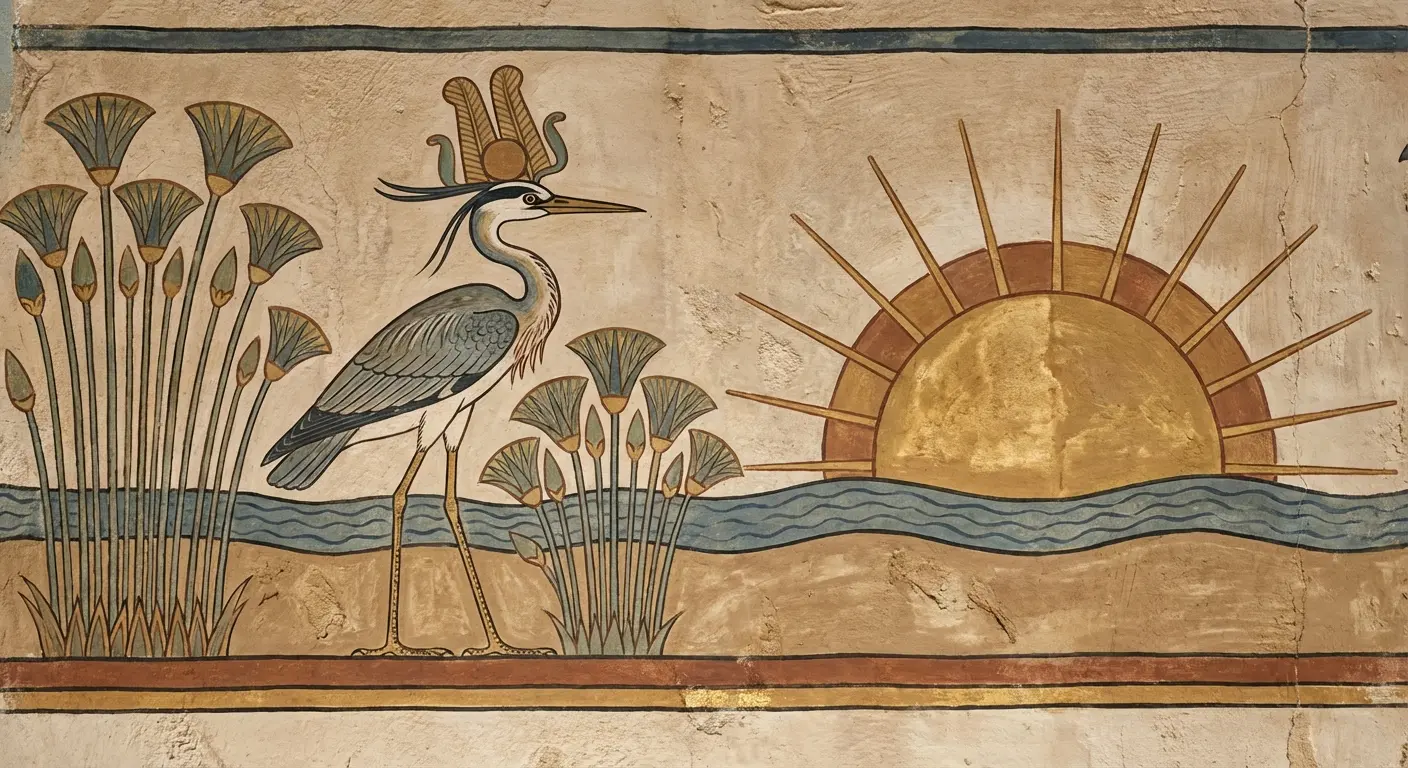
Most people getting phoenix tattoos don’t realize they’re choosing between at least three completely different mythological creatures. Each with distinct meanings. The Egyptian Bennu, the Greek phoenix, and the Chinese Fenghuang share some surface similarities (bird, fire, regeneration), but their symbolic purposes diverged significantly.
The Bennu wasn’t about overcoming trauma.
It represented the flooding of the Nile, cyclical renewal, the sunrise. It was about inevitability, not struggle. The universe doing what it’s designed to do.
Greek and Roman writers transformed this into something more dramatic (because of course they did). Their phoenix became a singular creature, dying in flames every 500 years, reborn from its own ashes. This version introduced the element of violence and pain that modern interpretations fixate on.
The Chinese Fenghuang, meanwhile, represents entirely different concepts: virtue, grace, the union of yin and yang. It doesn’t die at all. Calling it a phoenix is a mistranslation that stuck.
When you tell your tattoo artist you want a phoenix, which myth are you claiming? The answer matters more than you might think, because each version tells a fundamentally different story about change, suffering, and identity.
What the Phoenix Really Represents (And What It Doesn’t)
The modern phoenix tattoo narrative goes something like this: you were broken, you burned, you emerged stronger. It’s a hero’s journey compressed into a single image.
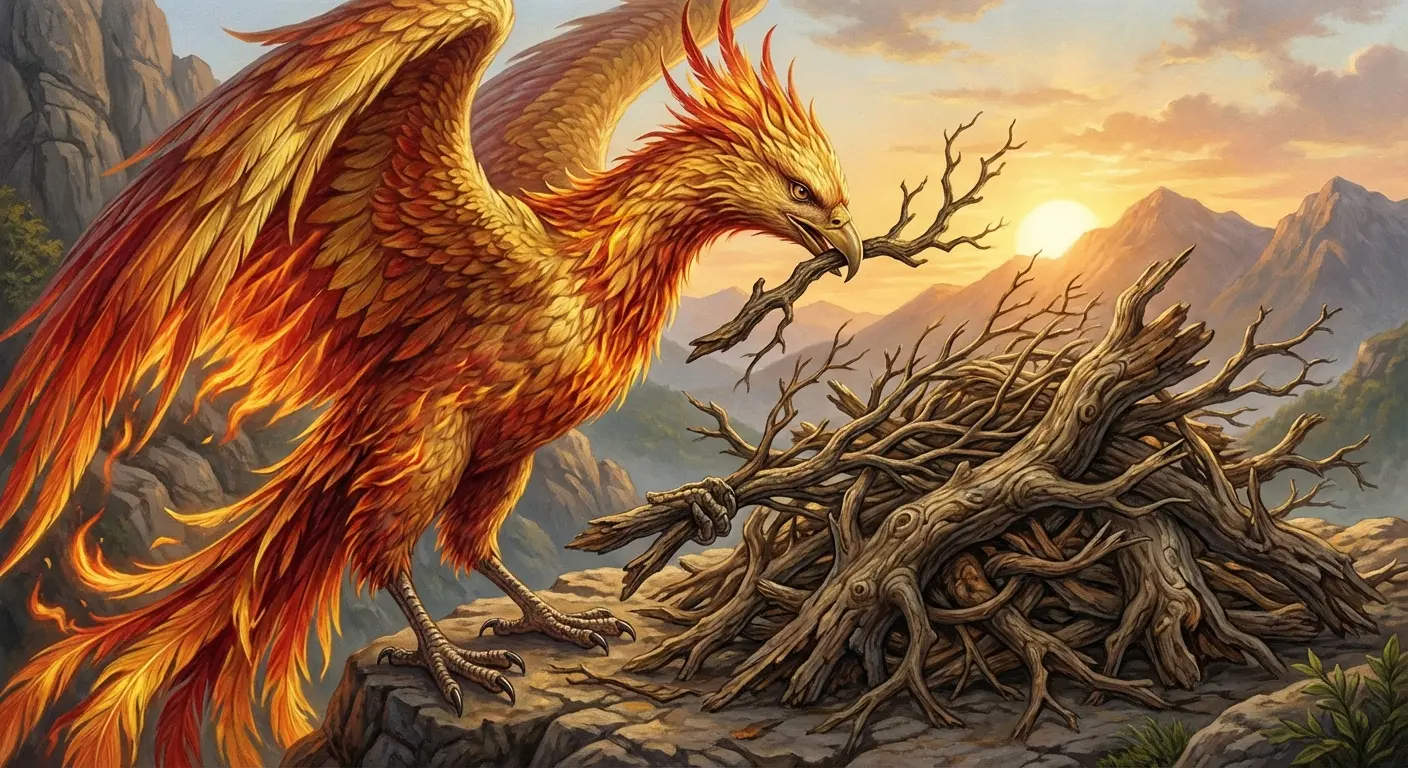
But here’s what the original myths emphasized: the phoenix didn’t fight its death. It built its own funeral pyre. It knew the burning was coming and prepared for it.
That’s a really different way of looking at change than our “warrior survivor” interpretation suggests. The ancient phoenix myths aren’t about conquering adversity. They’re about accepting that destruction is part of existence, that endings enable beginnings, that you can’t hold onto any version of yourself forever.
You weren’t destroyed by circumstances beyond your control. You participated in your own unmaking because that’s what growth requires.
See how that shifts the phoenix tattoo meaning? It’s less about trauma survived and more about ego death chosen. Less about external battles won and more about internal attachments released.
Understanding the true phoenix tattoo meaning means you’ve gotta look at how different cultures actually thought about transformation symbolism, much like exploring Medusa tattoo meanings reveals layered interpretations beyond surface narratives.
The Difference Between Transformation and Triumph
We live in a culture obsessed with forward momentum. Better, faster, stronger. The next level. The upgraded version.
Phoenix myths come from cultures that understood time as circular. The Bennu returned with each sunrise. The Greek phoenix lived the same 500-year cycle repeatedly. These weren’t stories about progress. They were stories about patterns.
When you get a phoenix tattoo thinking it represents how far you’ve come, you might be missing the symbol’s message: you’ll burn again. You’ll rebuild again. This isn’t a one-time event you’ve overcome. It’s a pattern you’re in.
That’s fucking terrifying, honestly. But maybe you’re into that. Either way, it’s more honest than “I survived and now I’m done surviving.”
Look, here’s what we’ve done to this symbol:
|
What you think it means |
What it actually meant |
|---|---|
|
Conquering adversity and emerging victorious |
Accepting destruction as natural and necessary |
|
Fighting against change and winning |
Preparing for inevitable transformation |
|
One-time traumatic event overcome |
You’ll burn again, buddy |
|
External forces defeated |
Internal participation in self-destruction |
The Forgotten Feminine Roots of Phoenix Mythology
Can we talk about how weirdly masculine phoenix tattoos have become? Because it’s bizarre.
The phoenix you see in most tattoo portfolios is aggressive. Talons extended, wings sharp, often surrounded by flames that look more like weapons than purification. It’s been masculinized almost beyond recognition.
This is historically weird. The Bennu was associated with Osiris initially, but became linked with Ra, and the generative aspects of solar return. The Chinese Fenghuang is explicitly feminine (or the feminine half of a male-female pair). Even the Greek phoenix, in many accounts, was connected to the sun god but embodied feminine generative power.
Rebirth is, rather obviously, a feminine metaphor. Creation from destruction. New life from death. These are themes that resonate with specifically female experiences of transformation (menstruation, pregnancy, menopause, the cycles that male bodies don’t experience).
Yet somewhere in the translation to Western tattoo culture, particularly American traditional and neo-traditional styles, the phoenix became a symbol of masculine conquest. The fire became battle. The rebirth became victory.
The personal significance of phoenix imagery continues to evolve in contemporary culture. In 2025, podcaster Kelsey Parker shared how her phoenix tattoo (originally inked in 2023 to honor her late husband Tom Parker with quotes about rising up) took on profound new meaning after the loss of her stillborn son Phoenix, writing “My little Phoenix with me everyday” according to Daily Mail. Her story illustrates how phoenix symbolism can embody both grief and enduring love, reflecting the generative and cyclical aspects of the mythology rather than purely triumphant narratives. That’s the thing about these symbols. Life doesn’t ask permission before changing what they mean.
What happens when we strip the feminine from a symbol that’s basically about creation? We get a shallower metaphor. We get transformation reimagined as domination. We get rebirth that looks suspiciously like revenge.
I’m not saying every phoenix tattoo needs to be explicitly feminine. But I am saying that if you’re getting a phoenix because you want to embody fierce survival, you might want to ask yourself: am I trying to communicate nurturing resilience? Generative strength? The power to create new versions of myself?
Those are different energies than “I conquered my demons.” They require different visual languages.
Why Your Phoenix Tattoo Might Be Telling Someone Else’s Story
Phoenix tattoos are culturally legible. Anyone who sees one knows roughly what you’re trying to communicate. That’s valuable if you want your ink to be immediately understood.
But cultural legibility comes with a cost: people will assume they know your story. They’ll project the standard phoenix narrative onto whatever you experienced.
Maybe your transformation wasn’t about surviving trauma. Maybe it was about choosing to become someone different. Maybe it was about releasing a version of yourself you loved but had outgrown. Maybe it was about accepting that you needed to destroy something you built before it destroyed you.
Those are all valid phoenix narratives, but they’re not the narrative. When you choose a symbol this culturally saturated, you’re accepting that most people will read the CliffsNotes version onto your skin.
The Problem With Universal Symbols
You need to decide whether you’re getting this tattoo primarily for yourself (in which case the gap between your meaning and their interpretation might not matter) or whether you want your ink to communicate something specific to others (in which case you might need to subvert phoenix imagery in ways that disrupt the expected reading).
Pre-Tattoo Reflection Checklist: Is Phoenix Imagery Right for Your Story?
-
Does your experience involve cyclical transformation rather than one-time change?
-
Seriously, are you okay with people thinking they know your whole deal from one tattoo?
-
Does fire actually fit what happened, or are you just going with it because phoenixes = fire?
-
Are you acknowledging what was lost, or only celebrating what emerged?
-
Do you see transformation as something you’ll experience repeatedly, not just once?
-
Have you identified which cultural version of the phoenix aligns with your beliefs?
-
Are you choosing this symbol because it fits, or because it’s the transformation symbol everyone knows?
Subverting the Expected Narrative
What if your phoenix is falling instead of rising? What if it’s still burning, not yet reborn? What if it’s surrounded by the ashes it came from, acknowledging the loss rather than transcending it?
These design choices tell different stories. They complicate the triumphant narrative people expect.
I’ve seen phoenix tattoos that work because they refuse the easy interpretation. A phoenix curled in on itself, protective rather than aggressive. A phoenix mid-transformation, neither fully burned nor fully reborn. A phoenix returning to its pyre, choosing the fire again.
These designs acknowledge something the standard phoenix tattoo doesn’t: transformation is ongoing, ambivalent, sometimes unwanted. Rebirth doesn’t always feel like victory.
A client at a Mesa tattoo studio designed a phoenix with its wings folded downward rather than spread in flight, positioned as if landing rather than ascending. Surrounding the bird were small flames still burning at its feet (not the dramatic inferno of destruction, but persistent embers suggesting the burning never fully stops). This design communicated that her transformation wasn’t complete, that she was still in process, still burning in smaller ways, choosing to stay grounded rather than constantly striving upward. It disrupted every expectation viewers had about phoenix imagery.
Design Elements That Actually Matter
Okay, two design things that actually matter:
Ashes. Are they in your design or not? Because ashes mean you’re acknowledging what burned. You’re saying “that version of me existed and mattered.” No ashes means you’re just focused on what you became. Both are valid, but they’re different stories.
Some phoenix tattoos include ashes. Some don’t. This isn’t just an aesthetic choice.
Ashes represent what was lost. They’re the visible remainder of who you were before. Including them in your design says: I acknowledge what I destroyed to become this. I’m not pretending the old version didn’t exist or didn’t matter.
Excluding ashes creates a cleaner narrative. You’re focusing entirely on the rebirth, not the death. The past is irrelevant. Only the transformation matters.
Neither approach is wrong, but they communicate different relationships with your own history. Do you want to carry visible evidence of what you burned? Or do you want to embody only the after?
Direction and Motion
Direction. Is your bird going up or coming down? Most phoenix tattoos show the bird rising because it looks dramatic as hell. But maybe your story is about landing. About being done rising and finally resting. That’s a different tattoo entirely.
Is your phoenix ascending or hovering? Is it moving toward something or away from something? Is it in active flight or at rest?
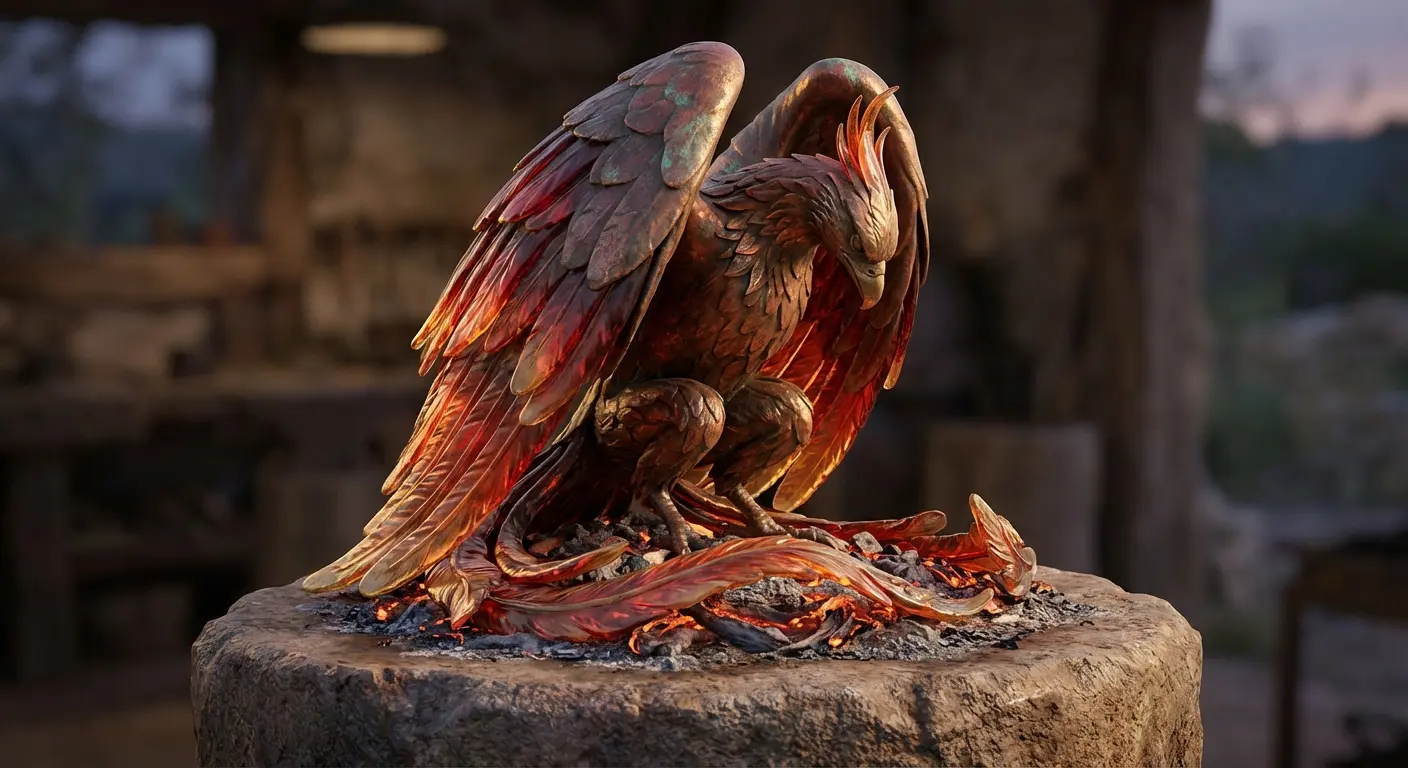
These directional choices matter enormously. An ascending phoenix suggests ongoing transformation, movement toward something better, future orientation. A descending or hovering phoenix suggests completion, arrival, present-moment embodiment.
A phoenix in aggressive flight (wings fully extended, body stretched) reads as active escape or pursuit. A phoenix with wings folded or partially closed reads as protective, contained, choosing stillness after chaos.
Maybe you’re not trying to rise anymore. Maybe you’re trying to land.
What Surrounds the Phoenix
Flowers? Geometric patterns? Other animals? Empty space?
The elements you include alongside your phoenix create context that dramatically alters the phoenix tattoos meaning. Flowers (especially lotus, which has its own rebirth symbolism) suggest beauty emerging from destruction. Geometric patterns impose order on chaos. Other animals create narrative relationships (what does it mean if your phoenix is protecting something? hunting something? flying alongside something?).
Empty space, negative space, gives your phoenix room to exist without explanation. It’s a more ambiguous choice, leaving interpretation open.
Most people focus entirely on the phoenix itself and treat surrounding elements as decorative filler. That’s a missed opportunity to add layers of meaning that make your tattoo less generically “phoenix” and more specifically yours.
Color Psychology in Phoenix Tattoos: Beyond Red and Orange
Red, orange, yellow. These are the colors we associate with phoenixes because we associate phoenixes with fire. The logic seems obvious.
But fire colors communicate specific things: passion, destruction, energy, aggression, heat. If your transformation wasn’t hot and violent, if it was slow and cold and deliberate, fire colors might be telling the wrong story.
Here’s what most traditional phoenix tattoos look like: bold lines, fire colors (reds, oranges, yellows). Sometimes the bird itself is blue or purple or gold. Standard stuff.
Blue phoenixes suggest transformation through water, through cooling rather than burning, through dissolution rather than combustion. Green phoenixes connect rebirth to growth, to organic processes, to nature’s cycles rather than mythic drama. Purple phoenixes bring in spirituality, mystery, the liminal space between death and rebirth rather than the dramatic moment of either.
Black and white phoenixes strip away the fire entirely, focusing on form and contrast, on the structural elements of transformation rather than its emotional temperature.
When Monochrome Tells a Truer Story

Color is optional. We forget that sometimes.
A black and white phoenix tattoo says: my transformation wasn’t about passion or drama. It was about structure. About the bare bones of becoming someone different. About stripping away everything decorative until only the essential remained.
Monochrome phoenix tattoos also age differently than colored ones. They maintain clarity longer. They’re less likely to need touch-ups. There’s something metaphorically appropriate about choosing a visual approach that itself resists the need for renewal and maintenance.
Placement as Narrative Device
Where you put this thing matters more than you think.
A chest or back piece is primarily for you (and intimate partners). You don’t see it in mirrors easily. It’s not casually visible to others. This placement suggests: my transformation is my private knowledge. I’m not performing it for an audience.
Arm, leg, or shoulder placement makes your phoenix visible to you throughout the day. You’re reminded of it constantly. This suggests: I need to remember what I’ve been through. I need the visual cue to stay connected to my transformed self.
Neck, hands, face? That’s a whole different thing. That’s making your rebirth your public identity. That’s “I want strangers to know this about me before they know my name.” Which is fine, but know that’s what you’re doing.
The tattoo industry’s relationship with phoenix imagery remains vibrant and accessible. In February 2025, dozens of Phoenix-area tattoo shops participated in Friday the 13th flash events, with studios like Electric Cactus Tattoo, High Noon Tattoo, and Terror Trader offering hundreds of designs including phoenix-themed artwork at discounted rates ranging from $13 to $200, demonstrating the symbol’s enduring popularity in contemporary tattoo culture according to Phoenix New Times. Phoenix tattoos are popular enough that this tells you how standardized this imagery has become.
None of these choices is inherently better, but they communicate different things about your relationship with your own story. Are you privately holding your transformation close? Personally reminding yourself of it? Or publicly claiming it as your defining characteristic?
When Rebirth Isn’t the Right Metaphor for Your Story
Here’s a question worth sitting with: did you transform, or did you create yourself for the first time?
Phoenix symbolism assumes there was a previous version that burned. It’s about rebirth, not birth. If your story is about becoming someone you you’ve never been before, about building an identity from scratch rather than rebuilding one from ashes, the phoenix might not be your symbol.
Creation myths (rather than rebirth myths) might serve you better. First humans emerging from clay. Athena born fully formed. Creatures that never had a previous iteration to mourn or transcend.
This matters because phoenix tattoos carry grief embedded in them. They acknowledge loss. If you’re not grieving a previous self, if you’re celebrating an emergence that doesn’t require destruction, you might want imagery that reflects pure creation rather than cyclical recreation.
Building vs. Rebuilding
I talked to someone once who almost got a phoenix for their transition. They were trans, and the rebirth metaphor seemed obvious. But then they realized, wait, I didn’t transform into someone new. I’ve always been this person. I just finally stopped hiding it. That’s not rebirth, that’s revelation. Totally different thing. They got a butterfly instead.

Do you believe transformation is cyclical, or do you think you’ve changed permanently?
Are you trying to communicate survival, acceptance, or something else entirely?
Does fire feel right for what you experienced?
Do you want people to immediately understand your tattoo, or do you want it to be more personally coded?
Are you choosing a phoenix because it fits your experience, or because it’s the transformation symbol everyone knows?
That last question is the important one. We choose from the visual vocabulary we’ve been given. Phoenix tattoos are everywhere, which makes them feel obvious for transformation narratives. But obvious doesn’t mean accurate.
Alternative Symbols Worth Considering
Look, if phoenix doesn’t fit, here’s what might:
Butterfly if your change was organic. If you didn’t burn, you just… became. The thing was always in there, it just needed time to emerge. Less dramatic, but maybe more honest.
Snake if you’re still changing. If you shed one skin and you know there’s another one coming. Phoenix implies this big one-time event. Snake is like, “Yeah, I’m always transforming, get used to it.”
Kintsugi (the Japanese broken pottery thing) if you want to show the cracks. If the breaking is part of the beauty now. Phoenix erases the damage. Kintsugi highlights it.
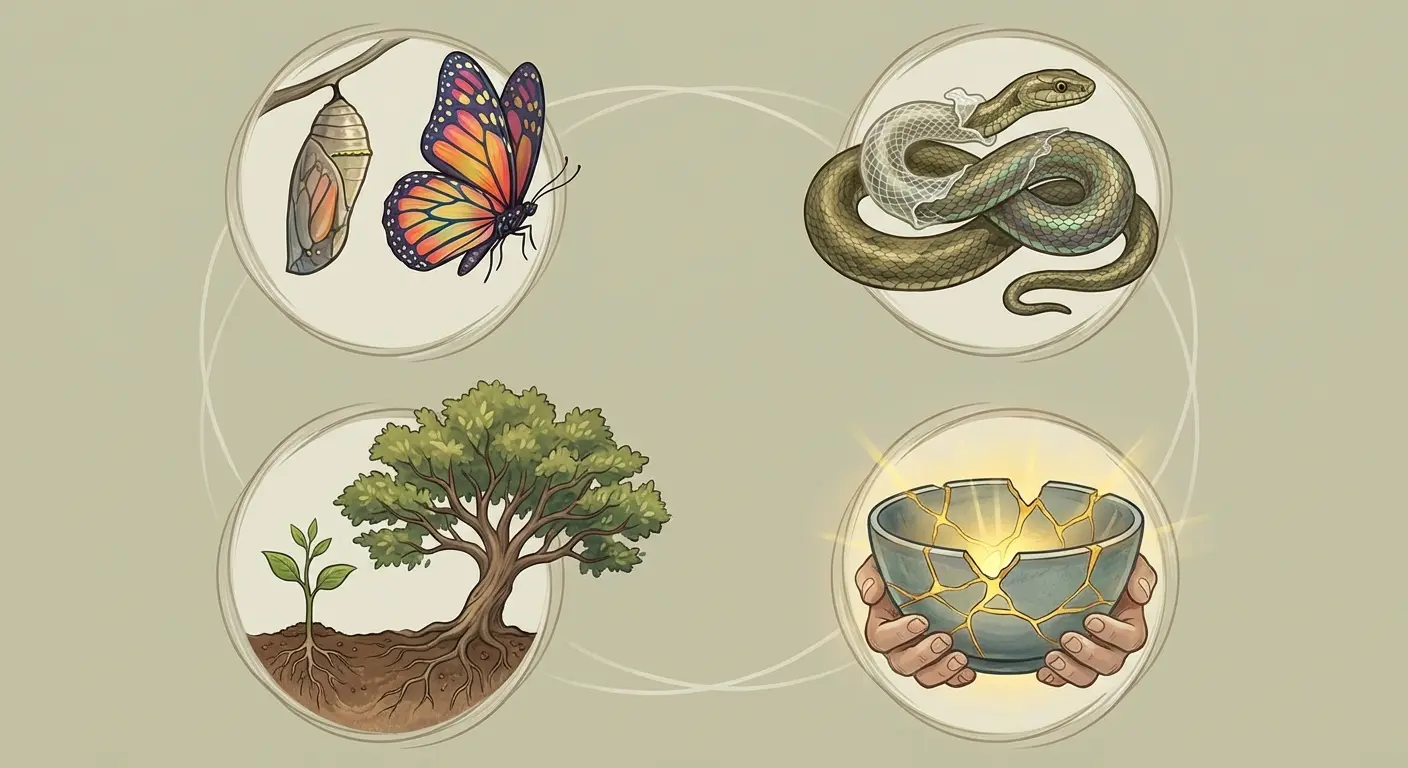
Butterflies (transformation that’s organic, expected, beautiful rather than violent). Snakes (shedding skin, incremental change, transformation without death). Trees (growth, seasonal change, rootedness through transformation). These alternatives tell different transformation stories. They might fit your experience more accurately than the phoenix narrative does, even if they’re less immediately dramatic.
Designing a Phoenix That Actually Means What You Need It To Mean
Don’t start with “I want a phoenix.” Start with what actually happened. Write it down if that helps. What ended? What began? Was the transition violent or gradual? Chosen or forced? Complete or ongoing? Do you feel grief, relief, pride, ambivalence, or some combination?
Then ask: does phoenix imagery capture this? If yes, which specific aspects of phoenix mythology resonate? The cyclical nature? The self-directed transformation? The fire? The rebirth? The acceptance of endings?
Your answers will determine which design elements matter. If the cyclical aspect resonates most, you might want imagery that emphasizes the return to the pyre, not just the rising from ashes. If self-directed transformation matters most, you might want a phoenix actively building its nest, preparing for the burn.
Collaborating With Artists Who Understand Symbolism
Not every tattoo artist thinks deeply about symbolic meaning. Many are skilled technicians focused on aesthetic execution, which is valuable but insufficient if you want your tattoo to mean something specific.
You need an artist who asks questions. Who wants to understand why you’re choosing this imagery and what you’re trying to communicate. Who can suggest design variations that align with your story rather than just executing the standard phoenix they’ve done twenty times before.
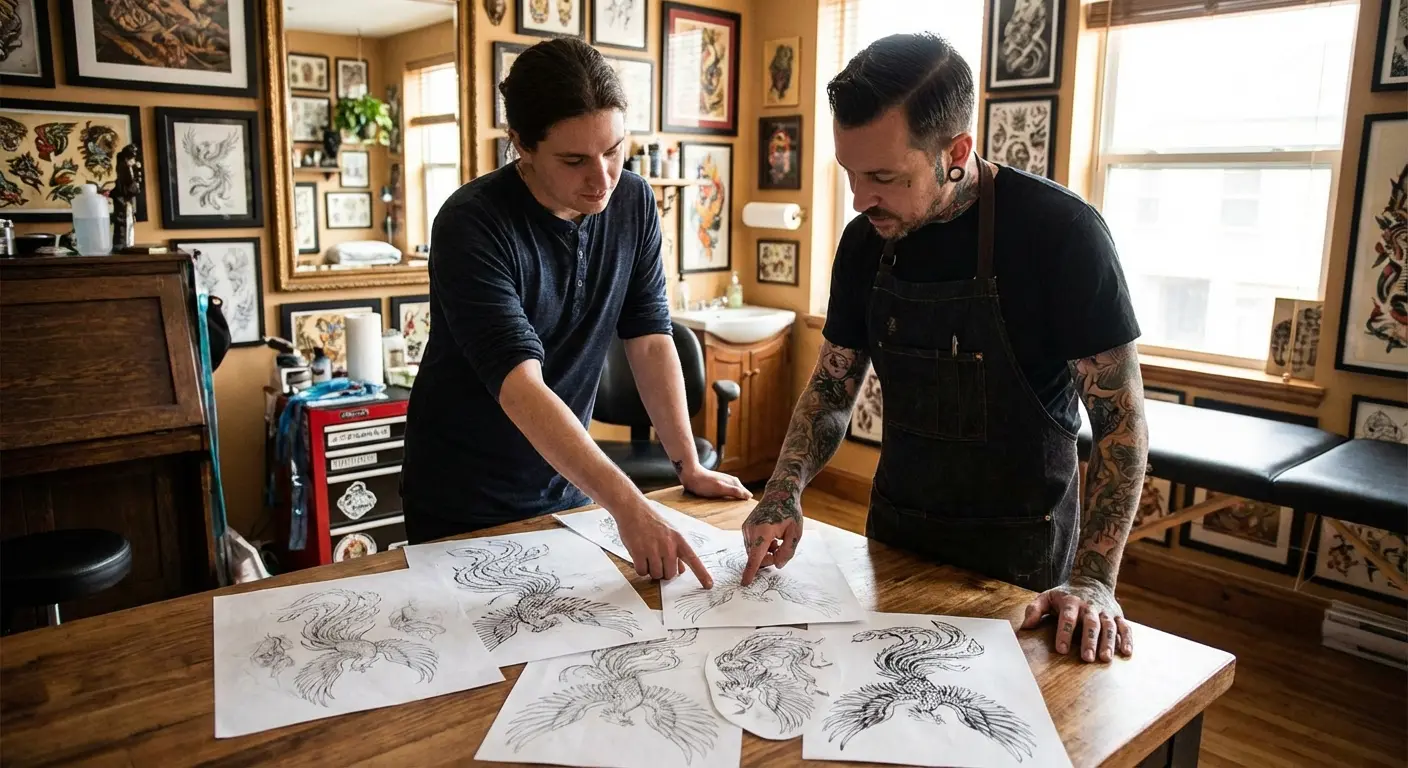
When you consult with artists, explain your story. See how they respond. Do they immediately jump to sketching, or do they ask clarifying questions? Do they suggest ways to personalize the imagery, or do they pull up their portfolio of existing phoenix work?
The right artist will help you create something that’s recognizably phoenix but distinctly yours.
Can’t figure out exactly what you want? Try visualizing a bunch of options first. Tattoo Generator IQ lets you generate different versions fast (change colors, positioning, elements) until something clicks. Then take that to your artist as a starting point.
Living With Your Design Before Inking It
Get your design. Print it. Put it somewhere you’ll see it daily. Live with it for at least a month.
Does it still resonate? Does it communicate what you need it to? Or does it start feeling like someone else’s story the more you look at it?
This waiting period isn’t about second-guessing yourself into paralysis. It’s about making sure the design holds up beyond the initial emotional reaction. Tattoos are permanent. The story they tell will be on your body for decades. You want to be sure it’s your story, not just a story you found compelling in the moment.
Final Thoughts
Here’s the thing: phoenix tattoos are everywhere, which means the symbol has been flattened into one simple story. Trauma, fire, rebirth, done.
You can do better.
Not by avoiding the phoenix (if it fits, it fits). But by actually engaging with what the symbol meant before it became Instagram shorthand. By making design choices that complicate the easy reading. By telling your specific story instead of the story everyone assumes.
Your transformation is weirder and messier than “I burned and rose again.” Your tattoo should reflect that.
Or don’t. Get the standard rising phoenix with fire colors and call it a day. But at least now you know what you’re choosing, and what you’re choosing not to say. When you understand the layered phoenix tattoos meaning across different cultures and mythological traditions, you gain the power to craft ink that resonates authentically with your unique experience rather than settling for the surface-level interpretation that dominates popular culture.
