
Brain Tattoos That Actually Mean Something (Not Just Anatomy)

Your brain has 86 billion neurons. Cool fact, useless for tattoos. Because the best brain tattoos aren’t about anatomy – they’re about what it actually feels like to be stuck inside your head. The weird loop of using your brain to think about your brain. The struggle when your mind works against you. That’s the stuff worth inking.
I was sitting in my tattoo artist’s chair last month when she said something that stopped me cold: “Most people who ask for brain tattoos have no idea what they’re actually trying to say.” She was right. I’d been one of them three years earlier.
Here’s what actually matters: your brain tattoo should represent your internal experience, not just look scientifically accurate. You’re transforming neural imagery into something that lives on your skin and means something real.
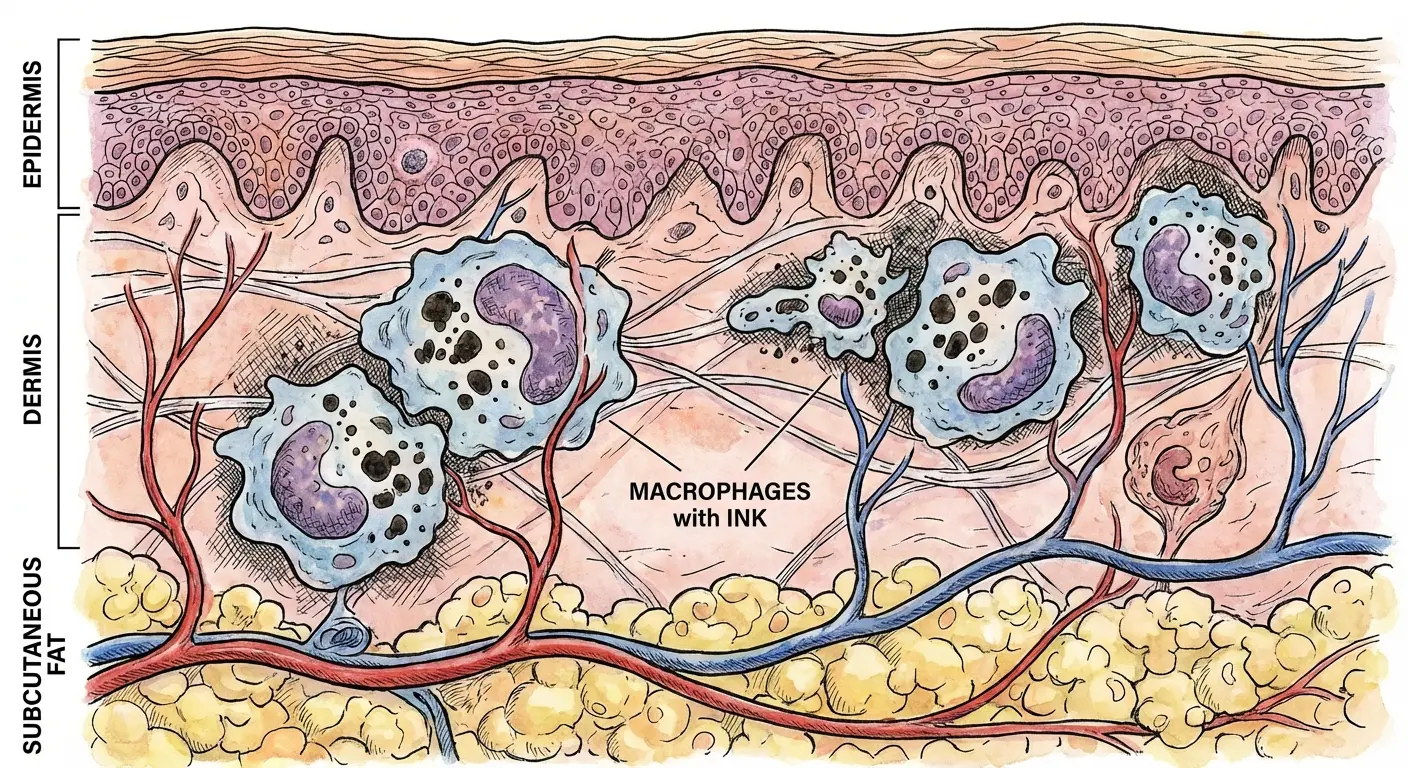
Weird fact: tattoo ink doesn’t even live in your skin cells. It’s held by your immune system’s macrophages. Forever. Which is kind of perfect for brain tattoos, right? You’re embedding psychological truths into your body’s protective systems.
What You’ll Find Here
Neurological Self-Portraits
-
The Dissected Hemisphere Split
-
Synaptic Fire Constellation
-
Cortex Folding Labyrinth
-
Neural Pathway Circuitry
-
Cognitive Function Map
-
Emotional Processing Center
-
Memory Storage Architecture
Philosophy Meets Biology
-
The Thinking Organ Paradox
-
Consciousness Stream Flow
-
Free Will Debate Illustration
-
Perception vs. Reality Split
-
Self-Awareness Loop
Mental Health Through Neural Imagery
-
Anxiety’s Neural Signature
-
Depression’s Chemical Imbalance
-
Neuroplasticity Growth Pattern
-
Trauma Rewiring Representation
-
Healing Pathways Network
-
Resilience Architecture
Neurological Self-Portraits: When Identity Lives in Gray Matter
Most brain tattoos just show what a brain looks like. Boring. These designs flip that completely.
Think of these as self-portraits where the neural architecture becomes a map of who you are rather than just what you’re made of. They’re deeply personal takes on how your specific consciousness operates. These aren’t medical textbook illustrations. They’re visual autobiographies written in neural tissue.
|
Design Approach |
Best For |
What It Shows |
Why It Works |
|---|---|---|---|
|
Dissected Hemisphere Split |
People who feel internal duality |
Left/right brain contrast |
Shows you contain multitudes |
|
Synaptic Fire Constellation |
Science nerds, deep thinkers |
Neurons firing like stars |
Thought itself looks cosmic |
|
Cortex Folding Labyrinth |
Complex internal lives |
Brain surface as maze |
Your mind is genuinely complicated |
|
Neural Pathway Circuitry |
Tech workers, engineers |
Information highways |
Blends biology with computation |
|
Cognitive Function Map |
Honestly, anyone |
Your specific skills mapped out |
Neurological autobiography |
|
Emotional Processing Center |
Emotion-driven people |
Limbic system emphasized |
Feeling over logic |
|
Memory Storage Architecture |
Those defined by their past |
Hippocampus and memory centers |
You are your accumulated experience |
1. The Dissected Hemisphere Split
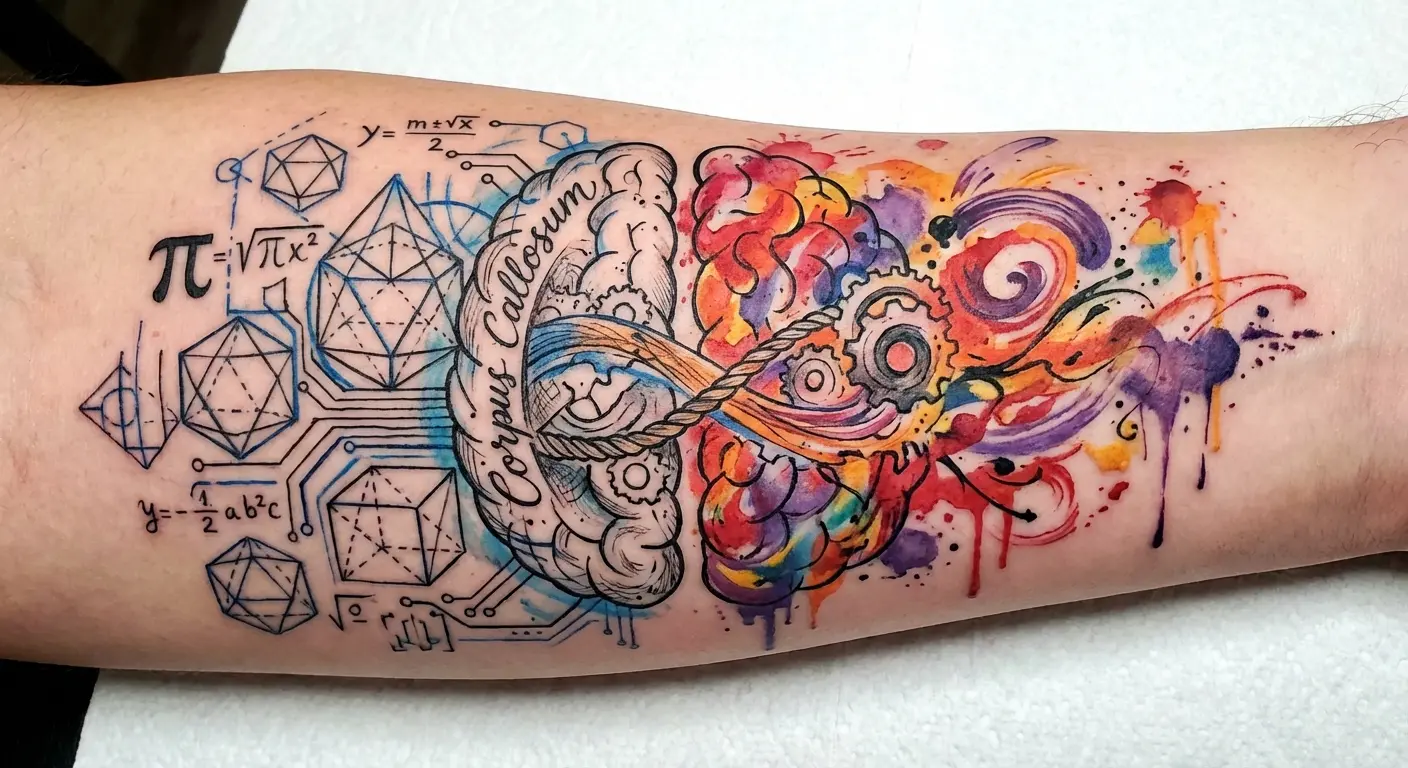
Split your brain down the middle. Left side: geometric patterns, math symbols, clean lines. Right side: watercolor chaos, abstract mess, creative explosion.
Yeah, the left-brain-right-brain thing is mostly bullshit. Neuroscience debunked it years ago. But that’s not the point. You’re choosing to visualize your internal duality, and that choice is what makes it work.
Some people incorporate specific imagery that represents their professional life on one side and personal passions on the other. A teacher I know has the left hemisphere filled with book spines and the right with paint splatters from her kids’ art projects. Others use contrasting artistic styles within a single anatomical framework.
The corpus callosum (the bridge connecting both hemispheres) becomes crucial here. You can show it as strong and connected or fragmentary and struggling, depending on how integrated you feel. This brain tattoo approach clicks with people who’ve experienced identity shifts, career changes, or major life transitions that required reconciling seemingly incompatible parts of themselves.
The visual impact comes from the tension between unity and division. You’re showing a single organ that houses competing impulses. Some artists render one hemisphere in photorealistic detail while treating the other as pure abstraction, creating maximum contrast within biological unity.
2. Synaptic Fire Constellation
Neurons communicate through electrical impulses. When visualized, they look remarkably similar to star maps. This concept treats synaptic activity as celestial navigation, with each firing neuron represented as a glowing point of light.
Your artist can work from actual neural imaging patterns or create a stylized version that captures the essence of thought in motion. Some variations include neurotransmitter molecules (dopamine, serotonin, GABA) illustrated as planets or celestial bodies orbiting within this neural galaxy.
Color palette matters enormously here. Cool blues and purples suggest calm cognitive function, while hot oranges and reds imply intense mental activity or even overstimulation. You’re wearing a map of thought itself, frozen in a moment of firing synapses.
Some designs feature versions where the synaptic connections form recognizable constellations, creating a double meaning: your thoughts are both cosmic and biological, both vast and intimate. This works especially well for people in scientific fields or anyone who finds beauty in the microscopic processes that generate every thought you’ve ever had.
3. Cortex Folding Labyrinth
Your brain’s all folded up to cram more surface area into your skull. Gyri and sulci, if you want the technical terms. This design turns those folds into an actual maze.
Which, yeah, is kind of obvious symbolism. Your mind is complicated, paths go nowhere, you get lost in your own head. But obvious doesn’t mean bad. Especially if you hide tiny details in the folds. Memories, faces, symbols. Stuff only you know is there.
The labyrinth can be rendered in stark black linework for a bold graphic statement or in subtle gray wash for something more contemplative. Some people add a small figure walking through the maze, representing their conscious self trying to understand their own mind. Others leave the pathways empty, suggesting mystery and the unknowable aspects of consciousness.
This hits different for people who’ve done therapeutic work around complex trauma or those who experience their internal life as genuinely labyrinthine. You’re not simplifying your psychology into easy narratives. You’re acknowledging that understanding yourself requires navigation, patience, and the acceptance that some paths lead nowhere.
4. Neural Pathway Circuitry
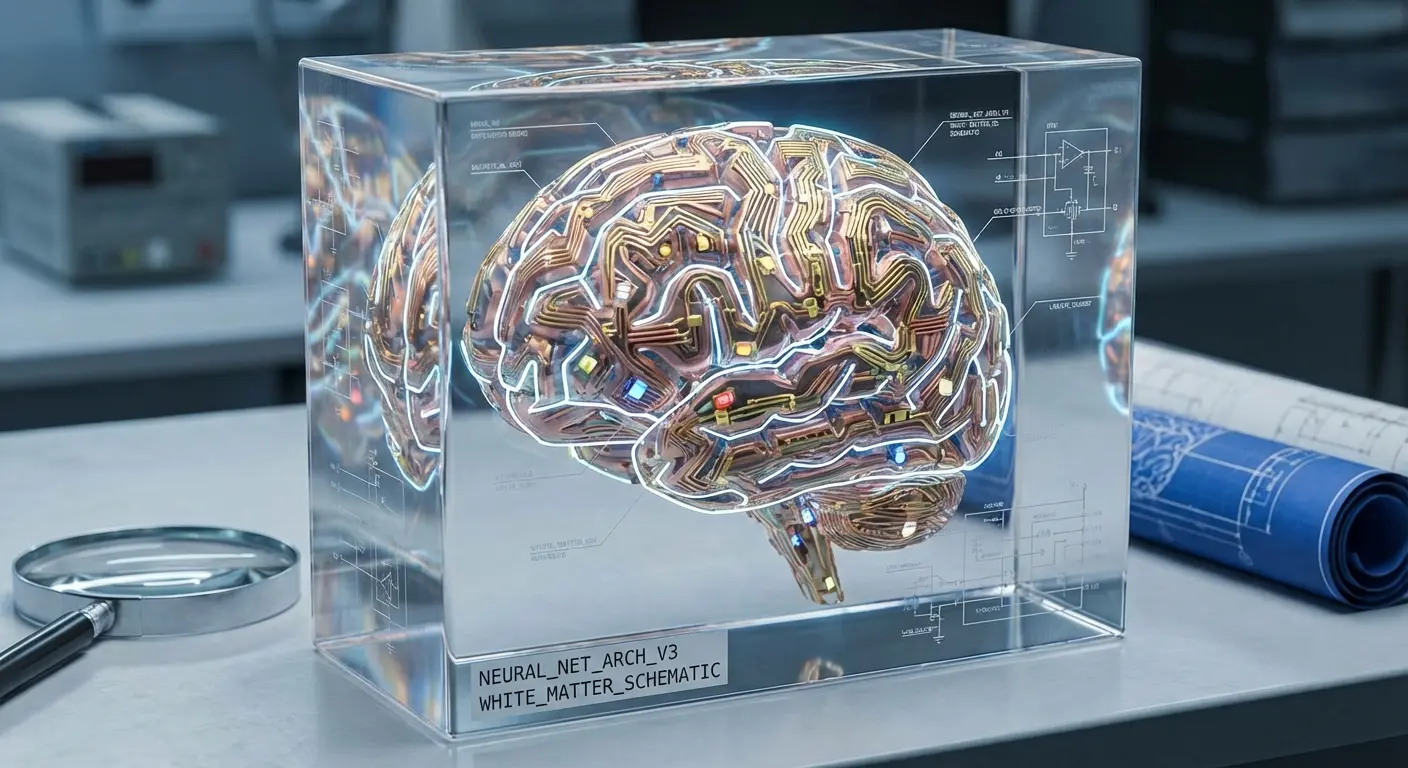
This approach treats the brain’s white matter tracts (the information highways connecting different regions) as if they were circuit board pathways. You’re blending biological reality with technological metaphor.
The design typically features anatomically accurate brain structure overlaid with geometric, technical-drawing-style lines representing major neural pathways. The visual effect sits somewhere between medical illustration and engineering schematic.
What makes this personally meaningful is choosing which pathways to emphasize. Highlighting connections between the amygdala and prefrontal cortex might represent your work managing emotional regulation. Emphasizing pathways to motor cortex could signify your identity as an athlete or musician. You can incorporate actual circuit elements (resistors, capacitors, transistors) into the design, creating a hybrid that questions whether consciousness is fundamentally different from computation.
One version I saw had sheet music on one side and code syntax on the other. The guy was a software engineer who played jazz on weekends. Perfect example of making the circuitry personal.
The precision required for this means you’ll want an artist comfortable with both organic forms and geometric accuracy.
5. Cognitive Function Map
Neuroscience has mapped which brain regions handle specific functions (though it’s way more complex than simple one-to-one correspondence). This design takes those functional areas and labels or illustrates them based on what matters most to your identity.
Your language centers might be emphasized if you’re a writer or translator. Motor cortex could be prominent for dancers or surgeons. Visual processing areas might dominate for photographers or painters.
The brain tattoo works best when it’s not just labeling but visually representing each function through style, color, or embedded imagery. Some people create a topographical map effect, with “important” functions rendered as elevated terrain and less-personally-relevant areas as valleys. Others use a heat map approach, with warm colors indicating highly-active or significant regions.
Some musicians incorporate musical notation into their auditory cortex regions, mathematicians embed equations into their calculation centers, and multilingual people show language areas in different colors for each language they speak.
This transforms from generic anatomy into a genuine self-portrait that reveals your cognitive priorities.
6. Emotional Processing Center
The limbic system (especially the amygdala, hippocampus, and surrounding structures) handles emotional processing and memory formation. This design focuses specifically on that deep brain architecture, often rendering it larger and more detailed than the surrounding cortex.
You’re making a statement that emotion, not pure logic, drives your experience of being alive. The amygdala can be illustrated with extra care, maybe incorporating imagery that represents your strongest emotions. Fire for anger, water for sadness, light for joy.
The hippocampus, crucial for memory formation, might contain tiny vignettes of important memories or abstract symbols representing formative experiences. Some variations show these structures in cross-section, revealing internal detail most people never see. Others present them as if illuminated from within, glowing with emotional energy.
I know someone who got this after years of being told they’re “too emotional.” The tattoo became a reclamation, a statement that emotional depth is neurologically valid and central to who they are.
The design can incorporate the connections between limbic structures and the prefrontal cortex, showing the constant dialogue between feeling and thinking that characterizes human consciousness.
7. Memory Storage Architecture
Memory doesn’t work like computer storage (despite common metaphors). It’s distributed, reconstructive, and unreliable in fascinating ways.
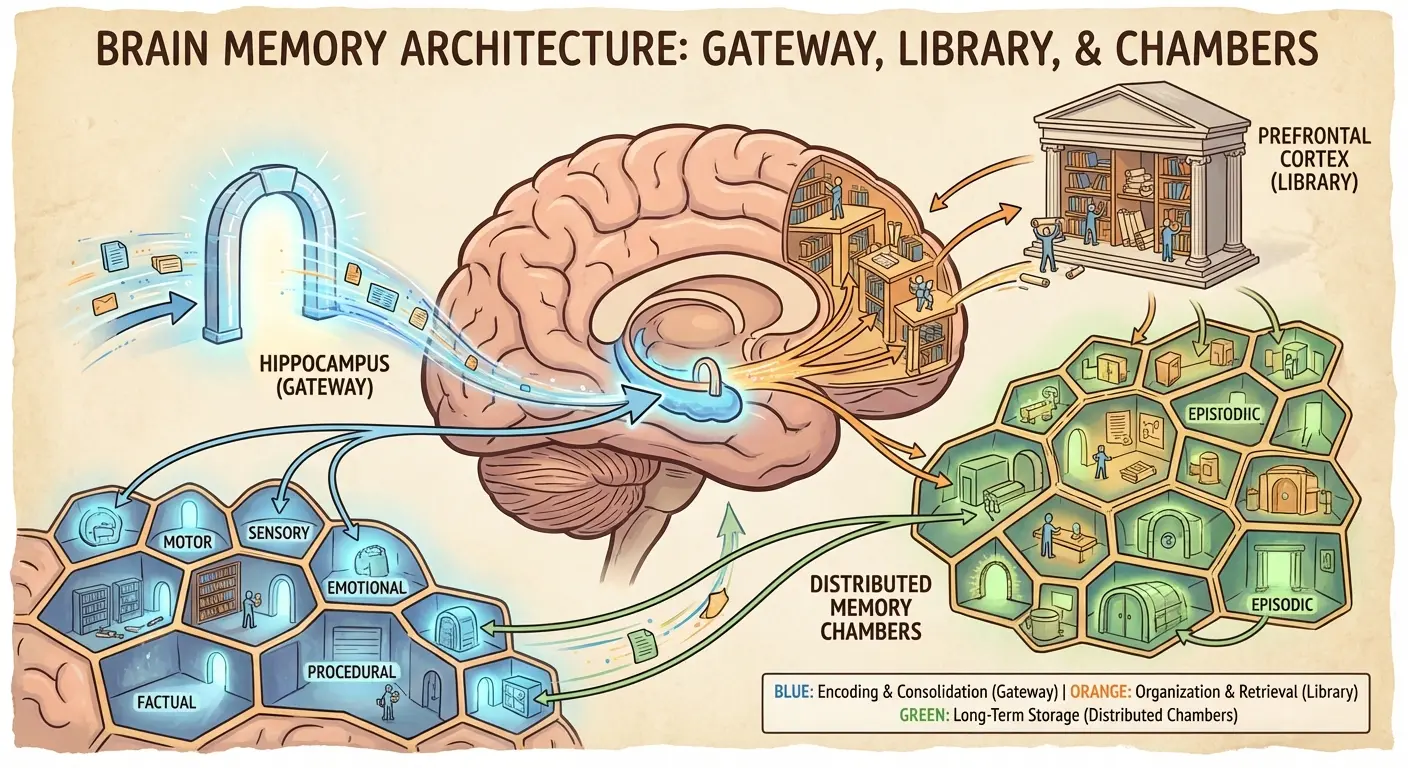
This concept visualizes memory as physical architecture within the brain, with different structures representing different types of memory. The hippocampus might appear as a grand entrance or gateway, since it’s crucial for forming new memories. The prefrontal cortex could be rendered as an archive or library, representing working memory and executive function.
Long-term memories, stored throughout the cortex, might be depicted as countless small chambers, boxes, or vessels distributed across the brain’s surface. Some people incorporate specific memory imagery: a childhood home, a significant face, a formative moment. Others keep it abstract, using symbols or patterns to represent the concept of memory without specific content.
The design can acknowledge memory’s fragility through fading elements, gaps, or partially erased sections. You’re wearing a reminder that you are, in many ways, nothing more (and nothing less) than your accumulated memories.
Some designs feature versions where certain memory structures are rendered in vivid color while others fade to grayscale, representing which memories remain sharp and which have blurred with time. This hits home for people processing grief, those with family histories of dementia, or anyone who’s experienced how trauma can fragment memory into disconnected pieces.
Philosophy Meets Biology: Existential Brain Ink
Here’s where brain tattoos transcend mere anatomy and become genuine philosophical statements. These designs grapple with consciousness itself, the hard problem of subjective experience, and what it means that a physical organ generates the feeling of being you.
We’re moving beyond depicting brain structure into questioning the relationship between mind and matter. These make viewers uncomfortable in productive ways, challenge assumptions about consciousness, free will, and the nature of reality itself.
These aren’t tattoos you get on a whim. They require sitting with genuinely difficult questions about what it means to be a conscious being trapped in biological machinery.
8. The Thinking Organ Paradox
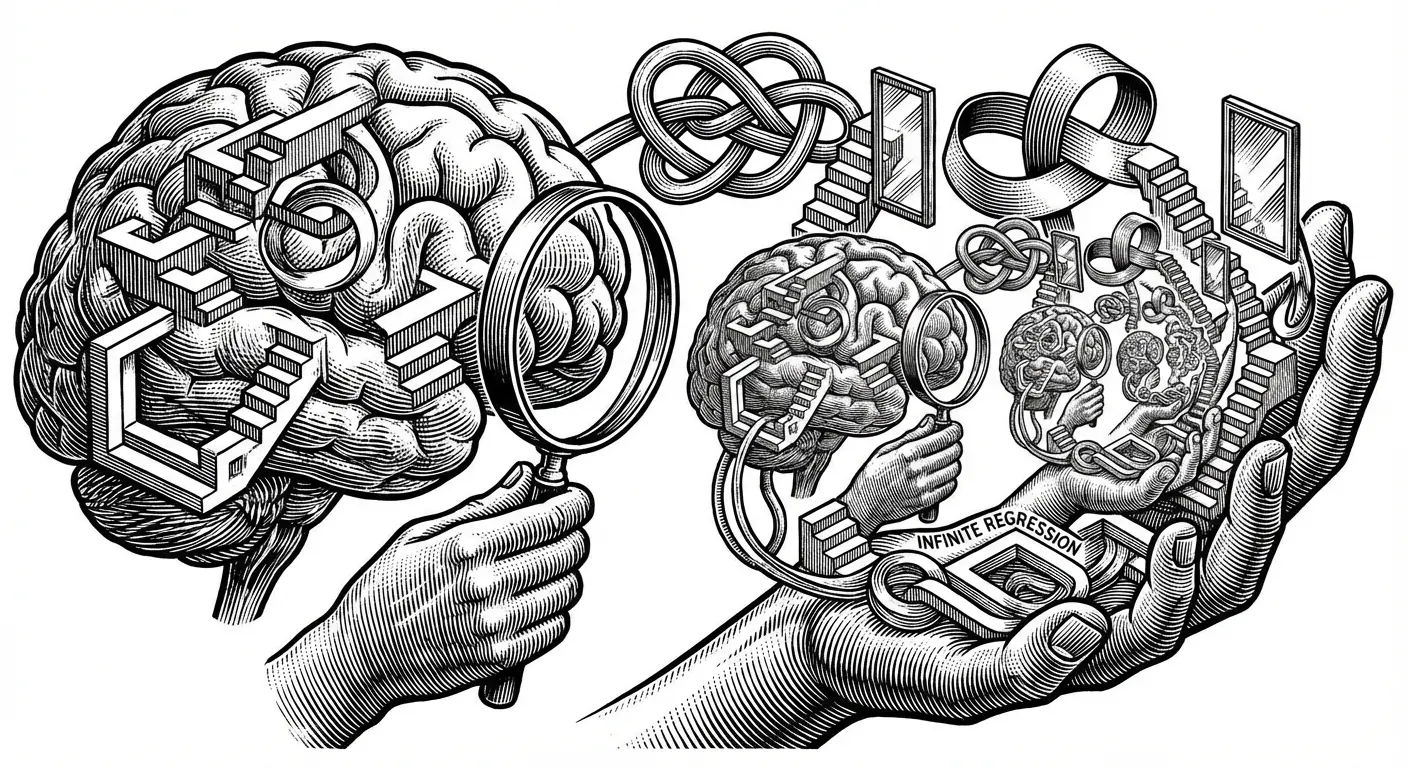
Your brain thinking about itself thinking about itself. It’s recursive, it’s trippy, and yeah, it’s been done. But here’s why it still works: because that loop never stops being weird. You can’t step outside your brain to look at it. Every thought you have about consciousness is just more consciousness, generated by the thing you’re trying to understand.
The visual usually shows a brain holding a smaller brain, which holds an even smaller brain. Russian nesting dolls made of meat. Or a brain looking in a mirror, except the reflection is slightly different (which version is real?). M.C. Escher vibes.
I met someone with this design who’d done a lot of meditation. She said the tattoo reminded her that “the observer” she was trying to find in meditation was just another thought. The tattoo became a visual koan – every time she looked at it, she’d catch herself trying to figure it out with the same brain that was the problem.
The design can be rendered in realistic style for maximum impact or in more abstract, M.C. Escher-inspired geometry. Some people add text elements (though use these sparingly): phrases like “observer observed” or “thinker thinking” in subtle placement.
9. Consciousness Stream Flow
William James coined the term “stream of consciousness” to describe how thoughts flow continuously rather than arriving as discrete units. This brain tattoo treats the brain as a source point from which consciousness literally flows outward, typically rendered as water, light, or abstract energy.
The brain itself might be solid and anatomically accurate, while the “stream” emerging from it becomes increasingly abstract and diffuse. You’re visualizing the transition from physical neural activity to subjective experience, the mysterious process by which electrochemical signals become qualia (the felt quality of experience).
Some variations show the stream flowing into or forming recognizable images (faces, places, objects), representing how consciousness constructs your experienced reality from neural activity. Others keep the flow entirely abstract, emphasizing the ineffable nature of subjective experience.
Color gradients work really well here, showing the transition from biological to experiential. Some designs feature the stream fragments into multiple channels, representing different aspects of consciousness (perception, emotion, memory, thought) all flowing from the same source.
10. Free Will Debate Illustration
Neuroscience has complicated our understanding of free will, with studies showing that unconscious neural activity precedes conscious decision-making. This brain tattoo captures that tension, often depicting the brain with puppet strings attached or showing decision-making circuitry that appears to be running on predetermined tracks.
You’re not necessarily taking a position on the debate but acknowledging its existence and personal relevance. Some versions show the brain as both puppet and puppeteer simultaneously, questioning who’s really in control. Others depict decision-making pathways as railroad switches that appear to offer choice but follow predetermined routes based on prior causes.
The design can incorporate elements of chaos theory (butterfly effects, fractal patterns) to suggest that even if decisions are determined, they’re so complex as to be functionally free.
I’ve worked with recovering addicts who chose this to acknowledge the neurological reality of their condition – that their “choices” were constrained by altered reward circuitry – while also honoring the agency required for recovery.
The visual tension between constraint and freedom makes this philosophically rich without requiring explicit explanation.
11. Perception vs. Reality Split
Your brain doesn’t passively receive reality but actively constructs your experience of it. This design shows that construction process, typically by splitting the image between “raw input” and “constructed experience.”
One half might show simplified, abstract sensory data (geometric shapes, basic colors, simple patterns) while the other displays the rich, detailed world your brain builds from that information. Some variations depict the brain as a filter or lens, with chaotic, overwhelming information entering and organized, meaningful experience emerging.
Others show the brain as a projection device, casting interpreted reality outward. You can incorporate optical illusions or impossible objects (Penrose triangles, Necker cubes) to emphasize that perception involves active interpretation rather than passive reception.
This clicks with people who’ve experienced altered states (through meditation, psychedelics, or mental health episodes) that revealed the constructed nature of everyday reality. Some designs feature versions where the “input” side is rendered in harsh, fragmented black and white while the “output” side blooms into full color – your brain as the artist painting your experienced world from limited data.
12. Self-Awareness Loop
Consciousness isn’t just awareness but awareness of awareness, creating a recursive loop that defines human experience. This brain tattoo depicts that loop visually, often through circular or spiral compositions where the brain appears to be observing itself observing itself.
The image might show a brain with an eye (representing awareness) that’s looking at itself, with that self-image also containing an eye, creating infinite regression. Some versions use mirrors, cameras, or other reflective devices to represent the self-referential nature of consciousness.
Others employ circular flow diagrams, with arrows showing how awareness feeds back into itself continuously. The design can be rendered in mandala-style symmetry, emphasizing the completeness and self-containment of consciousness.
This works especially well for people who’ve engaged deeply with meditation or contemplative practice, where observing your own mental processes becomes explicit practice. The concept of creating lasting mental impressions through meaningful experiences has parallels in tattoo culture itself. Research into storytelling and memory formation shows that “brain tattoos” – specific moments in time that fundamentally change how we view or perceive things – create indelible neural patterns, much like how physical tattoos permanently mark the skin.
It’s a statement about the unique human capacity for meta-cognition, for thinking about thinking itself.
Mental Health Through Neural Imagery
Brain tattoos offer unique opportunities to externalize internal psychological experiences. This category focuses on designs that communicate mental health journeys, struggles, and victories through neurological imagery.
I’m not talking about awareness ribbon aesthetics or generic “mental health matters” messaging. These are sophisticated visual representations of how specific psychological conditions feel from the inside, translated into neural architecture.
They work because they’re both deeply personal and universally relatable, specific enough to be authentic but symbolic enough to maintain privacy. You can look at these and understand that they represent real psychological experience without requiring explicit disclosure.
If you’re drawn to transformation symbolism, the whole phoenix tattoo meaning thing pairs weirdly well with neuroplasticity imagery – both are about becoming someone new. Mental health journeys often parallel the transformative symbolism found in semicolon tattoo meaning, where continuation and resilience become central themes worth exploring alongside neural imagery.
13. Anxiety’s Neural Signature
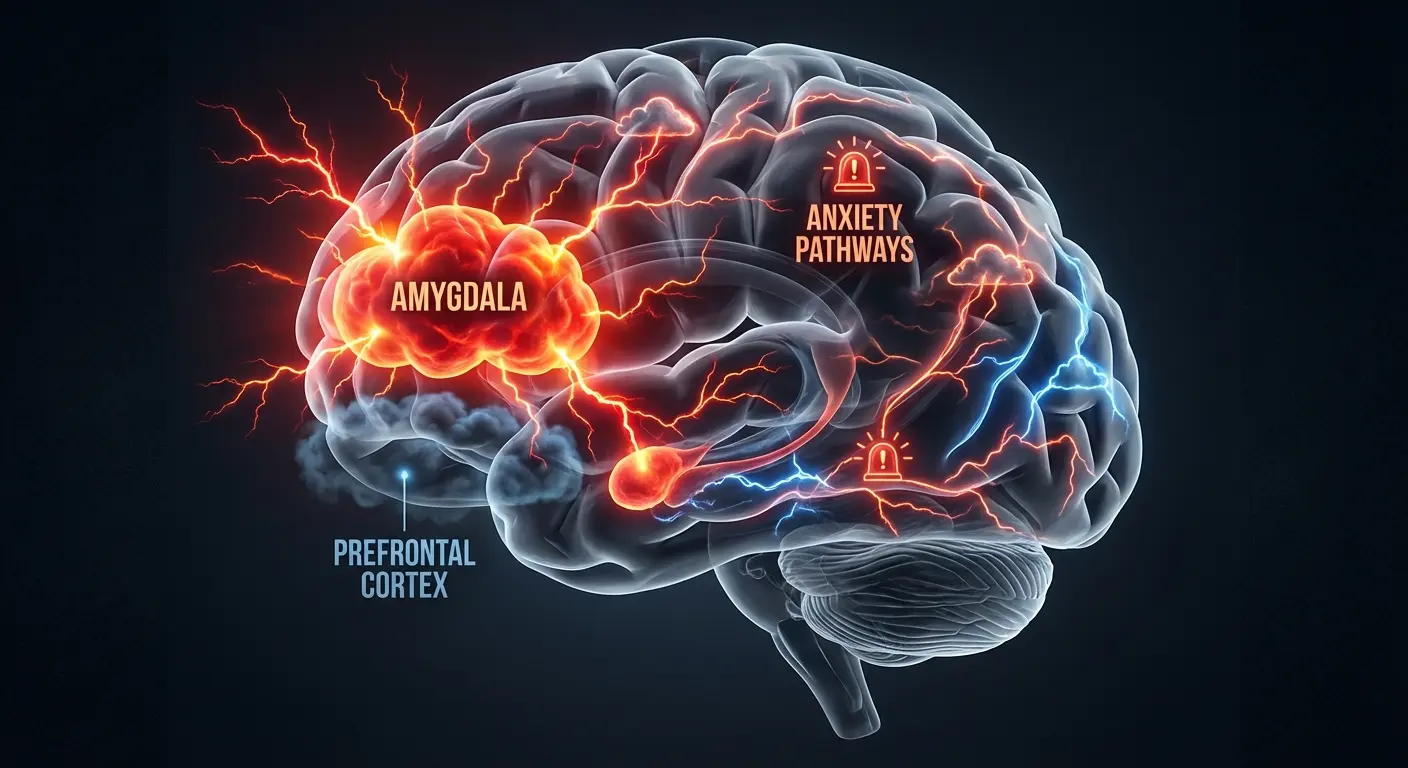
I got my anxiety brain tattoo three years into therapy, right when I finally understood that my amygdala wasn’t broken – it was just doing too much. Seeing it externalized helped somehow.
Anxiety involves hyperactivity in the amygdala and insufficient regulation from the prefrontal cortex. This captures that imbalance, often showing the amygdala (deep brain structure responsible for threat detection) as oversized, glowing, or electric with activity.
The prefrontal cortex might appear dimmed, disconnected, or struggling to send calming signals. Visual metaphors work well here: the amygdala as a fire alarm stuck in the “on” position, or as a storm center generating turbulence throughout the brain.
Some people incorporate the physical sensations of anxiety (racing heart, tight chest, shallow breathing) as elements surrounding or emerging from the brain. Others focus purely on the neural circuitry, showing overactive pathways in hot colors (reds, oranges) and underactive regulatory circuits in cool colors (blues, grays).
The design can acknowledge anxiety as both disorder and adaptive response, a system designed to protect you that’s become overly sensitive. You’re not romanticizing mental illness but honestly depicting its neural reality.
The imagery validates that anxiety isn’t weakness or choice but biological reality rooted in specific brain structures operating outside normal parameters.
14. Depression’s Chemical Imbalance
Depression involves disrupted neurotransmitter systems, especially serotonin, dopamine, and norepinephrine. This visualizes that chemical dimension, often depicting the brain with depleted or absent neurotransmitter molecules.
You might show serotonin molecules as dim or fading lights throughout the brain, or dopamine pathways rendered as dried riverbeds where neurotransmitters should flow. The visual language often involves emptiness, gaps, or darkness where there should be activity and light.
Some variations show the brain in grayscale or muted colors, with small pockets of color representing moments of clarity or joy that break through. Others depict neurotransmitter receptors as empty docks waiting for chemical messengers that aren’t arriving.
The depression designs are hard to look at, honestly. That’s kind of the point.
This externalizes an invisible condition, giving physical form to “I can’t just snap out of it.” You’re showing that depression isn’t weakness or choice but biological reality.
The imagery can include elements of hope (new synaptic connections forming, neurotransmitters beginning to return) for those in recovery, or remain stark for those still in the depths. Research shows that people often add this during recovery rather than during acute depression – it becomes a marker of survival, proof that they made it through the neurological darkness.
15. Neuroplasticity Growth Pattern
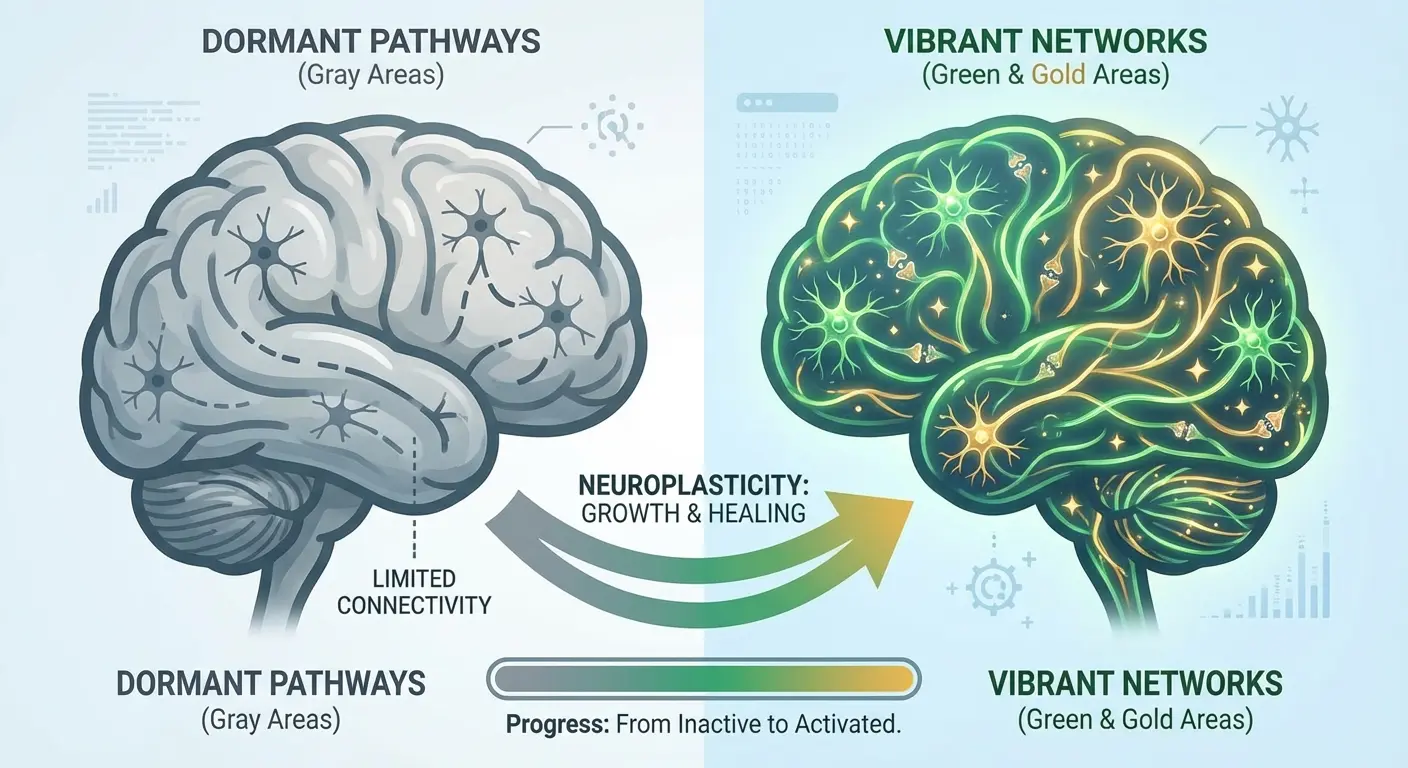
Your brain constantly rewires itself based on experience, a property called neuroplasticity. This celebrates that capacity for change and growth, typically showing new neural connections forming, pathways strengthening, or previously damaged areas regenerating.
Visual approaches might include depicting neurons sprouting new dendrites (the branch-like structures that receive signals), synapses multiplying and strengthening, or entirely new neural pathways being forged through previously inactive regions. Some people use plant growth metaphors here (though carefully, to avoid cliché): neurons as trees growing new branches, synaptic connections as roots spreading through soil.
Others prefer purely biological accuracy, showing the actual cellular mechanisms of plasticity. Color progression works effectively, moving from dead or dormant areas (grays, blacks) toward vibrant, active regions (greens, golds, bright blues).
This clicks especially with people who’ve done intensive therapy, recovered from addiction, or rebuilt themselves after trauma. You’re wearing proof that change is possible at the most fundamental neural level. Your brain literally builds new structures in response to experience, and the imagery documents that scientific reality.
16. Trauma Rewiring Representation
Trauma physically alters brain structure and function, especially affecting the amygdala, hippocampus, and prefrontal cortex. This doesn’t shy away from depicting that damage while also showing the rewiring process that healing requires.
You might show fractured or disrupted neural pathways with new connections forming around the damage, creating alternate routes. Some versions depict the brain with visible scars or breaks that are being bridged by new growth.
Others show before-and-after elements within a single composition: damaged circuitry alongside healing architecture. The hippocampus (often shrunken by chronic trauma) might be shown regenerating or being rebuilt. Visual metaphors of reconstruction work here: scaffolding around damaged areas, new foundations being laid, bridges spanning gaps.
The design acknowledges that trauma changes you permanently (the original pathways don’t fully restore) while showing that healing creates new, functional patterns. This is powerful for trauma survivors who want to mark their recovery journey without explicitly depicting the traumatic content itself.
I can’t speak to the trauma rewiring ones but a friend showed me hers and said, “I needed proof that my brain could build new roads.”
The imagery validates that healing isn’t returning to who you were before but becoming someone new who’s integrated the experience.
17. Healing Pathways Network
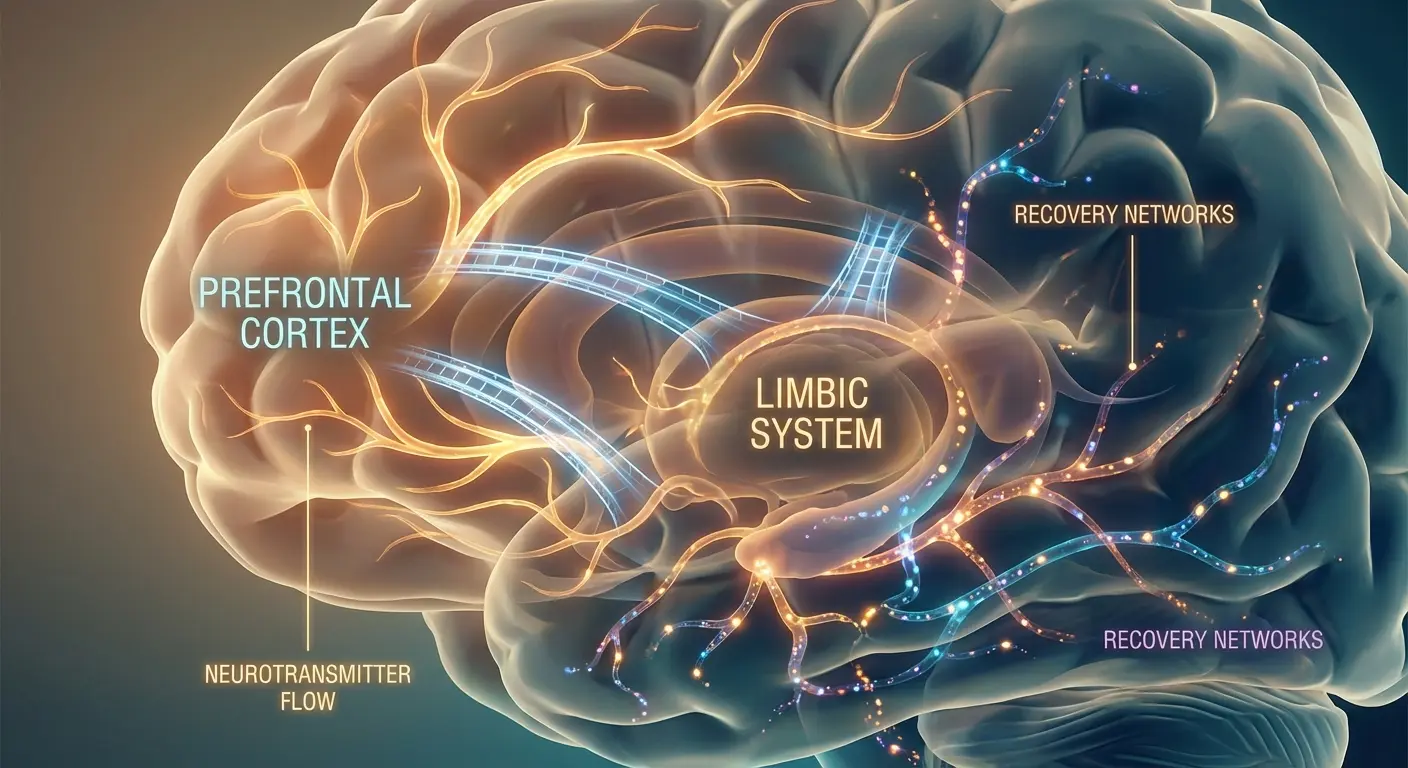
Recovery from mental illness involves building new neural patterns that support wellbeing. This maps those healing pathways as if they were roads, rivers, or light channels flowing through the brain.
The imagery typically shows strong, clear pathways connecting regions associated with emotional regulation, rational thinking, and healthy coping. You might depict connections between the prefrontal cortex and limbic system as reinforced highways, representing improved emotional control.
Pathways to reward centers could be shown as healthy streams rather than the dried beds of depression or flooded torrents of addiction. Some people incorporate symbols of their specific healing practices: meditation might be represented as calm, symmetrical patterns in the prefrontal cortex; therapy as strengthened connections between memory centers and rational processing areas; medication as balanced neurotransmitter flow.
The design can include timestamps or markers showing the progression of healing over months or years. You’re creating a neurological map of recovery that’s both scientifically grounded and deeply personal.
This becomes a visual representation of those transformative moments that rewired your neural architecture toward health.
18. Resilience Architecture
Psychological resilience has neural correlates: strong prefrontal cortex function, healthy stress response systems, and robust connections between emotional and rational brain regions. This final design depicts the brain as a fortress, network, or structure built specifically for withstanding psychological stress.
The architecture might show reinforced connections, redundant pathways (so if one fails, others compensate), or protective structures around vulnerable areas. Some versions depict the brain with visible support systems: the prefrontal cortex as a strong foundation, healthy attachment patterns as load-bearing pillars, coping mechanisms as buttresses.
Others show the brain as a network with multiple connection points, emphasizing that resilience comes from integration rather than isolation of function.
You can incorporate elements representing what built your resilience: therapy, relationships, spiritual practice, creative expression. The visual language should convey strength without rigidity, acknowledging that resilience isn’t about being unbreakable but about bending without shattering.
This works especially well for people who’ve survived significant adversity and want to honor not just what they’ve endured but the psychological infrastructure they’ve built. Some designs feature versions where the brain appears weathered but intact, showing the marks of what it’s survived while remaining structurally sound.
It celebrates the active work of building psychological strength rather than treating resilience as an innate trait some people have and others lack.
Bringing Your Neural Vision to Life
You’ve seen approaches to brain tattoos that go beyond surface-level anatomy. Each one requires translating abstract concepts or internal experiences into visual form, which presents unique challenges.
The gap between “I want a brain tattoo that represents my anxiety” and having an actual design in hand can feel overwhelming. You’re asking an artist to visualize your internal psychological landscape, which requires both technical skill and deep conceptual understanding.
Look, I’m biased because I work with this tool, but here’s why it actually helps with brain tattoos specifically.
I watched someone use Tattoo Generator IQ last month. She typed in “anxiety brain with overactive amygdala and dimmed prefrontal cortex, watercolor style” and got 8 variations in 30 seconds. Three of them were shit, but two were exactly what she’d been trying to describe to artists for months.
The AI understands both anatomical accuracy and metaphorical representation, so you can explore realistic medical illustration styles alongside more abstract, symbolic approaches. You’re not locked into a single artist’s interpretation or limited by your own drawing ability.
Generate ten versions, refine the one that clicks, adjust colors or elements, and walk into your tattoo appointment with exactly the reference your artist needs. It’s not perfect – you’ll still need a good artist to execute it – but for the concept phase? Game-changer.
Exploring tattoo meaning frameworks can help clarify which symbolic elements best translate your internal experience into visual language before beginning the design process.
Real Talk Before You Commit
Brain tattoos on your skull hurt like hell. The buzzing vibrates through your whole head. Just know that going in.
Budget at least $800-2000 for a detailed piece. More if you want color or large scale. Find an artist who does both anatomical work AND abstract/conceptual stuff. That combination is rarer than you’d think.
Fine line brain tattoos can blur over time. Discuss line weight with your artist. Brain tattoos are also hard to cover up if you change your mind. The shape is distinctive, and the detail is tough to work over.
Yeah, brain tattoos are trendy right now. In 10 years, they might feel as dated as tribal armbands. Get one anyway if it means something.
Some people think mental health tattoos are performative. Maybe they are. But if externalizing your anxiety helps you talk about it, who gives a shit what critics think?
When finalizing your design, reviewing comprehensive tattoo aftercare protocols ensures your intricate brain tattoo heals properly and maintains the detailed lin ework and shading that makes neural imagery so compelling.
What Your Brain Actually Looks Like
The best brain tattoo Popular variations include was on a woman who’d recovered from a stroke. Half her brain was detailed and intact, the other half was abstract chaos slowly reorganizing into new patterns. She said it reminded her that damage doesn’t mean destroyed.
That’s what this ink should do – remind you of something true that’s easy to forget.
Get a brain tattoo or don’t. But if you do, make it weird. Make it yours. Don’t settle for the first Google image result of a brain with geometric patterns. Your consciousness is stranger than that.
What does your brain look like from the inside? Not the anatomy – the experience. That’s the tattoo you should get.
