Death Moth Tattoo Meaning: Why Most People Get the Symbolism Backwards
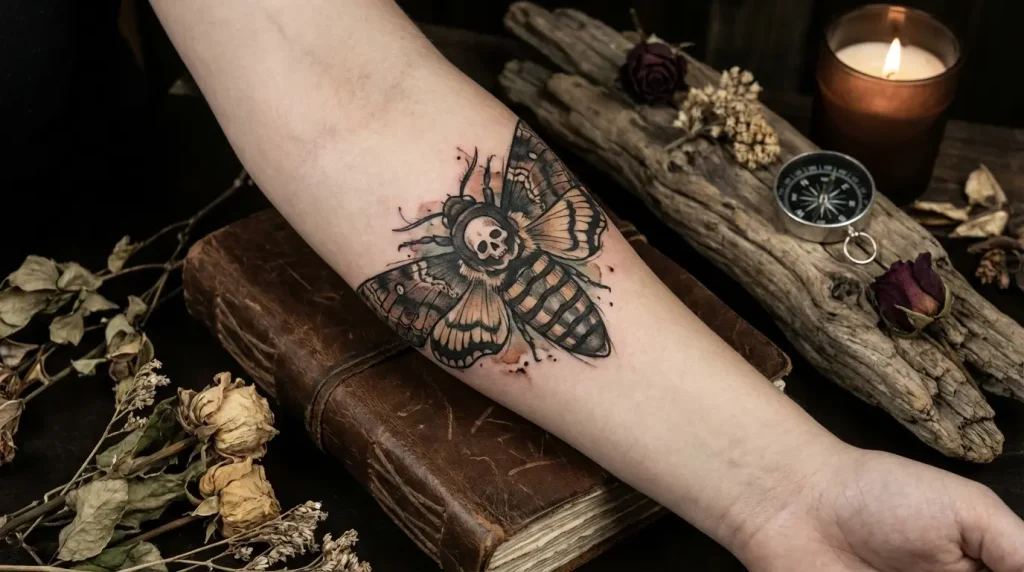
Table of Contents
-
The Inverted Reading: Death as Transformation’s Starting Point
-
Why Pop Culture Hijacked the Death’s Head Moth
-
The Acherontia Genus: Three Species, Three Distinct Meanings
-
Skull Patterns and Pareidolia: Your Brain’s Role in Meaning-Making
-
Historical Context That Changes Everything
-
Cultural Interpretations Beyond Western Frameworks
-
Design Elements That Shift the Message
-
When Death Imagery Becomes Life Affirmation
-
Creating Your Death Moth Design
Quick Version for People Who Don’t Read Long Posts
The death moth thing is way more complicated than “transformation and rebirth,” which is what everyone says.
First: that skull on the moth’s back? Your brain is making it up. It’s pareidolia (you’re seeing a pattern that isn’t really there). Which actually makes the symbolism more personal, not less.
Second: there are three different species of death moth, and they come from different places with totally different meanings. Most people don’t know which one they’re getting tattooed.
Third: Silence of the Lambs basically hijacked this moth’s entire symbolic history. Before 1991, it meant different things depending on where you were. After 1991, it meant one thing: Buffalo Bill.
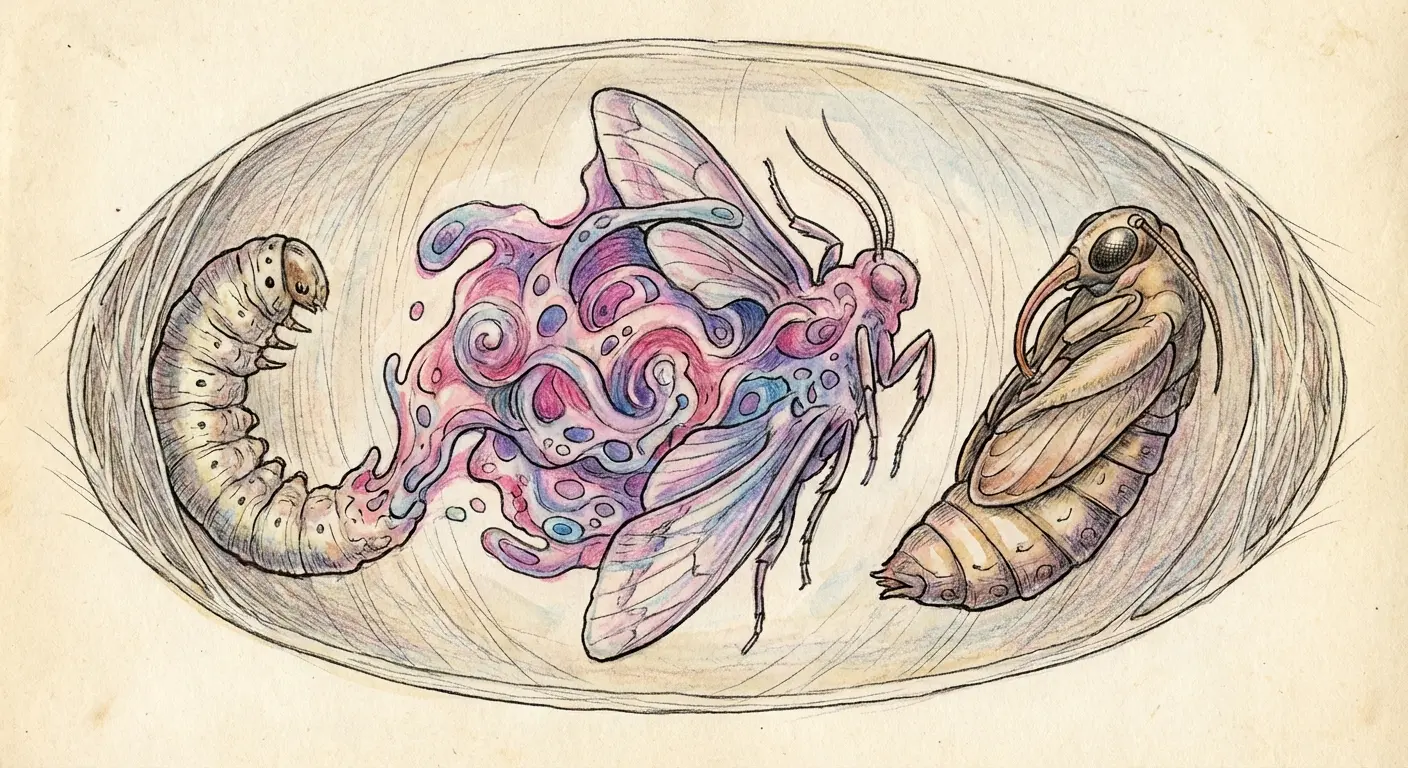
The actual biological process of metamorphosis is way more violent than the pretty “transformation” narrative suggests. The caterpillar’s body liquefies. It doesn’t just change. It dies and something else uses the raw materials.
Your design choices (realistic vs. traditional, color vs. black and grey, what you add to it) completely change what the tattoo means. There’s no such thing as a generic death moth piece once you account for all the variables.
Bottom line: whatever this tattoo means to you personally matters more than any inherited symbolism. But you should probably know what you’re inheriting before you decide whether to keep it or throw it out.
The Inverted Reading: Death as Transformation’s Starting Point
Everyone says death moth tattoos are about transformation. Pretty packaging for the idea that you can change into something better.
Bullshit.
Well, not complete bullshit. But backwards enough that it matters. The moth doesn’t use death as a metaphor for change. Death comes first. Death is the requirement. And there’s a huge difference between “death represents change” and “you have to actually die before anything new can happen.”
I’ve been working in tattoo shops for about eight years now, and I’ve done maybe seventy or eighty death moth pieces. After the first twenty, I started asking people why they wanted it. The answers were almost never about the actual moth. They were about Hannibal Lecter, or they’d seen it on Pinterest, or (my favorite) “it looks cool and dark.” Which, fine. But if you’re going to permanently mark your body with a symbol, maybe know what you’re actually saying?
Metamorphosis. You think you know what it means, but here’s what actually happens: the caterpillar’s body liquefies. Completely. Digestive enzymes break down nearly all its tissues into cellular soup (and I mean soup, like liquid), and what emerges isn’t the same organism with wings glued on. It’s something else entirely, built from the dissolved remains of what came before.
That’s not gentle. Not even close.
Research on tattoo preferences shows that death moth tattoos are chosen when people need to commemorate transformations that required letting go of previous identities entirely. Not “I got a new haircut” transformations. More like “I divorced my high school sweetheart and moved across the country” transformations.
One client Jamie got her death moth six months after her divorce. Twenty-three years married. they note the weirdest part wasn’t losing her husband. It was losing the person who introduced herself as “Jamie, Mark’s wife” at every party. That person doesn’t exist anymore. Can’t exist. Jamie had to dissolve her to become whoever comes next. That’s what the moth meant to her. Not “I changed.” More like “I murdered my old self and something else crawled out.”
When you wear a death moth tattoo with this understanding, you’re not celebrating change as an abstract concept. You’re acknowledging that some transformations require complete destruction of what came before. The old self doesn’t get to come along for the ride, even in memory. It has to dissolve.
This reading makes the tattoo way less comfortable. It doesn’t fit neatly into Instagram captions about growth and healing. But it’s more honest about how major life transitions feel when you’re inside them. Divorce. Addiction recovery. Leaving faith systems. Coming out. These aren’t additions to your identity. They’re reformations that require parts of you to stop existing.
The skull pattern on the moth’s thorax (more on that later) becomes less about death as an aesthetic choice and more about death as a functional requirement. The marker of what had to end. Understanding what does a moth tattoo mean requires grappling with this uncomfortable truth about necessary endings.
Buffalo Bill Ruined This Moth (Or Made It Famous)
Buffalo Bill ruined this moth. Or made it famous. Depends on your perspective.
Before Silence of the Lambs, the death’s head moth meant different things in different places. Some good, some bad, mostly complicated. After 1991, it meant one thing: serial killer transformation. That’s it. That’s what everyone thinks of.
You can’t escape it. I’ve had clients come in and say “I want the moth but NOT the Hannibal thing,” which is like saying “I want a shark tattoo but nothing to do with Jaws.” Good luck with that. The association is permanent.
Look, I love Silence of the Lambs. Saw it in theaters when I was way too young (thanks, older brother). But that movie did to the death moth what Jaws did to sharks. Created a single, overwhelming association that drowned out everything else.
And the film’s interpretation isn’t wrong. It’s just weirdly specific. Psychological transformation through violence. Gender dysphoria. The whole thing. That’s a valid reading. But it’s not the ONLY reading, and it definitely wasn’t the historical reading. It’s just the one that ate all the others.
The death’s head hawkmoth’s distinctive appearance has made it a recurring subject in contemporary tattoo culture, with artists like Inez Janiak creating interpretations where quick, short lines make the wings appear to vibrate on the skin, demonstrating how modern tattoo artists continue to reinterpret this creature beyond its film associations.
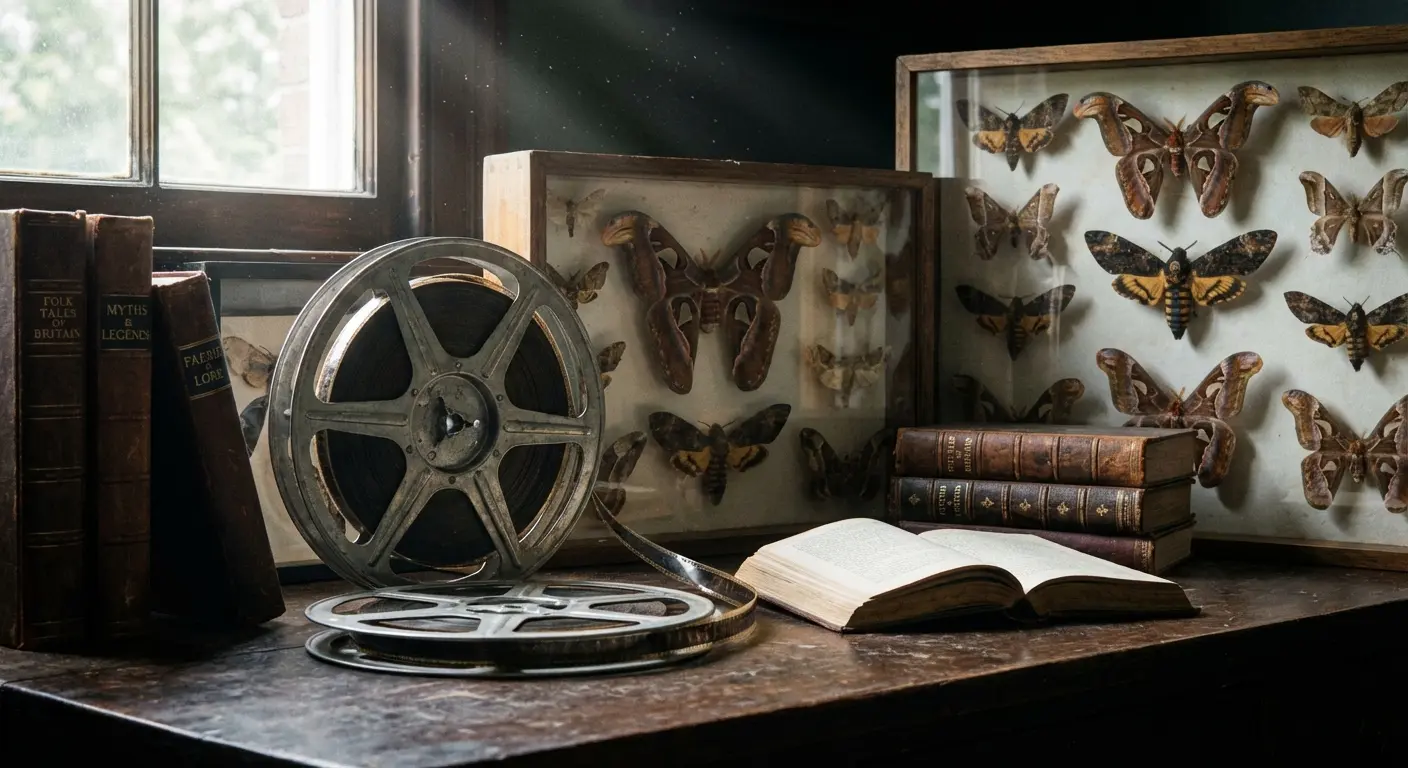
You can see this collapse in tattoo portfolios everywhere. The moth tattoos that proliferated after the film almost always incorporate elements from that one interpretation: psychological darkness, gender transformation, the intersection of beauty and horror. These are valid meanings, but they’re not the only meanings. They’re not even the oldest meanings.
The problem with pop culture dominance isn’t that it’s wrong. It’s that it creates interpretive laziness. When everyone knows what a symbol “means,” nobody interrogates whether that meaning serves their specific intention. The tattoo becomes a reference to the reference, not a connection to the actual creature or its pre-existing symbolic weight.
So which version do you actually want? The pre-1991 moth with all its messy folklore, or the post-Hannibal one everyone recognizes? Because you can’t really have both.
There Are Actually Three Different Death Moths (And Nobody Knows Which One They Have)
Most people don’t realize they’re choosing between three different moths when they search for death moth tattoos.
Acherontia atropos. European species. The one that inspired most Western folklore. Its range extends from the UK through continental Europe into Africa. Named for Atropos, the Greek Fate who cuts the thread of life. This is your classical omen moth, the one that showed up in potato cellars and scared the absolute hell out of farmers in the 1700s.
Acherontia lachesis appears across Asia, from India through Southeast Asia to parts of China. Named for Lachesis, the Fate who measures the thread of life. This species has slightly different coloring (the skull pattern shows more yellow tones) and appears in completely different cultural contexts. Hindu and Buddhist frameworks don’t map onto Greek mythology, and the symbolic weight shifts accordingly.
Acherontia styx lives in parts of Asia and the Middle East. Named for the river Styx, the boundary between Earth and the Underworld. It’s the rarest of the three in both nature and tattoo representation.
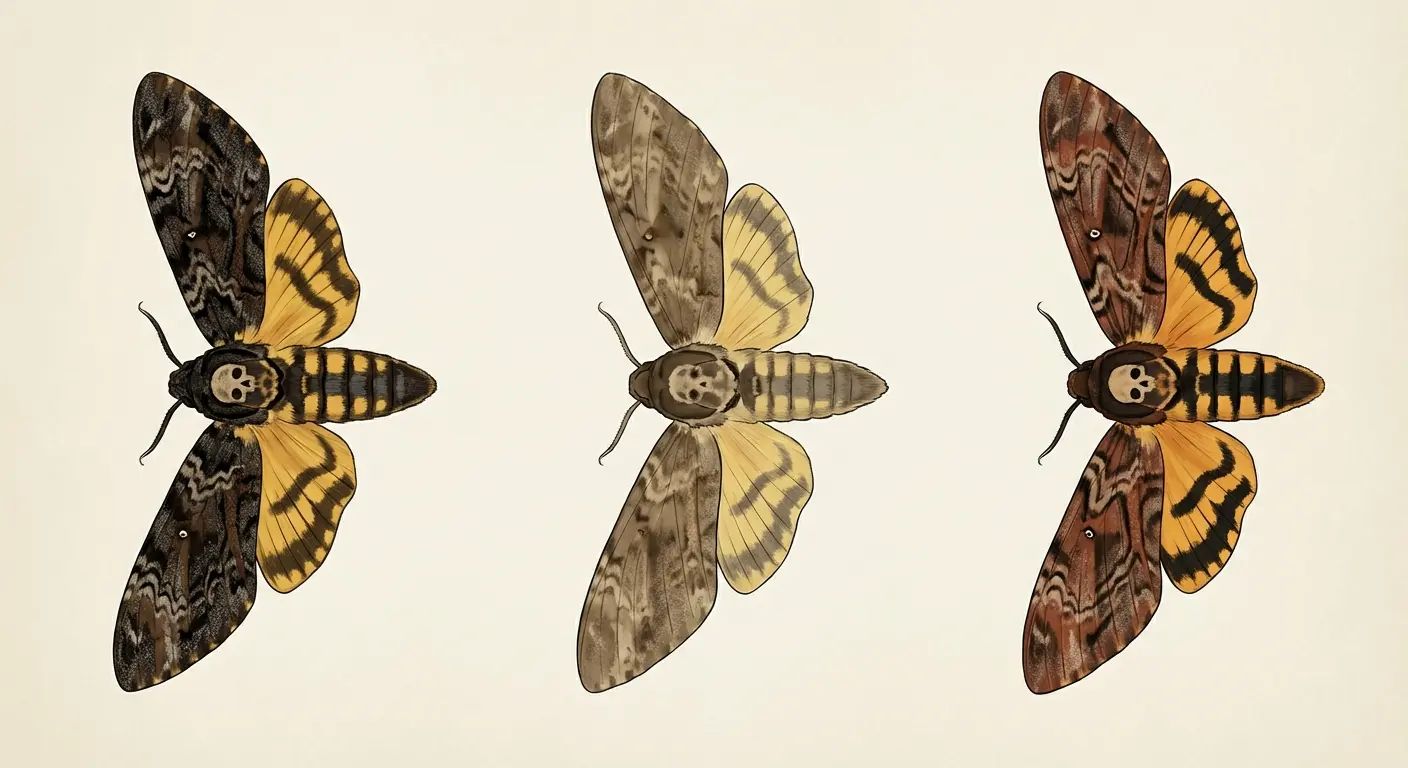
All three share the skull-like thorax pattern and the ability to squeak when threatened. Not a bug sound. A mammalian sound, like a tiny mouse in distress. They force air through their proboscis and it comes out wrong, unsettling, the kind of sound that makes you drop whatever you’re holding. (I had a client show me a video once. Deeply disturbing.)
All three also rob honey from beehives, which is genuinely remarkable behavior for a moth. They just fly right in and drink, risk getting stung to death for sweetness.
|
Species |
Geographic Range |
Named After |
Primary Skull Pattern Color |
Cultural Association |
|---|---|---|---|---|
|
Acherontia atropos |
Europe, UK, Africa |
Atropos (Fate who cuts life’s thread) |
Darker tones, more contrast |
Omens, witchcraft, Protestant anxiety |
|
Acherontia lachesis |
India, Southeast Asia, China |
Lachesis (Fate who measures life’s thread) |
More yellow tones |
Hindu/Buddhist transitional states |
|
Acherontia styx |
Asia, Middle East |
River Styx (boundary to Underworld) |
Variable |
Threshold symbolism, rarest species |
European atropos got tangled up with death omens, witchcraft, and Protestant anxiety about Catholic imagery (that skull pattern hit different during the Reformation). Asian lachesis and styx entered symbolic systems already comfortable with death as a transitional state rather than an ending. The interpretations aren’t just different. They’re sometimes opposite.
When you’re designing moth tattoos with this understanding, which species you’re depicting matters. The visual differences are subtle but present. More importantly, the symbolic lineage you’re drawing from changes what the tattoo can mean. You’re not just choosing an insect. You’re choosing which cultural interpretation of that insect resonates with your specific need for the image.
I’ve only done maybe three A. lachesis pieces, so I’m less familiar with how people interpret that species. Most of my work has been atropos because that’s what people recognize from Western imagery.
That Skull Isn’t Real (Your Brain Made It Up)
Okay, this is going to sound weird, but that skull? Your brain made it up. The moth doesn’t actually have a skull on its back.
I know, I know. You can see it right there in the photo. Clear as day. Eye sockets, nasal cavity, maybe some teeth if you squint. But the moth didn’t evolve to have a skull pattern. There’s no survival advantage to looking like you’ve got a tiny human skull on your back. No predator sees that and thinks “oh shit, death imagery, better leave this alone.”
It’s pareidolia. Your brain is SO obsessed with finding faces that it finds them everywhere. Clouds. Toast. Wood grain. Car grilles. And moth thoraxes.
Different people see slightly different skulls on the same moth, by the way. Some people see clear eye sockets. Others focus on what looks like a nasal cavity. The jaw area is super subjective. You’re not discovering an objective skull. You’re participating in creating one.
Which actually makes the whole thing more interesting, not less. If the moth’s main symbolic feature is something humans project onto it rather than something that’s objectively there, then every meaning you derive from that feature is collaborative. You’re in a conversation with your own pattern-recognition software.
The moth’s just sitting there being a moth. You’re the one seeing death and getting all weird about it.
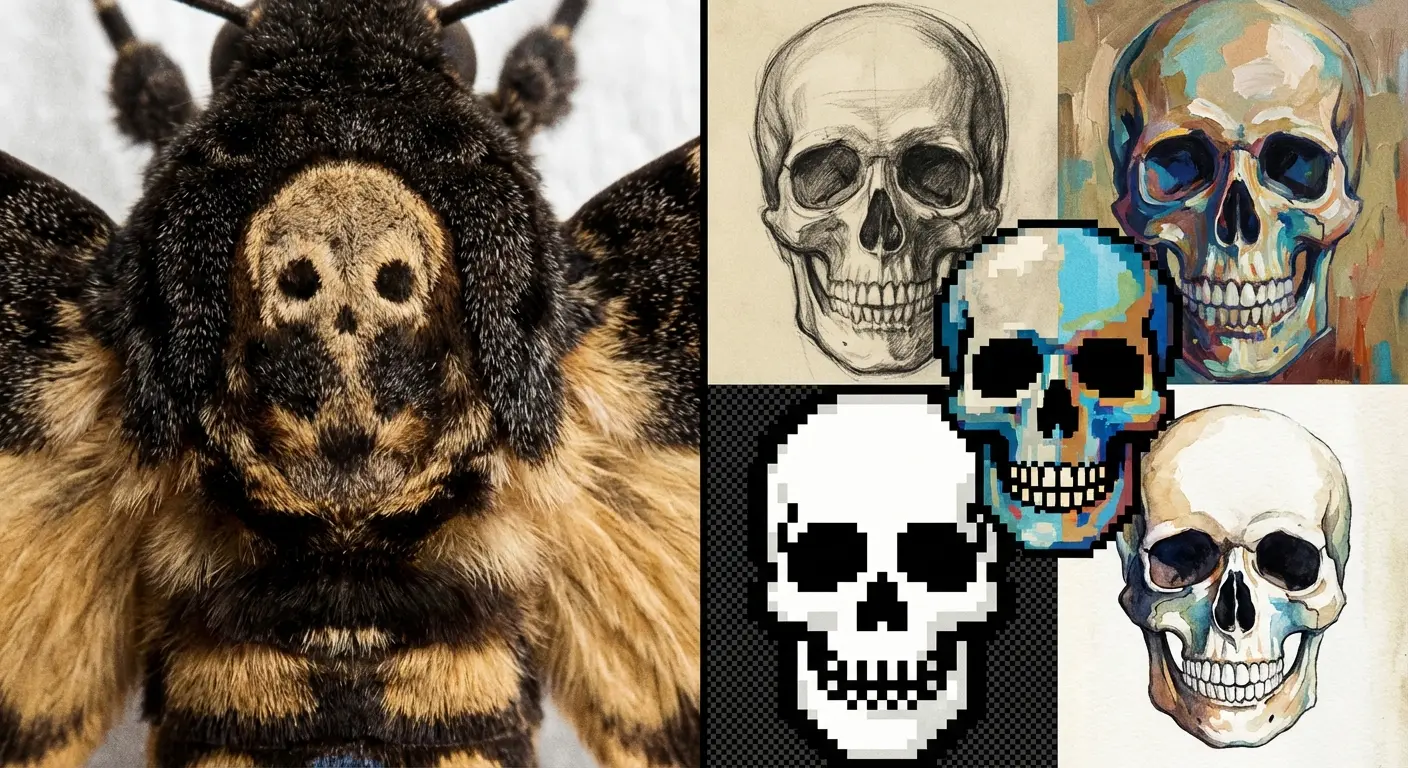
Two people looking at the same moth might describe completely different skulls. One sees a human skull with prominent eye sockets and a defined nasal cavity, connecting it to memento mori imagery. Another sees something more abstract, almost mask-like, relating it to theatrical or ceremonial traditions. A third person might see an animal skull, linking it to nature and predation. Each person’s brain fills in details based on their visual experience and cultural background. When they translate this into a skull moth tattoo, they’re not copying an objective reality. They’re rendering their specific interpretation of a pattern that exists primarily in human perception.
If the death moth’s primary symbolic feature (the skull) is something humans project onto the creature rather than something inherent to it, then all meaning derived from that feature is participatory. You’re not receiving a message from nature. You’re in dialogue with your own pattern-recognition systems.
That makes the tattoo more personal, not less. The skull you see might be slightly different from the skull someone else sees. Your interpretation of what that skull means is filtered through your specific experiences with mortality, loss, fear, and transformation. There’s no correct reading because there’s no objective skull.
Some people find this destabilizing. If the central symbol is “just” pareidolia, doesn’t that make it meaningless?
No. It makes it entirely dependent on the meaning you bring to it. Which is more honest about how all symbolism works anyway. We see what we’re prepared to see. The death moth just makes that process more visible. Understanding moth tattoo meanings requires recognizing your own role in creating those meanings.
How History Keeps Changing What This Moth Means
The death’s head moth’s reputation has ping-ponged all over the place depending on who was looking at it and what they needed it to mean.
1600s Europe: demonic. Straight-up evil. These moths showed up in root cellars (they’re attracted to fermentation), made that creepy squeaking sound, and had what looked like a skull during plague years when everyone was already paranoid about death. People said witches sent them. Or they were unbaptized babies’ souls. The meanings contradicted each other but were all uniformly terrible.
Historical accounts document the moth’s ominous reputation, with entomologist Moses Harris writing in 1840 that it was “regarded not as the creation of a benevolent being, but the device of evil spirits, spirits enemies to man, conceived and fabricated in the dark”, reflecting how deeply the creature was feared in European culture.
Victorian era (we’re talking 1840s-1880s, the peak of mourning jewelry obsession): suddenly death imagery is fashionable. Mourning jewelry, memento mori, the whole thing. The moth goes from demonic to melancholic. Still about death, but now it’s beautiful death. Contemplative death. The kind you put on a brooch.
This is my favorite shift, honestly, because it shows how arbitrary symbolic meaning is. Same moth. Completely opposite interpretation. Just depends on whether your culture is terrified of death or romanticizing it.
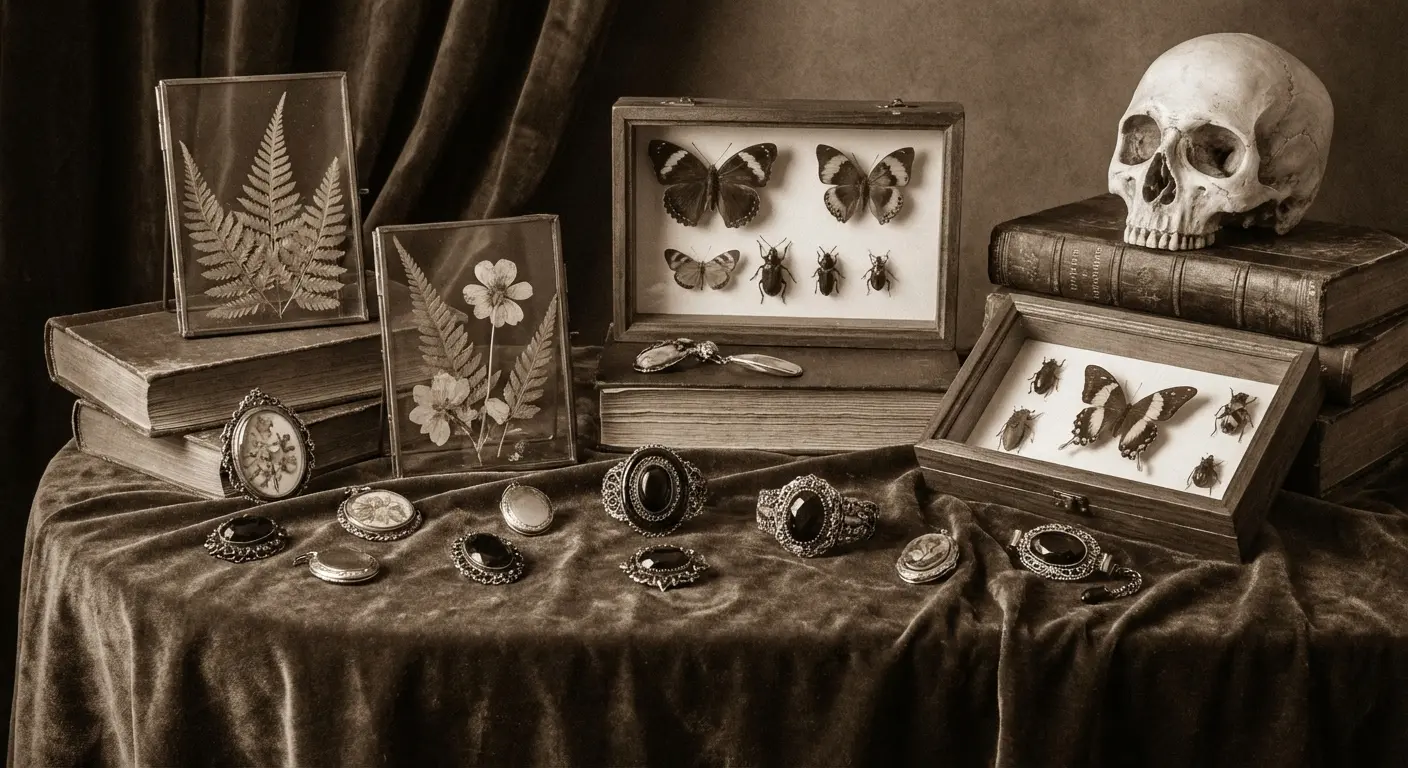
WWII: some anti-fascist propaganda used death imagery including moths. This is obscure enough that nobody references it anymore, but it’s in the historical record.
1960s-70s: the occult revival reclaims everything Christianity demonized. The moth becomes transgressive again, but in a “fuck mainstream culture” way rather than a “fuck this is evil” way. Counterculture loved it. Album art, tarot-adjacent imagery, the whole countercultural package.
Then 1991 happens and Silence of the Lambs basically erases all of this. Or at least buries it so deep that most people never dig it up.
Each historical moment projected different needs onto the same insect. Your tattoo exists in conversation with all of these layers whether you know about them or not. Someone with knowledge of Victorian mourning culture will read your death moth differently than someone whose only reference is Silence of the Lambs. Neither reading is wrong, but they’re accessing different historical strata of meaning. Those considering moth tattoos should understand these layered interpretations.
Before finalizing your death moth tattoo design, think about which historical period’s interpretation actually resonates with your intended meaning. Are you drawn to transgressive, witchcraft-adjacent symbolism that challenges religious orthodoxy? Does your tattoo commemorate loss in a way that finds beauty in melancholy? Are you reclaiming symbols that were demonized by mainstream culture? Does the psychological transformation narrative from Silence of the Lambs align with your personal story? Or are you creating an entirely new meaning that acknowledges but isn’t bound by historical associations?
Understanding which historical layer you’re drawing from helps ensure your design elements support rather than contradict your intended symbolism.
The Meanings Most Western Tattoo Shops Never Mention
Western tattoo culture assumes its symbolic frameworks are universal. They’re extremely not.
In parts of West Africa where these moths actually live, people care more about the moth’s behavior than its appearance. It steals honey from beehives (ballsy move for an insect), just flies right in and drinks, risks getting stung to death for sweetness. Some folklore treats it like a trickster. Others think it’s stupid and greedy. The skull pattern? Less important in places where skull imagery doesn’t carry Christian baggage.
Middle Eastern interpretations (where A. styx lives) frame it through Islamic concepts of death as a transition overseen by angels, not an ending. The moth marks thresholds. Boundary crossings. Not necessarily bad ones.
Southeast Asian meanings connect to ancestor veneration. Moths in general show up in folklore about dead relatives visiting. The death’s head moth’s distinctive look marks it as an especially significant visitor. But “significant” doesn’t mean “scary” when your culture actually wants ancestor presence.
I’m saying all this For those who works primarily with Western clients getting Western-style tattoos, so I’m not going to pretend I’m an expert on these frameworks. But they exist. They’re not exotic alternatives. They’re completely different symbolic systems built on different assumptions about what death even is.
The queer community has developed its own contemporary symbolism around moth tattoos, with the death’s-head hawkmoth becoming a commonly acknowledged queer tattoo, particularly for bisexual women, demonstrating how cultural interpretation continues to evolve beyond traditional Western frameworks.
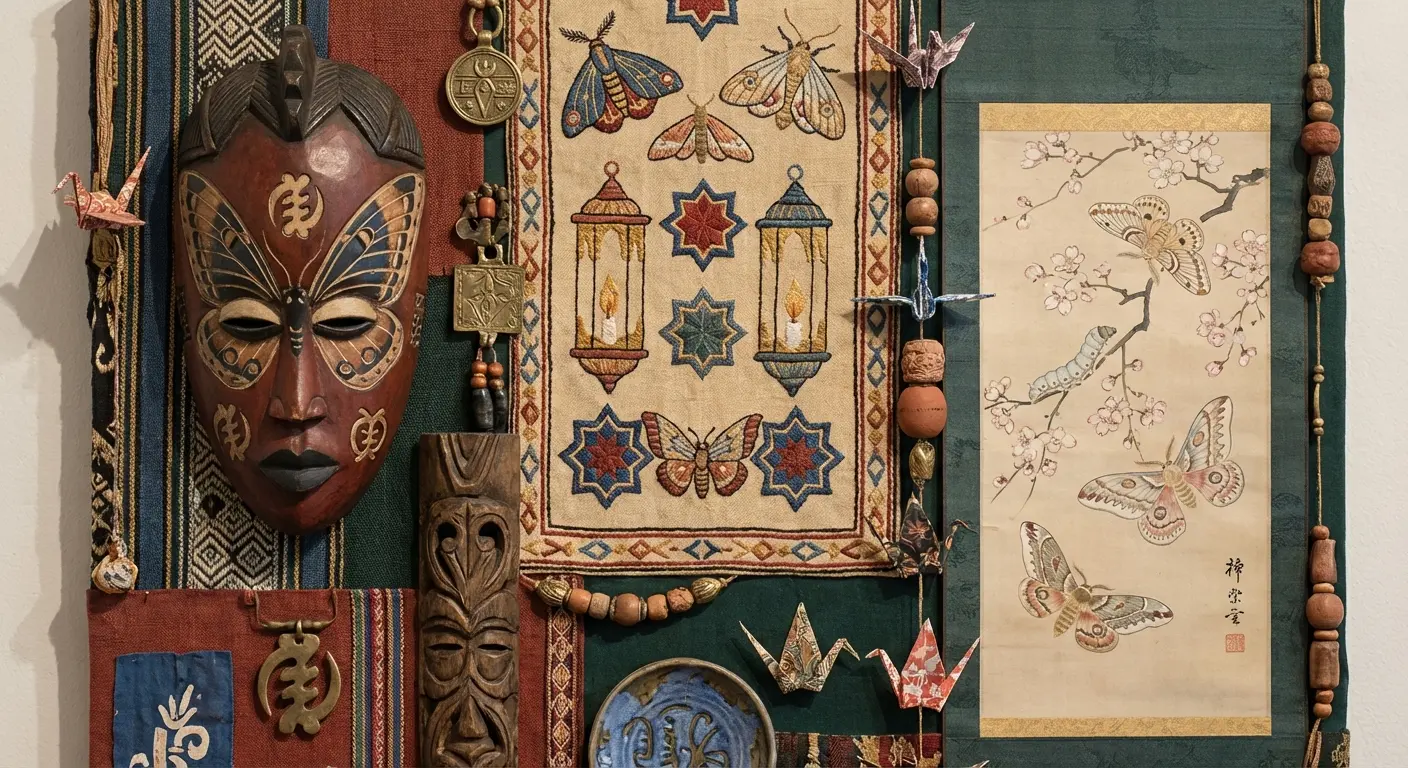
If you’re getting a death moth tattoo and you’re not Western European by heritage, it’s worth investigating whether your ancestral culture had its own relationship with these moths. You might find symbolic frameworks that resonate more deeply than the Victorian-to-pop-culture pipeline that dominates tattoo shops.
Even if you are Western European by heritage, recognizing that other interpretive frameworks exist can crack open space for personal meaning-making that doesn’t rely on inherited Christian symbolism you might not believe in. Exploring the meaning of a moth tattoo across cultures reveals rich interpretive possibilities.
Just as Medusa tattoo symbolism shifts dramatically across cultural contexts, the death moth carries different weight depending on which cultural lens you’re using.
How Your Design Choices Change Everything
A hyperrealistic death moth in full color means something completely different than a black and grey traditional piece. These aren’t just aesthetic choices. They’re interpretive choices.
Go realistic and you’re emphasizing the moth as an actual creature. You’re saying “this is a real thing that exists in nature and I’m honoring that.” The symbolism stays grounded in biology (the lifecycle, the behavior, the physical reality of the insect).
Go traditional or neo-traditional and you’re flattening it into pure symbol. Bold lines, limited palette, graphic impact. It’s more about the idea of the death moth than the reality of it. These read better from a distance and age better technically, but you lose biological specificity.
Color matters too. Stick with the moth’s natural yellows, browns, and blacks and you maintain connection to the species. Go blue or purple or white and you’re announcing “I’m using this moth as a template for something else.” Neither is wrong, but they’re doing different things.
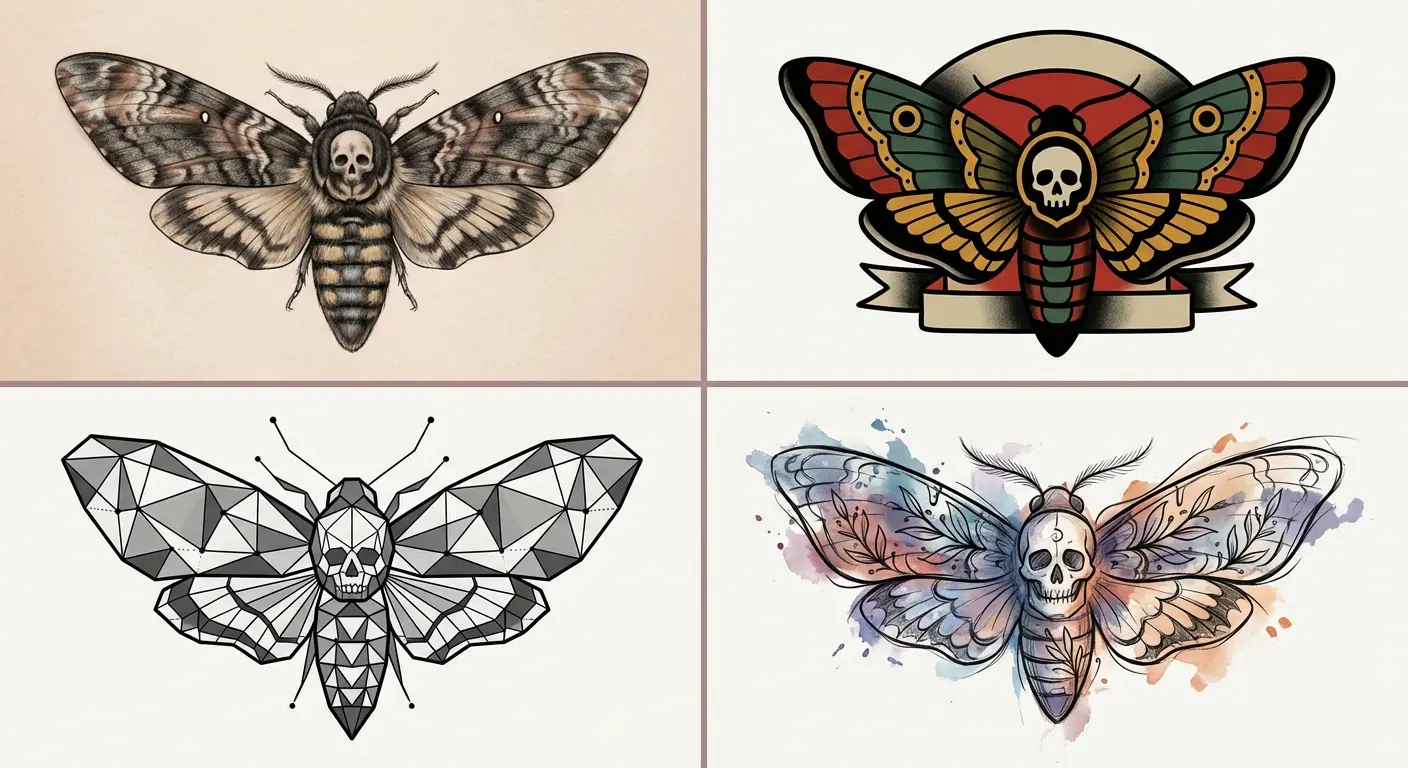
And then there’s everything you might add to it. Roses suggest beauty emerging from death. Clocks make it about mortality and time. Keys point toward hidden knowledge or thresholds. Geometric patterns pull it into sacred geometry territory. Each addition layers new meaning that can either support or contradict what the moth already means. Understanding what does a moth tattoo mean requires examining these design variables closely.
I’ve seen people add so many elements that the moth becomes a supporting character in its own tattoo. Sometimes that works. Sometimes it just looks cluttered and you can’t tell what the focal point is supposed to be.
Placement shifts interpretation too. Heart placement reads as deeply personal, something close to your emotional core. Back placement might represent what you’ve survived or what follows you. Hands or neck make it confrontational (you’re showing the world this thing first). Ribs or thighs keep it private, for you and chosen intimates.
Size communicates whether this is a whisper or a statement. A tiny delicate moth is a personal reminder, not something you’re announcing. A full back piece announces that this symbol is central to your identity, not a subtle accent.
Wings spread or closed changes the energy entirely. Spread wings are display, maybe aggression (it’s a threat posture in nature). Closed wings are contained, protective, inward-focused.
You’re making dozens of micro-decisions that add up to one specific interpretation. There’s no generic death moth tattoo once you account for all these variables. The moth tattoo symbolism you create depends entirely on these choices.
Design considerations for death moths parallel those for snake tattoo meanings, where style and additional elements dramatically shift interpretation.
People Will Get It Wrong (And That’s Fine)
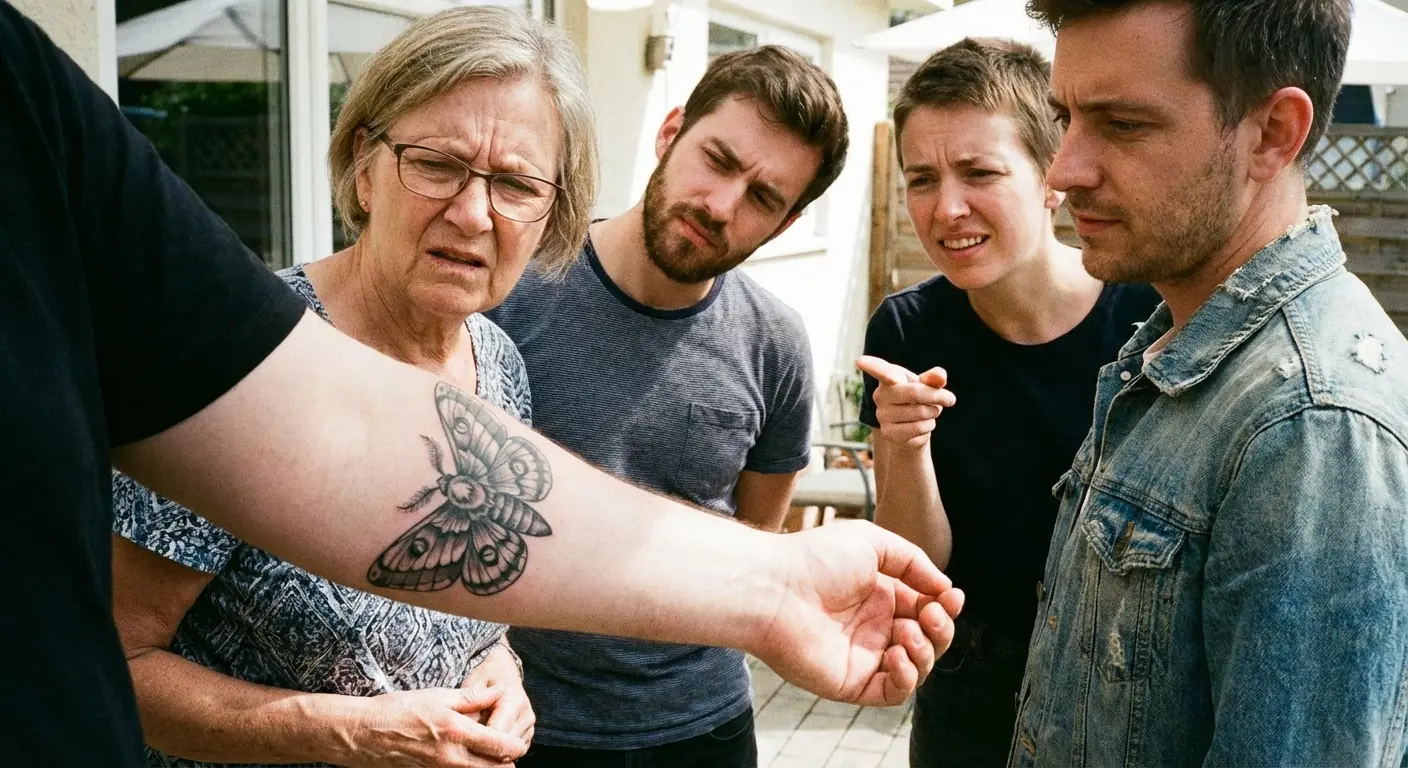
Someone’s going to see your carefully researched Acherontia atropos with its specific symbolic weight and say “oh cool, a butterfly.”
Others will see the skull and jump straight to “you must be goth” or “Hannibal Lecter fan?” without understanding any of the moth-specific context. Christian viewers might import resurrection symbolism you never intended. People who don’t distinguish moths from butterflies will apply butterfly meanings (which are way more optimistic and less complex). Moths get associated with darkness, secrecy, and night. Butterflies get sunshine and happiness. Your death moth might get read as a “dark butterfly” by people who don’t distinguish between them.
Cultural outsiders will often misread symbols from traditions they don’t belong to. If you’ve incorporated African or Asian interpretive frameworks into your design, Western viewers will likely default to Western readings regardless of your intent.
You can’t control interpretation. You can design with intention, know exactly what your tattoo means to you, but you can’t dictate what it means to everyone who sees it.
The real question isn’t “how do I prevent misreadings?” It’s “do misreadings bother me enough to change my design?” Sometimes yes (if you need the tattoo to communicate clearly to others, you’ll design differently than if it’s primarily for yourself). Sometimes no.
Personally? I think if you need your tattoo to be understood by strangers, you’re getting it for the wrong reasons. Tattoos are for you. If someone else gets it, cool. If they don’t, also cool.
How Wearing Death on Your Skin Can Make You More Alive
Weird thing about wearing death on your skin: it can make you more alive.
Not in some abstract philosophical way. In a practical “I make different choices now” way.
I did a death moth on Linda’s forearm in March 2023. Breast cancer survivor, 46, two years in remission. they note that every morning when she’s deciding whether to skip her medication or blow off a doctor’s appointment, she sees that moth. It reminds her she came close to actual death, not the metaphorical transformation kind. The real kind.
The tattoo doesn’t make her morbid. It makes her show up for her life with urgency. She says yes to the camping trip. Has the difficult conversation. Quit the job that was slowly killing her. The death imagery paradoxically makes her more committed to living fully in whatever time she has.
The death moth’s metamorphosis symbolizes deep personal change, with its emergence from a cocoon mirroring human growth and endings, reflecting the cycle where death leads to new beginnings rather than finality.
But (and this is important) this only works if you’re genuinely engaging with the symbol. If your death moth is just aesthetic, if you chose it because it looks cool and the “deep meaning” is an afterthought, it won’t function this way. It’ll just be a tattoo you explain at parties.
Nothing wrong with that, by the way. Not every tattoo needs to be a philosophical statement. I’ve done plenty of pieces on people who just thought the design looked sick. The meaning came later, after they’d lived with it for a while. You don’t need to have your entire symbolic framework figured out before you sit in the chair.
But don’t confuse aesthetic choice with existential tool. They’re different things that require different levels of engagement.
The life-affirming aspect comes from specificity. “Death happens” is too vague to be useful. “The person I was three years ago had to die for me to be who I am now” is specific enough to work with. “I’m going to die someday” is abstract. “I have limited time to do the things that matter to me” creates urgency.
Your death moth becomes life-affirming when it points you toward something concrete, not when it gestures vaguely at transformation or change. What specifically died? What specifically emerged? What does that teach you about how to live right now? Understanding moth tattoo meaning in this context means grappling with these questions honestly.
Without that specificity, death imagery can become aesthetic nihilism. It looks deep but doesn’t connect to how you move through the world. You’re performing engagement with mortality rather than engaging with it. The moth tattoo meaning must be rooted in your lived experience to function as genuine memento mori.
Similar to how semicolon tattoos represent continuing life after crisis, death moth imagery can paradoxically affirm your commitment to living.
Actually Creating Your Death Moth Design
You’ve done the conceptual work. Now you need to translate it into something that’ll live on your body.
Start with which of the three species you want. Look at actual photos of A. atropos, A. lachesis, and A. styx. The differences are subtle but real. Which one connects to your specific situation? European/Western transformation? Go atropos. Drawing from Asian frameworks? Consider lachesis or styx.
Decide how realistic you want to go. Hyperrealism requires a skilled artist, costs more (we’re talking $800-2000 depending on size and your artist’s rate), takes longer, and ages in specific ways (very fine details can blur over time). Traditional or neo-traditional styles are more forgiving as they age but sacrifice biological accuracy. Neither is better. They serve different purposes.
Think about what needs to be immediately readable versus what can be personal and obscure. If you want people to recognize it as a death moth (not just “a moth”), the skull pattern needs to be clear. If you’re fine with ambiguity, you can stylize more.
Are you adding elements or keeping it simple? More isn’t always better. Sometimes a beautifully executed moth on its own says more than a moth surrounded by roses, clocks, keys, and geometric patterns.
Placement matters for practical and symbolic reasons. Some body areas distort more than others. Ribs expand and contract with breathing (and ribs hurt like hell, just putting that out there). Hands and feet get more friction and sun exposure. Your artist can guide you on technical considerations, but you need to think about symbolic placement too. Where does this image belong on your body?
Size needs to match complexity. Want lots of detail? You need space for that detail to read clearly. Tiny intricate designs become muddy blobs over time. Everyone says “go bigger, it’ll age better,” and yeah, technically true. But I’ve also seen tiny delicate moths that aged beautifully because the person took care of their skin. Size isn’t everything.

Here’s where something like Tattoo Generator IQ becomes actually useful. You can test different species, styles, color palettes, and additional elements without committing. Generate variations, see what resonates when you’re looking at an image rather than imagining it. You’re not replacing the tattoo artist (you still need a skilled human for that), but you’re doing exploratory work that helps you communicate clearly about what you want. You can walk into a consultation with specific visual references that show your artist exactly what direction you’re heading.
Once you’ve got your direction, find an artist whose portfolio shows they can execute that specific style well. Don’t choose based on convenience or price. Choose based on whether their existing work proves they can do what you need. A traditional-style specialist might not be the right choice for hyperrealism, and vice versa.
Talk to your artist about the symbolism. You don’t need to trauma-dump, but giving them context helps them make better design choices. They might suggest things you hadn’t considered.
Be prepared to compromise on some details. What works conceptually doesn’t always work visually. Your artist knows what will age well, what will read clearly, what’s physically possible given your body’s contours. Trust their expertise on execution while maintaining clarity about your symbolic intentions. Understanding what does a moth tattoo mean to you personally will guide these conversations.
The death moth tattoo meaning you create will be uniquely yours, shaped by all these deliberate choices rather than inherited symbolism.
The Thing Nobody Tells You
You’re going to live with this tattoo longer than you’ve lived with most of the people in your life.
That twenty-year-old getting their first death moth because they relate to the transformation thing? They’ll be forty with that same tattoo, and what it meant at twenty won’t be what it means at forty. The image stays the same. You don’t.
Which is kind of perfect, actually. The moth went through metamorphosis once. You’ll go through it multiple times. Each time you look at that tattoo, you’ll be a slightly different person seeing the same image, and it’ll mean something slightly different.
I’ve had clients come back ten years later to add to their death moth. Or cover it. Or just tell me what it means now versus what it meant then. The tattoo becomes a marker not just of one transformation, but of all of them.
Death moth tattoos carry more weight than most people realize, and that weight shifts depending on which interpretive framework you’re using.
The overlooked angle here isn’t just that the moth represents transformation. It’s that transformation requires death first, and that death is real, complete, and irreversible. The old self doesn’t get to come along. Something has to end totally before something else can begin.
That’s uncomfortable. It doesn’t fit neatly into inspirational narratives about growth and change. But it’s more honest about how major life transitions actually feel.
You’re not just choosing an insect when you get this tattoo. You’re choosing which cultural interpretation of that insect matters to you, which species you’re depicting, how much biological accuracy you want versus symbolic abstraction, and what additional elements (if any) will clarify or complicate your intended meaning.
The death moth works as a symbol because it holds contradictions. Death and life. Beauty and decay. The skull pattern that’s simultaneously there and not there, depending on how your brain processes what it’s seeing. Transformation that requires destruction.
Your relationship with this tattoo will change over time because you’ll change over time. What it means when you’re 25 and going through your first major identity shift will be different from what it means when you’re 45 and you’ve survived multiple transformations. The image stays the same. You don’t.
So yeah, get the death moth if it means something to you. Or get it because it looks cool. Both are valid.
Just know what you’re getting into. Know which cultural interpretation you’re drawing from. Know which species you’re depicting. Know that some people will see Buffalo Bill and others will see a pretty bug and neither will see what you see.
And know that what you see will change. The tattoo stays the same. You won’t.
That’s kind of the whole point.
