21 Crown of Thorns Tattoos That Speak Beyond Suffering
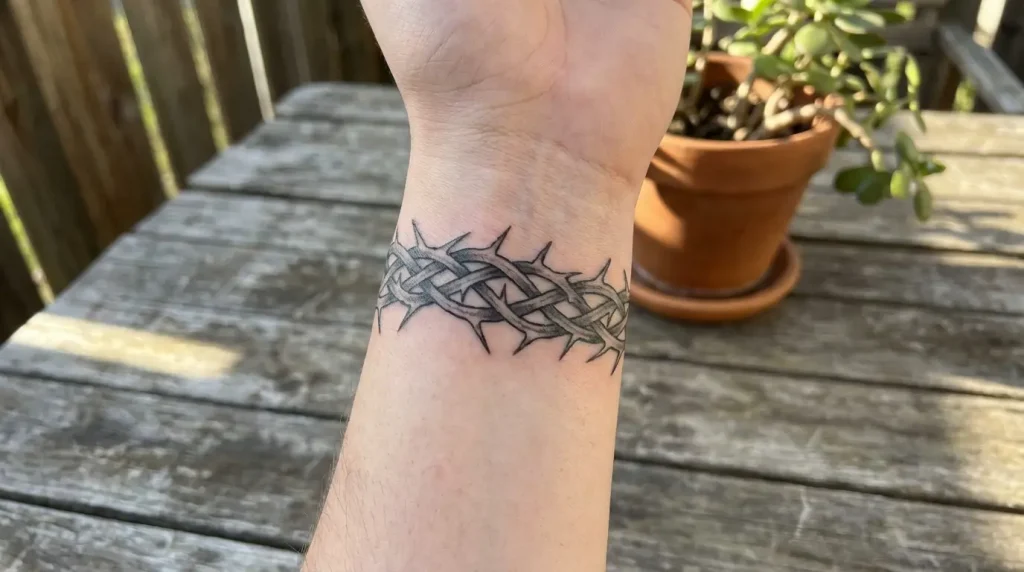
Look: Crown of Thorns Tattoos Aren’t Just Religious Anymore
Crown of thorns tattoos have gotten weird in a good way.
I don’t mean the traditional Jesus imagery (though that’s still around). I mean the people getting thorn crowns on their wrists as protection symbols, or broken crowns with light pouring through, or geometric versions that barely look religious at all.
The crown of thorns tattoo carries deep symbolism rooted in history and spirituality, traditionally representing suffering, sacrifice, and redemption inspired by the biblical crown worn by Jesus during the crucifixion, but over time this imagery has evolved and taken on broader meanings in tattoo art, such as resilience, faith, and endurance. Somewhere in the last decade, this tattoo evolved past its biblical origins into something way more personal. Protection. Transformation. Sovereignty. The thorns stopped being about passive suffering and started being about what you built from the pain.
This guide breaks down 21 approaches, from subtle line work to full chest pieces, so you can figure out which version matches your story. Because here’s the thing: where you put it and how you style it completely changes what it means.
The crown thorns tattoo has become something different in contemporary ink culture. We’re seeing people claim this imagery for reasons that have nothing to do with religious devotion and everything to do with marking their own survival, boundaries, and self-determination. The thorn tattoo serves as a powerful statement about resilience and personal strength.
Crown of Thorns as Armor: Protective Interpretations
Most people see crown of thorns as suffering symbols. But what if the thorns are actually armor? What if the thing that hurt you became the thing that protects you?
That’s the angle here.
These designs transform pain into power by visualizing thorns as intentional barriers rather than inflicted punishment. You’re not wearing scars. You’re wearing armor you forged yourself. The crown thorns tattoo becomes a statement about what you’ve learned to protect and how fiercely you’ll defend it. The thorn tattoo in this context represents active defense rather than passive suffering.
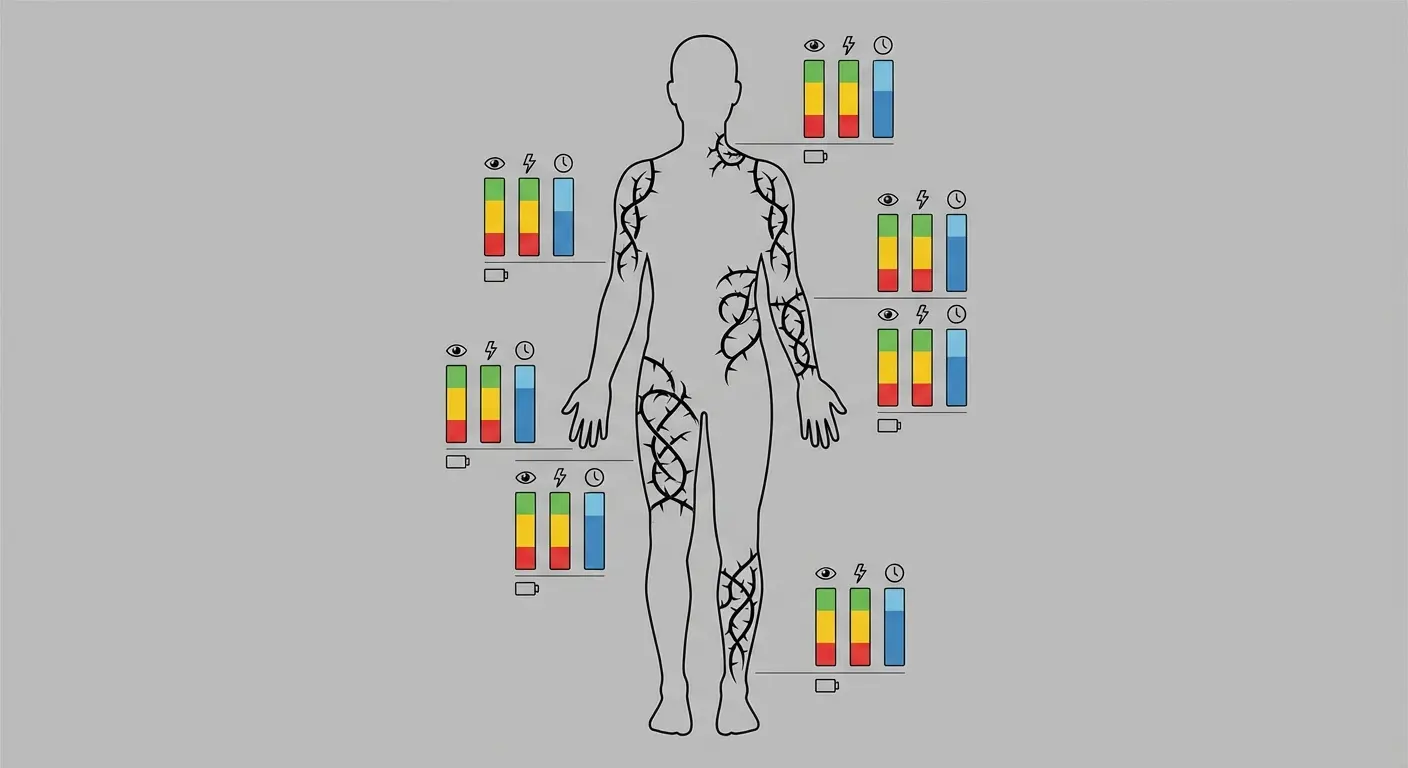
Where you put it changes everything. The thorn crown tattoo placement affects both visibility and personal meaning in ways you might not expect.
|
Placement |
Visibility Level |
Pain Level |
Best For |
Typical Session Time |
|---|---|---|---|---|
|
Shoulder |
Medium (controllable) |
Moderate |
Professional environments, testing visibility comfort |
2-4 hours |
|
Wrist |
High (constant) |
Moderate-High |
Daily reminders, grounding tool, boundary reinforcement |
1-3 hours |
|
Finger |
High |
High |
Commitment symbolism, earned credibility |
30-90 minutes |
|
Chest |
Low (private) |
High |
Personal talisman, heart protection, private meaning |
3-6 hours |
|
Forearm |
High |
Moderate |
Public statements, conversation starters, visible boundaries |
2-4 hours |
|
Ankle |
Low-Medium |
Moderate-High |
Foundation symbolism, path-related protection |
1-3 hours |
1. The Shoulder Guard: Military-Inspired Thorn Crown
The shoulder placement is sneaky-smart. You can hide it under a t-shirt or show it in a tank top. Total control over who sees it. I’ve seen this work really well for people in corporate jobs who want the symbolism without the constant questions.
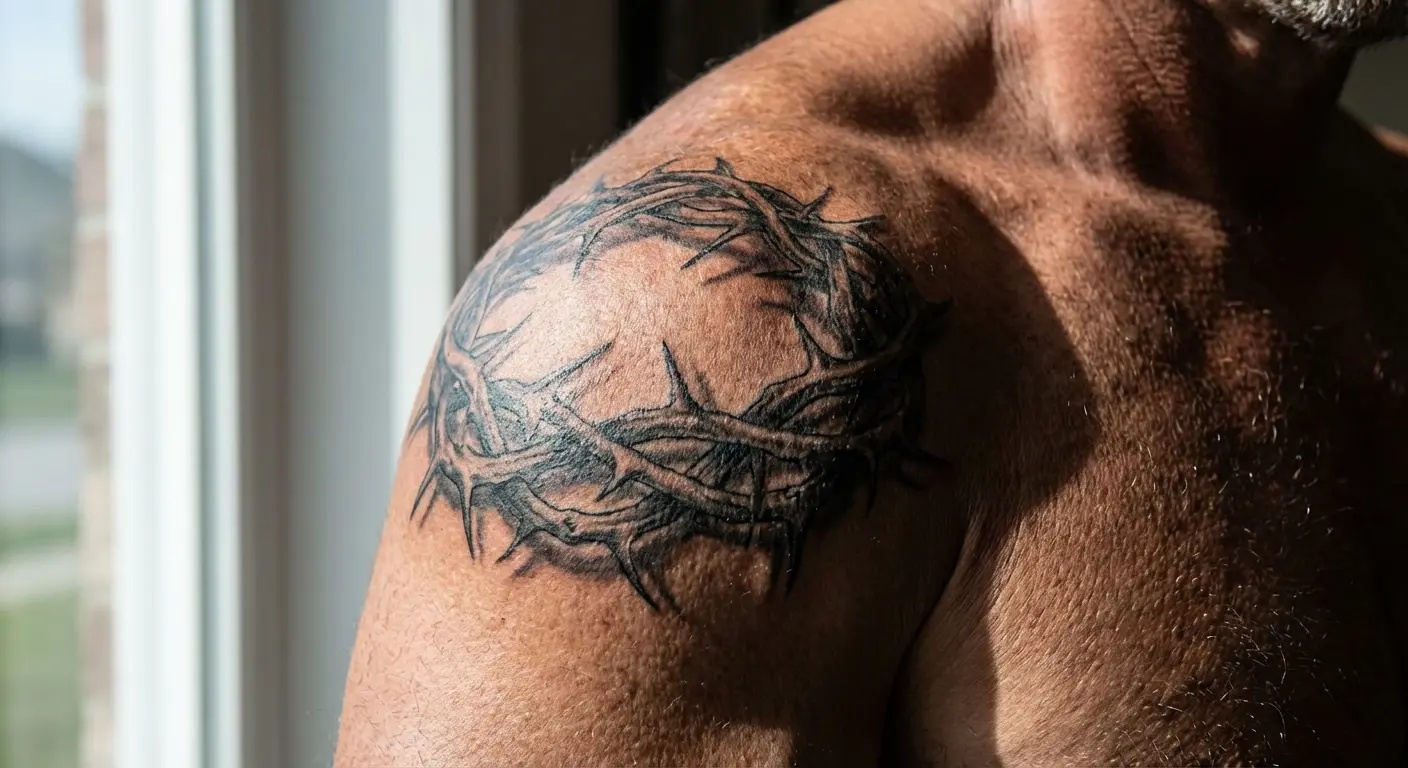
Put the crown across your shoulder and it looks like armor, which is kind of the point. The design works best when the thorns angle downward toward your arm, creating movement that suggests active protection. The crown of thorns tattoo shoulder placement offers exceptional versatility for both concealment and display.
The realistic versions need serious shadow work to look three-dimensional. If your artist can make the thorns look like they’re actually rising off your skin, you’ve found the right person. Some people even add subtle scarring underneath, like the thorns have been there long enough to become part of them. Dark, but effective.
This crown of thorns tattoo shoulder placement resonates with people who’ve developed thick skin in professional environments or who’ve learned to shoulder burdens that once felt crushing. The realistic crown of thorns tattoo approach emphasizes the weight and texture of what you’re carrying.
2. Wrist Fortress: Bracelet-Style Protection
Crown of thorns wrist tattoo designs (for everyone, though they used to skew masculine) work as constant visual reminders wrapped around one of your most vulnerable areas. Your wrists carry visible veins, delicate bones, and cultural associations with both creation (what your hands build) and destruction (historical self-harm symbolism). The crown of thorns wrist tattoo creates a powerful boundary marker in a highly visible location.
Wrapping them in thorns reclaims that vulnerability as strength. The bracelet style works best when thorns vary in size, creating rhythm rather than uniformity. Some designs incorporate small breaks in the circle, suggesting you choose when to lower your defenses.
This placement stays visible during most daily activities, which means you’ll interact with it constantly. That repetition matters if you’re using the thorn tattoo as a grounding tool during anxiety or as a reminder of boundaries you’ve committed to maintaining. Similar to how semicolon tattoos represent continuing your story, wrist placement keeps the symbol in constant view as a daily commitment to self-preservation.
Warning: wrist tattoos are basically always visible unless you wear long sleeves year-round. If you’re in a conservative field, think hard about this.
3. Finger Ring of Resilience
Crown of thorns finger tattoo designs compress the entire symbol into minimal space, requiring serious technical skill from your artist. These work best as single-finger bands rather than attempting to span multiple fingers.
The ring placement carries obvious marriage/commitment symbolism, but here you’re committing to self-preservation rather than partnership. The finger version is commitment ink. Not “I love you” commitment. More like “I’m willing to endure this pain and constant fading” commitment. Different vibe.
Real talk: finger tattoos fade like crazy. The constant hand washing and friction means you’ll need touch-ups every 2-3 years. Some people actually like this built-in impermanence. Others find it annoying.
The pain level runs higher than fleshier areas, adding a layer of earned-it credibility. Finger and hand tattoos can also limit job options. That’s changing, but it’s still real in corporate environments, healthcare, law. Know what you’re signing up for.
4. Chest Shield with Radiating Thorns
Centering a thorn crown over your sternum positions it directly above your heart. Obvious protective symbolism, but it works.
The best versions radiate outward rather than forming a perfect circle, suggesting active defense rather than passive enclosure. The thorn crown tattoo over the heart becomes a literal shield for your emotional core.
You can work with your artist to determine how far the thorns extend. Stopping at your collarbones, reaching toward your shoulders, or spanning your entire chest. This placement hurts significantly due to proximity to bone and thin skin. The needle feels like bone-on-bone vibration for 4+ hours. But that intensity often feels appropriate for people marking the end of allowing others access to their emotional core.
The chest location stays private under most clothing, making this a personal talisman rather than a public declaration. Realistic crown of thorns tattoos in this position sometimes incorporate subtle anatomical elements (suggestions of ribs, heart outline) to emphasize what you’re protecting.
Heads up: chest pieces suck to heal. Every time you move your arms, you’re stretching the skin. Plan for 3-4 uncomfortable weeks. And no swimming or sun during that time.
5. Full Sleeve Thorn Barrier
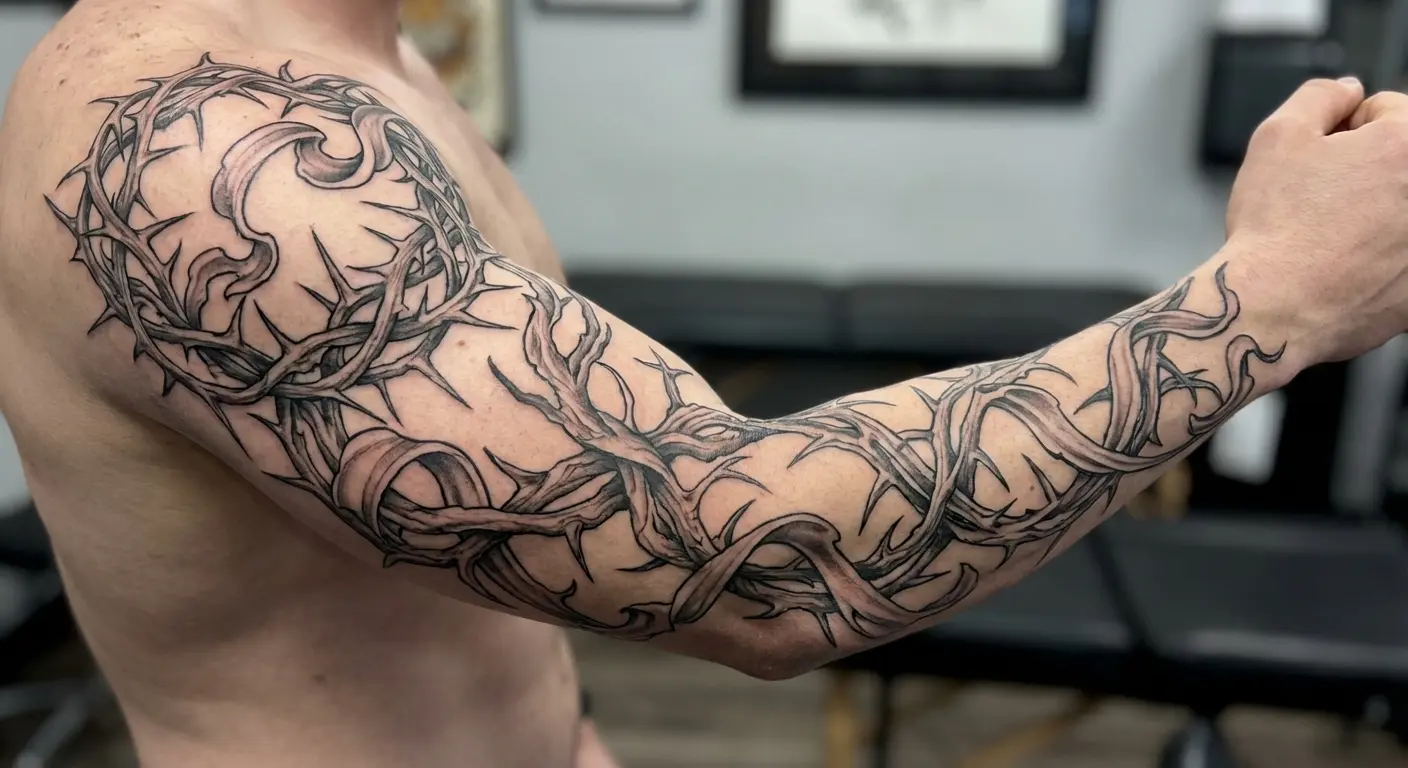
Integrating a crown of thorns into a full sleeve design lets you build narrative context around the protective element. The thorns might emerge from roots at your wrist and bloom into roses at your shoulder, or they might wrap around other symbolic elements you’re defending.
This approach works well if you’re already planning extensive arm work and want the thorn crown to serve as connective tissue between other images. The sleeve format gives you space to show the thorns from multiple angles, creating a more complete sculptural effect.
You’ll work with your artist over multiple sessions, which allows the design to evolve as your understanding of what you’re protecting becomes clearer. Some people add elements over time, building the barrier gradually rather than all at once.
Budget reality check: full sleeve thorn barriers take 20+ hours and $2,000-$3,000+ depending on your city and artist. Make sure you’re committed before you start.
6. Ankle Chain of Endurance
Ankle placement inverts the typical crown positioning, grounding the symbol at your foundation rather than elevating it. This works well for people whose protective boundaries relate to where they go, who they follow, or what paths they refuse to walk anymore.
The circular nature of ankle tattoos means the design connects to itself, creating an unbroken barrier. Thorn crowns in this location often incorporate smaller, more delicate thorns than shoulder or chest versions, acknowledging that protection doesn’t always require aggressive display.
The ankle location lets you hide or reveal the tattoo with sock and shoe choices, giving you control over when others see this aspect of your story. Pain levels vary dramatically depending on your ankle bone prominence and pain tolerance. Lots of bone, not much padding.
7. Forearm Band with Breaking Thorns
Positioning a thorn crown as a forearm band puts it in constant view (yours and others’), making this the choice for people ready to openly acknowledge their boundaries. The most interesting versions show thorns in the process of breaking or falling away, suggesting that what once protected you might be evolving into something else.
This creates visual tension. Are the thorns failing, or are you strong enough now that you don’t need them as desperately?
The forearm location offers enough space for detail work while remaining easily visible for daily reinforcement. You can orient the design so the thorns point toward or away from your hand, subtly shifting whether the protection focuses inward (guarding yourself) or outward (warning others).
Forearm bands photograph well, which matters if you want to share your ink on social media or use it as a conversation starter about boundaries and growth.
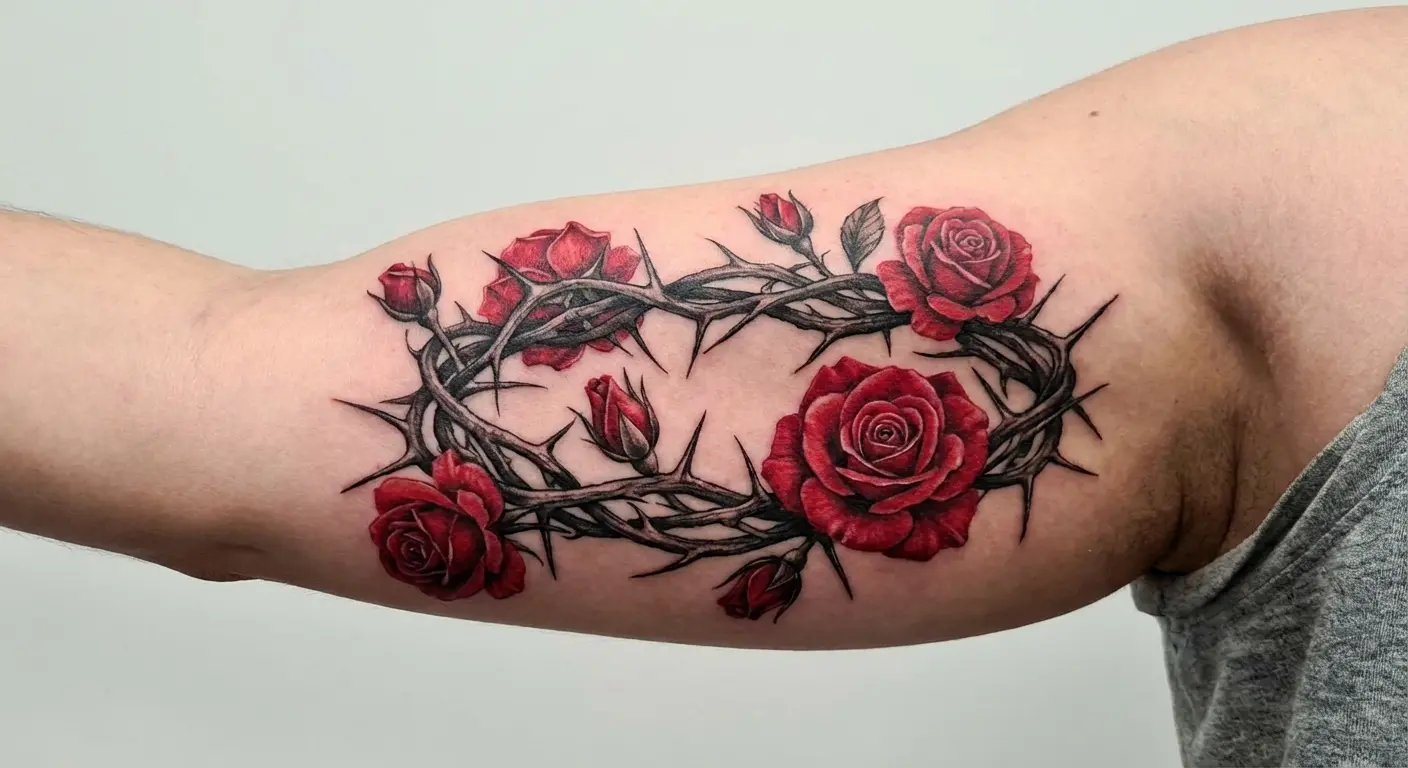
8. Blooming Rose Crown
Integrating roses into a thorn crown creates the most obvious (but still powerful) transformation metaphor. The design choice becomes: do the roses emerge from the thorns, or do they coexist separately?
Roses growing directly from thorns suggest your growth is inseparable from your pain. Roses woven through but distinct from thorns suggest you’ve added beauty to your story without erasing the difficult parts.
Color choices matter here. Red roses carry romance and passion associations. White roses suggest purity or new beginnings. Black roses lean into the darkness rather than contrasting it.
You might consider roses in various stages of bloom. One version I saw had three roses: a tight bud at the back, full bloom at the front, and wilting petals falling toward the wrist. It told a whole timeline.
This design appeals to people who want accessible symbolism without requiring explanation to every observer. Everyone understands roses and thorns.
Crown of Thorns as Transformation: Growth Through Pain
What if the thorns aren’t about defending what you have? What if they’re about marking what you’ve become?
These designs acknowledge that pain happened while emphasizing what emerged from it. You’re not celebrating trauma. You’re documenting that you didn’t stay in that moment.
The visual language here combines thorns with elements of growth, light, or metamorphosis. These work well for people who’ve moved through grief, addiction recovery, abusive relationships, or major life transitions. The crown becomes evidence of the “before” while the additional elements prove the “after.”
You’re carrying both truths simultaneously. The design doesn’t erase what happened. It shows what you built from the wreckage.
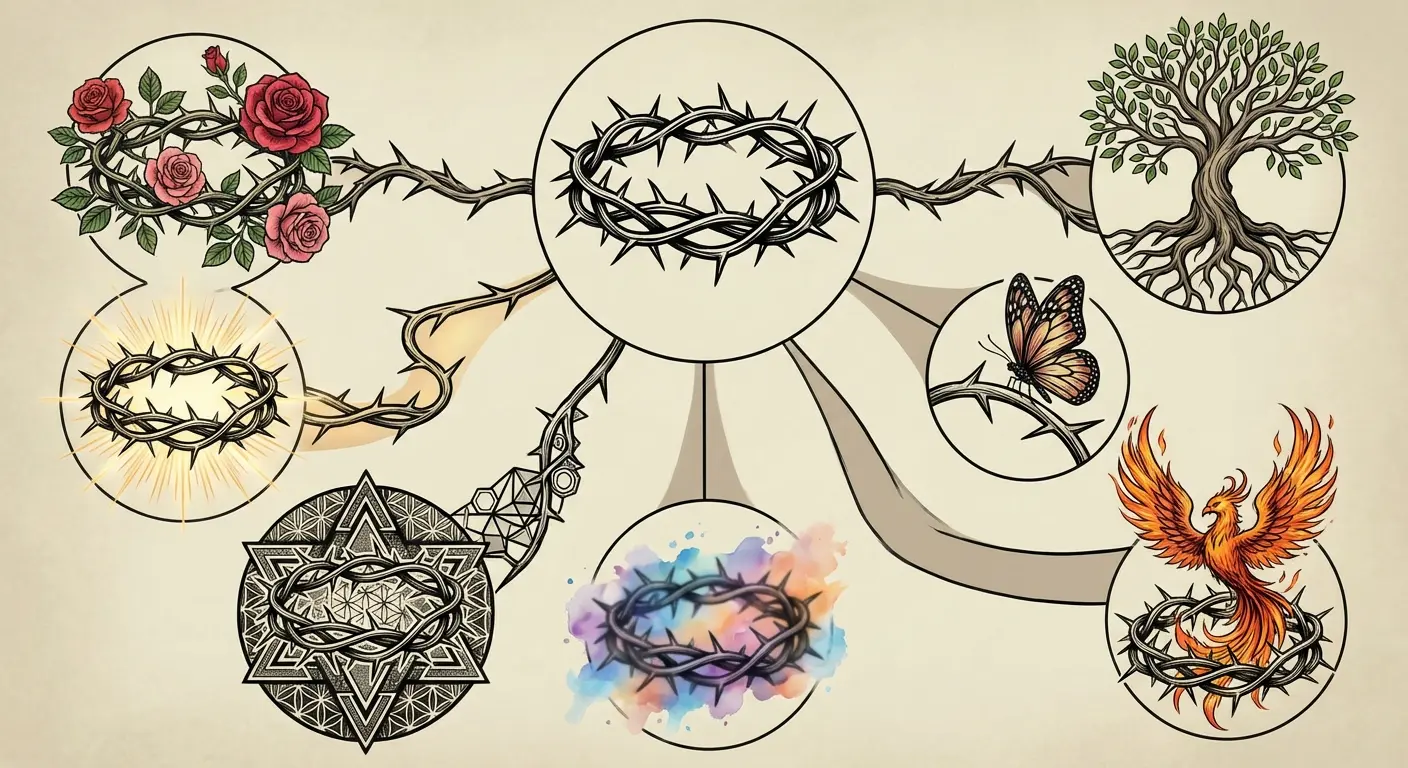
Understanding how different transformation elements shift the meaning helps you choose what resonates:
|
Transformation Element |
Primary Symbolism |
Best Placement |
Color Impact |
|---|---|---|---|
|
Roses |
Beauty from pain, coexistence of opposites |
Any size works |
Red (passion), White (renewal), Black (embracing darkness) |
|
Light Rays |
Liberation, breakthrough moments |
Needs space for dimensional effect |
Often negative space or bright yellows/whites |
|
Geometric Fragments |
Intellectual processing, reconstruction |
Modern aesthetic, abstract interpretation |
Typically monochrome |
|
Phoenix |
Rebirth through struggle, hard-won transformation |
Requires significant space (back/chest/thigh) |
Traditional reds/oranges or custom palette |
These are the most common transformation elements, but honestly, I’ve seen people combine thorns with everything from compasses to constellations. The symbol is flexible enough to hold whatever growth story you’re telling.
9. Broken Crown with Emerging Light
Showing the thorn crown fractured or dissolving, with light rays breaking through the gaps, creates a powerful liberation narrative. This design requires serious shadow work to achieve believable dimensional effect. If your artist can’t nail light sources, skip it.
The light can be rendered as realistic sun rays, abstract geometric beams, or even negative space. That ‘s the untattooed skin working as illumination against darker surrounding ink. Your natural skin tone becomes the brightest part. But this only works if you plan it from the start. Can’t add it later.
The breaking pattern matters. Clean breaks suggest deliberate dismantling, while crumbling or dissolving thorns imply gradual erosion over time. Both tell valid stories about how transformation happens.
This design works well for people marking specific breakthrough moments (completing therapy, reaching sobriety milestones, leaving toxic situations). The visual drama makes it effective as a standalone piece or as the focal point of a larger composition.
10. Geometric Fragmentation Design
Deconstructing the crown of thorns into geometric fragments creates a modern, abstract interpretation that suggests analysis and reconstruction of your pain. The organic thorn shapes break into clean lines, triangles, or polygons, showing what happens when you examine suffering from new angles.
This style appeals to people who process experiences intellectually or who appreciate contemporary tattoo aesthetics. The geometric elements can remain clustered (suggesting the crown is fragmenting but still recognizable) or scatter across a larger area (implying complete dissolution and reformation).
The geometric pieces can stay circular or scatter completely. Your call.
This approach lets you carry the crown of thorns symbolism while creating something visually unexpected that doesn’t immediately read as religious imagery. The minimalist version seems easier, but finding an artist who can make simple lines look good is actually harder than finding someone who can do realistic thorns.
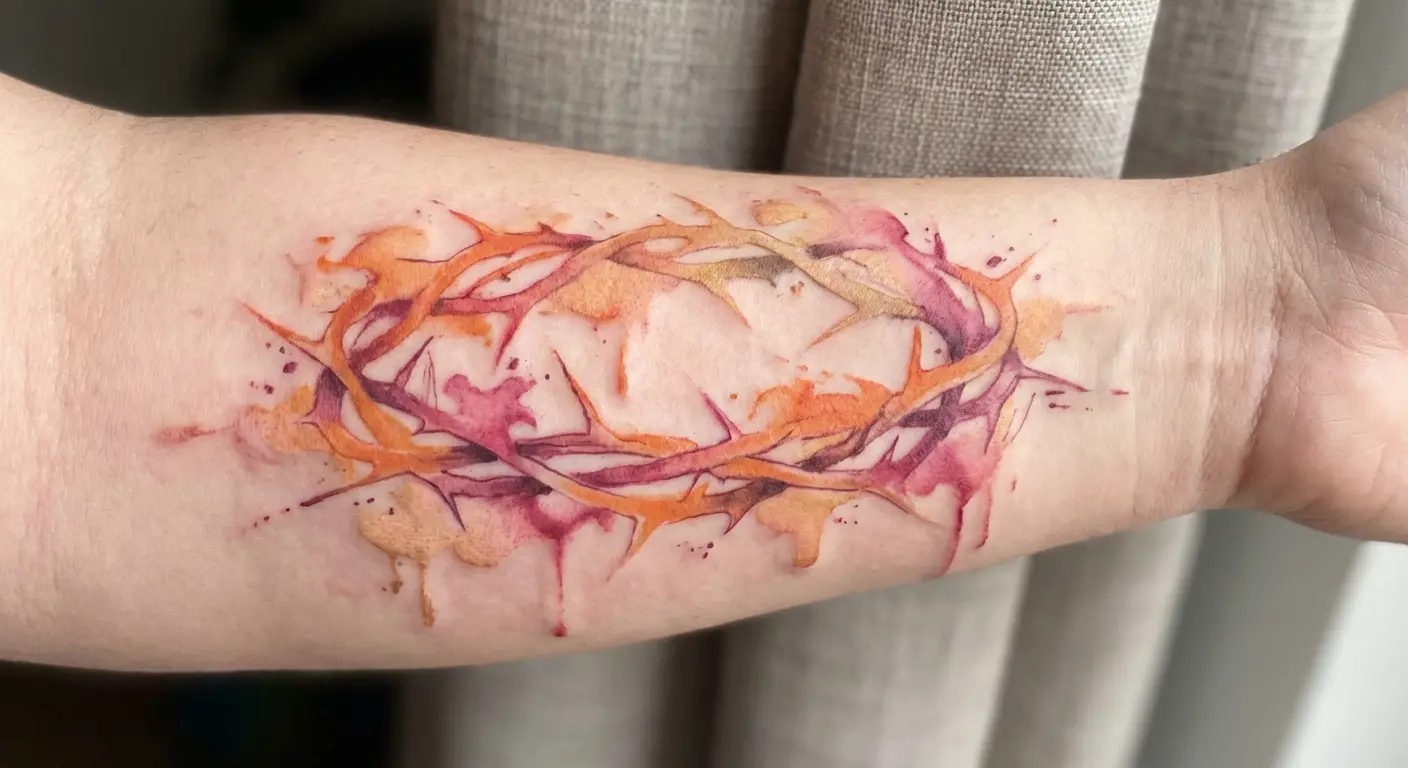
11. Watercolor Dissolution
Rendering the thorn crown in watercolor style, with edges that blur and bleed into softer colors, suggests fluidity and emotional processing. The crown maintains its recognizable shape while losing its harsh definition, showing that your relationship with pain has softened even if the experience hasn’t disappeared.
Color selection drives the emotional tone. Cool blues and purples lean melancholic and reflective, while warm oranges and pinks suggest healing and hope. The watercolor technique works best with artists who specialize in this style, as achieving the characteristic bleeds and gradients requires specific technical approaches.
I go back and forth on watercolor thorns. Sometimes they look incredible, sometimes too soft for the symbolism. Depends on execution, I guess.
This design appeals to people who want to acknowledge pain’s lasting impact while emphasizing that sharp edges have dulled over time. The softer aesthetic also makes the crown of thorns more approachable for people who want the symbolism without the aggressive visual weight of realistic thorns.
Fair warning though: watercolor thorns are trendy right now, which means they might look dated in 5 years. Just be aware.
12. Phoenix Rising Through Thorns
Okay, controversial take: the phoenix-and-thorns combo is usually too much. You’re layering two heavy symbols, and unless your artist really knows what they’re doing, it reads as cluttered rather than powerful.
That said, when it works, it WORKS.
The best version I saw had the phoenix just starting to emerge from the crown’s center. You could see the head and one wing, with the rest implied. Way more effective than trying to show the whole bird.
The most effective versions show the phoenix emerging from within the crown rather than simply positioned above it. Big difference in meaning. You’re saying your transformation came from the painful experience, not despite it.
You can determine how much of the phoenix to show (just the head breaking through, wings spreading from the crown’s center, or a full bird rising with thorns falling away). The phoenix’s positioning relative to the thorns tells your story: is the bird struggling to escape, or has it already broken free and the thorns are falling behind?
This requires significant space and works best as a larger back, chest, or thigh piece. Don’t try to cram this onto a wrist or ankle. The dual symbolism resonates with people who’ve experienced multiple transformations or who want to emphasize that their rebirth was hard-won rather than gracefully achieved. The phoenix tattoo meaning adds another layer when combined with crown of thorns imagery, creating a powerful narrative of transformation.
13. Butterfly Metamorphosis Crown
Butterflies offer more delicate transformation symbolism than phoenixes, suggesting gentler change or emphasizing beauty over power. Integrating butterflies with a thorn crown works several ways: butterflies landing on the thorns (finding rest in difficult places), butterflies emerging from the crown’s center (transformation originating from pain), or thorns gradually morphing into butterfly wings (complete metamorphosis).
The butterfly species matters if you want to add personal significance. Monarchs carry migration and journey symbolism, while moths (technically not butterflies but visually similar) lean into finding light in darkness.
This design appeals to people whose transformation felt more gradual than dramatic, or who want to emphasize the quiet strength of survival rather than aggressive resilience. The combination works well for smaller placements where a phoenix might overwhelm the space.
Random observation: the butterfly version works surprisingly well for men, even though butterflies get coded feminine. The thorns balance it out. Anyway.
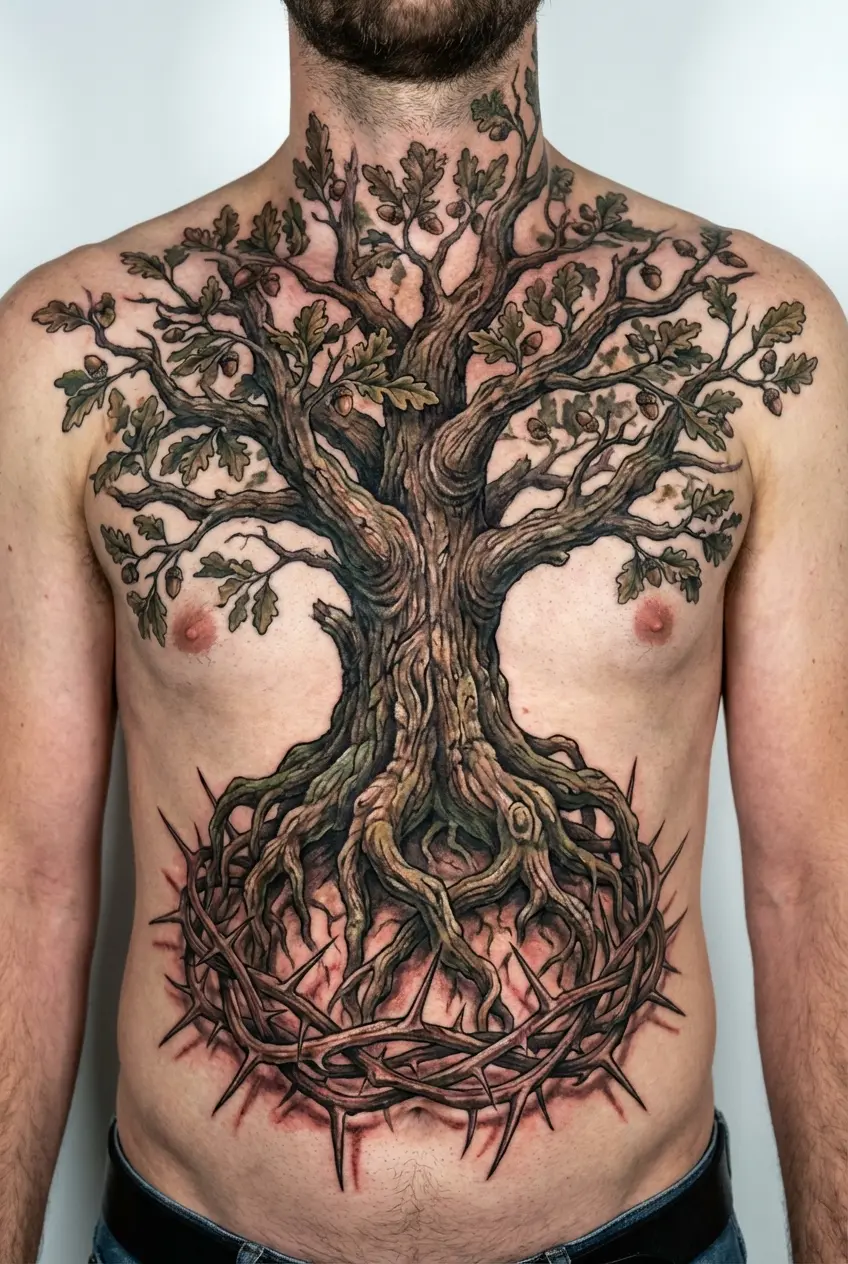
14. Tree Growth Integration
Showing the crown of thorns as roots from which a tree grows inverts the typical crown positioning while creating powerful growth metaphor. The thorns become the foundation rather than the barrier, suggesting your difficult experiences literally ground and nourish who you’ve become.
This design requires vertical space and works well along the spine, ribs, or outer thigh. You’ll work with your artist to determine tree type (oak for strength, willow for flexibility, cherry blossom for beauty and impermanence) and whether to show the full tree or just the trunk and lower branches.
Some versions incorporate the crown shape into the root system while others let the roots sprawl naturally with thorn-like qualities. This appeals to people who view their pain as foundational to their identity rather than something to overcome or escape. You’re not trying to remove the thorns. You’re showing what you built with them.
Crown of Thorns as Identity: Personal Sovereignty
So we’ve covered thorns as armor and thorns as transformation. But there’s a third interpretation that’s becoming more common: thorns as power. Not suffering, not even growth. Just sovereignty. The crown part matters as much as the thorns.
You’re marking yourself as someone who rules their own life, even when that sovereignty comes with sharp edges and difficult choices. These interpretations work well for people who’ve claimed autonomy after periods of being controlled, or who want to mark their commitment to self-determination.
The symbolism shifts from “I suffered” to “I reign over my own story, and I’m not afraid of what that requires.”
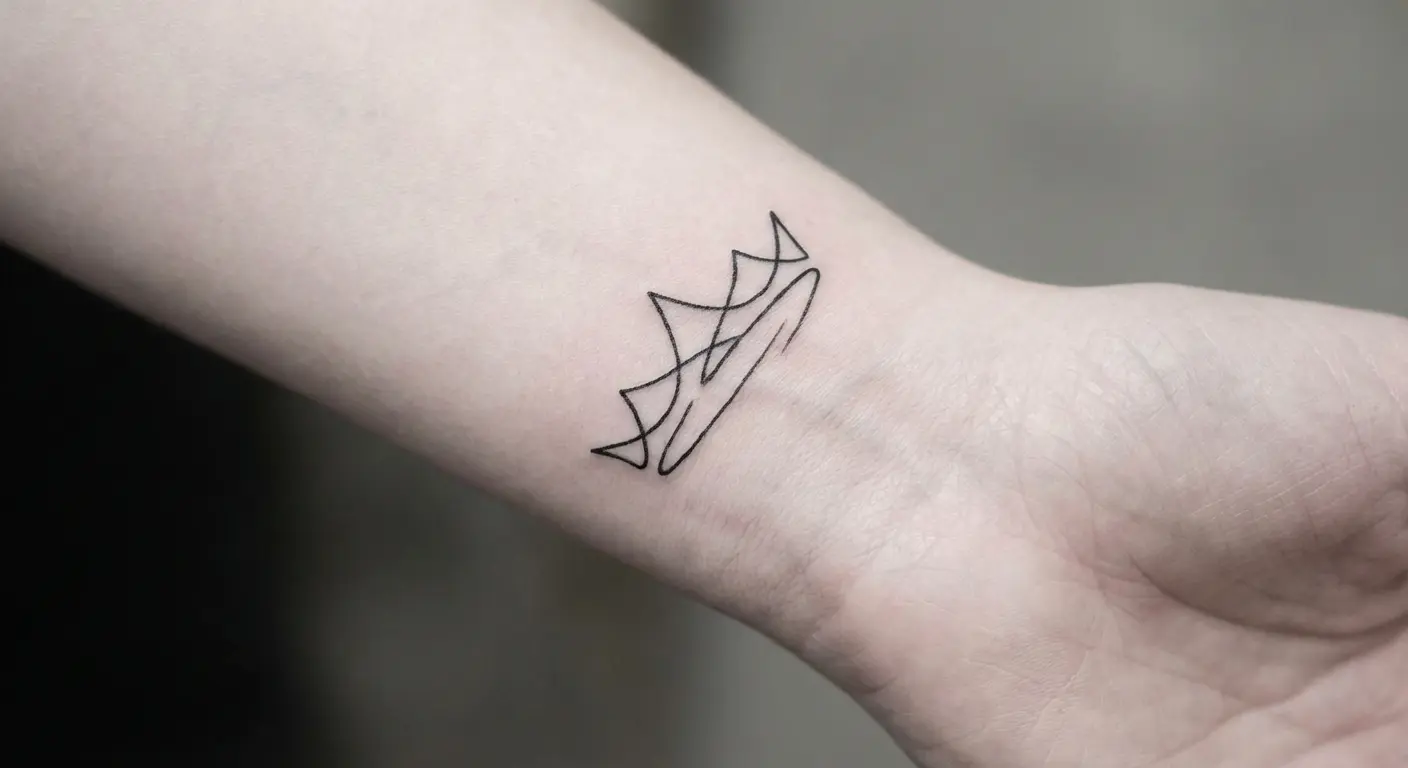
15. Minimalist Line Crown
Reducing the crown of thorns to simple line work creates a subtle, modern interpretation that emphasizes the crown shape over the thorn details. This style uses clean, continuous lines to suggest the circular form with minimal thorn indication (small points or angles rather than detailed barbs).
The minimalist approach works well for people who want the symbolism without the visual weight, or who prefer contemporary tattoo aesthetics over traditional religious imagery. This design scales effectively to smaller placements (behind the ear, inner wrist, ankle) while remaining recognizable.
The simplicity also leaves room for personal interpretation from observers, who might see it as decorative before recognizing the thorn crown reference. You can work with your artist to determine line weight (delicate single lines vs. bolder strokes) and whether to maintain perfect symmetry or introduce organic irregularity.
Those interested in subtle designs might also explore small tattoo ideas that carry significant meaning without overwhelming visual presence.
The minimalist version only works if you commit to thin lines. Try to make them bolder and you lose the whole aesthetic.
16. Inverted Power Crown
Flipping the crown of thorns upside down (thorns pointing upward instead of inward) transforms it from a symbol of suffering into a warning: you’re crowned, and you have defenses. This orientation shift fundamentally changes the meaning while maintaining recognizable imagery.
The upward-pointing thorns suggest active protection and boundaries rather than passive endurance. This design works well when positioned on the head, neck, or upper back, where the inverted orientation feels most natural.
You might be thinking the inverted crown is too edgy or trying too hard. Fair. It’s not subtle. But if you want to make a statement about claiming power, subtle probably isn’t your goal.
You can combine the inverted thorn crown with traditional crown elements (jewels, crosses, royal symbols) to create visual tension between power and pain. This appeals to people who’ve claimed authority in their lives and want to mark that sovereignty while acknowledging it wasn’t freely given. You fought for your crown, and the thorns prove it.
17. Abstract Circular Authority
Creating an abstract circular design that suggests crown of thorns without literally depicting it gives you maximum interpretive flexibility. The circle might be formed by angular shapes, broken lines, or geometric patterns that evoke thorns without rendering them realistically.
This approach works well if you want personal significance that isn’t immediately obvious to observers, or if you prefer contemporary abstract tattoo styles. The circular form maintains crown associations while the abstract execution prevents automatic religious interpretation.
You’ll work closely with your artist to develop shapes and patterns that feel meaningful to your specific story while creating a visually balanced composition. This design appeals to people who want to carry the crown of thorns concept privately, revealing the specific symbolism only when they choose to explain it.
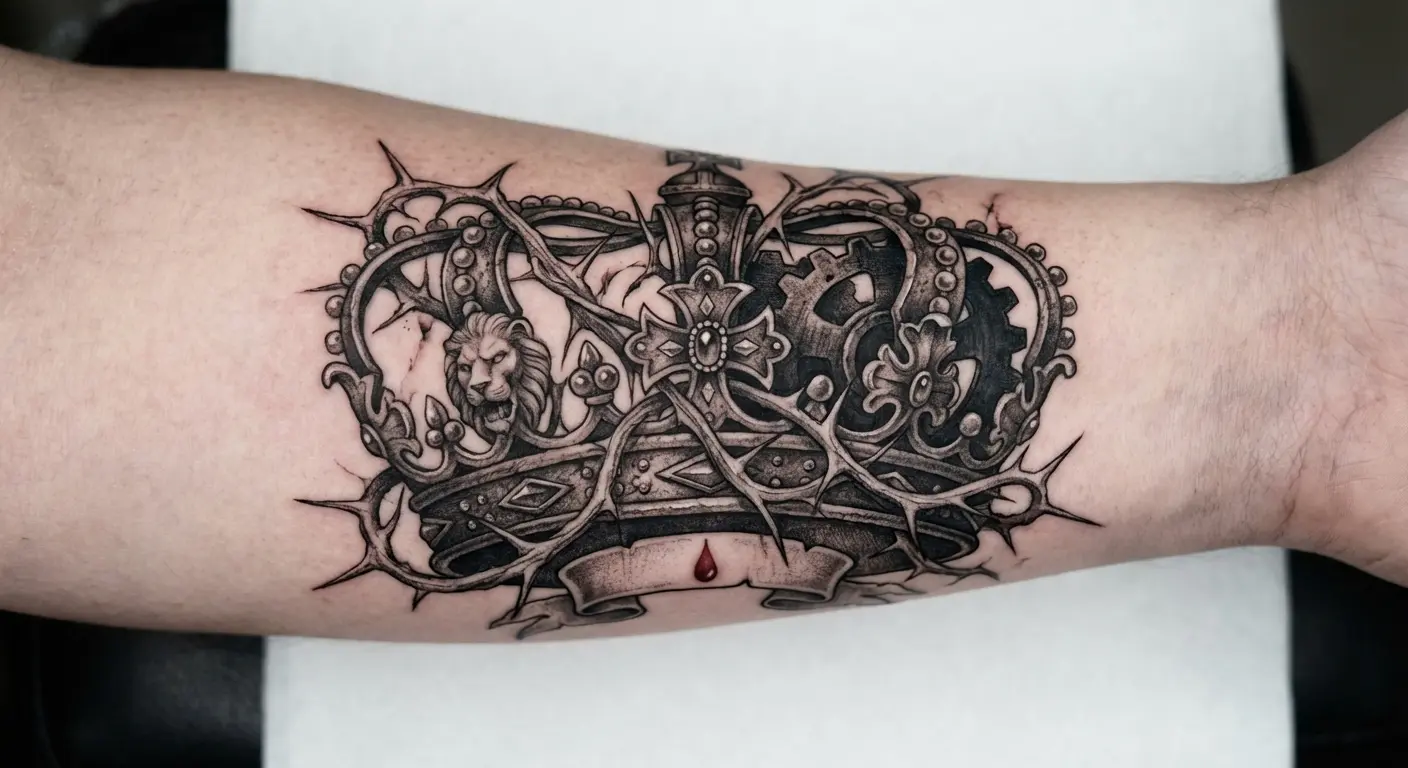
18. Combined Royal and Thorn Crown
Merging traditional royal crown imagery with thorn elements creates a hybrid symbol that emphasizes both sovereignty and its costs. The design might show a classic crown with thorns woven through it, thorns replacing jewels, or a crown that transitions from metal at the base to thorns at the peaks.
This combination makes the power/pain relationship explicit: you claim authority while acknowledging what it demands. The style can lean ornate (detailed metalwork, intricate thorn rendering) or simplified (bold outlines, minimal detail).
Placement options include anywhere you’d position a standard crown tattoo, with the head, chest, or forearm being most popular. This interpretation resonates with people who’ve earned leadership roles through difficult experiences, or who want to mark their refusal to choose between power and authenticity. You’re not hiding the thorns to appear more palatable. You’re integrating them into your crown.
For those exploring royal symbolism, our guide on crown tattoo meanings offers complementary perspectives on authority and personal sovereignty.
19. Personalized Symbol Integration
Weaving personal symbols (initials, dates, meaningful objects, cultural icons) directly into the thorn crown structure transforms it from universal symbol to specific autobiography. The thorns might form around a central image that represents what you’re protecting or what you’ve overcome.
Birth flowers, astrological symbols, religious icons from your specific tradition, or representations of lost loved ones can all integrate into the crown structure. This customization requires detailed consultation with your artist to ensure the additional elements enhance rather than clutter the design.
The personalization makes it unmistakably yours while maintaining the crown of thorns foundation. This approach works well if you want a design that prompts questions, giving you control over when and how you explain the layers of meaning. Each element adds specificity to your story without requiring a separate tattoo.
Nobody else will have this exact combination. That’s the point.
20. Name-Woven Thorn Design
Forming the crown of thorns from text (names, words, phrases, dates) creates a design where the thorns themselves carry specific meaning. The letters need careful styling to maintain readability while achieving the angular, sharp quality of thorns.
Honestly, the name-woven version sounds meaningful but usually looks messy. Letters don’t make convincing thorns unless your artist specializes in custom lettering. I’d skip this unless you find an artist who’s done it successfully before.
Script fonts generally don’t work here. You’ll need blocky, angular letterforms that can believably function as both text and thorns. The circular crown shape provides natural structure for text placement, though you’ll need to work with your artist on letter sizing to fill the circle without awkward spacing.
If you do go this route, it works well for honoring specific individuals or moments while maintaining the protective crown symbolism. You’re literally crowned by the words or names that shaped you. The text-based approach also creates a more abstract appearance from a distance, revealing its specific meaning only upon closer inspection.
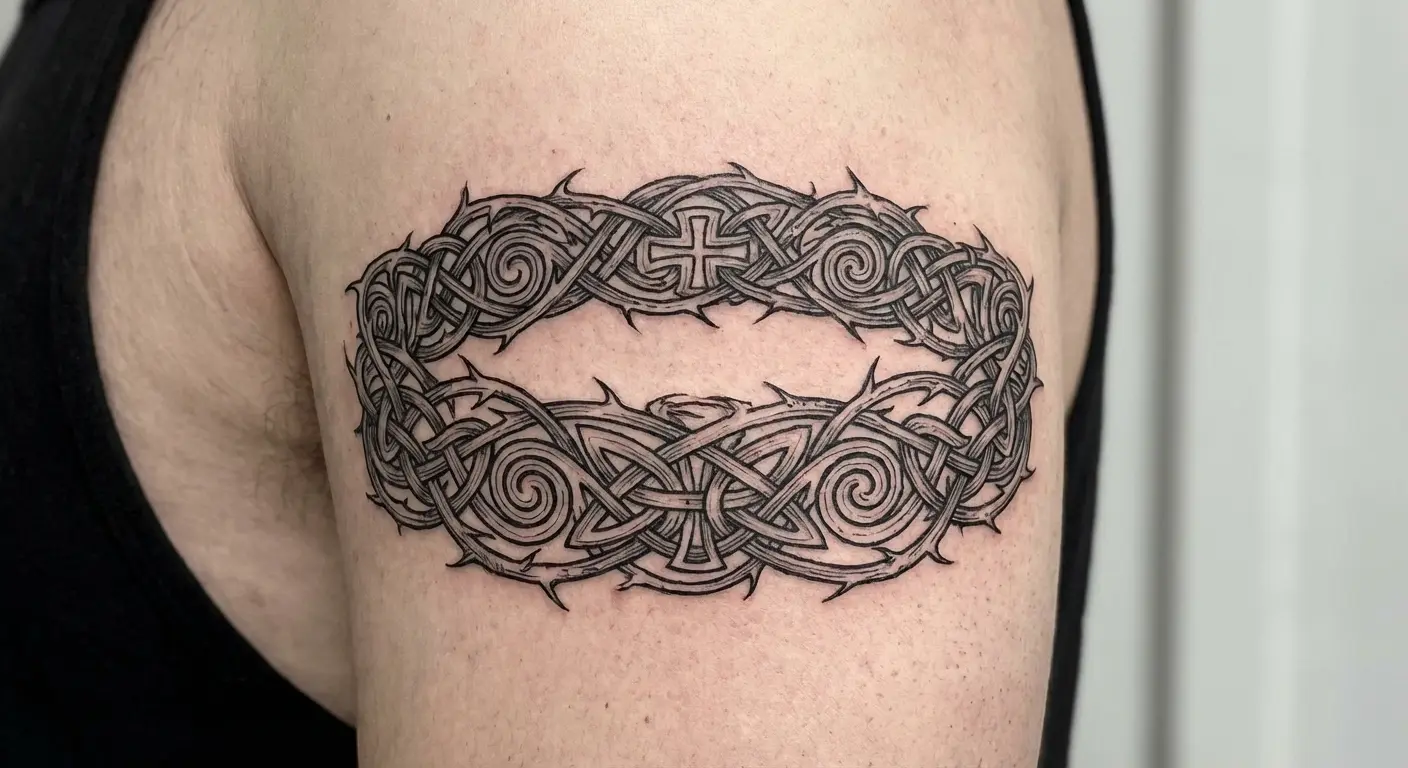
21. Cultural Fusion Crown
Blending crown of thorns imagery with symbols from your cultural heritage creates a design that honors multiple aspects of your identity. This might mean incorporating Celtic knotwork into the thorn structure, adding Polynesian pattern elements, integrating Aztec geometric designs, or combining the crown with symbols from your specific religious or spiritual tradition.
Here’s the thing though: cultural fusion can go wrong fast.
Do your research, especially if you’re pulling from cultures that aren’t yours. Some symbols are sacred or restricted. “It looks cool” isn’t enough reason. Find an artist from that culture if possible, or at least one who’s done extensive research. Be prepared to explain your choices. You’ll get questions. When in doubt, don’t. Stick to your own cultural heritage or universal symbols.
The fusion approach requires research and cultural sensitivity. Working with an artist familiar with both the crown of thorns symbolism and your chosen cultural elements ensures respectful, accurate representation.
This interpretation resonates with people navigating multiple cultural identities, or who want to show that their sovereignty and strength connect to ancestral roots rather than existing in isolation. You’re claiming your crown while acknowledging the lineage and traditions that inform how you wear it.
Bringing Your Vision to Life
Here’s the problem with crown of thorns tattoos: describing what you want is harder than it sounds. The difference between thorns pointing in versus radiating out completely changes the meaning, but try explaining that to an artist without a visual reference.
That’s why we built our tattoo generator. You can test whether you want realistic thorns or geometric abstraction, whether the crown should be complete or breaking apart, whether you want it combined with roses or standing alone. The tool lets you experiment with different interpretations until you land on something that captures your specific vision.
You’re not replacing your artist’s expertise. You’re just giving them a clear starting point instead of vague descriptions. Better communication means better results.
The realistic crown of thorns tattoo you’re envisioning needs precise visualization. The crown of thorns tattoo shoulder placement you’re considering might look completely different when you see it rendered versus how you pictured it in your head.
Finding the Right Artist
Finding the right artist matters more than finding the perfect design. Look for:
Portfolio showing similar style. Realistic thorns need different skills than geometric designs. Black and grey shading requires different expertise than watercolor technique.
Experience with the placement you want. Finger tattoos require specific technique. Chest pieces need artists who understand how to work with body contours.
Willingness to customize rather than just copy flash designs. You want someone who’ll adapt the concept to your specific story, not just trace a template.
Clear communication about what will and won’t work. Good artists tell you when something’s a bad idea. If they say yes to everything, they’re not thinking critically about your design.
Don’t choose based on price alone. Cheap crown of thorns tattoos look cheap. This isn’t where you bargain hunt.
Budget 6-8 weeks between consultation and first session if you’re working with a good artist. They’re booked. Most artists offer one free touch-up session 6-8 weeks after healing. Factor that into your timeline.
What to Avoid
Don’t copy someone else’s custom piece exactly. Inspiration is fine, duplication is tacky.
Don’t get a crown of thorns on a whim. This symbol carries weight. Make sure you’re ready. Look, if you’re getting a crown of thorns to mark trauma, make sure you’re ready to see it every day. Some people find it empowering. Others realize six months in that they don’t want the constant reminder. There’s no wrong answer, but think it through.
Don’t go too small with detailed thorns. They’ll blur into a blob. Thorn points blur over time anyway. Those super-fine detailed thorns you see on Instagram? They’ll look softer in 10 years. Not bad, just different.
Don’t cheap out. Bad crown of thorns tattoos are worse than no tattoo.
Don’t get matching crown tattoos with a partner. Seriously. Don’t.
Don’t ignore your gut. If something feels off about the design or artist, wait.
Timing and Practical Considerations
Timing matters:
Avoid summer for chest/shoulder pieces. You can’t swim or sun during healing (6-8 weeks). Winter is better for visible tattoos (easier to cover during healing). Don’t get tattooed right before major events (weddings, vacations, job interviews). Allow 2-3 months if you want it healed for a specific date.
Pain management tips:
Eat a real meal before your session. Low blood sugar makes pain worse. Chest and ribs hurt more than you expect. Some people need multiple sessions. Don’t drink alcohol the night before (thins your blood, makes you bleed more). Bring headphones. Distraction helps. If you need a break, speak up. Good artists would rather pause than have you pass out.
Aftercare reality:
Fresh thorn tattoos scab in weird patterns because of all the sharp angles. Don’t pick at them. Black ink holds better than color in thorns. Those sharp points blur over time, and color blurs faster. Wrist tattoos show every stage of healing, which some people find gross. Peeling, scabbing, all of it’s visible.
Use sunscreen on healed tattoos or expect more touch-ups. Sun exposure fades ink significantly.
Final Thoughts
Crown of thorns tattoos aren’t for everyone, and that’s kind of the point. You’re not choosing this because it’s pretty or because you saw it on Instagram. You’re choosing it because something in your story (protection, transformation, sovereignty, whatever) connects to thorns and crowns in a way that matters.
The 21 designs here are starting points, not blueprints. Your version should be different. Should be yours. Maybe it’s a shoulder piece that you can hide at work. Maybe it’s a wrist band that keeps you grounded during hard moments. Maybe it’s something I haven’t seen yet.
Take time with this. Sit with the designs that resonate. Find an artist whose style matches your vision. Realistic thorns need different skills than geometric ones. And remember: this tattoo will age with you. What it means today will deepen as you move further from whatever prompted you to consider it.
You’re marking something permanent about something that was temporary. The pain that shaped you isn’t who you are now. But it’s part of the story.
The thorns prove it.
