23 No Regrets Tattoos That Actually Mean Something Beyond the Phrase
Table of Contents
-
The Philosophy Behind Permanence
-
Anchored in Identity: Tattoos That Reflect Who You Are
-
Your Handwriting, Frozen in Time
-
Coordinates That Changed Everything
-
The Soundwave of a Voice You Can’t Hear Anymore
-
Your Own Fingerprint (Yes, Really)
-
A Constellation Map from a Specific Night
-
-
Rooted in Growth: Designs That Document Change
-
The Tree Ring Timeline
-
Before and After Silhouettes
-
Elevation Markers from Your Hardest Climbs
-
A Phoenix That Doesn’t Look Like Everyone Else’s
-
Scar Incorporation Art
-
-
Built on Connection: Ink That Honors Relationships
-
Matching Puzzle Pieces That Actually Fit
-
Your Kid’s Actual Drawing (Not a Cleaned-Up Version)
-
A Recipe in Your Grandmother’s Handwriting
-
The Last Text Message That Mattered
-
Coordinated Asymmetrical Designs
-
-
Grounded in Passion: Tattoos Celebrating What Drives You
-
Your Breakthrough Moment in Visual Form
-
The Tool of Your Trade
-
A Topographic Map of Your Favorite Trail
-
Sheet Music from Your Song
-
The Chemical Structure That Saved Your Life
-
-
Designed for Resilience: Symbols of Overcoming
-
Your Hospital Bracelet Date, Reimagined
-
The Semicolon (If It’s Actually Your Story)
-
A Scar Map That Tells Your Story
-
TL;DR
-
The whole “no regrets” thing isn’t about picking something so safe you can’t possibly hate it. It’s about going so personal that even if you change, the tattoo still means something.
-
Best tattoos = specific moments, relationships, or truths about YOU (not generic symbols everyone has)
-
Handwriting, coordinates, soundwaves = hyper-personal elements nobody else can replicate
-
Document evolution, don’t try to capture who you think you should be
-
Relationship tattoos work when they’re asymmetrical. Interesting alone, better together.
-
Tattoo what drives you, not what looks cool on Pinterest
-
Honor what you survived without making survival your whole identity
-
Test designs digitally before committing (obviously)
The Philosophy Behind Permanence
So apparently 32% of Americans have tattoos now (thanks, Pew Research Center, for counting). But we’re still stuck on the same tired question: “Won’t you regret it?”
Wrong question.
Try this instead: How do you pick something meaningful enough that regret never even shows up?
Every tattoo article tells you what NOT to get. Don’t tattoo names. Don’t pick trendy stuff. Don’t decide when you’re drunk. Cool, but what SHOULD you get? Because playing it safe isn’t exactly inspiring.
Look, permanence is scary. I get it. We’ve been basically trained to think we’ll outgrow everything we choose. You might change careers. Probably relationships. Definitely cities. Your beliefs will shift.
But some things don’t change.
The coordinates where your life shifted? Those are fixed. The soundwave pattern of a voice that shaped you? That stays the same. The exact handwriting you used the year everything changed? That’s frozen in time.
You’re not betting on your future self still connecting with the design. You’re documenting something that already happened. The ink just makes the invisible visible.
I’m giving you 23 options here. Some will resonate, most won’t. That’s fine. These aren’t templates to copy. They’re frameworks for creating tattoos that couldn’t possibly belong to anyone else.
Quick context: I’m not a tattoo artist. I’m someone who’s spent an embarrassing amount of time thinking about why some tattoos age well and others don’t, who’s talked to hundreds of people about their ink, and who’s made both good and questionable decisions about my own. Take this as informed perspective, not expert gospel.
Anchored in Identity: Tattoos That Reflect Who You Are
Identity tattoos work because they’re based on facts, not feelings. Your fingerprint doesn’t change. Your voice’s soundwave stays the same. The coordinates where you were born don’t move.
You might change careers, relationships, or beliefs, but your fingerprint stays yours. Your voice’s soundwave pattern doesn’t alter with time. The coordinates where you were born remain fixed on the map.
Go ahead and get extremely literal here. I’m serious. These designs often look deceptively simple but carry enormous personal weight. Skip the zodiac signs and generic symbols. We’re talking literal, physical, or astronomical data points that are uniquely yours.
1. Your Handwriting, Frozen in Time
Here’s something weird: your handwriting is temporary. The way you write at 25 won’t match how you write at 50. Your hand changes. Steadier or shakier, more confident or more careful.
So when you tattoo your own handwriting, you’re freezing a specific version of yourself.
Not the word you write, but the hand that wrote it.
I’m talking about your signature from the year you finally did the thing. Or that word you wrote in your journal during the worst year. Or just your initials in your 2019 handwriting, because 2019-you was a whole different person and you want to remember them.
This sidesteps the common regret trigger of getting someone else’s handwriting. What happens if that relationship ends? Your own handwriting never stops being yours. The person who formed those letters existed, shaped you, and remains part of your history regardless of who you become next.
One warning: don’t tattoo your current partner’s handwriting. I don’t care how long you’ve been together. Your own handwriting only.
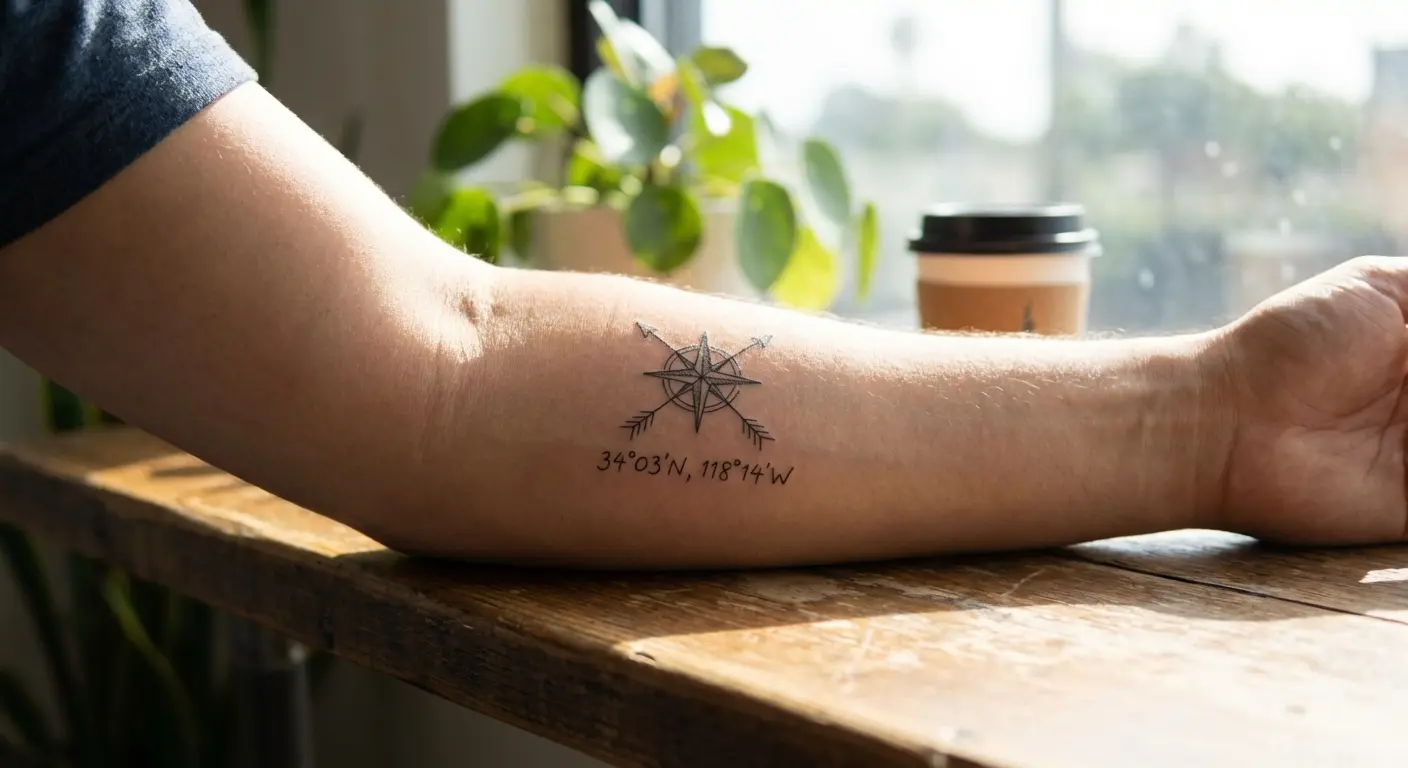
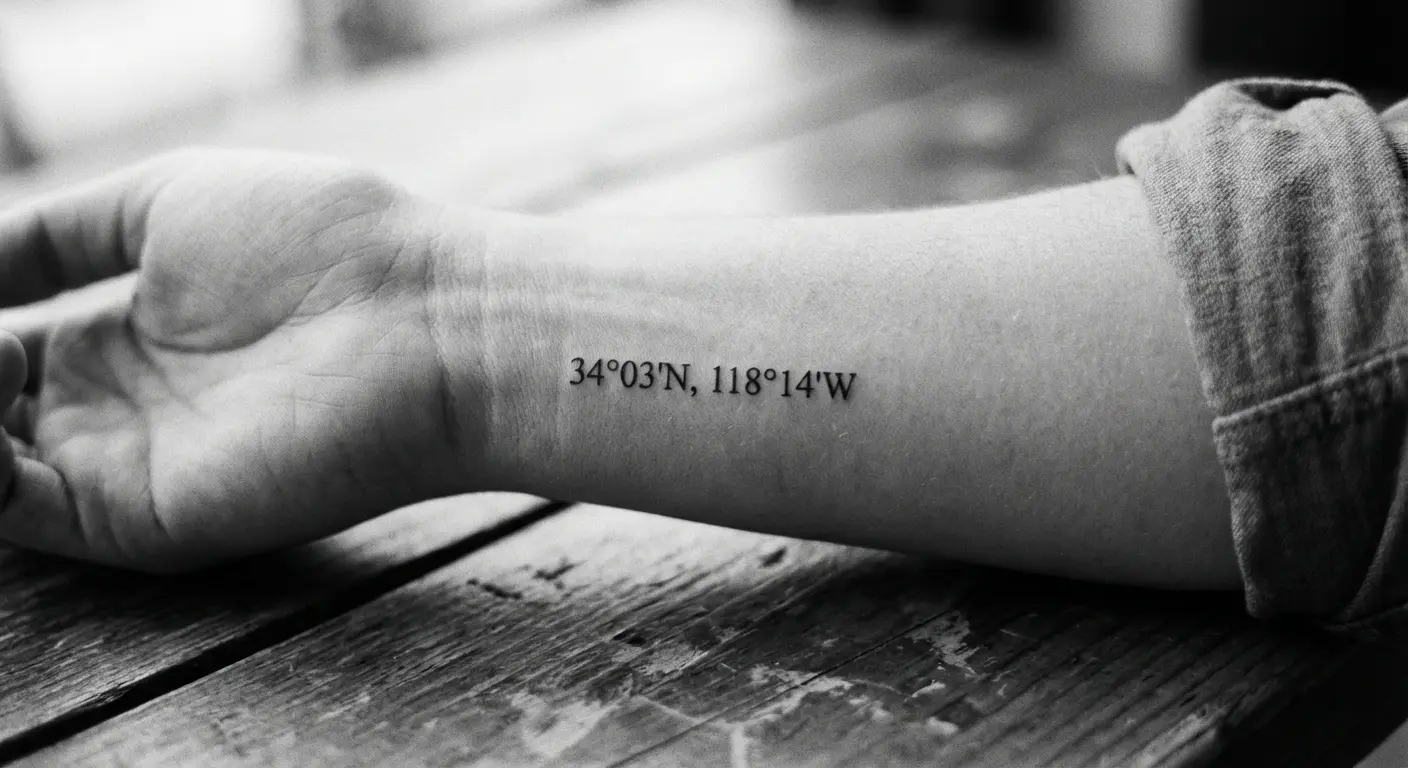
2. Coordinates That Changed Everything
Coordinate tattoos have become trendy, which usually means they’re headed for regret territory. But there’s a specific way to do them right: skip the obvious locations.
Where you were born doesn’t carry the same weight as the hospital where you survived something. Where you got engaged matters less than the exact spot where you decided to change your life. The trailhead where you scattered ashes. The random Denny’s parking lot where you sat in your car for two hours and finally admitted your marriage was over.
Get specific. Not just the city. The exact latitude and longitude down to the seconds.
This level of specificity makes the tattoo yours, not something anyone else would randomly choose. Degrees-minutes-seconds versus decimal degrees. These formatting choices matter for creating artist-ready designs that capture the exact location that transformed you.
Double-check your coordinates before the appointment. Triple-check them. I’ve seen people get the wrong coordinates tattooed because they grabbed the decimal degrees instead of degrees-minutes-seconds.
That’s permanent.
3. The Soundwave of a Voice That’s Gone
Soundwave tattoos have gotten popular, but most people approach them wrong. The concept involves taking an audio clip and converting it into the visual waveform pattern.
This hits different when you pick audio that’s gone forever.
The soundwave of your grandmother’s voice saying your name. The one you can’t hear anymore except in your head, and even that’s fading. The recording you have on your phone that you’re terrified of losing. Your daughter’s first word. The sound of your own voice before medical treatment changed it.
You need clean audio. There’s apps that can do this (I think SkySafari is one? Or maybe that’s for star maps. Anyway, there are soundwave apps). When exploring soundwave tattoo design options, you’ll need clean audio files and high-resolution waveform outputs to ensure your artist can replicate the pattern accurately.
You need an artist who’s done soundwave tattoos before. The waveform has to be precise or it looks like random squiggles. Ask to see previous soundwave work.
Even if you never hear that voice again, you’re carrying the pattern of it with you. Some tattoos come from loss, and this one acknowledges that grief without drowning in it.
Fair warning: Soundwave tattoos with fine lines need careful healing. They blur easily if you don’t follow aftercare instructions. This isn’t the tattoo to get right before beach vacation.
4. Your Own Fingerprint (Yes, Really)
Your own fingerprint sounds self-obsessed, right? Like, who tattoos their own fingerprint?
But hear me out.
Think about it: that pattern has been yours since before you were born. Before you had memories or trauma or a personality, you had those loops and whorls. It’s been yours longer than anything else.
Get a clean print (ink pad from any office supply store works), have your artist convert it to a stencil, and put it somewhere meaningful. Over your heart. On your wrist where you check your pulse. Back of your neck where you can’t see it but you know it’s there.
Nobody else knows what they’re looking at. They see some lines and swirls. You see proof you’re one of a kind.
This works best when you place it somewhere that means something. Your fingerprint on your ribcage over your heart, on your wrist where you check your pulse, or on the back of your neck where you can’t see it but know it’s there.
Fair warning: ribs hurt like hell. Everyone says it, and everyone’s right. If this is your first tattoo, maybe don’t start there.
5. A Constellation Map from a Specific Night
Star maps and constellation tattoos flood Instagram, which usually signals regret potential. Generic star patterns and zodiac constellations lack the specificity that makes permanent ink meaningful.
The approach that actually works: getting the exact star positions from a specific date, time, and location that mattered.
The night you survived. The night you met someone who changed everything. The night you were born, but rendered from the exact coordinates and time, not a generalized version.
There’s planetarium software that can do this. Stellarium, maybe? These apps can show you exactly what the sky looked like from where you were standing. The specificity transforms this from trendy to timeless.
These work especially well when you include the date and coordinates subtly within the design, creating layers of meaning that reveal themselves slowly.
Rooted in Growth: Designs That Document Change
Some of the most regret-proof tattoos acknowledge you’ve changed rather than trying to capture who you’ll always be. These designs work because they’re honest about transformation. They don’t pretend you’re the same person you were five years ago.
Instead, they document the journey.
Growth tattoos require self-awareness. You need to actually understand what you’ve overcome before you can tattoo it. This category celebrates evolution rather than fighting against it.
If you’re going the growth route, you’ve got options. Tree rings work if you want something you can add to over time. Literally living art. Before/after silhouettes are powerful but require some real self-awareness about who you were versus who you are now. Elevation markers are my personal favorite because they’re backed by measurable achievement. You either summited that peak or you didn’t.
Phoenix tattoos are tricky because everyone has one, but if you can reimagine the concept through your specific lens, they work. And scar incorporation is for people who want to transform existing regret (the scar) into meaning (survival).
Not everyone’s ready for that.
6. The Tree Ring Timeline
Tree rings mark years of growth. Wider rings for abundant years, narrow rings for harsh ones. Using this concept to create a visual timeline of your own life stages turns abstract time into tangible documentation.
Each ring = one year or era. Variations in thickness reflect how that period felt. The year you barely survived might be a thin line. The year everything opened up might be wide and bold. You can include subtle markers within specific rings. Tiny dates, initials, symbols only you understand.
Placement options matter here. These work beautifully as armbands, ankle bands, or wrapped around a forearm.
Here’s why this ages well: you can always add another ring. It’s one of the few tattoo concepts that’s designed to be continued. Living art rather than a static image. Your tattoo grows with you, literally.
7. Before and After Silhouettes
Transformation visualized through paired silhouettes creates powerful documentation. You might show your body’s outline before and after major weight loss, illness, surgery, or transition. You might depict the skyline of where you left and where you landed. You might illustrate the silhouette of who you were trying to be versus who you are.
Keep it stylized, not photorealistic. The power is in the contrast and what it represents, not in detailed accuracy.
These tattoos can be split. Before on one arm, after on the other. Or overlapped, with one silhouette emerging from or eclipsing another.
Both versions matter. You’re not erasing the before. You’re honoring the distance traveled. The person you were made the person you are possible.
Maybe I’m wrong about this, but I think before/after tattoos only work if you’ve done serious healing work first. Otherwise you’re just documenting pain, not transformation.
8. Elevation Markers from Your Hardest Climbs
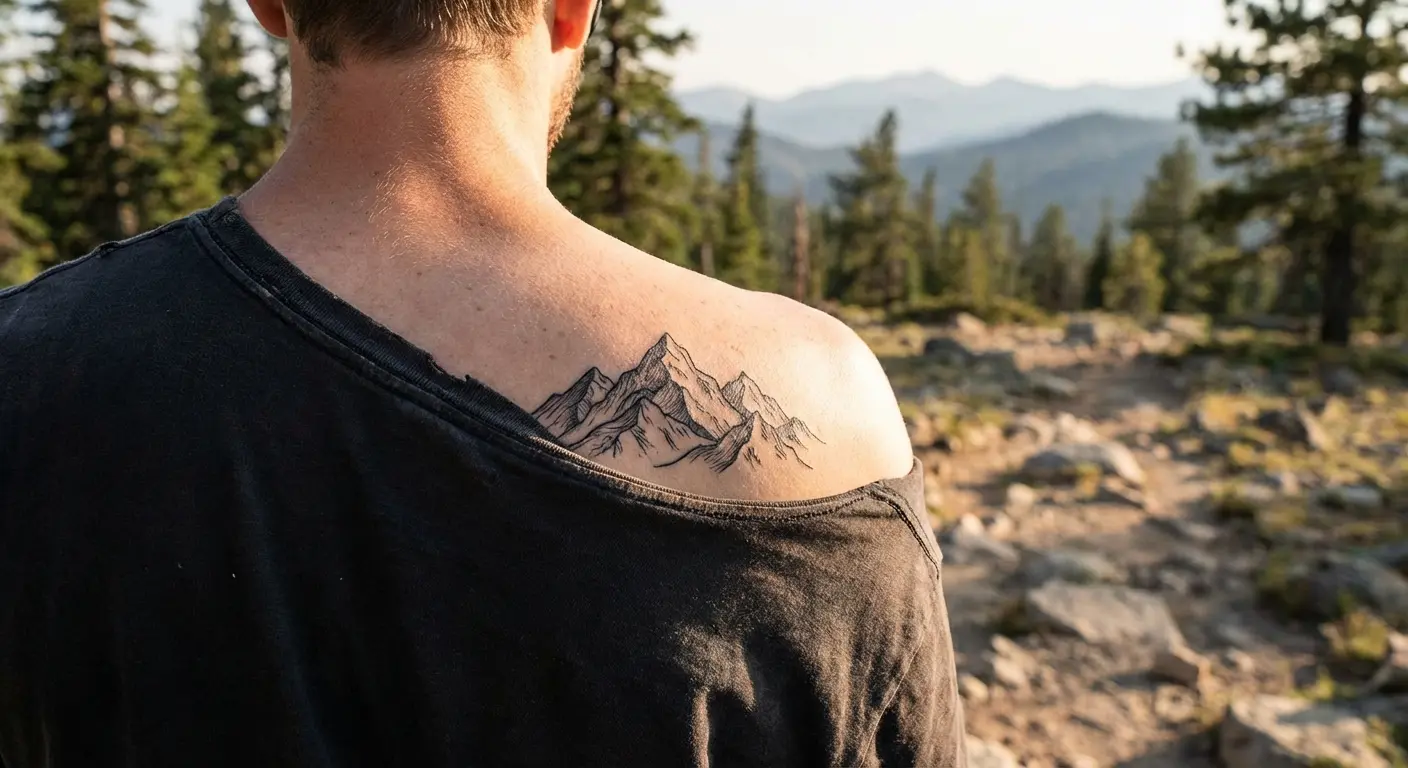
We’re talking literal elevation here, though the metaphor works too. If you’ve summited mountains, completed difficult hikes, or conquered physical challenges that required gaining altitude, the elevation numbers tell a story.
You might tattoo the elevations of every peak you’ve climbed, arranged in ascending order. You might get the elevation of the hardest summit you’ve reached. The number that represents your current ceiling.
Even if you stop climbing, those numbers represent what you were capable of at your peak. They’re evidence.
Visual options include simple numbers, topographic line integration, or incorporating the actual mountain profile at that elevation. These pair well with coordinates or elevation markers from the same location, creating layered meaning.
I know what you’re thinking: “But what if I stop climbing?” Then you stop climbing. The tattoo still proves you did it.
9. A Phoenix That Doesn’t Look Like Everyone Else’s Phoenix tattoos are everywhere, which usually means they’re regret magnets. But the symbol itself isn’t the problem. It’s the execution. Everyone gets the same rising bird with flames and spread wings. Full disclosure: I’m probably harder on phoenix tattoos than necessary because I’ve seen so many bad ones. If you love yours, great. I’m just saying most of them look identical. Reimagine the phoenix concept through your personal lens. What does rebirth look like for you specifically? Maybe it’s a phoenix made from your ashes. Metaphorically, incorporating elements of what burned down. Maybe it’s a phoenix in mid-transformation, still partly aflame. Maybe it’s abstract, just the suggestion of wings and fire rather than a literal bird. Read up on phoenix tattoo symbolism beyond the basic “rebirth” thing. It’ll help you create something less generic. Collaborate with your artist to create a version that couldn’t belong to anyone else. The phoenix myth resonates because transformation is universal, but your version of rising from ashes is yours alone. And yeah, I know I just spent 200 words telling you how to make a phoenix tattoo work after saying they’re overdone. I contain multitudes. Or contradictions. Probably contradictions. The impulse to get predictive or celebratory tattoos before the moment has happened can lead to immediate regret. The Columbus Dispatch recently reported on Ohio State fan Andy Nero, who got a “2025 Ohio State National Champions” tattoo on stage during a podcast taping. Before the season even started. The guy said “no regrets” immediately after, which… come on, dude. That’s not documenting what happened. That’s betting on something that might not happen. The phoenix works when it represents ashes you’ve already risen from, not flames you’re hoping to survive. Don’t be that guy.
10. Scar Incorporation Art
You’ve got scars already. Surgery scars, accident scars, self-harm scars, scars from illness or injury. Incorporating them into tattoo designs rather than covering them up transforms regret into meaning.
A scar becomes a tree trunk with branches extending from it. A surgical scar becomes a seam in a geometric pattern, emphasized rather than hidden. Self-harm scars become part of a garden, with flowers growing from the lines.
Some people want to cover their scars, not showcase them. That’s totally fine.
But for those who do want to highlight them, this approach acknowledges that your body has been through things and you’re still inhabiting it. The scars are part of your geography now. The tattoo doesn’t erase them. It reframes them as part of a larger landscape you’ve survived.
This requires an artist comfortable with sensitive subject matter. Some artists don’t want to tattoo trauma-related content. That’s okay. Find someone who does.
Scar incorporation tattoos require consultation with your artist about how scar tissue takes ink differently. It might require touch-ups. Factor that into your timeline and budget.
Built on Connection: Ink That Honors Relationships
Relationship tattoos are famously risky. Getting someone’s name or a matching couple tattoo often ends in regret. But connection-based tattoos can work beautifully when they’re designed with nuance.
Here’s the thing: you want something that celebrates the connection without turning into a painful reminder if things go south.
Turns out most people (69%, according to Pew Research) get tattoos to honor someone or remember something. So connection-based tattoos aren’t some niche thing. They’re literally the main reason people get inked.
The difference between regret and satisfaction comes down to whether you’re memorializing the relationship itself (which can end) or the impact that relationship had on you (which remains even after the person leaves).
We’re focusing on designs that work for friendships, family bonds, partnerships, and even relationships with people who’ve passed. Asymmetrical and incomplete designs that only make full sense when seen together create interdependence without identical ink.
11. Matching Puzzle Pieces That Actually Fit
Matching tattoos usually mean identical designs, which feels lazy. Puzzle pieces that interlock when you put the tattooed body parts together create something more meaningful. Your wrist and your best friend’s wrist. Your shoulder blade and your sibling’s shoulder blade.
The pieces should be designed so they’re interesting independently but clearly incomplete. When you align them, they form something whole: a complete image, a full phrase, a finished pattern.
The technical challenge: your artist needs to design pieces that account for skin texture, body curves, and how you’ll position yourselves to connect them.
The payoff is that even if the relationship ends, you’ve got an interesting abstract design that doesn’t scream “failed matching tattoo.” It just looks intentionally partial, which is honest.
12. Your Kid’s Actual Drawing (Not a Cleaned-Up Version)
Parents often get their children’s artwork tattooed, but they make a crucial mistake: they have the artist “clean it up” or make it more polished.
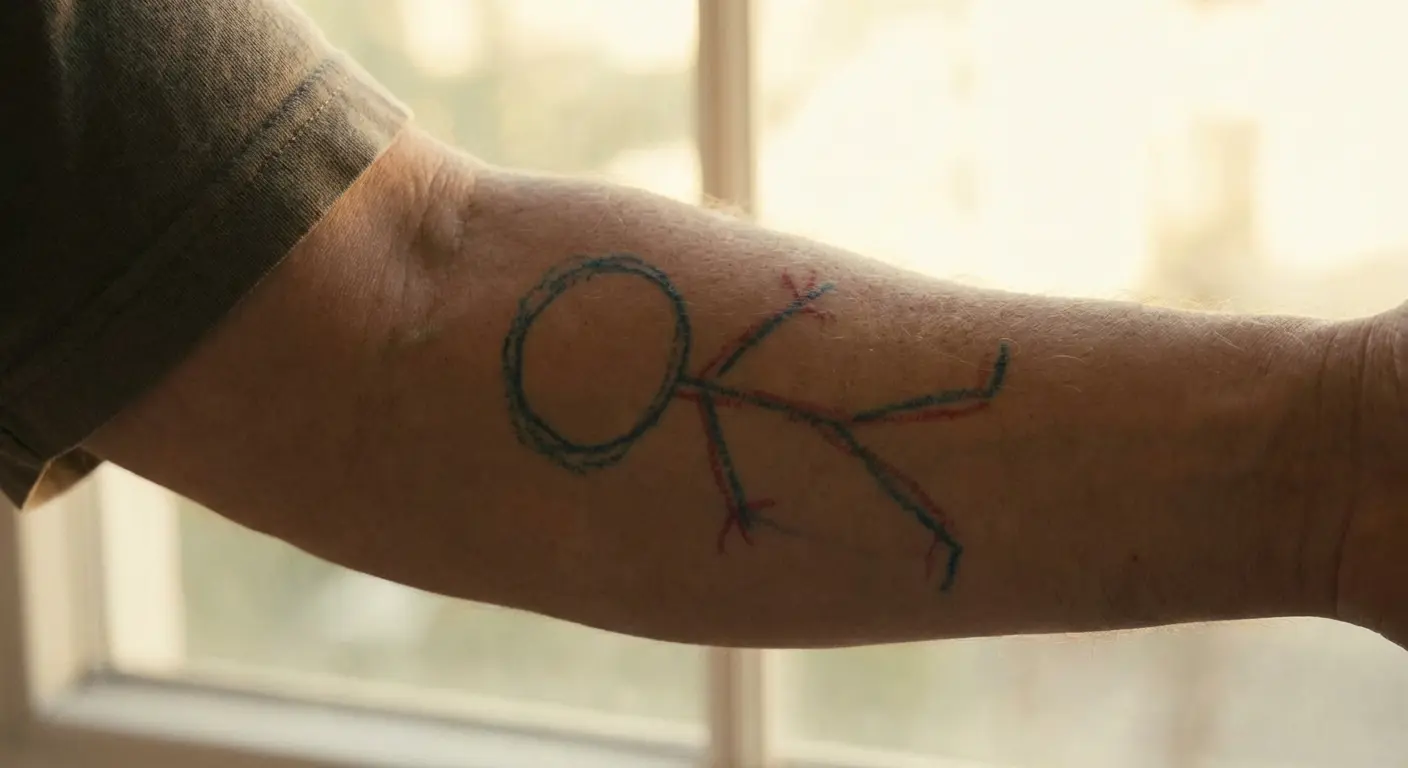
Get the wonky, imperfect, crayon-scribbled version exactly as your four-year-old drew it.
Your four-year-old’s drawing of you with stick arms and a circle head and hair that looks like a sun. The one where they wrote “MOM” with the M backwards. The one that’s been on your fridge for six months and is starting to fade.
The messy lines and weird proportions are what make it theirs.
You’re not tattooing who they are now or who you hope they’ll be. You’re tattooing a moment in time when they drew you a picture. That moment happened. It’s historical fact.
Even if things get complicated with your kid later (and let’s be real, they might), this still works. You’re not tattooing who they are now. You’re tattooing the moment when they drew you a dinosaur with seven legs.
Now, some artists will fight you on this. They’ll want to “fix” the proportions or clean up the lines because that’s what they’re trained to do. Stand your ground. The wonkiness is the point. If they can’t handle tattooing a kid’s messy drawing exactly as-is, find someone else.
Get a high-quality photo or scan. Your artist can’t work from a blurry iPhone pic of a crayon drawing. You need clean, well-lit, high-resolution source material.
13. A Recipe in Your Grandmother’s Handwriting
Handwriting tattoos work beautifully for preserving someone else’s hand when they’re gone. Recipes combine the personal (handwriting) with the practical (you can use the recipe) and the sensory (the food connects to memory).
Your grandmother’s chicken soup recipe. Your father’s barbecue rub measurements. Your mentor’s cookie formula.
Getting the full recipe card tattooed versus excerpting just the ingredient list or the most meaningful instruction. Both approaches work.
Even if you never actually make the damn soup, you’ve got their handwriting on you forever.
Forearms and ribcages work well for longer recipes. High-quality source images ensure your artist can replicate the handwriting accurately, capturing the loops and slants that made their writing recognizable.
14. The Last Text Message That Mattered
Screenshots of text messages as tattoos sound gimmicky until you consider which messages might be worth preserving. The last text from someone before they died. The message where someone told you they were proud of you. The text that made you realize you needed to leave or stay or change.
These work best when you include the visual elements: the message bubble, the timestamp, maybe even the contact name. Those details anchor the words in reality. This isn’t a quote floating in space. It’s a specific communication that happened at a specific moment.
What if it’s from a relationship that ends?
The message’s impact doesn’t disappear just because the relationship does. The words changed you when you received them. That’s permanent. The person who sent them existed in your life and shaped you.
15. Coordinated Asymmetrical Designs
Coordinated tattoos that are deliberately different but clearly related protect you from the “matching tattoo curse.” You and your sibling get the same tree, but yours is in summer and theirs is in winter. You and your partner get complementary celestial bodies (sun and moon, earth and stars) designed in the same style but not identical.
You and your best friend get matching placement but different content that references a shared experience from different angles.
The asymmetry means if the relationship ends, you don’t have half of something that only makes sense with its pair. You have a complete design that happens to have a companion piece somewhere else in the world.
We’ve got a whole guide on name tattoo approaches that don’t suck. Check it out if you’re considering this.
Grounded in Passion: Tattoos Celebrating What Drives You
Passion-based tattoos avoid regret not because your interests never change, but because they document what mattered enough to shape your life during a specific period. Even if you stop practicing medicine, the chemical structure that fascinated you during med school still represents a version of you that existed.
Even if you retire from carpentry, the tools you used for thirty years earned their place on your skin.
These tattoos work best when they’re hyper-specific rather than generic. Don’t get a generic guitar if you’re a musician. Get your actual guitar, the one with the crack in the wood and the stickers you added. Specificity transforms a hobby tattoo into a historical document.
Real talk: the hyper-custom stuff (soundwaves, topographic maps, constellation charts) costs more. You’re paying for the artist’s time converting your data into tattoo-ready art. Budget accordingly. Probably $300-800+ depending on size and artist.
16. Your Breakthrough Moment in Visual Form
Every person who’s deeply committed to something has experienced a breakthrough: the moment when it finally clicked, when you leveled up, when you understood something you’d been struggling with.
For a mathematician, it might be the equation you finally solved, written exactly as you scribbled it when the solution appeared. For an artist, it might be the first sketch that felt truly yours. For an athlete, it might be your split time from the race where everything came together.
Work backward from the feeling to find the visual representation. What were you looking at? What were you holding? What did you write down?
The tattoo captures evidence of the breakthrough, making it impossible to forget that you’re capable of those moments.
17. The Tool of Your Trade
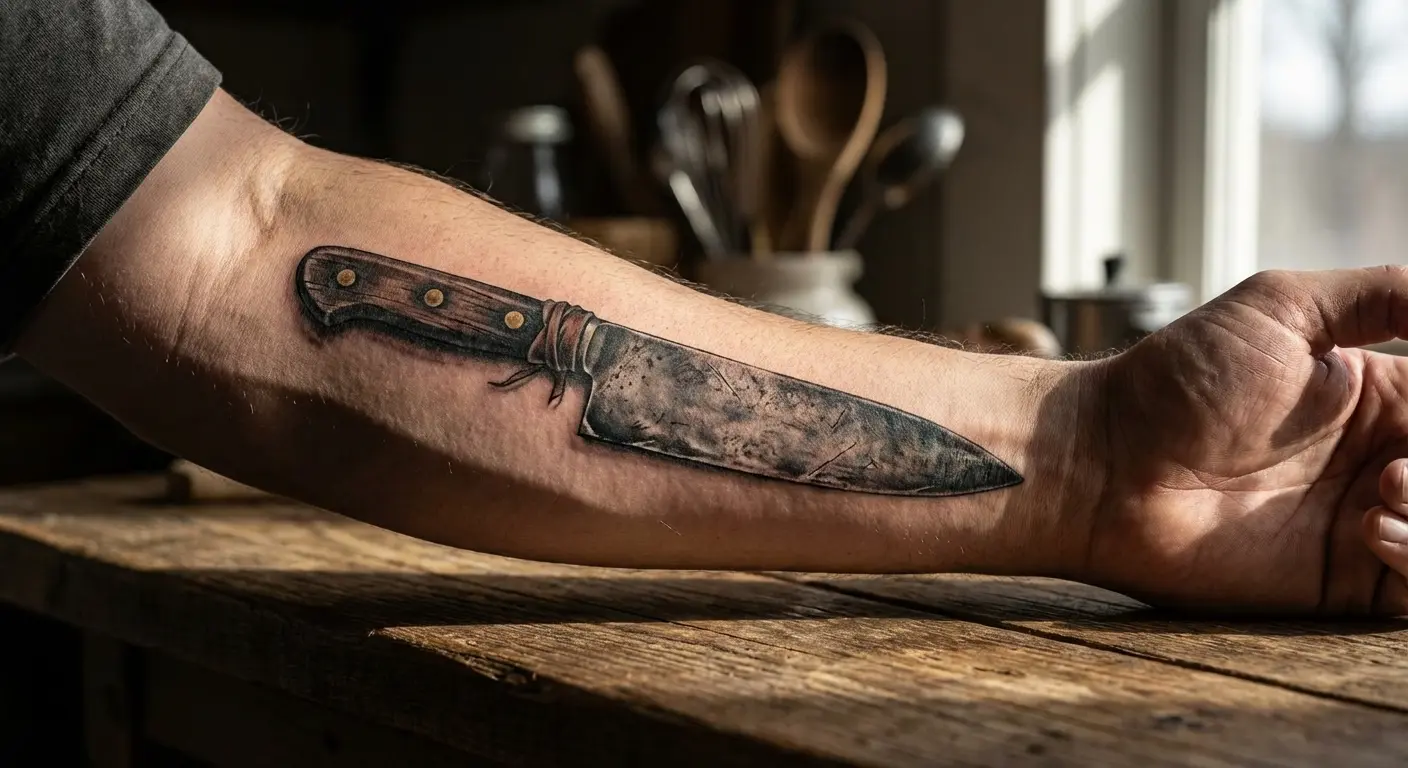
Your hands have held the same tool thousands of times. The chef’s knife you’ve used for fifteen years. The stethoscope that’s diagnosed hundreds of patients. The paintbrush that created your best work. The wrench that’s rebuilt countless engines.
Tattoo the actual tool, not a generic version. If your knife has a specific handle pattern or wear marks, include them. If your stethoscope has tape holding it together, show that.
The imperfections prove it’s yours.
You might not be a chef forever, but you were a chef, and that shaped you. The tool is proof.
Find an artist who specializes in fine-line work for this. Not every tattoo artist can replicate objects accurately. Check their portfolio for similar work before you book.
18. A Topographic Map of Your Favorite Trail
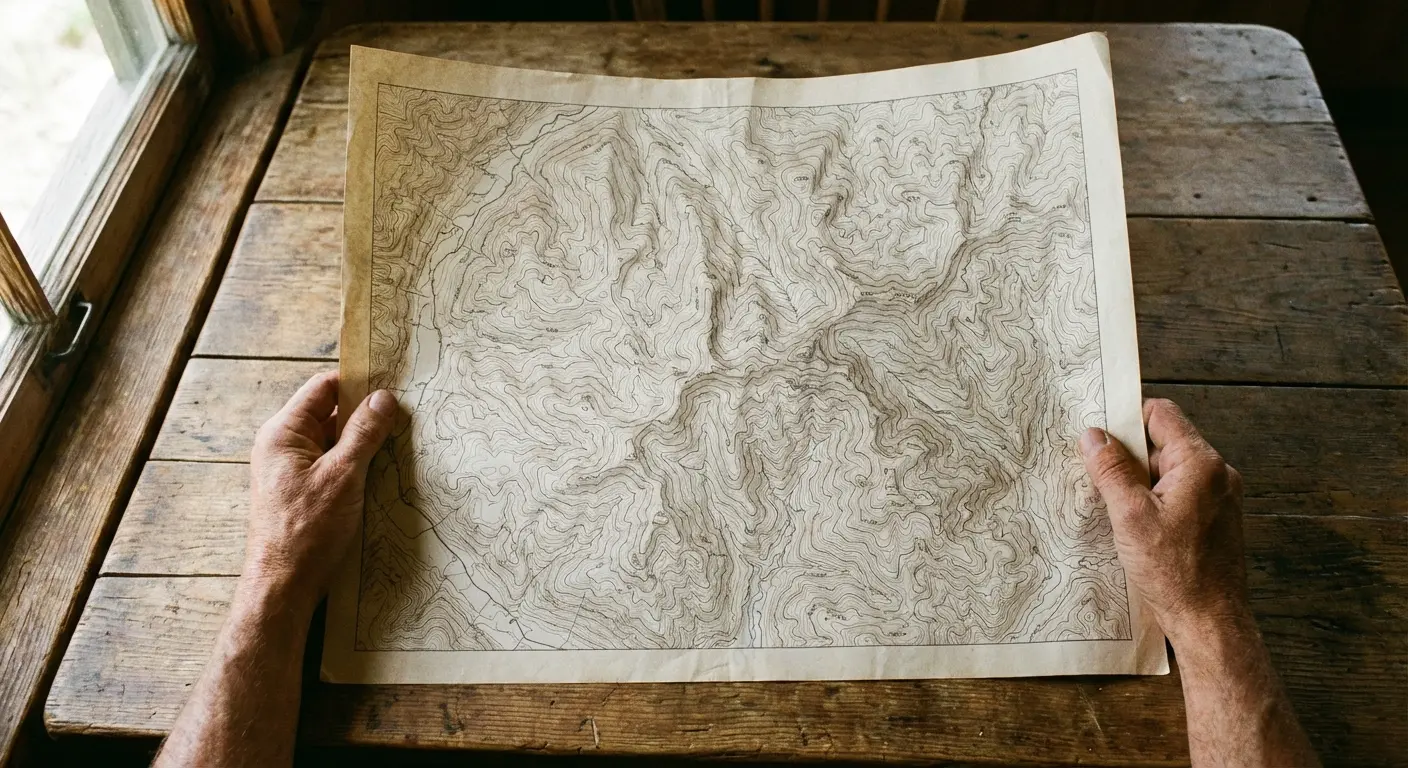
Topographic maps translate three-dimensional terrain into two-dimensional lines, with each contour representing elevation change. Using actual topographic data from a trail, mountain, or landscape that’s significant to you creates deeply personal ink.
The trail where you spread ashes. The mountain you climb every year. The canyon where you proposed. The river you grew up beside.
Get the actual USGS topographic data or use mapping software to generate a precise rendering of that specific terrain. You can isolate just the trail section or include the surrounding geography.
These designs work beautifully because they’re abstract enough to be visually interesting to strangers but immediately recognizable to you.
These pair well with coordinates or elevation markers from the same location, creating layered meaning.
19. Sheet Music from Your Song
Musicians often consider music note tattoos, but random notes or generic treble clefs feel empty. Tattoo the actual sheet music from a song that matters: the opening bars of a piece you performed at a crucial moment, the melody line you composed, the measure that always makes you feel something.
You need the actual notation, not a simplified version. If you played it, get your handwritten sheet music with your penciled-in fingerings and dynamics. If it’s published music, get the exact edition you learned from.
Forearms, ribcages, and collarbones work well for horizontal music staffs.
You’re not claiming to be a musician forever, just documenting that music shaped you enough to learn this specific piece.
20. The Chemical Structure That Saved Your Life
Chemical structures are elegant, geometric, and deeply meaningful if you choose the right molecule. We’re not talking about serotonin or dopamine tattoos (overdone and often inaccurate). We mean the medication that saved your life, the compound you studied that changed your career, the molecule you spent years researching.
Chemotherapy drugs. Insulin. Antiretrovirals. Psychiatric medications that finally worked. Hormones that allowed you to transition.
Get the structure right. Consult actual chemical databases, not Pinterest. The accuracy matters because this isn’t decorative. It’s documentary.
These tattoos can be conversation starters that require you to explain your medical history, so they’re not for everyone. But for people who want to honor what kept them alive, there’s no more literal approach.
Designed for Resilience: Symbols of Overcoming
Trauma-based tattoos can be powerful but also risky. You want designs that honor what you survived without letting survival become your entire identity. Resilience tattoos work best when they’re forward-facing: they acknowledge the past but emphasize the fact that you’re still here.
Some symbols of resilience have become so common they’ve lost meaning. The semicolon, the phoenix. But I’m including them here with guidance on how to make them yours.
The goal is creating tattoos that remind you of your strength without constantly reopening wounds.
21. Your Hospital Bracelet Date, Reimagined
Hospital bracelets mark the worst days: admissions for suicide attempts, overdoses, accidents, diagnoses, emergency surgeries. Tattoo the date from your bracelet, but reimagine the context.
Instead of the date floating alone (which keeps it tied to trauma), pair it with imagery that represents what came after. The date surrounded by growth imagery. The date as part of a timeline that extends beyond it. The date incorporated into a design that represents who you became after surviving.
The date
itself matters: it’s specific, factual, and undeniable. You were in that hospital on that day, and you left.
The tattoo doesn’t glorify the trauma. It marks the turning point.
These work best when you’ve done enough healing that the date doesn’t trigger you every time you see it.
Counterpoint: I know someone who got their hospital bracelet date tattooed before they were actually healed from the trauma, and they ended up covering it three years later. So maybe sit with this one for a while. I’m not saying wait forever, but give yourself more time than you think you need.

22. The Semicolon (If It’s Actually Your Story)
Semicolon tattoos have become the poster child for trendy mental health ink, which means they’re often dismissed as regrettable. But if you’ve actually tried to kill yourself, or cut yourself for years, the semicolon still means something.
I have complicated feelings about the semicolon. It’s helped people. It’s also become so trendy that its meaning got diluted. I’m including it because for some people, it genuinely saved their life. But I get why others roll their eyes at it now.
The issue isn’t the symbol. It’s how it’s executed.
Ways to make it personal: incorporate it into a sentence that matters to you, design it in your own handwriting, place it somewhere meaningful (the wrist where you checked your pulse, the inner arm where scars live).
Learning about the semicolon tattoo’s origins helps you decide whether this symbol represents your story or if you need something more personalized.
Some people need the community aspect of recognizable symbols. Seeing someone else’s semicolon can create instant understanding.
If it’s genuinely yours, it’s valid.
23. A Scar Map That Tells Your Story
This final design brings together several concepts we’ve explored: scar incorporation, personal mapping, and resilience documentation. Create a literal map using your scars as landmarks.
Each scar gets marked with a small symbol, date, or coordinate. Surgery scars become cities on the map. Accident scars become mountain ranges. Self-harm scars become rivers or roads.
The map doesn’t hide your history. It reframes it as geography you’ve traveled.
Work with an artist who understands both cartography and trauma-informed tattooing. This isn’t about making scars pretty. It’s about acknowledging that your body has been through things and you’re still inhabiting it.
The map format creates distance and perspective, transforming wounds into territory you’ve survived.
You’ve been staring at design ideas for weeks, maybe months. You’ve saved hundreds of Pinterest images and scrolled through thousands of Instagram posts, but nothing feels quite right.
Here’s why: you’re looking at other people’s tattoos and trying to make them fit your story.
Okay, quick pitch because this is literally why we built Tattoo Generator IQ: you’re sitting there with this concept in your head (your grandmother’s handwriting, the coordinates from that night, whatever) and you can’t find anyone who’s done exactly that thing.
So you upload your stuff (the recipe card, the audio file, the map coordinates) and the AI shows you what it could look like in eight different styles. Not “close enough.” Actually it.
I’m biased because it’s our tool, but it beats the hell out of scrolling Pinterest for six months hoping to find something sort of like your idea.
You’re not settling for close enough anymore.
Final Thoughts
That’s 23 options. Some will hit, most won’t.
The point isn’t picking from this list like a menu. The point is understanding what makes tattoos regret-proof: they document what already happened instead of predicting what might happen. They’re specific to you, not generic symbols everyone has. They’re honest about who you were, not aspirational about who you hope to be.
Real talk: you might still have moments of regret even with a meaningful tattoo. That’s normal. Regret isn’t binary. It’s not “perfect decision” or “worst mistake ever.” Most tattoos live in the middle: meaningful but imperfect, significant but sometimes awkward to explain, personal but occasionally inconvenient.
You survived that hospital stay. That’s a fact. Your grandmother wrote that recipe in her handwriting. Also a fact. You climbed that mountain. The GPS data proves it.
These things happened. The ink just makes them visible.
Tattoo culture is shifting fast. What was edgy 10 years ago is mainstream now. What’s trendy now will look dated in 10 years. Some of that’s unavoidable. The best you can do is choose designs rooted in your specific life rather than current trends.
Instagram makes everything look better than it is. That geometric sleeve you’ve been obsessing over? The photo was taken right after the tattoo was finished, perfectly lit, probably filtered. Ask to see healed photos. Ask what it looks like after 5 years. Don’t make permanent decisions based on fresh ink photos.
Soundwave tattoos are trending up right now, which means in 5 years they might feel as overdone as infinity symbols. I still think they work if they’re genuinely yours, but be aware you’re getting something that’s currently popular.
Test your designs digitally before committing. Sit with it longer than feels comfortable. Work with artists who understand that precision matters when you’re documenting facts.
Not every artist can do fine-line work. Not every artist is good at lettering. Not every artist can handle geometric precision. Match your design to an artist who specializes in that style. A portrait artist might be terrible at minimalist line work. A traditional artist might not be able to execute the delicate soundwave you want.
Most tattoo artists have strong opinions about this stuff. Some refuse to do names or faces. Some won’t tattoo hands or necks as first tattoos. Some specialize in cover-ups and scar work, others avoid it. Ask about their boundaries before you book.
Good artists will push back on bad ideas. If your artist says “I don’t think that’ll work because [technical reason],” listen. They’ve seen how tattoos age. You haven’t.
All tattoos fade, blur, and spread over time. Fine lines blur first. Colors fade faster than black. Sun exposure accelerates aging. Factor this into your design. Tiny intricate details might not last. Bold, simple designs age better. Ask your artist what it’ll look like in 20 years, not just what looks good fresh.
Plan for touch-ups. Most tattoos need them eventually. Fading happens, lines blur, colors dull. Budget for maintenance. Some artists offer free touch-ups within the first year. Ask about their policy.
Pain tolerance varies wildly. What’s bearable for one person is unbearable for another. Ribs, spine, feet, hands, and neck hurt most. Forearms, calves, and shoulders hurt less. If you have a low pain tolerance, factor that into your placement decision. No shame in choosing less painful spots.
Where you put this matters beyond aesthetics. Visible tattoos (hands, neck, face, forearms) still affect job prospects in many fields. Hidden tattoos give you control over who sees them. Neither is better. They serve different purposes. A trauma tattoo might work better hidden. A celebration tattoo might work better visible. Your call.
If this isn’t your first tattoo, think about how it fits with your existing ink. Does it need to match stylistically? Probably not, but maybe. Some people curate a cohesive collection. Others have a chaotic mix. Both work. Just be intentional about which approach you’re taking.
Worst case scenario: laser removal exists. It’s expensive, painful, takes multiple sessions, and doesn’t always work perfectly. But it’s an option. I’m not saying get tattoos thinking you can remove them later. I’m saying permanence isn’t quite as permanent as it used to be.
Tattoo culture varies wildly by region. What’s acceptable in Portland or Austin might still raise eyebrows in smaller Southern towns. What’s considered tasteful in Brooklyn might read as trying-too-hard in the Midwest. I can’t tell you what works for your specific context. Only you know that.
If you’re pulling from a culture that isn’t yours (runes, kanji, indigenous patterns), tread carefully. “Meaningful to you” doesn’t override appropriation concerns.
Everything I’ve said here advocates for careful planning and deep thought. And yeah, that works for most people. But some of the best tattoos I’ve seen were spontaneous decisions that somehow worked out. I can’t tell you when to trust your gut versus when to sit with an idea for six months. That’s the uncomfortable truth: sometimes impulse works, sometimes it doesn’t, and you won’t know which until after.
Of these 23, my top 5 are: soundwave tattoos (#3), tree ring timelines (#6), kids’ actual drawings (#12), topographic maps (#18), and scar maps (#23). The rest are solid, but those five hit different.
And then get the tattoo that makes you feel seen by yourself.
Not impressed by strangers. Not validated by Instagram. Seen by you.
That’s the one you won’t regret.
Probably.
