18 Small Tattoo Ideas for Women Who Want Ink With Intention (Not Just Decoration)
Look, if you’re here, you’ve already seen 47 listicles about delicate finger tattoos and minimalist line art. This isn’t that. We’re talking about tattoos that actually mean something and won’t look like shit in 10 years.
I’ve broken this down into tattoos that mark time, placements that actually make sense for your body, designs that do double-duty as reminders, and starter pieces you can build on later. Jump around if you want.
Here’s something worth knowing: small tattoos have become particularly appealing in economically uncertain times. Trend forecasters at Spate report that while overall tattoo interest is down 19% since last year, small tattoos (typically defined as one to three inches) remain popular as an achievable form of self-expression when larger, multi-thousand-dollar pieces feel financially out of reach. Translation: everyone’s broke and can’t afford a $3,000 sleeve right now.
Tattoos That Tell Time Without Saying a Word
Permanence that captures impermanence. These designs mark specific moments, transitions, or cycles in your life without broadcasting their meaning to everyone who sees them.
You’ll know what they represent.
That’s enough.
This category focuses on temporal concepts rendered in ways that feel personal rather than trendy, giving you ink that ages with intention rather than becoming a dated snapshot of 2025’s Pinterest board. Athletes and achievement-focused individuals are increasingly using tattoos to commemorate specific milestones and dates. According to Run to the Finish, runners are getting tattoos of race dates, GPS coordinates from meaningful locations, and personal records to serve as permanent reminders of what they’ve accomplished. This trend extends beyond athletics to anyone marking transformative life moments.
1. Moon Phase Progression
Moon phases are everywhere. But most people just pick whatever crescent looks prettiest. That’s decoration, not intention.
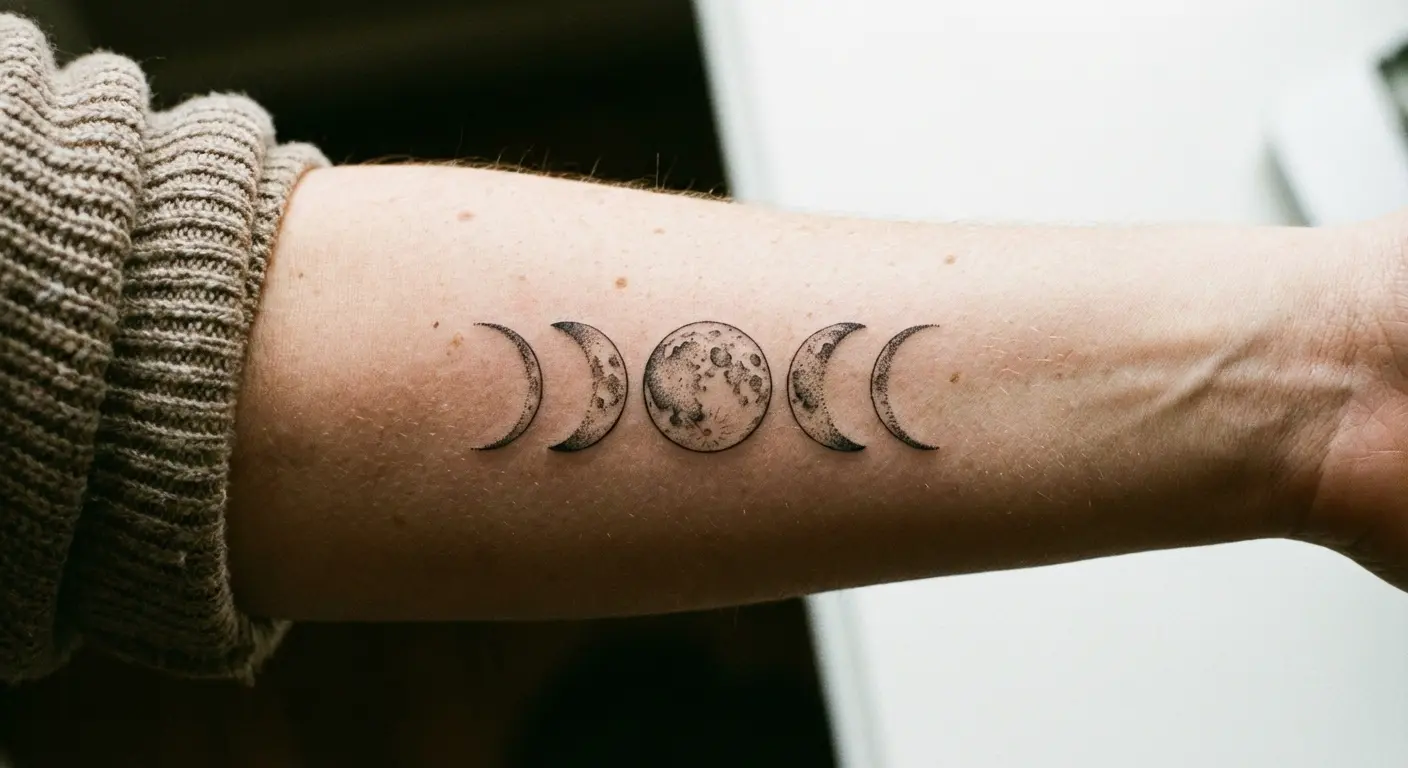
Get the actual lunar phase from a specific date. A birth, a loss, the night you made a decision that changed everything.
Place three to five phases in a small linear progression along your forearm, ribcage, or spine. This only works if your artist understands negative space. The shadows between phases matter more than the outlines. If they want to add a bunch of decorative stars and swirls, find someone else.
I mean the ACTUAL lunar phase from a specific date, not just any pretty moon. The specificity transforms what could be generic small tattoo ideas for women into something deeply personal.
2. Seasonal Bloom Markers
Everyone suggests flowers for small tattoos. Fine. But instead of picking something because it’s pretty, get the flower that was actually blooming during your significant moment.
Cherry blossom if it happened in April. Lavender for July. Whatever was actually blooming, not whatever looks prettiest on Pinterest.
You’ll have to actually research what blooms in your area in that specific month. Yes, this takes effort. That’s the point. It’s rooted in your actual life, not some generic symbolism you found online. When considering botanical options, explore more tattoo ideas for women that incorporate personal symbolism rather than generic floral designs.
Keep it under two inches. The specificity makes it powerful, not the size.
The popularity of botanical tattoos continues to rise, with fine line florals and plant designs ranking among the most commonly requested small tattoos, particularly stemmed florals like tulips that provide a bit more realism while maintaining delicate proportions.
3. Hourglass Silhouette
Hourglass tattoos usually go one of two ways: overly detailed or weirdly philosophical.
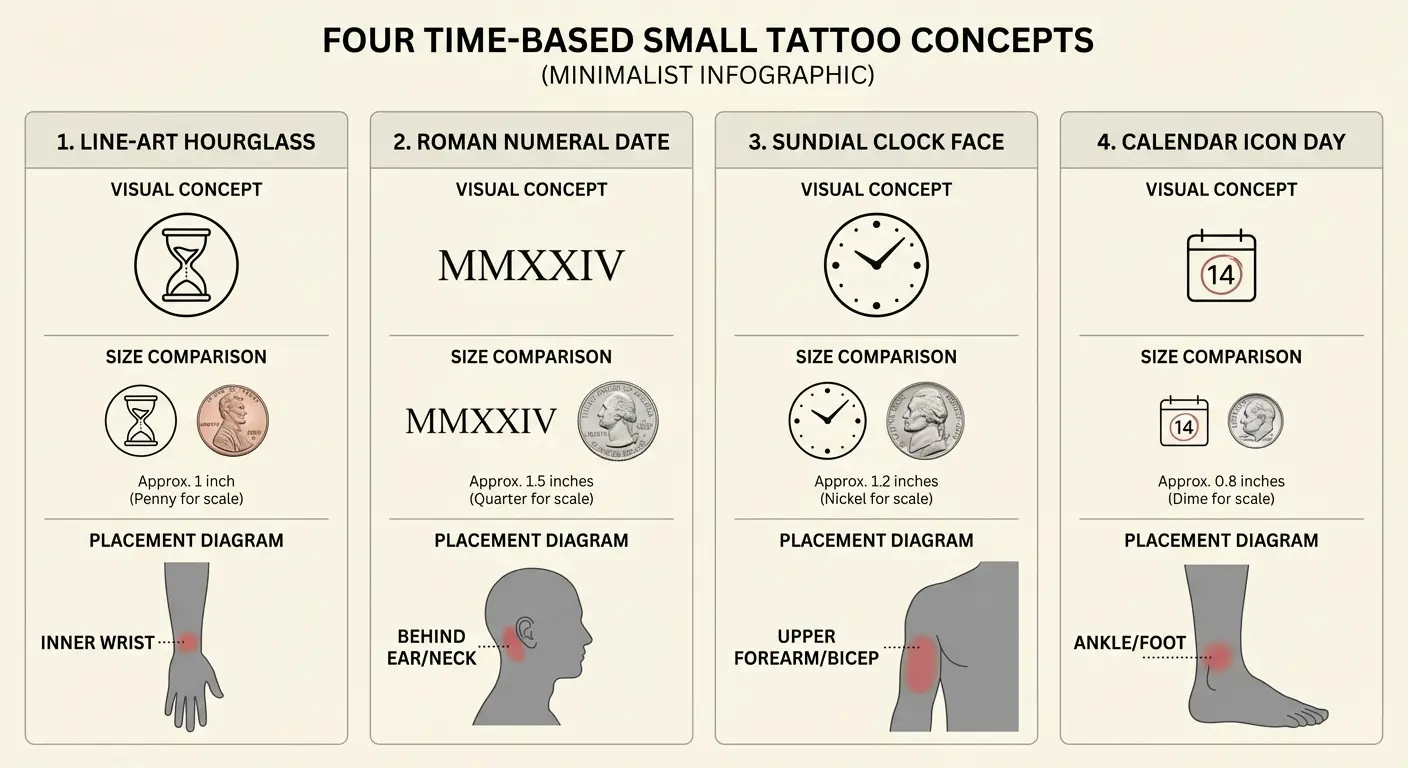
A simple outline, no bigger than a quarter, placed somewhere you’ll see it when you’re procrastinating. The sand doesn’t need to be falling. The glass doesn’t need ornate details.
It’s a visual interruption. Every time you see it, it asks: what are you doing with this hour? Annoying? Maybe. Effective? Extremely.
Inner wrist works if you’re on devices frequently. Behind your phone-holding thumb creates an accidental reminder every time you scroll.
4. Clock Hands at a Specific Moment
Roman numerals circling a full clock face? Overdone and usually too large for the “small tattoo” category.
Two simple hands pointing to a specific time, no numbers, no circle? That’s different.
The time when your daughter was born. When you landed. When you walked away. Just the hands, maybe 1.5 inches total. Place it somewhere you can orient it correctly.
A sideways clock reads wrong and will bother you forever. Your artist needs to understand directional flow on curved body parts.
|
Time-Based Tattoo Design |
Ideal Size |
Best Placement |
Key Consideration |
|---|---|---|---|
|
Moon Phase Progression |
3-5 phases, 4-6 inches total |
Forearm, ribcage, spine |
Requires artist skilled in negative space |
|
Seasonal Bloom |
Under 2 inches |
Wrist, ankle, behind ear |
Research actual bloom season for your region |
|
Hourglass Silhouette |
Quarter-sized or smaller |
Inner wrist, thumb side of hand |
Position where you’ll see it during procrastination |
|
Clock Hands Only |
1.5 inches maximum |
Forearm, shoulder |
Must be oriented correctly for body curves |
Body-Conscious Placements That Work With Your Movement
Your body isn’t static. Skin stretches, muscles flex, joints bend.
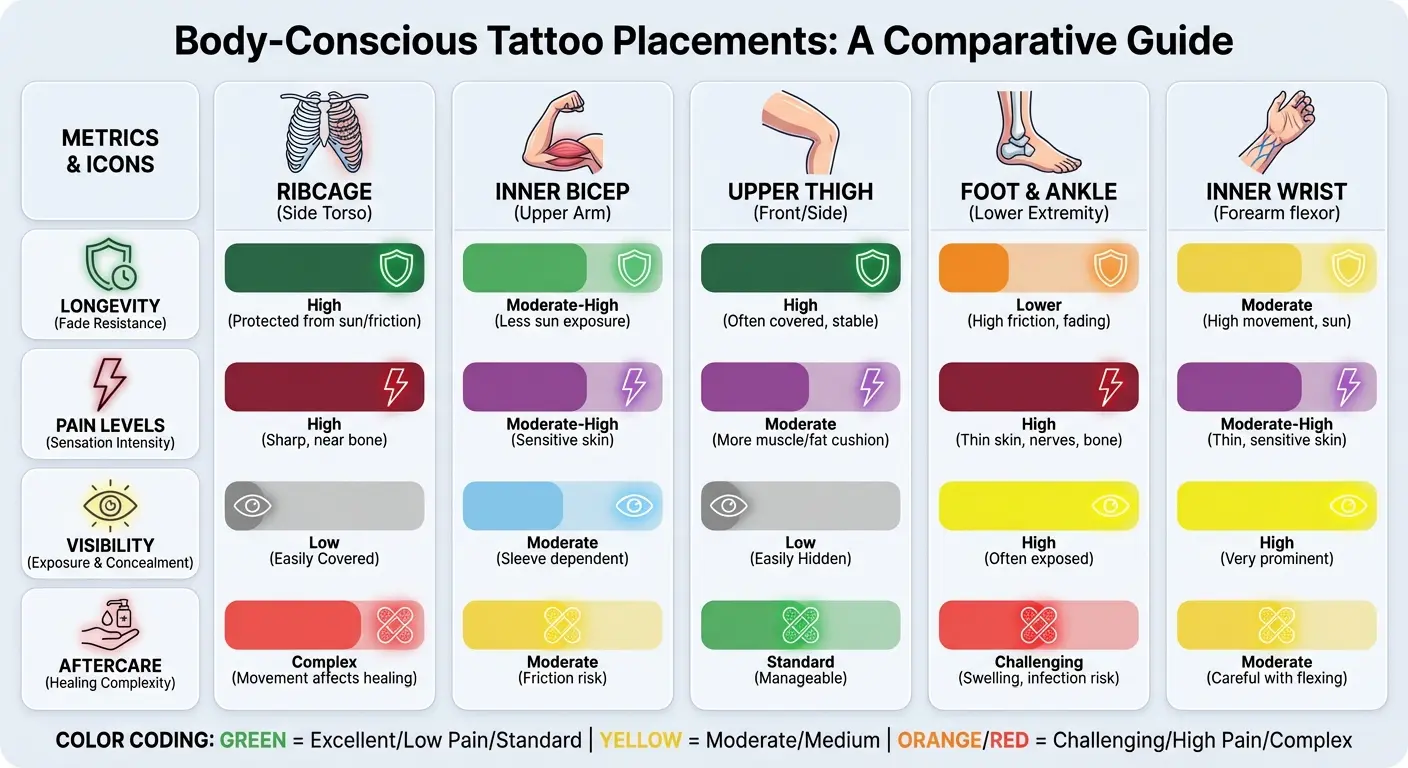
I’m not talking about pain levels or visibility at work (you’ve read those guides already). This is about understanding how a tattoo lives on a body that moves, ages, and changes. Small tattoos in smart locations outlast large pieces in problematic spots.
5. Finger Side Symbols
Finger tattoos fade faster than almost any other placement. You know this already.
But side-of-finger tattoos (on the actual side, not the inner part that rubs constantly) hold better than you’d expect if you choose the right design. Single symbols only. A tiny arrow. A simple line. A dot. Nothing with fine detail that’ll blur into an ink smudge within two years.
The middle finger’s outer edge gets the least friction. Your artist should tell you straight up: you’ll need touch-ups. If they don’t mention this, they’re either inexperienced with finger tattoos or they want your money more than your satisfaction. Factor in the cost and hassle of coming back.
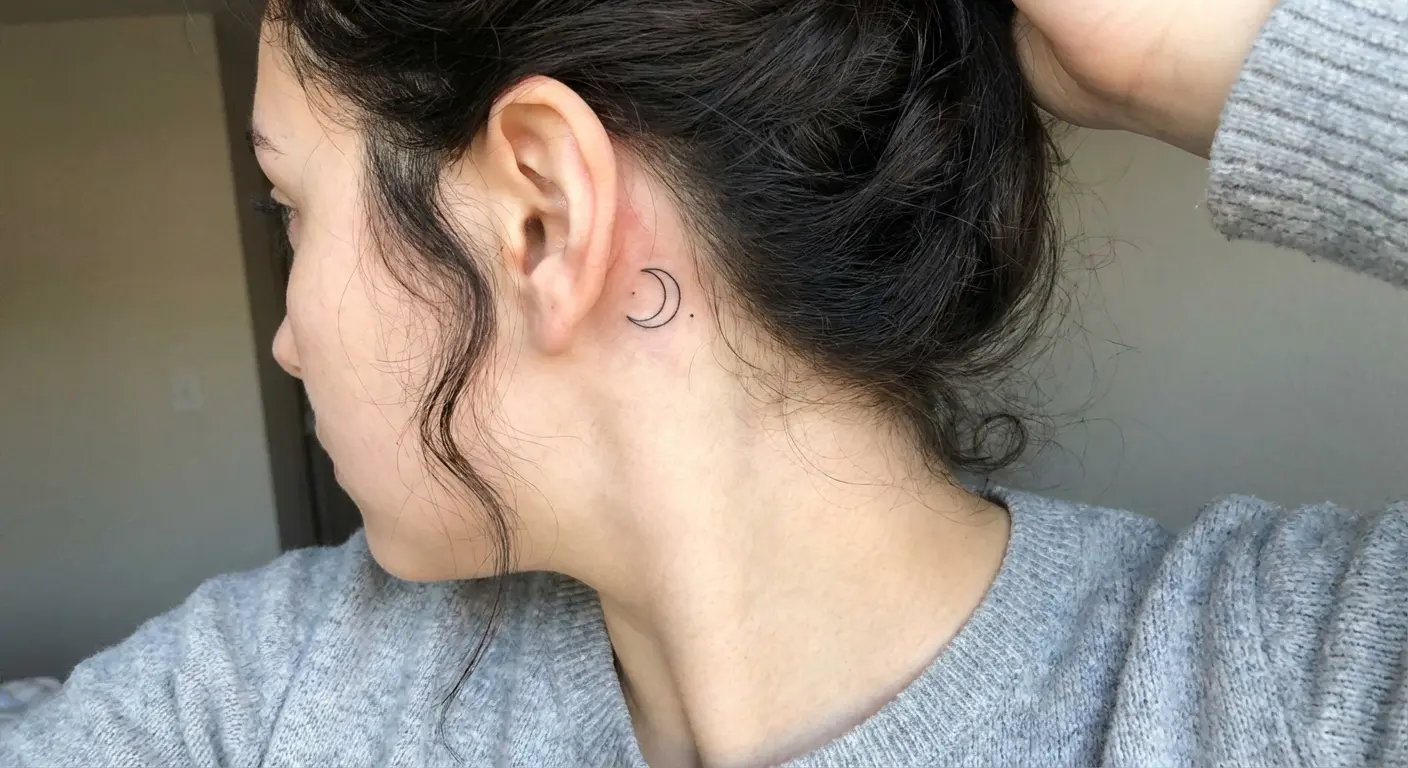
6. Behind-the-Ear Whispers
Behind-the-ear tattoos photograph beautifully, which is why they’re everywhere now.
What Instagram doesn’t show you: this placement hurts. A lot. There’s basically no fat between the needle and your skull. Also, if you wear glasses or earbuds daily, they’ll rub against it constantly.
Small designs work better here than detailed ones. A single word. A tiny symbol. Nothing that requires multiple sessions, because sitting for extended periods in this spot is genuinely difficult.
Hair coverage gives you control over visibility, but be realistic about your hairstyle commitment. For delicate placement options, understanding fineline tattoo techniques becomes essential to ensure longevity and precision.
7. Inner Wrist Pulse Points
Inner wrist tattoos are common for good reason: you see them constantly, they’re easy to cover when needed, and the relatively flat surface works well for small designs.
Placement relative to your actual pulse point matters. Too close to where your wrist bends, and the design warps every time you flex your hand. About an inch up from the crease gives you the visibility without the distortion.
If you’re getting text, test how it reads when your hand is in natural positions (typing, holding a cup, gesturing while talking). Upside-down-to-others orientation means right-side-up for you.
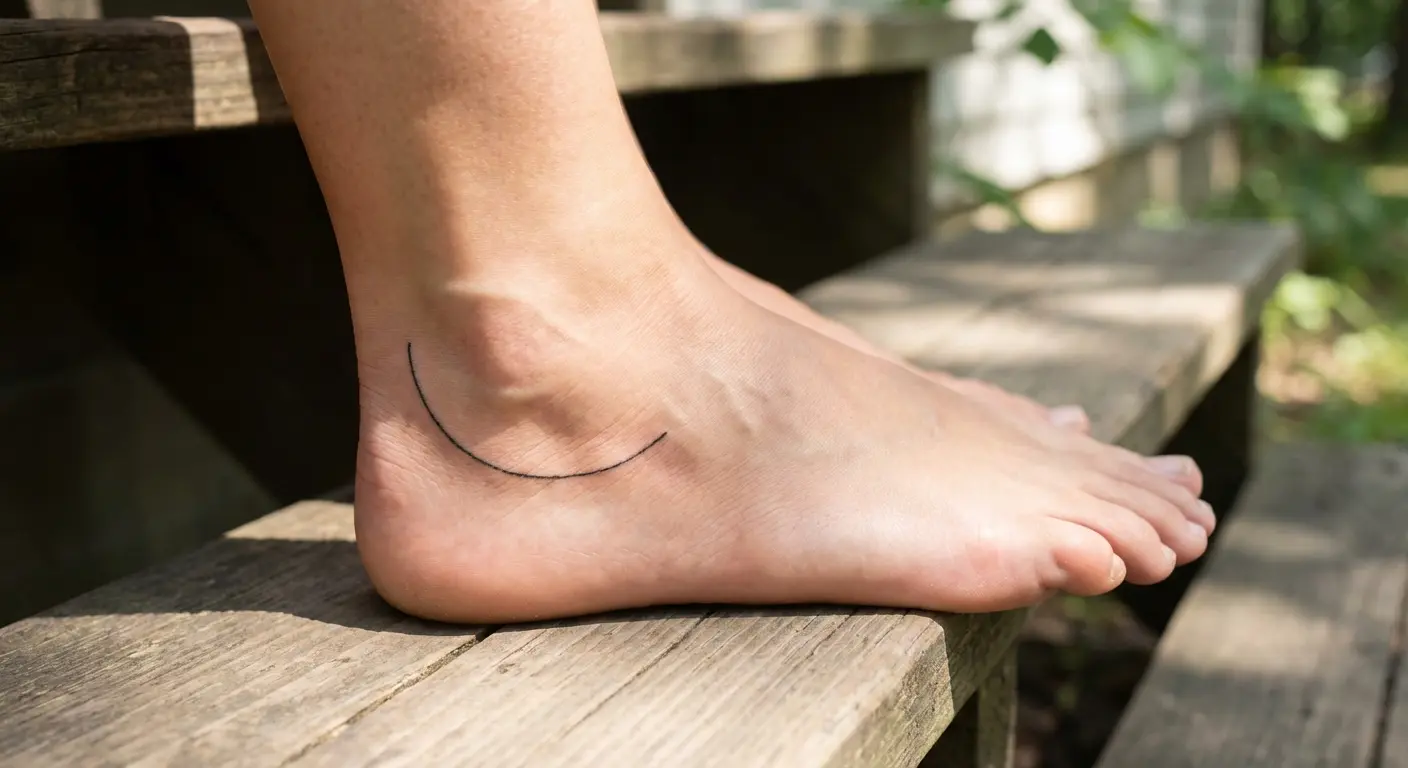
8. Ankle Bone Accents
The ankle bone itself (that prominent bump) provides a natural anchor point for small tattoos that work with your body’s architecture.
A tiny design that follows the curve of your ankle bone, positioned either just above or just below it, creates visual interest without fighting your anatomy. This placement shows when you want it to (sandals, bare feet) and disappears completely in professional settings.
The bone prominence means less fatty tissue, which translates to more intense sensation during the tattoo process but also cleaner lines that age well.
9. Collarbone Extensions
Your collarbone creates a natural line that small tattoos can emphasize rather than interrupt. A delicate design that follows the bone’s curve (not fights against it) works with your body’s existing geometry.
This placement looks intentional on both thin and fuller body types because you’re working with bone structure, not soft tissue that shifts with weight fluctuations.
Two to three inches max, relatively linear. The skin here is thin, which means sharp pain but also excellent detail retention if your artist knows how to work with the natural contours.
|
Placement |
Longevity Factor |
Pain Level |
Visibility Control |
Aftercare Challenge |
|---|---|---|---|---|
|
Finger Side |
Low (frequent touch-ups needed) |
Medium |
Low |
High (constant hand washing) |
|
Behind-the-Ear |
Medium (if protected from friction) |
High |
High (hair-dependent) |
Medium |
|
Inner Wrist |
High |
Low-Medium |
Medium (easily covered) |
Low |
|
Ankle Bone |
High |
Medium-High |
Medium (shoe-dependent) |
Medium |
|
Collarbone |
High |
High |
Low-Medium |
Low |
Designs That Double as Daily Reminders
You’ve seen the “breathe” tattoos and eye-rolled at their earnestness. But functional reminder tattoos work when they’re positioned strategically and designed with genuine intention rather than Instagram aesthetics.
Ink that interrupts patterns, redirects spiraling thoughts, or grounds you during specific moments. The key is matching the reminder to the placement and your daily movements.
10. Breathe Script (But Make It Functional)
I know. “Breathe” tattoos are cringe. But the word isn’t the problem. The thoughtless placement is.
If you want a breathing reminder, put it where you’ll see it when you’re anxious. Inner wrist works if you notice your hands shaking during panic. Ribcage works if you place your hand there when you’re trying to slow your breath.
The font matters. Overly ornate script defeats the purpose when you’re in fight-or-flight mode. Simple, readable, positioned where your eye naturally falls during stress.
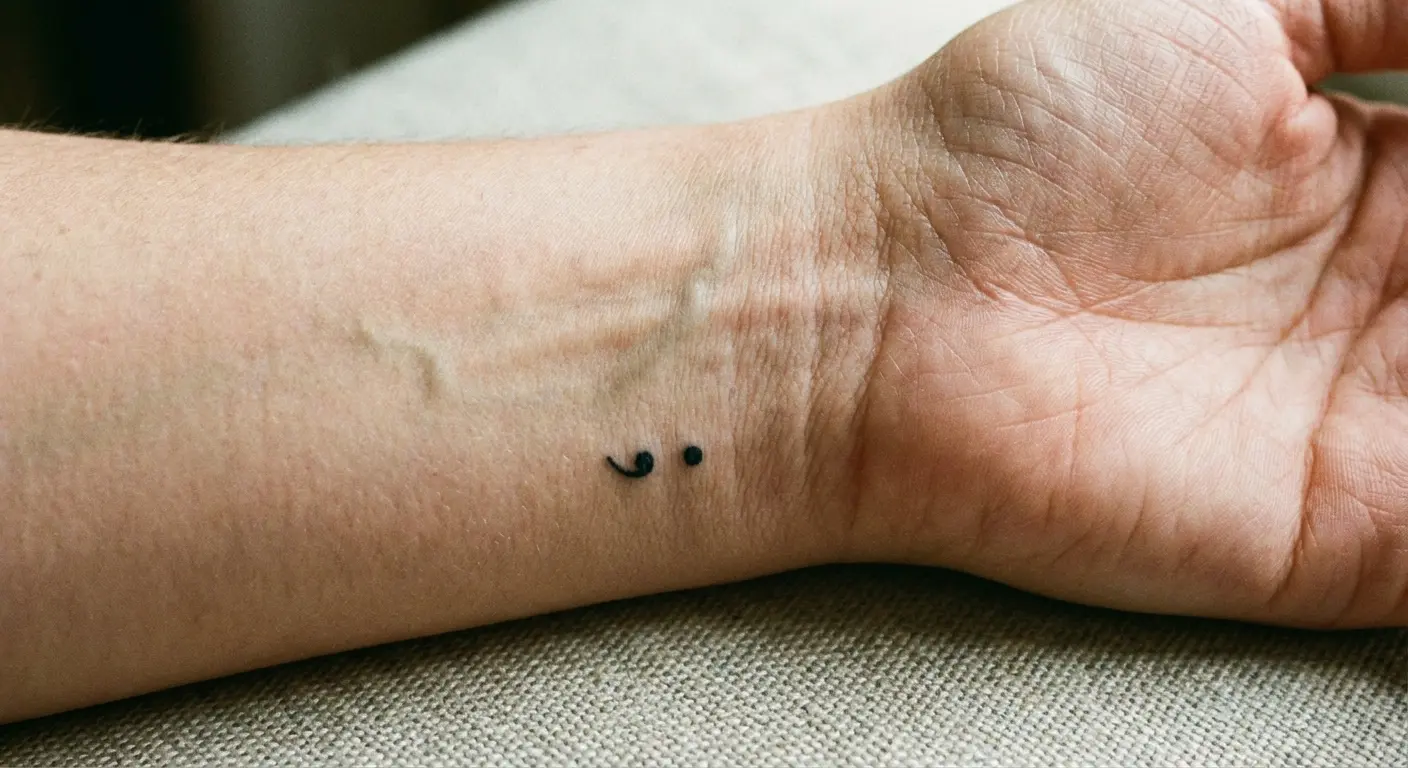
11. Semicolon Evolved
The semicolon tattoo movement brought necessary awareness to mental health and suicide prevention. At this point, though, the symbol has become so recognizable that it requires explanation or invites assumptions.
If the concept resonates but you want something more personal, consider what punctuation means to you. An em dash for continuation. A period for finality you’ve chosen. An ellipsis for ongoing process.
We’re talking tiny. Like 0.5 inches. Place it somewhere that feels private. This is for you, not for awareness campaigns. To understand the full history and variations of this meaningful symbol, read about semicolon tattoo meaning and how it’s evolved beyond the original movement.
12. Compass Rose Minus the Obvious
Full compass roses rarely work as genuinely small tattoos. They require detail that needs space to execute well.
But a single compass point? A minimal north arrow? That scales down beautifully.
The symbolism shifts too. You’re not trying to represent all directions or endless wanderlust (overdone). You’re marking your north. What grounds you. What you return to.
A small north arrow on your forearm, pointing toward your heart when your arm is at rest, creates a subtle directional reminder that doesn’t announce itself.
13. Single-Word Mantras in Your Handwriting
Text tattoos in your own handwriting add a layer of personalization that standard fonts can’t match. Your artist can work from a scan of your handwriting to create the stencil.
Single words you need to remember (your kid’s name when you’re losing patience, a value you’re trying to embody, a word that pulled you through something). The imperfection of real handwriting makes it feel authentic rather than designed.
Under three inches. Test the word in your handwriting at the size you’re considering before committing. Some words lose readability when scaled down.
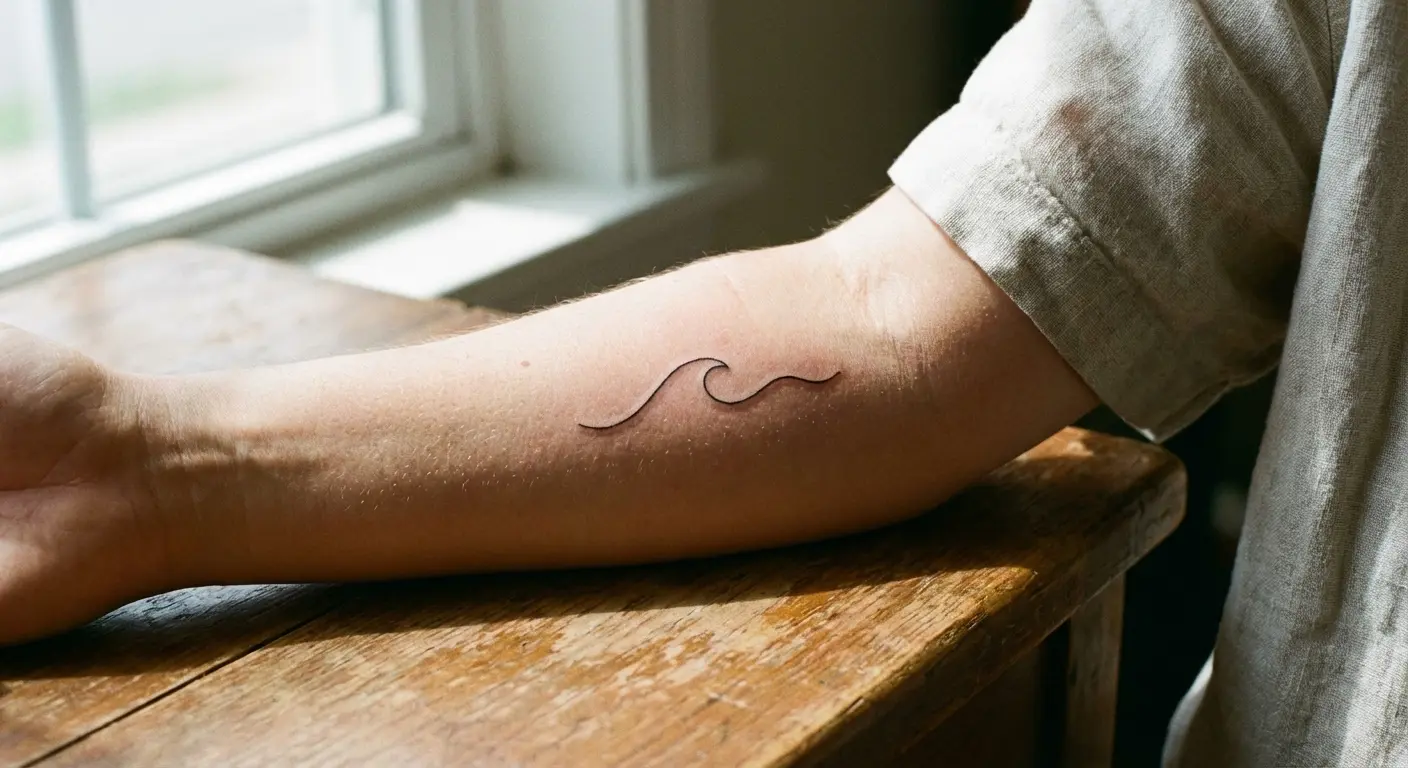
14. Minimal Wave Pattern14. Minimal Wave Pattern
A single wave line (not an elaborate ocean scene) works as a small and simple tattoo that represents whatever water means to you. Calm. Power. Going with the flow or fighting against it.
The beauty of a minimal wave is its interpretive flexibility. It can represent literal water if you’re a surfer or swimmer. It can represent sound waves if you’re a musician. It can represent emotional ups and downs if you’re in recovery.
A simple curved line, about two inches long, with minimal detail. The placement determines how it reads: horizontal along a forearm suggests calm, vertical along a ribcage suggests intensity.
Tattoos That Grow With You (Literally)
Small doesn’t have to mean standalone.
Strategic first tattoos can become foundations for larger pieces later, or they can remain intentionally unfinished, leaving room for additions that mark new chapters. This approach requires more forethought than impulse, but it gives you creative freedom down the line. You’re not locked into a complete concept at 25 that feels limiting at 35.
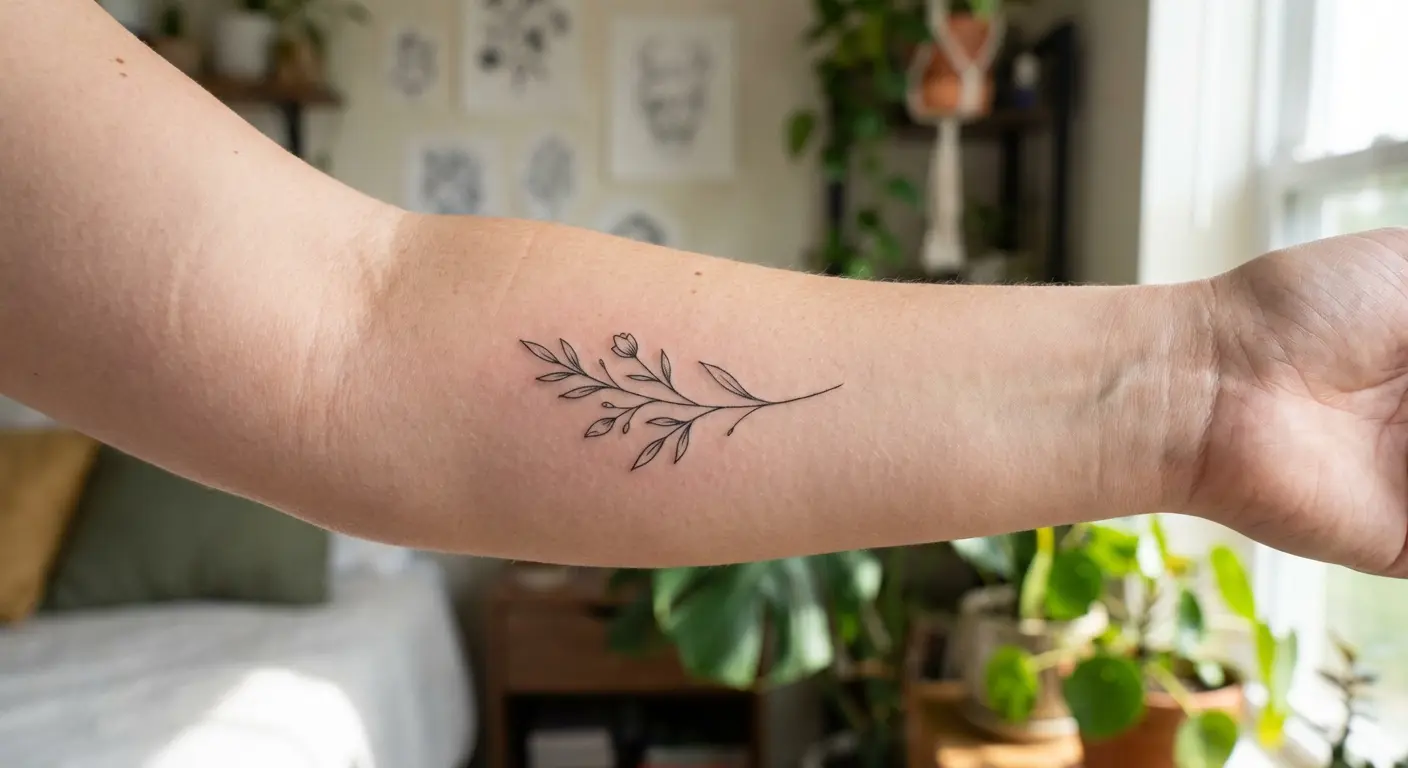
15. Single Stem Ready for Additions
A single stem, simple and clean, placed along your forearm, ribcage, or leg creates a foundation you can build on. Add a bloom for a birth. Add a leaf for a milestone. Add thorns for a lesson learned.
The stem itself is a complete tattoo (you’re not walking around with obvious unfinished work), but it’s also obviously expandable.
Find an artist who understands botanical growth patterns and can maintain consistent line weight across multiple sessions years apart. Discuss this intention upfront. Some artists love collaborative long-term projects. Others prefer one-and-done work.
16. Constellation Framework
A few small dots positioned to represent an actual constellation (your birth constellation, the constellation visible on a specific date, whatever holds meaning) creates a minimal tattoo that can stay simple forever or become a framework for a larger celestial piece later.
You can add connecting lines later. You can add planets, moons, or other celestial elements. You can add geometric shapes around the constellation. Or you can leave it as dots.
The flexibility is the point.
Make sure your artist marks the dots precisely. Constellation accuracy matters if you care about astronomical correctness.
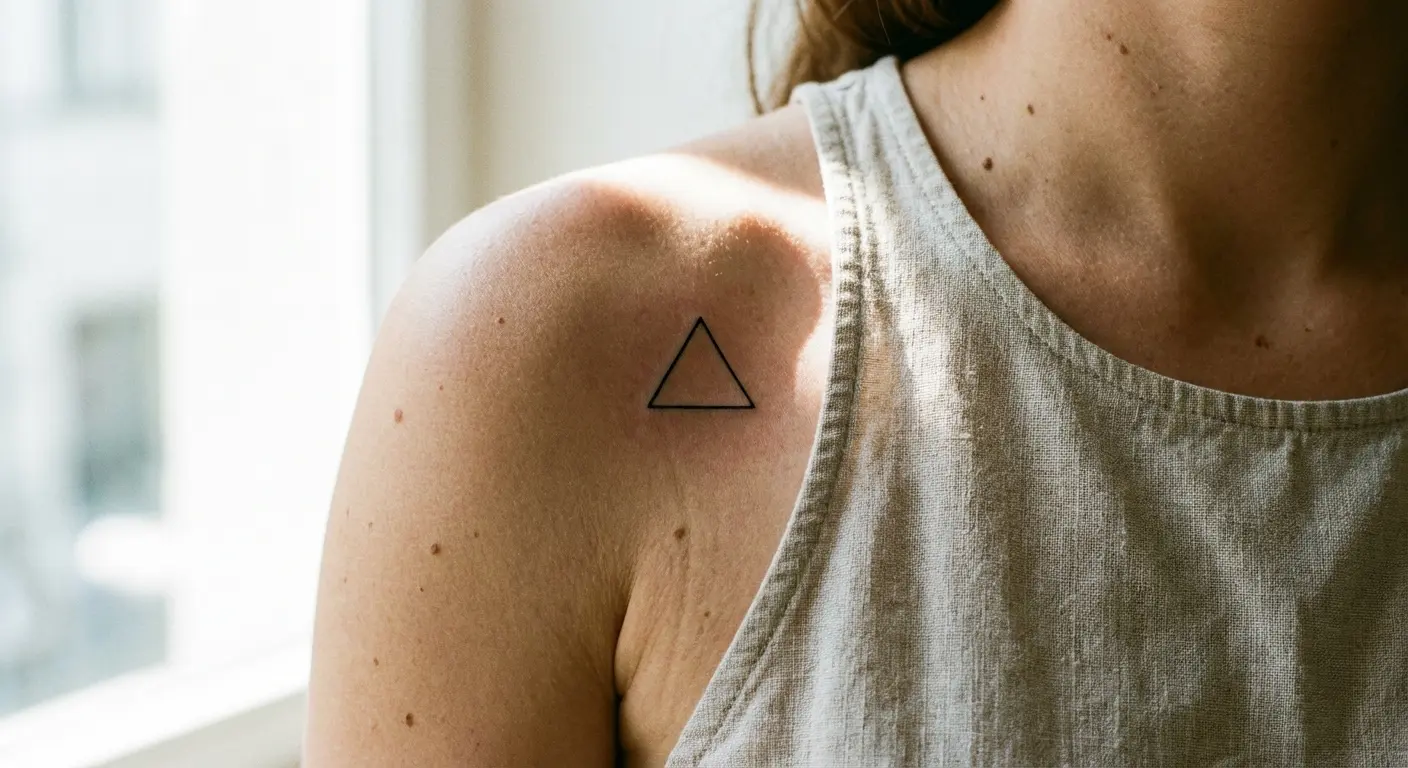
17. Geometric Shapes That Connect Later
A single small triangle, circle, or line positioned thoughtfully can become part of a larger geometric pattern years later or remain a standalone minimal piece.
Sacred geometry enthusiasts understand this approach instinctively, but it works even if you’re not into the spiritual aspects. You’re creating visual anchors on your body that can connect or stay separate based on future decisions.
This requires the most planning of any approach in this category. You need to consider body symmetry, potential connection points, and how additional shapes might flow across your anatomy. For those drawn to structured designs with expansion potential, explore geometric tattoo designs that can function independently or connect into larger patterns over time.
18. Initial Placement Strategies
Your first small tattoo’s placement matters more than the design itself if you’re even slightly considering more ink later.
A small piece on your forearm’s outer edge leaves the inner forearm clear for future work. A tiny design on your shoulder blade’s upper corner leaves the rest of the blade available. A minimal ankle tattoo positioned carefully doesn’t block potential leg sleeve flow.
Look, I’m not saying you need to plan a full sleeve before getting a small tattoo. I’m saying that thoughtful placement now gives you options later. Consult with your artist about this. Good tattooers think about body flow and future possibilities, even for small standalone pieces.
Before You Commit: The Design Reference Problem
The smaller and more minimal your desired tattoo, the more critical your reference image becomes.
Your artist can’t read your mind, and verbal descriptions of “delicate” or “minimal” mean different things to different people. Bringing multiple reference images helps, but they’re often pulled from Pinterest boards with wildly different styles.
Real talk: if you keep showing your artist Pinterest pics and they keep sketching something that’s not quite right, you need better references. We built Tattoo Generator IQ for exactly this situation. It creates high-resolution design mockups that show your artist the exact line weight, style, and composition you want.
You’re not asking them to copy AI-generated art. You’re giving them a clear visual brief so you’re not playing telephone with permanent ink.
This matters exponentially more for small tattoos, where a millimeter difference in line thickness changes the entire feel of the piece.
Final Thoughts
No infinity symbols here. No feathers. No “wanderlust” in a font you’ll hate in three years. If you want those, there are 10,000 other listicles waiting for you.
Small tattoos work best when they mean something specific to you rather than representing generic concepts that could apply to anyone. The size constraint forces clarity. You can’t hide behind elaborate detail or complex imagery. What you choose and where you put it reveals what matters.
Your body isn’t a Pinterest board. It moves, ages, and changes. The best small tattoos work with that reality instead of ignoring it.
They’re placed where you’ll see them when you need the reminder, where they’ll age well as your skin changes, where they can grow with you if your tattoo journey continues.
Small doesn’t mean easy or quick. It means you have to be more intentional because you can’t hide behind elaborate detail. Take your time. Find an artist whose portfolio shows clean small-scale work. Not every talented tattoo artist can do tiny pieces well.
Bring clear reference images. Discuss placement relative to your body’s movement and your future plans. Ask about touch-up policies for placements prone to fading.
And yeah, aftercare matters more for fine line work. Use whatever your artist tells you to use, not what worked for your friend’s sleeve.
The permanence is the point. Make it count.
