Tattoo Ideas With Meaning: Why the Stories You Tell Yourself Matter More Than the Symbols You Pick
Here’s where we’re going with this:
-
Why we’ve been thinking about tattoo meaning all wrong
-
Borrowed symbolism vs. built meaning (and why one actually sticks)
-
Cultural symbols aren’t shortcuts to depth
-
Personal mythology: creating your own visual language
-
How context transforms generic images into personal artifacts
-
The problem with “timeless” tattoo meanings
-
Designing around moments, not just messages
-
When ambiguity beats clarity
-
Turning Tattoo Generator IQ into your meaning-making partner
-
Where we end up
Why We’ve Been Thinking About Tattoo Meaning All Wrong
Lotus flowers mean enlightenment. Lions mean courage. Phoenixes mean rebirth.
You’ve seen these lists, right?
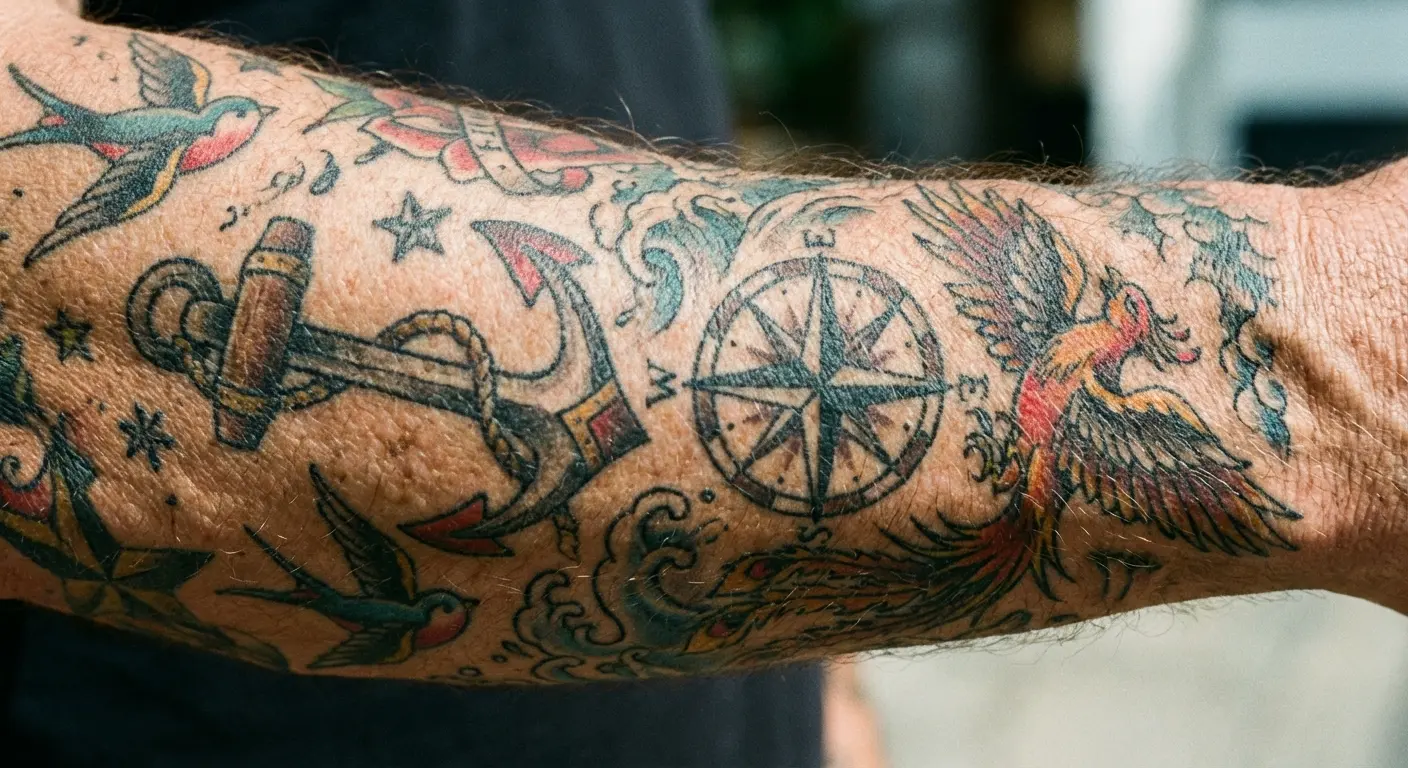
They’ll tell you that anchors mean stability, that compasses represent guidance, that koi fish swimming upstream signify perseverance. And look, none of that matters if the symbol doesn’t connect to something real in your life.
The tattoo industry runs on this idea that certain images carry inherent meaning, as if getting a semicolon tattooed automatically makes you a mental health advocate or inking a triangle somehow unlocks geometric enlightenment. Symbols are only as meaningful as the experiences you attach to them. That’s it.
According to data from the last decade, rose tattoos have remained a timeless choice, symbolizing deep emotions and often commemorating loved ones. Roses are still huge. Which kind of proves my point. We’re all reaching for the same pre-approved symbols instead of finding our own.
Most people approach tattoo meanings backwards. They start with “What should this represent?” when the better question is “What story am I telling myself about this?”
Your relationship with your tattoos will outlast most of your friendships, jobs, and living situations. The meaning you assign today might feel completely foreign in fifteen years. That’s not a design flaw. But we’ll get there.
The problem is worse than just picking the wrong image. We treat tattoos as static translations of fixed ideas, when in reality, both you and your relationship to your ink will shift dramatically over decades. You’re trying to freeze meaning in place when everything about you is in motion.
The stories you construct around your tattoos matter infinitely more than the symbols themselves. Most guides skip right over the part where you’re the one who has to live with this thing on your body for the next fifty years.
A meaningful tattoo doesn’t come from choosing the right symbol from a pre-approved list. It comes from understanding what you’re trying to mark, remember, or process, and being honest about whether the image you’re considering connects to that in any real way. When exploring tattoo ideas with meaning, the focus should be on your personal narrative rather than borrowed symbolism.
The Difference Between Borrowed Symbolism and Built Meaning
Borrowed symbolism is easy.
You find an image that culture has already assigned meaning to, and you adopt it. Vikings used this rune, so it must be powerful. Japanese tradition says cherry blossoms represent life’s impermanence, so getting one shows you’re deep.
Built meaning is harder. You have to actually think about your life and figure out how to turn that into an image.
Think about the difference this way: getting a traditional sailor’s swallow because you like the aesthetic versus getting it because you spent two years working on fishing boats in Alaska and those birds meant you were close to shore. Same image, but one person’s carrying a memory and the other’s just carrying a design they saw on Pinterest. The swallow doesn’t inherently mean anything until you attach your experience to it.
While exploring phoenix tattoo meaning reveals traditional symbolism of rebirth, the question remains whether that mythology connects to your actual experience of transformation. Did you rise from ashes, or do you just wish you had?
Borrowed symbolism adopts culturally established images with predetermined meanings. Quick to choose, widely recognized. But it may feel hollow over time if not rooted in genuine experience. Think Celtic knots, mandalas, traditional roses. The meaning comes from external sources, easy to explain to others.
Built meaning creates or adapts imagery from specific personal experiences. Requires creative effort and self-reflection. Ages better because it’s tied to authentic memory. Examples: a specific street corner, your grandmother’s napkin fold, personal ritual objects. The meaning comes from lived experience. Often makes sense only within your life story.
The internet has made borrowed symbolism incredibly accessible. You can research what ancient Egyptians thought about scarabs or what Native American tribes associated with wolves in about four minutes. That accessibility is also the problem. When meaning comes too easily, it rarely sticks.
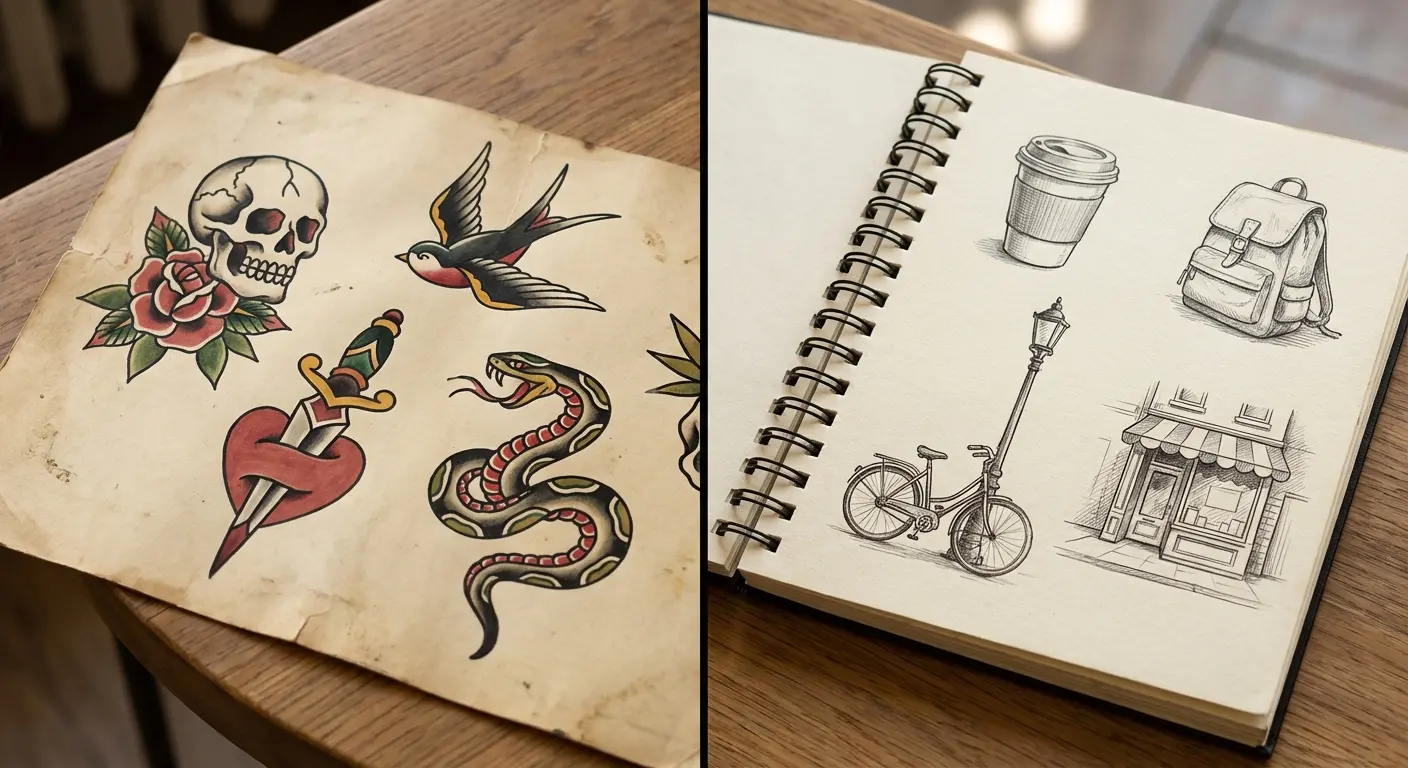
Built meaning forces you to do the uncomfortable work of identifying what you care about, not what you think you should care about. It might be a specific street corner where something changed for you. It could be the way your grandmother used to fold napkins. Maybe it’s the scientific diagram of a process that saved your life.
These don’t come with ready-made symbolic significance, which is why they matter more. You’re not performing depth for an audience. You’re marking something that happened to you, something you witnessed, something you survived or celebrated or lost. This approach to meaningful tattoos requires introspection rather than research.
The best tattoo ideas with meaning often emerge from this process of examining your own life rather than adopting someone else’s symbols. You’re not looking for universal significance. You’re looking for personal resonance.
Cultural Symbols Aren’t Shortcuts to Depth
I know a guy with full Viking sleeves who couldn’t name a single Norse god if you paid him.
And look, I’m not here to shame him. But let’s talk about what’s actually happening when we do this.
We see this constantly: people with no connection to Buddhism getting elaborate mandalas, individuals who’ve never opened the Bhagavad Gita requesting Sanskrit verses, folks who couldn’t name three Norse gods covered in Viking imagery.
The appeal makes sense. These symbols come from traditions with centuries of established meaning. They feel weighty, important, profound in ways that a tattoo of your childhood dog might not.
But that weight isn’t transferable. Getting Polynesian tribal patterns doesn’t give you access to the warrior traditions they represent. Inking a Chinese proverb you found on Pinterest doesn’t connect you to the philosophical framework it emerged from.
That’s not creating meaning. That’s just borrowing someone else’s.
Mandalas are intricate designs representing the universe and spiritual journey, making them extremely popular choices, yet their widespread adoption often occurs without the years of meditation practice or Buddhist study that gives them authentic resonance. The symbol looks profound, but what does it mean to you specifically?
This isn’t primarily about cultural appropriation (though yeah, that’s part of this too). It’s about the fact that these symbols will never mean to you what they mean within their original contexts. You’re always going to be on the outside of that meaning looking in.
Depth doesn’t come from the age of a symbol or the exoticism of its origin. It comes from genuine connection to what the image represents in your actual life.
If you’ve spent years studying Stoic philosophy and a particular Greek phrase genuinely shaped how you think, that’s real. If you grabbed it because it sounded cool translated, it’ll feel hollow eventually. You’ll know the difference every time you look at it.
The most meaningful tattoos often come from the most ordinary sources. Your life contains enough raw material for significant imagery without reaching for someone else’s sacred traditions. When considering tattoo ideas with meaning, start with your own experiences before looking to distant cultures.
Personal Mythology: Creating Your Own Visual Language
Your life already has symbols. You’ve just never thought of them that way.
Personal mythology is the story you tell about who you are and how you got here. It’s the events you’ve decided were formative, the people who changed your trajectory, the moments you return to when explaining yourself to others.
Meaningful tattoos can mark these moments without needing to translate them into universal language. Rather than defaulting to universal tattoo meanings, consider what recurring imagery already exists in your personal narrative.
Maybe you always order the same drink at the bar where you met your closest friends. That drink could be an image. Perhaps you have a recurring dream about a specific landscape that’s never existed in waking life. That landscape is a symbol from your personal mythology.

These images won’t mean anything to anyone else. That’s what makes them powerful.
They’re not performing meaning for an audience. They’re marking something real in your internal narrative.
Creating your own visual language requires paying attention to what recurs in your life, not what you think should matter. You might discover that a specific intersection has appeared in multiple crucial moments. You could notice that you’ve always been drawn to a particular color during transitions.
Maybe there’s an object you’ve kept moving with you for twenty years that you’ve never quite understood your attachment to.
These are the raw materials of personal mythology. They’re already meaningful to you. You just haven’t recognized them as potential tattoo ideas with meaning yet.
Want to find your personal symbols? Start noticing what keeps showing up. What objects have you dragged through three moves for no clear reason? What places witnessed your biggest changes? What inside jokes define your relationships? What colors, textures, or sensory details are you inexplicably drawn to during transitions? What patterns show up in your dreams? And honestly, distinguish between what you genuinely value and what you think you should value. That last one’s the hardest.
My friend Sarah has a tattoo of a chipped coffee mug. Not just any mug, but the exact one from the diner where she wrote her entire master’s thesis at 3am, fueled by burnt coffee and panic. That same diner is where she had her first panic attack, where she later celebrated getting her dream job, and years after that, where she decided to quit that same job to start over. That mug witnessed every major decision of her twenties. To anyone else, it’s just a cup. To her, it’s a marker of transformation, risk, and the thread connecting multiple versions of herself.
No symbol dictionary contains that meaning.
The challenge is being honest about what’s genuinely significant versus what sounds good when you explain it. If you’re designing a meaningful tattoo around a concept you think you should value but don’t live by, you’ll know. It’ll feel performative every time you look at it.
Your personal mythology isn’t static either. The stories you tell about your life shift as you age and gain perspective. A tattoo that marked one interpretation of an event might come to represent something entirely different a decade later. This fluidity is what makes personally derived meaningful tattoos more resilient than borrowed symbols.
How Context Transforms Generic Images Into Personal Artifacts
The circumstances around getting a tattoo often matter more than what the tattoo depicts.
You could get the most generic infinity symbol in existence, and if you got it in a specific shop in Barcelona the week you decided to quit your career and move abroad, that infinity symbol carries the weight of that entire decision. The image itself is meaningless. The context is everything.
I’ve talked to people whose favorite tattoos are objectively terrible designs, poorly executed, embarrassingly dated aesthetically. They love them anyway because of when and why they got them.
Pop star Sabrina Carpenter’s first tattoo at age 21 was the word “lucky” on her neck, representing both her childhood teddy bear and her gratitude toward her success. Even simple text becomes a meaningful tattoo through the personal story and timing attached to it, not the word itself.
Context includes the physical location, the people you were with, your emotional state, what you were trying to process or commemorate. It’s the conversation you had in the waiting room. It’s the fact that you were terrified but did it anyway. It’s that your sister held your hand even though she hates needles.

This is why matching tattoos with friends often remain meaningful even after friendships fade. The tattoo isn’t about the current state of the relationship. It’s about who you both were when you decided matching anchors seemed brilliant at 2am in college.
Context can also transform over time. You might get a tattoo for one reason, but the memory of getting it becomes the meaning. The design was supposed to represent your love of travel. What it represents now is the three-hour conversation you had with the artist about their divorce, which somehow helped you process your own.
And yeah, this is also why some tattoos become painful to look at. You got it during a relationship that ended badly, or in a city you associate with a traumatic period, or with money you stole, or while making a decision you now regret. The image itself might be beautiful, but the context poisons it.
You can’t design around context ahead of time. You can only be intentional about creating it. Choose when and where you get tattooed with the same care you choose what you get tattooed. The circumstances surrounding your meaningful tattoos often become inseparable from their significance.
The Problem With “Timeless” Tattoo Meanings
The advice to choose “timeless” meanings is well-intentioned and completely misguided.
You’re not timeless. You’re going to change more than you can currently imagine. Your values will shift, your priorities will reorganize, your understanding of your own history will transform. Trying to pick a tattoo meaning that will resonate with every version of you across fifty years is setting yourself up for disappointment.
The push for timelessness usually produces the blandest possible choices. “Family.” “Strength.” “Love.”
These aren’t meaningful tattoos. They’re platitudes. They’re safe precisely because they’re too vague to be wrong.
Get tattoos that honestly reflect who you are right now, knowing that you’ll become someone else later.
The semicolon tattoo meaning was supposed to be timeless, representing mental health advocacy, yet many wearers now feel disconnected from the mass-adopted symbolism. What felt profound and personal in 2015 can feel like a trend marker in 2025.
The “timeless” approach chooses broad, universal symbols to avoid regret. Results in safe, generic choices. Assumes future self will value same things. Meaning stays fixed but feels hollow over time. Avoids risk but also avoids genuine connection.
The moment-honest approach chooses designs that reflect current authentic self. Results in specific, personal imagery. Accepts that future self will be different. Meaning evolves as you reinterpret your history. Embraces authenticity even if it means outgrowing it.
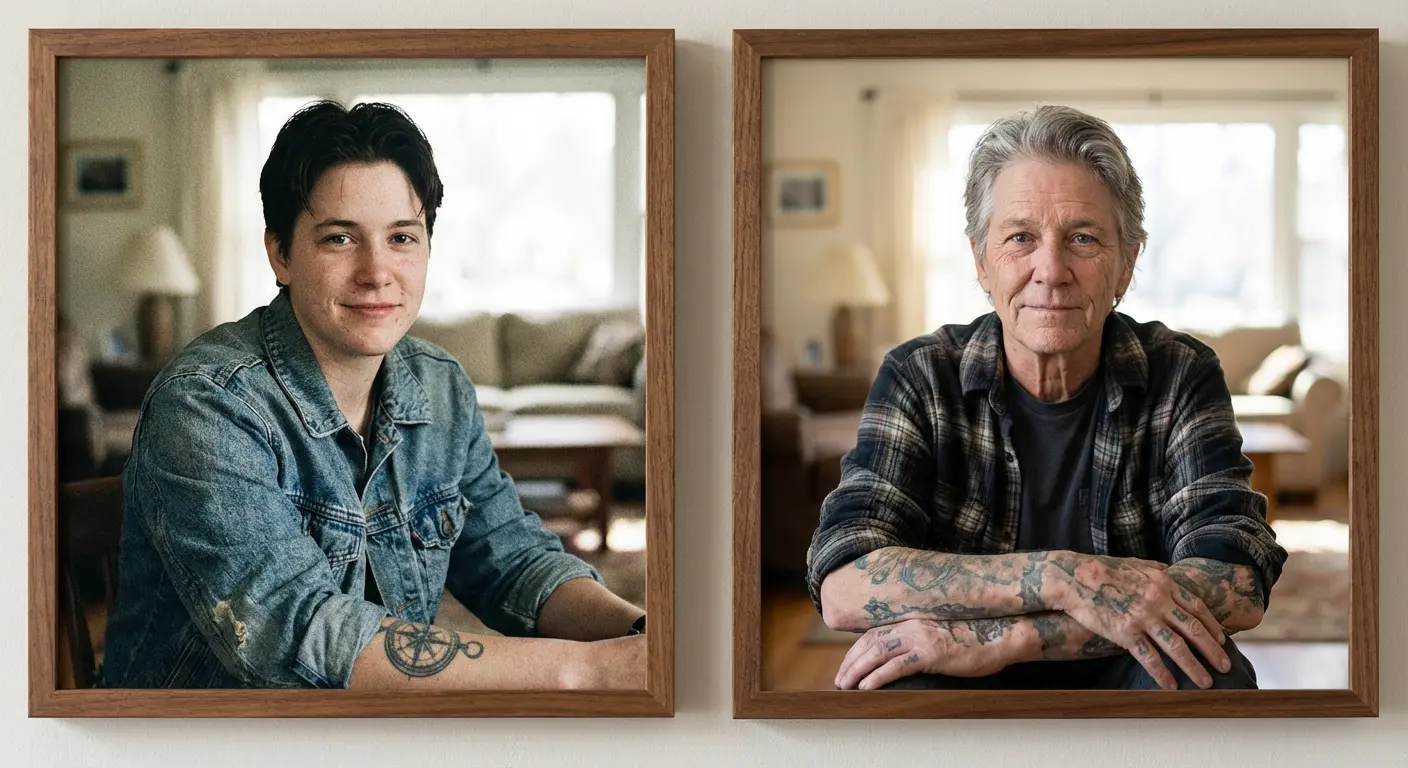
A tattoo you got at twenty-three that represented
your understanding of freedom at twenty-three can still be a meaningful tattoo at forty-five, even if your definition of freedom has completely changed. It’s a marker of who you were, which is its own kind of significance.
The regret people feel often isn’t about the tattoo itself but about the gap between who they were and who they’ve become. That gap is uncomfortable, but it’s also proof of growth. Your tattoos can be a visual record of that growth instead of an attempt to deny it exists.
Timelessness also implies that certain tattoo meanings are more valid or lasting than others. That love is more timeless than heartbreak, that hope is more timeless than anger, that spiritual symbols are more timeless than pop culture references.
None of that is true. What matters is whether the meaning was real when you got it.
You can’t predict who you’ll be in twenty years, so stop trying to get tattoos that future-you will approve of. Future-you doesn’t exist yet.
Designing Around Moments, Not Just Messages
Messages are abstract. Moments are concrete.
“This tattoo represents my journey toward self-acceptance” is a message. It’s trying to capture an ongoing process, a value, an aspiration. “This tattoo represents the three months I spent hiking the Appalachian Trail after my dad died” is a moment. It’s tied to specific events, specific geography, specific grief.
Moment-based meaningful tattoos tend to hold up better because they’re not claiming to represent who you are in totality. They’re marking when and where something happened.
You could get a tattoo of the exact view from the hospital window where you spent two weeks recovering from surgery. That’s not trying to symbolize resilience or strength or any universal concept. It’s just recording what you looked at during a specific period when your life was on pause.
When Sabrina Carpenter got “at last” tattooed on her shoulder in 2024, fans interpreted it as marking her slow-burn rise to viral success after over a decade in the industry. A specific career moment rather than an abstract message about perseverance, making the tattoo a timestamp of when everything finally clicked.
These designs often pull from details that wouldn’t make sense to anyone else. The pattern on the wallpaper in your childhood bedroom. The shape of the scar on your brother’s hand. The logo from a defunct restaurant where you used to meet someone who mattered.
Moment-based tattoos can feel less impressive when you’re explaining them because they don’t come with built-in gravitas. You’re not saying “This represents my connection to ancient wisdom.” You’re saying “This is the tile pattern from the bathroom where I had a panic attack that changed how I understood my anxiety.”
But that specificity is what makes them meaningful long-term. You’re not trying to capture everything. You’re marking something.
If you want to design around a moment, start here: What happened? When? Where were you physically? What were you feeling or processing? What objects were around you? What colors, textures, sounds, smells do you remember? What did you see repeatedly during this time? What environmental elements stick with you? Why does this moment matter? What changed? What did it mark, a beginning, an ending, a turning point? How do you think about it now? Then decide: do you want to show exactly what you saw, capture the feeling instead, or pick one object that contains the whole moment?
A graphic designer I know got a tattoo of the exact error message that appeared on her screen the night her first major project crashed hours before a deadline. The cryptic code and red warning icon meant nothing to anyone else, but to her it represented the moment she learned she could handle catastrophic failure and rebuild under pressure. Years later, that same error message reminds her that panic doesn’t equal permanent damage. A lesson worth more than any inspirational quote about resilience.
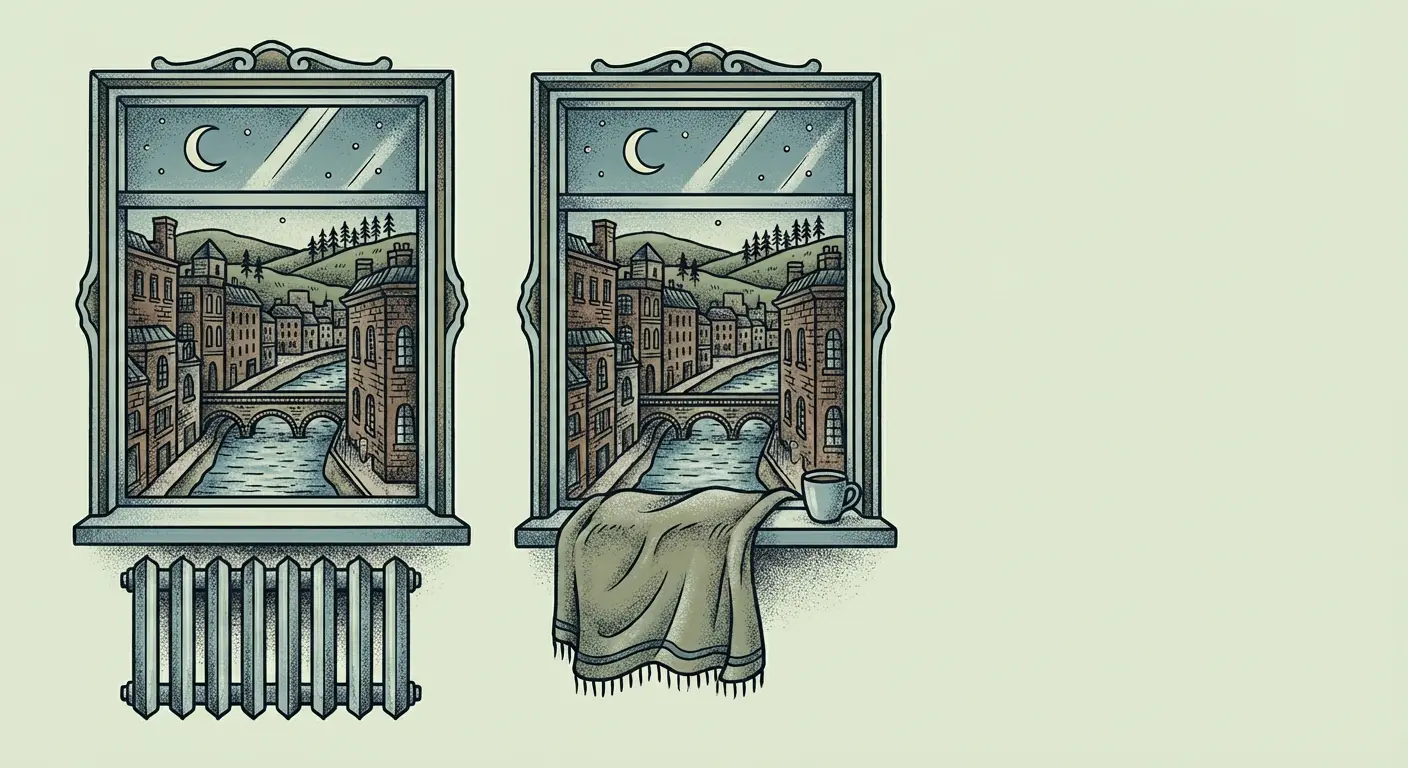
Moments don’t have to be dramatic either. You could commemorate the entirely ordinary Tuesday when you finally felt okay after months of not feeling okay. The image might be something as simple as the coffee cup you were holding or the weather that day.
What makes it a meaningful tattoo isn’t the magnitude of the moment. It’s the fact that it happened to you. These moment-based tattoo ideas with meaning create anchors to specific times in your life that shaped who you’ve become.
When Ambiguity Beats Clarity
Not every tattoo needs to be immediately legible.
Ambiguity gives your tattoos room to grow with you. A design that could mean three different things depending on when you’re asked about it is more flexible than one with a single, fixed interpretation.
People tend to want clarity in their meaningful tattoos. They want to be able to explain what it means, preferably in one sentence. That desire for clarity often produces tattoos that feel reductive over time.
What if you got an image that you understood emotionally but couldn’t quite articulate? Something that felt right without being easily translatable into words?
While geometric designs are appreciated for their aesthetic appeal and symbolic meaning of harmony, their abstract nature makes them ideal candidates for evolving interpretation. The same pattern can represent order when you need structure or rigidity when you’re trying to break free.
Ambiguous meaningful tattoos can hold multiple meanings simultaneously. That geometric pattern could represent the structure you craved during chaos, or the rigidity you’re trying to break out of, or both at once. The meaning isn’t fixed because you’re not fixed.
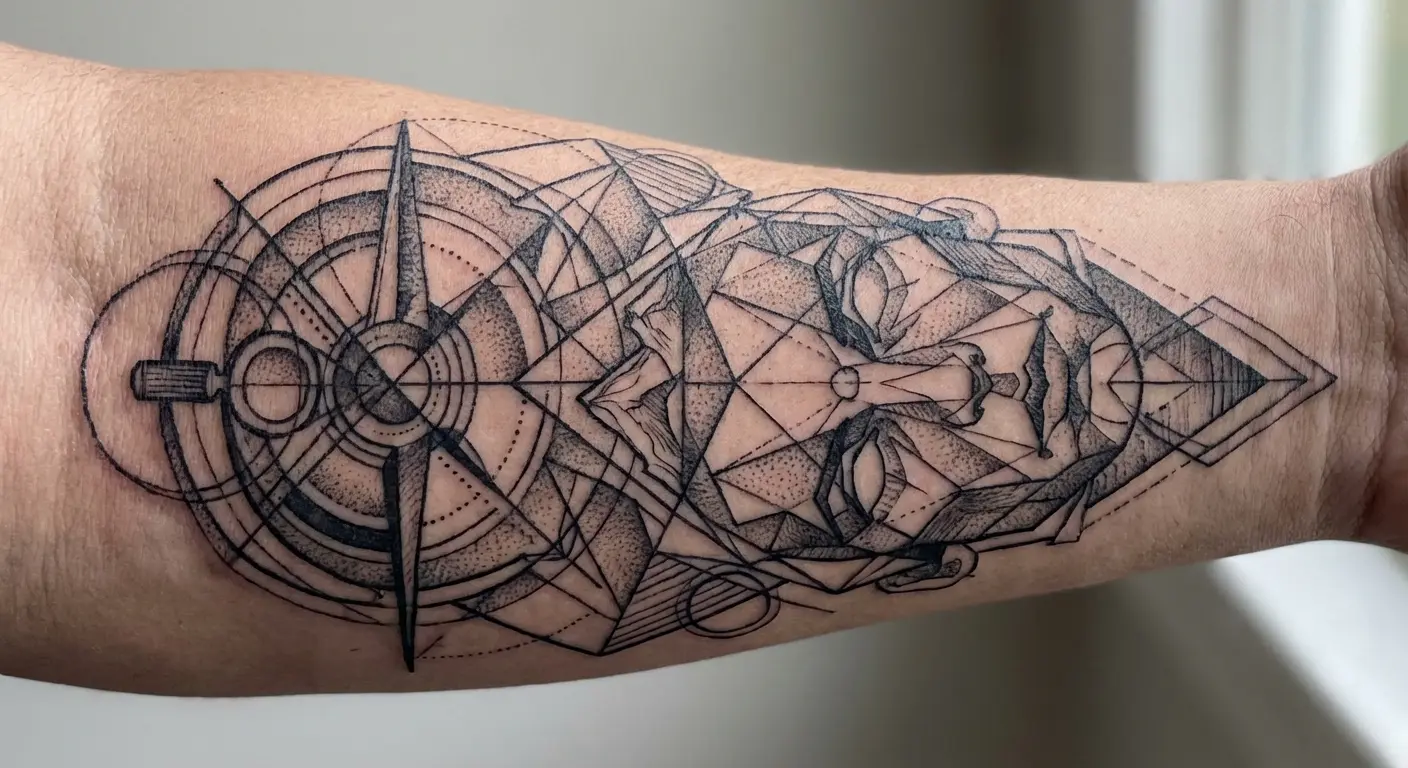
This approach requires comfort with not having perfect answers. When someone asks what your tattoo means, “It means different things at different times” is a valid response, even though it’s not particularly satisfying for the person asking.
Ambiguity also allows for privacy. You can have a tattoo that’s deeply meaningful to you without having to explain that meaning to everyone who sees it. The image can be personal without being legible.
Abstract designs, partial representations, images that could be interpreted multiple ways create space for your relationship with the tattoo to evolve. You’re not locked into the interpretation you had when you got it.
Some of the most enduring meaningful tattoos are the ones that resist easy categorization. You’re not entirely sure what they mean, but you know they matter. That uncertainty keeps them interesting instead of letting them fade into background noise on your skin. When exploring tattoo ideas with meaning, don’t underestimate the power of designs that leave room for interpretation.
Turning Tattoo Generator IQ Into Your Meaning-Making Partner
The hardest part of meaning-driven tattoos is visualizing concepts that don’t already exist in tattoo flash books.
You know what you want your tattoo to mean. You can describe the feeling, the moment, the significance. But how do you turn “the specific quality of light during the summer my life changed” into an actual image?
Traditional tattoo design requires you to either find existing imagery that’s close enough or work with an artist to create something custom, which can take weeks and multiple expensive consultations. You’re trying to communicate something highly personal to someone who doesn’t have access to your memories or internal mythology.

Look, quick pitch for our tool. We built Tattoo Generator IQ specifically for this gap. You can describe your personal symbols in plain language (the tile pattern from that bathroom, the way your grandmother folded napkins, the view from that hospital window) and see multiple visual interpretations in seconds.
Whether you’re exploring small tattoo ideas or elaborate sleeves, visualizing personal symbolism requires tools that understand your unique narrative.
The tool lets you experiment with how abstract or literal you want to go. Maybe your meaningful moment needs to be represented as it looked, or maybe a more abstract interpretation captures the feeling better. You can generate both and see which one resonates.
This is particularly useful for personal mythology tattoos where the imagery is completely unique to your experience. You’re not looking for a traditional phoenix or compass. You’re looking for a visual representation of something that only exists in your life story.
You can adjust colors, styles, and specific elements until the design matches what you’re trying to capture. Then you take that high-resolution reference to your tattoo artist, and you’re both starting from the same visual foundation instead of trying to communicate across the gap between your imagination and their interpretation.
If you’ve been struggling to visualize personal meaning that doesn’t fit into conventional tattoo imagery, try Tattoo Generator IQ to see your unique concepts rendered into designs you can work with. The best tattoo ideas with meaning come from your own experiences, and now you can see them visualized before committing to ink.
Where We End Up
Tattoo meaning isn’t something you find in a symbol dictionary. It’s something you build through the stories you tell about your life and the experiences you choose to mark.
Borrowed symbolism works fine if it genuinely connects to your lived experience. But if you’re reaching for cultural symbols or universal tattoo meanings because you’re not sure what personally resonates, you’re setting yourself up for tattoos that feel hollow over time.
Your life already contains meaningful imagery. You just have to pay attention to what recurs, what specific moments shaped you, what details you remember for reasons you can’t quite articulate. Those are your symbols.
The meaning you assign to your meaningful tattoos will shift as you change. That’s not something to prevent. A tattoo you got at twenty-three that represented your understanding of freedom at twenty-three can still matter at forty-five, even if your definition of freedom has completely changed. It’s a marker of who you were.
You don’t need ancient wisdom or exotic traditions to make your ink significant. You need honesty about what matters in your actual life and the willingness to represent that visually, even when it doesn’t come with ready-made gravitas.
Meaningful tattoos emerge from genuine connection to your own narrative. They’re markers of where you’ve been, what you’ve survived, who you’ve loved, what you’ve lost. They’re visual evidence of the moments that made you who you are.
The most meaningful tattoo you’ll ever get might not look impressive to anyone else. It might not have a profound explanation or a culturally significant backstory.
It might just be yours, tied to something real that happened in your specific life.
And honestly? That’s enough.
Your tattoos are going to outlive most of your relationships, your jobs, maybe even your current understanding of who you are. So yeah, overthink it if you want. Or don’t. Either way, you’ll figure out what it means later.
